I’m Constantly Angry at My Coworker, How Can I Manage My Emotions?
Jun 28, 2024 Meeting with Senior Japanese Politicians, Dharma Q&A with Japanese Interpretation
“There’s Dr. A.T. Ariyaratne from Sri Lanka, Venerable Maha Ghosananda from Cambodia, Master Cheng Yen, the founder of Tzu Chi Foundation in Taiwan, and Dr. Sulak Sivaraksa from Thailand. After them, Venerable Pomnyun Sunim received the award in 2020.”
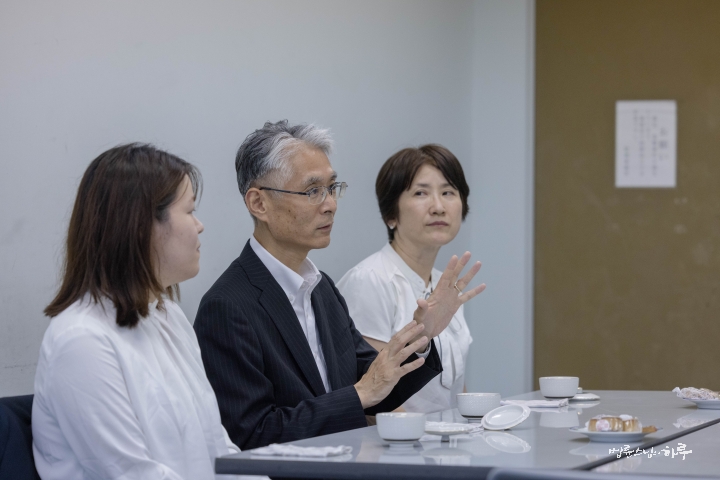
The Niwano Peace Foundation expressed regret that Sunim was unable to attend the award ceremony in person four years ago due to the COVID-19 pandemic, which forced the 37th award ceremony to be held online. They proposed inviting Sunim again.
“We have many regrets about conducting the Niwano Peace Prize award ceremonies online for the past three years. So, we would like to invite the online recipients, including Venerable Pomnyun Sunim, again to hold an award ceremony along with a symposium. We would like to ask if this schedule would be suitable for you.”
“If you let me know the schedule a year in advance, I will make sure to keep that time open.”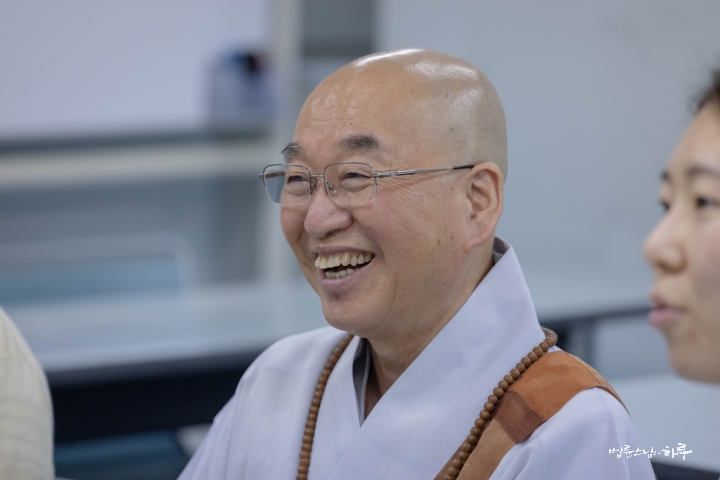
The Niwano Peace Foundation officials showed great interest in the India pilgrimage led by Sunim. As they were discussing the India pilgrimage, it was time to start the lecture. At 5 PM, everyone moved to the lecture hall.
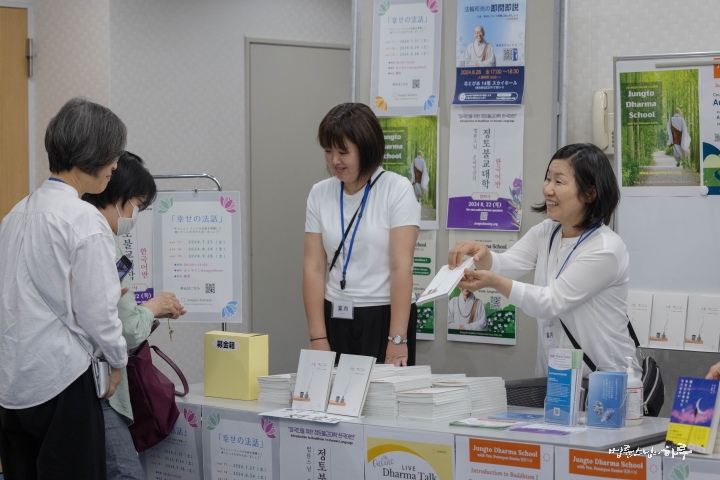
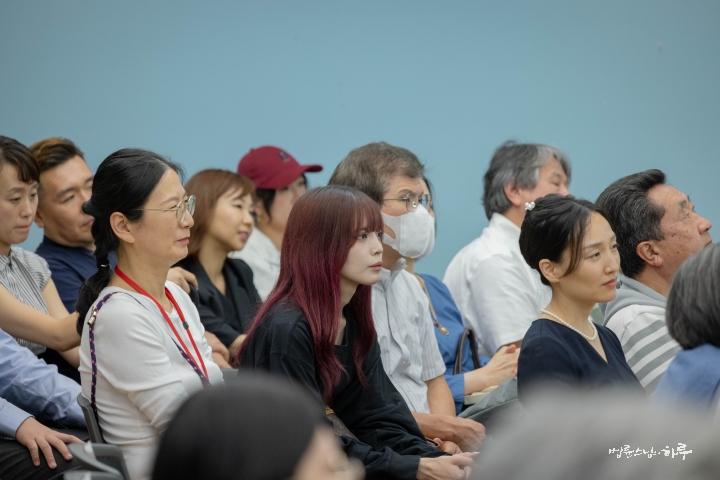
Volunteers were kindly greeting people who came to the lecture hall from various places.
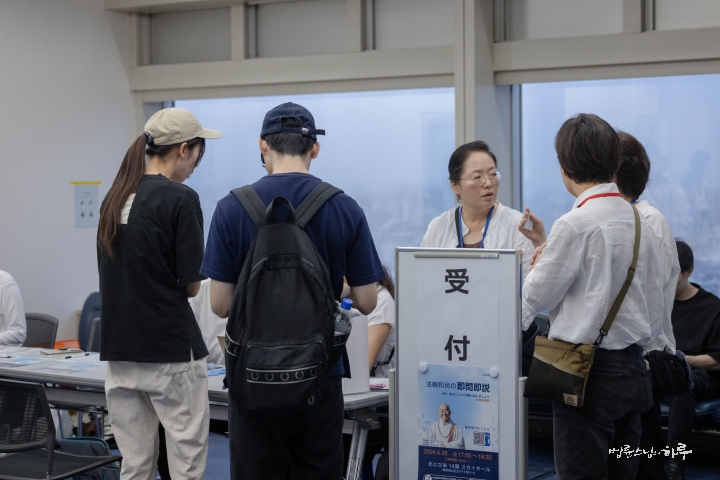
Sunim greeted the volunteers and entered the lecture hall.
“Thank you.”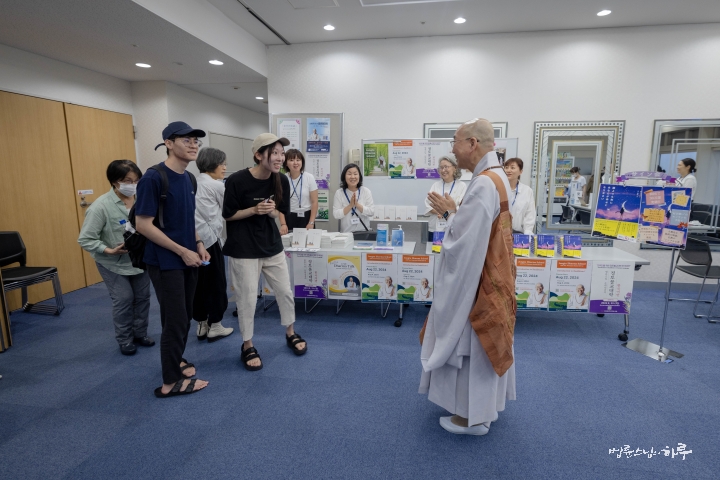
After the audience watched a video of Sunim visiting Washington D.C. and meeting with U.S. Congress, government, and think tank officials to promote peace on the Korean Peninsula, Sunim walked onto the stage.
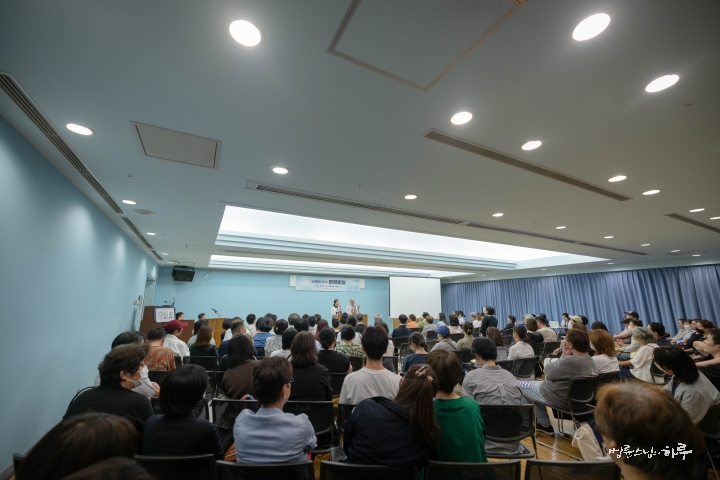
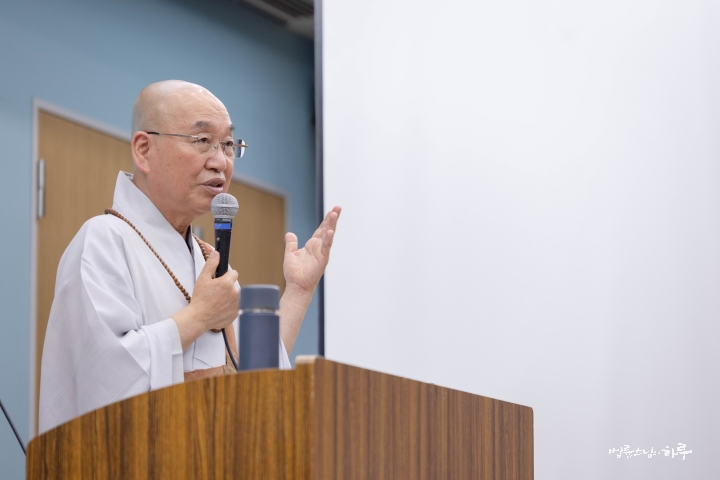
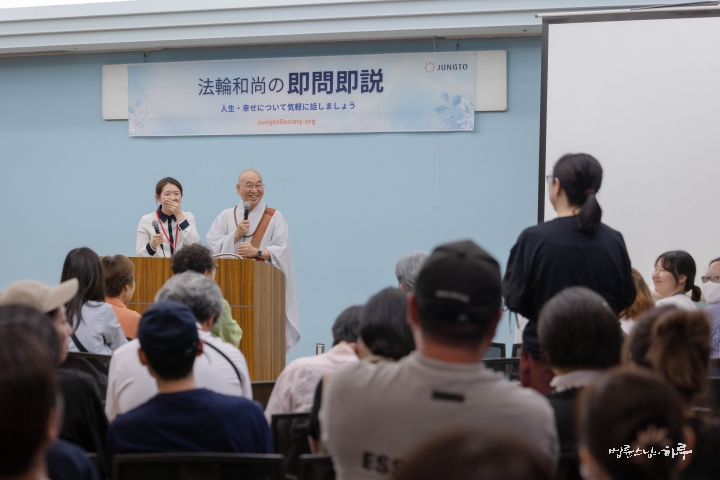
Amid thunderous applause, Sunim and the interpreter stood side by side on the stage. Sunim first gave a greeting and explained the purpose and principles of the Dharma Q&A.
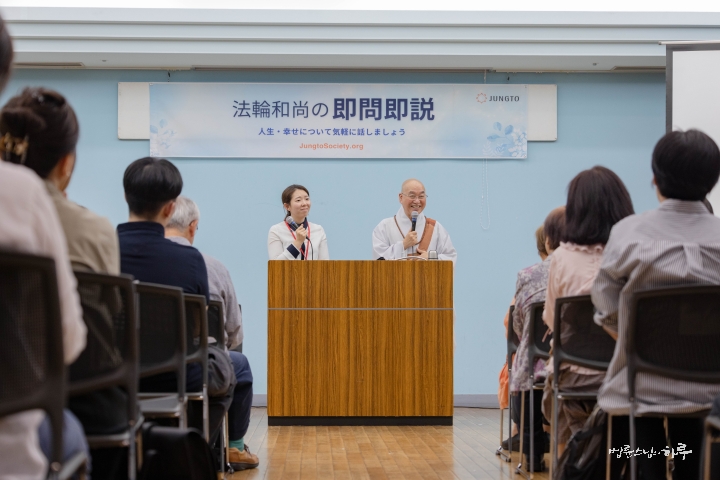
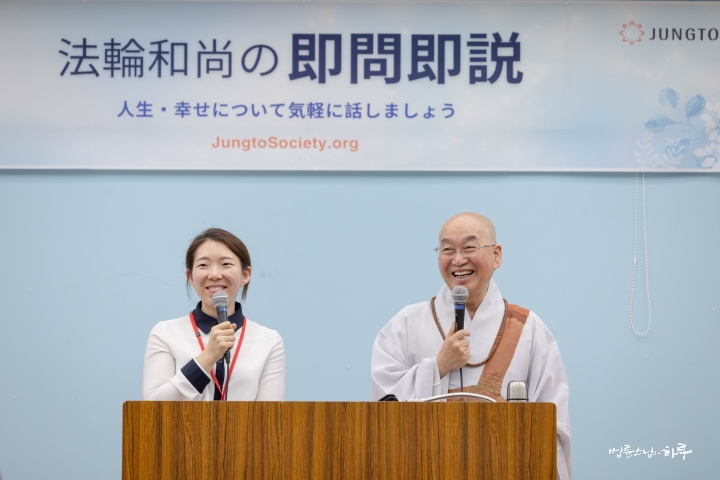
There are three types of Buddhism. First, Buddhism as a religion, where faith is important. Second, Buddhism as a philosophy, where understanding is crucial. Third, Buddhism as a practice, where taking action is essential. What I want to discuss with you is not Buddhism as a religion or philosophy. Today, I will focus on Buddhism as a practice.
In religion, the Buddha is often portrayed as a divine being with infinite power who grants wishes when we pray. However, the historical Buddha was not so much an object of religious belief as a guide leading us on the path of truth. He guided people to freedom from suffering through dialogue. This is called ‘teaching according to the listener’s capacity.’ The Dharma Q&A sessions I conduct are similar to the Buddha’s dialogue. It’s not about providing definitive answers, but about achieving self-realization through conversation. A dialogue where doubts are resolved and suffering disappears is called a Dharma Talk.
The Happiest Person in the World Would Cry Sadly Every Day
Let me share a story from the time of the Buddha. An elderly woman came to see the Buddha. She was from a very wealthy family and was a devout Buddhist. However, she came on a rainy day without an umbrella, tears streaming down her face. The Buddha asked, ‘What brings you here?’ She replied, ‘Lord Buddha, this morning my beloved granddaughter, whom I cherished dearly, passed away. I cannot contain my grief.’ The Buddha then asked, ‘Is it good to have one person you love and cherish dearly? Or is it better to have two?’‘Two would be better.’
The Buddha asked again, ‘Two would be better? Then would three be better?’
‘Three would be better.’
The Buddha continued, ‘Then, how would it be if you had as many people you love and cherish dearly as there are people living in this city of Shravasti?’
The woman responded, ‘That person would be the happiest person in the world.’
The Buddha then asked, ‘How many people do you think die in Shravasti each day?’
‘One, no, two, or perhaps ten people. At the very least, more than one person dies each day.’
The Buddha finally said, ‘Then the happiest person in the world would cry sadly every day.’
Let me explain a bit more for those who still don’t understand. A grandmother came to the Buddha, saying she was sad because her beloved granddaughter had died. Buddha then asked her a question based on her statement. Is it good to have many people you cherish and love? The more, the better. If you have many people, one of them will die every day. Then, the happiest person in this world would have to cry every day. But how can we say someone who cries every day is happy? It seems some people still don’t understand even after this explanation. (Laughs)
**Dharma Q &A: Eliminating Suffering Through Dialogue **
I wanted to explain in detail what Buddhism is really about. My conversations with you are not special. Dharma Q&A is where your doubts or sufferings disappear through dialogue. It’s where you ask a question because you’re suffering but end up thinking ‘It’s not a big deal’ by the end. This realization of being able to live without suffering in any situation is called Nirvana. Nirvana means ‘without suffering.’ The goal of Buddhist practice is not to go to heaven or paradise after death, but to attain Nirvana. In other words, the goal of Buddhist practice is to live without suffering. Are you suffering now? If so, let’s talk about it together.Then, people who had submitted questions in advance took turns asking Sunim. Six people raised their hands and had conversations with Sunim. The first questioner asked for Sunim’s advice on how to manage their feelings, as they kept getting angry at a coworker.
I Keep Getting Angry at My Coworker, How Can I Manage My Feelings?
“私はあまり人に腹を立てるってことはないんですけれどもちょっとコロナの後から職場が変わって、違うどころに行って、人生で二人目にすごく腹が立つ方に会って毎日仕事をしてるのがちょっと苦痛になってきてるんですけれども、腹が立ってずにごの人とうまく行くのにはどうすればいいでしょうか。” (I’m not usually the type to get angry at people, but after COVID, I changed workplaces and went to a different place. I met the second person in my life who makes me very angry, and working with them every day is becoming a bit painful. How can I get along with this person without getting angry?)
“Are you saying that you get angry? Or that the other person makes you angry?”“はい、私がです。” (Yes, I get angry.)
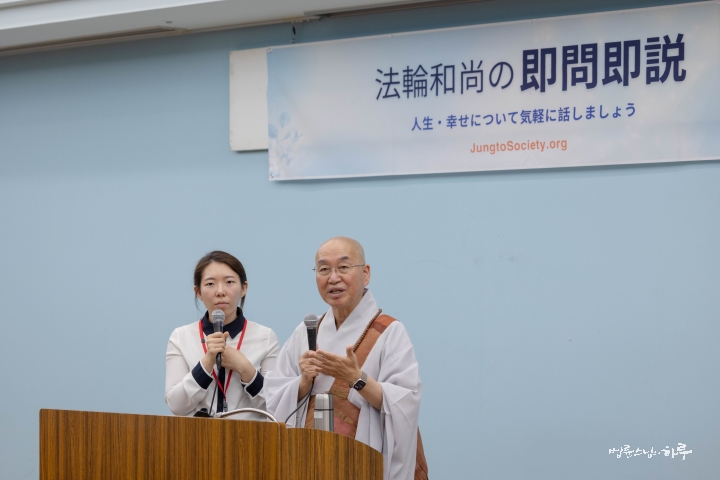
“人のはなしを遮ったりとか、六人でいるチームなんですけれども一番目上のチームのリーダーに対しても被せて話をするとか”自分が自分が”っていうどころがすごく見えてしまうのでまず私たちの話を聞いて、チームリーダーの話を聞いてっと思うんですけれども自分が正しいっていうところをすごく押し付けてくるところにちょっと腹が立つというか不愉快な思いになります。” (They often interrupt others’ conversations, and in our team of six, they even talk over the team leader, who is the most senior. It’s very noticeable how they always put themselves first. I think they should listen to us and the team leader first, but they keep insisting that they’re right, which makes me angry and uncomfortable.)
“I see. I understand. But does that person’s behavior change when you get angry?”“いいえ。一年見てますけど辞めないって思うんですけど(笑う) それが一年四月からまたチーム編成でちょっとまた変えてきてるんですけれども、それが更に強く出てきてるところがあって、前は一週間に一度ぐらい立ったのが最近はもう二日にいっぺんくらい腹立たしいことが起こってくるんですね。” (No. I’ve been watching for a year, but I don’t think they’ll quit (laughs). Since April, with the new team formation, it’s gotten even worse. Before, I would get angry about once a week, but recently it’s happening every other day.)
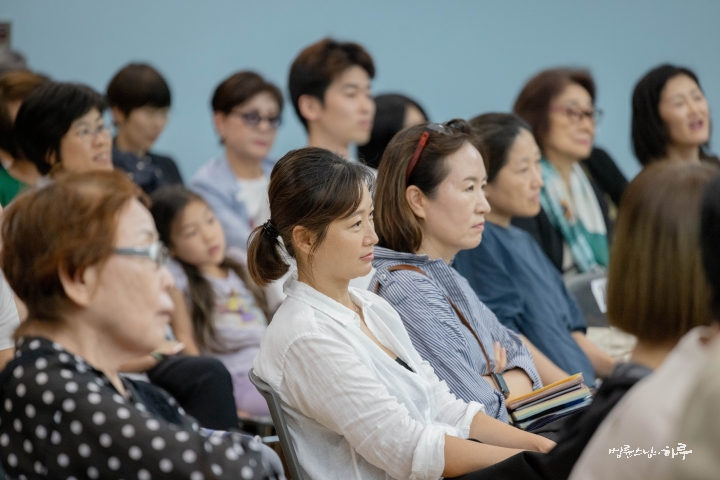
“自分にとって悪いっていうのはすごく感じます。相手は全く感じ取っていなくて自分だけがかっかかっかしてるので人に腹を立ててる自分も腹が立つと思うところもあると思うんですけれども…” (I strongly feel that it’s bad for me. The other person doesn’t seem to notice at all, and I’m the only one getting worked up. I think I also get angry at myself for being angry at others…)
“That person interrupts others when they speak, but why do you get angry?”“自分を正当化するところですかね… 私が正しいみたいな。” (I think it’s because they’re trying to justify themselves… Like they’re always right.)
“Let me ask again. Everyone has slightly different habits when speaking. That person is just speaking according to their habits, so why do you get angry? If getting angry made you money, that would be fine. If getting angry was good for your health, that would be fine. But you just said that getting angry is bad for you. That person is just speaking according to their habits, so why do you need to get angry and harm yourself? Did that person make you angry? Or are you getting angry by looking at them?”“わたし自身には害は与えてることのほうが少ないと思うんですけれど目上を立てないとか人の話を。聞かないっていうところに。周りに対しての態度に腹を立ててるんですよね。自分にはあまり害はないんですけど。周りに対してきついのが腹が立てるっていうところですね。自分にはあまり害はないんですね、職場の中では。” (I think it’s causing less harm to me directly, but I get angry at their attitude towards others – not respecting superiors or not listening to others. It’s not really harming me, but I get angry at how harsh they are to others. It’s not really harming me in the workplace.)
“Let me ask you something. Someone looked at the full moon and recited a verse from a poem, ‘Even the moon makes me sad today.’ It’s a nice poem. But let’s examine it a bit. Did the moon make them sad? Or did they become sad looking at the moon?”“私が月を見て悲しくなった。” (I became sad looking at the moon.)
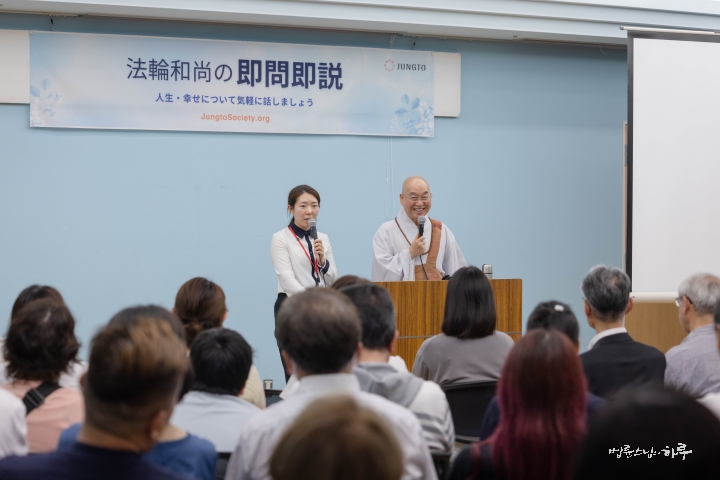
“私がイライラしています。” (I’m getting irritated.)
“So what benefit did you get from that?”“ありません。” (There was no benefit.)
“If there’s no benefit, why do you do it?”“分からないんですけど、なんでしょうね、仕事をしているうちにやっぱり遮ってしまうのとか。自分に害がないのになんでか腹が立つんです。” (I don’t know why, but while working, when they interrupt or cut in, I get angry even though it’s not harming me directly.)
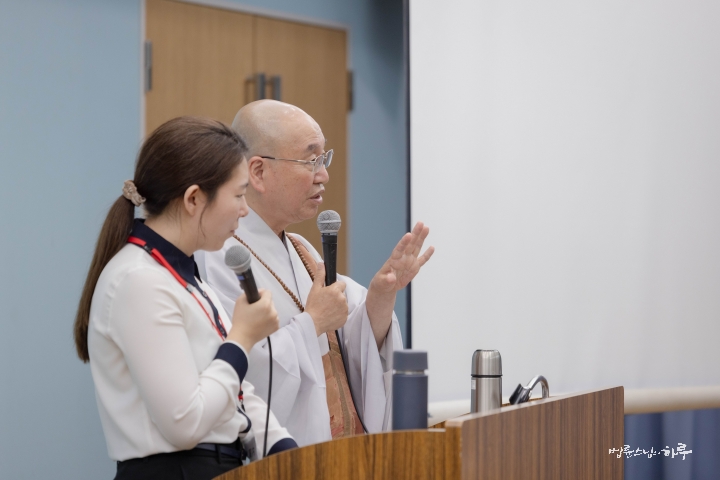
“自分に自分が害を与える、バカな人だと思います。” (I think I’m a foolish person who harms myself.)
“Yes. Then say ‘I am a fool’ three times.”“私はバカだ。 私はバカだ。 私はバカだ。” (I am a fool. I am a fool. I am a fool.)
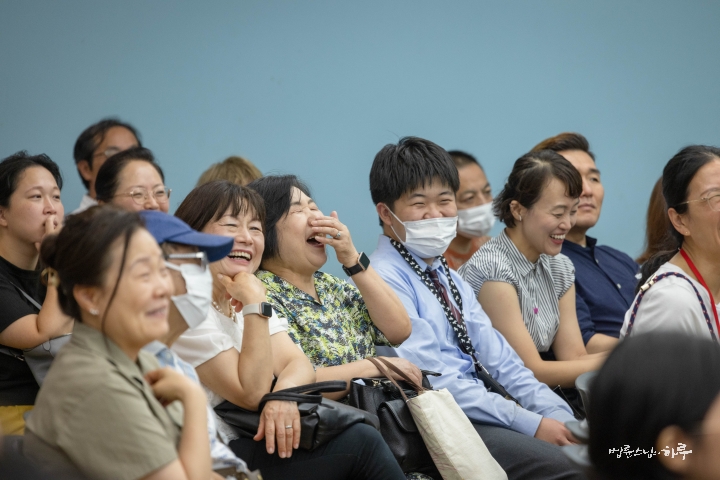
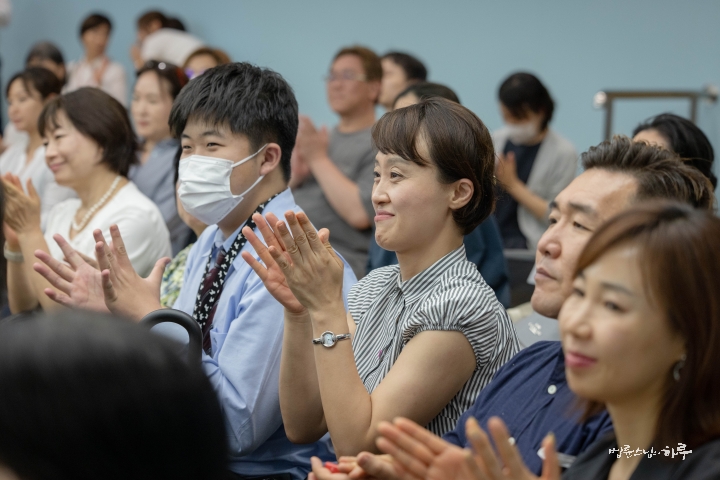
As the questioner finished speaking and laughed loudly, the audience applauded in support.
Sunim continued speaking.
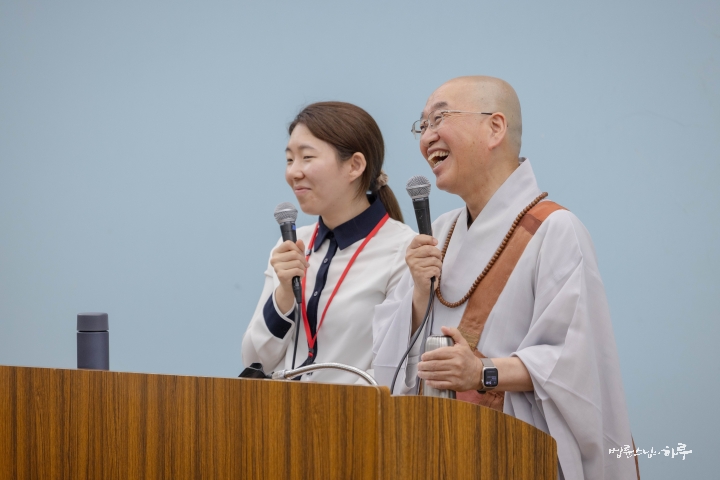
Getting angry is foolish. If you just become aware that you’re doing something foolish, the anger gradually disappears. If you miss it this time, try again next time. You need to practice being aware diligently. From now on, whenever you get angry, catch it by telling yourself, ‘Oh, I’m getting angry.’ When you get angry, you harm yourself. You justify your anger by thinking that person made you angry. But that person didn’t make you angry. You’re getting angry by looking at that person. So you need to be aware of your own state.
People keep making resolutions and decisions like ‘I should do this’ or ‘I shouldn’t do that,’ but that’s not practice. Practice is being aware in a relaxed state. Just be aware that you’re angry. Getting angry is a foolish behavior. So just being aware that you’re getting angry makes your brain move towards not doing foolish things. Without awareness, you unconsciously move towards foolish behavior. Don’t make resolutions like not getting angry. Just be aware that you are getting angry. Keep trying this.”
“分かりました。ありがとうございます。” (I understand. Thank you.)
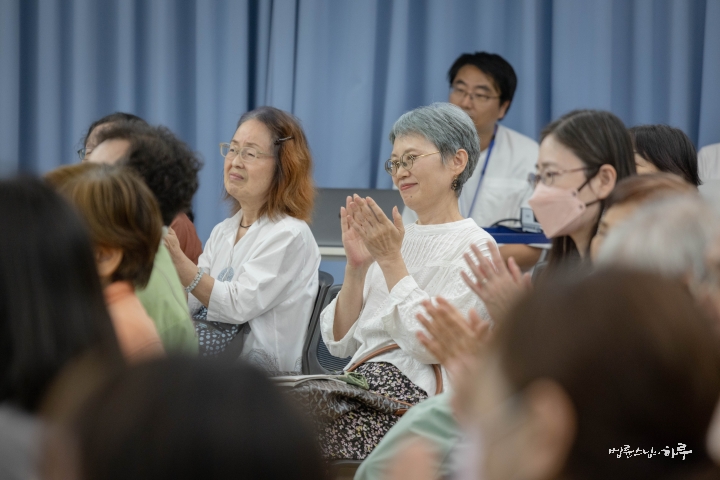
The questions continued.
I’ve been working at a sales company for two years. My performance isn’t bad, but I’m stressed because my boss and colleagues keep demanding results. What should I do?
I’m developing strong feelings for a Korean male friend that are more than friendship but less than love. How can I cut off these feelings?
Besides my two biological sons, I consider a Korean man in his 30s like a son. We used to keep in touch like family, but recently contact has become less frequent and I feel lonely. How should I handle this going forward?
I’ve been involved in protecting Japan’s forests and wildlife for 20 years, but recently a law was passed allowing the use of firearms to eradicate deer and wild boars, which is frustrating.
Why do wars keep happening? Is world peace really possible?
There were more people who wanted to ask questions, but the promised 90 minutes were up. Sunim concluded the lecture by answering the last questioner’s question.
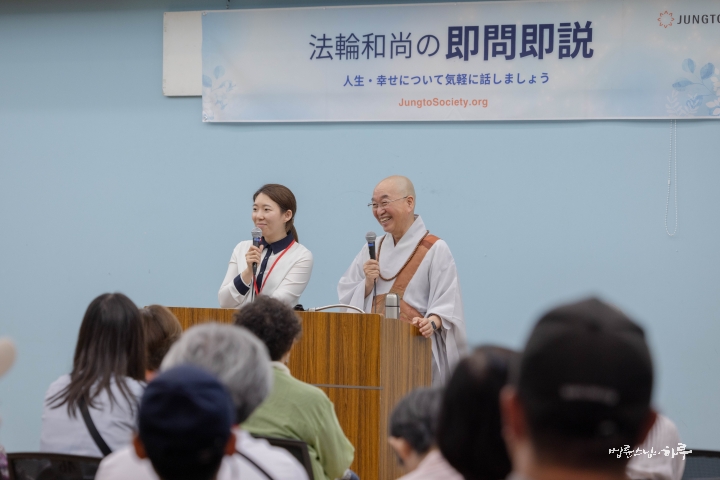
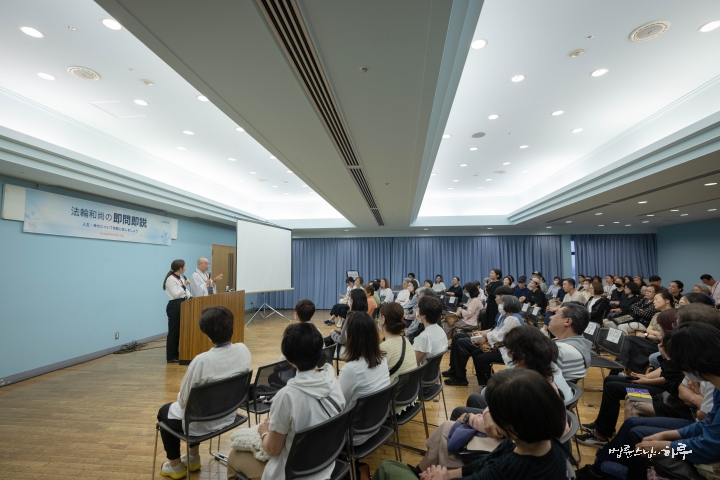
The lecture concluded with a promise to meet again during the next visit to Japan, accompanied by enthusiastic applause.
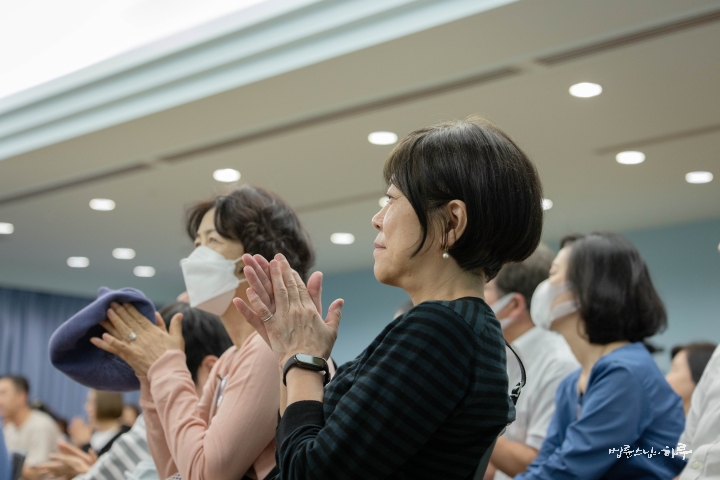
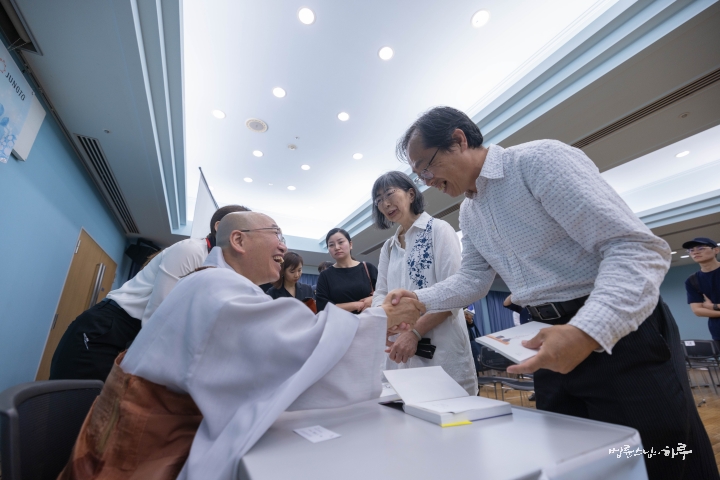
Immediately after, Sunim held a book signing session on stage. Attendees lined up, each holding a Japanese translation of Sunim’s book. Sunim made eye contact and greeted each person individually.
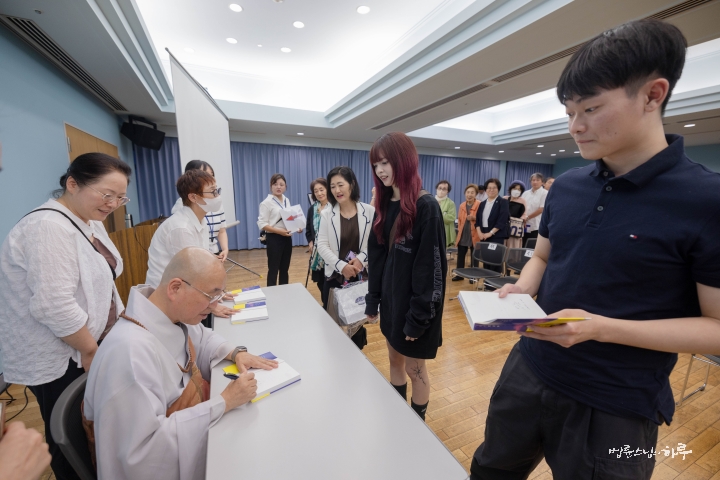
“I was deeply moved by today’s lecture.”
“ありがとうございます。” (Thank you)
Finally, Sunim took a commemorative photo with the volunteers who helped prepare the lecture before leaving the venue.
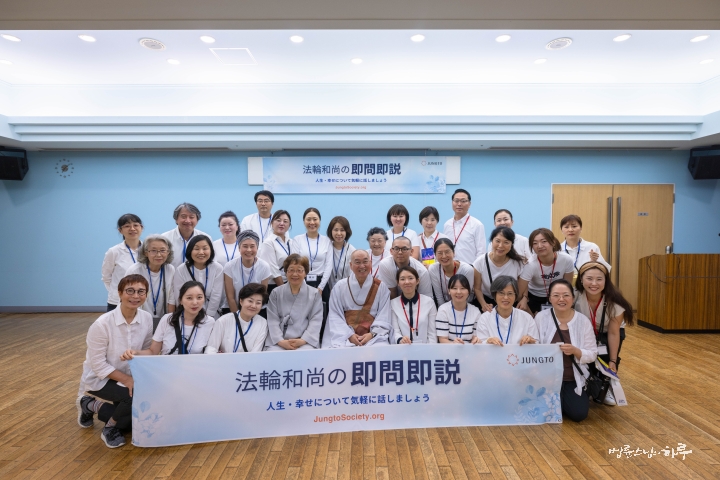
Soon after, Sunim had dinner with a packed meal in a hurry as he needed to conduct a live Friday Dharma Q&A broadcast for Korean viewers.
After finishing the meal, he moved to the 8th-floor conference room in the cultural center for the live Friday Dharma Q&A broadcast. At 7:30 PM, about 3,900 people connected to the live stream. Sunim greeted them with a smile.
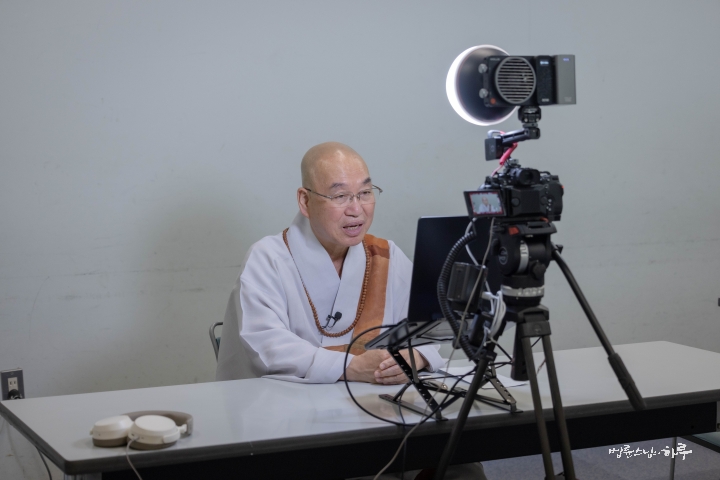
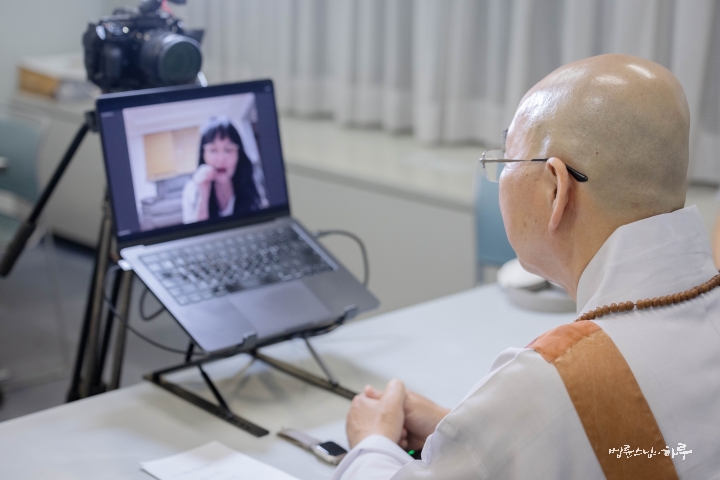
Following this, four people who had submitted questions in advance were given the opportunity to converse with Sunim. Unfortunately, one person experienced internet connection issues, so the Dharma Q&A proceeded with three participants before concluding the live broadcast.
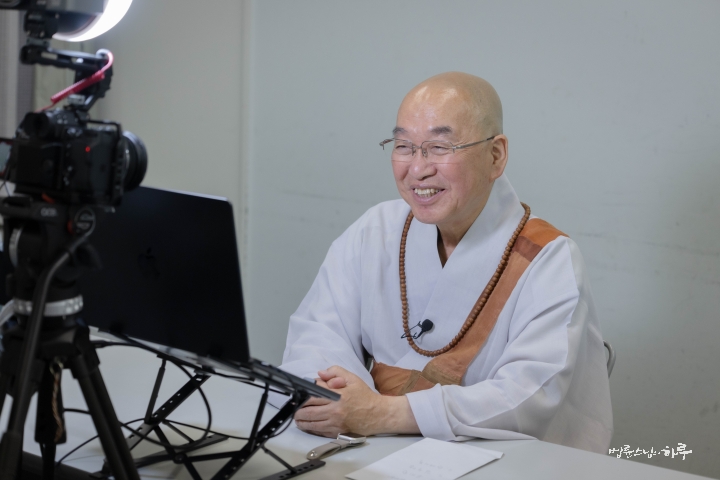
After ending the live broadcast, Sunim moved to his accommodation.
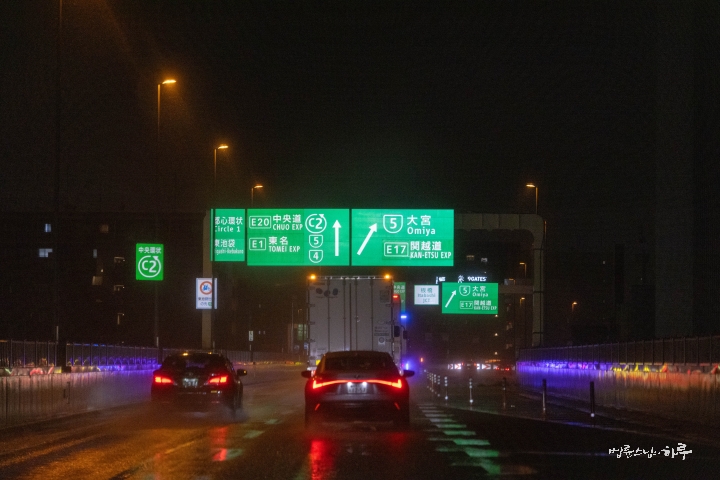
He packed his belongings and prepared to move again. At 11:20 PM, he left the accommodation and headed to Tokyo’s Haneda Airport.
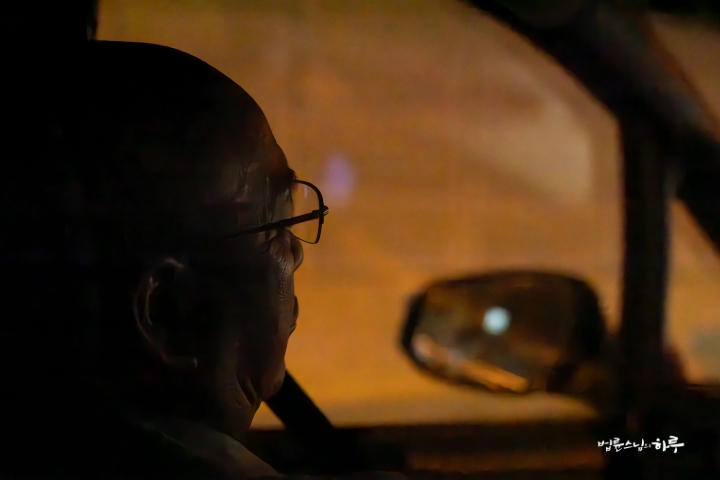
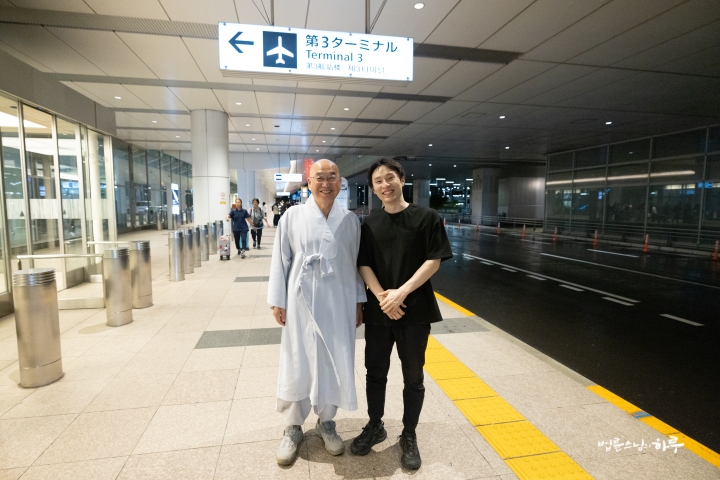
Sunim arrived at the airport at midnight. He expressed his gratitude to Moon Da-seul, who had driven during the stay in Japan, and Lee Ju-eun, who had been responsible for accommodation and meals.
“Thank you.”“Sunim, please stay healthy for the rest of your schedule!”
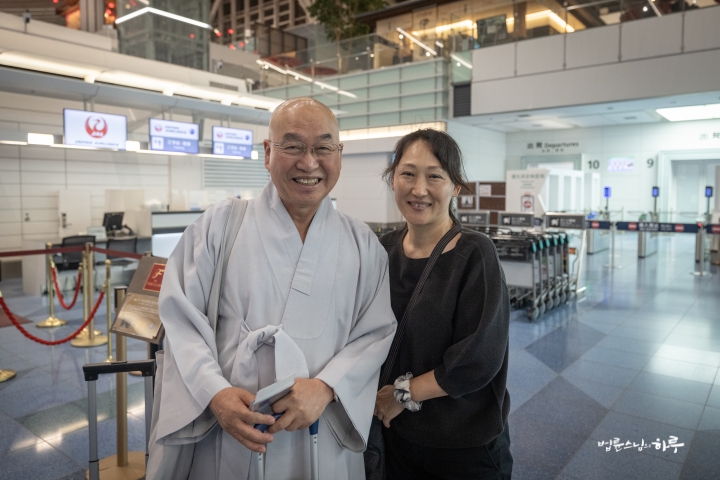
After completing the departure procedures, Sunim arrived at the boarding gate at 12:40 AM. He lay down on an airport chair and took a brief nap until boarding time.
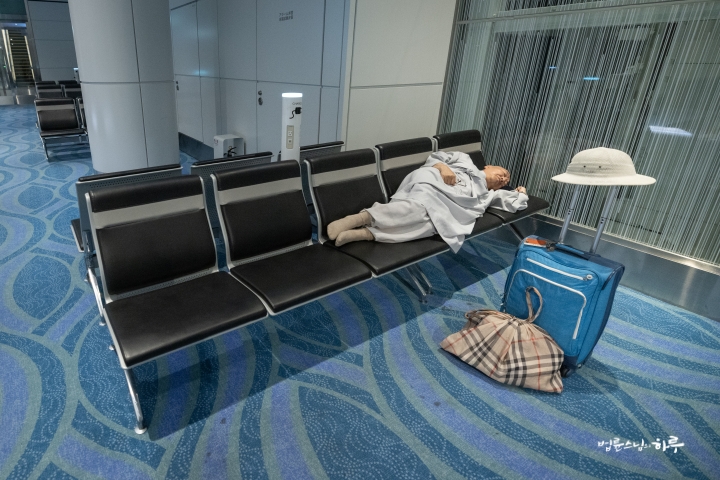
At 1:20 AM, he boarded the plane. As he was using a budget airline, his knees touched the seat in front as soon as he sat down. The plane took off at 2:00 AM. Sunim tried to sleep while sitting upright in a seat that didn’t recline. In six hours, he would be in Vietnam.
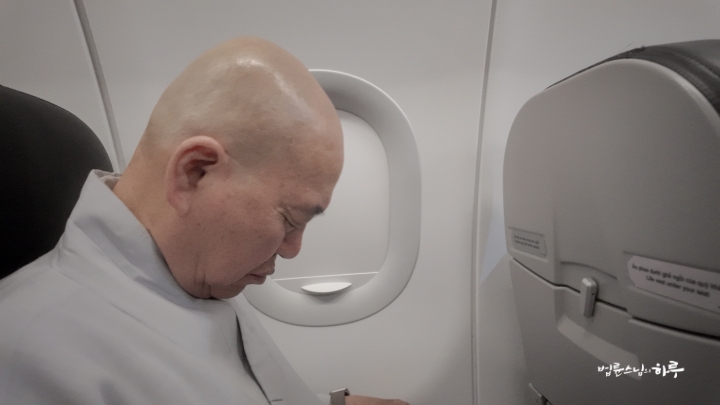
Tomorrow, after arriving in Ho Chi Minh City, Vietnam, he is scheduled to visit Hung Phap Temple in the afternoon for a discussion.