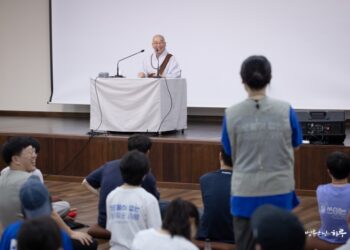

July 9, 2024 – Day 4 of Bhutan Survey, Trongsa, Thimphu
Hello. Today marks the fourth day of surveying Bhutan. Sunim departed from Zhemgang to meet the governor in Trongsa, then traveled to Thimphu to meet with the leader of Bhutan’s opposition party and a cabinet minister.
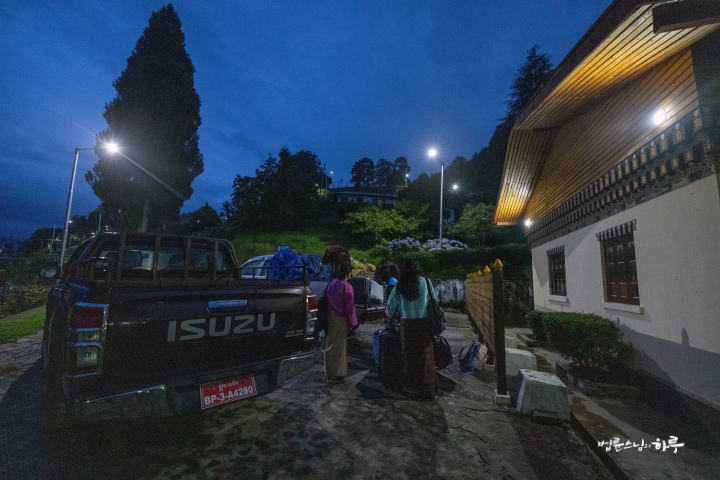
After completing his practice and meditation, Sunim departed from Zhemgang at 5 AM. The journey to Thimphu requires driving all day on a long road.
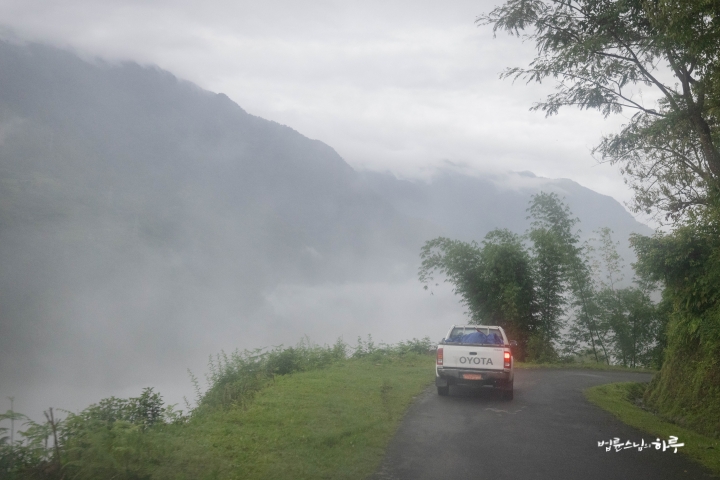
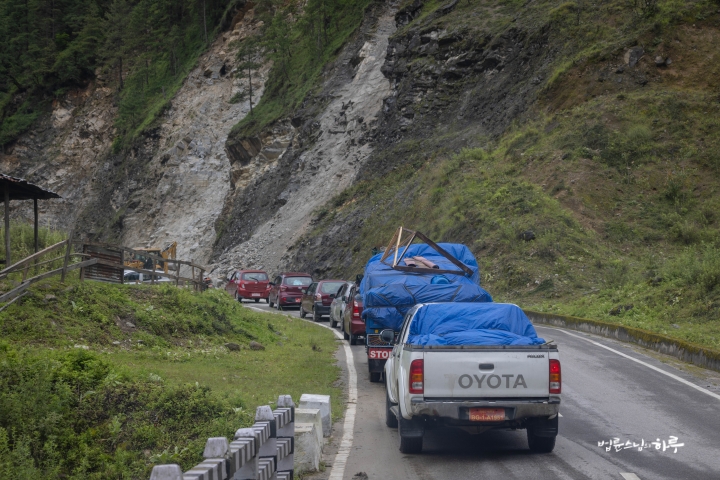
After a 2.5-hour drive, Sunim arrived in Trongsa. On the road from Zhemgang to Trongsa, there were landslides in various places with fallen rocks.
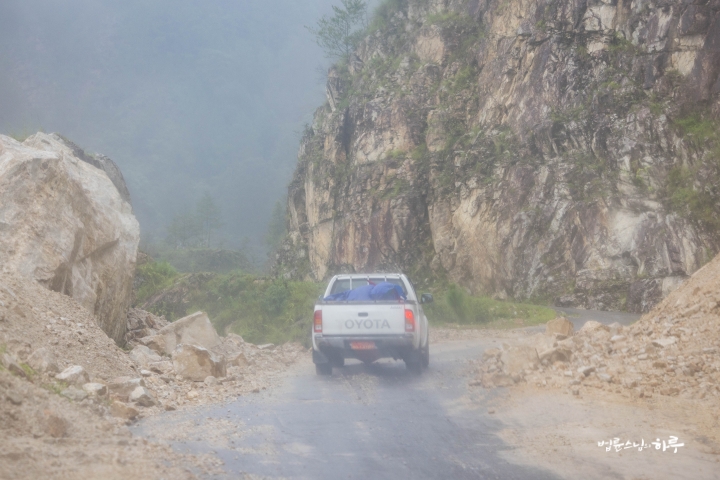
Fortunately, it wasn’t raining heavily when Sunim was traveling, so he was able to pass through safely.
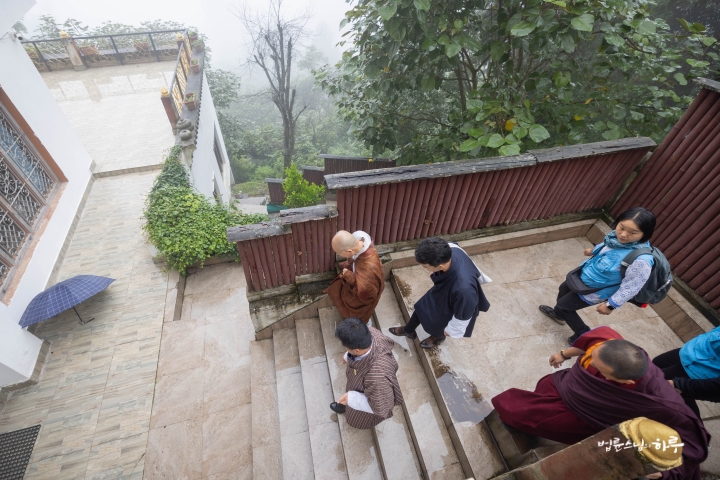
The governor of Trongsa welcomed Sunim.
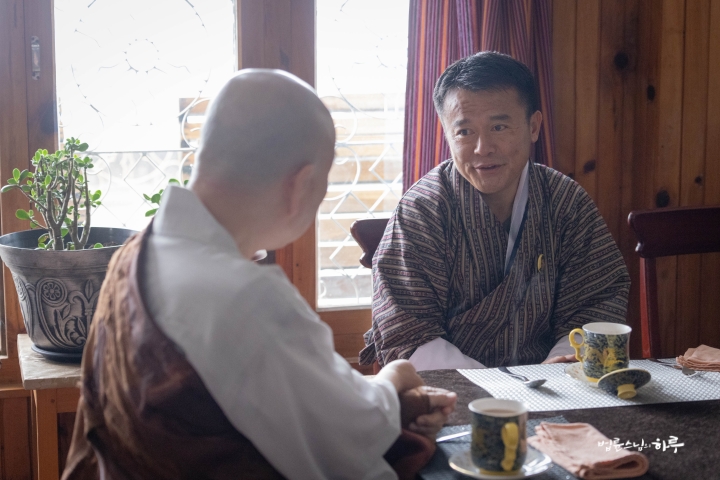
“Thank you so much for your efforts for Bhutan.”
“Not at all. I do this work because I enjoy it. I don’t think of Bhutan as a foreign country; I think of it as my own country and work accordingly. I also grew up in a mountainous rural area, and since all citizens believe in Buddhism, I don’t feel like I’m in a foreign country at all when I come to Bhutan.”
“I’m even more grateful that you think of it that way.”
Sunim then shared the results of the pilot projects conducted over the past month. He first talked about creating irrigation channels in Nabji Chiwog.
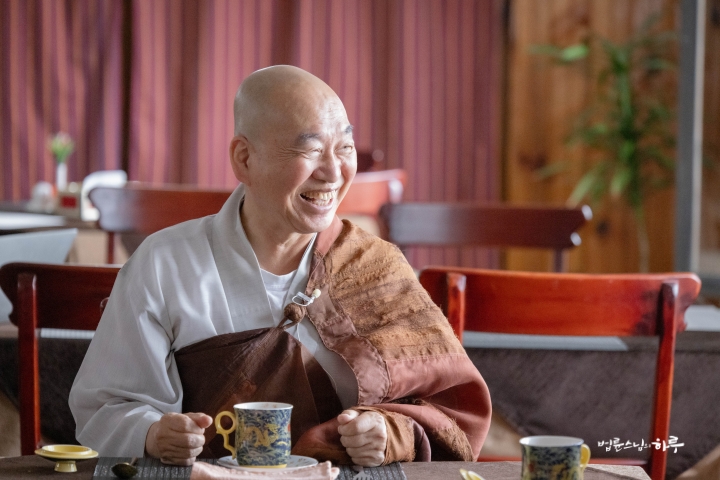
“The residents of Nabji village made the irrigation channels somewhat crooked. But please understand. It’s their first time doing this. They need to experience trial and error themselves to learn a lot. That’s why we didn’t call in technicians from the beginning. Because if the villagers try it themselves and learn, they can fix it later when it breaks. Otherwise, they would have to call technicians every time repairs are needed.”
The governor of Trongsa agreed with Sunim’s words.
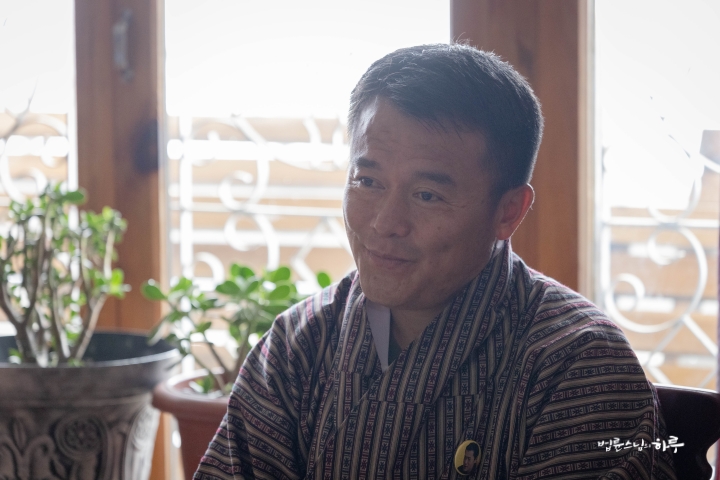
“That’s right. In the past, when the government did irrigation channel maintenance projects, rural people had no sense of responsibility to fix the channels themselves when they broke – they just waited for the government to fix them. But now that you’ve come and worked with them, the residents seem to realize ‘this is not the government’s work, but our work.’ This alone is a great achievement. Thank you so much.”
Sunim then talked about paving the steep road in Kolphu Chiwog.
“In Kolphu Chiwog, the residents paved a steep road, and when they drove on it, they were very happy because it was so convenient. If the government had paved the road, they would have just said thank you once and that would be it, but because the residents made it themselves, they feel proud every time they pass by that road.” (laughter)
“Thank you.”
Finally, Sunim talked about building a house for a poor person in Nimshong Chiwog.
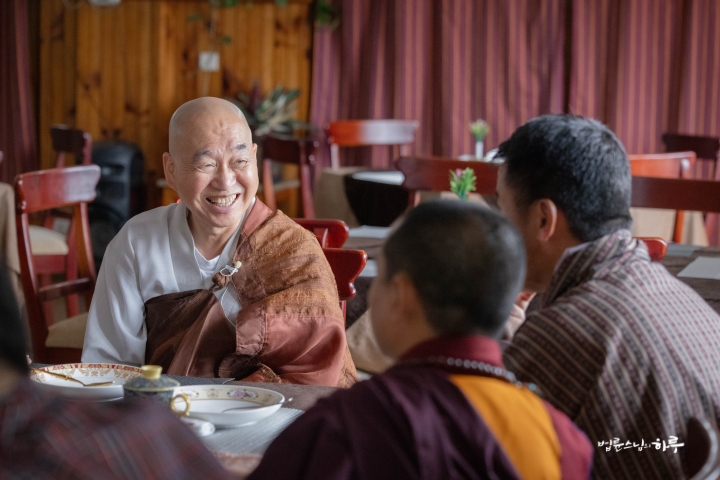
“This time in Nimshong Chiwog, the villagers worked together to build a house for a poor person. Actually, building a house together was the most difficult task. It’s easy to participate in irrigation channels and roads because residents use them together, but it’s easy to think ‘why should we work together on an individual’s house?'”
“In the old days, Bhutan also built houses together in the way you mentioned.”
“So when I said ‘Please build a house for someone here who doesn’t have one,’ they said they couldn’t support it.
‘There’s someone here without a house, and all our villagers want to build a house for this person. But we don’t have money, so instead all the villagers will take turns working for several days. Please just support us with materials from JTS.’
When they request like this, I said JTS can help. We decided to support only when the villagers agree to build together. A house built this way doesn’t belong to an individual but becomes the property of the entire village. This way, the residents make all decisions themselves, and since they have to do the work, they don’t become too greedy. As a result, their requests naturally become moderate. If we just build houses unilaterally, there will be many requests like ‘please do this too,’ ‘please do that too.'”
Sunim also participated in rice planting with the residents during this visit. He suggested that pilot projects are needed for rice planting as well.
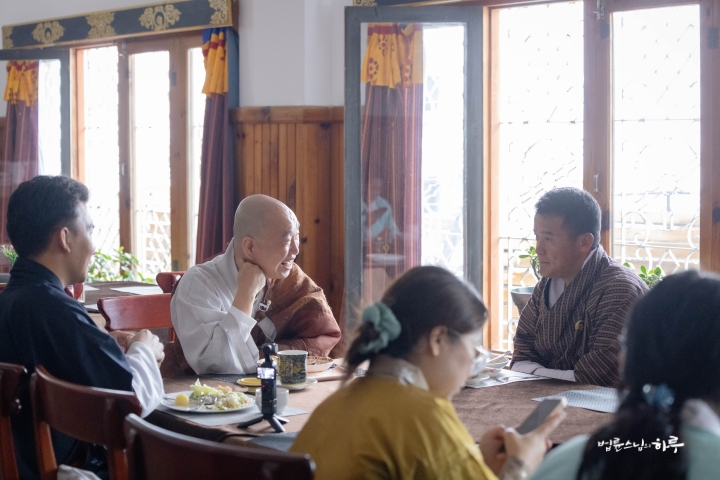
“To avoid using chemical fertilizers in rice fields, there’s a method of planting green manure crops to use as fertilizer. We need to demonstrate these organic farming methods for several years to show results. It’s not easy for residents to follow immediately. And when they farm using the new methods we’ve taught, if the yield falls below the average harvest, we need to compensate them. When I provided support to North Korea, I also investigated the current production amount and promised to compensate for any reduction in production compared to before our support. That way, residents can follow along with peace of mind.”
After sharing about the pilot projects, they had breakfast together.
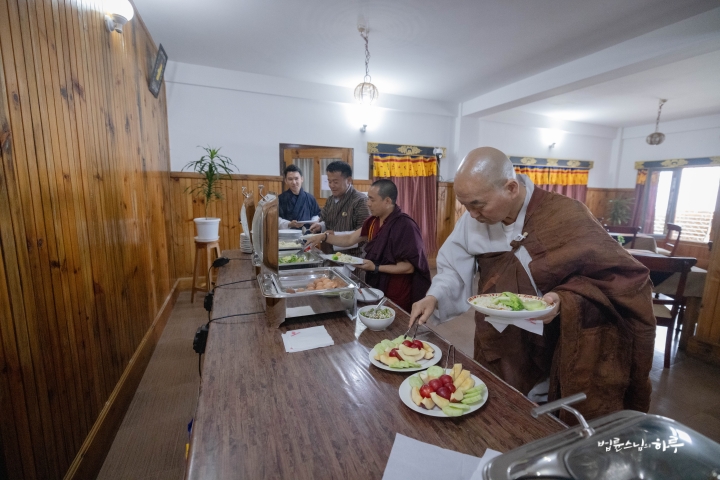
Sunim and the governor of Trongsa continued their conversation while eating. The governor asked Sunim.
“What do you think is the most important thing to improve?”
Sunim said that improving residents’ living conditions would be the most important task.
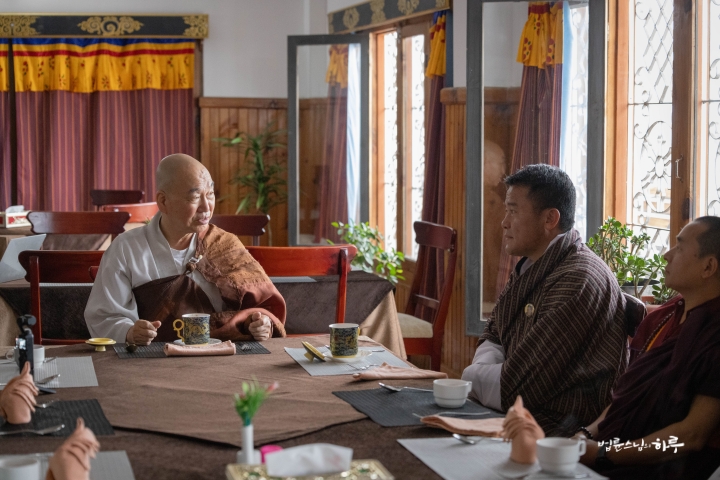
“For people with low living standards, when I went inside their homes, the home environment was very poor. There’s a stove inside the house so it’s full of smoke, even though several families live there, there’s no internal division, and the kitchen was in poor sanitary condition. From the outside, all the houses look clean, but when you go inside, they’re not clean. I think improving the interior of houses will be the most important task in the future. So in the long term, I consider remodeling houses to be the most important work.”
“I’d like to inspect together when you come next time. From the outside they look fine, but when you go inside the houses, there’s often nothing. This is especially true for poor houses.”
“Of course it could be because they don’t have money, but it could also be because they only live in traditional ways. They don’t have ideas about how to live more comfortably. So we need to create several sample model houses to show residents and listen to their opinions on how to improve them. We could make them better if we spend a lot of money, but we need to find ways to make them better while spending as little money as possible. Because that’s the only way we can expand this project to more areas. If it costs a lot of money, it’s difficult to expand. If you could tell me about particularly difficult areas in Trongsa, I’ll survey them and proceed with projects.”
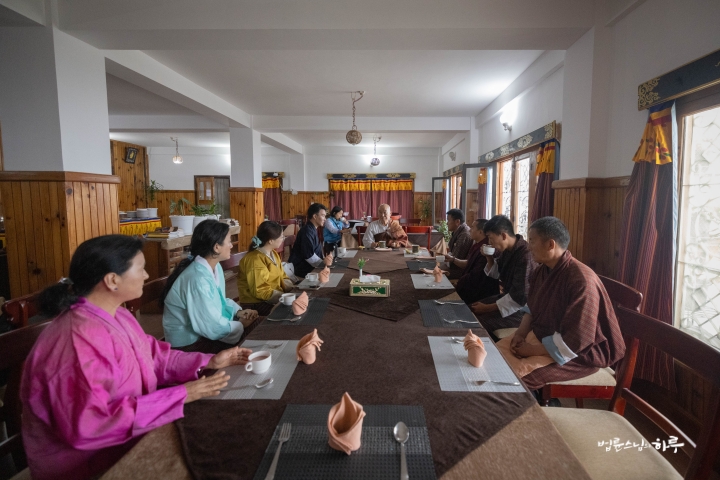
After talking for two hours, they promised to meet again and got back in the car heading for Thimphu.
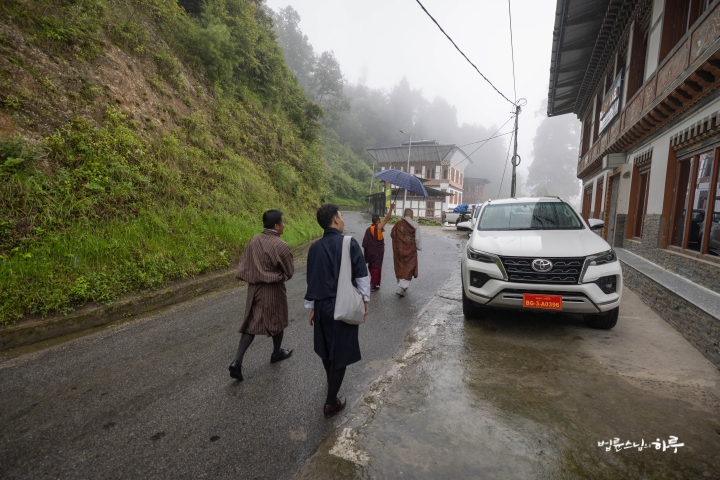
It takes 4.5 hours to get from Trongsa to Thimphu. Like in Zhemgang, there were sections in Trongsa where the road was blocked due to landslides.
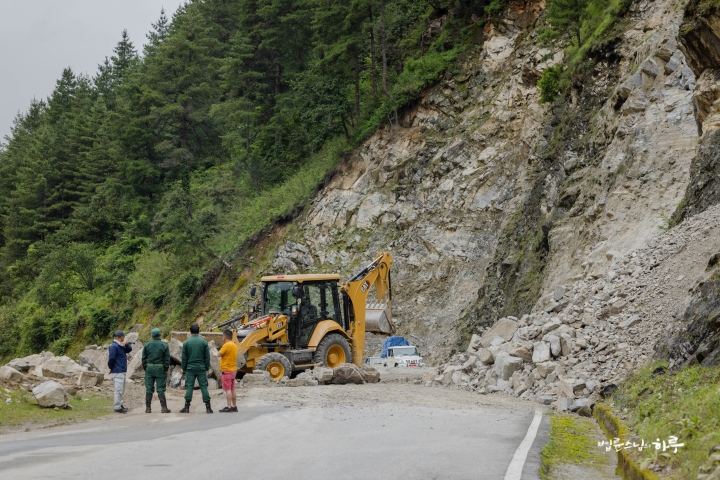
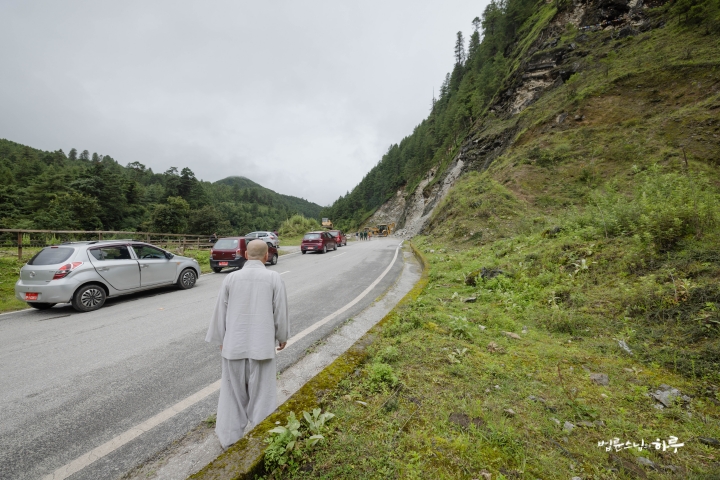
Fortunately, when Sunim’s group arrived, heavy equipment had almost finished clearing the fallen rocks. After waiting a bit, the road became passable and they were able to continue safely on their way.
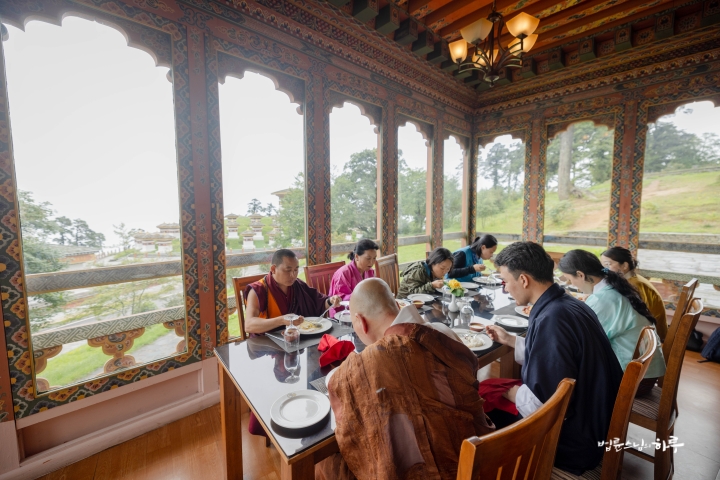
At Dochula, the highest pass at over 3,000 meters above sea level, they briefly got out of the car to have lunch. After finishing the meal, they continued driving toward Thimphu.
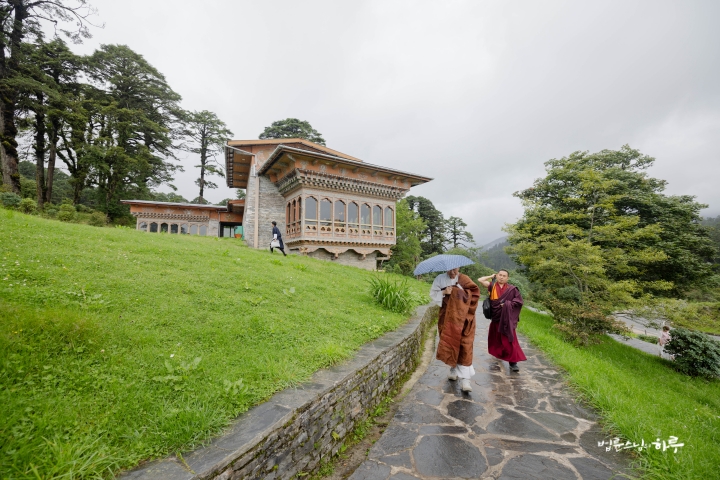
They arrived in Thimphu at 2:30 PM and visited a small temple.
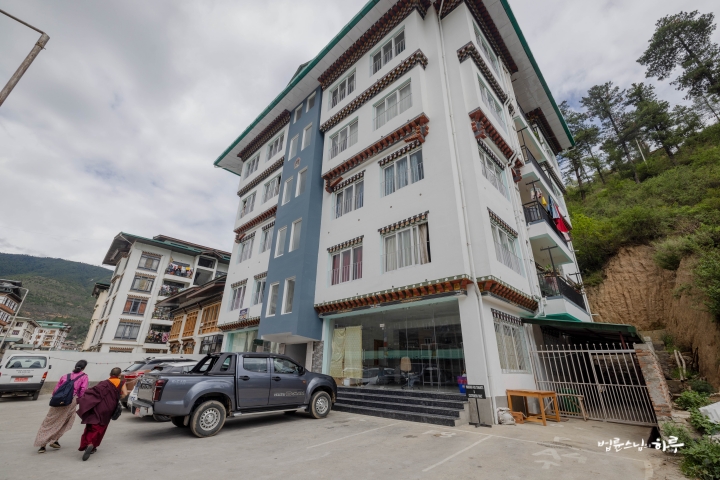
This is a temple run by Rinchen Dawa, who provided interpretation services during this survey, along with Bhutanese monks. In Bhutan, funeral costs are a big burden when someone dies, but Rinchen Dawa helps poor people by arranging funerals at low cost with monks.
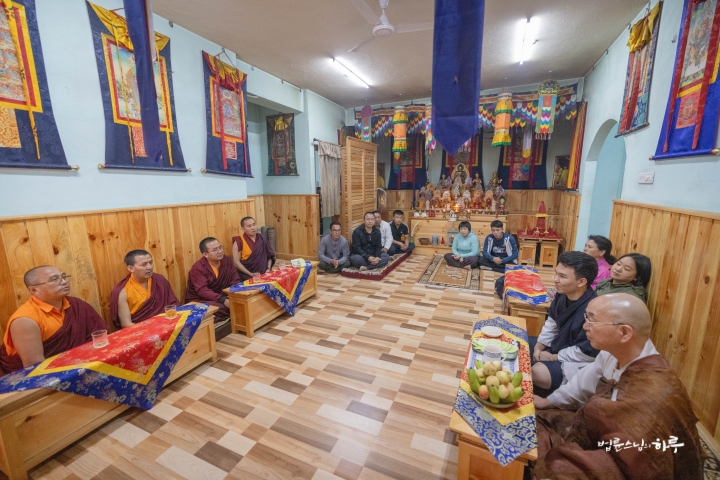
Several devotees also gathered to greet Sunim. He had a brief conversation with monks from Khomsar, including Dorji Lama who was accompanying Sunim on the survey.
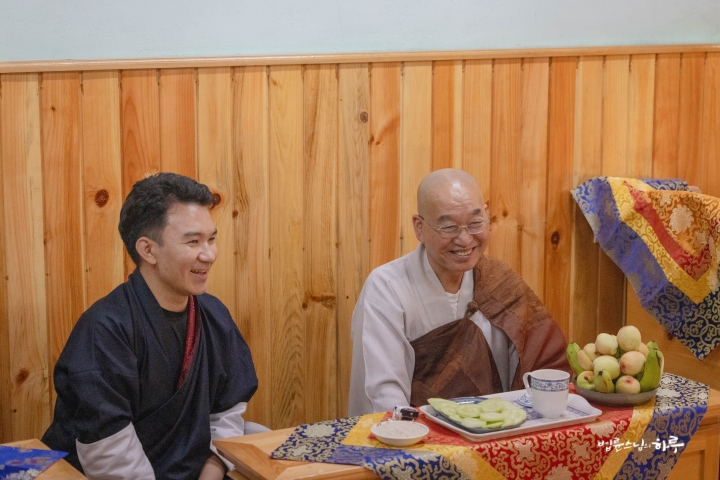
“I mainly travel to many places to support people in need in poor countries. This time, I conducted pilot projects to improve residents’ lives in Zhemgang, the poorest area in Bhutan.”
“Thank you sincerely for providing so much support to Zhemgang and Khomsar villages.”
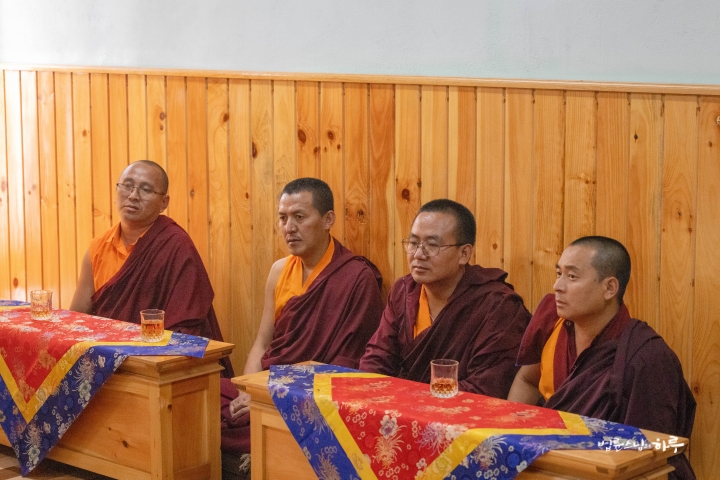
Sunim gave donations to the Bhutanese monks.
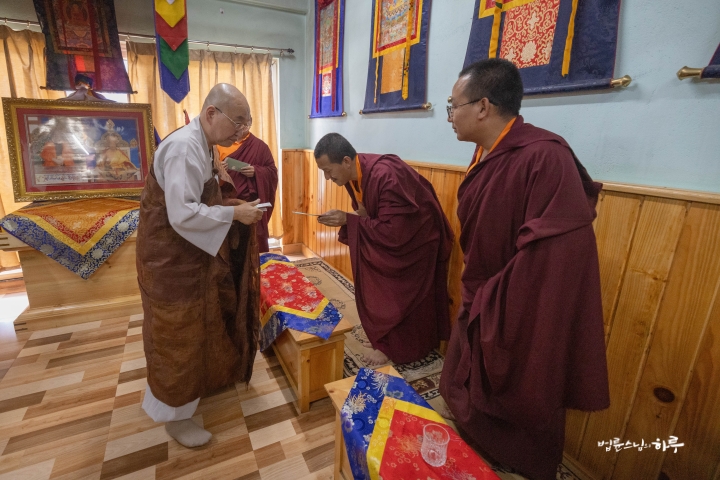
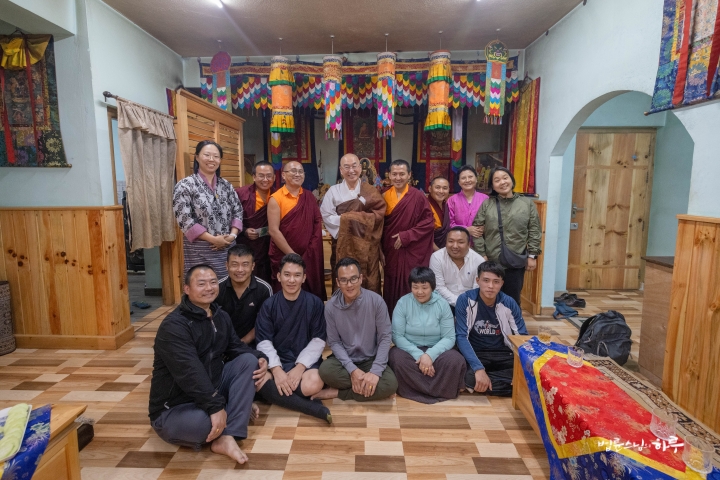
They took a commemorative photo together and left the temple.
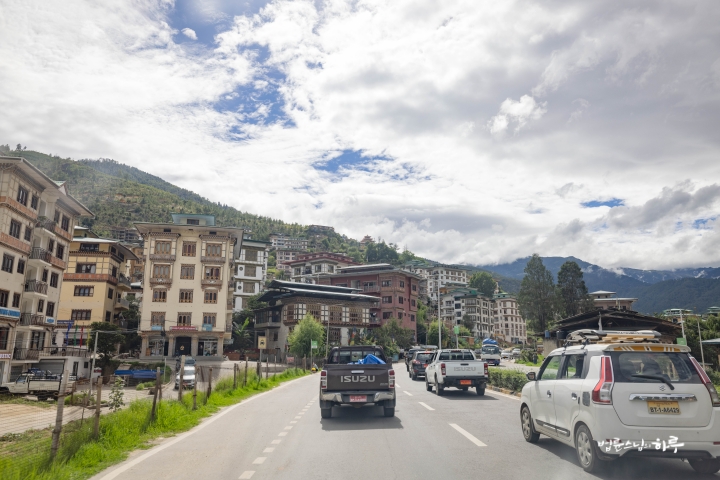
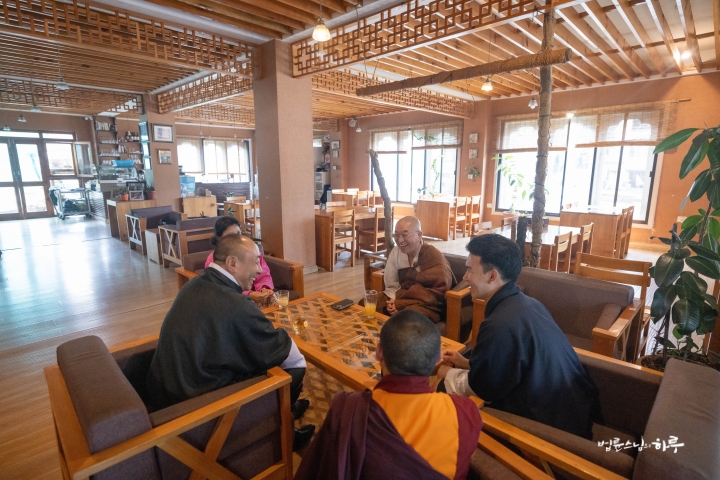
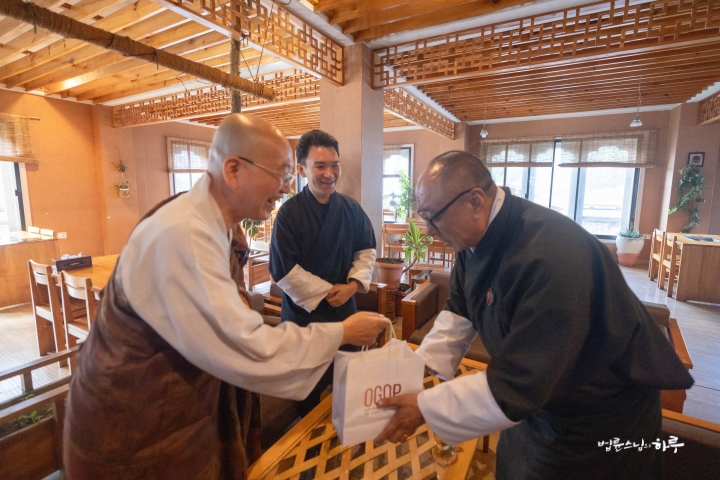
At 3 PM, Sunim met with Bhutan’s opposition leader at the Korean restaurant Sanmaru to explain and discuss sustainable development projects.
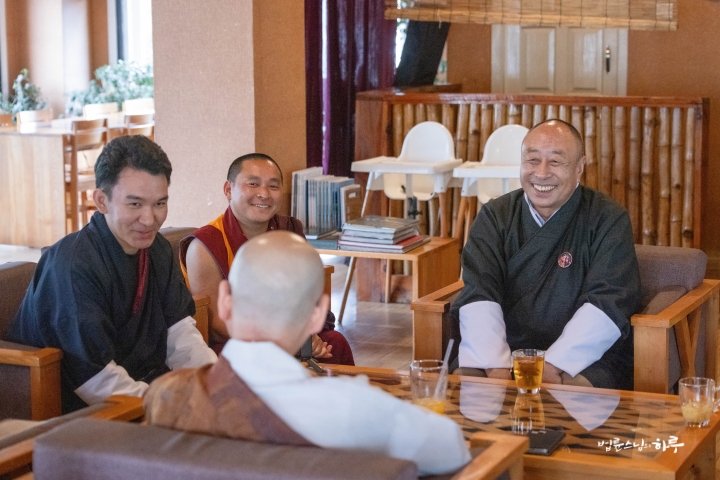
Dasho Pema Chewang, leader of the Bhutan Tendrel Party (BTP), which has the second most seats after the ruling party, warmly welcomed Sunim.
“Welcome to Bhutan.”
“You’re in politics – how is it? In Korea, politicians fight with each other and the people suffer.”
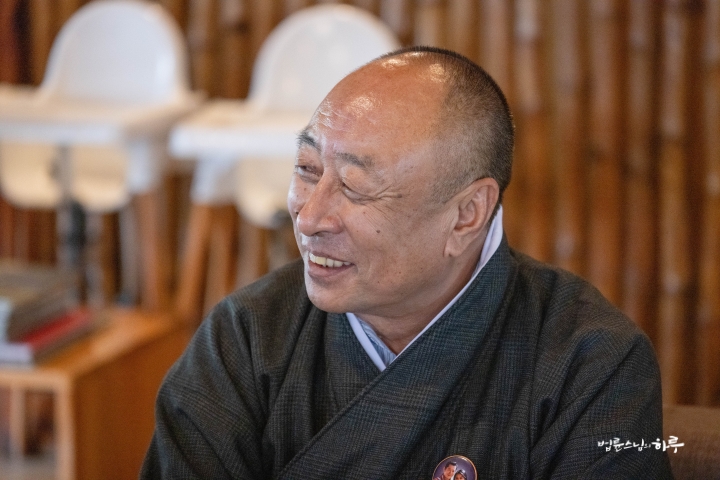
“Bhutan has a king, so whether opposition or ruling party, we ultimately cooperate to fulfill the king’s wishes. So we don’t fight as severely as in Korea. When politicians fight, only the people suffer losses.”
“You’re absolutely right.”
Bhutan faces a ‘brain drain’ problem with youth unemployment reaching nearly 30% due to job shortages, causing young people to leave the country in large numbers. Sunim expressed concern about Bhutan’s biggest problem – the youth issue.
I’m Worried About Bhutanese Youth Leaving for Foreign Countries
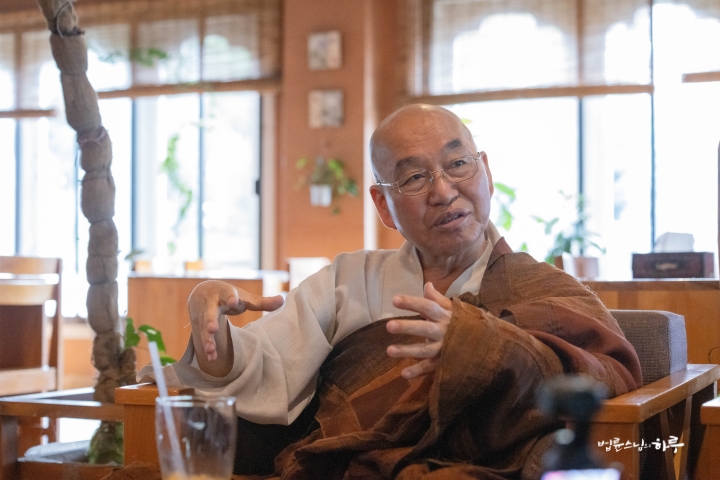
“In my view, too many young people from Bhutan going abroad will become a major problem in the future. When young people keep leaving for foreign countries, it negatively affects national stability. For example, even when trying to build roads in Bhutan, if there are no workers available, technicians and laborers from countries like India eventually come in to do the construction. When that happens, it becomes difficult for professional skills to accumulate within Bhutan. Even if the income is somewhat lower, young Bhutanese need to learn these professional skills and accumulate technical expertise for the nation’s development. Initially, since there’s a lack of skills, experts from abroad must come to build roads and bridges. However, after experiencing such projects once or twice, Bhutan should eventually be able to handle such work independently. But now, since technicians and laborers from abroad come in and do all the work, young Bhutanese have no opportunity to learn these skills.”
The opposition party leader actively agreed with Sunim’s thoughts and said:
“That’s right. You’re seeing Bhutan’s problems accurately. I understand that the Ministry of Education is having many discussions to change the system.”
What Does It Really Mean to Live Well?
Sunim also talked about the side effects of English education and internet education.
“It’s good that Bhutanese children learn English from a young age and receive education about the internet. However, as they become proficient in English and encounter the world through the internet, it seems to have accelerated the phenomenon of young people going abroad. If they didn’t know English, they wouldn’t go abroad as much. So if I get the chance, I’m thinking of giving lectures at high schools or universities in Bhutan. I’ve already thought of the lecture topic: ‘What does it really mean to live well?’ I want to ask young Bhutanese this:
‘Is it living well if we just go abroad and earn a lot of money? Or is it more important to work here, even with a smaller salary, to make our country more beautiful and develop it?’
I plan to lecture on this topic. I want to share with young Bhutanese about what it truly means to live meaningfully.”
The opposition party leader emphasized that a change in consciousness among civil servants must come first.
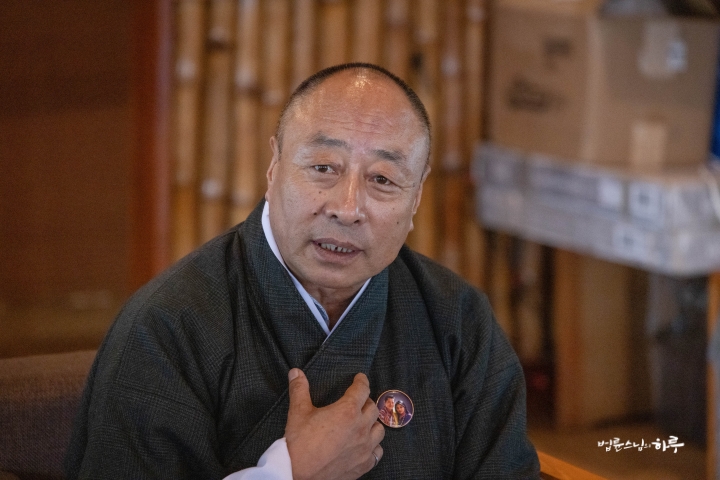
“I would be truly grateful if you could give many such lectures in Bhutan. And I would also ask that you give lectures not just to university and high school students, but also to civil servants. The phenomenon of Bhutanese going abroad actually started with the civil servant group. Since civil servants are leaving, students are following in their footsteps. If you could give lectures to civil servants, it would be very helpful.”
Sunim replied.
“First, I’ll start with training education for civil servants working on sustainable development projects in Trongsa and Zhemgang. If necessary, we could also bring them to Korea for training. It’s necessary for them to observe that while economic development has its benefits, it’s not all positive. However, for now, we need to first conduct pilot programs in Zhemgang for about 5 years focusing on lifestyle improvement movements and consciousness reform movements. After evaluation, if it’s deemed successful, we should expand it throughout Bhutan. It hasn’t been sufficiently tested yet.”
Sunim showed the opposition party leader a video of repairing poor houses and constructing irrigation channels in Langdurbi village.
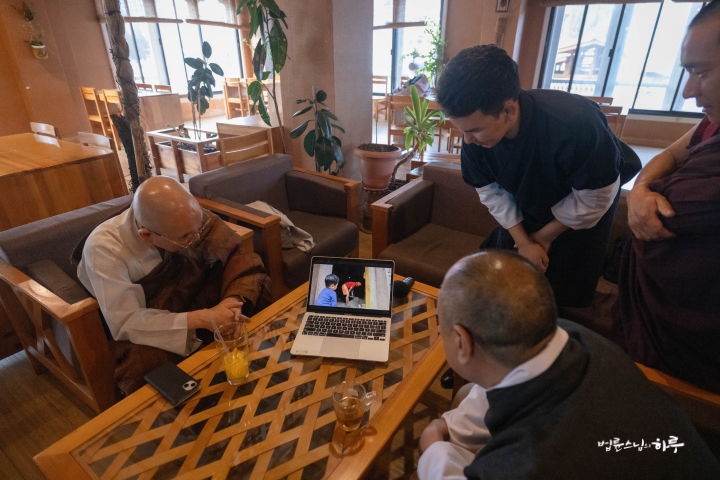
After watching the video, the opposition party leader said:
“When the government builds irrigation channels, the residents should maintain them well afterward, but the lack of ownership consciousness among residents is a big problem.”
Sunim emphasized that drawing out residents’ voluntary participation is an important goal of this project.
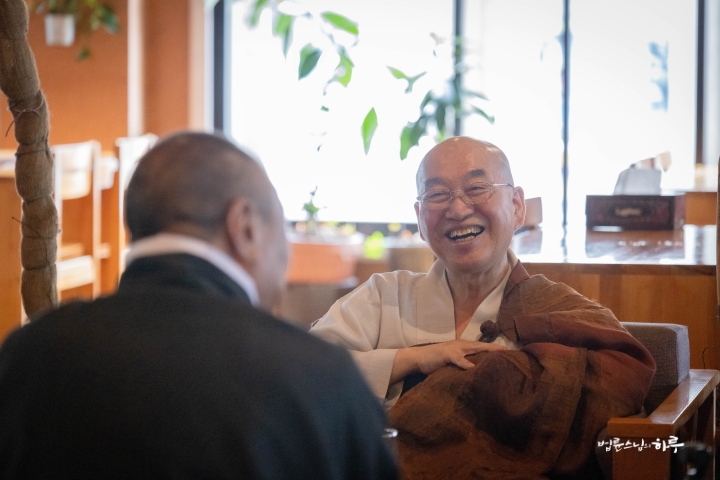
“That’s right. There was an irrigation channel built 20 years ago, but because the residents didn’t maintain it continuously, it was completely destroyed. In that situation, when residents asked for a new irrigation channel to be built, I said no. I said I would support them if they would repair it, so we’re currently in the process of repairing it while helping them develop a sense of ownership.”
“I want to express my gratitude to you. Bhutan’s national finances are very poor, and we can’t even secure a budget, so what the government can do is limited. I’m truly grateful that you’re conducting pilot projects in areas where the government’s reach doesn’t extend.”
The opposition party leader repeatedly expressed gratitude to Sunim, saying that the work JTS is doing in Bhutan is very necessary.
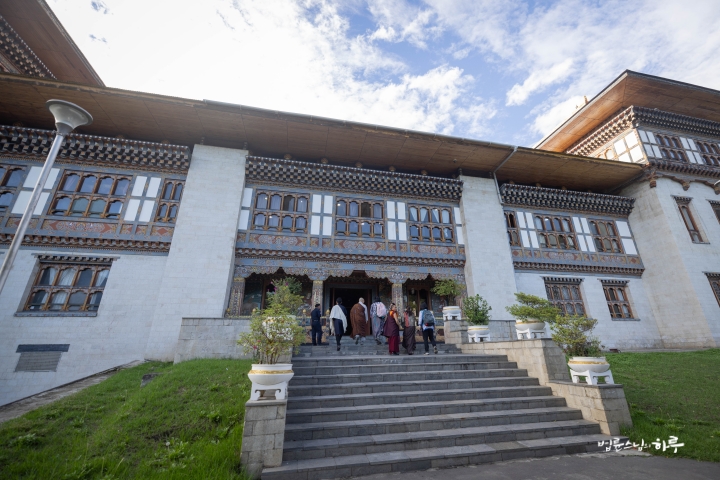
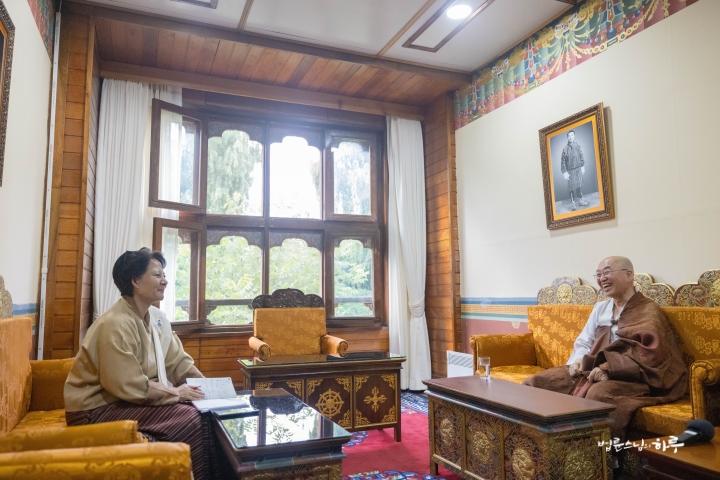
Next, they headed to the Bhutan central government office. They met with Cabinet Secretary Kesang Deki, with whom they had signed a pilot project MOU last April.
Sunim shared the results of the pilot project with the Cabinet Secretary and explained future plans.
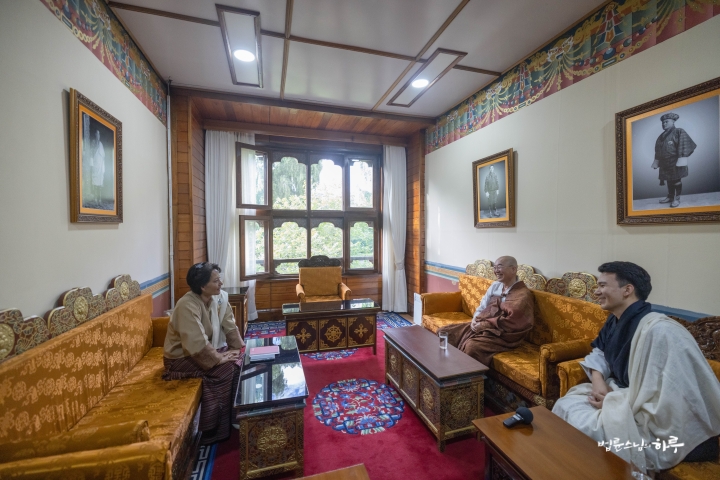
“Since it’s the rainy season, we could only do a little of the pilot project. So there’s nothing special to evaluate, but the evaluation from residents and village leaders seems positive. According to what I heard from the Tshogpa, Mangmi, and Gup, they were somewhat hesitant, wondering ‘Will the residents really participate as Sunim suggested?’ But when they actually tried it, the residents participated very happily. When I met the residents directly, they said, ‘Since Sunim is helping us, we should work hard too,’ and expressed their desire to continue participating.”
“That’s wonderful!”
Will You Wait for the Government to Do It, or Shall We Do Small Things with Our Own Hands?
“The next project can probably start in September after the rainy season ends. And more full-scale projects can only begin in November after the harvest is finished. I told the residents this:
‘If you wait 10 years, the government will do everything for you. But do you want to wait until then? Or shall we do small things with our own hands?’
Everyone answered that they would do it with their own hands. So I said let’s not wait for others to do our village’s work, let’s do it ourselves. For example, laying pipes over long distances from water sources to farmland costs a lot of money, so the government should do that, but we can make the channels that go into each field. All the residents agreed with my proposal.
Problems and Solutions When Building Houses for the Poor
There is a somewhat difficult problem. The participation rate of villagers seems to drop slightly for personal matters like building houses for people without homes. So I addressed this problem by saying:
‘We shouldn’t think of it as “There’s one person without a house in our village, so let’s build a house for that person.” Instead, we should think, “Looking at this person, they work really hard but their circumstances are very difficult. If I had money, I’d want to help them first, but since I don’t have money, I’ll at least go and help with the work for a few days.”‘
So if all the residents agree to build that person’s house, JTS will provide technicians and materials. We’ve started by making sure that building the house is accepted not as an individual matter but as our village’s matter. Various cases will probably emerge by autumn. I’ll report on various cases at that time.”
“Thank you.”
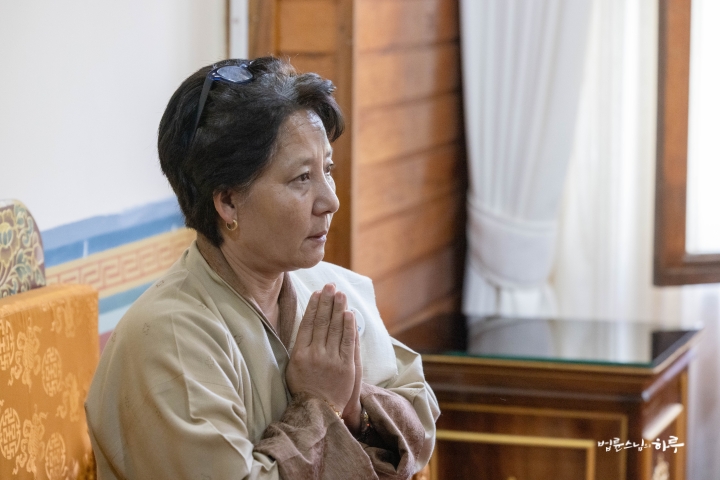
They then discussed several topics. JTS has a principle of operating on a volunteer basis, but they proposed whether the government could cover expenses when civil servants monitor sites and labor costs when bringing in professional technicians, and whether the Bhutan government could provide tax exemptions if heavy equipment like excavators and dump trucks are sent from Korea. They concluded the conversation with the Bhutan government agreeing to discuss these matters and inform them of the results.
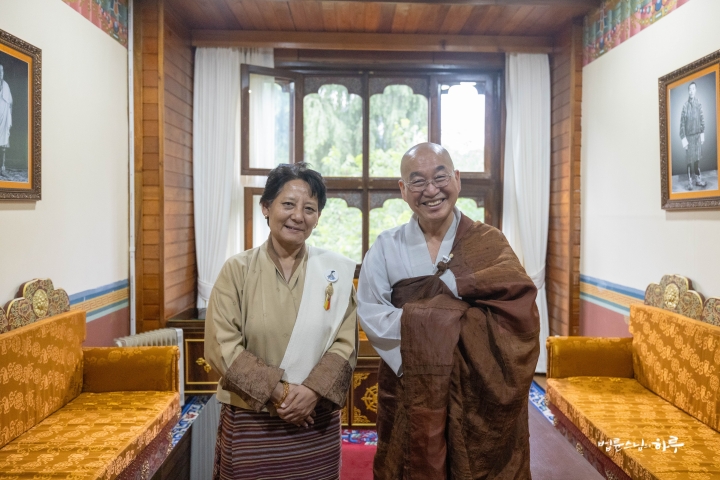
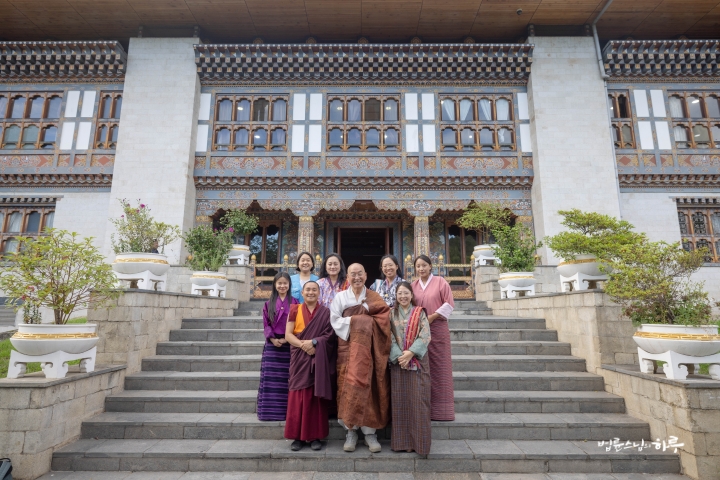
As they left the central government office, they took a commemorative photo with Yeshi, Kesang, and other central government officials who had accompanied them on the survey for the past 5 days.
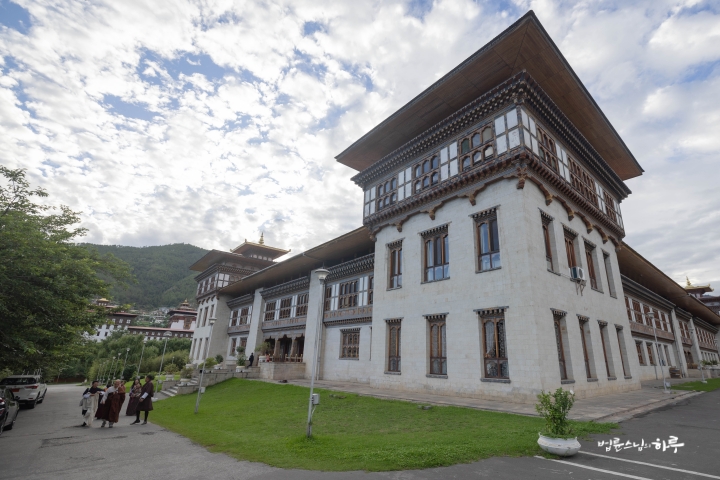
They got back in the car and headed to the Bhutan Nuns Foundation (BNF) on the outskirts of Thimphu. After climbing a hill for a while, the Bhutan Nuns Foundation appeared.
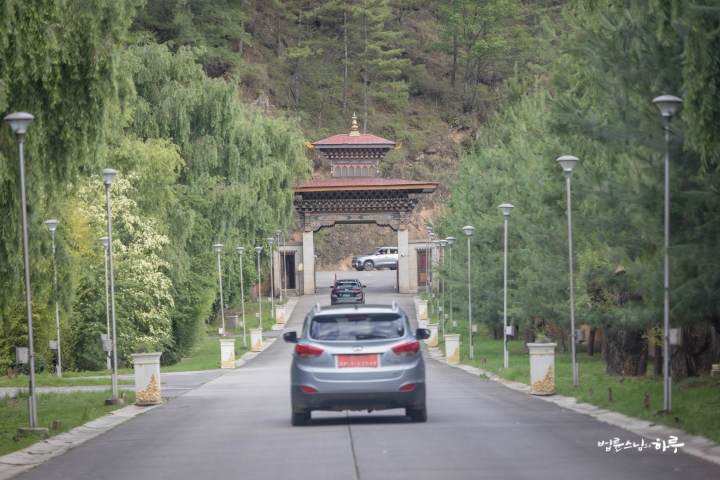
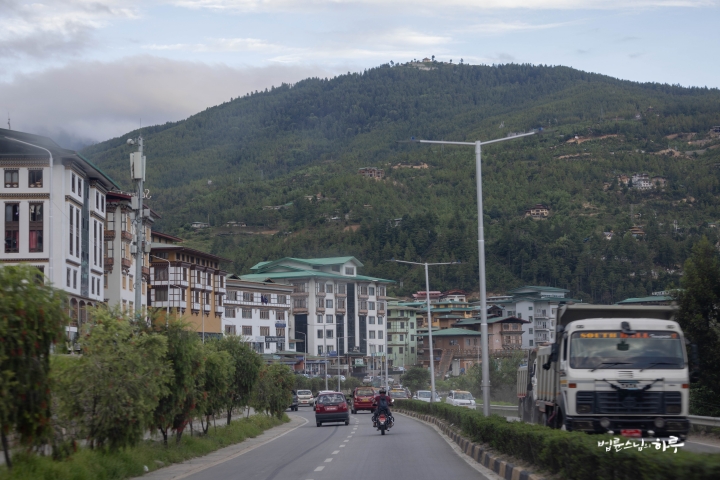
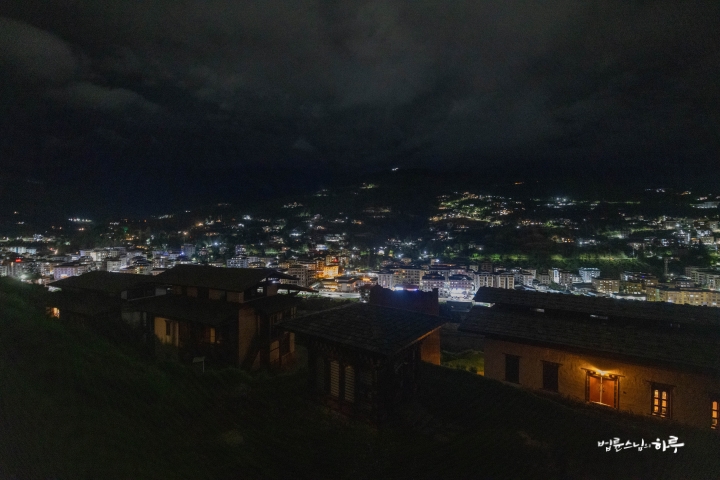
After unpacking and having dinner, they discussed tomorrow’s survey schedule and concluded the day’s activities. It was another long day.
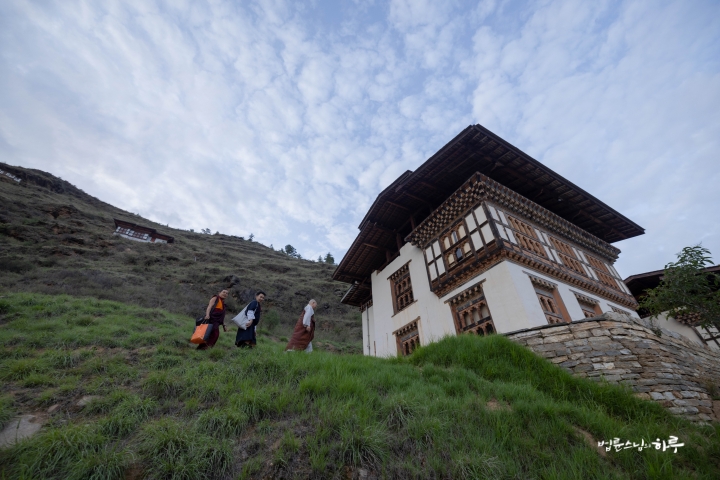
Tomorrow morning, after conducting a live broadcast of the Weekly Dharma Assembly for Jungto Society members at the Bhutan Nuns Foundation (BNF), they will move to Paro Taktsang Monastery to survey the area with Bhutanese officials. In the afternoon, they will meet with Dasho Karma Tshiteem, the former Gross National Happiness (GNH) director, and then meet with the Queen Mother of Bhutan, who leads a charitable foundation, to share the results of this pilot project and discuss future cooperation directions.