Should I Discharge from the Military Due to My Injury During Rehabilitation?
April 25, 2026 - Farm Work, Guest Schedule
Hello. This morning, Sunim tended to the vegetable garden, inspected the mountain field, and did farm work. In the afternoon, guests arrived and he spent time with them.
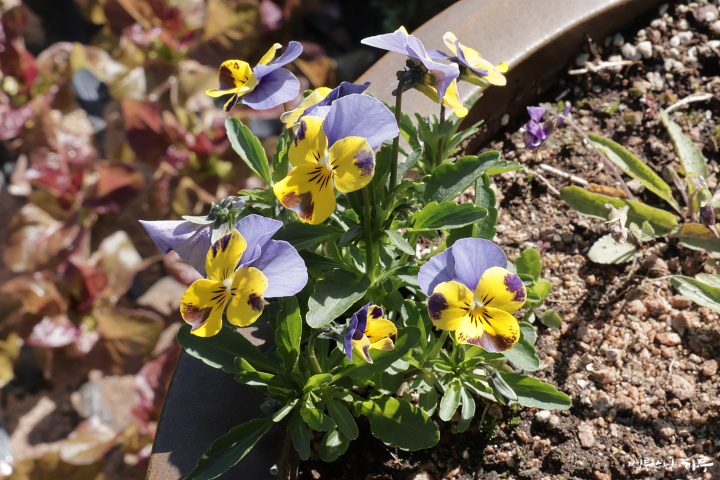
Sunim began his day with early morning practice and meditation. After a simple breakfast, he changed into work clothes and started farm work at 9 AM. Bogwang Dharma Teacher, the India JTS Secretary General visiting Korea after a year, and Hyanghun Dharma Teacher from the Philippines JTS joined the farm work.
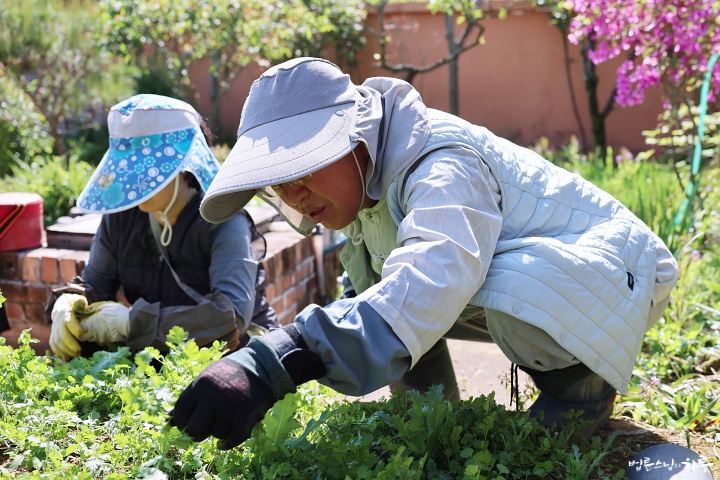
Sunim started by organizing the cilantro garden. He snipped the bushy cilantro leaves with scissors. While trimming the cilantro shoots, Sunim explained:
“Please cut leaving one leaf at the bottom. New shoots will grow from between those leaves.”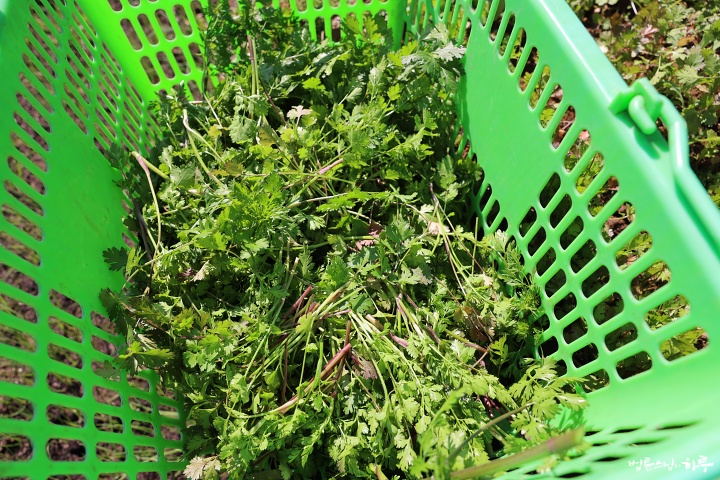
As Sunim and the Dharma Teachers cut and collected the cilantro leaves, they quickly filled a basket. It was enough for today’s lunch. After inspecting and organizing the garden, they headed to the mountain field. The mountain field gets plenty of sunlight and is a good place for mugwort to grow. They planned to inspect the field and also gather some mugwort. They gathered their tools and headed to the mountain field.
As Sunim walked out the gate, he looked at the mountain full of light green and said:
“Wow, look at that mountain. The light green color is so beautiful.”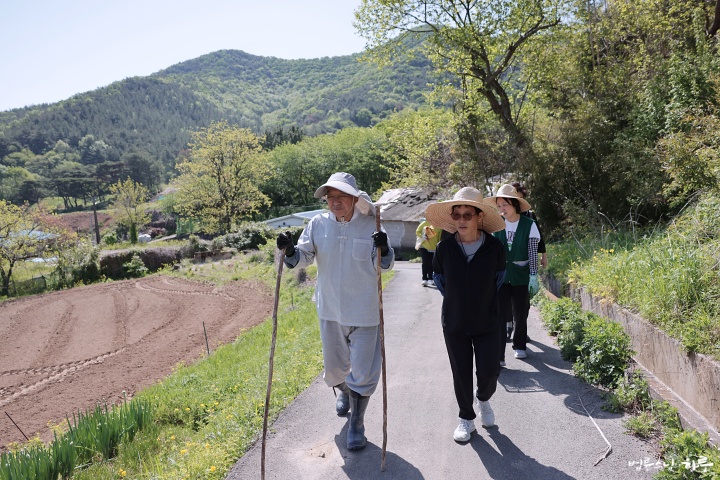
Looking at the distant mountains full of light green, they passed through the village’s rice paddies and fields on their way to the mountain field. The path to the mountain field had a slope. Sunim slowly made his way up using two walking sticks. On the way to the mountain field, Sunim explained the places where many spring herbs grow.
“This is where a lot of daylilies grow. Last time we picked daylilies here and had a hearty meal.”After walking a bit further, Sunim explained:
“There are many deodeok (mountain herbs) here.”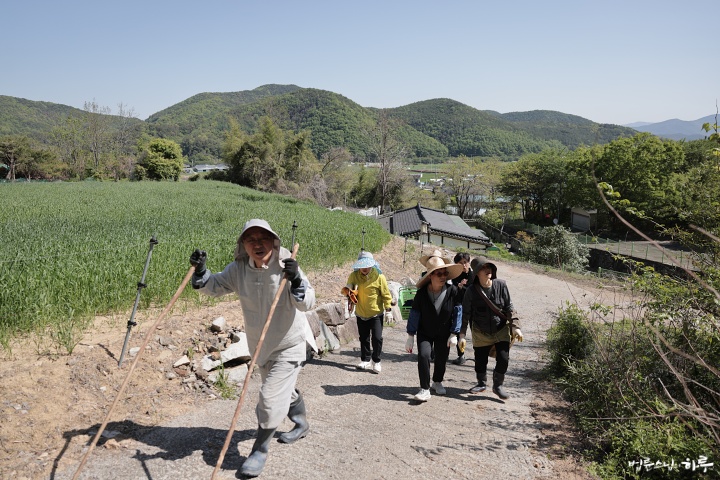
Taking their time walking up and chatting, they soon arrived at the mountain field.
“Oh my, we planted bracken here, but they all died.”Sunim inspected the crops and trees he had planted a few years ago. Going up a bit further, white peony flowers were in bloom.
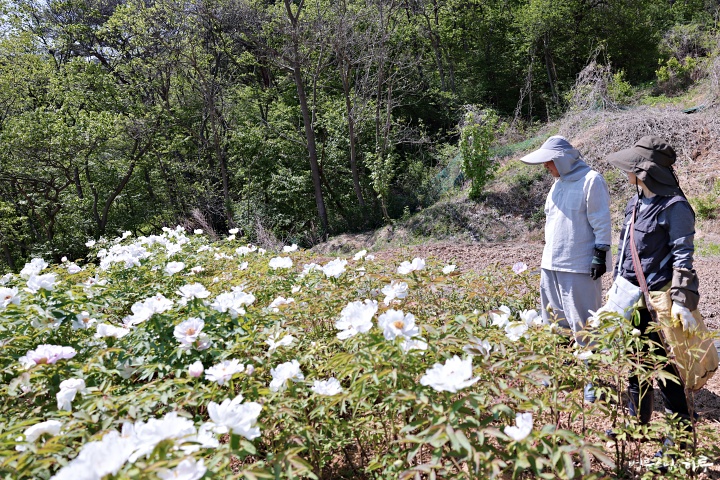
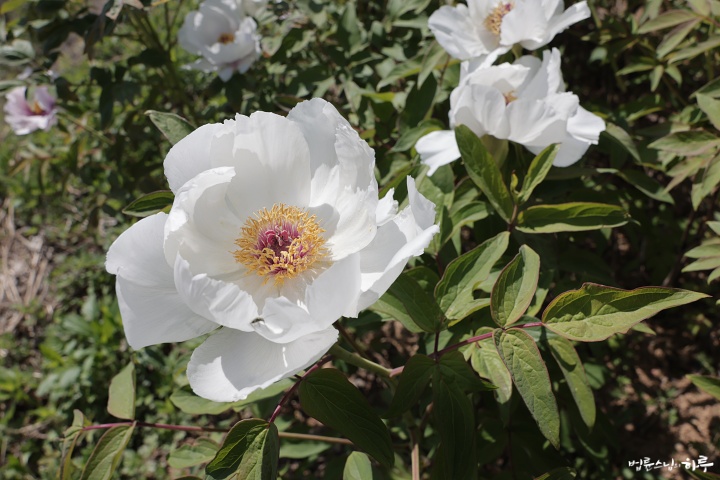
The white peony flowers blooming among the green leaves added to the spring atmosphere.
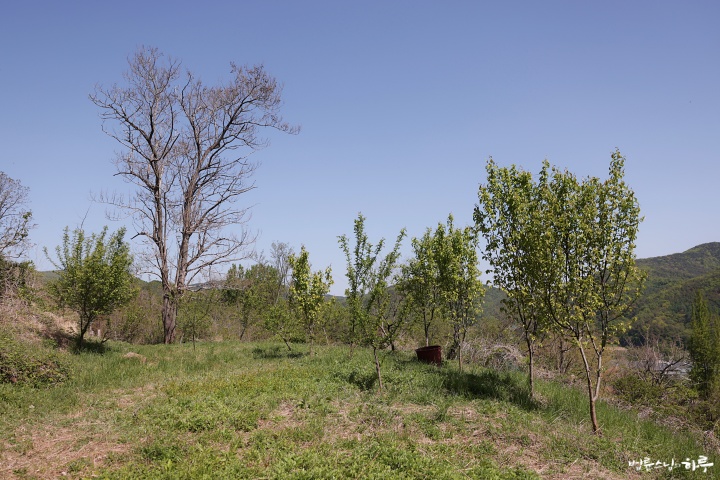
Sunim also inspected the area where he had planted fruit trees a few years ago. He had planted plum, peach, and plum trees, but some had died due to lack of proper care and others were not in good condition. He did some light pruning on the surviving fruit trees.
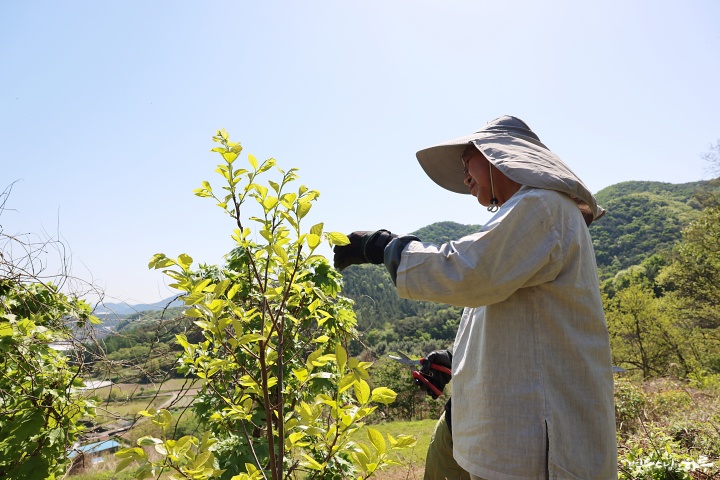
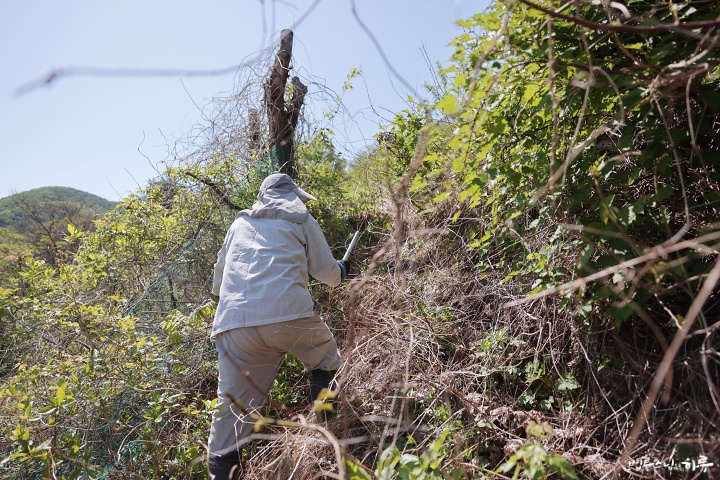
While inspecting the field, Sunim also cleared away kudzu vines.
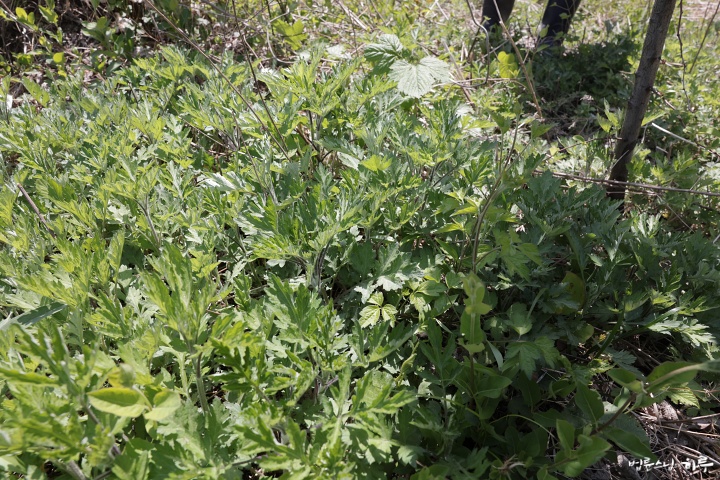
In various sunny spots throughout the mountain field, there was plenty of mugwort growing. Sunim and the Dharma Teachers began harvesting mugwort. Working together, they quickly filled a basket and a sack.
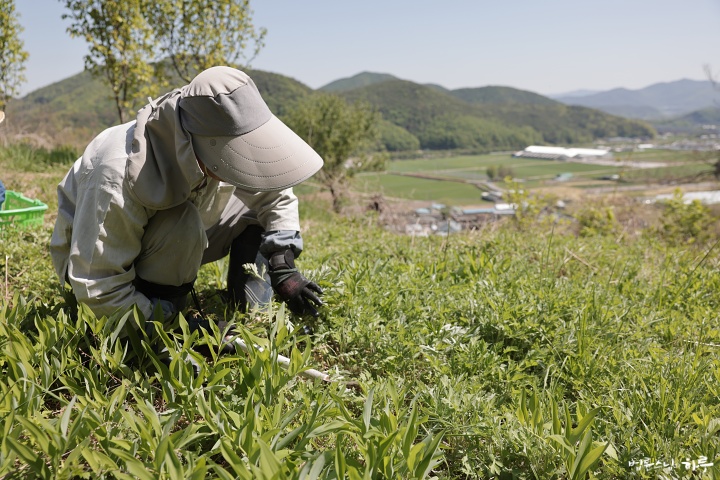
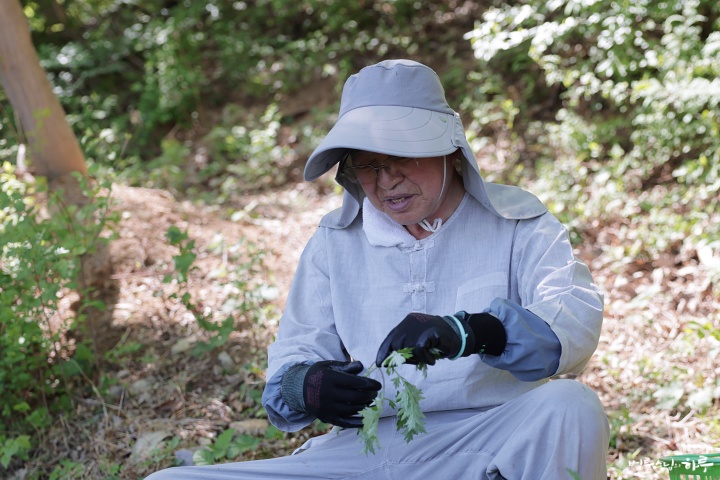
After gathering enough mugwort, everyone sat in the shade together to trim it. They plan to send it to the mill to make mugwort rice cakes. Sunim explained and demonstrated how to trim mugwort. As they chatted together, they trimmed quite a large amount of mugwort.
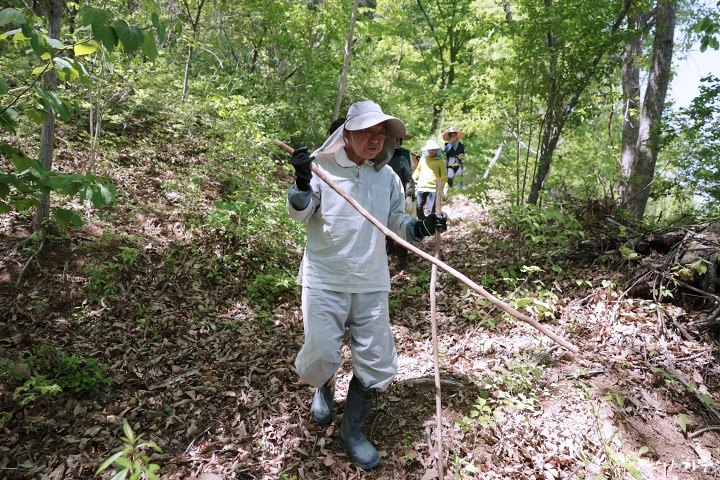
They had scheduled lunch for 11:30 AM. After checking the time, they wrapped up the farm work. They gathered the tools and trimmed mugwort and came down.
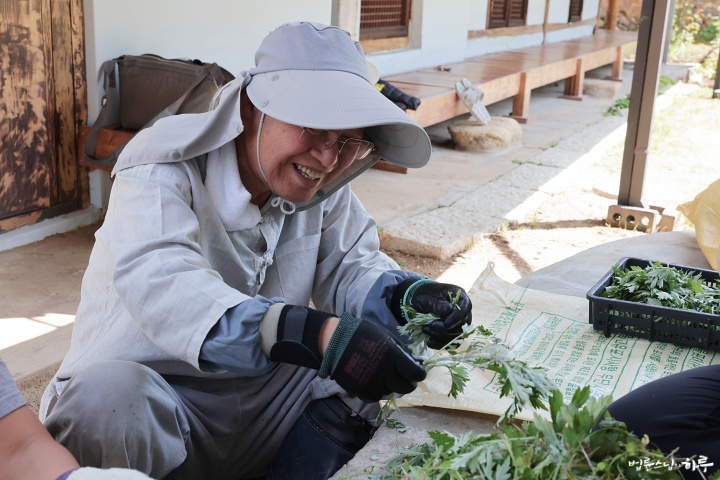
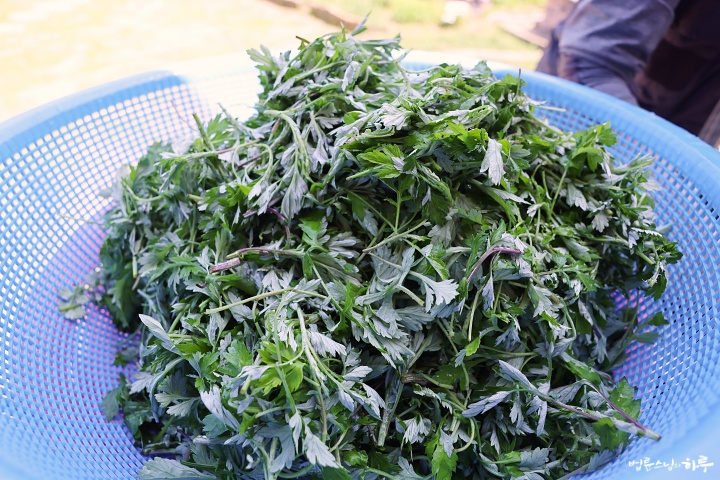
As they came down in time for lunch, there was still some untrimmed mugwort. While some trimmed the mugwort, others organized the tools. Still others washed the mugwort to be sent to the mill. Since they had trimmed the mugwort immediately after picking it from the mountain, it was clean enough that they only needed to wash off some dust.
Sunim had lunch with the Dharma Teachers at a table full of lettuce wraps from the garden and spring herbs. For the Dharma Teachers who had lived abroad for a long time, a table full of lettuce wraps and spring herbs was the best gift of spring. They continued to chat over the meal. After lunch, Sunim prepared to welcome guests. Writer Noh Hee-kyung, representative of Gilbeot (a celebrity volunteer group at the Jungto Society), and her party came from Seoul to meet Sunim at Dubuk Jungto Retreat Center. From late afternoon, Sunim spent time with the guests. In the evening, he did manuscript proofreading and business communications whenever he had time, and at night he toured Gyeongju’s night scenery with the guests before ending his day.
Tomorrow morning, after farm work pruning aralia trees, he plans to take a walk around Gyeongju with the guests.
Since there was no Dharma talk today, this post concludes with a story from the “Happy Conversation” Dharma Q&A held at the Busan Design Promotion Center on April 17th.
Should I Discharge from the Military Due to My Injury During Rehabilitation?
“My concern is about career choices. I’m a woman in my mid-30s and a professional soldier. Since my 20s, I’ve received a lot of help from Sunim’s lectures and books whenever I had concerns. Two years ago, I injured my ankle and during surgery and treatment, the nerves below my knee were damaged, causing walking problems. At the time, I deeply resented the surgeon who operated on me, and even though I was promoted that same year, the responsibility and burden of the rank were heavy. Moreover, while I need consistent rehabilitation, the environment doesn’t provide sufficient conditions for rehabilitation, making it very difficult both physically and mentally. At that time, I kept remembering Sunim’s words from a lecture: ‘If it’s too hot, put it down.’ So I submitted my discharge application and am currently focusing on rehabilitation during my duty assistance period, thinking about whether to try returning again. However, my practical concerns are significant. Even athletes sometimes choose to retire when injured, and I’m also at a crossroads wondering whether it would be better to discharge or continue to the end while doing rehabilitation. I would appreciate your wise counsel.”
“Yes, I understand. Thank you.”