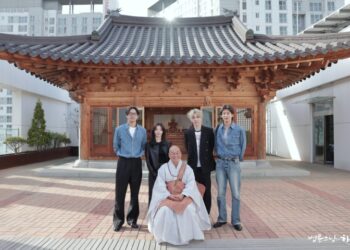

Apr 24, 2026 – Travel to Dubuk, Live Online Dharma Q&A
Hello. Sunim worked at the center, had an external meeting in the afternoon, then traveled to Dubuk for a live online Dharma Q&A in the evening.
Sunim began his day with early morning practice and meditation. After breakfast, he had a meeting at 8 AM in the reception room on the 10th floor of the Jungto Social and Cultural Center. After lunch, he had an external meeting, and immediately after it ended, he traveled to Dubuk Jungto Retreat Center.
Sunim’s original schedule was to visit Syria starting today, but due to the Middle East conflict, regular flights were canceled and the Syria visit was postponed. This created time for an online Dharma Q&A broadcast, so he decided to do the broadcast and traveled to Dubuk Jungto Retreat Center.

To ensure he wouldn’t be late for the 7:30 PM live online Dharma Q&A, he only made brief restroom stops at rest areas and had a simple bread dinner in the car to minimize stopping time while rushing to Dubuk Jungto Retreat Center. The Dharma Q&A broadcast staff made thorough preparations in case traffic delays prevented Sunim from arriving at the studio before the broadcast time. Fortunately, Sunim arrived safely at Dubuk Jungto Retreat Center before the broadcast time.
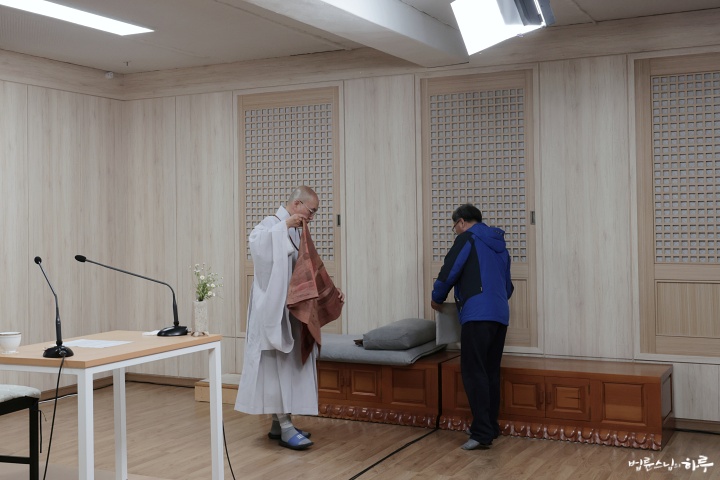
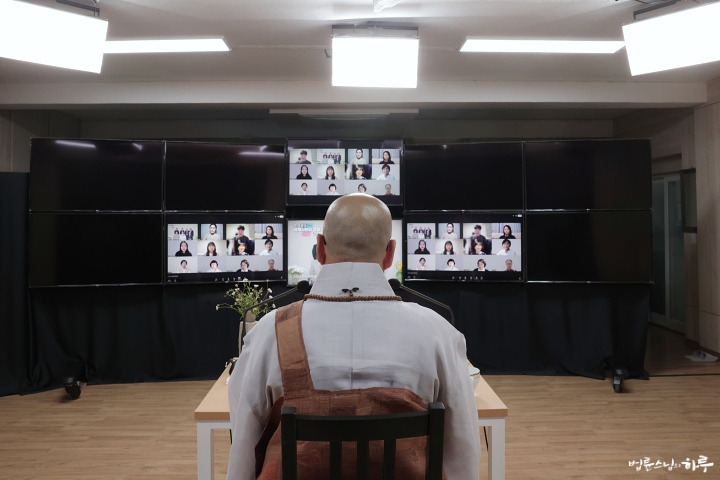
Upon arrival, he got out of the vehicle and headed straight to the broadcast studio. Sunim put on his kasaya and jangsam and sat in front of the camera.
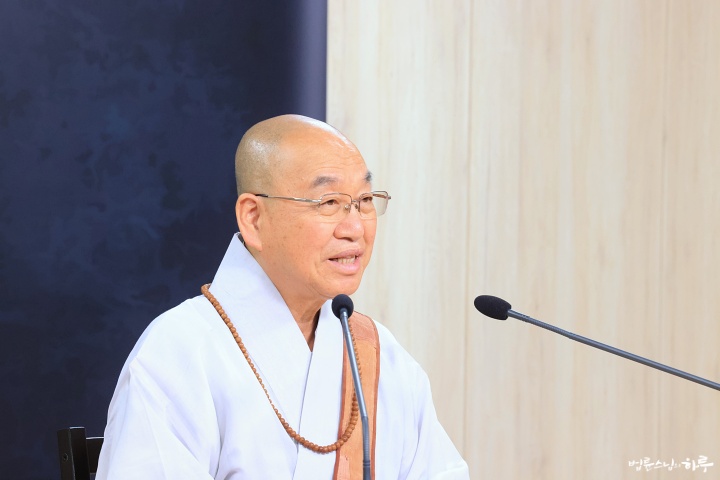
“Hello, viewers. It’s a beautiful spring day in late April. While mornings and evenings are still a bit chilly, the daytime weather is almost like summer. I recently returned from traveling to various places overseas. In the past, no matter how much I traveled around the world, I rarely felt any discomfort, but perhaps because I’m getting older, when I return to Korea from overseas, I feel relieved and think Korea is wonderful. Our Republic of Korea seems convenient in many ways, so I think that’s why I feel this way relatively speaking.
In the past when I went to America, I would say things like ‘They really built the roads well,’ because the road connections were so excellent. But these days when I go to America, the roads look old, and Korean roads seem cleaner and better maintained. Anyway, these days Korea feels like a really good place to live. However, young people actually living in Korea seem to find it so difficult that they call it hell and have many complaints about living in the Republic of Korea. But when you go overseas, you can realize that ‘Korea is a good country.’ When our president goes on overseas tours, he probably feels good too. Because the attitude of foreigners toward Korea and Korean people is very different from the past. They welcome Korea and Korean people with great respect and warmth.
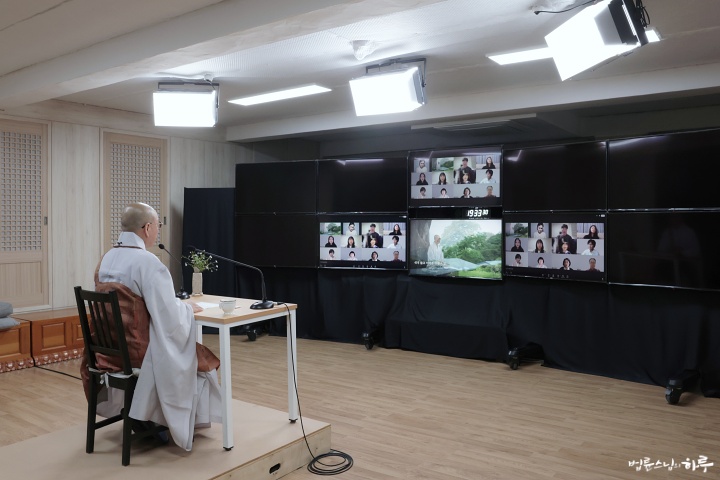
I’m happy to meet you all on this beautiful spring day in our wonderful Republic of Korea. Now, let’s listen to your difficult stories together. Dharma Q&A is a way of having conversations where you can freely express any worries, suffering, or questions you have without any prior preparation, just as they come to mind. You can have a comfortable conversation as if talking to a friend. Through such conversations, you come to realize things on your own. You might think ‘It’s not a big deal’ or ‘I can do it this way’ – this kind of self-realization is what Dharma Q&A aims to create. Enlightenment is something you do yourself. In Chinese characters, it’s expressed as ‘self-awakening’ (自覺), meaning to awaken by oneself. So I’m not unilaterally teaching you methods or directions, but through dialogue, you awaken on your own – that’s what ‘Dharma Q&A’ is about. Now, let’s listen to your stories.”
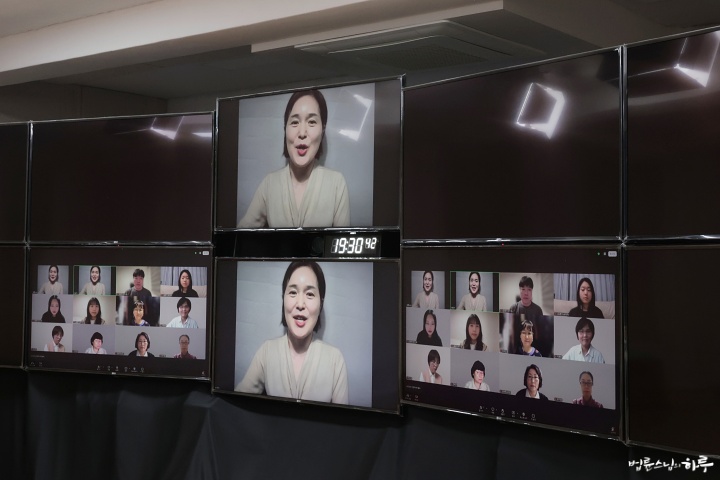
Four people had applied for questions in advance. The questioners asked Sunim questions online and had conversations with him.

Today, this post introduces the story of the last questioner among the four.
Can I Break Free from the Habit of Regret and Self-Blame?
“You need to realize that you are a being who can make mistakes.
You don’t think of yourself as someone who can make mistakes or errors, but instead have the premise that ‘I’m someone who does everything well, I shouldn’t make mistakes.’ That’s why you feel ashamed and regretful about your mistakes. If you realize ‘I am originally a somewhat lacking being, someone who can make mistakes,’ then what’s the problem with making mistakes? There are two perspectives on looking at your existence. One is the perspective that my existence is originally somewhat lacking and I will try to compensate for those shortcomings going forward, and the other is that I am originally a perfect being and I try to maintain that perfection. You think you were originally a perfect being but made mistakes that created flaws. That’s why you can’t forgive yourself for your mistakes and keep regretting them. However, if you view yourself as ‘I am originally a lacking being, so I can be wrong and make mistakes,’ and live while minimizing those errors and mistakes, you’ll focus on efforts to do better in the future rather than regretting the past.
Self-Awareness and Letting Go Rather Than Regret
If you made 10 mistakes in the past, reduce them to 5 now, and through practice reduce them to 2 in the future – this is how you should pursue self-improvement. It’s not about ‘forgetting the past,’ but rather realizing that we are all beings who can make mistakes. That is, we need to realize we are lacking beings. So you should stop at ‘Ah! I made a mistake in this area. I should be careful not to make this mistake in the future,’ rather than regretting the past, which doesn’t help your development at all. Regretting means you’re still making mistakes now. It’s proof that you’re wasting your present time.
When we make mistakes, we waste time not knowing we’re making mistakes, and when we realize we made mistakes, we waste more time being ashamed of past mistakes. So doing it this way or that way are both wrong approaches. If you’ve made a mistake now, you need to recognize it and let go quickly. Don’t dwell on past mistakes but use them as lessons and focus on not making mistakes now. In other words, instead of thinking about ‘what I did wrong back then,’ you should focus on ‘how can I avoid making such mistakes now?’ This is living awakened in the present.
From this perspective, I hope you will live your life day by day. When we’re young, we make frequent mistakes and have many shortcomings. Everyone has deficiencies when they’re young. As we get older, we gradually fill these gaps through various experiences. However, if a young person tries to live too perfectly like an elderly person, people say they’re “acting old before their time.” When an elderly person keeps making mistakes like a young person, people say they’re “immature.” But when a young person makes mistakes while continuing to push forward and try again, people say positively, “They have courage. They have a pioneering spirit.” Trying to do well from the very beginning is greed. Conversely, still not doing well after trying the same thing 10, 20, or even 100 times indicates a lack of attention. This means you’re not examining yourself. Everyone is clumsy when trying something for the first time. However, we become more proficient as time passes.
No matter how skilled we become, we can only reduce the probability of mistakes; it’s impossible not to make mistakes at all. If you made mistakes once out of ten times when you were young, and as you age, you make mistakes once out of a hundred times, you’re still making mistakes—they’re not zero. However, you’re reducing the frequency and ratio of mistakes. Even with well-made products, defective items emerge during the manufacturing process. Whether defective products account for 3%, 1%, or 0.1% of the total is a matter of numbers—defective products will still occur. If defective products initially account for 10% and gradually decrease to 3%, that’s fine. But if a company continues to produce 10% defective products despite being in business for a long time, that company will fail. The production costs would be too high. The same applies to our lives. When we’re young, we run around recklessly and get hurt often; as we age, we’re more careful and get hurt less. We are beings capable of making mistakes. Holding onto our mistakes too tightly is regret, stemming not from recognizing our errors but from being ashamed of them. The reason for shame is an attachment to our own perfectionism—the belief that “I am a being who cannot make mistakes.”
After all conversations with questioners ended, Sunim offered his closing remarks. “Haven’t we had YouTube live broadcasts for the past few weeks? Instead, you’ve been listening to ‘Happy Dialogue’ lectures at regional venues. I was able to meet and have conversations with more people than through online YouTube, and the in-person venues seemed more vibrant.
I was originally scheduled to go to Syria today. That’s why there was no online Dharma Q&A live broadcast scheduled. However, due to the Middle East conflict, my flight to Syria was canceled, which created time for an online Dharma Q&A. I’ll be doing online Dharma Q&A live broadcasts both this week and next week. I’ll see you next week.”
“Yes, we thank Venerable Pomnyun Sunim for today’s precious teachings. Please share your thoughts about today’s Dharma Q&A in the chat window.”
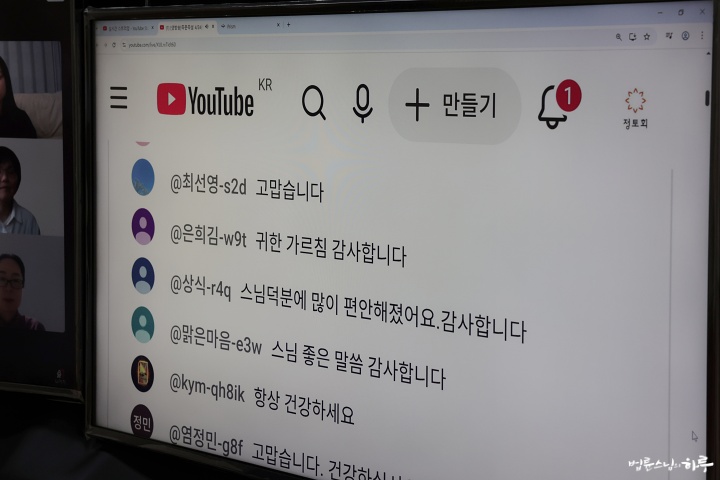
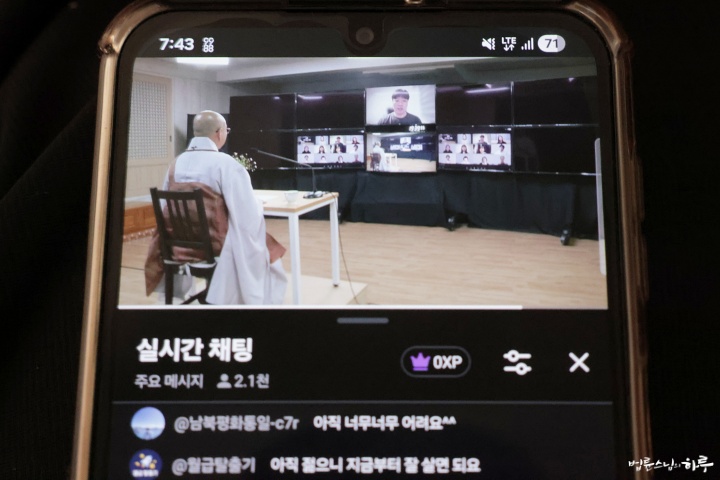
After Sunim’s closing remarks, viewers who participated in the online Dharma Q&A briefly shared their thoughts in the chat window. The Friday online Dharma Q&A concluded with the moderator reading the rapidly scrolling comments and feedback in the chat window.
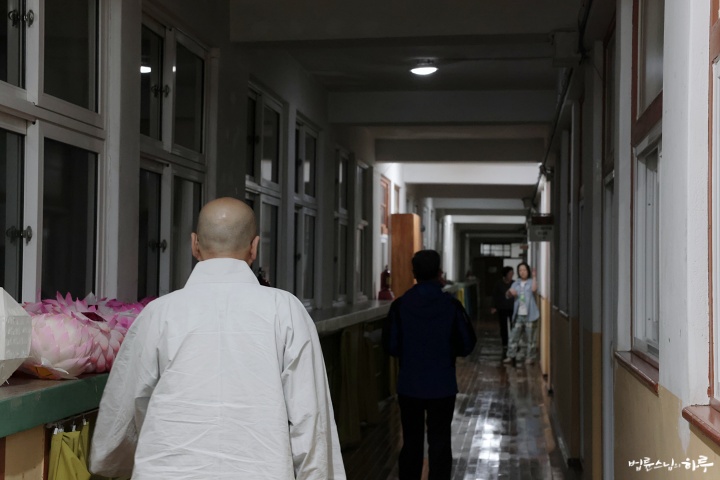
When the broadcast ended, Sunim headed from the broadcasting room at Dubuk Jungto Retreat Center to the office. Dharma Teacher Bogwang, the head of JTS India, was waiting to greet Sunim.
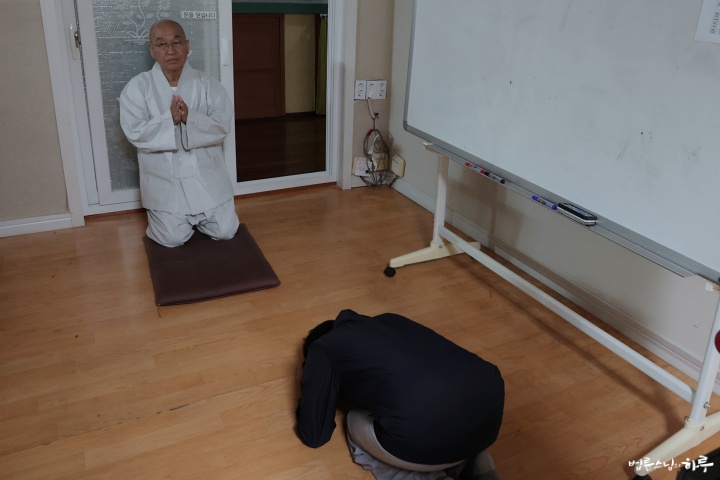
Since this was Dharma Teacher Bogwang’s first meeting with Sunim at Dubuk Jungto Retreat Center after arriving in Korea, he offered three prostrations as a greeting. Sunim briefly discussed schedules with Dharma Teacher Hyanghun, who had arrived from the Philippines today, and Dharma Teacher Bogwang from India, then concluded his day’s activities.
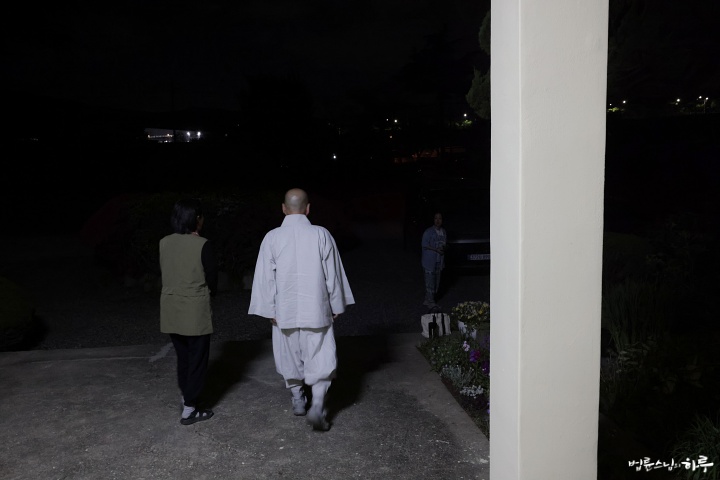
Tomorrow morning, Sunim will tour Dubuk Farm and nearby fields, and in the afternoon, he will spend time with guests.
“