I Have Different Opinions From My Wife About Child Education
Apr 22, 2026 - Religious Leaders' Meeting, Weekly Dharma Assembly, Cheongam Award Ceremony
Hello. This morning, there was a religious leaders’ meeting and Weekly Dharma Assembly. In the afternoon, there were meetings and the Cheongam (청암) Foundation award ceremony. In the evening, there was a Weekly Dharma Assembly at the Dharma Hall.
Today is the day for the monthly “Religious Leaders’ Meeting for National Reconciliation and Peace.” Sunim met with religious leaders for breakfast in the basement cafeteria of the Jungto Social and Cultural Center (정토사회문화회관).
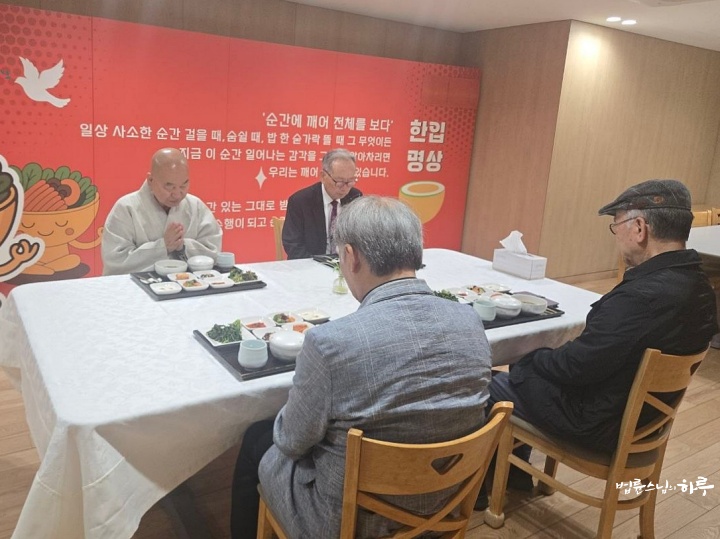
The Peace Foundation staff and volunteers carefully prepared a meal full of spring ingredients. After the meal, they moved to the conference room to have a discussion.
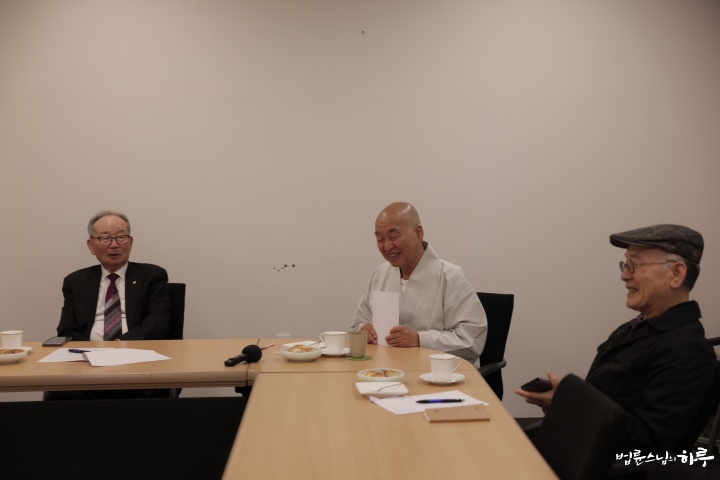
There was a detailed review and briefing about the Sri Lanka visit program scheduled for June. While discussing the program, the conversation covered everything from Sri Lanka’s population and area to the religious and ethnic conflicts in the regions to be visited, as well as the situation in areas where Sunim had conducted relief activities. Sri Lanka has a history of British colonization, which is connected to current religious and ethnic conflicts.
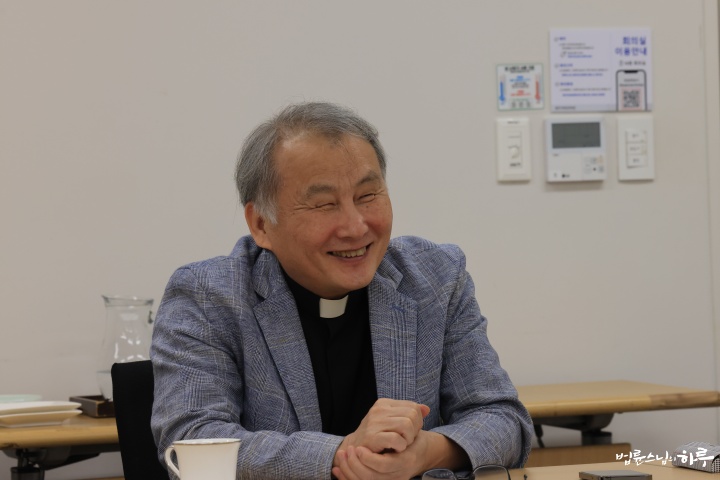
The religious leaders also discussed constitutional amendments and politicians’ views on the matter. Religious leaders working for national reconciliation and peace are naturally interested in cooperation between the ruling and opposition parties. They discussed in depth whether constitutional amendment at this time would help with harmony and cooperation, as well as the timing and content of activities.
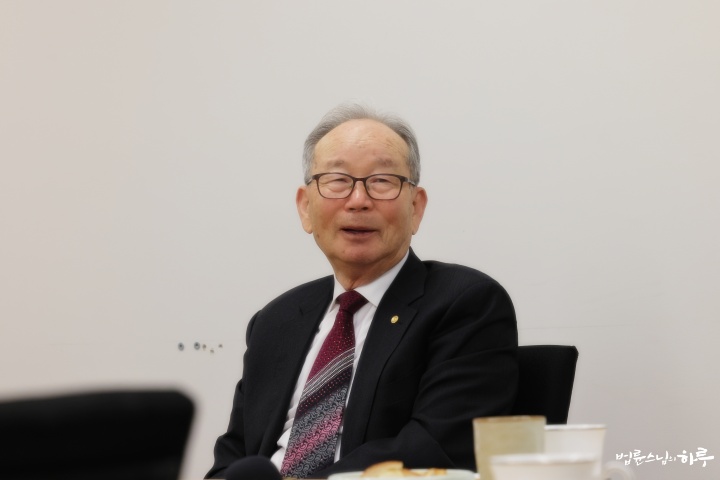
While sharing recent updates about Sunim and the religious leaders, Sunim also talked about his recent Dharma Q&A tours to Tongyeong (통영), Gyeongju (경주), and Busan (부산). Since Tongyeong was where the religious leaders’ meeting visited Yun Isang(윤이상)’s birthplace and memorial hall in June 2020, they were pleased to hear the news. A casual suggestion was made to visit meaningful places together as a religious leaders’ group before they get older and need wheelchairs, just like when they went to Tongyeong. They also discussed potential places to visit. Father Kim Hong-jin(김 홍진), who plans to walk the Camino de Santiago, suggested they go together next time.
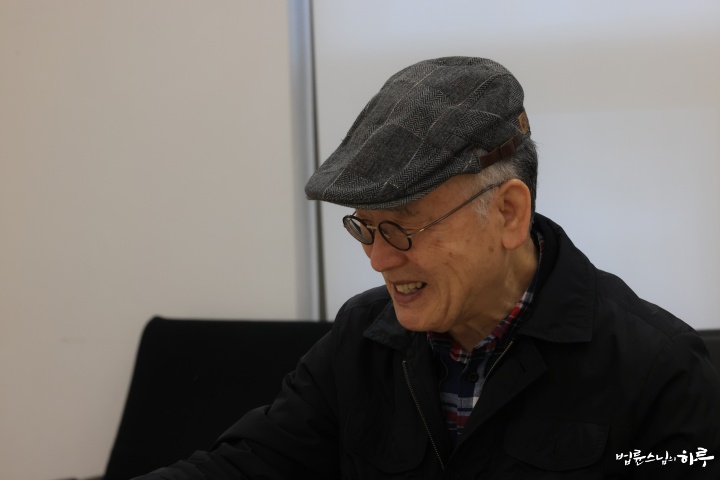
The religious leaders’ meeting concluded after confirming the schedule for the next gathering. Sunim escorted the religious leaders to the first floor, returned to his office to briefly check on work matters, and then headed to the Dharma Hall for the 10 AM Weekly Dharma Assembly.
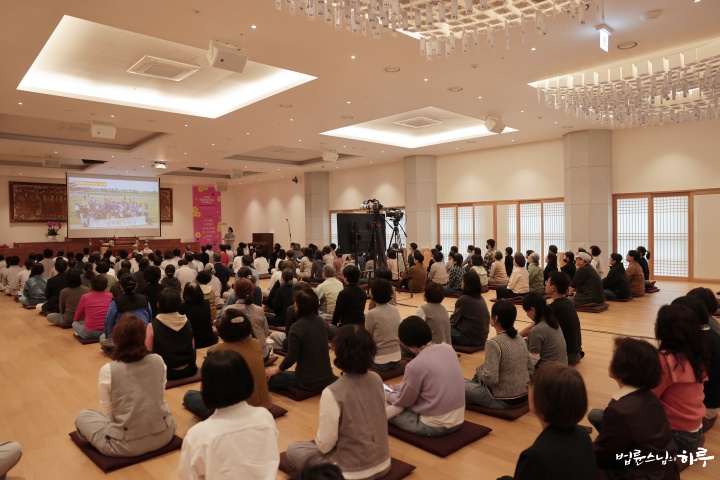
Every Wednesday, the Weekly Dharma Assembly is held where Jungto members check their practice and ask Sunim questions to correct their perspective on practice. Members participate online from across the country, and about 170 people gathered in the third-floor Dharma Hall. At 10 AM, the assembly began with the Three Refuges (삼귀의) and the Heart Sutra (반야심경) recitation. Through the “Weekly Jungto Practitioners” video, they watched the activities of Jungto practitioners conducted at various main temples and practice locations.
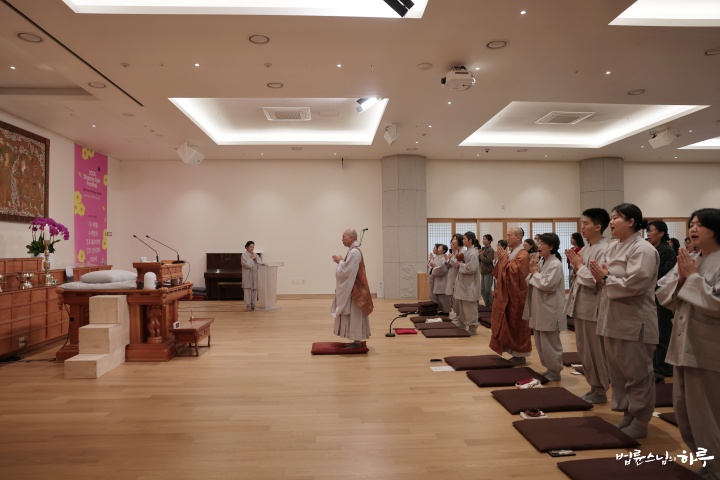
The assembly requested a Dharma talk from Sunim with a chanting request and three prostrations.
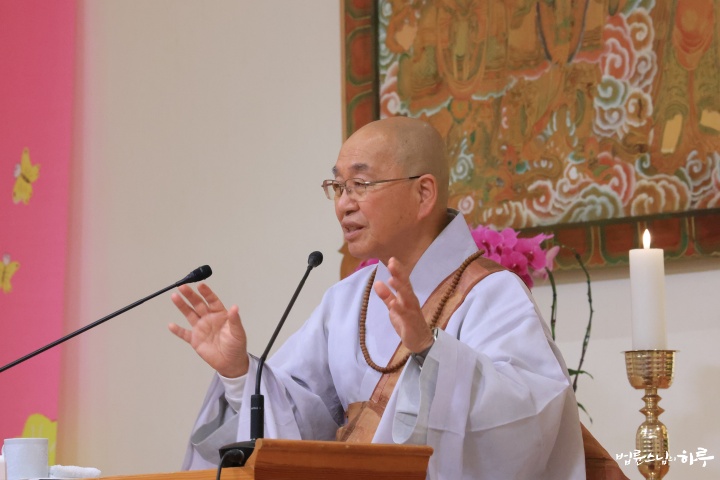
)
falls on May 24th, making it the last commemorative day of May, later than usual. We celebrate Buddha’s Birthday by lighting lanterns, helping neighbors in need, and conducting traditional lantern festivals and parades. Recently, with growing interest in cultural content, our traditional culture has been receiving great responses from younger generations and foreigners. While temple lantern hanging and lantern parades were once considered mainly events for the elderly, they have now transformed into culture that young people and foreigners actively participate in and enjoy. Therefore, the Buddha’s Birthday lantern parade needs to establish itself not just as an event for Buddhists, but as an open cultural event that all citizens can share and enjoy together.New Sharing Method for Weekly Dharma Assembly
On these beautiful spring days, we must diligently practice. Jungto Society members attend the Weekly Dharma Assembly once a week to listen to Dharma talks, share, check their own state, and practice diligently. However, there has been recent feedback that the sharing method at the Weekly Dharma Assembly has become too formulaic, lacking deep conversation and new learning. To address this, we considered having themed Dharma talks, but concerns were raised that this might be difficult for new members. While operating in a way that allows new members to participate comfortably, existing members have felt that content is repetitive and interest is declining. To improve these issues, the Dharma Teachers who lead the assemblies have conducted various studies, and starting in May, we plan to implement a new Weekly Dharma Assembly format where each person sets their own practice goals and engages in deeper sharing based on these goals.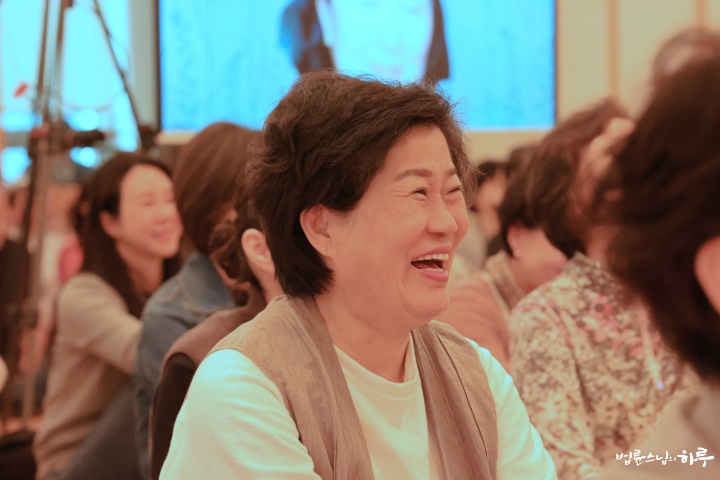
It’s Just How I Feel
It’s simply how I feel. Because each person’s karma is different, we feel differently, judge differently, and experience likes and dislikes even in identical situations. What underlies these reactions is ‘karma.’ While our minds change according to situations or objects, preferences differ depending on who is observing, even in the same situation. Different reactions to the same situation occur because each person’s karma is different, and when the same person feels differently as situations change, it’s due to the change in circumstances. Therefore, we must understand that when we see, feel, and judge something, it arises both from the situation and is influenced by our own karma. However, we mistakenly believe all emotions are caused by situations. We need to recognize that they actually arise from our karma. The emotions, judgments, and thoughts arising now are simply my emotions, my judgments, and my thoughts. For example, if I feel attracted to someone, it’s not because they are objectively a good person, but because I feel good about them. That is, they appear attractive to me. Conversely, if I feel aversion, it’s not that there’s a problem with that person – I simply feel that way. The same applies to food. Rather than saying ‘This food is delicious,’ it’s more accurate to say ‘This food suits my taste’ or ‘This food doesn’t suit my taste.’ Rather than saying ‘Venerable Pomnyun said this,’ it’s more accurate to say ‘This is what I heard.’ Yet we almost always think and speak like this: ‘That food is delicious. That person is good. Venerable Pomnyun said this.’ We objectify what we feel. So when I say something is delicious, I think the food itself is delicious, and when I say it’s not tasty, I think there’s something wrong with the food itself. This is more of a delusion we have rather than fact. But what’s the reality? Food is just food – this suits my taste, that doesn’t suit my taste. A person is just a person – to me, this person looks good, to me, that person doesn’t look good. This is closer to the truth. When we see the truth this way, we stop blaming others and stop blaming situations. In any situation, how I respond to someone is not their problem but mine.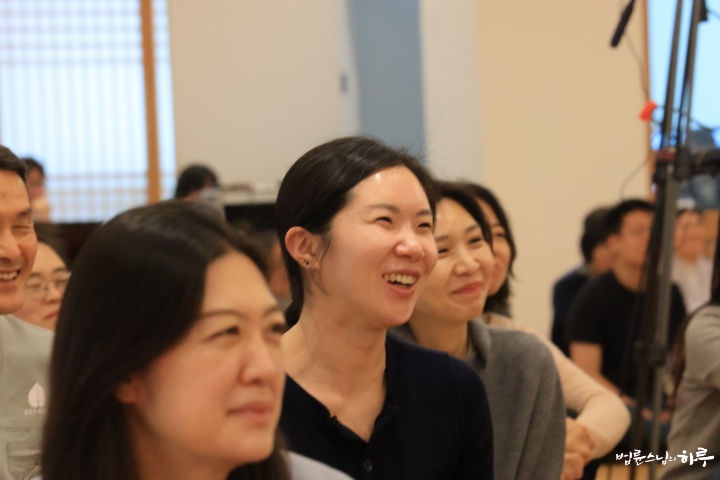
Being Aware That It’s My Karmic Consciousness Reacting
If I make my husband my practice goal, then all discomfort arising in my relationship with my husband is my karma that I’m feeling, and whenever I feel that discomfort, ‘I am the one feeling it.’ That person is just being that person. The perspective must be clear that my karmic consciousness is reacting negatively to those words and actions. First, being aware of this. So ‘I’m the one feeling this way; that person is just being themselves. I acknowledge and respect our differences.’ This is what we’re talking about. Furthermore, we need to understand that ‘It’s just my karma reacting this way; from that person’s karmic consciousness, they can’t help but react that way, speak that way, and act that way.’ When we understand the other person, we feel less irritated and less angry. When we set this as our practice goal, we come to understand that our husband’s actions are just actions, that I’m the one viewing them negatively, that from my standard of needing things to be neat, my husband appears problematic, that my husband just speaks that way and acts that way. If we pray religiously, we can pray ‘My husband is Buddha.’ This means there’s nothing wrong with my husband’s actions or words. Just as we see Buddha as having no problems, it doesn’t mean my husband is as wonderful as Buddha, but that we see our husband as he is. Buddha means speaking the truth. Then even if I get angry, I realize this is my problem, not that person’s problem. For that person, it’s natural to be that way. I establish a principle where discriminating mind doesn’t arise from that person’s actions, and after discriminating mind arises, a standard to be aware that this discriminating mind is my problem, not the other person’s. I set a prayer or Words for Practice saying ‘My husband is Buddha’ and live daily life keeping this in mind. When I keep the practice goal in mind, first, I’m not bothered at all by my husband’s actions. I just think ‘I see!’ Second, if I forget my practice goal, I get irritated. I observe myself getting irritated. ‘Oh, I lost it,’ I become aware. Then the irritation disappears. If I unconsciously get angry and the other person says ‘What’s wrong with you?’ I become aware that I lost it, and when I’m aware, I apologize saying ‘Oh honey, I’m sorry. That was my temper.’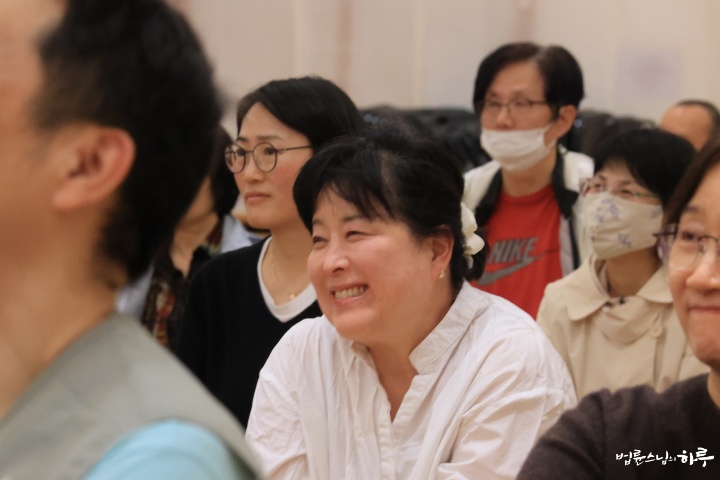
Setting and Practicing My Practice Subject
We set a practice subject and identify the target – the negative reactions I have in relation to that person or situation become my practice subject. To address this, we create a sentence, a prayer, or words to remember. If you say ‘I won’t get angry,’ that’s not a practice statement. That’s a resolution or determination. If you resolve not to get angry but keep getting angry, you end up thinking you’re a failure and criticizing yourself. To create your practice statement, you should say ‘I am not angry’ or ‘There is nothing to be angry about.’ But in reality, you still get angry. It’s not about resolution or determination; it’s about awareness. ‘Oh! I missed it! I need to be aware. I missed it! I need to be aware.’ This is all you need to do – it’s not about criticizing yourself. It doesn’t work perfectly from the beginning. That’s why we need practice. We set our practice subject, practice it, and then briefly share our results during the assembly sharing time. This is what we’re proposing. Among the personal promises for this 100-Day Prayer, there’s ‘Setting and practicing my practice subject,’ right? Through this revised Weekly Dharma Assembly, let’s try to focus more on our individual practice subjects.”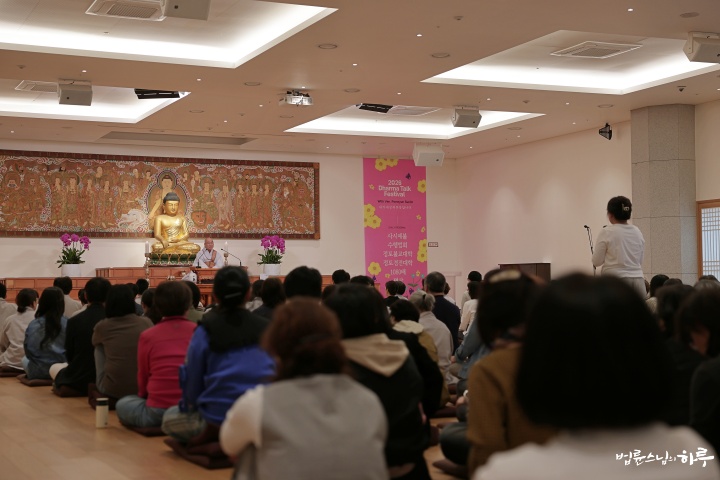
Sunim gave a detailed dharma talk about the new sharing format that will be implemented in the Weekly Dharma Assembly. Afterward, there was a Dharma Q&A session with one pre-registered questioner and one on-site questioner.
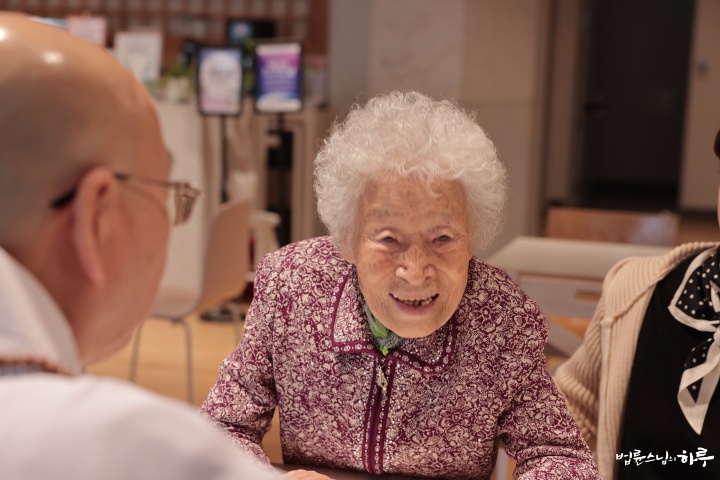
After finishing the Weekly Dharma Assembly dharma talk, Sunim went to the lounge on the second floor. Jungto member Park Jeong-sim (박정심), who is 100 years old this year, her daughter in her 70s, Dharma Teacher Jajae (자재), and Dharma Teacher Seongwang (선광) were waiting in the lounge to meet Sunim. Park Jeong-sim said she had macular degeneration and could barely make out shapes. When she heard Sunim’s voice, Park Jeong-sim raised her aged body and tightly grasped Sunim’s hand.
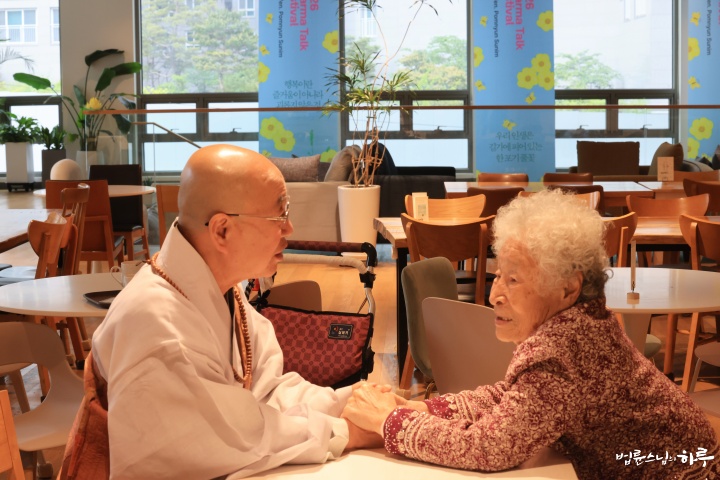
“Sunim, I’m truly glad to see you. I am a happy person. I came here and got to see Venerable Pomnyun Sunim. I’m really happy.”
Names and ages of female lay practitioners who had worked together long ago came up. They shared news about the Yeonhwa Association (연화회) members who had prepared and operated the dharma center like their own home in the early days of Jungto Society. Sunim and the Yeonhwa Association members had gone on an outing to Gyeongju (경주) in 2018. After that, they couldn’t meet due to COVID-19, and in the meantime, they shared news that some had passed away due to poor health and some were in nursing homes receiving care.
“We thought that when we turned 90, we would gather and live harmoniously in the house Sunim made for us. But now, even if we die, we can’t even dream of that. Sunim said in the early days that we should live together. It seems like you’re pretending not to notice when one or two of us pass away as we get older.”
To Dharma Teacher Jajae’s (자재 법사님) words, Park Jeong-sim answered quietly.
“If only my eyes were bright, I feel like I could do anything right now.”
“Ten years ago, I already told Venerable Yusu (유수 스님) to build a house for you all to live together.”“Sunim gives Venerable Yusu many other instructions, so we’re probably not even on the list. It’s been over 40 years, when will you build it? Will you build it after we die?”
“Are you saying all this so you won’t come even if I build it?”At the conversation between Dharma Teacher Jajae and Sunim, the dharma teachers nearby smiled gently. Park Jeong-sim, unable to see well, kept speaking quietly while listening to Sunim’s voice.
“Oh, I’m so glad. I am such a happy person.”
“You are the first centenarian among our Jungto Society members. The oldest graduate of Jungto Dharma School was in their 80s from Busan (부산), but now you’re setting the record at 100 years old. Let’s set a date in October. In the old days, we used to charter buses and go on trips, but that would be too difficult now, so let’s gather here and have a celebration. Go down to your daughter’s house and stay healthy, then come here for the celebration in October. I’ll host it.”“If I don’t die, I’ll come. Oh my… What if I live until then?”
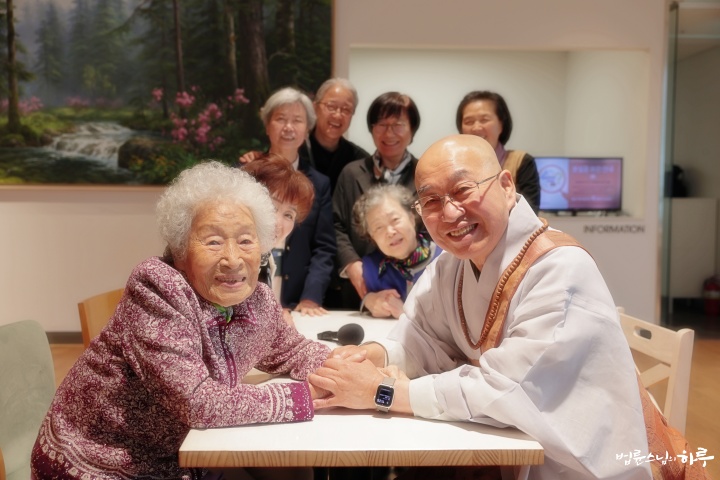
Sunim gave books as gifts to Park Jeong-sim and her daughter, and they took a commemorative photo together. After saying goodbye with a promise to meet again in October, Sunim went to the first floor of the basement cafeteria for lunch.
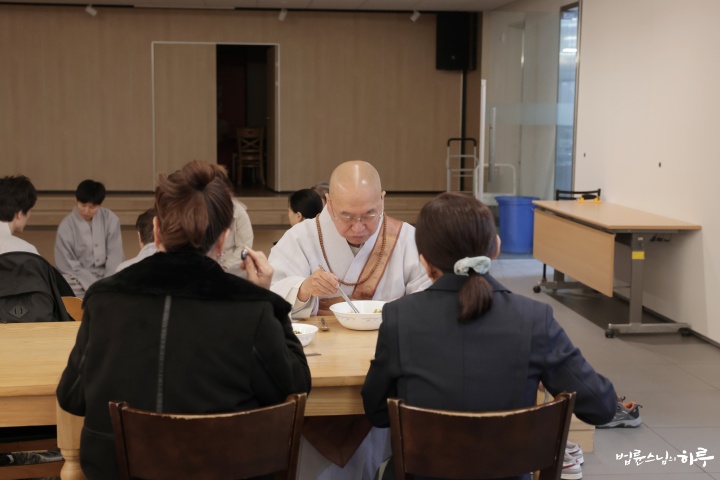
After lunch, Sunim came to the office to check on work and held meetings.
At 3:30 PM, Sunim left the center to attend the POSCO TJ Park Prize (포스코청암상) ceremony.

The 20th POSCO TJ Park Prize ceremony was held at the POSCO Center in Gangnam-gu (강남구).
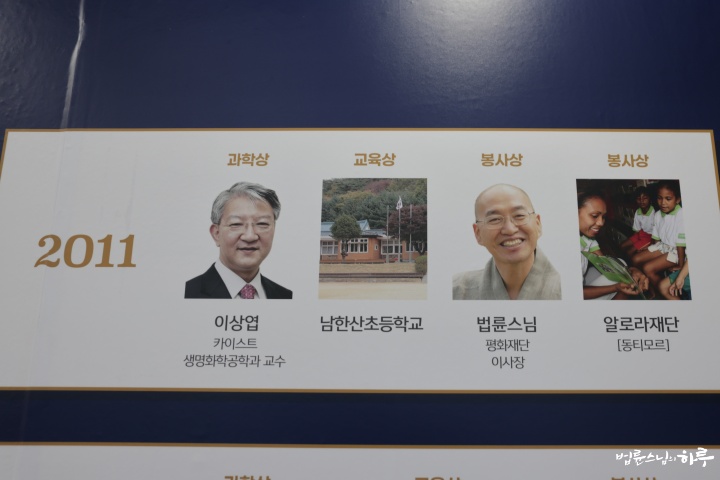
Sunim received the Community Service Award at the 5th POSCO TJ Park Prize ceremony in 2011, recognized for his dedication to helping the poor in marginalized areas of Asia, children’s education, and fighting hunger, disease, and illiteracy, thereby practicing love for humanity. He was invited to this ceremony as a past recipient.
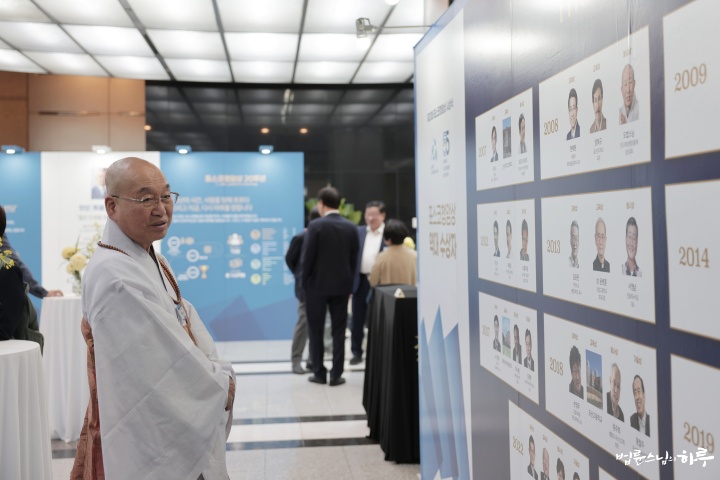
After arriving at the venue and completing registration, there was a place where past recipients of the POSCO TJ Park Prize and this year’s recipients could be seen at a glance. Sunim slowly looked around and exchanged greetings with various people participating in the event. Many people recognized Sunim first and came to greet him.

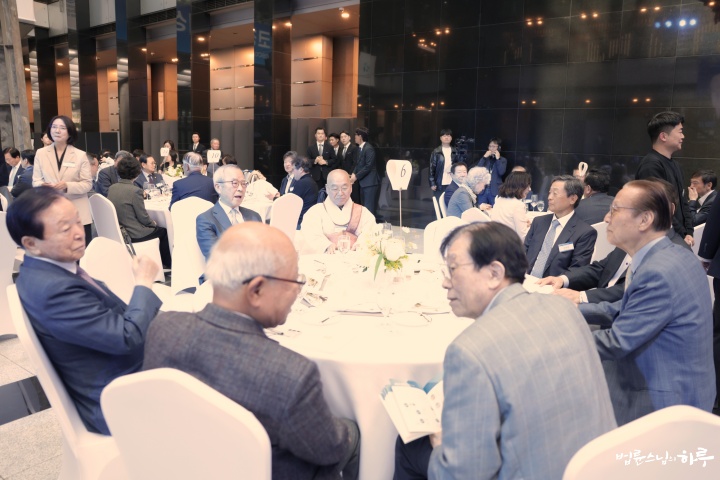
The ceremony began at 4:30 PM. Sunim watched the video introducing the recipients with interest and applauded in congratulation when the recipients received their awards and gave their acceptance speeches. When the ceremony ended and the banquet was about to begin, Sunim excused himself from those around him and left the venue early as he had an evening dharma assembly scheduled.
Upon arriving at the Jungto Social and Cultural Center, Sunim went to the basement cafeteria for a simple dinner.
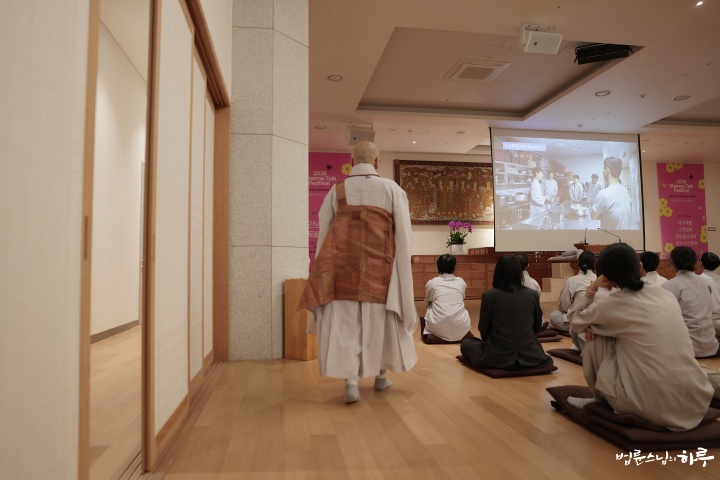
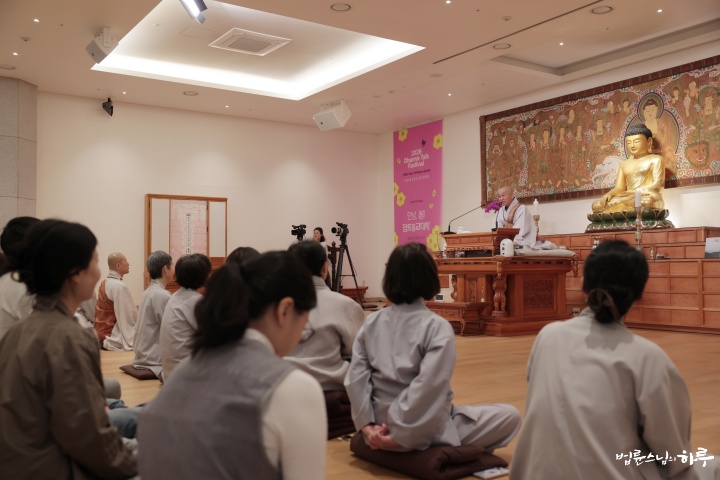
At 7:30 PM, the evening Weekly Dharma Assembly began in the Dharma Hall. About 100 members of the Sangha recited the Three Refuges and the Heart Sutra, then requested the dharma from Sunim with a dharma request chant and three prostrations. Sunim gave a detailed dharma talk about the sharing format that will be revised in future Weekly Dharma Assemblies. He then had conversations with two online questioners. Here is one of the conversations.
My Wife and I Have Different Opinions on Child Education
“My question is about practicing with the mind. I’ve been consistently practicing not forcing my thoughts on others since only my thoughts aren’t necessarily right, not creating any fixed ideas, and accepting things as they are. However, there are still parts that sometimes bother me. I’d like to ask how I should handle my mind in these situations. Regarding child education, my wife and I have different positions on when to buy our child a mobile phone. I believe it’s better to buy a mobile phone as late as possible, while my wife thinks a phone is needed now since most other children have phones and it’s convenient for communication. When it comes to matters related to our children’s future, I think that just as my thoughts may not be right, my wife’s thoughts may also not be right. I think I learned that regarding child education, the mother should take full responsibility and proceed, while the husband should not interfere and only provide financial support. I tried to persuade my wife but failed. When uncomfortable feelings arise regarding child education like this, how can I let them go?”
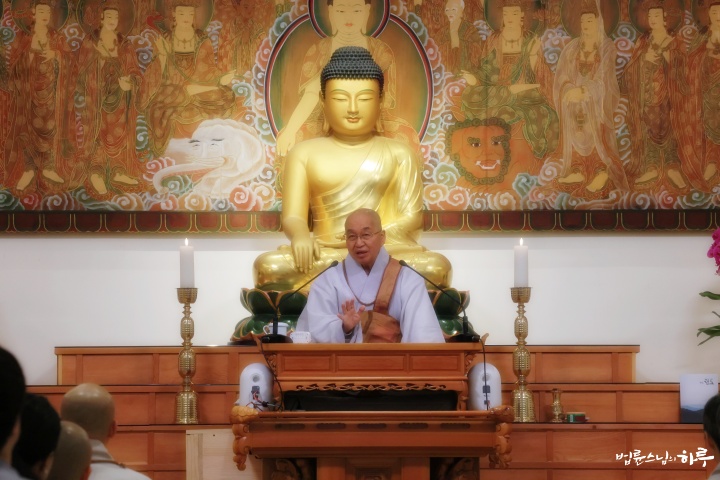
“Yes, I understand.”
Child education isn’t about one parent doing it alone. Rather, the mother takes the lead while I can participate by raising questions from the side. However, you must never fight over this. Because it’s not worth fighting over. Approach it with the perspective that parents fighting over child education issues has a worse impact on the children.”“Yes. Thank you.”