As a Childless Couple, How Can We Wisely Prepare for Old Age?
April 5, 2026. English Buddhism Course Dharma Q&A, Jungto Dharma School Entrance Ceremony, Community Outing Hello. This morning, Sunim gave ...
Hello. This morning, Sunim gave Dharma talks at the English Buddhism Course Dharma Q&A and the Jungto Dharma School entrance ceremony, and in the afternoon, he joined a community outing.
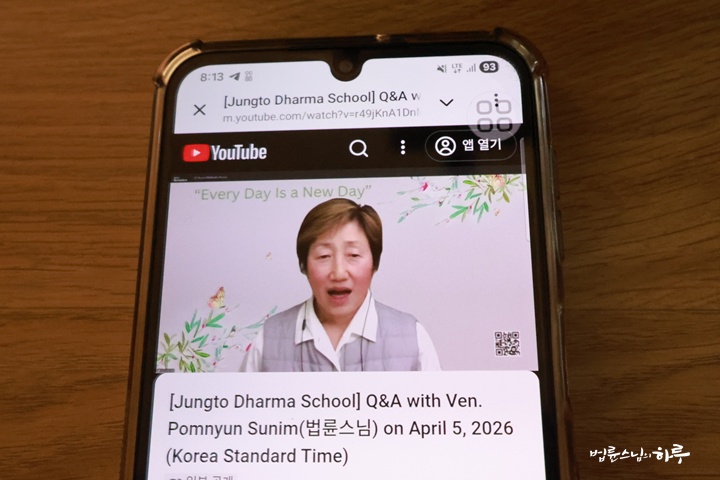
Sunim participated online in the Fundamental Buddhism Dharma Q&A session of the English Buddhism Course, Jungto Dharma School, which began at 8 AM. After listening to the students share their reflections, the students requested the Dharma from Sunim with three prostrations. Sunim shared news of spring in Korea and emphasized the importance of establishing a proper perspective on practice and directly implementing and experiencing it. Today, nine foreign students had pre-registered for the Dharma Q&A session. Here is one of their questions.
As a Childless Couple, How Can We Wisely Prepare for Old Age?
“We’ve been staying focused on our careers and not having children, and we get along well, so my life is quiet and comfortable. We weren’t necessarily against having children; we just prioritized establishing our careers and financial security. Also, when I reflected on our motives for potentially wanting a child, they felt insufficient, because they were rooted in selfish fears, like the fear of feeling empty or being alone later in life, didn’t seem like a good reason to have a child. Being child-free was our choice, and as you say, I believe we should willingly accept the consequences of our choices. I don’t resent my choices. However, when I become old and helpless and have to be admitted to a nursing home without anyone to check on me, I wish to end my life through euthanasia. My husband feels similarly. I don’t see the point of living when physical discomfort outweighs joy and I become a burden on society. Also, stories of elderly people being abused by caregivers scares me. In your view, is euthanasia considered avoiding the consequences of our life choices, like taking the easy way out instead of taking responsibility? What are your perspectives on euthanasia in general? Also, what does it mean to accept the consequences of the choice to be child-free? How would you advise a couple like us to prepare for our final years?” 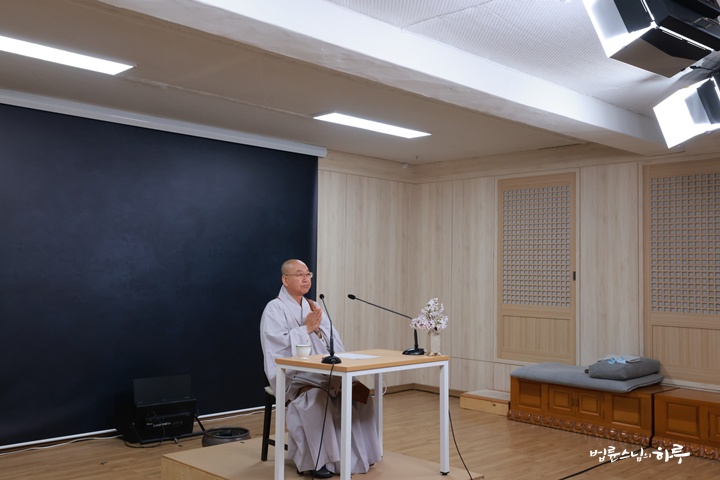
The Best Approach Is to Have a Practitioner’s Perspective
The best way to solve this problem is to have a practitioner’s perspective. Practice isn’t about looking outside or at conditions, but always observing your own mental processes. So it’s fine to be alone or with someone, to be old or young. If you manage yourself so that suffering doesn’t arise, there’s no problem. When we look at others, we often only see the good points and feel envious. We envy those whose children have become successful and care for their parents, but many parents suffer greatly because of their children. So you shouldn’t look outside and feel envious. Looking at your question, it seems likely you’ll envy people with children when you get older. That’s why you need to observe yourself carefully from now on.”The foreign Buddhism course students established their practice perspective through conversations with Sunim about questions arising from their studies and daily life.
After the online English Buddhism Course Dharma Q&A session ended, the Jungto Dharma School entrance ceremony was held at 10 AM. Sunim participated in the entrance ceremony online from the broadcasting room at Dubuk Jungto Retreat Center (두북수련원).
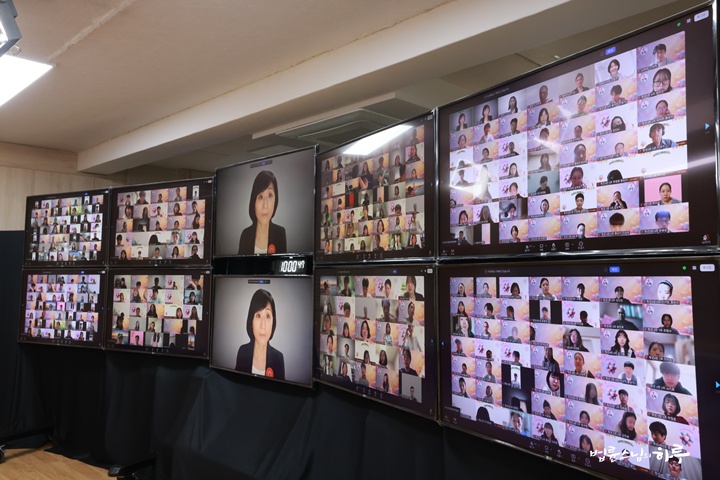
For the March 2026 Jungto Dharma School, 443 students enrolled in offline classes and 1,487 in online classes, totaling 1,930 new students. After the new students shared their reflections and Jungto Society President Yang Yoon-deok (양 윤덕) gave a welcoming speech, the students requested the Dharma from Sunim with three prostrations. Sunim explained Buddhism as practice and emphasized the mindset students should have, the characteristics of the curriculum, and especially the importance of sharing.
“When we usually talk about Buddhism, there are three meanings: ‘Buddhism as religion,’ ‘Buddhism as philosophy’ referring to philosophy or thought, and ‘Buddhism as practice.’ Buddhism as religion is based on faith. It says if you believe, you’ll receive blessings – you’ll marry well, get a good job, pass university exams, and go to paradise after death. It’s a religious realm where you receive blessings in this life and go to a good place in the next life. This religious aspect is similar to other religions. Second is Buddhism as philosophy. Buddhism as philosophy is relatively strong compared to other religions. Some people say Buddhism isn’t a religion but a philosophy. Its principles are clear and explain many principles of the world. There are the law of dependent origination, the Middle Way, and the concept of emptiness, which most people have heard of even if they don’t believe in Buddhism. When we say we study Buddhism, we mean Buddhism as philosophy. Believing in Buddhism is religion, and understanding Buddhism is philosophy. What is Buddhism as practice? The goal isn’t to make lots of money, pass exams, gain high status, earn fame, or pray for blessings. It’s also not about going to a good place after death or seeking the next life. The goal of Buddhism as practice is ‘not suffering right now.’ You have suffering – sadness, anger, worries, hatred of someone. A state without anxiety, suffering, sadness, worries, hatred, anger, or irritation – this is called nirvana. This state is called a life free from suffering. Buddhism as practice aims to reach this state. Whether you believe in God or Buddha is your personal freedom, and whatever ideology, philosophy, or thought you have is also your personal freedom. Whether you’re politically right or left, theist or atheist, religious or not – these are all personal choices. However, everyone wants to live without suffering. If you want to live without stress, without fear or anxiety, I can tell you to practice. Jungto Dharma School doesn’t cover all of Buddhism. It focuses on Buddhism as practice. To pursue Buddhism as practice, you need to understand some principles. This part is close to Buddhism as philosophy. In other words, Buddhism as practice is central, and we also cover a bit of Buddhism as philosophy to understand correct principles. Even without being told to believe in the right path, faith naturally arises. So there’s also a small element of faith. Here, Buddha is a great teacher or guide who leads us on the right path, or a role model for our lives, not someone who gives blessings when we pray – not an object of religious faith. Many of you enrolling today probably have no religion. It doesn’t matter whether you have a religion or not, and even if you do, it doesn’t matter which religion you believe in. Faith is personal freedom. Thought is also personal freedom. However, if I want to live without suffering, I must practice. To practice, you must first understand the principles and then implement them. So neither believing nor knowing is central – acting and experiencing are central. Experience is central, but some knowledge is also needed, as well as basic trust and faith.What’s Important in Jungto Dharma School
The most important thing is the pre-class study of ‘listening to Dharma talks.’ Second is ‘sharing,’ and then directly practicing and experiencing. We don’t listen to Dharma talks during class. We mainly share with participants. Listen and share, then experience and share. When sharing, don’t think it’s difficult. Just talk about how you felt. If it was good, say why it was good. If it was bad, say why it was bad. If it was frustrating, say why it was frustrating. Just speak lightly. First talk about your mental state and then explain the reason. It becomes difficult when you intentionally make things up and speak from thoughts. ‘What should I share, what should I say?’ These thoughts arise. Just speak lightly. ‘I felt frustrated listening to Sunim’s Dharma talk today because I couldn’t understand what was being said.’ You can say it like that. Just honestly express your state.Sharing Is Key
What people find most difficult and challenging in education conducted by Jungto Society, including Jungto Dharma School, is sharing. They like listening to Dharma talks but some run away because they don’t like sharing. But if you don’t participate in sharing time, you’re not counted as present. Listening isn’t key – sharing is key. It’s difficult at first, but with a little practice it’s fine. Foreigners started Buddhism course enrollment about a month earlier. Just now when they had a Dharma Q&A about what they’ve studied so far, they said sharing was the best part. They even said sharing is their teacher and that sharing is better than Sunim’s Dharma talks. In fact, even married couples rarely share their hearts. They each live according to their own thoughts. That’s why stress keeps building up. When the husband says something, the wife just complains without revealing her mental state. Sharing is revealing my mental state. It’s not pointing out what the other person did wrong, but revealing my state. We need to keep practicing this kind of sharing. Korean people can’t recognize or reveal their honest hearts. Because they’ve lived with a sense of duty since childhood, they can’t speak their honest hearts and always suppress them. They endure. That’s why there’s so much stress, anger, and irritation. ‘Listening to you now, I’m getting irritated. Listening to you, I’m getting angry.’ Don’t suppress it like this, just say it lightly. You’re not pointing out the other person’s faults, but lightly revealing that this is my state. Of course, it doesn’t work well at first. It’s a bit embarrassing and you wonder why you’re talking about such things. But as you practice lightly revealing things, your suppressed psychology gradually loosens and becomes lighter. There are some side effects too. When sharing your heart becomes practiced, when your husband or wife says something, when your parents say something, you also talk about your state. In the past, you would have endured and not spoken, but now if you get angry when hearing such things from your parents, wife, or husband, you say you’re angry. Then they might raise issues saying ‘Since mom started going to temple, she’s learned bad things.’ While before you stayed quiet when your husband spoke, now you clearly express yourself, and you might be criticized for ‘getting worse despite practicing.’ But that’s okay. Above all, ‘loving yourself the most’ is practice. Practice isn’t loving others but not tormenting yourself. Enduring is tormenting yourself. But if you speak to others while getting very angry, conflict arises. Just lightly recognize and reveal your state. To do this, you first need to know what your state is. But many people don’t know their state. So you need to first recognize ‘I’m uncomfortable now, I’m about to get angry now, I’m a bit tense now!’ Then speak to others. At first you’ll be tense. Even then, you can say ‘I’m a bit tense’ while speaking.Share After Practice Exercises and Activities Too
Next is actually experiencing things. Practice the weekly assignments and gather to share. Another thing is doing social practice together. To overcome the climate crisis, pick up trash together or practice reducing consumption. Or do volunteer activities for people in need. Sometimes group members do street promotion activities together to spread Buddha’s good teachings to others. At first everyone is hesitant. Talking about helping people in need feels like begging. Saying ‘If you want to be happy, attend Happiness School’ feels like proselytizing and becomes embarrassing. What if I meet someone I know? You become self-conscious. Actually, all of this is clinging to yourself. You need to become free from these things. To do that, you must practice directly. Share your heart while doing it. This way, first listen to Dharma talks and practice. Then go out in groups to pick up trash, run campaigns, and help people in need – these social practices. Share your heart in each of these cases. These four things are the main content of Buddhism school. Through these activities, we have learning goals we want to achieve. Let me say again, sharing is most burdensome at first. It’s hard to reveal yourself. Practice revealing lightly. Just tell your state. If frustrated, say you’re frustrated. If tense, say you’re tense. Since you can talk like this, it’s not difficult. If you don’t like it, say you don’t like it and give your reasons. ‘I’m frustrated because I don’t understand well’ or ‘I don’t like it because I usually don’t like this.’ Try it like this. Some people don’t share their hearts but talk about their thoughts. Thoughts are mainly about others. Not about yourself. The heart is about yourself, and thoughts are mainly about others. They talk about things they heard somewhere or read in books, or lay out arguments. When speech gets long, you’re already sharing thoughts. As much as possible, don’t speak thoughts but recognize and share your mental state. At first, you might not distinguish between heart and thoughts. As you keep trying, you’ll sort it out through trial and error, realizing ‘this is heart, I just spoke thoughts.’ This is how Buddhism school proceeds.”Including the entrance ceremony, the 5-month curriculum of the March 2026 Jungto Dharma School has begun.
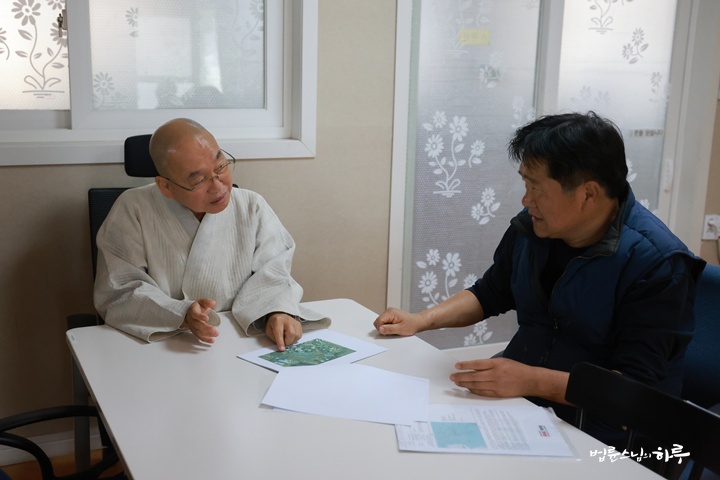
After finishing the Dharma talk, Sunim had a brief meeting.
Community Outing with Sunim
After lunch, Sunim and the lay Sangha members went on a spring outing. The lay Sangha members who had gathered at Dubuk (두북) from Seoul and Mungyeong(문경) spent the morning feeling the spring energy while engaging in communal work such as picking wild vegetables and planting carrots. Although it had rained until yesterday, today’s weather was clear, making it perfect for communal work and the outing.
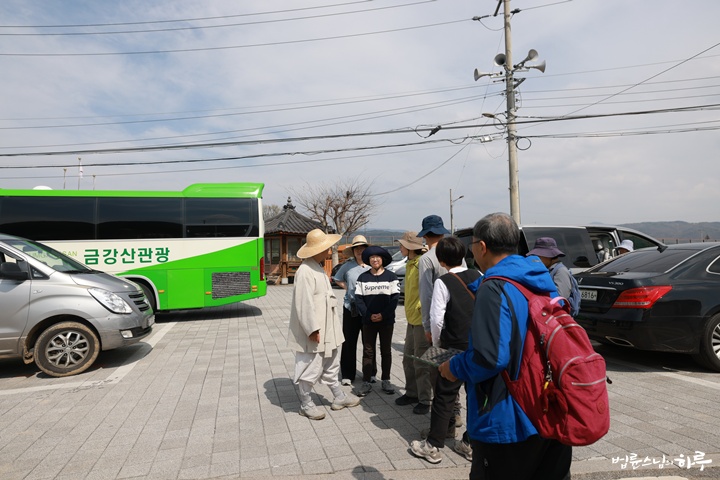
Sunim departed from Dubuk Jungto Retreat Center at 12:20 PM and arrived at the Yeombulsa (염불사) parking lot on Namsan Mountain in Gyeongju (경주 남산). When the lay Sangha members arrived at the Yeombulsa parking lot at 12:50 PM, Sunim explained today’s outing itinerary to them.
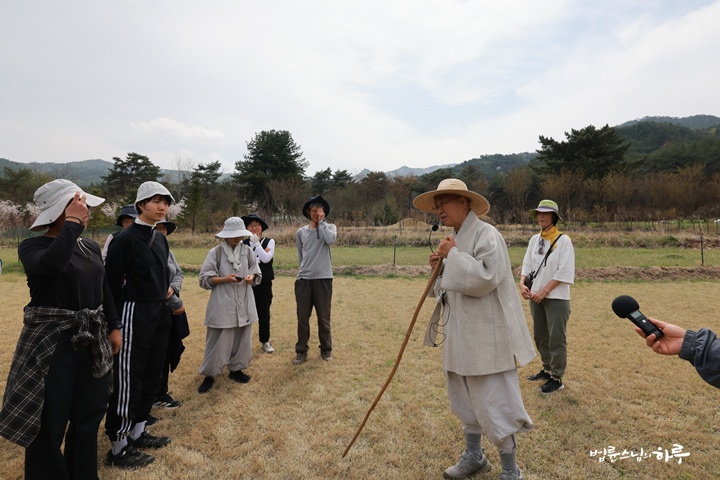
)
, Tongiljon Hall, King Jeonkwang’s Tomb ( 전광왕릉), King Heongang’s Tomb (헌강왕릉), the Hwarang Education Center, and Borisa Temple. Next, we’ll visit Ongnyongam (옥룡암) and come back, and we’ll also visit Halmae Buddha (할매부처)
and return. From there, we’ll descend and pass Inyongsa Temple site at the entrance to Banwolseong (반월성)
, then Woljeong Bridge (월정교)
and Cheongwansa Temple site (천관사지)
. After that, we’ll cross the bridge built for wild animals, pass General Kim Ho’s old house, Namgansa Temple site, Changnimsa Temple site (창림사지)
, Poseokjeong Pavilion (포석정), King Jima’s Tomb (지마왕릉), and Sambulsa Temple. Then we’ll pass Mangwolsa Temple (망월사)
, Samneung ( 삼릉,
Three Royal Tombs), King Gyeongae’s Tomb (경애왕릉)
, Seokbuldu (석불두)
, and finally arrive at our dinner location. It will be about 13km on the trail, or about 16km if we include the detours.”Sunim rattled off today’s route as if showing a map in his head.
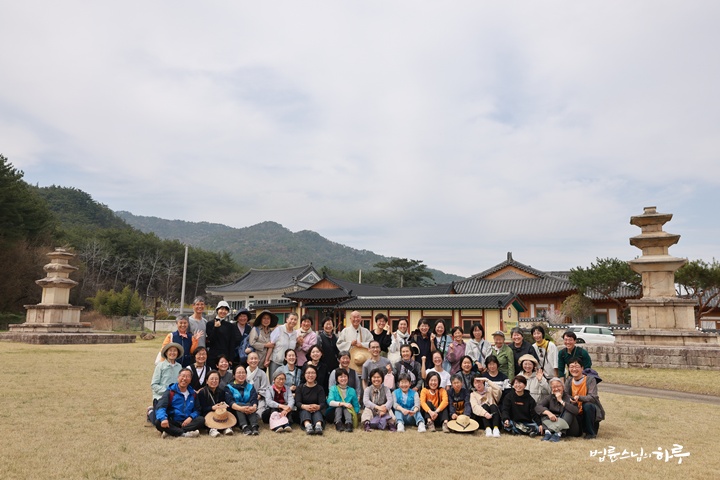
At 1:00 PM, they began their walk after taking a commemorative photo between the stone pagodas at the Yeombulsa Temple site.
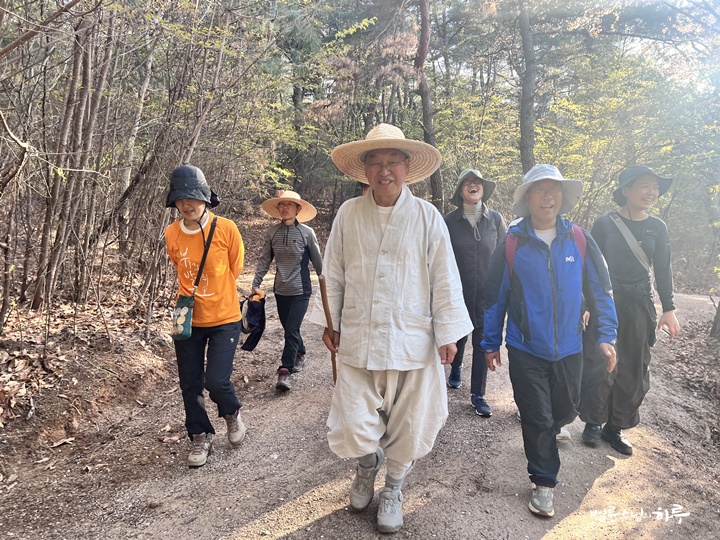
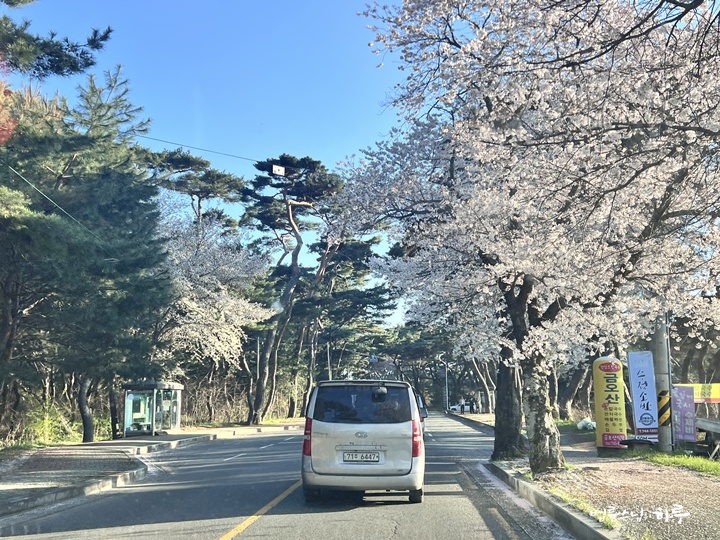
“Today we’ll walk about 25,000 steps.”Along the path where Sunim walked with the lay Sangha members, various spring flowers including cherry blossoms were in bloom.
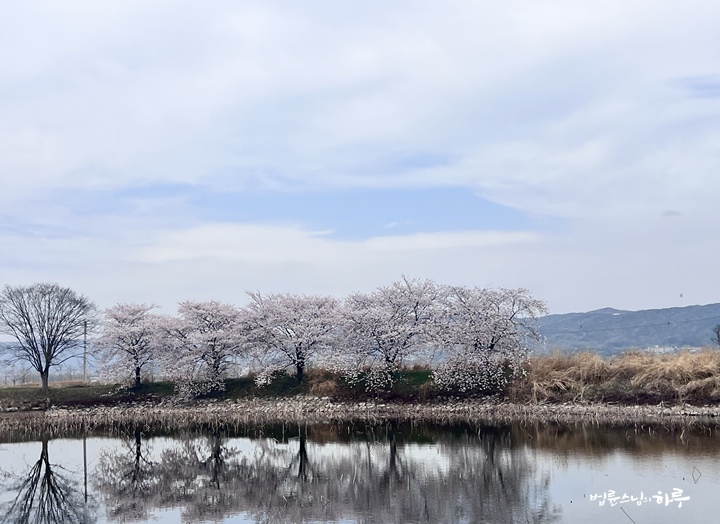
They passed Seochulji Pond (서출지) and headed toward Tongiljon Hall (통일전).
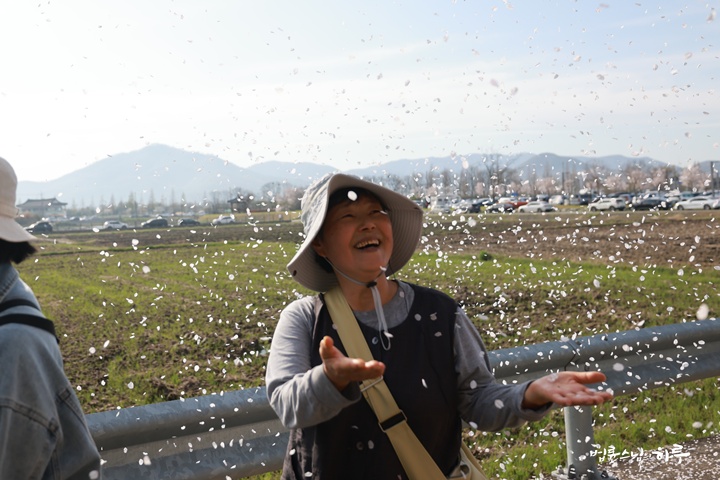
Sunim gently shook a cherry tree branch from the front, creating a flower shower for the lay Sangha members. The members delighted like children at the sight of the falling cherry blossom petals.
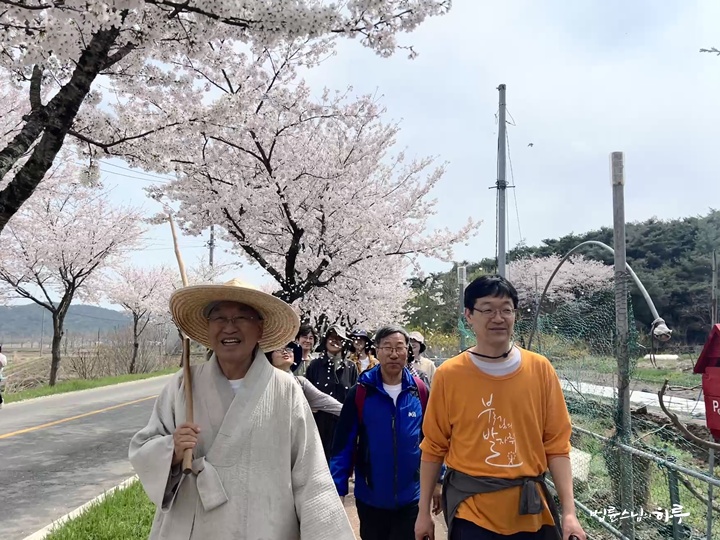
They passed the Hwarang (화랑) Education Center and arboretum and arrived in front of Borisa Temple.
“This is the most beautiful Buddha statue on Namsan Mountain (남산). I won’t go up because of my heart condition, so I’ll wait here.”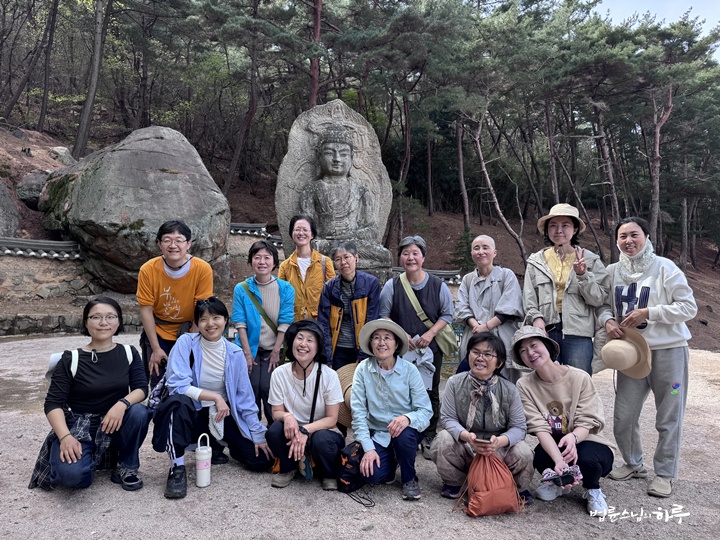
Except for Sunim and a few members with health issues, the lay Sangha members climbed up to Borisa Temple and paid respects to the Buddha statue while listening to Lee Seung-yong’s (이 승용) explanation. Sunim slowly walked to the next location.
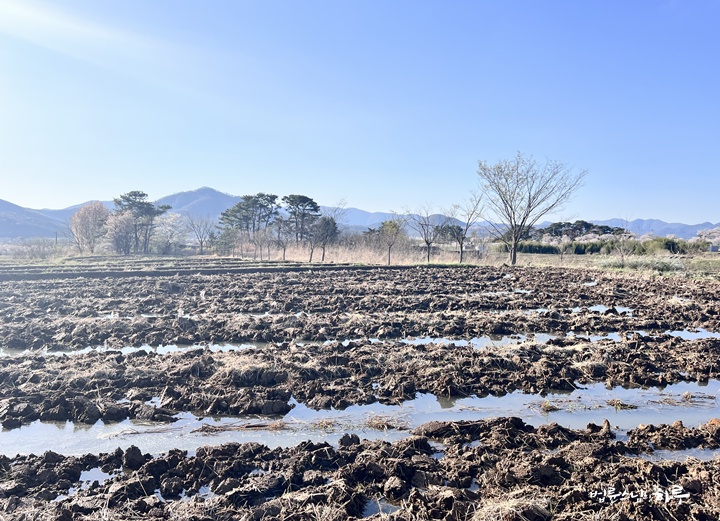
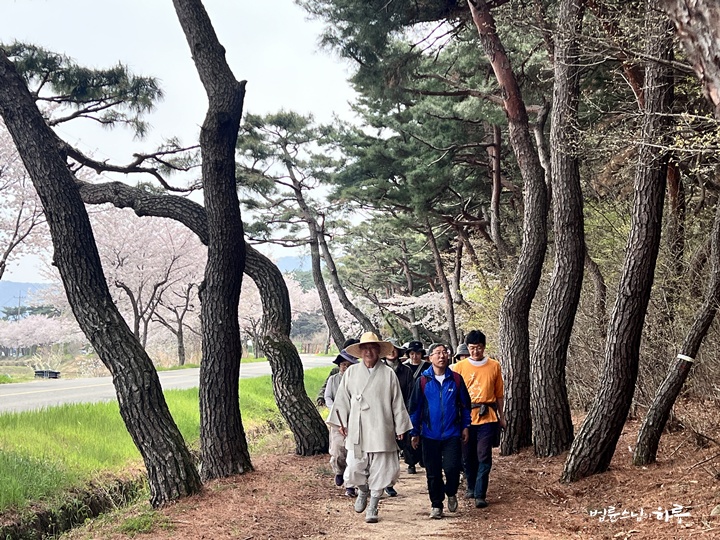
In the village rice paddies, farmers were harrowing and flooding the fields in preparation for rice planting.
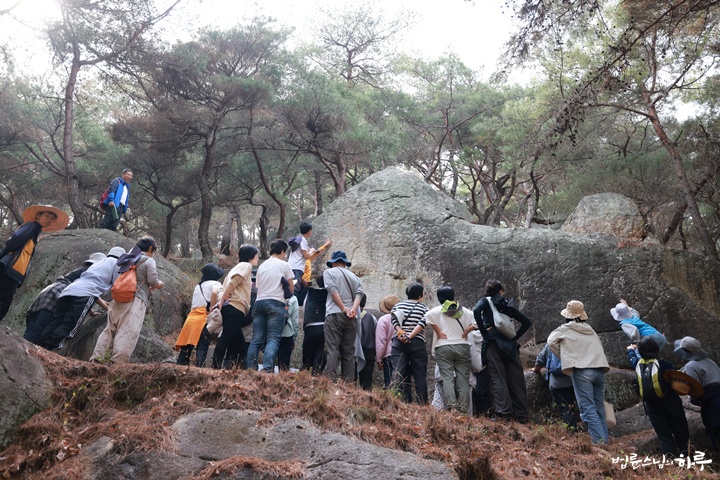
When the members arrived at the Ongnyongam (옥룡암) parking lot, Sunim again directed only the members to visit the Buddha Rock while he waited for them in the parking lot. When the members came down, Sunim guided them to the path leading to the newly discovered second Buddha Rock (부처바위).
“When you get there, it might be hard to see at first, but if you look carefully, you’ll see it.”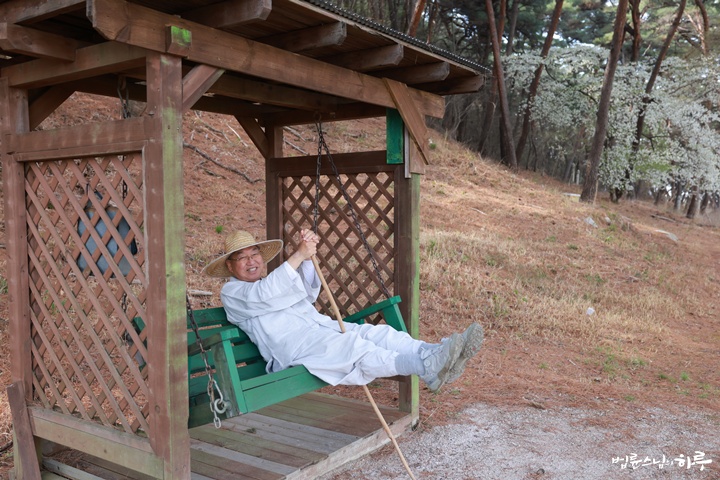
Sunim waited at the place with the swing chair while the members went to pay respects to the new Buddha Rock. When they arrived at the Buddha Rock, it wasn’t clearly visible due to erosion. Based on the drawing in the guide map, they searched one by one and were able to see the Buddha’s form.
When the members came down again, Sunim guided them to where Halmae Buddha (할매부처, Bulgok Rock-carved Seated Buddha) was located. Here too, Sunim waited below while only the members went up to see Halmae Buddha.
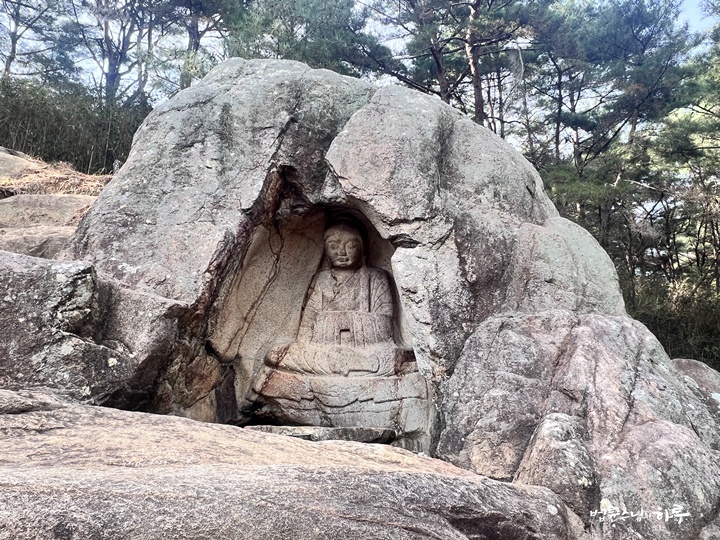
After paying respects to Halmae Buddha and coming down, it was about 3:30 PM. Sunim said:
“We’ve come about halfway now.”Sunim arrived at Iljeong Bridge (일정교) with the members. What was once a bridge now remained only as a pile of stones.
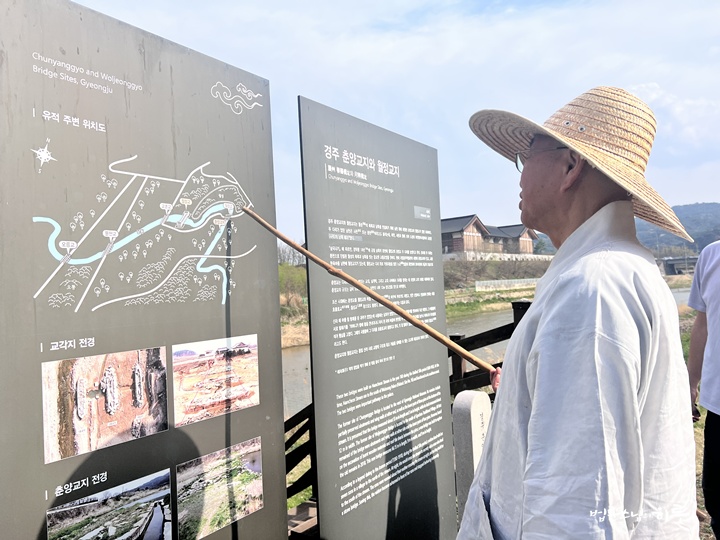
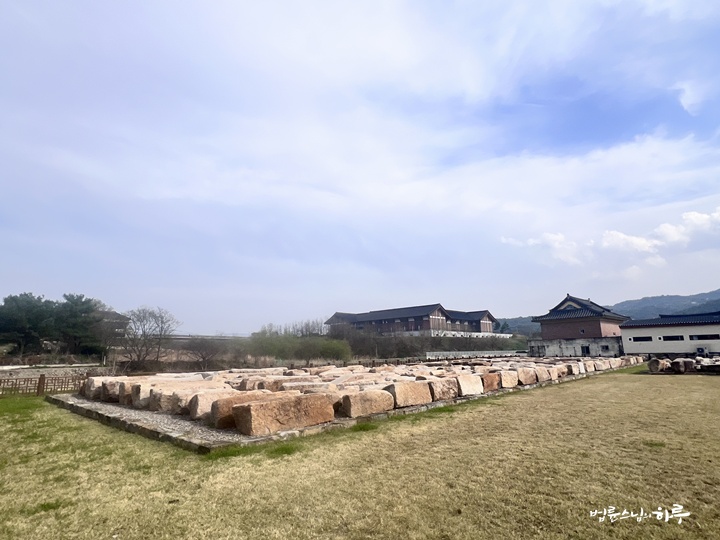
They then toured the Inwangdong Temple site (인왕동 사지), presumed to be the site of Inyongsa Temple (인용사), and passed Woljeong Bridge.
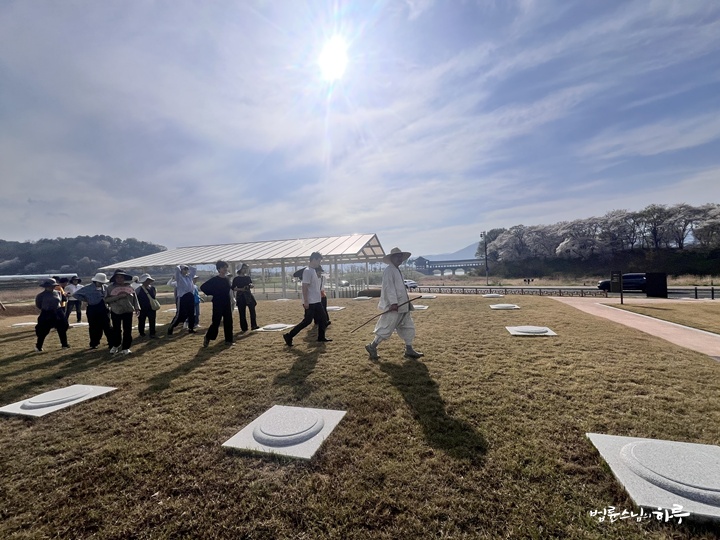
Woljeong Bridge (월정교) was a key bridge built over Namcheon Stream (남천) during the Unified Silla period, connecting Gyeongju’s Wolseong Fortress (경주 월성) and Namsan Mountain. It is a magnificent wooden bridge that was restored in 2018.
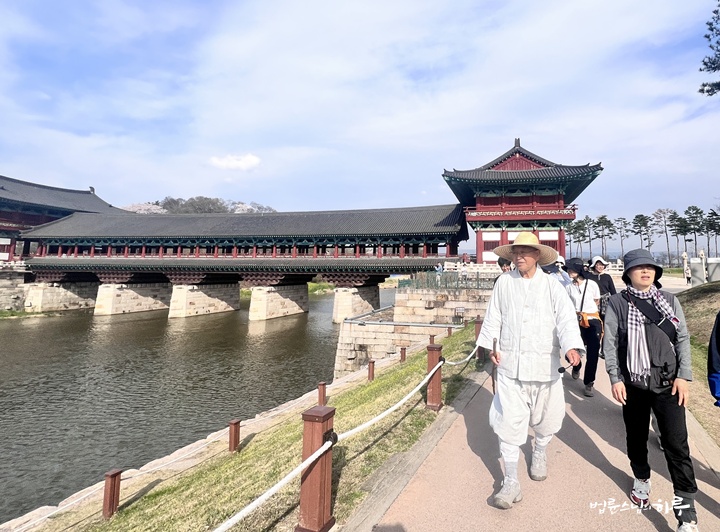
After passing Woljeong Bridge, it was 4:00 PM. Sunim had prepared tangerines and sticky barley bread for the lay Sangha members. The members gathered together to eat snacks and take a rest.
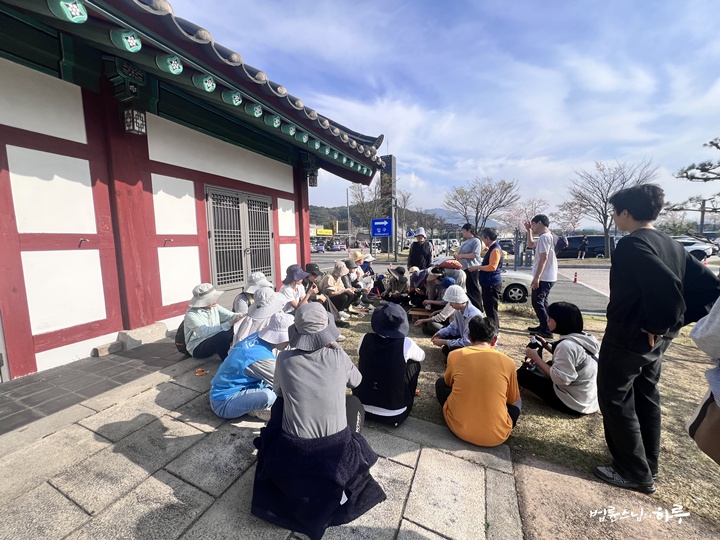
They set out again at 4:20 PM. They had to walk for about another hour and a half. The members who had been numerous at the beginning gradually began to fall behind.
“Those who can’t complete the course don’t qualify for dinner tonight (laughter).”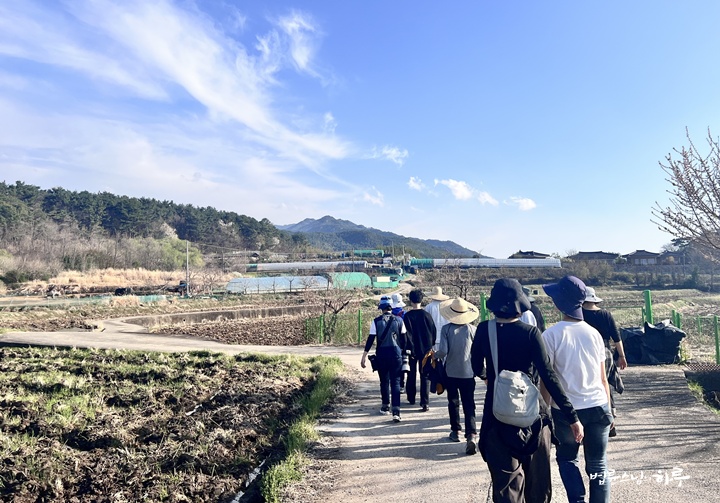
They passed Cheongwansa Temple site (천관사지) and crossed the overpass for wild animals, then moved along the path to Samneung (삼릉). The sun had been hot during the day, but as it approached 5:00 PM, the wind became cool.
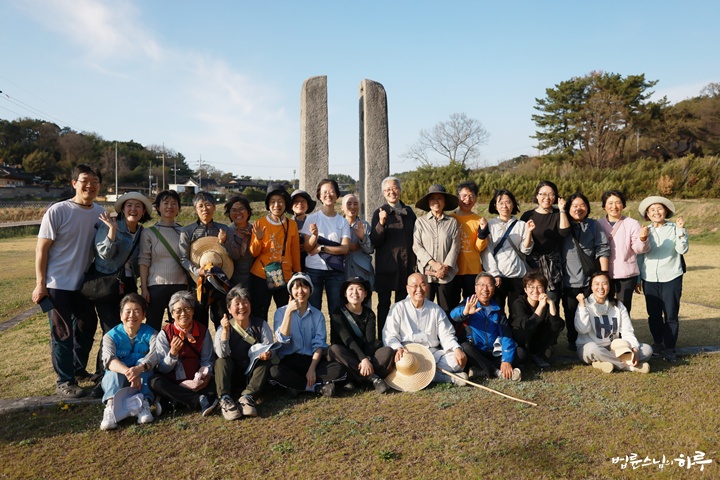
They took a group photo while passing the flagpole supports at Namgansa Temple site (남간사지), where flags and flagpoles had been mounted.
“Only those in the photo can have dinner (laughter).”As they continued walking along the path, they could see the three-story stone pagoda of Changnimsa Temple site (창림사지 3층 석탑) in the distance. When Sunim asked the members if they would climb up to the three-story stone pagoda, the members who had been walking since 1:00 PM seemed tired and their response was lukewarm. However, when one practitioner expressed interest in going, Sunim gladly headed toward the three-story stone pagoda of Changnimsa Temple site.
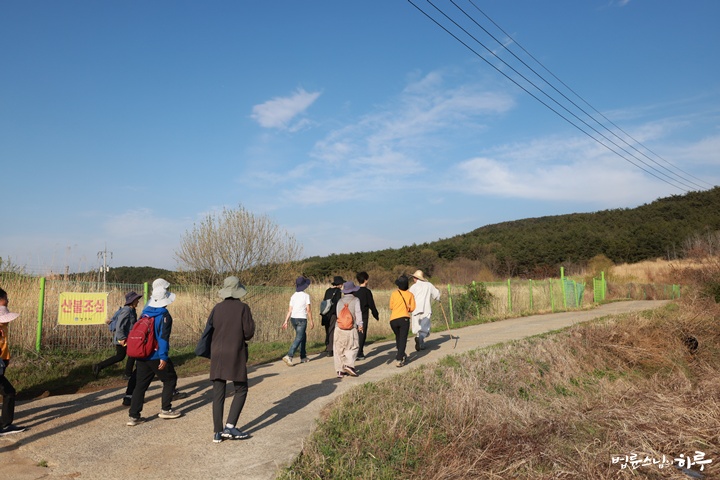
Dharma Teacher Mubyeonsim (무변심) said this was his first time visiting the three-story stone pagoda of Changnimsa Temple site up close.
“You’re not qualified as a Dharma Teacher (laughter).”“Sunim, then I’ll consider myself qualified as a Dharma Teacher starting today (laughter).”
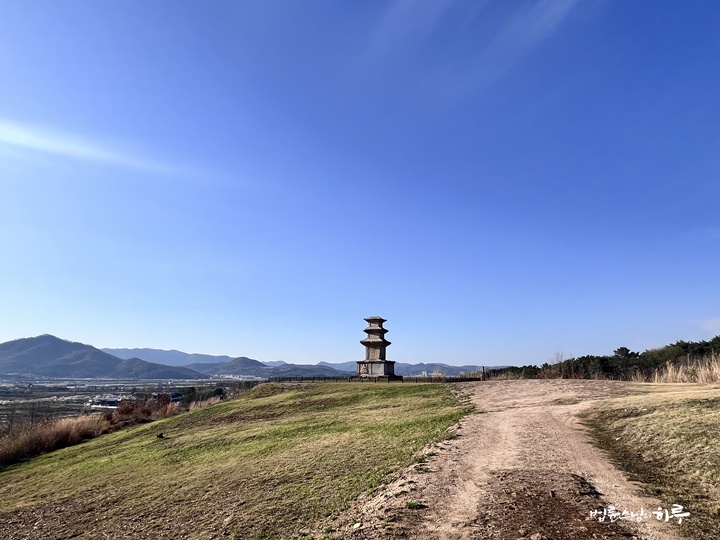
Sunim explained about the pagoda for the members who were visiting the three-story stone pagoda of Changnimsa Temple site for the first time.
“This pagoda is a wooden-style stone pagoda. You can see the door handles representing doors on the second floor there.”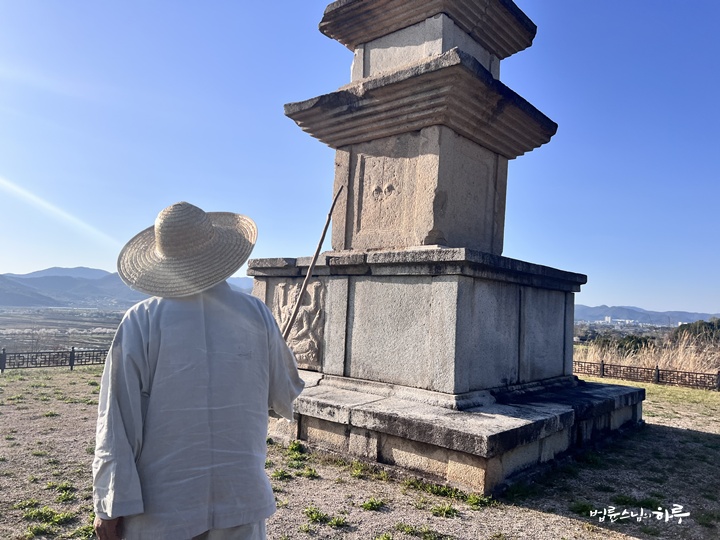
Around 5:40 PM, they finally arrived at the Sambulsa Temple (삼불사) parking lot. They needed to go a bit further to reach the original destination. However, since it was time for their dinner reservation, they decided to end here. It had been a long walk.
The members went to have dinner, while Sunim returned to Dubuk Jungto Retreat Center to prepare for the next schedule.
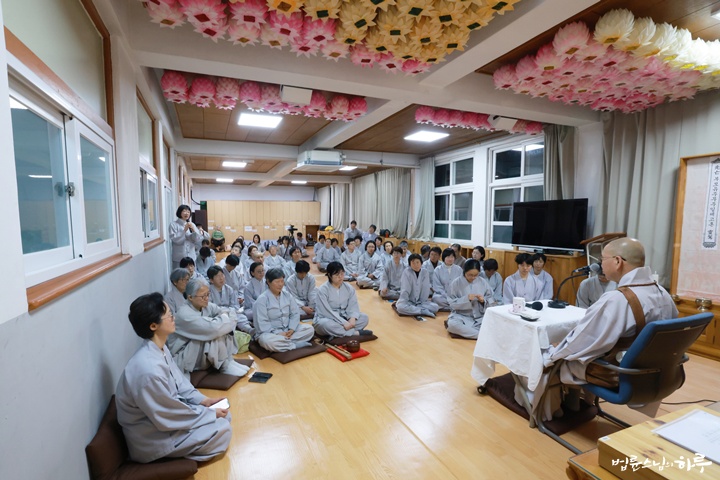
Immediately after evening practice, a Dharma Q&A session with the lay Sangha members followed. The lay Sangha members had an opportunity to openly ask Sunim questions and have conversations about personal practice issues and concerns they had while working in their departments or on projects during community life. The Dharma Q&A session ended after 9:00 PM. A practitioner who had returned from English language training in Thailand was waiting to greet Sunim. Sunim briefly moved to the back of the Dharma hall to receive the practitioner’s three prostrations.
Sunim concluded his day’s activities, starting with the online Dharma Q&A for the English Buddhism Course in the morning and ending with the Dharma Q&A session with lay Sangha members until 9:00 PM.
Tomorrow, he will visit the hospital for a medical appointment in the morning, move from Dubuk Jungto Retreat Center to Seoul in the afternoon, and give a Dharma talk at the Gilbeot (길벗) Invitation Dharma Assembly in the evening.