I Have a Trauma About Dogs, but My Family Wants to Get One
Day 5 of Bhutanese Visitors' Itinerary (Jeju Island Tour)
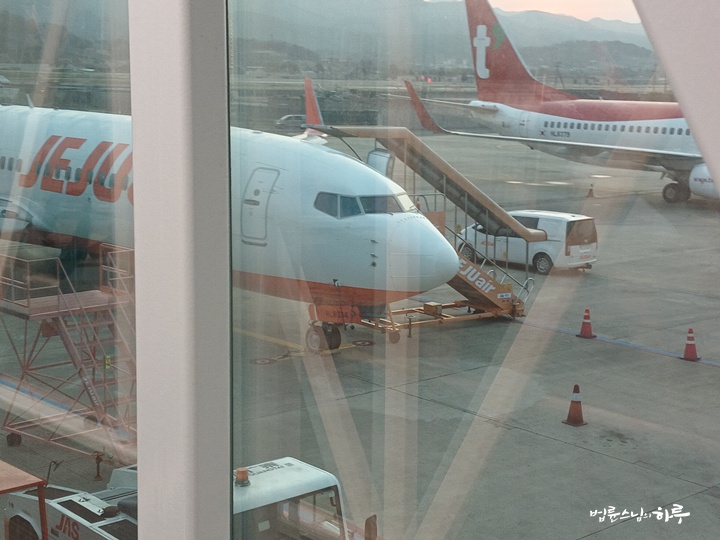
Sunim and the Bhutanese visitors loaded their luggage into the vehicle at 4 AM and departed from Dubuk Jungto Retreat Center (두북수련원) for Daegu (대구) Airport at 4:30 AM. They arrived at Daegu Airport around 5:20 AM and moved early in the morning to board the 6:35 AM flight. After boarding and flying for an hour, they arrived at Jeju Airport around 7:40 AM.
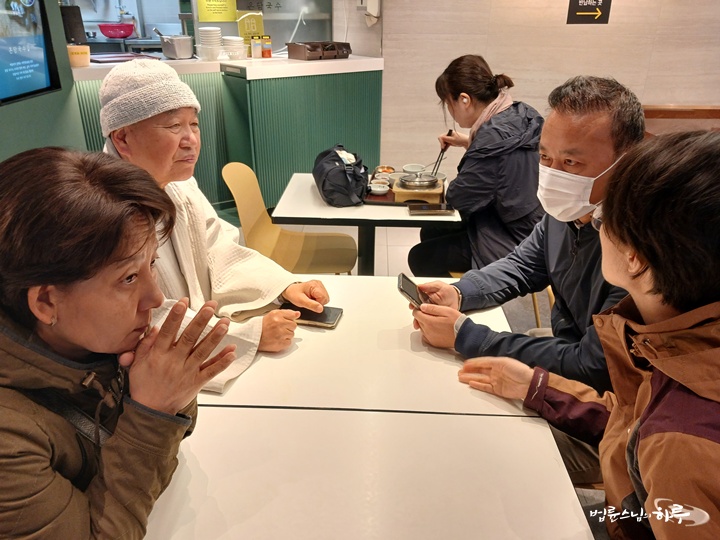
They had breakfast with seaweed soup at a restaurant inside the airport. One of the Bhutanese visitors was experiencing chest pain and was not feeling well, so it was decided that they would visit a hospital in Jeju for an examination. After filling their stomachs with warm seaweed soup and stopping by the restroom, they boarded a 15-passenger van at 8:45 AM.
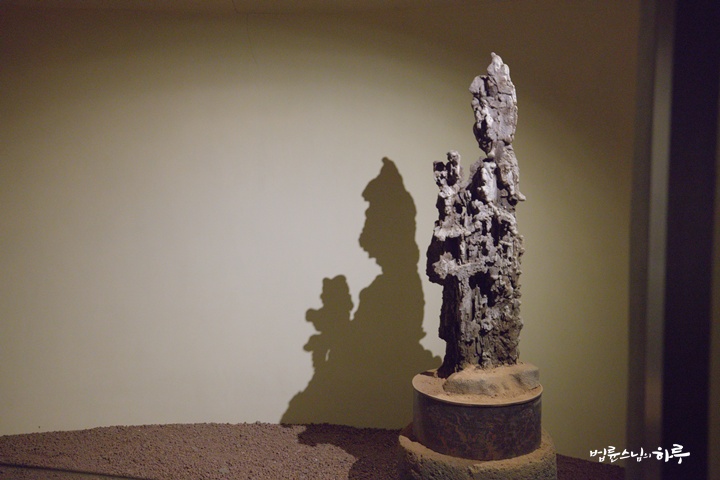
Today is April 3rd, a national memorial day to reflect on the historical significance of the Jeju April 3rd Incident and honor the souls of the victims. Since it was such a meaningful day, they headed to the Jeju 4.3 Peace Park to see if they could tour it. Since the memorial ceremony for the victims of the Jeju April 3rd Incident was being held at the Jeju 4.3 Peace Park at 10 AM, many cars were heading there, causing heavy traffic congestion. While it would have been meaningful to visit the Jeju 4.3 Peace Park on this significant day, they couldn’t wait indefinitely on the road as the Bhutanese visitors had scheduled appointments. Regrettably, the van carrying the visitors turned toward Jeju Stone Park in the eastern part of Jeju Island.
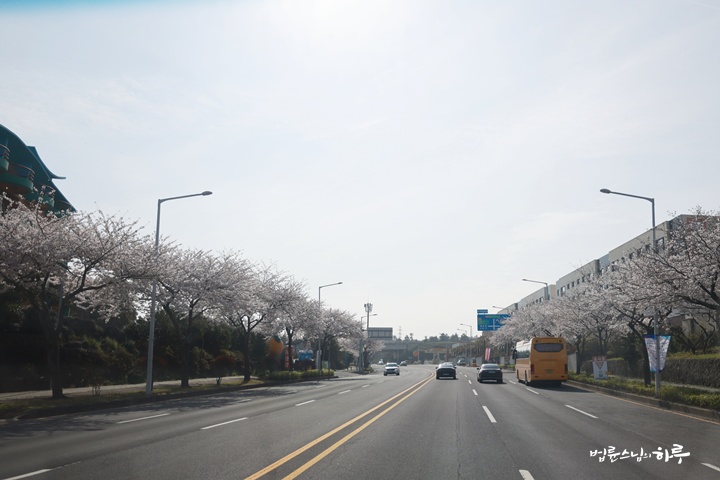
Ornamental tangerine trees were scattered along the streets, and cherry blossoms and forsythias were in full bloom.
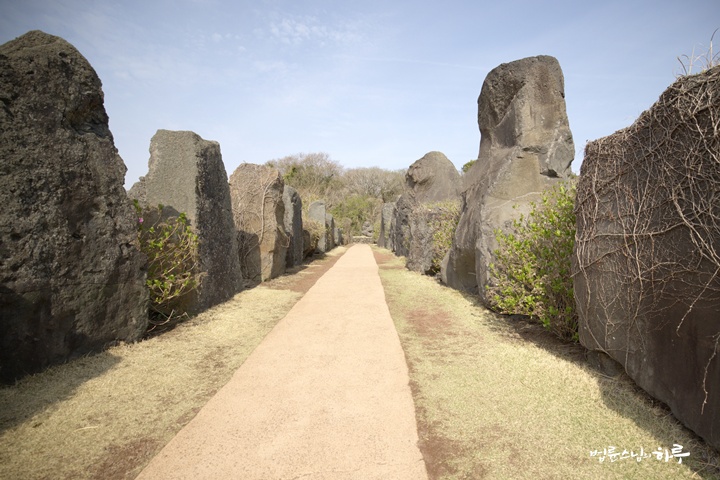
Jeju Stone Park is the largest stone-themed park in Korea where visitors can see the essence of Jeju’s stone culture. Baek Un-cheol (백 운철) donated his lifetime collection of over 10,000 stones to Jeju Island free of charge, and together with the Jeju Special Self-Governing Province, created this ecological art park over 20 years. It is a public-private cultural facility spanning 1 million pyeong (백만평,approximately 820 acres) themed around the myth of Seolmundae Halmang (설문대할망) and Jeju’s traditional stone culture.
Upon arriving at Jeju Stone Park and inquiring about tickets, they learned that admission was free today because it was the Jeju April 3rd memorial day. They also said that bus fares were free throughout Jeju Island today. This once again confirmed how significant the April 3rd memorial day is to the people of Jeju.
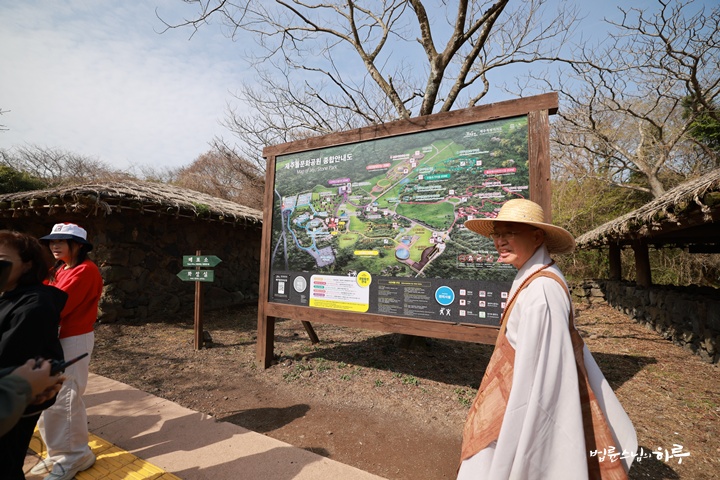
When Sunim stood in front of the Jeju Stone Park guide map, many tourists recognized him and greeted him. After greeting the tourists, Sunim led the way and began touring Jeju Stone Park in earnest with the Bhutanese visitors.
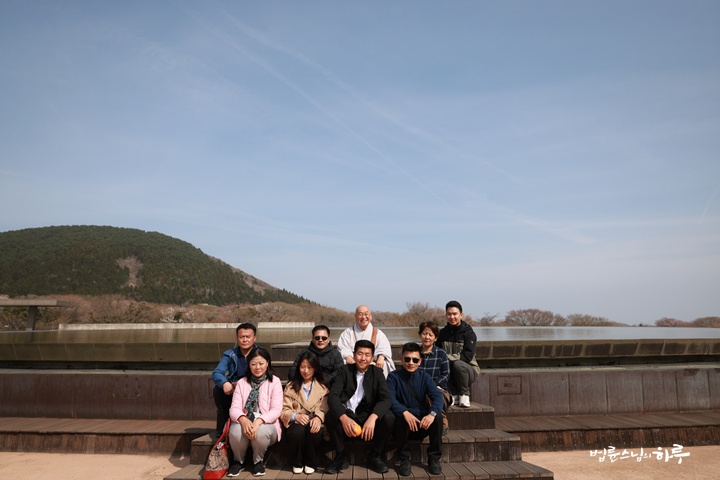
This is the Sky Pond, the most famous spot in Jeju Stone Park. They took commemorative photos in front of the Sky Pond, which symbolizes the porridge pot where Seolmundae Halmang fell and died, then headed to the Jeju Stone Museum.
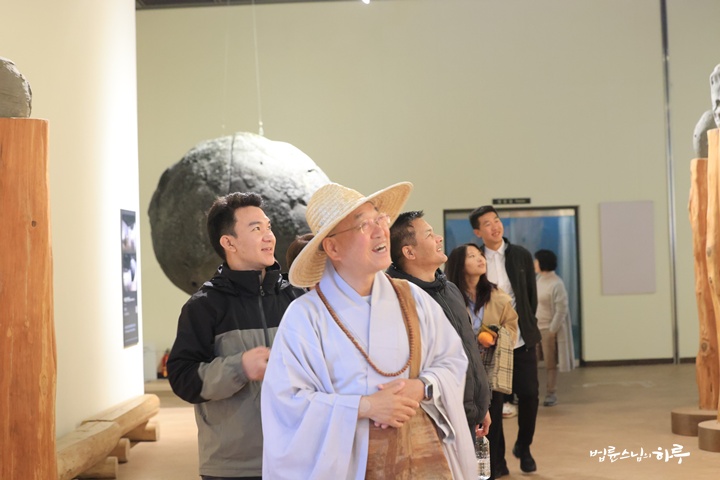
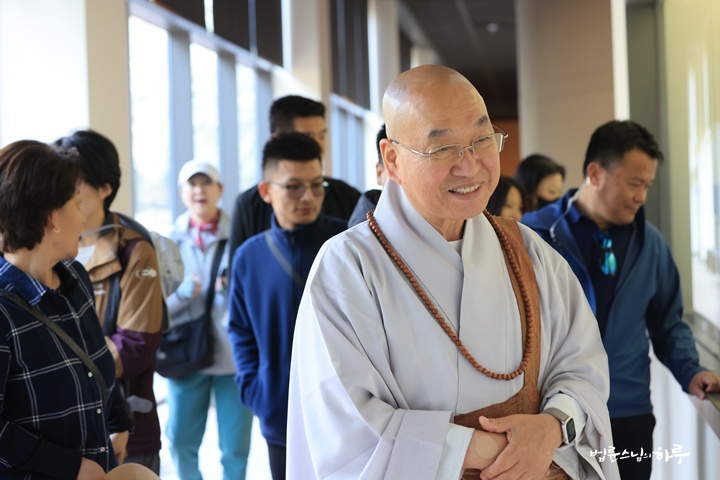
They could see explanations about volcanic stones commonly found in Jeju Island and galleries of various stone shapes.
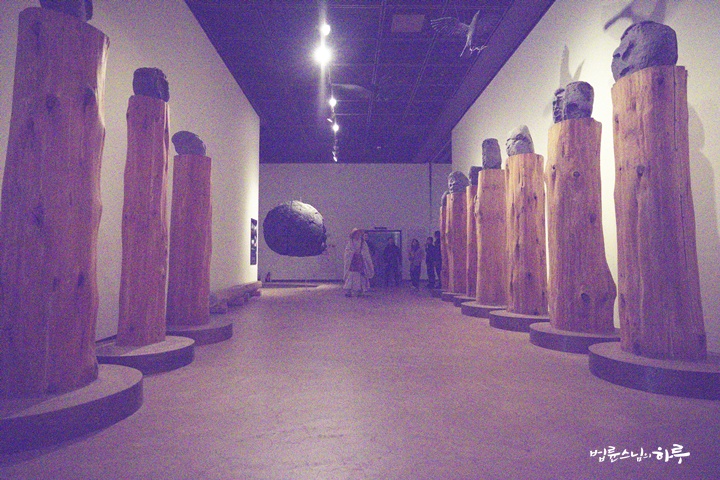
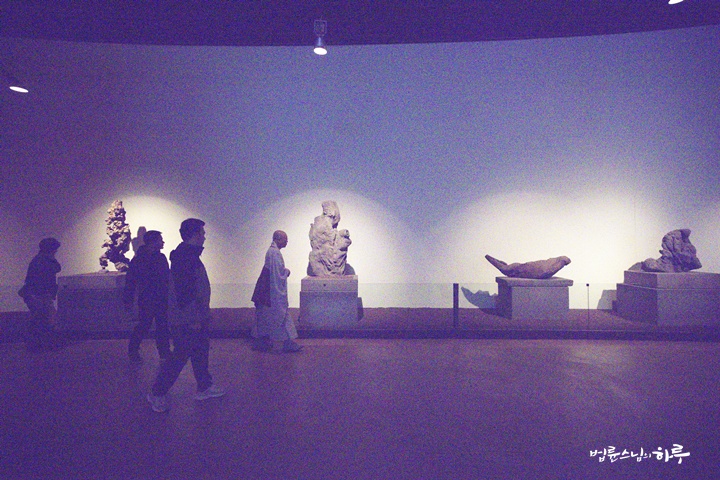
After leaving the stone museum building, they went to a nearby café for a cup of tea and took a brief rest. During this time, the Bhutanese visitor who had gone for a medical examination in the morning and the accompanying staff member joined them. The examination results showed no major problems, and they had received a prescription for medication. Fortunately, the visitor looked more comfortable than in the morning.
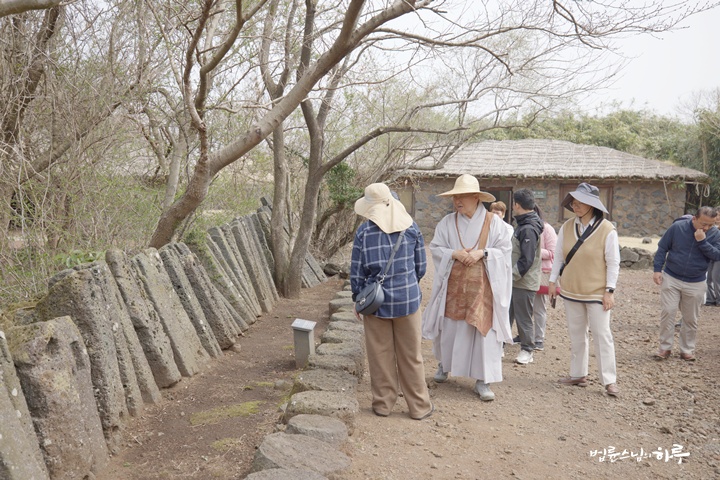
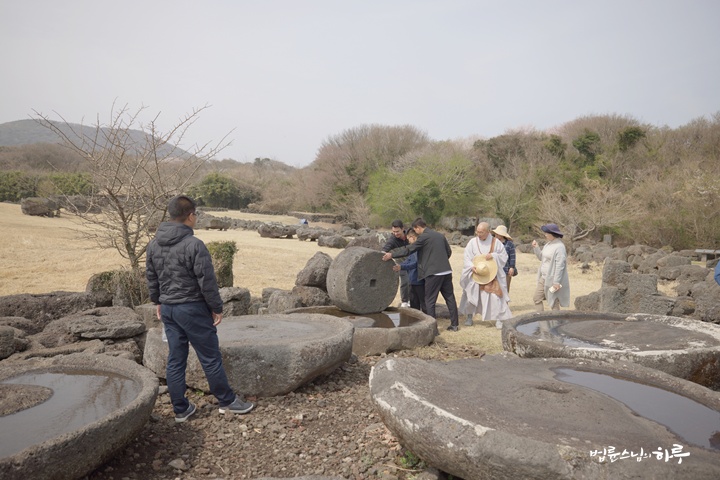
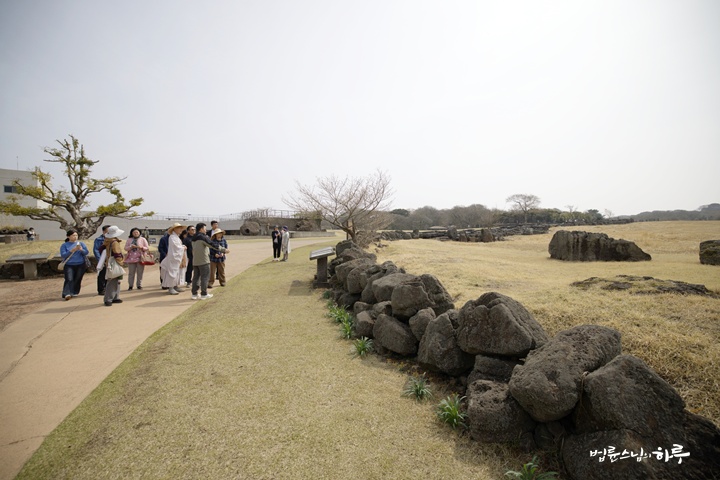
When the break ended, Sunim led the way and guided the path. Following the course, they could see various daily tools made of stone. These were various household tools used in Jeju Island, such as stone mortars, stone mills, and water-powered mill.
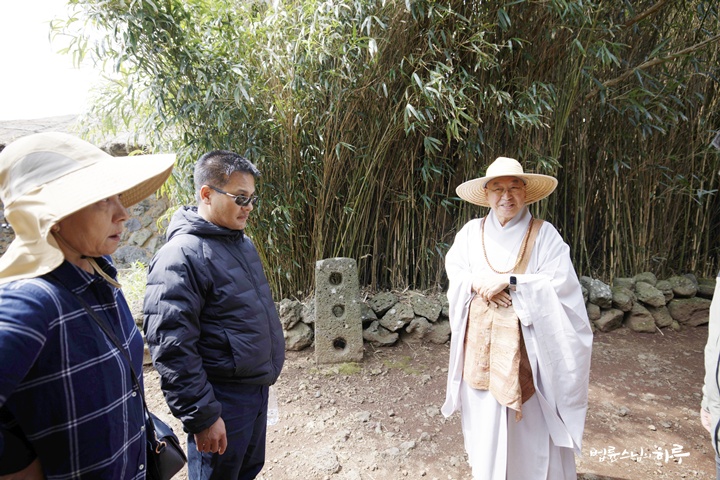
Sunim explained to the Bhutanese visitors about jeongju-seok (정주석), the stone pillars with holes that serve as Jeju’s gates, and jeongnang (정낭), the wooden bars placed across them. When he explained the gate-hanging method that conveys messages about whether the homeowner is far away based on the position of the jeongnang, the Bhutanese visitors were amazed that there were messages.
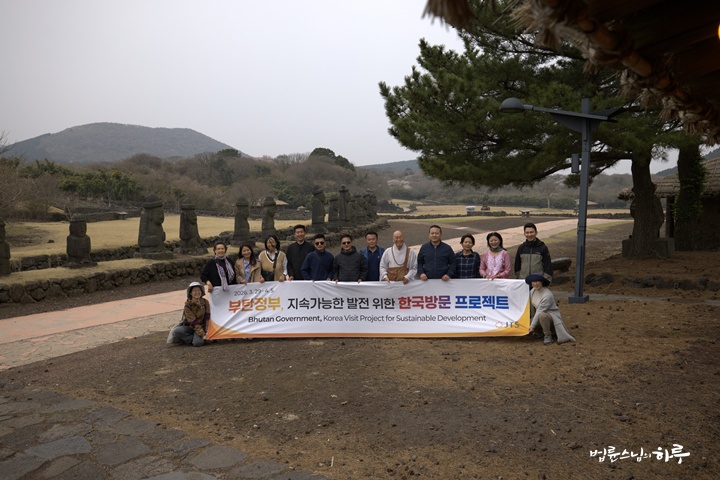
As they strolled through the course, they came upon a large dol hareubang (돌하르방,stone grandfather statue). They took commemorative photos with the dol hareubang as the backdrop and concluded their tour of Jeju Stone Park. While explaining to the Bhutanese visitors, Sunim shared his opinion that it would be good to create tourist education facilities like Jeju Stone Park using Bhutan’s natural stones, and explained why they were touring this place.
After finishing the tour of Jeju Stone Park, they had lunch at a noodle restaurant about 5 minutes away. At the restaurant, they were joined by Ko Eun-kyung (고 은경), a Jeju native who had previously done KOICA volunteer work in Bhutan. The Bhutanese visitors and Ko Eun-kyung exchanged greetings and had lunch together. Ko Eun-kyung is currently engaged in NGO activities contributing to global peace, and they agreed to cooperate on areas of mutual exchange in the future and promised to meet again.
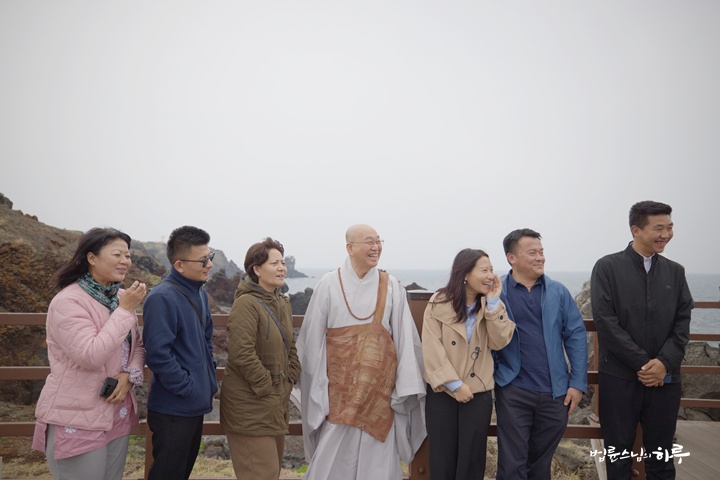
After the meal, the group went to Seopjikoji (섭지코지), a scenic spot in Jeju, to see the ocean. Bhutan is a landlocked country with no ocean. Two young people said it was their first time seeing the ocean. Although it was very windy, seeing the wide-open ocean made their hearts feel expansive. While it would have been nice to walk the entire Seopjikoji course, they only viewed a portion, took commemorative photos, and immediately boarded the vehicle.
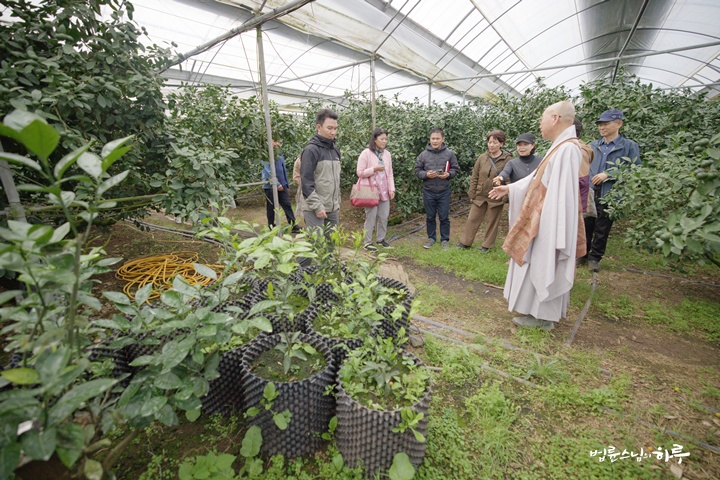
The next stop was a tangerine farm in Namwon-eup (남원읍), Seogwipo City (서귀포시). It was a farm that had been growing tangerines for three generations. After touring the greenhouse and open-field farms and watching a brief video, they had a Q&A session. When they entered the tangerine greenhouse, there were so many tangerine trees that they couldn’t see the end. Although the tangerines are green now, they said they would ripen to yellow and be shipped in summer. After finishing the greenhouse tour, they moved to the open-field farm. It was a time to understand the differences between greenhouse and open-field tangerine production.
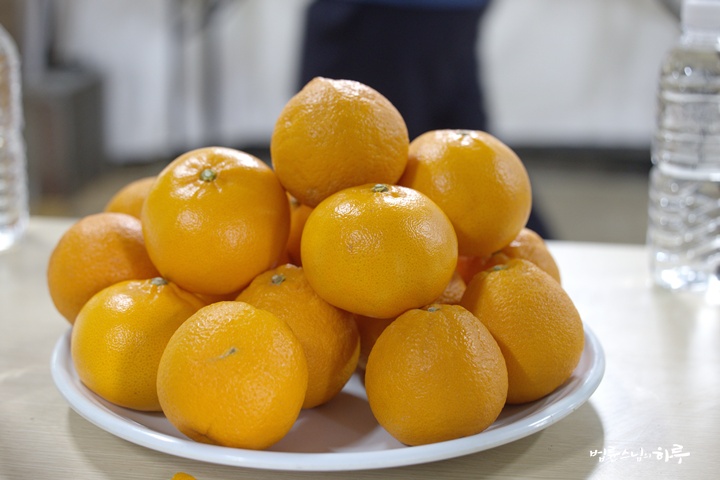
The Governor of Zhemgang showed particular interest in tangerine farming. Sunim mentioned that the orange trees he had seen in Bhutan were extremely tall, with oranges growing so high that people couldn’t pick them. The tangerine farm maintained an appropriate height for human harvesting, and the sugar content was high. The Governor of Zhemgang listened attentively to the farm owner’s explanation, recorded videos of what was being explained, and participated in the program while communicating with his staff.
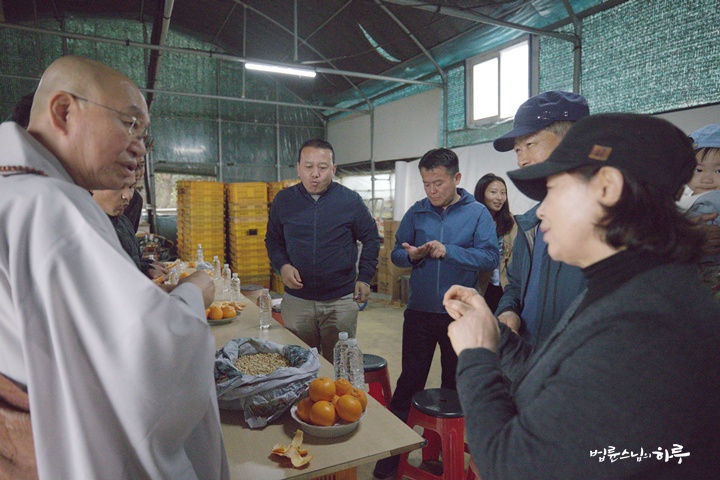
The Bhutanese visitors learned a great deal about using trifoliate orange seeds (탱자씨) to strengthen roots and developing various varieties through grafting.
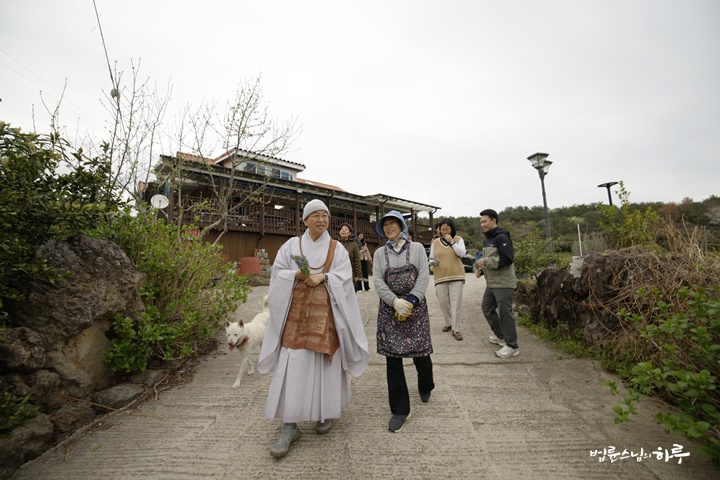
They said goodbye to the farm owner’s family as they had another appointment. The next destination was an organic farm. On the way, the weather became cloudy and a few raindrops fell. They entered the wrong address in the navigation system and arrived at a sorting facility instead of the farm, then traveled another 10 minutes to reach the organic farm. The farm owner warmly welcomed the visitors.
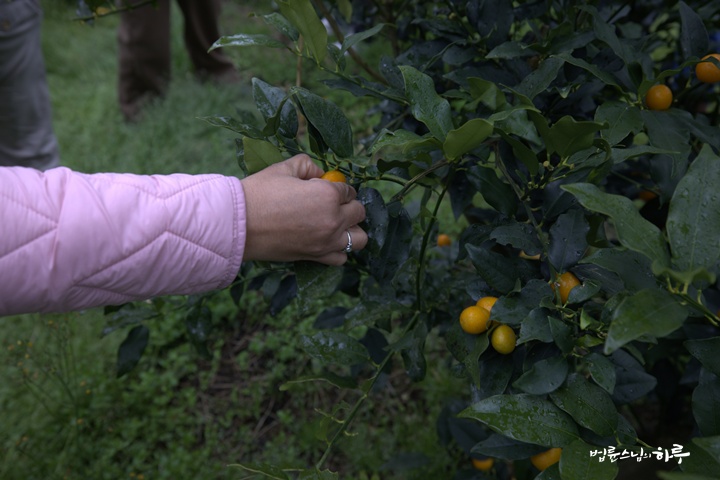
The first place they visited was an organic greenhouse kumquat field (금귤밭). Since it was grown organically, there was a lot of grass everywhere among the trees. The farm owner told them to pick and taste kumquats freely. While kumquats are rarely seen these days, the organically grown kumquats could be picked and eaten immediately. One volunteer who tasted them said they were the best kumquats she had ever eaten. Sunim and the visitors picked and tasted the ripe kumquats.
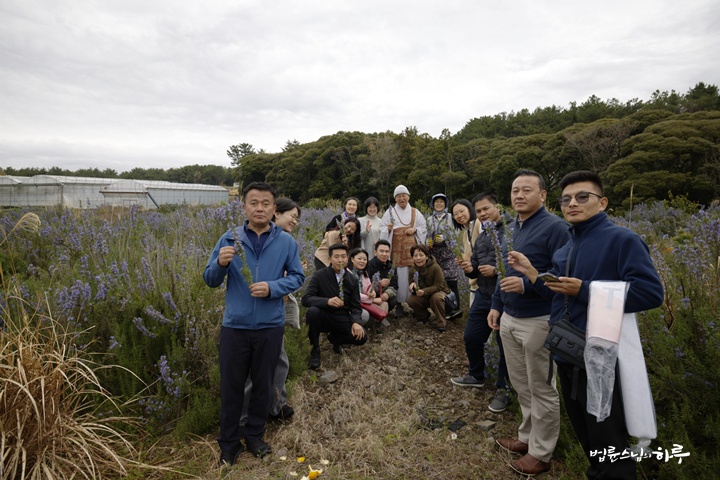
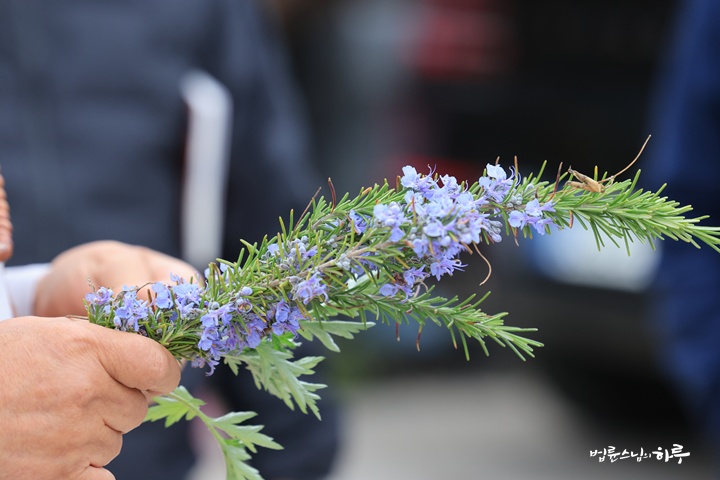
After viewing the greenhouse crops, they went out to the open fields. They saw Hallabong tangerines (한라봉) and rosemary growing in the open fields. The ocean could be seen in the distance. The farm owner said he operates about 30,000 pyeong (3만평, approximately 24.5 acres) of organic farmland combining greenhouses and open fields. He said he operates it to allow grass to grow and become natural compost. They thanked the farm owner for graciously allowing them to visit the organic farm and providing explanations, then boarded the vehicle for the next schedule.
The weather was very cloudy and getting dark. Since they had come all the way to Jeju Island, it seemed good to see more of the ocean, so they moved toward Jusangjeolli Cliff (주상절리). They arrived at Jusangjeolli around 5:40 PM. The admission closing time had already passed. The last viewing time was 5:50 PM.
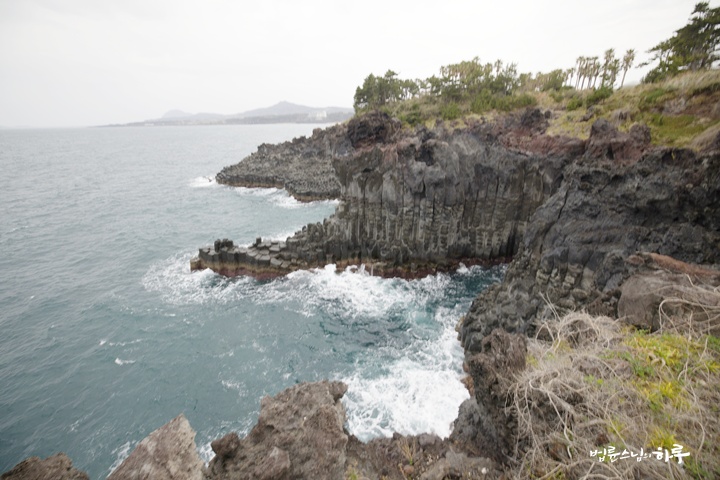
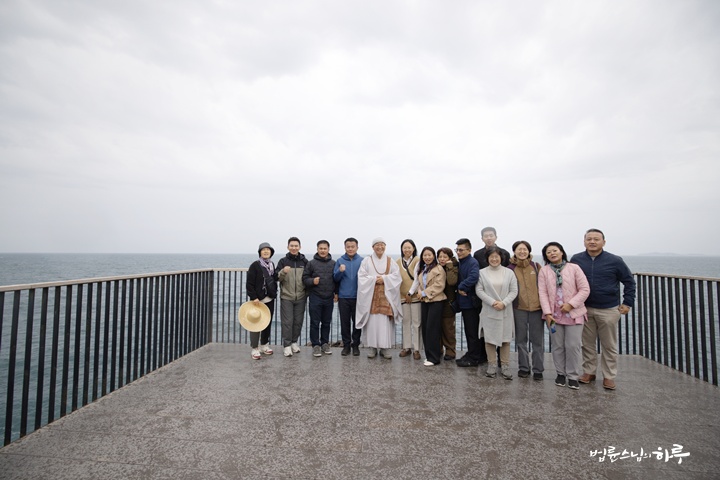
They asked for understanding at the management office and viewed the ocean where Jusangjeolli could be seen in just 5 minutes. Jusangjeolli are polygonal columnar joints formed when hot volcanic rock cooled rapidly. They ran quickly to see the ocean, took photos, and hurried out. Among the Bhutanese visitors, some said it was their first time seeing the ocean. As they came out panting from running quickly to see the ocean, the raindrops became heavier.
It was necessary to arrive at the accommodation before the rain became heavier. Sunim and the Bhutanese visitors boarded the vehicle and moved to the accommodation. After arriving at the accommodation and receiving room assignments, the rain intensified. After unpacking and resting, they had dinner together. Sunim finished his day’s work after dinner.
Tomorrow, they will fly from Jeju (제주) Airport to Seoul early in the morning, then have a sharing session with the Bhutanese visitors, hold meetings, and move to Dubuk Jungto Retreat Center (두북수련원).
Since there was no separate Dharma talk today, this post concludes with content from a previous Dharma Q&A.
I Have a Trauma About Dogs, but My Family Wants to Get One
“I’ve been afraid of dogs and haven’t liked them since I was young. My family knows this well, so when we visit homes with dogs, they protect me from the dogs. My children have wanted to raise a dog since they were young, but at that time, since we had to raise the children, both my husband and I didn’t allow it because we thought we wouldn’t be able to properly care for a dog.
Now the children are all grown up, and my husband says there’s no one to greet him when he comes home, so he wants to bring home two dogs next year and tells me not to stop him. The children say that everyone in the family wants to raise dogs but only mom is against it, which isn’t democratic, and that if we raise them, I’ll come to like them too. They’re begging me to change my thinking just a little.
When the dogs come, I don’t know how I’ll face and live with the scary dogs, and I’m not confident that I can take care of them if the family members are too busy to do so. Also, since both my family and I have to go to work and school, thinking about the dogs being alone in an empty house makes me feel sorry for them, and I’m already worried and anxious about the house getting dirty and messy.
Since raising them means taking responsibility for a life until the end, I’m so worried and lack confidence that I’ll continue to say absolutely not. Still, I’m wondering if there might be a way to let go of my current worries and burdens a little and think about and accept this situation more comfortably, so I wanted to ask you, Sunim.”
“It’s not just that you dislike them, you’re afraid of them, so tell them absolutely not. Say firmly, ‘If you want to see me die, go ahead.’ There’s no need for further discussion. ‘Absolutely not. Even if the sky falls, this is the one thing I cannot accept.’ Block it firmly like that.”“I’ve been blocking it like that until now.”
“Keep blocking it in the future too. If you’ve blocked it until now, why wouldn’t you be able to block it going forward?”“But I wonder if it’s because I’m not open-hearted enough or lack love for animals.”
“It’s not because you lack love. People with apple allergies don’t have allergies because they don’t love apples. You have trauma from dogs, whether from being bitten as a child or for some other reason, and you have a rejection response.”“Yes, I have been bitten before.”
“Your children and husband want a dog for enjoyment, while you have trauma-induced fear of dogs. It’s not right to treat these equally and call it democratic. Even if a hundred people like dogs, if one person has trauma related to dogs, we should consider that one person – that’s democracy. So tell them, ‘I can’t have a dog because of this fear. I can’t help it. I didn’t choose this, whether it’s because I was bitten as a child or for some other reason I don’t know, but I have this trauma, so please understand.’ And if your husband says he wishes there was a dog to greet him when he comes home because no one welcomes him, say ‘I’ll become the dog and greet you.’ When your husband comes home, you should run to him saying ‘Welcome home!’ and hold his hand like a dog would.”“Yes, so the day after I heard that, when my husband came home from work, I greeted him at the door saying ‘Thank you for your hard work, welcome home, let me take your coat,’ and his eyes went wide as he said, ‘Why are you suddenly acting like this? Are you okay?’ He laughed awkwardly, though it was probably a joke.”
“Of course it’s awkward when you suddenly do something you never did before.”“We usually lack that kind of thing between us.”
“It will get better with time. Then laugh and say, ‘Since you said you’d buy a dog, I decided to become the dog. I think it’s better for me to become the dog than to buy one, so from today I’ll be the dog.’ Just say it with a smile.”“I kept telling my family what Sunim mentioned earlier. But my husband and children say that many people who used to dislike dogs came to like them. They say if I look at dogs more closely and spend time with them, I might come to like them too.”
“That’s possible.”“They actively tell me that I’m not trying, that I should at least make an effort.”
“If they go that far, you’ll have to compromise since you live in the same house. Then instead of buying a dog, borrow a small dog for just one month and try living with it. Tell them your conditions: ‘Will you promise that the son will be responsible for feeding the dog, the daughter will be responsible, the husband will be responsible? Will you promise never to ask me to do it?’ If you want it that much, let’s live with a dog for exactly one month and then discuss again. But the decision-making power is mine. Since I’m compromising by bringing it in, if I don’t like it after a month, we won’t keep it.’ Make that promise. After a month, either you’ll change and be okay with having the dog, or you won’t change and your children or husband will give up. If your fears don’t go away, keep a journal: ‘I was startled at this time, you didn’t take responsibility at that time, if this continues long-term it seems dangerous for me. So I can’t do this.’ That’s how you should handle it. But you absolutely cannot bring the dog permanently. Dogs are living beings too, and you can’t just abandon them if you decide you can’t keep them. So write a contract for exactly one month, borrow one, and try raising it as an experiment. From what I can see, in your situation, you have the right. The right to say you can’t keep one because of trauma. That’s democracy – getting understanding even if you’re not the majority. Democracy decided by majority rule isn’t right. If someone has a physical disability, you can’t decide by majority. Everyone must accommodate the person with difficulties. For example, if we’re installing stairs and discussing whether to put in stairs or a ramp for wheelchairs for people with mobility issues, we can’t decide by majority. Even if only one person out of a hundred has mobility issues, we must decide for that one person. The children are thinking incorrectly. Since you don’t just dislike dogs but have trauma that causes fear, you have the right to protect yourself. So refusing is best, but if you think you need to show some effort for family harmony, then to show that effort, ‘write a contract for one month and decide how to divide the responsibilities.’ Otherwise, you’ll eventually have a difficult and painful life because of that dog. Then your relationship with your husband will deteriorate, and your relationship with your children will worsen, so instead of bringing family harmony, it could become a source of conflict. It’s best to prevent such things in advance, or else make sufficient compromises beforehand.”“Yes. Thank you for your words.”