Death is Not Something Special But Just Another Part of Daily Life
Apr 2, 2026 - Day 3 of Bhutanese Visitors' Itinerary (Visiting Silsangsa Temple and Bulguksa Temple)
Hello. In the morning, Sunim visited the hospital and gave a closing Dharma talk for the Chulga Yeolban Jaeil (the day commemorating Buddha’s renunciation and parinirvana). In the afternoon, he joined the Bhutanese visitors for their third day of programs.
Sunim had a pre-scheduled hospital appointment for medical tests, so he visited the hospital early in the morning. Today is Parinirvana Day, commemorating Buddha’s passing into nirvana, and marks the final day of the 8-day intensive practice period for Chulga Yeolban Jaeil.
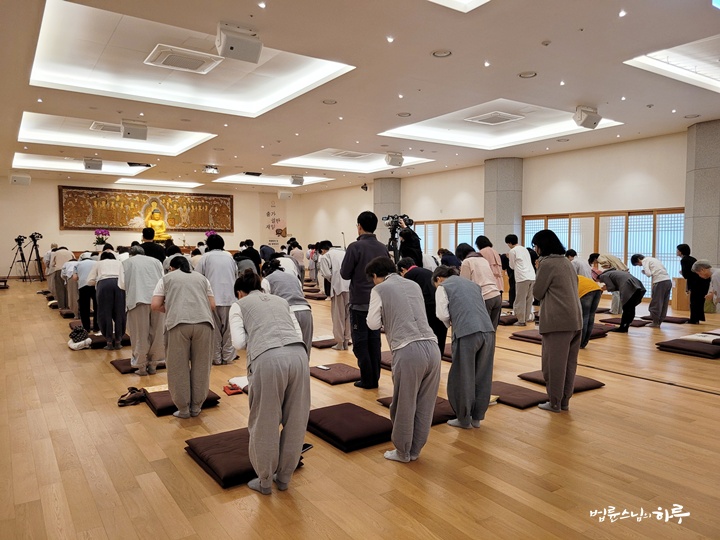
The assembly requested the Dharma from Sunim with three prostrations. Sunim gave a Dharma talk on how we should accept death through the example of Buddha entering parinirvana, and how practitioners should live their daily lives between life and death.
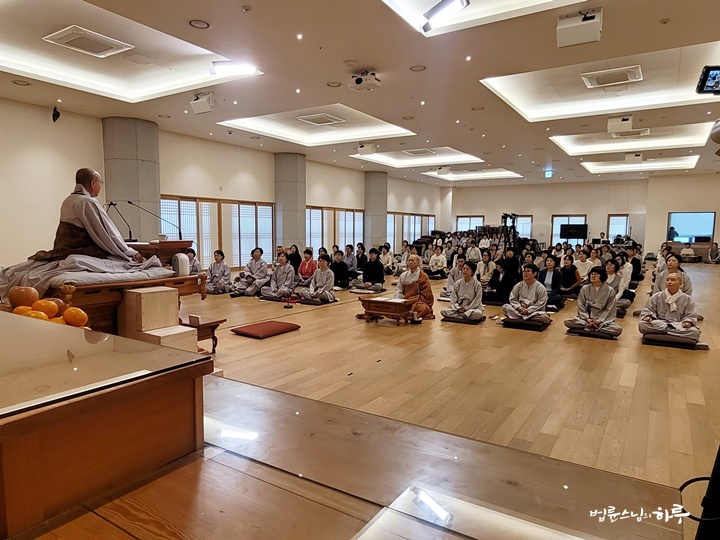
From Death as the Most Fearful Thing to Part of Daily Life
While we regard death as the most fearful thing in our lives, the Buddha accepted it as nothing special, just like daily life. This is why we call it nirvana. In this way, I hope we too will not regard death as overly special in the future. If we perform the 49-day memorial service according to worldly customs, then we do it. We don’t have to, but there are always people who have lingering regrets. That’s why even at the moment of entering parinirvana, the Buddha allowed those who might feel regret to come and see him. There’s a similar example. An elderly monk once called me to meet. He said, ‘I know you’re busy, but I called you to ask if you’ll come to my funeral.’ When I said of course I would come, the monk said, ‘Even if you come to the funeral, you won’t be able to meet me, and I won’t know if you came, so wouldn’t it be better to meet while we’re both alive?’ That day we talked for two hours, sharing stories that would normally be difficult to discuss. A week later, I received news that the monk had passed away. This shows not viewing life and death as special. When the time comes to go, we simply exchange farewells. He said he thought of about ten people he wanted to say goodbye to and contacted them to meet. If they came, he would see them; if not, that was fine too. I also initially planned to visit him about a week later when I had time because I was busy. But thinking about it more deeply, it seemed strange that someone I don’t usually talk to suddenly reached out. So I changed my schedule and visited the very next day. If I had gone a week later, it would have been a meeting where we couldn’t recognize each other. Being able to accept death just as it is, in such an unwavering state, is nirvana. If we can accept death this way, nothing else will be much of a problem.What We Learn from the Buddha’s Parinirvana
Reflecting on this meaning of nirvana, we follow the Buddha who taught and demonstrated these teachings through his own example. However, simply following the Buddha’s teachings is not the goal itself; what matters is how free I have become through those teachings and how helpful I have become to the world. How high a level our practice has reached is not that important. That’s just a worldly perspective. So on this Parinirvana Day, I hope we can reflect once more on the meaning of nirvana. With this, let us conclude this week’s special intensive practice. Even as we continue our activities going forward, we must always guard our minds well. This is not selfishness. Guarding our mind means maintaining an attitude where, although discrimination may arise or we may waver momentarily when doing something, we soon return to our center. I hope we can live lives that illuminate this difficult world with such an attitude.”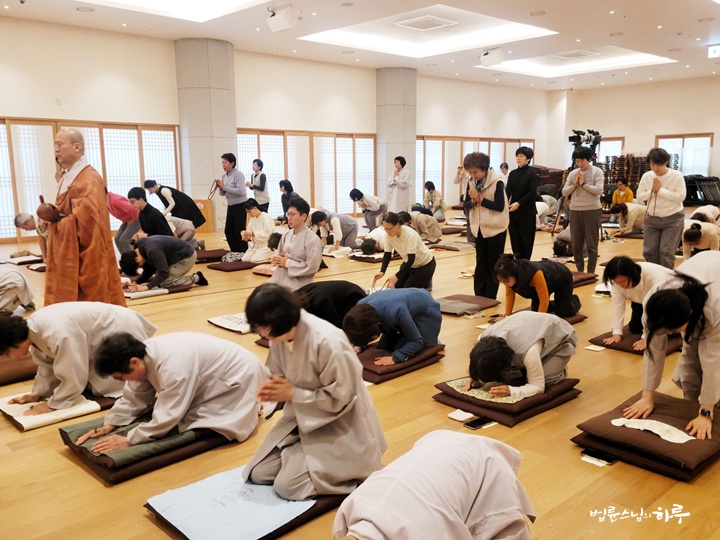
After the Dharma talk ended, the members of the Sangha began their 300-bow practice. Following the practice, a memorial service was conducted, concluding the special practice for the anniversary of Buddha’s renunciation and enlightenment.
As soon as the Dharma talk finished, Sunim immediately departed for Gyeongju (경주).
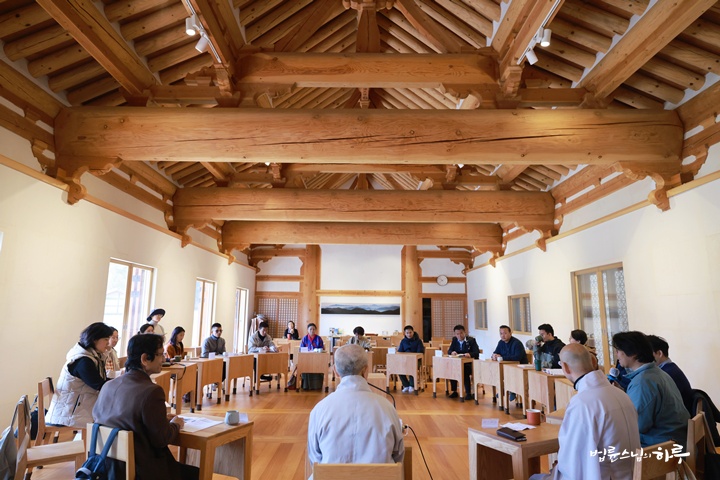
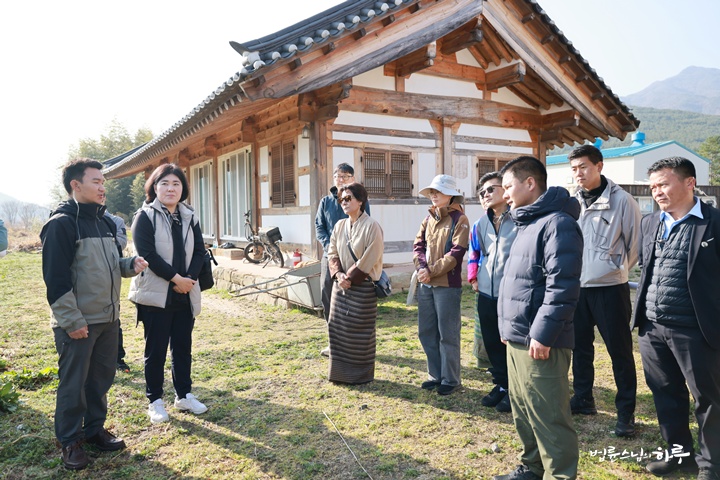
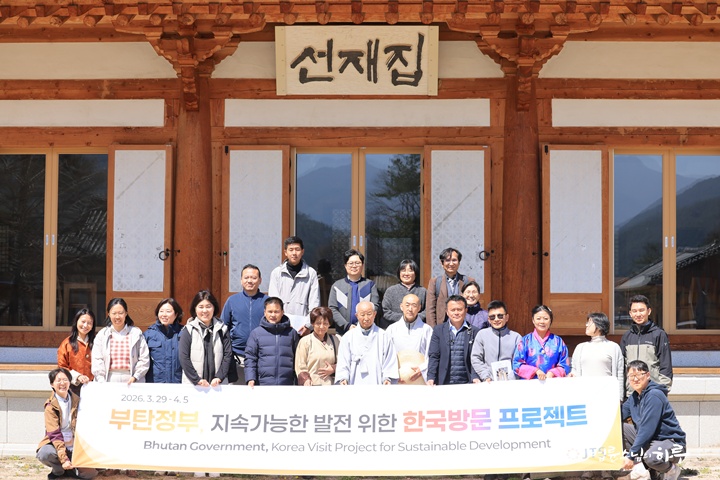
The Bhutanese visitors had finished their morning program at Silsangsa Temple and were traveling to Gyeongju. Sunim also departed from Seoul to meet the Bhutanese visitors at Bulguksa Temple in Gyeongju around 3 PM.
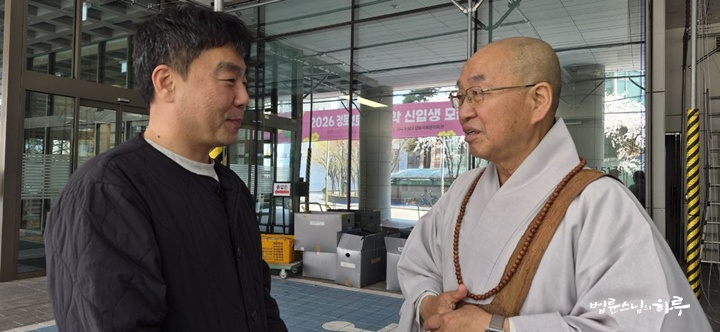
Just before boarding the vehicle, a lay Sangha staff member who was being dispatched to India tomorrow came to greet Sunim. The staff member offered three prostrations to Sunim, and Sunim gave rupees as pocket money to the departing staff member while offering words of encouragement about maintaining the proper attitude as a practitioner.
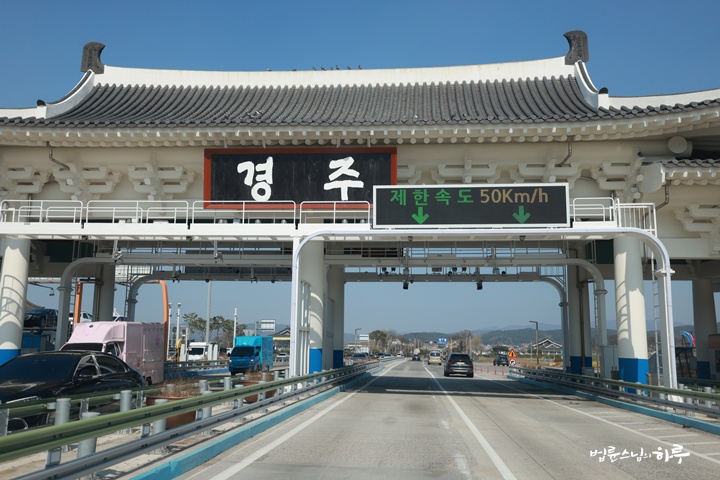
Sunim traveled to Gyeongju by car. Around 3:30 PM, he met the Bhutanese visitors in front of the information board at the main entrance of Bulguksa Temple in Gyeongju. Despite it being a weekday, there were many tourists visiting Bulguksa Temple.
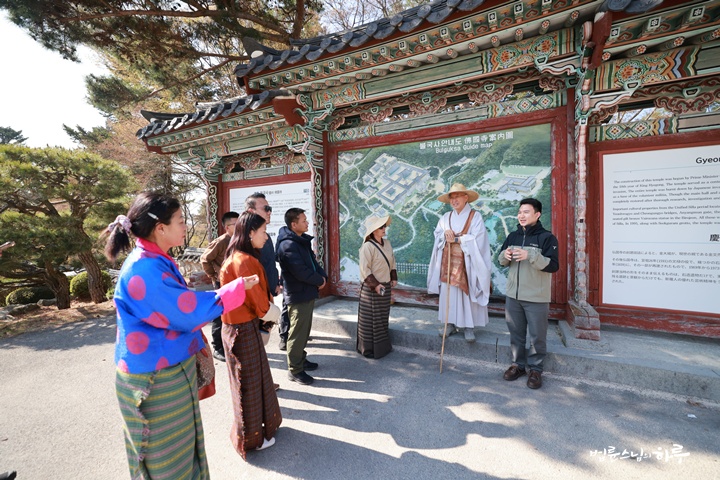
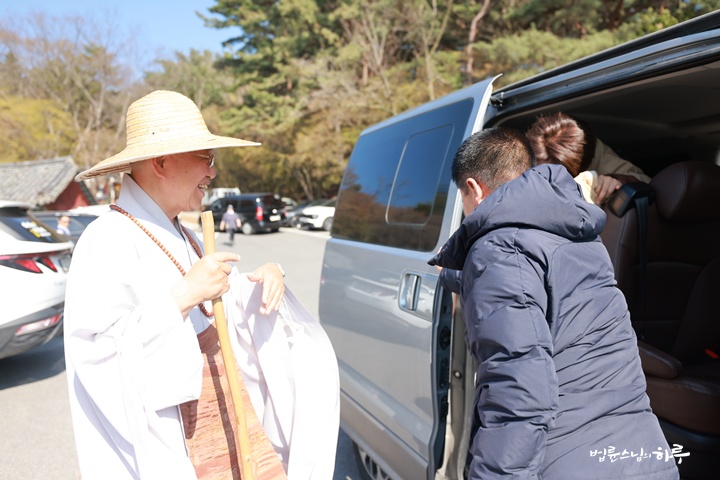
Sunim guided the Bhutanese visitors through the major sites and historic places of Bulguksa Temple, providing explanations along the way.
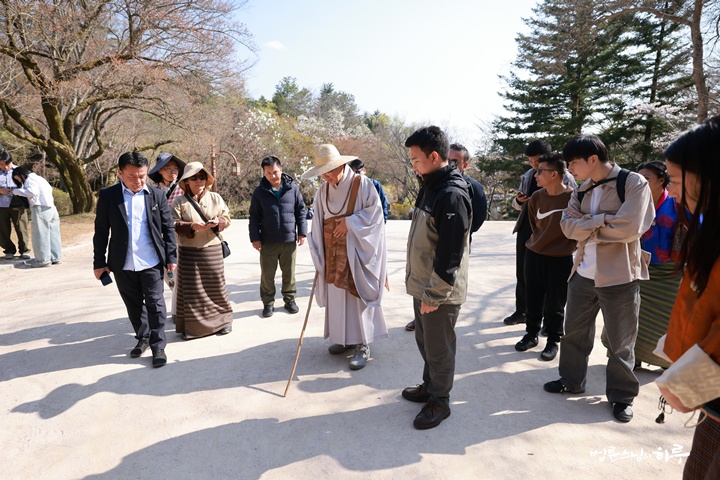
When more detailed explanations were needed, Sunim drew diagrams on the ground with his walking stick to help the Bhutanese visitors better understand.
After explaining about Cheongungyo and Baegungyo bridges, as well as Dabotap and Seokgatap pagodas, Sunim entered the Main Buddha Hall to pay respects. The Bhutanese visitors paid their respects and made offerings to the donation box. Sunim joined his palms together and offered prayers for the Bhutanese visitors, wishing them health and happiness through the merit of their offerings and prayers.
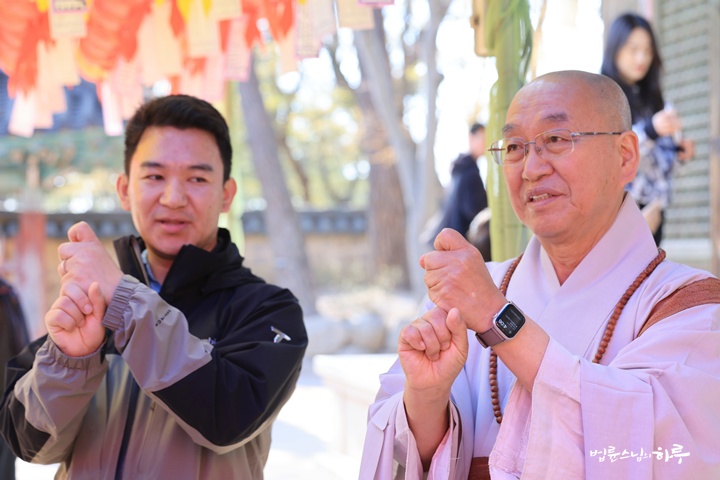
He continued his explanations one by one, including the beautiful eaves, Geungnakjeon Hall, Birojeon Hall, and the meanings of the Buddha’s hand gestures.
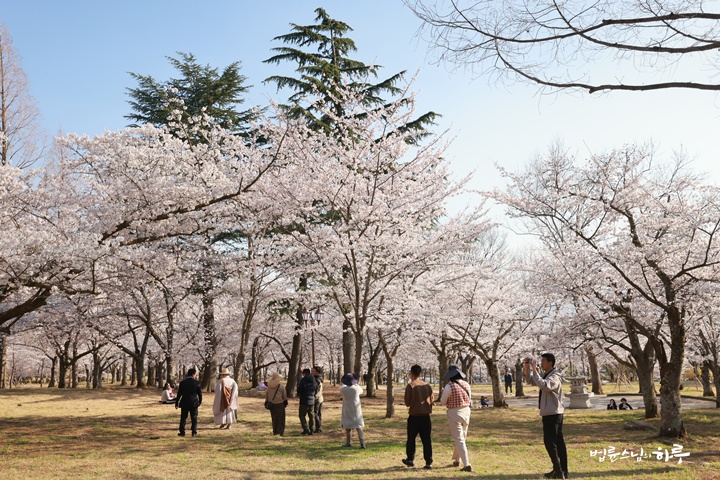
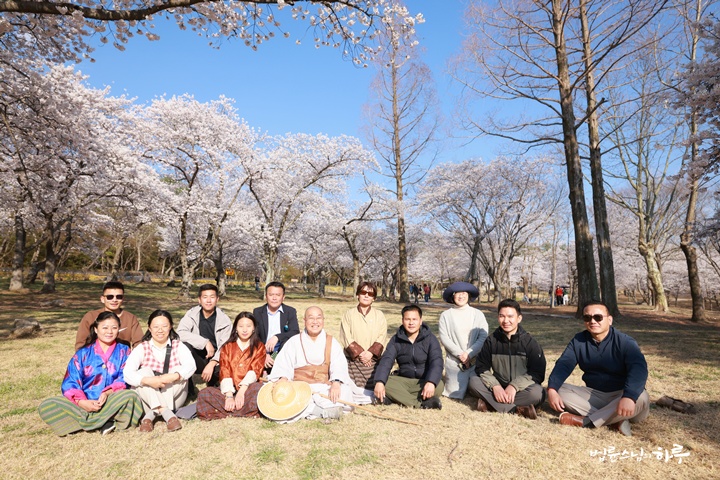
After touring Bulguksa Temple, they took a brief walk along the cherry blossom path in Bulguksa Park. There were many people walking, resting, or enjoying the flowers.
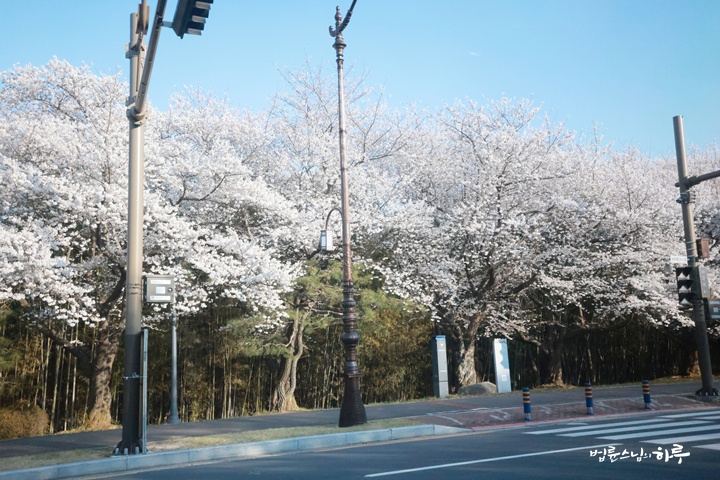
Sunim boarded the vehicle with the Bhutanese visitors and toured around Gyeongju city, including Bomun Tourist Complex, Bunhwangsa Temple, Cheomseongdae Observatory, and Daereungwon Tomb Complex. As they passed each major site in Gyeongju, Sunim provided relevant explanations. The streets of Gyeongju, with cherry blossoms and forsythias in full bloom, were crowded with tourists who had come to enjoy the flowers.
After passing through downtown Gyeongju, they arrived at Dubuk Jungto Retreat Center. Upon arrival, the farming team from Dubuk Farm, members of the Dubuk lay Sangha, and JTS staff welcomed Sunim and the Bhutanese visitors. After brief introductions and welcoming remarks, they toured the JTS warehouse, Saligo Center, broadcasting room set up in the closed school building, offices, and the Dubuk lay Sangha’s accommodations and Dharma hall. The 100-Day Chulga participants who were at Dubuk Jungto Retreat Center for the Unity Retreat also greeted the Bhutanese visitors.
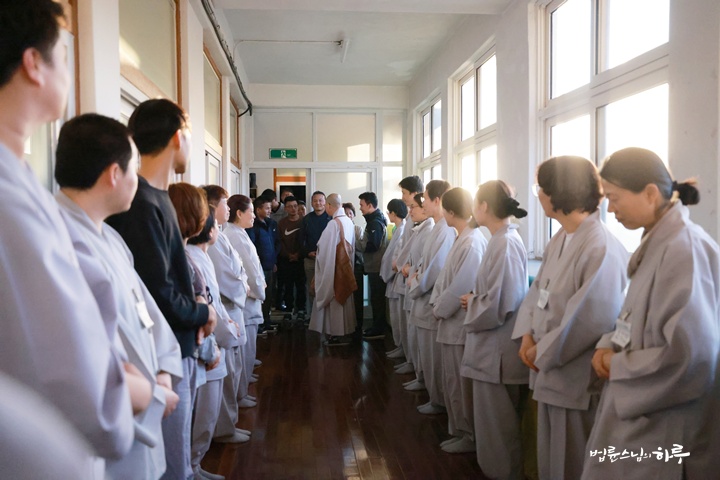
“Kuzu zangpo la”
The Bhutanese visitors were surprised to learn that Dubuk Jungto Retreat Center was the elementary school Sunim had attended as a child. They burst into laughter when Sunim explained that due to the declining population in the nearby village, there were now many elderly people and cows.
Next, they decided to briefly visit Dubuk Farm. Sunim explained the rice paddies, fields, and greenhouses operated by Dubuk Farm. Since the greenhouses were prepared for planting with few crops present, they instead visited the farm shed to look at farming tools, cold storage facilities, and pepper dryers. Afterward, they passed through the outdoor fields. They walked by the field where Sunim had personally planted potatoes in mid-March. The potato sprouts had not yet emerged.
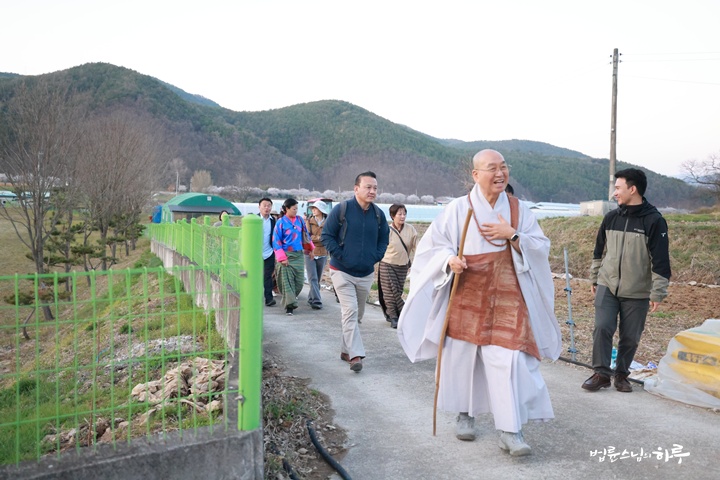
After a brief tour of Dubuk Farm, evening had arrived. Sunim announced tomorrow’s schedule to the Bhutanese visitors and went to have dinner. After dinner with the Bhutanese visitors, Sunim concluded his day with work and rest.
Tomorrow, Sunim will travel to Jeju Island early in the morning with the Bhutanese visitors to continue the program there.