How Can We Distinguish Between Practice and Avoidance?
Mar 30, 2026 - Day 1 of the Bhutanese Government Officials' Visit Program
Hello. Today, Sunim spent the entire day with Bhutanese government officials.
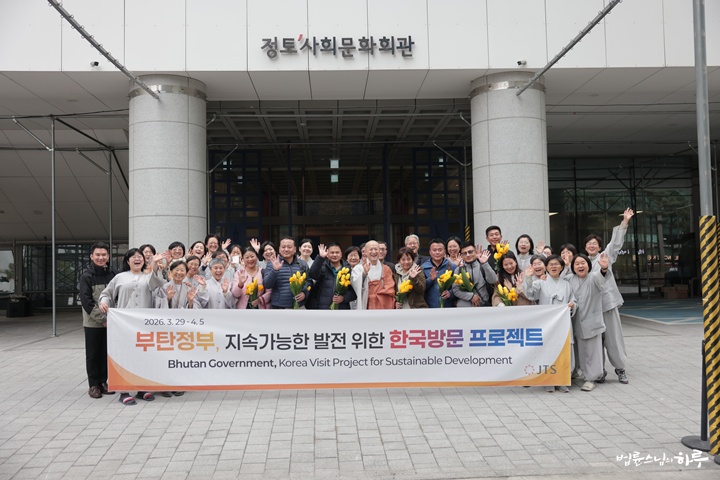
JTS is currently conducting a sustainable development project in Bhutan. Eight Bhutanese government officials, consisting of Cabinet Secretary Kesang Deki, Deputy Secretary to the Royal Office, Trongsa Dzongkhag Governor (트롱사 종각 주지사) and Planning Officer, Zhemgang Dzongkhag Governor and Planning Officer, Cabinet Office Administrative Officer (내각실 행정 담당자), and Cabinet Office Working-level Officer, began their journey to Korea yesterday to participate in the Korea visit program. They planned to visit Korea for six days from March 29 to April 5, visiting various sites in Korea and learning from case studies.
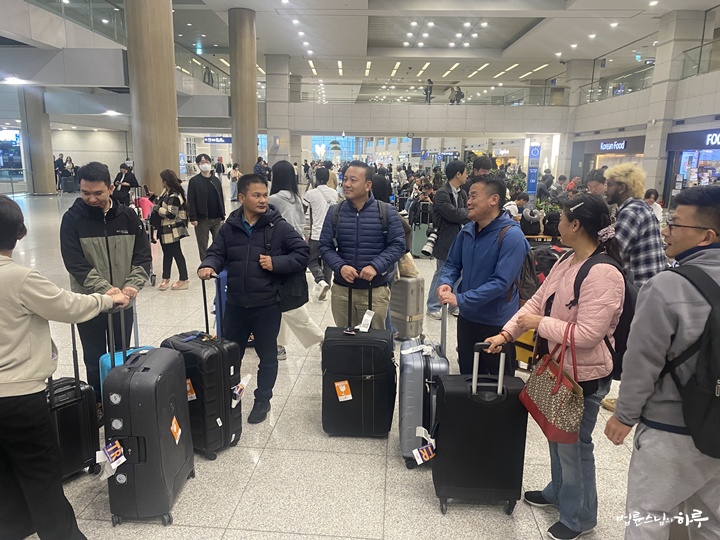
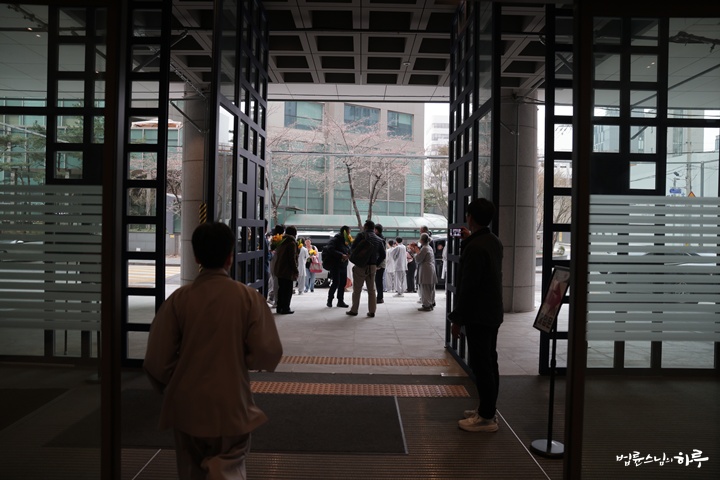
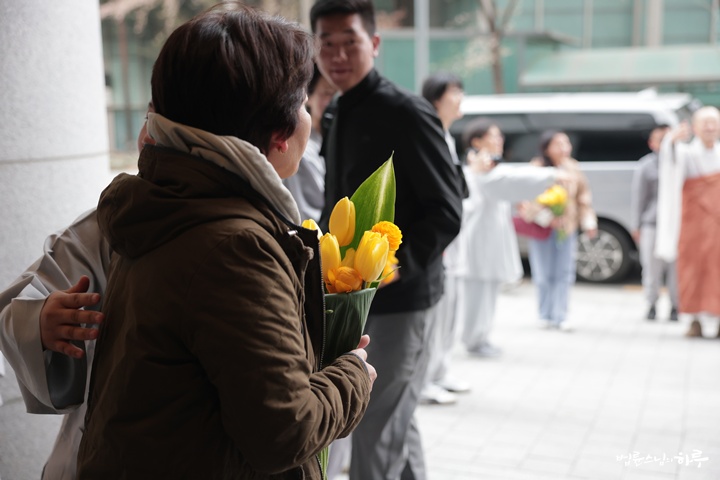
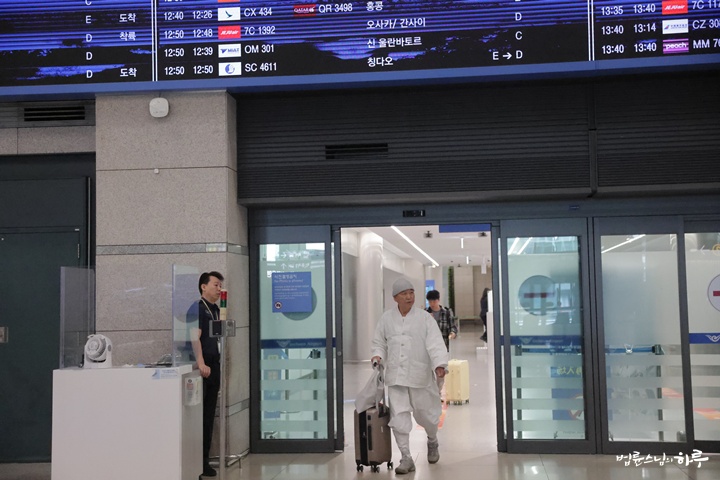
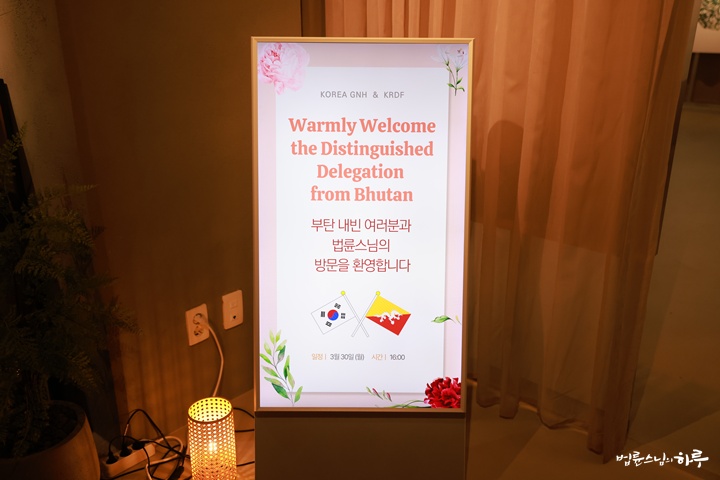
They arrived at the airport at 6:30 AM today. Collecting luggage and going through immigration took quite a long time. After leaving the airport, they arrived at the Jungto Social and Cultural Center (정토사회문화회관) around 9:15 AM. A simple welcome ceremony was held for them at the Jungto Social and Cultural Center.
At this time, Sunim was also on a flight from Nanjing, China to Incheon (인천) Airport. Sunim arrived at Incheon Airport at 11:15 AM. Originally, he had planned to greet the Bhutanese visitors at Incheon Airport, but due to flight delays, he was unable to meet them.
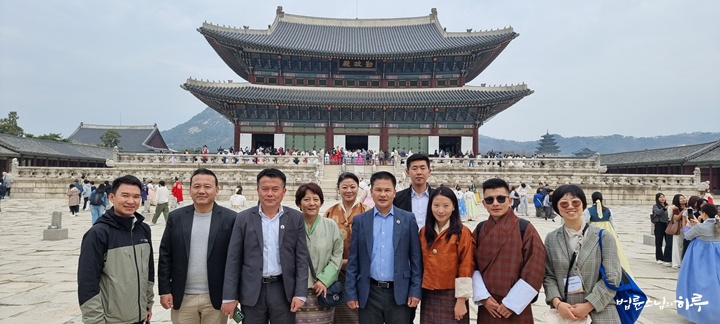
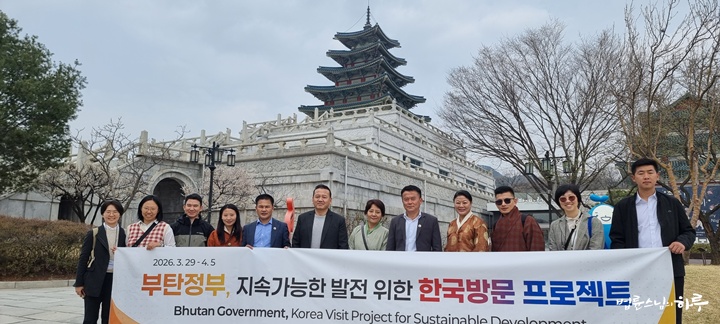
Sunim arrived at Jungto Dharma Center in Seocho-dong(서초동), organized his luggage, and prepared to go to the National Assembly. Meanwhile, the Bhutanese visitors toured Gyeongbokgung Palace(경복궁), had lunch, and then moved to the National Assembly.
Sunim left Jungto Dharma Center in Seocho-dong at 1:20 PM and arrived at the National Assembly at 1:50 PM. The Bhutanese visitors recognized Sunim and greeted him warmly.
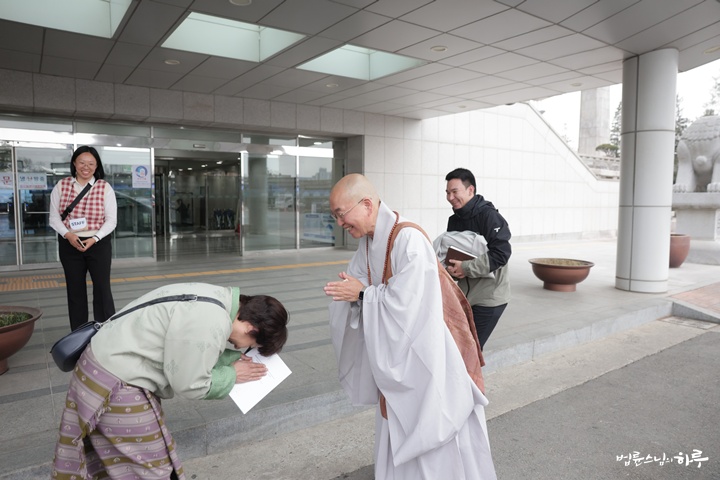
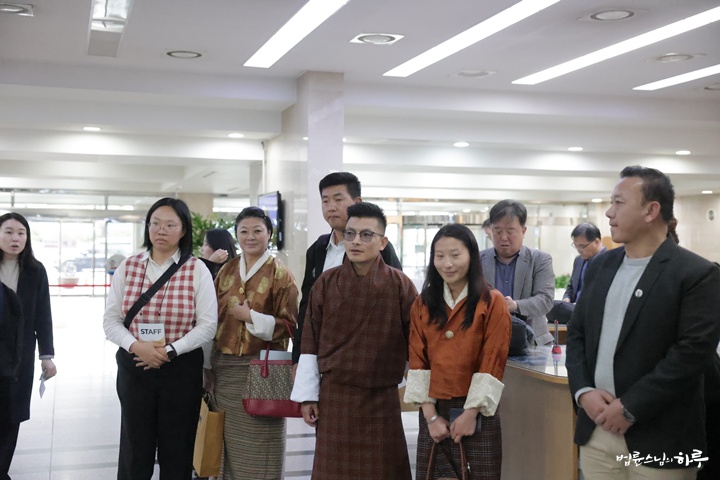
“Thanks to your consideration, we arrived well without any particular difficulties.” At 2 PM, there was a meeting with members of the National Assembly’s Gross National Happiness Policy Forum (국민총행복정책포럼) on the 3rd floor of the National Assembly main building.
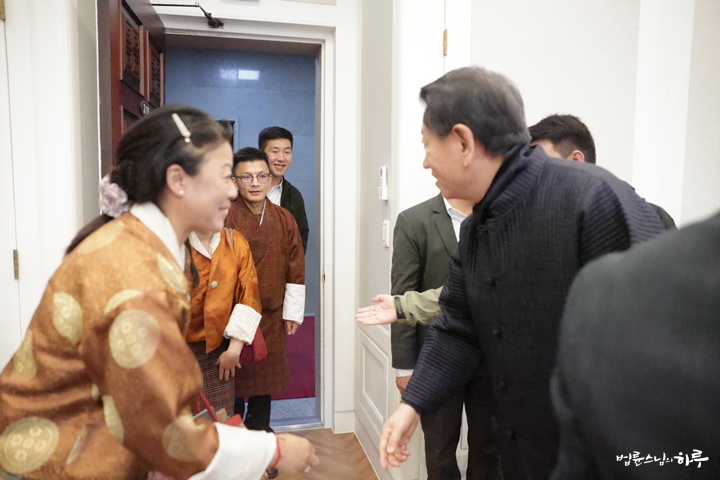
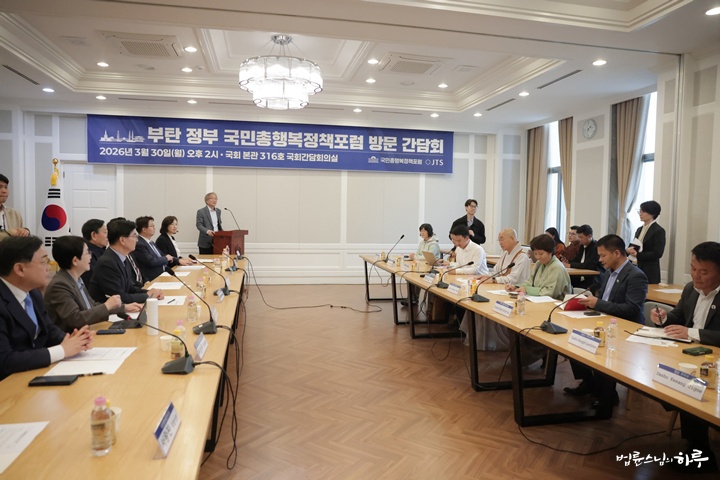
The National Assembly’s Gross National Happiness Policy Forum is a research group of National Assembly members working on legislation for Gross National Happiness (국민총행복, GNH) and developing happiness policies. Professor Park Jin-do (박 진도) , an agricultural economist who has visited Bhutan several times, had requested Sunim to give a lecture at the National Assembly on December 3rd last year on the topic of “The Path to Gross National Happiness” in relation to the GNH legislation.
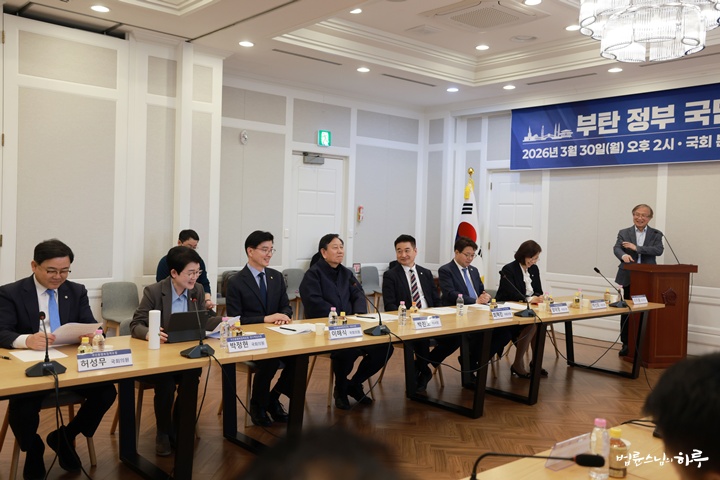
In relation to this, the National Assembly’s Gross National Happiness Policy Forum has about 10 National Assembly members, including Representative Lee Hae-sik(이 해식), actively participating as regular members. After introductions, there was time for presenting activities and Q&A.
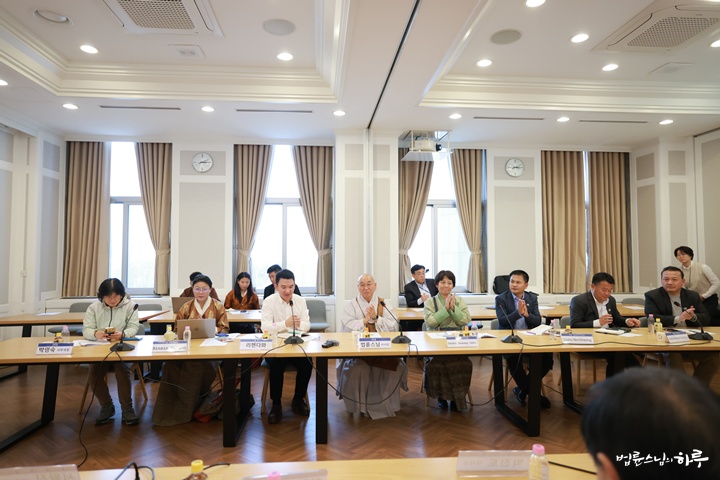
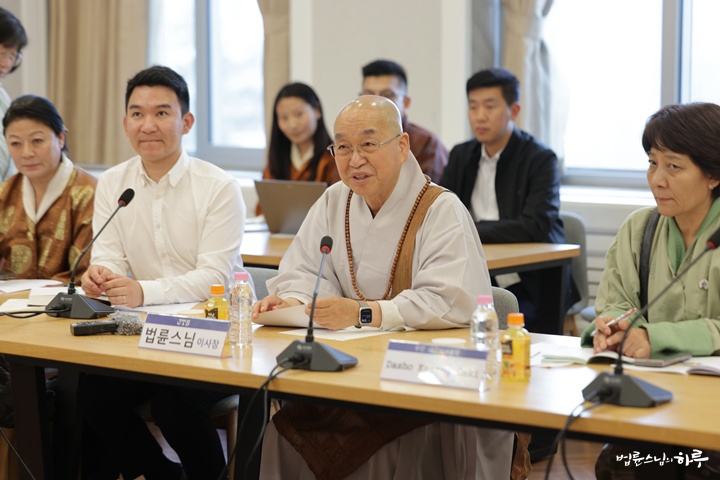
Sunim listened attentively to the meeting and gave concluding remarks.
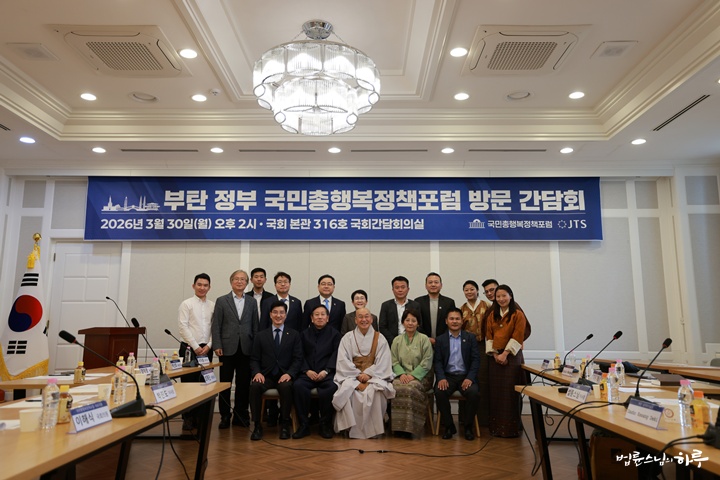
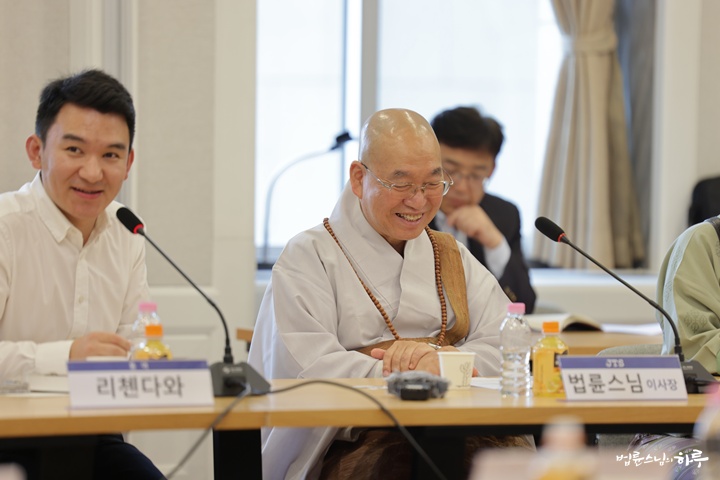
Since the meeting time was limited to one hour and some people had schedules, they decided to move the content requiring in-depth discussion to the second program, the ‘Gross National Happiness Forum,’ and hurriedly concluded. The Bhutanese visitors presented thank-you gifts to the participating assembly members.
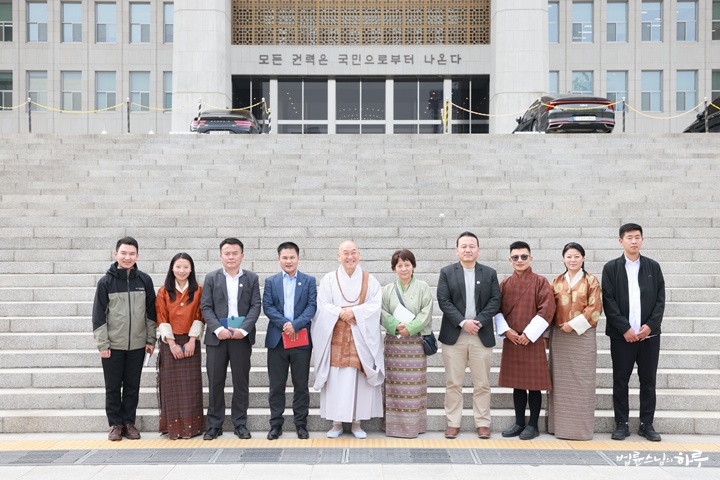
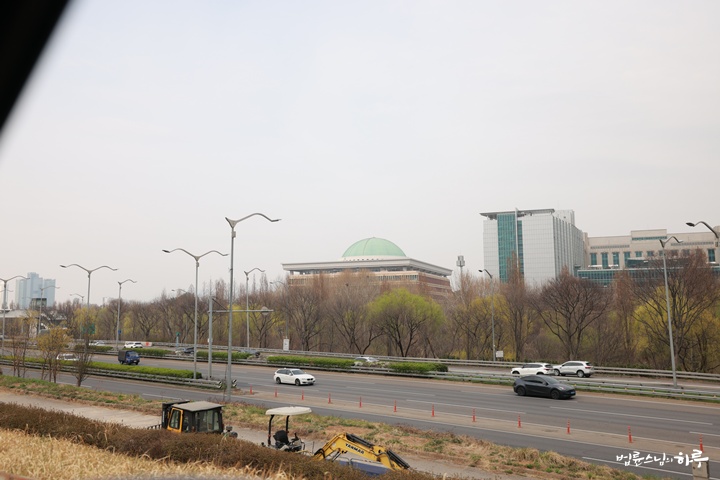
Before moving to the next location, Sunim suggested to the Bhutanese visitors that since they were at the National Assembly, they should take a commemorative photo with the National Assembly building as the background before moving on. Although the jade-colored dome roof, the symbol of the National Assembly building, didn’t appear in the photo, they took a commemorative photo with the National Assembly main building as the background.
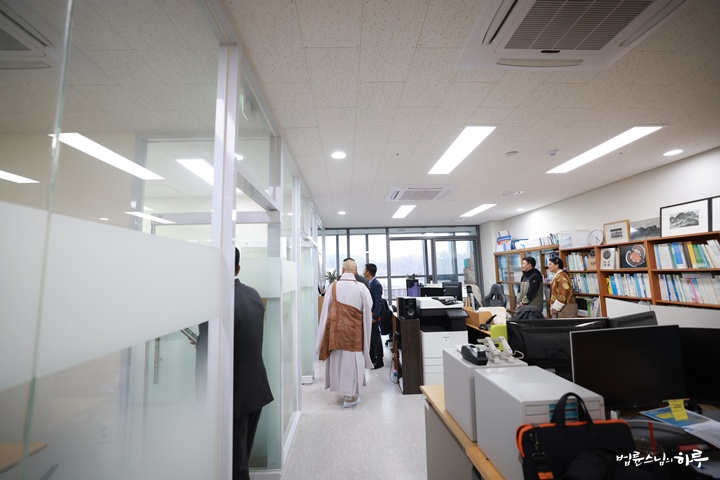
For the second program, they moved to the office of the Gross National Happiness Transition Forum in Gwacheon(과천), where Professor Park Jin-do serves as chairman. After touring the office, they moved to the meeting venue.
Professor Park Jin-do and the working team had prepared carefully for the Bhutanese visitors.
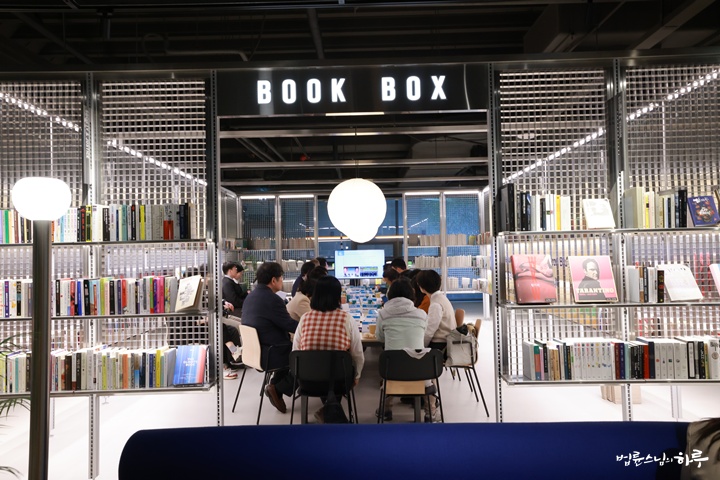
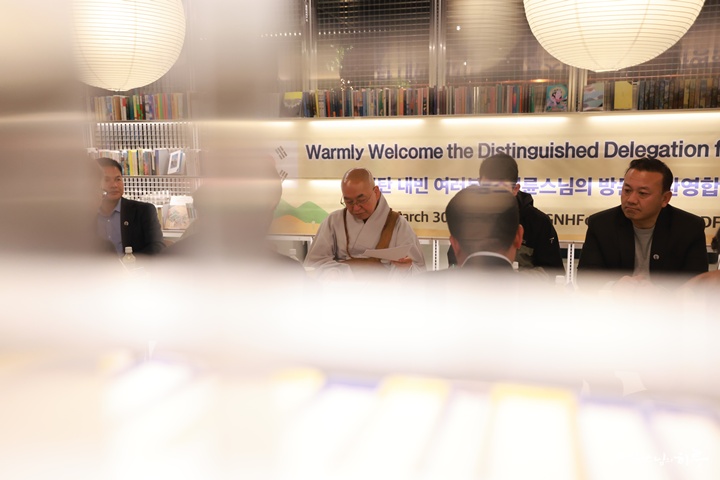
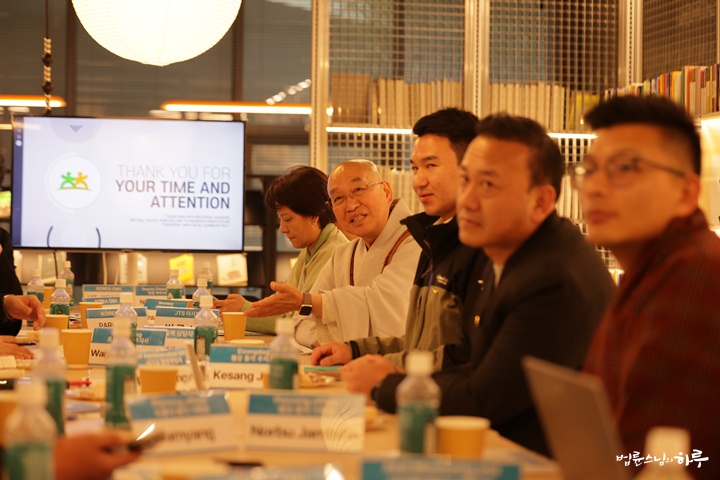
They introduced why Bhutan’s Gross National Happiness (GNH) is needed in Korea, the organization’s efforts and activities to establish Korea’s Gross National Happiness index, and had time for Q&A. It was a time for learning about the difficulties that Bhutan, once ranked first in happiness index, currently faces, what needs to be resolved for sustainable happiness, with Korea learning from Bhutan’s case and Bhutan learning from Korea’s case.
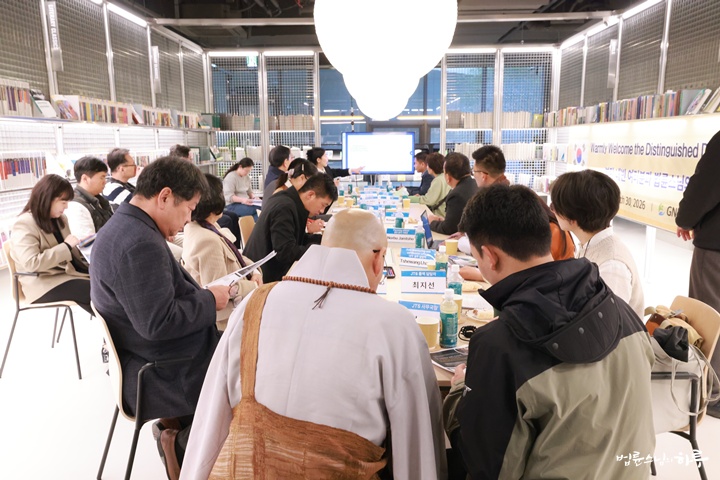
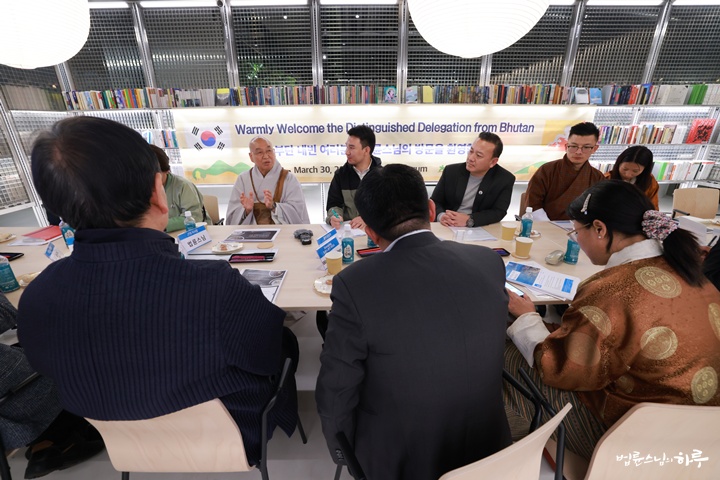
Sunim listened attentively to the discussions from today’s meeting and gave final concluding remarks.
“The people gathered here today have long been talking about regional-centered development and development for residents, not so much opposing central development policies but rather addressing overlooked areas from the perspective of regional development and sustainable development. While Bhutan is also implementing GNH policies centered on the central government, it’s increasingly moving toward development-centered approaches, so I think it would be good to prevent in advance the side effects of the development process that Korea experienced. Right now, young Bhutanese are going abroad to earn money and building big houses in Bhutan, but if there are hardly any Bhutanese living in Bhutan, only foreigners and a few elderly people, can we call that successful development? If not, do we need to go down that path now? Even if we can’t stop the major trend, at least we might have the effect of slowing it down, and we might be able to lay the foundation for presenting new alternatives.”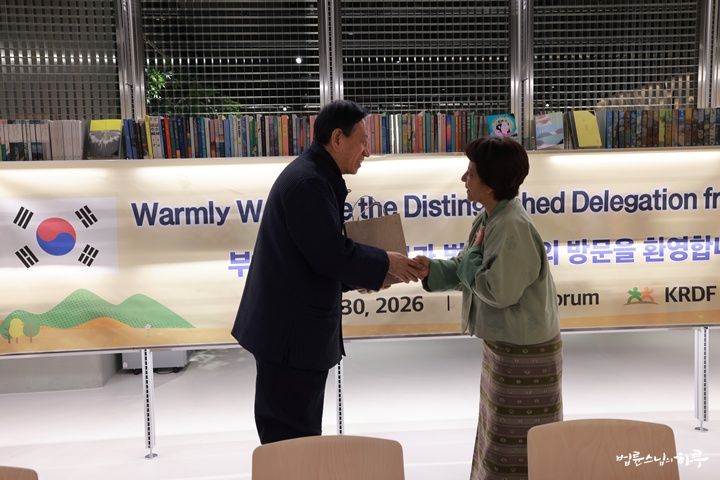
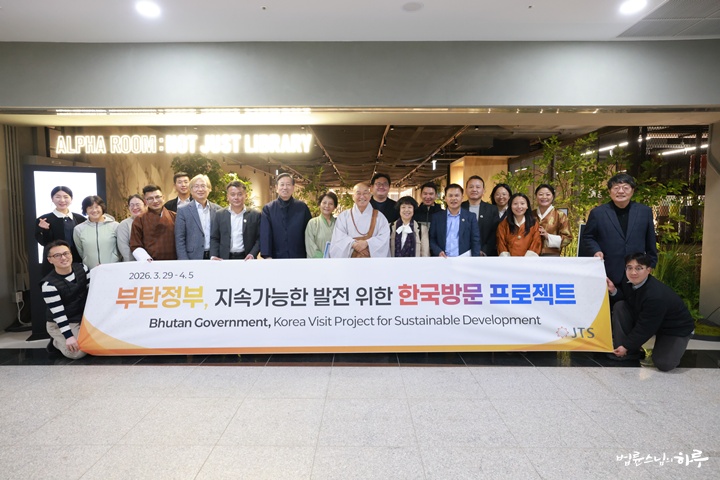
The Bhutanese visitors gave gifts as thanks to Professor Park Jin-do and those working with him. After taking a commemorative photo in front of the meeting venue, it was dinner time, so they moved to a restaurant.
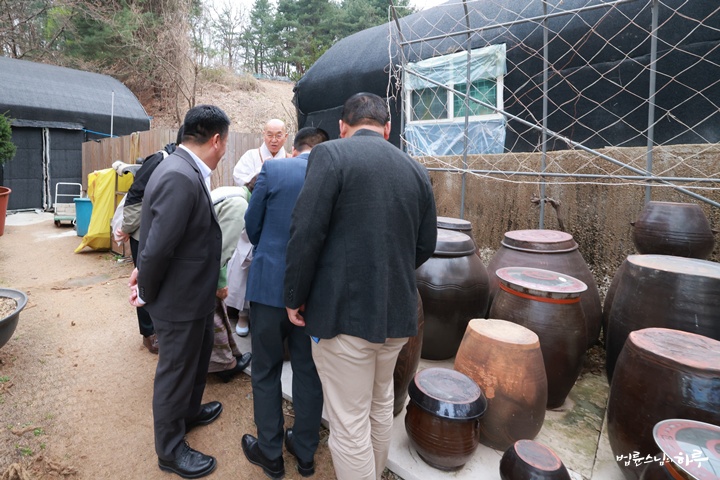
When they arrived at the restaurant, there was Jangdogdae(장독대: a collection of earthenware jars) in one corner of the yard. While waiting for the group, Sunim explained about the jars and doenjang (된장), Korea’s traditional seasoning, to the Bhutanese officials, who listened with interest. When the group arrived, they had dinner at the restaurant.
After finishing dinner while conversing, they moved to the Jungto Social and Cultural Center (정토사회문화회관) where their accommodations were located.
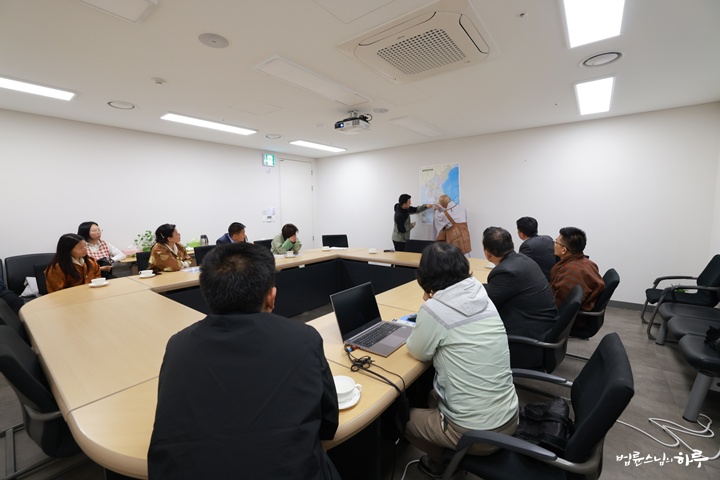
Sunim suggested to the Bhutanese visitors that it would be good to briefly go to the Peace Foundation for tea and have a briefing on the visit program schedule. He had intended to gather briefly before the Gyeongbokgung program to brief and introduce the overall schedule, but couldn’t have the briefing time because Sunim’s flight arrived late.
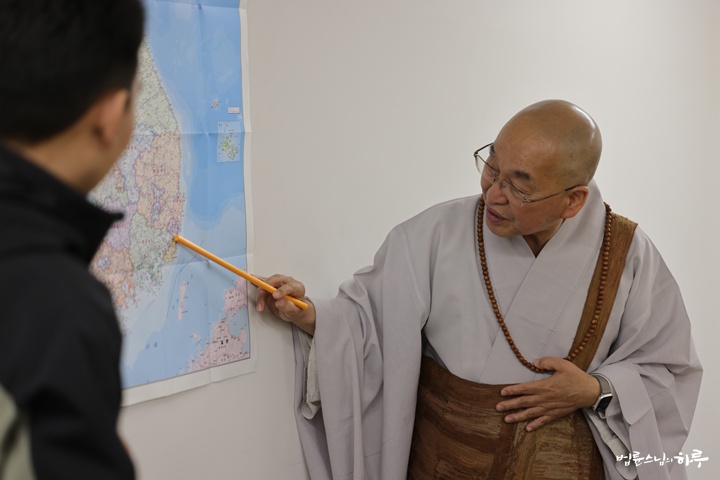
After arriving at the Jungto Social and Cultural Center, they gathered in the Peace Foundation office. Sunim used a map to explain this program – when and how they would move and what programs they would do together. They then watched an English introduction video about Jungto Society and concluded the briefing.
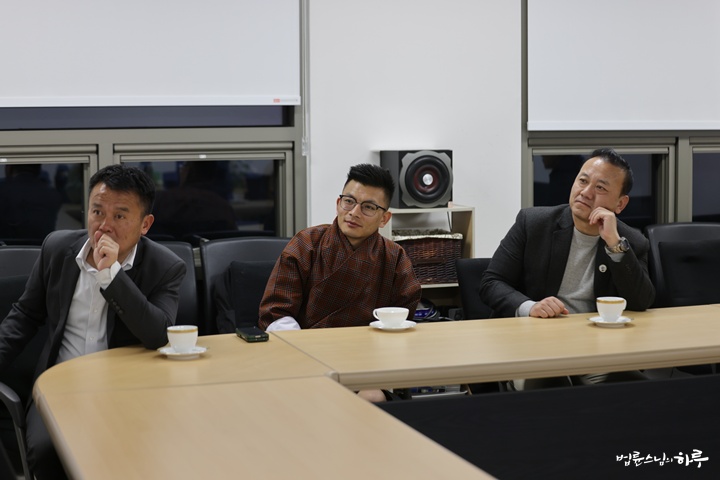
After briefly announcing tomorrow’s schedule, the visitors from Bhutan moved to their accommodations. Sunim also finished his day’s activities and rested.
Tomorrow, Sunim will participate in the second day of the program with the Bhutanese officials. They will have breakfast at 6:30 AM and move to Hongseong County (홍성군) to visit the Mundang Environmental Agriculture Village (문당환경농업 마을) in Hongseong. Since there was no Dharma talk today, this post concludes with content from a Dharma Q&A session in February.
How Can We Distinguish Between Practice and Avoidance?
“It’s been two years since I started meditation practice. My mind has become very peaceful through meditation, but recently I’ve been experiencing some confusion. While trying to let go of attachments, I find it difficult to take on new challenges. I’m not sure if I’m attached to non-attachment or if I’m rationalizing my fears. And while I try to understand others, I seem to have a tendency to avoid necessary conversations or contact. When doubts arise during meditation, I try to just be aware of them, but sometimes I wonder if this is just self-deception.
Sunim, how can we distinguish between practice and avoidance? And I would be grateful if you could tell me how I should practice.” 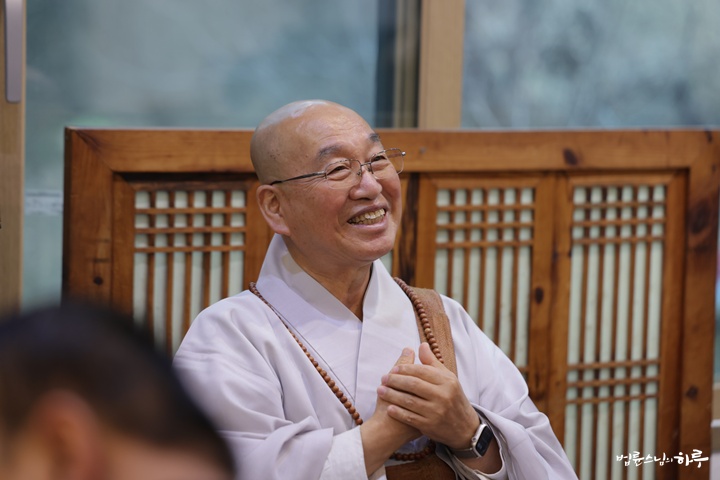
“Could you explain again what you mean by that perspective?”
“You asked whether you’re meditating properly, right? The fact that you’re asking this question proves that you’re not doing it properly right now. If you doubt whether you’re being honest or not, then you’re not being honest. If you wonder ‘Am I loving? Is this love?’ then it’s not love. Because when you’re truly loving, being honest, or feeling comfortable, such doubts don’t arise. Do you understand what I’m saying?”“I’m not sure if you mean I lack self-confidence or if it’s something else.”
“Confidence isn’t necessarily always good. You should just say ‘I am comfortable’ or ‘I do it this way.’ Doubting whether you’re doing well or not is a psychological phenomenon that arises when you’re not doing well.”“Then I’d like to ask how I should set and establish my direction going forward.”
“You need to tell me what you’re trying to do so I can help you set a direction, don’t you think?”“My anxiety was so severe that I initially took medication prescribed by a hospital. When the hospital said I could stop taking it, I started meditation from that point. After practicing for about two years, I feel my anxiety has decreased significantly, and the feedback from those around me has been very positive. But recently, I suddenly wondered if I might be using meditation as an excuse, and I can’t easily shake off this thought.”
“What’s your goal in meditating? Is it to escape from psychological anxiety?”“Yes, that’s right.”
“Then you just need to observe your mind. If you’re not anxious, you can simply know ‘I’m not anxious right now.’ If you’re anxious, you can know ‘I’m anxious right now.’ It would be even better if you could examine ‘Why am I anxious?’ When I say examine ‘Why am I anxious?’ I don’t mean thinking about whether it’s because of this or that. I mean observing that mind asking ‘Why am I anxious?’ You just need to be aware of the anxious mind and examine the cause of anxiety. There’s nothing special you need to do.”“Ah, right.”
“If your goal is to escape from an anxious mind and become comfortable, you don’t need to think about whether this is right or wrong. If you observe your mind now and find that you’re not anxious but comfortable, that’s good. Then you can simply sit quietly, breathe, or do whatever while enjoying that comfort. If you observe your mind and find you’re slightly anxious, you can be aware of it by thinking ‘I’m anxious right now!’ You can go further and contemplate ‘Why am I anxious?’ This isn’t doubt from lack of trust – it’s called a hwadu (화두 : meditation question). Why am I anxious? There’s no reason to be anxious when I’m just sitting quietly. While feeling that anxious mind, if you concentrate on ‘Why am I anxious?’ you can say that you become comfortable.”“Yes, I understand, Sunim. Thank you.”
“It’s not about what you should do, but about facing the here and now directly. How should you do it? By directly facing the here and now, by being aware of your current state.”“I understand. I’ll practice more diligently, Sunim. Thank you.”