Let’s Have Hope and Give Hope Through Buddhist Study
March 29, 2026. Jungto Sutra Course Entrance Ceremony, Irrigation Channel Survey, Departure for Korea
Hello. Today is the entrance ceremony for the Jungto Sutra Course (정토경전대학). Sunim delivered a Dharma talk at the entrance ceremony, conducted a survey of irrigation channels, and then departed for the airport to travel to Korea.
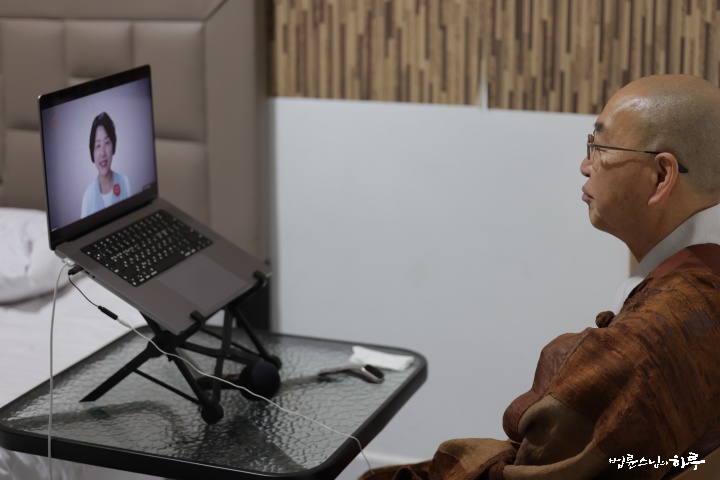
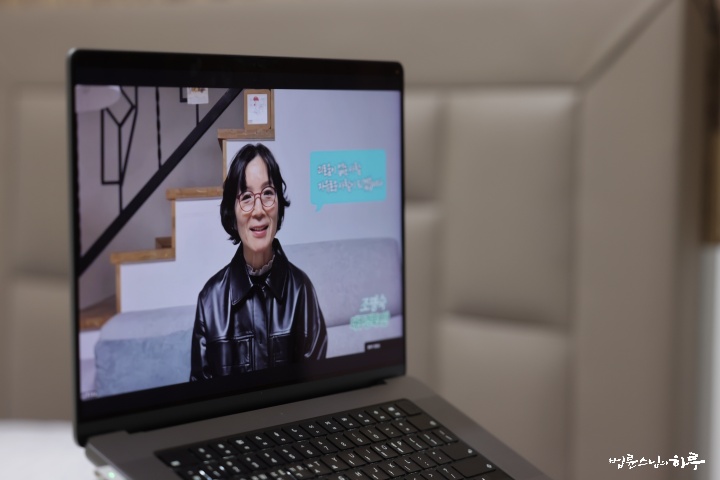
After completing morning practice, Sunim attended the Jungto Sutra Course entrance ceremony online at 7 AM Indonesia local time. Starting with the first class of the Jungto Sutra Course in March 2006, this year both offline and online classes have been established. A total of 1,073 students enrolled in 39 classes and 159 groups, beginning a five-month academic program.
After congratulatory remarks from Yang Yoon-deok (양 윤덕), President of Jungto Society, the assembly requested a Dharma talk from Sunim with three prostrations.
Just as We Provide Humanitarian Aid, We Should Spread the Dharma Without Discrimination
Just like this, the Buddha’s teachings should be shared without any conditions or discrimination to cure the disease of suffering, which is a disease of the mind, regardless of the type of suffering, and regardless of people’s faith, nationality, class, or ideology, if there are sentient beings who are suffering. However, if some of them say they don’t want to hear the Dharma, there’s nothing we can do about it. It’s like when we provide humanitarian aid here, but someone says they won’t accept food from Buddhists because they are Muslim – there’s nothing we can do about that. However, while it’s their freedom to do so, we must provide relief supplies without discrimination. Regardless of what religion they follow, what nationality they have, or their age or gender, anyone who hears these teachings will gradually see their suffering disappear and become free from bondage. We’re not trying to change their religion, nationality, or beliefs – we simply want to help them escape from suffering because they are in distress.
What We Ultimately Aim to Achieve Through Practice
What we ultimately aim to achieve through practice is not going to the Pure Land or heaven, or receiving blessings, but attaining nirvana. ‘Nirvana’ means reaching a state free from suffering. Even if the body is ill and physically painful, since it can be treated, the mind is not troubled. Even if money is lost, it’s regrettable but not distressing. Even if someone we live with leaves or dies, it’s regrettable but we can reach a state where we’re not distressed even in such cases. Because we’re not distressed, no matter what situation we face, we can maintain our center and become someone who can live our life again – this is the goal. So Christians, Muslims, and people without religion can all reach this goal if they study this Dharma. In this way, we could say that practice transcends religion.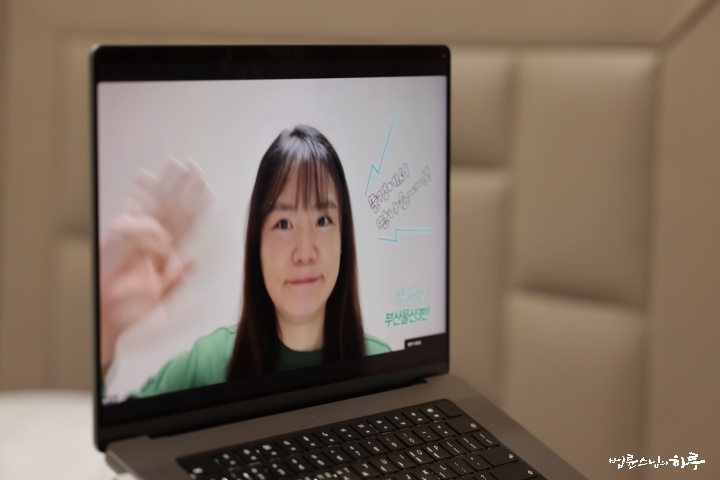
Practice, Not Knowledge or Religion
Knowledge is knowing something, and religion is believing in something. What we do is practice (수행). Practice means reaching a state free from suffering through my own implementation and experience. No matter how much knowledge you have, if you don’t practice, you cannot reach a state free from suffering. No matter how deep your faith, if you don’t practice, you cannot reach a state free from suffering. People with faith suffer when their faith is not fulfilled, and people with much knowledge suffer thinking it’s useless when that knowledge isn’t helpful in their lives. Even if someone knows Buddhism well enough to lecture at a university, if that person doesn’t practice, they become someone who suffers just like us while living. The purpose of our practice is to reach a state free from suffering through practice. It’s to be freed from states of anger, hatred, resentment, anxiety, or restlessness no matter what situation we face. To achieve this, even if greed, anger, sadness, or resentment arise momentarily in reality, we shouldn’t let it last more than 1 second at the shortest, 10 minutes, an hour, or at most a day. Even if such afflictions arise according to my habits and karma because I’m attached to those conditions, I must quickly recognize ‘I’ve been caught’ and move toward a state free from suffering. We must reach a state free from suffering. We must become people who don’t torment ourselves.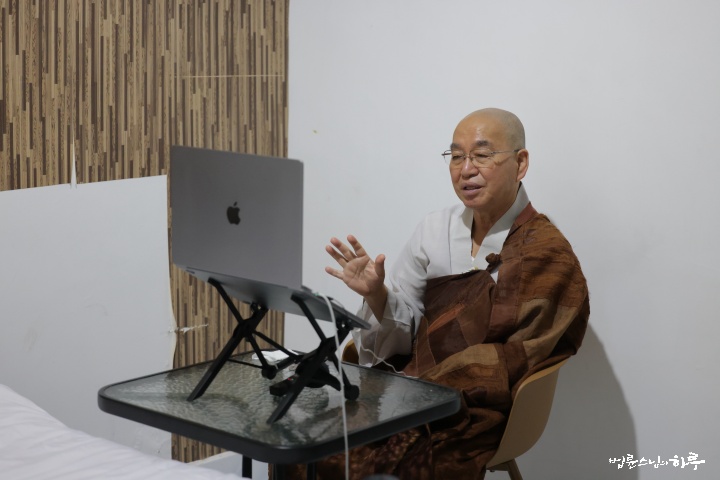
What Is Taught in the Sutra Course
In the Sutra Course, we don’t study all sutras but focus on Mahayana Buddhist sutras (대승불교 경전) , particularly those closely connected to Seon Buddhism (선불교)
. These are the Diamond Sutra (금강경) and the Heart Sutra (반야심경). These sutras are worth studying even for non-Buddhists. Rather than being knowledge that must be studied, these sutras teach us perspectives on how to hold our minds to be free from suffering.
:
無有定法). Then we study the Heart Sutra, which inherited this teaching. The term ’emptiness’ finally appears in the Heart Sutra. The core philosophy of Mahayana Buddhism is precisely this philosophy of emptiness. After studying the Diamond Sutra and Heart Sutra, we study how Seon Buddhism arose from a historical perspective and its transformation. Then we study the content of the Platform Sutra, the most important sutra in Seon Buddhism. So the Sutra Course is essentially studying the entire history of Buddhism. After graduating from the Sutra Course, you’ll understand: ‘Oh, Thailand follows Theravada, China and Korea believe in Mahayana Buddhism, and within Mahayana there’s also Seon Buddhism. Tibetan Buddhism refers to Vajrayana (밀교).’ You’ll understand how Buddhism is distributed throughout the world. We also learn about groups establishing new forms of Buddhism in modern times across various sects and countries. We particularly study how Buddhism is beginning to spread to the West. For them, Buddhism as a religion has little significance. What’s most important is Buddhism as practice. This is the perspective from which we’ll now study. What’s the way to go farthest from where I’m standing? It’s to keep walking forward to the very end. This explanation represents Hinayana Buddhism. On the other hand, one could say, ‘The place you reach by going forward to the very end is actually the starting point. So if I just turn around from where I’m standing, I’ve already reached the end of the earth.’ This is the Mahayana way of thinking. So it’s correct to say ‘I went forward and reached the end,’ and it’s also correct to say that without going far, if I turn around where I’m standing, that’s the end. This is the philosophy of emptiness.The Intuitive yet Radical Philosophy of Emptiness
While it’s somewhat difficult to understand through rational thinking, it’s very easy when you think intuitively and radically. Without going far, just turn around. Walking continuously forward is based on the premise that the earth is flat. The idea that you can turn around comes from knowing the earth is round. While we must think rationally, we cannot rely on rational thinking alone. When the scope of application is circular, we must sometimes have the perspective to turn around. This is precisely what radical means. It’s not mystical; it’s simply fact. Turning around and being at the end of the earth isn’t mystical. This is the philosophy of emptiness, and it’s the meaning of ‘directly pointing to the mind, seeing one’s nature and becoming Buddha’ (직지인심 견성성불:
直指人心 見性成佛) in Seon Buddhism. This is what we study in the Sutra Course. While it may feel somewhat difficult, only by studying this can we become truly free beings. If you miss classes or skip in the middle, it becomes hard to understand. In the Buddhism Course, even if you missed some classes, you could understand by attending later ones. Dharma Q&A is the same. However, the Sutra Course classes are interconnected, so if you miss classes in the middle, the study becomes increasingly difficult. As you continue listening, things you didn’t understand earlier will appear again later. Even if you don’t understand again, they’ll appear once more. So if you attend consistently, you’ll eventually understand. While you can graduate with 70 percent attendance, don’t think it’s okay to skip some classes. Please approach the course with the mindset of attending 100 percent.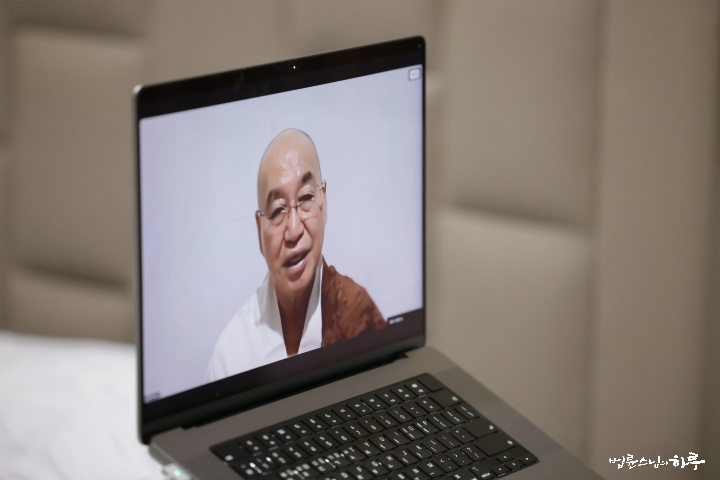
Let’s Have Hope and Give Hope Through Buddhist Studies
Deep in the hearts of Asian people, including Koreans, there is a spirit of breaking conventions. The world now needs this unconventional thinking that transcends the rational thinking of Westerners. If science is based on rationality, we now need unconventional thinking that transcends that rationality to create new science. Buddhism can be described as an unconventional science. Buddhist studies have nothing to do with academic credentials. However, the mental level of those who study this is higher than those who study any other discipline in the world. I hope that through this study, your lives will become a bit brighter. I hope you won’t be caught up in small matters and will have a broader perspective. I hope you will live with hope. Furthermore, I hope you will become people who give hope to others in the world, that is, people who are hope for the world. Once again, I congratulate you on your admission to the Sutra Course and urge you not to miss any classes. Thank you.”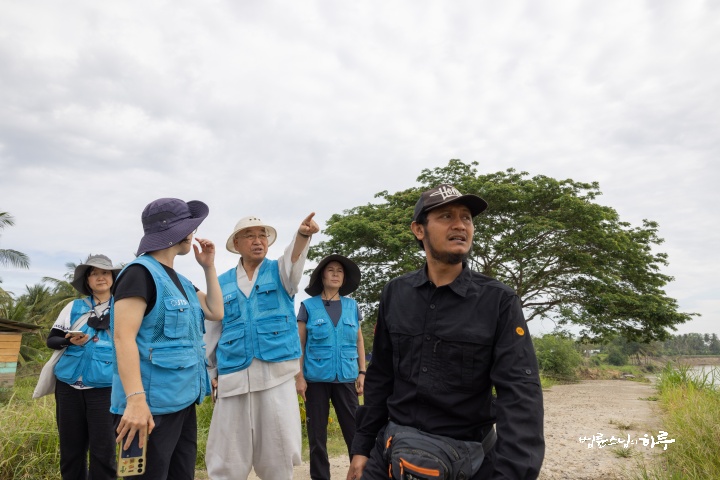
After the Dharma talk for the Sutra Course admission ended, Sunim had a simple breakfast at 8 o’clock and packed his belongings to check out of the accommodation. At 9 AM, he departed for the flood damage site to inspect the damage to the irrigation channels. With the help of one of the FDP volunteers yesterday, he was able to examine the condition of the waterways.
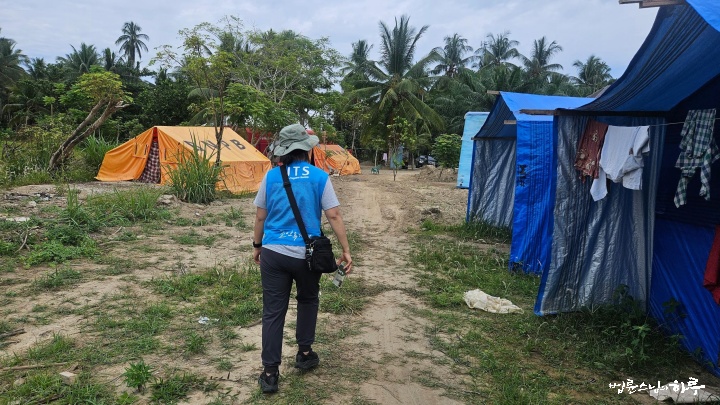
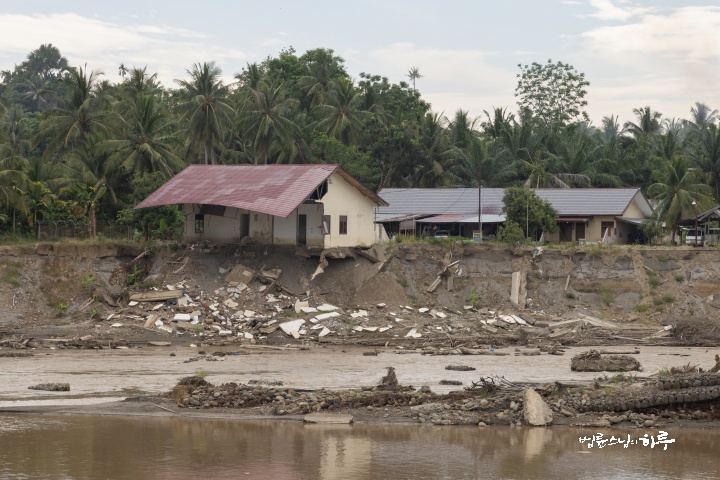
The first place they visited was Blang Me village. Flood victims were living in temporary shelters made of tents. They also looked around the surrounding irrigation channels. The water intake facility that had been by the riverside had been swept away without a trace.
“Building large dams and maintaining water intake facilities is the government’s responsibility. Let’s examine the extent of damage to the channels that run from the water intake to the farmland and the small channels that run from those channels to individual rice paddies.”“Sunim, to get to the other side, we have to go around, which will take a long time. I can guide you to another place. Would that be alright?”
“Yes. Let’s go.”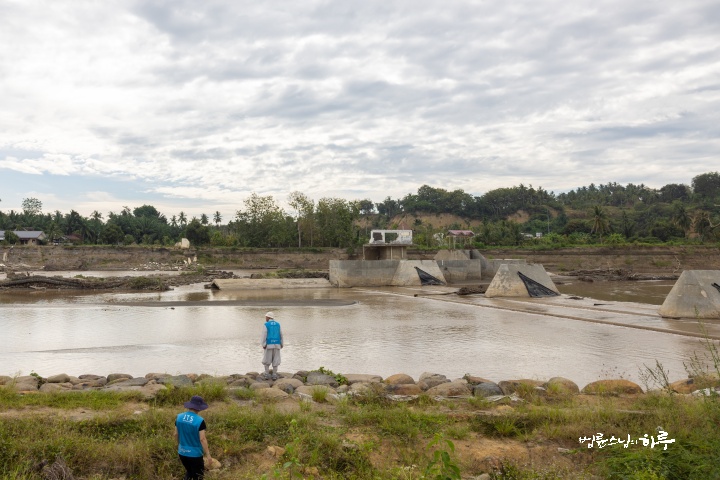
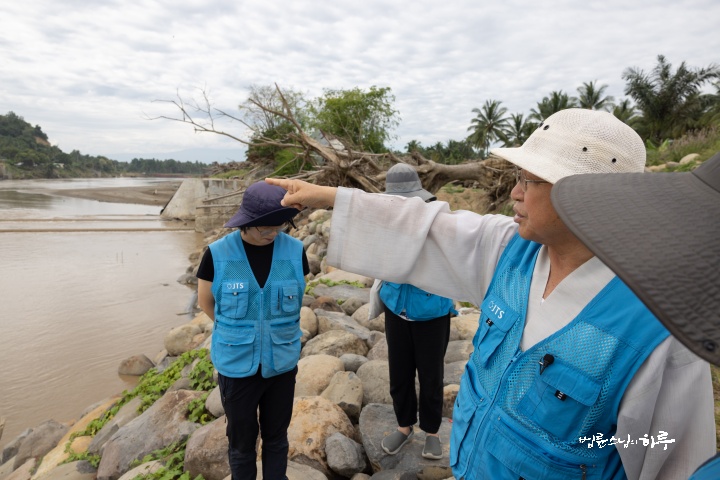
Sunim moved on to inspect another irrigation channel. He arrived at the second channel in Lok Nga village. He decided to follow the channel by car to see where it connected to the village.
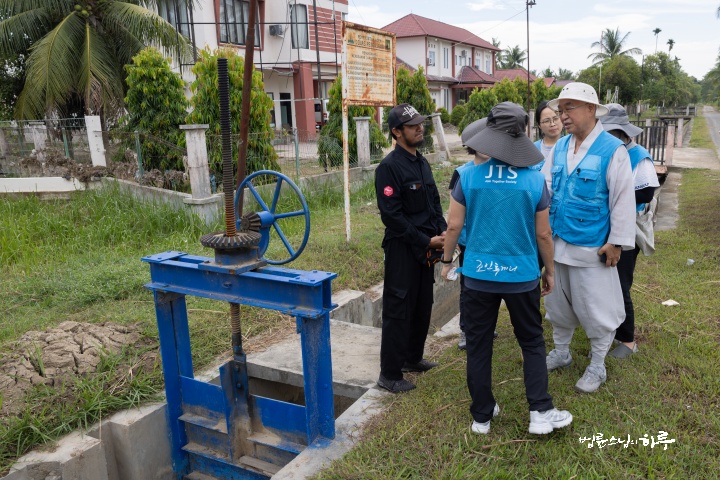
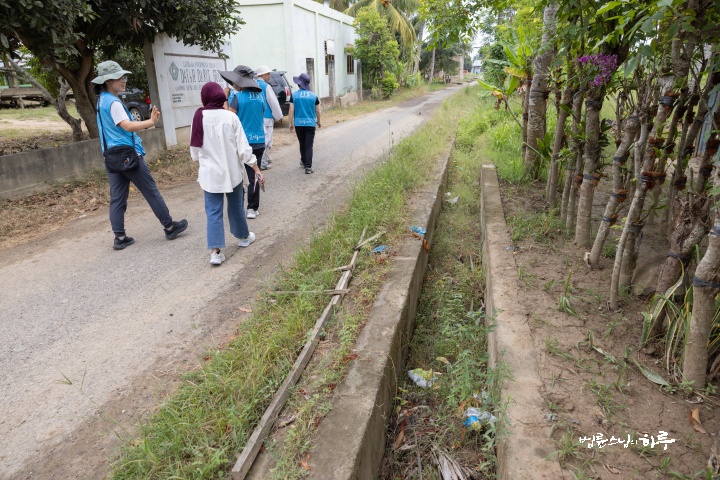
Upon arriving at the channel, they found it completely dry since the dam was broken and water wasn’t being drawn in.
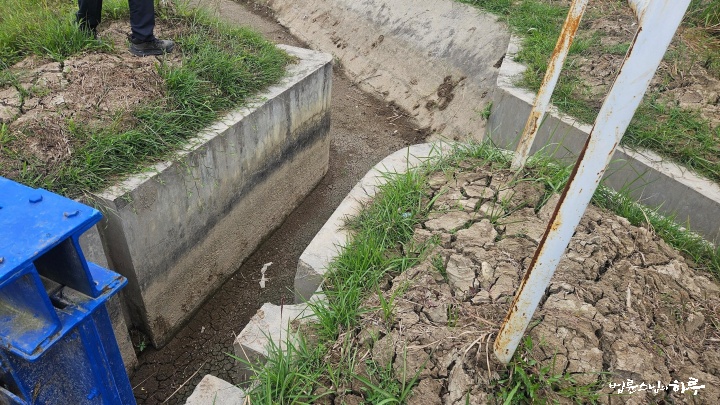
A local activist explained:
“Not now, but when there’s water, it divides from here and flows to each village.”
“How do you farm without water?”“We only farm when it rains. Originally, we grow rice three times a year, but without the irrigation channel, we can only farm once during the rainy season.”
“Installing dams and water intake facilities is all government work. It’s a major construction project that seems beyond our capacity to handle.”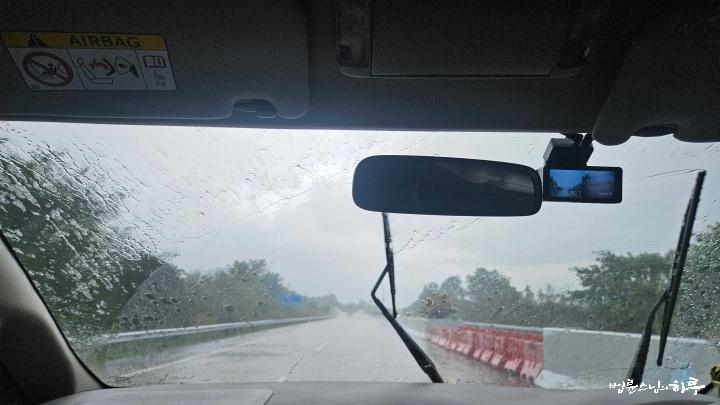
After Sunim and the activists finished inspecting the nearby irrigation channels, it was 10 AM and they departed for the airport.
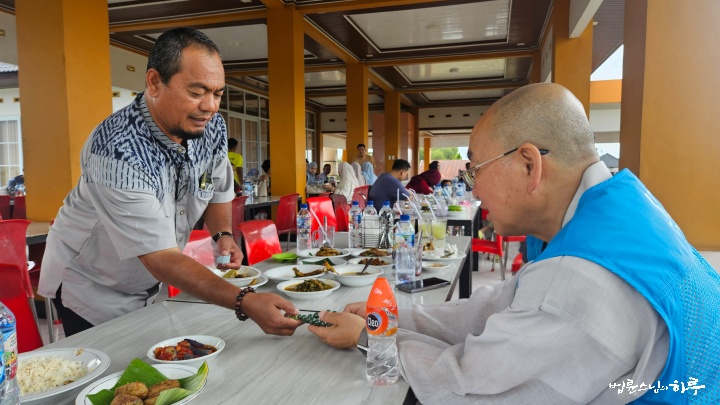
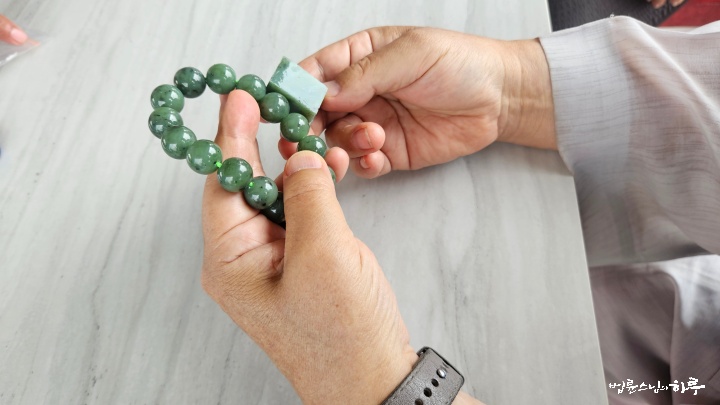
They arrived at a restaurant near the airport at 2 PM. Amir presented Sunim with jade prayer beads and sandalwood prayer beads as gifts of gratitude. Sunim expressed his thanks.
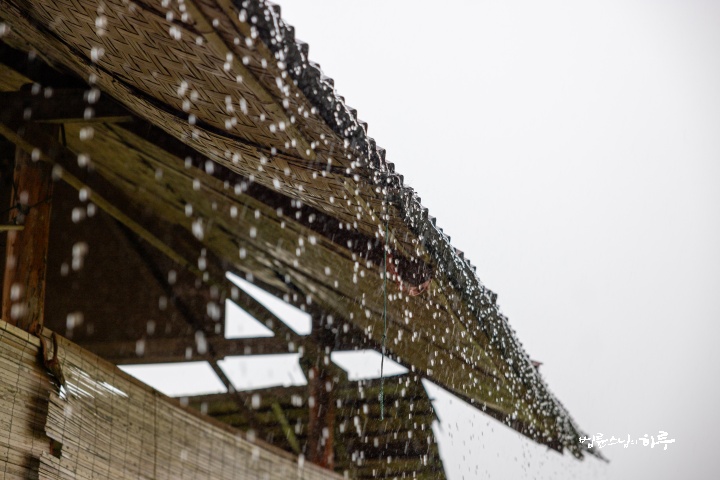
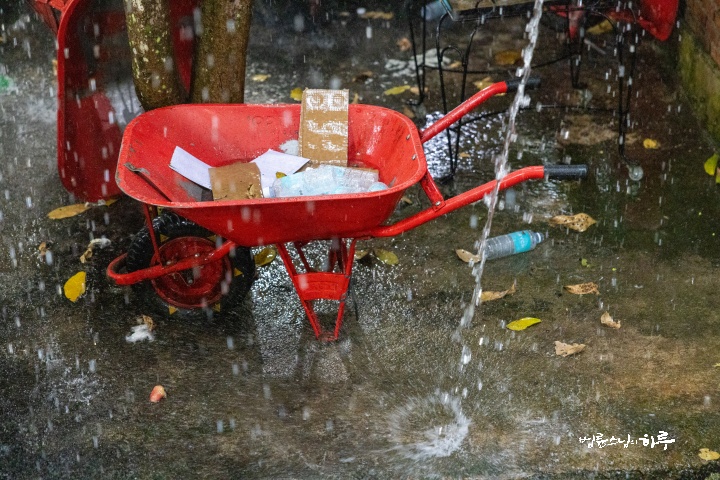
After finishing lunch around 2:40 PM, it started pouring rain outside. They planned to leave once the rain subsided a bit, but there were no signs of it letting up. Due to their flight schedule, they had to depart for the airport through the heavy rain.
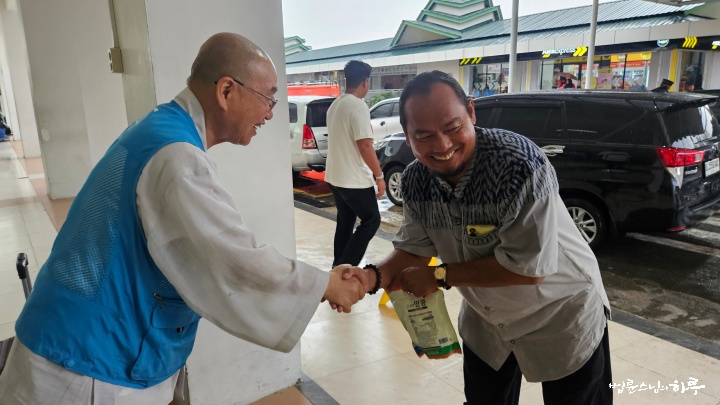
They arrived at the airport at 3:15 PM. After saying goodbye to Amir, Sunim entered the airport to board his flight. Despite already having limited connection time, the flight was delayed by 40 minutes.
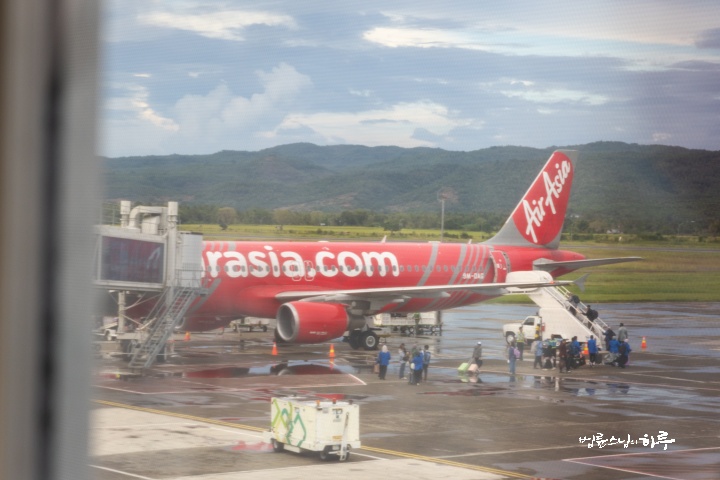
The flight finally departed from Banda Aceh, Indonesia at 4:25 PM. After flying for 1 hour and 40 minutes, they arrived at Kuala Lumpur International Airport in Malaysia. They arrived at Kuala Lumpur airport at 9 PM local time, 40 minutes later than scheduled.
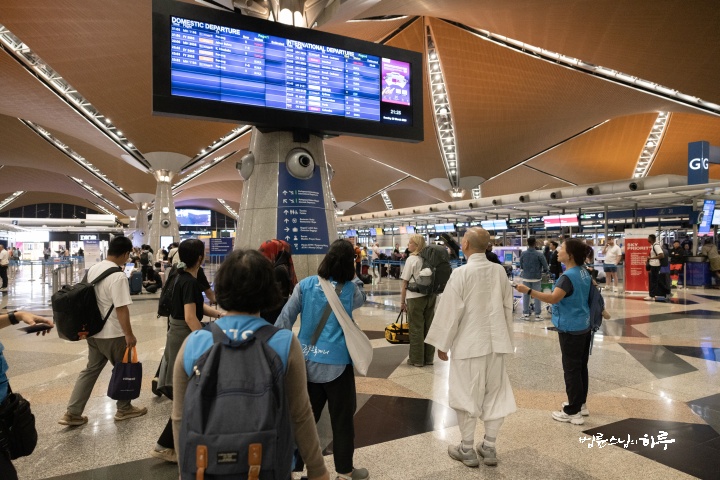
With only 1 hour and 30 minutes for their connection, the 40-minute delay and different terminals made the situation extremely tight. With anxious hearts, they asked other passengers for understanding and were the first to disembark, then began running to catch their next flight. Immediately after deplaning, they ran as fast as possible from Terminal 1 to the distant Terminal 2, but it took a long time going down underground to catch the train and then going up to the 5th floor. Although they arrived 30 minutes before departure, the check-in counter was closed and they couldn’t board. No amount of pleading would change the situation.
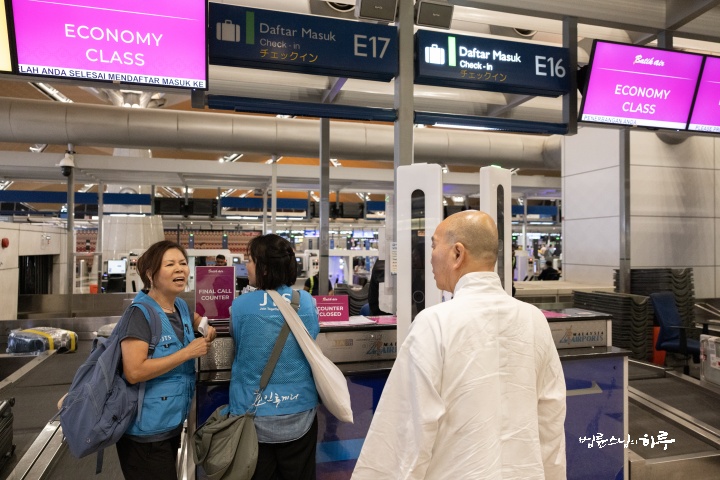
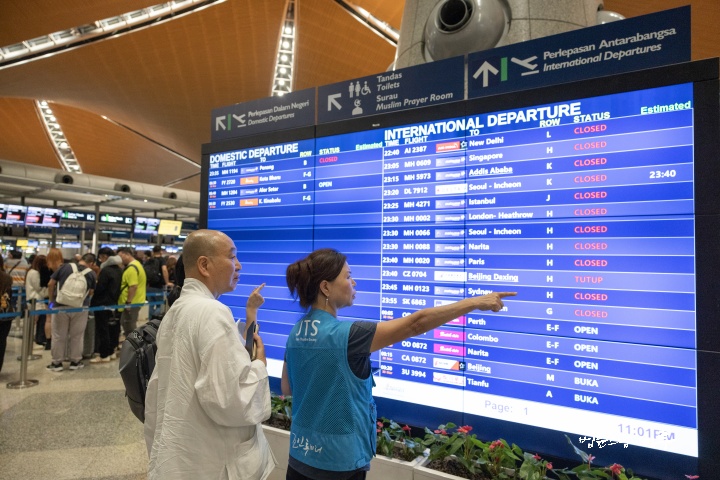
Since Sunim had scheduled meetings with guests from Bhutan immediately upon arriving in Korea, he urgently looked for the next available flight. They took the train back to that terminal to look for another flight, but the sales counter was closed as it was 2 hours before departure, leaving no way to purchase tickets. They returned to Terminal 1 again to look for an early morning flight the next day and found one going through China. However, there was only one ticket remaining, so Sunim decided to depart first alone. The other activists would find the next available flight to Korea.
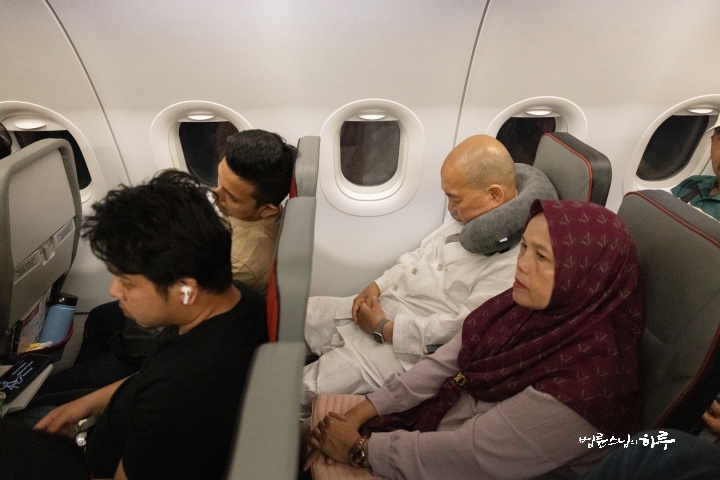
Sunim boarded a flight departing from Kuala Lumpur at 12:40 AM local time, going through Nanjing to Incheon Airport. He is scheduled to arrive at Incheon Airport at 11:15 AM on the 30th.
Tomorrow, Bhutanese government officials will arrive in Korea at 6:30 AM for their Korea visit program. Sunim plans to spend the day with the Bhutanese government officials.