How Should We Raise Children Who Seem to Be Lacking?
Mar 25, 2026 - Interfaith Meeting, Weekly Dharma Assembly, Peace Research Seminar
Hello. Today is the day for the monthly interfaith meeting for national reconciliation and peace, as well as the Weekly Dharma Assembly where Jungto Society members reflect on their practice.
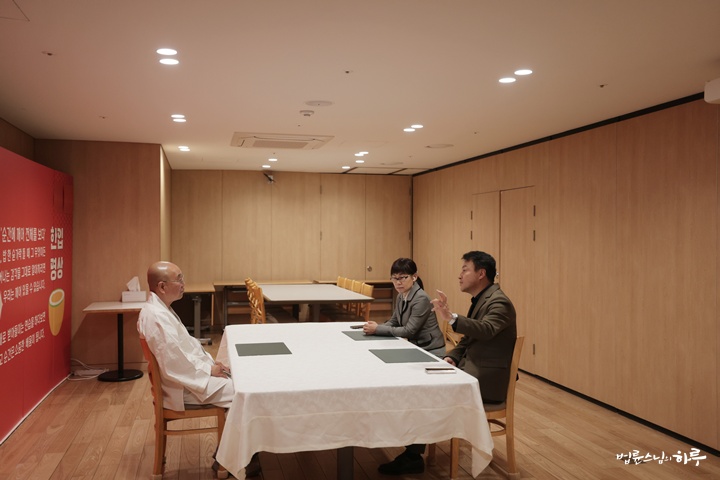
Sunim moved to the basement dining area of the Jungto Social and Cultural Center for breakfast, and soon pastors, priests, bishops, and other religious leaders arrived one by one at the basement cafeteria. The breakfast table, carefully prepared by Peace Foundation volunteers, featured wild spring greens that Sunim had picked near Dubuk Jungto Retreat Center. After the meal, Sunim and the religious leaders moved to the Peace Foundation conference room to continue their discussion.
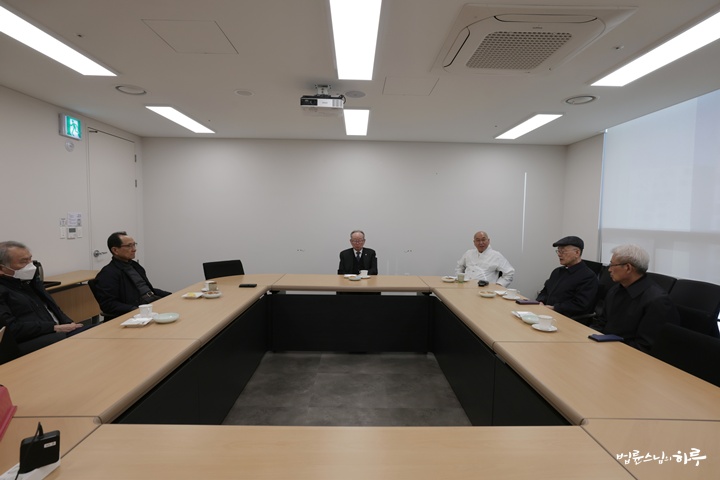
Sunim discussed the upcoming visit to Sri Lanka in June and the schedule for meetings with religious leaders. The religious leaders then shared their concerns about whether it would be possible to open the door to constitutional reform in the current situation, whether a national referendum could be implemented considering the local election schedule, and what religious leaders could do.
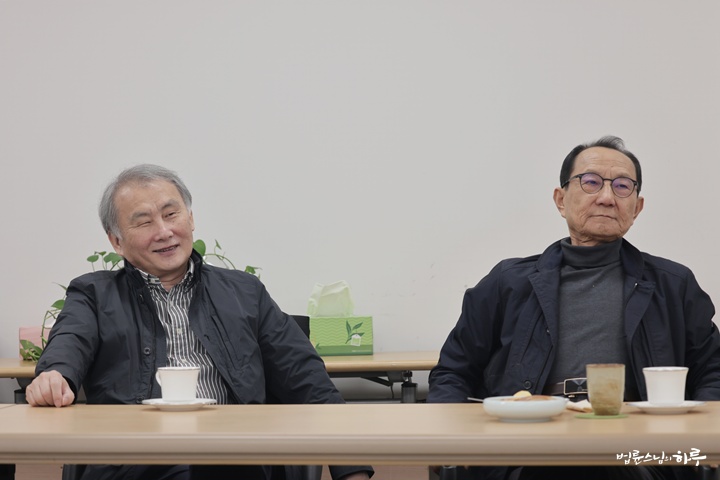
“While it’s difficult to speak out due to various international and domestic circumstances, I heard that over 150 elementary school students were killed in a bombing while in class in Iran. Rather than specifically criticizing the United States, as religious leaders, we should say that this must not happen.”
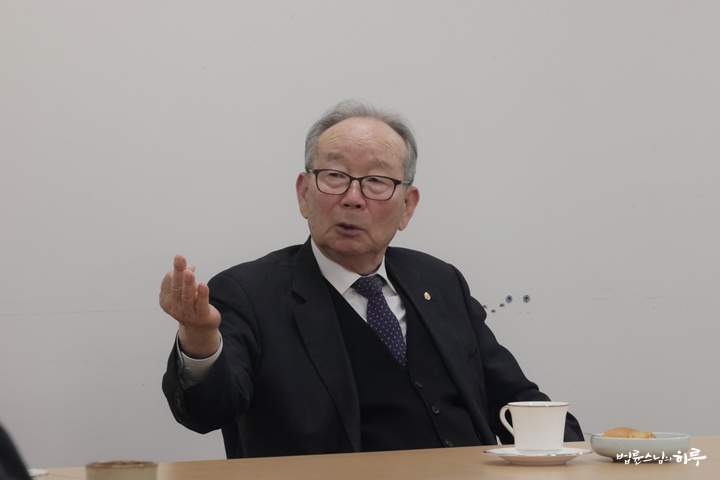
The religious leaders were concerned about whether they should raise their voices of conscience for world peace regarding Trump’s actions. As the conversation turned to world peace, they naturally discussed peace on the Korean Peninsula and relations with North Korea.
Sunim shared new ideas about how the two Koreas could utilize their position between major powers to move toward peace.
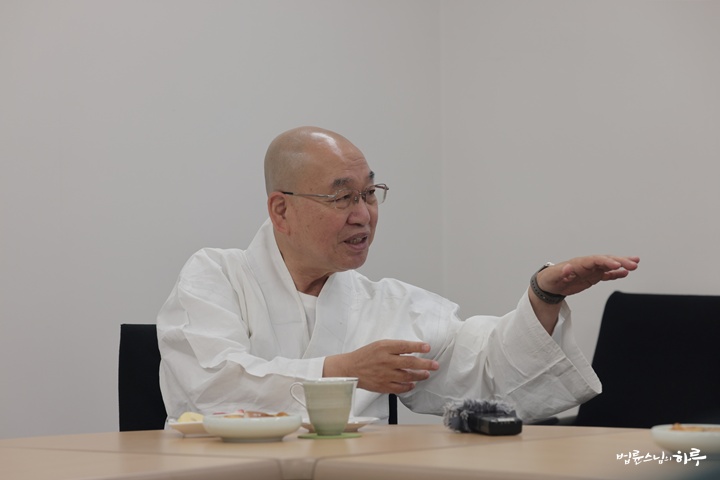
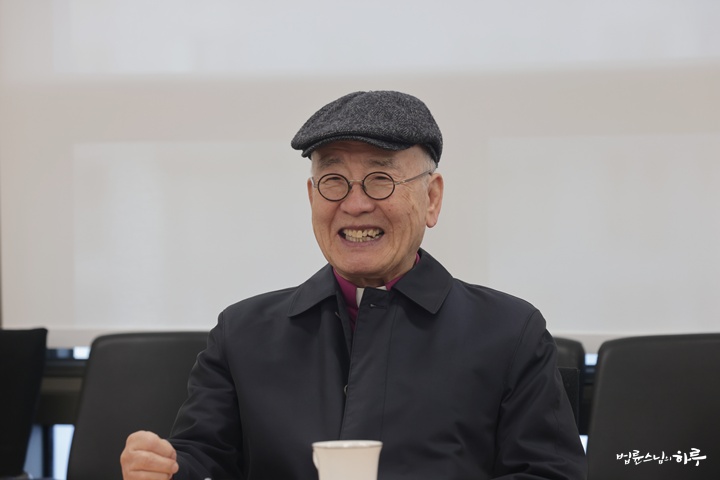
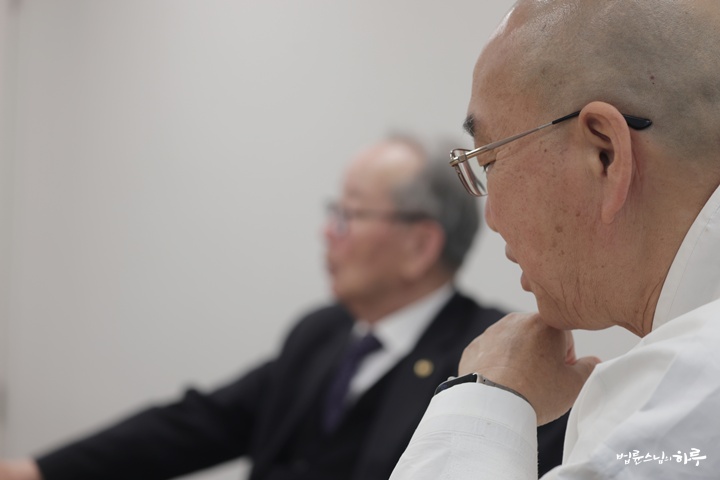
After agreeing to further examine the constitutional reform issue at a practical level, the interfaith meeting concluded. Sunim saw off the religious leaders and headed to the Dharma Hall on the third floor.
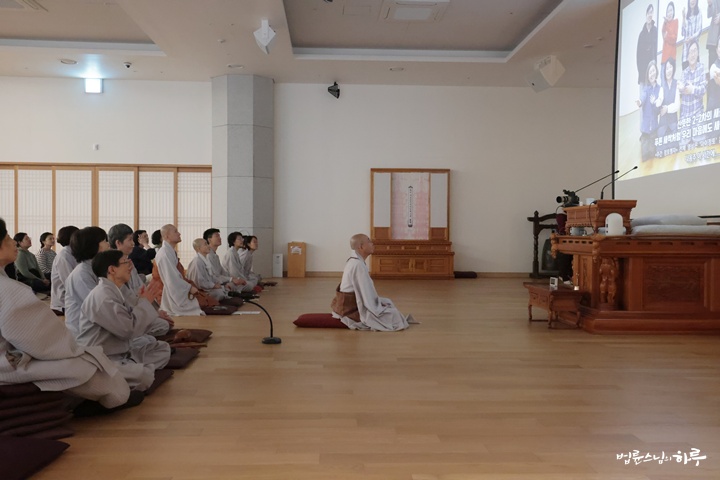
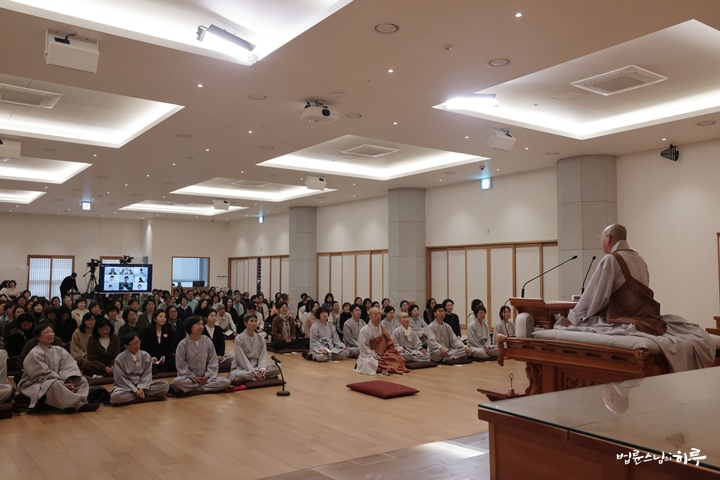
At 10 AM, with about 120 people gathered in the Dharma Hall, the Weekly Dharma Assembly began with the recitation of the Three Refuges and the Heart Sutra. Jungto Society members also participated online by joining the video conference room.
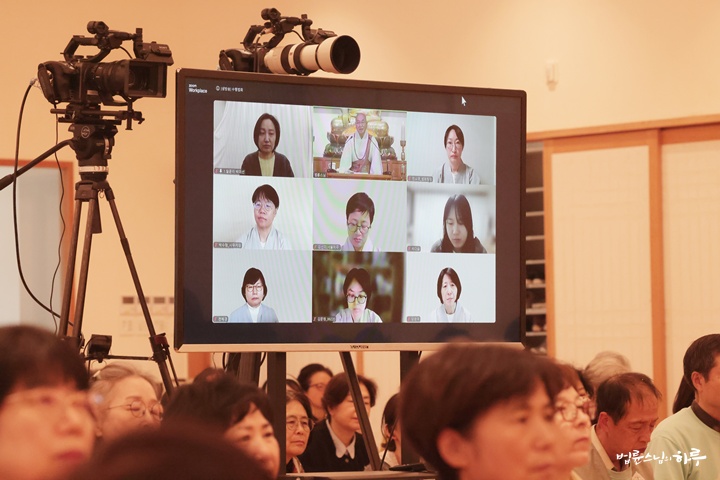
After watching a special video featuring scenes from last week’s World Meditation Forum, they viewed the weekly Jungto practitioners’ news video. When the video ended, the assembly requested a Dharma talk from Sunim with three prostrations. Sunim began his Dharma talk by emphasizing the importance of daily practice and participating in the Weekly Dharma Assembly, now that ten days had passed since the opening of the second 1000-Day Practice.
True Freedom
Daily practice may feel formal, and doing things we don’t want to do may seem dishonest. However, anyone can do what they want to do. We naturally do things we like without training or being told to do them. But the problem in our lives is whether we can do things when we don’t feel like it, when we don’t want to. It’s also about whether we can stop when we want to do something. If what we want to do is harmful and like poison, we should be able to stop willingly even if we want to do it. Conversely, if what we don’t want to do brings benefits and good results, we should be able to do it willingly even if we don’t want to. Only then does our life become truly free. Freedom is not simply ‘doing whatever we want.’ If doing what we want were freedom, we would lose our freedom when we can’t do what we want. True freedom is achieved only when we can be free from both ‘what we want to do’ and ‘what we don’t want to do.’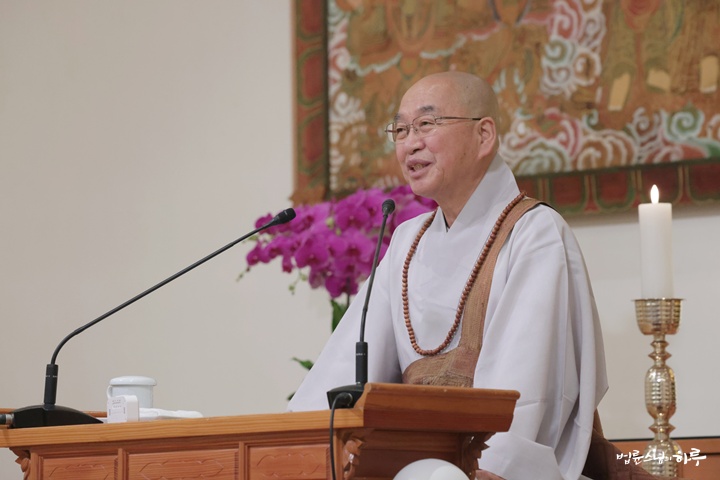
The Path to Freedom Through Practice
“Practice means being able to do what you don’t want to do, and being able to stop what you want to do. However, what we commonly call religion is when we can’t do what we want to do, we pray ‘Please change the situation so I can do it,’ and when we have to do what we don’t want to do, we pray ‘Please make it so I don’t have to do it.’ Yet people still ask, ‘I want to eat it, can’t I just have a little?’ However, no matter how much you want to eat something, if it contains poison, you must know when to stop. This is wisdom. Even if you want to eat it, if it’s a harmful drug or cigarette, you must stop. Also, if you’re overweight, no matter how much you want to eat, you shouldn’t overeat. Why? Because it’s harmful to you. Yet we know this but still can’t stop.Contradictions in the World
Looking at the world today, the cost spent on helping people lose weight who have overeaten far exceeds the cost of helping those suffering from malnutrition due to lack of food. The money spent on weight-loss drugs is several times more than the cost of helping children suffering from malnutrition. It’s like when water boils in a pot, instead of removing the fire, we leave the fire burning and pour in a bucket of cold water, and when it boils again, we pour in another bucket. From a climate perspective, this increases carbon dioxide emissions; from a personal perspective, it damages health; and from a humanitarian perspective, those who should eat cannot eat while others have problems from eating too much. However, from a practice perspective, we must stop these contradictions. By stopping, we can restore our health, prevent food price increases, open the way for poor people to eat without starving, and overcome the climate crisis by reducing carbon dioxide emissions. When we think and examine carefully like this, we can see that this is the right path that benefits both ourselves and others. But at first glance, one might think, ‘What’s wrong with doing what I want?’ The precepts exist to prevent this.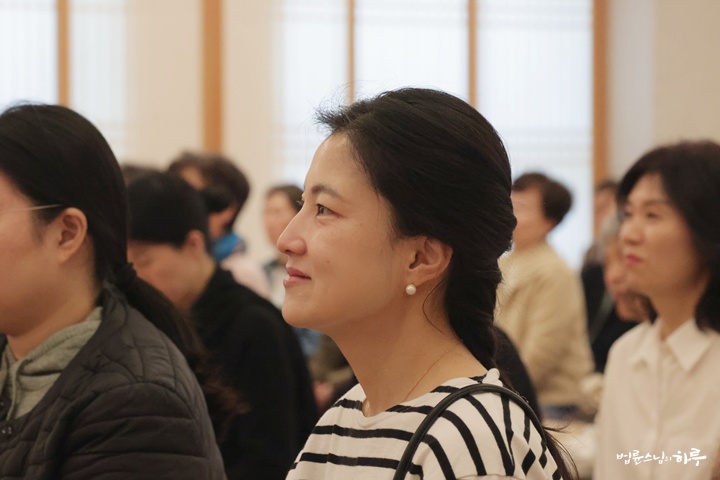
The Path to Becoming Master in Contradictory Situations
While technology has advanced, our consciousness can either expand or narrow depending on what we encounter through technology. Research shows that if we rely on artificial intelligence for everything instead of studying on our own, our cerebral cortex shrinks. This means our brain degenerates. Just as the tail our human ancestors had degenerated from lack of use, what will happen if we stop using our brains in the future?” Technology is rapidly advancing while the human brain may degenerate. We face the challenge of how to overcome this problem. Rather than calling it ‘practice’ in a grandiose way, we need ‘activities that clear our minds and let go of thoughts.’ The mind is just like the body. Modern people suffer from lack of exercise because they pursue too much convenience. So they ride stationary bikes that go nowhere and run in place. They have no choice but to supplement their exercise this way.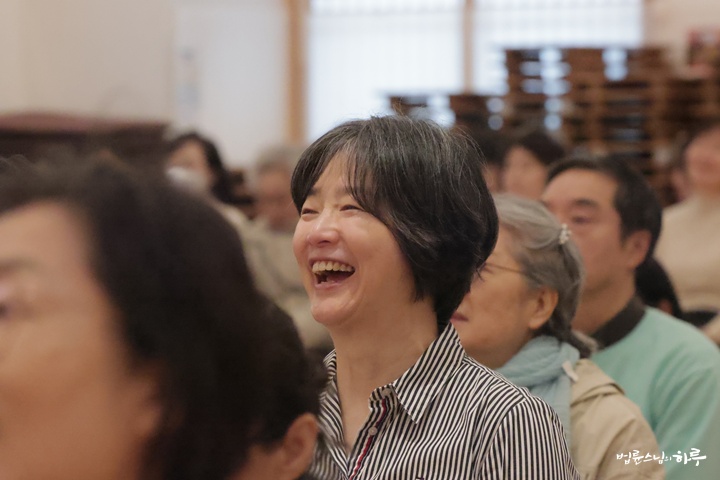
The Direction of Life for a Practitioner
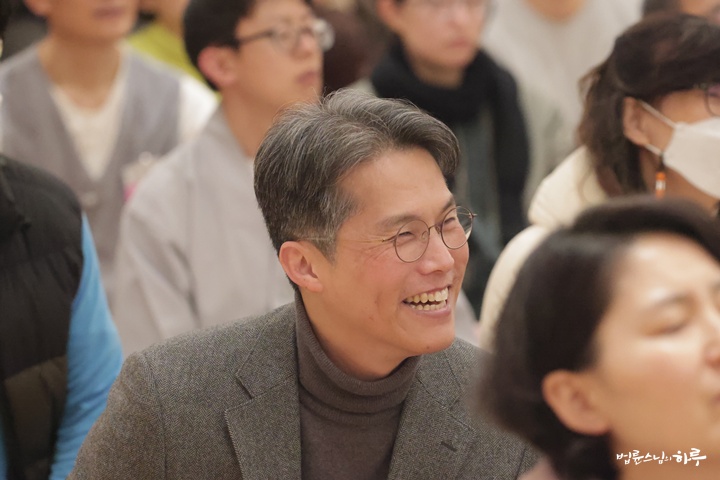
Practice means becoming a person free from suffering, a person who is truly free. Spreading the dharma means providing these beneficial teachings so that others can also become free from suffering. Whether temporarily or continuously, we improve the environment for those who cannot stand on their own. This is our social practice. Environmental practice to overcome the climate crisis, peace practice to overcome conflicts, and relief practice to support those facing difficulties – these three are our practical goals. This is the direction of life for us Jungto practitioners. It hasn’t been long since we started the second 1000-Day Practice. If we maintain our focus from the beginning, it’s easy, but when we keep making excuses and backing away, feelings of reluctance arise. If we keep being pulled by these feelings of aversion, it truly becomes difficult. We lie there thinking, ‘I don’t want to get up, but I have to get up,’ and continue to worry while lying down. If you just jump up, turn on the light, and wash your face, there’s no problem at all. So starting from today, I hope you’ll jump right up and dedicate yourself to practice.”Questions were received from those who had registered in advance. There was one online questioner and one on-site questioner.
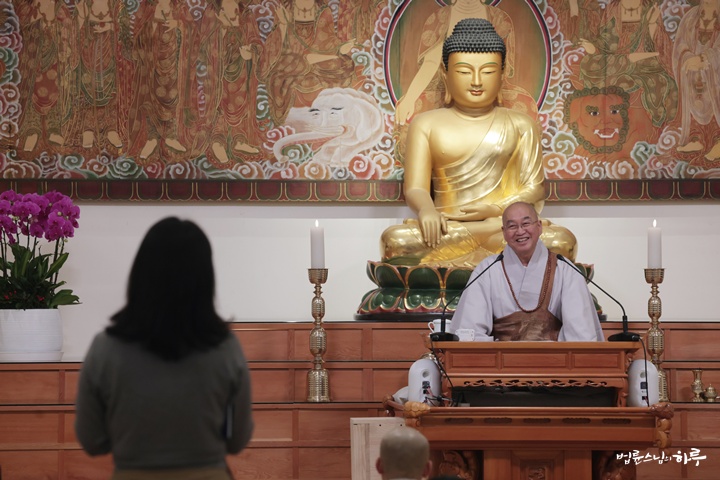
How Should I Raise Children Who Seem to Be Lacking?
“Recently, I heard that our generation might be the last to be smarter and live more prosperously than our parents’ generation. When I was young, I often heard my parents say, ‘You do well even without being taught.’ So I always believed it was natural for children to do better than their parents. But looking at my own children, I worry about how stable their lives will be in the future. My eldest child entered university with the same major as my husband. However, seeing that my child doesn’t yet know things my husband already knew at that age makes me worry about the child’s future. Even when we travel together, seeing my child show little interest in new things makes me anxious, wondering, ‘Will this child really be able to live better than me?’ So I’m concerned about what mindset I should have when raising children who seem to be lacking compared to me.”
“First, looking at human history, civilization has not always progressed continuously. There have been periods when civilizations declined and technology regressed, making people’s lives worse. For example, ancient Egyptian civilization flourished for a long time before declining, and in the Mediterranean region, the Aegean, Greek, and Roman civilizations influenced each other in succession. However, after the fall of the Roman Empire, Europe experienced what is called the Dark Ages of the Middle Ages, which was more of a regression than progress. After that, the Renaissance movement arose in Italy, and Portugal and Spain opened the Age of Exploration to explore the world. Then the Netherlands and Britain successively dominated maritime power, with Britain expanding its influence to the point of being called ‘the empire on which the sun never sets.’ Power competition led to World Wars I and II, after which hegemony passed to the United States, and in the future, China or India may rise again. Thus, human history has repeated cycles of rise and fall, as if circling the globe. Our individual lives are similar. Looking back at the era we were born into, we certainly didn’t start from favorable conditions. We experienced Japanese colonial rule, were economically impoverished due to war immediately after liberation, and politically experienced dictatorship. In such an environment, those born in the 1950s, 60s, and into the 70s have become today’s 50, 60, and 70-year-olds. We grew up in a situation where the world gradually improved day by day through the democratization process. So we naturally came to believe that human history and life always progress this way. However, if we broaden our perspective just a little, there are many cases where this isn’t true. For example, in North Korea’s case, in the 1960s and 70s, North Korea lived better than South Korea. But after North Korea’s rapid decline from the 1980s onward, living standards dropped significantly in the 1990s. While military technology or nuclear weapons may have advanced, the quality of life for ordinary residents actually became more difficult. Historically speaking, it’s entirely possible for people’s lives to worsen, and this isn’t particularly unusual. We’ve simply lived through an upward curve, making it easy to think the world always flows in a positive direction.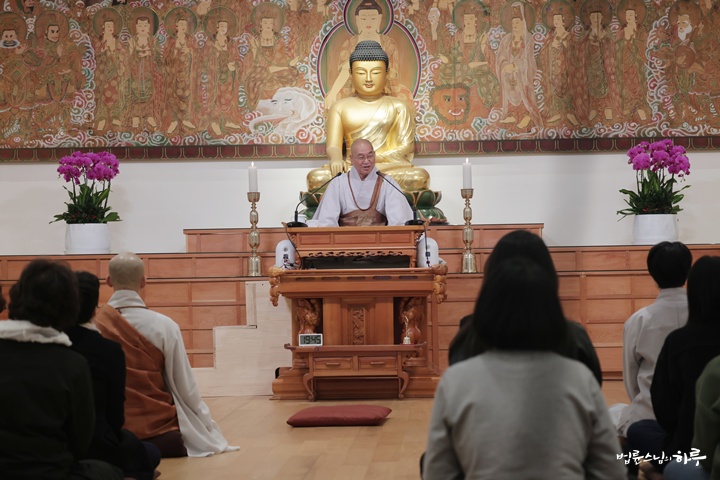
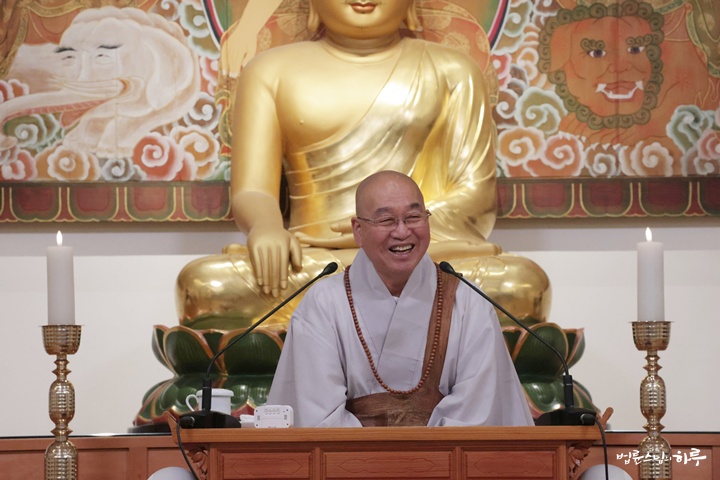
“After listening to Sunim’s Dharma talk, I raised my child well according to their standards until college entrance. When we applied to universities matching their grades, they really didn’t get rejected. Ah, Sunim was truly right. Since my child became an adult… I think my practice is still lacking.”
“Not worrying is best. If you want your children to become independent, you need to leave them alone.”“I will dedicate myself more to practice.”
When the conversation ended, it was time to conclude the Dharma assembly.
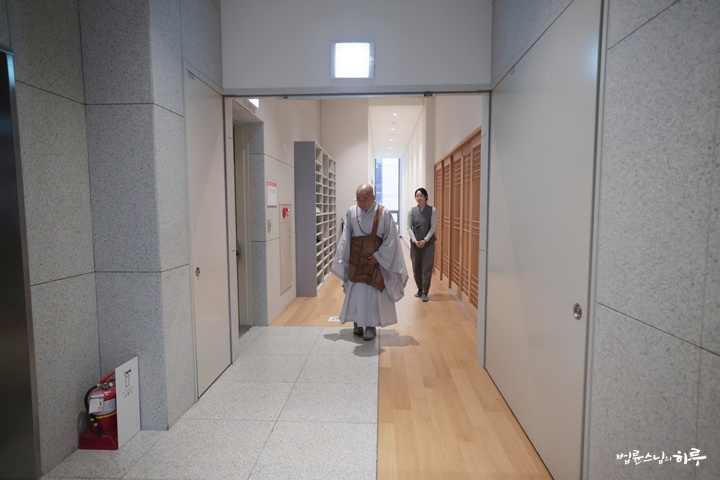
Sunim had a lunch meeting and headed to the cafeteria on the first basement floor. After the meal, he moved to the reception room to continue with meetings.
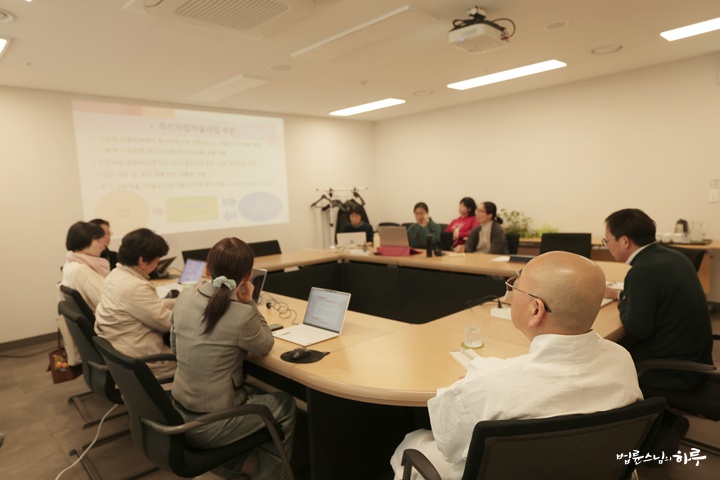
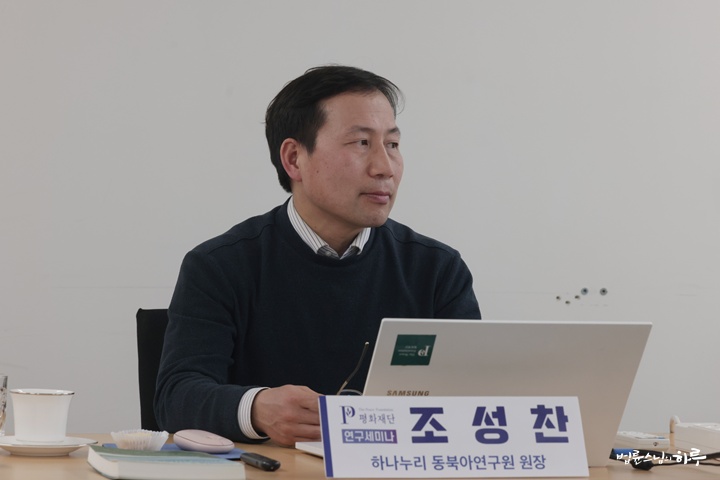
From 1 PM, the Peace Foundation’s March research seminar was held in the Peace Foundation conference room with the theme “Revisiting An Jung-geun (안중근)’s Theory of Oriental Peace.” Professor Cho Seong-chan (조성찬), Director of the Hananuri (하나누리) Northeast Asia Research Institute, gave a lecture and led the seminar. Various cases of the Rason self-reliant village project (2019-2026), a cross-border initiative being promoted by Hananuri, were presented. Based on “The Theory of Oriental Peace” written by An Jung-geun in Lüshun Prison, participants explored concrete visions for a Northeast Asian peace and economic community. The timing was particularly meaningful as tomorrow marks the anniversary of An Jung-geun’s martyrdom (March 26, 1910).
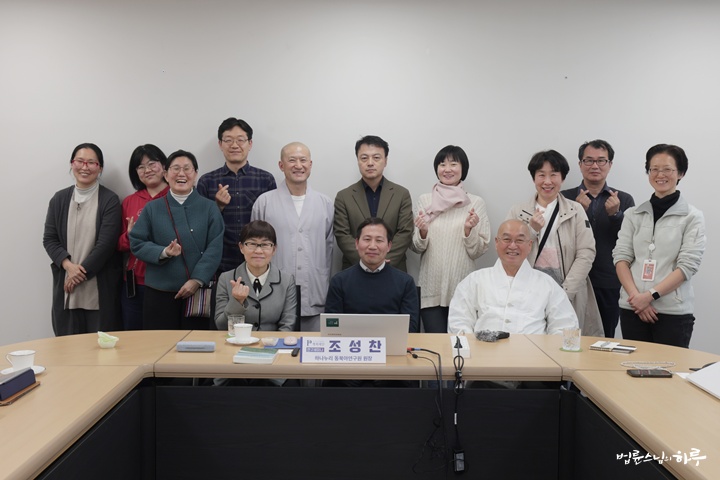
After the research seminar ended, Sunim immediately attended the Peace Foundation Planning Committee meeting from 4 PM. The meeting continued until 6 PM.
For his next appointment, Sunim went directly to the basement cafeteria for dinner as soon as the meeting ended. During the meal, an unexpected visitor arrived, so he went to the lounge on the second floor for a meeting. While talking with the visitor, evening prayer time passed and the evening Dharma assembly time approached. After seeing off the visitor, Sunim came to his office. He had an appointment with a lay Sangha practitioner before evening prayer time, but due to the previous meeting running over, he couldn’t meet the practitioner at the scheduled time. He could only briefly see them after evening prayer time.
“You must have missed evening prayer waiting for me…”“I told them to do evening prayer separately.”
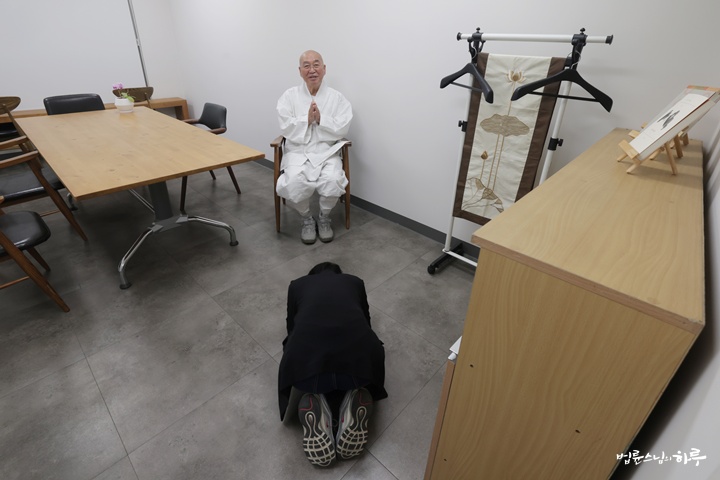
Before the evening Dharma assembly, Sunim briefly met with a lay Sangha practitioner who was completing their service in the reception room. The practitioner, who was finishing 12 years of lay Sangha life, had been waiting to offer three prostrations of completion to Sunim. The practitioner offered the three prostrations, and Sunim gave words of encouragement and advice about the mindset for a new beginning. With little time left before the evening Dharma assembly, they couldn’t talk long and it was time to move to the Dharma hall. Sunim told the practitioner they would meet again tomorrow with more time, then put on his kasaya and robe and moved to the Dharma hall.
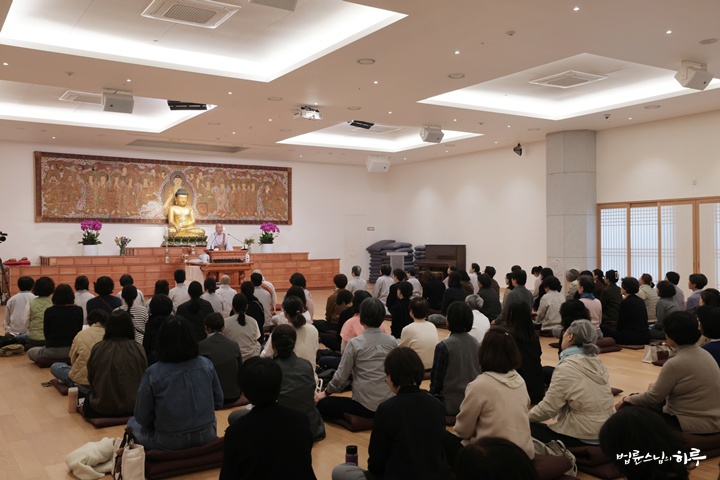
Sunim arrived at the Dharma hall on time. After watching the weekly Jungto practitioner news video, the assembly requested the Dharma from Sunim with three prostrations.
I’ve been in business for 27 years. While I’ve had challenges and achievements, looking back, the process has been a continuous series of suffering. Every new challenge brings worry and anxiety that’s hard to bear. When I was young, people said I was bold, but looking back now, I think I just endured a lot. Now in middle age, I’ve lost much of the strength and motivation to push the business forward. What is this suffering, and should I continue with the work or change direction?
I’m doing volunteer work at Adomoryewon (아도모례원). Though I’m at an age where I should be enjoying leisure as an owner of a main temple, I’m volunteering. There’s a lot of work at main temples, and many suggestions when changes are made. Often, we have to follow final leadership decisions rather than voices from the field. At such times, I feel doubtful about whether I’m just an errand runner doing as told, and discomfort arises. How should I adjust my perspective?
After finishing conversations with those who had submitted questions in advance, Sunim gave closing remarks.
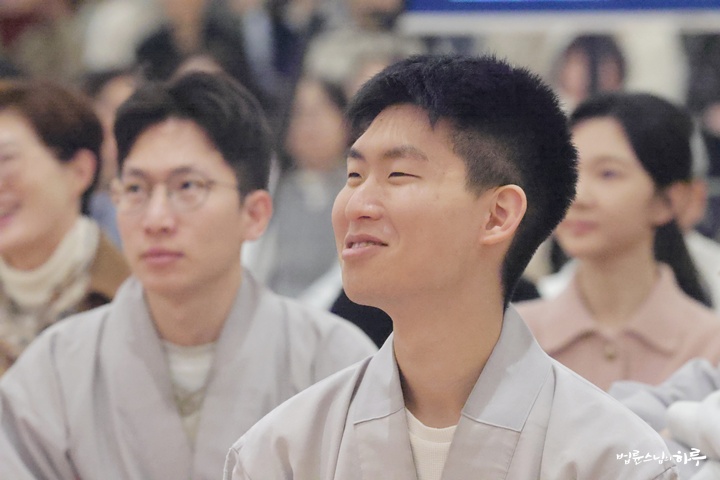
“Let’s enter meditation for a moment.”
While the screen came down and the assembly meditated, Sunim quietly left the Dharma hall and moved to his office.
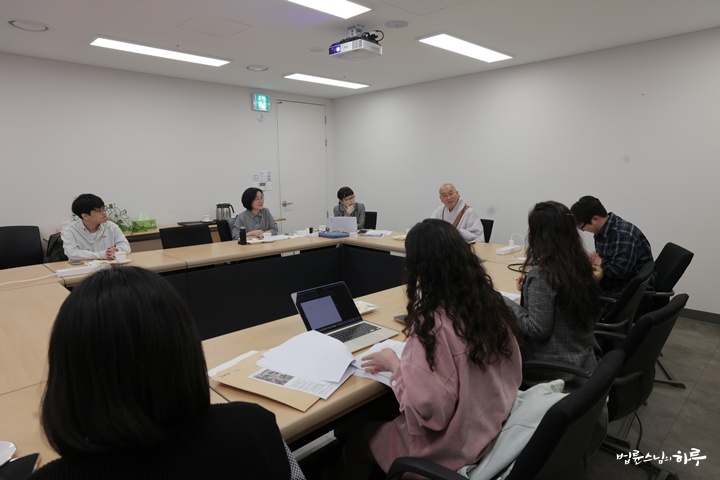
Broadcasting staff had already arrived in the conference room and were having a preliminary meeting. This was the final review meeting with Sunim about producing a special program to be broadcast on Buddha’s Birthday in May. Since Sunim had an overseas business trip immediately after the Chulga Yeolban Anniversary (출가열반재일) opening Dharma talk, today was the only available time.
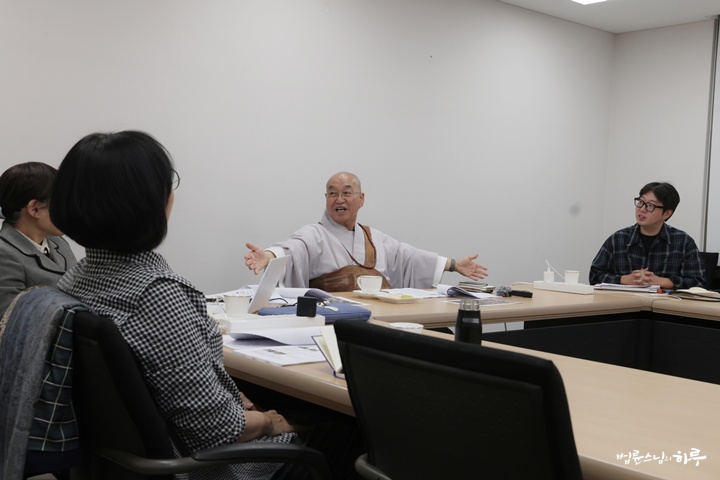
The meeting covered filming schedules, routes, and location checks. While confirming the schedule, they discovered that one cast member would join the filming a bit late, and upon checking the flight time, it was different from what Sunim had known.
“After checking again, you’re right, Sunim.”
The writers participating in the meeting double-checked the flight times. Sunim offered suggestions to maximize filming opportunities for the cast within the tight schedule. When they couldn’t secure local transportation in India, he suggested alternative methods of travel. When confirmation was needed about specific areas, Sunim personally opened a map app on his iPad to search and verify.
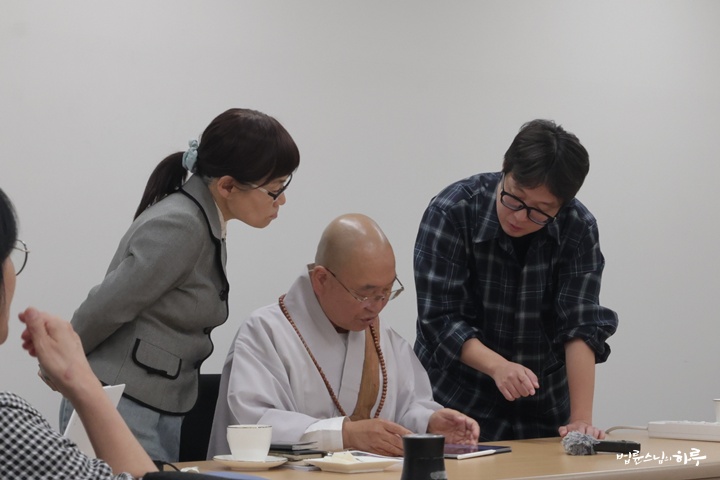
The broadcasting staff presented discussion points, and Sunim confirmed and reviewed them, making the meeting proceed quickly. After checking the entire schedule of about an hour and a half and finalizing preparations, the meeting concluded. Expressing gratitude to the broadcasting staff who stayed late for the review meeting, they ended with a commemorative photo.
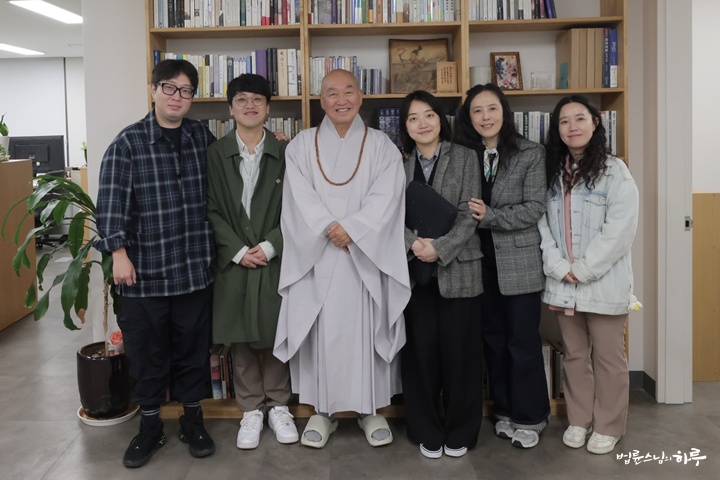
Tomorrow, Sunim will have an early morning breakfast meeting with North Korea experts at the Peace Foundation, give the opening Dharma talk for Chulga Yeolban Anniversary in the morning, and attend meetings and review sessions in the afternoon.