I’m struggling emotionally after returning from maternity leave
Mar 22, 2026 - Exploring Gyeongju historical sites, planting potatoes, and tending the garden
Hello. Sunim spent the morning exploring the Gyeongju area and planting spring potatoes, and the afternoon foraging for spring herbs and tending the garden.
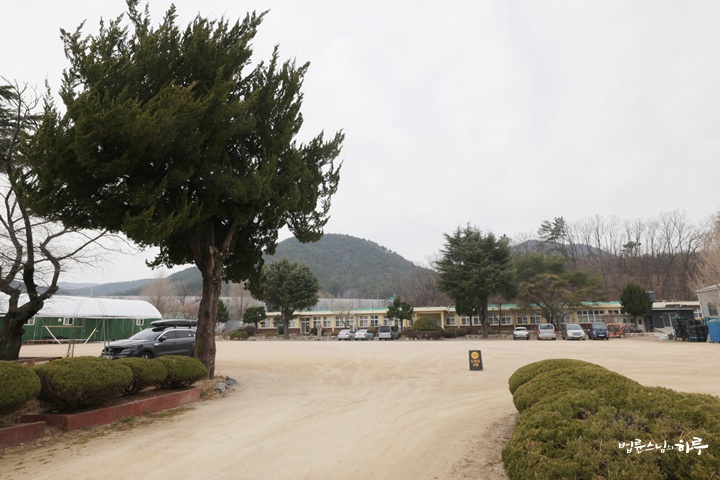
At 8:30 AM, Sunim departed from Dubuk Jungto Retreat Center to visit the stone Buddha head at Ipgok on Mt. Namsan in Gyeongju. The Jogye Order is publishing a book as part of their Mt. Namsan Sacred Site Development Project. Since Sunim is from Gyeongju and has decades of experience leading pilgrimages on Mt. Namsan, he was asked to review the materials about the historical sites. Upon reviewing the requested materials, Sunim found that several sites were missing, and one site was unfamiliar to him, requiring verification.

In the moving car, Sunim opened a map app and searched various locations, but the app showed no markers for the historical sites. While at Dubuk Jungto Retreat Center, he took the opportunity to explore Mt. Namsan in Gyeongju.
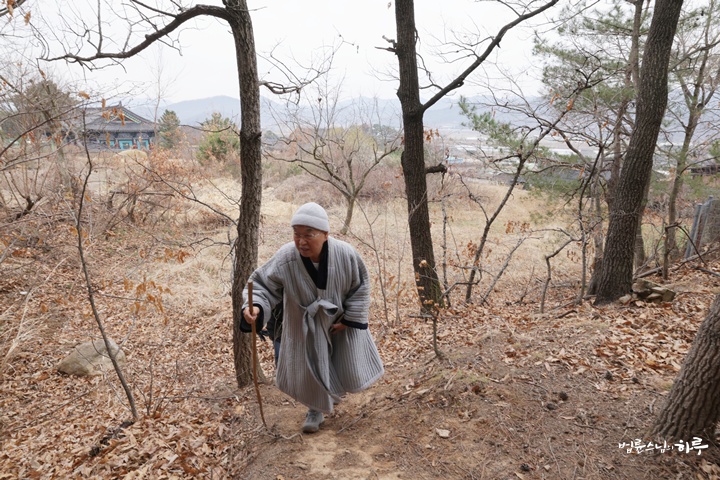
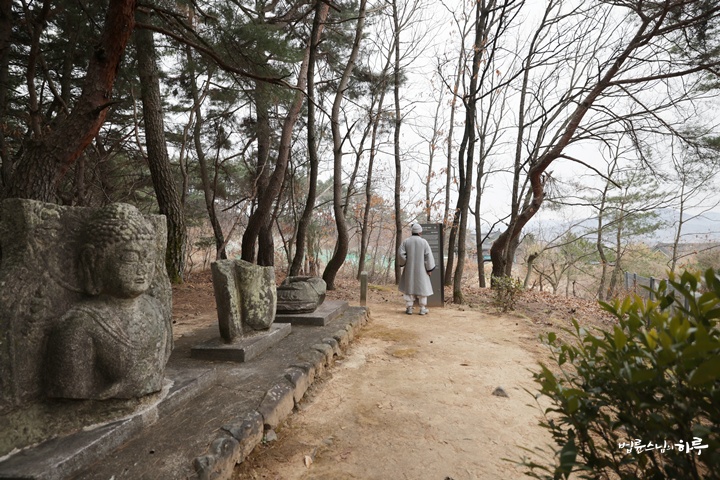
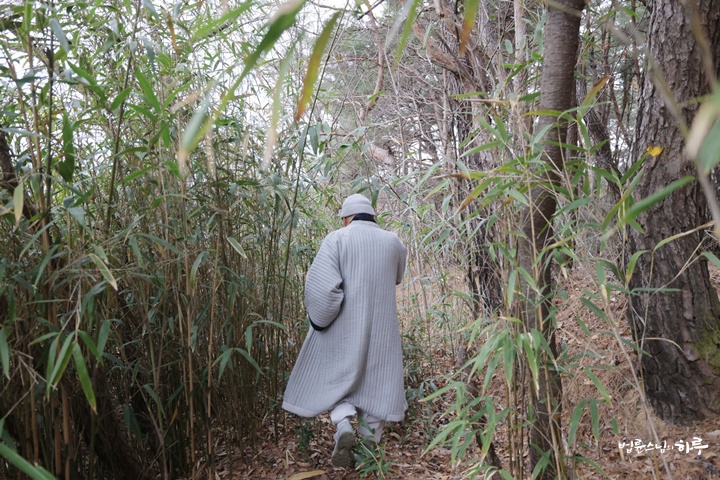
The first site visited was where the stone Buddha head at Ipgok on Mt. Namsan is located. The path to the historical site required passing through a private field, and a large dog was guarding it, making entry difficult. Most importantly, there was no clear path leading to the site. During the exploration, Sunim confirmed an alternative route that didn’t require passing through the private field.
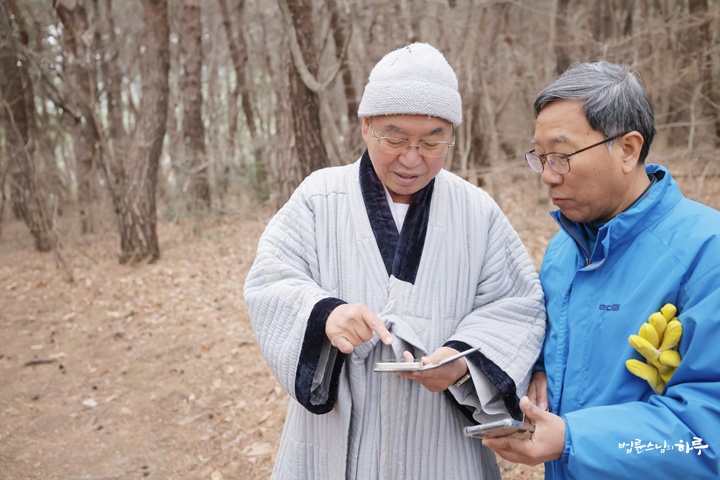
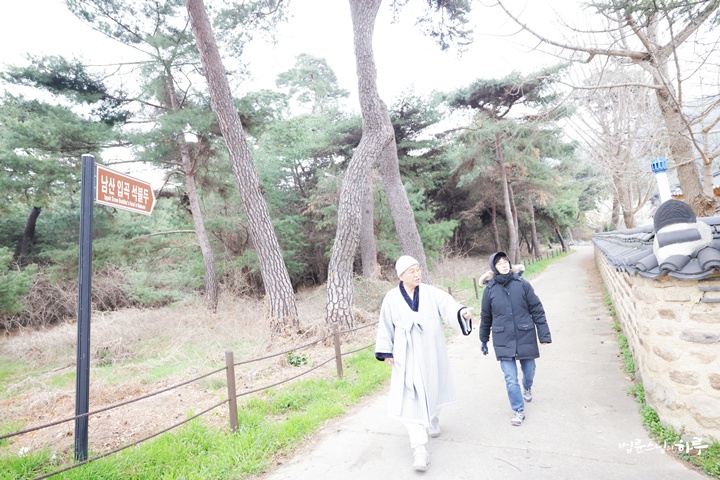
The second location visited was the site of the rock-carved images at the First Temple Site in Tapgok on Mt. Namsan. Despite decades of exploring and guiding tours on Mt. Namsan, this was Sunim’s first visit to this particular site. No signs indicating the historical site were visible from the road.
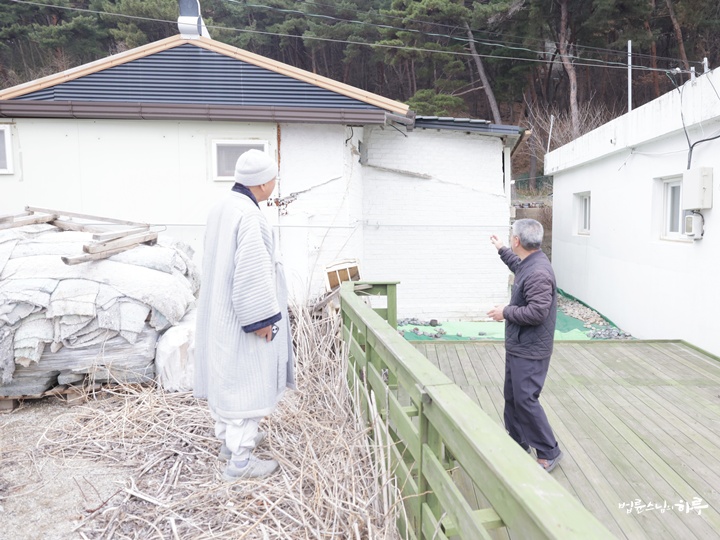
After determining the approximate location, Sunim entered the village. Fortunately, he met an elderly villager and was able to ask for directions.
“Excuse me, sir! May I ask you for directions? I heard there’s something like a Buddha rock in Tapgok here. Where is it? I’m from Gyeongju and have visited Mt. Namsan many times, but this is my first time hearing about these rock-carved Buddhist images, so I came to explore.”“There’s a path that goes up behind that temple. It was only developed as a historical site a few years ago. There’s a path that goes up behind my house here. Please come this way.”
The elderly villager pointed to rocks visible through the trees behind his house and showed them the way. Sunim led the way up the mountain path that seemed to have no trail.
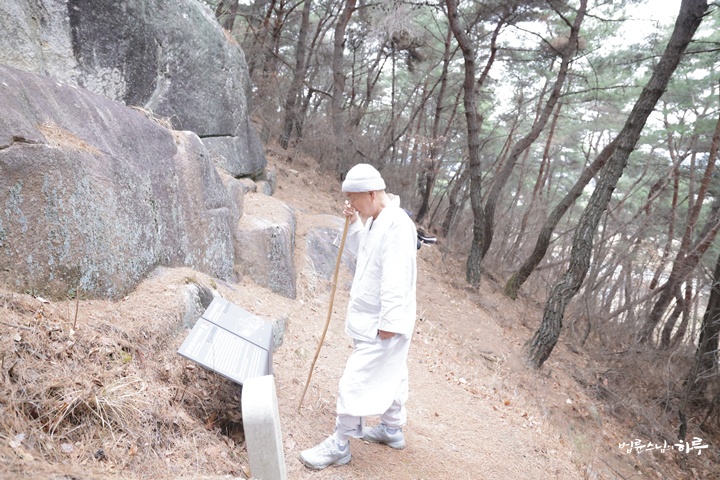
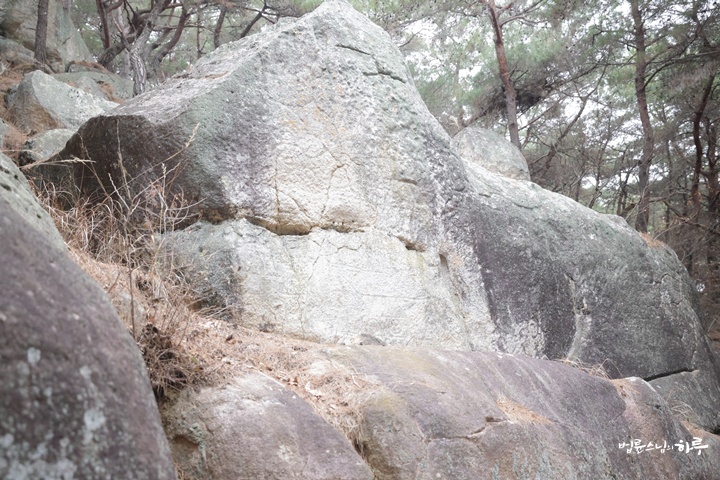
They reached the rock the elderly villager had indicated. There was an information board with drawings of the patterns carved on the rock, but they were so worn that they were difficult to identify with the naked eye.
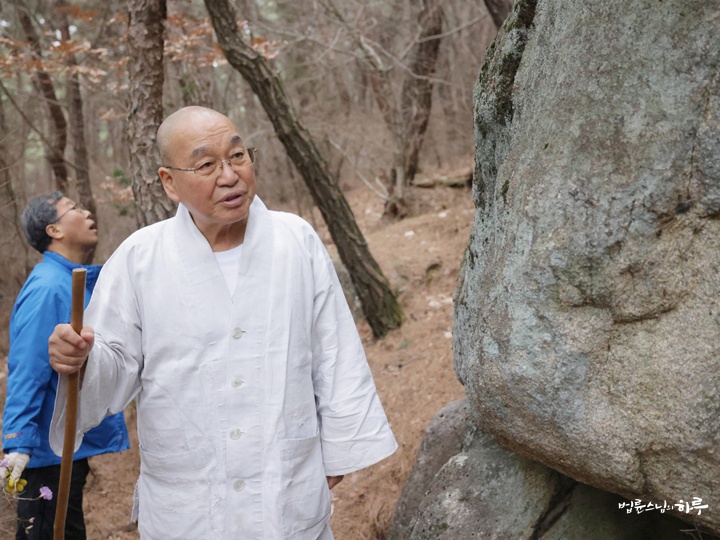
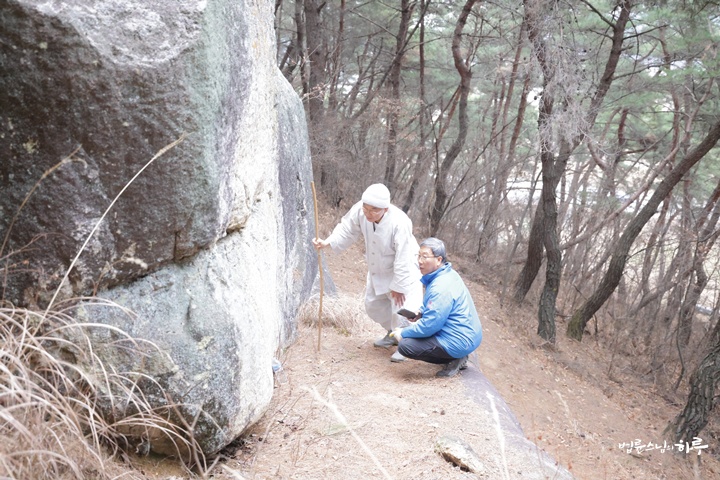
Sunim carefully examined the front and side surfaces. Part of the rock was missing, and he also checked to see if the missing piece had fallen nearby. After completing the exploration, Sunim thanked the elderly villager who had shown them the way and moved on to the next site.
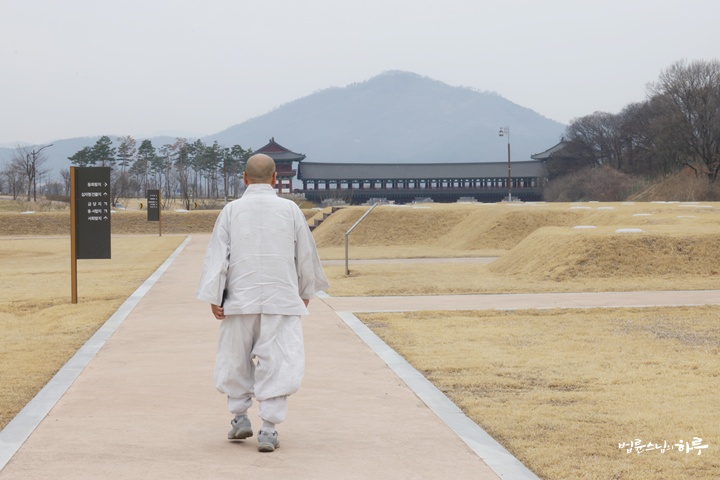
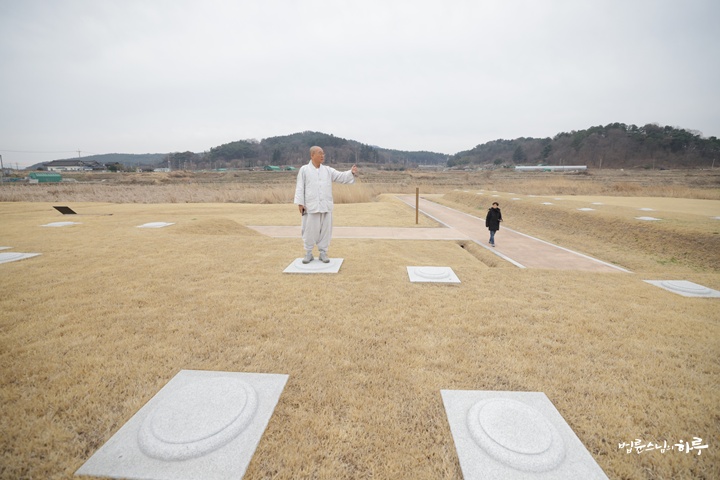
On the way to Banwolseong, they stopped at the Inwang-dong Temple Site in Gyeongju. This is presumed to be the site of Inyongsa Temple, built to pray for the soul of Kim In-mun, the second son of King Taejong Muyeol of Silla. The site’s characteristic is that while it follows the typical Silla temple layout, it has unique architectural features compared to other Silla temples. Sunim examined various foundations to confirm these characteristics.
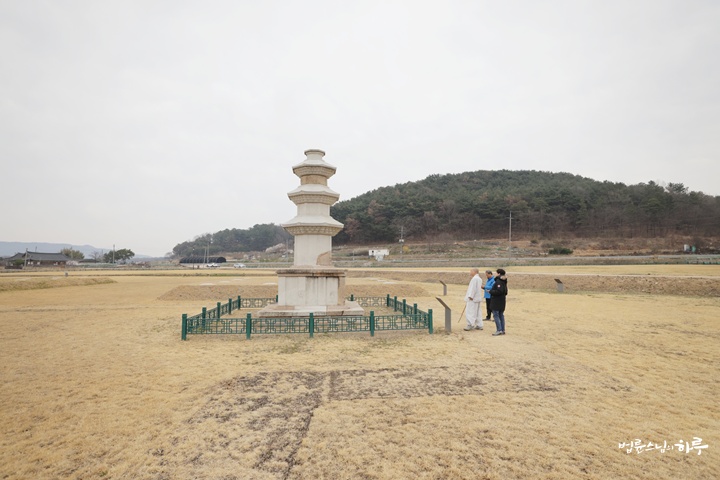
They also visited the Cheongwansa Temple Site in Gyeongju. This temple is located in the middle of rice fields on the western slope of Mt. Dodang, and is famous for the story of Kim Yu-sin and the courtesan Cheongwan. The story tells how a drunk young Kim Yu-sin rode his horse, and when it went to the courtesan’s house, he beheaded the horse. The courtesan in this story was Cheongwan. Just as he beheaded the horse, Kim Yu-sin coldly cut off his relationship with Cheongwan, and she took her own life. Later, Kim Yu-sin built Cheongwansa Temple at the house where Cheongwan had lived to pray for her soul. At the Cheongwansa Temple Site, they examined various building foundations.
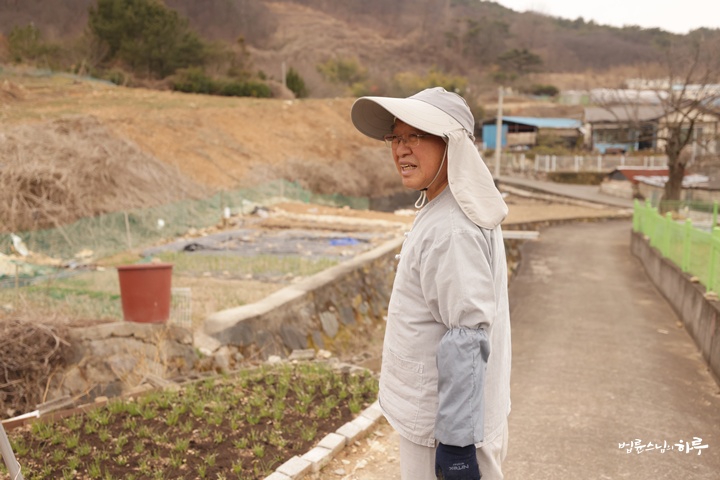
After completing the exploration of historical sites around Gyeongju, Sunim changed into work clothes as soon as he arrived at Dubuk Jungto Retreat Center. The farming team was planting outdoor potatoes in the lower front field. The Dubuk farming team had spent all day yesterday replacing greenhouse plastic, so the potato planting wasn’t progressing quickly. Sunim came to the front field to help with the spring potato planting.
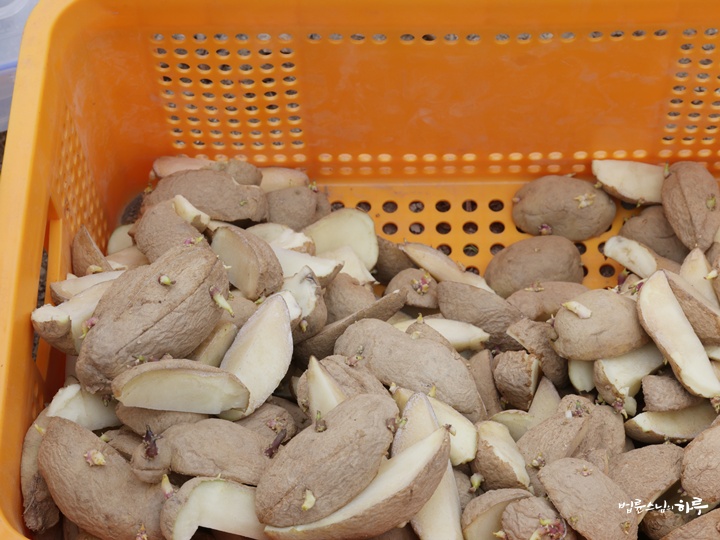
Looking at the prepared seed potatoes, Sunim asked the farming team practitioner to confirm:
“If the seed potatoes are this large, we’ll need a huge amount just for this field. Are you proceeding after confirming with the lay practitioner who guides the farming?”After calling and confirming directly with the lay practitioner who guides farming, Sunim planted the prepared seed potatoes. They planned to plant two types in the front field: Dubaek potatoes, which are fluffy when boiled, and Sumi potatoes, which are commonly used as everyday ingredients. Sunim took charge of planting the Dubaek seed potatoes.
“Since Sunim is so skilled, please take care of this furrow.”
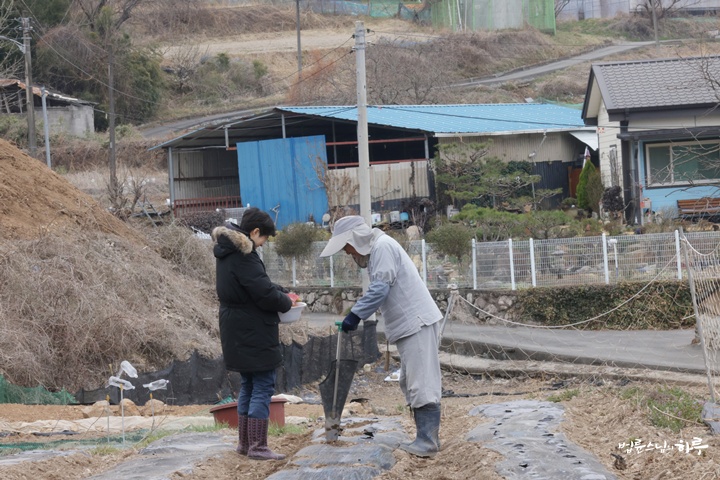
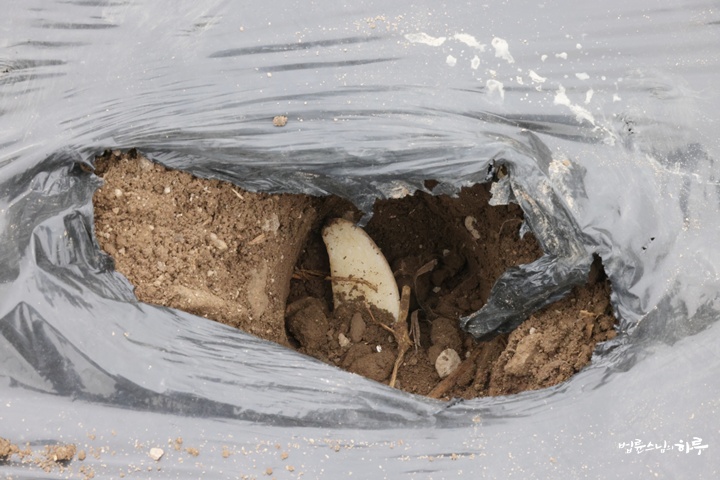

Sunim forcefully pushed the planter into the furrows. When Sunim pushed the planter deep into the ground and opened it, a practitioner dropped a seed potato into the planter. In furrows with stones, the planter wouldn’t go in deeply even when pushed, so Sunim used a long hoe to remove stones while using the planter.
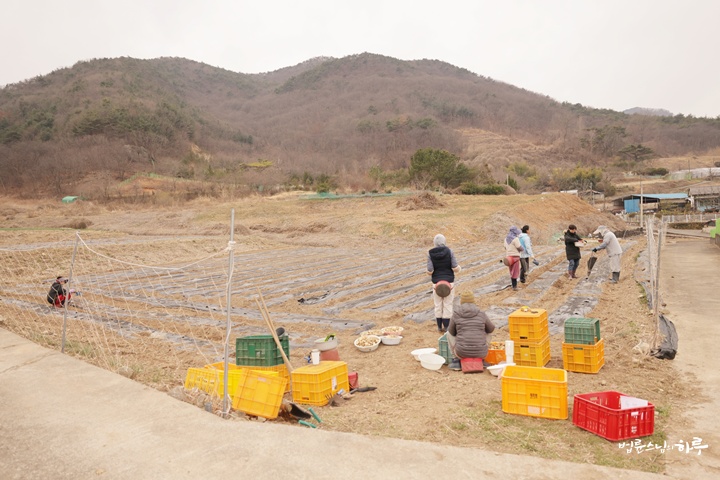
The farming team practitioners carefully covered the spots where seed potatoes were planted with soil. Within an hour, Sunim had planted seed potatoes in three furrows using the planter. Thanks to Sunim using the planter to place the seed potatoes in the ground, they were able to plant potatoes quickly.
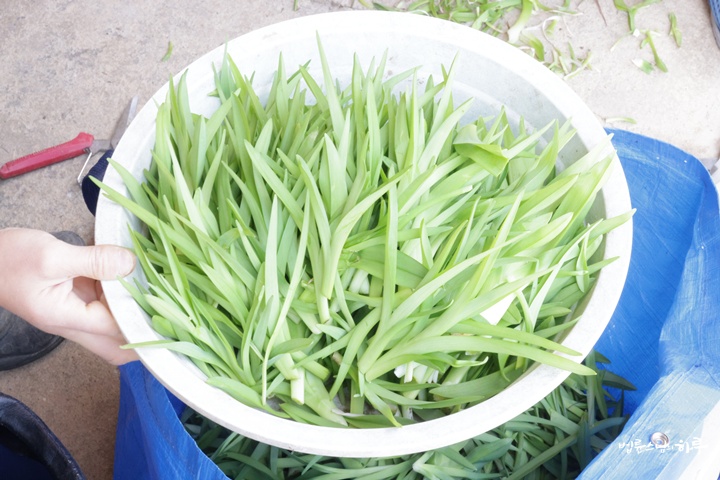
After lunch, Sunim met with guests in the afternoon and then began the afternoon work period again. He cut daylilies near the garden. He suggested harvesting as many daylilies as possible today to use as ingredients, as they would become too tough to eat after this week. After trimming the harvested daylilies, he went to his sister’s house and foraged various spring herbs.
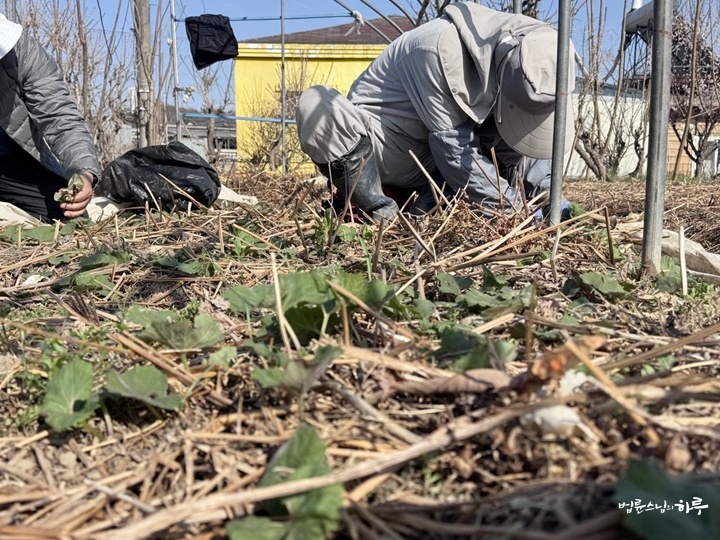
There were various spring herbs above the soil, including daylilies, butterbur, wild garlic, and mugwort. After foraging a basket of spring herbs and returning to Dubuk Jungto Retreat Center, he tended the garden around 4:30 PM when the sun had softened.
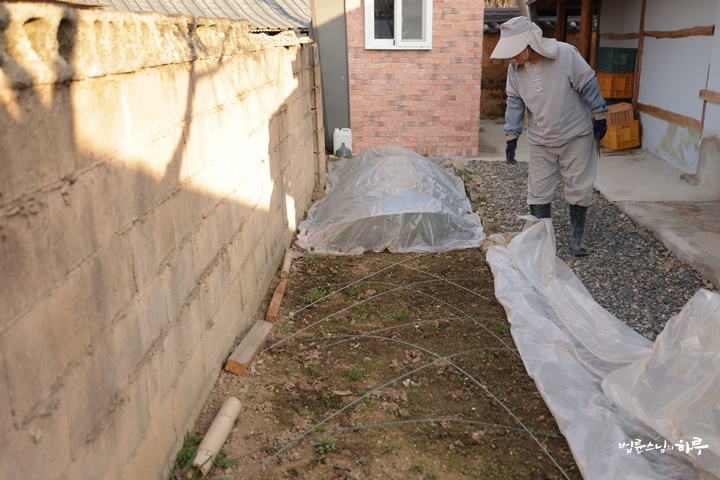
Last winter, there was a garden bed where coriander seeds had been sown and covered with low plastic sheeting. When the plastic was removed, very small coriander sprouts had emerged. It had taken quite a long time for the coriander sprouts to appear.
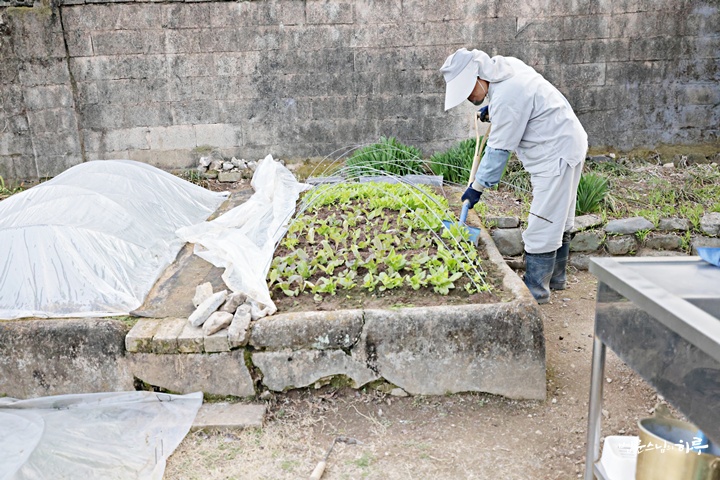
Sunim suggested it would be better to transplant lettuce seedlings into the coriander bed. He said it would be fine to plant lettuce seedlings since the lettuce would grow first and could be harvested, and then the coriander would grow later. Sunim dug up the lettuce seedlings, and the practitioners transplanted them.
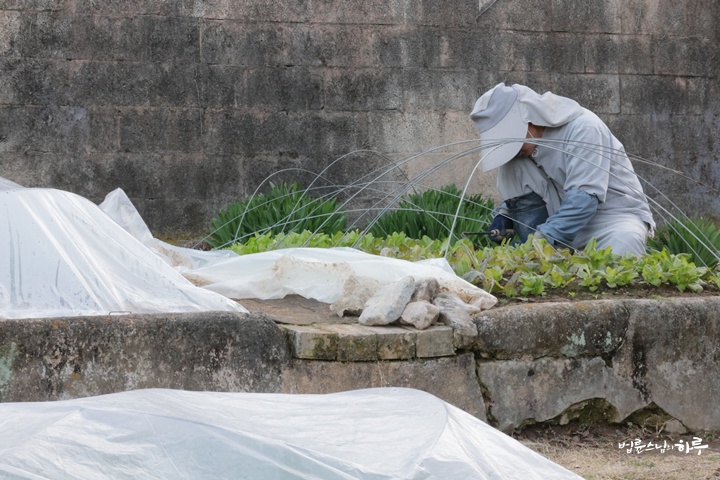
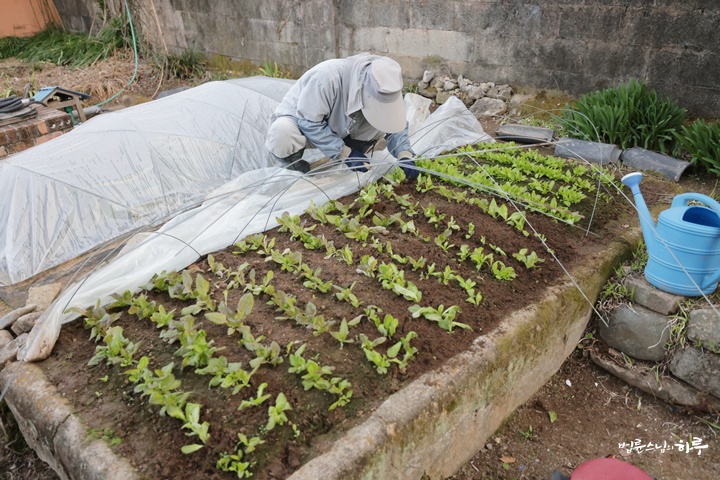
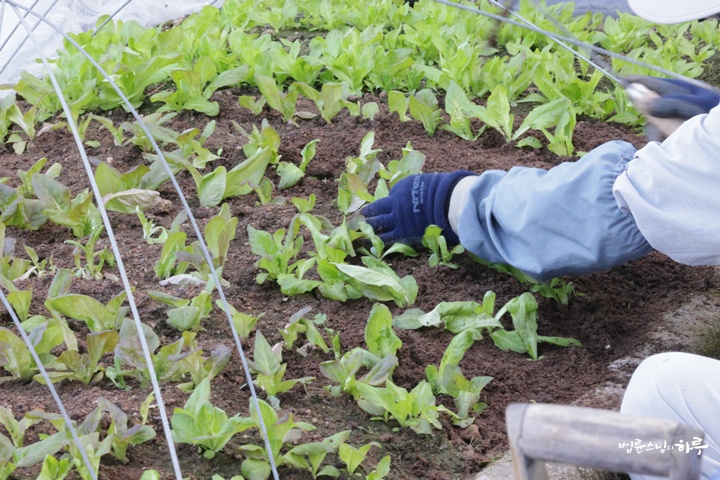
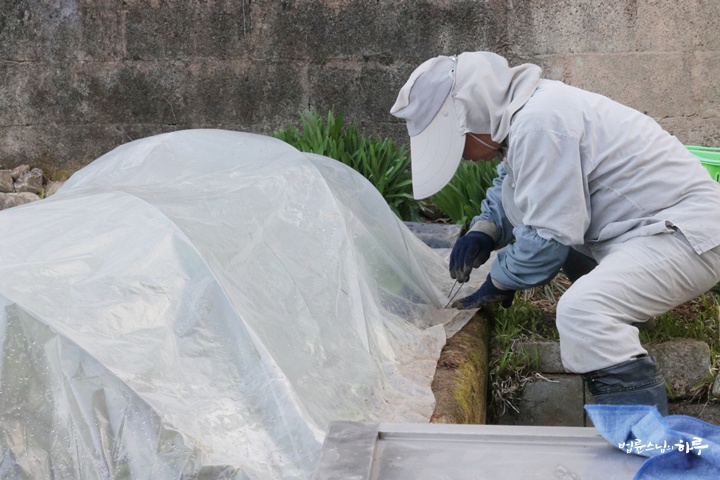
Sunim tidied up the garden bed where he had dug up the lettuce seedlings. He leveled the sunken areas, neatly replanted the densely packed lettuce seedlings one by one, spread the remaining soil evenly over the bed, and covered it well with plastic for insulation and moisture retention.
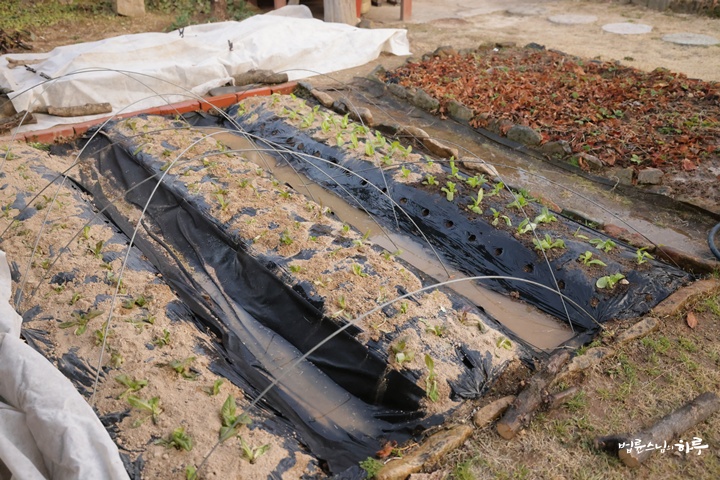
Looking at the garden bed where lettuce seedlings had been planted a few days ago, the seedlings in the corner of one of the three furrows had dried up. The furrows covered with plastic retained moisture and the seedlings were preparing to take root and grow. In contrast, the furrow covered with fabric had lost all moisture and the lettuce seedlings had dried up. Sunim suggested watering the furrows thoroughly and replacing the fabric with plastic to cover the lettuce seedlings.
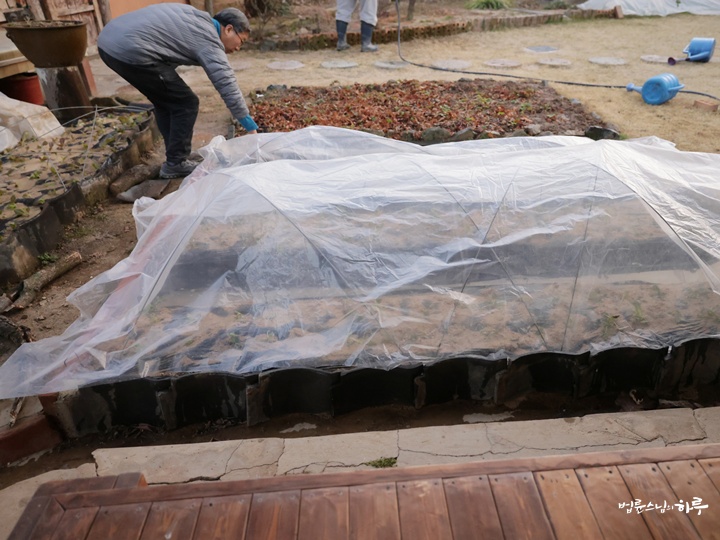
They removed the fabric cover, watered the furrows thoroughly, and made a plastic cover to put over them.
By the time they finished planting lettuce seedlings and watering, the sun had set. Sunim organized the work tools, had dinner, rested, and concluded the day’s activities.
Tomorrow morning, he will give a Dharma talk at the Dharma Propagation Assembly and go out for a hospital appointment. In the evening, he plans to attend the Dharma Propagation Assembly online. Since there was no Dharma talk today, this post concludes with a Dharma Q&A from the Weekly Dharma Assembly held on January 7th.
I’m struggling emotionally after returning from maternity leave
“I’ve returned to work after three years of maternity leave. When career interruption due to childbirth and childcare became my reality, I was so distressed I couldn’t think straight. I felt particularly demotivated and devastated when I was assigned to simple tasks different from my previous work. When I was given responsibility for managing all employees’ salaries and compensation, I became angry thinking I hadn’t been properly evaluated or compensated. Fortunately, practicing awareness that I learned at Jungto Society helped me escape somewhat from the severe distress and depression I initially felt. Still, I remain dissatisfied and feel emotionally drained with vague thoughts about what to do next. I’m struggling with whether to continue at this distressing job or quit and look for other work while caring for my children. I’d like to hear your thoughts on this.”
“When you decide that doing Jungto Society activities is more important than keeping your job, or that running your own business with your ideas is more important, quitting your job in these cases would be a choice toward a better direction. Even if there are risks involved, it could be considered a courageous action. However, quitting because you’re dissatisfied or angry with your current workplace is a very undesirable attitude and approach for a practitioner. You say you have complaints about this workplace, but from what I hear, I’d like to first say that this seems to be your excessive greed. What is the biggest challenge that needs to be resolved regarding young female employees in our society today? When they get married and have children, I always say, ‘A mother should raise her child for at least three years for the child’s psychological stability.’ However, from the company’s perspective, they cannot keep a position vacant for three years. This would significantly reduce the company’s work efficiency and economic efficiency. This creates a conflict between these different positions. In the past, when women became pregnant or got married, they were required to quit their jobs. For example, flight attendants couldn’t continue working while pregnant. These days, we see older women working as flight attendants, but in the past, only unmarried young people could do this job. However, times have changed, and social perceptions have evolved. Now people can continue working after marriage. Initially, maternity leave was only six months. Then, due to many social demands, the maternity leave period was extended to one year. However, if you take more than a year of childcare leave, you often have to quit your job. This is why most women experience career interruption. When you quit a job you’ve had for 5 or 10 years, get married, raise children to a certain age, and then try to find another job, you cannot leverage your past experience. You have to go to a different company, not your original workplace, and start working as if you were a new employee. Companies are reluctant to hire people over thirty with families for professional positions. This is why many female activists raise concerns about such unfair practices. These issues have led to women choosing not to marry or have children, resulting in a significant drop in birth rates. As a result, after having a baby, mothers care for their child for one year and then entrust the child to someone else while returning to work. From an individual woman’s perspective, it might seem like there’s no career interruption since someone else is caring for the child while she works, but from a societal perspective, the fact remains unchanged that some woman must care for young children.
“Thank you. Actually, I’ve been continuously encouraged to resign. I’m grateful that I was fortunate enough to return to work after many twists and turns. During this process, I thought about not returning and doing more meaningful work, but I ended up returning due to the anxiety in my heart. It seems my psychological anxiety has grown even more since I returned to work because I couldn’t let go of the title of being a company employee. As you mentioned, I want to do other work and care for my children, but I’m suffering because I can’t let go of the company due to my inner anxiety.”
“First, try working after returning to your job and then make a decision. If you find that raising your children is more meaningful than working at the company, or if moving to another job or starting your own business seems more meaningful, you can think it through more carefully and decide then.””Thank you.”