Knowing That It’s Not a Problem Is the Greatest Wisdom
Mar 20, 2026 - Day One of the World Meditation Forum
Hello. Today, the 2nd World Meditation Forum is being held at the Jungto Social and Cultural Center (정토사회문화회관). Sunim spent the entire day at the Jungto Social and Cultural Center welcoming domestic and international guests and participating in the programs.
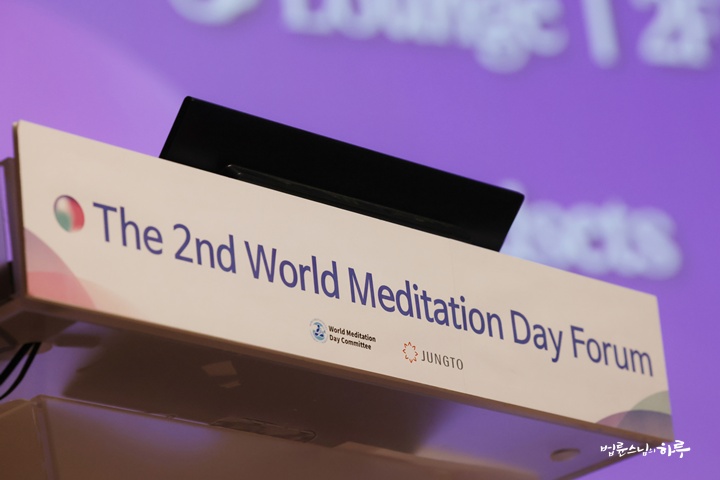
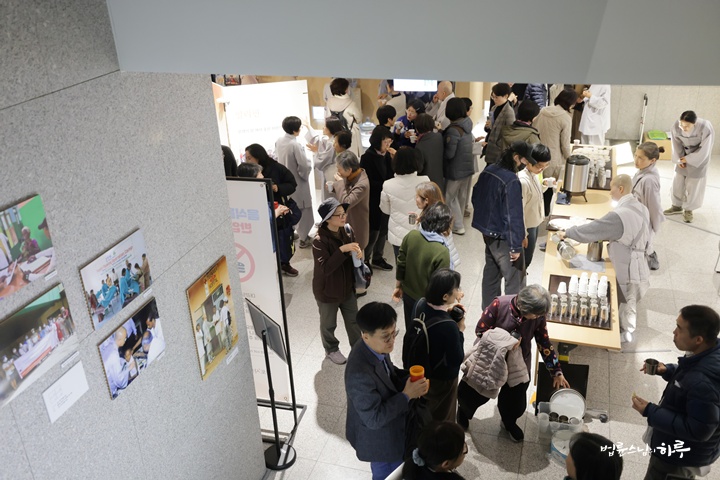
After completing morning practice and meditation, Sunim began welcoming guests who came to the event at the lounge on the second floor of the center before 9 AM.
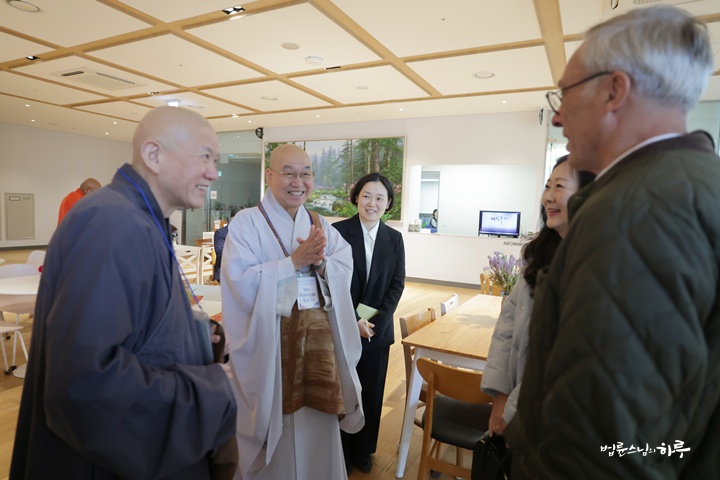
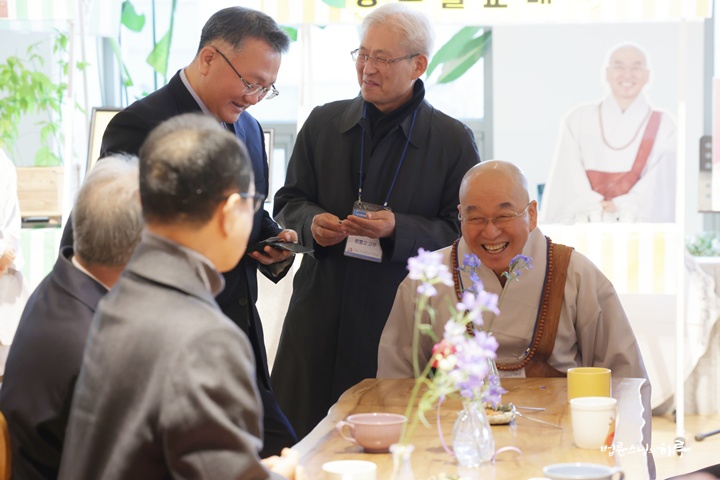
Various social figures from religious circles, political circles, and meditation organizations visited the Jungto Social and Cultural Center to participate in the second World Meditation Forum held in Korea. About 40 domestic guests visited the venue, and about 30 foreign participants attended online and offline as presenters and participants.
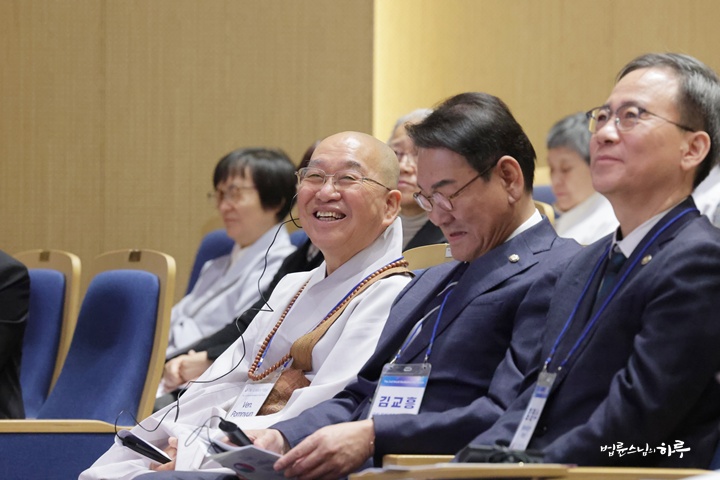
When Venerable Hyeguk (혜국 큰스님), a master of Korean Ganhwa Seon (간화선) who would give the keynote presentation at today’s event, arrived at the venue, Sunim escorted Venerable Hyeguk to the tea room to pay respects. Sunim also warmly welcomed former Prime Minister Chung Sye-kyun (정 세균), First Vice Minister of Culture, Sports and Tourism Kim Young-soo (김 영수) , and Chairman of the National Assembly’s Culture, Sports and Tourism Committee Kim Kyo-heung (김 교흥) , who came to deliver congratulatory remarks. Many senior leaders from various religious communities also attended. Sunim guided domestic and international guests to the tea room so they could also greet Venerable Hyeguk.
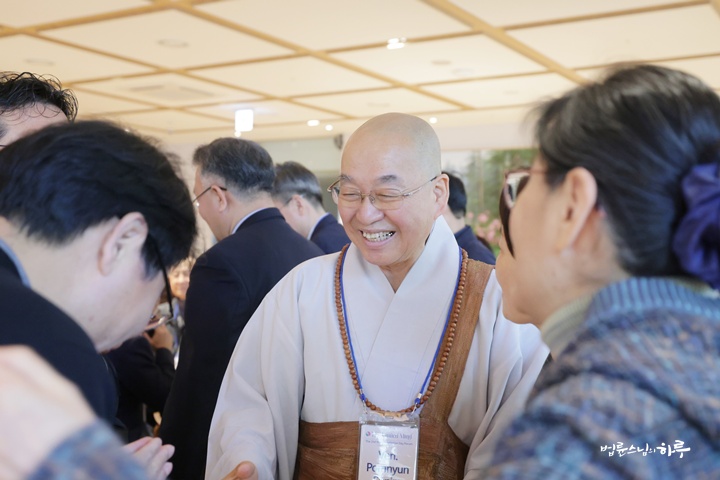
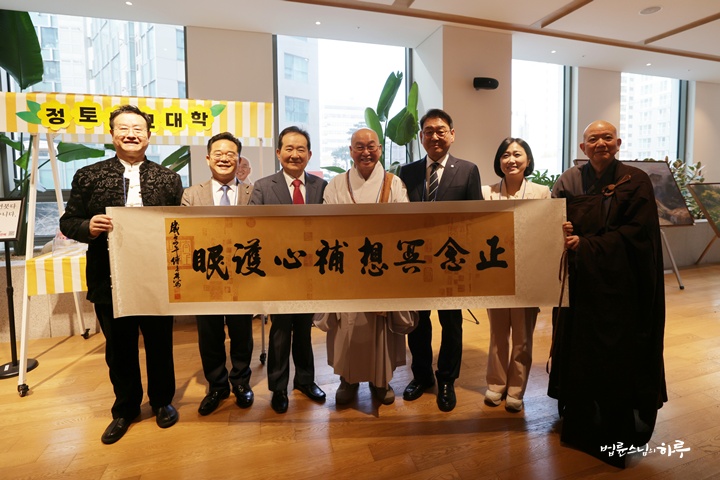
One of the foreign participants brought a calligraphy work as a gift, and while viewing this calligraphy work, commemorative photos were taken with domestic and international visitors who came to the venue.
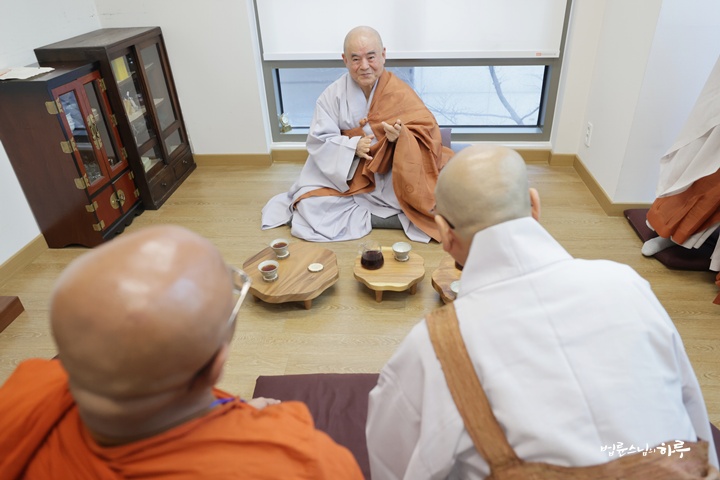
After Sunim shared tea and greetings with the domestic and international distinguished guests who visited the venue, it was soon time for the event to begin. Sunim and the participants moved to the underground auditorium where the event was being held.
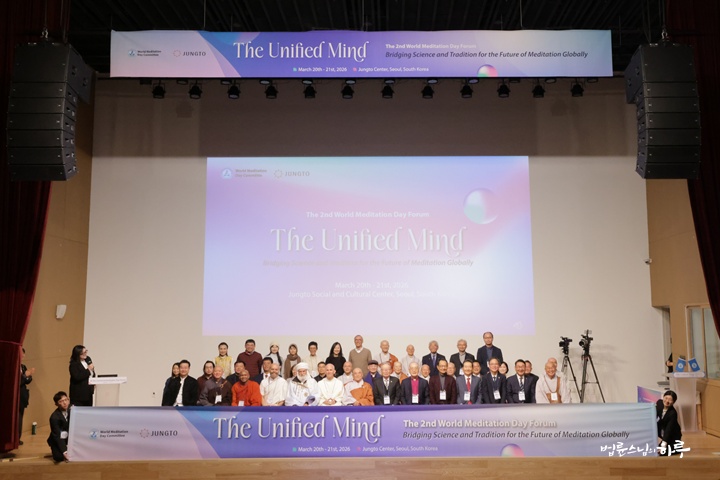
Before the event began, a commemorative photo was taken first.
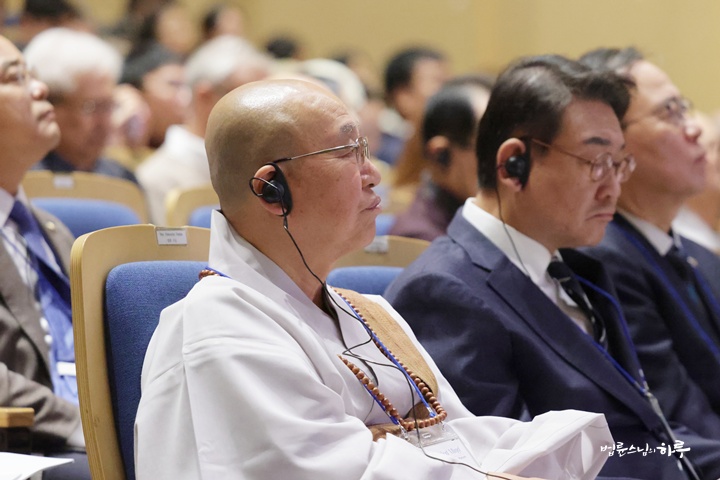
As this was an international event, it was conducted in English. An interpretation booth was set up at the entrance to the second basement floor, and volunteers took turns providing interpretation. Sunim participated in the event with an interpreter device in his ear.
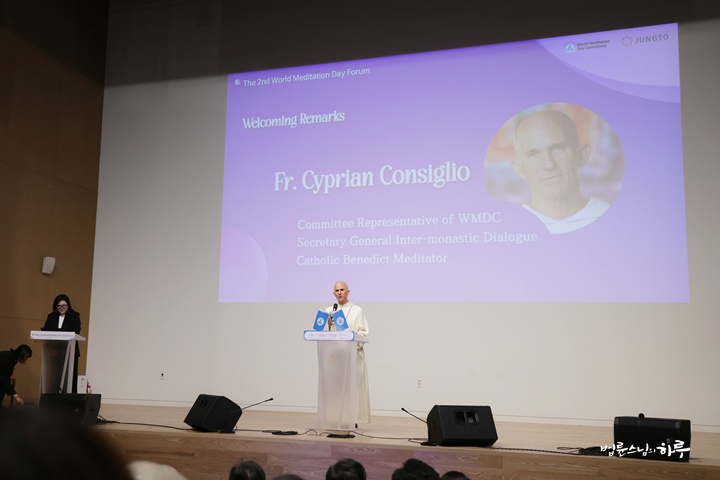
After the opening declaration, there were introductory videos about Jungto Society and WMDC (World Meditation Day Committee). Following this, Father Cyprian Consiglio, representative of WMDC who proposed the establishment of ‘World Meditation Day’ to the United Nations (UN), gave the opening remarks.
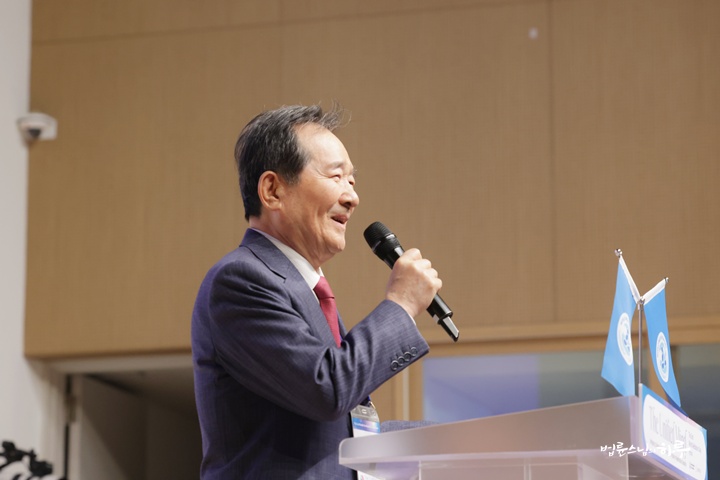
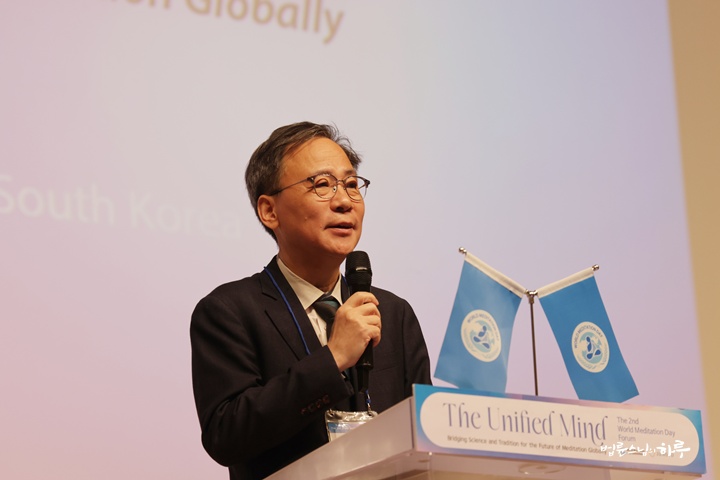
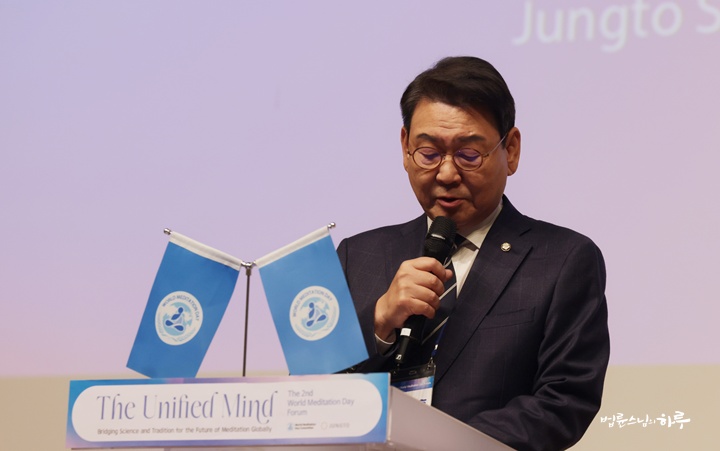
Three congratulatory speeches were given.
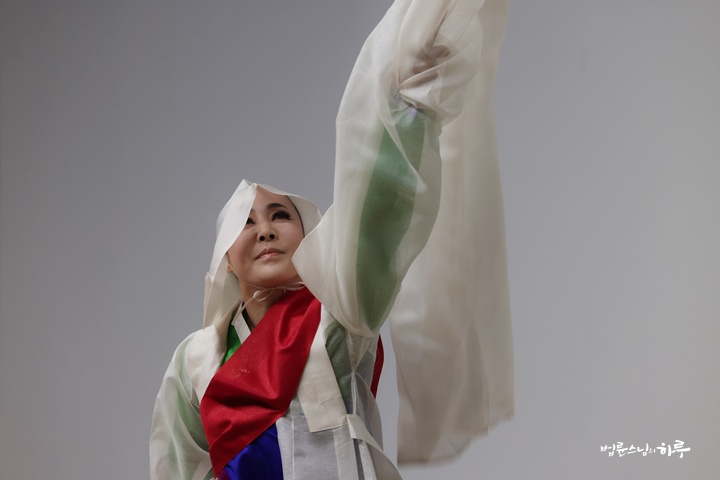
This was followed by a congratulatory performance of ‘Seungmu (승무),’ a traditional Korean dance.
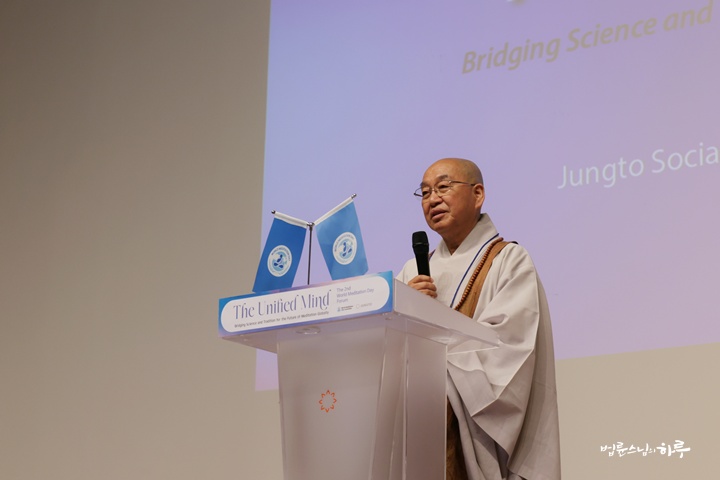
Afterwards, Sunim gave welcoming remarks. He explained the background of how Jungto Society came to prepare the World Meditation Forum, what makes it different from other events, and introduced Venerable Hyeguk who came as today’s keynote speaker.
“Today is the day of the 2nd World Meditation Forum commemorating the establishment of World Meditation Day. I sincerely thank all the domestic and international distinguished guests who have participated in this meaningful occasion. I am especially grateful to the presenters who have come from abroad at their own expense to give presentations. In particular, Venerable Hyeguk, who will give today’s keynote presentation (기조 발제)
, rarely leaves the temple grounds, but he has attended at our earnest request, for which I express my deep gratitude once again. I also thank the senior leaders from various religious communities for joining us. When I received the proposal to hold the 2nd World Meditation Forum in Korea, I hesitated at first. Organizing such an event requires a lot of money. The world is noisy because of money, isn’t it? We want to meditate to overcome this noise, but we need money again. To hold the World Meditation Forum, we need money, so we have to go to the government or corporations to ask for support. I became a monk to avoid being bound by money, but as a monk, I have to do such things again, which is a great contradiction. So I reluctantly suggested that the Jogye Order host this forum. However, the Order said it would be difficult to do it this time due to the short notice. So I said that if I were to do it, I would hold the event in a special way.World Meditation Forum Prepared Through Talent Donation and Volunteering
Let’s try to hold this event without money. All presenters must come at their own expense. Since we’re doing good work to promote meditation, instead of being paid to present, everyone should bear a portion of the costs themselves. Let’s use existing facilities and prepare and operate the event entirely through volunteering by people with good intentions. So today’s congratulatory performance, the traditional Korean dance Seungmu, was also performed through talent donation. To ensure we don’t say we can’t hold events due to lack of money, we prepared this meditation forum simply to create such an example.The Reason for Meditation
The world is currently suffering from the climate crisis, wars, and wealth inequality. If we look closely, the root causes are all greed to possess more, anger from believing one’s own views are right, and ignorance – these three poisons of greed, anger, and ignorance. I believe we meditate to let go of our greed, ignorance, and anger even a little, to restore relationships between people from competitive win-lose dynamics to relationships of good friends who help each other, and to restore our relationship with nature not as an object of conquest but as the foundation of our lives with which we coexist. However, we keep trying to meditate through thinking. This is closer to contemplation than meditation. So I thought we should be interested in meditation that rests our thoughts, that puts down our thinking. That’s why I especially requested Venerable Hyeguk to give today’s keynote presentation.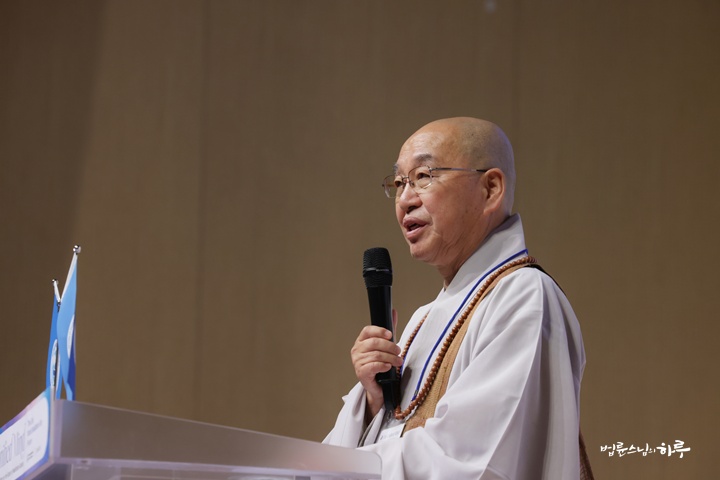
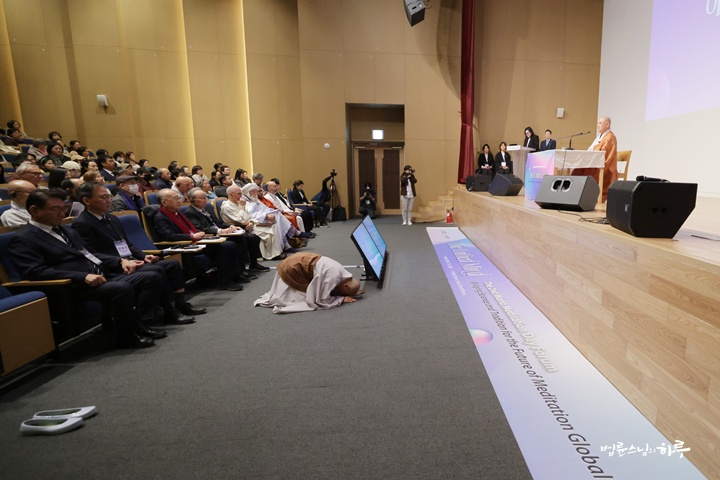
Following this, Venerable Hyeguk gave the keynote presentation. Venerable Hyeguk came up to the stage and took his seat at the central table. Before the Dharma talk, during meditation, Sunim quietly went down from the stage and approached Venerable Hyeguk, offering three prostrations to request the teaching.
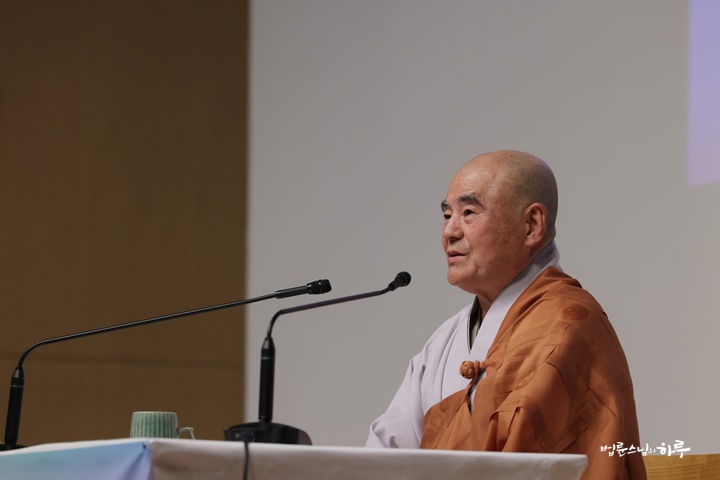
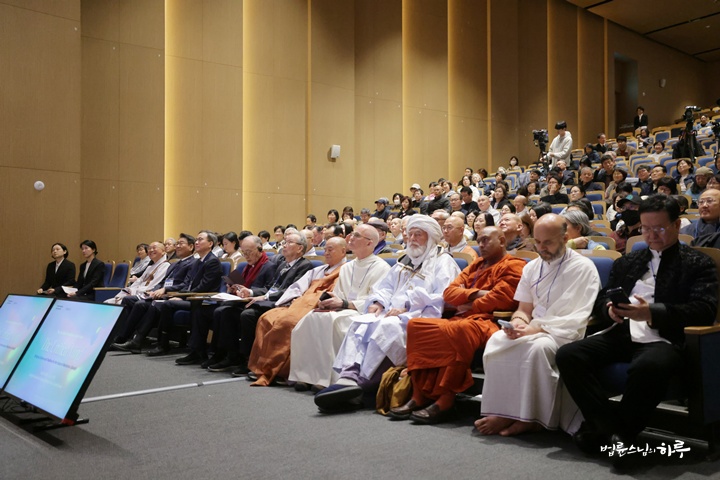
After a long meditation, Venerable Hyeguk briefly explained about Ganhwaseon (간화선). The audience listened earnestly to Venerable Hyeguk’s Dharma talk.
“I offer my respect with folded hands to all the meditation teachers who, through meditation, help people see the unified mind and work for the happiness of all people. In the Korean traditional practice method, the principle of existence in this world is originally the unified mind. The world is completely peaceful. However, the conflicts that turn this peaceful world into a battlefield and cause precious lives to be lost even at this moment exist not only in the outside world but within our own minds. Yet, because people try to change the peaceful world rather than changing our minds where desires arise, we cannot escape from the world’s conflicts. In Korean traditional Ganhwaseon, we first ask whether greed and desire have substance or not.”
After Venerable Hyeguk’s Dharma talk, the first session began.
When the morning session ended, Sunim moved to the basement cafeteria with the participants for lunch.
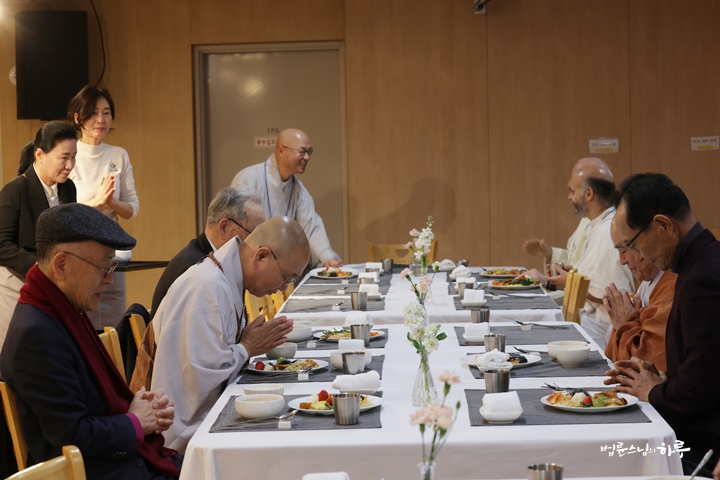
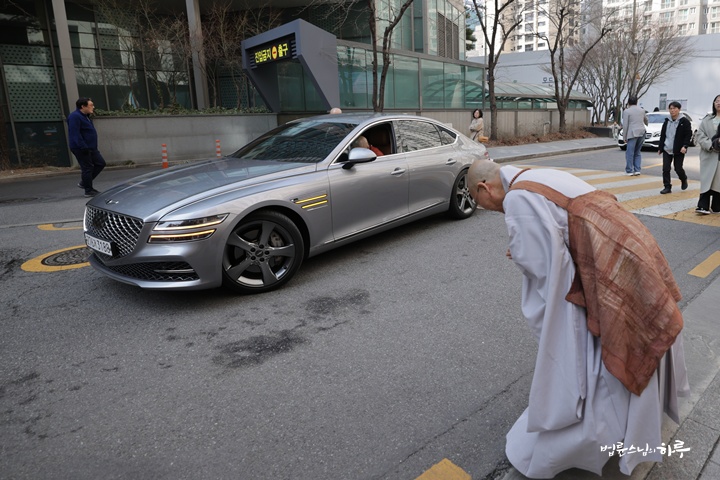
After the meal, Sunim saw off Venerable Hyeguk (혜국 스님) and had tea and conversation with religious leaders in the second-floor lounge.
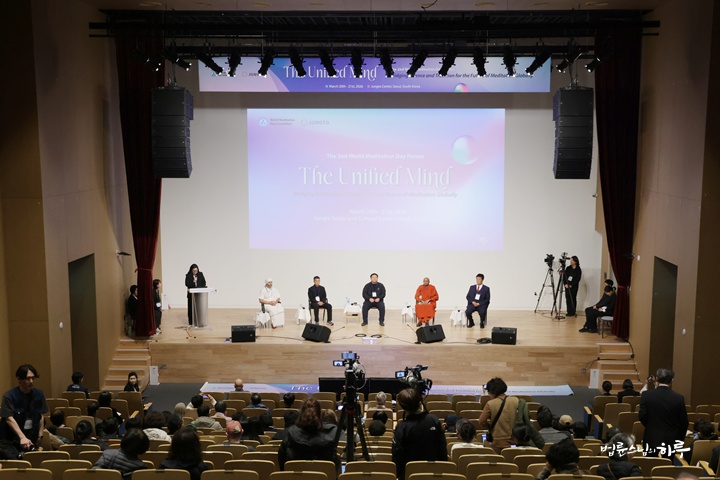
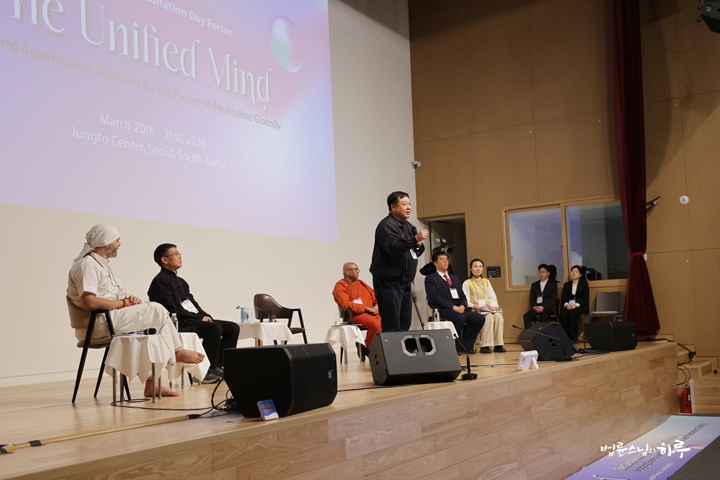
The afternoon session began at 1:30 PM. With INEB Secretary-General Somboon Chungprampree as the moderator, presentations on various meditation traditions were given by four speakers. The moderator suggested doing some simple stretching to help the audience focus on the presentations, and the audience stood up and massaged each other’s shoulders.
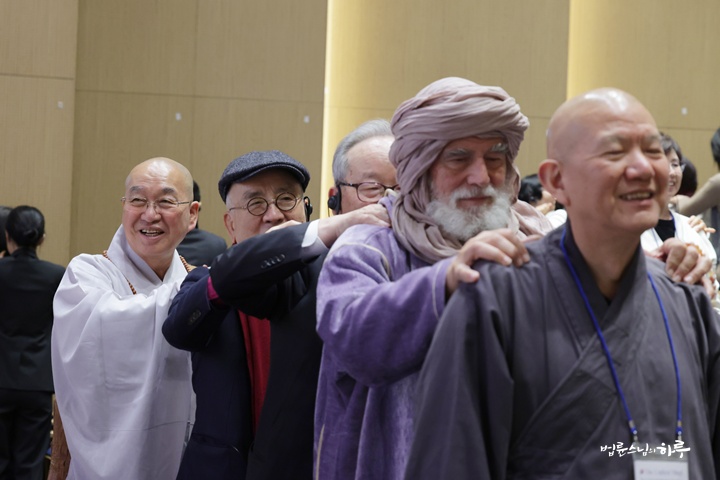
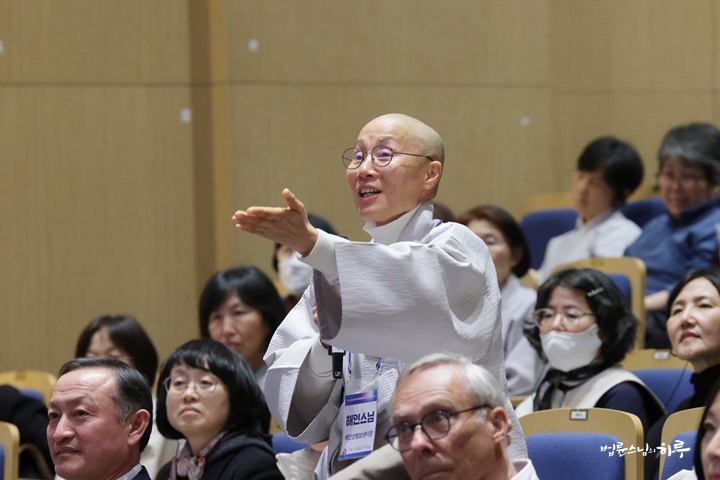
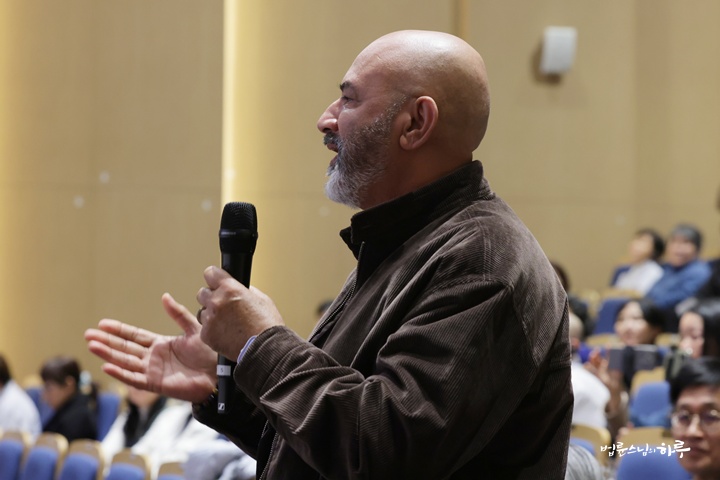
The session resumed, and during the Q&A time, questions were actively exchanged.
After the break, the second afternoon session featured online presentations on various meditation practices from the Himalayas, Japan, and Sri Lanka.
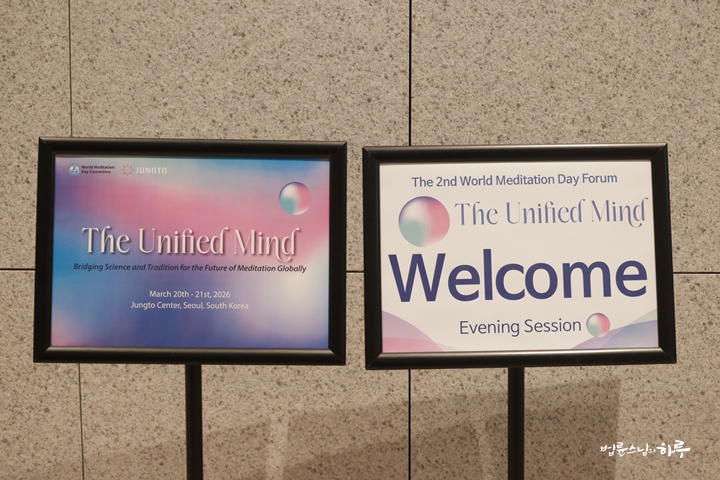
After all the afternoon sessions concluded, there was time for dinner. Following dinner, Sunim headed to the Dharma Hall on the third floor.
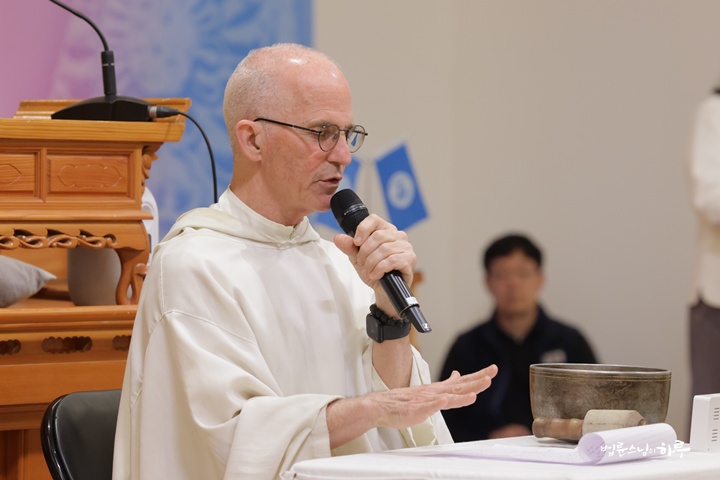
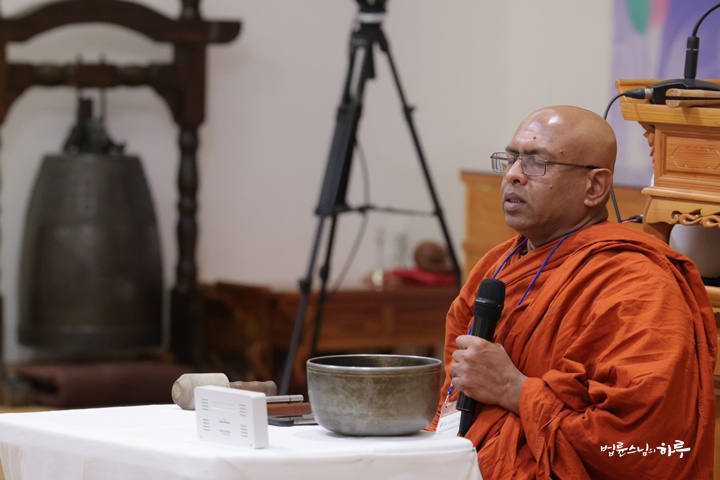
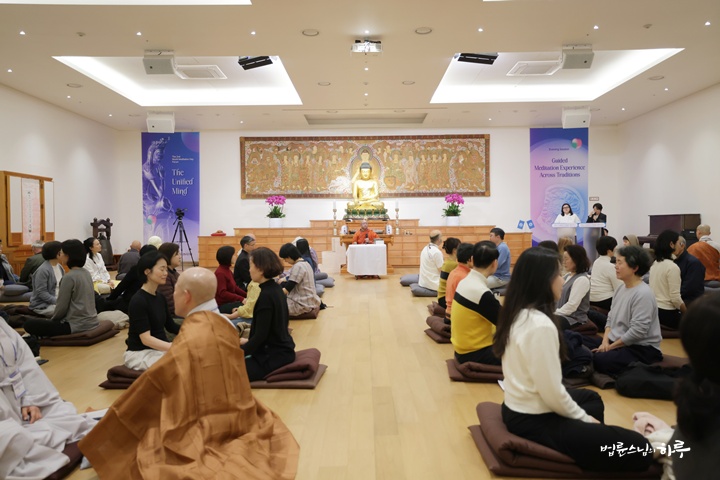
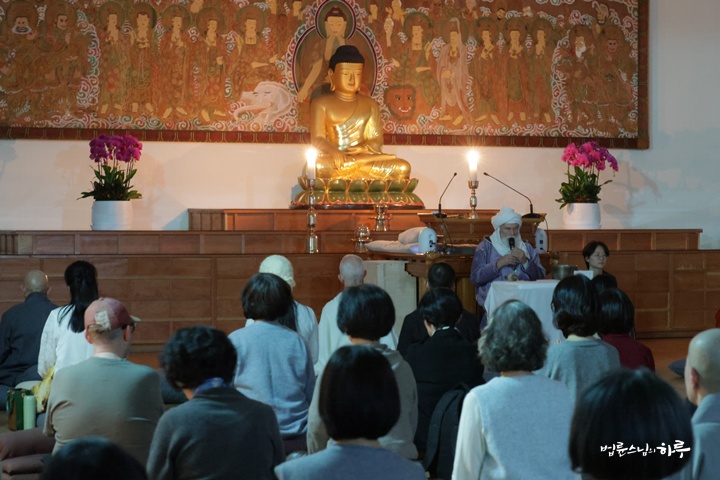
Starting at 7 PM, there was a program where four meditation teachers guided meditation according to their respective religious traditions and experienced it together with the audience.
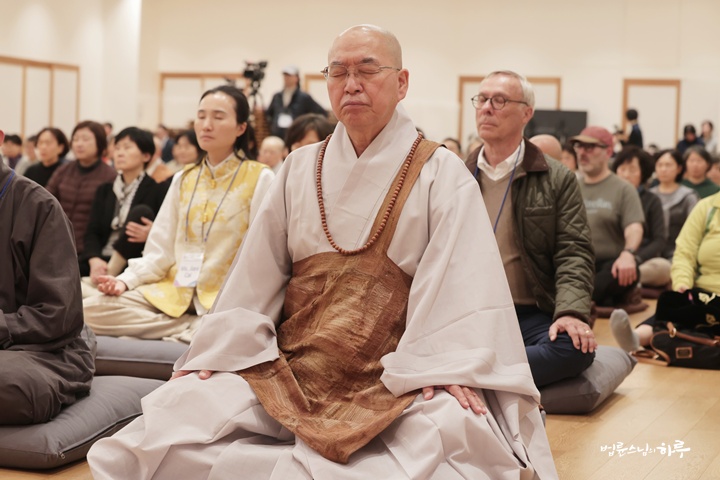
Sunim also sat in the front row, listening to explanations about various meditation methods and experiencing them firsthand.
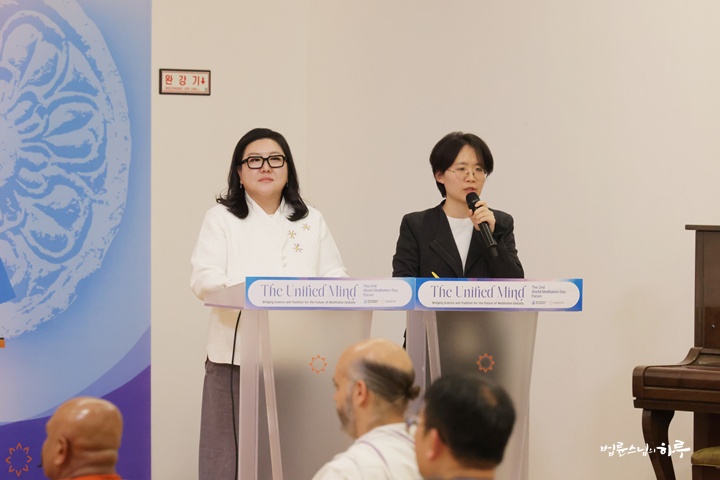
The final program was a global simultaneous meditation. Following the ‘World Meditation Day’ on the winter solstice (동짓날) last December, this was the second 15-minute meditation with Sunim held in the Dharma Hall to commemorate today’s World Meditation Forum.
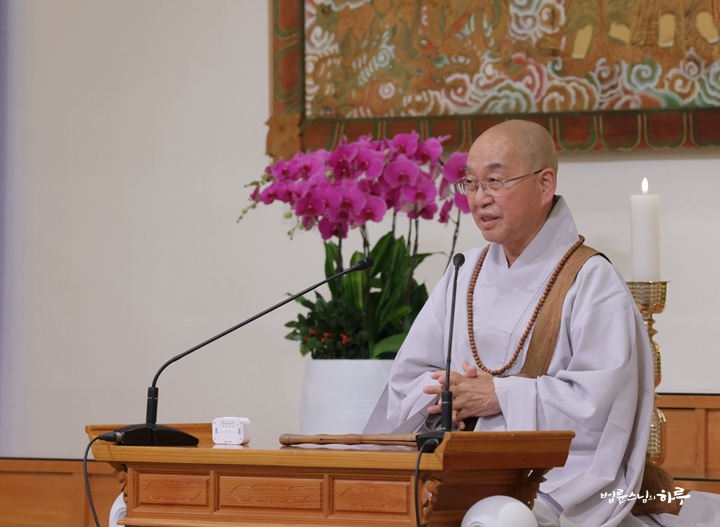
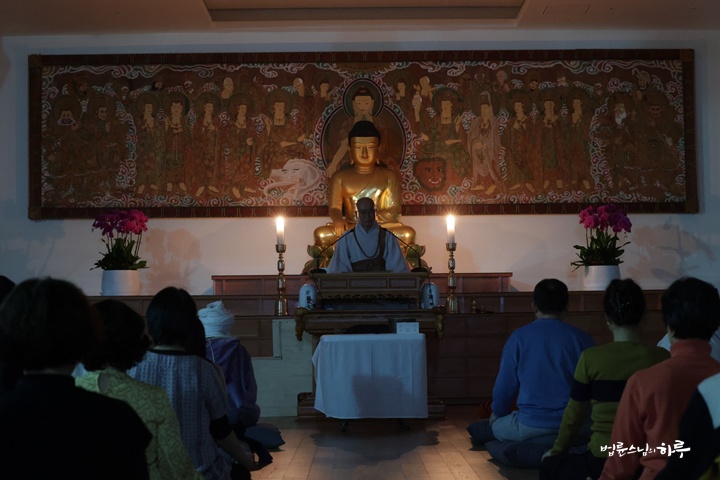
“Tak! Tak! Tak!”
As Sunim struck the bamboo clapper (죽비) three times, the lights in the Dharma hall went out and a 15-minute meditation began. The Dharma hall was left in darkness and silence.
“Tak! Tak! Tak!”
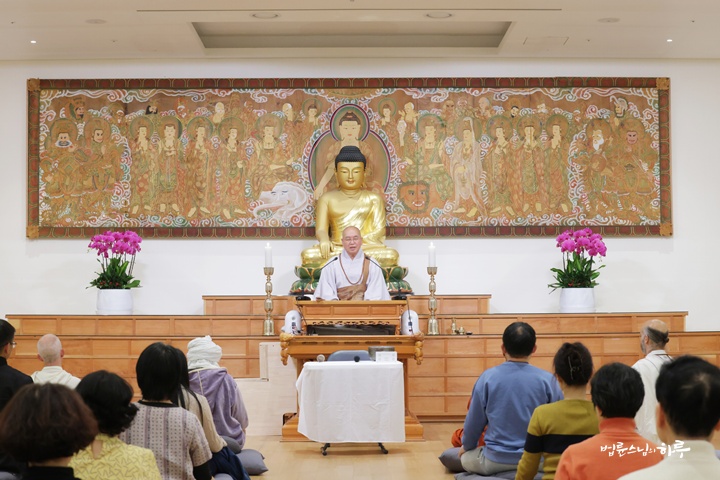
At the three strikes of the bamboo clapper signaling the end of meditation, the lights in the Dharma hall (설법전) came back on.
Sunim gave his closing remarks.
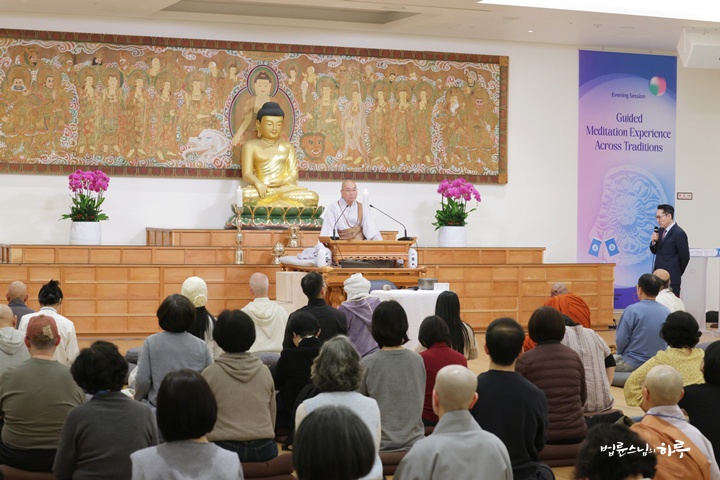
Giving Meaning Is Something I Do
‘Making it my mission to spread the Buddha’s teachings’ is something I decided. I was not born with such a destiny. However, my teacher gave me this meaning. He said, “You were born into this world to spread the Buddha’s Dharma.” He gave me this meaning. That’s why he named me Beopryun, Dharma Chakra. So is this destiny? No, it isn’t. I simply live with this meaning. If living this way becomes difficult, I can stop. The same applies when you live your life. If it’s difficult, don’t do it. Then there will be no difficulties in life. If smoking is difficult, don’t smoke. But you say smoking is difficult and ask how you can quit. Let me say it again: we have no problems. This doesn’t mean you should just sit still. You create work for yourself and do it. Feel free to create as much as you want. But don’t complain that it’s difficult. If it’s hard, don’t do it. Yet you do things because you want to, then cry out that it’s difficult. Today, you have received teachings from many wise teachers. In trying to convey these teachings to each other, we end up speaking a lot. However, if we return to the state without words, the state before thoughts arise, we have nothing to do. I hope you will experience this as well.”After finishing the meditation experience, Sunim returned to the office to wrap up work and concluded the day’s activities.
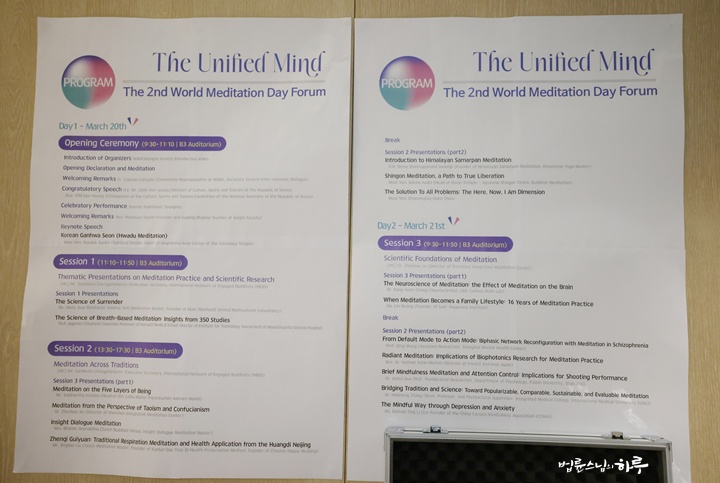
Tomorrow is the second day of the World Meditation Forum. Sunim will participate in programs all day at the Jungto Social and Cultural Center and meet with officials.