How Can We Let Go of Attachment in Work and Relationships?
Mar 18, 2026. Weekly Dharma Assembly, Spring Farming Kick-off Ceremony, Garden Cultivation
Mar 18, 2026. Weekly Dharma Assembly, Spring Farming Kick-off Ceremony, Garden Cultivation
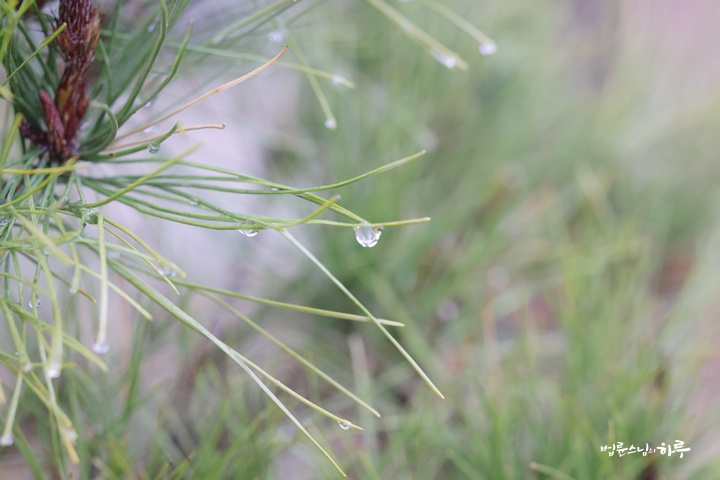
Good morning! Dawn has broken at Dubuk Jungto Retreat Centern (두북수련원). A gentle spring rain was falling.
Today at 10 AM, there is a live broadcast of the Weekly Dharma Assembly (수행법회) for Jungto Society members.
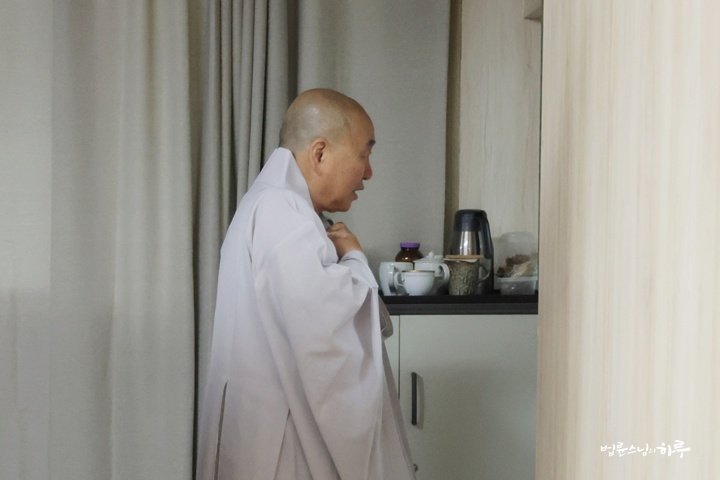
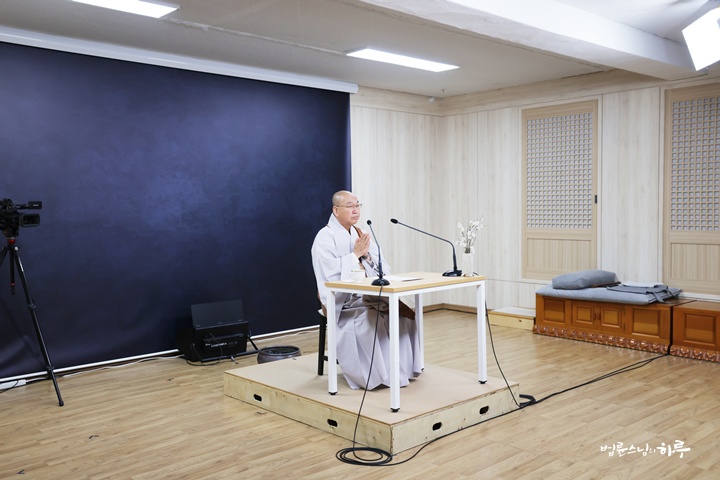
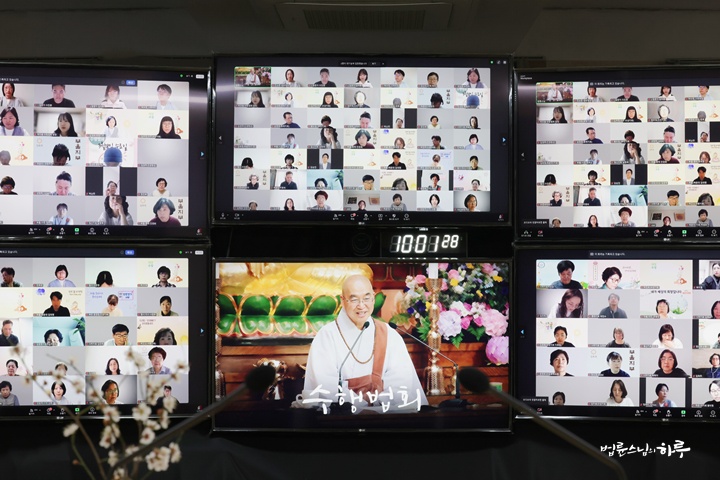
Sunim entered the broadcasting room at Dubuk Jungto Retreat Center just in time for the live broadcast. The Weekly Dharma Assembly began with the Three Refuges (삼귀의) and the chanting of the Heart Sutra (반야심경). Jungto practitioners from across the country attended the assembly via online broadcast from their personal Dharma halls. After watching a video about weekly news from Jungto practitioners, the assembly members requested a Dharma talk from Sunim with three prostrations.
Sunim provided detailed information about the World Meditation Forum events scheduled for March 20th and 21st this week.
)
. Twenty-five religious leaders from various faiths including Buddhism, Catholicism, Islam, and Hinduism will participate from abroad, along with domestic and international religious practitioners and meditation teachers. There will be sessions introducing meditation methods from different religions, as well as presentations of scientific research on the effects of meditation on body and mind.Designation of World Meditation Day
The reason we are holding the World Meditation Day commemorative event and hosting the meditation forum is to spread meditation more widely. We have many thoughts and desires. When we let go of these things, we can find true happiness. If we can become happy by letting go of greed, thoughts, and anger, then meditation is helpful regardless of any religion or form. World Meditation Day is December 21st, the winter solstice (동짓날 : 冬至). The winter solstice is the day with the shortest daylight hours of the year. From the perspective that sunlight is at its minimum, it might evoke a sense of despair, but from the perspective that days grow longer after the winter solstice and daylight hours increase, it can also evoke hope. That’s why the United Nations designated the winter solstice as ‘World Meditation Day.’ It was decided to hold seminars, symposiums, and forums on meditation around the world at each seasonal turning point – the spring equinox (춘분 : 春分), summer solstice (하지 : 夏至), and autumn equinox (추분 : 秋分). Following last year’s event in Switzerland, Korea will host the second commemorative forum at this year’s spring equinox. The event is hosted by the World Meditation Day Commemorative Committee, organized by Jungto Society, and will be held at the Jungto Social and Cultural Center.Hosting the World Meditation Forum
On Friday morning, the 20th, there will be an opening ceremony, and Venerable Hyeguk (혜국 큰스님), a great Seon master (선승 : 禪僧)
representing Korean Buddhism, will deliver the keynote presentation on Seon, Korea’s form of meditation. This will be followed by presentations from Islam and the scientific community. After lunch, there will be presentations from Theravada Buddhism, Tibetan Buddhism, and Christianity in the afternoon. In the evening, there will be a program in the Dharma hall where participants can learn about and directly experience various types of meditation. On Saturday morning, the 21st, experts including scientists and doctors will present scientifically verified effects of meditation. In the afternoon, though not open to the public, the forum presenters will gather for a meeting and wrap-up session. While the event will be broadcast online via YouTube, as this is an international forum, everything will be conducted in English without interpretation online. Since AI performance is excellent these days, those attending online are encouraged to install and use AI translation apps on their phones. Those in the metropolitan area are encouraged to register and attend the event in person. Simultaneous interpretation will be provided on-site. At the end of March, new semesters will begin for the Jungto Buddhism Course and Jungto Sutra Course (정토 경전대학). Registration should be nearly complete by now. I’d like to thank the leading members who must be busy preparing for enrollment and classes. Since a new 1000-Day Practice has begun and new leadership has started, there will likely be many training sessions and educational programs this month. The new leadership needs to fully understand the goals and methods for operating Jungto Society to ensure smooth operations. You’ll all be busy with various tasks, but I ask that you willingly accept and embrace them all.”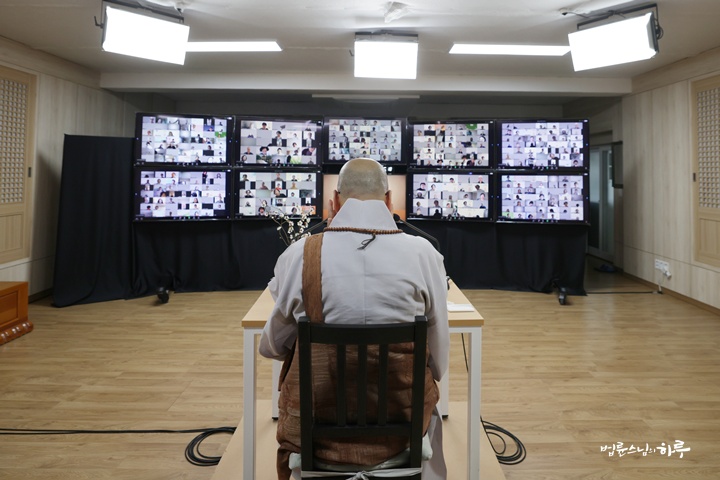
Sunim then explained about the emergency relief activities in Sri Lanka and Indonesia, which were severely damaged by cyclones.
“Last week, we surveyed the flood-affected areas in Sri Lanka and provided support. Next week, we plan to continue our support activities in the Aceh region of Indonesia. Since about three months have passed since the disasters occurred, it seems we should now wrap up the emergency support for food and daily necessities. Going forward, we will need to continue with recovery projects such as roads, bridges, irrigation channels, and housing.”Through the Weekly Dharma Assembly, Sunim shared news about spring at Dubuk Jungto Retreat Center, the World Meditation Forum event to be held at Jungto Social and Cultural Center, and emergency relief activities in Sri Lanka and Indonesia. Most importantly, since today marks the third day since the start of the Second 1000-Day Practice, he once again urged Jungto practitioners to continue their diligent practice with the Myeongshimmun (명심문 ,Words to Remember): “I am the hope of the world.”
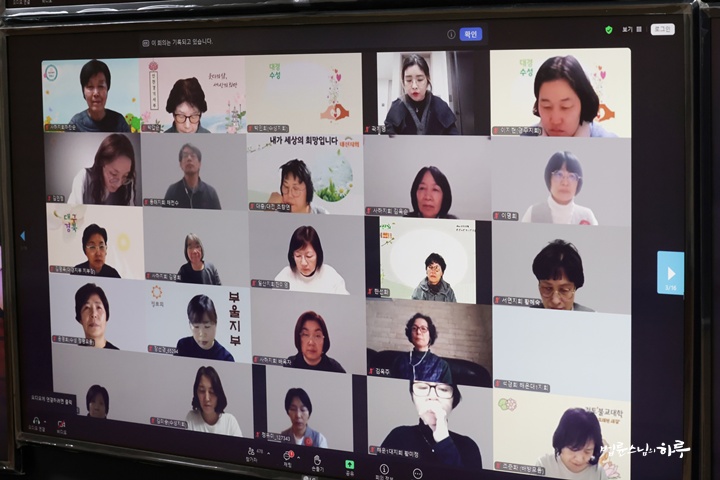
Following this, Sunim held a Dharma Q&A session with Jungto members. He had conversations with two pre-registered questioners and one on-site questioner.
How Can I Let Go of Attachment?
“I have a mindset that I must do well in work and relationships. I’m not satisfied with my current self and have a strong desire to change. I also have an impatient personality and want to get results quickly. Being attached to these things makes life very difficult. I’ve realized that the more I try to obtain good things, the more they become poison later. Even though I understand this intellectually, I can’t let go of attachment in reality. How can I drop this attachment?”
“Let’s say there’s food here that smells good, looks good, and tastes delicious. And I’m very hungry right now. Wouldn’t it be natural to want to eat it?”“Yes.”
“But what if that food contains poison?”“I wouldn’t eat it.”
“In this case, if someone asks ‘How can I not eat it?’ what would you answer?”“I think you would just tell them not to eat it.”
“If someone doesn’t know that attachment is bad, I would explain ‘Attachment is bad for these reasons.’ In other words, if they don’t know there’s poison in the food, I would tell them there’s poison in it. But for someone who knows there’s poison and still wants to eat it, there’s no way to help them from the outside. If they want to eat it, they can eat it and die, or even though they really want to eat it, since we eat food to live, not to die, they can choose not to eat it. They have to decide for themselves. The question ‘How do I not eat it?’ doesn’t even make sense as a question. Since you’ll die if you eat it, you just don’t eat it. If attachment feels good, then just be attached. If you want to eat delicious food with poison, then eat it and accept the consequence of death. Similarly, accept the suffering that comes with attachment. There’s no need to tell you not to do it. ‘If you want to do it, do it. And accept the consequences that follow.’ If you say ‘I don’t want the consequences. I don’t want to die,’ then I would tell you not to eat it. Not eating isn’t a matter of commands or ethics and morality – since you say you don’t want to die, then don’t eat it. If you don’t want the consequences that come with attachment, then you have to let go of attachment. What else can you do? There’s a red hot fireball, and you want it so you grab it. Then your hand gets hot and you say ‘It’s hot! It’s hot!’ So I tell you to let go. But you ask ‘How do I let go?’ You’re not asking because you don’t know how. You’re not letting go because your desire to have it is strong. So I say ‘Keep it then. But your hand will burn.’ Then you say ‘I don’t want my hand to burn.’ So I tell you to let go. You ask again ‘How do I let go?’ I just say let go. If thinking is beneficial to you, then think. If thinking too much is harmful to you, then don’t think. If being attached is beneficial to you, then be attached. If being attached is harmful to you, then don’t be attached. The question ‘How do I not be attached?’ isn’t a matter of method. When you’re doing something, it’s a matter of method. When climbing stairs, ‘How do I climb?’ is a matter of method. But if climbing stairs is harmful to me and I’m told not to climb, what method do I need for not climbing? Why do I need a method for not going? I just don’t go. You need a method when you’re going. When smoking cigarettes, you need a method for how to smoke. But ‘How do I not smoke cigarettes?’ doesn’t require a method. So either do what you want and accept the consequences, or if you expect the results to be bad, then no matter how much you want to do it, don’t do it. You don’t need a method for not doing something. You need a method when you’re trying to do something. If you eat poisoned food and get taken to the hospital, next time you won’t eat it regardless of the smell. No matter how good the smell and taste, you won’t eat it because it’s harmful. I get diarrhea when I eat ice cream, so no matter how good the ice cream someone brings and says ‘Sunim, please have some,’ I don’t eat it. There’s no need to get diarrhea from eating one sweet bite. But sometimes people keep bringing ice cream and asking me to try just a little. Sometimes I eat it then. But I eat it prepared to go to the bathroom. So the question ‘How do I not eat it?’ is unnecessary. You just don’t eat it. ‘How do I eat it?’ requires a method. You need to get money, find an ice cream shop, and so on – methods are needed. But not eating requires no method at all. This is because it’s not a matter of method. Doing something requires a method, not doing something requires no method. If you have more questions, please ask.”“I don’t have any particular questions coming to mind right now. I think I just need to practice a lot.”
“Yes. If it doesn’t work well, you need practice. If attachment is harmful to me, then I shouldn’t do it. If smoking is bad for health, then don’t smoke. The question ‘How do I not smoke?’ doesn’t make sense. You just don’t do it. If you still want to smoke, you can smoke. And accept the consequence of poor health. If you want to do it, do it and accept the consequences. If you don’t want the consequences, then don’t do it. So desire is like wanting to eat poisoned food but not wanting to die, wanting to do something but not wanting the consequences. That doesn’t exist.”“Yes.”
Questions continued to follow.
My brother in his 30s with intellectual disability level 3 has obsessive symptoms and risks of self-harm and harming others, so the doctor recommended emergency hospitalization. My brother hates being hospitalized, and my divorced mother is heartbroken about having to report and hospitalize him with her own hands. Should I persuade my mother to have my brother urgently hospitalized, or is it okay to just watch as my mother suggests?
My 12-year-old son has anxiety, obsession, and tics but good concentration. He aims to become a professional gamer and practices gaming. Watching my son get angry and frustrated when gaming practice doesn’t go well, I prayed ‘My child has no problems.’ Can I continue praying like this?
The Weekly Dharma Assembly concluded with the Four Great Vows (사홍서원).
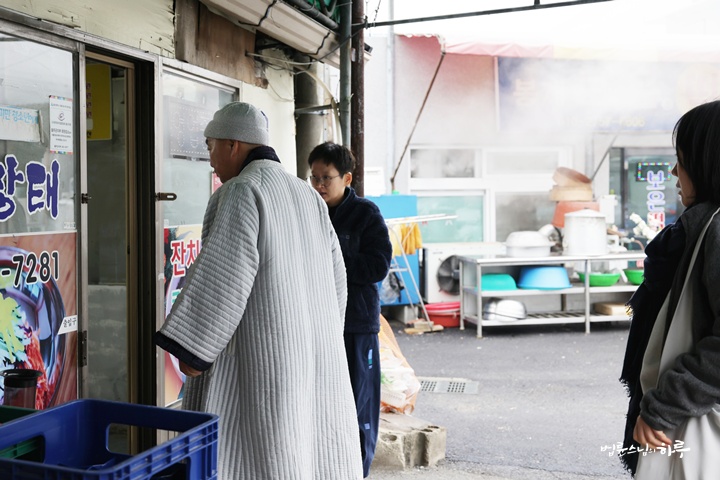
After the Weekly Dharma Assembly, Sunim had lunch of knife-cut noodles (칼국수) with the Dubuk community members. After cleaning up the tables, they held a modest spring farming kick-off ceremony.
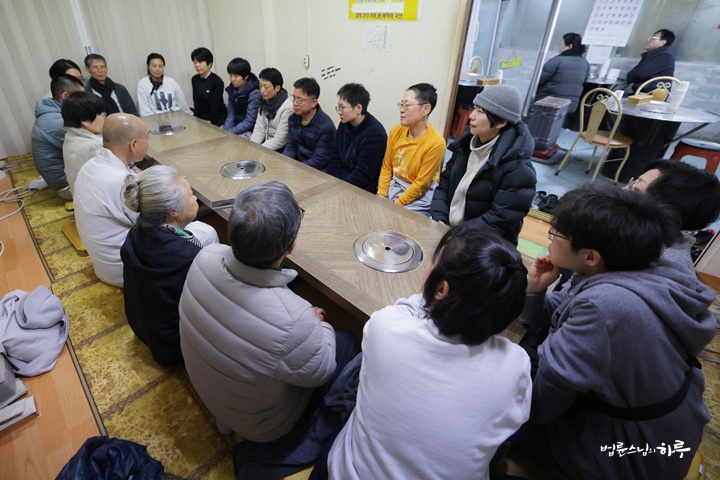
Dubuk Farm has been busy with the start of spring farming, but they welcomed new members through the “One-Year Farmer ” program, where participants live as practitioner-farmers for a year. The farming team leader at Dubuk Farm asked Sunim for a dharma talk on what mindset they should have while farming.
Farming by Practitioners, Not Just Farmers
“First, I hope you’ll farm while maintaining the perspective of ‘farming by practitioners’ by always observing your arising mind well. If you don’t look into your mind and just discriminate, get angry, get irritated, and say you’re dying, that becomes farmer’s farming, not practitioner’s farming. Second, I hope you’ll farm systematically based on the principle of self-sufficiency. If you look at all the crops that rural grandmothers grow at their individual homes, there are usually 50-60 types. We probably don’t even have 30 types. Farm diverse crops from the perspective of enabling our community to be self-sufficient and able to sustain ourselves. Even with beans, there are different types – beans for making meju (메주, fermented soybean blocks), beans for bean sprouts, and beans to add to rice. Lettuce also comes in 3-4 varieties like red lettuce, green lettuce, and romaine. As much as possible, let’s farm to be self-sufficient. Try not to buy and eat from outside, but grow and eat our own, eating only what we have – only with this perspective can we plant diverse crops. If we keep buying from the market whenever we need something, it’s difficult to diversify our farming because we don’t feel the necessity. We need to stand on the principle of self-sufficiency. Third, I hope we can farm with learning. It would be nice if the neighborhood grandmothers passing by our farm would say things like ‘Oh my, this house’s peppers turned out well. This house’s leafy vegetables grew well.’ (Audience laughs) Not having everyone pass by saying ‘Oh dear, what’s wrong with these peppers… Oh no, they still haven’t planted crops…’ (Audience laughs) We need to manage, organize, and keep things neat to avoid hearing such comments.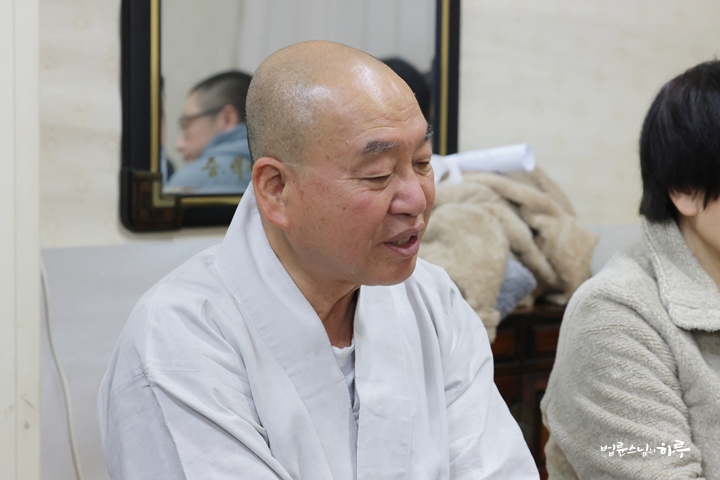
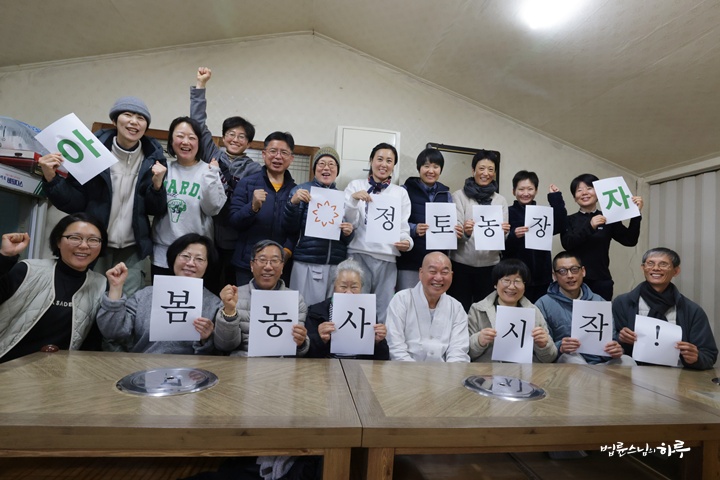
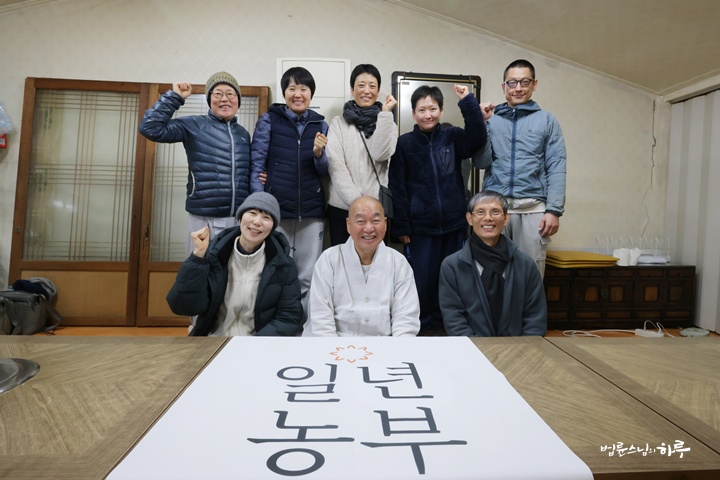
Sunim encouraged the newly formed Dubuk farming team and the year-long farmer practitioners (일년농부 행자), and took a commemorative photo with them. Afterward, Sunim had a medical appointment and visited the hospital.
After the hospital visit, Sunim immediately changed into work clothes and inspected the lettuce garden, doing necessary work. A spring rain drizzled from morning until lunch. The fabric covers had been removed from the lettuce seedlings planted yesterday so they could receive the spring rain, but the tender leaves of the lettuce seedlings touched by rainwater were now touching the plastic. Some lettuce seedlings had their roots exposed above the soil.
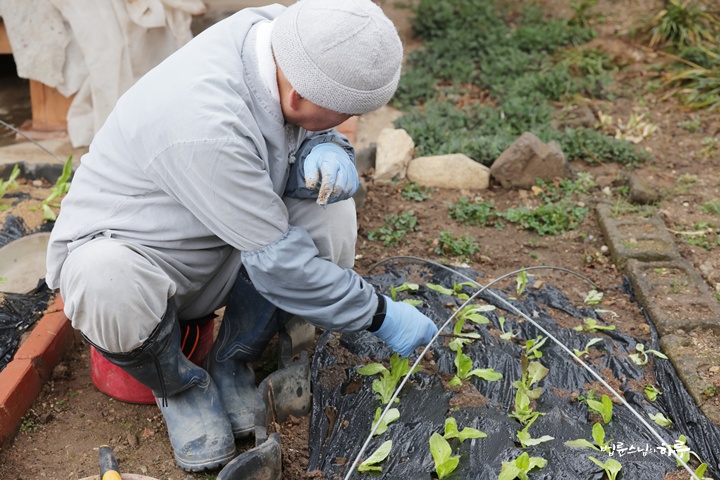
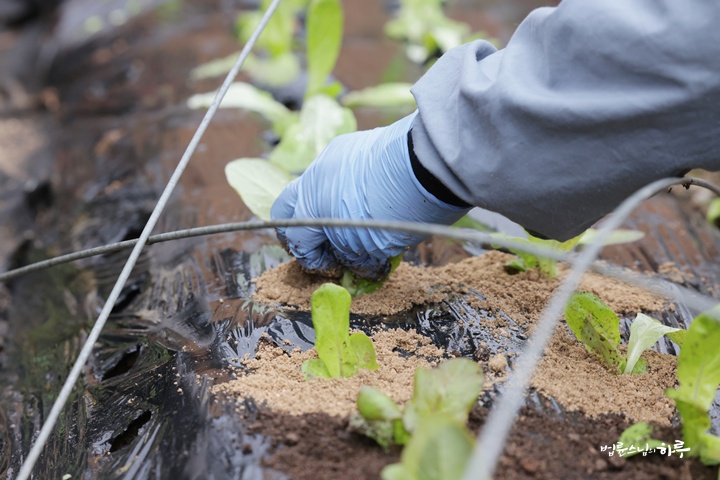
Using chopsticks, Sunim shook off the water from the lettuce seedling leaves and mounded soil around them to help the seedlings establish strong roots. When mounding the soil, he instructed everyone to be careful not to bury the growing points under the soil. Following Sunim’s instructions, when the leaves were gently touched with chopsticks, the water droplets on the lettuce fell off, and the drooping lettuce leaves came back to life.
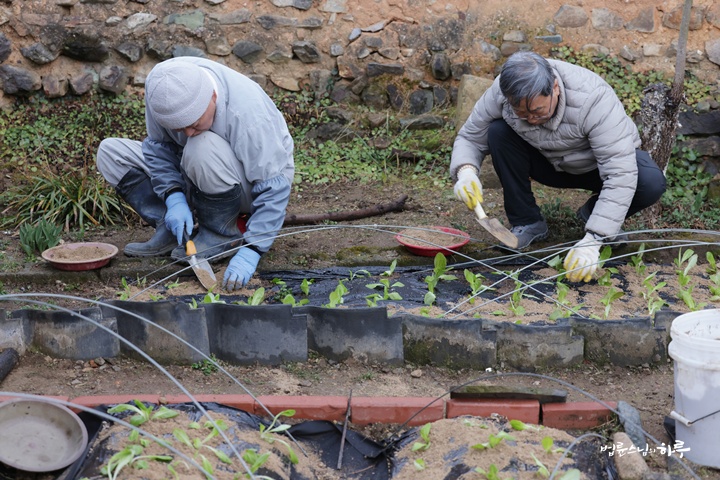
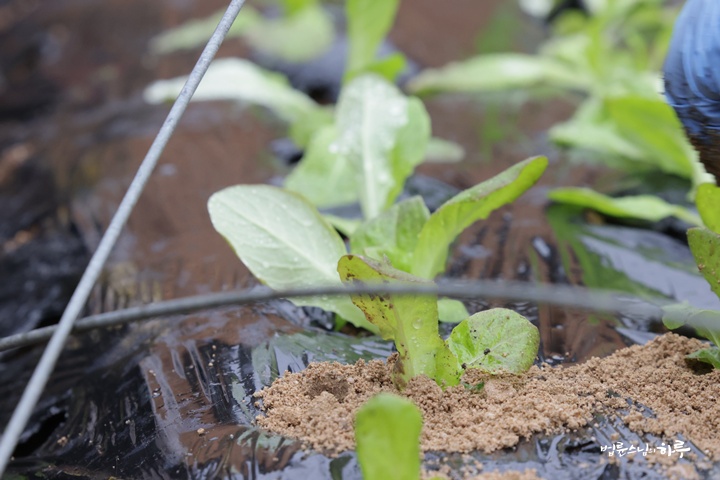
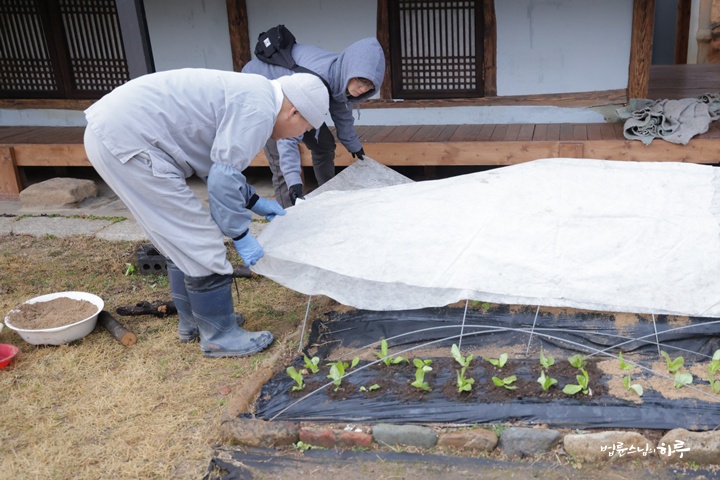
After finishing mounding the soil around the lettuce, the fabric cover was put back on and the tools were organized, concluding the afternoon work.
Sunim finished his daily activities and took a rest.
Tomorrow, he will travel to Seoul early in the morning to review preparations for the World Meditation Forum.