Hello. Today is the day of the Second 1000-Day Practice Opening Ceremony, conducted in English rather than Korean.
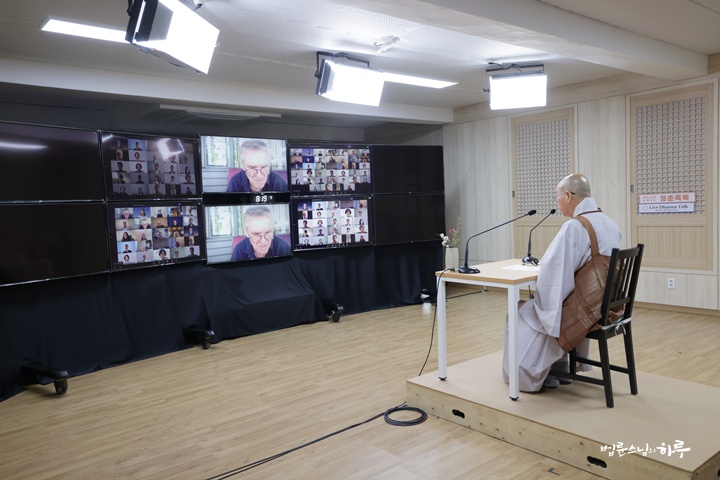
After completing the first day of morning practice for the Second 1000-Day Practice at dawn, the English opening ceremony began at 8 AM.
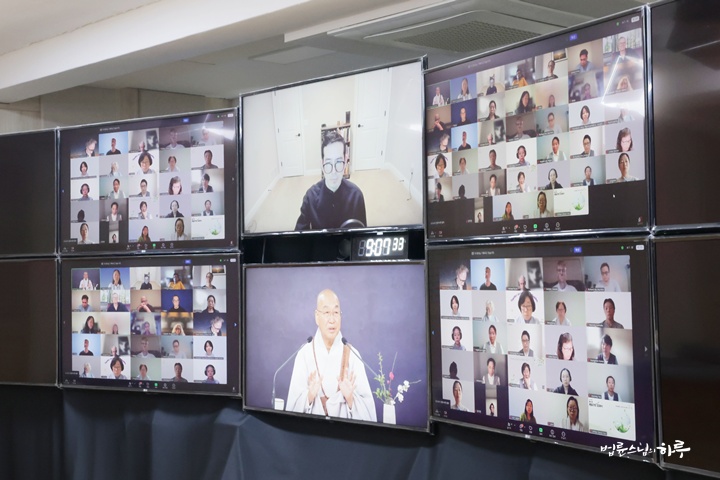
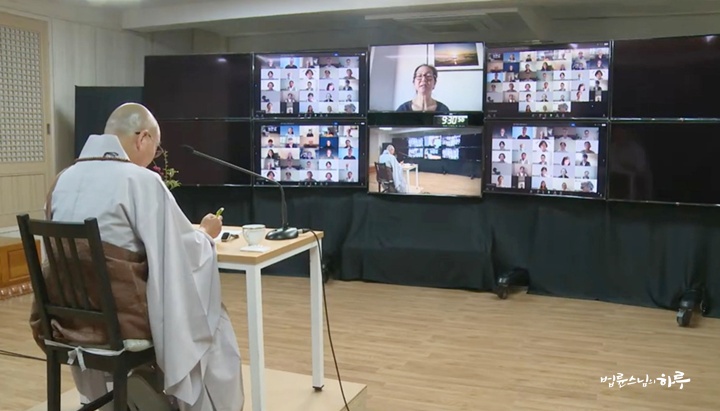
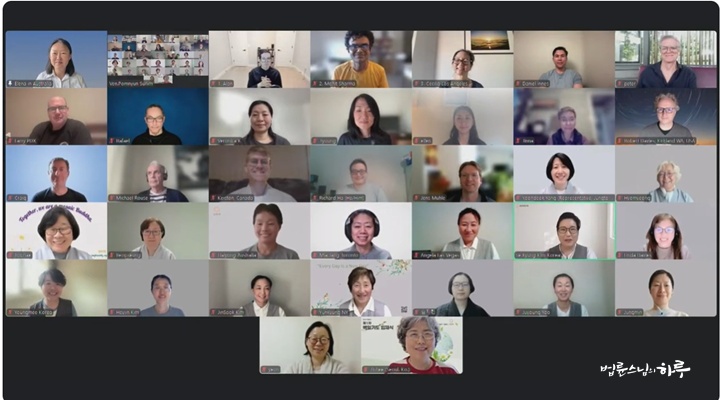
Thirty-four international 1000-Day Practice participants from around the world joined the Second 1000-Day Practice online. This opening ceremony welcomed 13 new participants who graduated from Jungto Dharma School in 10 countries, joining existing participants in the 1000-Day Practice. Jason provided consecutive interpretation.
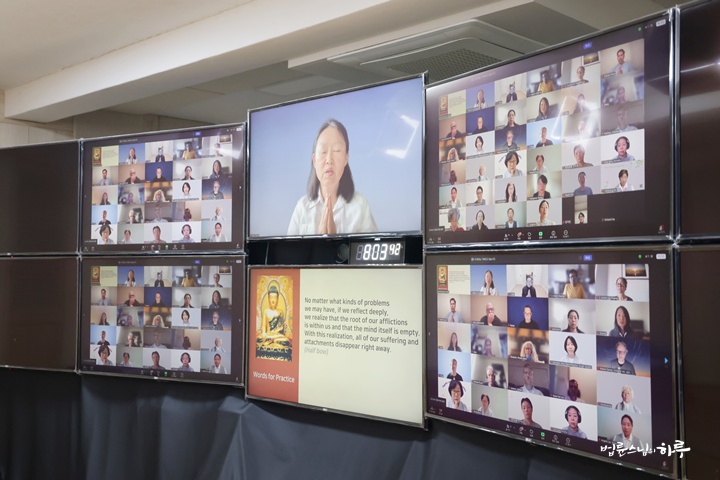
Yang Yoon-deok, the new President of Jungto Society for the Second 1000-Day Practice, delivered welcoming remarks. After introducing the participants in today’s opening ceremony, two international participants shared their practice experiences.
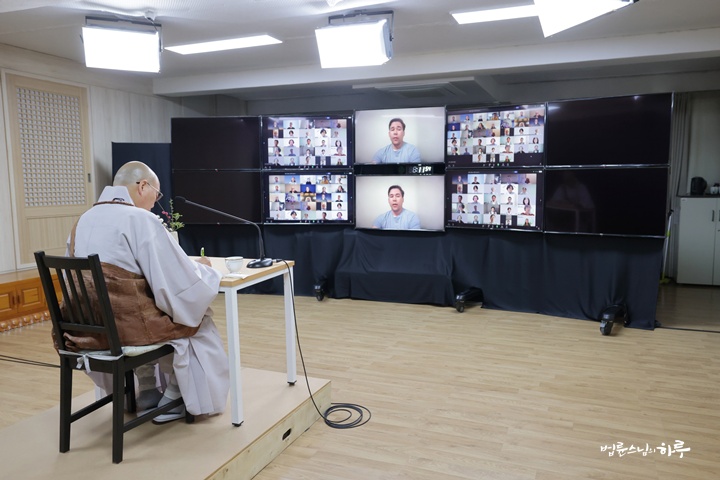
“In December 2024, my car broke down and I was injured. Many other difficulties hit me all at once. For about six months, obstacle-like events occurred in my life, limiting what I could do. Looking back, it seemed that the unfolding of these events was influenced by my actions and habits. As I practiced, it was like opening my eyes brightly after being in darkness. At first, this change was uncomfortable because I didn’t want to look closely at the reactions arising within me. Over time, I became aware of how I react when stressed. I also began to observe how I treat people. When I became aware and learned about myself, I felt overwhelmed. Rather than trying to do something, I began to observe and become aware without being swept away by thoughts or actions. Instead of reacting automatically, I began to respond more carefully and deliberately. I want to practice more awareness in daily life – listening carefully to what people say and noticing when I create unnecessary stress. It’s a process of practicing to see things more clearly. I’m trying to live with awareness. While there are still moments when I waver in life, through awareness I can navigate them better than before. Thank you.”
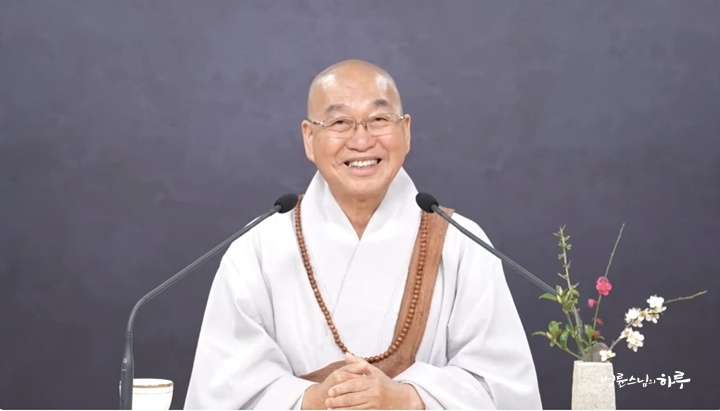
After the sharing, the international participants requested Sunim’s opening Dharma talk with three prostrations.
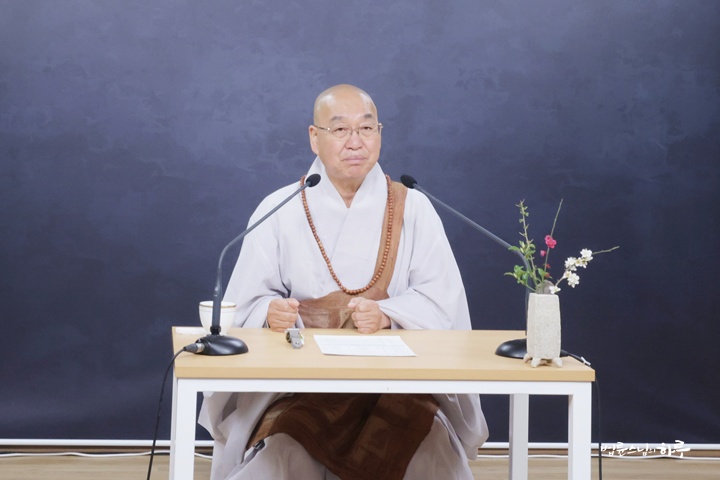
“Today marks the beginning of the Second 1000-Day Practice within the 30-year, 10,000-day period from 2023 to 2052.
The world is currently in great turmoil due to invasive wars by major powers. Humanity suffered enormous casualties through World War I and World War II in the early 20th century. Deeply reflecting on this folly and resolving to cooperate for world peace, the United Nations was established. Fortunately, while there have been many small wars since 1945, there have been no major wars for about 80 years.
However, we now see major powers invading smaller nations in various places. Before Russia invaded Ukraine, even experts thought complacently, ‘Surely Russia won’t actually invade? They’ll stop at threats.’ But Russia indeed launched an invasive war with massive weapons.
The United States, which had opposed and mediated that war, has now bombed Iran. Iran’s industrial facilities were destroyed, and casualties mounted. The problem is that the U.S. demonized the other country and bombed them with the justification that ‘it’s okay if they die.’ If this misguided perspective expands further, the possibility of China invading Taiwan under the pretext of unification war increases. If the situation flows in this direction, it will resemble the eve of World War II.
While they claim the legitimacy of war ‘for peace, to establish justice,’ regardless of any justification, when war breaks out, many people die and much property is destroyed, resulting in great sacrifice. No matter what reasons or rhetoric are attached, there can be no ‘good war’ or ‘beautiful war.’ Over 150 innocent young schoolgirls were killed in bombings. It doesn’t end here. The major problem is that the leaders who initiated these destructive wars will continue to hold political power during the 1,000 days from 2026 to 2028 when we have committed to practice.
Humanity is now facing a climate crisis. Even if we cooperate and respond together, we have reached a point where overcoming the climate crisis is not easy. War has a far greater impact on worsening the climate crisis. Oil fields that produce oil and refineries that store it are being destroyed and burning all at once due to war. Even after the war ends, rebuilding these facilities will require enormous amounts of energy again. Therefore, the climate crisis is at risk of accelerating even further.
Damage from natural disasters caused by the climate crisis is increasing, and damage from war is also growing, leading to greater suffering among people. Moreover, with the development of artificial intelligence, many professional workers are at risk of losing their jobs. Additionally, the wealth gap is rapidly widening.
Every world has its difficulties and changes. However, the next three years will bring changes at an unprecedented speed that we have never experienced before, in directions difficult for us to predict. Humanity facing such changes will experience expanded psychological anxiety, fear, and suffering. In this environment, how each of us maintains our own happiness becomes an important question.
The Power to Live Righteously Even in Chaotic Situations
The power to maintain our center and live righteously without wavering even in such chaotic situations comes from practice. For this reason, from the perspective that ‘keeping oneself upright is most important,’ it would be good to dedicate one hour each morning to practice for yourself as soon as you wake up. As we heard from the two practitioners’ testimonies earlier, the anxiety we feel arises more from our inability to firmly establish our own center than from external influences. Therefore, we must firmly hold the perspective that ‘I protect myself and maintain my freedom and happiness’ in any situation.
The era when the Buddha lived 2,600 years ago was similar to now. Even then, powerful nations frequently invaded weaker ones. Kapilavastu, the country where the Buddha was born, was also invaded and destroyed by the neighboring powerful nation of Kosala. Most of the Kapilavastu clan was massacred. Even in such circumstances, the Buddha maintained peace of mind. He engaged in peace activities not only for his own peace but also to help society become peaceful and to resolve disputes and conflicts peacefully. He sometimes prevented wars by teaching about the futility of war, and there are cases where he peacefully resolved situations just before wars broke out.
Therefore, first, maintaining peace of mind in any situation is most important for us. Second, it is important to share this wonderful Dharma of the Buddha with our neighbors to help them maintain peace of mind as well. If war inevitably breaks out, we must also engage in activities to help war victims. Additionally, to overcome the climate crisis, we must firmly practice ways to be happy while consuming less. Natural disasters due to the climate crisis will become increasingly severe and widespread in the future, causing many casualties. We must actively participate in helping victims affected by the climate crisis and war, even if just a little.
Three Directions of Social Practice Activities
We can engage in social practice activities in three directions: environmental movements to prevent the climate crisis, peace movements opposing war and protecting peace, and support activities to help victims when such events occur. Regardless of which country we live in, we must work together to make the world more peaceful. Additionally, we must all work together to ensure democracy takes root in our respective countries. In the case of Iran, leaders’ oppression and massacre of citizens have become causes that invite the disaster of war. For this reason, firmly establishing democracy in each country can also be seen as part of the peace movement.
The newly beginning 1,000 days aims to: first, practice diligently based on maintaining peace of mind in any situation, and second, engage in social practice activities to make our society peaceful. Please remind yourselves once again that we are practicing daily from this perspective.”
After Sunim’s opening Dharma talk ended, time was given for questions.
“I live in a mid-sized city in the American Midwest, far from major centers with Buddhist teachings or communities. I practice mostly alone, and when I stray from the right path, there’s no one to tell me, and it’s difficult to get help with my practice. Sometimes it feels like everything in life is collapsing at once. In such situations, can I continue practicing genuinely rather than just enduring day by day? Is holding the mind tightly the same as becoming numb? What should I be careful about when practicing alone without a teacher or fellow practitioners?”
Learning from Nature
“I can feel from your question that you are experiencing much confusion due to rapid social changes. Since the surrounding environment is changing much faster than before, I expect that not only you but many people will experience anxiety and confusion in the future. So I would like to suggest maintaining two perspectives.
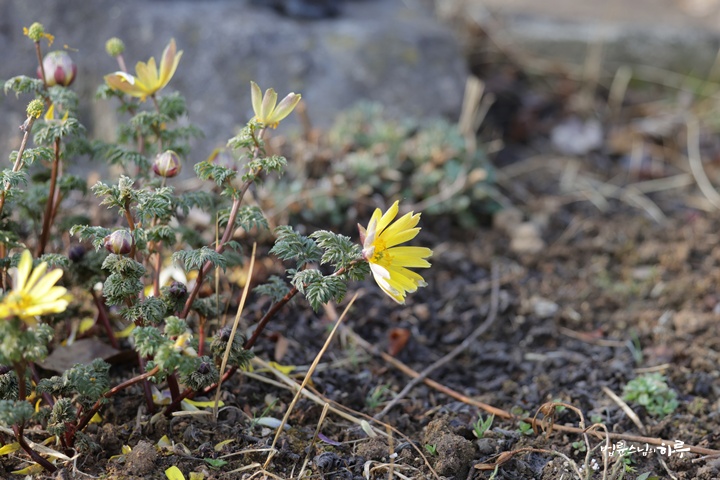
First, let’s learn from nature. Think about when it rains. Farming becomes very convenient when it rains moderately every few days. Sometimes it rains just as we want it to. However, sometimes it doesn’t rain for a long time, causing drought that damages crops, and other times too much rain falls at once, damaging crops and causing flood damage to fields. So, is it natural only when rain falls moderately? No, it isn’t. The entirety of sometimes having moderate rain, sometimes no rain, and sometimes heavy rain all at once – this whole pattern is what’s natural.
Therefore, rather than hoping nature will work according to our wishes, we should study how to respond to these natural changes. To prepare for drought, we build dams to store water or use groundwater. To prepare for floods, we build higher embankments or create dams that can prepare for both drought and flood simultaneously. However, sometimes droughts are so severe or flood damage is so extensive that our preparations cannot handle them, and our efforts come to nothing. When destruction occurs again, we rebuild and continue responding to various changes. This is what life is.
Dealing with droughts, having adequate rainfall, and suffering great losses from floods are all part of our lives. When we look at short moments in time, there are good times and bad times, but when we observe over long periods of 100 or 200 years, we can see that humans have developed their ability to respond to nature and are living with reduced risks compared to the past.
The same is true for current social changes. When people lived by farming, they didn’t need many special skills. However, as we entered the industrial society, labor with skills and knowledge became necessary, and schools were created to teach large amounts of skills and knowledge at a rapid pace. Over the past 200-300 years, we have become accustomed to a life where we can have stable living based on skills and knowledge.
However, the knowledge and skills gained from school education are no longer very useful. Just as farming experience was not very useful in industrial society, our experience and careers from industrial society are not very useful in this changed society. While these changes are confusing for us, our children will adapt to and live in the new society, so they don’t feel as confused as we do. We feel a sense of loss and confusion only because we are clinging to past experiences and past habits.
Even if someone has extensive farming experience and specialized agricultural skills, in an industrial society where farming is no longer needed, they must learn welding skills. Even if they have welding skills, if robots take over all welding work, they must be able to work in hospitals interacting with people. Thinking that life has collapsed because previous careers and skills have become useless due to these changes comes from being too attached to the past.
Just as someone who earned $50,000 yesterday might earn $100,000 at a new job today, someone who earned $100,000 yesterday might earn $50,000 today due to changing circumstances. If we accept these changes, they won’t be major problems. It’s like water flowing – when the slope is steep, it flows rapidly, and when the slope is gentle, it flows calmly. Since society is currently undergoing rapid changes, if we keep clinging to the past, we will feel much confusion.
Accepting Situations in a Positive Direction
Second is the question of what standard we use to judge good and bad events. Suppose I trip while leaving the house or injure one leg in a traffic accident. Compared to being uninjured, this is clearly an unfortunate or unhappy event. However, compared to a more serious accident where both legs are injured, having one injured leg is a better situation and relatively good.
Suppose you’re on a bus that overturns and you break one arm. By itself, this is unfortunate. But if everyone else on the bus died, then surviving with just a broken arm is fortunate and lucky. Therefore, injuring one arm or one leg is neither inherently good nor bad. It’s simply an event. Compared to being uninjured, it’s a bad event and unfortunate. Compared to breaking both legs or dying, it’s fortunate and a good situation. So the situation itself is neither good nor bad.
This is what we call ’emptiness’ in Mahayana Buddhism. When we compare things through our thoughts, comparing one way makes it a good thing, and comparing another way makes it a bad thing. In other words, we create good things and bad things through our thoughts, and all of this is created by ourselves. However, most people accept their own situations as bad things.
If we can accept something as either a good thing or a bad thing, isn’t it better to accept it as a good thing? This is the perspective of holding onto the unbroken leg when one leg is broken and thinking, ‘Ah, I’m fortunate that both legs aren’t broken.’
If you compare your current situation of being divorced with no income to the past when you were married, had a job, and lived peacefully, the present becomes a bad situation. However, if you compare it to situations in Iran where people are dying or getting injured from bombings due to war, being divorced with no income is actually a better situation. So the current situation is neither good nor bad. Therefore, what’s good for me means accepting the situation as a good one.
In conclusion, don’t think that it rained a little too much, or that it didn’t rain enough, or that everything happened all at once. Just accept it as a positive situation for yourself. Sometimes things happen one by one in sequence, but sometimes they all happen at once. When things happen all at once, just think, ‘Oh, there’s a flood.’ There’s no need to accept it as a great misfortune or think that your life has collapsed.
I sometimes think this way: Isn’t it better to have bad things happen all at once and deal with them all at once, rather than having them drag on one by one? That’s why I’m telling you to accept your situation positively.
It’s a good thing to come online like today where there are many fellow practitioners and 1000-Day Practice participants, to have conversations and help each other in our practice. So even though you live in a small city, it’s good that you can connect and communicate online like this.
Originally, all living beings in the natural ecosystem live alone. They are only protected by their mothers when young, but after becoming adults, most live on their own. Therefore, being alone is not a problem at all. Small insects and small squirrels live alone, so what’s the problem with humans living alone? That’s why I suggest learning from nature.
Two more international participants asked questions.
When I have work deadlines, I sometimes miss morning practice. I compare and weigh the importance and priority between practice and work (professional or household tasks). What error is there in this thinking that puts practice after work?
I’ve gone through major events including separation from my husband, emergency brain surgery, and the LA wildfires, and I’m currently going through a divorce. I’m caring for my teenage child alone, and my health is deteriorating. I need to finalize the divorce and I’m also worried about preparing for death. With my weakened state of mind and limited time and responsibilities, how should I practice?
Sunim urged them to practice diligently every day and concluded the dialogue session with the international participants. They read the Four Great Vows together in English and completed the English opening ceremony.
As soon as the broadcast ended, Sunim departed from Dubuk Jungto Retreat Center for a medical appointment. From the studio until boarding the vehicle, he asked the farming team leader about spring farming and lettuce seedlings, providing guidance on necessary preparations.
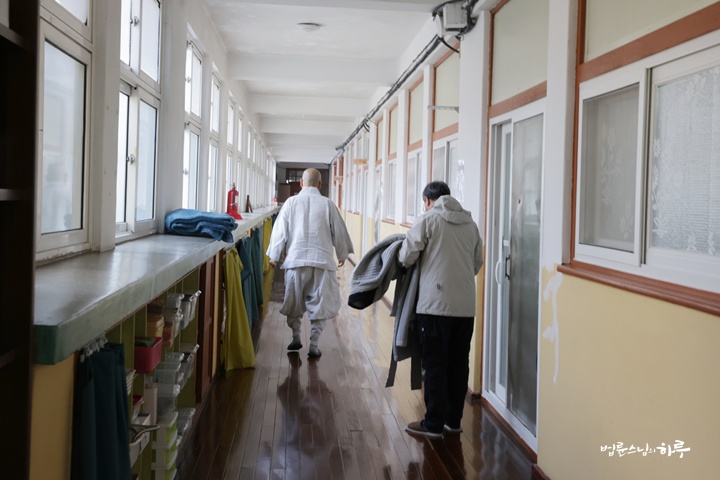
After the medical appointment, Sunim toured the fields and greenhouses at Dubuk Farm and took some rest.
Tomorrow, he plans to forage for spring herbs, attend a medical appointment, and tend to the vegetable garden.