Let’s become the light and hope of the world, overcoming difficult realities
March 15, 2026. The 2nd 1000-Day Practice Opening Ceremony, Jungto Social and Cultural Center Special Division Day
Hello. Today marks the beginning of the 2nd 1000-Day Practice (2차 천일결사) within Jungto Society’s 2nd 10,000-Day Practice.
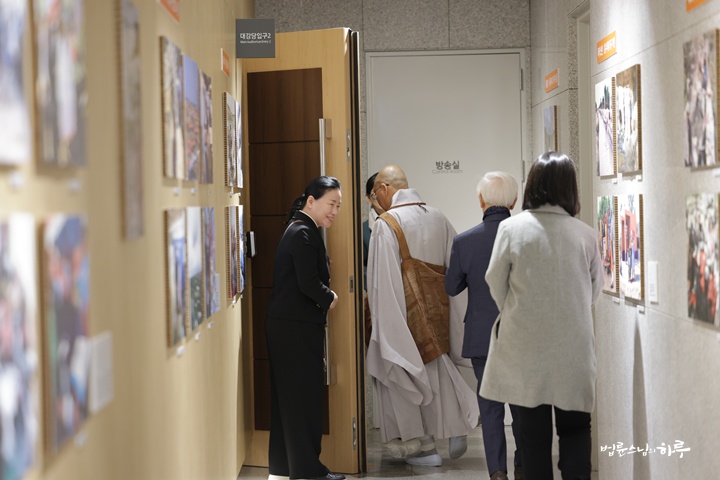
From early morning, the Jungto Social and Cultural Center (정토사회문화회관) was bustling with many volunteers preparing for the event. After a brief conversation with writer Kim Hong-shin (김 홍신) , Sunim took his seat in the underground auditorium at 9:30 AM where the ceremony was to be held.
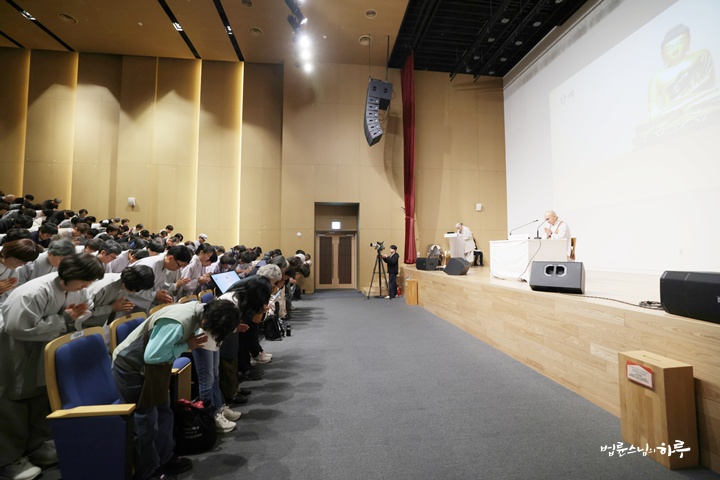
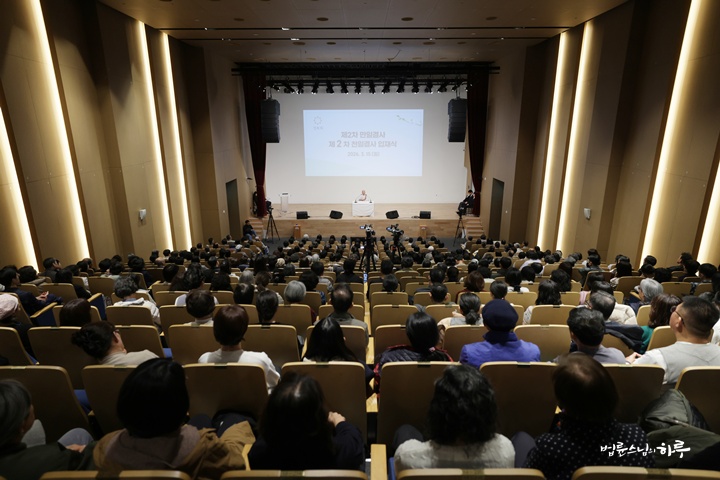
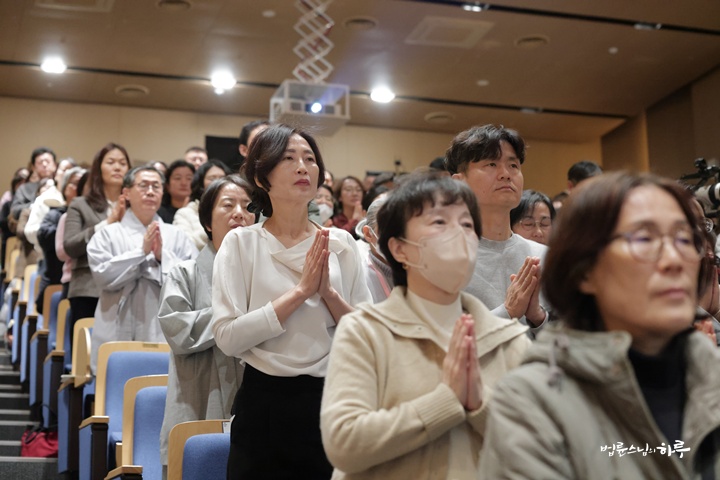
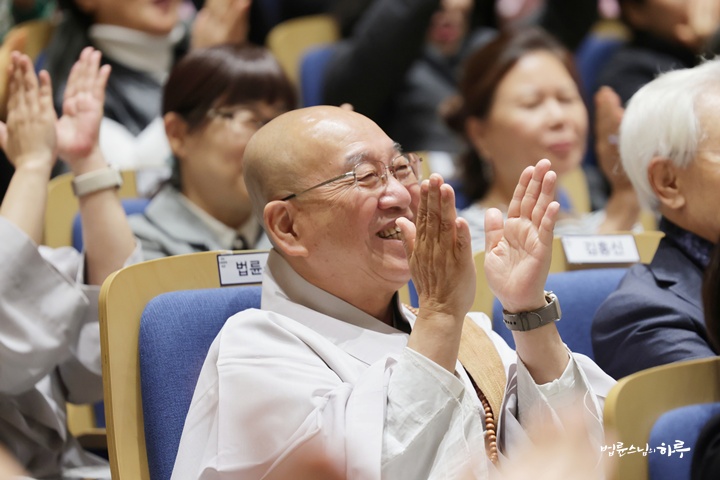
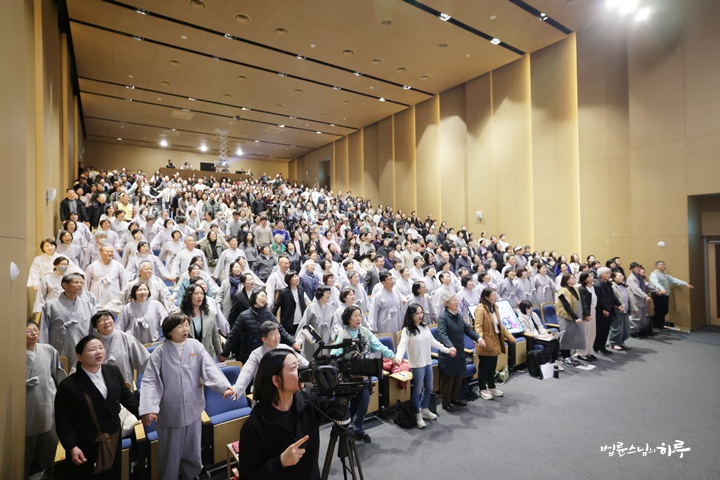
After the bell ringing, Buddhist service, and recitation of the Heart Sutra (반야심경), the 2nd 1000-Day Practice Opening Ceremony began with an energetic greeting from the MC, Kim Byeong-jo (김 병조). About 8,000 people from home and abroad attended the live-streamed opening ceremony. At the ceremony site, members of Yeonhwa Association, newly elected officials, Hwaeom class trainees who are new Dharma Teacher candidates, and members of the newly established Jungto Social and Cultural Center Special Division gathered together.
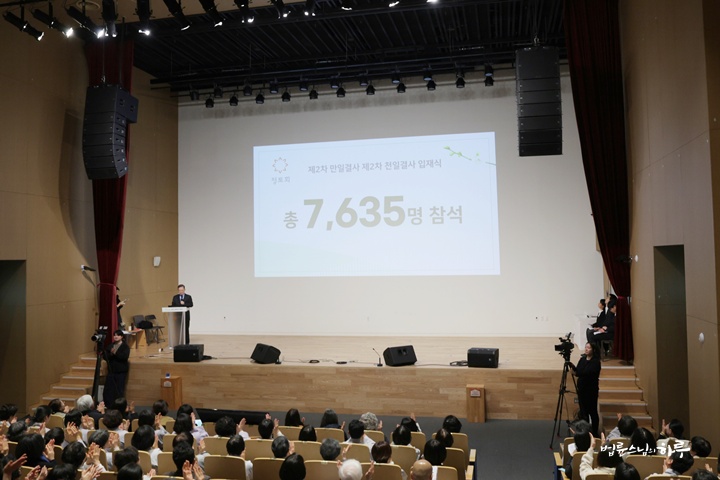
After the greeting from Dharma Teacher Seonju (선주), the chairperson of the 1000-Day Preparation Committee, a video was shown of the footsteps during the past 100 days of the closing period. This was followed by videos about the 10 major goals and business directions for the 2nd 1000-Day Practice, and announcements of officials from regional divisions, committees, and social activity organizations that are newly starting the 2nd 1000-Day Practice.
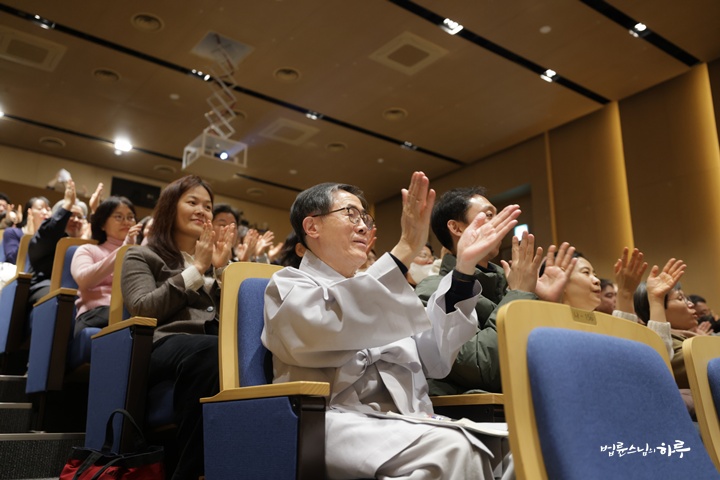
During the introduction of new officials who will vigorously lead the 2nd 1000-Day Practice, there were greetings from Yang Yoon-deok (양 윤덕), President of Jungto Society, Park Su-jeong (박 수정), Secretary General, Lee Mi-jeong (이 미정), Head of the Happiness Movement Special Headquarters, and Dharma Teacher Seonju, Head of the Dharma Teacher Group, along with introductions of the new division leadership.
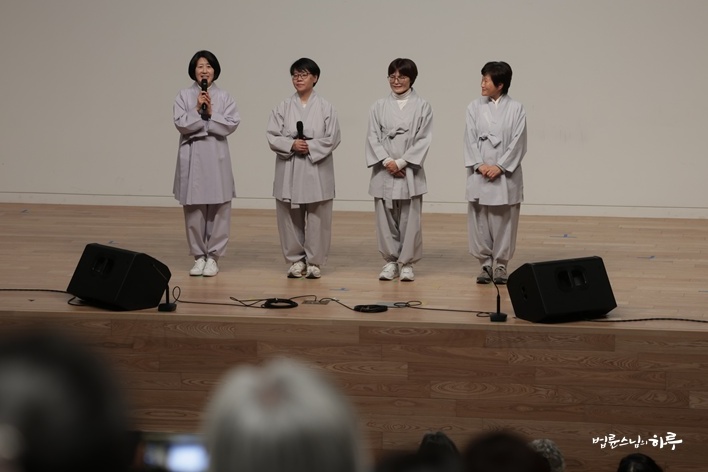
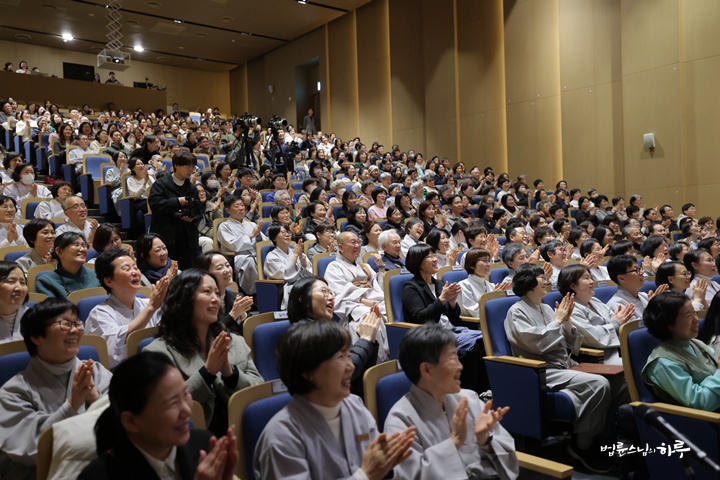
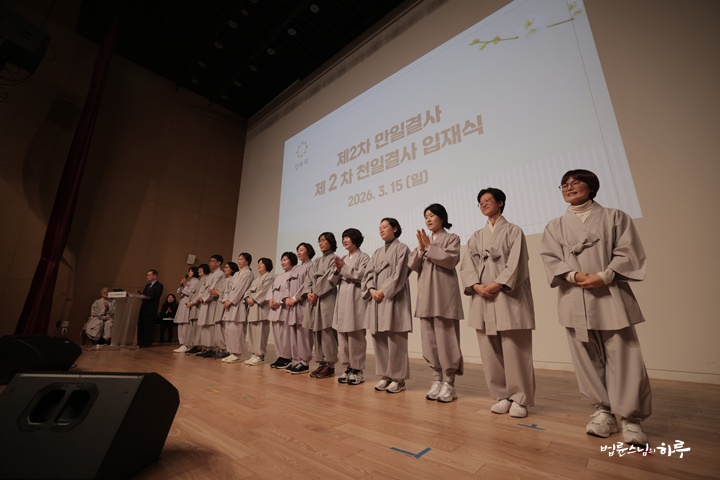
The 2nd 1000-Day Practice Opening Ceremony of the 2nd 10,000-Day Practice
Next, the 2nd 1000-Day Practice commitment ceremony began with Venerable Pomnyun Sunim (법륜 스님), the guiding Dharma Teacher of Jungto Society. Since this commitment ceremony marks the beginning of the 1000-Day Practice, everyone is a 1000-Day Practice participant without distinction between prospective and existing participants. The 1000-Day Practice participants resolved to practice, give, and volunteer to create Jungto – a land of clear minds, good friends, and clean earth. Sunim made a vow for the participants beginning the 1000-Day Practice.
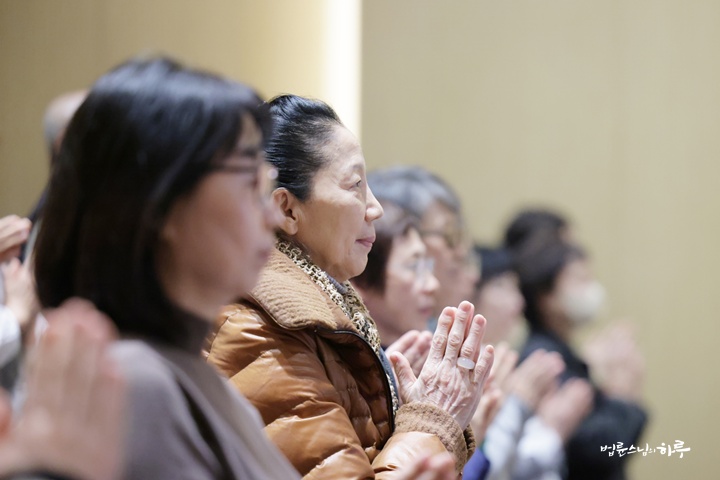
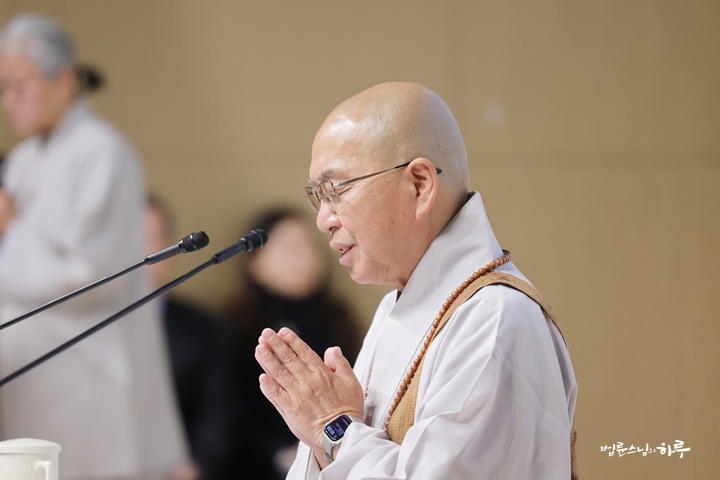
The 1000-Day Practice commitment ceremony concluded with three bows to the Buddha, signifying the commitment to practice with the right perspective as practitioners. Then, a request was made to Sunim for a Dharma talk on the opening of the 1000-Day Practice.
Today’s Desperate Times of Amplified Chaos
“Today, Jungto Society has successfully completed the 1st 1000-Day Practice of the 2nd 10,000-Day Practice over the past three years, and after three months of preparation, we are beginning our dedication for the next three years, one thousand days, starting today. As you all feel now, this world we live in has always been chaotic, but recently the chaos seems to have intensified even more. First, the climate crisis due to climate change is accelerating to the point where we can feel it on our skin. While natural disasters have always existed, recent statistics show that their frequency is rapidly increasing and their intensity is rapidly growing. It is said that once a certain critical point (임계점) is passed, the amplification automatically accelerates and cannot be improved by any effort. There is now debate about whether we have passed that critical point or not. In this situation, even if all of humanity joins forces and works together, it won’t be easy to stop this climate change that has struck the Earth. Yet the world is now moving toward individual survival rather than joint efforts, and especially major powers are launching indiscriminate attacks on neighboring countries with military force. Until now, watching Russia’s invasion of Ukraine, we thought it was just one bad country’s leader acting this way. But Israel’s bombing of Gaza and the war between the United States and Iran show that destruction through indiscriminate violence far exceeds that of Russia. If a major power like China were to invade Taiwan for unification, the world would fall into uncontrollable chaos. The day before the Ukraine invasion occurred, I held a seminar with experts. The experts said that in the 21st century, major powers would not conduct military invasions but would only make threats. The very next day after that discussion, a full-scale invasion occurred. The same was true of America’s indiscriminate bombing of Iran. Looking at these events, the possibility of China’s annexation of Taiwan becomes much higher, and if that happens, the possibility of war sparks flying to us who are nearby becomes much higher, approaching as a real danger. These conflicts are further deteriorating the global environment. The increased use of carbon dioxide from automobile fuel consumption and such poses a major threat to the climate crisis. But now, oil storage facilities are being indiscriminately bombed in wars, with black smoke covering the sky and oil rain falling from the heavens in a tragic situation. This not only causes suffering to people but also greatly accelerates the climate crisis. In this situation, we must choose whether to make efforts to slow down the pace of the climate crisis even a little, or to just give up and fall together into the abyss of Earth’s destruction.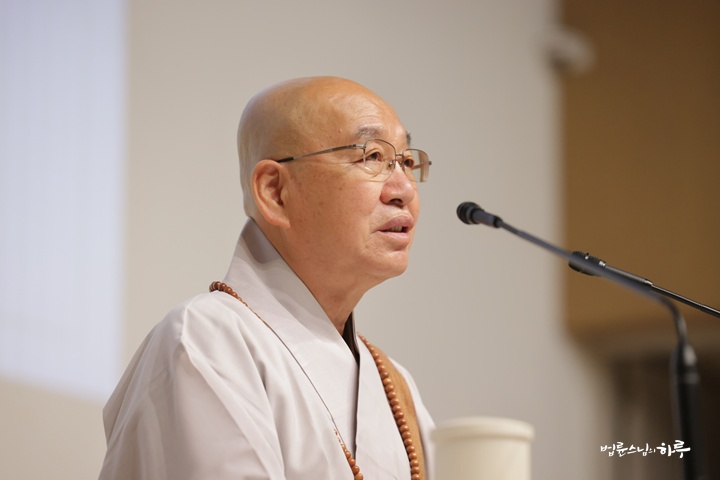
Practice That Becomes Hope for the World in the Midst of Despair
In this unstable situation, we need to examine how to preserve peace, alleviate the suffering of those who are suffering, and achieve balance through wealth redistribution in the whirlwind of rapidly expanding wealth gaps, or at least how to prevent further expansion even if we cannot improve the situation. Over the next three years, you will directly experience many of these problems. In that sense, these three years are, in a way, a very desperate period. Even in this reality, we must not let go of the thread of hope, and not only harbor hope but also unite our hearts with the perspective of ‘Let me become the hope of the world.’ In this chaos, we as individuals must first achieve psychological stability by escaping anxiety through practice, and second, we need to adopt an attitude of more actively practicing and taking action than before in activities that help prevent the climate crisis, preserve peace, and provide even small assistance to those suffering from climate change or conflicts, rather than using our talents, skills, and wealth to torment and corrupt ourselves. Although we have practiced for a total of 33 years, combining the first 10,000-Day Practice over the past 30 years and the recent first 1000-Day Practice, the next three years may be the most difficult period for us. That’s why this time, we have especially set the Myeongshimmun (명심문) as ‘We are the hope of the world,’ meaning that I must harbor hope, and not stop there, but become a beacon of hope for those struggling in this world, showing them ‘There are people who live like this.’ I hope we can make a commitment together today to become pioneers who use the energy spent on anxiety and complaints to provide reassurance and hope to people in the world, going beyond being people who are anxious and complaining.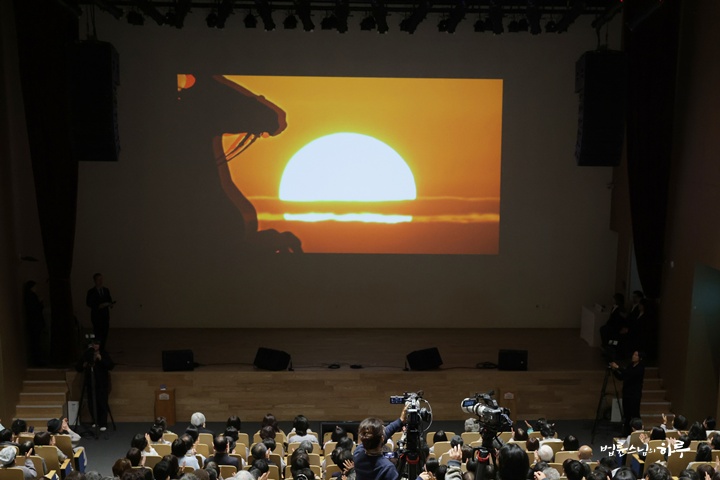
)
. Despite the aspirations of countless people at that time, the March 1st Independence Movement Declaration resulted in numerous sacrifices due to violent suppression. Looking at that time alone, it was a failed movement. However, looking back now, that movement was not a failure but rather the first step toward building today’s Republic of Korea. Similarly, while it would be wonderful if our aspirations were successfully realized now, even if they are not and others evaluate them as failures, we must continue our actions and practices that will become hope for the next generation 100 years from now. From this perspective, we should set our goals looking at least 30 years ahead and practice diligently. I once again welcome all of you who have joined the second 1000-Day Practice, which will be the most challenging part of the second 10,000-Day Practice, and I also commend you. Let us pledge to become the light and hope of the world, joining hands together to overcome this difficult reality, and practice these thousand days as if they were one day.”After the Dharma talk for entering the second 1000-Day Practice concluded, following a break, there was an opening ceremony for the first 100-Day Prayer of the second 1000-Day Practice.
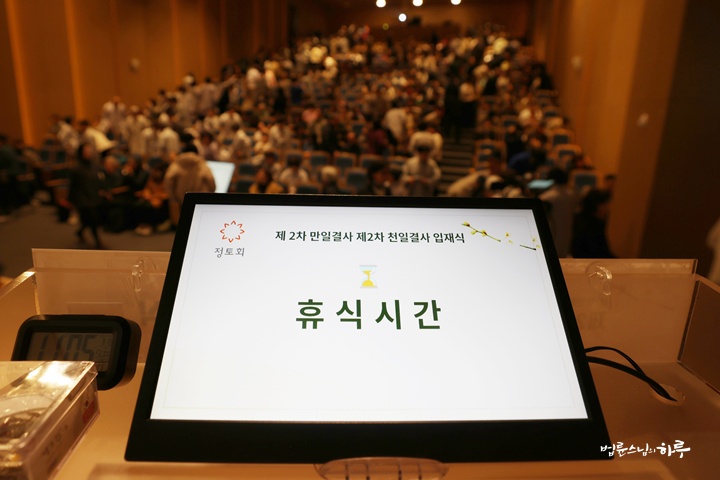
After the break ended, there was time for Kim Gyeong-won (김 경원) from the Gyeongnam (경남) Branch of the Happiness Movement Division to present a case study of practice implementation.
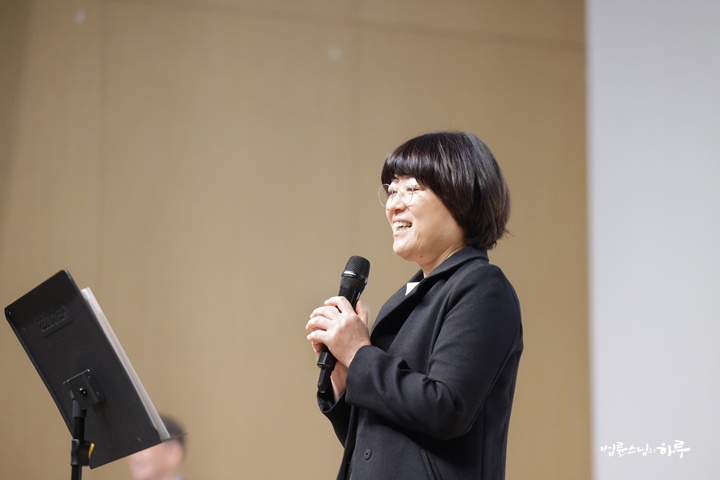
“I was wondering how to adapt well and harmonize in the Happiness Movement Division, so I chose the most perfect fellow practitioner as my role model and followed them. Three years have passed since I became such a copycat. However, I learned that you can’t learn everything just by following. Should I say it feels like the essence is gone and only the shell remains? When I expressed such complaints, one fellow practitioner comforted me by saying, ‘A pea pod forms first, then the peas fill inside.’
(Audience applause)
All my role models have moved to regional branches, so I no longer have anyone to rely on. Though I’m lacking, I’m now walking a new path as a mosaic Buddha with new fellow practitioners. I started with small practices like watching environmental films with Happy Citizens, organizing sharing markets, and distributing natural scrubbers and EM for free.”
She shared examples of rewarding experiences that started from small practices, difficulties encountered when preparing events with local external organizations, and cases of spreading positive influence through volunteering at the Happiness Division.
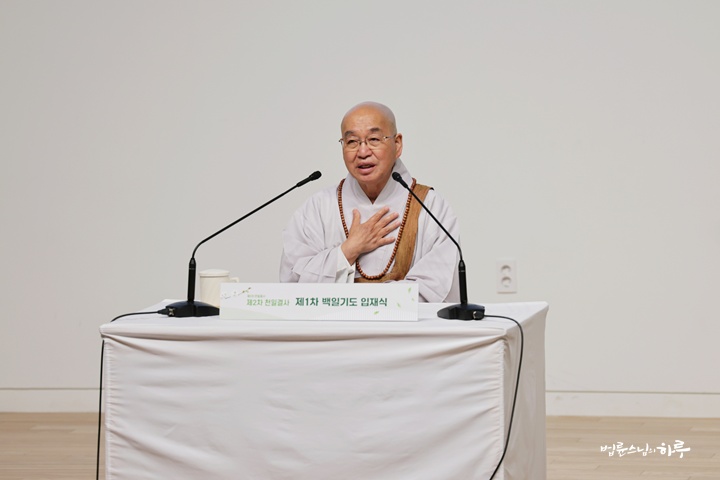
Afterwards, they requested Sunim to give a Dharma talk for entering the first 100-Day Prayer of the second 1000-Day Practice.
Form Is as Important as Content
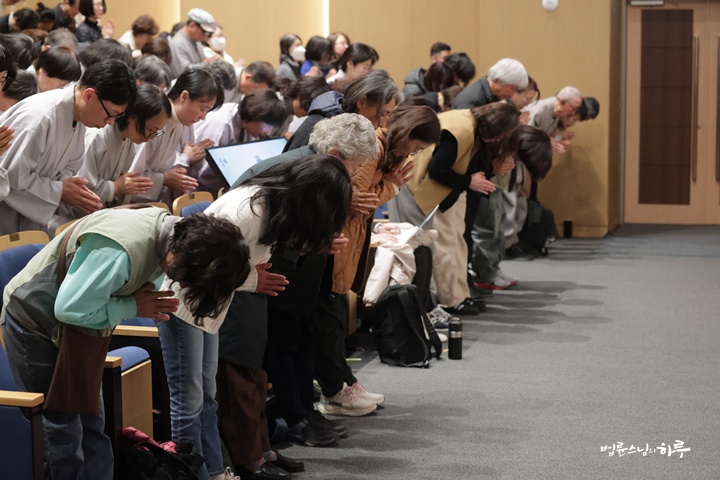
So they ask me questions like this: ‘Sunim, I’m having trouble with my practice these days. I’m just forcing myself to do it day by day.’ It’s fine to do it formally. Even formal bowing becomes exercise. And as you continue bowing, your mind returns. If you maintain even the shell, the substance will fill it – this saying is true. Of course, content is important, not form. But in reality, form is as important as content. If you hold onto the form, you can still maintain the content, but if you abandon even the form, the content disappears along with it. When I give Dharma talks saying, ‘What’s important about bowing? What matters is humbling your mind,’ it’s to point out that when people are too attached to form, it’s not the rice bowl that’s important but its contents. However, hearing this, some people think, ‘Sunim says form isn’t that important,’ and use it as an excuse to abandon form. Then the content disappears along with it. That’s why it’s necessary to practice at set times and follow procedures when possible. Of course, it’s not absolutely required. For some people, even without maintaining form, if they can observe themselves in daily life and remain awakened in their everyday activities, having formally scheduled practice times isn’t important. However, in this world we live in, staying constantly awakened in daily life is not easy. People who cut themselves off from the world and live quietly in the mountains can walk slowly while being aware of their steps and be mindful when eating, but in this busy life, running around working, we unconsciously become influenced by external conditions. That’s why we need to maintain this form.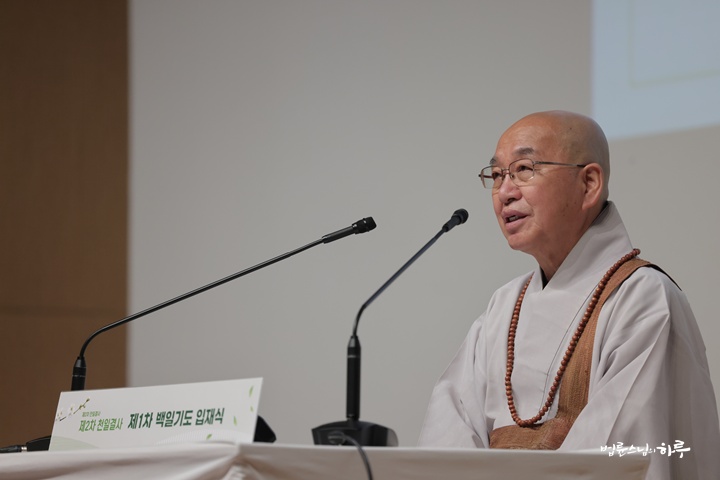
Through Dharma Propagation and Social Practice
Next, we must help others learn about this wonderful Dharma. People aren’t interested because they don’t know what’s good about it. When people cry out in distress, it becomes an opportunity to share this wonderful Dharma. However, some people are attached to small pleasures within their difficulties. From our perspective, they seem to be struggling, but they find enjoyment in it and don’t pay much attention to anything else. When people say, ‘I’m dying from hardship, isn’t there a better way?’ and show interest, it becomes easier to propagate the Dharma. But when they have no interest at all, they just continue living that way. Therefore, each of us should reflect on how we came to connect with this wonderful Dharma and use our personal experiences to help others form connections at appropriate opportunities. This means helping them connect with the Awakening Retreat (깨달음의 장)
, Jungto Dharma School, or Happiness School. Dharma propagation (전법) is about helping people learn this teaching so they can find their own path to happiness. Why should we engage in social practice? It’s to help those who cannot achieve happiness through their own awakening. When someone is hungry, they won’t be interested in the Awakening Retreat no matter how good it is. For hungry people, we first provide food support, and during disasters, we provide emergency relief. This is social practice. The first 100-Day Prayer period runs from March 16 to June – it’s springtime. Since this is the beginning of the second 1000-Day Practice with new leadership teams, it might take some time for them to coordinate well. I hope they can quickly establish good coordination and, like the rising energy of spring, engage in Dharma propagation and social practice with vitality. Since relief activities are mainly international work, we’re trying to establish a more effective system. Emergency relief activities (긴급 구호)
, in particular, should become social practice that involves not just JTS professional volunteers but also local Jungto members. For example, when a disaster occurs in the Philippines, Philippine Jungto members can provide support, and in Thailand, Thai Jungto members can help. In other words, when disasters occur, I think it would be good to develop a direction where local chapter members near the disaster area engage in disaster-related social practice. Let’s work together energetically during these 100 days.”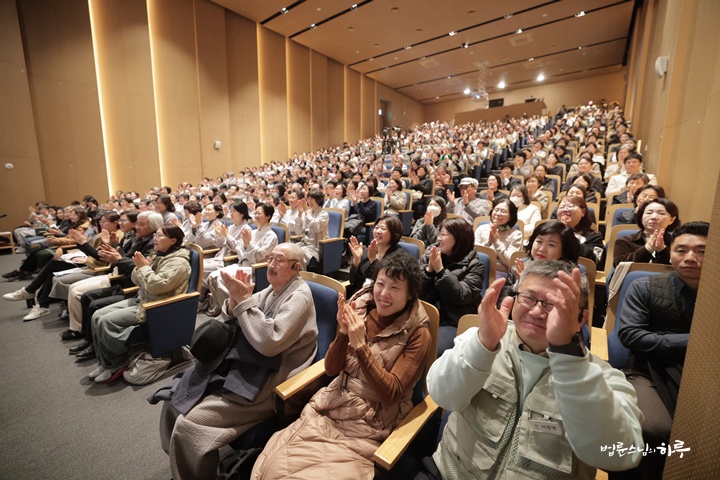
Next, the collective promises that all 1000-Day Practice participants must practice together were announced. Individuals would set their personal practice tasks and engage in spreading the Dharma through Happiness School, and for social practice, they agreed to participate in group activities three times.
This was followed by a celebratory performance by the Daegu-Gyeongbuk Division (대구경북지부) featuring flag and small drum dance movements.
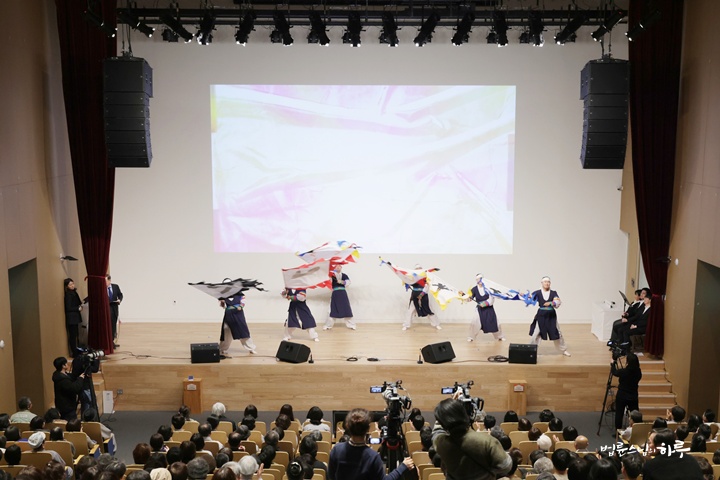
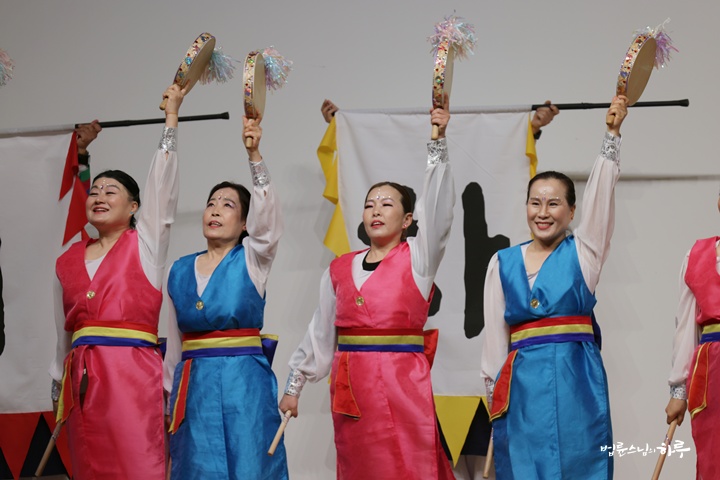
At the venue, everyone stood up hand in hand and sang ‘Jungto Arirang (정토아리랑)’ together, bringing the performance to a spirited conclusion.
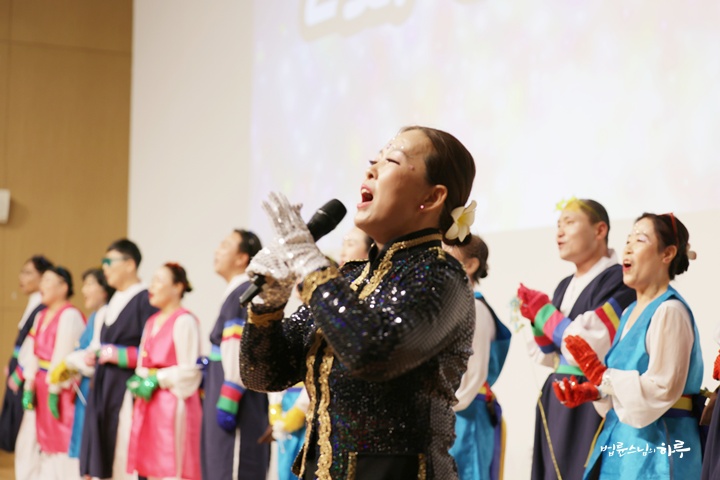
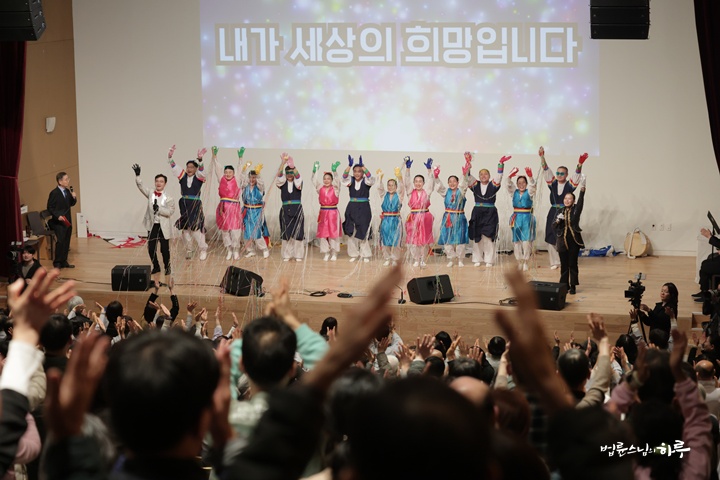
Promising to meet again at the next opening ceremony on June 28th, everyone concluded the opening ceremony for the first 100-Day Prayer of the second 1000-Day Practice by chanting the Four Great Vows (사홍서원) and the closing song (산화가) together.
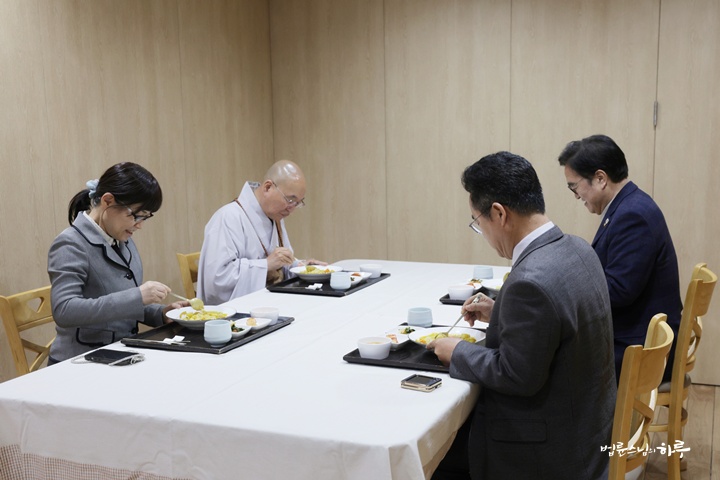
After the opening ceremony ended, Sunim had a meeting scheduled with National Assembly Speaker Woo Won-shik(우 원식). After a simple curry lunch, he moved to the reception room for their discussion. Speaker Woo requested cooperation from Sunim and social elders, stating that they need to at least break ground on constitutional reform during this session to create a constitution suitable for 21st century Korea’s new direction in the next session.
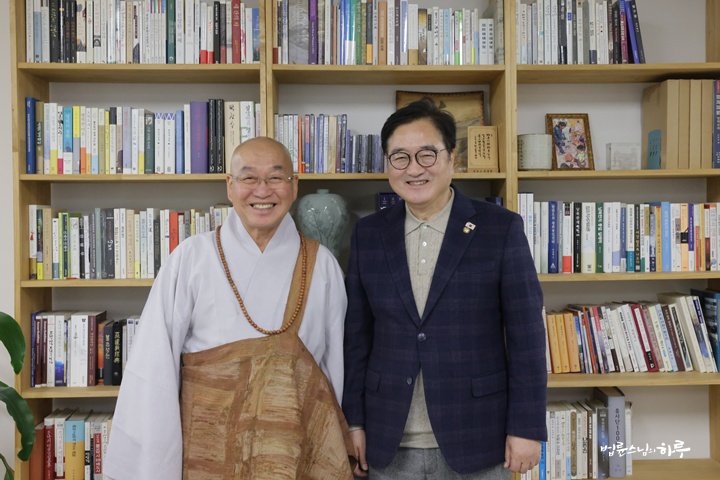
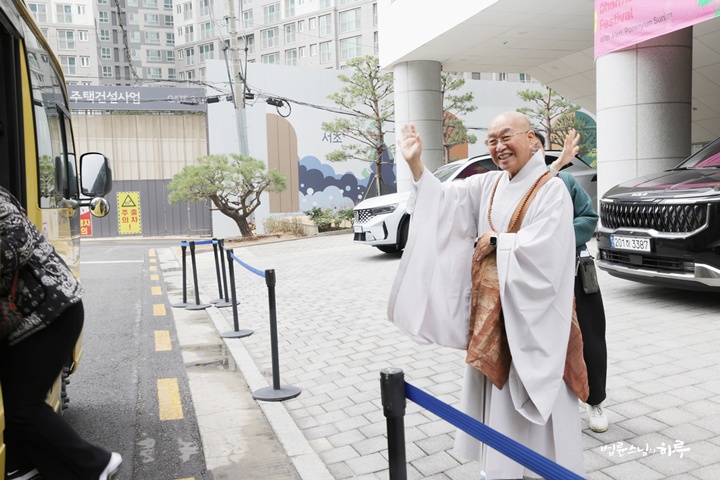
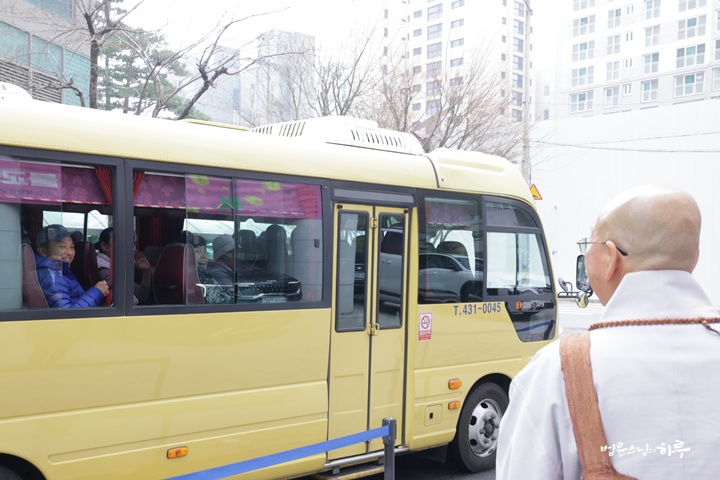
After the meeting ended, Sunim escorted National Assembly Speaker Woo Won-shik to the main entrance. The Daegu-Gyeongbuk Division performance team that had performed at the opening ceremony happened to be boarding their vehicles. Sunim waved his hand to express his gratitude.
After the opening ceremony, from 2 PM, the Jungto Social and Cultural Center Special Division Members’ Day was being held in the underground auditorium. The Jungto Social and Cultural Center Special Division is a newly established division. During last year’s 300-day special practice period, various attempts and activities were made to revitalize the Jungto Social and Cultural Center.
Sunim moved to the underground auditorium to attend the Jungto Social and Cultural Center Special Division Members’ Day.
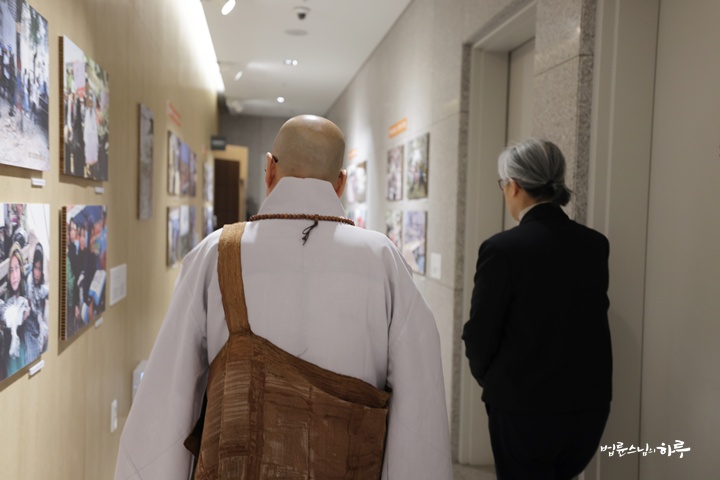
Various programs were conducted including introductions of the new officers of the Center Special Division (회관 특별지부), celebratory performances by team leaders and staff, business presentations by the Special Division, and one-minute speeches.
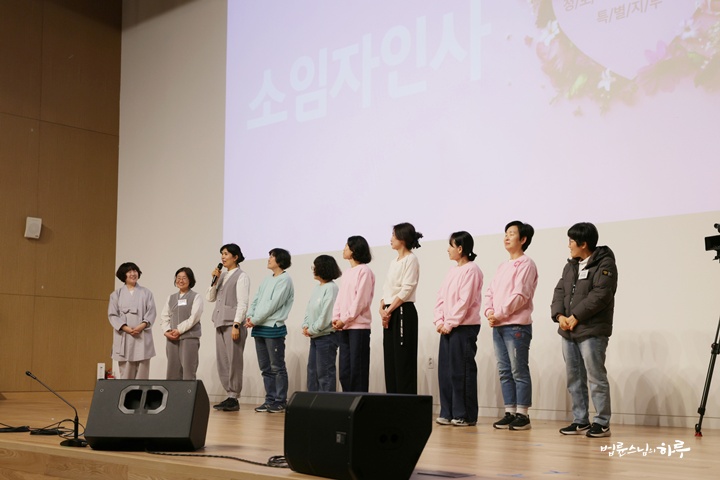
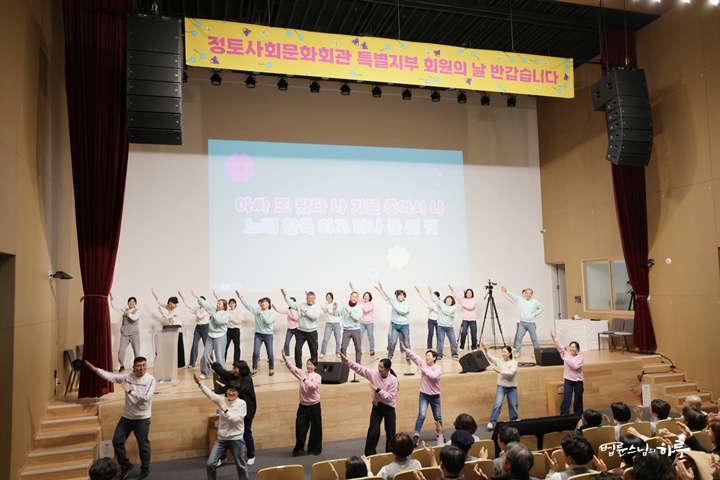
During the Dharma Q&A session, participants raised their hands to ask questions about their curiosities while volunteering at the center and practicing diligently.
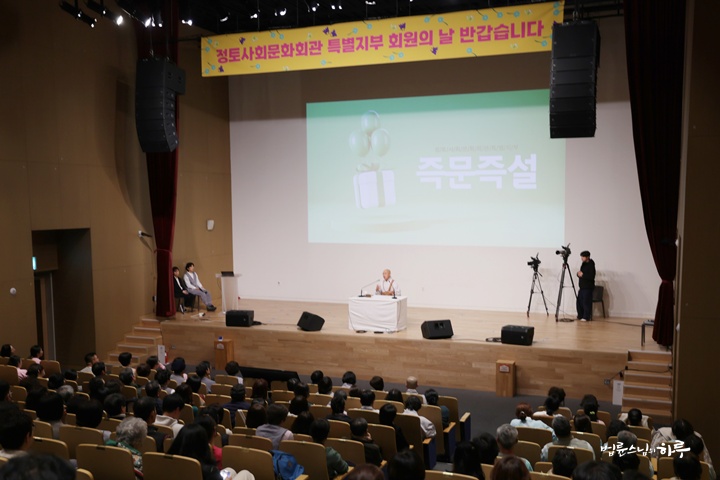
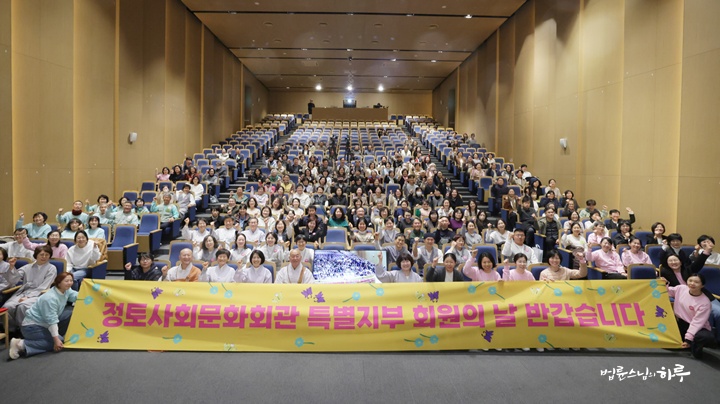
When the Dharma Q&A ended, Sunim had another appointment immediately following, so he asked for understanding, took a commemorative photo, and left the venue.
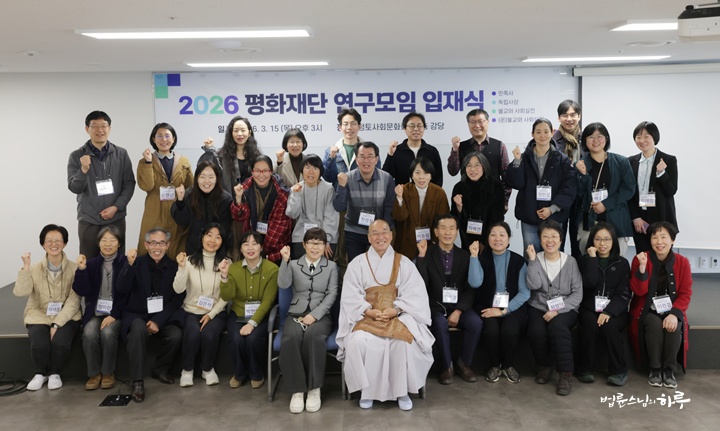
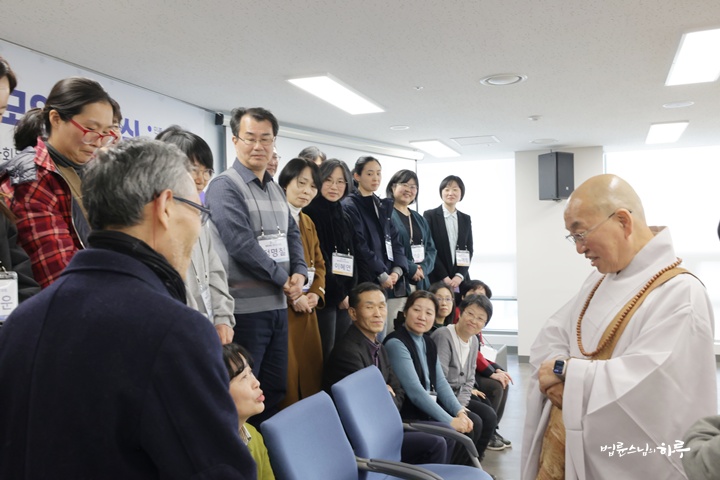
On this day marking the start of the second 1000-Day Practice, The Peace Foundation held an inauguration ceremony (발대식) for its research groups. About 30 researchers were recruited in fields such as national history, independence thought, and Buddhism and society, and the inauguration ceremony was held today. Sunim attended the ceremony, took commemorative photos, and asked each researcher about their field of application and work, offering encouragement.
With another appointment coming up soon, Sunim moved to the reception room. SBS Entertainment Department PD Ryu Ji-hwan (류 지환) and broadcasting staff and writers came to meet Sunim regarding a program production matter. Sunim had appeared on the SBS entertainment program Healing Camp in 2012, and one of the writers from that time was also present. Two hours passed as they discussed specific requirements and matters to confirm regarding the program production. After the conversation ended, Sunim and the broadcasting staff took a commemorative photo.
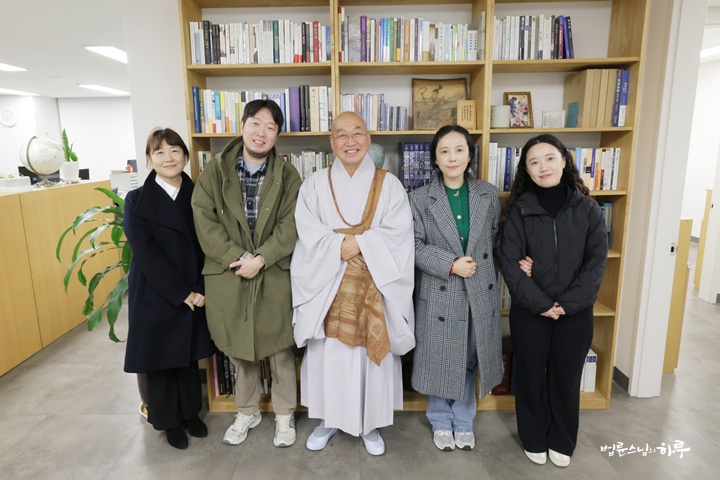
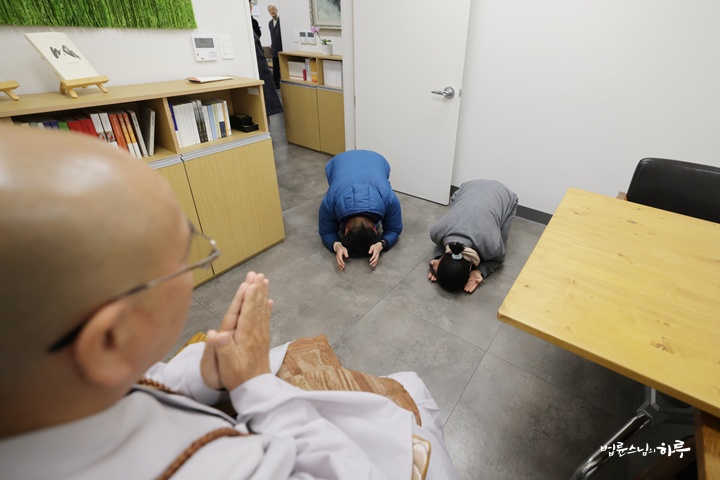
Sunim immediately had time to greet staff members who were completing their service in the community and a volunteer scheduled to be dispatched to Bhutan. The staff members completing their service came to pay their farewell respects to Sunim. These individuals had lived in the community for as little as 12 years to as many as 25 years, producing video content to make Sunim’s teachings easily accessible to many people and managing the publication of ‘A Day in the Life of Sunim’ articles. The staff members offered three farewell bows, and Sunim gave words of advice and encouragement to those making new beginnings.
After completing various event participations and meetings at the Jungto Social and Cultural Center, Sunim departed for Dubuk at 8 PM. He arrived at Dubuk Jungto Retreat Center (두북 수련원) close to midnight and concluded the day’s activities.

Tomorrow, he is scheduled to attend the English 1000-Day Practice opening ceremony (영어 천일결사 입재식) in the morning.