I Feel Anxious When Meeting People. Why Hasn’t It Improved After 10 Years?
Mar 11, 2026 - Day 3 in Sri Lanka, Relief Distribution to 500 Households in Passara
Hello. Today, Sunim went to Passara, Sri Lanka, to inspect bridges and waterways destroyed by the cyclone and delivered rice to 500 households affected by the flood.
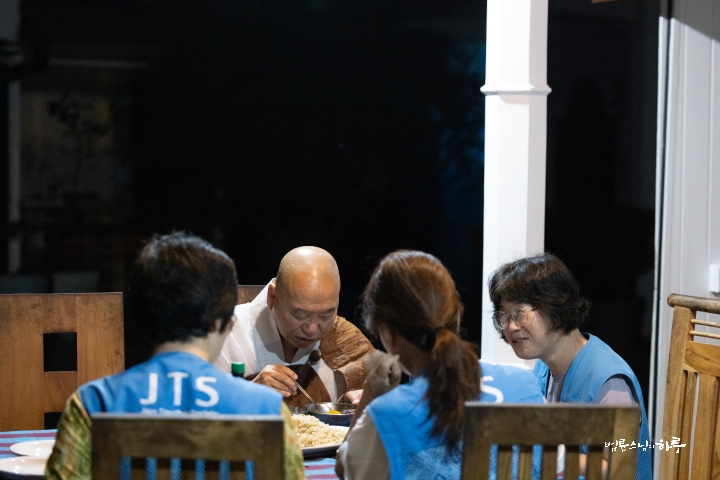
After completing morning practice and meditation, Sunim had breakfast at the accommodation at 5:30 AM. He simply reheated the leftover fried rice from yesterday’s lunch and finished his meal.
At 6:00 AM, Sunim got in the car and departed into the still-dark dawn light.
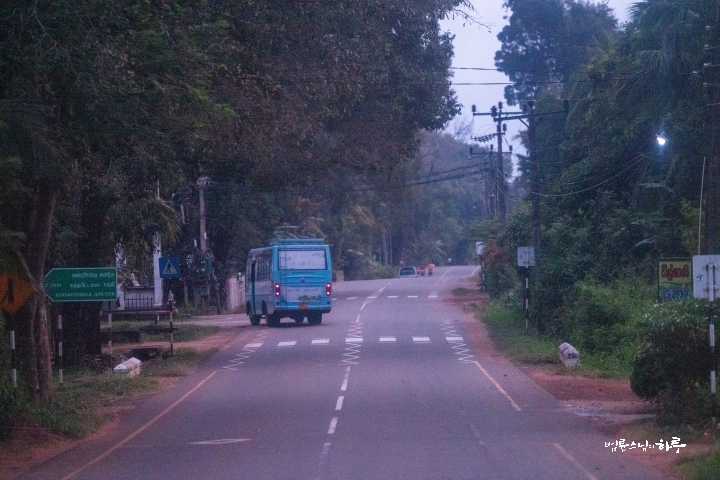
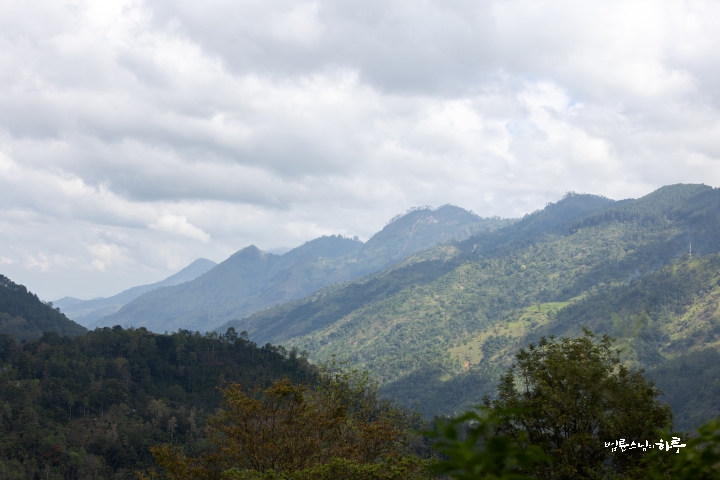
After passing through the plains and entering Uva Province, the road continued with winding uphill and downhill sections. The journey continued along the winding mountain roads of Uva Province, famous for its tea in Sri Lanka.
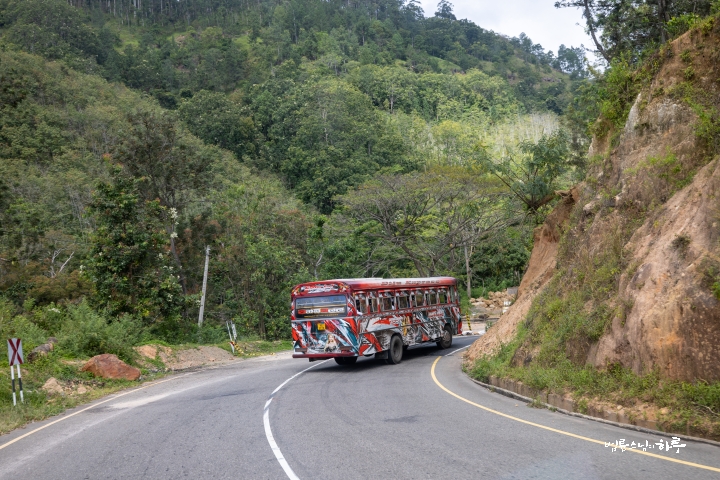
Throughout the mountain roads, stones and soil from flood damage were piled up, and excavators were clearing the debris to make passage possible. Since even the national highways had not been fully restored, it seemed even less likely that small local roads would be repaired.
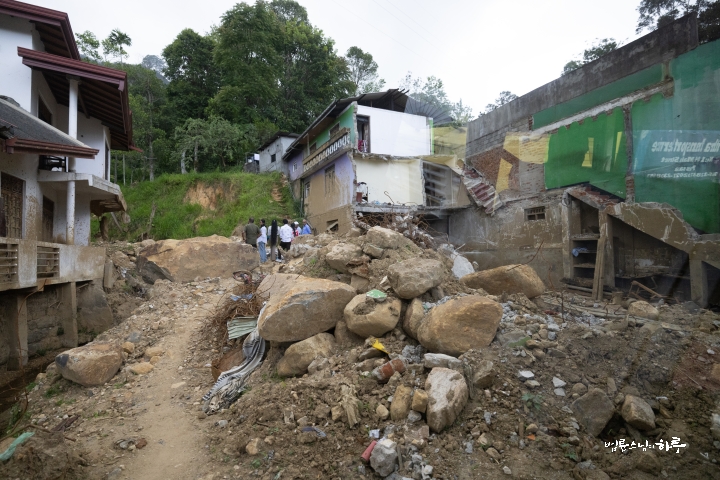
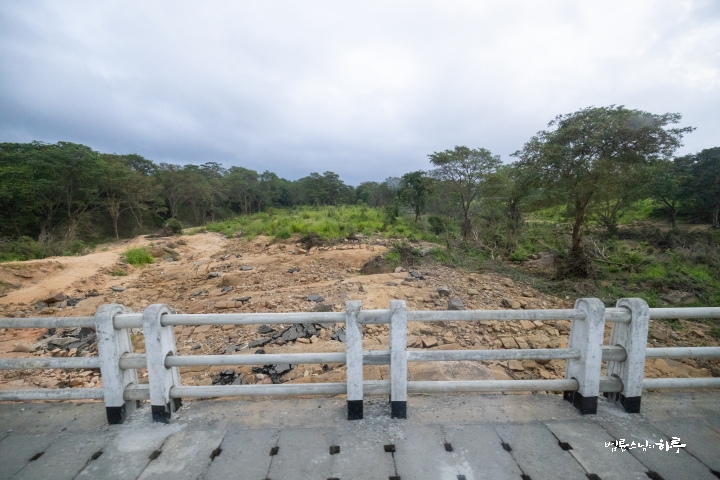
After driving through mountain roads for over 4 hours, at 10:45 AM, Sunim arrived at a temple in the Passara area where today’s relief distribution would take place. Since there was a request to repair a bridge broken by the typhoon in this village, Sunim decided to inspect it before the distribution. Unable to proceed with large vehicles, everyone got out and began walking. Kindergarten children ran out to greet Sunim and his group.
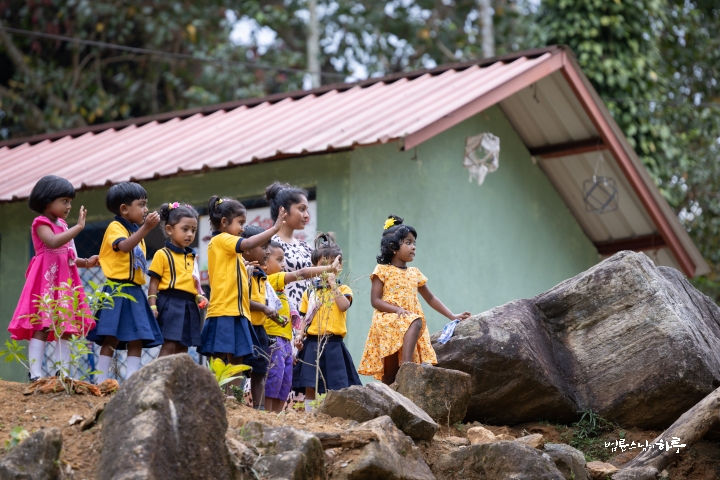
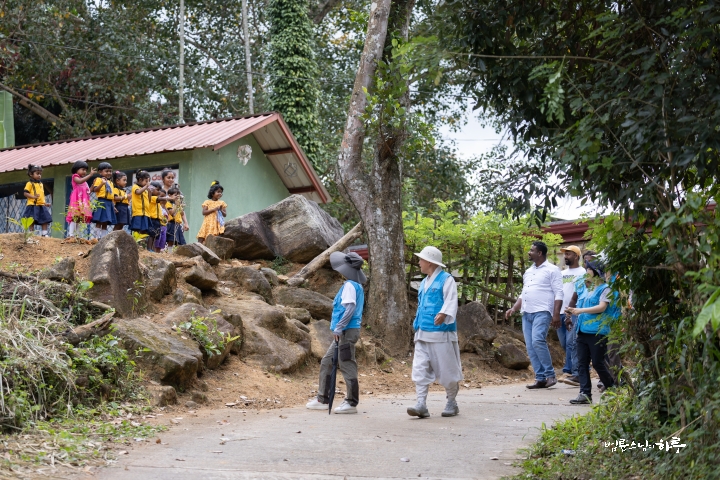
After walking another 15 minutes, the village of Madugastalawa appeared.
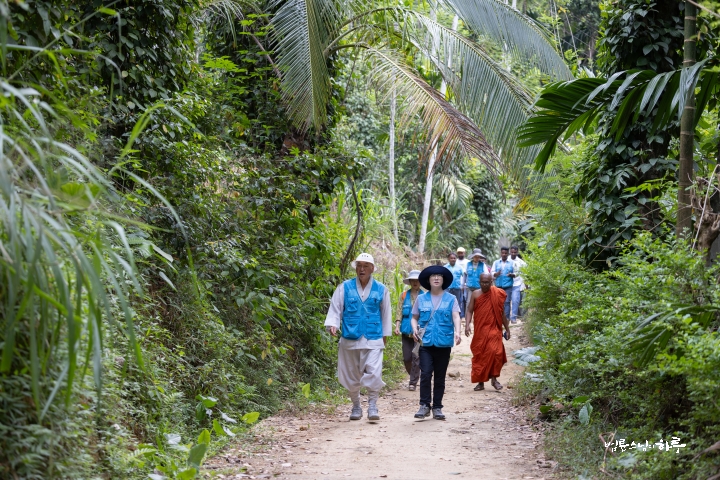
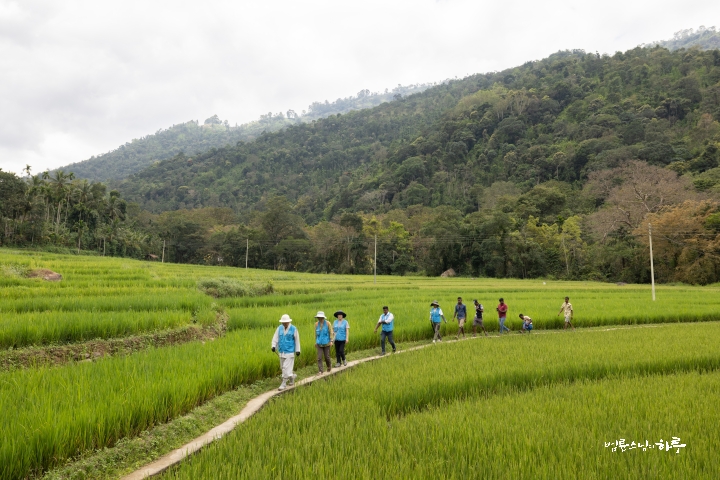
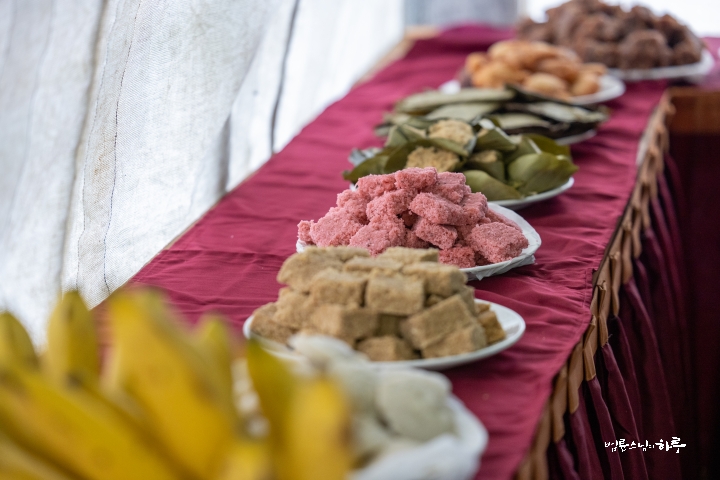
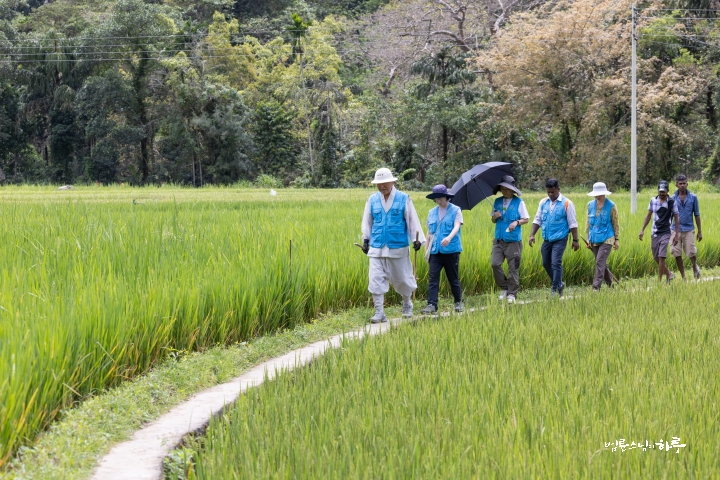
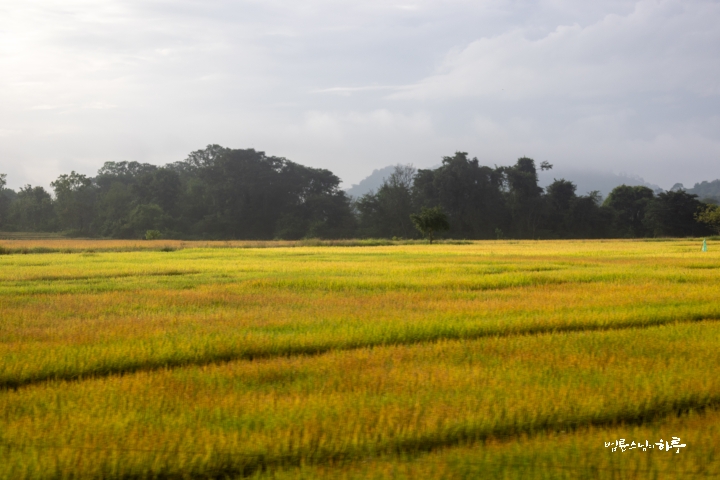
At 11:00 AM, after passing rice fields, Sunim went to a villager’s house. The villagers were waiting with refreshments prepared. They were traditional Sri Lankan foods made by hand.
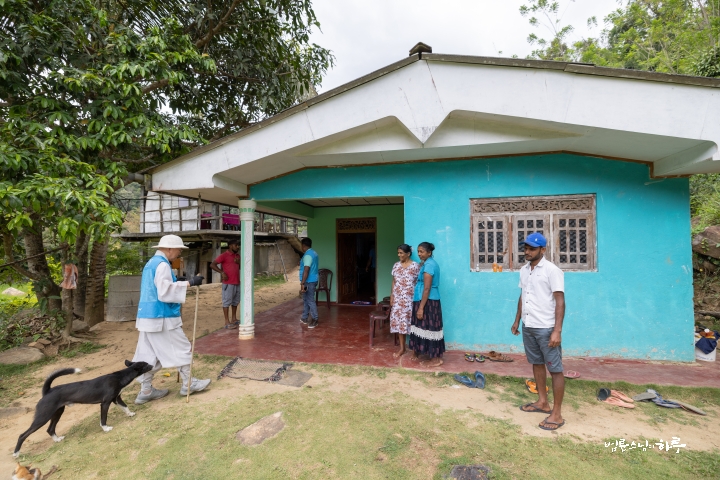
When Sunim asked the gathered villagers about their difficulties, the village representative began to speak.
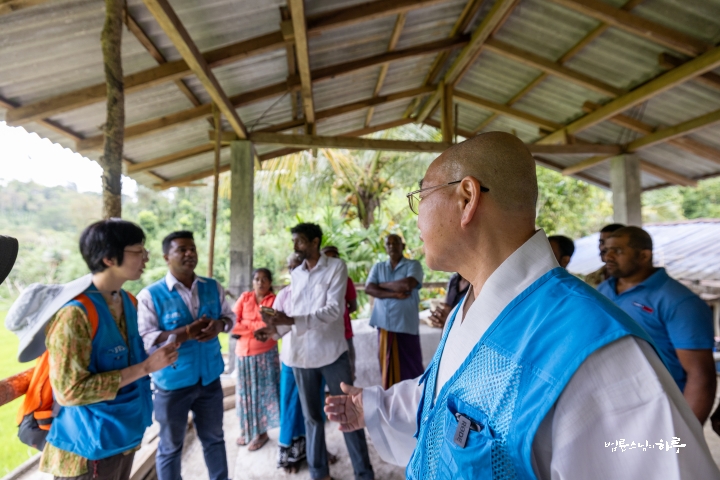
“Cyclone ‘Deetwa’ struck this village three months ago. About 50 people died in the entire Badulla district, and this village also suffered severe damage. The cyclone broke bridges, destroyed waterways, and washed out roads.”
The villagers made two requests.
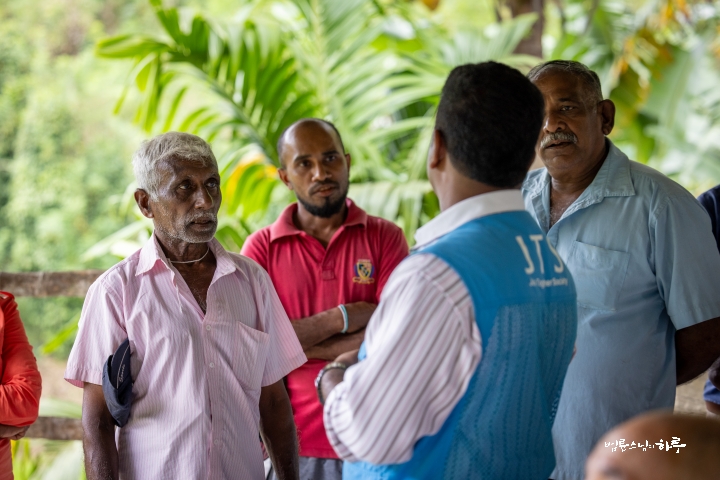
“We want to restore the collapsed bridge. And we want to repair the damaged irrigation channels.”
“Let’s go and see.”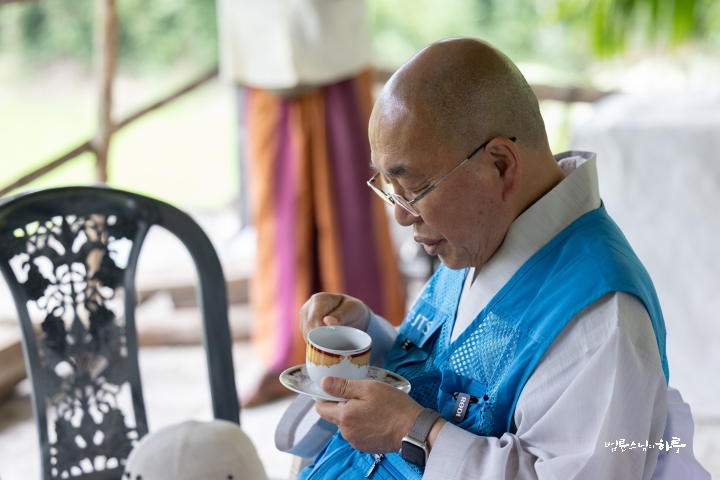
When Sunim stood up and began walking, the group followed behind. The villagers gathered one by one, forming a long procession behind Sunim.
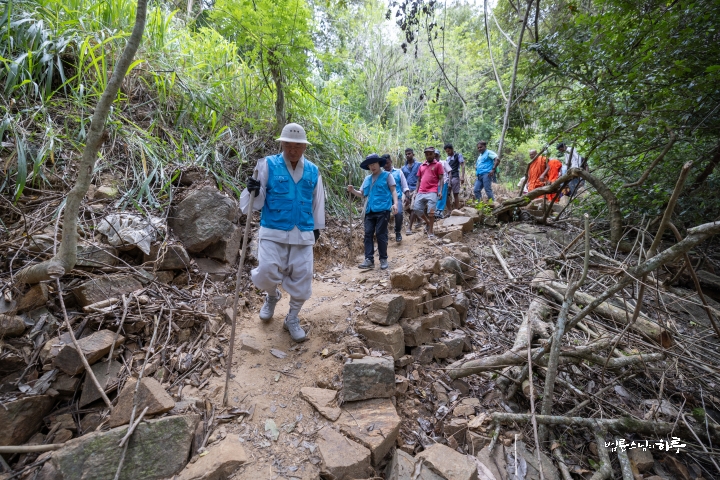
Shortly after, they arrived at a makeshift suspension bridge. It was a bridge the villagers had made by placing wooden pieces side by side on logs.
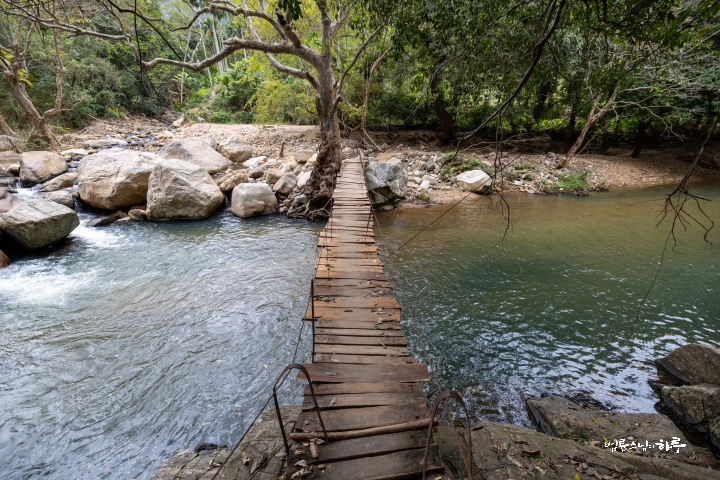
Originally, there was a wire cable bridge built in 1951. It was 110 feet long (about 33 meters) and 3 feet wide. Not only people but also motorcycles used to cross this bridge. However, it was completely destroyed by the cyclone. About 800 households in 5 villages lived on both sides of the bridge. Children from across the river had to cross this bridge to go to school, and sick people had no other way to reach the hospital without this bridge.
Sunim inspected the makeshift bridge and was the first to cross it.
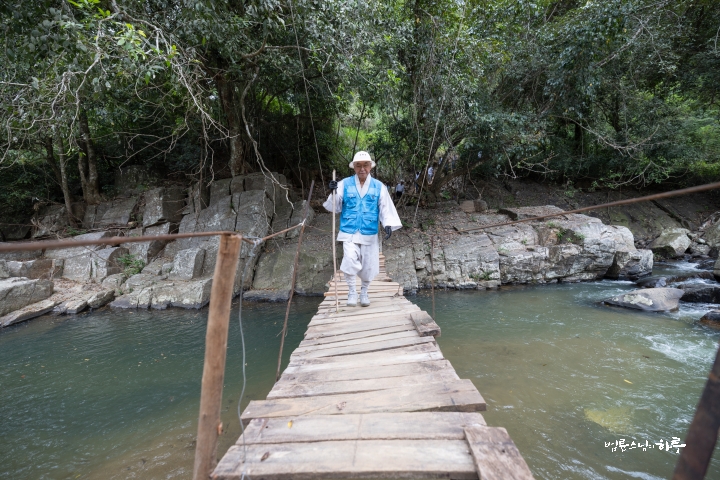
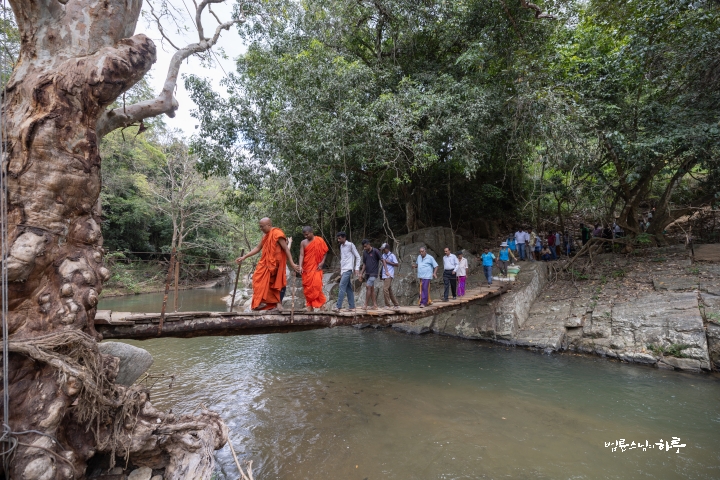
After crossing the bridge and climbing up a bit, traces of where the original cable bridge had been remained.
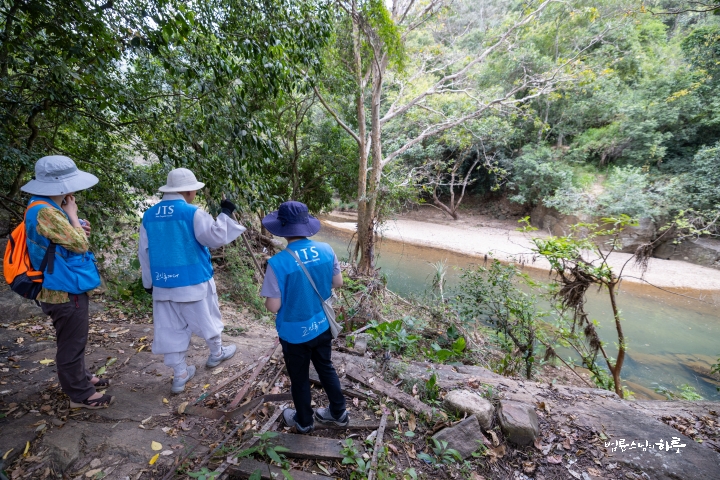
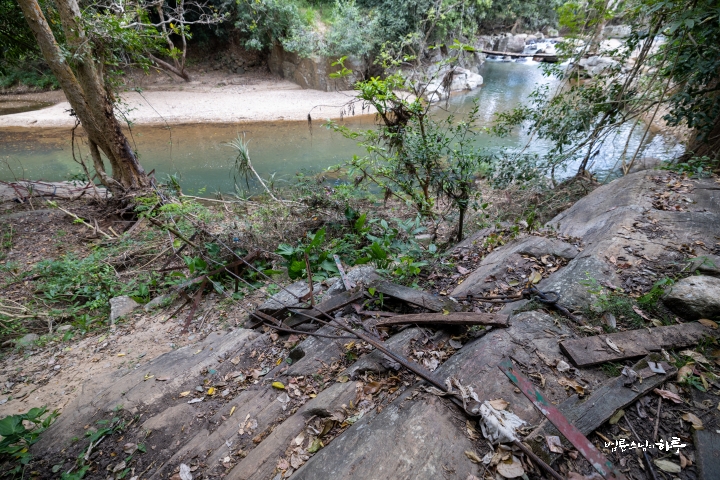
After going down to the river to examine the water volume and width, Sunim began walking along the waterway.
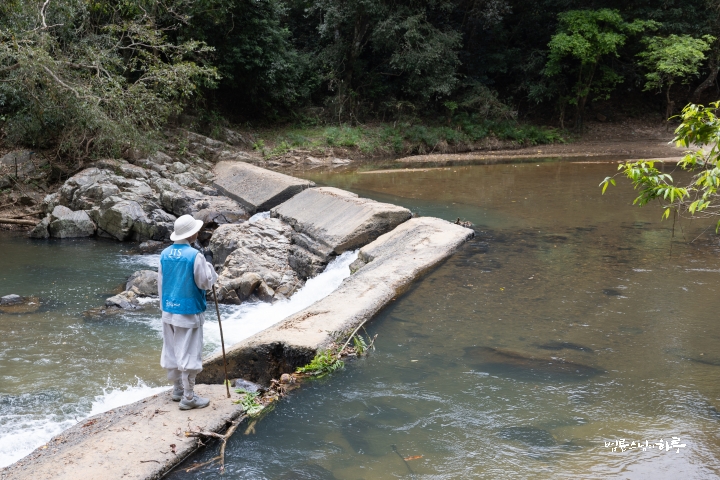
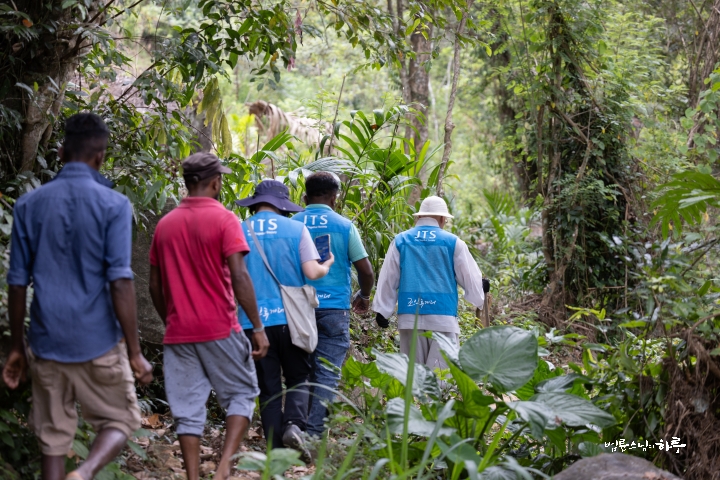
The waterway continued along the hillside. Traces of temporary repairs to collapsed sections were visible here and there. Evidence of repeated incidents where soil flowed down from the mountain, blocking the waterway, and water overflowing and breaking the embankments remained throughout.
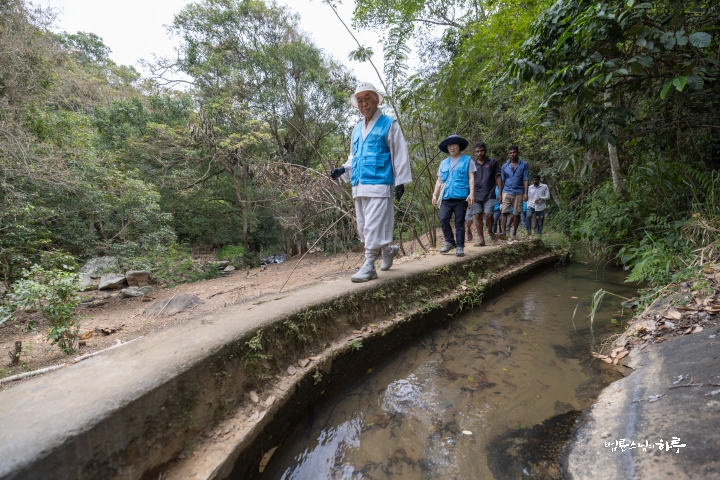
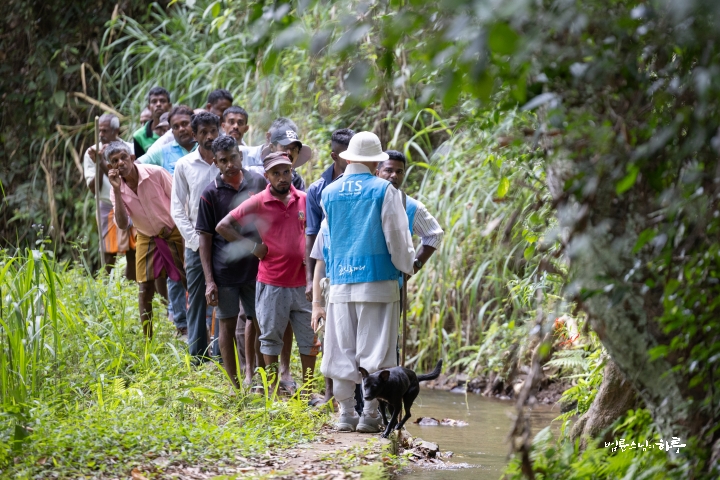
After climbing a gentle slope, the view suddenly opened up. Terraced rice fields (다랑논)spread out in layers within the lush mountains.
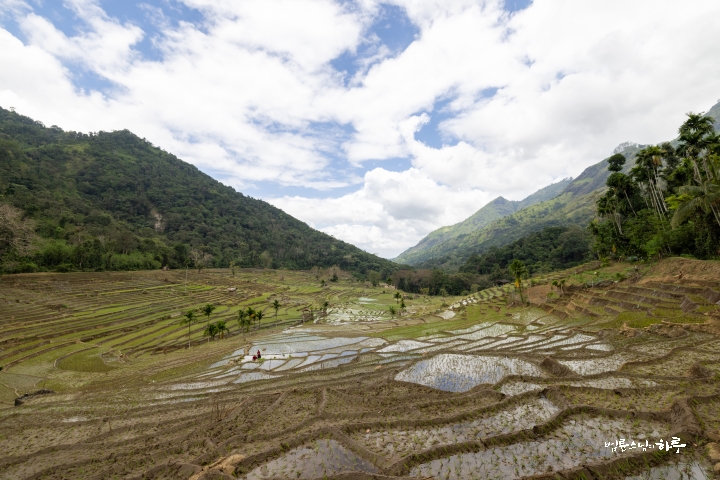
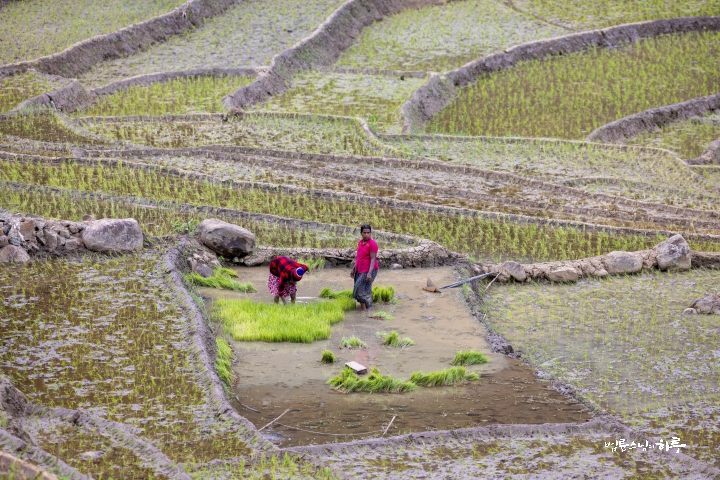
The villagers said that about 90 households were farming in these fields, relying on this single waterway.
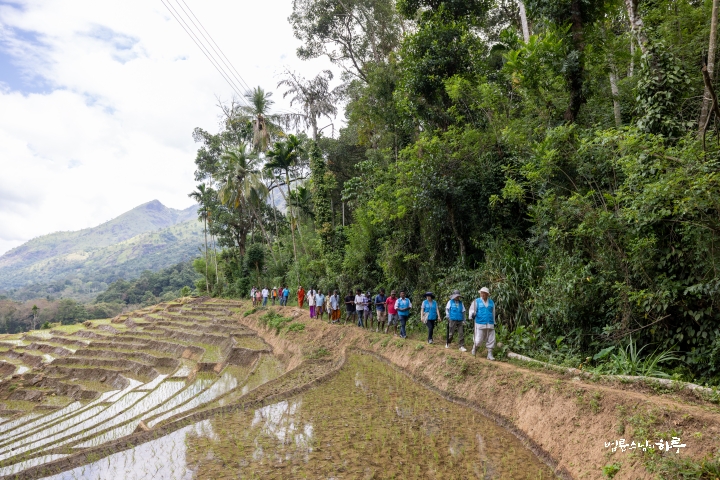
After passing the terraced fields, they arrived under a large bodhi tree. About 45 minutes had passed since the inspection began. Everyone was drenched in sweat.
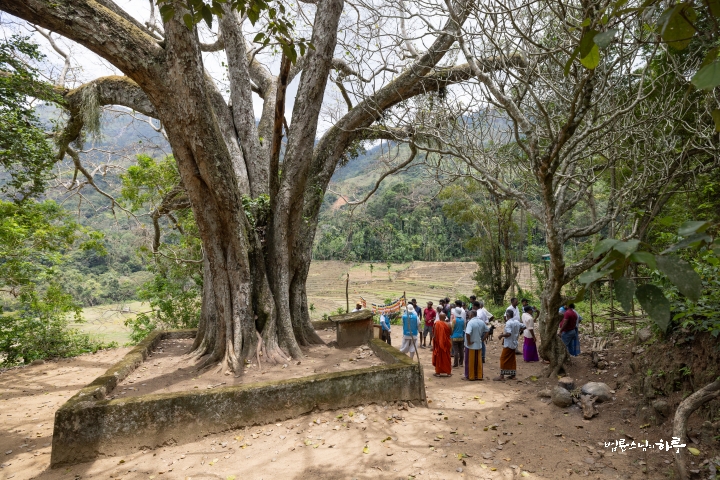
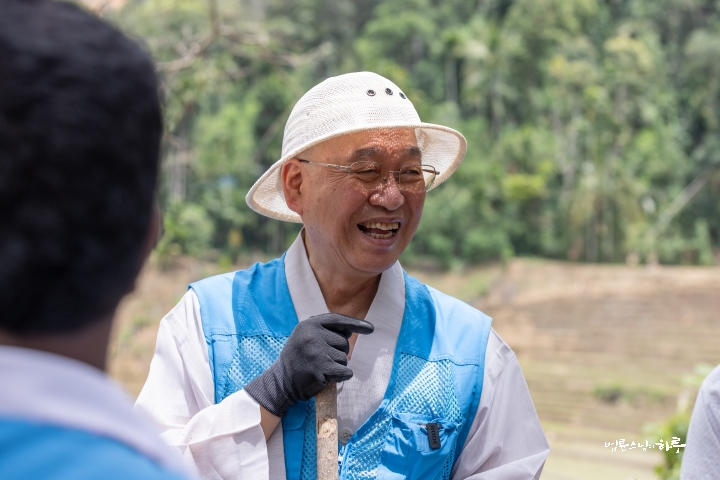
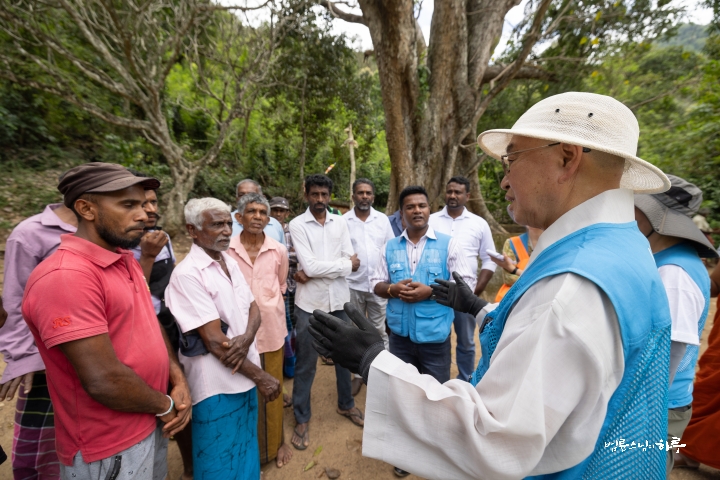
Under the shade of the bodhi tree, Sunim stood in a circle with the villagers and began a conversation.
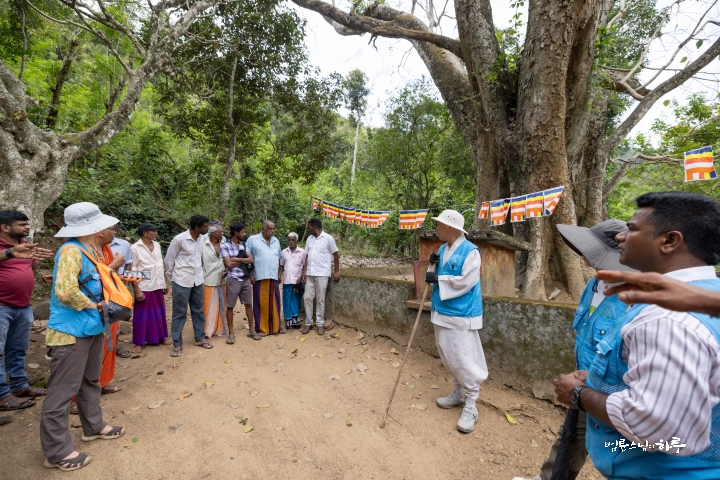
The villagers wanted a bridge wide enough for tuk-tuks (삼륜 오토바이:three-wheeled motorcycles) to cross. Sunim asked whether it wouldn’t be better to first request the government to address the bridge issue.
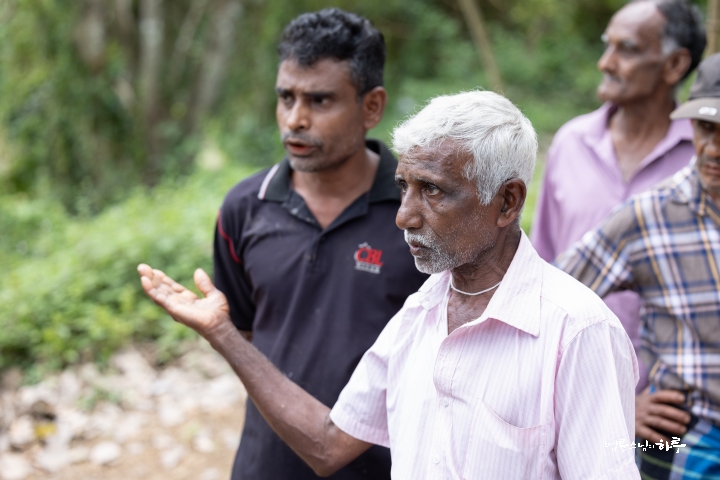
The village representative said they had been requesting repairs to the old bridge even before the cyclone, but there had been no response yet. Hearing this, Sunim asked if there were any technicians in the village who could build bridges. They said there were technicians from the village. Also, Sambath, a local JTS Sri Lanka activist, said he worked as a technician for the government.
The conversation continued specifically about waterway repairs as well.
“Yes, we will do that.”
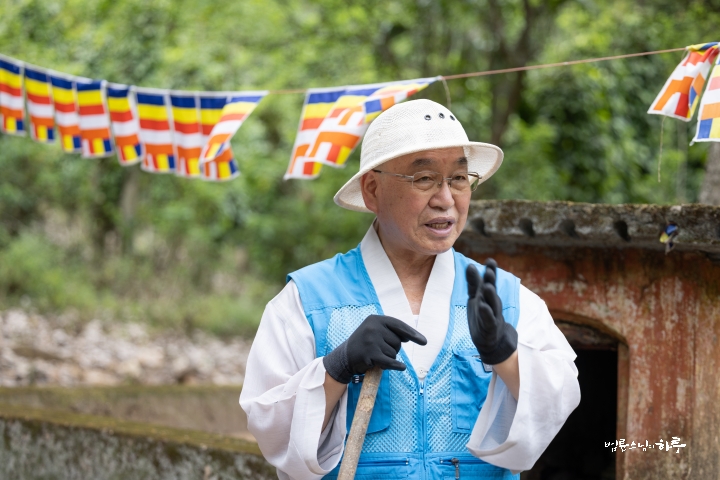
After finishing his words, Sunim also added about the meaning of the money used for this work.
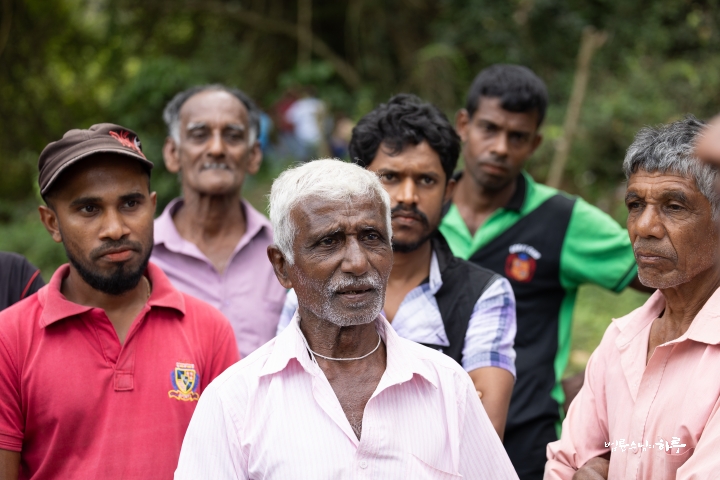
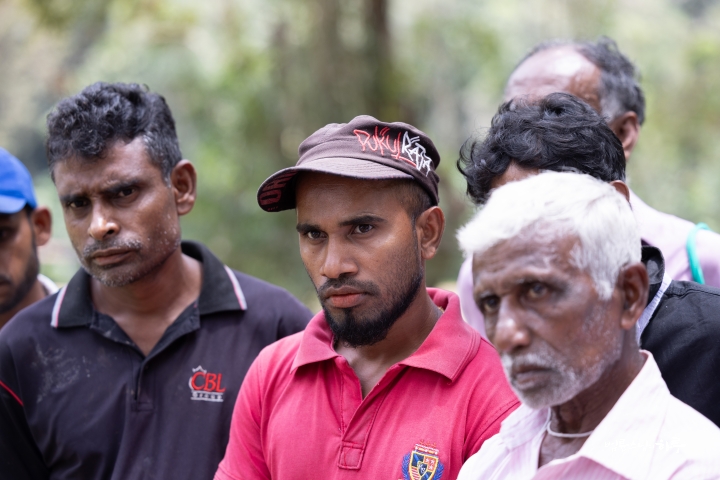
The villagers nodded in agreement. They concluded the discussion by agreeing to prepare and submit estimates and proposals for each project. When the residents said they wanted to show the road sections that needed repair, Sunim climbed the mountain path again at 12:45 PM.
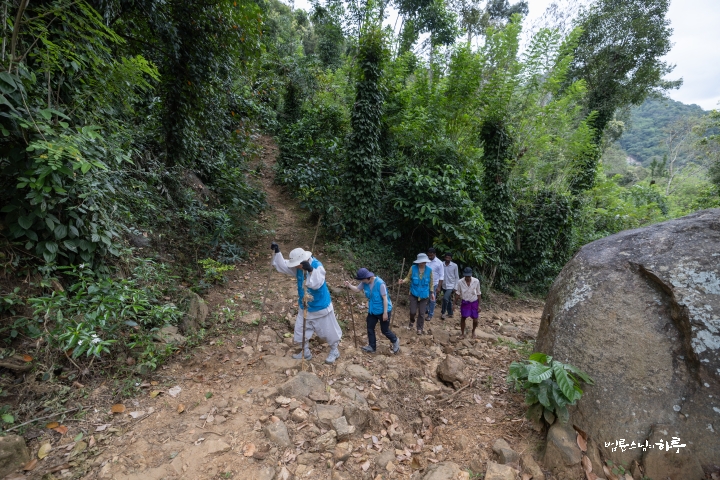
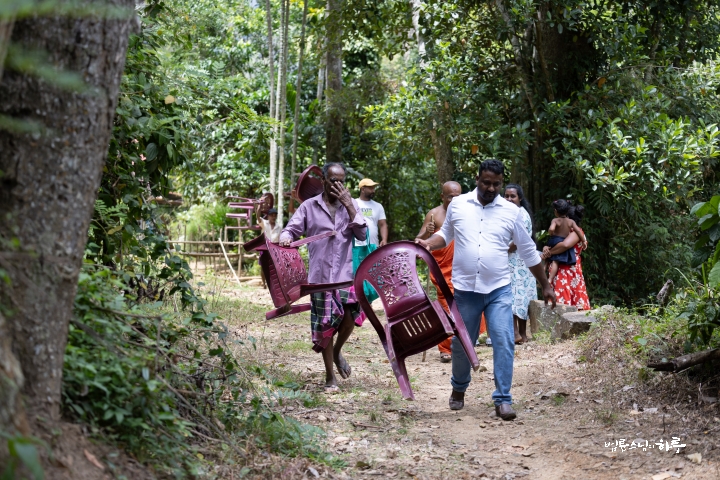
After crossing the ridge, there was a villager’s house. The villagers wanted to offer water, but Sunim politely declined, concerned that going into the house and coming back out would delay them. The villagers then followed with chairs and coconut water. Sunim, who had been hurrying along, paused for a moment.
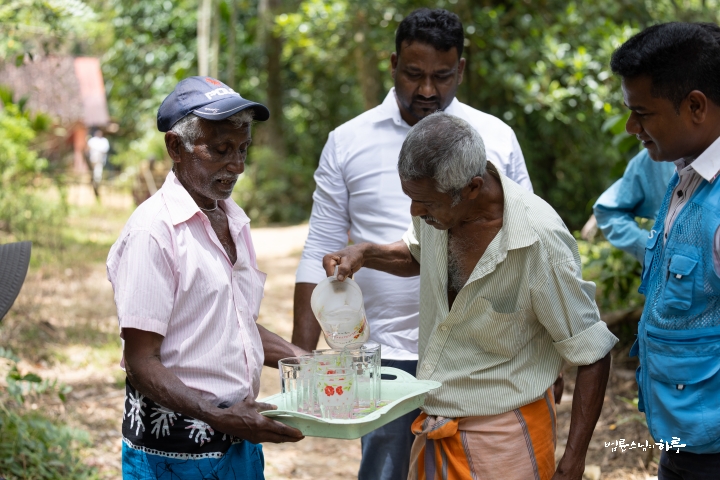
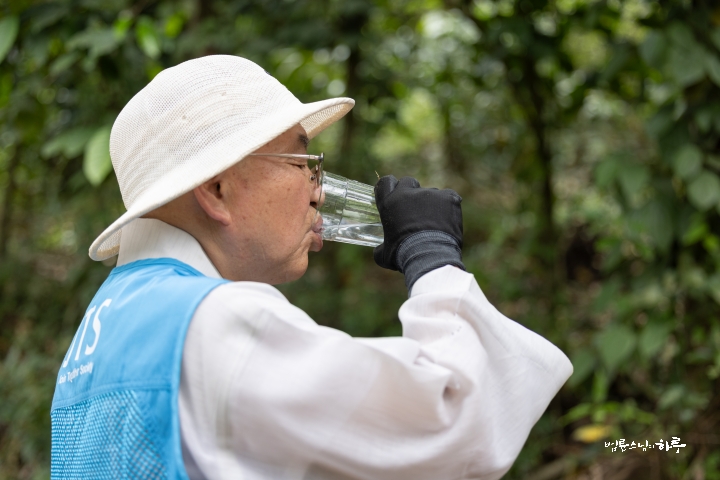
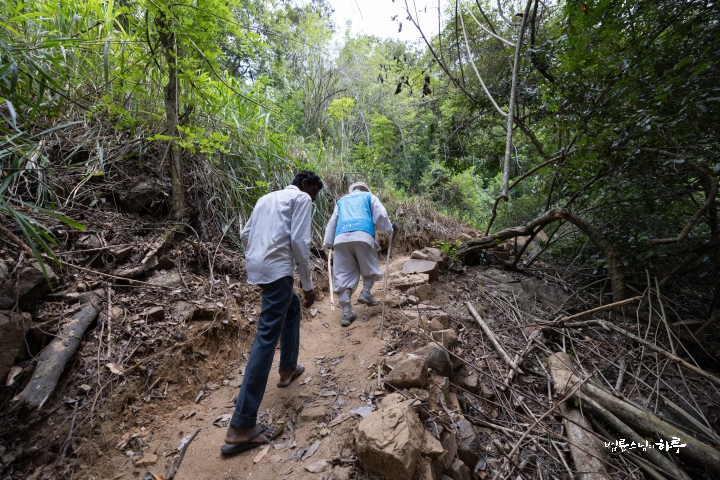
After quenching his thirst, Sunim followed the villagers and walked along the roads that needed repair, examining them firsthand.
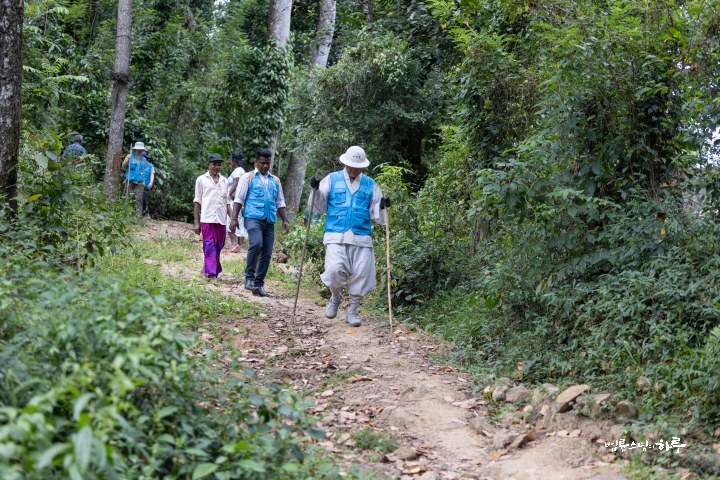
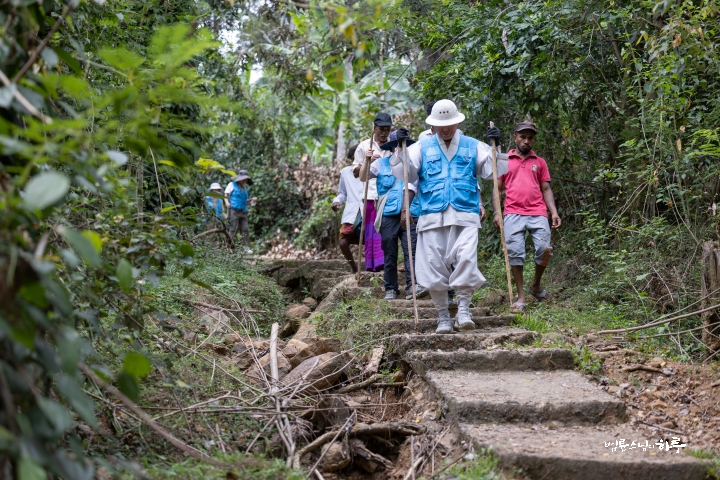
At the end of the downhill path, they arrived at another broken bridge. However, the direct inspection revealed one fact. While the villagers wanted a bridge wide enough for tuk-tuks to pass, even if the bridge were crossed, there was a steep slope that tuk-tuks couldn’t climb. The villagers said that if that road were improved, tuk-tuks could travel on it.
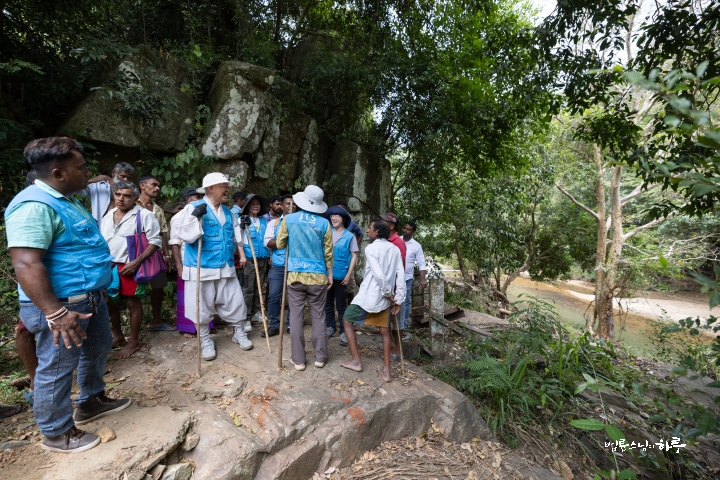
After examining up to this point, they crossed the bridge and returned to the village house where they had tea at 1:20 PM.
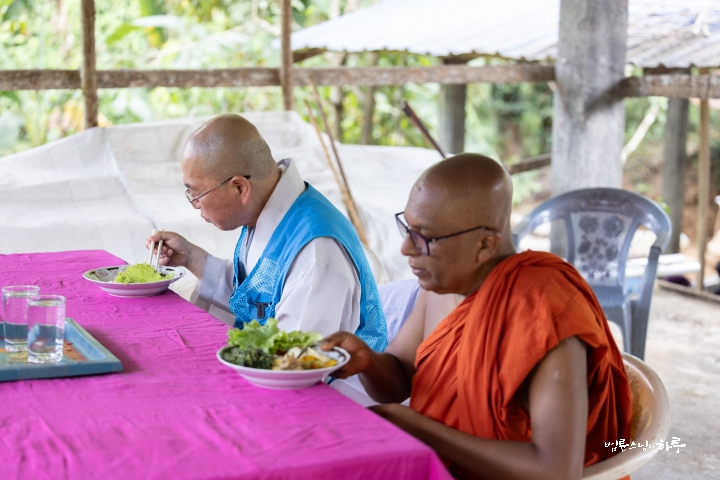
Lunch was prepared. In the meantime, the residents had prepared warm rice and side dishes.
After finishing the meal, they moved to the temple, the relief supplies distribution site, at 1:50 PM.
Upon arriving at the distribution site, JTS Sri Lanka local volunteers and village volunteers were busily preparing for distribution under the hot sun.
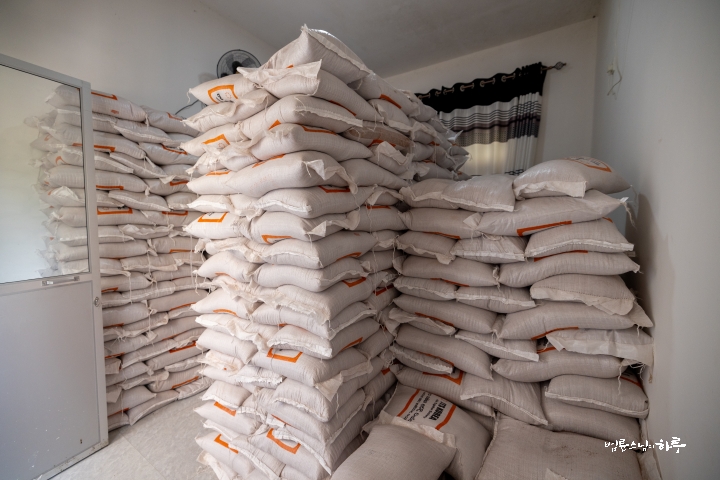
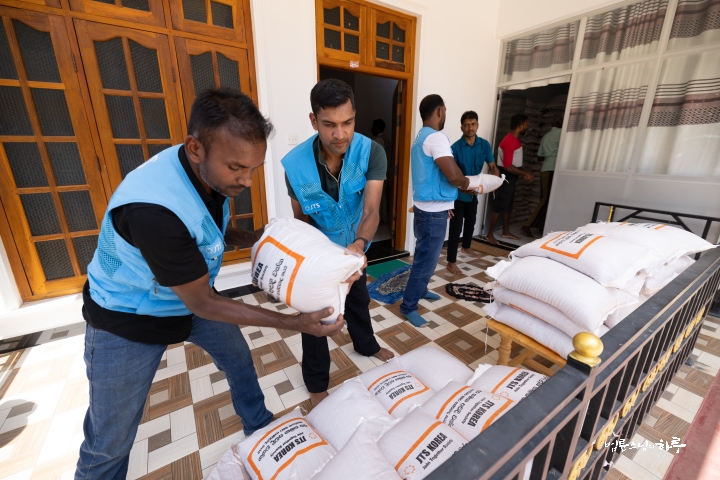
Before starting the distribution, they first surveyed the site. The original plan was for people entering and leaving to use the same door, but concerned about confusion due to the narrow entrance, they changed the flow on the spot. They separated the entrance and exit doors and organized the narrow entrance for single-file lines. This made the distribution much more stable and orderly.
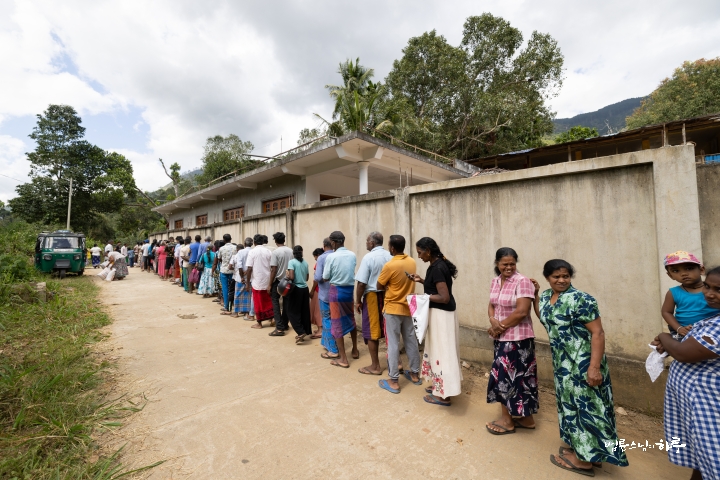
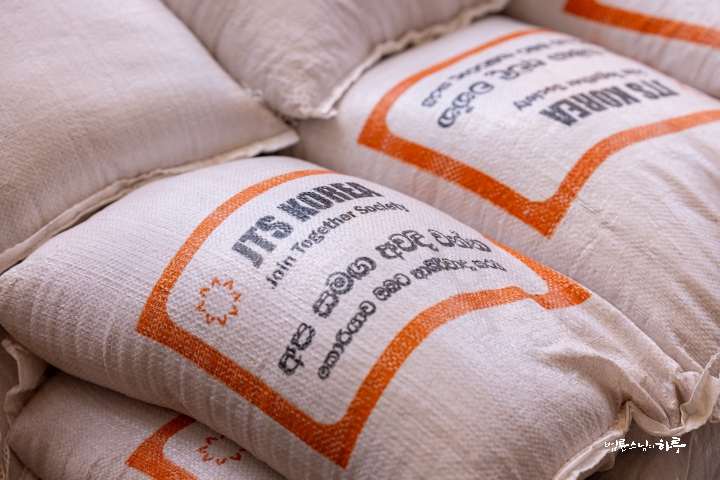
Distribution began at 2:00 PM. Sunim personally handed rice bags to the residents. Each household received two 10kg bags of rice.
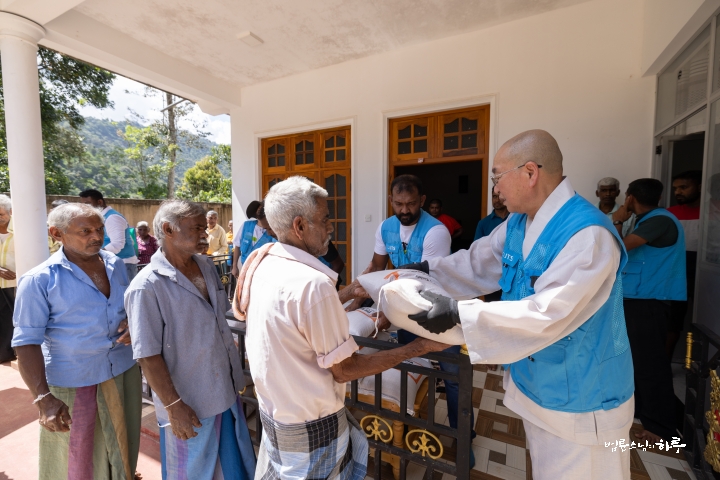
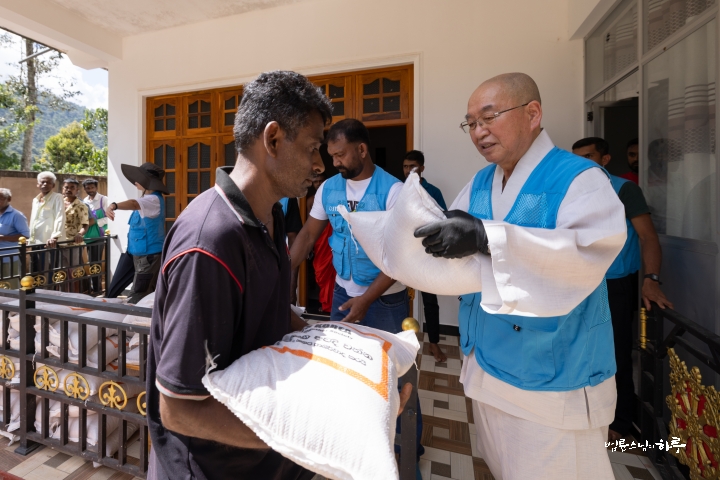
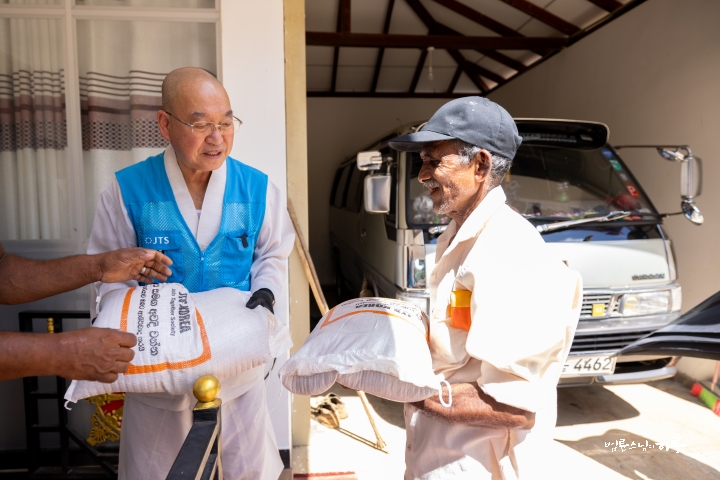
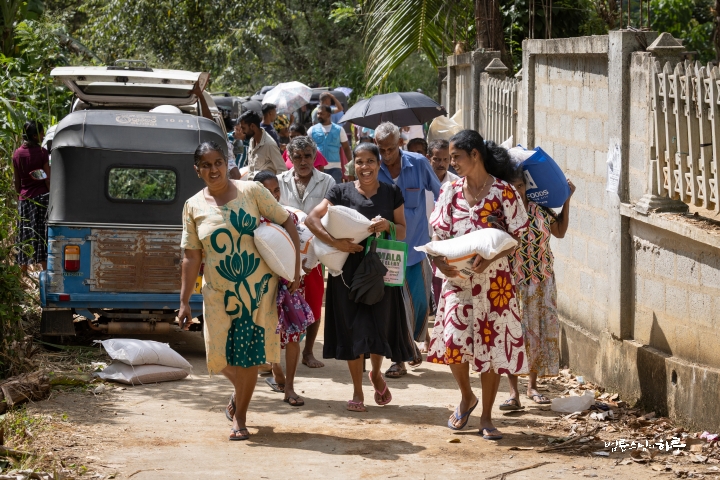
The residents who received the rice smiled brightly.
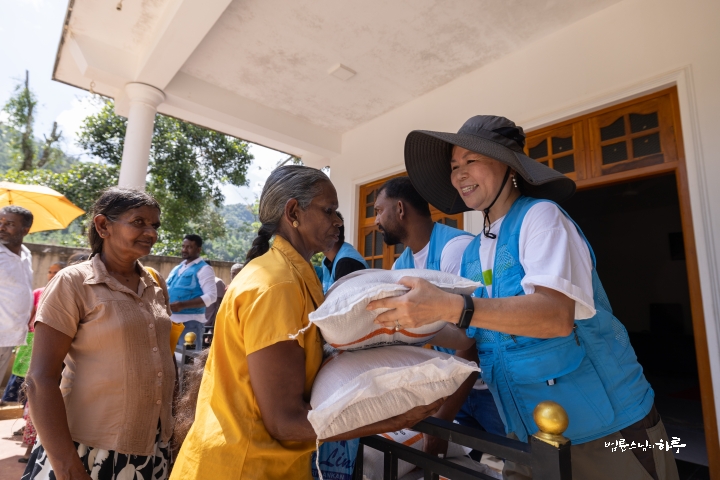
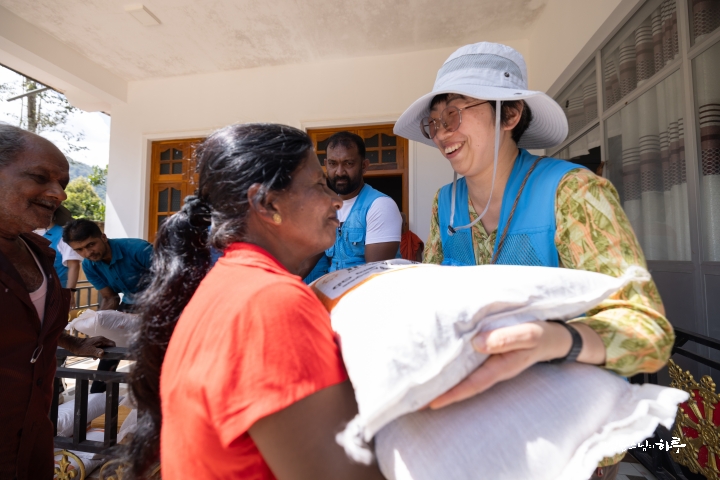
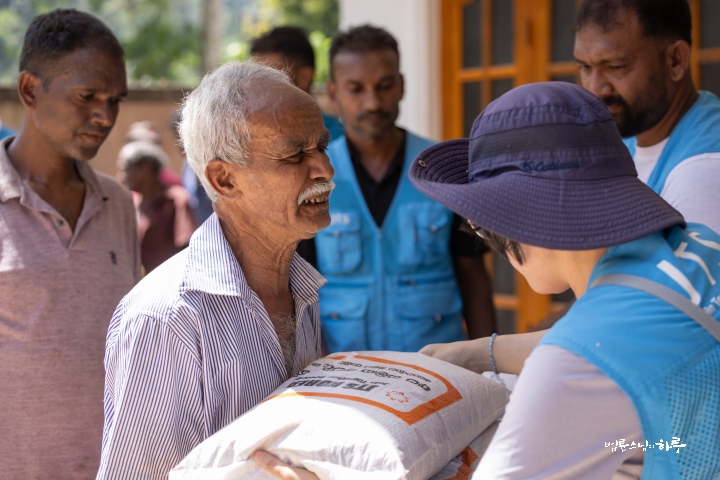
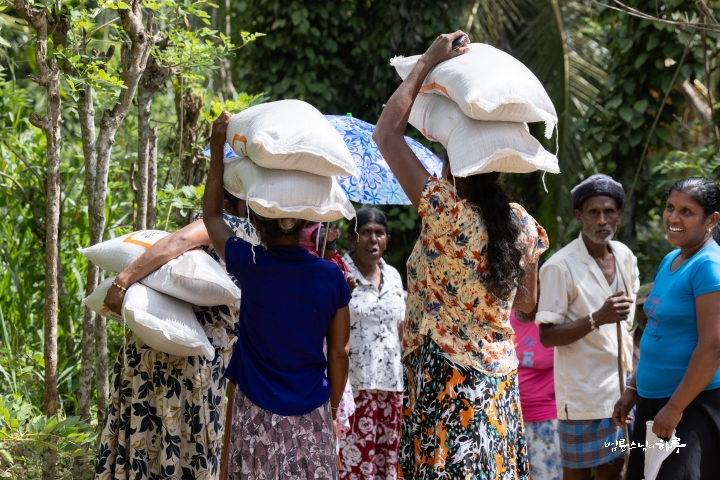
An elderly woman walking with the heavy bag on her head, a woman balancing two bags alternately, a young person striding with the bag on their shoulder. A procession of people carrying rice bags continued along the village road where the cyclone had passed. The heavier the bags, the brighter the smiles.
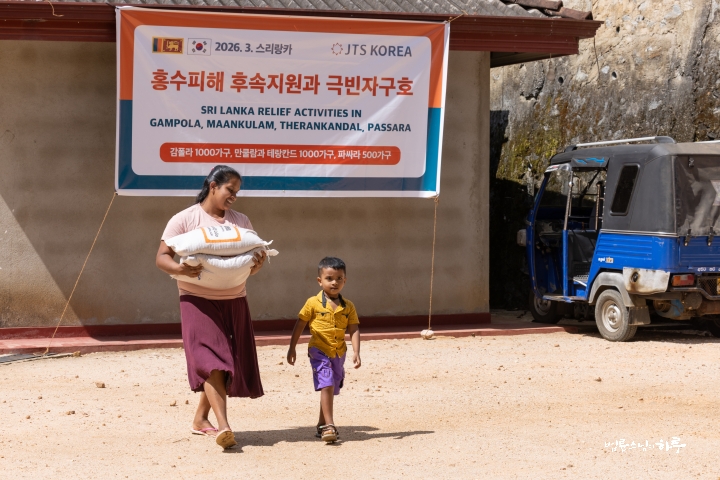
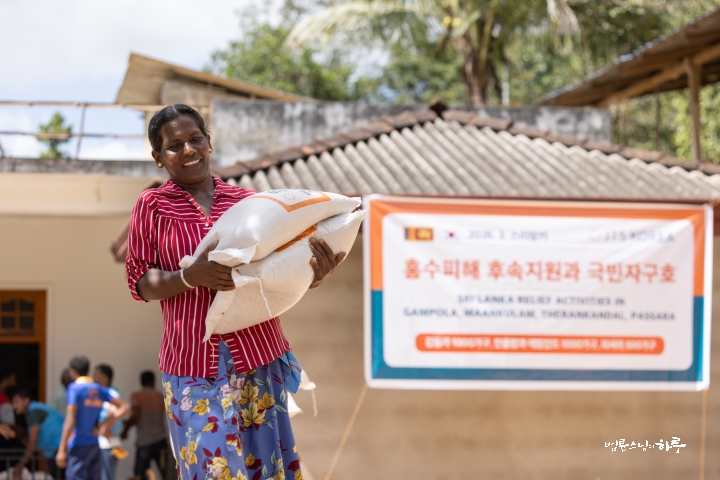
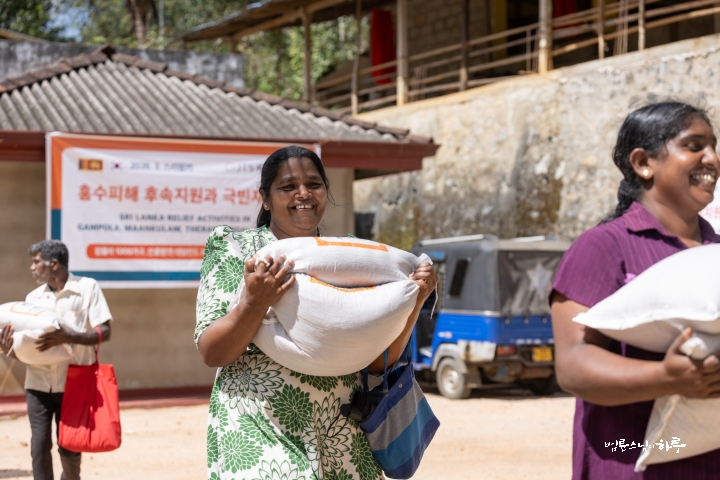
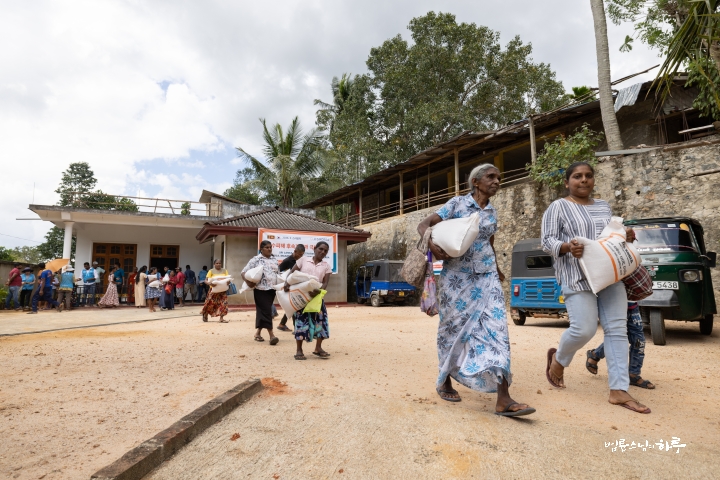
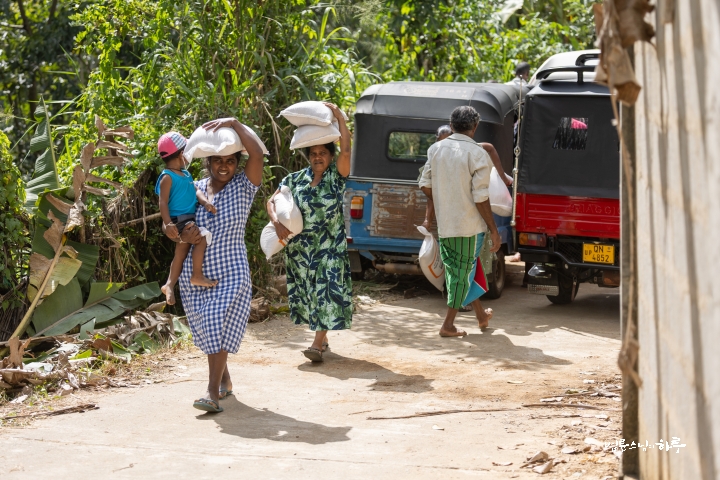
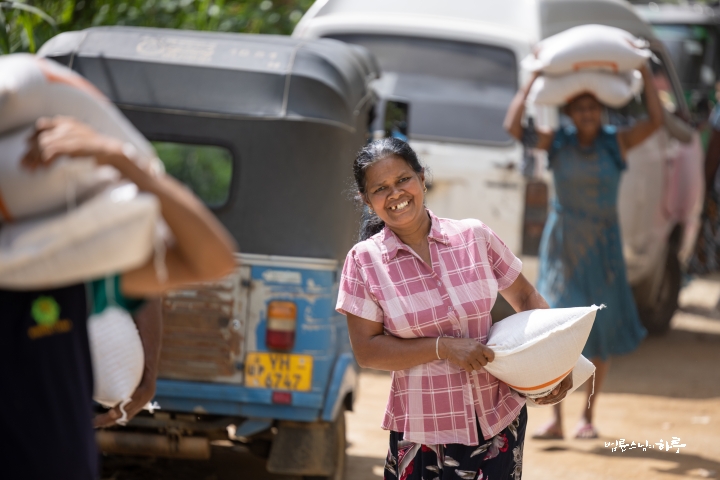
Shortly after, Sunim handed over the task of giving out rice bags to someone else and helped carry the rice.
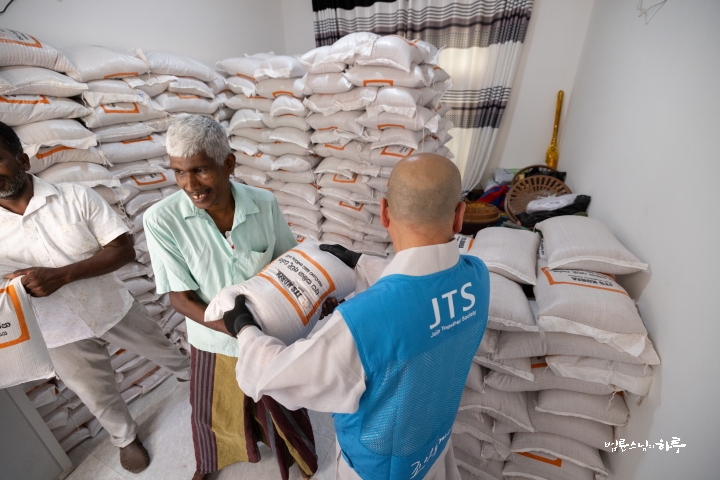
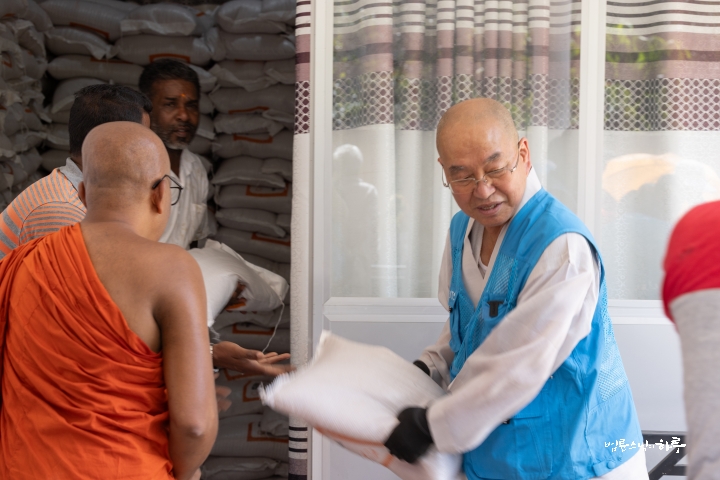
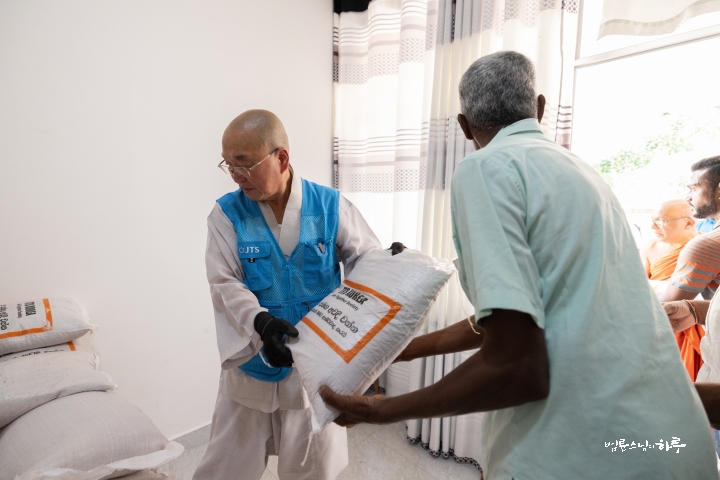
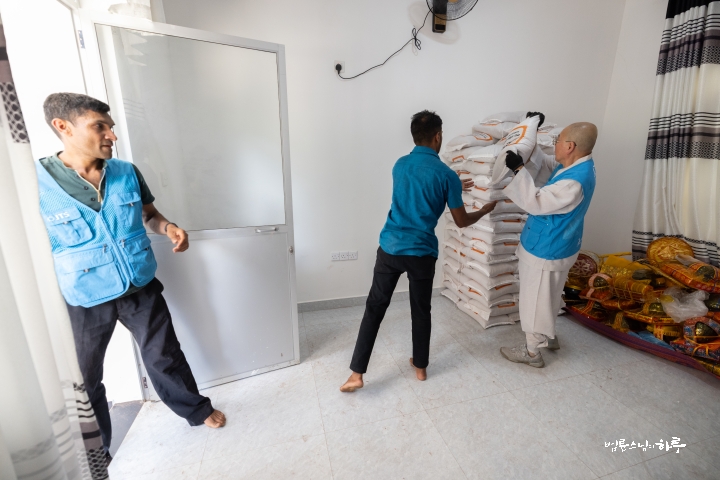
The distribution was completed in one hour.
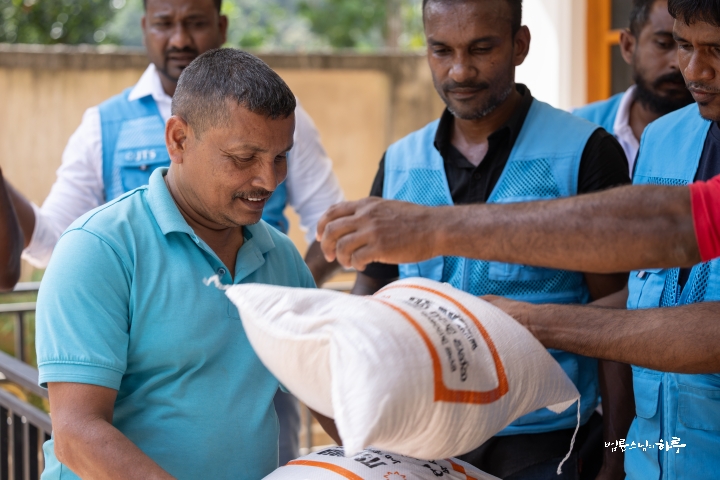
Sunim presented bracelets as gifts to the volunteers who had served until today and were returning home.
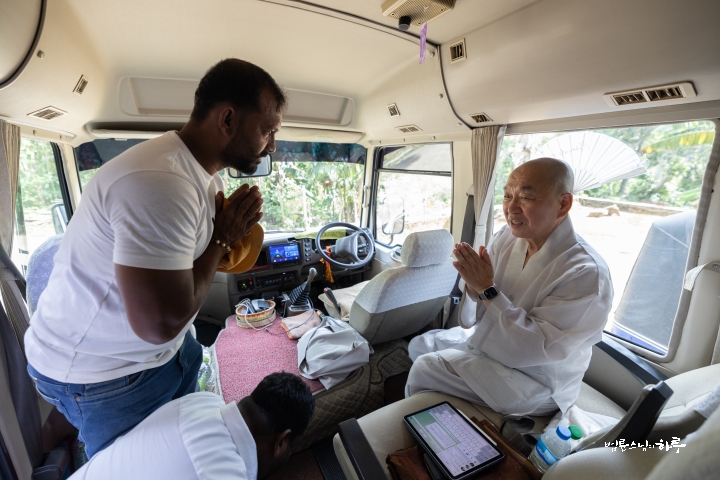
At 3:15 PM, they got back in the car and descended the winding mountain road, then climbed another mountain.
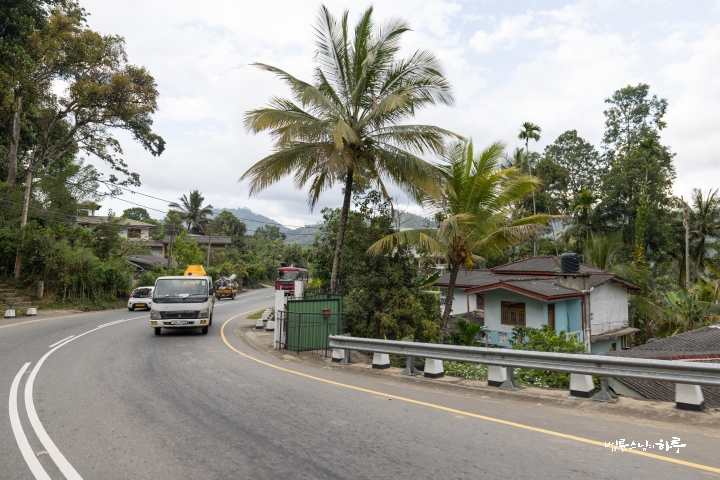
The destination was Nuwara Eliya, located at over 2,000 meters above sea level. It’s a city situated high in the mountains of Sri Lanka. As the altitude increased, the temperature dropped sharply. The heat of the day disappeared as if it had never been, becoming cool.
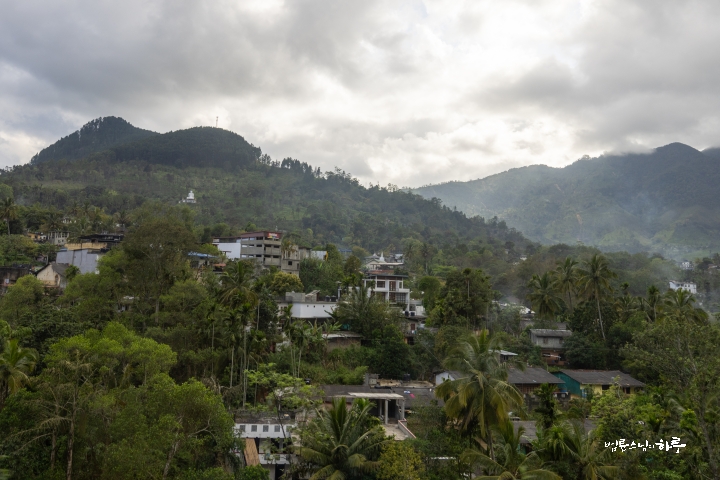
As the sun set, they arrived at the accommodation at 6:50 PM. Dinner was ramen.
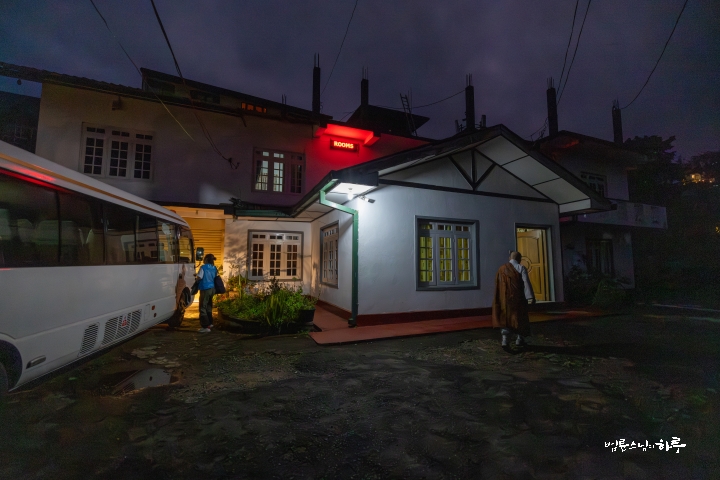
After finishing dinner, Sunim handled pending work and went to bed after 9:00 PM.
Tomorrow, they will move to Gampola village in central Sri Lanka to inspect flood-affected villages and distribute rice to 1,000 households.
Since there was no Dharma talk today, this post concludes with a dialogue between Sunim and a questioner from the Friday Dharma Q&A (금요 즉문즉설) held at Jungto Social and Cultural Center (정토사회문화회관)on the 27th of last month.
I Feel Anxious When Meeting People. Why Hasn’t This Improved After 10 Years?
“I’m a 26-year-old young man preparing for employment. Both of my parents have hearing disabilities, and my father was bedridden for 14 years before passing away. During my childhood, I grew up amid frequent conflicts and family discord between my parents, and I experienced a lot of stress living among my older brothers. Perhaps due to this influence, I’ve been suffering from stress-induced gastritis for over 10 years. Although it’s much better than before, anxiety still remains deep in my heart. I now live independently on my own, but forming deep relationships with people is difficult, and meeting others itself often feels burdensome. I thought things would naturally improve after military service and graduating from university, but these mental habits haven’t easily disappeared. Recently, I heard the story of a high school girl in a similar situation to mine in a Dharma Q&A video. At that time, you said that to break karmic patterns, one needs to live as a Haengja (행자, a Buddhist novice living in a temple). I’ve also tried to change my mental habits through practice and studying the mind. There were times when I felt I had improved during this process. However, when I actually try to form relationships with people, anxiety rises again and I keep my distance. I’d like to ask whether it’s okay to continue living like this, or if I must live as a Haengja as you suggested to escape from these karmic patterns.”
“For example, let’s say I have a habit of smoking. This habit can be changed, or I can just live with it without changing it. We can’t say that changing it is unconditionally better. If you’re fully prepared to change it or if the addiction is weak, it’s better to quit. However, if you keep failing to quit smoking despite your determination because your willpower is weak or the addiction is strong, the more you try to quit, the more stressed you become and the self-abuse only gets worse. In such cases, there’s also the method of accepting the consequences, thinking, ‘Fine, I’ll smoke and die a year or two earlier.’ It’s acknowledging your habit and accepting the resulting consequences. If you have psychological anxiety, you can try various efforts such as receiving treatment, going to a psychiatrist, or living as a Haengja at a temple like in the 100-Day Chulga program. But if it still doesn’t improve well despite these efforts, now you need to choose. You need to decide whether to focus more on correcting this habit or to live while accepting this level of difficulty. The most foolish thing is to keep stressing yourself thinking ‘I need to fix this, I need to fix this…’ while being unable to actually fix it. In such cases, it’s better to acknowledge and accept your weakness. You said you can’t form deep relationships with others, but what exactly is a deep relationship? It’s all abstract talk. Thinking ‘I can’t form deep relationships’ itself is a form of psychological anxiety. Even ordinary people don’t live forming that many deep relationships. Why do you want to form deep relationships with people?”“Now that I’ve become an adult and lived to my current age, I still think that maybe I can change if I try. However, meeting people isn’t particularly enjoyable for me. My friends go out a lot and socialize, and I have a desire to enjoy such a life too. But since I can’t really enjoy it even when I do that, I end up spending a lot of time at home.”
“I also don’t find it enjoyable to meet friends and go around places. I don’t want to go around meeting friends, nor do I enjoy such things. But I don’t think being alone is a problem either. However, you think it’s a problem. You don’t even want to do it, yet you envy seeing people your age meeting, laughing, and chatting. That’s exactly the problem. If you envy such things, then go meet people, buy them meals, pay for travel expenses, and socialize with them. Otherwise, you shouldn’t envy them at all. Just as there are extroverted and introverted personalities, liking to be alone isn’t an illness but just a personality trait. If an introverted person wants to socialize and play like others, they need to make that much effort. Since you envy it without making the effort, you feel as if you have some kind of illness. If you want to date a girlfriend, you need to move. If you like staying still alone and dislike going around, what woman would come and cling to you? Looking at your personality, there’s a high probability you’ll live alone. So is that a problem? It’s not a problem. You can just live alone. What you feel is a problem is because your body doesn’t want to move while your mind desires a life with a woman. That’s exactly what’s tormenting you. If you shave your head and become a monk, there’s no problem with your personality. You don’t need to go out, and you don’t need to meet many people. It actually suits the qualities of a monk well. You have no problem. You just have a little anxiety. You can acknowledge it and live with it. If you don’t want to meet many people, you can stay alone. When you occasionally feel bored, even if you don’t like it, you can go out and have a cup of tea with people.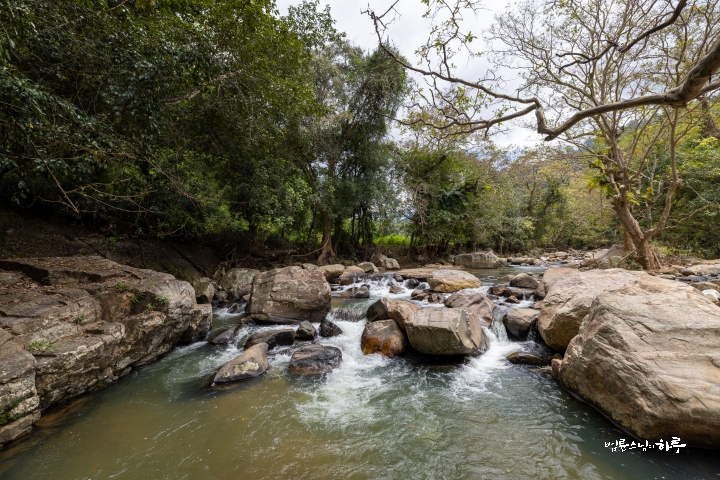
“Thank you. I understand now.”