My Boyfriend Just Stays Home and Won’t Get a Job. Should I Break Up with Him?
Mar 10, 2026 - Day 2 of Sri Lanka Relief for the Extremely Poor - Distribution to 1,000 Households in ...
Hello. Today marks the second day of visiting Sri Lanka for follow-up support in flood-affected areas and relief activities for the extremely poor.
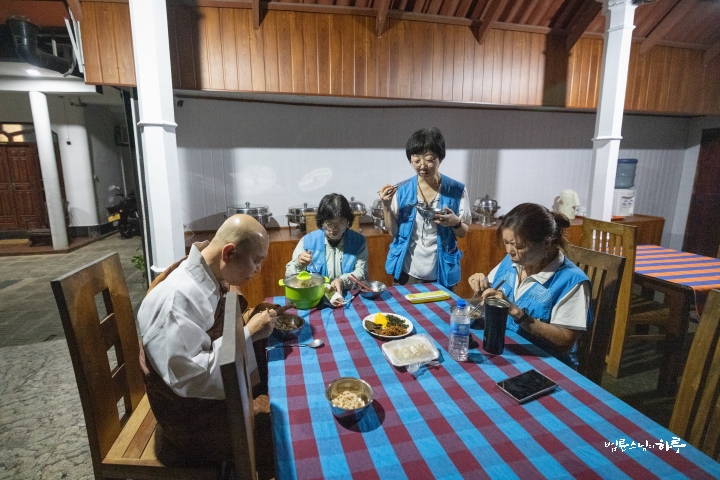
After completing morning practice and meditation, Sunim had breakfast with nurungji (누룽지 : scorched rice) at 5:30 AM in the accommodation dining room.

Today’s schedule includes visiting schools and villages in the Mankulam and Therankandal areas near Jaffna in northern Sri Lanka, followed by distributing relief supplies to 1,000 households in the afternoon.
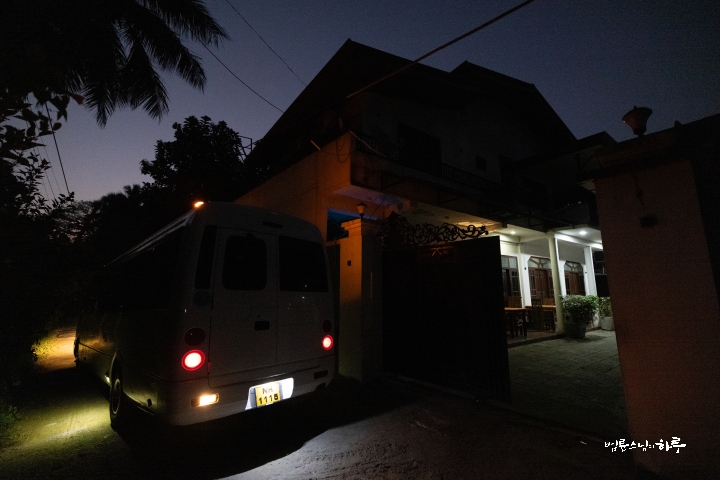
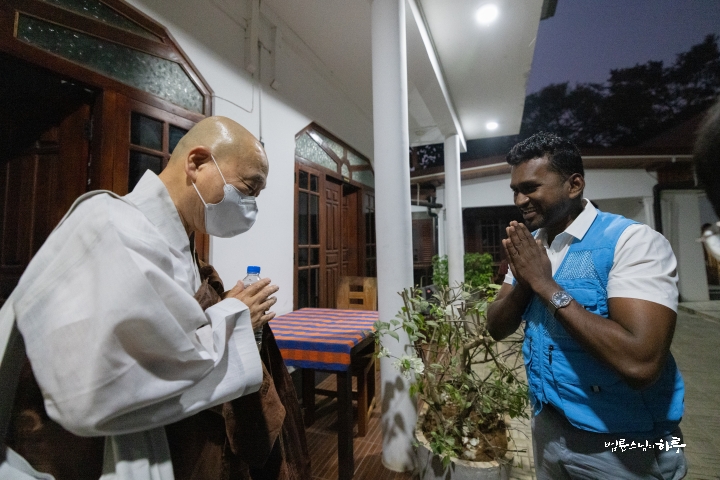
Since Mr. Namal had to go to Colombo to take an exam, Mr. Kelom, who speaks Korean well, agreed to handle guidance and interpretation today. After exchanging greetings with Mr. Kelom, they set out at 6:00 AM.
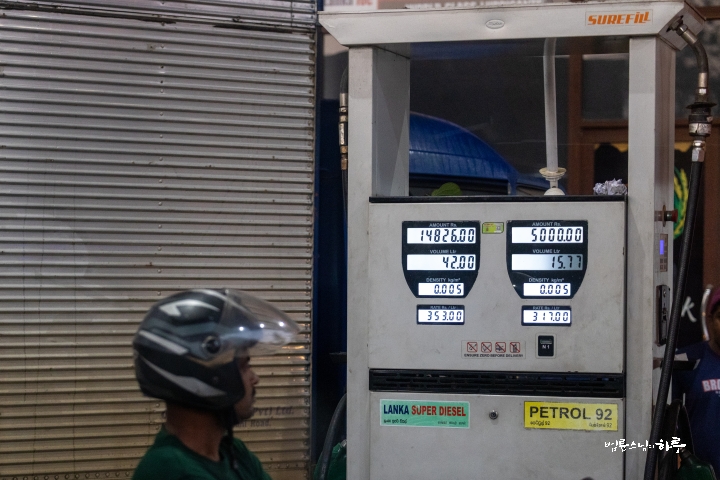
Immediately after departure, they stopped at a gas station, but couldn’t get fuel at two locations in a row. With fuel prices skyrocketing, everyone was scrambling to get gas. Only at the third gas station were they finally able to refuel and depart.
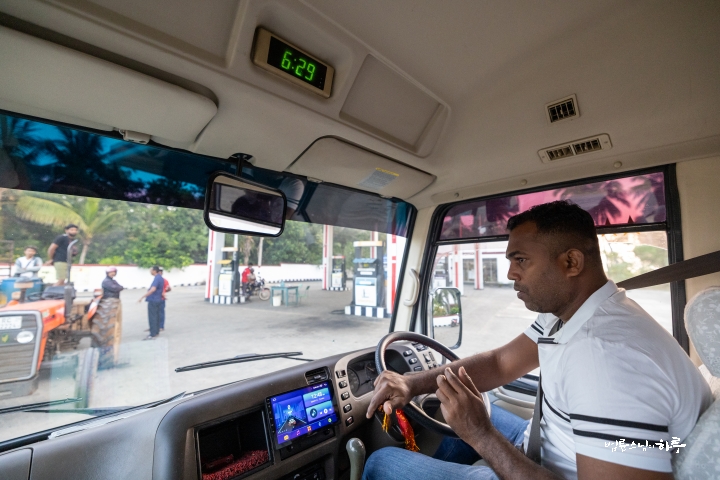
Through the car window, yellow fields ready for harvest stretched out endlessly, with the sun rising beyond the fields.

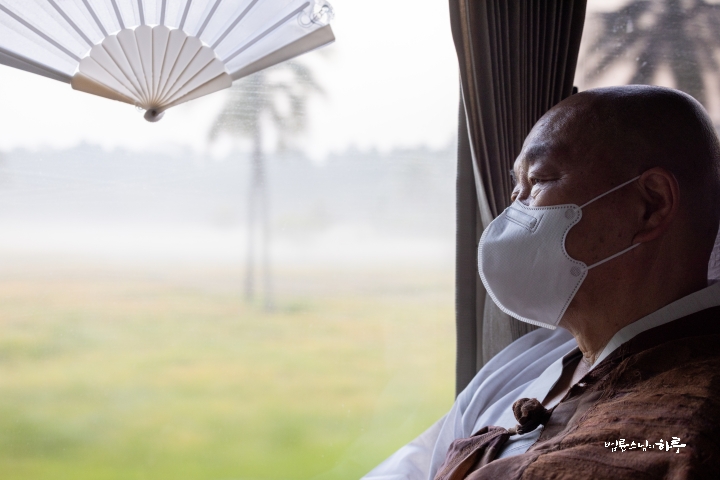
After a 3.5-hour drive, they arrived at Vannivilankulam School in Mankulam at 9:30 AM.

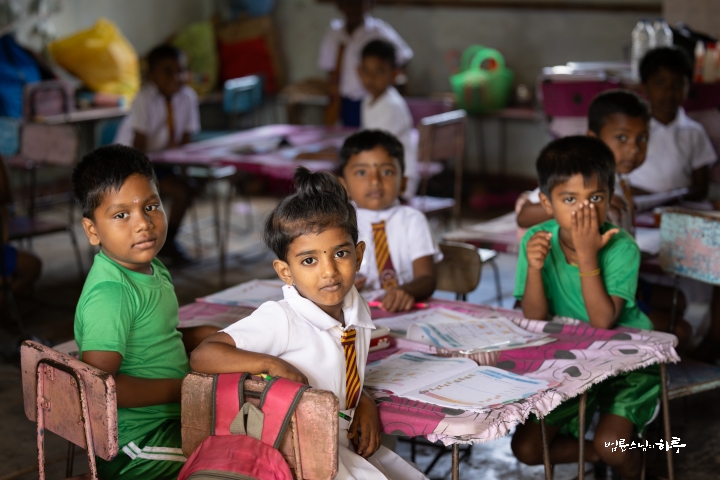
It was a government school with 200 students from grades 1 to 11. This area was settled by Tamil migrants who came from the south during the civil war. One of those who fled during the 1984 Sri Lankan civil war now serves as the principal.
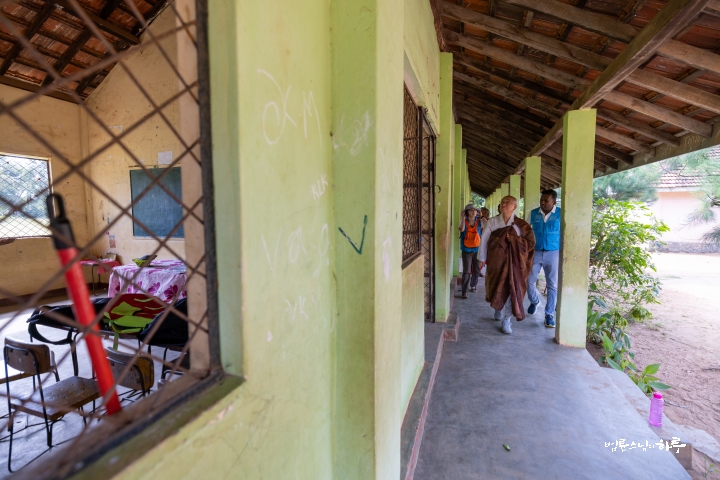

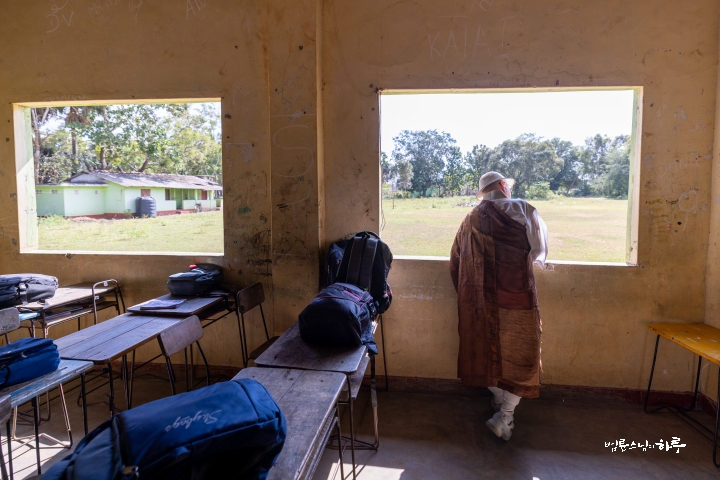
Upon entering the school, traces of time were evident throughout the old buildings. Classroom window frames were damaged in various places, and the wire mesh installed instead of windows was torn and left unattended. Most ceiling fans were missing, and among those hanging from the ceiling, only about three were functioning properly.
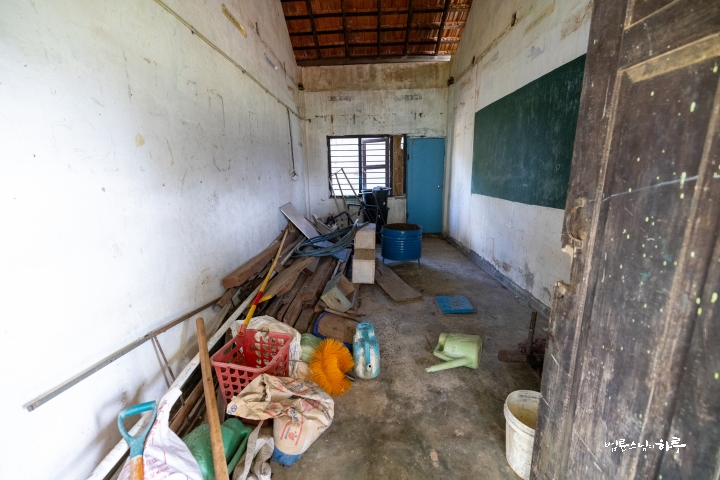
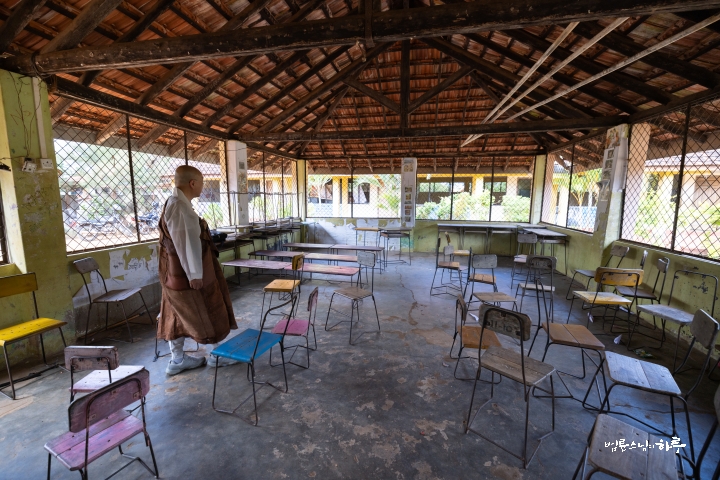
The school had received almost no help from external organizations in the past 25 years, and despite multiple requests to the government, they only received responses saying there was no budget.
Sunim first carefully examined the toilets. He looked into the toilet bowls, checked if water was running, and inspected each faucet. He then identified what was most urgent.
“The toilets seem to be the most urgent issue. With 200 students, that means 100 female students, but most toilets are broken and they’re using just those two stalls. How can that work? Since they relieve themselves anywhere, there doesn’t seem to be much awareness about toilet issues. That’s why we need to teach proper toilet use starting from school, and for that, the toilets need to be properly repaired first.”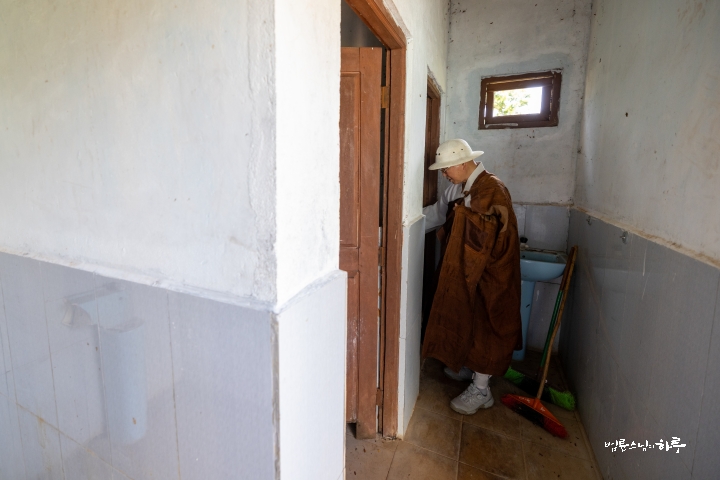
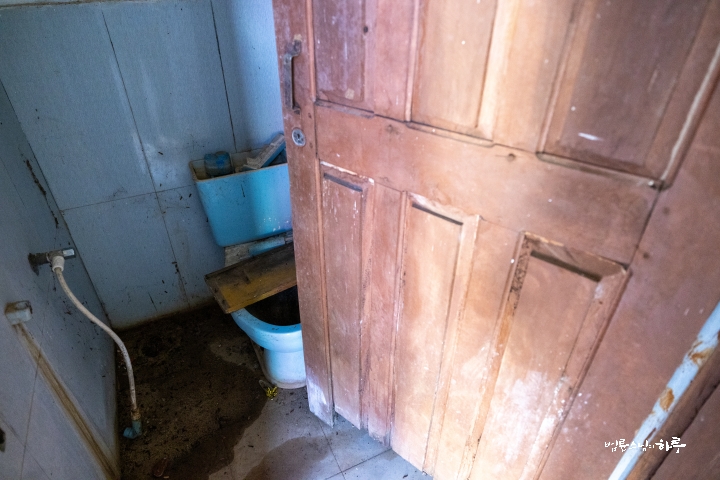
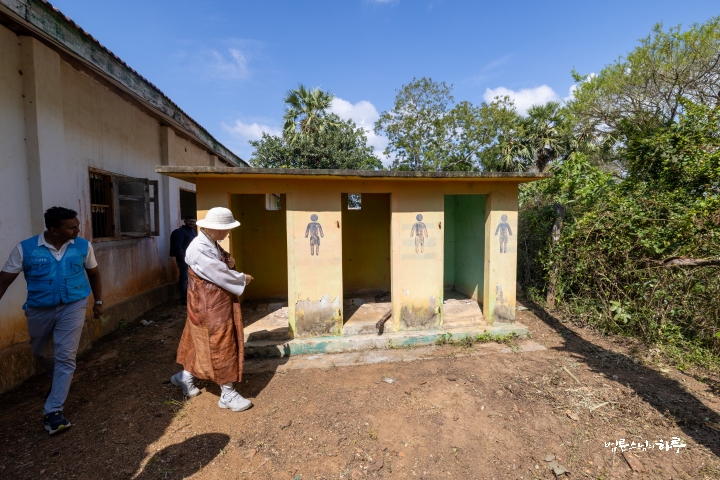
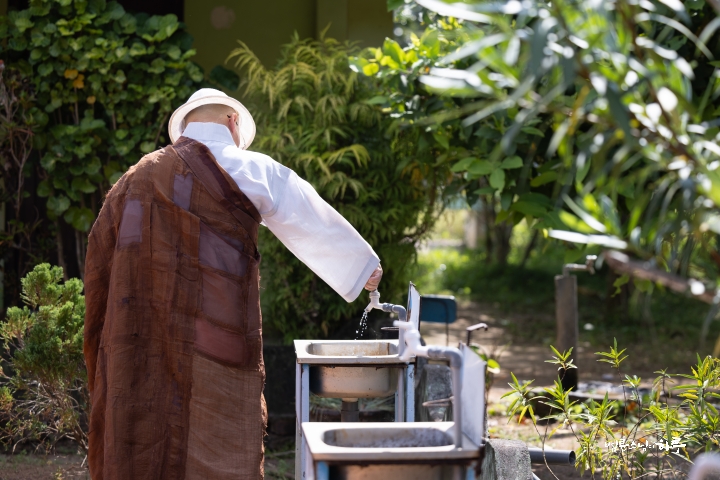
The school requested repairs for windows, wire mesh, and electrical wiring. While touring the school together, they examined each item one by one: damaged electrical wiring maintenance, window repairs, and toilet renovations. Sunim said it was important to distinguish between what was simply old and what posed immediate danger.
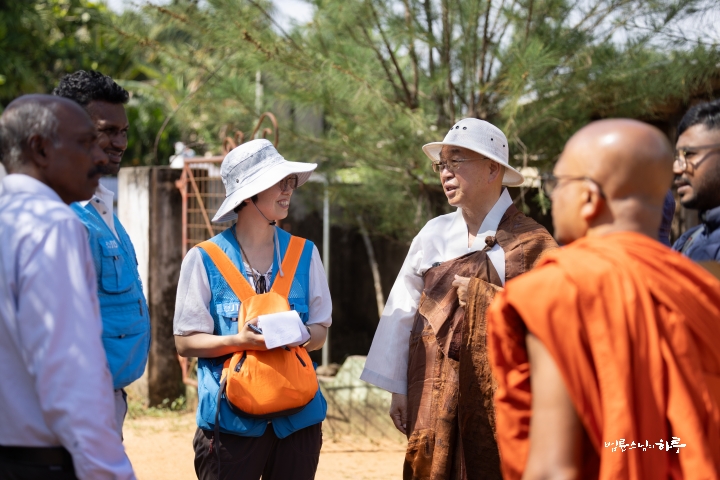
After completing the inspection of the first school, they set out again.
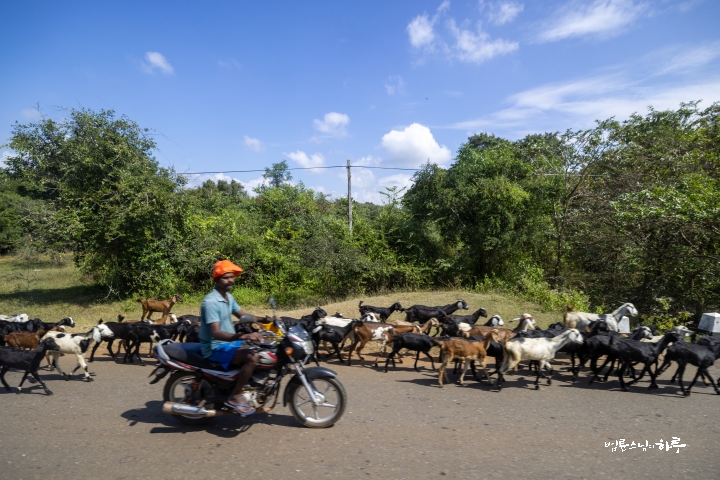
At 10:15 AM, they arrived at the second school, M. Ampalpuram Tamil Vidyalayam in Vavunikulam.

This was a small school with 47 students from grades 1 to 5. There were five classrooms, and only two toilet stalls combining those for teachers and students.
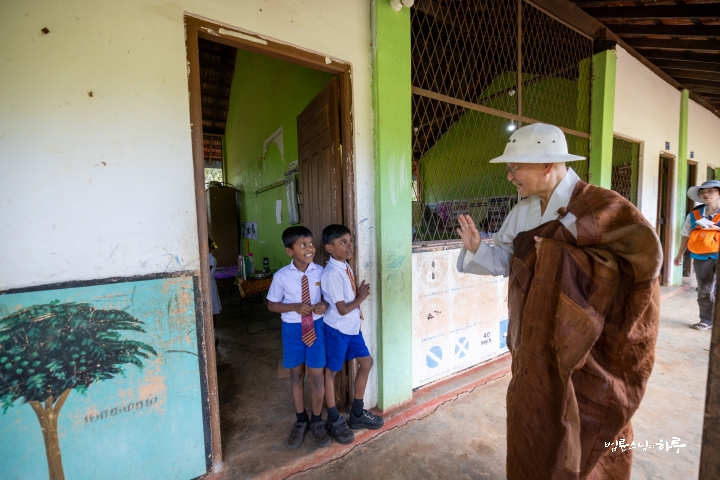
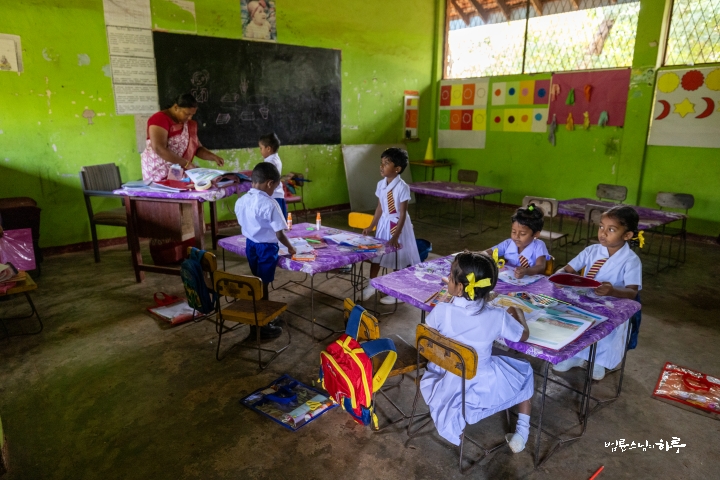
The school requested a water purifier installation due to high limestone content in the groundwater. However, after examining the site, it appeared that simply installing a purifier wouldn’t fundamentally solve the problem since filters would need constant replacement.

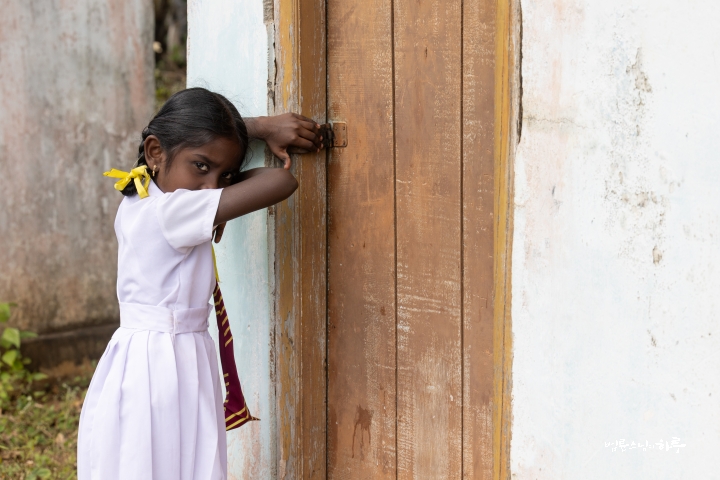
The toilet conditions were actually much worse, requiring either repair or new construction. The door of the existing toilet was broken, so children had to hold the door for each other when using the toilet. The lack of teacher dormitories also appeared to be an operational challenge.
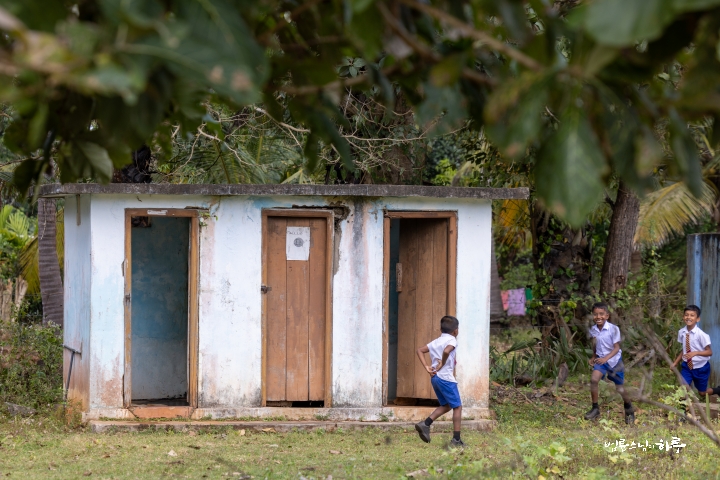
After touring the entire school, they moved to see a nearby water purification facility.
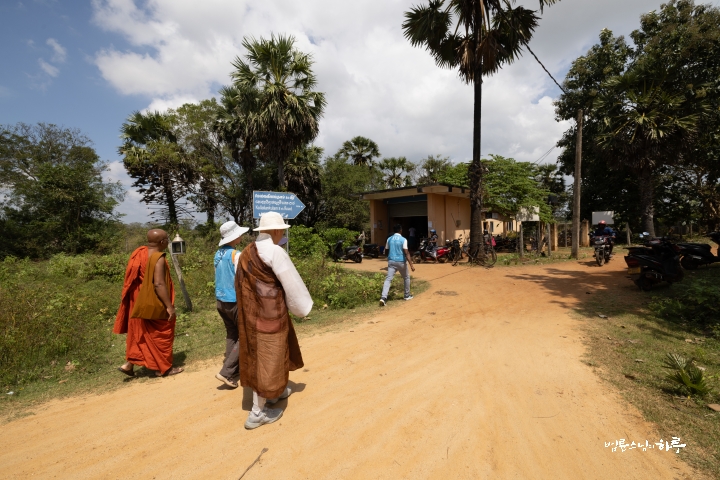
At 10:40 AM, they arrived at the village water purification facility that supplies water. This facility was installed in 2021, and filters are replaced every 15 days.
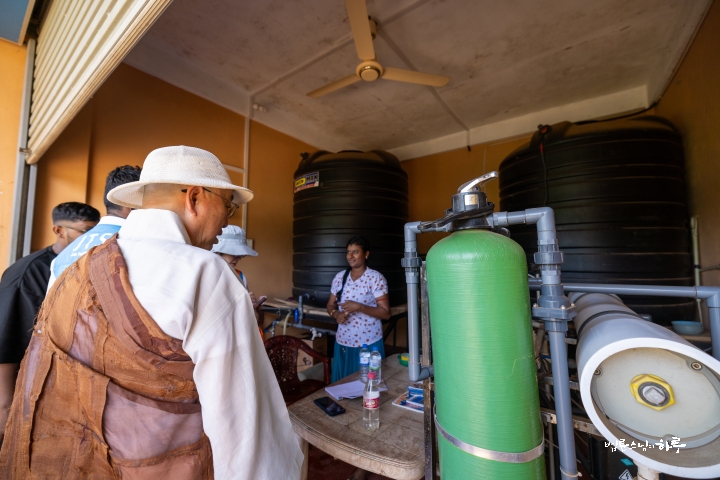
It was equipped with two water tanks of approximately 2-ton capacity, and residents bought water for 100 rupees (≈ $1.1) per 20 liters. On-site staff explained that about 350 households use this facility, with daily production of 500 to 700 liters, though exact figures seemed to need further verification. The fact that residents from neighboring villages without water purifiers also use this facility made it clear that the water problem extends beyond just one village.
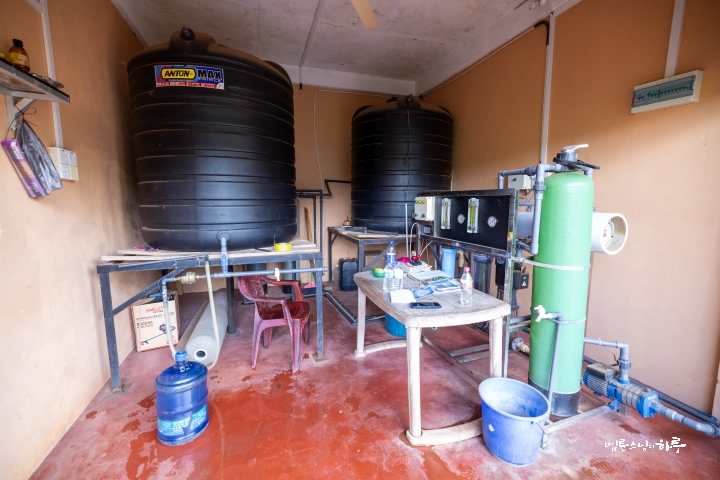
After touring the water purification facility, Sunim pointed out the severity of the water problem.

At 10:50 AM, they departed again and arrived at GTMS School in Therankandal at 11:05 AM.
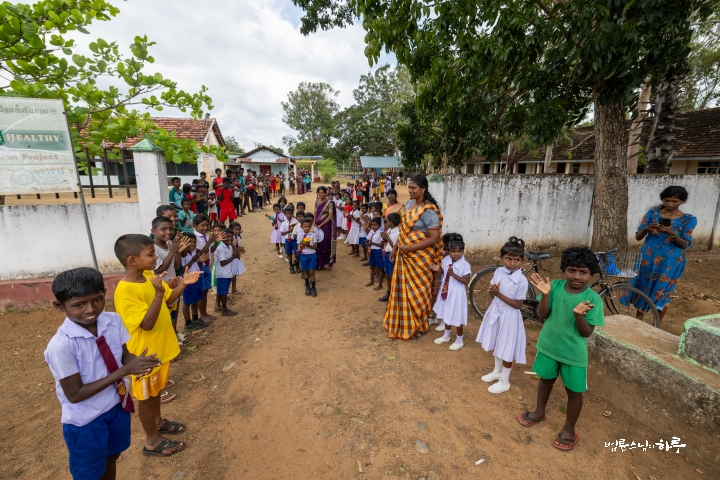
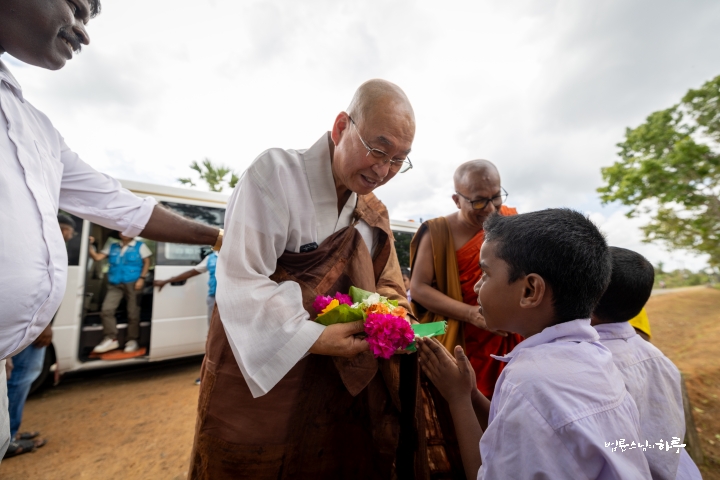
At the school gate, children stood in a line, offering flowers and clapping to welcome Sunim and the JTS team.
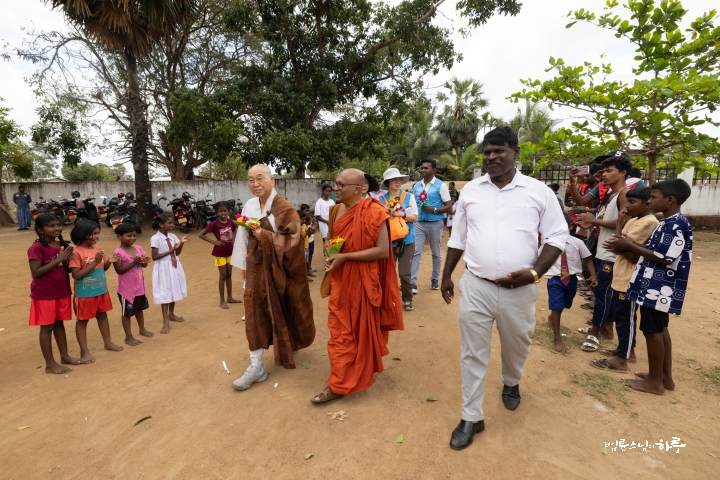
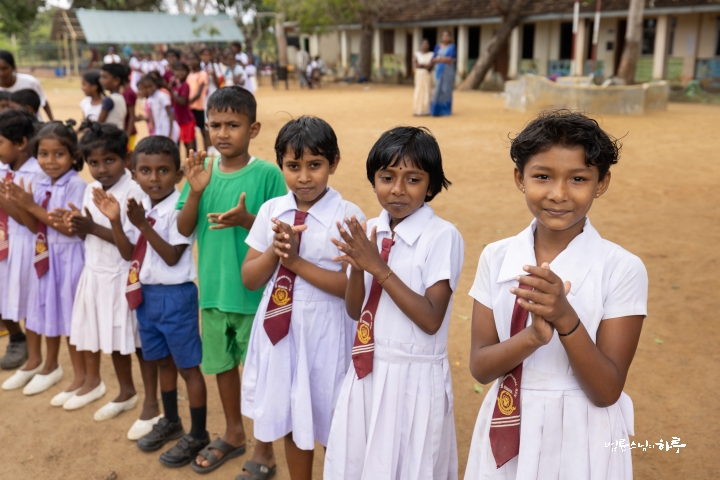
Chairs were arranged in a circle on the playground. After taking seats, they were served coconut juice.
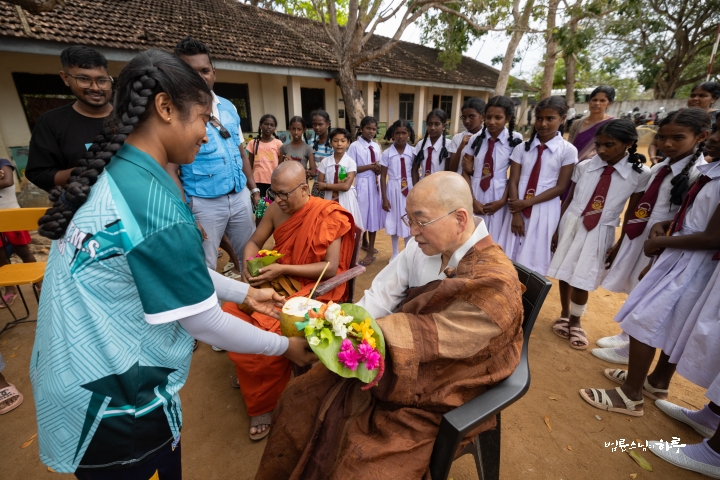
The school had 220 students from grades 1 to 11 and 20 teachers, with most students being children of war refugees.
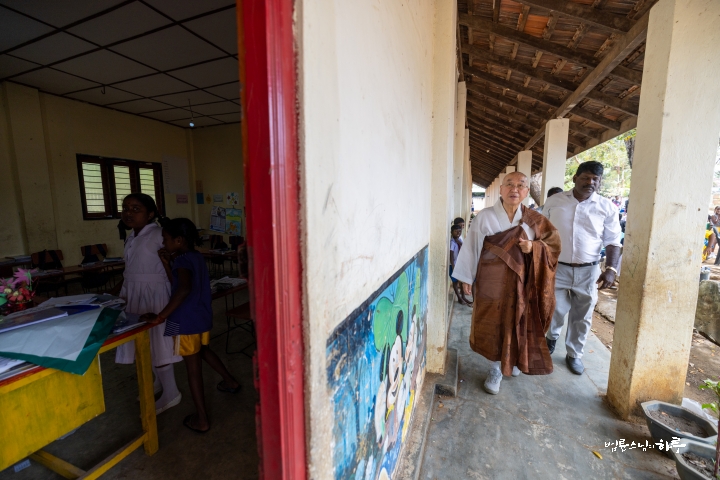
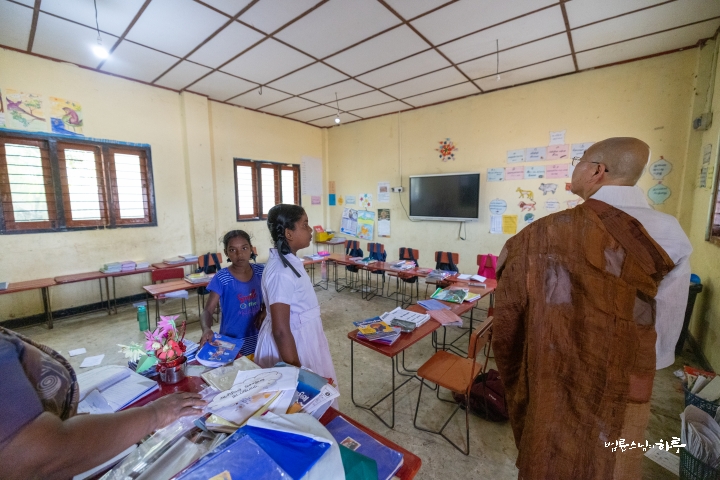
While touring the school, they heard various requests. The dining hall where meals are served has no doors, allowing monkeys and dogs to enter and steal children’s food. Around the playground, wild animals like wild boars and elephants enter, necessitating a fence. Also, when it rains, water overflows from behind the school and near the gate, flooding the yard.
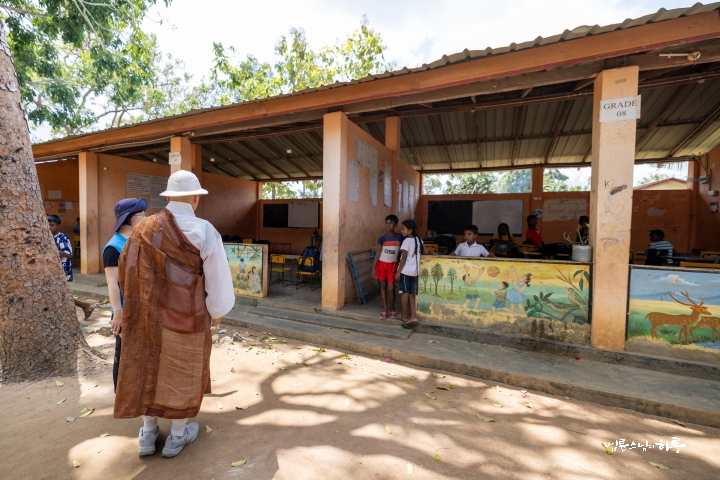
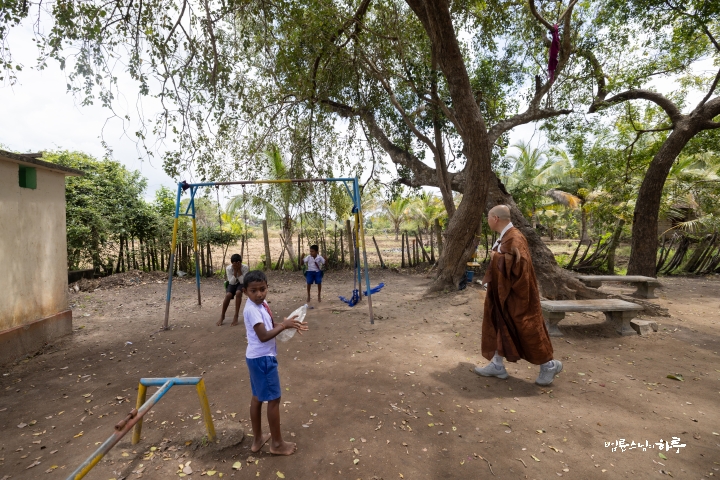
Sunim went to the front gate to directly examine the direction of rainwater flow and the height differences of the drainage channels. The school requested that the entire area in front of the gate be made into concrete drainage channels. Sunim suggested a method that could achieve practical results at a lower cost.
“Making this entire drainage channel out of cement is the government’s job, not JTS’s.”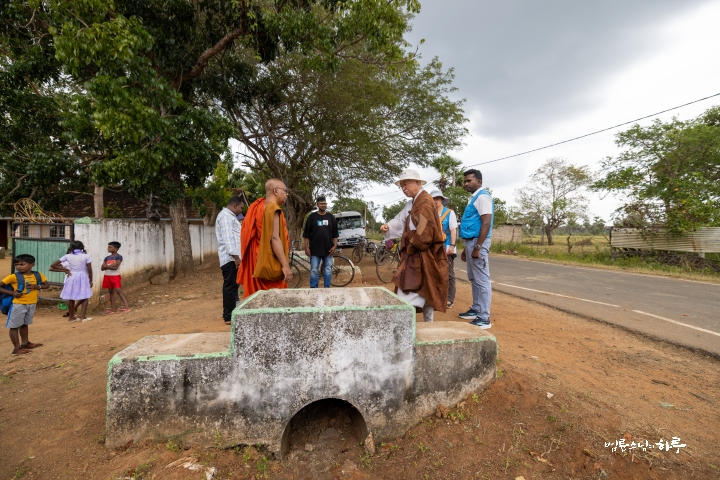
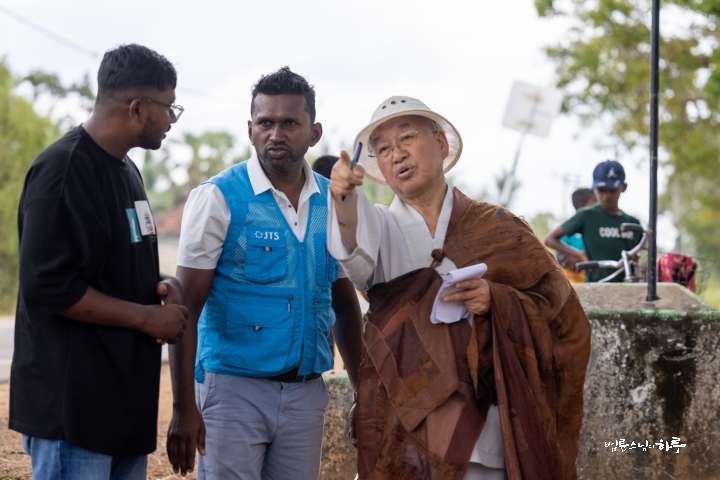
By building cement walls along the drainage channels on both sides of the gate, digging the entrance floor slightly, and covering it with mesh wire, rainwater can be prevented from flowing directly into the school. Sunim explained that only the necessary sections need reinforcement, and the rest just needs to allow water flow.
“We dig about 1 foot deep here and cover it with wire mesh. With the wire mesh covered like this, water won’t enter the school but will flow into the drainage channel.”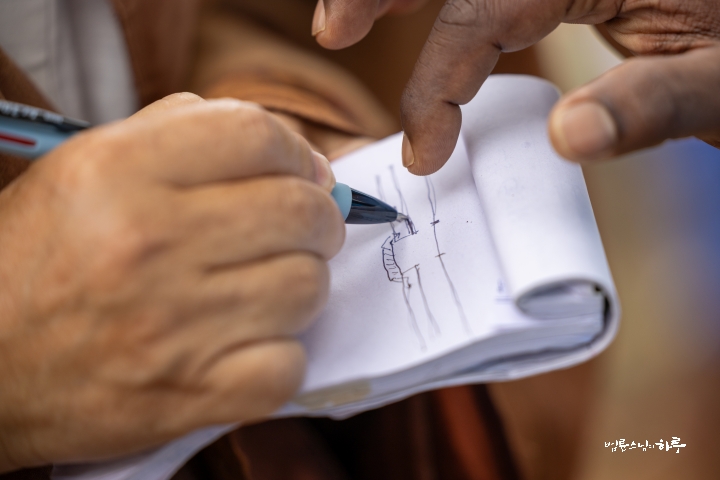
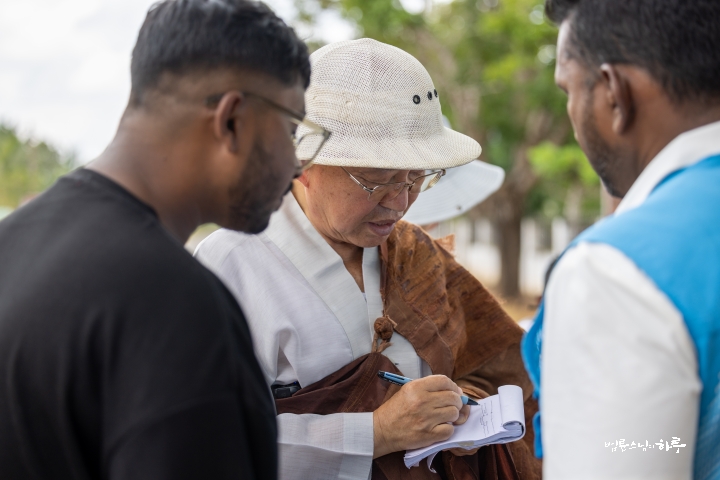
Then, Sunim checked whether the residents could help with the work.
“If we provide the materials, will the residents be able to do the work?”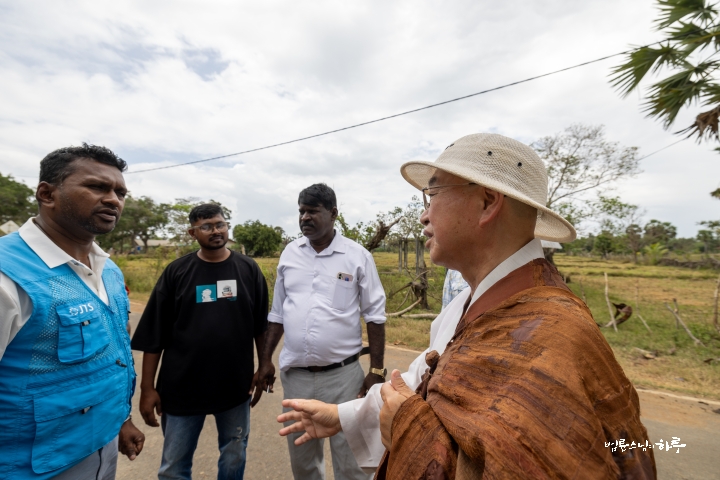
The principal immediately replied that they could. JTS follows the principle of not providing one-sided support but encouraging residents to participate together.
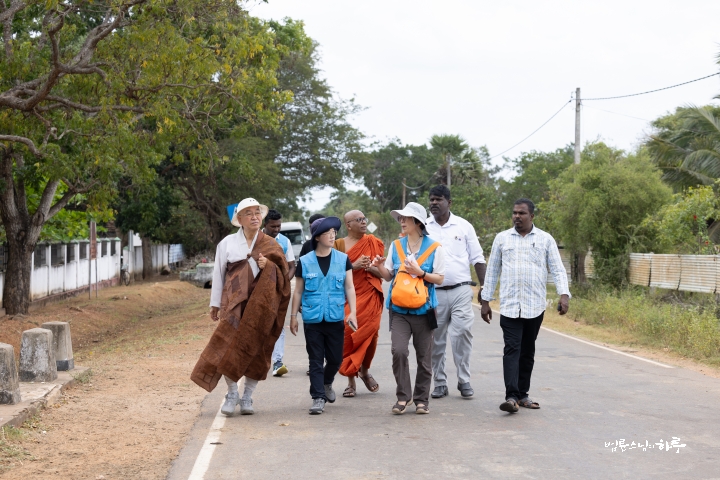
This school has been connected with Venerable Dhammananada for nine years, and they have also been running a cooperative project that lends tools to local residents. Sunim also looked around the tool storage next to the school. The storage was equipped with various tools.
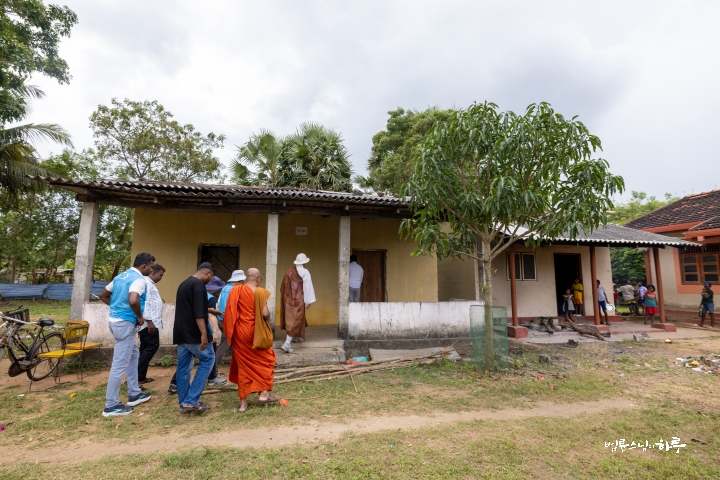
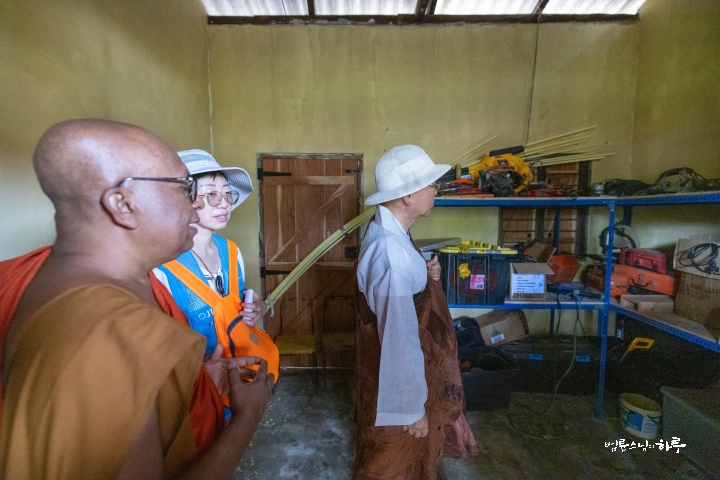
Additionally, free meals are provided for grades 1 through 5, but one person was preparing lunch for about 80 children alone. Sunim greeted the person in charge of meals and expressed his concern.
“It must be very difficult for one person to cook for 80 people. Thank you.”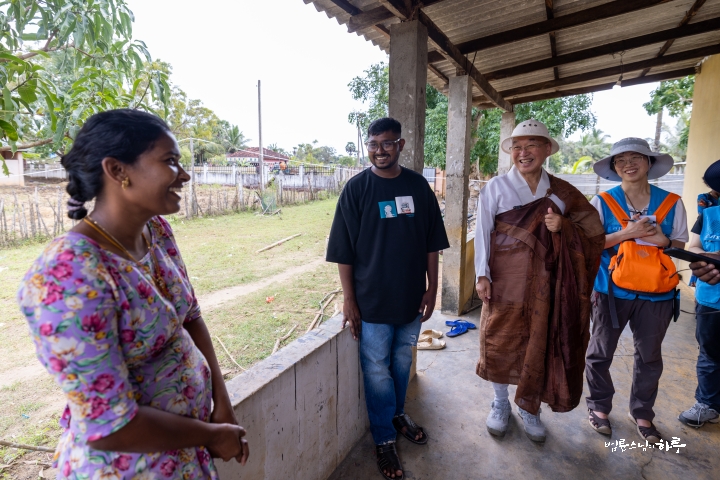
At noon, after completing the school inspection, Sunim moved to the lunch venue.
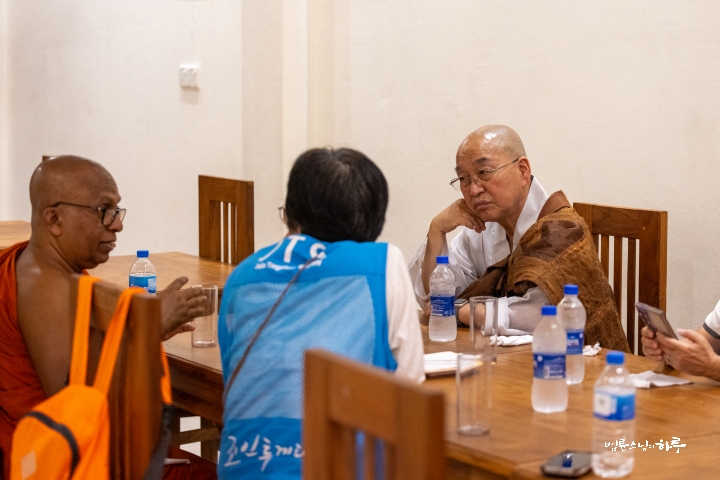
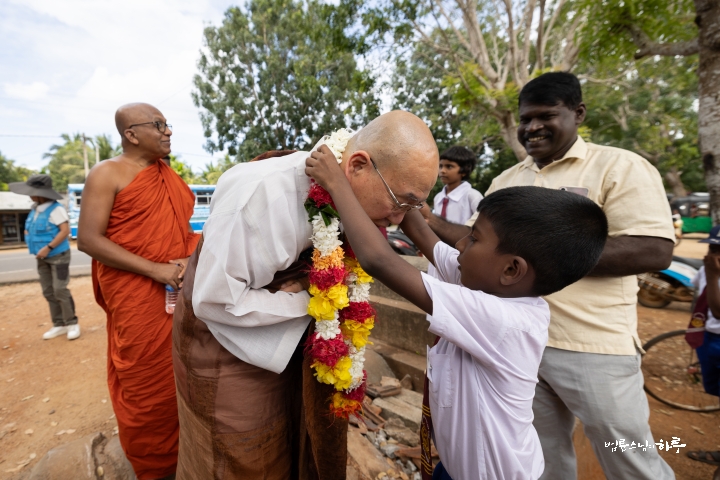
After having lunch at a restaurant, at 1:50 PM, Sunim headed to the school for the distribution of relief supplies. Since the distribution had to begin after the children finished their classes, it was scheduled to start at 2:00 PM. When Sunim arrived at the school gate, children approached and placed flower garlands around his neck, and the band began to play.
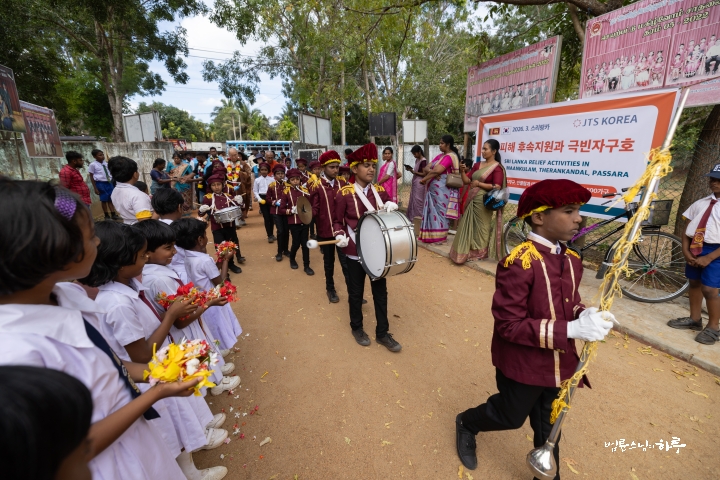
As the band’s music filled the air, Sunim and his group went out to the playground.
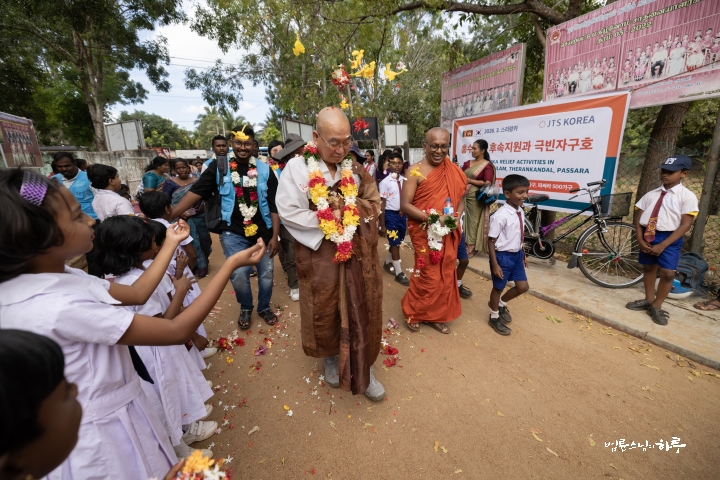
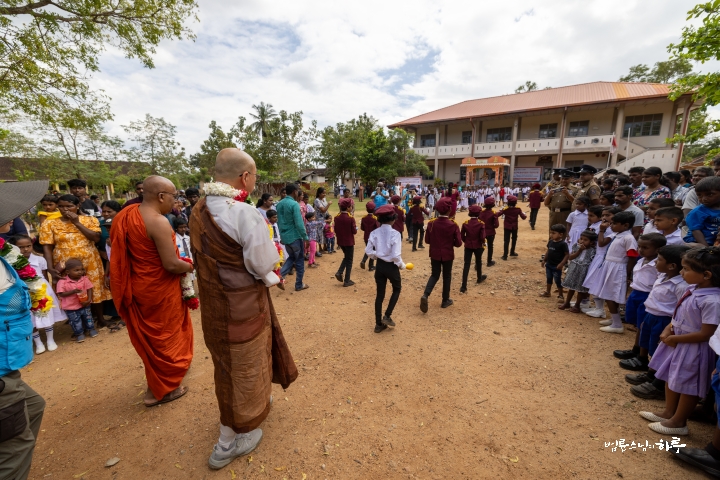
Entering the playground, they performed an incense-burning ceremony and then moved to the stage prepared in front of the building. When Sunim and the JTS group took their seats, the students presented traditional performances they had carefully prepared.
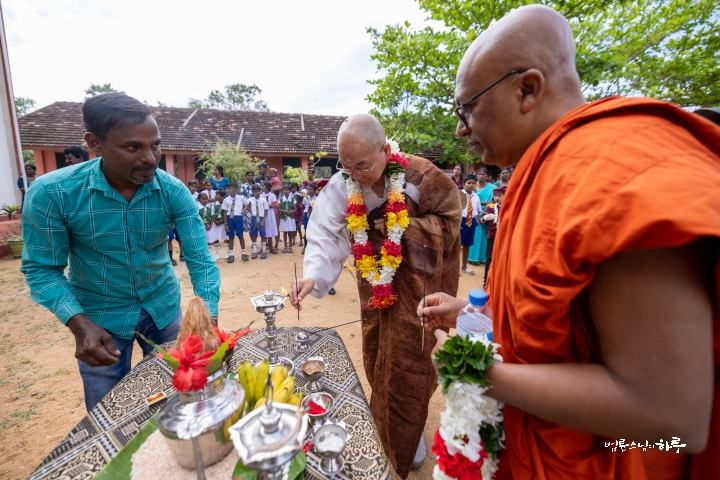

With all the villagers gathered, they asked Sunim to give a greeting, but Sunim yielded the floor to Venerable Dhammananada.

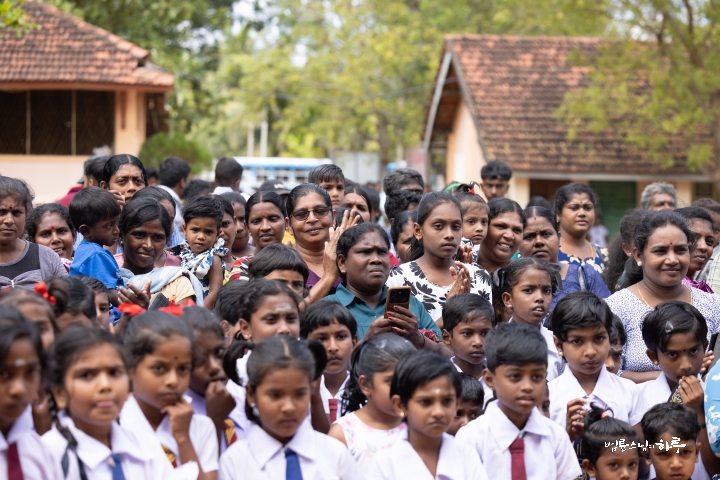
After Venerable Dhammananada’s greeting, a demonstration distribution was conducted on stage. Sunim, Venerable Dhammananada, JTS President Park, Gina, JTS Secretary-General Park, Young-sook, and Sri Lanka JTS Project Manager Kim, Yoon-mi participated together.
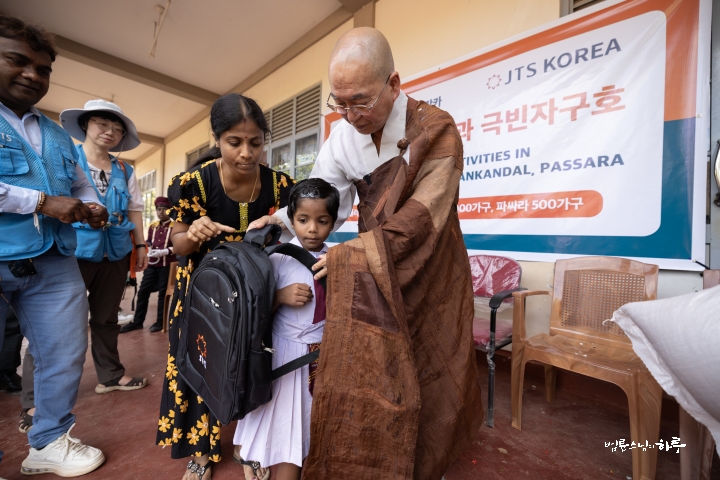
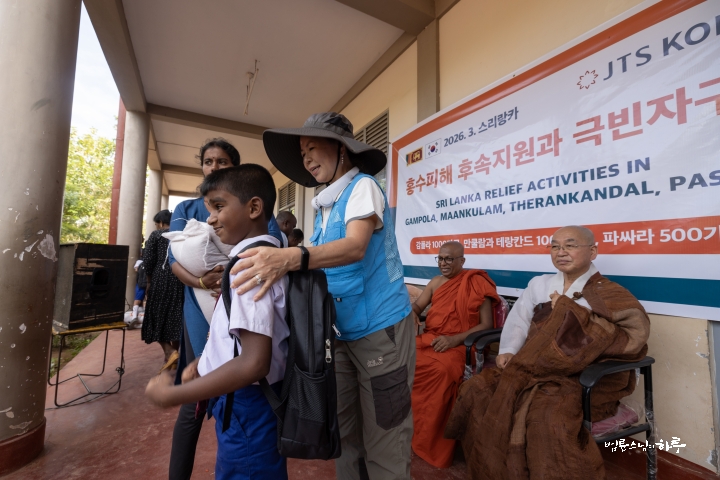
Then, moving to the front of the warehouse, the full-scale distribution began. The target was 1,000 low-income households from 22 schools in the Terankandal and Mankulam areas. Children received bags and school supplies, while each household received 20kg of rice – two 10kg bags. School supplies such as notebooks, pencils, sketchbooks, and water bottles were pre-packed in the bags. Sri Lankan JTS local volunteers had been on-site two days prior, preparing the items one by one.
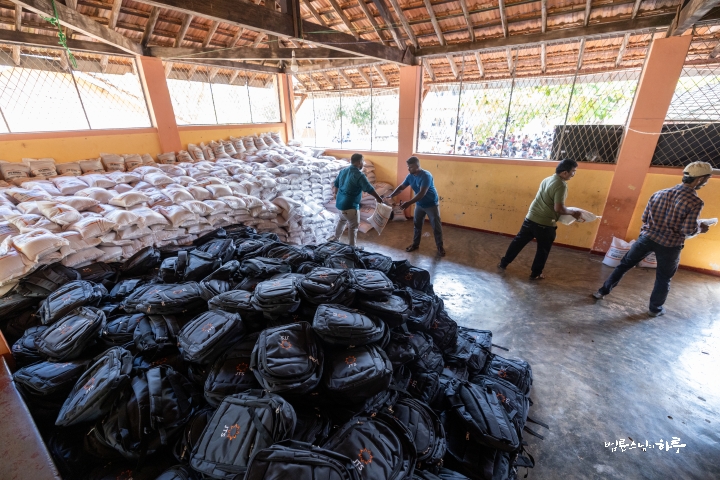
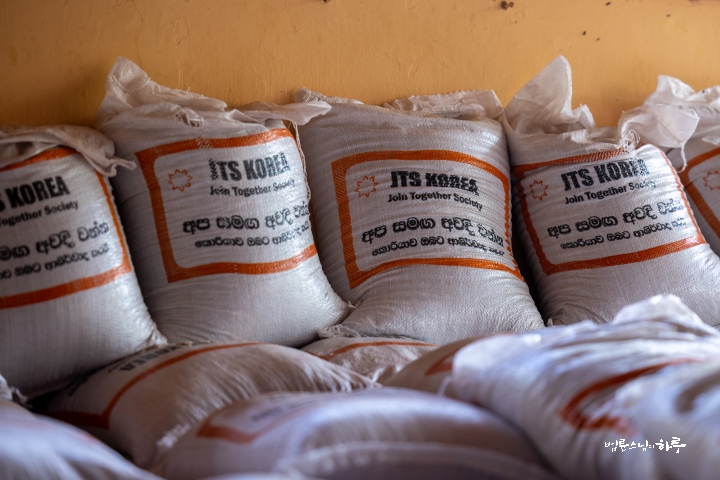
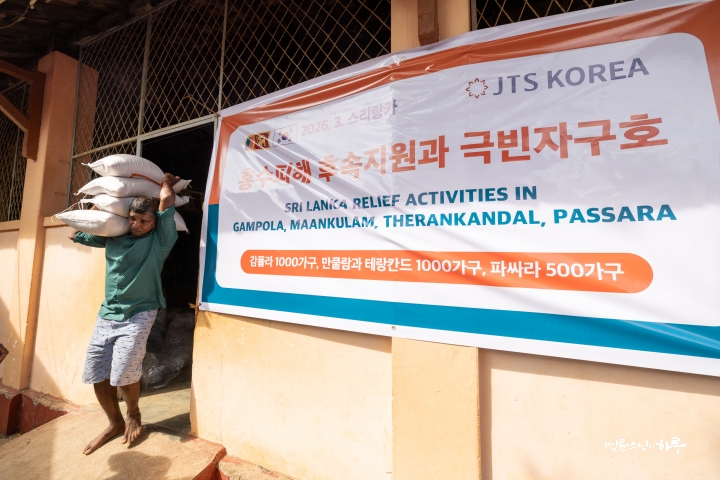
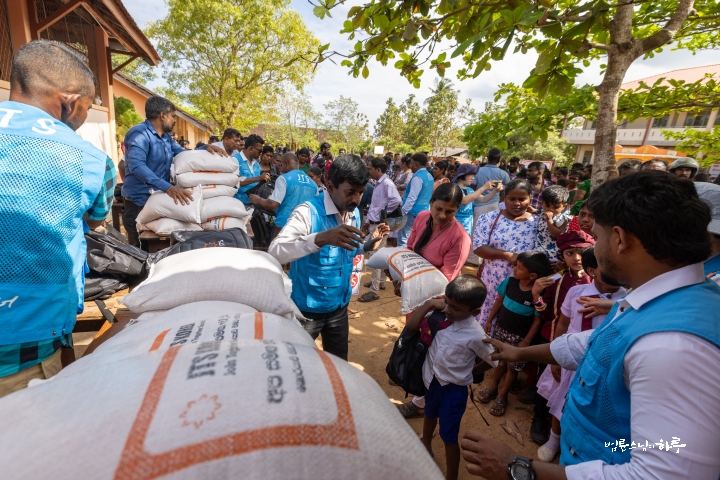
With over 2,000 people gathered in one place, the site was much more crowded than expected. However, JTS volunteers and volunteers who came forward from the village moved in perfect coordination, leading the distribution without any problems.
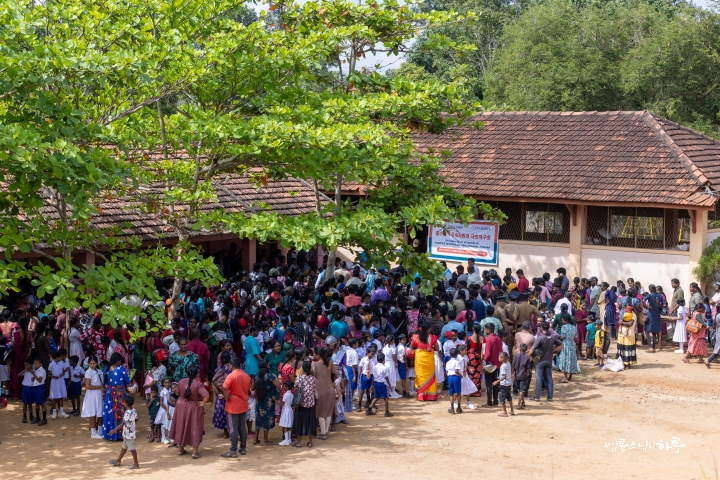
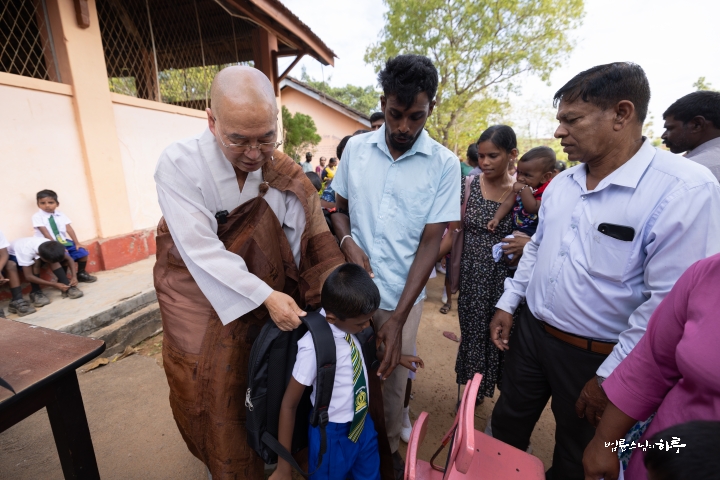
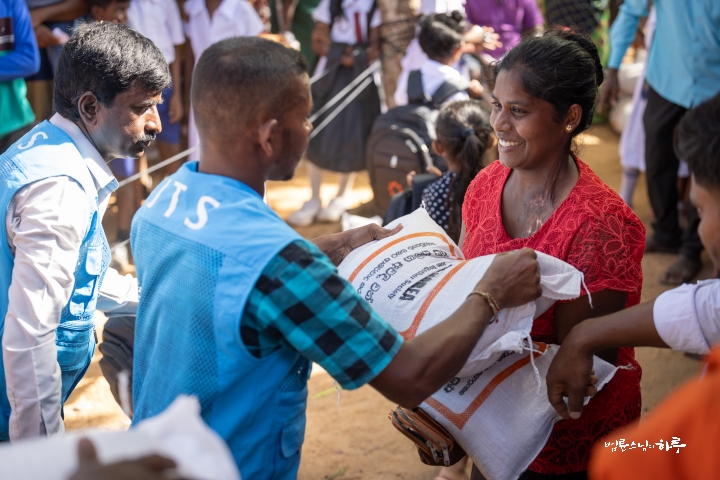

The children who received the bags with both hands sparkled with joy.

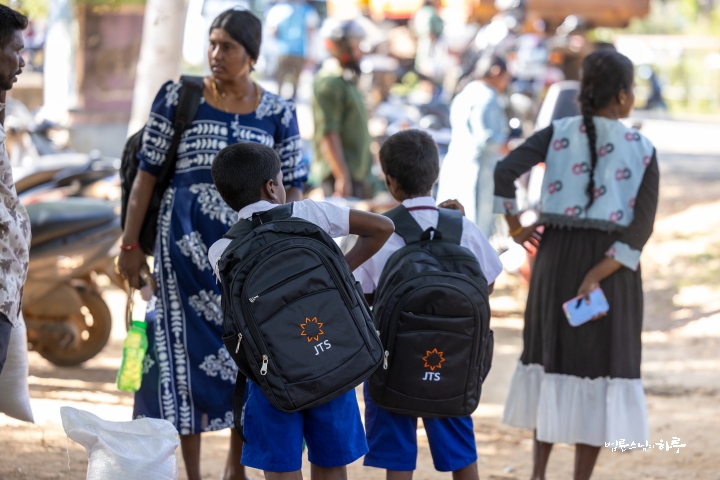
Bright smiles spread across the faces of parents as they turned away, carrying the heavy rice bags on their heads or holding them tightly in their arms.
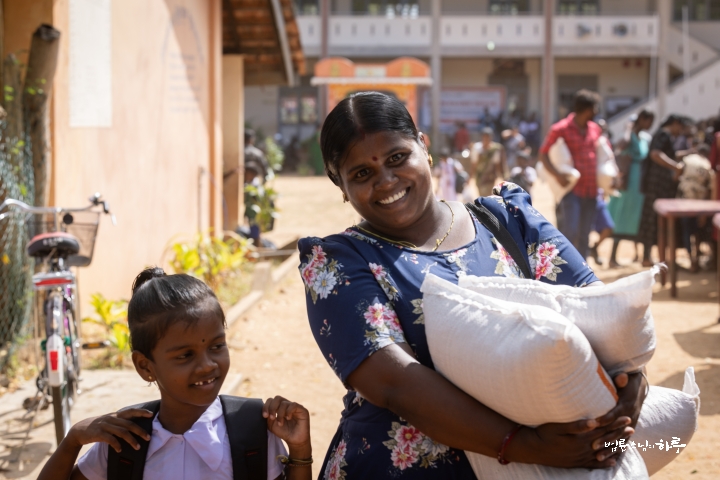
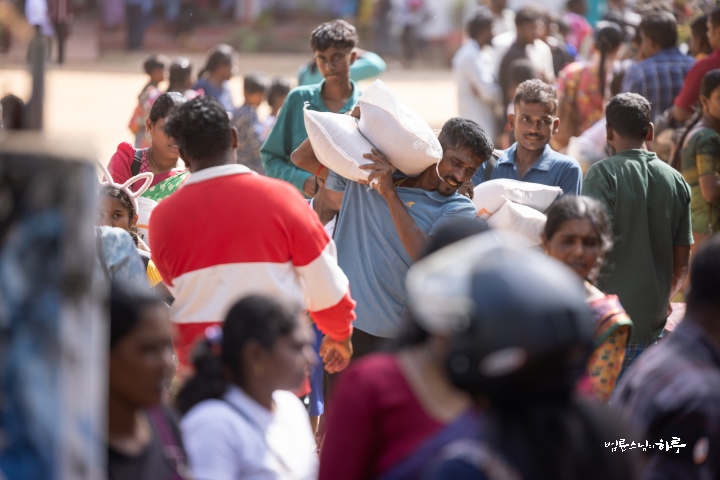
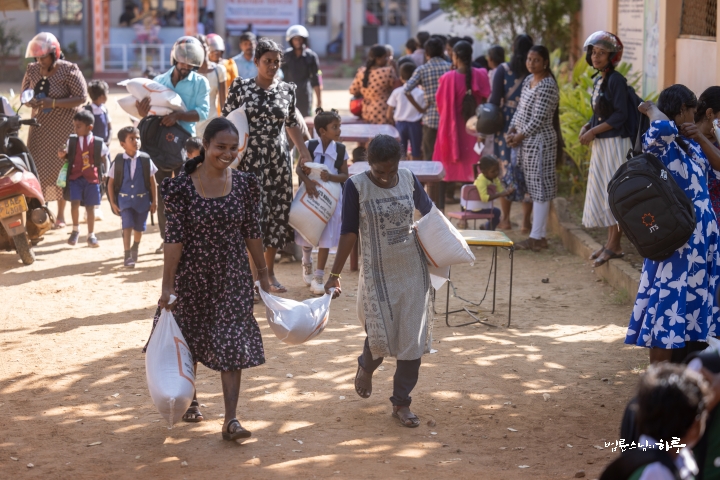

For two hours, they distributed supplies while sweating profusely. Only at 4:00 PM did they finish the distribution, and Sunim took a commemorative photo with the volunteers, smiling brightly together.
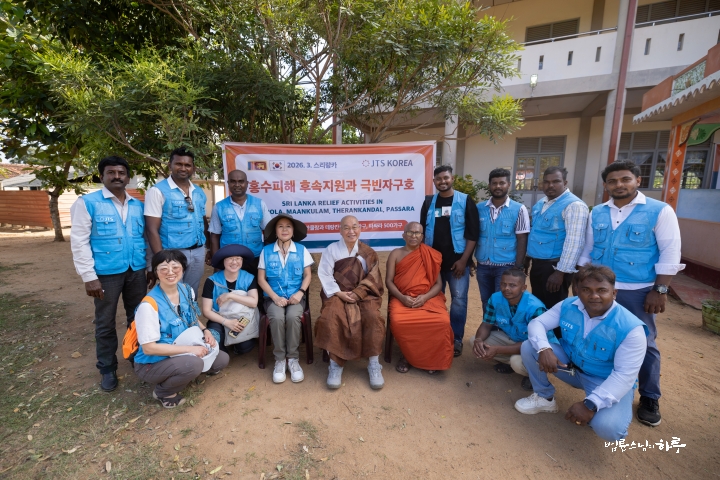
Sunim presented prayer beads as gifts to the local volunteers who had been helping until today and were returning home.
“Thank you all for your hard work. Thank you.”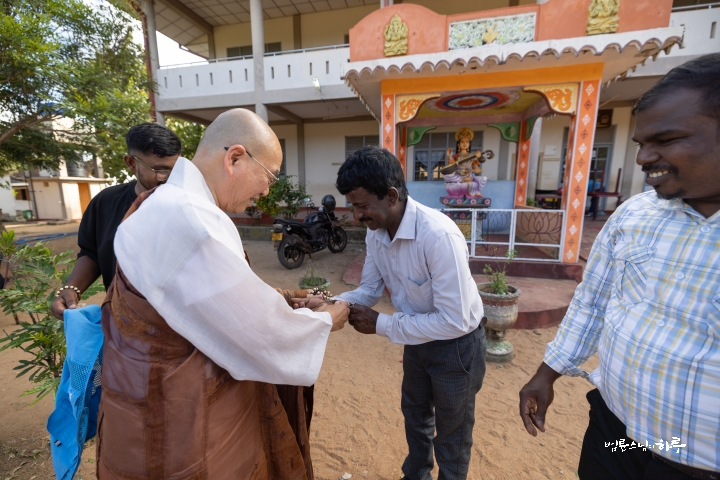
At 4:10 PM, Sunim left the village and set out on the road again. During the journey, the sun set outside the car window.

After driving for 2 hours and 20 minutes, at 6:30 PM, Sunim arrived at Dr. Harsha’s office in Anuradhapura. Dr. Harsha is the president of INEB (참여불교국제연대 : International Network of Engaged Buddhists) and the chairman of the Sevalanka Foundation. He has been leading interfaith peace solidarity activities among Buddhism, Hinduism, Islam, and Christianity in Sri Lanka and has maintained a long relationship with Sunim.

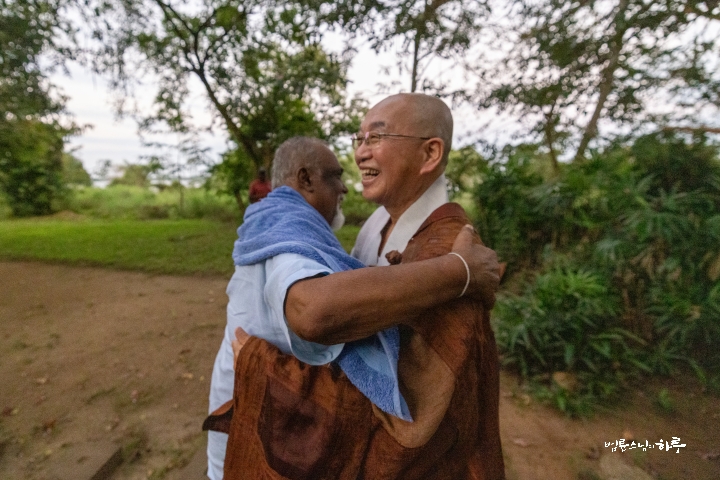
Although this meeting was not originally scheduled, Sunim informed Dr. Harsha about his visit to Sri Lanka, and their schedules aligned, allowing them to meet on the way back today. When Sunim arrived, Dr. Harsha personally came outside and warmly embraced him.
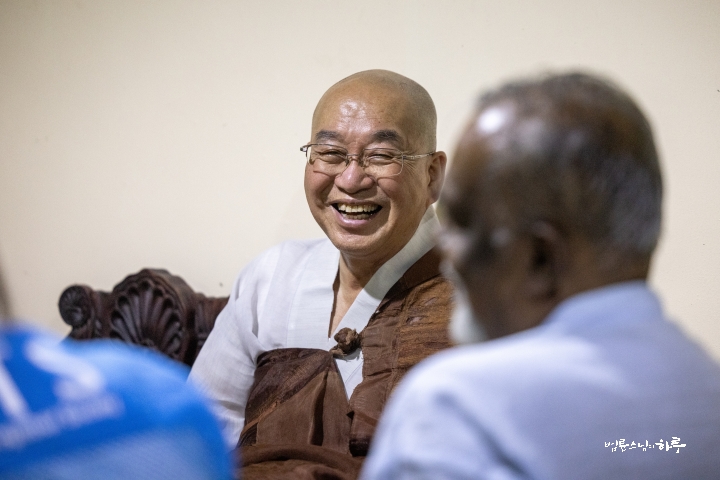
After sitting down and briefly exchanging greetings, Sunim explained the circumstances of this visit to Sri Lanka. He mentioned that there were originally no plans to visit Sri Lanka, but changes in other overseas schedules led to this visit. He added that the purpose of this visit was to directly observe the flood damage recovery support sites in Sri Lanka and the situation in the northern Tamil refugee areas.
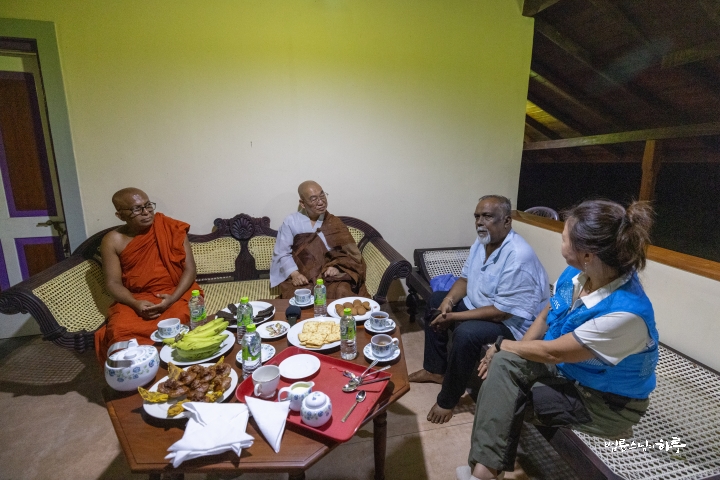
They also discussed the Vivekananda International Foundation (VIF) symposium they had attended together in India last month. Dr. Harsha shared news that an interfaith dialogue for world peace is scheduled to be held in Mumbai this December.
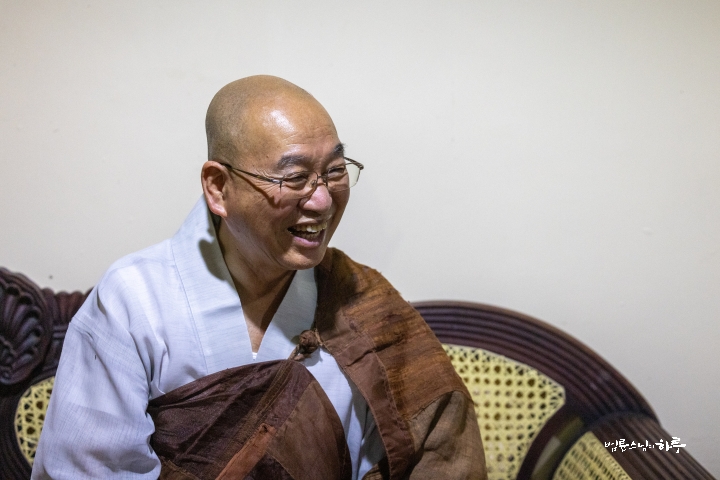

The conversation naturally led to discussions about interfaith cooperation. Sunim talked about the experience of various religious leaders in Korea who have been conducting peace activities together for a long time.
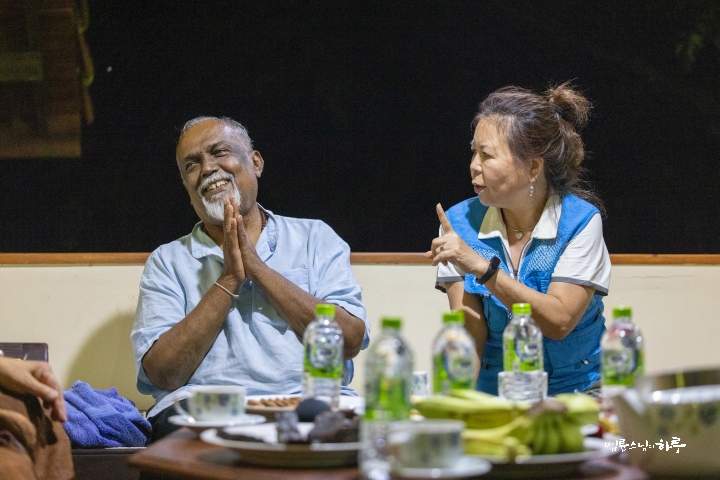
“Yes, I will do that.”
Sunim suggested that if necessary, they could meet again in Bangkok in the future to discuss matters more deeply. At 7:30 PM, after finishing the conversation with Mr. Harsha, Sunim departed for the accommodation.
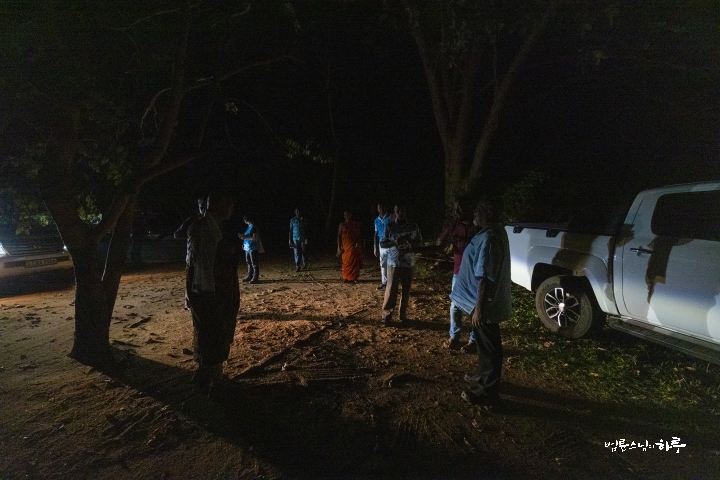
After traveling by car for an hour and a half, Sunim arrived at the accommodation at 9 PM and concluded the long day’s schedule.

Since there was no Dharma talk today, this post concludes with a conversation between Sunim and a questioner from the Friday Dharma Q&A live broadcast held on the 6th.
My Boyfriend Just Stays Home and Won’t Get a Job. Should I Break Up with Him?
I think I’m going through a rough patch with my boyfriend. My current boyfriend just stays at home, doesn’t seem to want to get a job, and appears to have no sense of responsibility. What should I do?
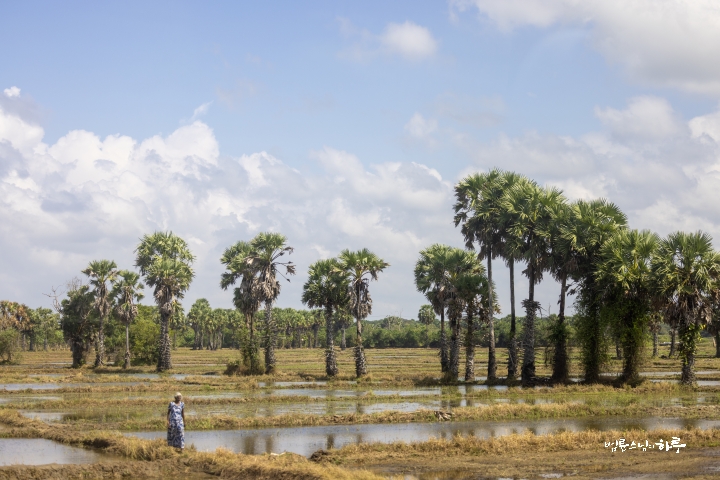
“You’ll probably tell me to do whatever I want.” (laughter)
“Even in what you’ve described, there are good points about your boyfriend. First, staying at home is actually a good thing. At least he’s not going around meeting other women. How many people these days have headaches because their partner meets other people while dating? Also, since he stays at home, even if he has no income, he’s not going around spending money. So you shouldn’t just look at one disadvantage – you need to be able to see the good points within it too. This is a matter of choice. It’s not about keeping something because it’s good or throwing it away because it’s bad. Everyone has their strengths and weaknesses. Can we say that among all the flowers in the world, some are pretty and some are ugly? Flowers are just flowers. Whether I like roses or sunflowers is my freedom. There’s no such thing as an absolutely good person or an absolutely bad person. Among many people, which person you choose is your own issue. If you think this kind of man is okay, then date him. If you date him and find he’s not okay, since you’re not married, you can just say ‘goodbye’ and break up. But the fact that you’re asking me this means your boyfriend still has some redeeming qualities. If there were only losses and no benefits at all, you would have already broken up without needing to ask me. Conversely, if there were only benefits and almost no losses, there would be no need to ask either. The fact that you’re asking me means there are both benefits and losses, and you’re hesitating because it’s about fifty-fifty right now. So if someone asks ‘Why are you dating someone like that?’ you’re likely to answer ‘Well, there aren’t any other men around, so shouldn’t I at least have him?’ I don’t interfere in other people’s lives. If you ask whether to keep dating or break up, I say ‘Do whatever you want.’ If your husband cheated, you can just not live with him – what is there to ask me? But when you ask ‘My husband cheated, should I divorce him?’ it means that although he cheated, he has other good points like earning good money, so you’re conflicted about whether to divorce. If I say ‘Just live with him,’ you say ‘How can I live with a man who cheated?’ So if I say ‘Then divorce him,’ you say ‘What about the children?’ So I end up saying ‘Then live together.’ It sounds a bit like a joke, but after going back and forth three or four times like this, you realize something. Is this the man’s problem or your problem?”“It’s my problem.”
“In this situation, what choice will I make? That’s the key point. But if you keep focusing only on ‘He cheated on me,’ it becomes difficult to choose and you suffer. Let me use a car analogy. Your car has gotten scratched. It’s less attractive than when you first bought it, and you feel bad about it. But if that car is a Mercedes-Benz, would it really be a better choice to throw it away because of a scratch and switch to a compact car? It’s the same when your husband cheats. If you’re going to live alone after divorce, that’s the end of it. But if you’re going to live with another man, that’s a different story. At middle age, it’s not easy to find someone like a brand new car without a single scratch. Eventually, you have to choose among decent used cars, but the problem is that everyone in the used car market thinks their car is perfectly fine. Meanwhile, if someone quickly takes the car you put out – that is, your husband – then you’ll regret it. Because your mind is attached only to the new car from when you first bought it, you can’t see the real value of your current car.
)
. Those who can’t execute stop-losses shouldn’t invest in stocks. If a husband has had an affair, it’s true that things have deteriorated from the beginning. However, what’s important is to assess the current situation. You must let go of your attachment to the initial 10,000 won. You need to evaluate whether the current value of 8,000 won is acceptable or not. Ultimately, preconceptions and fixed ideas create attachments. You must stay awakened to the ever-changing reality, to this very moment, here and now.”“Thank you. I understand now.”