Hello. Today, the general assemblies of three incorporated associations and the Friday Dharma Q&A were held at the Jungto Social and Cultural Center (정토사회문화회관).
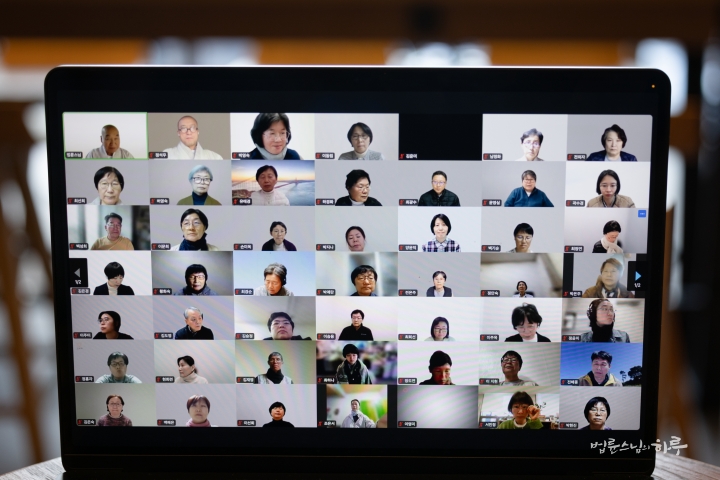
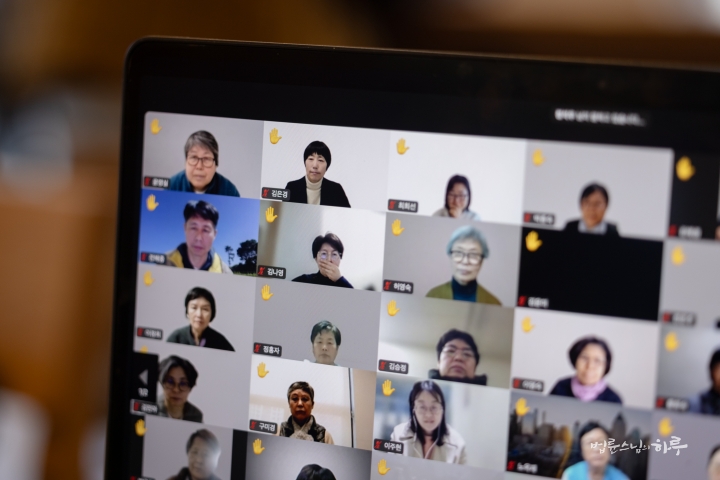
After completing morning practice and meditation, Sunim participated online in the general assemblies of three incorporated associations – JTS, Eco Buddha (에코붓다), and Good Friends (좋은벗들) – starting at 8 AM. Once all the assembly officers entered the video conference room, they began the assembly by reading the Three Refuges (삼귀의) and Words for Practice (수행문) together.
First was the JTS general assembly. Sunim, as the chairman, gave opening remarks.
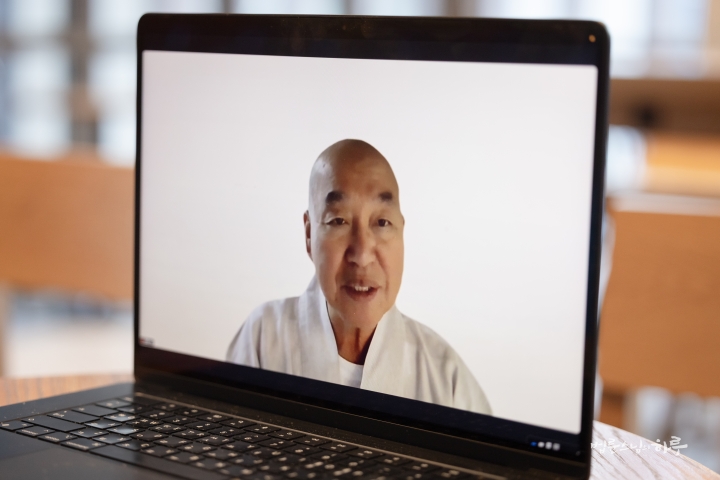
“JTS has carried out many activities around the world over the past year. Many volunteers have worked hard globally, including in India, the Philippines, and Bhutan, led by President Park Gina (박 지나 대표) and President Kim Ki-jin (김 기진). Let’s encourage the volunteers working in the field while receiving reports and evaluating the business activities of the past year.”
Following this, after presenting the 2025 business report and settlement, and the 2026 business plan and budget, the approval process was conducted. The business plan was unanimously approved.
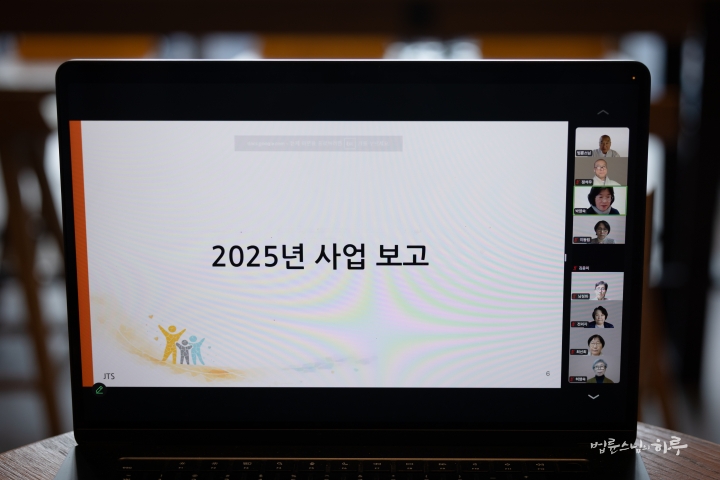
Next was the Good Friends general assembly, followed by the Eco Buddha general assembly. The assembly members approved the 2025 business report and settlement, as well as the 2026 business plan and budget.
After completing the incorporated associations’ general assemblies, Sunim headed to the Peace Foundation for a meeting with a guest. At 10:30 AM, former National Assembly member Lee Bu-young (이 부영) came to visit Sunim.
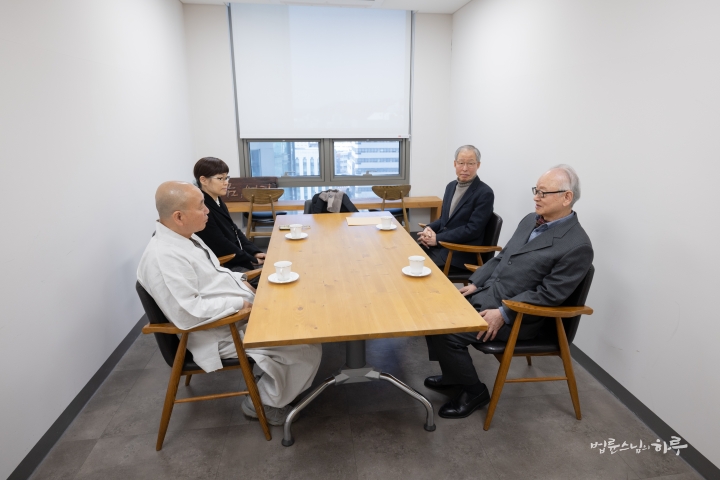
The assemblyman invited Sunim to a gathering called “Citizens Together for the 100th Anniversary of Liberation” ahead of the 100th anniversary of liberation (광복 100주년).
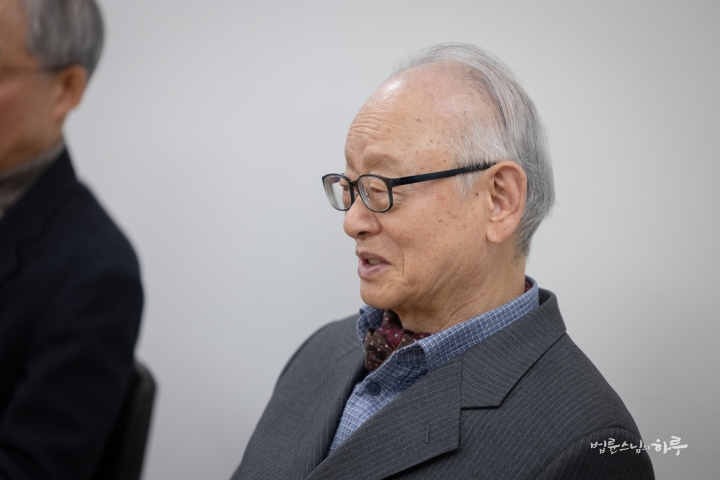
“This gathering is a citizen-participatory forum that discusses the future of the Republic of Korea based on the values of inclusion, coexistence, and moderation, transcending ideology and generations. Rather than serving specific groups’ interests, it aims to solve social challenges such as climate and ecological crisis response, youth education, and peace on the Korean Peninsula through dialogue and consensus. We plan to announce our proposal on March 3rd, and after a preparation process, officially launch on August 15th, Liberation Day. We are drawing participation from religious figures and people from various sectors, and we aim to create a long-term movement looking ahead 20 years, beyond political extremism and confrontation.”
Sunim offered various pieces of advice on what should be supplemented for this to become a truly integrated gathering. While agreeing with the purpose, he asked for understanding that he could not attend the March 3rd proposal announcement event due to a previously scheduled lecture in the provinces.
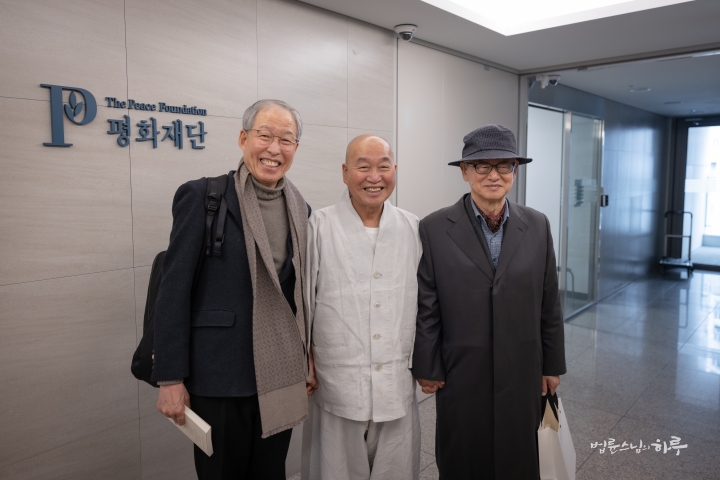
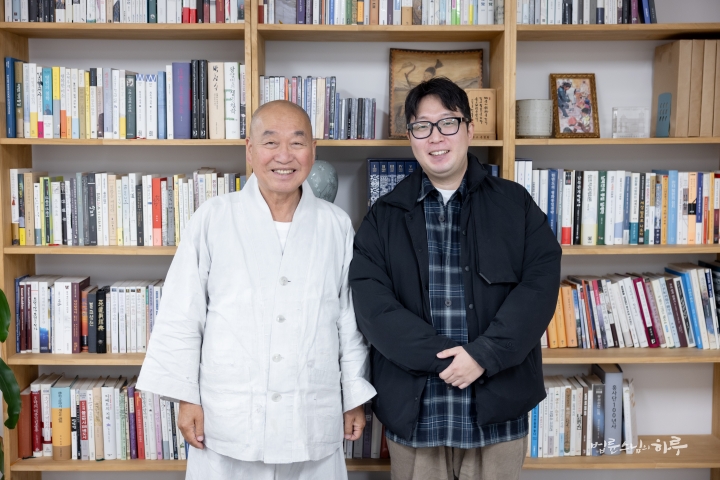
After taking a commemorative photo together, Sunim saw off the assemblyman who had come a long way, then moved to the basement cafeteria for lunch.
From 1 PM, Sunim held a meeting with Jungto Society staff to prepare for the World Meditation Day Forum program.
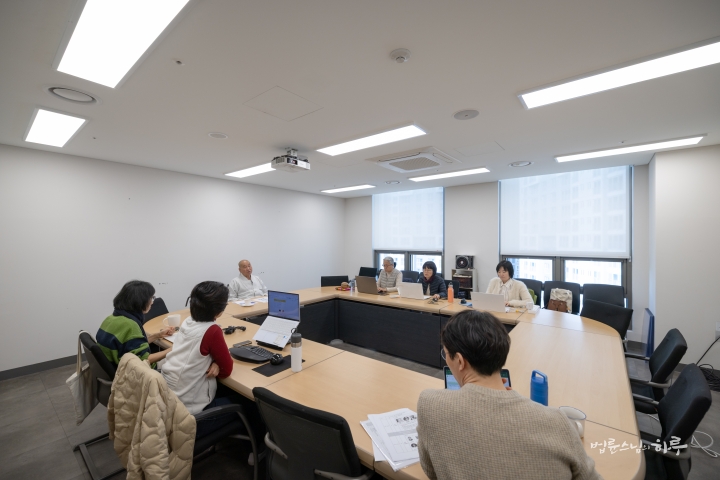
They reviewed the overall event operation plan including program composition, time allocation, presenter adjustments, promotion, and reception. Sunim emphasized supplementing participants from other religions to avoid bias toward Buddhism, fitting the purpose of the “World Meditation Day Forum.” Also, considering the Theravada Buddhist tradition, they decided to finish the morning event by 11:30 AM. Accordingly, they moved the start time from 10 AM to 9:30 AM.
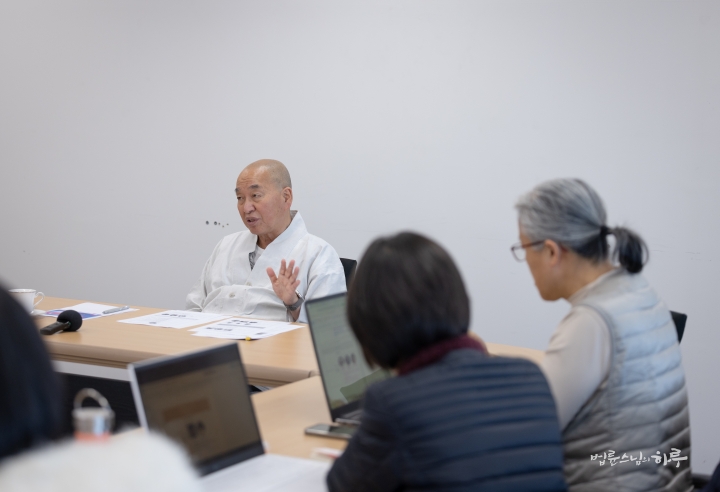
Subsequently, at 2 PM, Sunim held a meeting with JTS volunteers. For an hour, they reviewed the emergency relief distribution plans for Aceh Province in Indonesia and Sri Lanka, as well as the status of existing projects.
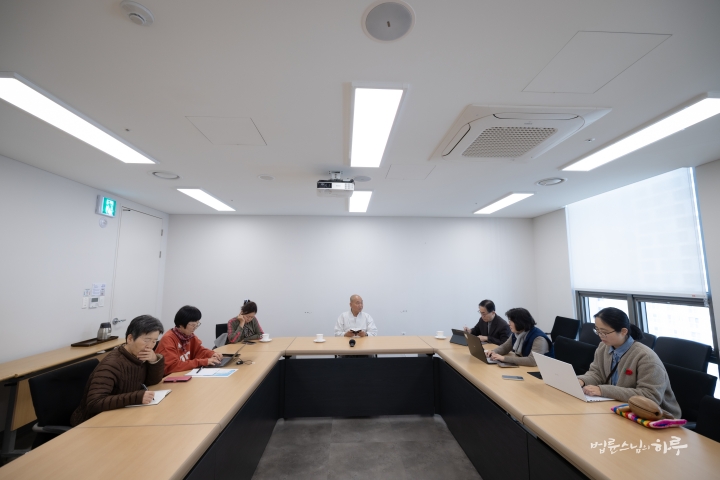
Starting the meeting, Sunim said that as the scale of JTS projects continues to grow, they should think together about how to expand operations while adhering to principles.
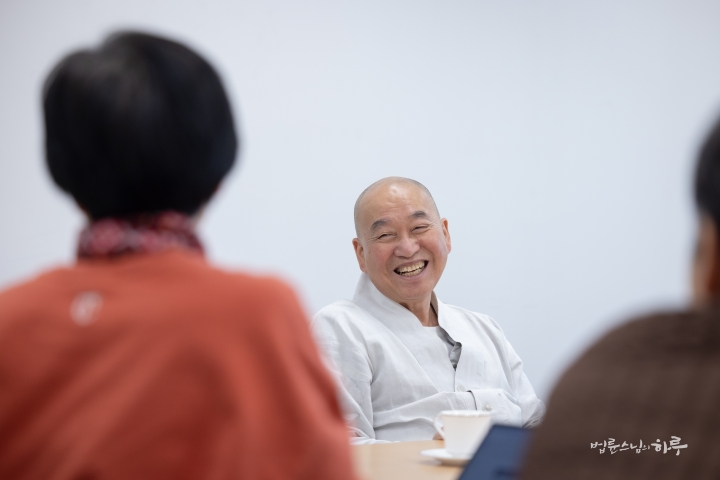
They first discussed urgent matters. The distribution of emergency relief supplies in Aceh Province, Indonesia, originally scheduled for early March, was postponed to late March due to delays in the arrival of relief supplies. In Sri Lanka, they decided to distribute relief supplies to over 1,500 households in March and also survey areas requesting recovery projects.
They also reviewed existing projects in Pakistan, Myanmar, Cambodia, and Thailand. Sunim emphasized two principles while concluding the meeting.
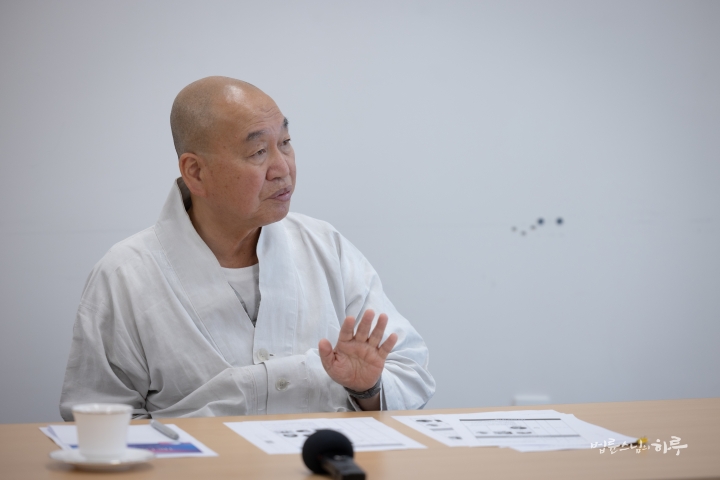
“First, even as the scale of operations grows, we must operate according to principles. We shouldn’t approach this with the attitude of ‘we should help because they look pitiful to us.’ These people are living in their own way within their given conditions. Since our goal is sustainable support for self-reliance, those providing support must be careful not to let sympathy cloud our principles. We must observe thoroughly, test on a small scale first, and only expand when results are confirmed.”
“Second, when new project requests come in, we must receive specific project proposals. Don’t start big from the beginning – operate one or two pilot projects first, then expand gradually based on results. If principles are well maintained and results are confirmed, then it’s fine to expand as much as needed afterward.”
After finishing the meeting, from 3 PM, existing and new members of the secretariat held a meeting together. For an hour, they discussed organizational structure and role distribution, budget adjustments, and major project schedules.
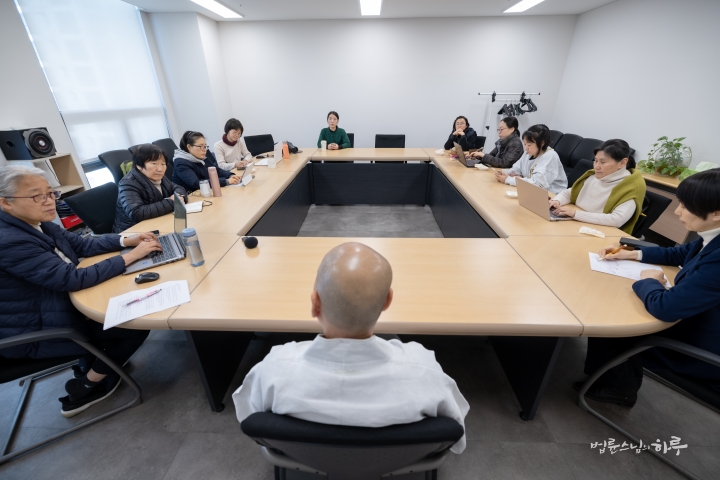
Today they discussed only urgent matters first, agreeing to discuss remaining issues separately later.
At 5 PM, SBS Entertainment Department PD Ryu Ji-hwan (류 지환) came to visit Sunim. He is the producer who received great viewer response for the “Jungle Bob” program. He requested that Sunim appear on a new program being prepared this year.
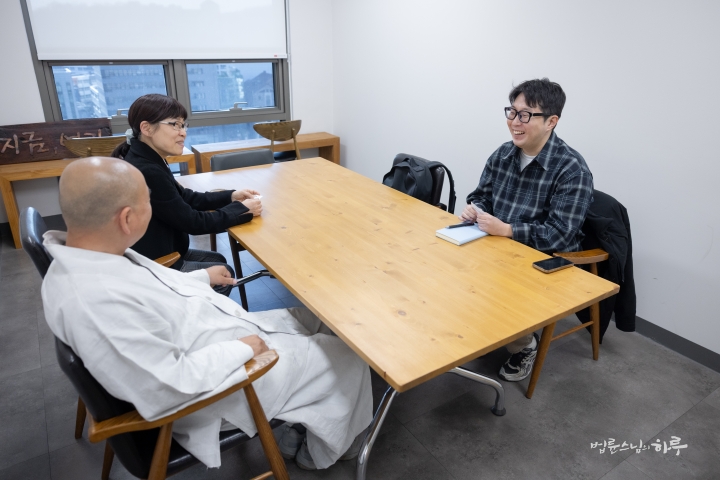
Sunim politely declined the appearance and spent an hour having various conversations with the PD. After finishing their conversation, they took a commemorative photo together.
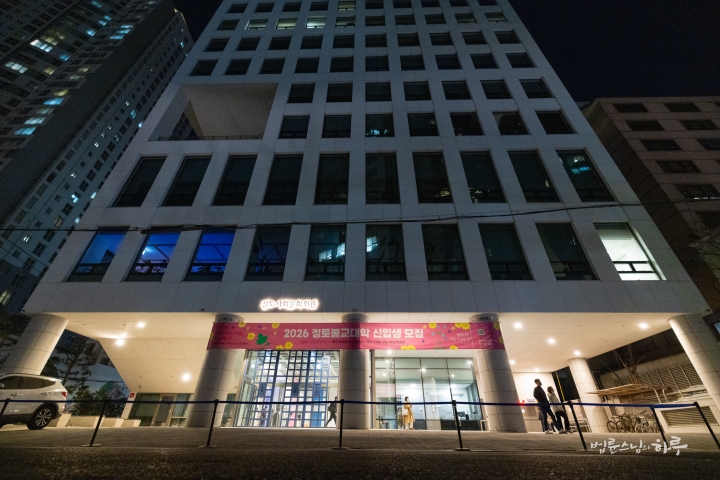
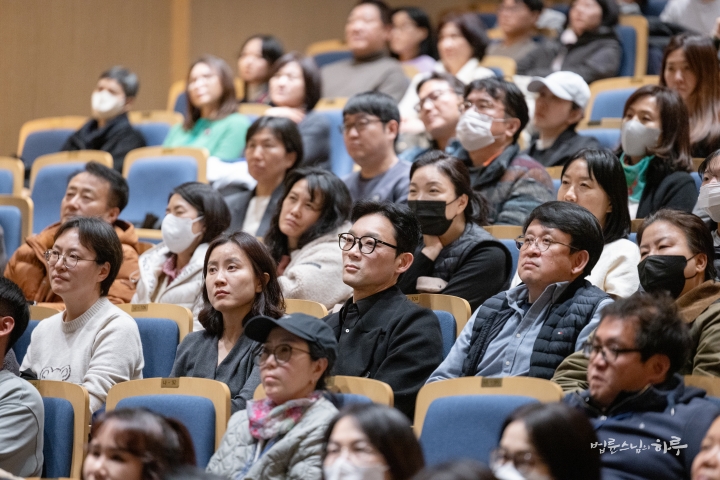
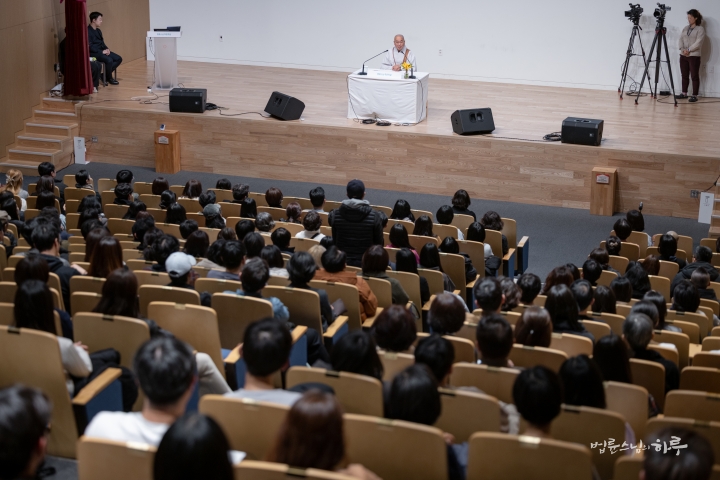
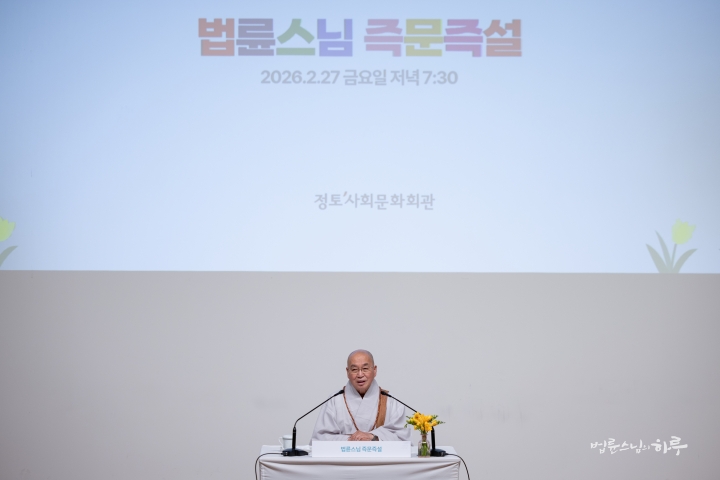
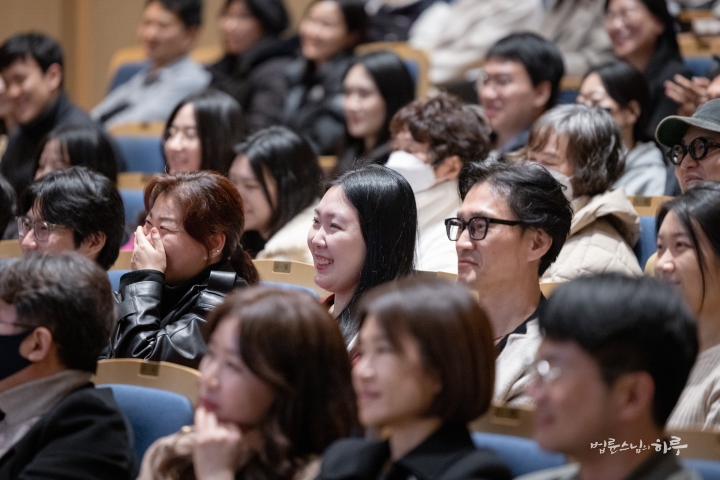
As the sun set, at 7:30 PM, the Friday Dharma Q&A continued in the underground auditorium. For the first time since last December, many citizens visited the Jungto Social and Cultural Center to attend the Dharma Q&A. Citizens registered on-site or submitted questions, then moved to the underground auditorium with light steps.
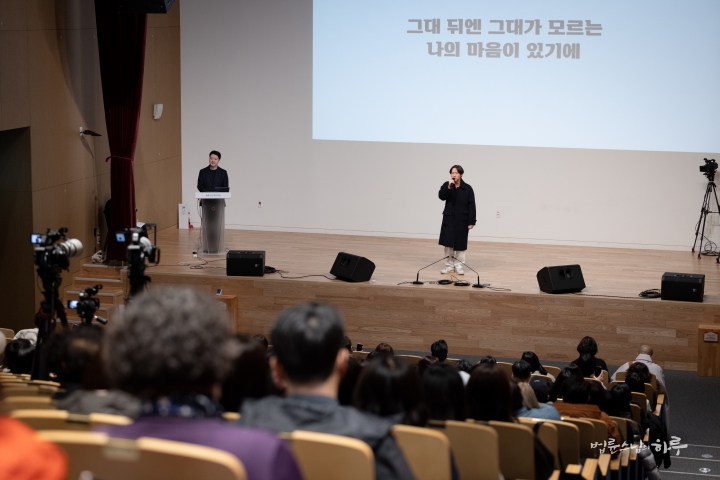
The lecture began with about 4,400 people connected on YouTube and 300 people seated on-site. First, Kim Dong-han (김 동한), a young Jungto Society volunteer, took the stage and energetically sang “Festival” and “For You,” greatly lifting the atmosphere.
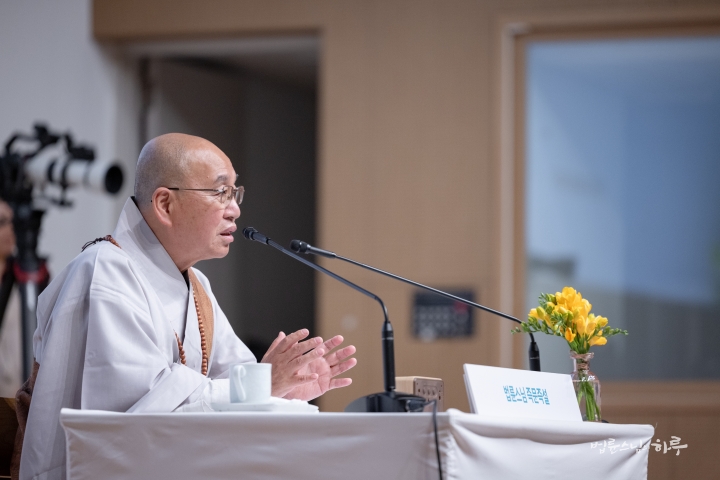
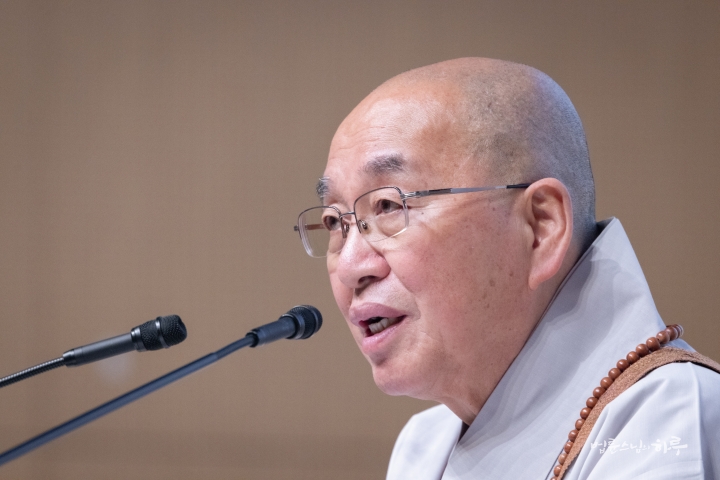
After reciting the Three Refuges and Words for Practice, Sunim took his seat on stage. Sunim greeted the citizens who had visited the Jungto Social and Cultural Center after a long time.
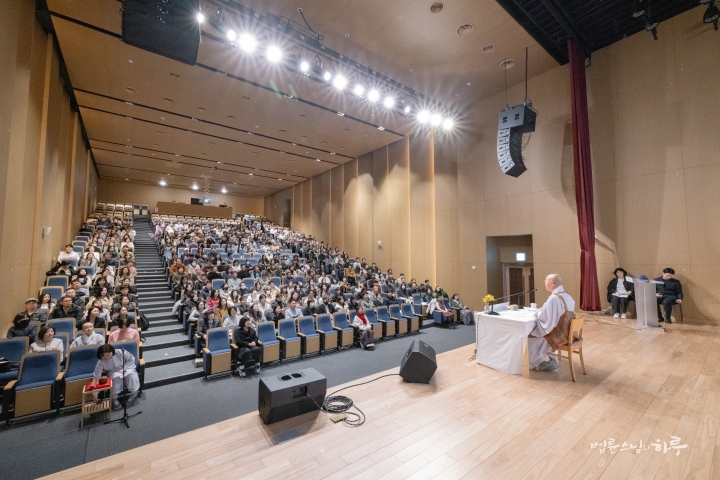
“Since I was mainly traveling abroad for surveys in December, January, and February, it seems like it’s been several months since we met and had conversations. Today, I’m meeting you directly at the Seoul Jungto Social and Cultural Center for a Dharma Q&A (즉문즉설). I see quite a few people have signed up for questions today. Let’s begin right away.”
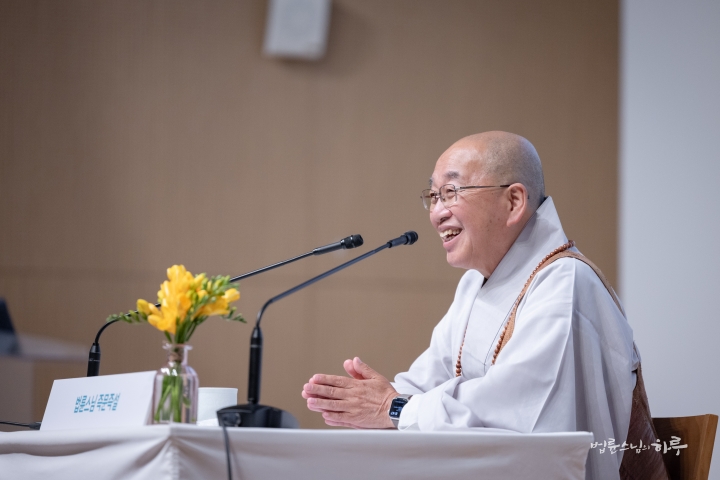
For an hour and a half, six people raised their hands and had conversations with Sunim. The first questioner raised their hand high and asked Sunim a question. She shared her struggle about how to restore her relationship with her husband amid conflicts that had built up from refusing marital relations for 8 years.
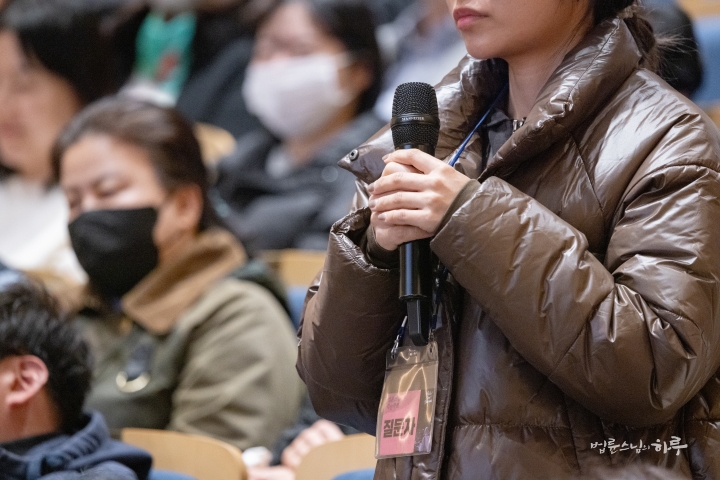
I’ve Been Refusing Marital Relations for 8 Years Due to Sexual Assault Trauma. How Can I Resolve My Husband’s Anger?
“I have trauma from being sexually assaulted as a child. Although I dated my current husband for 10 years before marriage, except for the early dating period, I’ve barely been able to have marital relations for about 8 years now. I’ve been going to a psychiatrist and receiving counseling for trauma treatment. I learned that I had misconceptions about sex, but it seems I learned too late. Every time I refused marital relations, my husband felt severe shame and humiliation, and perhaps because of those wounds, he even had an affair before our marriage. My husband is pouring out his anger saying, ‘You should experience what I’ve endured for 10 years, I’ll maintain the marriage but have affairs.’ In the midst of this, I became pregnant. I seek Sunim’s teaching on how I should accept and repent for my husband’s deep resentment and anger, and what path our couple should take to overcome this crisis together, especially for our child.” 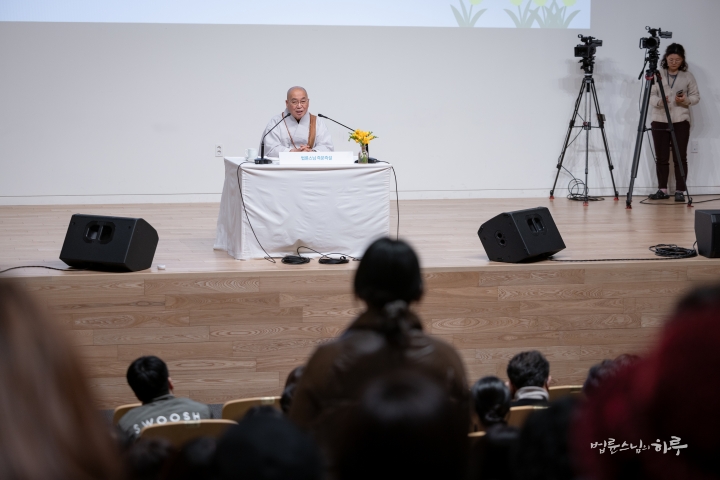
“Did you have IVF treatment?”
“No.”
“Do you still have rejection reactions when your husband comes close?”
“No. I’m okay now. But my husband has built up anger from my past rejections, so now he’s the one rejecting me.”
“Is your husband still seeing someone else?”
“No, he’s not seeing anyone. But he sometimes says angrily that he will meet someone else.”
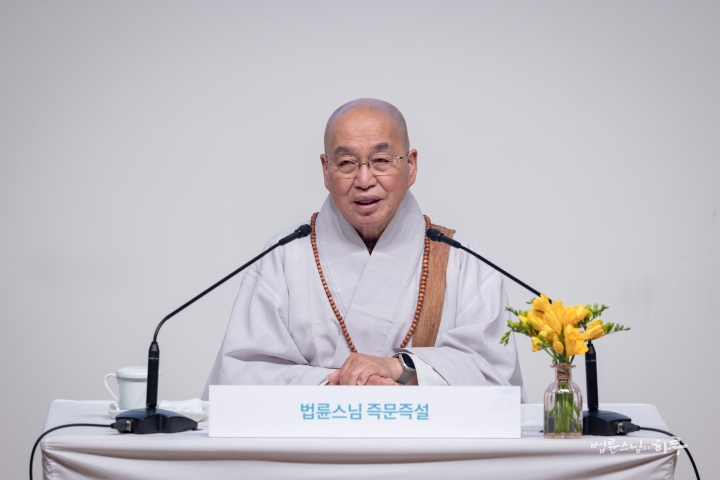
“You developed trauma from childhood sexual assault, which created negative feelings about sex, and this caused hardship for your husband. Someone with professional knowledge about trauma who understands it as an illness can fully understand you and help with treatment. However, your husband doesn’t seem to be someone with knowledge about trauma or deep understanding of illness. So naturally, he would be angry at a wife who refuses marital relations.”
“But now that some time has passed, you and your husband have switched positions. Now it’s reversed – your husband is rejecting and you’re clinging. This could create another trauma for you. So even if your husband rejects you somewhat, since you’re pregnant and your trauma has been treated, it’s better to be satisfied with that. Then if your husband wants marital relations, have them; if not, it’s better not to bother him. If your husband asks ‘Aren’t you interested?’, you can say nicely, ‘I am interested, but I don’t want to bother you.’ It would be better not to obsess too much about marital relations and forget about it a little.”
“But my husband thinks marital relations are really important and sometimes says ‘if not that, we have no choice but to divorce.’ Even when we talk a lot, his anger doesn’t subside. I don’t know what to do in these situations.”
“Your husband’s unresolved anger is his problem. He needs to go to a psychiatrist for treatment – it’s not something you can fix. Even if you provided the cause, the person suffering from this illness now is your husband.”
“To use an analogy, let’s say someone forcibly injected me with drugs and I became addicted. The person who provided the cause was that person, but the one currently addicted to drugs is me. So the person who needs treatment is also me. Treating the person who injected me won’t cure my addiction. Similarly, even if your husband developed this anger because of you, ultimately your husband’s anger is his problem. It’s not something you can fix.”
“However, if you confront and fight back against that anger, your husband’s illness will only amplify. Since you provided the cause, you shouldn’t do that. Your husband becoming free from that illness is his responsibility, not something you can do. All you can do is understand and wait for your angry husband, saying something like ‘Honey, I’m sorry. You’re suffering because of me. I’m sorry.’ Your husband needs to treat himself by going to a psychiatrist for psychological treatment for anger, or medication therapy.”
Of course, if your husband wants to have marital relations and you refuse, that can be grounds for divorce. However, if you’re not refusing now, then it’s not grounds for divorce. But if your husband says, ‘I get so angry just looking at you that I can’t have relations with you’ because of your past refusals, and if he can’t control his anger and it’s getting progressively worse, then perhaps you should consider divorce. While it’s wrong to think ‘I absolutely can’t live with this person, I must get divorced,’ it’s also wrong to think ‘I must never get divorced.’ There are cases where couples are so incompatible that being together makes their relationship worse and makes them both unhappy. If being apart would reduce suffering, wouldn’t it be better to separate or divorce?
Marriage is not an absolute goal in life. Our goal is to live happily. If marriage helps achieve that goal, then we do it; if it doesn’t help, then we don’t. There’s no need to feel obligated to marry just because you’re getting older. Also, it’s wrong to think that you must unconditionally separate if you don’t get along after marriage. When there are children and both sets of parents involved, separation can complicate various relationships and actually make it harder to be happy. Life isn’t lived alone but through relationships with many people. Divorce can complicate family relationships that were formed through marriage, so it would be better not to divorce if possible. However, if personality differences are so great that they can’t be resolved despite all efforts, or if differences in ideology or beliefs make being together more unhappy for both people, then divorce can be an option—not out of hatred for the other person, but for both their happiness and yours.
While divorce is possible, we can’t be certain that divorcing is necessarily good, which is why we should make maximum efforts to accommodate each other. However, we must accept that divorce is possible if the other person wants it. Of course, it’s not advisable for you to be the first to suggest divorce. Since you provided the cause, you should be able to say, ‘Because I hurt you first, if divorce would help your life, I’ll do as you wish.’
In the past, a child’s mother and father had to live together as a married couple. However, we now live in an era where people can fulfill the roles of a child’s mother and father without being married. Even if divorced and living separately, they can closely discuss and cooperate for the sake of their child as the child’s mother and father. Although their romantic relationship as a man and woman has ended, they can still cooperate as the child’s parents. This is modern society today.
Since there isn’t much historical experience with this yet, divorced couples could only choose between two options: either become enemies and never see each other again, or endure and continue living together. But now, even if they separate as a couple, they can become good friends as the child’s mother and father and cooperate for the child’s sake. Since we live in an era where this is possible, please don’t be too afraid of divorce. Do you feel that you’ve overcome the trauma from your past wounds to some extent?”
“Yes.”
“Then try speaking honestly to your husband.
‘I rejected you before because of my trauma, but now I’ve healed. I’m sorry for what I did then. It wasn’t my intention to hurt you – I had an illness, so I hope you can accept that. I fully understand that you were angry because of me. I don’t really know what I can do to help or what I should do. If possible, I hope you can go to a hospital to get treatment for the wounds you received from me and overcome them. I also had old wounds, but I was able to overcome them with time, and I hope you can also receive treatment and feel at ease.’
Even if you say this, your husband might reject it or want a divorce. However, when people say ‘let’s get divorced,’ they often don’t really mean it. Rather than truly wanting to separate, they often say it because they want to make the other person surrender. They want the other person to admit fault and beg on their knees, so they use divorce as a last resort. When children say ‘I’m going to leave home,’ they don’t really intend to leave – they want to hear their mother say ‘Oh no, I was wrong.’ When they say ‘I won’t eat,’ they’re using self-harm to hear ‘Okay, okay, Mom was wrong, please eat.’ Saying ‘I want to die’ is the same. They resort to extreme measures when nothing else works. When lonely parents say ‘I should just die,’ they want to hear their children say ‘No, Mother, you need to live a long life.’
Similarly, if you take your husband’s words literally and say ‘Fine, let’s get divorced,’ he might get even angrier and more upset. While maintaining the perspective that you don’t want a divorce, you should be willing to consider it if that’s what he wants and if it would help him. If he truly wants a divorce, you should be willing to grant it. Don’t cling too desperately to avoid divorce.”
“Actually, as you said, I don’t think my husband really wants a divorce. So I’d like to do repentance prayers for my husband. How should I do this? I always feel so sorry and want to do something.”
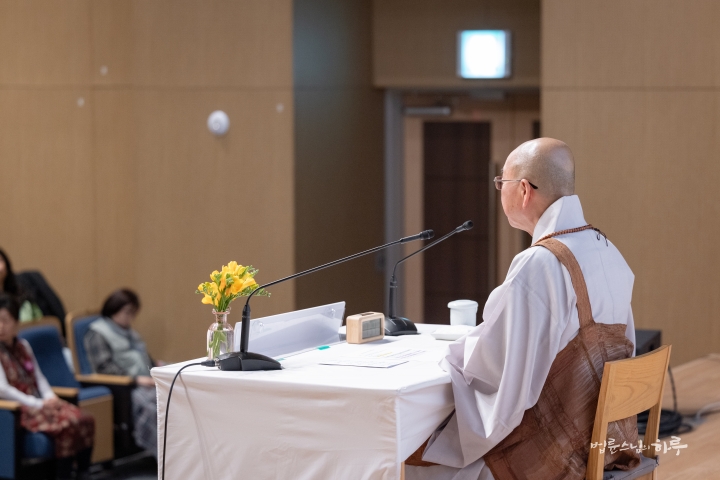
“Do 108 prostrations every day while reciting this:
‘You suffered so much because of me. I’m sorry. You became so angry because of me. I’m sorry.’
When the other person gets angry, rather than suffering yourself, if you have the mindset of ‘I’m sorry. You’re suffering because of me,’ it’s not that the other person gets better, but you won’t suffer. ‘I’m sorry. Honey, please stop being angry. It’s harmful to your health. You’re suffering because of me. I’m sorry.’ If you maintain this mindset, you’ll be able to protect yourself in any situation.”
“Thank you. I’ll take this to heart.”
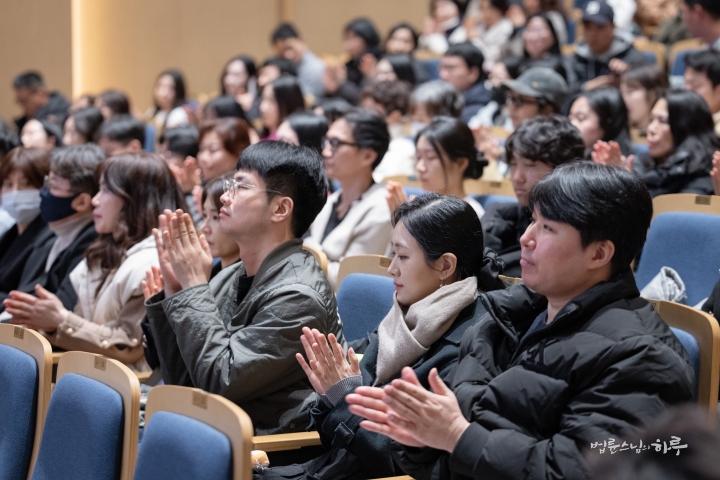
Questions continued to follow.
Due to growing up in a dysfunctional family during childhood, I’ve been experiencing interpersonal anxiety for over 10 years. How can I escape from this karmic pattern?
My tendency to constantly push myself also appears in relationships with others, causing me to repeat an emotional roller coaster. How can I let go of this repetitive habit?
I’ve been receiving psychiatric treatment since high school. Can people with mental illnesses or disabilities also achieve enlightenment like the Buddha?
While I can have casual conversations with friends and acquaintances, I feel I have no one to confide my inner worries or difficulties to. Is there a way to relieve this frustration?
I agreed to divorce my husband and we’re living separately without financial difficulties. However, I’ve developed feelings for a new man six months ago. What should I do about these feelings?
After finishing the dialogue, Sunim emphasized a few more points.
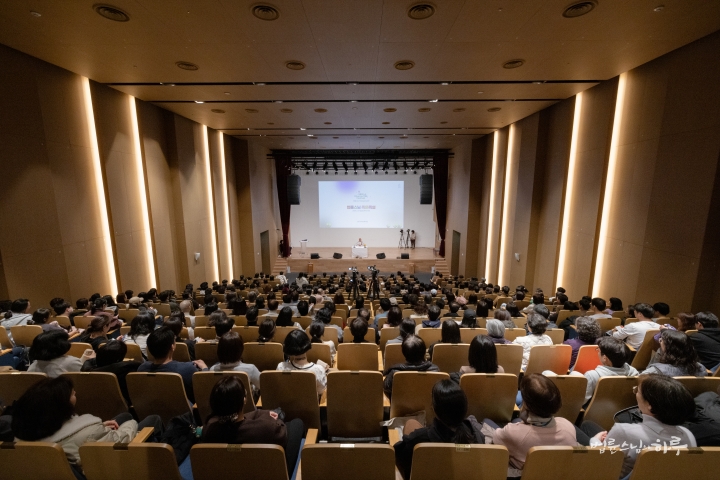
“Let’s say after this lecture ends and I go outside, a car suddenly crashes into me and I have an accident. And let’s say one of my legs breaks. Which is better – before the accident or after? Obviously, before the accident is better. But before accidents happen, people don’t really appreciate that their ‘pre-accident’ state is a good state.
Now, in a traffic accident, one leg might break, but two legs could also break, right? Which is better – two broken legs or one? One broken leg is better. So having one broken leg is worse than having none broken, but better than having two broken. If you can see it this way, you’ll realize that your current situation isn’t the worst possible situation. But it’s not a good situation either. Compared to no accident, it’s bad, but compared to two broken legs, it’s better.
What about the case where both legs are broken and you have to use a wheelchair? Even then, it’s better than dying. Because it’s better than dying, parents and family are happy that the person survived. We say ‘survived by a hair’s breadth,’ don’t we? You’ve probably seen newspaper articles that say ‘seriously injured but life is not in danger.’ So you need to know that no matter what situation you’re in, there’s always a worse situation that exists.
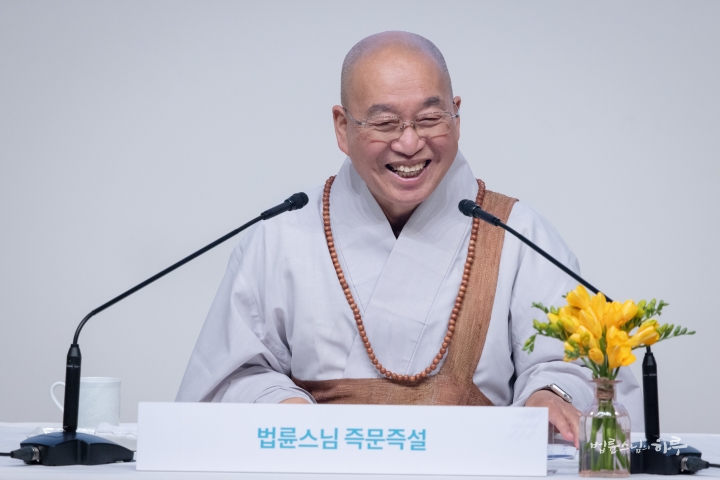
How to Stop at the First Arrow: Don’t Create Greater Losses
I’m 74 years old this year, and compared to a 20-year-old youth, I’m certainly much less capable. But I’m still better off than an 80-year-old elder, aren’t I? So even though I’m not as good as when I was young, compared to when I’ll be even older in the future, my current state is good. Right now people say I’m old, but what will they say in about 10 years? When someone is 74 years old, they’ll probably say, “That’s the prime age for working.”
But when I listen to people who have turned 60, they talk as if their life is over once they retire. Most people retire when they turn 60, don’t they? But from my perspective, 60 is the prime of life. It’s an age when you can still climb up and down the Himalayas.
If you injure one eye, it’s inconvenient, but it’s better than not being able to see with both eyes. You say your mind is anxious, but having an anxious mind is better than not being able to use both legs. People who can’t use both legs do all kinds of work while using wheelchairs, so what’s there to worry about having a slightly anxious mind while using both legs perfectly fine? What’s wrong with being a little anxious? You can just observe it and say, “I’m feeling anxious.”
If someone puts a gun to your neck and says “Do you want to die?” and makes you choose between precious jewels and your life, which should you choose? There’s no third option here. In such a situation, you have no choice but to give up even the most precious jewels. It’s the same with sexual violence. So who made this choice? I made the wise choice. Because while jewels are precious, they’re less precious than life. The reason this becomes a trauma is due to ignorance. Physical wounds are formed by violence, but mental wounds are formed by ignorance. As the Buddha said, the first arrow is shot by others, but the second arrow, the third arrow – we create those ourselves. Because of ignorance, we turn it into a wound, which makes married life unhappy and causes children to be hurt as well. This is how we keep getting hit by the third, fourth, and fifth arrows.
So you must end it with the first loss. If your leg is broken, that’s where it should end. One leg may be broken, but everything else should remain intact. However, when one of your legs breaks, you become consumed by an inferiority complex and suffer psychological wounds. Because of this, even when your spouse says something minor, you fight due to your inferiority complex, and in this way, you continue creating your own losses. The first wound was given by others, but everything that follows is self-inflicted. You ruin your own life. The first may have been caused by your parents or a passerby, but everything after that is you ruining your own life.
So you just need to come to your senses now. Even with one broken leg, if you come to your senses, you can walk with a cane. But many people fail to come to their senses and end up breaking both legs, breaking their arms, and living that way.
That’s why I often say “it’s no big deal” during Dharma Q&A sessions. This doesn’t mean that even a car accident is no big deal. It means that while it’s not as good as not having an accident, it’s something that has already happened. When you realize that it’s better than having both legs broken, you can let go of one thing and continue living. Missing one arm or one leg doesn’t hinder living at all. It’s even mentioned in the Bible. Rather than losing your whole body by stealing or doing bad things with your hand, it’s better to cut off that one hand.
You need to be wiser. Being wise isn’t anything special. Given reality can be good or bad depending on what you compare it to, but in itself, there is neither good nor bad. That’s why I tell you to accept reality as it is. Going one step further is to think of it positively. Since I decide what’s good or bad, if I think positively about it, then it’s good. But most of you accept things negatively and make yourselves miserable.”
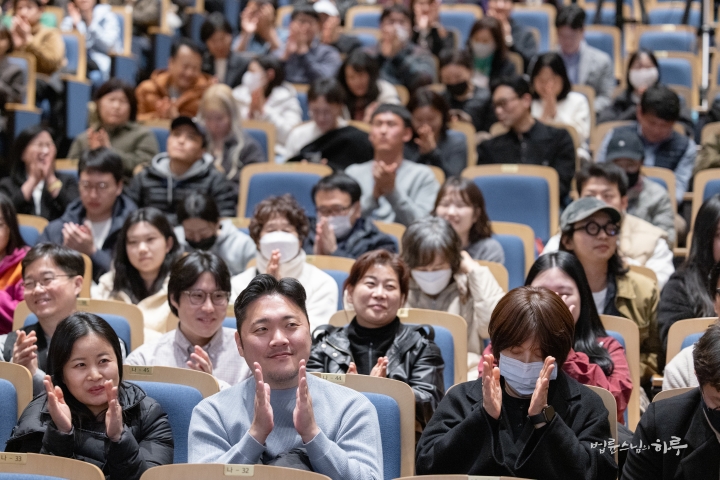
After finishing the lecture and coming down from the stage, it was past 9 PM. Following the volunteers’ guidance, all the audience members who had gathered in the main auditorium returned home. Sunim expressed his gratitude to the volunteers for their hard work and then made his way to the Jungto Center.
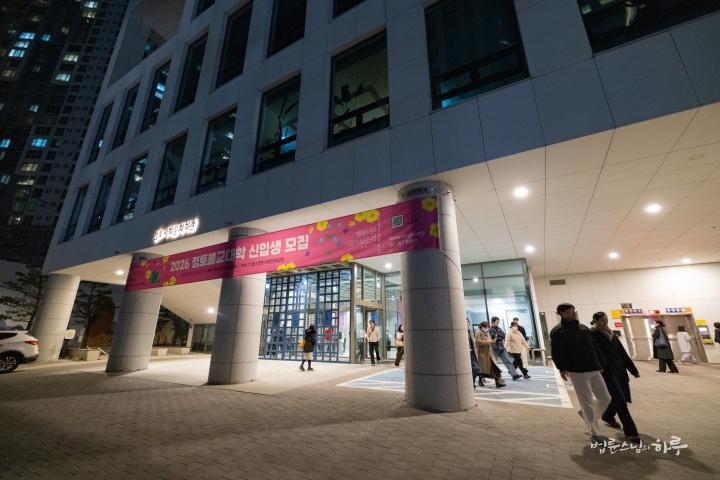
Tomorrow, the 10th Jungto Society Leading Member Ordination Ceremony (전법회원 수계식) will be held at the Dharma Hall of the Jungto Social and Cultural Center.