I Worry About Money All the Time. What Perspective Should I Have?
February 26, 2026 - Meeting with North Korea Experts, Regular Board Meetings of The Peace Foundation and JTS
Hello. Today, Sunim has meetings with foreign policy and security experts, as well as regular board meetings of The Peace Foundation and JTS.

After completing morning practice and meditation, Sunim headed to The Peace Foundation. At 7 AM, he had a breakfast meeting with North Korea experts. First, they examined North Korea’s prices, exchange rates, and residents’ living conditions from various perspectives. They then shared the analysis of recent statements released by North Korea and explored peace research activities from an international perspective beyond the Korean Peninsula before concluding the meeting.
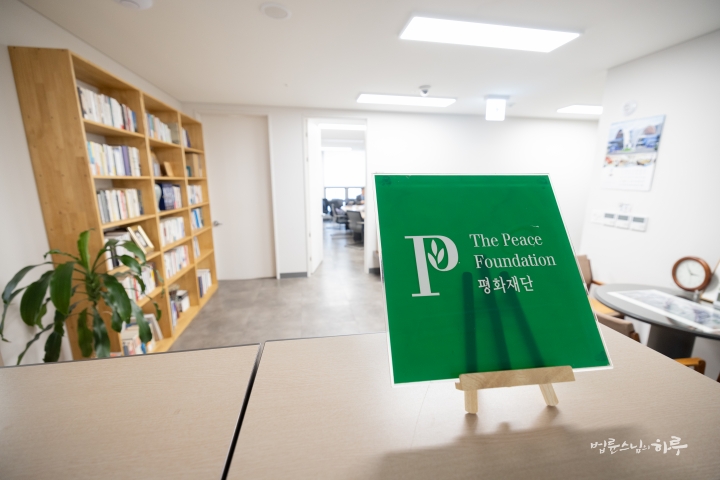
At 10 AM, Sunim continued with a meeting with foreign policy and security experts. They discussed what moves President Trump might make to adress US-North Korea relations and talked about South Korea’s foreign policy and security strategy. After two hours of conversation, they scheduled their next meeting and concluded.
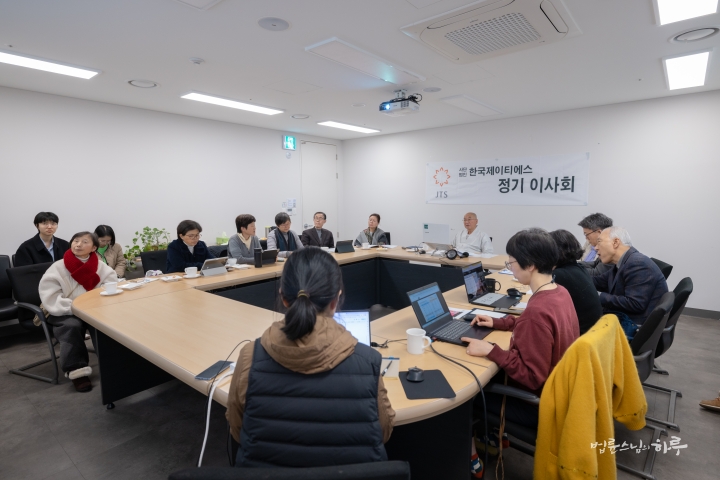
After lunch, the regular board meeting began at 1 PM in The Peace Foundation conference room.
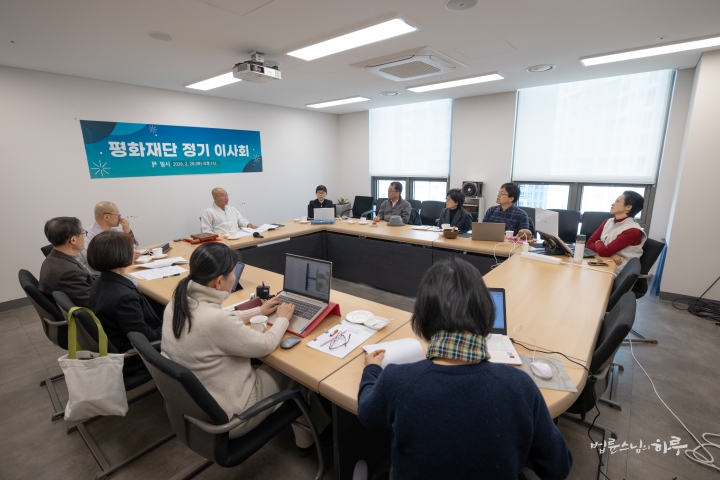
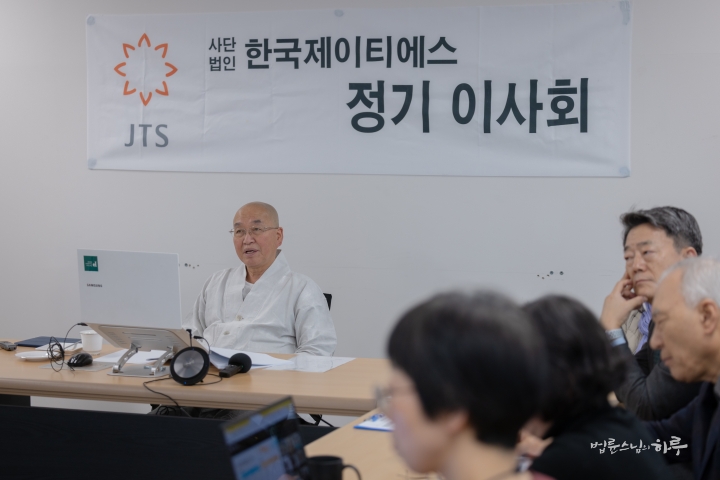
With all board members of The Peace Foundation gathered, Sunim, as chairman, gave opening remarks.
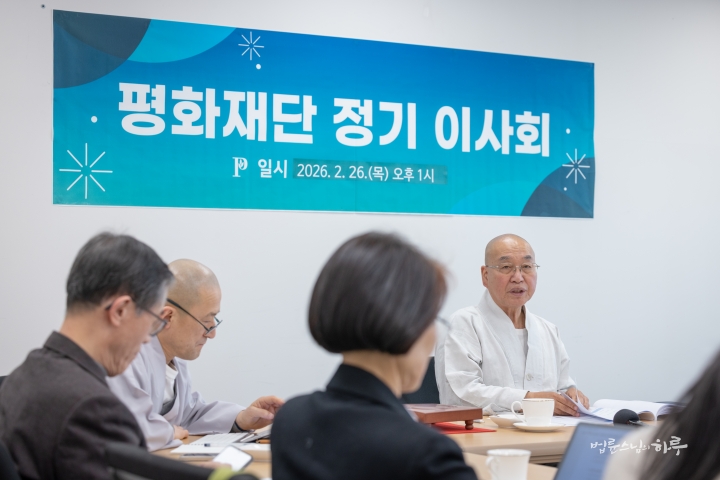
Following this, there were reports on 2025 business performance and financial statements, followed by 2026 business plans and budget reports.
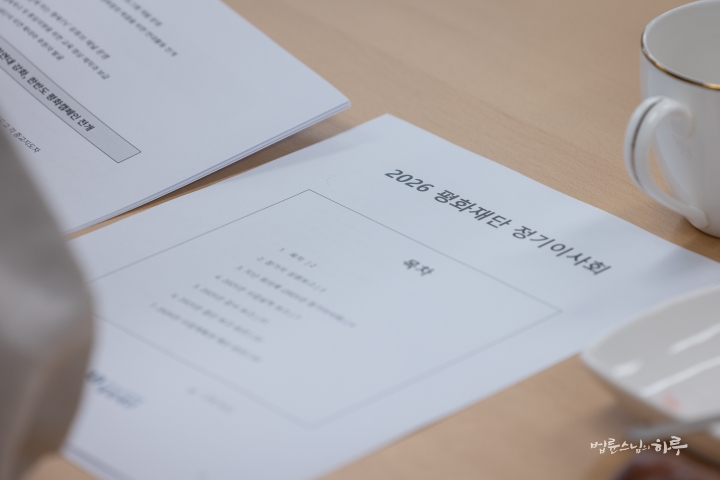
In 2025, The Peace Foundation published current affairs analyses in the fields of unification, diplomacy, and security biweekly for a total of 26 issues. It held one regular symposium each in the first half and one 21st anniversary symposium, and conducted expert forums monthly for a total of 10 sessions. In the second half, it launched a special series commemorating the 80th anniversary of liberation, conducting three sessions on topics including peace on the Korean Peninsula, self-reliant defense, AI semiconductors, and the economy. In the area of religious and civil society solidarity, it operated monthly meetings of religious leaders from six religions and held an International Reconciliation Conference with Sri Lankan religious leaders in July, laying the foundation for an Asian religious network.
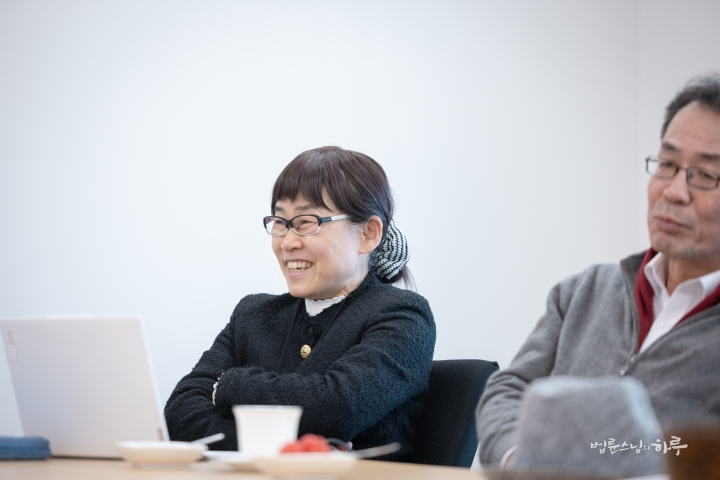
The core goal for 2026 is to expand existing research projects while preparing in earnest for its role as Jungto Society’s think tank. Plans include continuing biweekly current affairs analyses and monthly expert forums, and adding new Liberation Day (광복절) and National Foundation Day (개천절) commemorative seminars in addition to regular symposiums in the first and second halves. The Peace 2.0 Forum will be expanded to twice yearly to promote exchanges with regional foreign policy and security researchers. As new projects, special research groups on national history, independence thought, and Buddhism and social practice will be organized and operated for one year, and four new research groups in the fields of life security, climate peace, Buddhist society, and history will be established. The National Happiness Survey and Social Consciousness Survey conducted from 2017-2020 will be resumed with annual regular surveys, and AI special lecture series will be newly established twice yearly with 10 lectures each, operating public education courses analyzing the impact of artificial intelligence on various sectors of society.
All board members unanimously approved the business plans and budget.
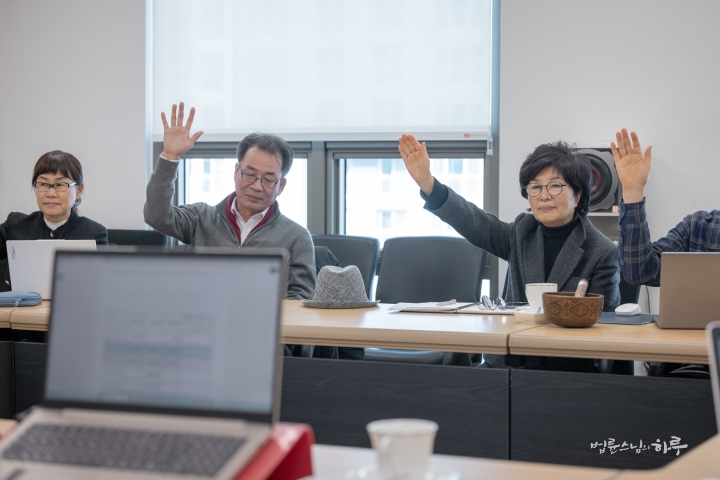
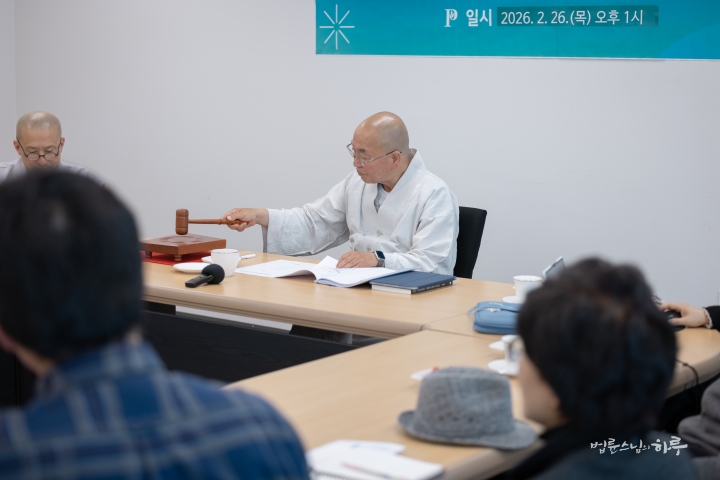
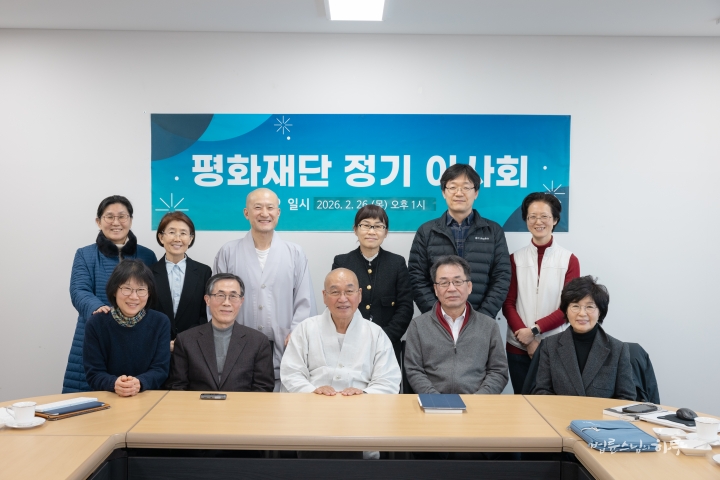
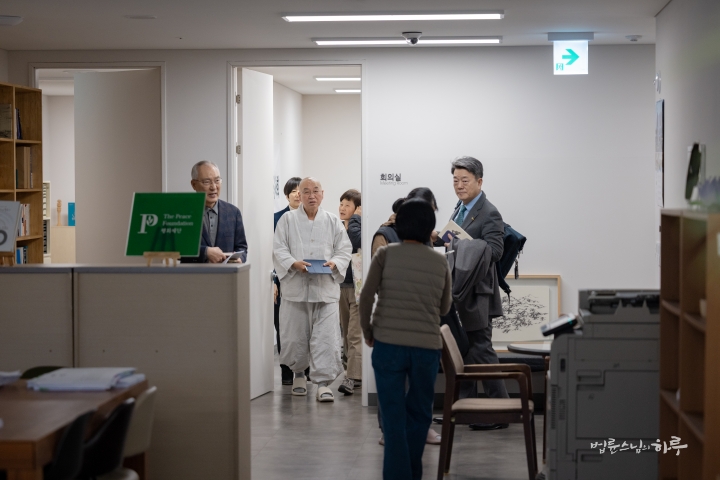
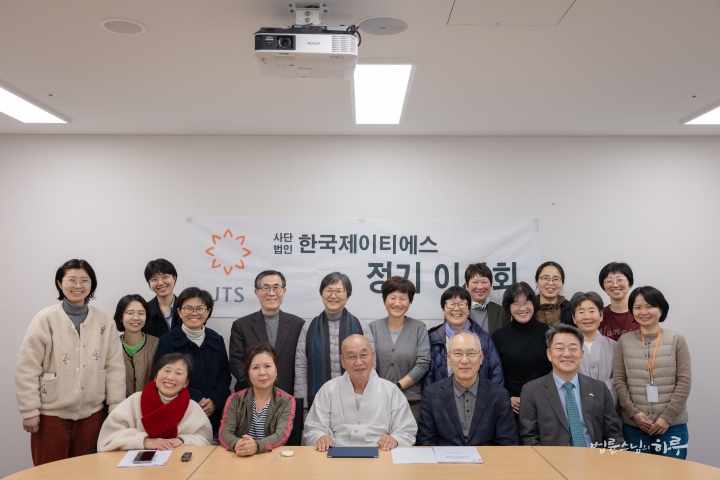
After taking a commemorative photo with the attending board members, The Peace Foundation board meeting concluded.
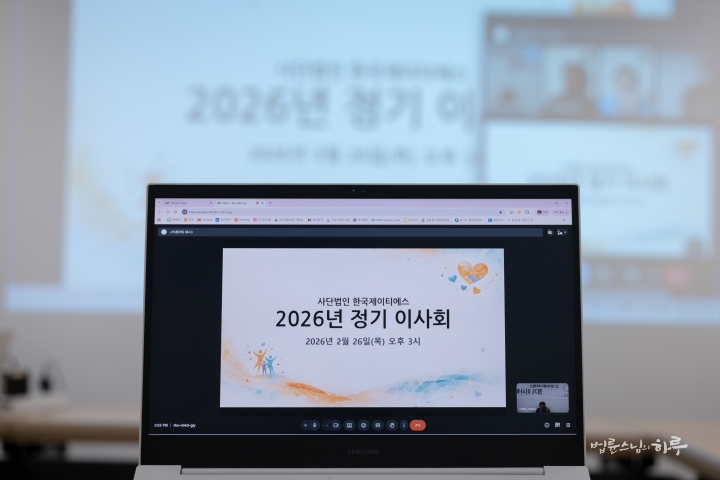
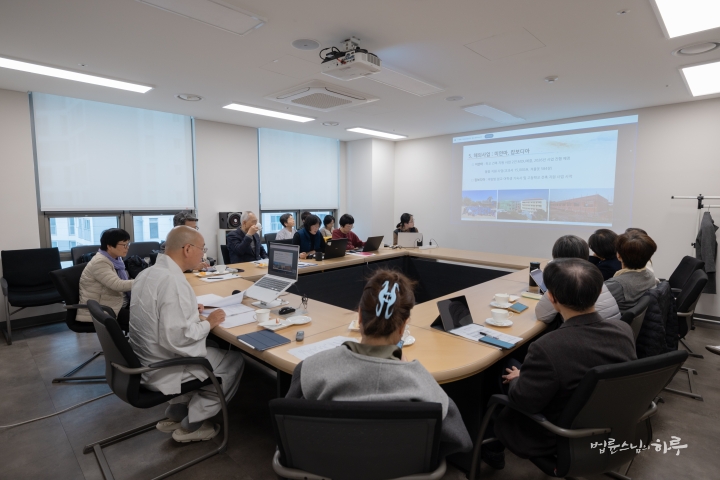
At 3 PM, the JTS board meeting began. JTS is an organization founded by Sunim in 1993 with the purpose of eradicating international hunger, disease, and illiteracy. Some board members attended offline in the conference room, while those overseas participated online.
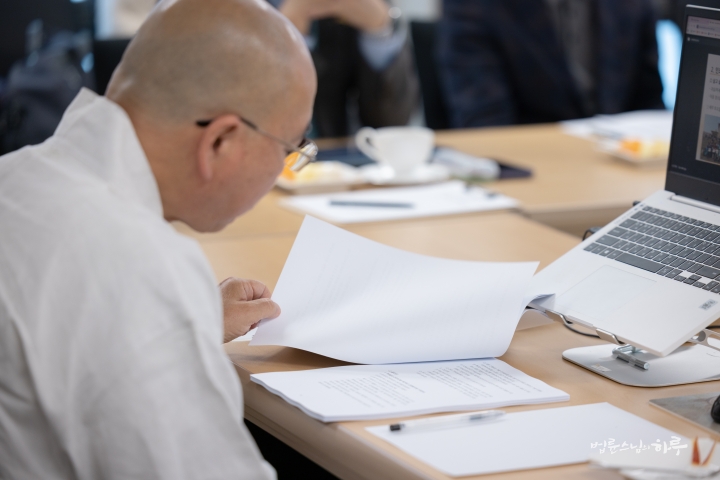
After reading the minutes from the previous meeting, the person in charge of each country where JTS operates presented their 2025 business reports and 2026 business plans.
In India, 15 preschools including Sujata Academy were operated stably. In particular, smart classes were introduced to expand online English and computer classes for middle school students. In healthcare, 10,634 people were treated annually, with an additional 4,247 people treated through mobile clinics twice weekly. In village development, the first house for the extremely poor was completed, providing a model for village-by-village housing projects. Food was provided to about 60 households quarterly, and 106 hand pumps were repaired. The biggest achievement was the re-registration of FCRA (Foreign Contribution Regulation Act : 외국기부금규제법), establishing a foundation for stable business operations for the next five years. Emergency relief for flood damage in Assam and flooding in Bodh Gaya was also carried out promptly. This year, based on FCRA approval, homeopathic treatment and maternal and child health programs that had been suspended will be resumed. School facilities will be significantly expanded, including construction of branch school open halls, expansion of the main school office, and improvement of library and science laboratory spaces. In village development, housing construction and repair projects for the extremely poor in 15 villages will be promoted in earnest, and resident self-reliance capabilities will be strengthened through pilot operation of garbage collection sites and operation of Hindi and environmental classes.
In the Philippines, 9 new indigenous schools and 6 special schools will be additionally constructed, and finishing work on 4 schools incomplete in 2025 will proceed. The management method will be shifted to have education offices and county offices take responsibility for school construction, and support priorities will be systematically classified according to the results of a comprehensive school status survey. Village development projects through medical volunteer work will also be expanded.
In Bhutan, a main project MOU was signed with the Bhutanese government in June 2025, launching a three-year sustainable development project in earnest. Through pilot projects, 27 housing improvements, water facilities, road repairs, irrigation channel construction, repairs to 7 schools, and 106 hearing aids for the hearing impaired were provided, benefiting 386 households and 1,122 students. Civil servant workshops were conducted in Zhemgang and Trongsa districts, and short-term volunteers from Korea and India were dispatched to implement sample house projects. Following final approval by the steering committee in December, the first year of the main project began in earnest. This year, as the first year of the main project, 255 projects will be promoted – 184 in Zhemgang and 71 in Trongsa. Including housing improvements, road repairs, water security, and irrigation channel construction, an evaluation system with ‘happiness, self-reliance, environment, and community’ as core indicators will be established, and a self-reliant development model based on resident participation will be established.
2025 was particularly a year of significant expansion in domestic and international emergency relief. Internationally, food and emergency supplies were provided to Myanmar earthquake-affected areas in seven phases, and in Thailand, food and school supplies were delivered to about 7,000 Myanmar refugees in the first and second halves of the year. Activities expanded to Central and South America, responding to flood damage in Laos, Thailand, Sri Lanka, and Indonesia, and surveying hurricane damage areas in Jamaica to prepare 200 tons of rice support. Domestically, over 1,000 households were supported in three phases for wildfire damage in the Yeongnam region, and emergency relief was simultaneously conducted in multiple areas including Gapyeong, Yesan, Sancheong, and Hapcheon for nationwide flood damage. The emergency relief activity system was further organized through active participation of volunteers in each region. This year, 200 tons of rice and relief supplies will be provided to hurricane-affected areas in Jamaica, and cleaning tools such as carts and kitchen tools such as gas burners will be provided as follow-up support to flood-affected areas in Indonesia. Emergency relief teams will be organized for each country to build networks, and emergency relief capabilities will be systematically strengthened through the preparation of activity manuals and operation of education programs. Overseas cooperation projects including construction of a girls’ dormitory in Cambodia, construction of 2 schools in Myanmar, and construction of a girls’ dormitory in Thai refugee camps will also be promoted in earnest.
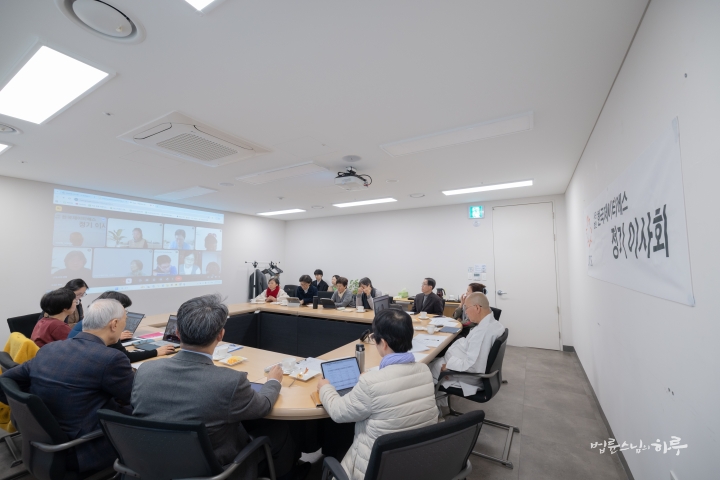
Domestic projects will continue nutrition package support for children at risk of missing meals at a scale of about 750 households, and coal briquette support for vulnerable groups will be expanded to 100 households. Housing environment improvement and side dish/cleaning support projects will be expanded nationwide, multicultural projects will be expanded beyond the existing 3 centers to nationwide operation, and online legal consultation and face-to-face legal consultation will be newly introduced.
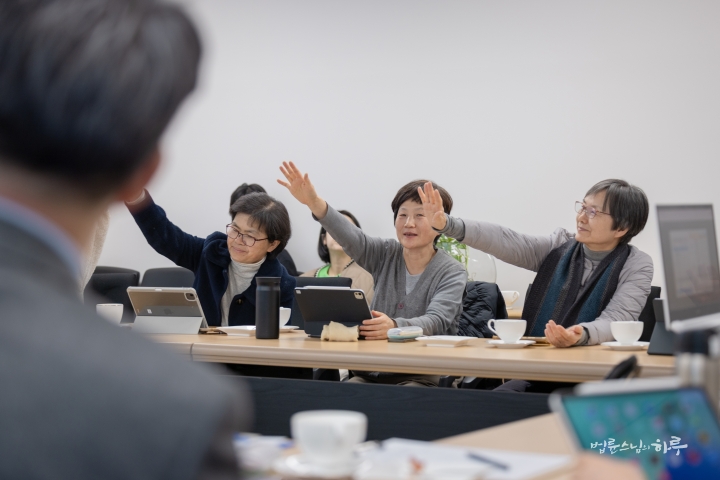
After the presentations, there was a Q&A session. When asked about trends in the number of JTS sponsors, the JTS Secretary General answered.
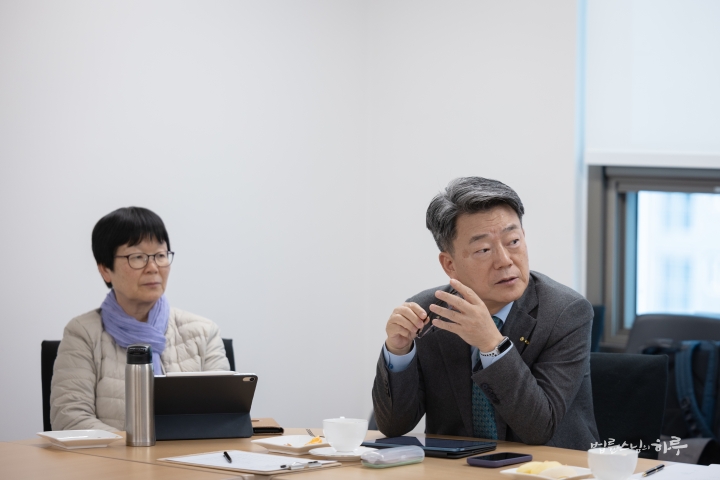
“Due to the increasingly difficult economy, the number of regular sponsors is decreasing to a degree we can feel. Therefore, we have reduced this year’s revenue budget compared to last year.”
Sunim added his opinion on this.
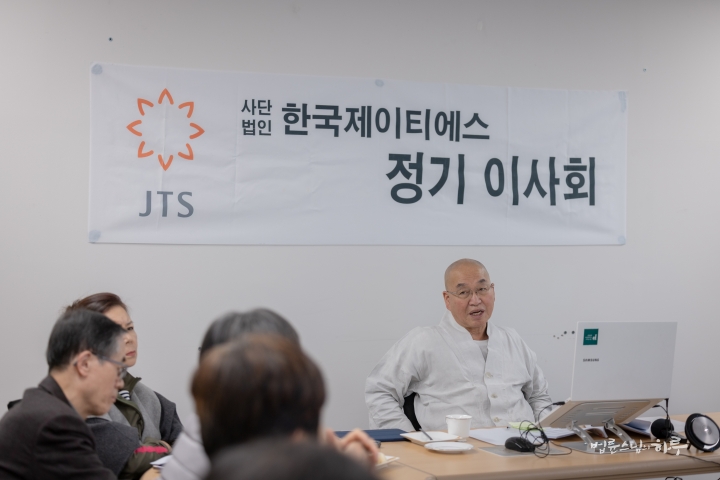
As the Q&A continued, Sunim finally made one suggestion. He proposed that JTS should now go beyond relief-centered support and experimentally introduce sustainable development methods.
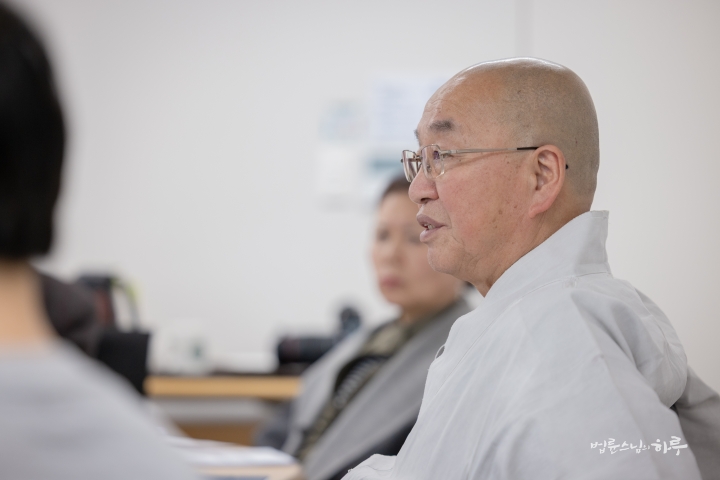
JTS Principle: Support Based on Participation
The principle by which JTS operates is ‘support is provided to the extent that village residents actively participate.’ Therefore, if local partners fail to sufficiently encourage resident participation, project funding inevitably decreases. While unconditional support might allow for project expansion, JTS adheres to the principle of supporting only to the extent that local partners and residents participate. This creates limitations in expanding projects in areas where maintaining this principle is difficult. Ultimately, finding local partners who can uphold this principle together is crucial. While anyone would appreciate receiving support, JTS’s goal is to foster self-reliance among beneficiaries. In this regard, expanding the scale of JTS projects can be challenging.”After the Q&A session, the board unanimously approved the business plan.
After taking a group photo together, Sunim encouraged the JTS volunteers who had worked hard over the past year. He signed copies of his books as gifts for the attending board members.
After sunset, Sunim worked indoors in the evening and retired early due to poor health.
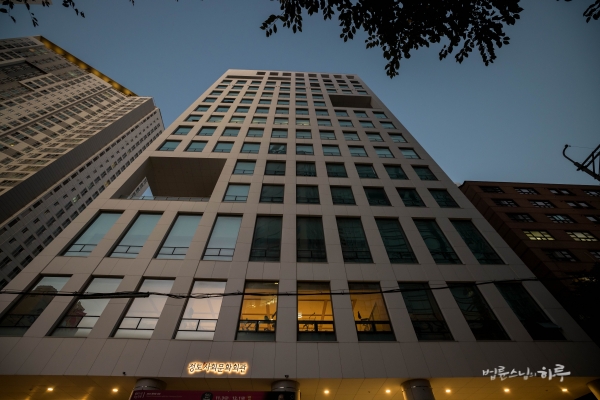
Tomorrow morning, Sunim will attend the general meeting of the incorporated association online. At lunch, he will meet with guests visiting The Peace Foundation. In the afternoon, he will have a World Meditation Forum preparatory meeting, JTS business plan discussion, and secretariat meeting in succession. In the evening, he will give a Friday Dharma Q&A at the underground auditorium of Jungto Social and Cultural Center.
Since there was no Dharma talk today, this post concludes with a dialogue between Sunim and a questioner from the Weekly Dharma Assembly on the 25th.
I Get Overly Emotional About Money. What Perspective Do I Need?
“I’ve been running a business for over 20 years, always measuring success solely by sales and profits—in other words, money. As a result, I’ve become overly sensitive to income and expenses in daily life, experiencing significant emotional ups and downs even with small changes. What perspective would allow me to remain committed to my business while reducing emotional turbulence and approaching life more freely?”
“You can just continue living with those ups and downs. There’s no need to make it a problem. However, if you don’t want to be swayed by emotions, you need to adopt the perspective that ‘it doesn’t matter if money doesn’t come in.’ But you want your current business to do well, don’t you? Then you’ll inevitably suffer when money doesn’t come in. Essentially, you want both money to flow in abundantly and to not be emotionally affected—but there’s no such path. You must choose one or the other. Either live with daily emotional swings, or change your perspective to ‘it’s fine if money doesn’t come in.’ Just because you think ‘it’s fine if money doesn’t come in’ doesn’t mean money will suddenly stop coming. Similarly, thinking ‘I hope lots of money comes in’ doesn’t make money flow in either. Money comes when it comes and goes when it goes, regardless of your will. It doesn’t come because you call it or leave because you send it away. So if you just establish the perspective that ‘it’s okay if money doesn’t come in,’ you can avoid emotional swings. You can even smile every day. You can lightly observe, ‘Oh, 5 million won came in today,’ or ‘Oh, 10 million won came in today.’ There’s no need to agonize over it. ‘It’s fine if money doesn’t come in. I just need to work hard. The flow of money is separate from me. My work is just one small hobby I do for fun.’ If you work with this mindset, that’s enough. But if you think ‘lots of money must come in,’ your mind will inevitably fluctuate as it does now. It’s the same with stocks. Because you think ‘stocks must keep rising,’ your mood rises and falls with them. When stocks go up, you drink to celebrate; when they go down, you drink to console yourself. Eventually, you spend more on alcohol than you make on stocks. That’s why proper stock investment requires not thinking about ups and downs. When someone wants to create and run a company but lacks capital, you can’t give it away for free, so you lend it as an investment. You should buy stocks thinking, ‘If the business does well, I’ll get back my principal and profits; if it fails, I’ll just write it off.’ If you buy stocks with this mindset and check after 5 or 10 years to find the business has done well and stocks have risen significantly, you profit. If it failed, you just write it off. In other words, you should think of it as contributing to a good cause. Doing good work is better than bad work, right? If you have the perspective of ‘contributing to good work,’ you won’t worry about ups and downs. But because you’re trying to profit from it, you’re anxious. What will you do?”“Yes, this was a profound answer to my simple question. I understand well. I’ll enjoy my current work. After all, working hard doesn’t always guarantee success, and sometimes things work out well even when I haven’t done well. So I’ll approach it comfortably. Thank you.”
“Just deciding to be comfortable doesn’t make your mind comfortable. You need to completely change your perspective like this: ‘It’s fine if money doesn’t come in. I’m grateful just to have work to do. I just need to make enough to eat through this work.’ Because you have a job, you can do what you love and run your store. If you think, ‘I’m grateful just to be able to go to work and do something every day,’ you won’t be dragged around by money. The reason Jungto Society isn’t swayed by income and expenses is the same. Jungto Society doesn’t constantly ask you for money. However, when you go to other churches or temples, they often ask for money for various reasons. But why doesn’t Jungto Society ask for money? Because we don’t spend much. Since we’ve transitioned online, we don’t rent Dharma halls, and all Jungto Society members participate as volunteers without receiving salaries. Because operating costs are saved this way, Jungto Society can sustain itself. Instead, some people donate after watching and listening to Dharma Q&A sessions when their suffering disappears and they feel grateful. They don’t give money to pray for blessings but as a gesture of gratitude. That’s why I jokingly say ‘Jungto Society operates on a pay-later system (후불제).’ Nothing in this world is free, right? People whose suffering has disappeared give some money as a gesture of gratitude.
“I really appreciated your clear and straightforward answer. I realize I’ve been too obsessed with money, always thinking about it like keeping score. The phrase ‘being grateful just to have the opportunity to work’ particularly resonated with me. In the past, I had a strong sense that ‘this is my business, so it’s mine,’ and I was very attached to the idea that business must always produce results and outcomes. From now on, I will live my life enjoying the work I do. Thank you.”