Hello. Today is the day for the religious leaders’ meeting for ethnic reconciliation and peace, as well as the Weekly Dharma Assembly where Jungto Society members examine their practice.

After completing his morning practice and meditation, Sunim headed to the Jungto Social and Cultural Center for the religious leaders’ meeting. When Sunim arrived, the priests, bishops, and religious teachers also arrived one by one at the basement dining hall.
After having breakfast prepared with care by The Peace Foundation staff, they moved to The Peace Foundation conference room for discussion. While drinking tea, they watched a video of Sunim’s emergency relief activities in Indonesia following the flood damage at the end of January.
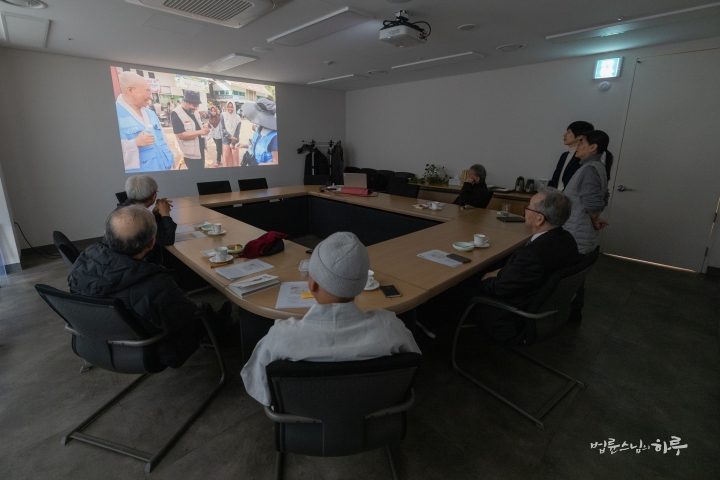
After watching the video, Sunim added some explanation.
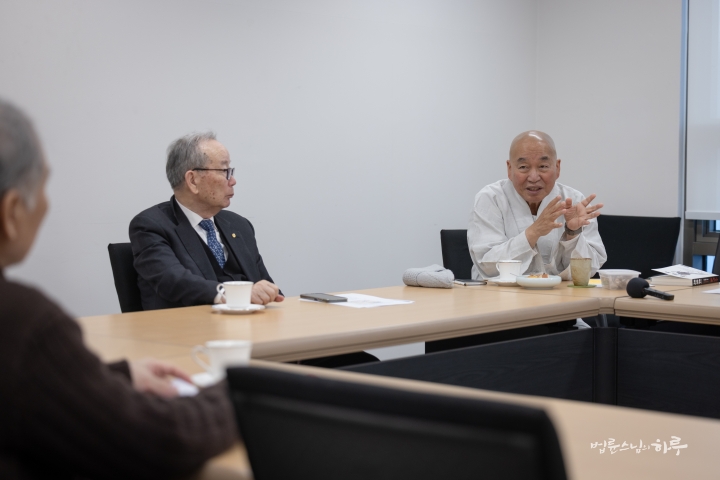
“While heavy rain was the main cause of this disaster, it wasn’t simply a matter of excessive rainfall. In the upper reaches of the river, there are mountains reaching 3,000 meters above sea level, but the trees on those mountains were cut down for large-scale plantation agriculture development. Entire mountains were cleared to plant various crops including bananas. When record-breaking heavy rains poured down in this condition, the mountainsides couldn’t withstand it and were swept away all at once.
A Disaster Amplified by Reckless Development
Natural forests originally have deep tree roots that are densely intertwined, firmly holding the soil in place. However, plantation farming involves cutting down all existing trees and planting new ones. Trees grown with artificial irrigation inevitably have shallow roots. As a result, their ability to hold the soil weakened, and when the heavy rains came, enormous amounts of sediment were swept downstream. The damage was made much worse by this reckless development.”
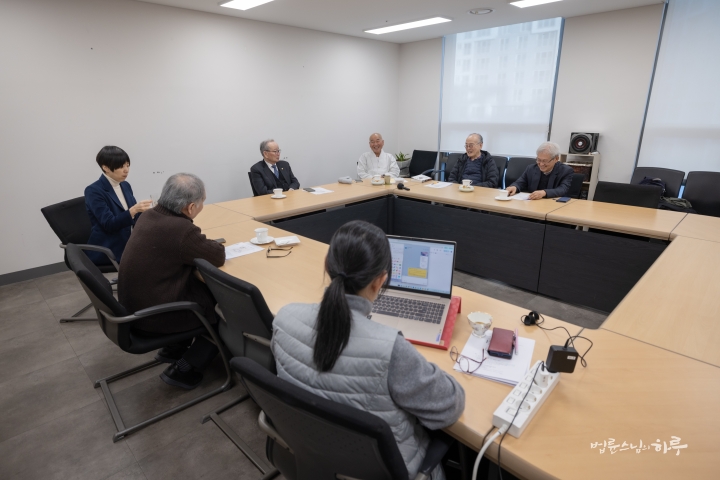
Sunim then shared a story about meeting with members of a think tank that studies India’s national strategy during his recent visit to India.
“I recently met with members of a think tank that studies India’s national strategy. They told me this: India has been preparing for the past 100 years, contemplating ‘where India will go after Britain’ even while under British influence. And now India has reached a point where it has surpassed Britain in terms of national power. Then they asked me this:
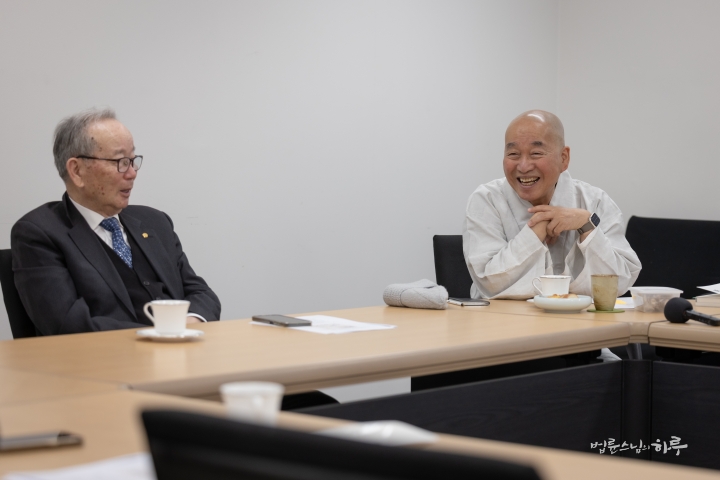
‘Will your country continue to only look to the United States? The United States will also decline someday, just like Britain. So where will Korea go after America declines? Are there people in your country who think about and prepare for this?’
They then said they have a sense of concern about what path middle powers should choose in an era of intensifying hegemonic competition between the United States and China.
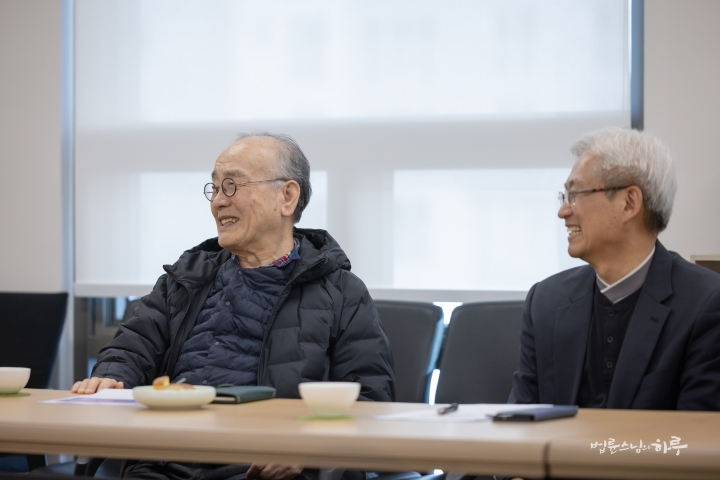
In the Face of the Reality That ‘America Is Not Eternal,’ Where Should We Go?
Since the world order is changing so rapidly, South Korea’s path forward has limitations if it relies solely on the United States or tries to maintain a balancing act between the U.S. and China. We need to expand our diplomatic scope by broadening our solidarity with middle powers like India, Germany, and Brazil to maintain world peace and chart our nation’s course.
To achieve this, we need politicians, scholars, and religious leaders who can envision such a grand design. While it would be ideal if the government or political circles could develop such plans, the reality of politics shows they are too busy with daily political struggles to conceive long-term national strategies. I have long thought that organizations like the National Intelligence Service (국정원) should at least design the nation’s grand blueprint. However, even they become preoccupied with political alignment when administrations change. They are said to be even more politically conscious. In our country, it’s difficult to find any place unaffected by political influence.”
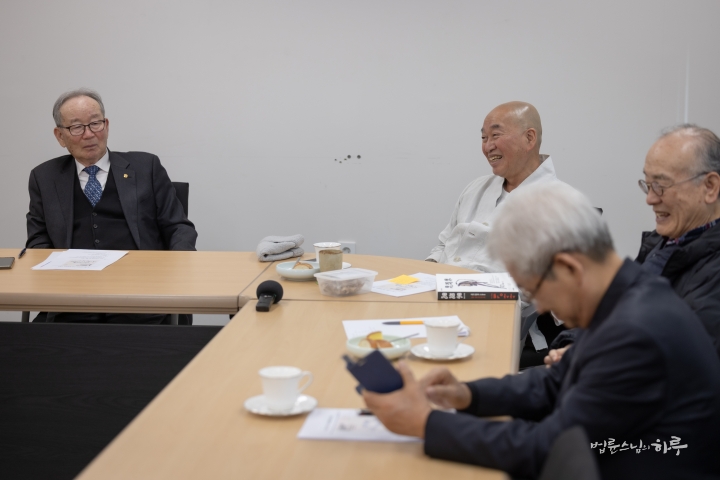
In response, Park Nam-soo (박남수) shared that with North Korea designating South Korea as an enemy state and completely halting civilian exchanges, recent civil society surveys show a growing recognition that we too should move beyond the ‘South-North’ framework and take a sovereign stance as an independent nation.
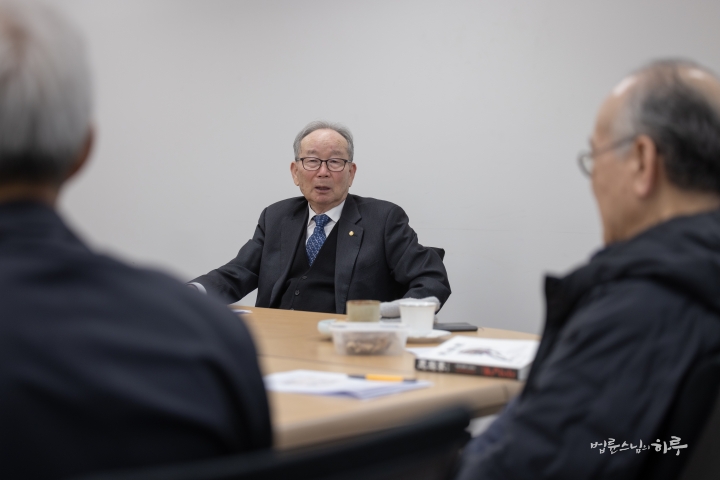
Sunim then continued speaking.
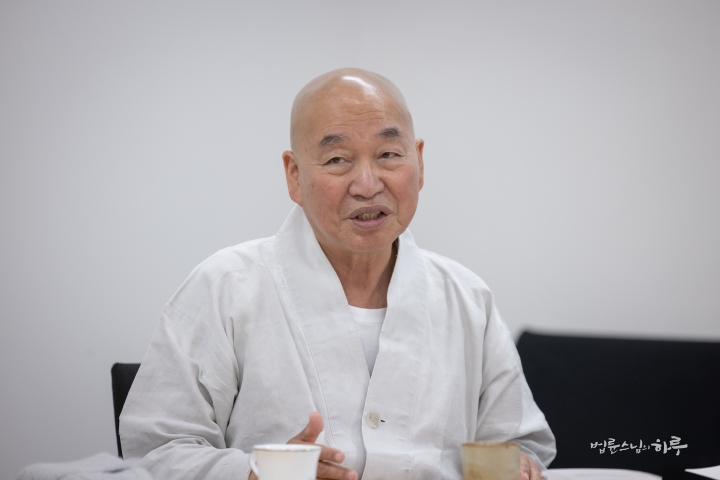
“It has become somewhat unrealistic to try to solve issues solely through the inter-Korean framework anymore. However, realistically speaking, just as German unification occurred within the larger context of European integration, we too must conceive a grand framework of East Asian or Asian regional solidarity amid changes in the international situation. Within that framework, South and North Korea can participate together, grow closer, and naturally move toward unification.”
They then shared the programs for the upcoming 107th March 1st Independence Movement Day commemoration and the 2nd World Meditation Day Forum, gathering opinions from religious leaders. After agreeing to incorporate all suggestions from the religious leaders into the program, they continued their dialogue in earnest.
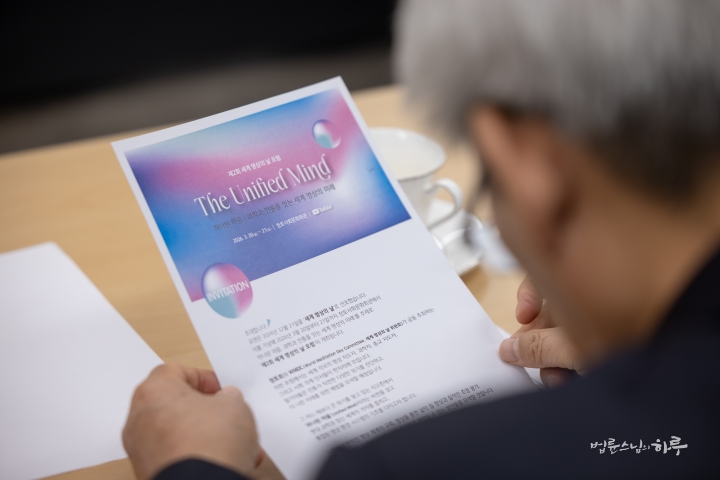
Sunim spoke about North Korea’s current situation.
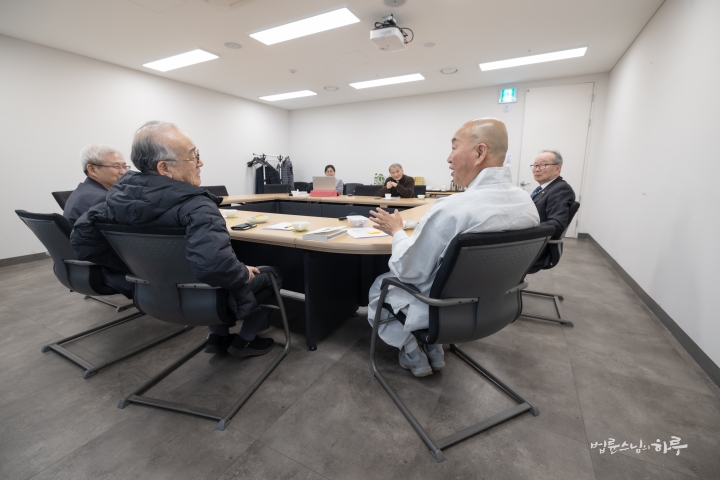
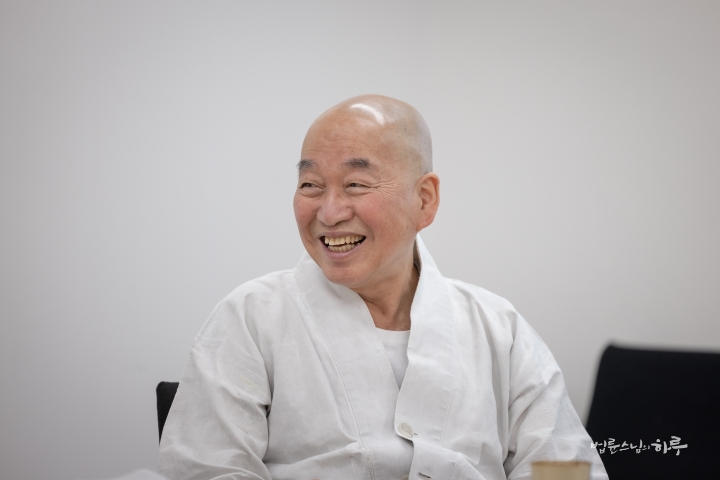
“North Korea appears not yet fully prepared for dialogue. Only when the Russia-Ukraine war ends will North Korea have room to move in earnest. While they have gained considerable experience through the war, it remains unclear whether they are receiving adequate and timely compensation. That said, relations haven’t soured; they seem to be in a delicate state. Currently, North Korea maintains state-level finances and construction is active, but the people’s lives appear to be extremely difficult.”
They concluded the conversation with hopes that spring would bring the start of U.S.-North Korea dialogue and improvements in inter-Korean relations.
“Let’s all meet together on Independence Movement Day (삼일절).”
After taking a commemorative photo together, the interfaith gathering came to a close.
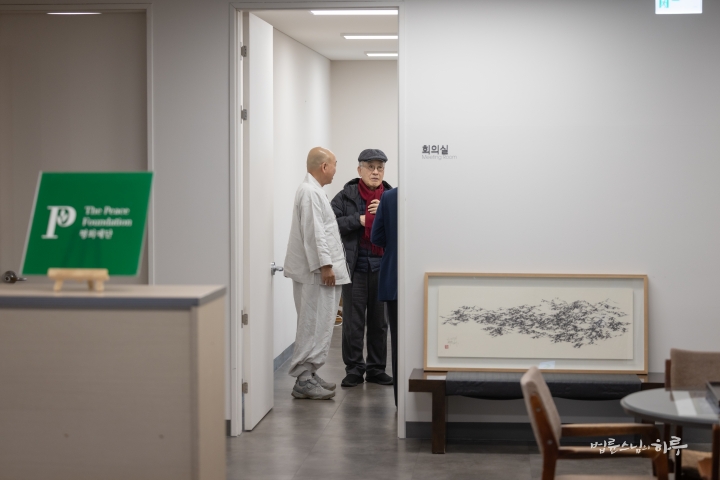
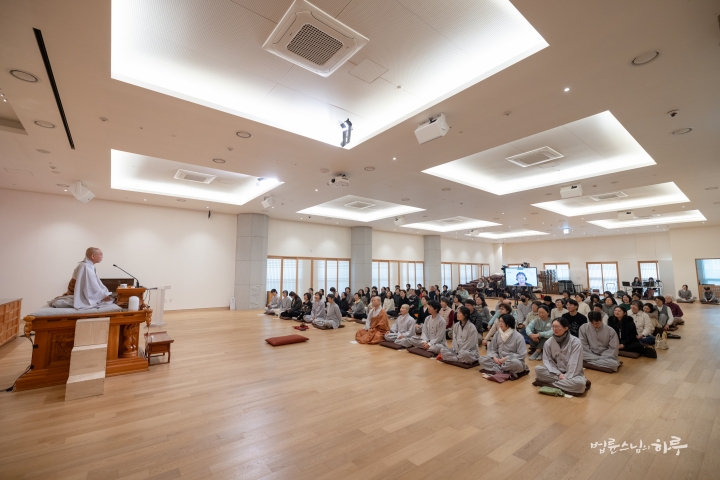
After seeing off the religious leaders, Sunim headed to the Dharma Hall on the third floor for the Weekly Dharma Assembly.
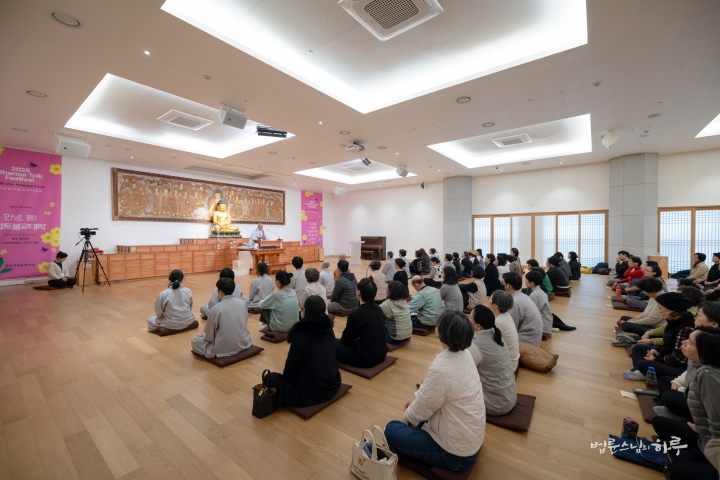
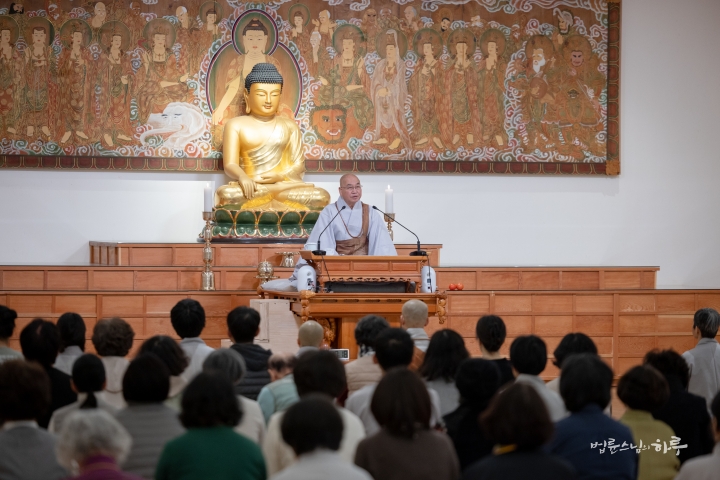
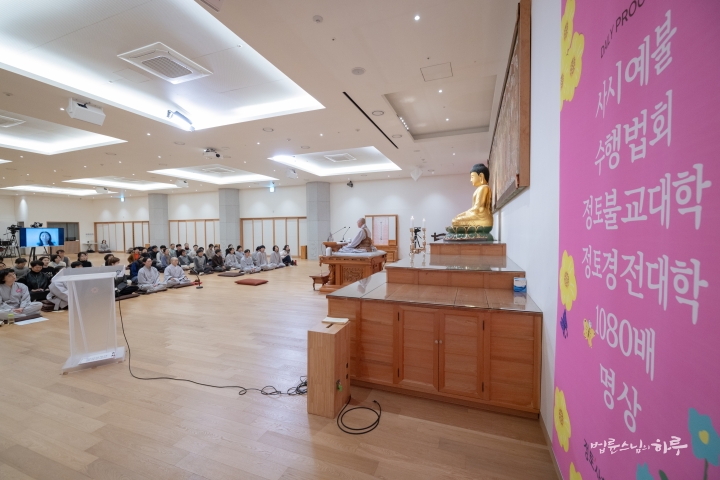
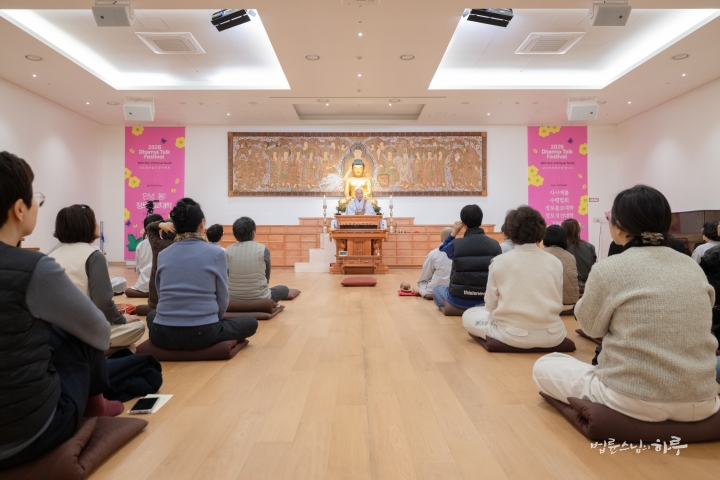
About 100 members of the Sangha had gathered in the Dharma Hall (설법전). At 10 a.m., the Weekly Dharma Assembly began with the recitation of the Three Refuges(삼귀의) and the Heart Sutra (반야심경). Jungto Society members participated online by connecting to the video conference room.
First, the results of the Jungto Society elections held last weekend were announced. New representatives (대표), division heads (지부장), chapter heads (지회장), and group facilitators (모둠장) were elected.
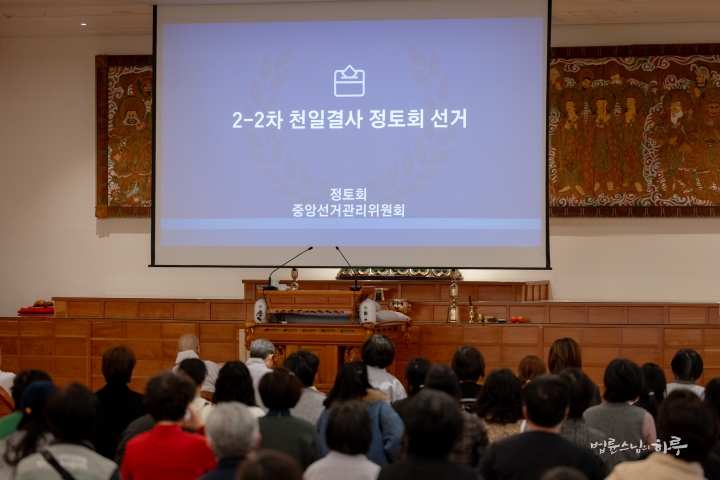
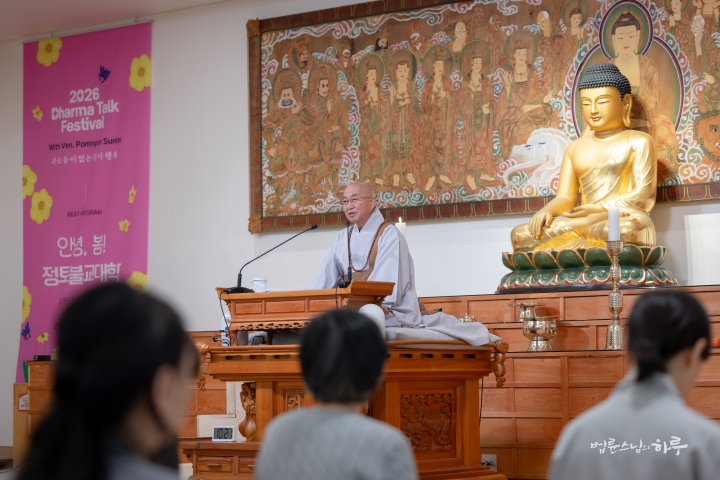
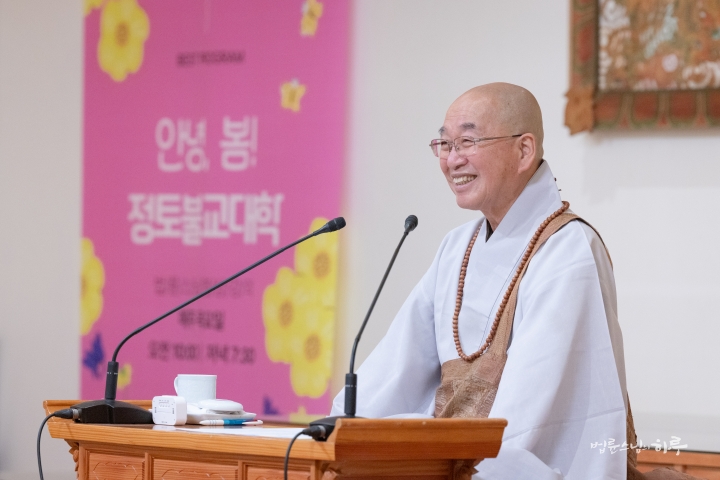
After expressing congratulations with loud applause, the assembly requested a Dharma talk from Sunim with three prostrations. Sunim then gave his opening remarks. With the opening ceremony of the second 1000-Day Practice approaching, Sunim urged Jungto Society members not to remain at the level of personal healing but to establish great vows and advance on the path of the bodhisattva.
“The cold winter has passed, and warm spring days are now beginning. All things that had been withdrawn are regaining their vitality. Though ice and remnants of snow still remain on the ground, new shoots are already emerging from beneath the earth. Plum blossoms have already bloomed, and adonis flowers are displaying their yellow petals.
The Lunar New Year holiday has ended, and it’s time to engage in activities with the fresh energy of the new year. Jungto Society has also completed the last semester’s Jungto Buddhism Course and Jungto Sutra Course classes and is now busy recruiting new students. Additionally, after completing the first 1000-Day Practice over the past three years, the second 1000-Day Practice will begin on March 15th. The executive team that worked hard for three years will complete their term and go through a closing period. From the opening ceremony on March 15th, a new executive team will take the lead in guiding Jungto Society for the next three years.
Today, the election results were announced, and new representatives, division heads, chapter heads, and group facilitators were elected. The appointments of the administrative secretary-general, directors, team leaders, and staff members who will provide administrative support seem to be nearly finalized. First, I would like to extend my congratulations to those who have taken on new responsibilities. I also ask for your dedicated service over the next three years. The preparations for a new beginning are now in place. If your minds have become somewhat scattered during the closing period, please gather your thoughts once again and start the new year vigorously with the power of the Jeongcho (New Year’s) Prayer.
Beyond Healing: Beginning the Second 1000-Day Practice with Great Aspiration
Since all Jungto practitioners are spiritual practitioners, they must transcend a life of complacency where energy is consumed by primitive concerns such as ‘what to eat today, what to wear, where to sleep.’ If we gather our strength, however small, not only for individual development and happiness but also for the advancement of our nation and ultimately for the hope of humanity, we will be able to open a new path.
The Buddha has already shown us the right path to follow. Jungto Society has placed the Buddha’s teachings at its center and combined them with the advantages of modern society to attempt practices suited to our current reality. Whether this spirit will disappear when the Dharma Teacher group that has built this foundation from the beginning grows old, sick, and passes away, or whether the next generation will use it as a stepping stone to flourish even more, depends on the aspirations (원 : 願) of the members of the Sangha gathered here.
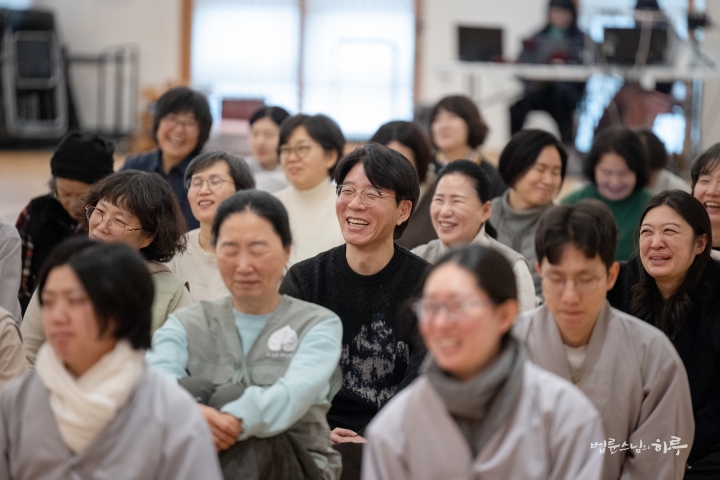
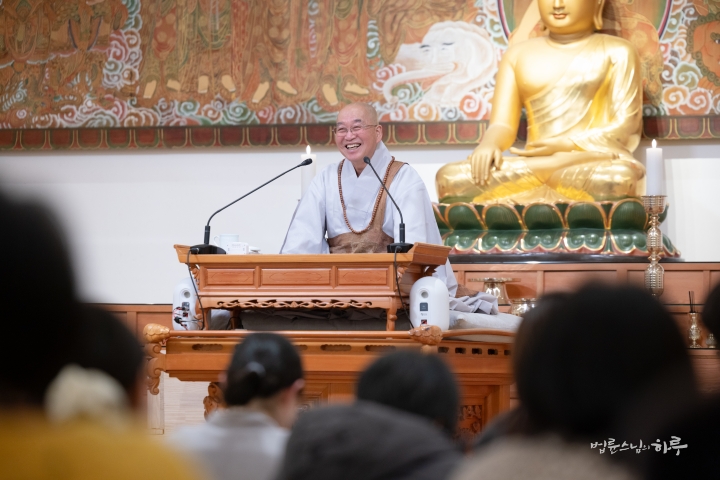
However, there are still not many people within Jungto Society who hold such great aspirations. The majority are like outpatients who come seeking a sweet prescription when their minds are troubled or bodies are ill, leave when they feel better, and return when things become difficult again. (Laughter)
Of course, patients must be protected. It is good that weary people come here to be healed. However, if we remain only at the level of healing, it will be difficult to accomplish great things. The world can progress when it is led by those who are mentally and physically healthy. If anyone comes to Jungto Society to heal their tired body and sick mind and regain their vitality, they should not be satisfied with that alone but should establish greater aspirations and advance on the path of the bodhisattva.
As we prepare for the second 1000-Day Practice, ask yourself: What kind of life should we live to have no regrets and find it worthwhile? Will we become happy just by eating delicious food every day, riding in nice cars, and going out to have fun? Haven’t even world-famous figures been disgraced by associating with people like Jeffrey Epstein while pursuing hidden desires? They say future society will be a world without labor. But what will a life of complacency without challenges or labor make of people? Can a lion confined in a cage, eating only what the keeper throws to it, truly be called a lion, rather than one roaring in the forest?
Therefore, as we begin the second 1000-Day Practice this spring, I hope all of you will make a great aspiration. I’m not telling you to harbor unrealistic desires. If there’s something to correct, you must make a clear resolution saying, ‘This time I will definitely correct it,’ rather than being anxious about trivial matters. It’s good that we all live together as fellow sentient beings. However, if we remain at the level of dwelling on small mistakes and being judgmental, it will be difficult for us to dream of a new civilization.
Once you make a firm resolve that ‘three meals a day are enough for eating’ and ‘simple clothing is perfectly fine,’ you’ll no longer be troubled by matters of food, clothing, and shelter. Even if you momentarily lose mindfulness and cling to past karmic patterns, you can immediately recognize it, repent, and move forward again. If you endlessly repeat the same mistakes, you’re no different from a foolish animal. Even when practicing diligently, you must set a great aspiration.
Think about lighting a match. Even if you gently strike it a hundred times, it won’t light. You need to strike it properly with one firm motion for it to ignite. If it hasn’t lit after 300 attempts, doing it one more time won’t make it light. You need to strike it properly from the beginning, and if that’s not happening, that’s why it won’t light.
To become free from karmic patterns and karma, you must set your mind clearly. If you hesitate, the demon of karmic patterns will constantly whisper to you and eventually pull you back to where you started. If you practice that way, even a hundred years of practice will be useless.”
Next, Sunim took questions from those who had signed up in advance. After two people asked questions online, one person raised their hand and asked a question from the audience. One of them sought Sunim’s advice on how to manage anxiety after their child, who had seemed fine, suddenly engaged in extreme behavior.
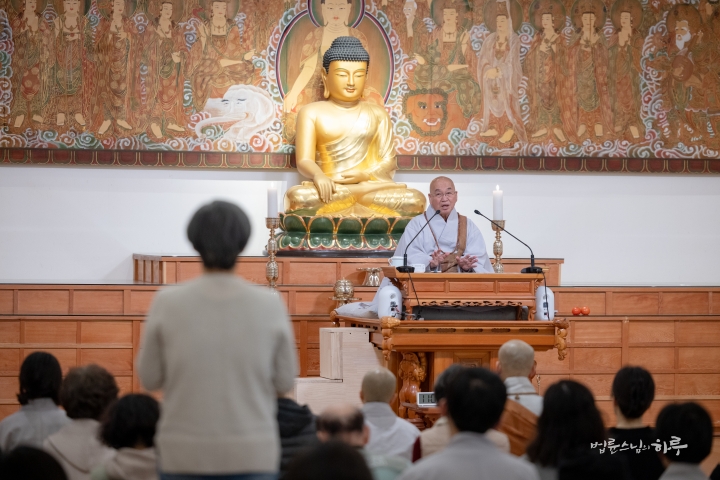
How Can I Manage This Anxiety After My Child’s Extreme Behavior?
“I volunteered at the Jungto Social and Cultural Center for about 300 days last year. My child has been receiving treatment for self-harm and anorexia for the past five years. For a while, there were no particular issues and things seemed fine, so I let my guard down and paid less attention. However, about three weeks ago, my child took all their psychiatric medication at once at night and was rushed to the hospital. Fortunately, my child received treatment, and both my child and I have calmed down now, which is why I’m able to ask this question today. Even after this incident, I try to appear bright and normal at home as usual, but the anxiety remains in my heart. What should I do?”
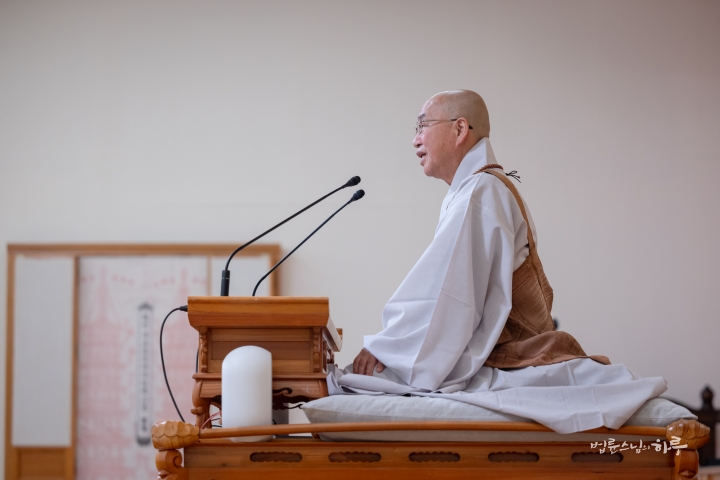
“You won’t feel anxious if you accept that your child could die. You’re anxious because you think ‘they must not die.’ Since your child has a mental illness, you need to accept that they could die at any moment, whether by taking pills or jumping. With this understanding, you can adopt the perspective: ‘Even if death comes when it comes, wouldn’t it be better to live healthily while alive?’
People can die in the womb before birth, or at one or two years old after birth, or at ten or twenty. However, people with this illness have a very low probability of living to the average lifespan. It’s not that they will definitely die early, but the probability of dying before reaching their 70s or 80s like most people is high. Still, you can think: ‘Since when they’ll die isn’t predetermined, let’s live happily while we’re alive.’
If your child goes out on the street, there’s a possibility of a traffic accident. If you worry about this, you can’t let your child go outside or ride in cars or buses. Everything has some probability of danger. Between you and me, who has a higher probability of being in a traffic accident? Who has a higher probability of being in a plane crash? Who has a higher probability of falling off a cliff or breaking a leg? I have a higher probability. Because I’m always traveling by car, going abroad frequently, and often visiting dangerous places.
Moreover, as we age, the probability of accidents increases. Recently, when I was climbing a persimmon tree to work, people around me said, ‘It’s dangerous for a man over 70 to climb trees. We don’t care about other things, but please don’t climb trees.’ However, if we think about the possibility of accidents, we can’t do anything. The probability is high, but climbing doesn’t mean immediate death. We just need to be careful.
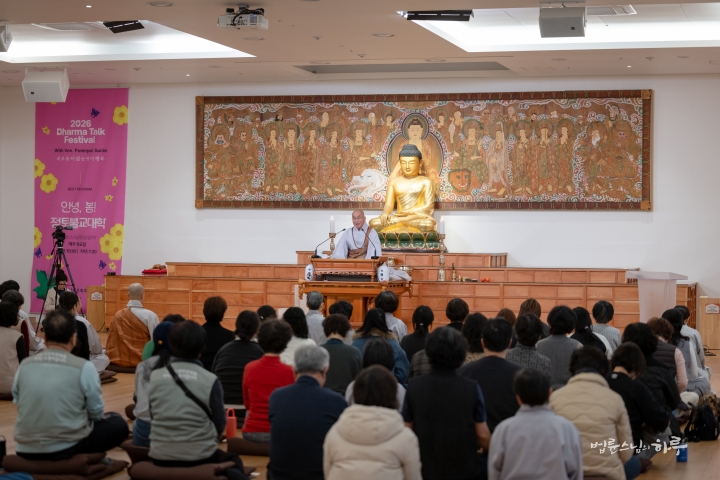
If a child has a mental illness, they could suddenly take all their medication and die. If you worry about this every day while watching over them, you’ll spend your entire life anxiously consumed by that worry. On the other hand, if you place them in a facility or neglect them because it’s bothersome, you’ll feel guilty about it. In such situations, the Middle Way (중도 : 中道) means caring for the child while being aware that unexpected incidents could always happen. Even if they take medication, there’s no need to be shocked because this possibility always exists. If they take medication, you transport them to the hospital for treatment. If they die in the process, you hold a funeral. With this perspective, you can live without anxiety. There’s no reason you can’t go out to volunteer because of your child, and there’s no reason to ask questions like this because of your child.
If the risk level is slightly higher than for ordinary people, you just need to pay slightly more attention accordingly – it shouldn’t become a source of anxiety. But you become anxious and fretful because you think of such a child as if they were an ordinary person with low risk, expecting that nothing should happen. If my car has problems with the engine, brakes, and tires, but I can’t afford repairs and keep driving it, wouldn’t I be anxious? I’d have no choice but to think, ‘What if it breaks down in the middle of the road?’ You either shouldn’t drive such a car, or if you decide to drive it, you must be prepared.
Similarly, from now on, you need to accept this reality. The thought ‘How can a parent do that?’ inevitably arises due to attachment to being a parent. However, because the child has a mental illness, you must care for them while considering what could happen as a result. If there’s a disability, you must care for them considering the disability – just as you shouldn’t pressure a child with disabilities asking why they can’t act quickly or study well like healthy children.”
“I try to view my child from that perspective too, but when an incident actually occurs, it’s difficult to maintain that viewpoint.”
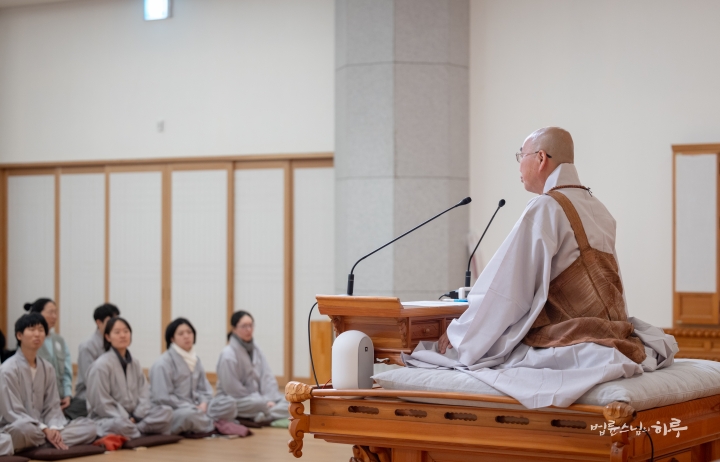
“That difficulty arises because, while you may have thought that way intellectually, the feeling of ‘I hope nothing happens’ remains inside you. As I travel here and there domestically and internationally, wouldn’t I also have the thought ‘I hope no accidents happen’? Even if I appear to think it’s no big deal on the outside, naturally I have such feelings inside. Still, when an accident does happen, I might be flustered at first, but I immediately accept it thinking, ‘This is something that always had a probability of happening.’
My health hasn’t been good lately, and traveling around busily like this, how could I not get sick? I’ve been lucky not to get sick until now. Rather than regretting getting sick, I should be grateful for not being sick all this time. I should have gotten sick many times already, but somehow I’ve been fortunate to get by, and at least I got sick after returning home – thinking this way makes it less painful.
The body doesn’t get sick because it wants to, nor does it stay healthy because it doesn’t want to get sick. However, how we accept this is something we can choose. Rather than being shocked by what happened or regretting your actions thinking ‘This happened because I neglected my child and only went to the temple,’ you need to accept it as ‘Oh my, it’s fortunate they didn’t die even after taking that much medication. At least they survived because I’ve been going to the temple and praying.’
If it’s something that can’t be resolved even with the help of modern medicine, there’s no other way than to do what you can with the perspective that ‘this could always happen.’ In the orchard I’ve prepared in the mountains, trees die every year when the weather gets cold in winter. But I don’t cry or close the orchard just because a few trees die. I pull out the dead trees and plant new ones next year, and take good care of the living trees. When trees die, I pull them out and plant again. With this perspective, your mind becomes peaceful. If you’re anxious about accidents happening, you’ll always live in anxiety. Living under the same conditions, what choice you make depends on you.”
“I understand well. Thank you. I’ll think of it as fortunate that my child is alive, and I’ll live doing what I need to do.”
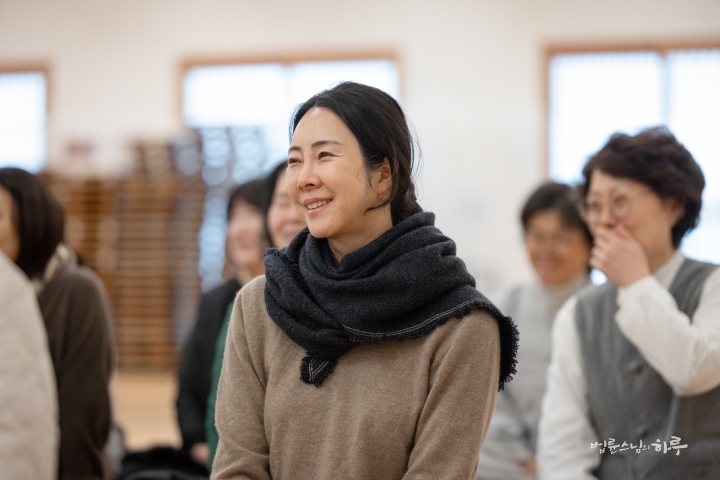
Questions continued to follow.
I need to dispose of frozen embryos remaining from IVF treatment in the US, but I can’t decide because any choice weighs on my mind. What choice should I make from a Buddhist perspective?
After running a business for over 20 years, I’ve become attached to the flow of money, and I often feel anxious. What attitude should I have to escape from this anxiety?
After finishing the dialogue, they watched videos about various Jungto Society events scheduled for next week, then concluded the Weekly Dharma Assembly with the Four Great Vows (사홍서원).
After lunch, Sunim worked in his office due to poor health. A seminar was scheduled at 1 PM in the Peace Foundation conference room. It was a session with Dr. Cho Min (조민), former Vice President of the Korea Institute for National Unification (전 통일연구원 부원장), on the topic “The Great Transformation of Civilization : How Should We Prepare?” Sunim was originally scheduled to attend but asked for understanding due to his poor health and watched online from his office.
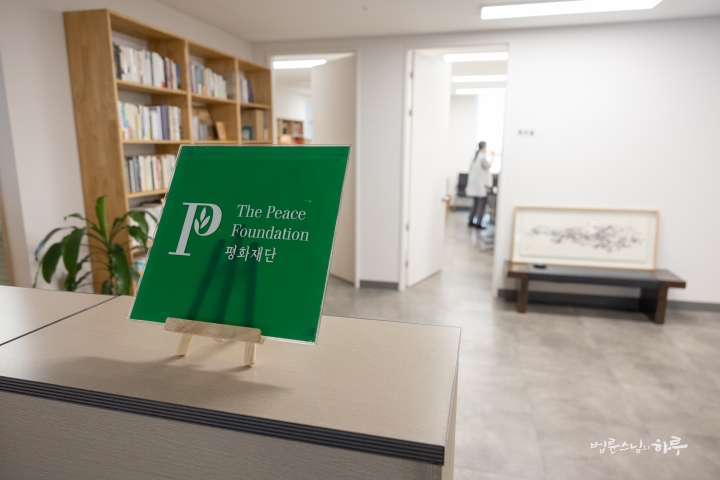
From 4 PM, he attended the Peace Foundation Planning Committee meeting. They discussed the possibility of future North Korea-US summits and various perspectives on the Korean Peninsula situation, as well as the Peace Foundation’s role in this context, for two hours.
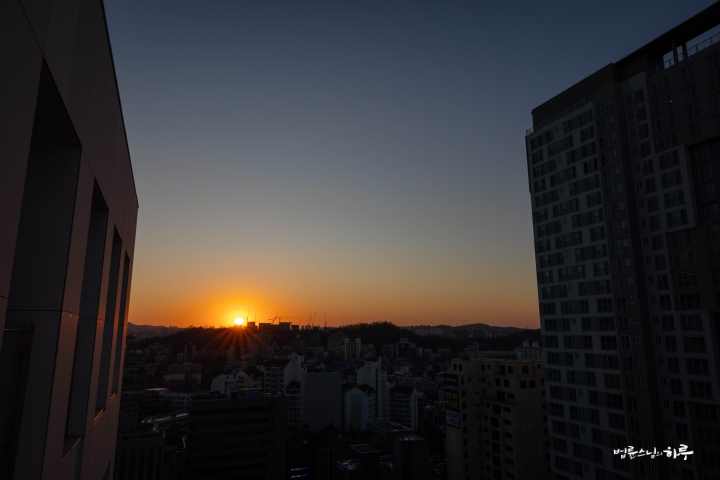
After sunset, at 7:30 PM, Sunim conducted a live broadcast of the evening Weekly Dharma Assembly. About 60 people gathered in the third-floor Dharma Hall, and Jungto Society members connected through online video conferencing.
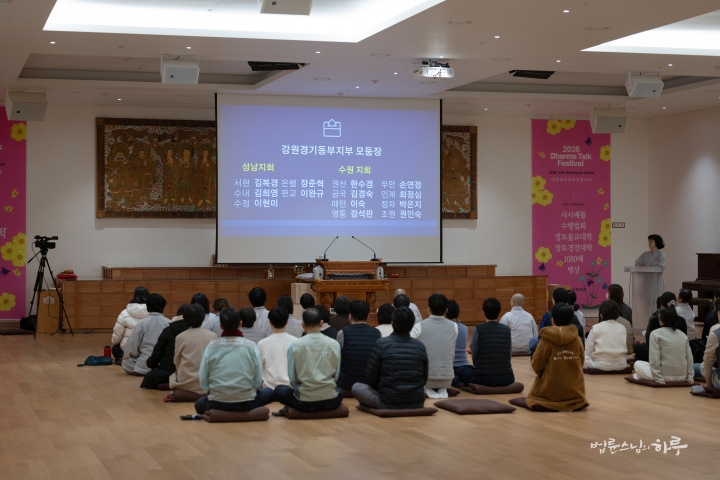
After watching videos about the Jungto Society election results and weekly news of Jungto practitioners together, the assembly requested a Dharma talk from Sunim with three prostrations. Sunim spoke about how humanity stands at a massive turning point due to AI development and the reorganization of international order, urging everyone to soberly face reality while pursuing both personal practice and Mahayana practice for society during the second 1000-Day Practice.
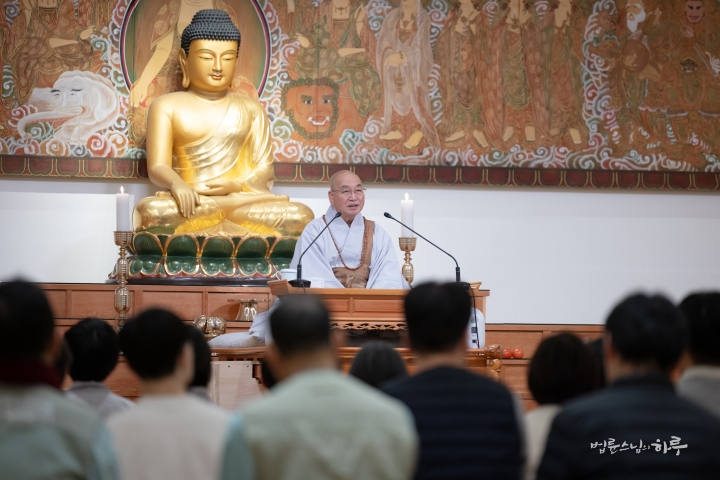
“The world is changing at a rapid pace right now. As Buddhism teaches with ‘all conditioned things are impermanent (제행무상 : 諸行無常),’ there has never been a time in any era when the world didn’t change. Change has always existed. Only the speed differs. Sometimes it’s gradual, sometimes it’s dramatic. The era we live in today can be said to be a period of very rapid change.
In This Era of Upheaval, How Should We Live?
Humans originally lived as part of nature, relying on their own strength. However, as cognitive abilities developed, they began to compensate for their physical limitations by borrowing the power of animals. They obtained power using animals like elephants, horses, and oxen. Later, through the Industrial Revolution, humans began to obtain power not from living beings but through mechanical devices. The invention of steam engines and electric motors dramatically expanded production capacity, and with the use of electricity, numerous machines appeared. As a result, human physical strength became very weak compared to the power of machines. However, thanks to that very mechanical power, we became able to produce incomparably more goods than in the past.
As artificial intelligence (인공지능
)
has rapidly developed in the 21st century, it is now moving beyond simply replacing human physical labor to a stage of supplementing and replacing even mental functions. While using machines in the past increased production efficiency several times over, in the future, the efficiency gap between those who use artificial intelligence and those who don’t may widen much more dramatically. Furthermore, when artificial intelligence crosses a certain threshold, it may reach a level where it can collect information, learn, and enhance programs on its own, beyond the stage where humans design programs and input information to operate them. In that case, concerns are raised about the possibility that artificial intelligence could escape human control. In this respect, we can say we stand at another massive turning point in human history.
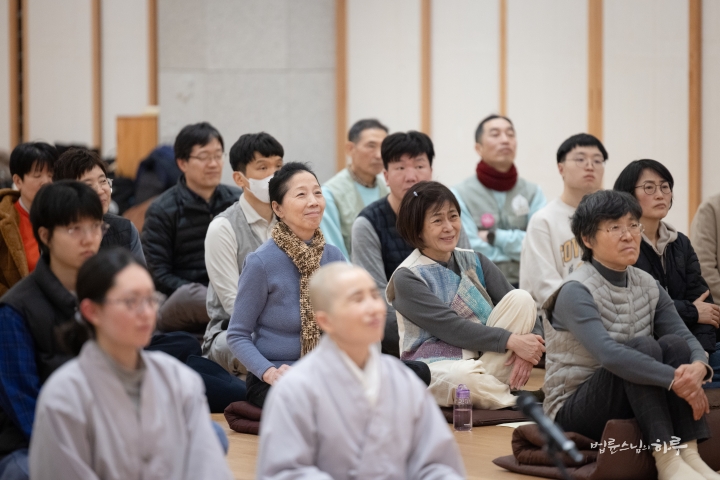
Is the World in Chaos, or Is It Our Framework of Perception That’s the Problem?
Meanwhile, today’s international situation is experiencing major upheaval as the hegemonic competition between the United States and China intensifies. After World Wars I and II, humanity maintained a relatively rational world order based on cooperation, drawing from the devastating experiences left by two wars. The United States was at the center of this order. However, recently the United States has begun to judge that the international order it led in forming is no longer advantageous to itself, and is showing movements to reorganize or shake up that order. Amid these changes, the world appears to have fallen into great chaos again.
However, if we view this only as the collapse of the old order, it is ‘chaos,’ but if we see it as a transitional process toward a new order, it can also be called a historical change. This is because the world order has never been fixed and has been reorganized according to the times. We are now living through such an era of upheaval.
We have understood the world within certain frameworks of thinking, such as ‘This is how the world originally is,’ ‘This is how human relationships should be formed,’ and ‘This is the direction international order flows.’ However, many of the phenomena occurring now are difficult to predict or understand within existing frameworks. Therefore, rather than the world being chaotic, it is our minds that are experiencing confusion. Thus, we need to change the framework through which we understand the world. If we cling to our framework of perception, anxiety about ‘not knowing what on earth is happening’ will only grow. However, if we adopt an attitude of trying to see things as they are, we can accept them, thinking, ‘Ah, this is how things are changing.’
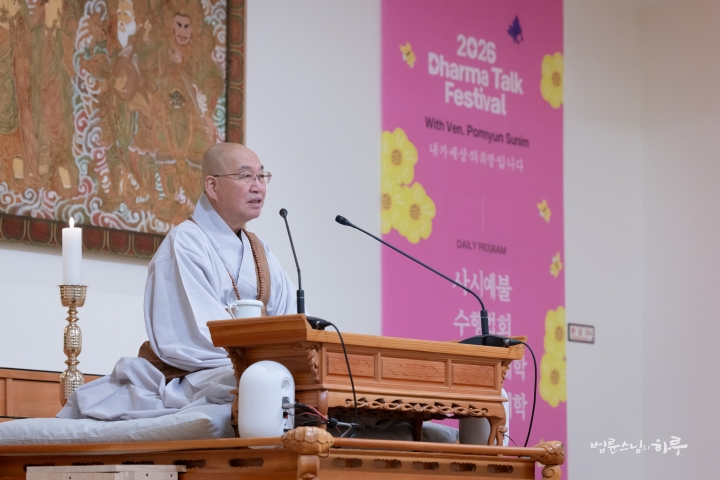
In this era of transformation, we face several questions. How should individuals live? Where should our communities head? And in the rapidly changing international order, what direction should the Republic of Korea take? Furthermore, what path humanity’s civilization as a whole should seek is also an important challenge.
In the past, there was a relatively clear path. People followed the ways of their ancestors and performed their roles within the established order. However, we are now entering a new era that cannot be addressed with past experiences and formulas alone. Rather than feeling anxious about such times, we should face reality soberly, especially during these periods of upheaval, carefully observe changes, and closely examine their flow.
Jungto Society members must live lives where they take responsibility for their own lives regardless of how the world changes. Rather than being swayed by external circumstances, they must maintain their center. This is practice. Practitioners must be able to turn their minds around and govern themselves in any situation.
Moreover, we are Mahayana practitioners. We must not remain content with our own comfort. We should not stop at stabilizing our own lives but must be able to use that energy for our neighbors and society. We need collective efforts to wisely solve the various problems we face together. That’s why Jungto Society has been aware of and contemplating these issues for the past 30 years. With the belief that even though individuals may be weak, great change can be created when we unite our strength, we have walked together toward the goal of becoming a “Mosaic Buddha.”
Now, Jungto Society has completed the first 10,000-Day Practice and entered the second 10,000-Day Practice. We have finished the first 1000-Day Practice within it, and in two weeks, we will begin the second 1000-Day Practice. I hope that during the upcoming second 1000-Day Practice, we will continue to solve the various challenges given to us through our collective strength.”
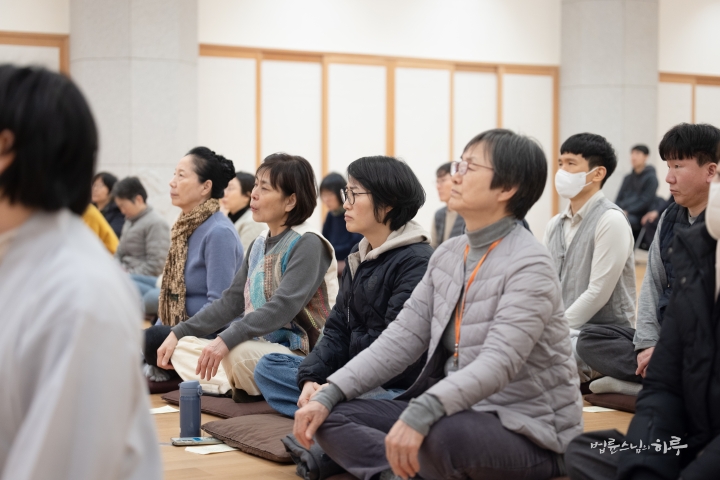
For the next hour, three people asked Sunim questions. One of them sought Sunim’s advice about the ongoing conflict and stress with her daughter who has depression and constantly asks for money.
My Daughter Keeps Asking for Money. How Much Should I Be Responsible For?
“My daughter suffered from childhood depression when she was about seven years old. At that time, seeing her struggle, we adjusted everything to revolve around her. This pattern has continued even now that she’s an adult. The winter before last, her depression relapsed. She majored in animation and loves Japanese culture. While I have to cover her academy fees, rent, and allowance, she uses my credit card to buy clothes like anime characters and spends money going to performances and cafes, with expenses constantly increasing. Eventually, I had to cancel the card. I divorced my husband ten years ago due to his infidelity, and since then, I’ve barely been able to take care of myself. Then I found Jungto Society and through consistent practice, I gradually recovered my lost self. Only then did I begin to see my children. So this issue feels like more than just a money problem – it’s like reopening old wounds that have been buried for a long time. After arguing with my daughter for nearly a month as she keeps demanding money, the stress has built up and I’m having physical problems everywhere. What mindset should I have when dealing with my daughter?” 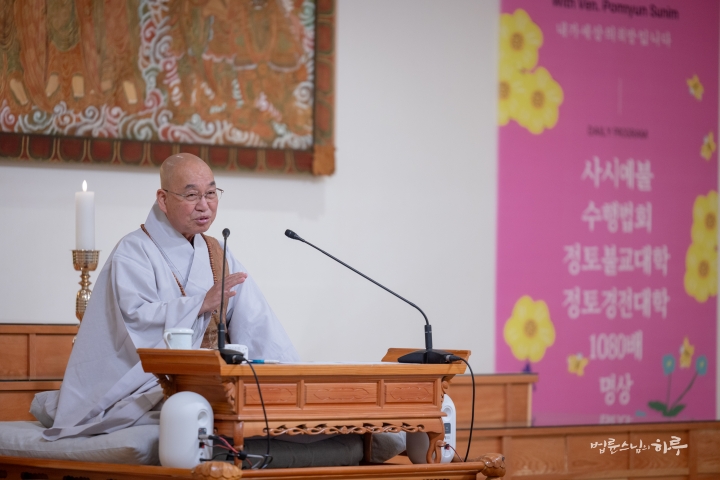
“The Korean Wave is sweeping the world these days. It is said that when BTS announced a concert in Gwanghwamun (광화문), young people from all over the world will flock to Korea. How do you view this phenomenon?”
“I think it’s good.”
“Then let’s think from the perspective of parents in a Southeast Asian country. What if their daughter is obsessed with Korean culture and wants to go to Korea by taking out loans despite the family’s tight finances, asking for Korean food and clothes? We don’t think about their difficulties; we just think it’s good that the Korean Wave is spreading.”
“Our weapons sell well because of their good quality, defense industry stocks rise, and even the president boasts about it. But those weapons might be used to harm people somewhere. Like this, people usually think only from their own perspective.”
“You’ve also raised your child based on your own thinking, which led to this situation. Now you need to be clear about your perspective on how to live. If you can afford it, help her. What will you do with money just sitting there? If she wants cosmetics, buy them. If she wants to go to Japan, send her. If she wants to do something related to animation, support her. She’s your only daughter, isn’t she?”
“But I can’t afford to give her everything she asks for.”
“If you can’t afford it, then don’t give it. How can you give money you don’t have? Actually, there’s nothing to worry about. If you have it, give it; if you don’t, you can’t. The problem arises because you have money but don’t want to give it. You worry that if you don’t give it, your child might cry and something bad might happen, but if you do give it, you worry it will become a habit.”
“If you really don’t have money, there’s no reason to worry. If I don’t have a penny and hundreds of beggars come asking for help, I can’t give anything, can I? Worry comes when you have money but don’t want to give it. So to eliminate worry, either give everything away or clearly say you don’t have it – choose one of the two.”
“From a worldly perspective, people might think ‘you must be very worried about your child,’ but looking at the bigger picture, there’s nothing to worry about. If you have it, give it; if you don’t, you can’t. Even if you have it but don’t want to give it, you don’t have to. Your daughter is already an adult, isn’t she? What if she goes out and dies? Then you arrange the funeral. When someone is an adult, they must take responsibility for their own life. Parents have an obligation to protect minors, but once they’re grown adults, everyone lives their own life. If you just let go like this, there’s nothing to worry about. ‘However you live is your business.’ ‘If I have it, I’ll help; if I don’t, I can’t.’ Just organize it this way. You’re suffering because you’re holding on.”
“My daughter calls every day saying ‘Mom, just 5,000 won today,’ ‘Just 10,000 won today,’ and has been pestering me for a month. It’s so hard.”
“When she calls, just answer and say ‘I don’t have money.’ Think about it. Who has it harder – the daughter who calls ten times begging, or the mother who just says ‘I don’t have it’? My position is much easier, so what’s so hard?”
“It’s the same whether it’s a month or a year. When she says ‘Mom, money!’ just say ‘I don’t have it.’ However, when she says ‘I’ll die,’ you shouldn’t say ‘Go ahead and die.’ If something happens, you’ll blame yourself. So if she says she’ll die, say ‘Don’t die.’ The result is the responsibility of the adult daughter, not the parents.”
“If you cling to it like dealing with a small child, there’s no end. How can parents do that to their children? Then you have no choice but to live that way. But if you want to live differently, just respond according to the principles I’ve mentioned. Don’t hate her, don’t scold her. Whether a person earns money by working at a company or by begging their parents, as long as it’s not a crime like hitting, stealing, or fraud, it’s fine. Broadly speaking, they’re all ways of getting money. From the child’s perspective, getting money from mom’s pocket might seem easier than going to work at a company.”
“When parents have assets, even siblings fight. Because they think they have a right to that money. As long as it’s not hitting, stealing, or fraud, this is just a kind of competition. Whether she gets it from mom, dad, or someone else, as long as it’s not a crime, it’s that person’s way of making money.”
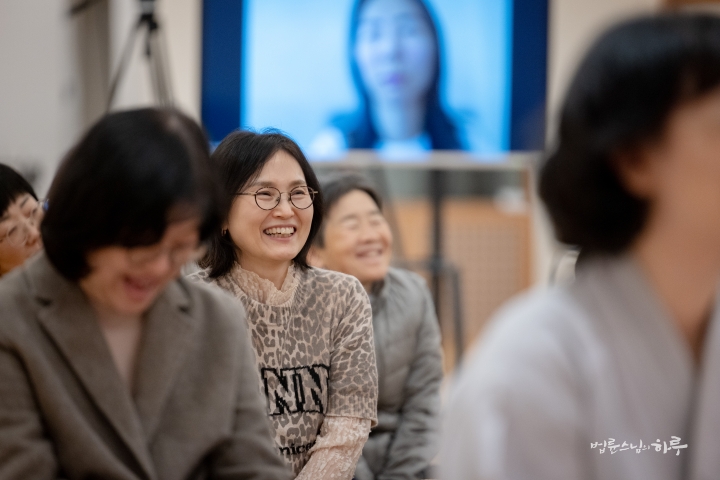
There’s no need to get angry about it. Not giving is my choice. There’s no need to complain, ‘Mom is having a hard time.’ Rather, you should be able to say, ‘It must be hard for you.’ You can even joke and say, ‘Isn’t it tiring to call every day asking for money I don’t have?’ If you take this principled stance, your heart will feel much lighter. I’m not telling you to hate her, nor am I suggesting you cut off the mother-daughter relationship. I’m simply saying to return to the natural order of things.”
“Her younger sibling has also graduated from high school and needs to go to college, so the expenses are high. It’s burdensome that my daughter keeps demanding so much on her own. Since I’m raising two children on my own income, my debt keeps growing. So I’ve firmly said no more, but my heart feels troubled.”
“If your heart is troubled, you can give. But if you don’t have money, then don’t give. You don’t need to explain that it’s because of your younger child’s tuition. What persuasive power would that have? If she were someone who could understand that, she wouldn’t have kept asking in the first place.
There’s an old saying, ‘Does a thief know what seeds are?’ When a thief comes to steal, would they leave something behind knowing it’s seeds to be planted next spring? To a farmer, those seeds are like life itself, but a thief doesn’t know this fact. Similarly, while you have plans for that money, it’s not important to someone who needs money right now. That’s why explanations lack persuasive power. Just say, ‘I don’t have money. I need to use it.’
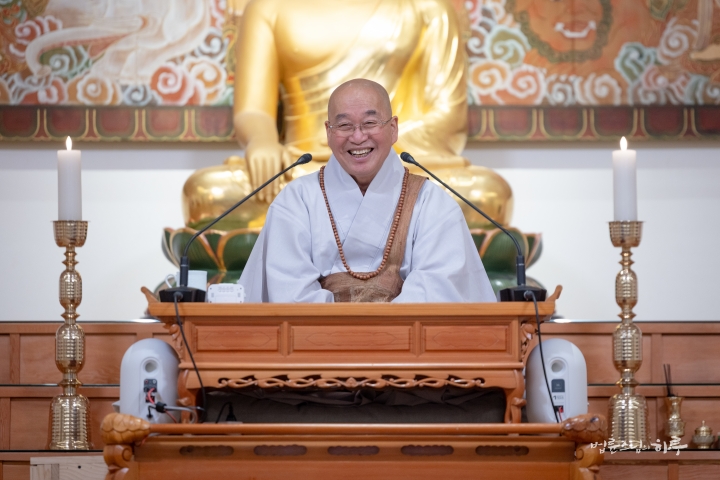
The reason she threatens suicide is because she thinks it will get her money. But you shouldn’t say, ‘Go ahead and die if you want to.’ Since we can’t say there’s absolutely no possibility, you should stick to principles and say, ‘Don’t die. But I still don’t have money.’ When children throw tantrums on the street wanting toys and you say ‘Oh, alright’ and buy them, you raise them this way, and that pattern continues now. That’s why there’s been the saying since old times, ‘No parent can win against their child.’ If you had said ‘Cry all you want, I’m leaving’ and walked past, it might not have come to this. It’s difficult to change now, but you can establish principles even now. A practitioner doesn’t need to say things like ‘My life is hard because of my child.’ You need to understand that the question is how I can live freely even in this situation – this is my problem.”
“Since this is a long-term issue, I’ll first make my heart comfortable. And I’ll try to say ‘I don’t have money’ more calmly. Thank you.”
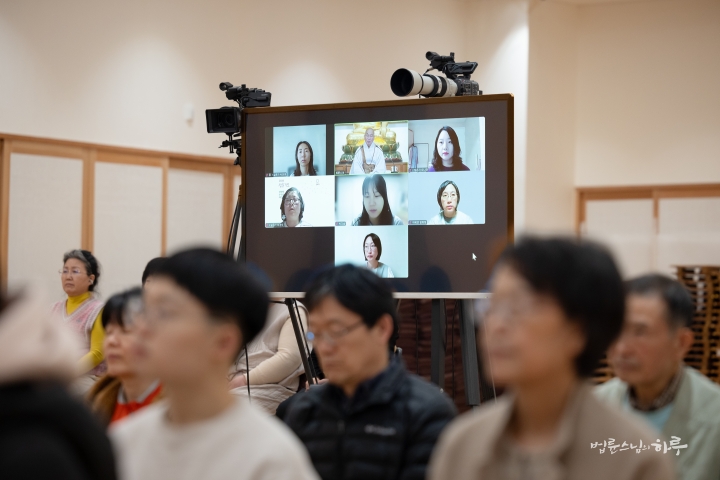
Questions continued to follow.
There are warnings that AI could escape human control and cause extinction. If such dangers are real, what preparations and mindset should we have?
The prayers I’ve been doing consistently for 20 years feel mechanical, and even during the dedication period, I can’t do them on time and they’re irregular. What kind of change has occurred in my heart?
After finishing the dialogue, it was past 9 PM. After concluding the Dharma assembly with the Four Great Vows (사홍서원), the members of the Sangha sat in circles by group for mindful sharing.
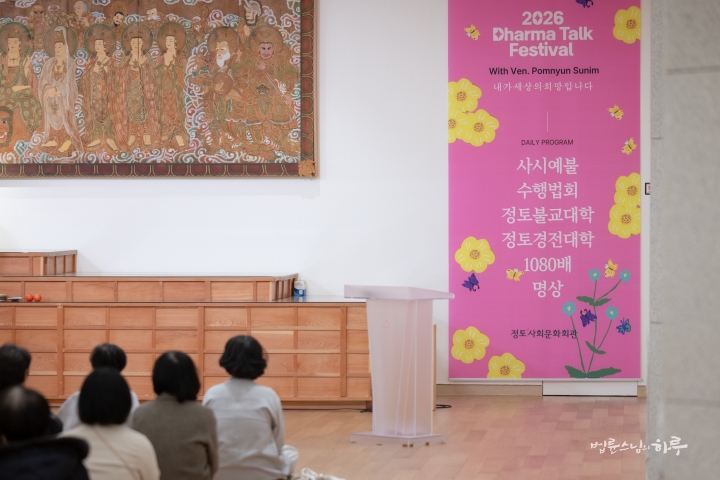
Tomorrow, Sunim will have an early morning breakfast meeting with North Korea experts at The Peace Foundation, followed by a meeting with foreign affairs and security experts, and in the afternoon, he will attend The Peace Foundation’s regular board meeting and JTS’s regular board meeting.