Nail Biting and Leg Shaking: Are These Habits Signs of Anxiety?
Feb 24, 2026 - JTS Philippines Board Meeting, Jungto Society Overseas Corporation Board Meetings
Hi. Today is a day filled with online board meetings, including the JTS Philippines board meeting and board meetings of Jungto Society’s overseas corporations.

After completing morning practice and meditation, Sunim began his day by attending the regular board meeting of Jungto Society Canada at 7:30 AM. He reviewed and approved the 2025 business report and financial statements, as well as the 2026 business plan and budget.
Subsequently, at 8:40 AM, he attended the JTS America board meeting online, and at noon, he participated in the Jungto Society LA board meeting online, where he reviewed and approved the 2025 business reports and financial statements, as well as the 2026 business plans and budgets, before concluding the meetings.
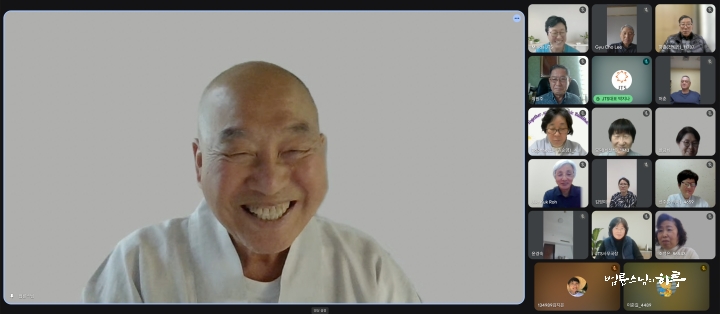
After lunch, at 2 PM, he attended the regular board meeting of JTS Philippines. First, Dharma Teacher Hyanghoon (향훈법사님), the secretary-general of JTS Philippines, presented the 2025 business report.
Over the past year, JTS Philippines has conducted active projects in various areas including school construction, educational support, volunteer activities, and emergency relief. In the school construction sector, 10 indigenous schools and 5 special education (SPED) schools were built. Notably, there was a significant change in the Department of Education’s approach – moving beyond simply requesting school construction to showing initiative by organizing fundraising marathons to self-fund labor costs and directly participating in school site monitoring. Collaborative projects utilizing provincial budgets were also attempted for the first time. Three completion ceremonies were held in August and eight in December.
In educational support, the frequency of assistance was expanded from once a year to twice a year. In the first half of the year, approximately 1,100 students from 14 schools were supported, and in the second half, approximately 2,100 students from 17 schools received support. Along with this, all previously constructed schools were re-inspected and village status surveys were conducted concurrently. The survey results showed that perceptions of education had changed significantly, with students now taking school attendance for granted, and residents’ lives had improved with better roads in villages. Residents also self-assessed that peace had been established and dreams and expectations for the future had emerged.
For field trips and volunteer activities, field trip excursions were conducted for special education students, and through the Ala-won school visit program, sports events, beauty services, and school supplies support were provided. Teacher training was also supported for novice teachers at indigenous schools in collaboration with the Department of Education. Facility volunteer teams regularly visited to maintain the center, and in August, medical volunteer teams conducted medical services in four municipalities, contributing to the health improvement of residents in remote villages.
For emergency relief activities, field surveys were conducted for earthquake damage in Cebu and Davao regions in October, and emergency relief activities were carried out in early November for typhoon-affected areas in Cebu. During this time, volunteers from Cebu and Manila came to the sites to support distribution activities.
The 2026 business plan was then presented. For 2026, JTS Philippines plans various projects including school construction, educational support, village development, and emergency relief, with the goal of improving students’ educational conditions and contributing to literacy eradication. Plans include constructing 15 schools total – 11 indigenous schools and 4 special education schools – and completing 3 schools that were unfinished in 2025. For educational training and field trips, special education teacher training will be conducted in the first half of the year, and field trips for indigenous school students will be implemented in the second half.
After Dharma Teacher Hyanghoon finished the presentation, Sunim shared an additional suggestion.
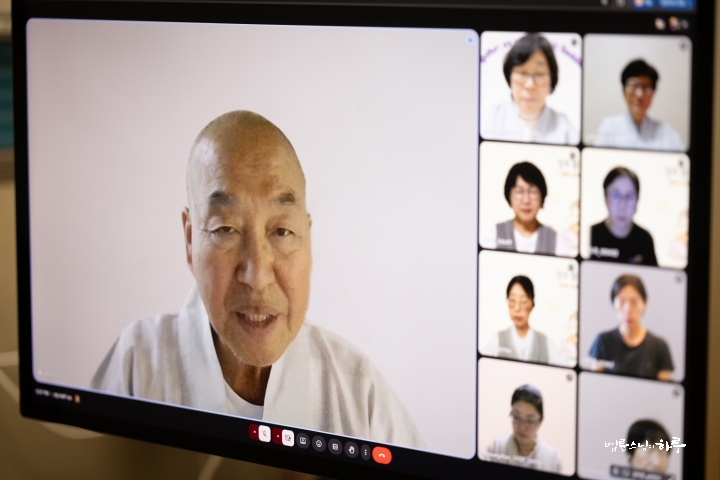
Sunim encouraged the JTS Philippines volunteers who have been working hard conducting field surveys before concluding the board meeting.
“You have accomplished so much over the past year of 2025. Representative Noh Jae-guk (노재국 대표님)
, Dharma Teacher Hyanghoon, and all the staff members – thank you for your hard work.”Subsequently, at 3 PM, he attended the Jungto Society Philippines board meeting online, where they reviewed and approved last year’s business report and this year’s business plan before concluding the meeting.
At 5 PM, he attended the Jungto Society Sydney board meeting. First, Sunim explained the purpose behind Jungto Society establishing overseas corporations and having a system for reviewing budgets and financial statements through board meetings.
Why Jungto Society Has Separate Corporate Board Meetings
Ninety percent of Jungto Society’s activities can be decided and judged by ourselves. However, to share these activities with the world, we establish and operate government-approved corporations as a legal foundation. That’s why we process accounting according to government regulations and submit activity reports. While this may feel somewhat cumbersome, if this aspect goes wrong, we could be prohibited from continuing activities in that country or become an organization criticized by the public. Therefore, even though there may be some overlap with existing activities, we need to check at least once a year whether corporate management is being properly handled. No matter how good our activities are, if issues arise like ‘accounting problems’ or ‘legal problems,’ all our efforts could become futile overnight.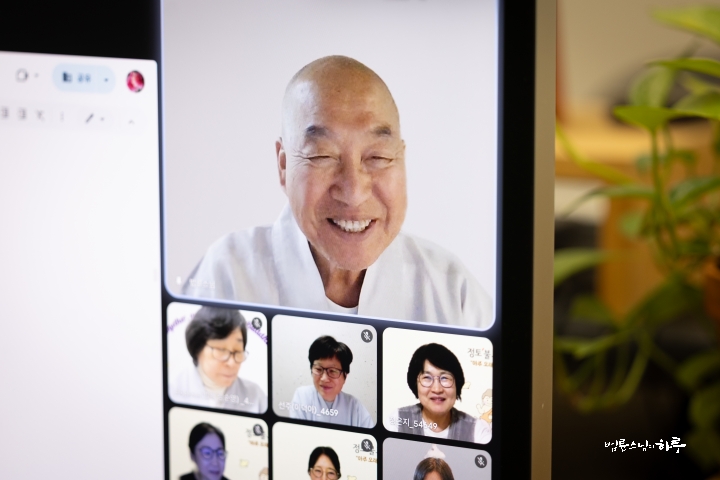
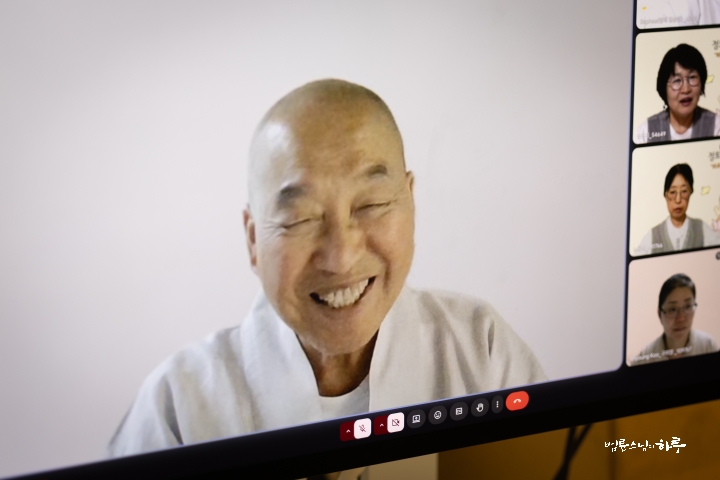
Following this, last year’s business report and financial statements were presented, along with this year’s business plan and budget. After deliberation, all agenda items were unanimously approved. The board meeting concluded at 6 PM. Today, Sunim was able to warmly exchange greetings with Jungto Society volunteers overseas through video calls throughout the day.

As the sun set, Sunim’s health was still not good, so he stayed indoors, took care of various tasks, and went to bed early.
Tomorrow, Sunim will attend the Religious Leaders’ Meeting for National Reconciliation and Peace early in the morning, followed by a live broadcast of the Weekly Dharma Assembly for the morning class. In the afternoon, he will participate in the Peace Foundation Planning Committee meeting, and in the evening, he will conduct a live broadcast of the Weekly Dharma Assembly for the evening class.
Since there was no Dharma talk today, this post concludes with a dialogue between Sunim and a questioner from the Live Dharma Talk conducted with English interpretation on the 22nd.
Nail Biting, Leg Shaking – Are These Habits Signs of Inner Anxiety?
“I have certain habits that appear when I’m anxious. I bite my nails, fidget with pens or pencils, shake my legs constantly, or run my hands through my hair. From childhood until now, I’ve been told many times that these behaviors seem rude. However, despite such criticism, I still haven’t been able to break these habits. If I’m doing these things unconsciously, could it be a sign that I lack inner peace? When I look at paintings depicting the Buddha and bodhisattvas, they’re always sitting in a calm posture, and I feel so different from them. What methods can I use to change these lifelong habits and become calm like the Buddha?”
“The habits you’ve described can be viewed simply as habits in some cases, but in more severe cases, modern psychiatry might consider them part of what’s called anxiety disorder, a mental health condition. There are two approaches. First, you can receive counseling from a psychiatrist, which can provide treatment to help alleviate these habits somewhat. The principle behind psychiatric treatment for breaking such habits works like this: psychiatry doesn’t directly fix the habits themselves, but rather uses medication or counseling to stabilize psychological anxiety, thereby increasing the possibility of breaking free from those habits. Second, if you don’t want psychiatric treatment, you can simply live with these habits. You can accept some criticism from people, think of it as your weakness, accept it, and live without worrying about it anymore. Don’t most people in this world have one or two bad habits? It would be nice to fix them, but often they’re hard to change. These anxiety-induced habits aren’t universal, so people might find them a bit strange or slightly unpleasant. However, you can just accept it as ‘this is a weakness in my life,’ acknowledge it, and live with the disadvantages it brings. Compared to having to use a wheelchair due to a leg injury, being deaf, or being blind, isn’t this a small issue? Many people live with such disabilities, so when you think of them, you need an attitude that says, ‘Well, is that really such a big problem?’ If you want to try fixing it yourself without a psychiatrist’s help, it will be very difficult, but it’s still worth trying. For example, let’s say you tie your hands and live for ten days. Then, no matter how anxious you get, you physically can’t perform those behaviors. But if you start doing them again as soon as you untie your hands, then try a month next time, and if it repeats, try a hundred days, extending the period like this. Then questions might arise like, ‘If my hands are tied, how do I eat, how do I go to the bathroom?’ That’s right. You have to endure that much inconvenience. You’ll have to eat with your mouth instead of your hands, manage the bathroom as best you can, and it will be difficult to change clothes freely. The reason I give such extreme examples is that habits don’t change easily with an attitude of ‘I’ll fix it if it’s convenient, forget it if it’s not.’ When your determination to break a habit becomes truly desperate, that resolution becomes so strong that it somewhat breaks the unconscious force that wants to do things the usual way. That’s when change begins.
“After listening to Sunim’s words, I realize that in the past I always overslept and thought I couldn’t do 108 prostrations, but these days I wake up early and do 108 prostrations. It was something I really thought I couldn’t do before. So I think I need to examine whether I’m truly ready and determined to give up this habit before making a decision.”
“Yes, that’s why you need to choose between two options. If you decide to change your habit, you could say you need to be prepared to die for it. But if the process is too difficult, then you need to get help from a doctor. On the other hand, if you think ‘Why go to such lengths to fix this?’ then don’t make up your mind to fix this habit in the first place. Instead, it would be more comfortable for your mind to live while accepting some criticism from people. If you don’t take action to change but just keep thinking ‘I should fix this, I should fix this,’ your psychology becomes even more anxious. It’s better to just sleep than to lie down thinking ‘I should get up, I should get up.’ At least then you’re sleeping. You should either get up or just sleep, but we neither sleep nor get up while thinking ‘I should get up, I should get up.'”“Thank you. Thank you for sharing your insight, Sunim.”