Is Understanding Others Just Creating Another Prejudice?
Feb 23, 2026 - Leading Members' Dharma Assembly, Peace Foundation Meeting
Hello. Today is the day of the Leading Members’ Dharma Assembly (전법회원 법회), where leading members of Jungto Society can resolve difficulties they face in their daily activities and establish a practice-oriented perspective.
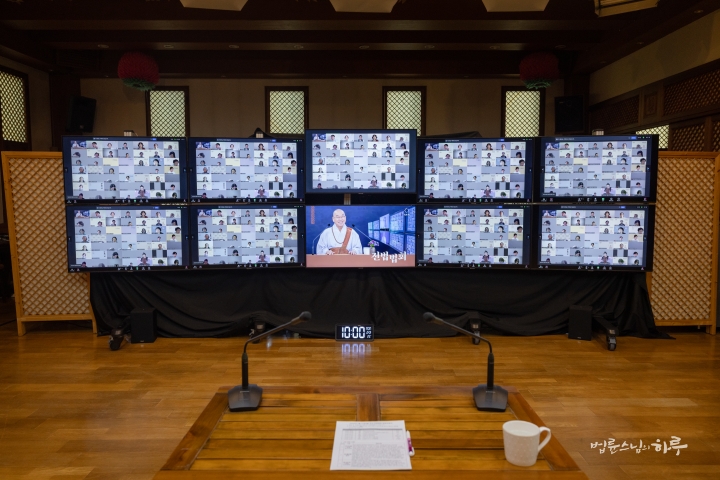
After completing morning practice and meditation, Sunim attended the Seattle Jungto Society board meeting online at 7:30 AM. He reviewed and approved the 2025 business report and settlement, as well as the 2026 business plan and budget. Subsequently, at 8:30 AM, he attended the Columbus Jungto Society board meeting online to review and approve their 2025 business report and settlement, along with their 2026 business plan and budget. It was a pleasant opportunity to exchange warm greetings with Jungto Society volunteers overseas through video conference.
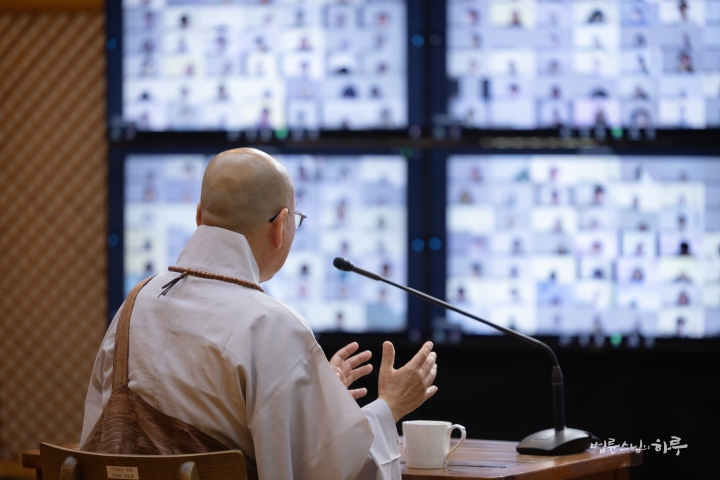
After the board meetings, Sunim headed to the broadcasting room for the Leading Members’ Dharma Assembly. With all leading members having entered the video conference room, the assembly began at 10 AM with the recitation of the Three Refuges (삼귀의) and the Heart Sutra (반야 심경).
Dharma Teacher Beopjeong (법정 법사님), chairperson of the 1000-Day Preparation Committee, presented the survey results regarding leading members’ burden of meeting participation and proposed improvements for meetings during the next 1000-day period.
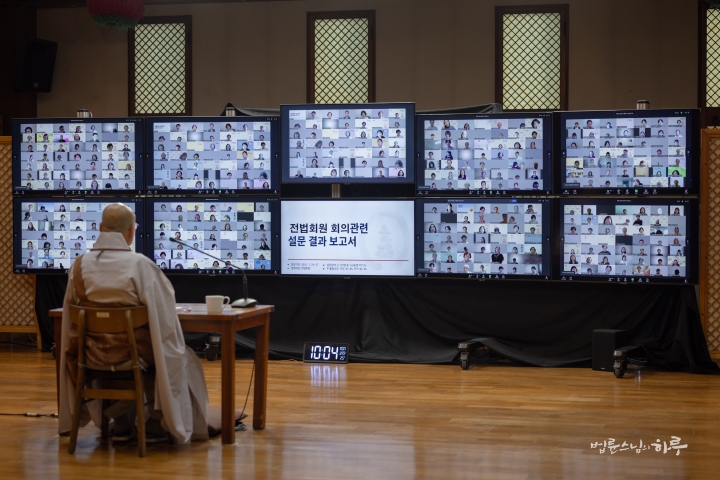
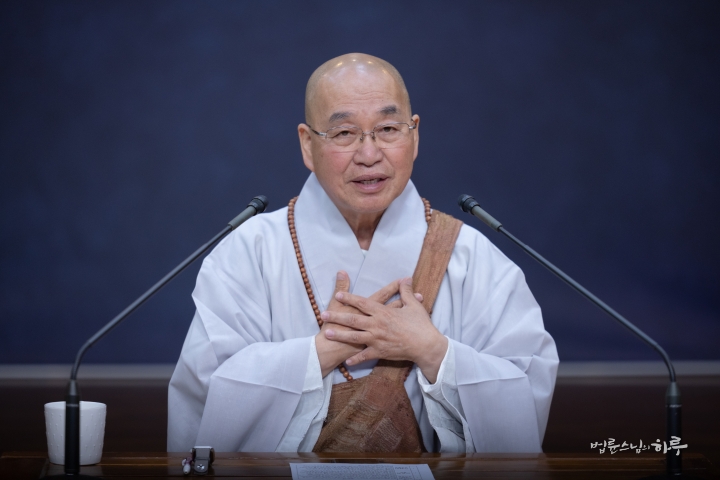
After the presentation, all leading members requested a Dharma talk with three prostrations. Based on the survey results, Sunim provided guidance on additional research needed to develop specific meeting improvement plans. He then discussed the perspective members should have regarding democratic decision-making processes.
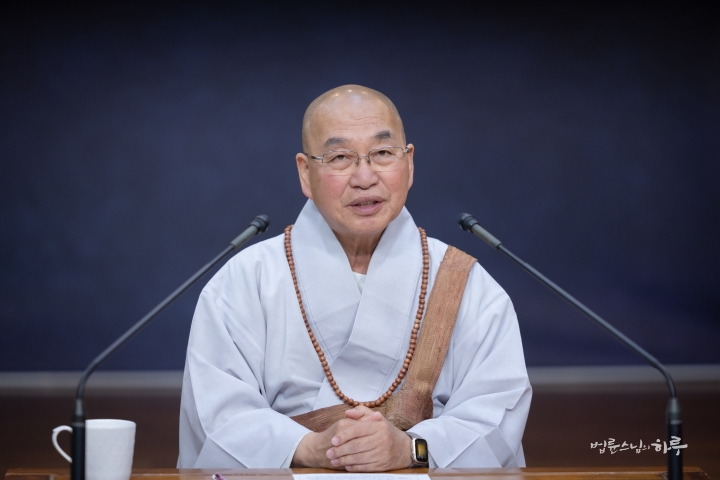
For the next hour, three people pressed the hand-raising button to ask questions and engage in dialogue with Sunim. One of them reflected on whether trying to understand others had created another prejudice, and asked how to practice seeing others as they truly are.

Is Understanding Others Just Creating Another Prejudice?
“I’ve learned that understanding others brings peace to my mind, so I’ve been making efforts to understand others at work and everywhere else. Thanks to this, conflicts have decreased and I’ve been able to get along without major problems. However, one day at work, I repeatedly observed a colleague cleaning with a sopping wet mop, unable to finish cleanly. At that time, I thought, ‘Ah, this person has different hygiene standards than me. Being from a refugee background, their environment might be different, so it’s understandable.’ I tried to understand them this way. Then suddenly I wondered, ‘Isn’t this just creating another concept ( 상: 相)to understand them?’ Looking back, I realized I had been creating my own reasons like ‘They’re elderly, so it’s understandable’ or ‘They’ve been through hardships, so it’s understandable,’ and using these interpretations to put my mind at ease. But these assumptions might or might not be true. So when such thoughts arise, I try to pause and focus only on ‘Should I clean it up or not?’ rather than trying to understand them according to my own thinking. I’m wondering if this approach is appropriate. What does it mean to understand others without creating concepts? How can we practice seeing things as they truly are in daily life?”
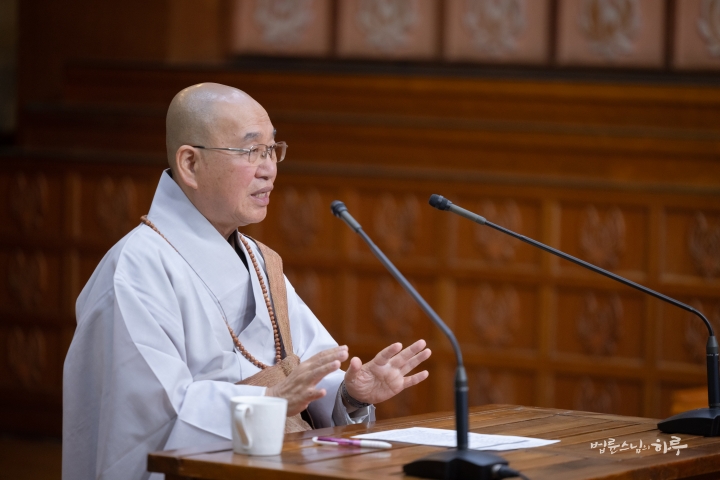
“Thank you. I understand well.”
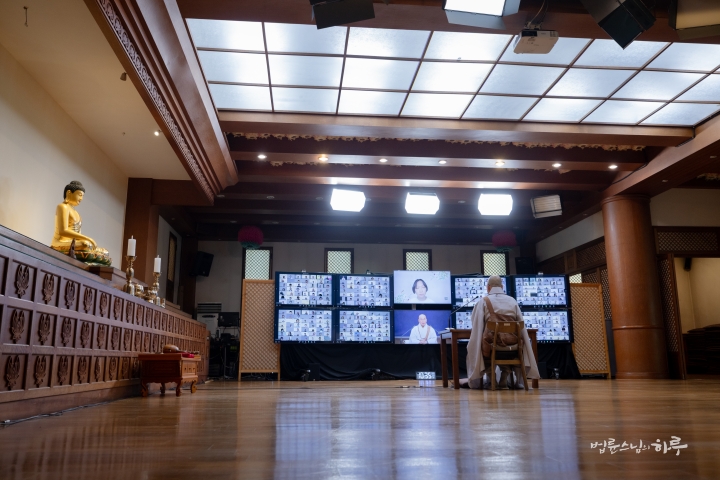
Questions continued to follow.
Overseas branches face the reality that it’s difficult for all members to participate in elections simultaneously due to time differences. Could overseas branches be allowed to autonomously choose various voting methods?
I’m excited about being dispatched to the Special Headquarters for Happiness Movement (행복운동특별본부) starting in March, but I’m also disappointed about not being able to participate in existing branch activities or in supporting graduates. Would dual membership be possible to maintain my existing affiliation?
As the conversation continued, Sunim’s voice became very hoarse.
“My throat is so swollen right now that it’s difficult even to swallow. Yet somehow, I’m still able to speak when I force myself. At first, my throat hurt so much that I thought it would be impossible, so I didn’t even moderate today’s board meeting. So let’s stop here for today, and I won’t take any more questions. Instead, please have deeper group discussions among yourselves.”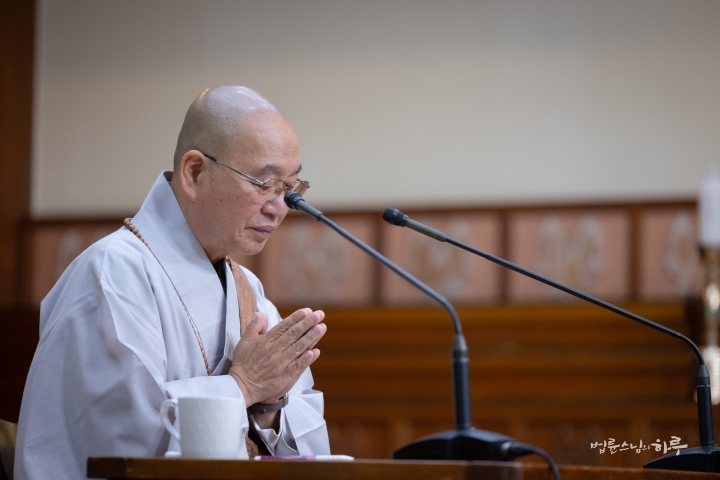
Although he wanted to take more questions, Sunim concluded the conversation due to his continuing throat pain and promised to meet again next time.
After leaving the broadcasting room, Sunim immediately went to the hospital for an ENT consultation. After finishing the examination and resting briefly, he headed to the Peace Foundation for his scheduled meeting.
Dr. Ashish Babe, Director of the India International Cultural Research Institute, and his delegation were waiting for Sunim at the Peace Foundation.
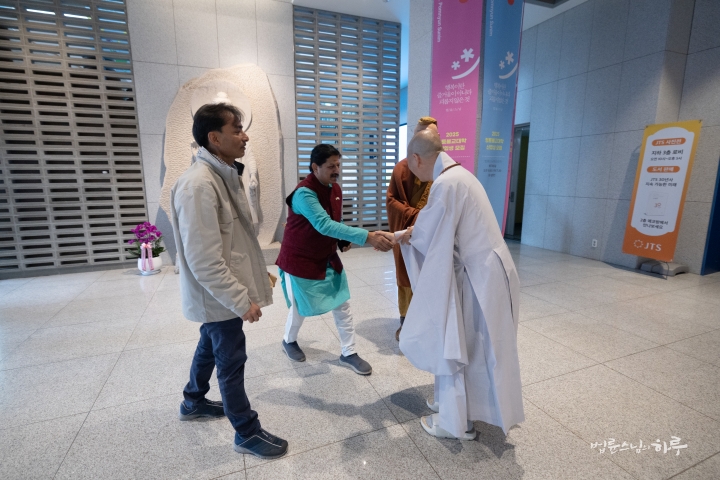
After exchanging warm greetings, Sunim expressed his respect for the doctor’s research activities and discussed exchanges between India and Korea. Sunim shared stories from his recent visits to Indonesia and India, and expressed gratitude for the interest shown in ensuring the smooth operation of JTS India projects.
“Going forward, we plan to build houses for the homeless in Dungeshwari and improve the village environment by renovating the sewage system.”Dr. Ashish Babe deeply empathized with Sunim’s plans.
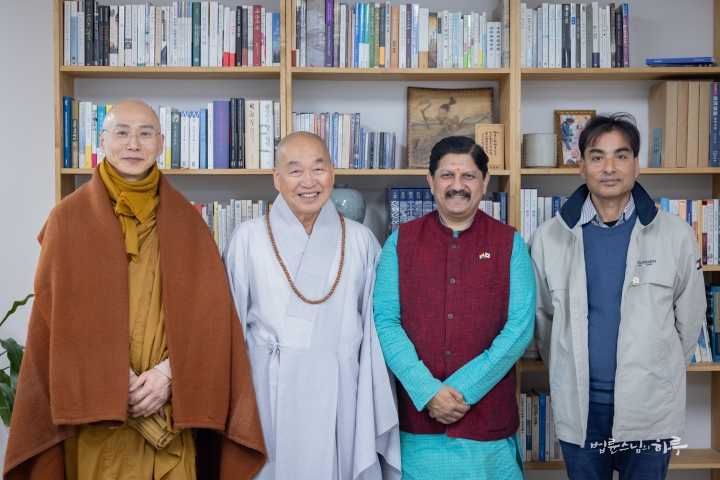
After seeing off Dr. Ashish Babe and his delegation, Sunim immediately met with Kim Jin-wook (김 진욱) and Yoon Kyung-sook (윤 경숙), a couple from Jamaica. They reported on the current status of JTS’s emergency relief activities (긴급구호 활동) in Jamaica and discussed future plans.
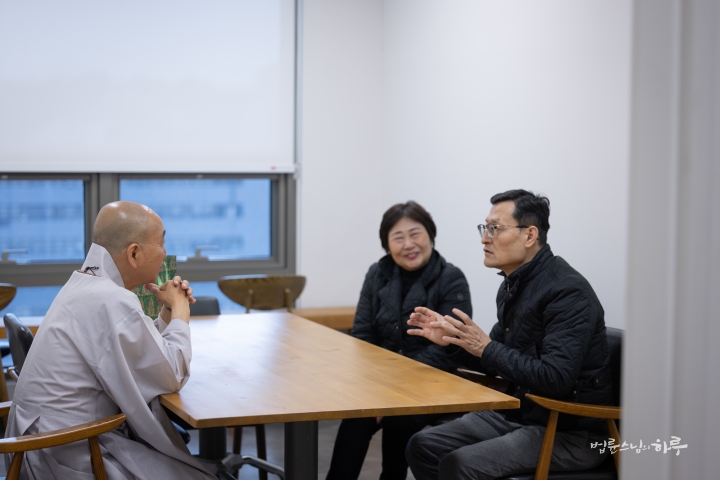
Jamaica recently suffered from Hurricane Melissa, which destroyed most of its major infrastructure and housing, leaving electricity, water, communications, roads, and accommodation facilities almost paralyzed. JTS dispatched an investigation team and, after completing the survey, is preparing relief supplies. They discussed the scale and method of support. The couple will soon return to Korea, and they also talked about how to continue their volunteer activities afterward.
At 3:30 PM, Dr. Yoon Deok-hyun (윤덕현), who works as a fisheries and aquaculture expert at FAO (Food and Agriculture Organization of the United Nations), visited for a meeting. Sunim had extensive discussions with Dr. Yoon about increasing fishery resources and the aquaculture sector in general. They particularly spent time discussing whether consulting on fishery resource enhancement and aquaculture technology could be possible for North Korea.
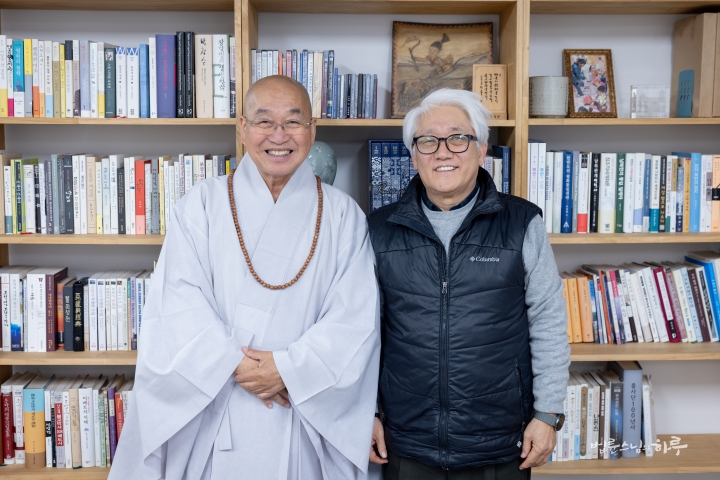
After taking a commemorative photo together and seeing off Dr. Yoon, Sunim headed back to the Seoul Jungto Center broadcasting room for the leading members’ Dharma assembly.
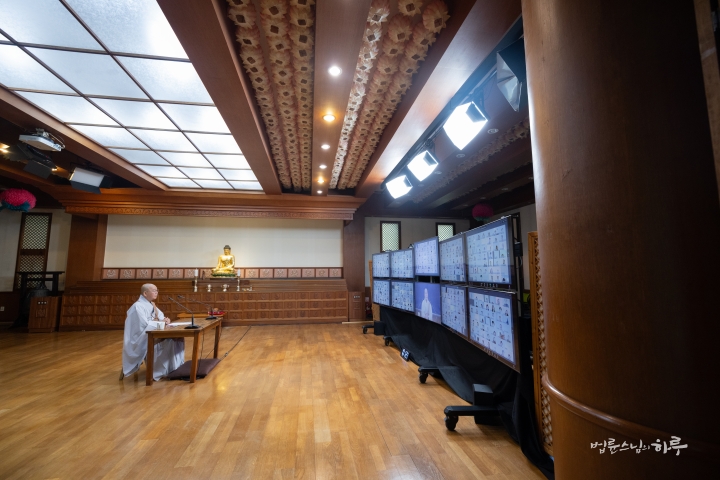
As the sun set, the evening session of the leading members’ Dharma assembly began at 7:30 PM with all evening participants present. Like the morning session, there was a presentation on the survey results regarding the burden of meeting participation for leading members and improvement plans for meetings during the next thousand days. Then they requested a Dharma talk from Sunim with three prostrations.
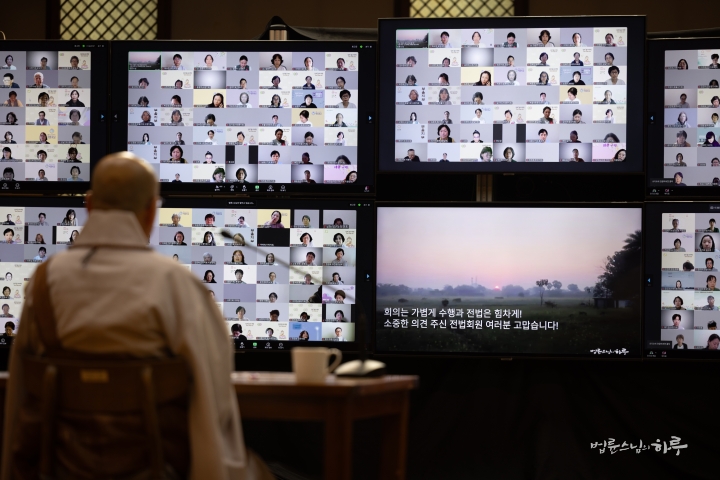
Before taking questions, Sunim explained how to understand the survey results and what follow-up measures should be taken to develop improvement plans. He also talked about the rapidly changing society and emphasized what values we should uphold in an era where predictions are becoming increasingly difficult.
In an Era Where Predictions Don’t Work, What Should We Hold Onto?
Today’s world is difficult to understand with the concepts we held in the past. Various situations, including international affairs, cannot easily be understood using old methods.
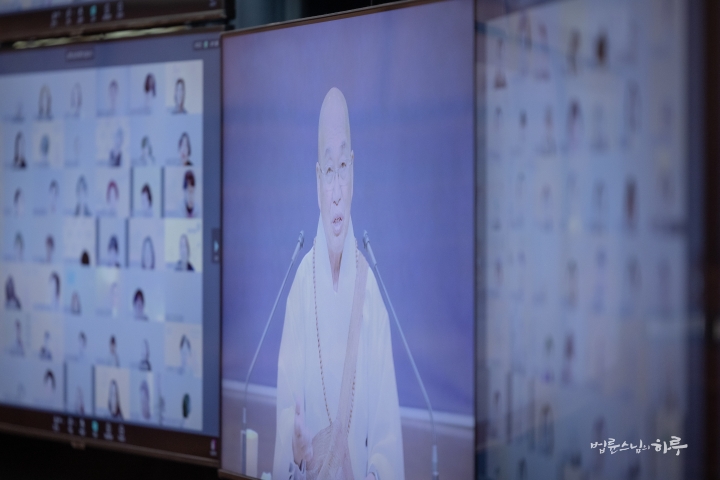
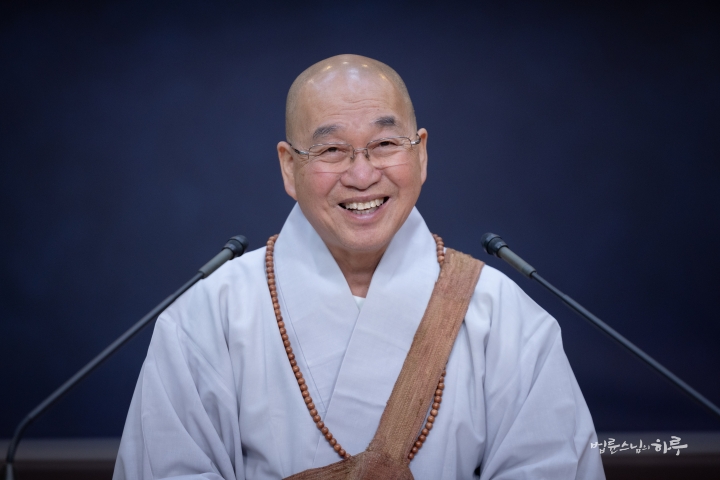
Next, leading members who had submitted questions in advance asked Sunim their questions. For one hour, two people asked questions and had conversations with Sunim.
During the India pilgrimage, I heard that the Shakya clan recognized the Buddha as their ancestor and converted to Buddhism, but there are still no Buddhist teaching materials available. What do you think about conducting a Jungto Dharma School for the Shakya clan?
The 5-month Jungto Buddhism Course and Jungto Sutra Course are too short to properly cultivate students as practitioners, and for facilitators, the repeated cycle of entrance and graduation ceremonies creates fatigue. What about extending the duration of the course?
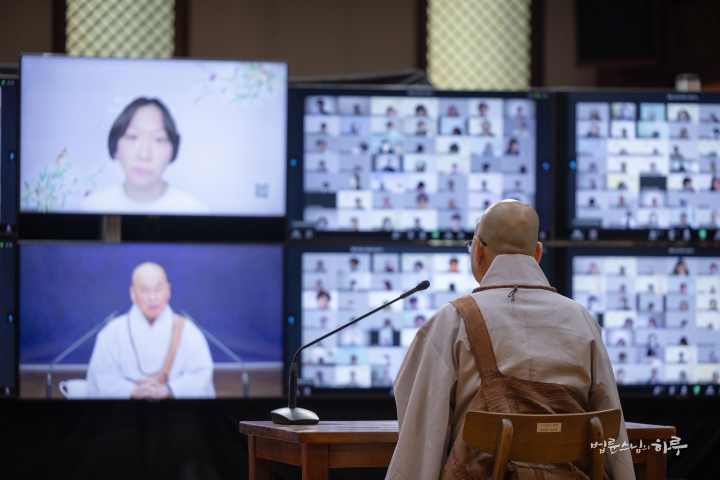
After answering all the questions, it was time to conclude the assembly. Since Sunim’s throat was still sore, he asked for understanding and did not take additional questions. The assembly ended at 9 PM.
Tomorrow, starting with the Canada Jungto Society board meeting, Sunim will participate online in board meetings all day long with JTS USA, LA Jungto Society, JTS Philippines, Philippines Jungto Society, and Sydney Jungto Society to review last year’s project reports and this year’s project plans.