Is Speaking Softly at Work Always Practice, or Is It Sometimes Avoidance?
Is Speaking Softly at Work Always Practice, or Is It Sometimes Avoidance?
Hello. Today, after completing his visit to India, Sunim returned to Korea and offered New Year’s greetings to his teacher, Great Master Bulsim Domun (불심 도문 큰스님).
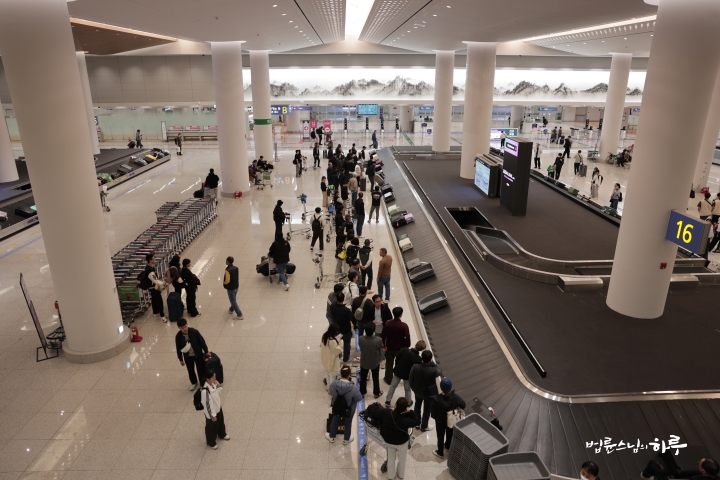
Sunim departed from Delhi Airport in India last night and arrived at Incheon (인천) Airport at 5:55 AM today. After collecting his luggage and moving outside the airport, Dharma Teacher Myodeok (묘덕) and Dharma Teacher Beopdeung (법등) were waiting to greet him.
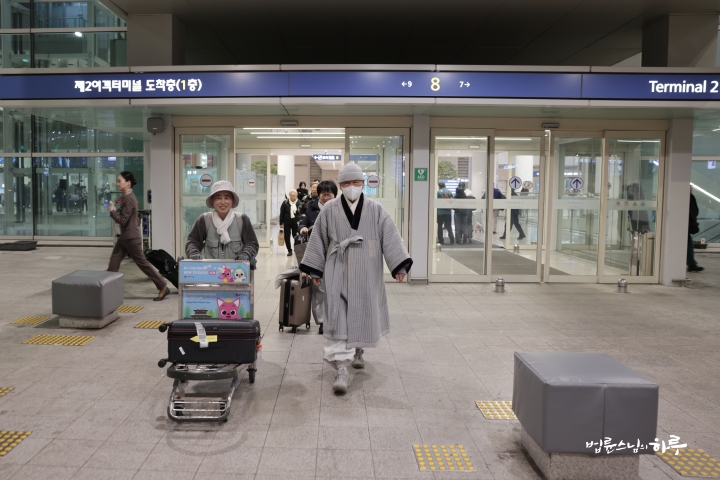
“Sunim, did you have a good trip?”
“Yes, I must be getting older. Now when overseas trips get longer, it’s becoming a bit difficult.”Sunim moved directly from Incheon Airport to Dubuk Jungto Retreat Center (두북 수련원).
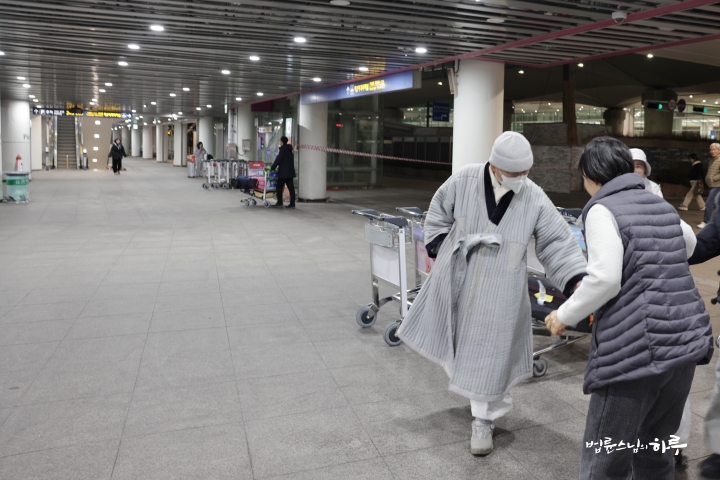

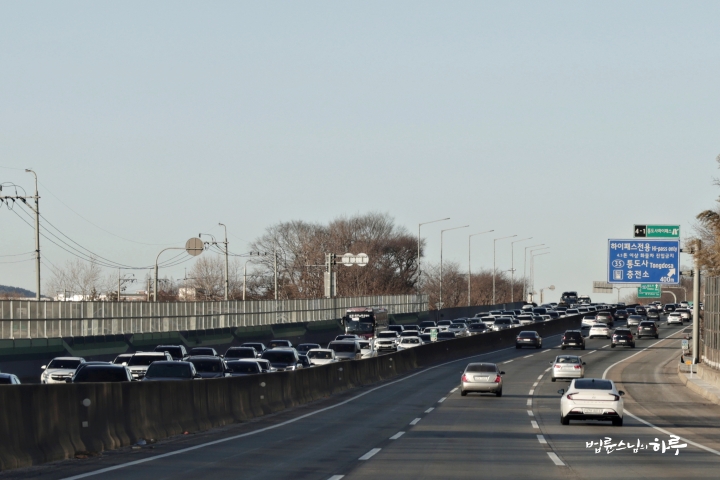
He arrived at Dubuk Jungto Retreat Center at 10:40 AM, organized his belongings, and had lunch. He then immediately headed to Jungsaengsa (중생사) Temple in Busan where Great Master Bulsim Domun resides. Due to the Lunar New Year holiday, there were many cars on the road and traffic began to build up.

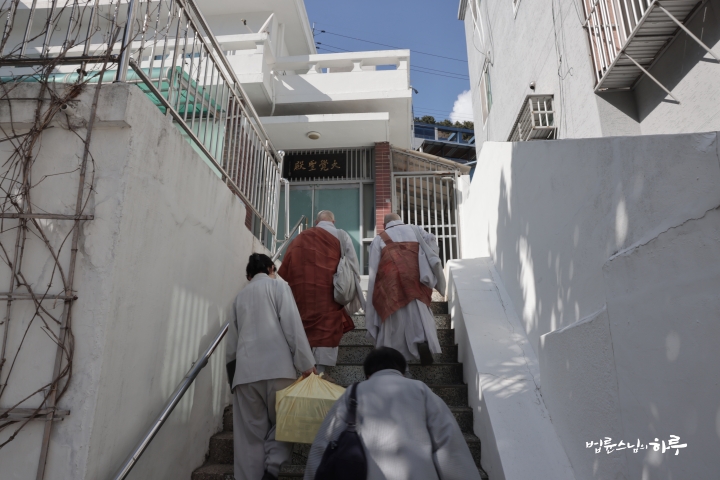
He arrived at Jungsaengsa Temple in Busan at 2:15 PM. Venerable Yusu (유수스님) was waiting in front of the temple. Sunim offered New Year’s greetings to Great Master Bulsim Domun together with Venerable Yusu.
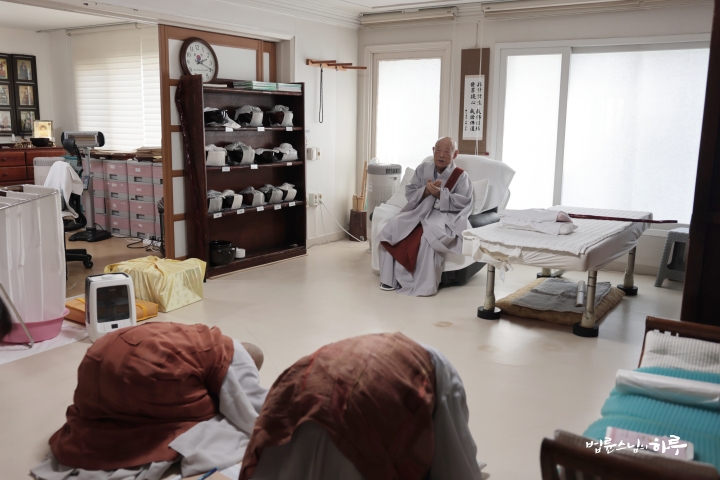
Great Master Bulsim Domun, delighted to see them, immediately began sharing stories about family elders as soon as they sat down. He told the story of how during the Japanese colonial period, the families of Park Hyeong-jip (박 형집) and Im Dong-su (임 동수), who were among Korea’s wealthiest, combined their strength and used their 30,000 seok fortune to support the March 1st Independence Movement and the establishment of the Provisional Government of the Republic of Korea. He explained that their names don’t appear clearly in historical records because they operated under assumed names to maintain secrecy at the time.
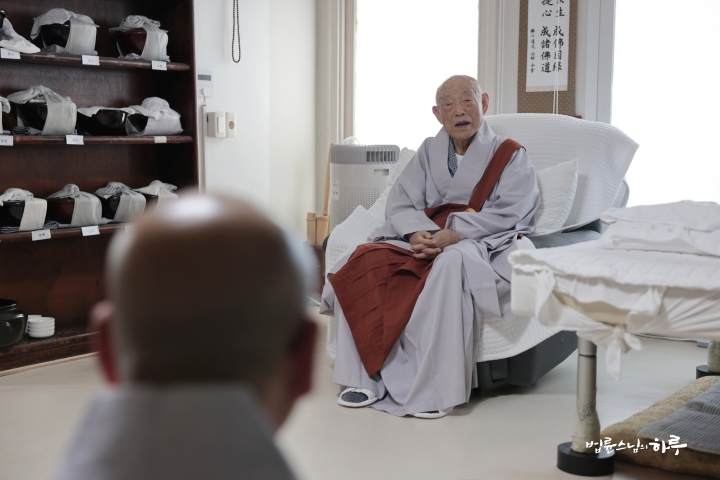
After finishing the family stories, Great Master Bulsim Domun looked at Sunim and said:
“Without our Venerable Pomnyun (법륜스님), my coming to this world would have been meaningless and without purpose. Venerable Pomnyun is truly an important person. But what always weighs on my heart and makes me feel sorry is that I should have helped materially as well, not just given heavy responsibilities, so you could carry out your activities. I feel like I’ve just placed a heavy burden on you without being able to help properly… I’m truly very sorry about that.”
Sunim responded to this:
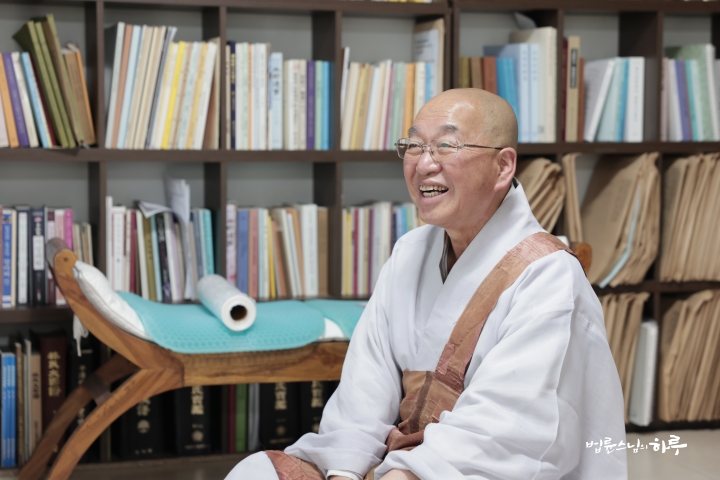
“That’s fine, but I couldn’t provide the expenses for maintaining the sacred sites.”
“We can prepare that ourselves.”“Oh my, thank you so much for saying that.”
The Great Master laughed heartily and was pleased.
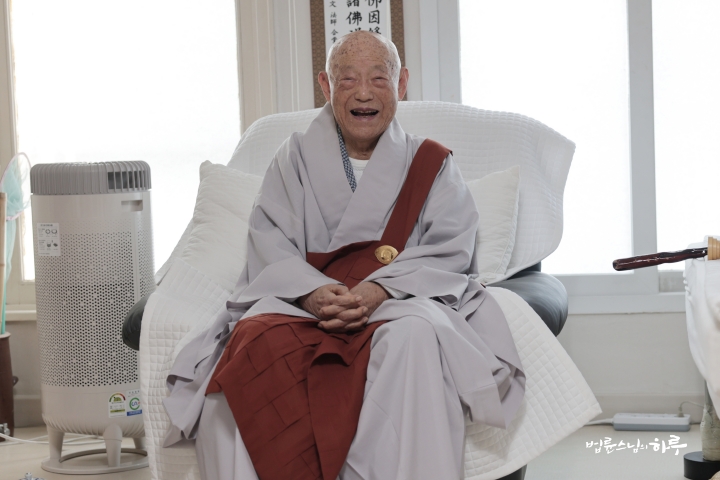
Sunim then reported to Great Master Bulsim Domun on the progress of research regarding Master Yongseong ( 용성조사) and the independence movement, and asked about points of curiosity. He reported newly discovered facts that researchers had found while tracking historical records, such as how the independence army, decimated after the Battles of Bongodong and Cheongsanri (봉오동·청산리), was rebuilt as the Korean Revolutionary Army in the Myeongwol Village (명월촌) area where Master Yongseong had secured land, the connection between the publication of Hwandan Gogi (환단고기) and General Hong Beom-do (홍범도 장군), and the origin of the national name “Republic of Korea,” and asked about the Great Master’s memories.
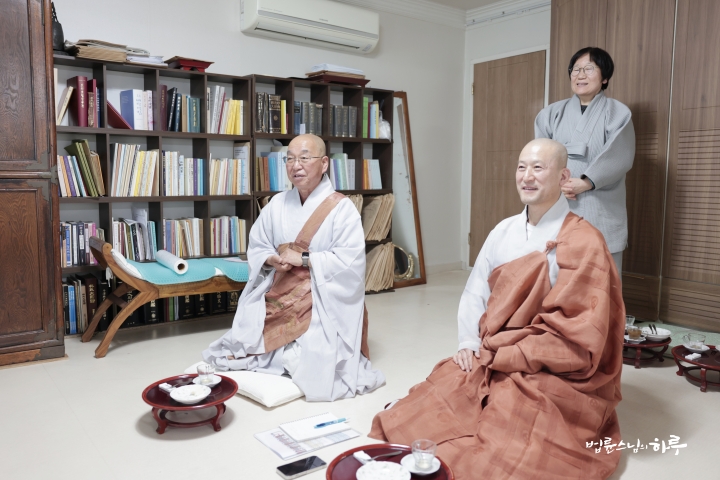
The Great Master nodded and answered what he remembered, and honestly said he wasn’t sure about parts that weren’t clear. After finishing the discussion about the independence movement, Sunim delivered good news to the Great Master.
“Great Master, the restoration of Cheollyongsa (천룡사) Temple that you so desired has been approved.”Sunim explained the restoration plan for Cheollyongsa Temple. Although permission wasn’t granted for the original site, they received approval to build a new temple on the left side facing the mountain. He reported that they would proceed with architectural consultation from the monk most knowledgeable about temple architecture in Korea.
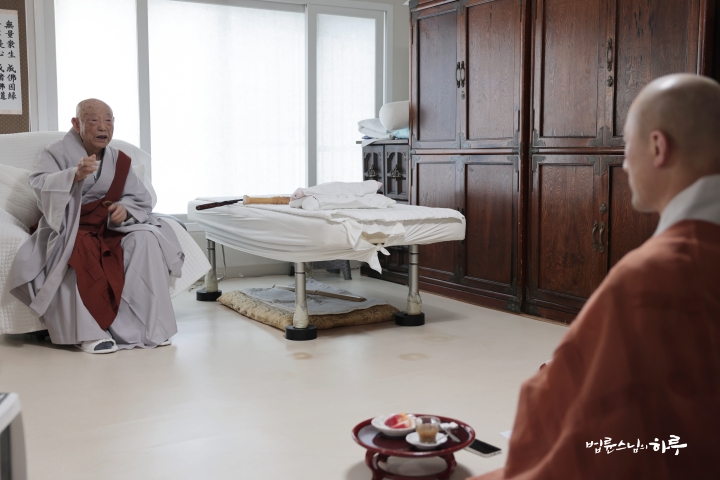
Hearing this, the Great Master couldn’t speak for a long time.
“Just hearing about it makes me grateful. It seems I’ve extended my life and endured until now just to hear this news. And I’m sorry again.”
Sunim reassured the Great Master once more.
“Didn’t Mr. Im Dong-su’s family dedicate their 30,000 seok fortune to establishing the Republic of Korea instead of passing it to their descendants? Like that, Great Master has laid the foundation for Buddhist revival, so you have truly done well.”“I lived cleanly. I’m just sorry I couldn’t provide generous support to our Venerable Pomnyun.”
“Master Yongseong also spent all his money on the independence movement; he didn’t provide financial support to Great Master Bulsim Domun, did he?”The Great Master laughed at those words and offered his final greeting.
“Yes, that’s right. I prepared all the money myself. Oh my, thank you so much. Living like Venerable Pomnyun is the right way.”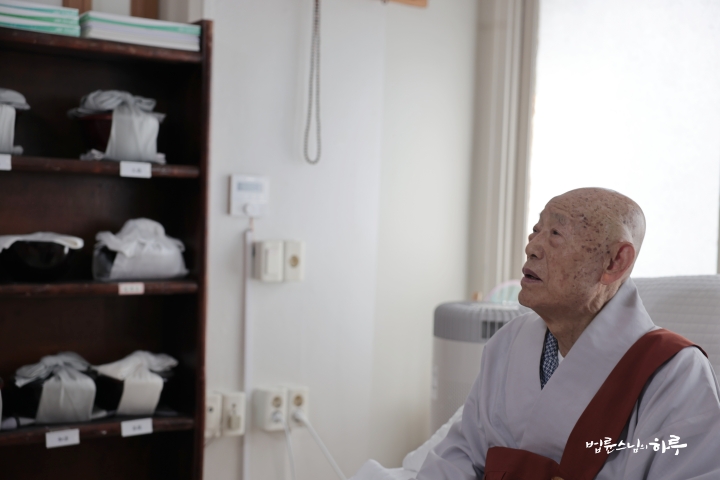
After finishing the New Year’s greetings, Sunim moved to a hospital in Busan. His elder brother, who has been in poor health for several years, is hospitalized there, and since it was the Lunar New Year, he went to offer New Year’s greetings to his brother.
With the entire hospital quiet due to the holiday, the doctor in charge of his brother was waiting for Sunim.
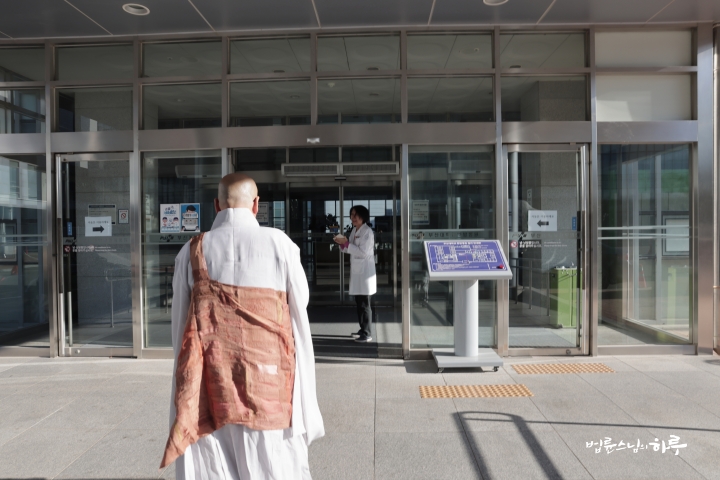
“Sunim, welcome.”
“You didn’t go home on New Year’s Day but stayed at the hospital? Thanks to you, I can offer New Year’s greetings to my brother.”“That’s fine, I went home first and just stopped by the hospital briefly on my way back.”
While Sunim was exchanging greetings with the attending physician, his brother arrived at the meeting place in a wheelchair. Sunim sat facing his brother and greeted him warmly.
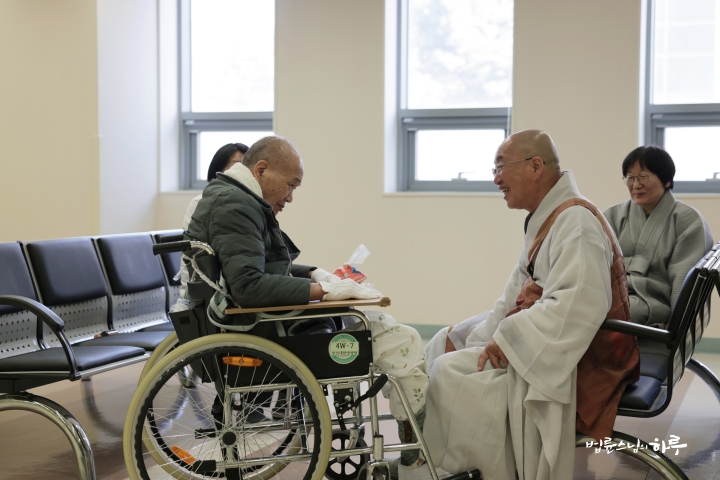
His condition seemed slightly better than before, but communication was still difficult. Sunim gave his brother fruit he had brought as a gift and then moved to his sister’s house nearby.
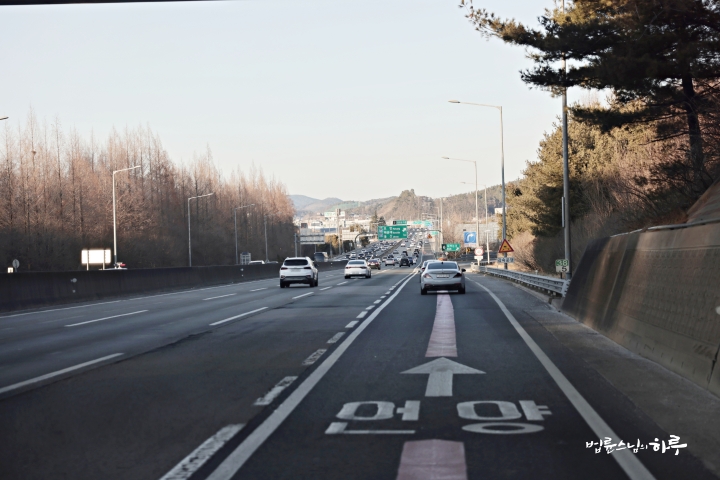
He arrived at his sister’s house at 4:50 PM. Sunim offered New Year’s greetings to his sister and brother-in-law.
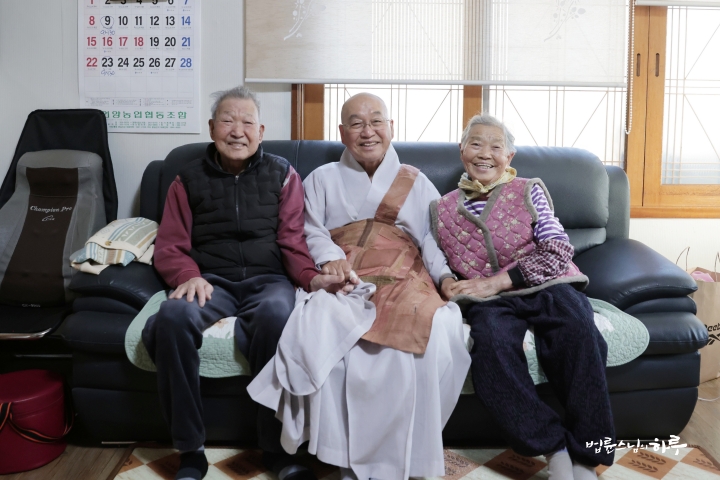
After enjoying the refreshments his sister had prepared, he headed to Dubuk Jungto Retreat Center, arriving at 6:00 PM.
As the sun set, he spent the evening proofreading manuscripts and took an early rest. Tomorrow, he will broadcast live from the Dubuk Jungto Retreat Center studio, delivering New Year’s greetings to Jungto Society members for the Lunar New Year during the Weekly Dharma Assembly.
Since there was no Dharma talk today, this post concludes with a dialogue between Sunim and a questioner from the Weekly Dharma Assembly conducted online at Sujata Academy in India on the 11th.
Is Speaking Softly at Work Practice, or Is It Avoidance?
“I’d like to ask about how a practitioner should present group opinions. Personally, I’ve tended to express opinions relatively softly, and if things don’t work out, I’ve made decisions by accepting them. Since becoming a team leader at work this year, when I accept things, it affects our entire team and I’ve received pushback from team members. I’d like to ask how to reflect collective opinions without expressing firm positions like ‘absolutely not’ or ‘we must do this.'”
“The Buddha didn’t accept everything just because it was the majority opinion. The caste system was accepted by the majority at that time, but the Buddha didn’t accept it. The same was true for women’s ordination. Although the majority opposed it, he allowed women’s ordination without being bound by that opposition. In that process, the Buddha never got angry or stubborn. He always listened fully to the other side’s opinions. Even to those who came to debate, he would say ‘Please speak fully,’ and after listening to their entire story, he would quietly but very clearly point out the contradictions in their arguments. If you, as a team leader at your company, represent only your team’s interests too strongly, it can become ‘organizational selfishness.’ Organizational selfishness can damage the interests of the entire company. Conversely, if you just unconditionally accept things because they’re the majority opinion of the company, team members’ dissatisfaction can arise. So harmoniously achieving both of these is what we can call the ‘Middle Way (중도:中道). First, as a team leader, you need to gather team members’ opinions and represent them in company-wide meetings. However, if during the meeting process other opinions seem more reasonable and you accept them, you need to persuade your team members afterward. ‘Our team’s opinion was this, but the majority opinion was that, and since it seemed more valid, I accepted it. I’m sorry I couldn’t push through the team’s opinion, but since we’re not the only ones in the company and we’re all together, let’s accept the overall opinion this time.’ You need to be able to say this to your team members. It’s similar for members of parliament. A member of parliament should go to the National Assembly and reflect the opinions of their constituents. However, since the National Assembly accommodates opinions from various regions together, my opinion might become a minority opinion and I might not be able to push through my constituency’s wishes. Then you need to explain the decision back to the local residents and seek their understanding. ‘Your opinion was this, but since the opinion of the entire nation is that, I’m sorry we couldn’t push it through this time. However, we also need to accept this.’ You need to persuade the residents like this. With this perspective, you won’t fall into the extremes of either not being able to speak up or stubbornly insisting only on your own opinion.
“Yes, thank you. I understand.”