Hello. Today marks the conclusion of the week-long visit to Sujata Academy and the day of travel back to Korea.
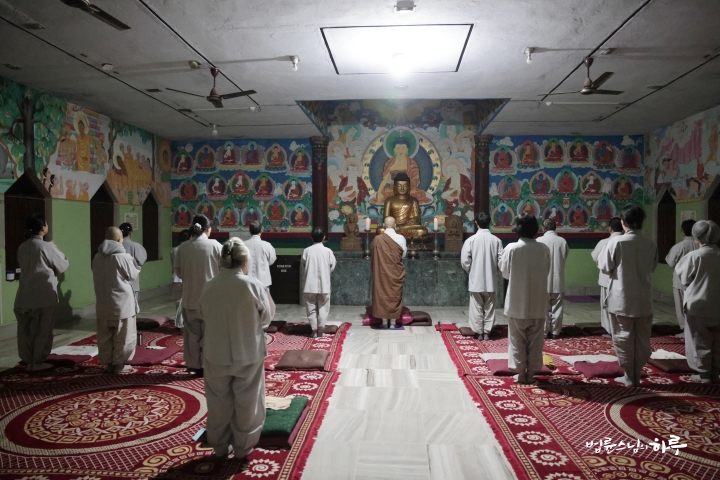
Sunim completed his morning meditation and practice (수행), then had barugongyang (발우공양)with the members of the Sangha.
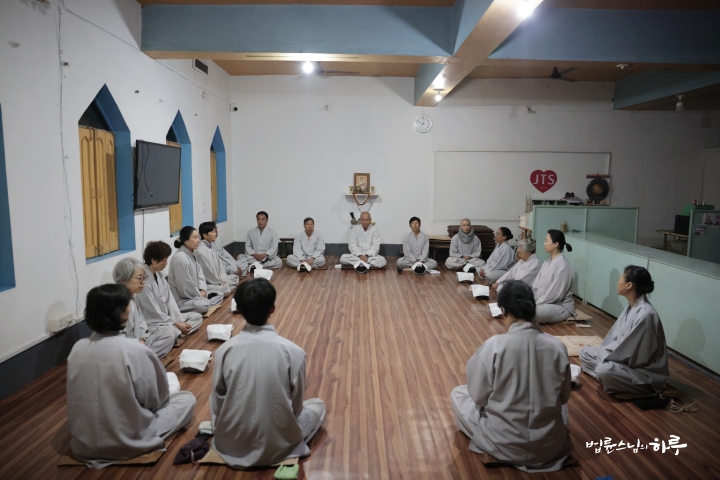
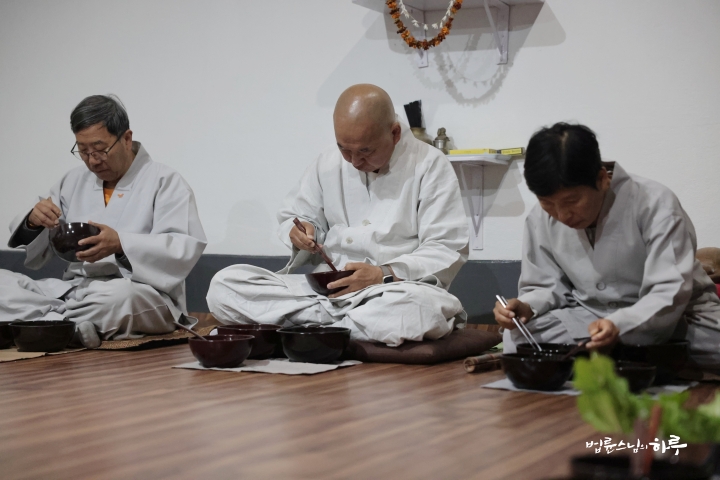
After barugongyang, Sunim urged the volunteers from Korea to approach their service not with emotional attachment, but with a clear-minded and sustainable perspective.
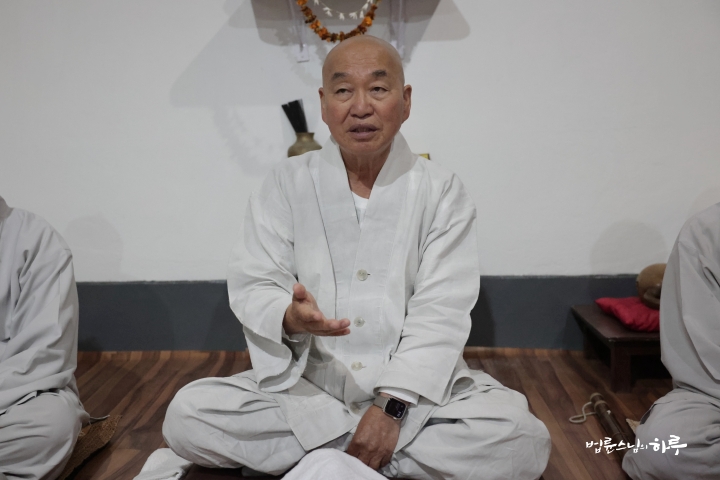
“Among you, some serve at Sujata Academy for extended periods of three to five years, while others serve for shorter terms of one or two months, less than a year. Those serving short-term should not think of themselves as leading the work, but rather approach their duties from the perspective of supporting the ongoing work here.
Good Intentions in Service Can Sometimes Be Harmful
When we go to unfamiliar places, we tend to perceive things based on our existing life habits, which naturally gives rise to much discrimination. Not only ‘bad’ but also ‘good’ is discrimination. Not just hatred, but love as well. Therefore, practitioners must be careful not only about criticizing or condemning, but also about feeling excessive pity or showing too much affection.
This is why children in orphanages often have difficulty trusting people and forming attachments. Being emotionally deprived, when someone comes and treats them warmly for a day or two, they become deeply attached. However, these people leave and never return. After this happens several times, children become reluctant to form emotional bonds with people. Just as repeatedly giving to begging children out of pity normalizes begging, when different people come, give affection, and leave repeatedly, it leaves emotional scars on the children.
When volunteering here, you must not distance yourself from the children because they are dirty, nor should you hate or criticize them. However, there’s something equally important to be mindful of. Being overly affectionate, getting too close, or giving personal gifts to children should also be avoided unless you plan to take responsibility for that child for life.
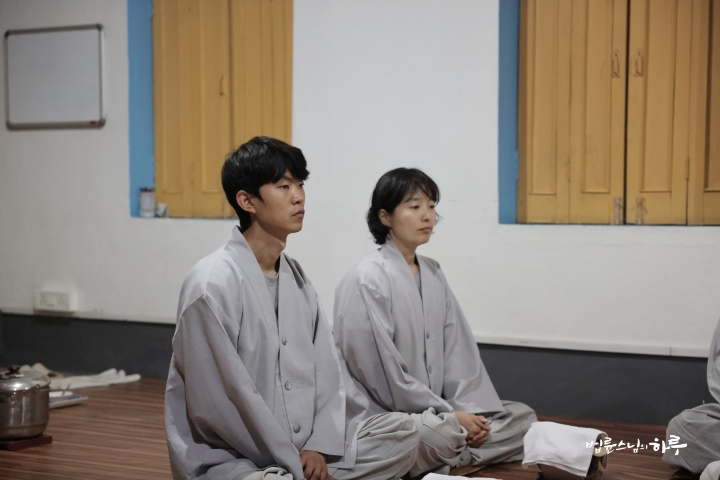
These children and the people of this village lived well here before we came, and they would have lived well even without us. We can provide some educational or medical support if possible, but we must maintain an objective, rational, and somewhat detached perspective that accepts it’s okay even if our help isn’t very effective. This attitude is essential for maintaining a practitioner’s perspective.
A practitioner must understand that ‘what we like is right and what we dislike is wrong’ is not true, but rather that ‘both what we like and what we dislike are equally causes of suffering.’ This is the major difference in perspective between practitioners and worldly people. This is a school for practitioners operated from this perspective, not a place for charity work. While it may look the same from the outside, this is a place where practitioners gather to provide minimal support for survival, medical care, and education – nothing more is our responsibility. We must clearly maintain the perspective that their economic prosperity, marriage, and building nice houses are their business, not ours.
The perspective that our coming here to serve these children is good work while local people serving here is unpaid labor is very dangerous. We must maintain the perspective that the local people should serve these children just as much as, if not more than, we who come here to serve. Conversely, it’s also wrong to think badly of local people for not properly educating their children. And it’s not right to pity them and become too deeply involved in their problems.
If we don’t clarify this perspective, short-term volunteers coming here might actually disrupt the principles and order that JTS has established. That’s why we didn’t accept short-term volunteers in the past. What concerns me about the recent influx of short-term volunteers from the Lay Member Group is that if they serve based on Korean perspectives and are led by emotions, they might cause harm rather than help. We must educate volunteers to maintain this perspective, and if they can’t maintain it, we must immediately stop their volunteer activities. Otherwise, it will be difficult to sustain this project.
Because humans have endless desires, even when desires are fulfilled and they feel joy, the moment desire becomes reality, they pursue the next desire. That’s why we must be very careful about providing pleasures that chase desires. When serving here, one must be very detached and must not work based on emotions. Only by maintaining a detached perspective under long-term planning can we sustain a supportive relationship that helps the local people and children live independently. If relationships become too close, expectations soon grow, eventually leading to disappointment, and later easily turning into resentful relationships.
The Principles JTS Has Upheld for 30 Years
Since the outward appearance is similar to general charity work, we shouldn’t simply think ‘this is a place that helps people in need.’ First, we must live without our own suffering as practitioners, and second, we shouldn’t divide them into ‘well-off’ or ‘poor’ based on material standards. When I visited the homes of staff working at the school, while they face difficulties, they’re better off than other villagers. The reason is that in rural societies like this, having a steady cash income allows for much faster economic stability. Remembering when I lived in the countryside, it’s difficult to sell farm produce for cash. But when one son becomes a school teacher, township clerk, or police officer and receives a salary, creating steady cash income, the household improves quickly compared to neighbors.
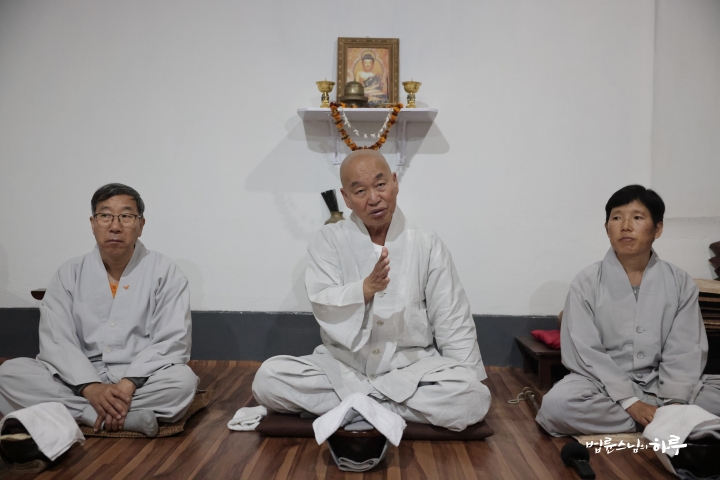
Therefore, we need to carefully observe the villagers’ circumstances and educate them on how to live well within their small income. We must also carefully examine whether they lack essentials for survival and research how to provide appropriate support. When helping people, one must be detached. JTS’s role is to feed the hungry, treat the sick, and provide basic education to children – providing abundance beyond that is not JTS’s goal. I emphasize once again that you must not work with a Korean perspective. Of course, you’ll do well on your own, but because we’ve lived in Korea for a long time and have Korean values, it’s easy to unconsciously approach things that way. So I hope you’ll proceed with the project keeping these points in mind.
JTS has come this far through steady, gradual improvements over the past 30 years, making small changes bit by bit, not transforming everything at once. Even when we had money, we’ve provided support very slowly in a direction that enables residents to become self-reliant. We’ve adjusted our pace considering all factors including political changes in the Indian government, economic changes, and the living conditions of villagers.
If staff working at Sujata Academy receive higher salaries than general workers, villagers will compete to get jobs at Sujata Academy, creating conflict. Therefore, people working at Sujata Academy must have the perspective that ‘this is a place for service. While you might earn 1,000 rupees working outside, at Sujata Academy you must work for 700 rupees.’ This way, since people working here can earn more money if they go outside, there won’t be jealousy or envy asking ‘why does only that person work there?’ The current system was created considering all these various circumstances.
Of course, there may be areas for improvement. Even when discovering improvements, we must always complement them carefully and cautiously. We must not act impulsively. While the plans I discuss may seem like I’m speaking spontaneously, that’s not the case. These have been planned for 30 years, and I’m telling you to do what you can within this scope, not speaking impulsively. Most things regarding developing the sacred sites, children’s education, and villagers’ lives are like this.
JTS’s goal is to help villagers live cleanly with pride despite being poor, not to make them live well in big houses with nice cars. I hope this perspective is clear.
When doing village development or teaching students at school, the current JTS system has Indian staff at the center with volunteers from Korea supporting them. In the past, volunteers from Korea were in charge with Indian staff assisting, but now Indian staff are central with volunteers from Korea providing support. Please remember that only accounting is handled by Korean volunteers, while everything else is centered on Indian staff.
Sometimes even when you do your job too well, the results aren’t good. The reason is that if you do well and then leave for Korea, that work can’t continue and creates a vacuum. But if you do too poorly, you’re not helpful and become irrelevant. When someone who works well comes, things run well, but when that person leaves, it stops working, resulting in a cycle of things going well then poorly again. Therefore, even good work must be carried out with sustainability in mind, and you must help while considering whether it can continue here even without you.”
After finishing barugongyang, Sunim packed his belongings to return to Korea. At 8 a.m., children who had arrived at school early were cleaning various areas. When a female student cleaning the office entrance swept with a broom and stirred up dust, Sunim personally demonstrated the proper way to sweep.
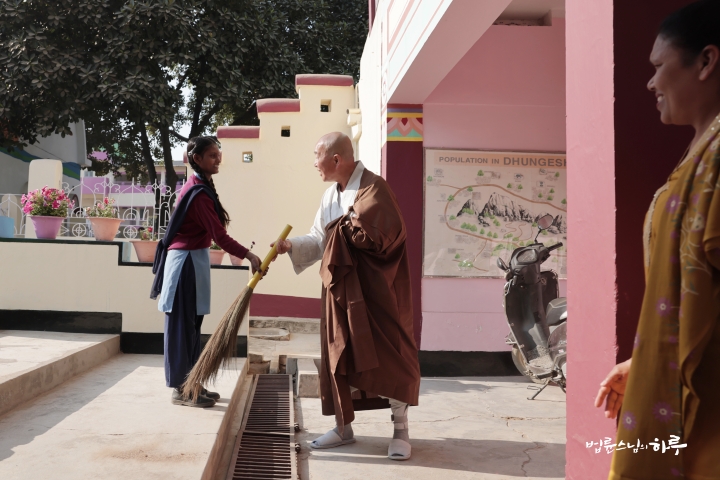
The female student smiled sheepishly and then followed Sunim’s example, sweeping vigorously.
Next, Babralji came to the office to say goodbye to Sunim, who was departing today.
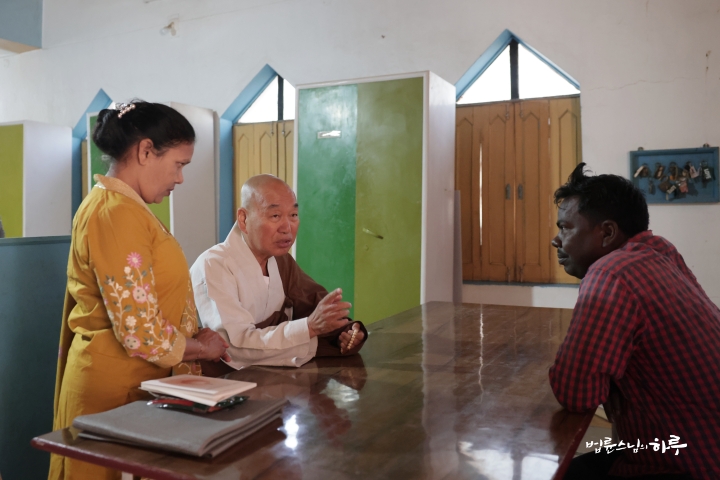
Sunim asked how Babralji was doing, as he had recently opened a small shop in Mamkoshihill village and started a new venture. Sunim then gave some words of advice to Babralji, who would be departing in March to work on the Bhutan JTS project, and presented him with a prepared gift.
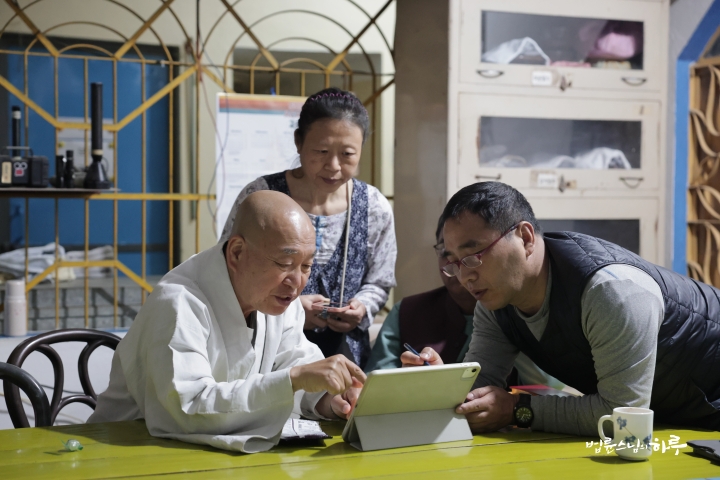
Next, Sunim exchanged opinions about design plans with Kim Yoon-tae (김 윤태)and Ahn Sang-hee (안 상희), a couple preparing for the construction of a Dharma center in Sankasia.
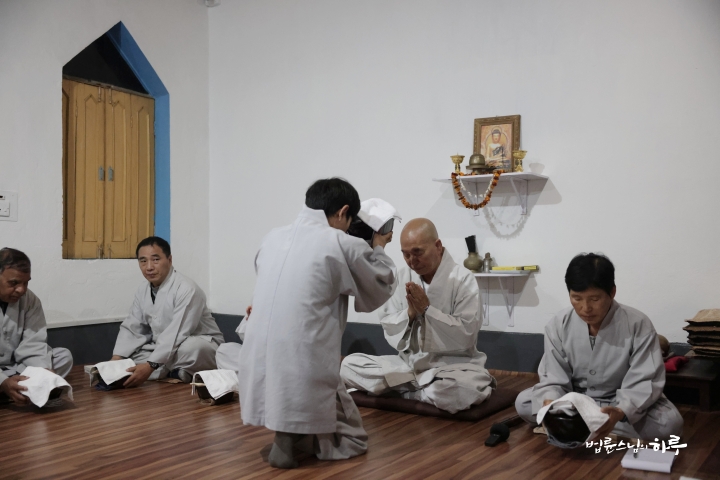
At 9:30 a.m., Indian staff members were waiting in the Dharma hall to pay their respects to Sunim. The Indian staff offered three prostrations to Sunim as both a New Year’s greeting and farewell.
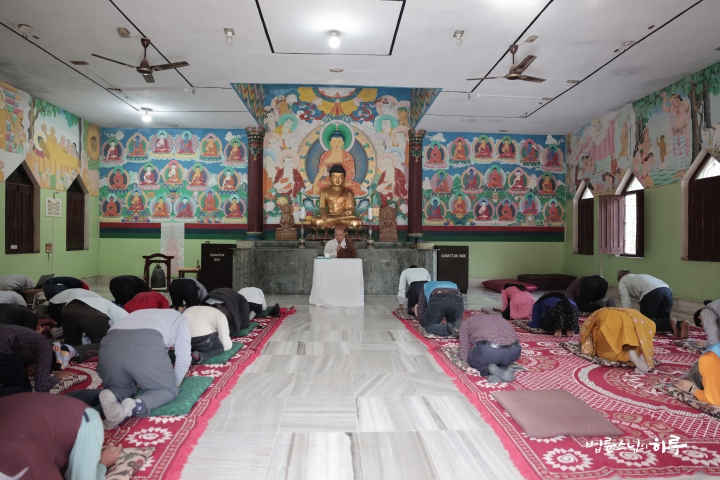
Sunim then discussed several issues regarding India JTS. He first emphasized the need to restructure Sujata Academy’s operations with a focus on financial independence to prepare for India’s rapid changes.
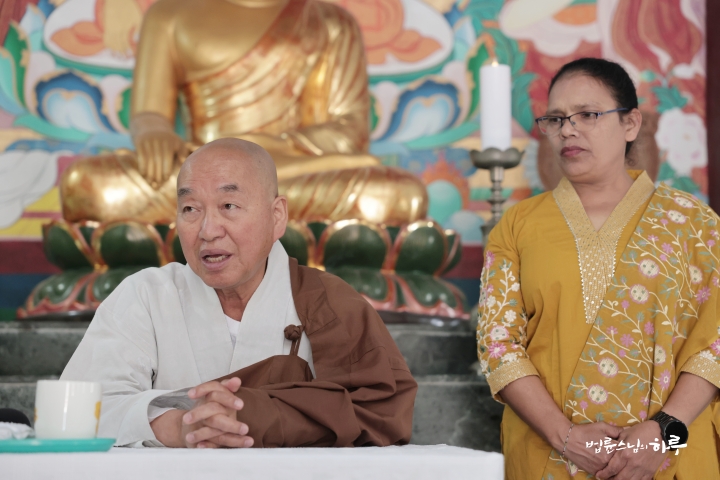
“Although I couldn’t take ample time to look around the villages in detail, I did make a round of the neighborhoods around Dungeshwari. Changes are happening rapidly everywhere. Yesterday, I toured from Gaya to Bodh Gaya and on to Dobhi, and not only were roads being improved, but buildings were continuously being constructed in the surrounding areas. If India continues to develop at this pace, the appearance of the region will change dramatically within the next 10 years.
We Must Achieve Self-Sufficiency in India Within 10 Years
To prepare for these changes, we need to establish an operational system that aligns with social trends. Currently, most of our operating funds come from support from Korea, but in about 10 years, we should be able to secure school operating expenses within India. The easiest method would be to convert to a private school. While financial independence would be possible by improving the school’s quality and charging tuition, this could reduce benefits for the poor. Also, while the Gaya and Bodh Gaya areas will develop rapidly, it doesn’t seem likely that the Dungeshwari area will reach the same level of growth within 10 years.
Therefore, separate from operating Sujata Academy, we need a plan to establish a stable source of income. We must start preparing now for how JTS will secure finances within India. First, we should separate school operations from foundation operations, with the foundation handling corporate management duties while more systematically researching financial security measures.”
Sunim then discussed the need to strengthen technical education for Sujata Academy graduates’ career paths and reconsider operating a technical school.
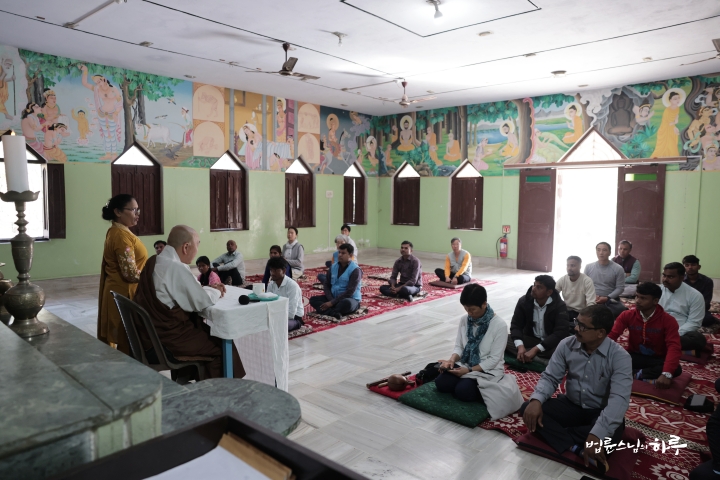
“I think we now need to consider the career paths of Sujata Academy students after they graduate from middle and high school. Even with a university degree, finding employment isn’t easy, and realistically, most finish their education with middle or high school graduation without going to university. Even if they do graduate from university, there aren’t many clear career paths besides becoming civil servants, and becoming a civil servant is also not easy.
We Must Now Teach Children Technical Skills
Meanwhile, the Indian economy is growing rapidly, and there will be a great need for skilled technical labor in the future. However, most people tend to avoid ‘labor’ once they’ve studied. But India’s future society will require not simple labor, but labor with technical skills. For example, building construction might seem like something anyone can do, but actually constructing a proper building requires advanced skills.
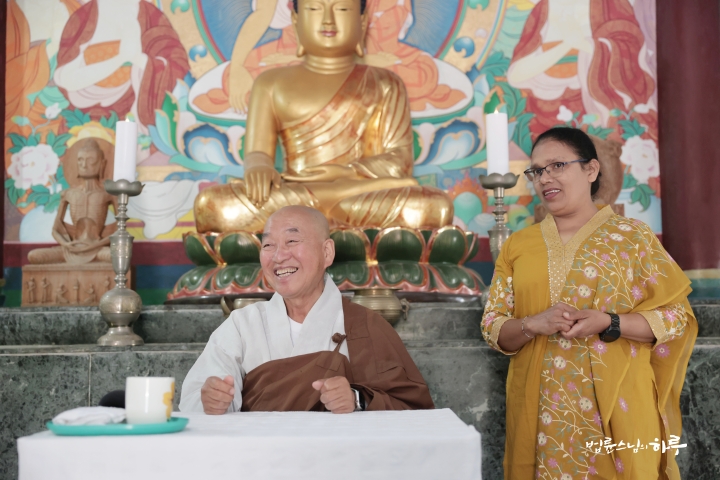
So first, if any of you have technical aptitude, you need to learn skills yourself. Second, you should teach those skills to students. For example, before tying rebar and pouring cement, you need to create a wooden frame on the outside. This carpentry work of making formwork is a very highly paid occupation in the United States, where carpenters’ salaries are higher than teachers’ salaries. This shows how valuable technical labor is.
However, even in developed countries, younger generations are showing a tendency to avoid technical labor. In Korea too, many students want to work with computers or in cafes, but few want to do technical work. As a result, even fixing something small costs a lot because there are no technicians. Moreover, since most work nowadays is done with machinery and equipment, simple labor alone isn’t enough. Carpenters cut wood with machines, and even driving screws is done with machines. Ultimately, we need to open paths for children to learn these skills and find employment in technical fields.
In the future, there will be a construction boom here in India, and skilled workers in the construction field will be greatly needed. If you go out to the main streets of cities, don’t you see new buildings being cleanly constructed that look different from before? Rather than having young people who graduate from Sujata Academy just focus on civil service exams, we should enable them to learn skills and work. In fact, we anticipated this trend 20 years ago and operated a technical school. However, we had to stop after just 2 years due to insufficient resources. Now we need to consider operating that technical school again.”
Finally, when Sunim asked if there were any questions, one of the Indian staff members raised the issue of village land problems. He explained that brokers hired by former landlords were trying to reclaim village land that had been distributed by the government in the past, and they were even going from house to house making threats. He said that while he had taken the lead in opposing this along with the villagers, after refusing, the situation escalated to police reports and court cases, leaving him isolated within the village.
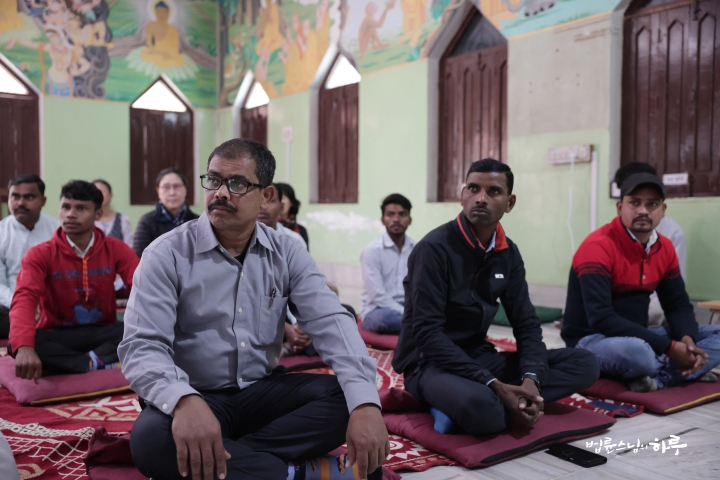
Sunim responded to this issue.
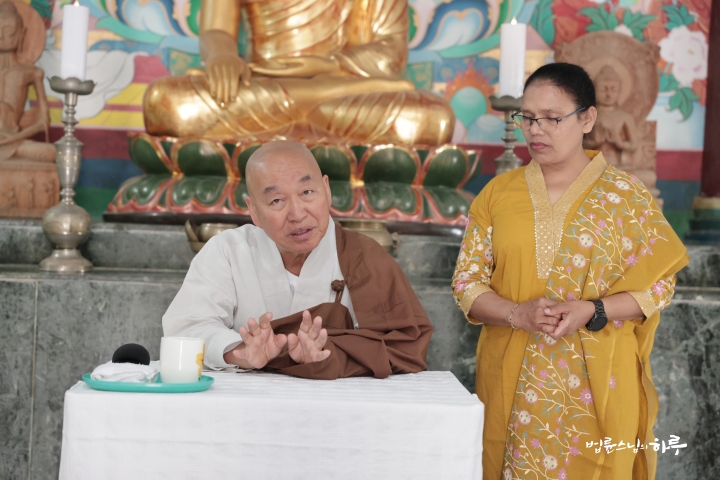
“JTS’s principle for developing villages in the Dungeshwari region is not to make residents wealthy, but to enable them to live clean and comfortable lives even if they remain poor. However, as surrounding areas develop, land prices here continue to rise, and this is an unavoidable problem. In the past, people didn’t pay much attention to land because prices were low, but as land prices rise, disputes are beginning to occur. Disputes will continue to arise, even between siblings.
To Preserve a Village That Is Poor but Clean and Comfortable
I’ve been saying since 30 years ago that land prices would rise, so if you sell, you won’t be able to buy it back later. But people didn’t listen to me and sold everything, so now there aren’t many people in the village who own land. If you look around, foreigners have come and bought it all, or people from Gaya and Patna have bought it. That’s why I’m saying we should at least protect the forest in Bangalbigha village first.
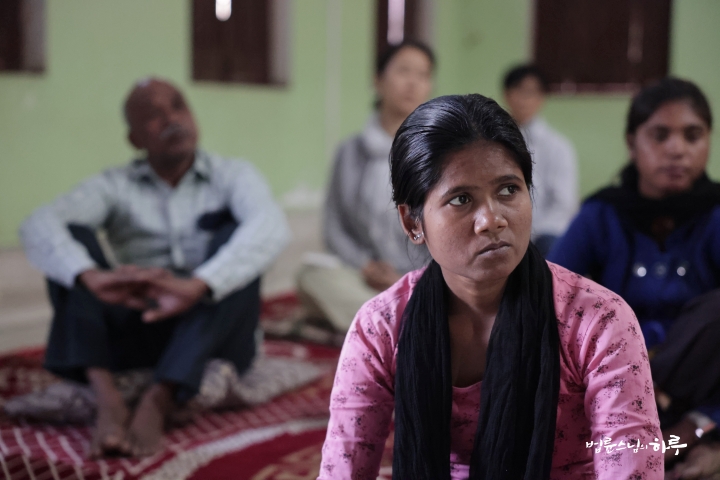
In the past, this land belonged to the landlord class, but the Indian government forcibly distributed it, telling them to give it to the untouchables. Now the former landlords are going to court trying to take the land back. So you need to discuss with the villagers and respond to this issue collectively. If necessary, you should get help from a lawyer. As village development progresses, these problems will continue to arise. Right now, disputes have started in Jagdishpur and Durgapur villages because they’re becoming tourist areas first, but similar situations will occur in other villages too.”
Sunim advised that JTS should not directly intervene in village disputes but should quietly support the residents’ interests.
After finishing the conversation and saying farewell to the Indian staff, Sunim departed for Bodh Gaya Airport at 10 a.m.
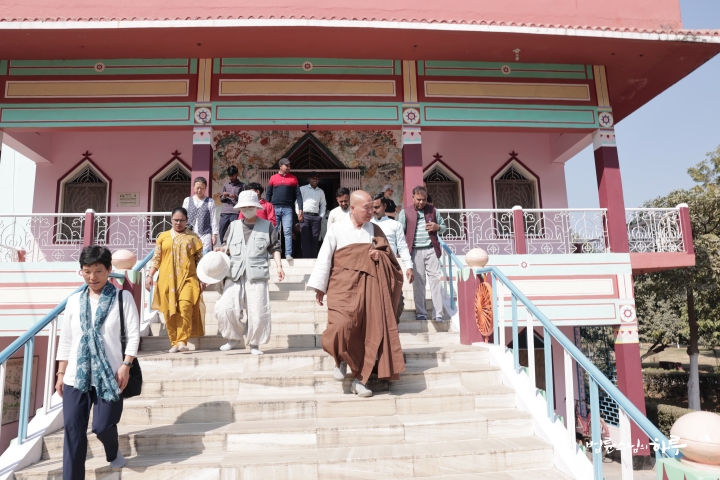
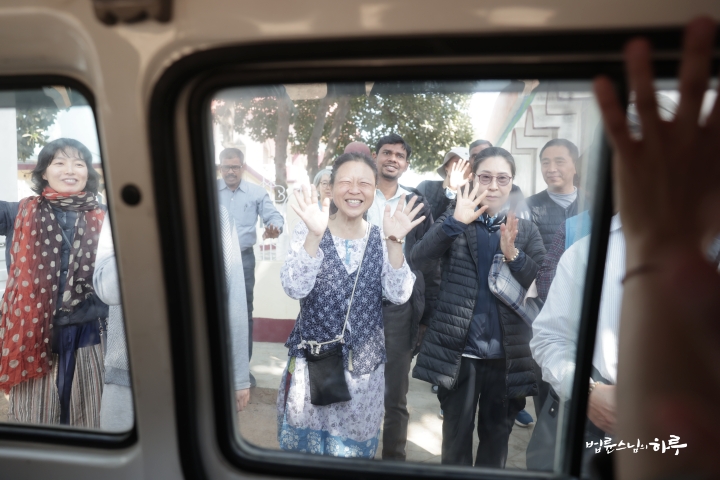
After saying goodbye to Dharma Teacher Bogwang (보광 법사) and Priyanka, who had smoothly supported all activities at Sujata Academy during the week, they entered the airport.
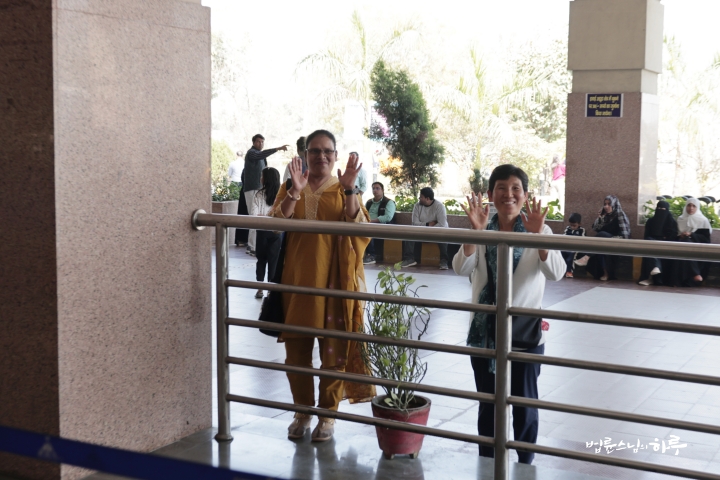
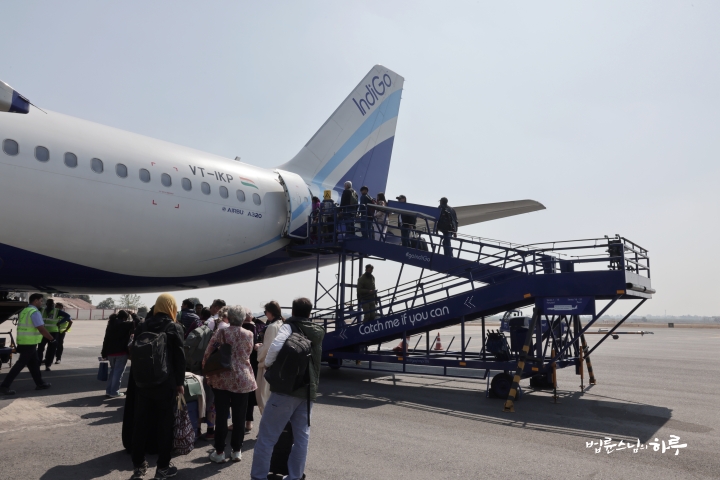
The plane took off from Bodh Gaya Airport at 12:15 p.m., flew for an hour and a half, and landed at Delhi Airport at 1:45 p.m.
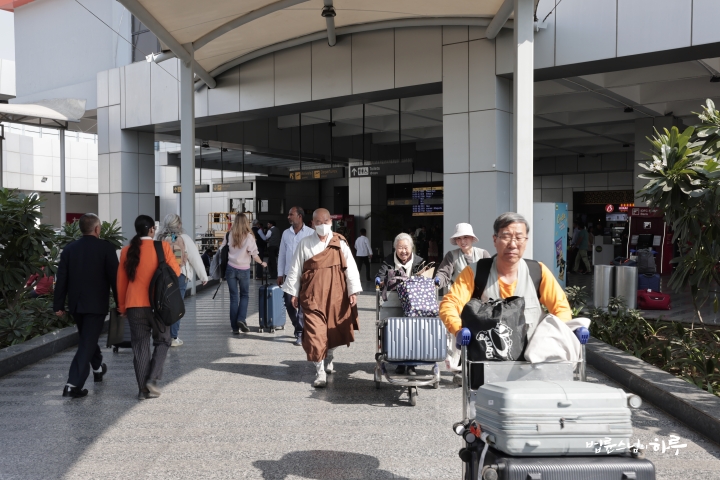
Sunim and his companions had a simple lunch at the airport and headed to the boarding gate early. After settling down inside the airport, he worked on manuscript editing and rested until it was time to board the plane.

The flight departed from Delhi Airport at 7:50 PM and headed toward Incheon Airport. After a six-hour flight, it is scheduled to arrive at Incheon Airport at 6:05 AM tomorrow.
Tomorrow, immediately upon arriving in Korea, Sunim will travel directly to Jungsaengsa Temple (중생사) in Busan (부산) to visit and offer New Year’s greetings to his teacher, the Venerable Bulsim Domun (불심 도문 큰스님).