I Feel More at Peace After Meditation, but Am I Just Running Away?
February 15, 2026: Visit to Bodh Gaya, Bangladesh Temple, and Meeting with Venerable Priyapal
Hello. Today, Sunim traveled to Bodh Gaya and visited the Mahabodhi Temple, the Bangladesh Temple, and Venerable Priyapal’s temple, while also exploring the surrounding areas.
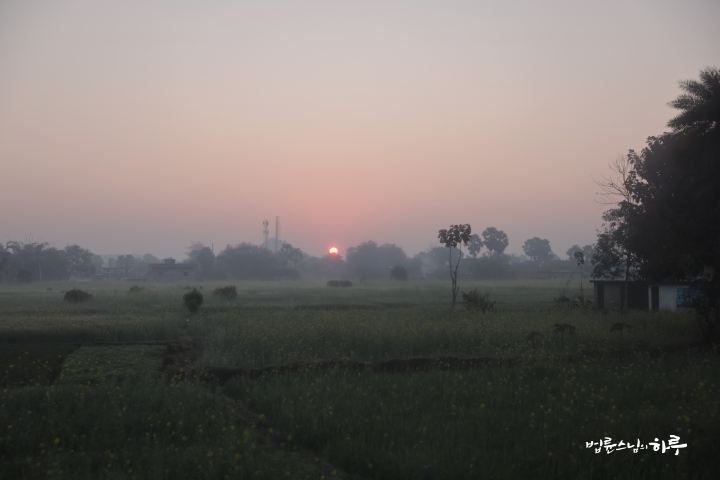
After morning practice and meditation, Sunim spent the morning editing manuscripts before preparing to depart for Bodh Gaya. Today, Dharma Teacher Bogwang (보광법사님 ,Director of JTS India), Priyanka (interpreter), and Amitabh (external relations officer) accompanied Sunim throughout the day.
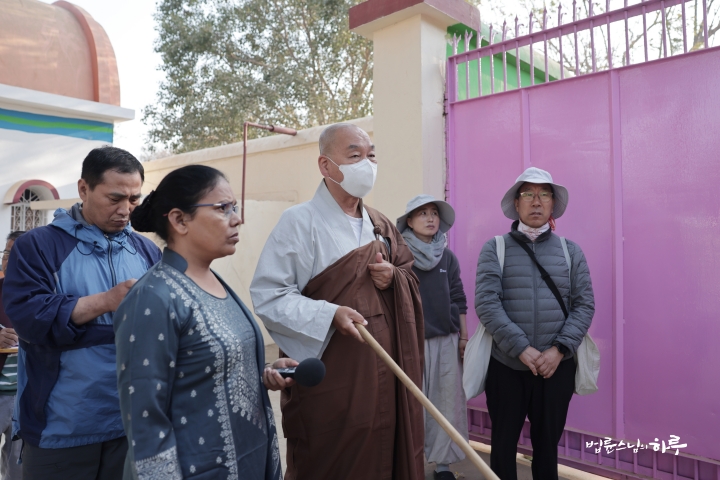
At 8 AM, Sunim spoke to Dharma Teacher Bogwang at the school gate.
“We need to think about how the school should change for long-term sustainability. Accordingly, we should consider how to modify some of the school facilities and determine what can be opened to the public.”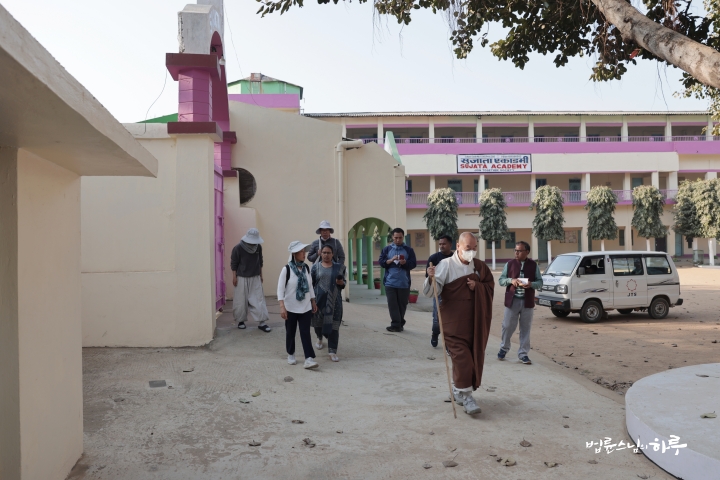
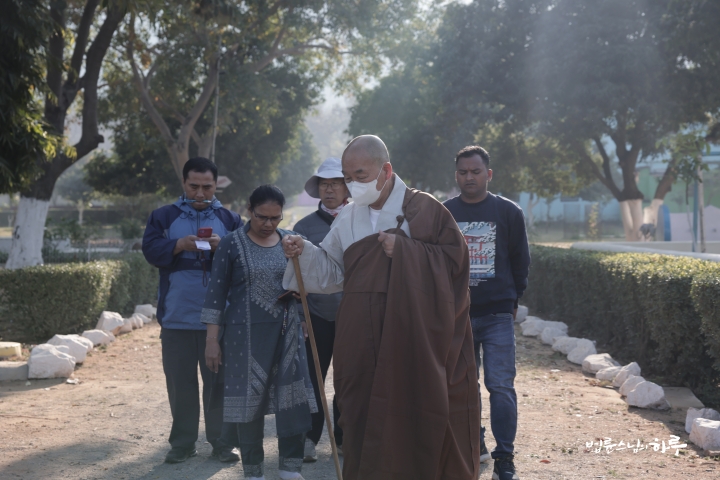
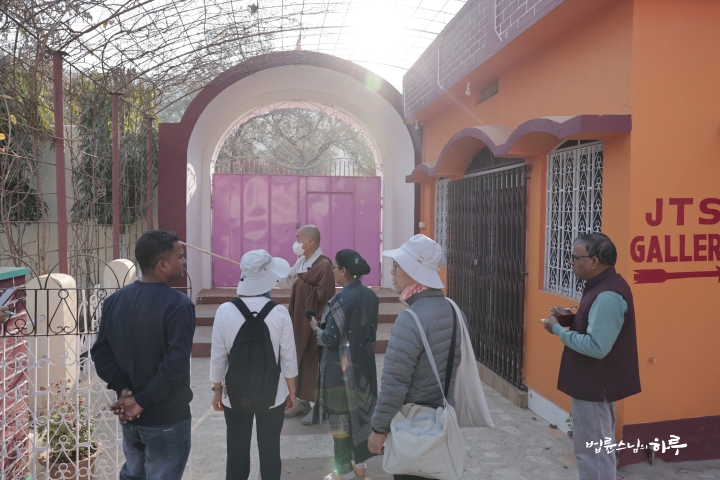
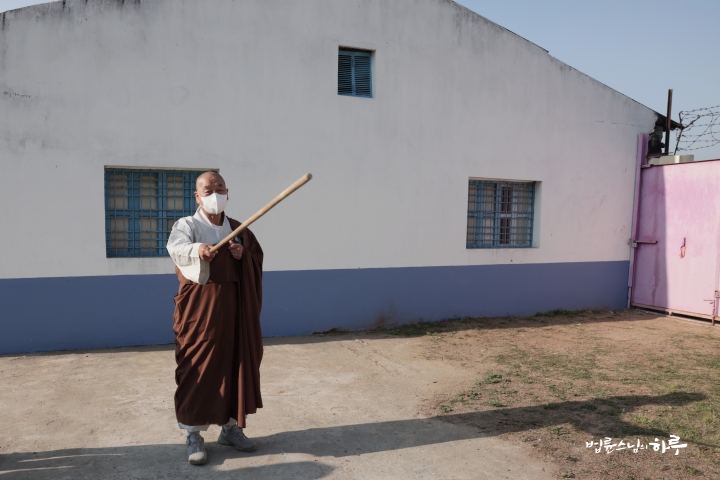
Sunim toured the entire area from the school gate to the JTS Center and Siddhartha Dormitory, discussing which unnecessary facilities should be removed and how new facilities should be constructed in the future.
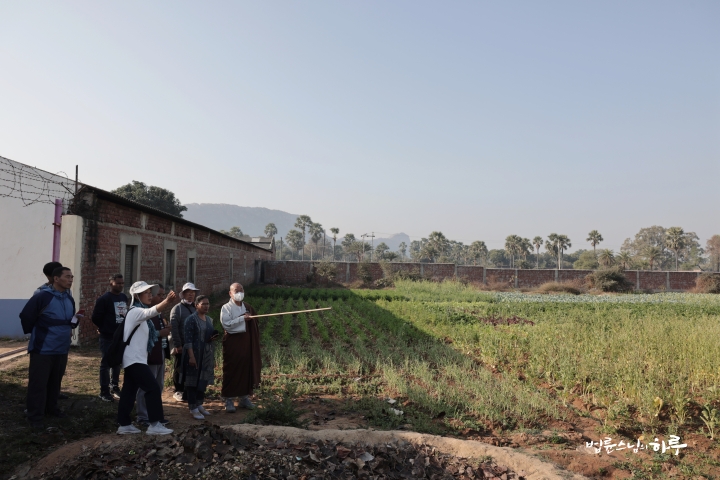
They also visited the farm outside the school.
After touring the entire school, they headed to Bodh Gaya. On the way, Sunim said:
“In 10 years, India’s economy will be several times larger than Korea’s. By then, JTS India and Sujata Academy will be able to secure funding within India. From now on, we need to explore what preparations are necessary for JTS India to achieve financial independence within the next 10 years.”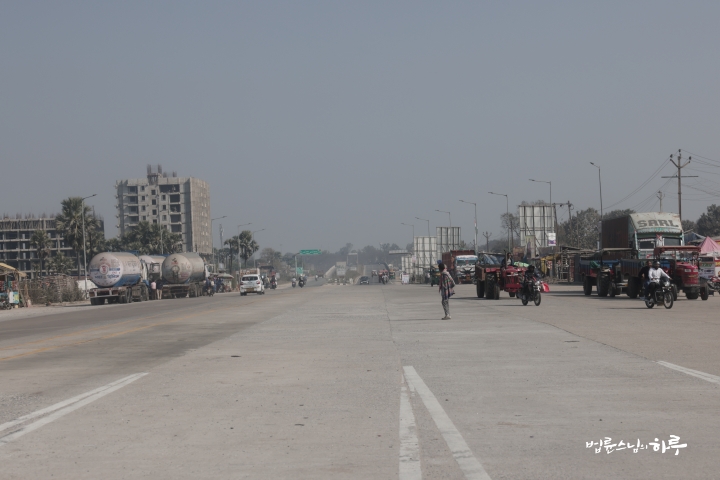
On the way to Bodh Gaya, they stopped at a newly opened mart. It was a large, clean mid-sized mart that hadn’t existed before. However, Amitabh’s explanation was different.
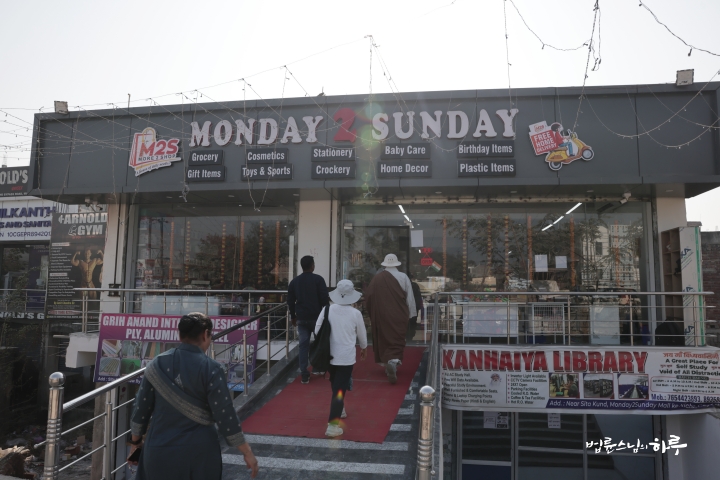
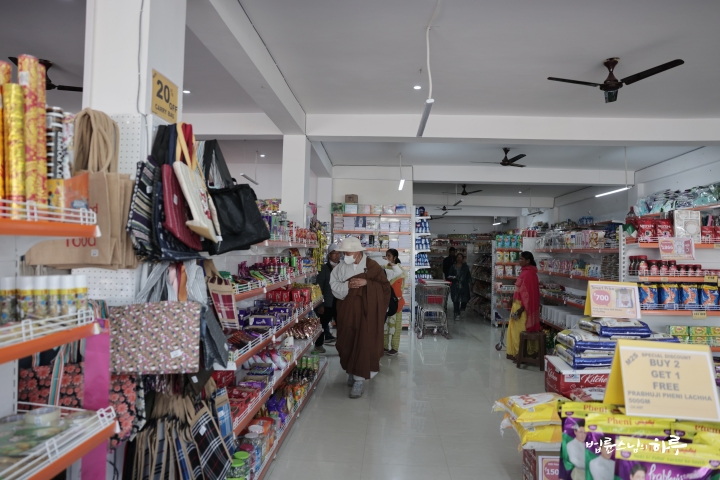
“This size mart isn’t particularly large. Recently, many large and excellent stores have been opening in the Bodh Gaya and Gaya areas.”
In the car, Sunim shared thoughts about the future direction of Sujata Academy and JTS activities.
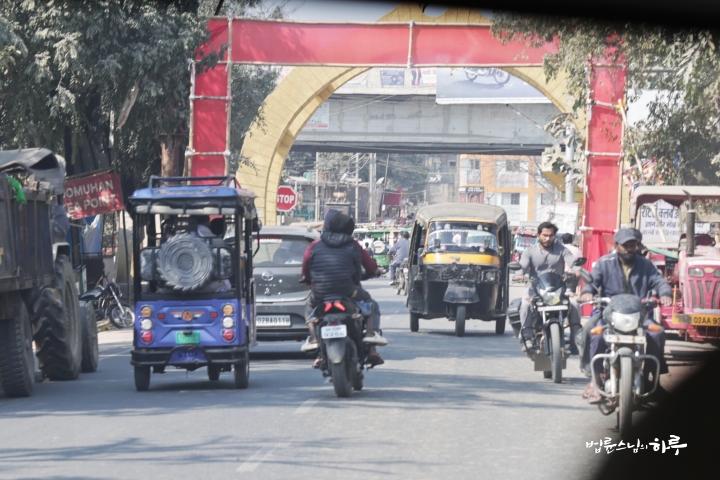
They arrived in Bodh Gaya at 11 AM. They visited to meet the head monk of Mahabodhi Temple, but he was absent, so they moved to the Bangladesh Temple.
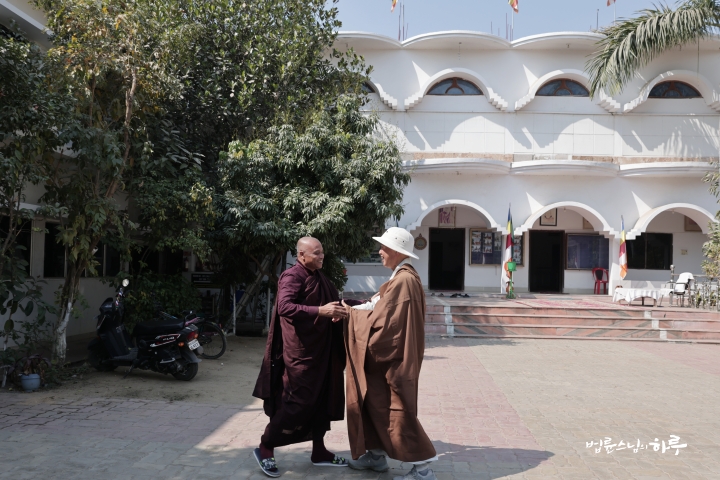
The head monk of the Bangladesh Temple warmly welcomed Sunim.
“Venerable, welcome!”
“How have you been?”Sunim also greeted the head monk.
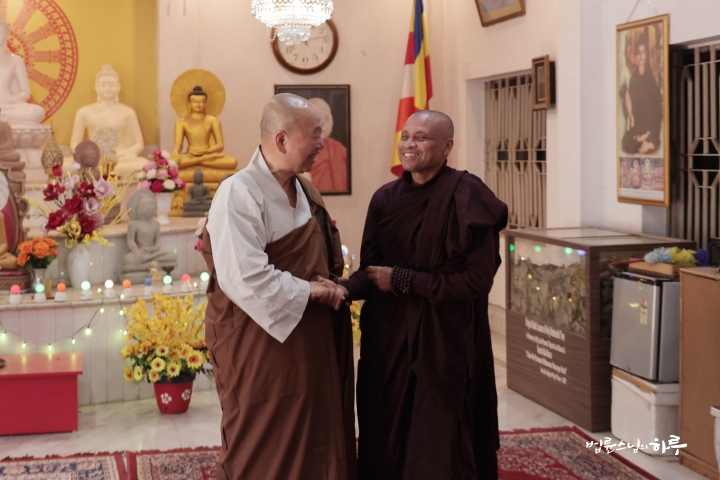
After exchanging updates, Sunim presented a donation and books to the head monk.
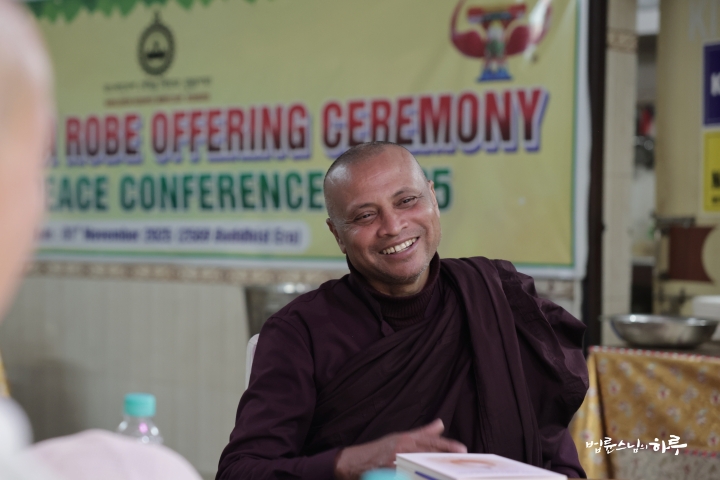
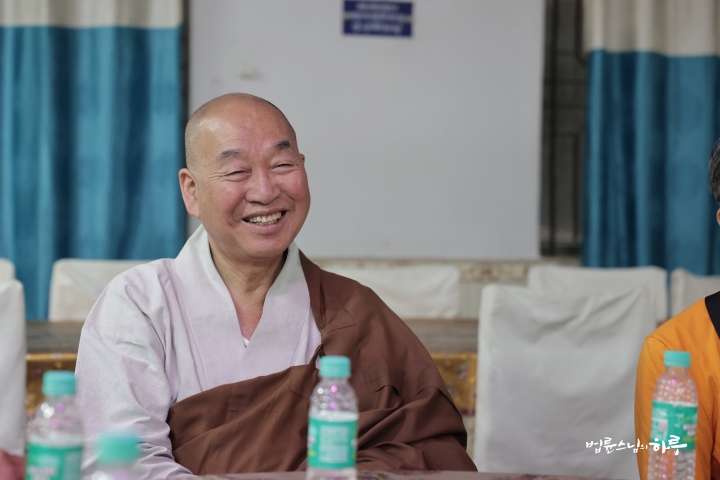
Next, they visited the temple of Venerable Priyapal, Chairman of JTS India.
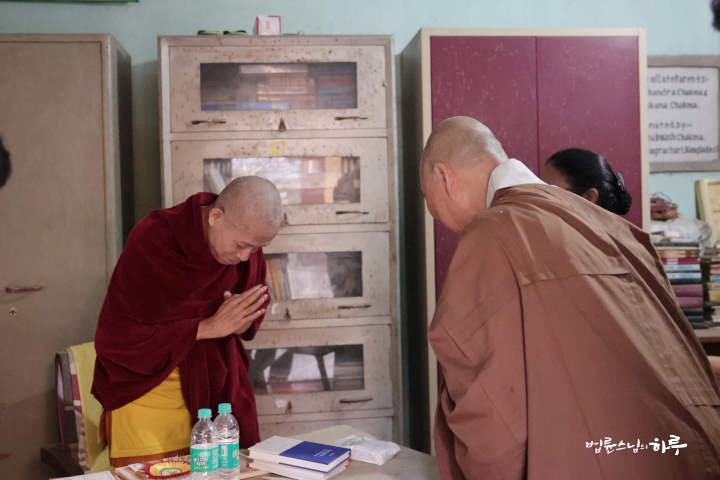
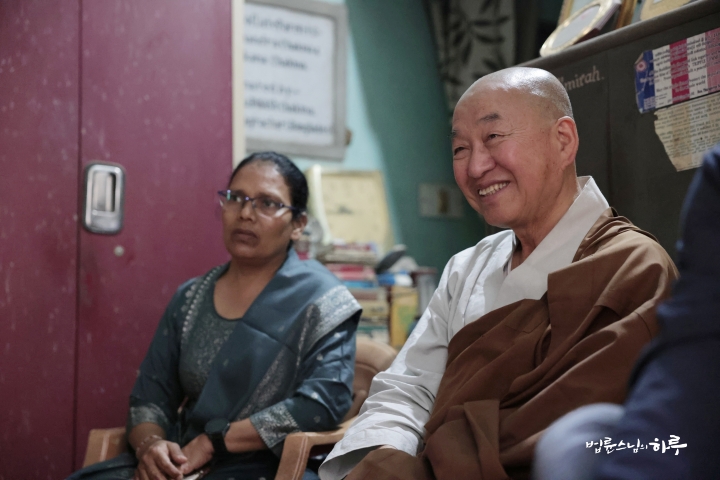
Last year, JTS India obtained FCRA (Foreign Contribution Regulation Act : 해외기부금 규정)) approval from the government. Sunim asked Venerable Priyapal, who has deep knowledge of law, to ensure that JTS’s corporate management and operations comply with Indian laws and procedures going forward.
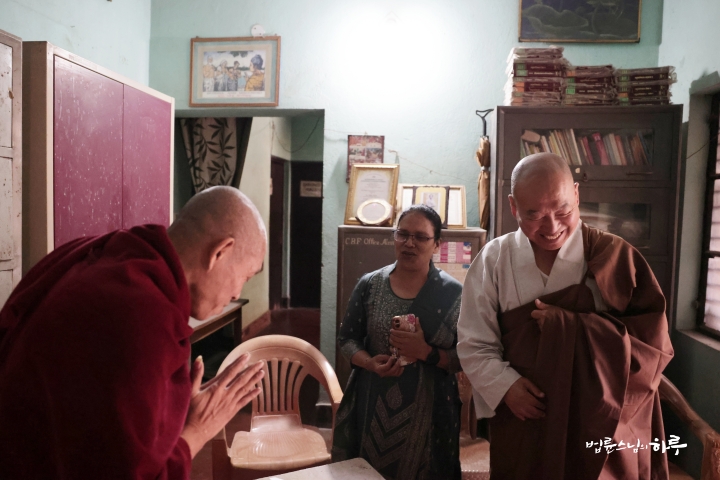
Sunim presented a donation and books to Venerable Priyapal, then moved to a hotel operated by Rahul, Vinay’s nephew.
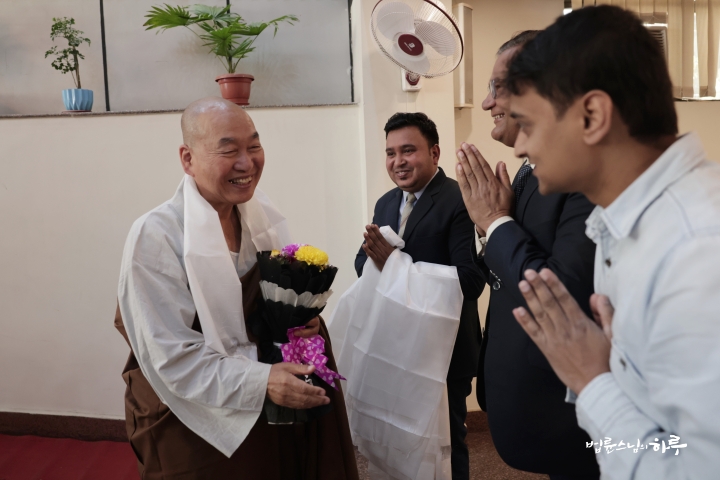
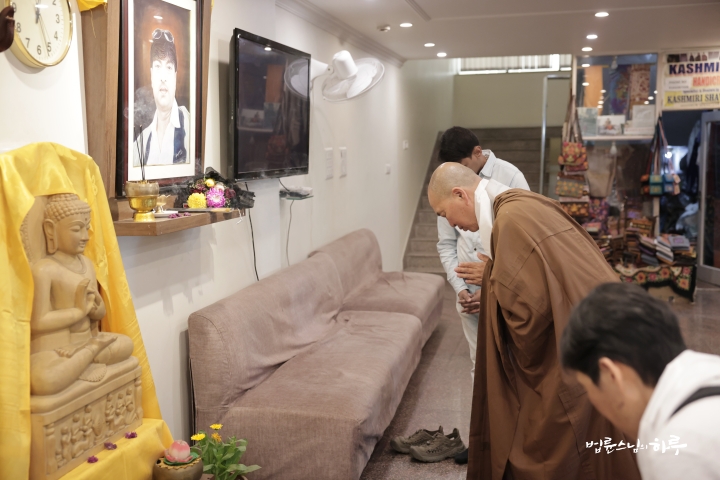
Vinay, who now lives in Japan, helped establish Sujata Academy 32 years ago. Starting this year, he has joined as a member of the JTS board. Today, Vinay invited Sunim and the group to have lunch at his nephew’s hotel.
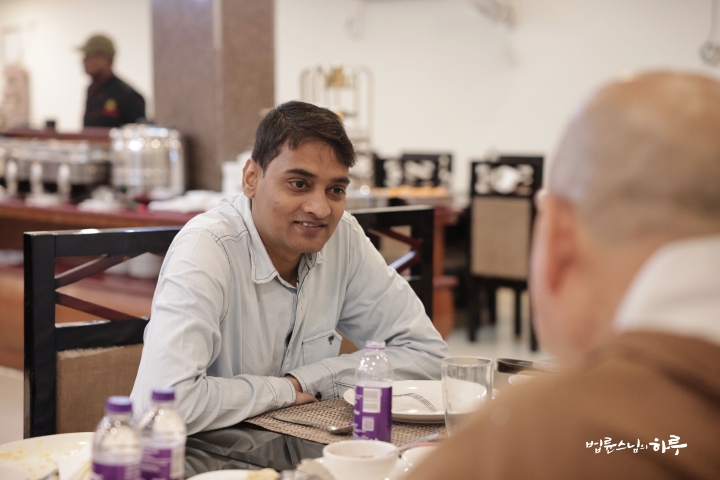
“My uncle really wanted to speak with you, Venerable. May I connect you?”
After finishing the meal, Rahul connected them for a phone call with his uncle Vinay.
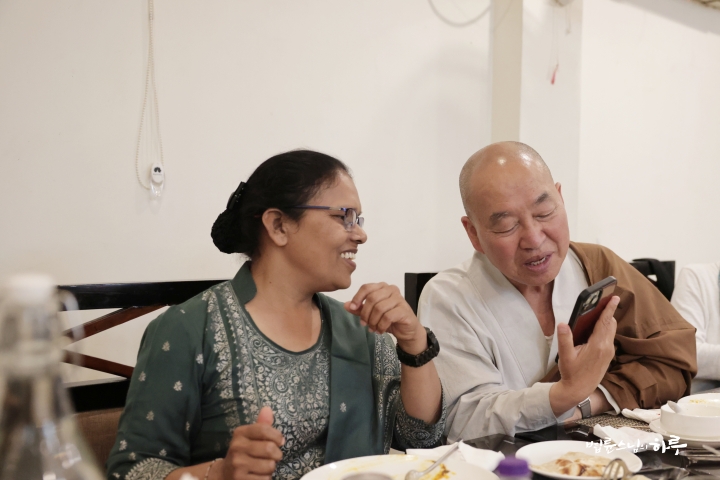
“Thank you. I’m so happy to hear your voice like this. I’m sorry I haven’t been in touch for so long.”
Sunim and Vinay had a warm conversation, asking about each other’s well-being. After the call, Sunim said:
“This is the first time I’ve heard Vinay’s voice in 30 years. When we first started the school, I lived in Dungeshwari village, but Park Ginan (박 지나) found it difficult to live there. At that time, Vinay would carry Park Gina on his motorcycle every day, traveling back and forth between Bodh Gaya and Dungeshwari to help her. That was already 30 years ago.”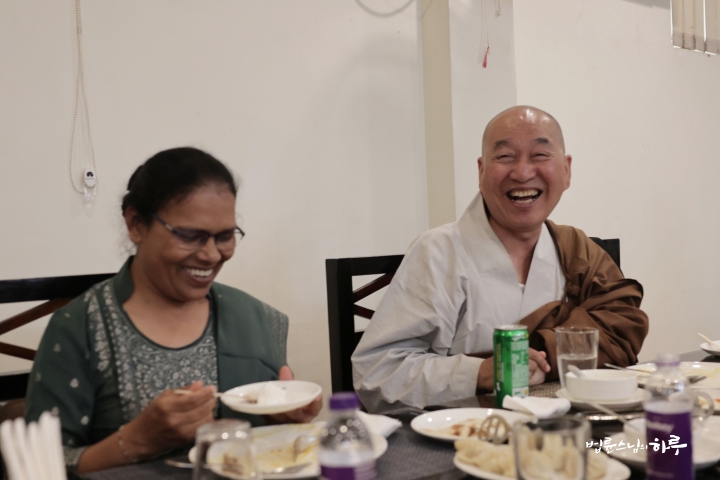
After finishing the meal, Sunim decided to briefly visit a hotel that Mr. Vinay was constructing nearby on the way to their next destination.
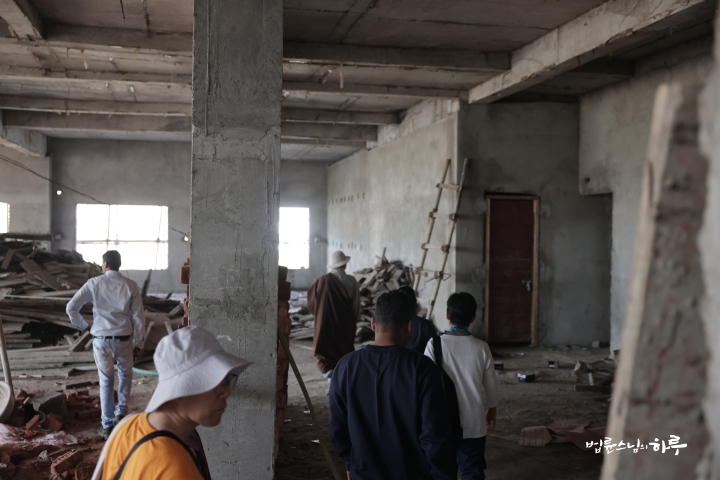
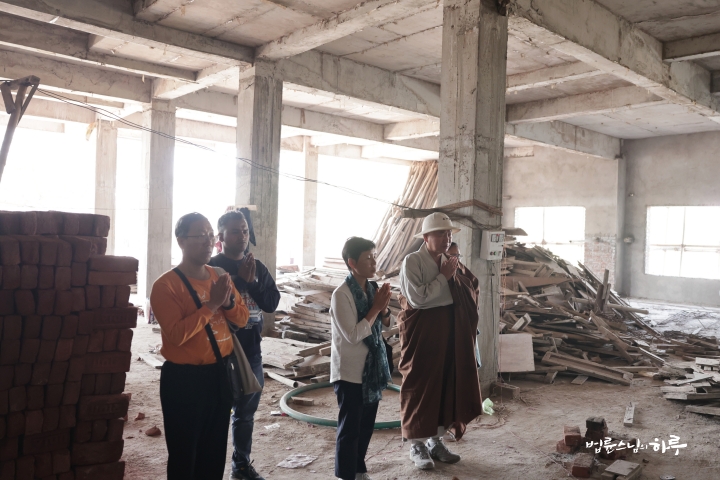
Sunim offered a brief blessing and greeted Mr. Rahul.
“Today’s meal was delicious, and the building looks great. Thank you.”“Yes, goodbye. I wish you good health.”
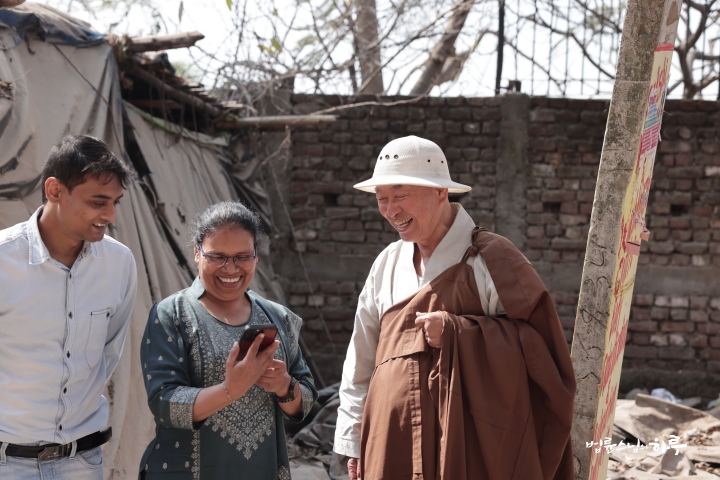
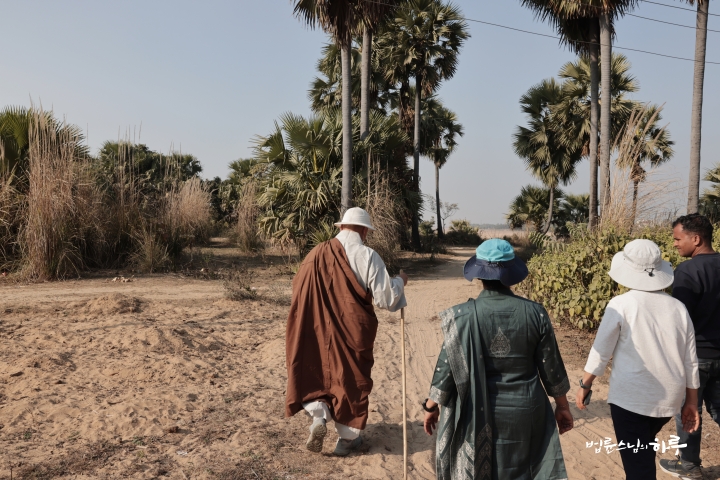
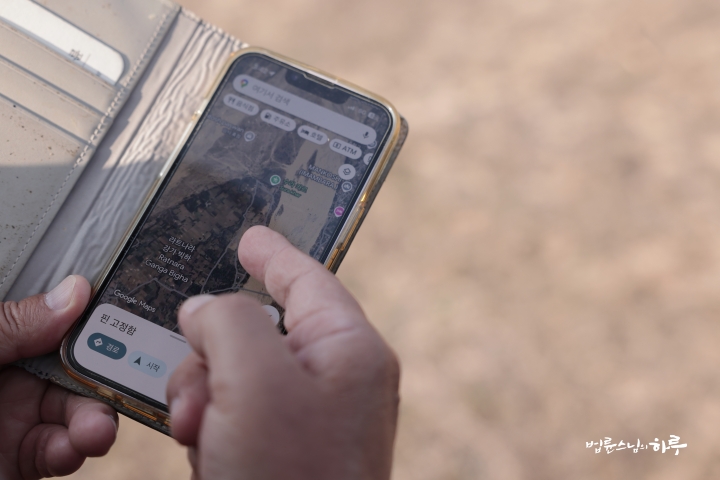
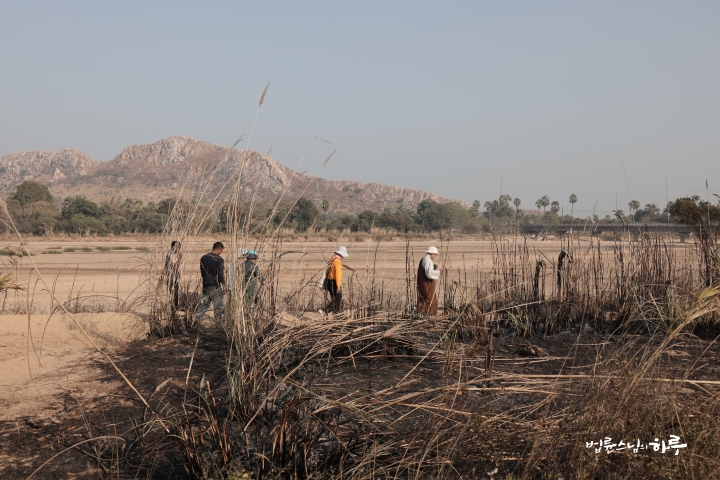
Sunim visited a large vacant lot in the Dobhi area, about 30 minutes from Bodh Gaya. The vacant lot was spacious, which was good, but it was far from Dungeshwari.
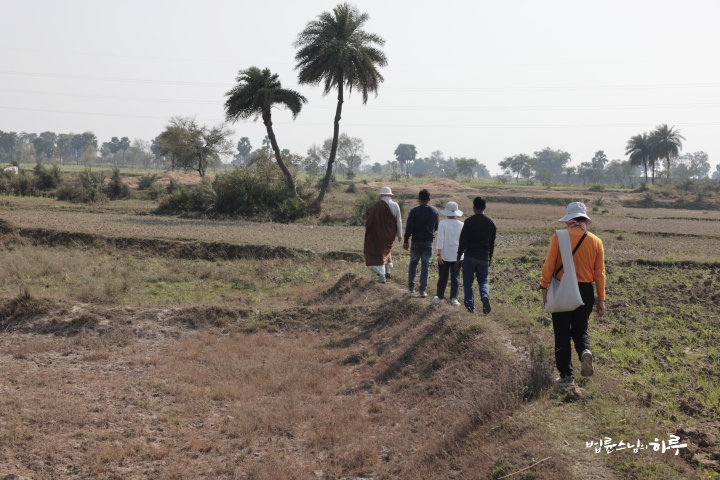
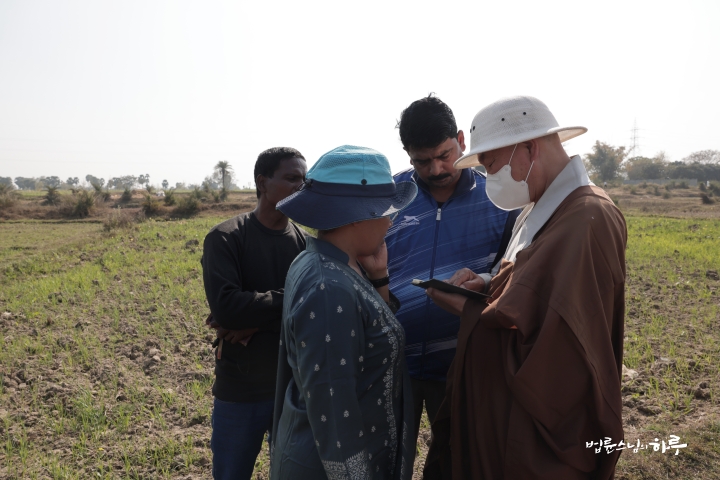
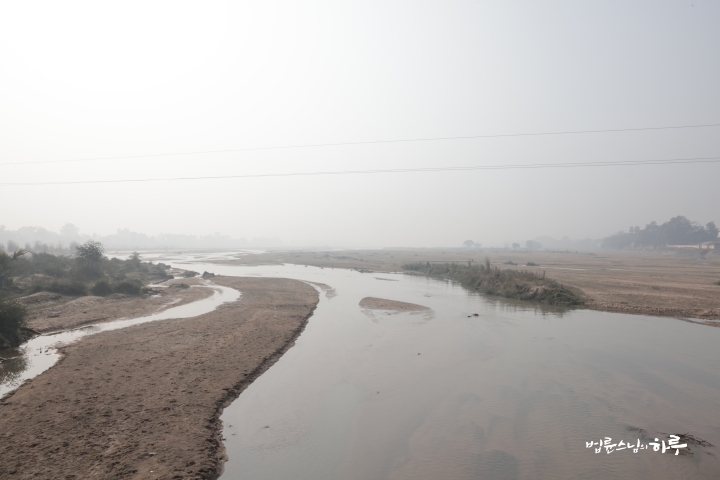
Moving near the Niranjana River, Sunim surveyed another vacant lot. Looking at the riverbank where sand was blowing, Sunim spoke to Mr. Amitabh.
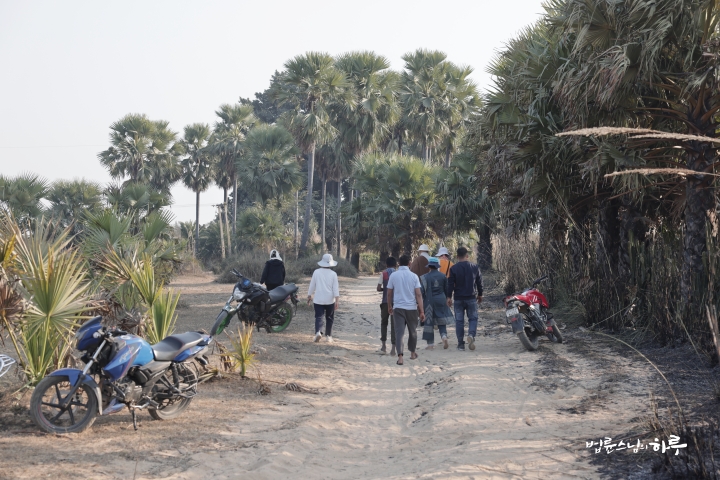
After completing the survey and returning to the school, it was 4:25 PM.
“I was planning to look around the school more, but I’m not feeling well right now. So I’d like to wrap up today’s survey and have a brief meeting.”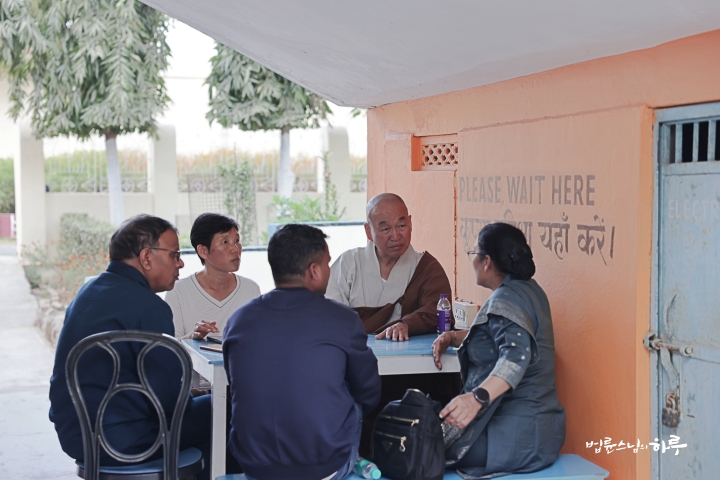
Sunim held a meeting with Dharma Teacher Bogwang and Mr. Amitabh to organize the content of today’s survey.
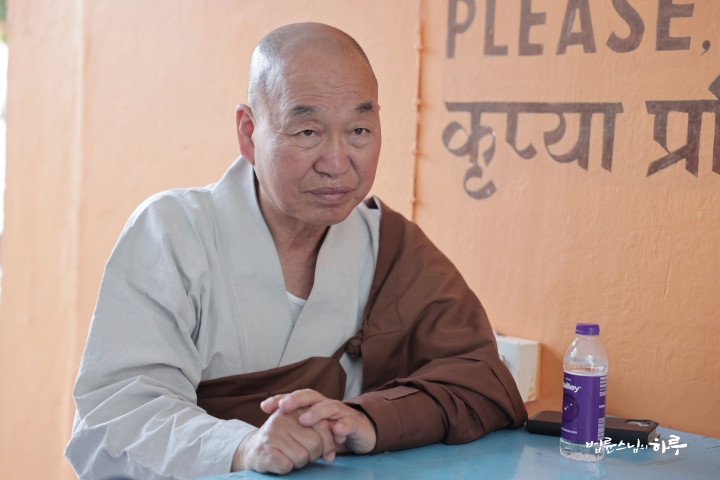
“But it might be difficult for disabled people to drive rickshaws.”
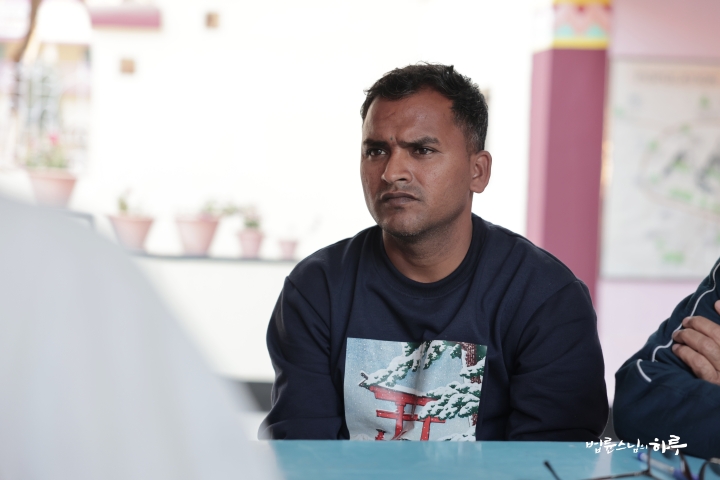
“Yes, I understand.”
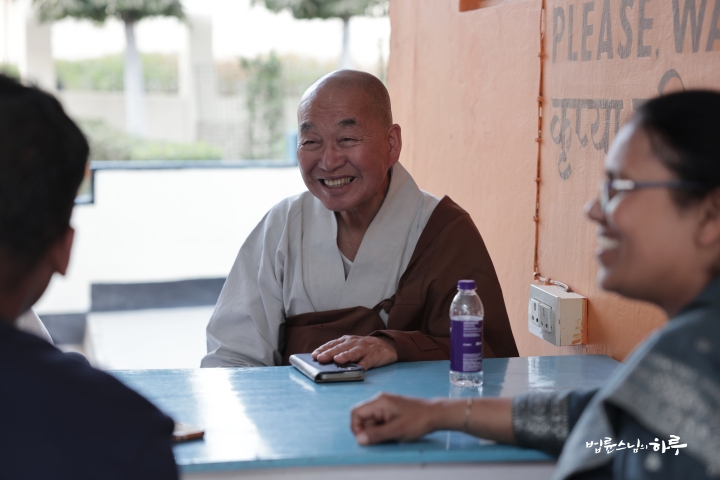
“It’s fine.”
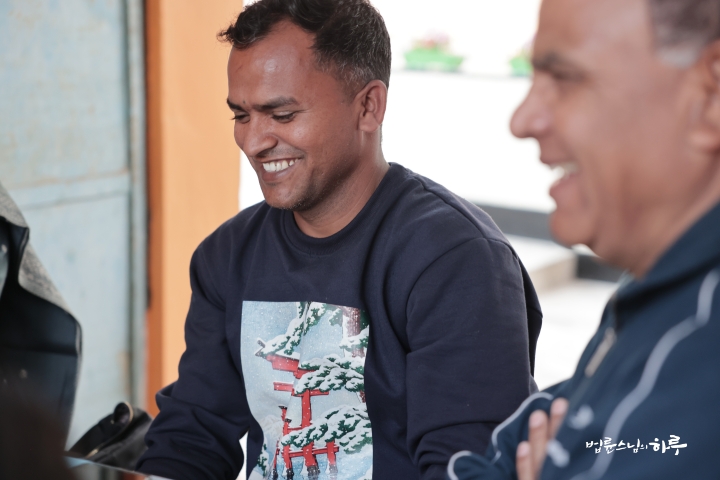
Throughout the day, Sunim discussed new directions and plans for JTS India, visiting and surveying potential sites for these projects. He then held meetings to prepare for this work and concluded today’s schedule by giving those working with him tasks to continuously think about.
With this, the schedule for reviewing JTS India projects has been completed. Tomorrow, Sunim will depart from Sujata Academy in the morning and travel to Korea all day.
Since there was no Dharma talk today, this post concludes with a dialogue between Sunim and a questioner from the Friday Dharma Q&A live broadcast held online at Sujata Academy on the 13th.
Meditation Has Made My Mind More Comfortable, but Am I Perhaps Running Away?
“It’s been two years since I started meditation practice. Thanks to it, my mind has become much more comfortable, but recently I’ve been experiencing sudden confusion. While I tell myself intellectually to ‘let go of attachments,’ my mind easily crumbles when I need to take on new challenges. I’m confused whether this is another attachment to the thought ‘I shouldn’t be attached,’ or if I’m just rationalizing my fears. In relationships too, while I say I’m trying to understand others, I seem to be avoiding necessary conversations and meetings. When doubts arise during meditation, I comfort myself saying ‘just be aware of it,’ but I also wonder, ‘Am I deceiving myself and avoiding things?’ I’d like to ask how to distinguish between ‘genuine practice’ and ‘avoidance,’ and what direction I should take in my practice in this situation.”
“If you’re doubting whether you’re comfortable or just complacent, then you’re in a state of complacency. Because if you were truly comfortable, doubt couldn’t arise. For example, if I’m helping someone and I doubt, ‘Am I really helping properly?’ then I’m not fully helping. Because if I were truly helping, doubt couldn’t arise. If you’re meditating and doubting, ‘Am I meditating properly?’ that proves you’re not meditating properly. To tell you specifically what you’re doing wrong, I’d need to hear more from you, but since you say you have doubts, I can say first that ‘you’re not doing it quite right.’ If you view meditation as a means of complacency or avoidance, such doubts will arise. If you have the right perspective on practice, such doubts won’t arise.”“Could you please explain more about the perspective you just mentioned?”
“As you said at the beginning, ‘having doubts means you’re not doing it properly.’ Just like if you doubt ‘Am I being honest right now?’ you should see that as not being honest, and if you doubt ‘Am I really loving?’ you can know you’re not truly loving. Because if your mind is truly honest or loving, such doubts don’t arise. In a truly comfortable state, doubts like yours don’t arise. Do you understand?”“I’m not sure if you’re saying I lack confidence, or if you’re saying something else.”
“Just say ‘I am comfortable.’ That’s all. When doubt arises about whether you’re doing well or not, it’s a psychological phenomenon that appears when you’re not doing well. Confidence isn’t necessarily always good.”“Then what direction should I take my mind in going forward?”
“That depends on what you want. The direction differs depending on the destination.”“I originally had severe anxiety and received medication. Then the hospital said I could stop the medication, and that’s when I started meditation. After meditating for about two years, I could feel my anxiety decreasing, and people around me say I’ve improved a lot. But lately, I’ve suddenly wondered, ‘Am I using meditation as an excuse too much?’ This feeling doesn’t go away easily.”
“What’s your goal in meditating? Is it to resolve anxiety?”“Yes, that’s right.”
“Then you just need to be aware of your mind. If you’re comfortable now, just know ‘I’m comfortable now.’ If you’re anxious now, just be aware ‘I’m anxious now.’ It would be better if you could observe ‘Why am I anxious?’ But don’t think about it deeply. When you’re anxious, the priority is to be aware ‘Oh, I’m anxious now.’ Also, if you can observe ‘Why did this anxiety arise?’, ‘Is this the cause? Is that the cause?’ that’s even better. But if that becomes thinking, it’s like creating delusions. There’s no special path other than this. What do you think?”“Yes, I agree.”
“If your goal is to resolve anxiety, you don’t need to doubt ‘Am I doing well?’ Just be aware of your mind. If you’re not anxious and comfortable, that’s good. Whether you’re meditating or doing something else, if you’re comfortable, just enjoy that state. Conversely, if you’re anxious, just be aware ‘Oh, I’m anxious now.’ If you can go one step further and observe ‘Why am I anxious?’ and look at the cause, that’s good. This isn’t doubt but can be seen as ‘hwadu meditation.’ Or you can see it as ‘inquiry’ or ‘exploration.’ If you’re meditating in a quiet place and suddenly feel anxious, even though no one has picked a fight with you, when you focus on ‘What’s the reason for this anxiety?’ you’ll become comfortable before you know it.”“Yes, I understand. Thank you.”
“The means or methods you’re curious about aren’t actually important. What’s important is directly seeing your state right now, at this moment, in this place. Just be aware of your state right now, at this time, in this place.”“I understand. I’ll practice more diligently.”
“To do something, we need means and methods. Sometimes we need to follow certain steps. But if we get too caught up in those expedient means, it’s easy to forget our original goal of ‘What was I trying to do this for?’ If you started meditation to resolve anxiety like you did, you should always keep your purpose in mind by checking ‘Am I comfortable now?’ Worrying about ‘Am I meditating properly?’ proves that you’ve lost your original goal and are wandering. You’re wasting time. The ultimate goal of our practice is to move toward a state where the mind is not suffering and is free, that is, toward nirvana. But you said you initially started meditation to manage anxiety. Then at this stage, just be faithful to that goal. Don’t get sidetracked by questioning methods like ‘Am I meditating properly?’ but move forward without losing your original purpose while being aware of whether your mind is comfortable or anxious. The practitioner’s goal is to attain a state without suffering and with freedom, that is, ‘nirvana (열반)’.’ That’s why we always practice this ‘awareness (알아차림)
‘ in daily life. I hope you’ll continue to practice diligently without losing sight of this perspective.”