I Want to Distance Myself from My Husband Because He Makes Me Uncomfortable
Feb 11, 2026 - Weekly Dharma Assembly, Tour of Sujata Academy, India JTS Volunteer Meeting and Dharma Assembly
Hello. Today, Sunim conducted a live broadcast of the Weekly Dharma Assembly, toured Sujata Academy and Jivaka Hospital, and held a meeting and Dharma assembly with India JTS volunteers.
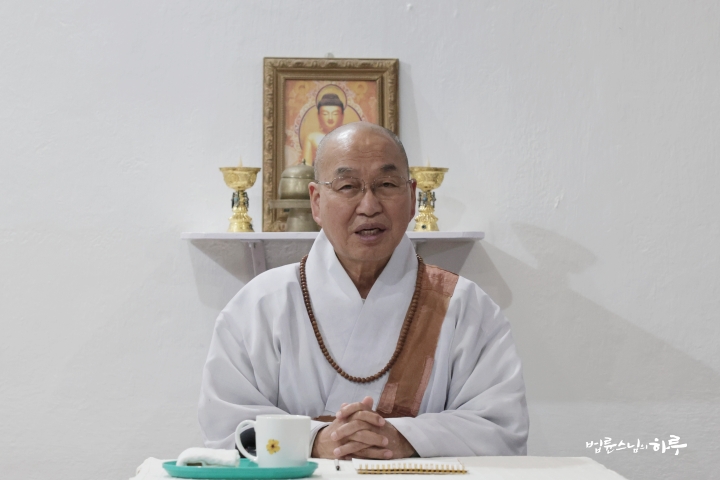
Sunim began his day with early morning practice and meditation. At 6:30 AM local time, 10:00 AM Korean time, he conducted a live broadcast of the Weekly Dharma Assembly. After all Jungto Society members connected to the video conference, Sunim gave his opening remarks.
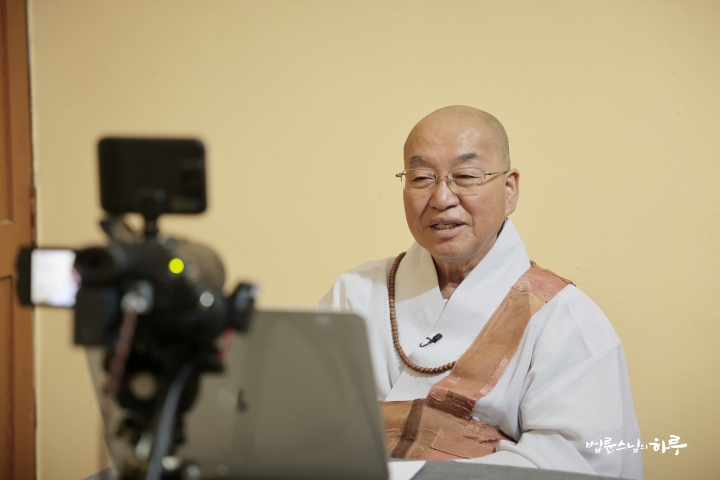
After watching a 15-minute video of the India pilgrimage together, the Dharma Q&A session began. Three people had submitted questions in advance. Sunim spent an hour answering questions and having conversations. One person sought Sunim’s advice on how to handle anger toward her children and husband, who don’t clean and live weakly, after returning from the India pilgrimage.
After Returning from the India Pilgrimage, I Dislike My Husband Even More
“I had a truly wonderful experience and learned so much during this India pilgrimage. However, when I returned home after the pilgrimage, the house was a mess, the children were whining, and my husband was still exactly the same as before, not meeting my expectations. After seeing Indian people living in such difficult conditions, facing my family like this made me feel irritated and angry. While I know intellectually that my husband is someone I should be grateful for, when I actually see his face, I dislike him and even think about becoming a monastic (출가) or running away from home (가출). When I participate in Jungto training or pilgrimages, I’m so happy to encounter new experiences and worlds, but when I return to daily life, I feel distressed for several days. Why am I like this?” 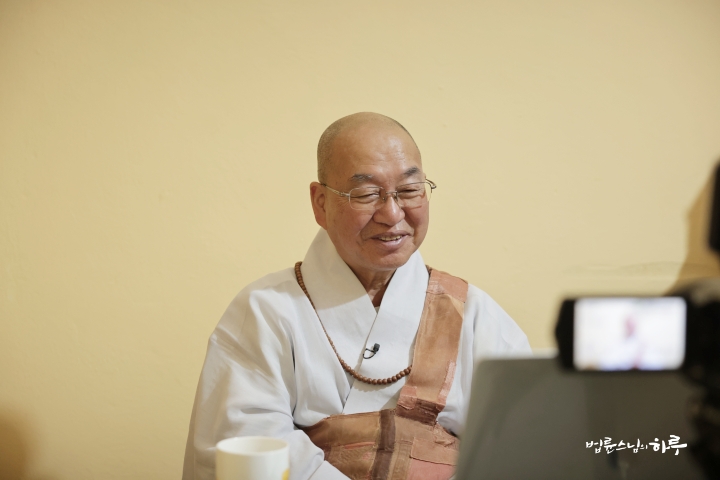
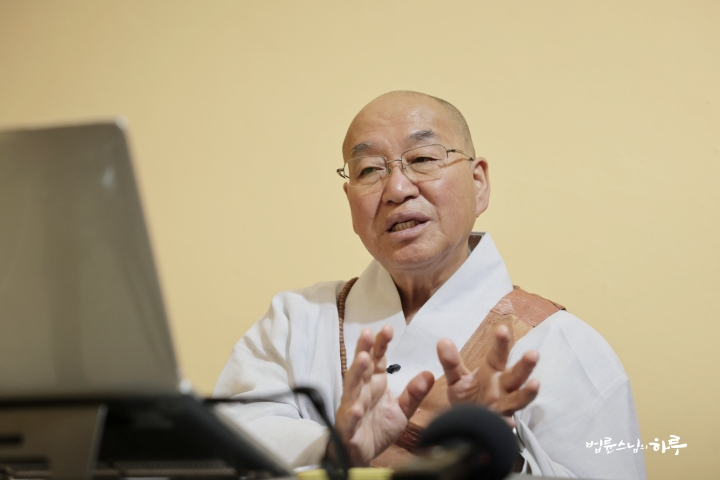
“Thank you.”
Questions continued one after another.
As an engaged volunteer facing the upcoming internal Jungto Society elections, what attitude should I have?
After becoming a team leader, decisions I agreed to affected the entire team and led to opposition from team members. How can I better reflect the collective will when expressing opinions?
They agreed to meet again at next week’s Jeongcho Prayer ceremony and ended the live broadcast. After finishing the Dharma assembly, Sunim visited the Sujata Academy classrooms starting at 9:30 AM.
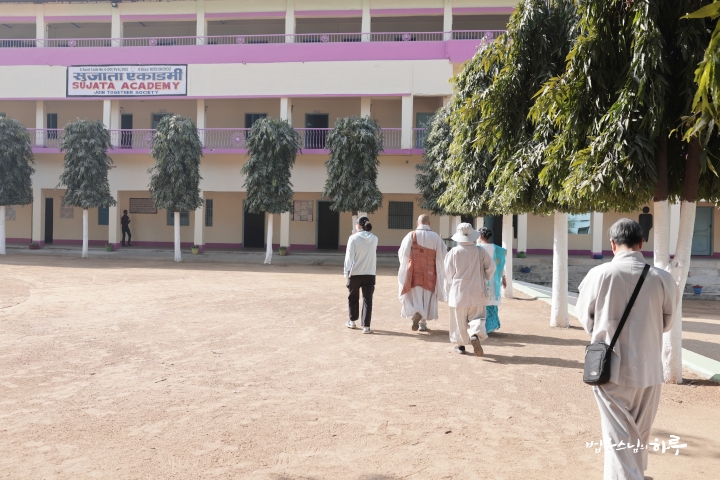
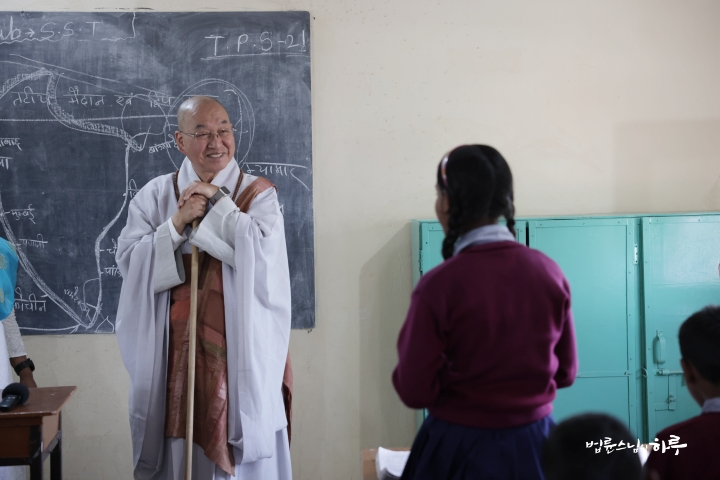
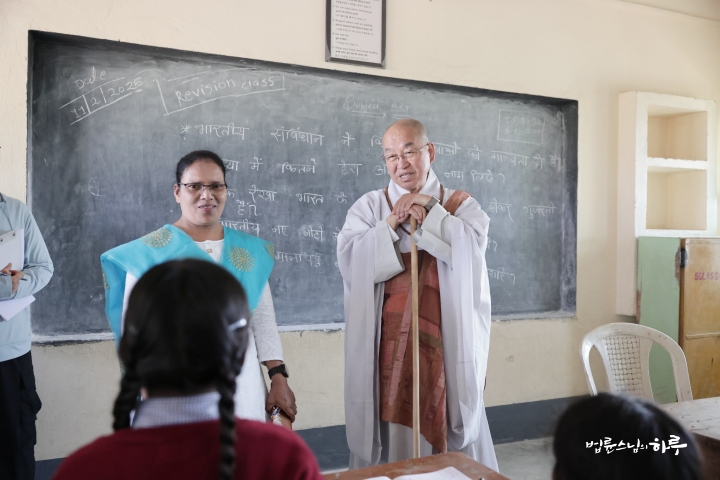
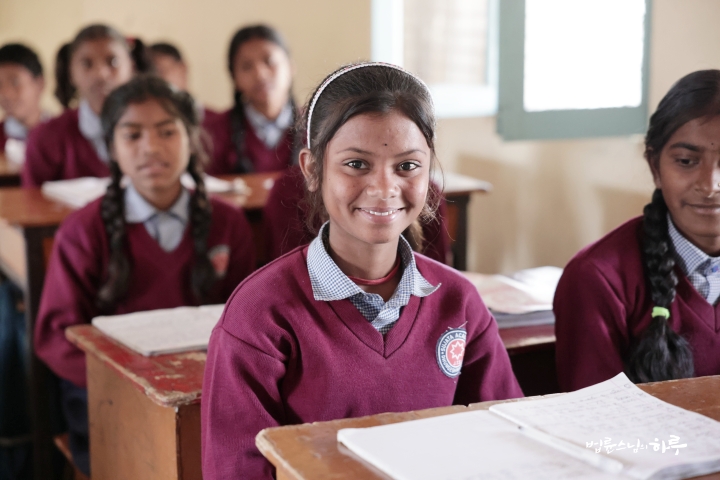
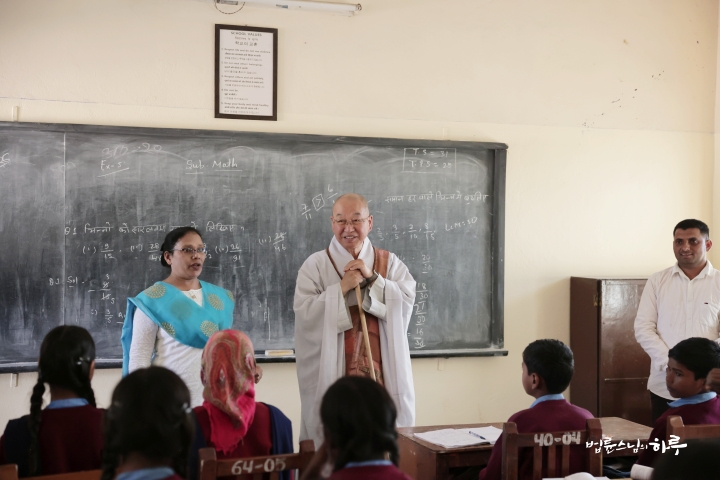
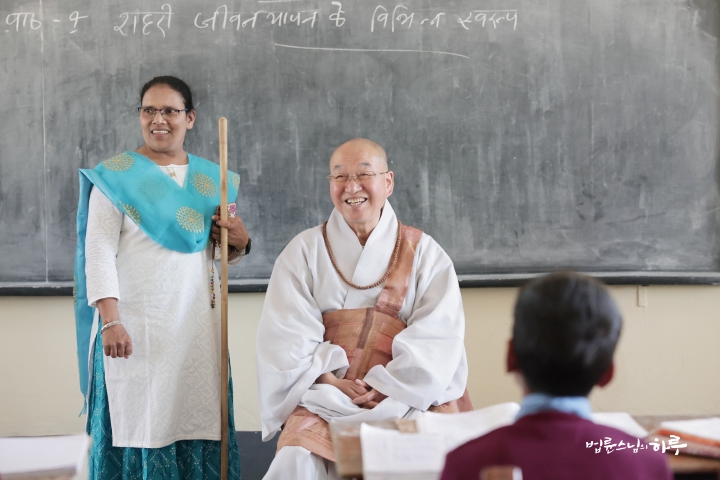
He carefully toured each classroom starting from the first grade. When Sunim entered the classroom, the students greeted him energetically.
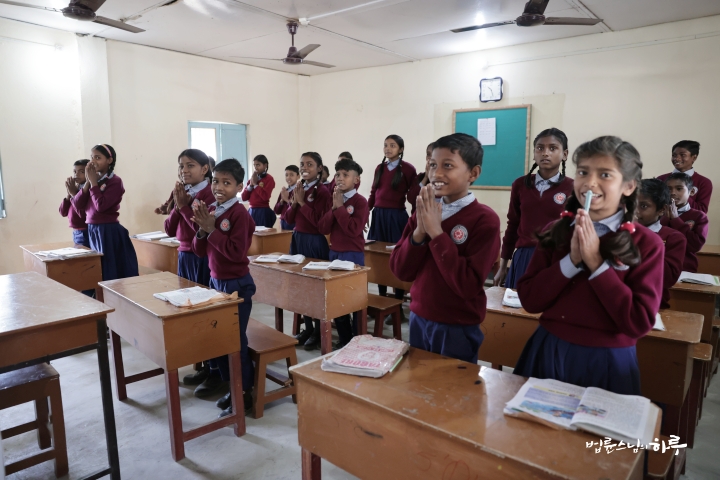
“Namaste!” (Hello!)
“Namaste. What were you studying?”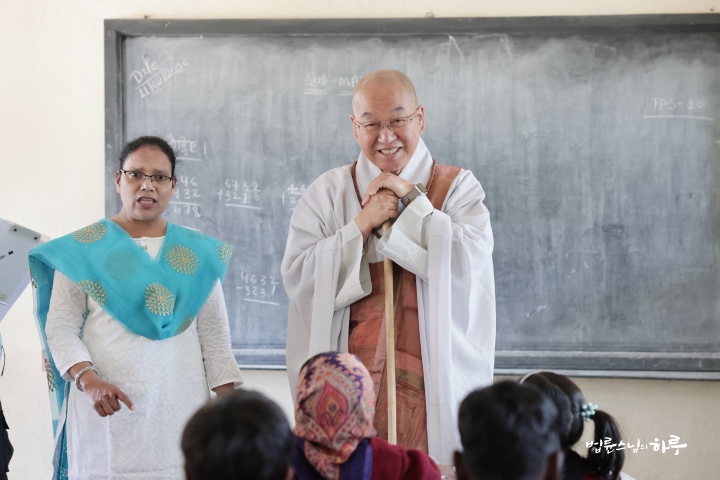
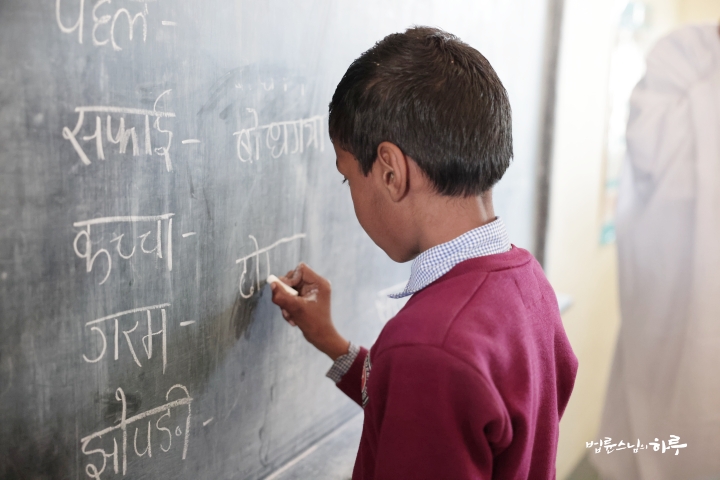
Sunim looked at what the students were studying. He then called them to the front of the blackboard and had them write letters in Hindi.
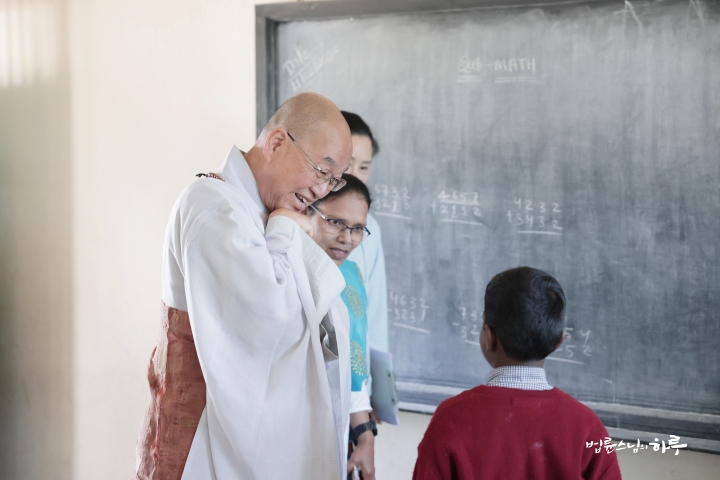
Though the children looked nervous, each one wrote down what they had learned well.
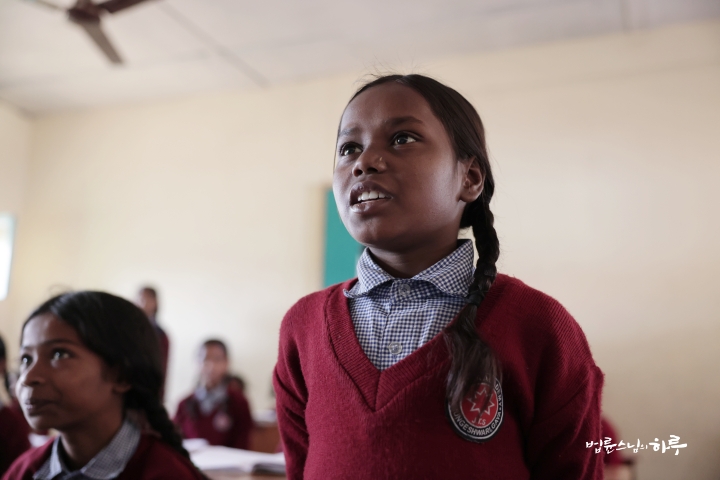
In the third-grade classroom, they were studying about Asia. Sunim asked a female student a question.
The female student jumped up and began naming countries without hesitation. When she named all 49 countries, both her classmates and Sunim applauded.
The homeroom teacher said.
“There aren’t any.”
“I think the Maldives was missed.”When Sunim said this, the students responded.
“Sunim, she mentioned the Maldives too.”
Sunim smiled and said.
“Oh, I see. Well done.”Sunim toured each classroom and asked which village they came from. Most children said they came from Jagdishpur and Durgapur, which are close to the school.
“No.”
“Is the food tasty? Is there enough?”“Yes, it’s enough.”
“No.”
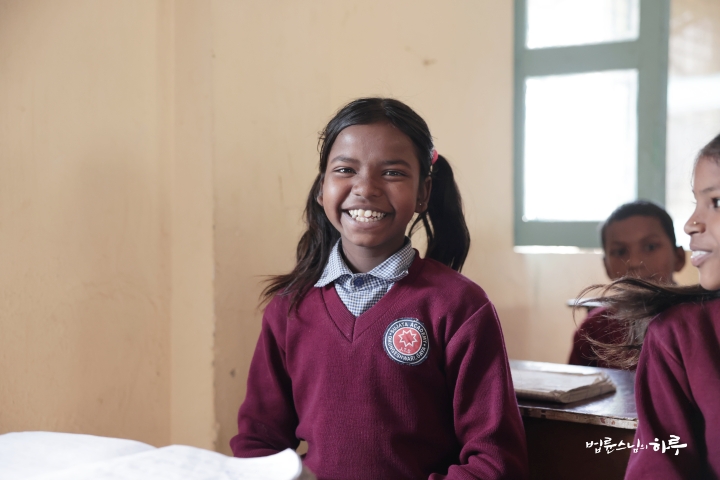
“How do you study without a desk?”“We sit on the bed.”
“You sit on the bed, put your notebook on the bed, and bend over to study? Isn’t that uncomfortable when studying?”The children just smiled without saying anything.
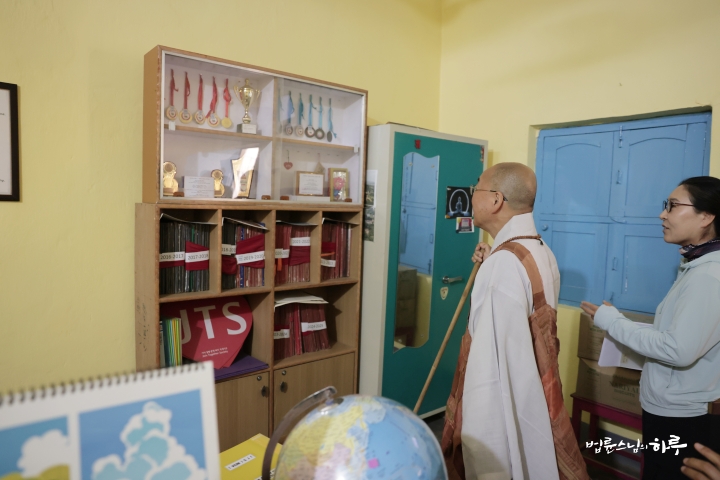
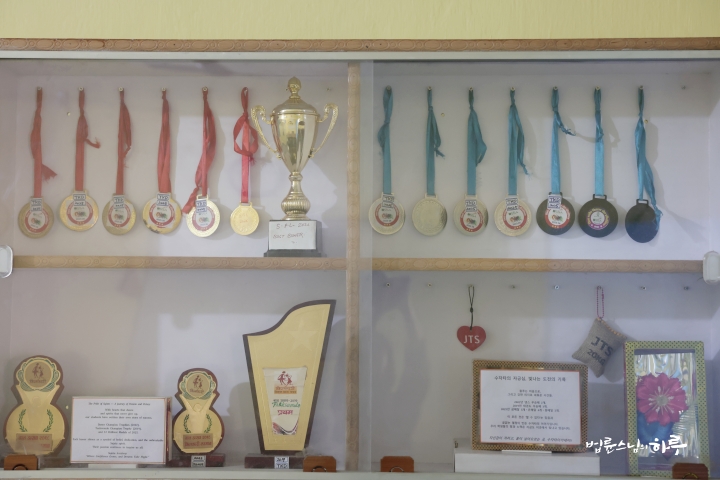
After touring up to the fifth-grade classrooms, he also looked at the principal’s office, teachers’ office, and health room. The teachers’ office displayed medals and trophies won in extracurricular activities like dance and taekwondo (태권도).
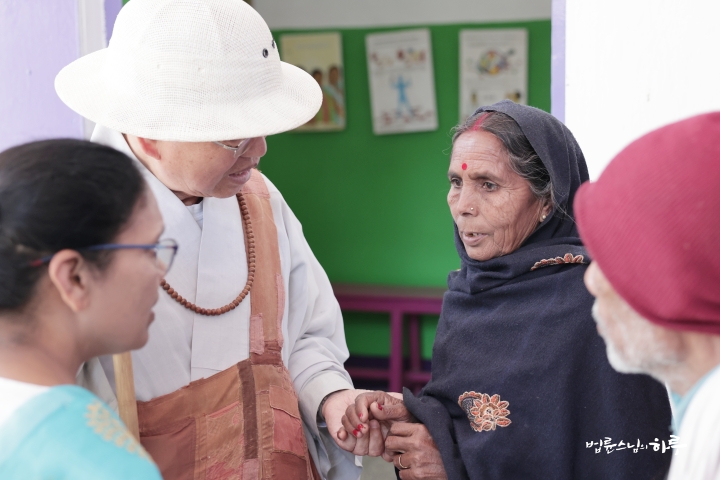
Next, they went to Jivaka Hospital. Several patients were waiting at the hospital entrance. Sunim asked the patients.
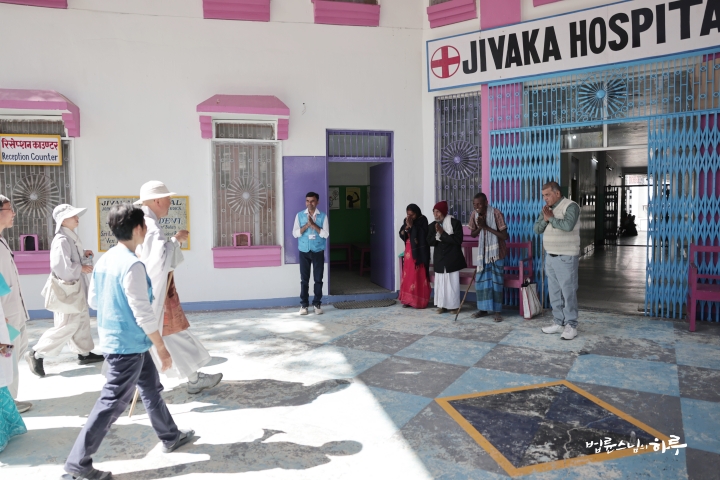
There were various cases: people with joint pain, chest pain, trembling and dizziness, and someone who came to get a cast for a broken arm.
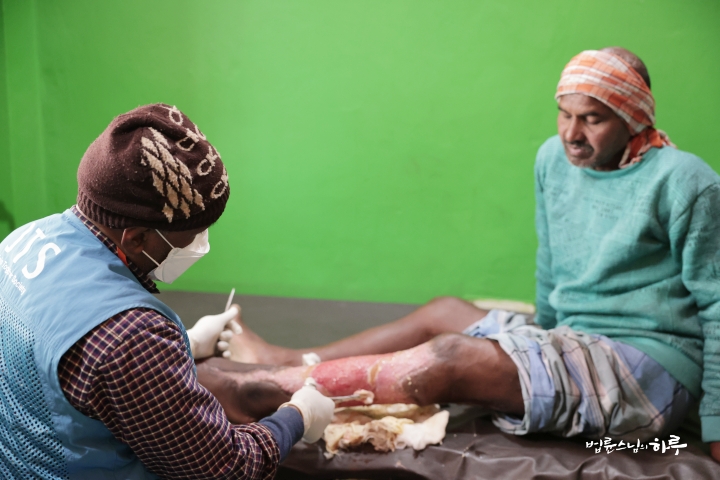
In the treatment room, Mr. Kamiswal, the Jivaka Hospital staff member, was treating wounds. The patient had been seriously injured in a railway accident recently, but hospitals in Gaya wouldn’t accept him, so he came to Jivaka Hospital. Mr. Kamiswal had been treating the wound for several months and had gotten past the critical stage.
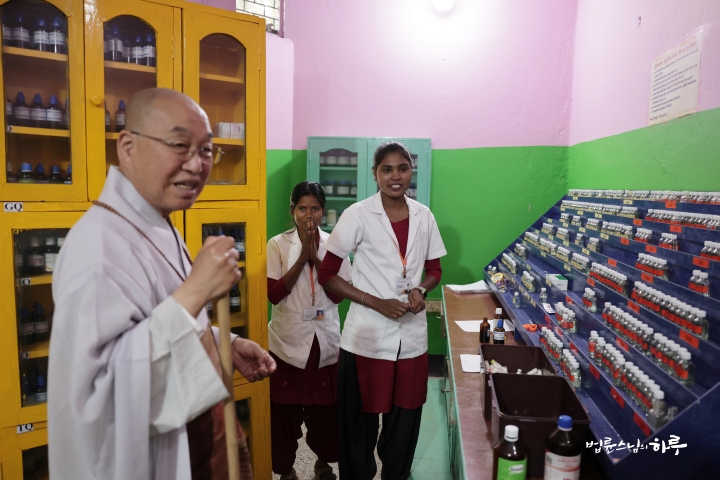
They also toured the medicine storage room. Jivaka Hospital, which was originally established to treat tuberculosis patients, now serves as a village health center treating various illnesses and responding to emergencies. Besides Mr. Kamiswal, visiting doctors were also providing medical care.
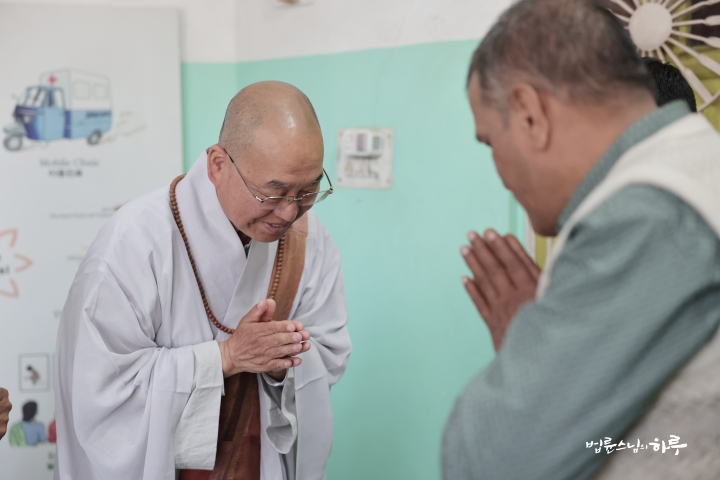
Sunim thanked the doctors and staff and left the hospital.
After lunch, Sunim told the school coordinator.
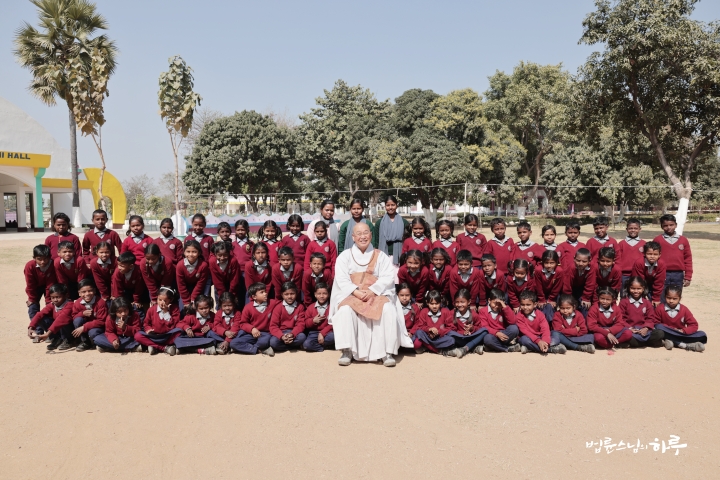
“I don’t think we’ve taken any photos with the younger students. Please prepare for us to take photos with each grade today.”The students had lunch in Pragyabodhi Hall and gathered on the playground to take group photos. Though the sun facing them was dazzling, the children seemed very excited to spend time with Sunim. They took photos with bright smiles by grade.
After taking photos, they went to the sixth-grade classroom.
“Yes!”
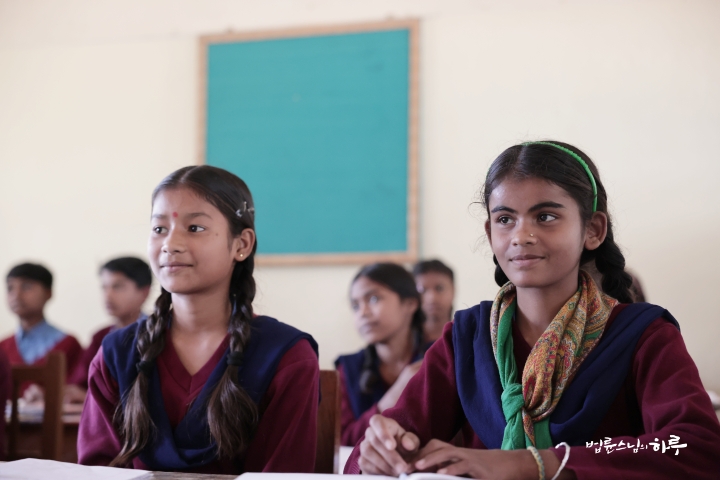
They had come to study after taking on various school tasks such as working in the kitchen, cleaning every corner of the school, or doing communal work.
“No, we don’t”
“Then if we open the Siddhartha House dormitory, will your families let you stay there?”“Yes.”
“Will the families of female students also let them stay?”“Yes, Sunim! They will.”
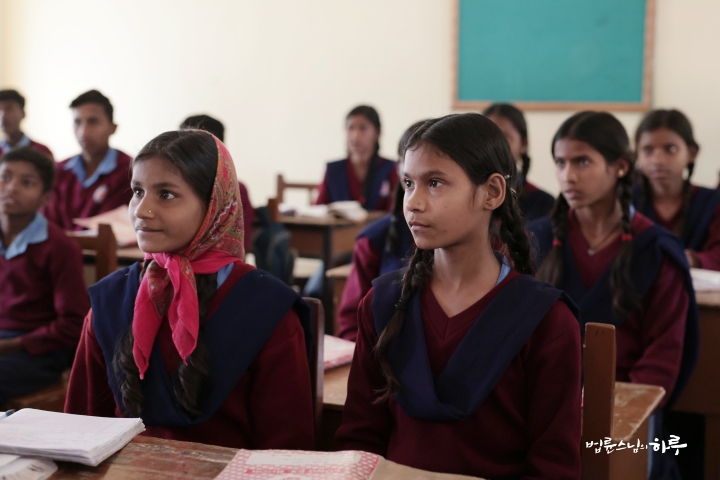
A female student answered confidently as if it were obvious.
“Is anyone doing special activities like taekwondo or dance?”A female student who had won awards in taekwondo competitions raised her hand.
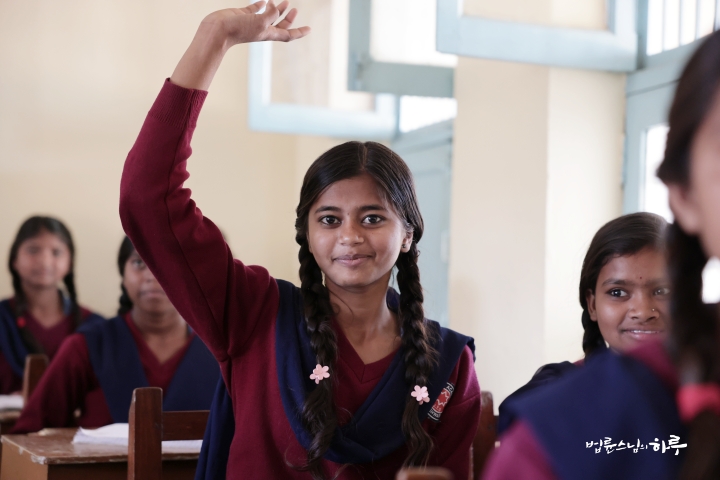
“Yes!”
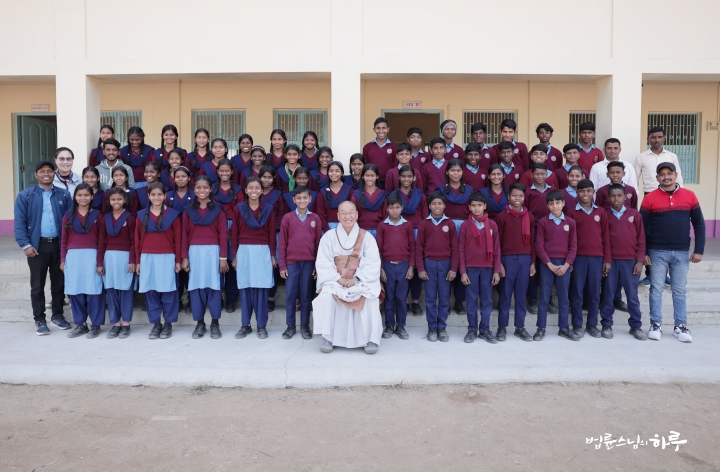
Sunim also took a photo with the sixth-grade students in front of the school.
Next, Sunim met with special activity teachers in various fields including English, Sanskrit, taekwondo, and dance to express his gratitude.
“Thank you. Please continue to guide the students well so they can develop their various talents.”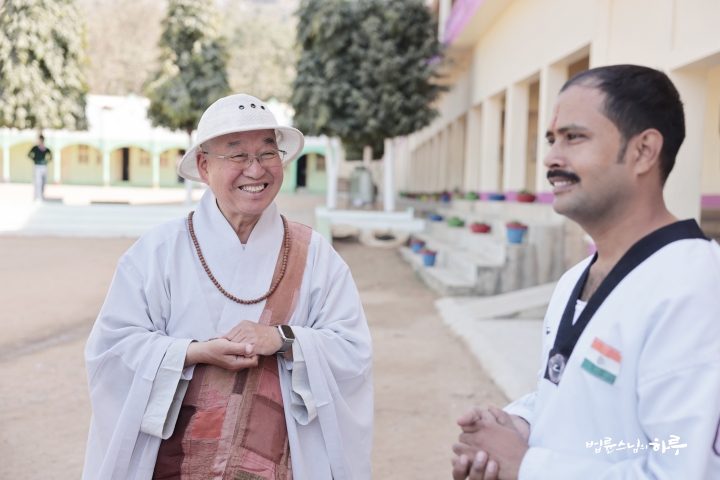
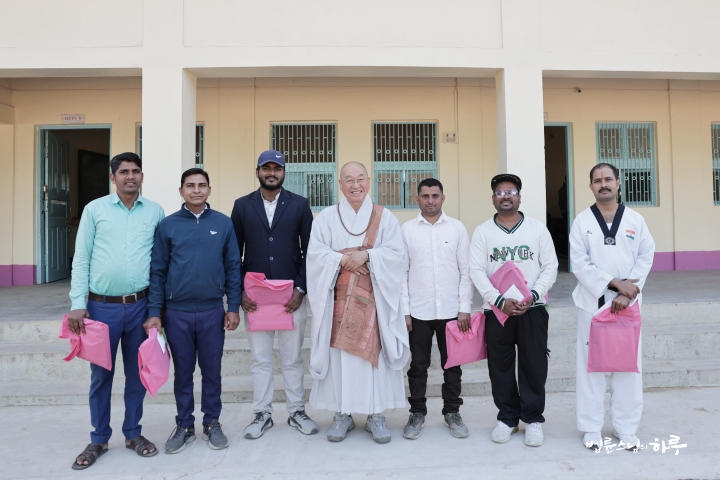
After giving gifts to the teachers and taking commemorative photos, they went to the Dharma hall.
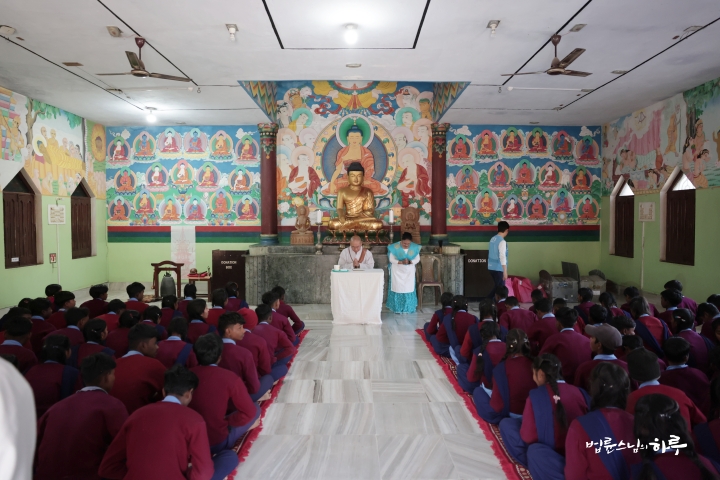
From 1:30 PM, he had a conversation with 48 seventh-grade students and 43 eighth-grade students in the Dharma hall.
Sunim asked the students what areas they were volunteering in.
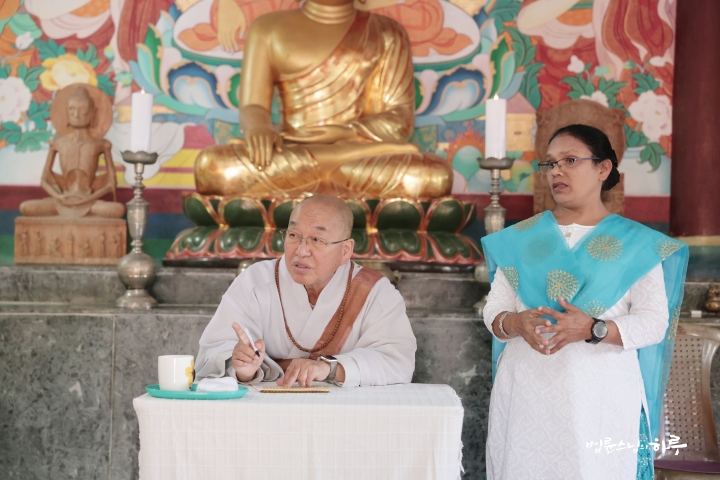
He checked each role one by one: preschool operation, elementary school classes, meal assistance, hospital work, etc. He then asked the students if they had any difficulties volunteering or any suggestions for improvement.
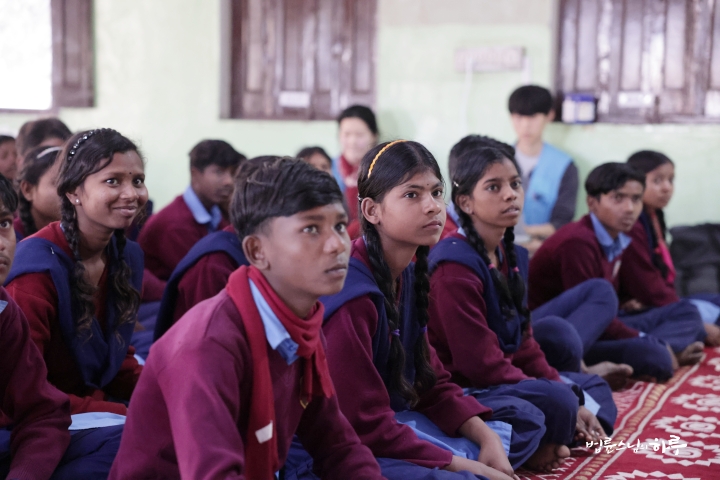
“Kuchh nahi!” (Nothing)
“You need to give your opinions so we can improve the preschool operations. You really have nothing?”“No.”
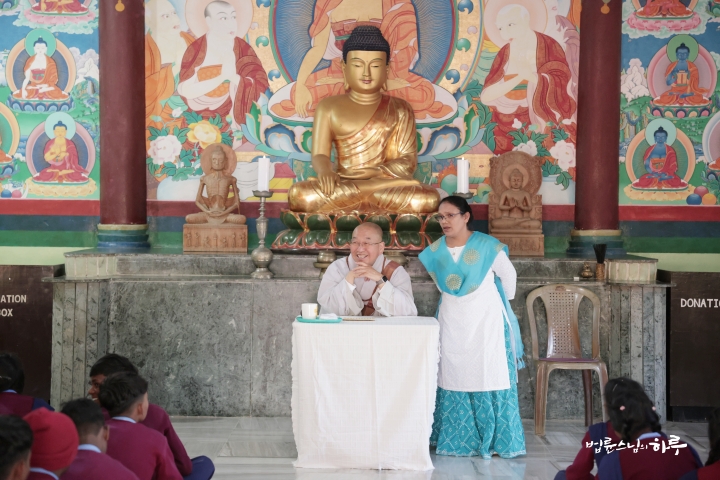
Dharma Teacher Bogwang(보광 법사) answered.
“Yes Sunim, we’ve resolved all the issues the students mentioned last year, including the preschool fences and hand pump problems.”
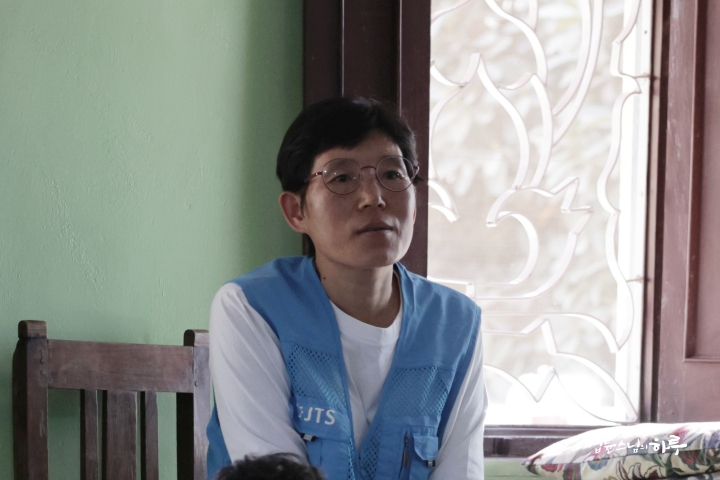
Later, it came up that students who commute over the mountains need support because their shoes wear out quickly. When Sunim asked why they didn’t speak up earlier, the students laughed.
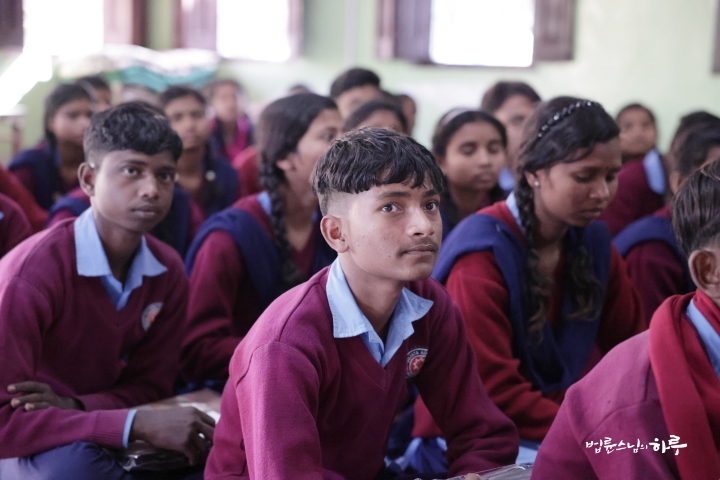
The seventh graders must take over the preschool operations that the eighth graders have been managing from the new semester. Though the eighth graders won’t be able to volunteer at Sujata Academy for a while after graduation, most students said they wanted to come back. Sunim gave his final advice to the students.
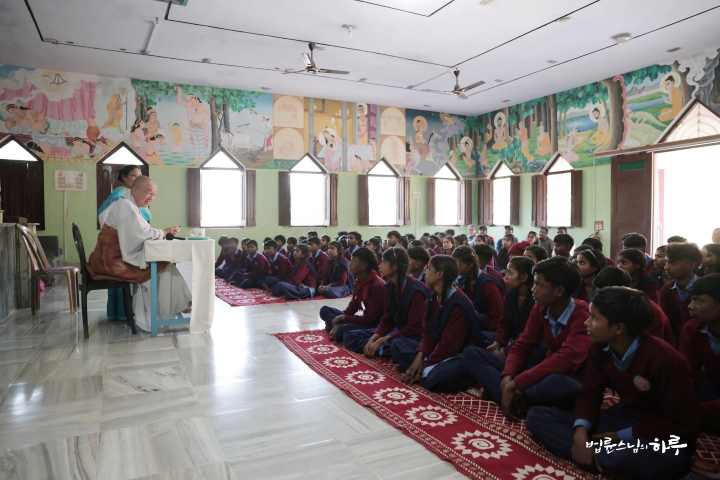
Sunim distributed prepared gifts to the students and took group photos by grade level.
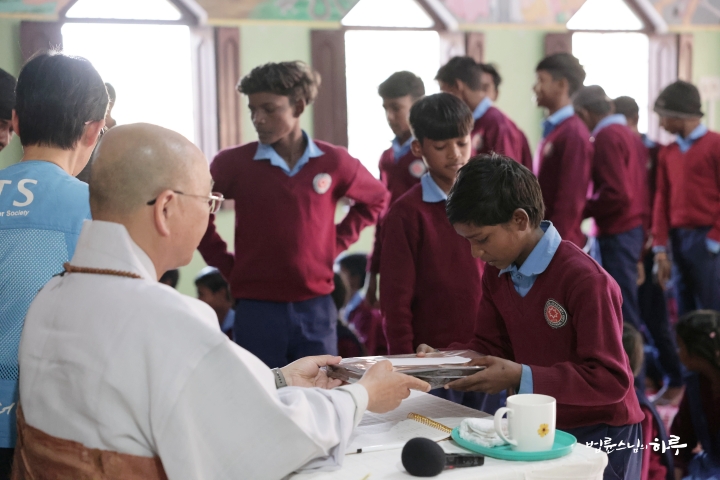
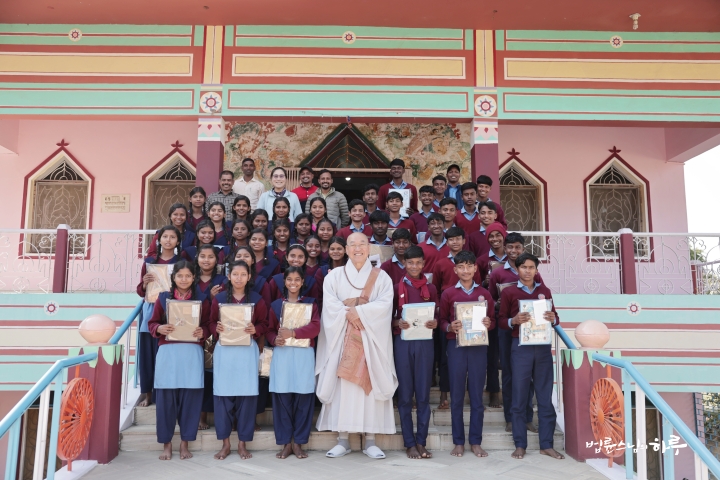
Immediately after, at 2:30 PM, Sunim met with students from grades 11-14 and 6 volunteer students. After offering three bows to Sunim, they briefly meditated.
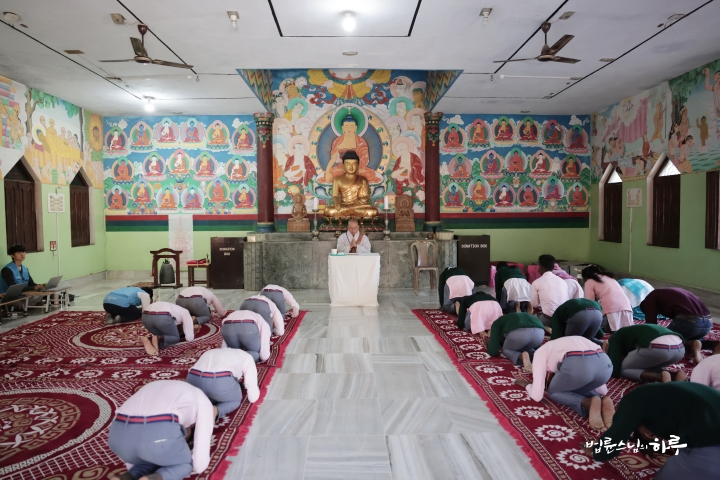
After finishing the meditation, they began a conversation with Sunim.
“Have you been well?”“Yes, Sunim.”
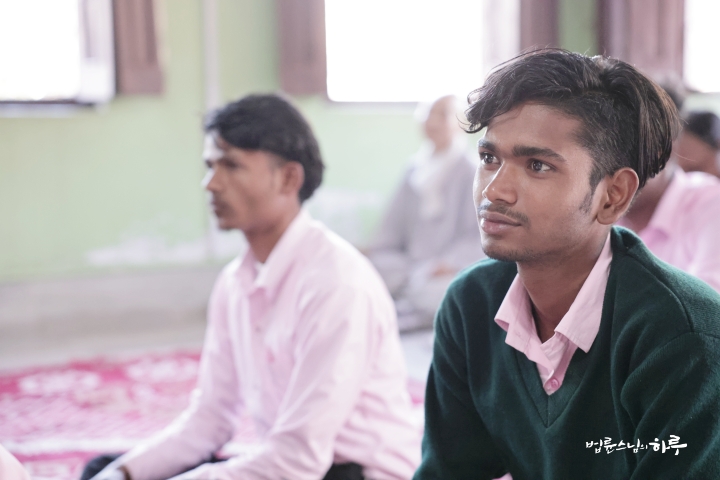
These students had completed elementary and middle school at Sujata Academy and were now preparing for university admission or already attending university. Sunim asked each person about their major and assigned roles. High school students were teaching preschool and second-grade classes, while university students were volunteering in various positions including teaching fourth and fifth-grade classes, working at the hospital, teaching taekwondo, handling administrative work, and managing the library.
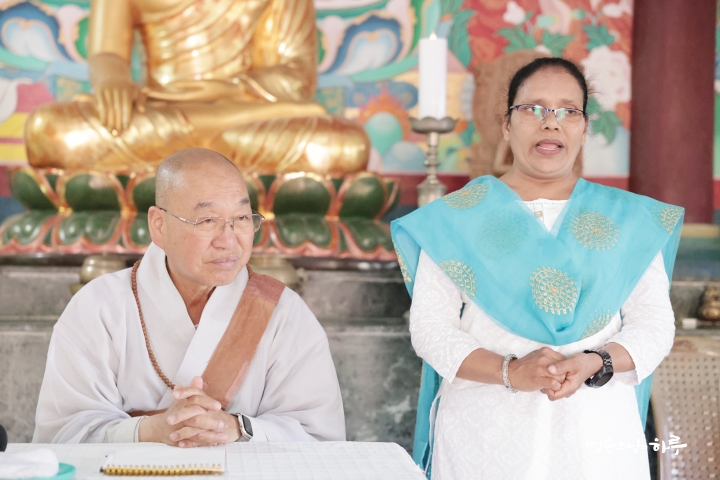
“We study from 2 PM after finishing our volunteer work.”
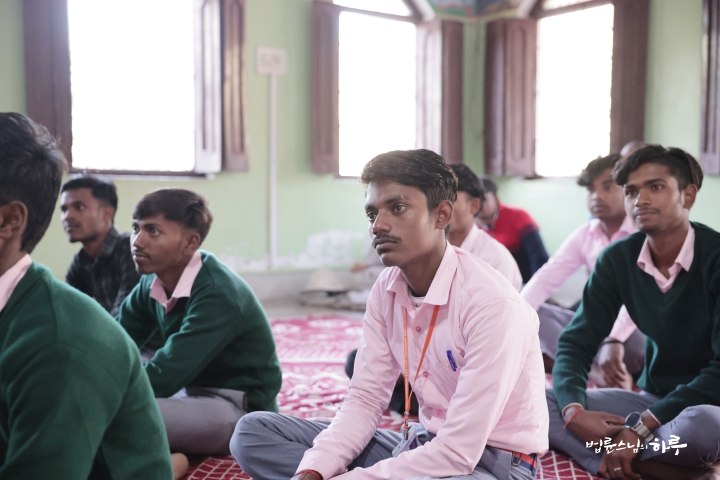
Sunim also asked whether they had electricity at home and if they had desks to study at. The majority of students didn’t have desks. When asked for suggestions, one student offered an opinion.
“S unim, it would be great if you could operate a dormitory temporarily just during the university entrance exam period. If you could allow us to focus on studying even just during the exam period, I think many students’ test results would change significantly.”
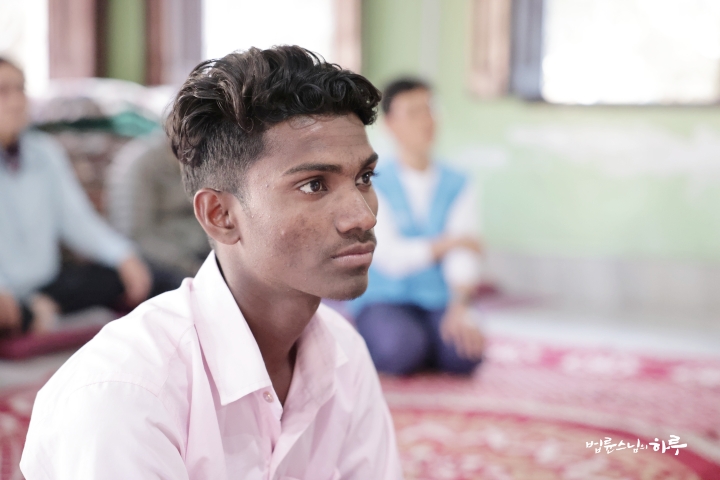
There was also discussion about having programs for 10th and 11th-grade students who only stay at home. It was noted that there was a clear difference in high school graduation exam results between students who came to school for activities and those who didn’t. Sunim listened carefully to the students’ suggestions. When there were no more suggestions, Sunim encouraged the students.
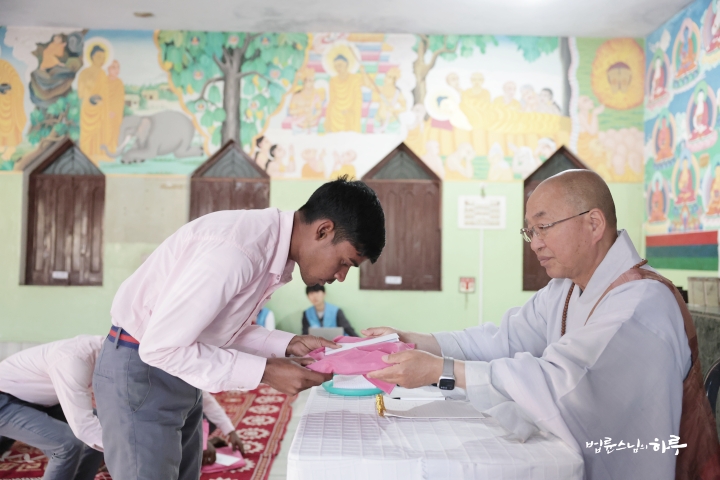
“Thank you for your hard work teaching the children. You were able to study at Sujata Academy because someone helped you. So I hope you will also volunteer with dedication. As you well know, Sujata Academy was created solely to teach children. Until elementary school, we unconditionally enable young children to study, and from middle school, you should also take some time to help younger children. Since you received help when you were young, I hope you will volunteer with the mindset that you should now help younger children. Also, since most people living in the village are poor, it’s difficult for them to receive treatment even when they’re sick. Those volunteering at the hospital, please put your heart into helping sick people.”Sunim distributed prepared gifts to the students and took photos together.
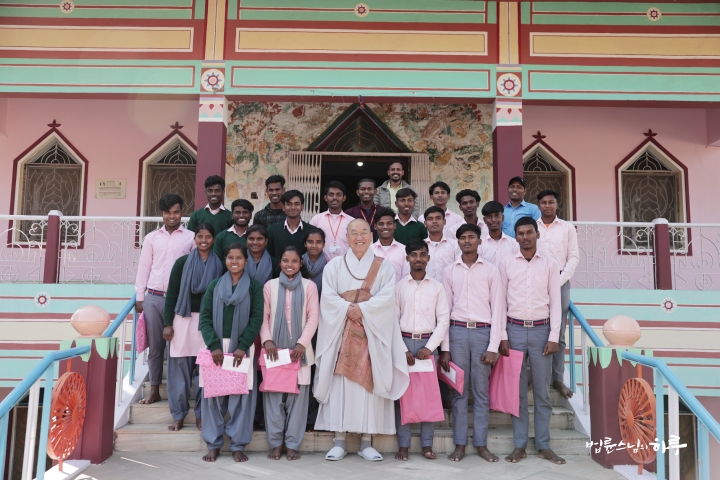
At 3 PM, Sunim moved to the office and held a general meeting with Korean volunteers residing at Sujata Academy, as well as volunteers from Sankasya and Bhutan. Originally intended to discuss JTS project directions with a small group, the meeting grew larger as more participants joined. Sunim first reviewed the past 30 years of JTS India projects.
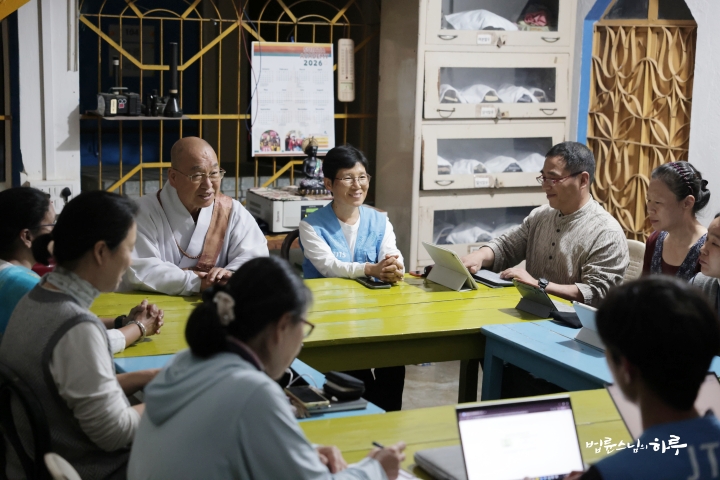
Literacy Eradication, Healthcare, and Remaining Challenges
“JTS’s original purpose in coming here was to eradicate illiteracy. We tried to eradicate illiteracy by establishing elementary schools, but elementary school enrollment was less than 50 percent. As we created preschools, literacy eradication ultimately happened at the preschool level.”Sunim evaluated that literacy eradication was somewhat successful as children who made friends and learned school habits at preschool naturally progressed to elementary school. The same was true for healthcare. When Sunim first came, there were 300 tuberculosis patients, mothers died during childbirth, and infant mortality was high. Some people died from cobra bites. Now tuberculosis patients have almost disappeared, and maternal and infant mortality have greatly decreased. Awareness about education has also changed, with parents from untouchable families now actively sending their children to school.
“Among our initial goals, the one we couldn’t touch at all was the village development program.”Sunim explained the three village development projects initially conceived. First, creating producer cooperatives to make agricultural production more efficient. Second, establishing consumer cooperatives for group purchasing at wholesale prices. Third, creating village banks to protect residents from loan sharks charging up to 120 percent annual interest. However, none could be implemented due to lack of educated people, the fact that these were untouchable villages not centered on agriculture, and poor security. What could be done was solving water problems by installing hand pumps, providing roofs and food support to extremely poor families, and helping mothers and patients.
Sunim suggested that the village development experience from Bhutan might be applicable to India.
“First, in the public sector, we need village road paving and drainage system improvements. During the rainy season, village roads become a mess of mud, animal waste, and sewage, so we need to pave them with bricks and create drainage channels for rainwater and wastewater. In villages like Kanahol, there are only narrow paths where even a cart cannot pass, so we need to move walls back about 50 centimeters to rebuild them and widen roads so small vehicles can enter. For individual housing, we should provide building materials to those without homes or living in half-built houses, on the condition that villagers work together to build them. We’ve already successfully implemented this in Santinagar, but it’s a challenging task here due to weak community consciousness.”They also shared specific ideas about improving home interiors. One JTS volunteer suggested teaching carpentry skills to middle school students and above so they could make shelves for their own homes.
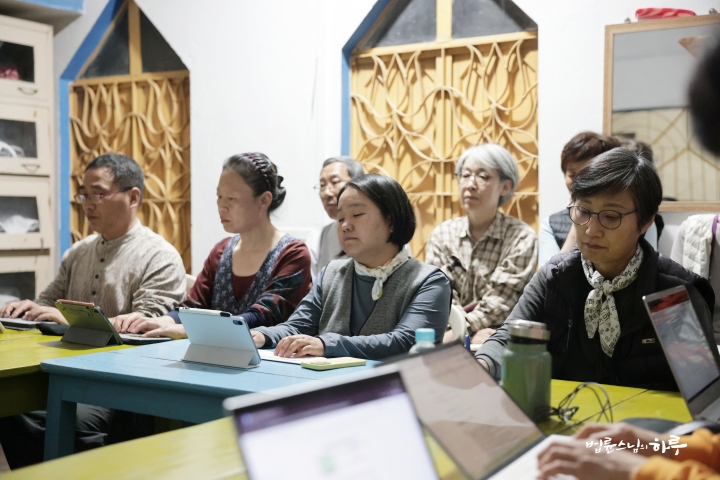
Sunim also suggested considering providing low desks for elementary students and proper desks and chairs for upper-grade students. However, he clarified the principle of not providing support that undermines individual self-reliance.
“I hope you’ll come up with ideas from the perspective of helping children who really want to study but face difficulties due to lack of basic conditions.”For the School’s Long-term Self-reliance
Sunim also raised the issue of the school’s long-term self-reliance. The current staff volunteering at Sujata Academy are people who grew up here from childhood. The volunteer system is maintained now because they live alone or their children are still young, but as they age and their children grow, it will be difficult to sustain the current structure.
“To ensure they don’t regret volunteering for 30 years, even if they can’t live better than others, I think we should guarantee their retirement security so they won’t have regrets in old age.”There are two options for school self-reliance. One is to donate the school to the government, and the other is for JTS to create its own financial self-reliance structure. Various ideas emerged regarding this. One JTS volunteer proposed a horticulture business. The idea was to utilize the advantage of being a tourist area to cultivate flowers, teach students horticultural skills, and sell to Gaya or Bodh Gaya.
Sunim said it was good for educational purposes, but to generate livable income, it should be directed toward residents cultivating directly and opening sales channels. He also emphasized operating various small businesses like cafes, flower shops, and souvenir stores without focusing on just one thing, and approaching it by creating what is needed but doesn’t exist rather than competing with existing merchants.
“Trying to profit by building a hotel just because others are building hotels is not a good approach. I think it’s worth trying if you create something that’s needed but doesn’t exist, or provide convenience to people.”One JTS volunteer reported on the poor equipment situation in the construction department. It took four people half a day to cut one tree, there were almost no power tools, and they didn’t even have a single compressor. While Sunim agreed on the need for equipment, he pointed out the problems that existing workers don’t want to use machines and young people prefer civil service jobs over technical skills.
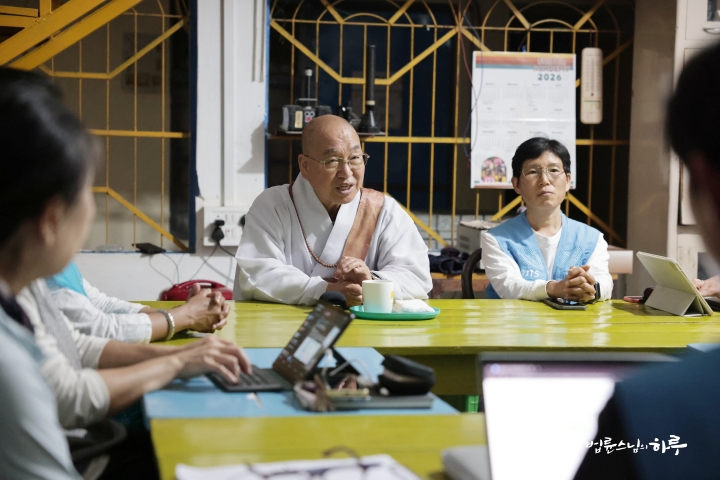
Finally, after discussing the remaining schedule in India, the meeting concluded.
From 4:30 PM, Sunim discussed overall operations of Bhutan JTS and India JTS with working-level staff.
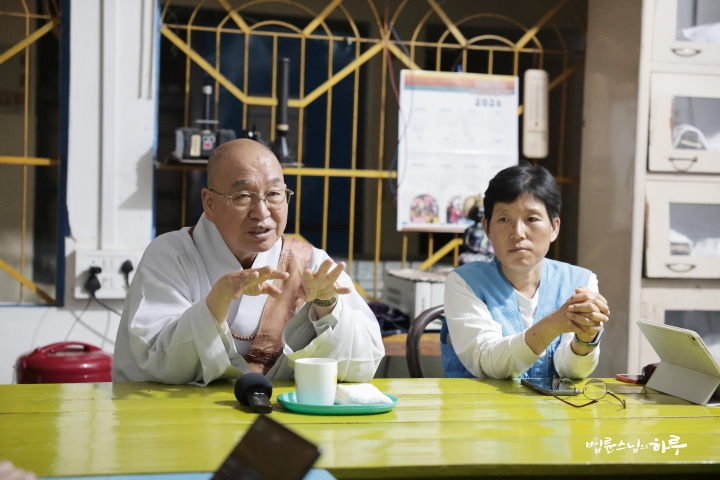
Bhutan Housing Improvement Project Also Moving Toward Self-reliance
First, they reviewed the progress of the Bhutan village housing improvement project. Currently in Bhutan, JTS is providing interior remodeling including toilet installation, kitchen improvements, and shelf installation for the poorest 20 percent of households. Sunim clarified the principle. It should be a method for poor people, not a demonstration method gathering all villagers.
A JTS volunteer reported that after project completion, villagers were happy and volunteering to do it themselves. Sunim suggested continuing the project until June, and if there were many volunteers, deploying at least 3 teams simultaneously would be good.
“I hope the method of JTS volunteers doing interior remodeling will only continue until June. After that, we should provide carpentry training so villagers can repair their own homes first, and the remaining houses can be done through reciprocal labor.”They also discussed dental medical services. Originally planned to provide dentures for toothless elderly, there were difficulties as government officials wanted higher-level treatment.
“If we can’t provide it, we get criticized, and if we do it well, even people who can afford it come asking for treatment, which is problematic.”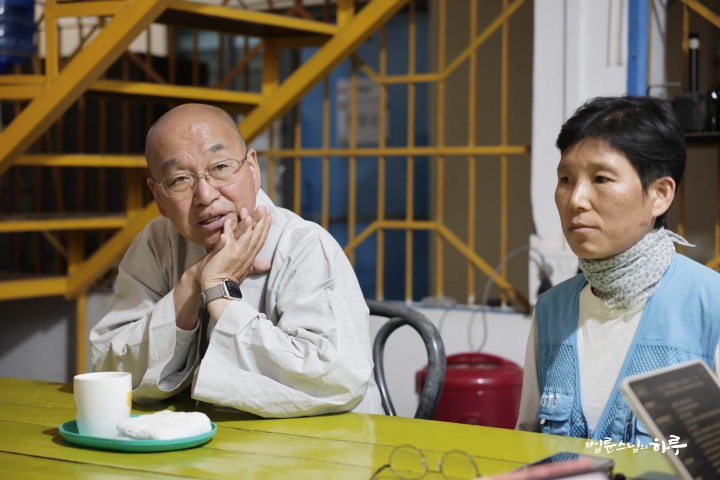
They also discussed improving the living environment of India JTS staff. Dharma Teacher Bogwang reported that most India JTS staff homes don’t even have interior wall plastering. One staff member’s house has paint on the outside but no plastering inside, and another staff member’s house doesn’t even have basic finishing. Sunim suggested not giving money directly but receiving housing improvement plans and supporting materials within the necessary range at the general neighborhood level.
Finally, after discussing construction plans for the Sankasya Dhamma Center site, the meeting concluded at 5:30 PM.
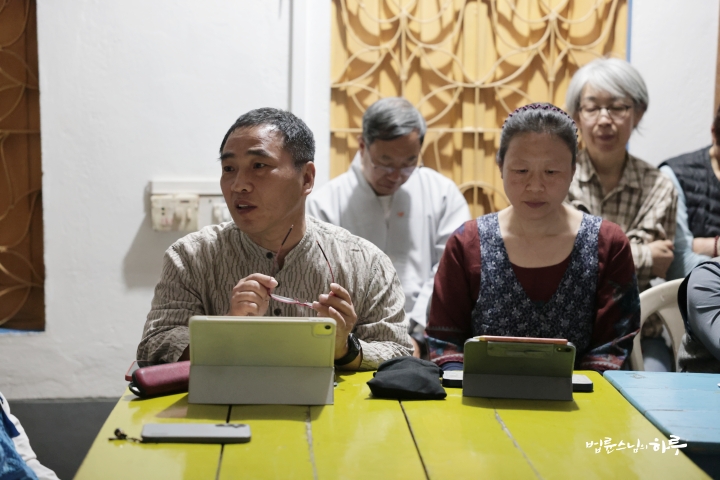
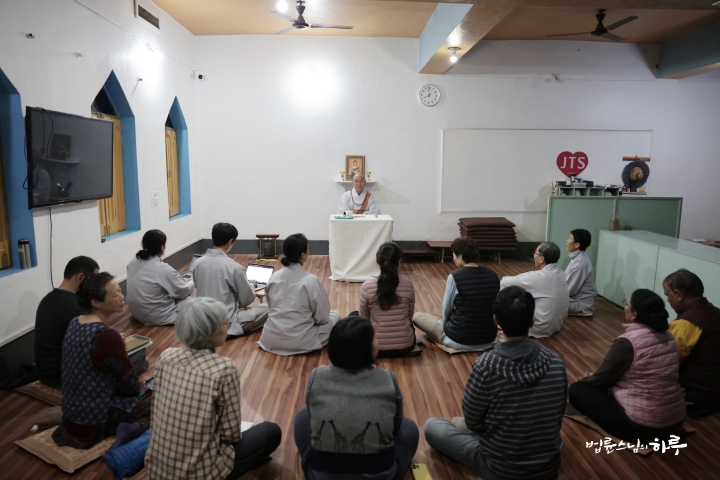
After sunset and dinner together, everyone gathered again at 7 PM for a special Dharma assembly with Sunim.
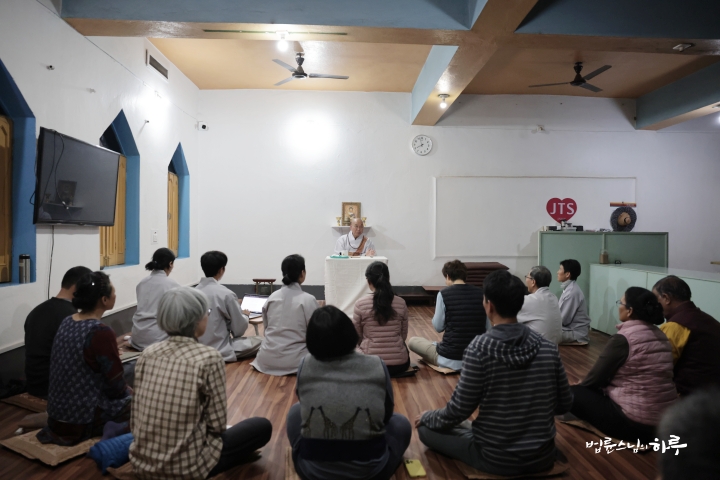
Various people attended including India JTS volunteers, short-term volunteers, Bhutan JTS volunteers, volunteers from Sankasya, and those remaining after completing the India pilgrimage. Sunim began the conversation by mentioning that JTS projects are currently transitioning from relief to sustainable development.
)
,’ while Bhutan is ‘development (개발),’ which are different in nature. Recently, while conducting development projects in Bhutan, I’ve been thinking ‘shouldn’t we also provide some development support for the residents of Dungeshwari?’ Of course, if we only consider the severity of conditions, we should support this place first, but the nature of the projects is different.From Relief to Development, JTS’s New Direction
Since JTS’s original purpose is relief, we’re being faithful only to relief here, and in Bhutan, we’re experimentally trying development work for once. Originally JTS decided not to do development projects, but you can see this as a pilot project with the precondition of ‘sustainable development.’ Until now, we only did relief activities when floods occurred, but now I’m wondering if we should also do recovery work. Recovery falls under development projects. If the evaluation of the Bhutan project comes out reasonably well, I think we might be able to attempt development projects at a low level in other regions as well.”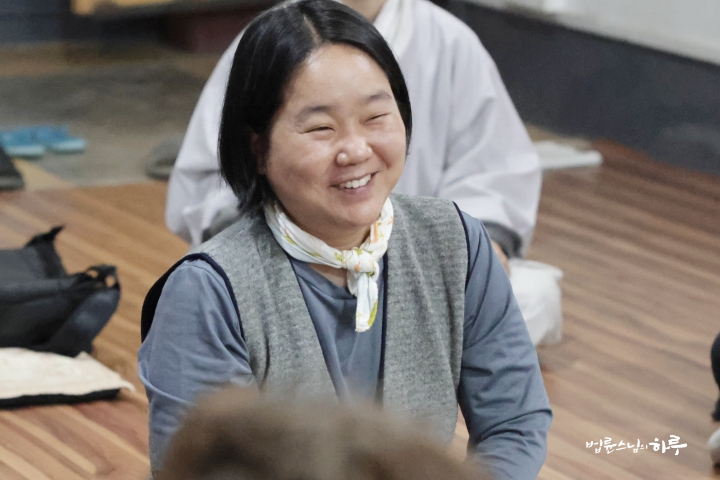
Then anyone could raise their hand and ask Sunim questions and have a conversation. Ten people asked Sunim questions over two hours. One of them suggested that meditation is difficult in extreme heat and proposed allowing fans during meditation considering India’s special climate.
Can’t We Use Fans During Meditation?
“I work in the village development department. I’d like to make a suggestion regarding meditation. Originally, the principle is to turn off fans during meditation. However, India has such a unique climate that it starts getting hot from March and continues to be hot until October. During that period, whenever I meditate, I can’t maintain awareness well, and I only keep becoming aware of the heat. Considering India’s climate, I’d like to strongly suggest allowing the use of fans during meditation.”
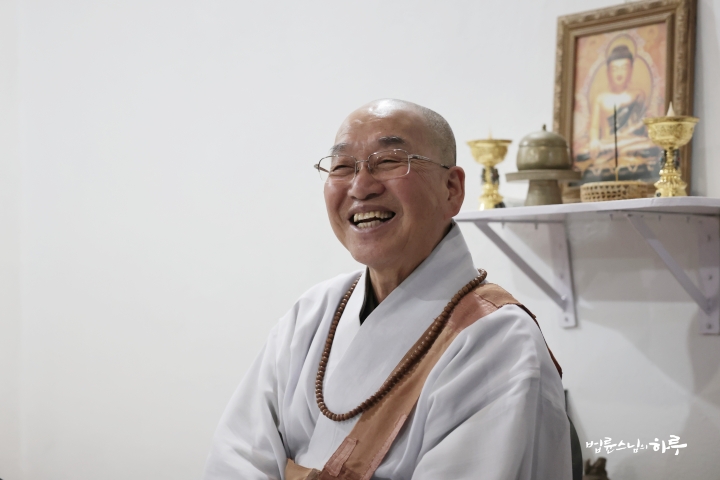
“It’s because I’m very sensitive to heat.”
“Is there any story about the Buddha using a fan during his six years of ascetic practice?”“No.”
“Not being able to tolerate heat is your own problem. Not being able to tolerate heat means you’re not being aware of the heat, but rather you’re ‘caught up in the mind that dislikes heat.’ Wanting to use a fan to relieve that dislike is following your desires. That’s not meditation. I’m not saying you can’t use a fan, but if you’re using it for that purpose, there’s no point in meditating. The purpose of meditation is neither to follow desires nor to forcibly suppress them. While turning on a fan or air conditioner might help you sit more comfortably, that’s not the original goal of meditation. So I can’t say it’s a particularly good suggestion. However, you could suggest this: ‘I find it extremely difficult to bear the heat. When I actually meditate, I end up using all my energy just enduring the heat rather than being aware of it. Could you allow us to designate a separate place where we can meditate with a fan on?’ You could make this kind of suggestion.”“Oh, I hadn’t thought about meditating separately. Then may I make that suggestion?”
“You can make the suggestion. But if it’s not allowed, you have to follow the rules. I’m saying you can express your needs and make suggestions. However, if you can’t stay here because of that, you’ll have to return to Korea.”“So if I want to stay here, I must do the 5 AM meditation, and even in that situation, I can’t get permission to use a fan? If not allowed, do I have to return to Korea?”
“If you’re thinking at that level, it’s better not to come here. It’s because your thinking is rigid. When you came here, you promised ‘I will adapt to life here and follow the principles.’ For example, if your stomach hurts, you can request ‘My stomach hurts, please allow me to go to the hospital,’ and if permitted, you can go. But most people get sick at least once when they first arrive. Since it usually gets better after a while, if they say ‘Let’s wait and see,’ you should say ‘Understood’ and wait. That’s practice. You can make suggestions based on your needs, but the Dharma Teacher makes the judgment. If it’s a constitutional issue, they might let you meditate separately outside, or if it’s just a desire, they might tell you to overcome that desire. You follow their decision. It’s not right to come here after making a promise and then say ‘I’m hot, so I must use a fan. I strongly request this.'”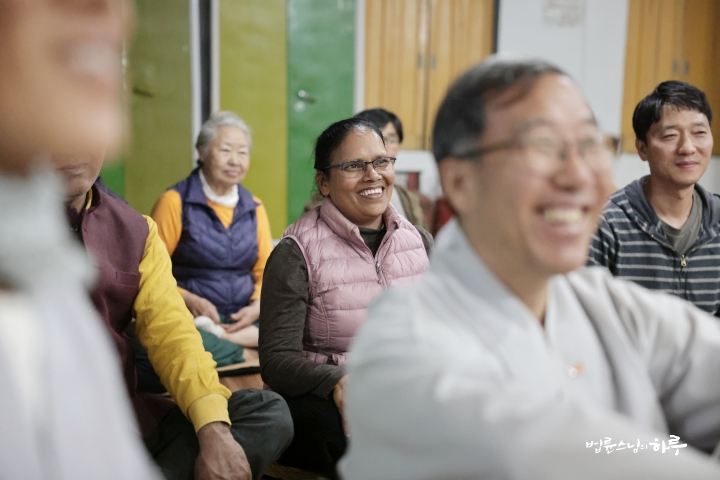
Questions continued to follow.
There’s no photo of Sunim, the founder, in the principal’s office or teachers’ meeting room, making it difficult for staff to regularly reflect on the founding philosophy. How about hanging the founder’s photo in key school spaces to create a spiritual focal point?
While doing construction work in Sankasia, the caste culture makes it difficult to include certain people in volunteer activities like toilet cleaning. Accommodation standards haven’t been set for after completion either. How should we proceed with volunteer activities for the Sakya clan members?
We calculate and pay Indian staff hourly wages, which has blurred the line between volunteers and workers. How should we set realistic compensation standards while maintaining the spirit of volunteerism?
I’ve seen that Indian staff members’ past visits to Korea have become a great source of pride and motivation for volunteering. How about providing Indian staff with opportunities to visit Korea every few years?
While Korean volunteers are learning local languages, Indian staff aren’t learning Korean separately, limiting communication. How about creating a Korean language education program for Indian staff?
Sunim’s books have been translated into Hindi but haven’t been published yet. May we have external experts review them?
I’ve discussed with the bookstore owner about the possibility of placing Sunim’s books in the Paro Airport bookstore in Bhutan. How about placing books in the store and increasing dialogue opportunities with Tibetan monks?
I’m staying at Jungto Training Center in Korea, but I also want to help with volunteer work in India or other places. Which is better – moving between various places to help or settling in one place?
As the conversation was coming to an end, one person raised their hand to ask a question. She had been experiencing discomfort living with her husband and wanted to keep some distance. She asked Sunim for advice on how to approach her husband when she returns home.
I Feel Uncomfortable with My Husband and Want to Keep Distance
“My relationship with my husband has always been difficult. Even before coming here, living in the same house was very uncomfortable, and I strongly wanted to put some distance between us for a while. Now that my return to Korea is approaching, I’m curious about what mindset I should have when dealing with my husband.”
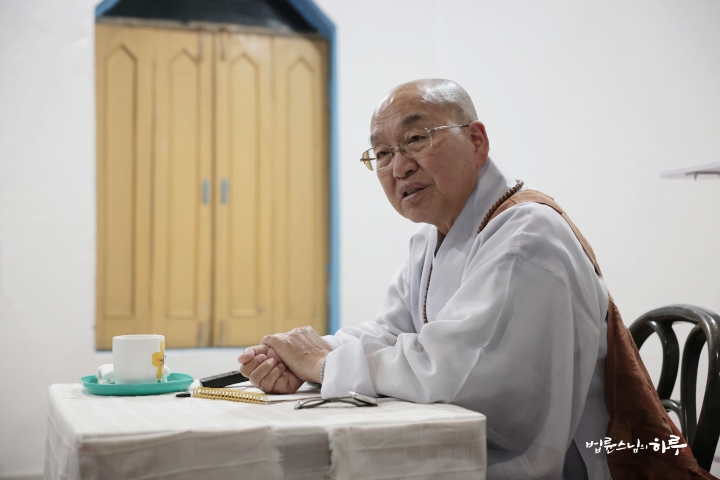
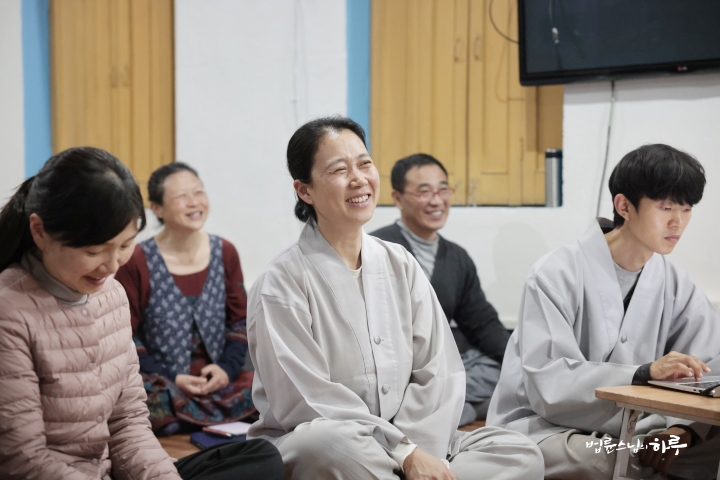
After finishing the conversation, Sunim shared some final thoughts on the mindset that volunteers coming to serve should maintain while staying here.
“Whether you come to India, go to the Philippines, or anywhere else, it’s best to just observe for the first three months. However, after about a month, people tend to develop the most opinions. Thoughts like ‘This should be done this way, that should be done that way’ arise as discriminating thoughts come up. But after about three months, you realize, ‘Oh, there’s a reason for that.’ What initially seems nonsensical actually has reasons behind it when you live there long enough.Observe for the First Three Months
When I first came to India, I also thought, ‘Why are people so slow and lazy here?’ But after experiencing one summer, I understood. How can anyone move quickly in such heat? Just enduring the heat is a major task. Also, in Southern Buddhist cultural regions, people rest for two hours after lunch. From our perspective, we might wonder, ‘Why do monks rest so much?’ but this is a practice formed over many years within their environment and culture. So even when discriminating thoughts arise, you need to quietly observe. After about three months, many of these thoughts naturally disappear, and understanding comes naturally. That’s why you should write down your opinions every day. After three months, when you read them again, you can erase the ones that were ‘unnecessary thoughts,’ and if there are still valid opinions remaining, that’s when you can raise those issues. If you stay somewhere too long, the opposite problem occurs – you give up on everything. When you think ‘There must be a reason for everything,’ you stop offering new opinions, and no improvements are made. If you raise issues within three months, you haven’t fully adapted yet, and after a year, you’ve only adapted without making improvements. That’s why Koreans who live in India for a long time become like Indians. They become late for appointments and slow in everything they do. Among the concerns you have when you first arrive, 90 percent are discriminating thoughts, but 10 percent are actually very fresh ideas. The danger is that because they’re mixed with discriminating thoughts, they might all be discarded together.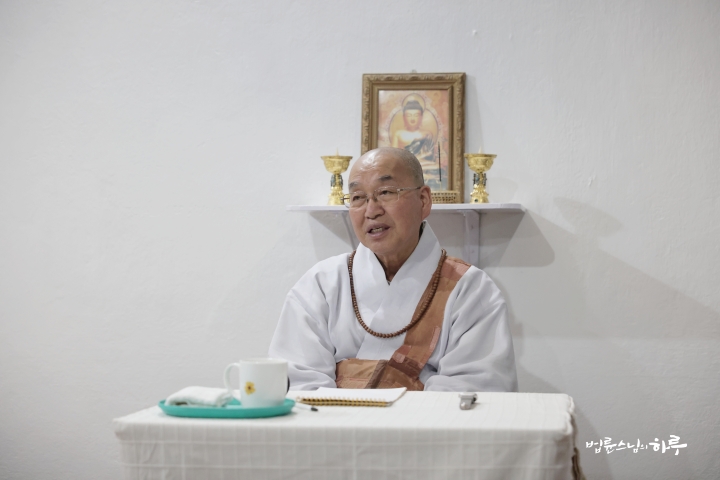
The Dharma assembly concluded at 9 o’clock.
Although Sunim had accumulated considerable fatigue, he completed all scheduled activities without missing anything today as well.
Tomorrow morning, he will attend the JTS India board meeting, and in the afternoon, he will meet with the construction team, village leaders, preschool teachers, and staff members.