Why Can’t We Attain Enlightenment After Hearing One Dharma Talk Like in the Buddha’s Time?
Feb 8, 2026. India Jungto Society Board Meeting, Dharma Assembly for the Shakya Clan
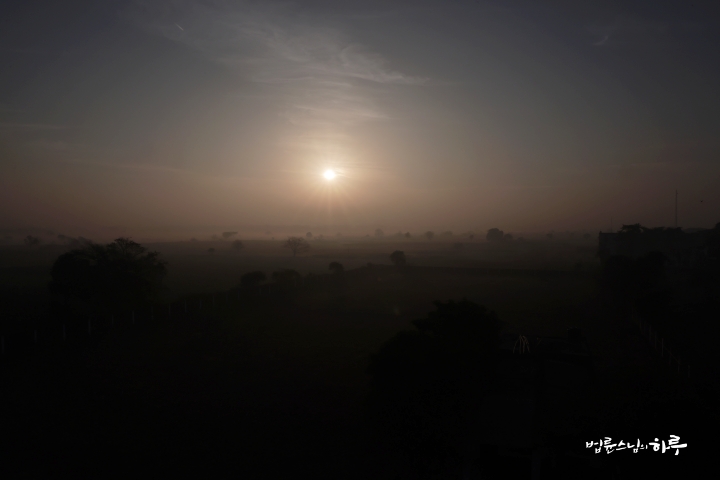
Hello. Morning has dawned in Sankasia. Today, Sunim attended the India Jungto Society board meeting in the morning, visited the boarding school of Suresh, an early volunteer at Sujata Academy, and then held a Dharma assembly (법회) for the Shakya clan in the afternoon.
Sunim completed his morning practice and meditation, then had breakfast. Since the India Jungto Society board meeting was scheduled for 9 AM, he spent the morning proofreading manuscripts and handling administrative work.
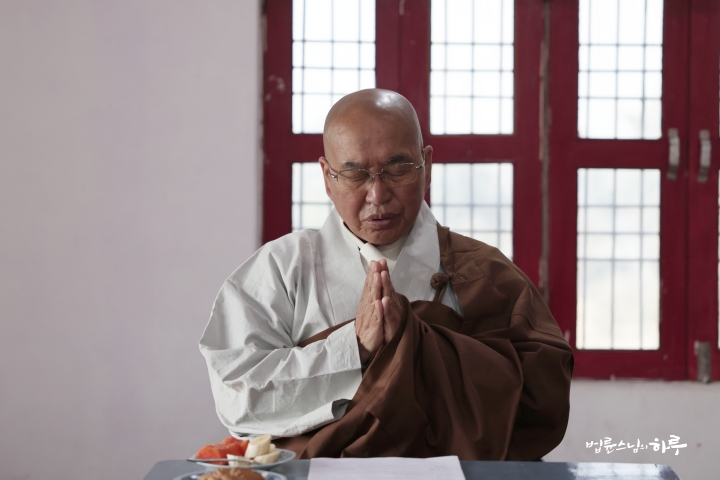
At 9 AM, the India Jungto Society board meeting began on the third floor of the Dharma Center. After reciting the Three Refuges (삼귀의) and Five Precepts (오계), Sunim gave his opening remarks.
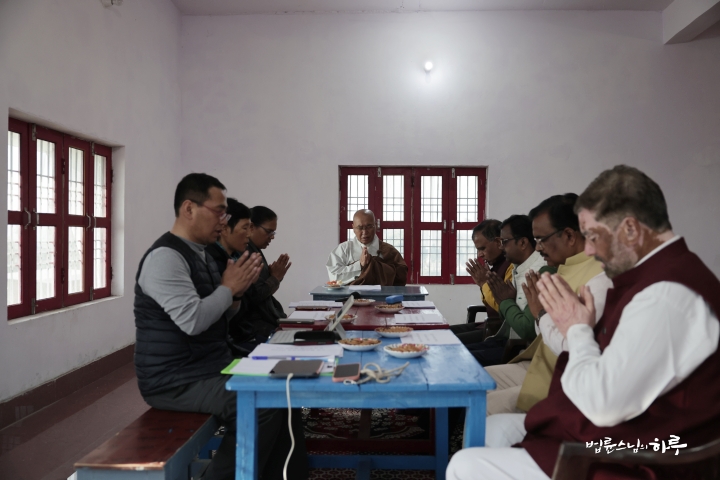
Priyanka served as interpreter for the board meeting. Kim Yoon-tae (김 윤태), an India JTS volunteer, reported on the 2025 activities and 2026 business plan.
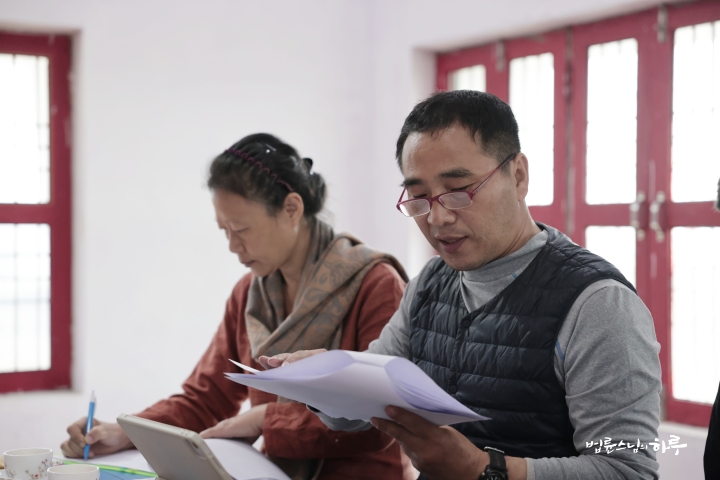
In 2025, the basic design for the Dharma Center and site survey were completed. In 2026, they plan to apply for Foreign Contribution Regulation Act (해외기부금 등록 : FCRA) registration, select a construction company, and begin construction.
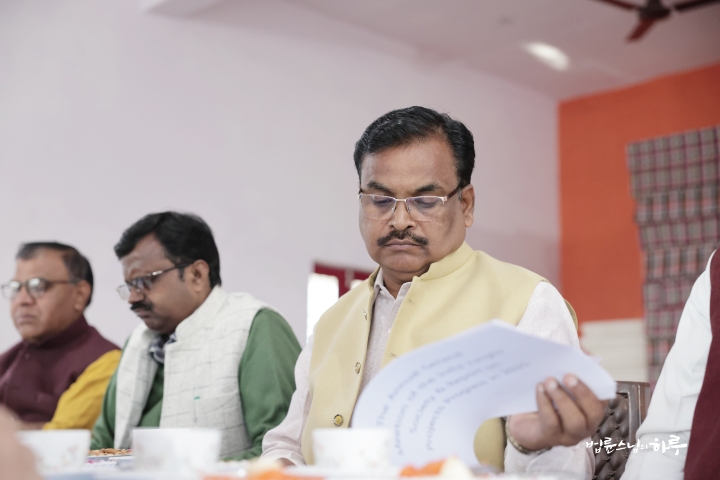
After hearing the report, Sunim continued discussions about the architectural design. While reviewing the blueprints, he pointed out several issues. There was a problem with the kitchen being on the first floor while the dining hall was on the second floor, making it difficult to transport food without an elevator. He also examined the food service flow in detail and suggested reorganizing the space so that food could be served directly from the kitchen.
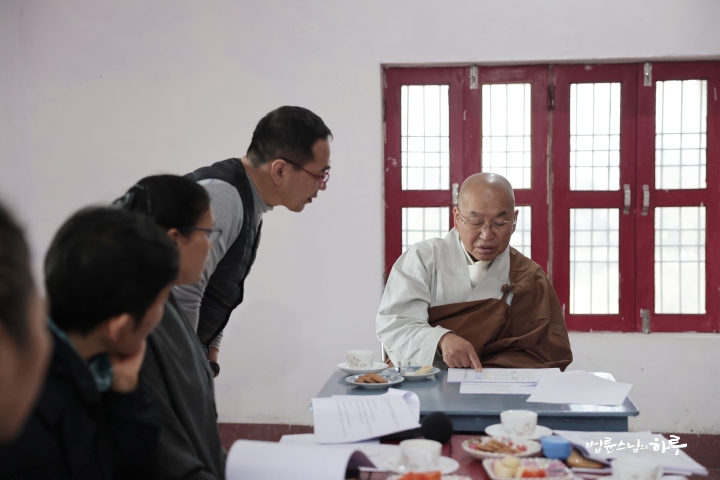
The building orientation was also discussed. Sunim said the building’s direction should be determined considering the direction of the Sankasia Stupa. Regarding vehicle access, he pointed out that if cars enter from the front, the need for turning space would reduce the auditorium area, and suggested side entry as an alternative.
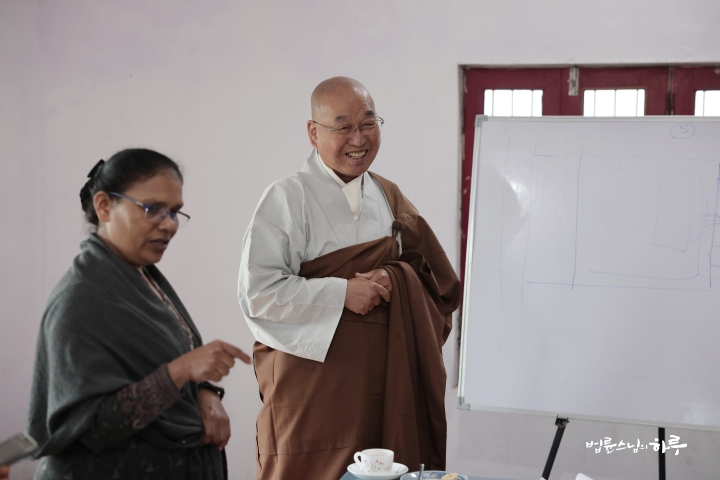
Sunim gave the board members time to discuss and visited Suresh’s boarding school nearby.
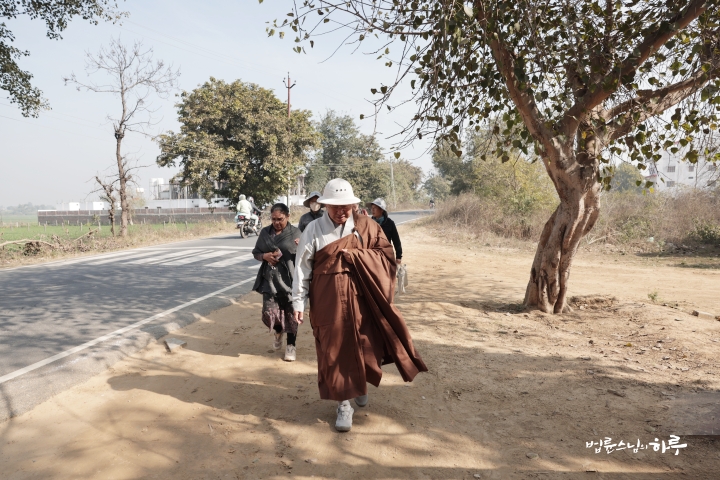
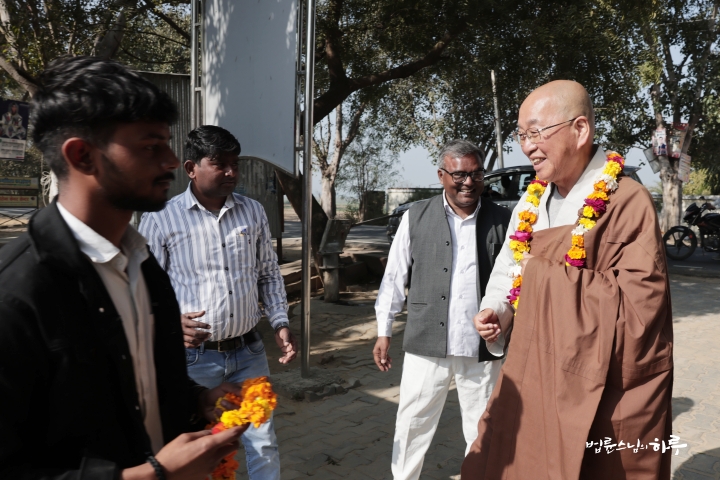
At the school entrance, Suresh and several teachers welcomed Sunim.
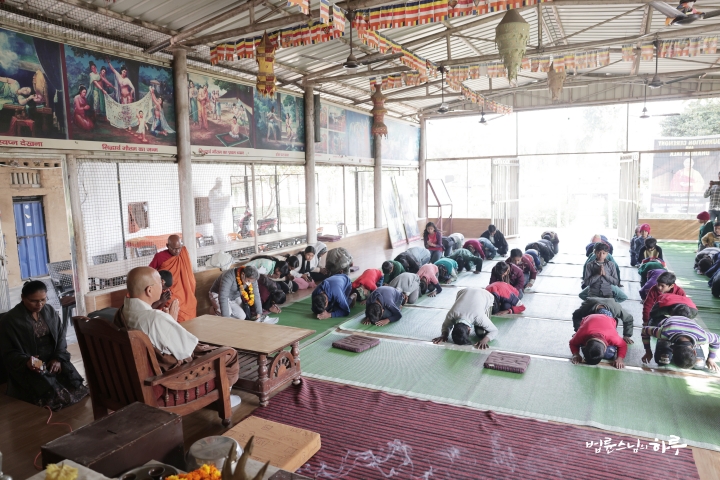
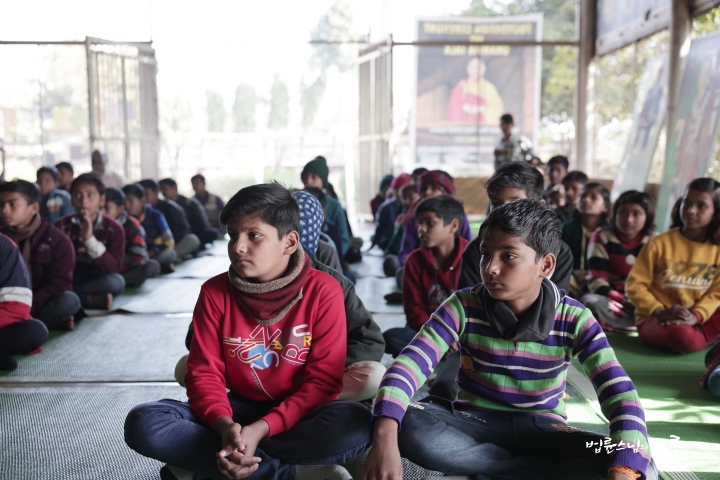
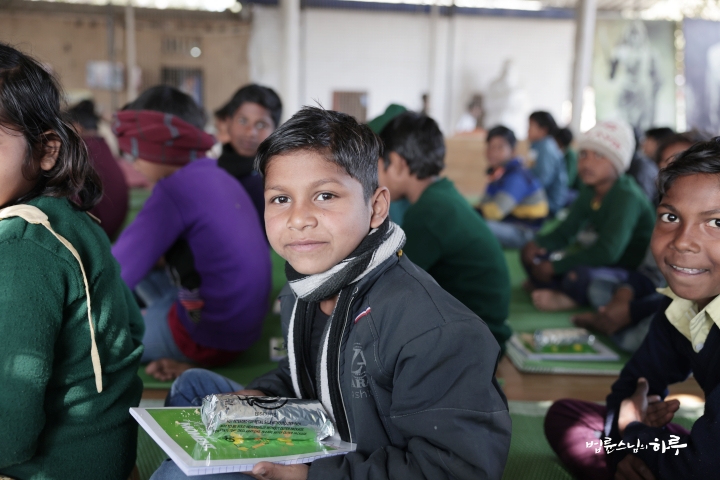
Entering the outdoor auditorium, about 60 students were waiting for Sunim. Sunim first paid respects at the altar and greeted the students.
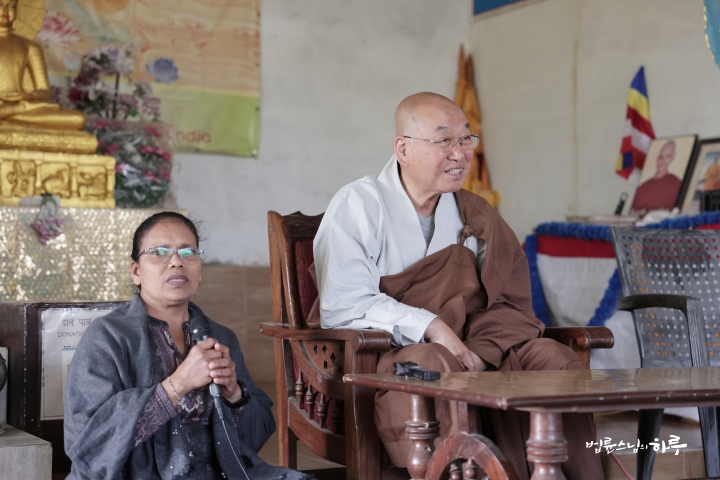
“Yes!”
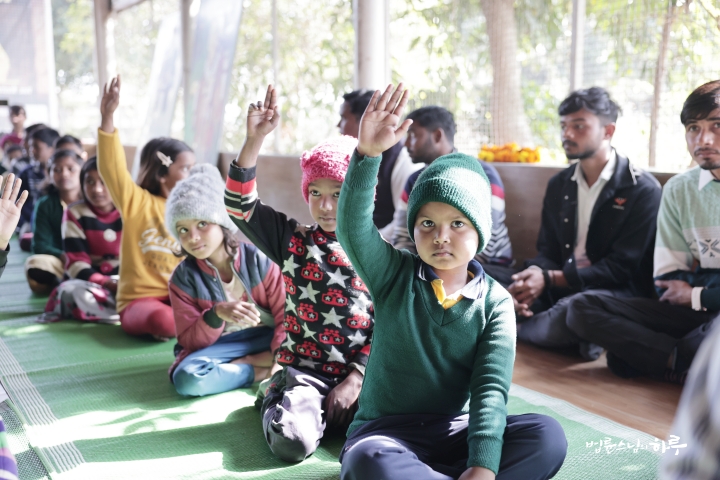
Sunim asked the number of students by grade and which regions the boarding students came from.
“Do you need anything for studying or sports?”“No, we don’t.”
“That’s good. (Laughter) I’m a Buddhist monk from Korea. If you have any questions, please ask.”Two students asked about Korea’s environment and what crops are grown there. Sunim answered their questions and offered words of encouragement.
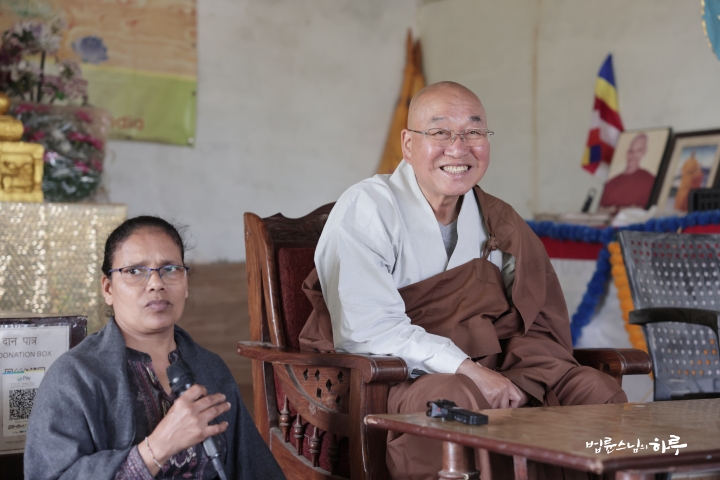
“Yes!”
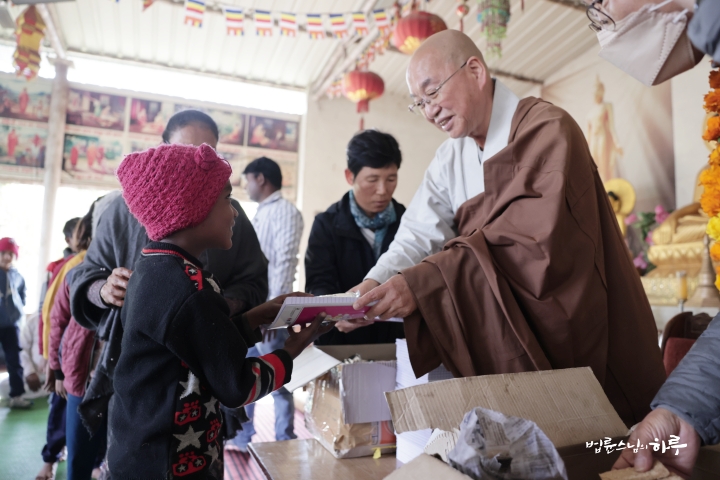
Sunim gave the students notebooks and traditional Indian sweets (mithai) and snacks as gifts. He also gave calendars and letters of hope to the teachers.
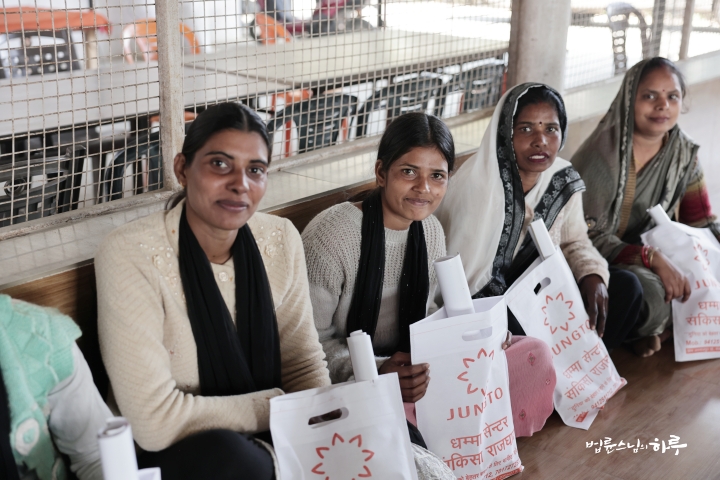
He then toured the boarding school facilities with Suresh and inspected areas under construction.
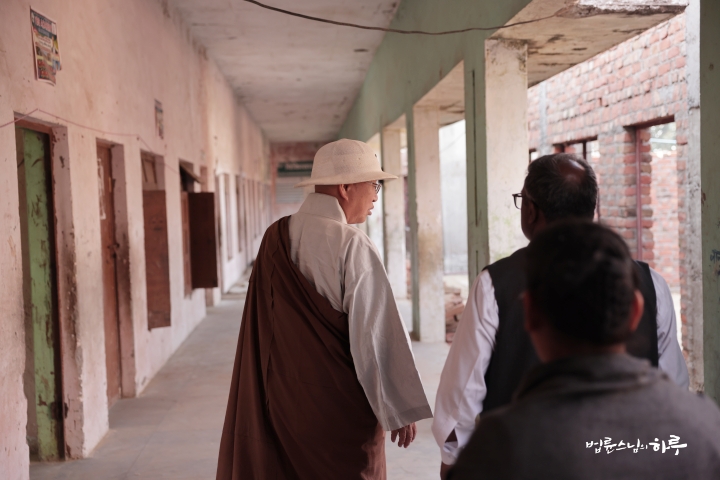
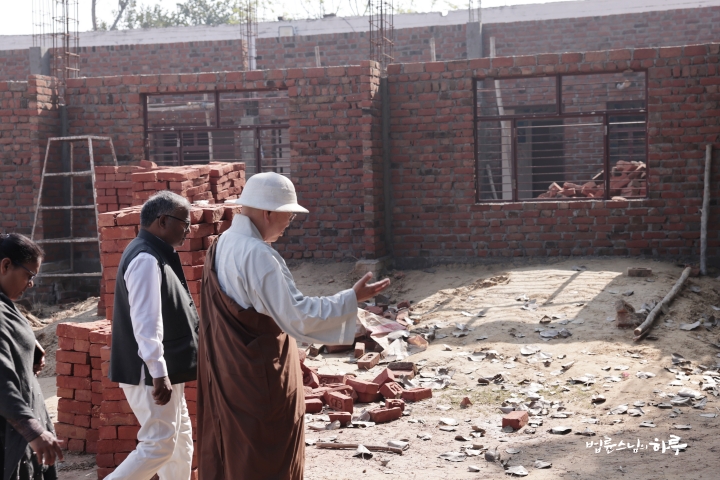
After touring the school, Sunim gave Suresh a donation to help with school operating expenses and returned to the Dharma Center.
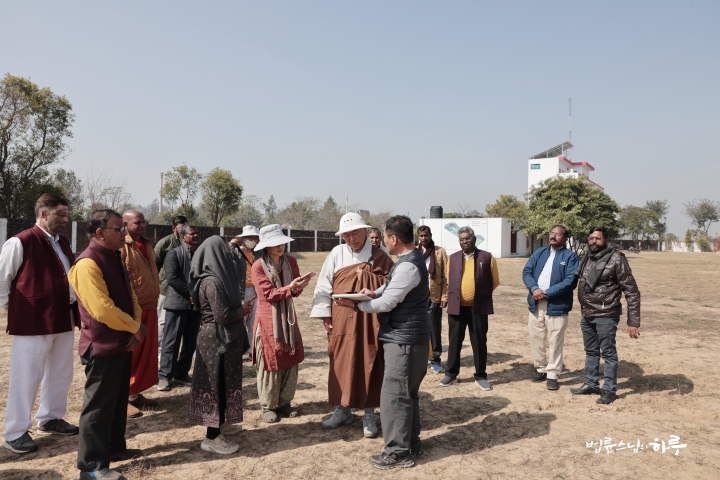
He immediately toured the construction site with board members and shared the content of their discussions.
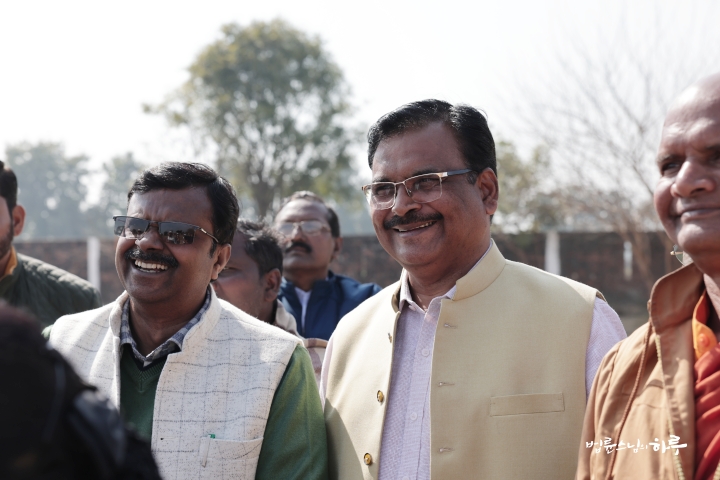
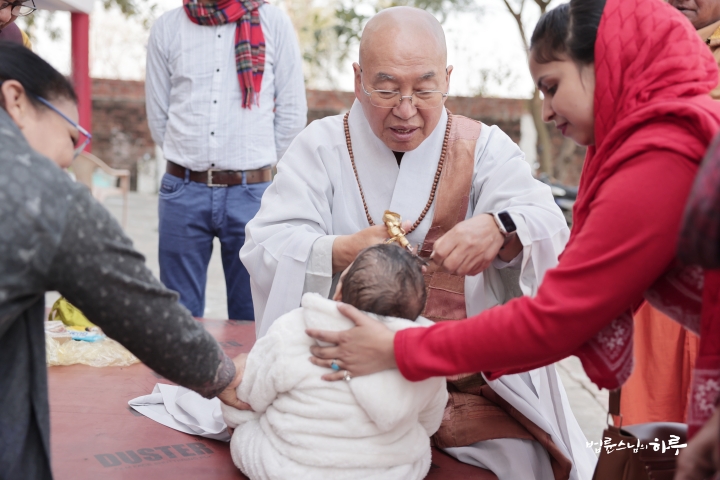
After lunch, at Subash’s request, Sunim performed a head-shaving ceremony for his 10-month-old granddaughter.
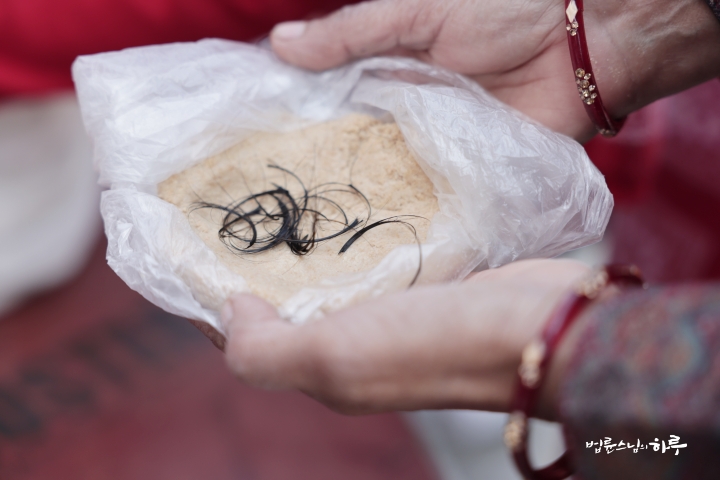
The grandmother carefully received and kept the hair that Sunim cut.
Sunim also gave the child a gift.
“When she grows up, in 20 years, use this to add to her wedding dowry.” (Laughter)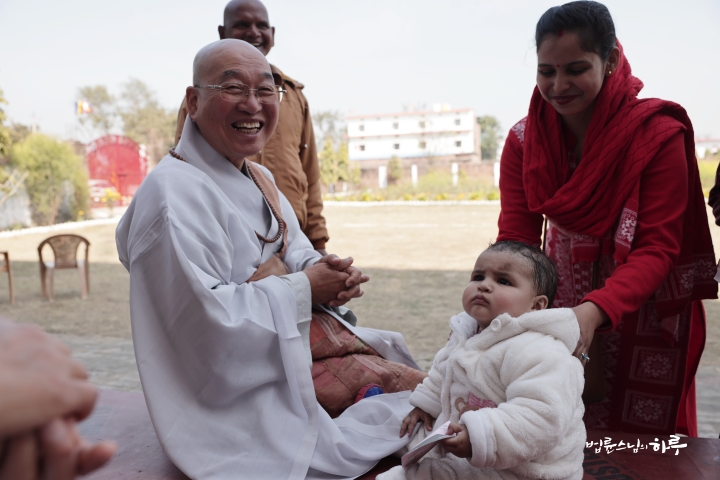
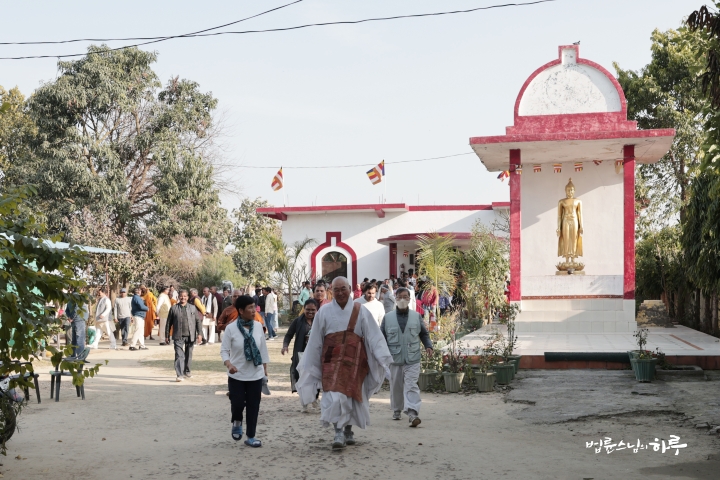
At 12:30 PM, Sunim traveled to the temple operated by Venerable Dhammapal to hold a Dharma assembly for the Shakya clan.
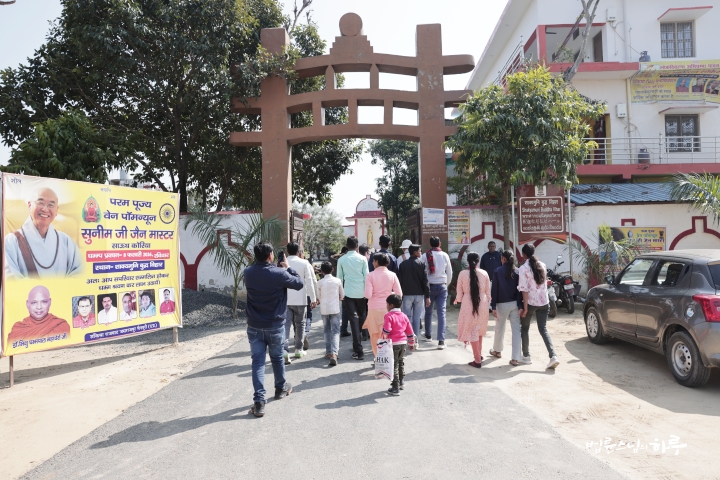
Before the assembly, Sunim met with Venerable Dhammapal. He expressed gratitude, mentioning that pilgrims had recently stayed at the temple and had positive feedback. He then inquired about the temple’s operations and presented a donation.
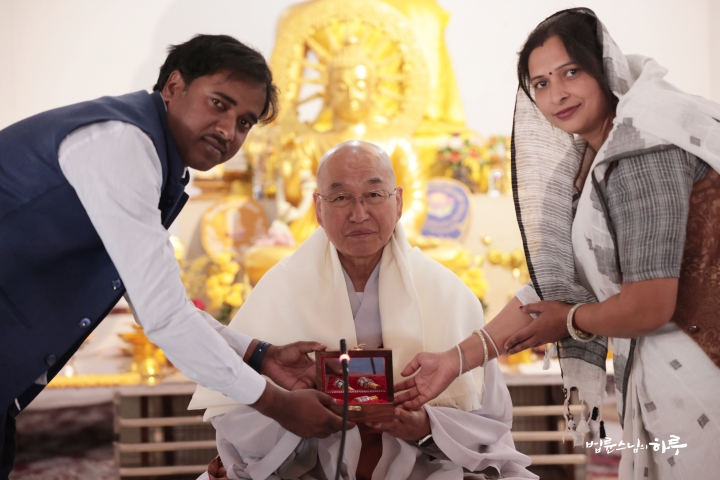
Sunim moved to the Dharma hall and paid his respects. A couple from Kannauj presented Sunim with perfume and white cloth as gifts.
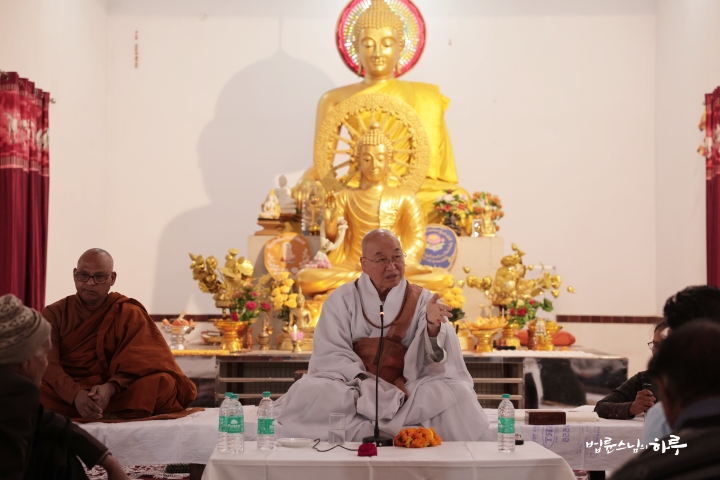
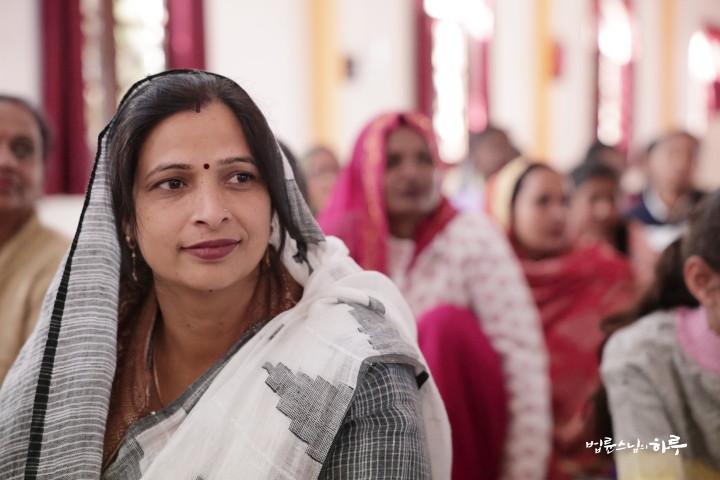
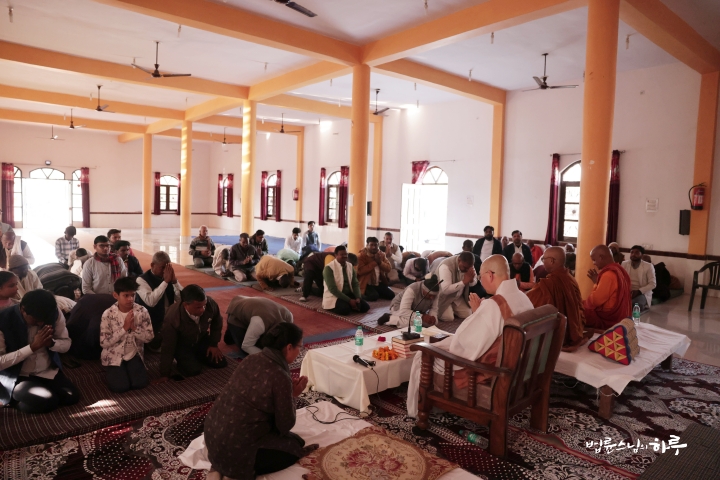
At 1 PM, the Shakya clan Dharma assembly began with the recitation of the Three Refuges and Five Precepts in Pali. About 100 members of the Shakya clan attended.
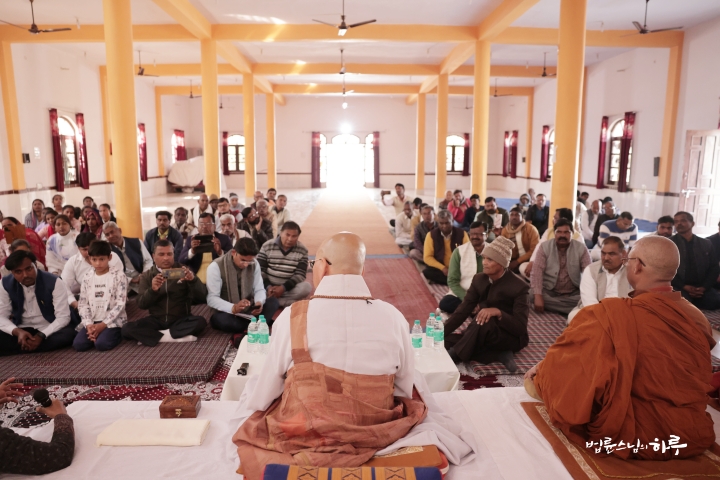
Sunim spoke about changes in India, the Indian government’s Buddhist heritage restoration projects, and the role of the Shakya clan, then held a Dharma Q&A session with the Shakya clan members. Anyone could raise their hand and ask Sunim questions.
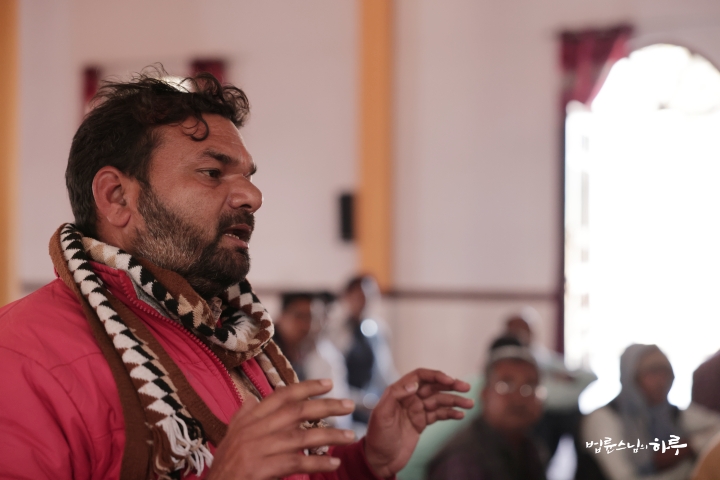
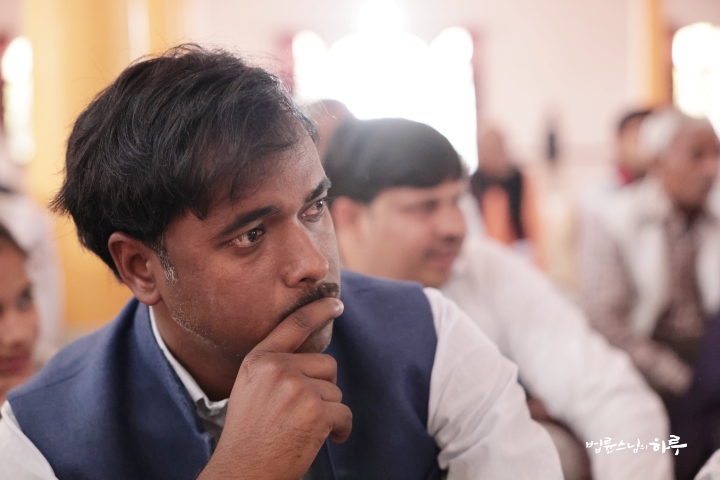
During the three-hour dialogue, ten people took turns asking questions and conversing with Sunim. One person asked why there seem to be no cases of enlightenment today, unlike in the Buddha’s time when many attained enlightenment after hearing the Dharma.
Why Can’t We Attain Enlightenment After Hearing One Dharma Talk Like in the Buddha’s Time?
“In the Buddha’s time, there were many cases of people attaining enlightenment after hearing the Dharma. But now, we don’t hear stories of people attaining enlightenment after hearing your Dharma talks. Why does it seem like no one attains enlightenment nowadays? Is enlightenment impossible in modern society?”
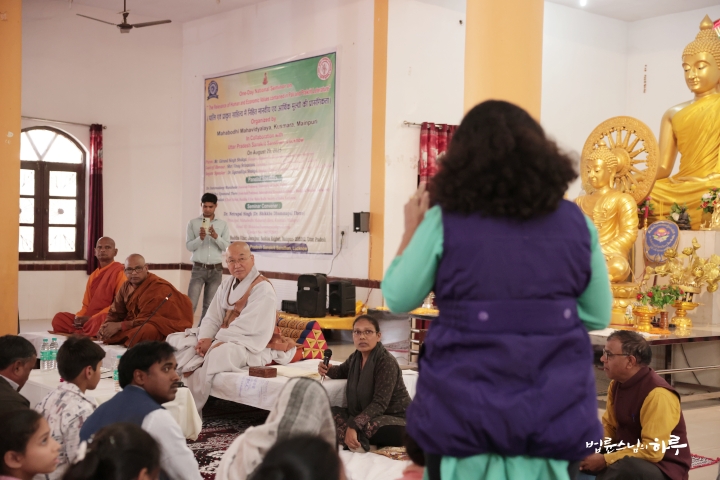
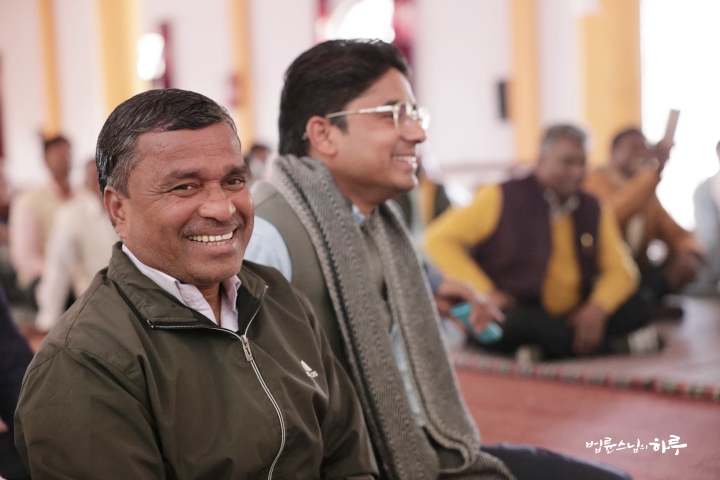
Despite Sunim’s suggestions, the Shakya clan members continued to ask him questions focusing on topics such as how to further develop Buddhism, institutions, history, and conflicts.
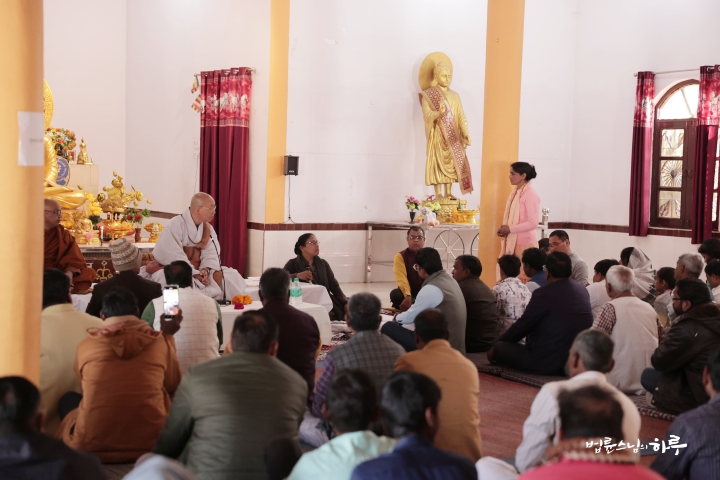
I want to work for the Dharma, and I’d like to become a bhikkhuni to be more actively involved. What are the ways for women to become bhikkhunis?
In the Buddha’s Sangha, there are bhikkhus, bhikkhunis, upasakas, and upasikas (비구·비구니·우바이·우바새), but in current Indian society, the proportion of female practitioners is too small. How can we increase the number of female practitioners and help them work more meaningfully?
Compared to 30 years ago, temples have been built here in Sankasia, and more people are listening to Dharma talks, so this is certainly a change. What should we do to develop Buddhism further from now on?
Monks from Vietnam and other countries come wearing yellow kasayas, but monks from Korea wear gray robes. Why do Korean monks wear different colored robes? And are there Buddhist believers in North Korea too?
I heard the story of Princess Ayodhya who sailed from India to Korea. Is it true that there was also a country called ‘Gaya’ in Korea?
The Shakya clan is increasingly dividing into three paths: politics, economics, and technology. How can people going different ways unite their strength?
It is said that after Gautama Siddhartha became the Buddha, both the Shakya and Maurya royal families gave up the path of kingship and entered the path of practice. Is this story true?
How did you know that there is a sacred site of the Buddha here in Sankasia? And there is a conflict with another religion over the ownership of that stupa. What should we do if the other party just wants to fight unconditionally?
As they shared many stories, two hours quickly passed. They took a short break.
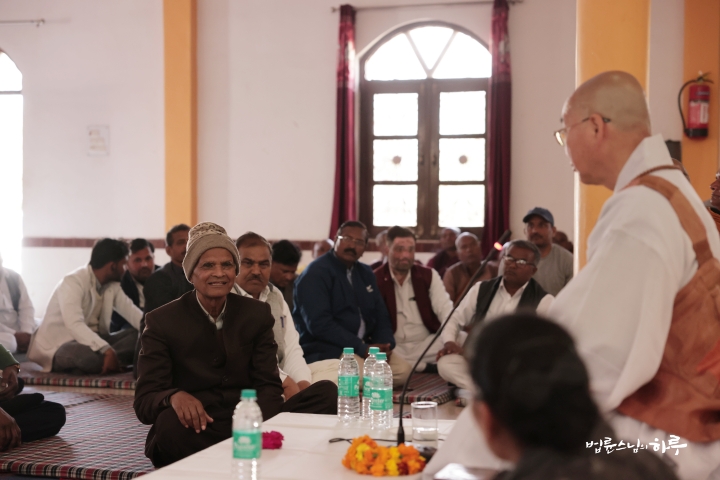
After the break, they continued the conversation. Sunim explained one by one how Hinduism, Jainism, and Buddhism use the same terms but with completely different concepts, and talked about the unique characteristics of the Buddha’s teachings.
The Unique Characteristics That Distinguish Buddhism from Other Religions
First is the Middle Way (중도: 中道). The concept of the Middle Way was first presented in Buddhism, meaning a path that departs from both hedonism (쾌락주의)
and asceticism (고행주의)
. From this insight of the Middle Way, the Noble Eightfold Path unfolds (팔정도)
. The Middle Way is Buddhism’s unique core teaching. Second is Dependent Origination(연기 : 緣起). This is also a unique Buddhist concept not found in other religions. Sariputta was originally a disciple of Sanjaya, but after hearing a brief explanation of dependent origination from Assaji, a disciple of the Buddha, he immediately attained enlightenment and became the Buddha’s disciple. We can also say that the Buddha awakened to this law of dependent origination under the Bodhi tree. And based on this insight of dependent origination, the Buddha taught the Four Noble Truths (사성제 : 四聖諦). ‘This is suffering. This is the cause of suffering. This is the cessation of suffering. This is the path to the non-arising of suffering.’ The Middle Way, Dependent Origination, and the Four Noble Truths are the most essential teachings of Buddhism. And the Buddha said: ‘In the future, even if someone claims “This is Buddhism” or “That is Buddhism,” do not accept or reject it unconditionally. Instead, examine it in light of my teachings—the Middle Way, Dependent Origination, and the Four Noble Truths. If the content aligns with them, accept it as the Buddha’s teaching; if not, discard it.’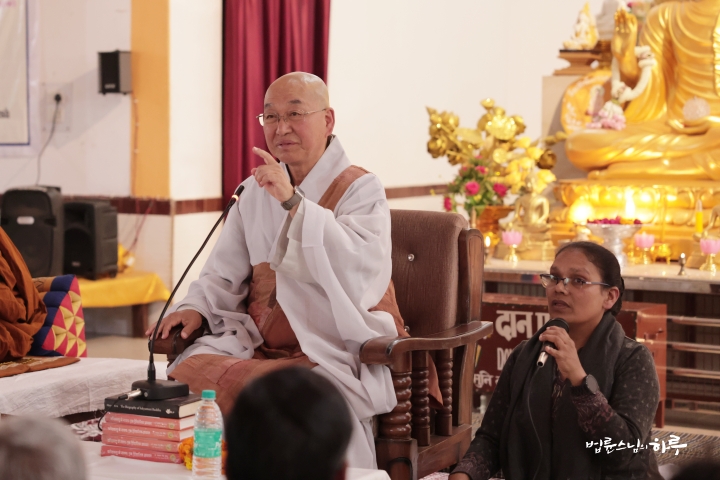
Karma Is Not Destiny but Habit
The concept of ‘karma’ also exists in traditional Indian thought, but its meaning is fundamentally different from that in Buddhism. In Indian tradition, there is a strong tendency to understand karma as a predetermined destiny set at birth. In contrast, the Buddha explained karma as ‘something that has been formed.’ In other words, karma is not an innate destiny but a structure of habits created through repeated actions and consciousness. The reason why a person’s character or tendencies don’t change easily is not because they were born that way, but because they have been formed over a long period of time. Habits are difficult to change, but that doesn’t mean they cannot be changed. For example, when someone cannot quit smoking, we say they are ‘addicted to cigarettes.’ This is not because they were born with a destiny to smoke from a previous life, but because such a habit was formed through repeated actions. Therefore, it can be changed. Ultimately, the Buddha’s teaching is that destiny can be changed. The reason we are called ‘sentient beings’ is because formed ignorance and delusion obscure our wisdom. However, when that ignorance and delusion disappear, anyone can become wise. Therefore, anyone, regardless of who they are, can live without suffering. That state without suffering is precisely nirvana. It is neither impossible nor particularly difficult. The reason we suffer is because we are dragged around by karma, that is, by habits. A person who doesn’t smoke doesn’t suffer at all even if they don’t smoke all day. However, a person who smokes says they suffer if they can’t smoke for just one day. The reason that person suffers is because they have the habit of smoking, that is, the karma of smoking. For a person with the karma of smoking, not smoking is tremendous suffering, but for a person who doesn’t smoke, it’s nothing at all.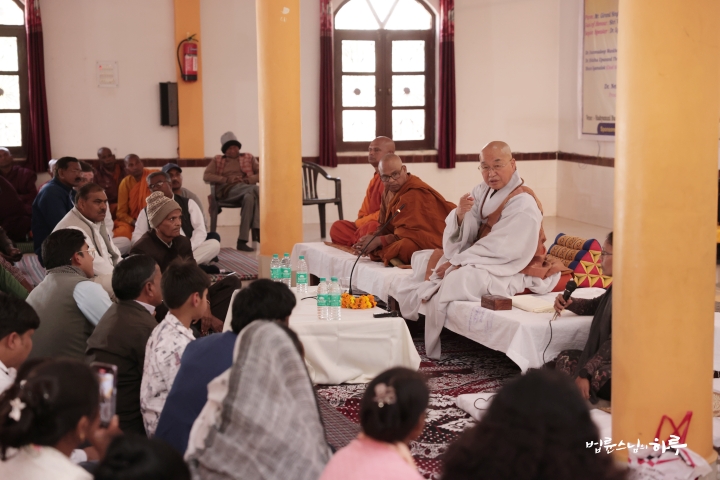
The Cause of Suffering Lies Not in the Environment but in Habits
The Buddha Dharma (the Buddha’s teachings) is not about learning terms like dependent origination, the Middle Way, nirvana, or nibbana. The Buddha Dharma is about realizing for oneself where suffering comes from through one’s own experience. For example, let’s say I’m eating Indian food and think, ‘I absolutely cannot eat this. Living in India is too difficult because of the food.’ Realizing that the cause of suffering is not the food but my habits is the Buddha Dharma. When we understand this, we can eat any food without suffering. Then we realize that the cause of suffering is not external, but lies in our own habits and attachments. The reason I provide pilgrim lodges and uncomfortable environments instead of hotels and good food to pilgrims during India pilgrimage tours is not to make them suffer. It is to help them experientially understand where suffering arises from through that experience. In old societies and educational systems, women were discriminated against and not educated, so people thought that women were inherently less capable than men. This led to the logic that ‘if you don’t accumulate merit in your previous life, you are born as a woman, and if you accumulate merit, you are born as a man.’ However, now when women receive education and discrimination is eliminated, some show talents superior to men. Then this is not destiny, is it? This is where the greatness of the Buddha Dharma lies.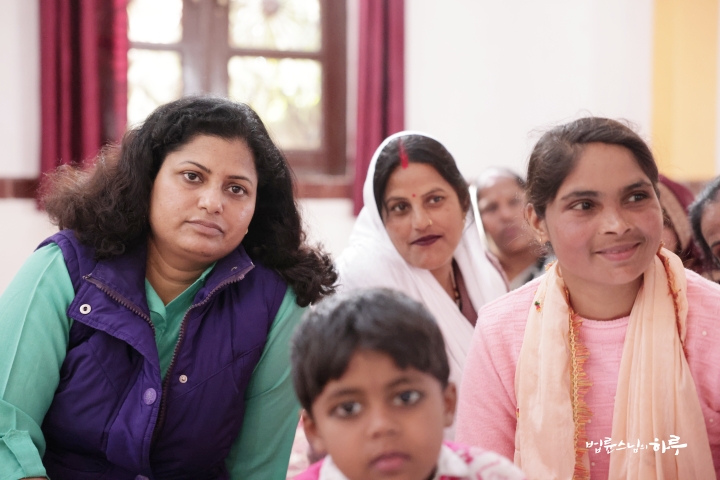
Nirvana Is Not About ‘Not Being Reborn’
The term ‘samsara’ (윤회:
cycle of rebirth) also has different meanings in Indian tradition versus Buddhism. In Indian tradition, samsara refers to the cycle of death and rebirth. In that context, nirvana means a state where one is no longer reborn. However, the samsara that Buddha spoke of has a different nature from this cycle of life and death. We all live with desires. When our desires are fulfilled, we feel good. We call this ‘pleasure.’ Conversely, when what we want doesn’t come to pass, we feel bad, which we call ‘suffering.’ Our lives are a process of repeating this pleasure and suffering. For example, if you gain 10,000 rupees today, you feel good, but if you lose 10,000 rupees, you suffer. When a son is born, you feel joy, but when the son dies, you suffer. On the other hand, let’s say you pick up a pebble on the road. You don’t feel particularly pleased. Even if you lose that pebble, you don’t feel particularly bad. The greater the pleasure, the greater the suffering – this is the samsara that Buddha spoke of. It is the continuous flow of suffering (고 : 苦-dukkha) and pleasure (락 : 樂 -sukha) repeating itself.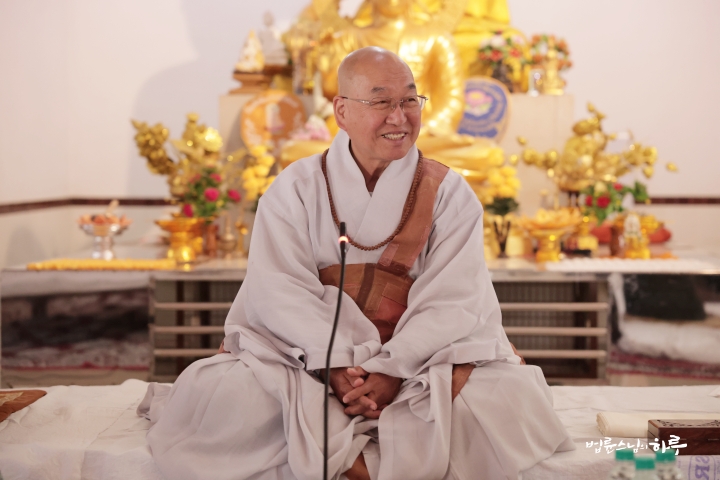
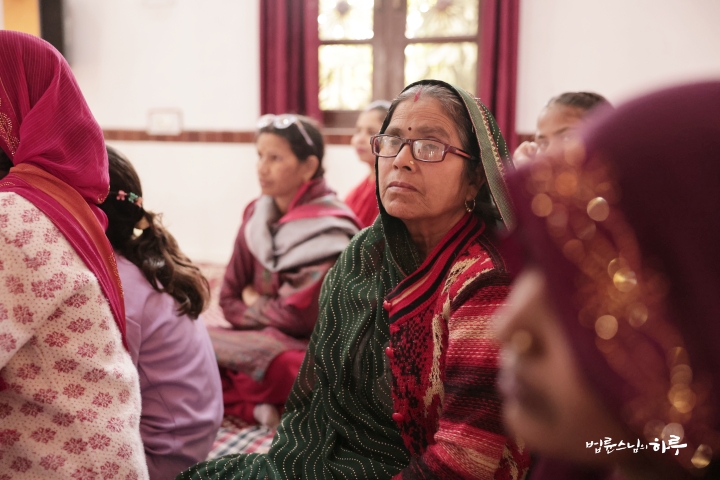
Sunim then continued to receive questions and engage in dialogue. One person raised their hand and asked Sunim how to live while maintaining the Buddha Dharma in daily life.
How Can We Live While Maintaining the Buddha Dharma in Daily Life?
“We work and engage in activities every day. How can we live while maintaining the Buddha Dharma in the midst of all this? There are many wrongdoings and obstacles in the world. How can we move forward on the right path?” 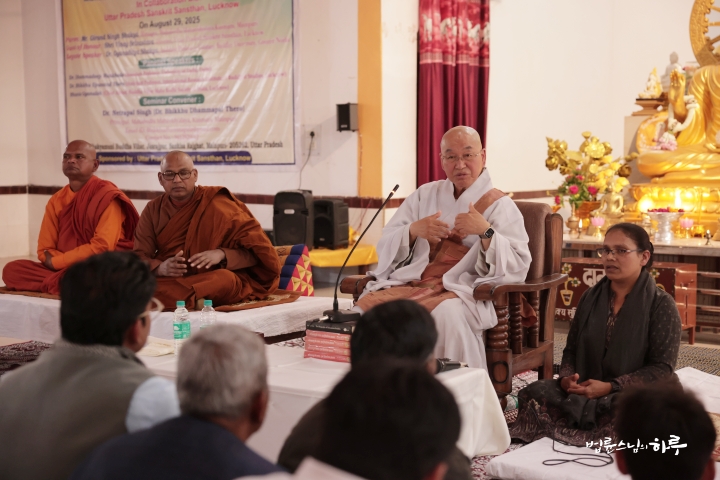
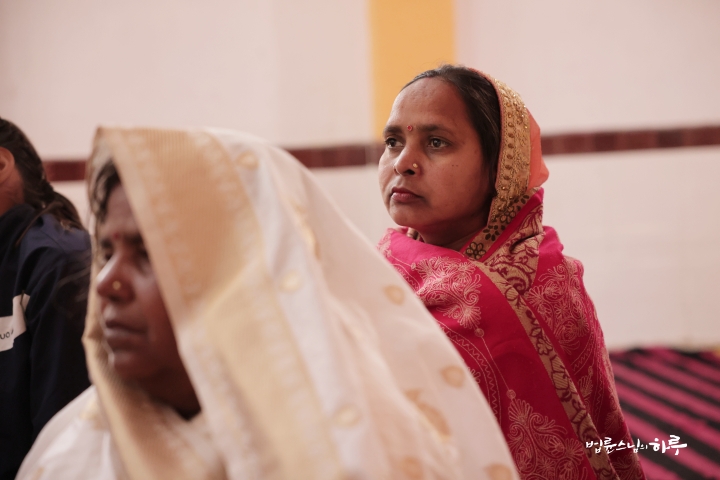
As the conversation was coming to an end, the last questioner raised their hand and asked Sunim a question.
Do Negative Thoughts Really Have a Bad Influence?
“We often get swept up in negative thoughts in our lives. Do negative thoughts actually have a bad influence on us?”
“Yes, that’s right. When you think negatively, you are negatively affected. In the Buddha’s time, when untouchables died, they weren’t cremated but were thrown into the forest. Just as dead dogs or rats were thrown away, bodies were thrown into the forest. So, is the forest where corpses were thrown an impure place or a sacred place?”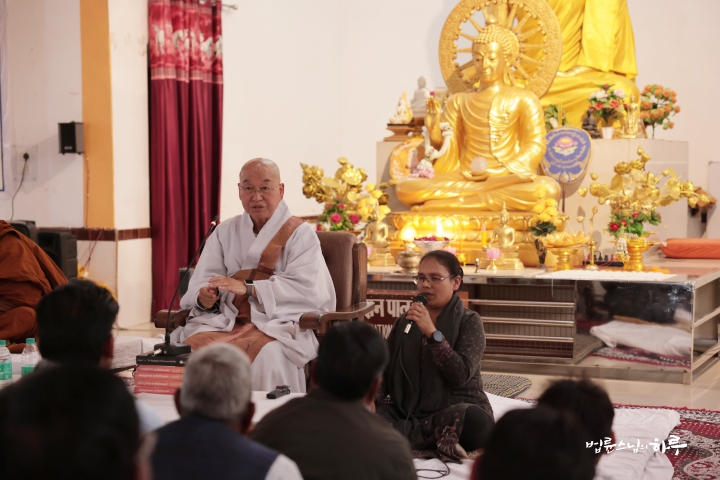
“It’s an impure place.”
“Being impure means thinking ‘if I go there, I’ll have bad luck or something bad will happen to me.’ So nobody goes to such places. However, for practitioners who practice without meeting people, such places are actually good. The Buddha practiced in such places and attained enlightenment. Do we call the place where the Buddha attained enlightenment and first taught the Dharma an impure place or a sacred place?”“We think of it as a sacred place.”
“Then, is there something impure or sacred in that place itself? Or is it in our minds?”“It’s in our minds.”
“From the perspective of the Buddha Dharma, there is nothing inherently impure or sacred. However, our minds always think there is something impure or sacred. We think it’s impure when corpses are thrown there, and we think it’s sacred when we hear the Buddha was there. Sarnath was originally a forest where corpses were discarded. However, because the Buddha gave teachings to practitioners there, we call it a sacred place. Is this robe an impure robe or a sacred robe? Originally, it was an impure robe because it covered corpses. However, it became sacred because a practitioner wears it. Like this, existence has neither sacredness nor impurity. There are only impure thoughts and sacred thoughts in our minds. The more you know the Buddha Dharma, the more you can say it’s truly great. This is different from believing in Buddhism as a religion, or believing in Hinduism or Christianity. The Buddha Dharma speaks the truth. It doesn’t speak about belief.”“Thank you. I understand well.”
The Dharma assembly concluded after 4 PM. At 4:30 PM, Sunim bid farewell to the volunteers remaining at the Dharma Center and set off for Delhi.
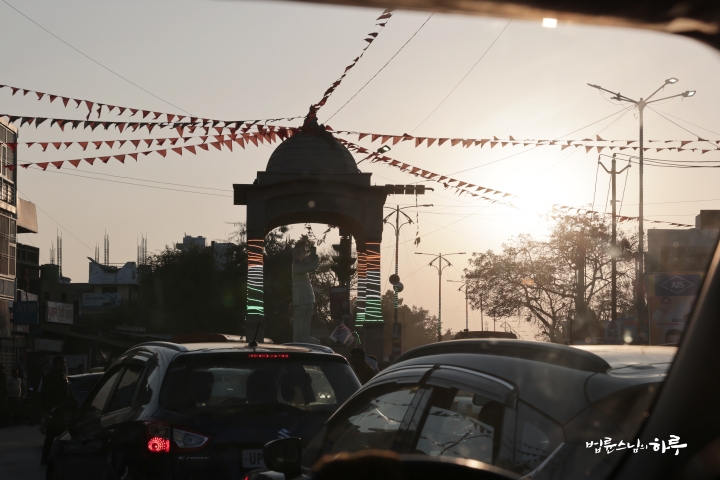
After traveling by car for about 7 hours, Sunim arrived at accommodation near Delhi at 10:30 PM.
Tomorrow, Sunim will give a lecture at the Indian Institute of Technology (인도 공과대학) in the morning, visit the Vivekananda International Foundation in the afternoon, and then take the night train to Gaya.