The Buddha Forbade Supernatural Powers, Yet How Should We Understand the ‘Manifestation of a Thousand Buddhas’?
Feb 3, 2026. Day 11 of the India Pilgrimage, Shravasti
Feb 3, 2026. Day 11 of the India Pilgrimage, Shravasti
Hello. This is the 11th day of the India pilgrimage. After leaving Nepal and re-entering India, the pilgrimage group visited Piprahwa, the Thousand Buddha Stupa (천불화현탑), and Jetavana Monastery (동원정사) in succession.
Today was the day to cross the border from Nepal back into India. The pilgrimage group woke up early in the morning to prepare for departure. At 4 AM, they departed from Mahayana Shakyamuni Temple (대성석가사) and headed for the border. As soon as they boarded the buses, they offered morning prayers.
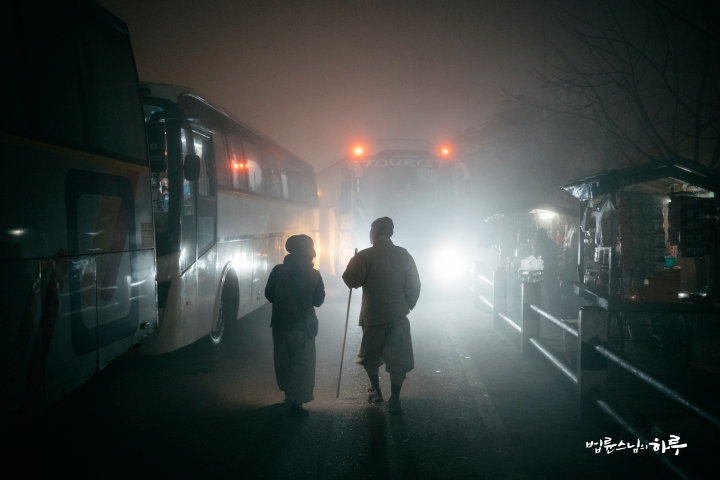
They arrived at the border at 5 AM and began immigration procedures. The Nepal exit procedures were relatively simple compared to entry, so they were completed fairly quickly. However, on the Indian side, border security had been strengthened since this year, making the procedures more complicated than last year.
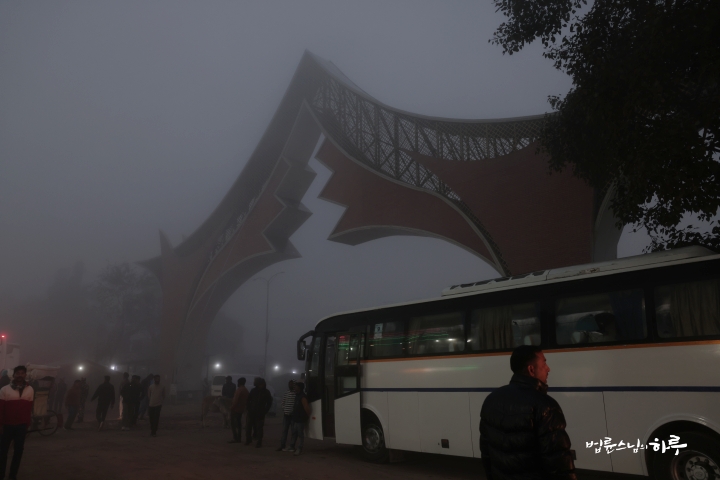
At 7:50 AM, the first five buses that arrived completed the Indian entry procedures. Sunim headed to Piprahwa with the five buses that had completed the entry procedures.
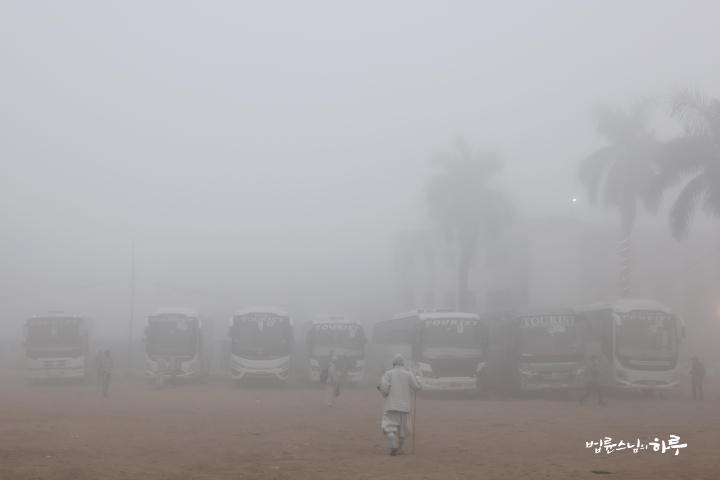
They arrived at Piprahwa at 9:25 AM. The sacred site was neat and tidy, surrounded by thick fog. Police officers who would provide security for the Shravasti itinerary were waiting at Piprahwa.
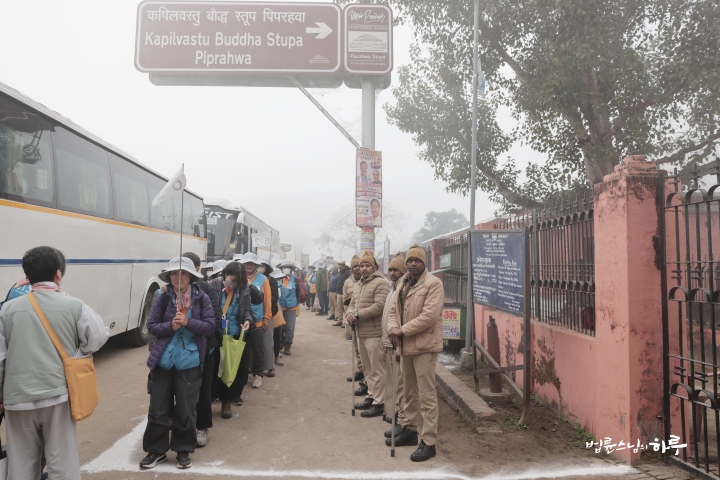
“Yes, Sunim. We will cooperate to ensure the pilgrimage schedule concludes well.”
Sunim thanked the police and checked the circumambulation route and seating arrangements for the pilgrimage group. He then led the group to a place away from the worship site to have breakfast with packed meals.
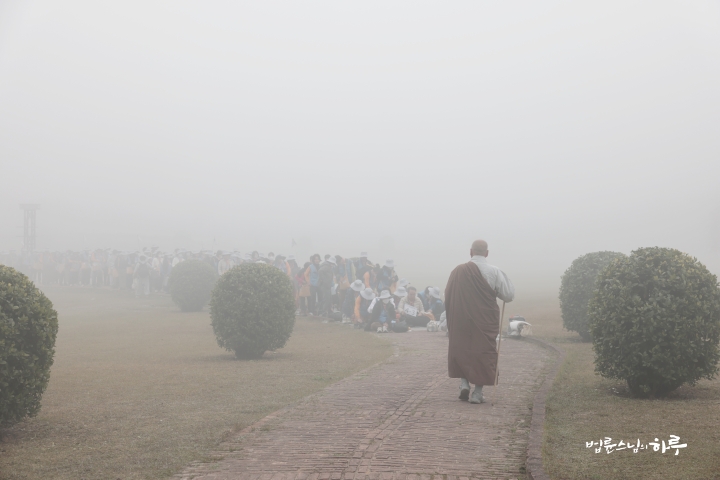
As they were finishing their meal, five more buses arrived. Sunim moved with the advance group to the worship site in front of the stupa.
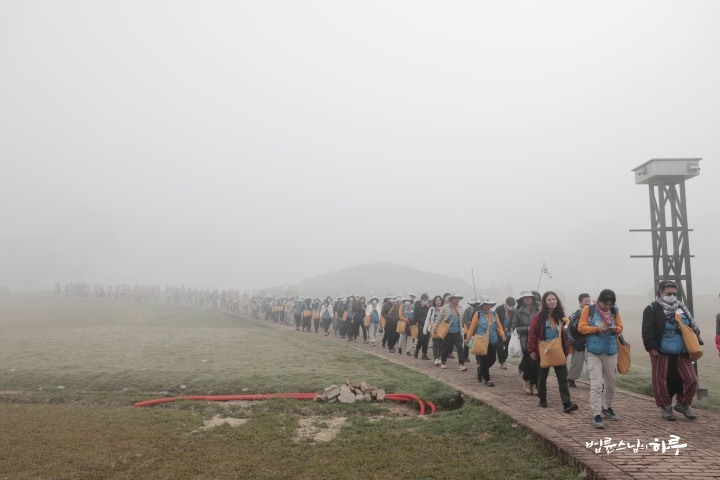
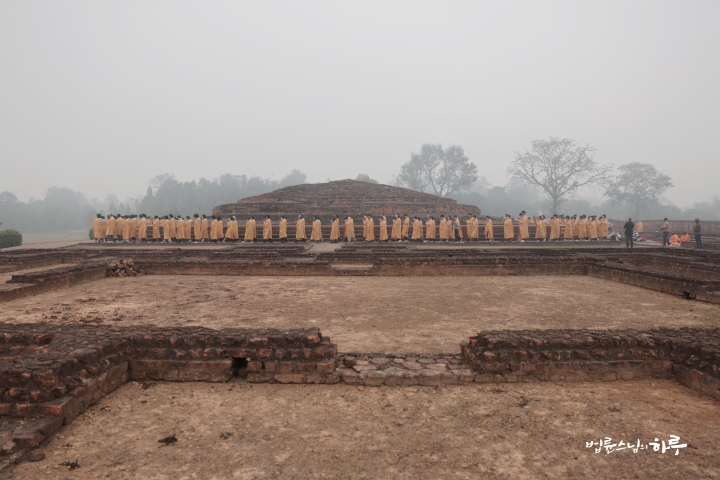
The Piprahwa stupa stood low and solid in the middle of a wide plain. There were no other structures around the stupa. Only the stupa stood alone in the open space. It had a simple appearance, made only of rounded earth and bricks without any elaborate decorations or patterns.
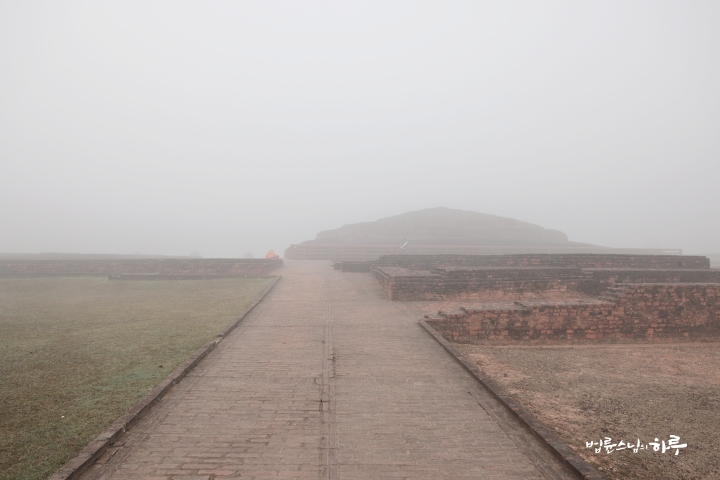
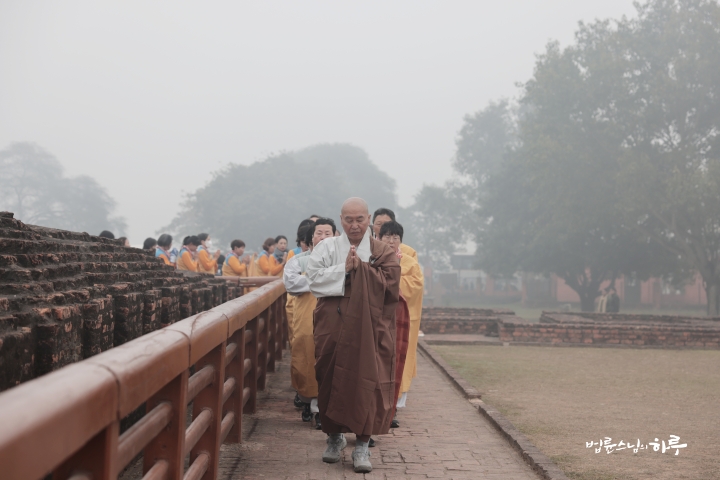
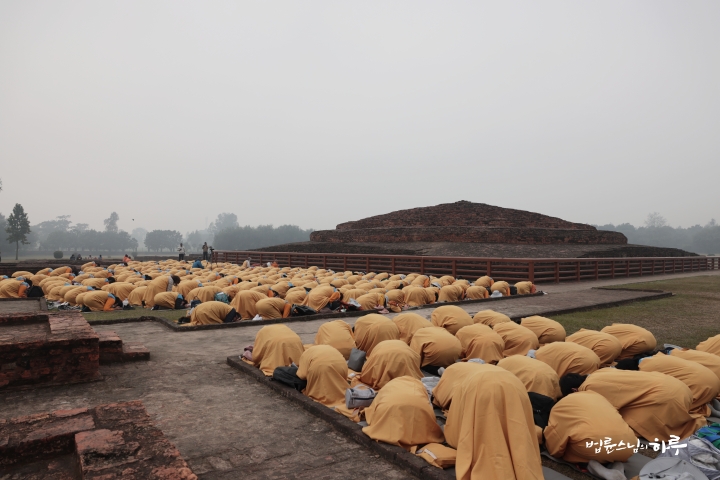
The pilgrimage group all put on their kasayas and began circumambulating the stupa. As the circumambulation was coming to an end, the thick fog began to lift gradually. After completing the circumambulation, they offered prayers and meditated.
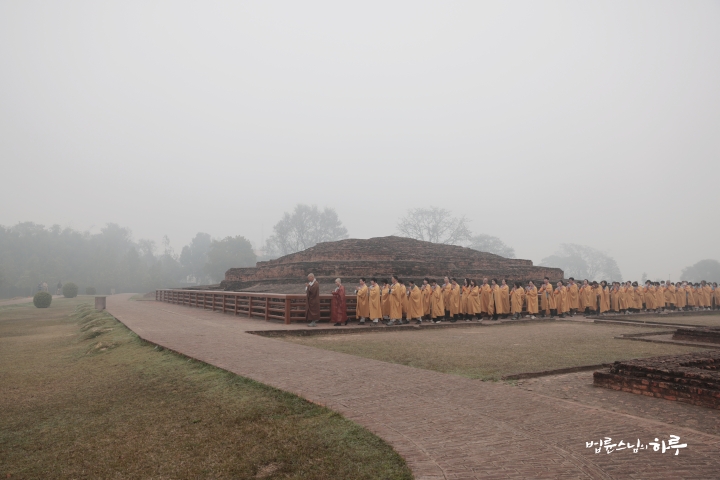
Sunim then spoke about the excavation process of the Piprahwa relic stupa and the history of relic enshrinement, explaining the significance of the Buddha’s authentic relics that we can directly encounter.
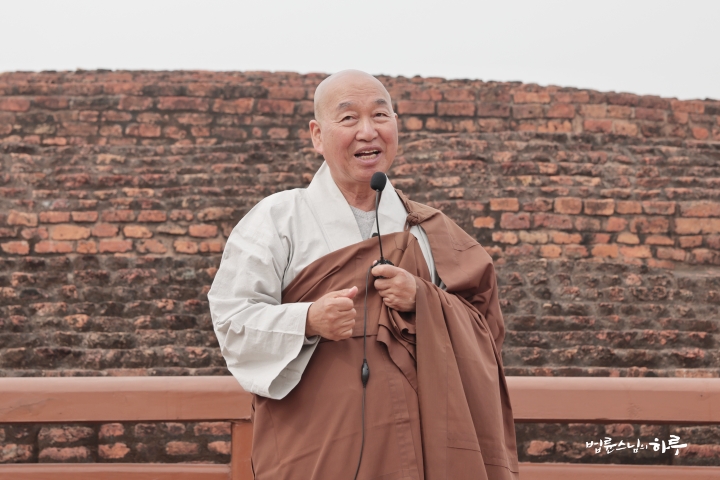
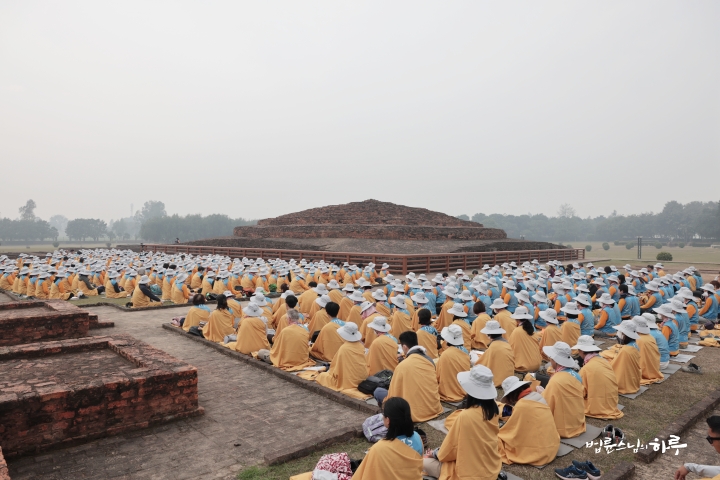
The Only Authentic Buddha Relics We Can Encounter, Confirmed Through Excavation
This ruin was excavated in the late 19th century during the British colonial period. The excavation was led by British archaeologist William Claxton Peppé. At that time, relic containers were discovered inside the stupa, and inscriptions found with the containers clearly confirmed that this was the relic stupa built by the Shakya clan. After India gained independence, the Archaeological Survey of India re-excavated this site in the 1970s. During this re-excavation, another relic container was discovered at a deeper layer than the initial excavation point. This shows that this relic stupa was not built all at once, but was gradually expanded over several periods. Initially, the foundation of the relic stupa was established during the time of King Ashoka, and it was later expanded once more during the Kushan dynasty. When it reached the Gupta dynasty period, the scale of the stupa was greatly expanded, and the relic stupa gradually grew to its current form. During this process, relics were initially enshrined in the lower part, and in later periods, relics were enshrined again in the upper part. Therefore, two relic containers were discovered in this relic stupa, and several relics were unearthed. Currently, the relics from Piprahwa are virtually the only ones that we can directly see and encounter with our own eyes.”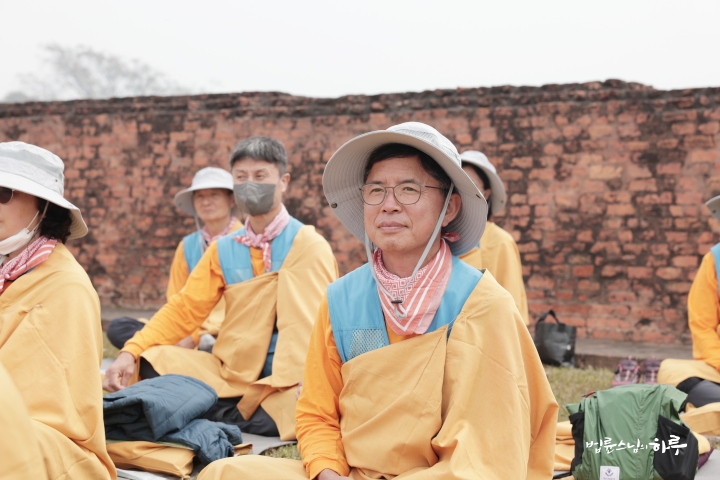
As Sunim was finishing the explanation of the sacred site, the last three buses arrived at Piprahwa. Sunim instructed the later arrivals to come to the Thousand Buddha Manifestation Stupa (천불화현탑) after completing their meal and pilgrimage, then departed for Shravasti with the pilgrims who had finished their visit.
After traveling for about three and a half hours, they arrived at the Thousand Buddha Manifestation Stupa at 3 PM. The pilgrims received their kasayas at the entrance of the stupa and slowly circled it while chanting with palms joined, ascending to the top.
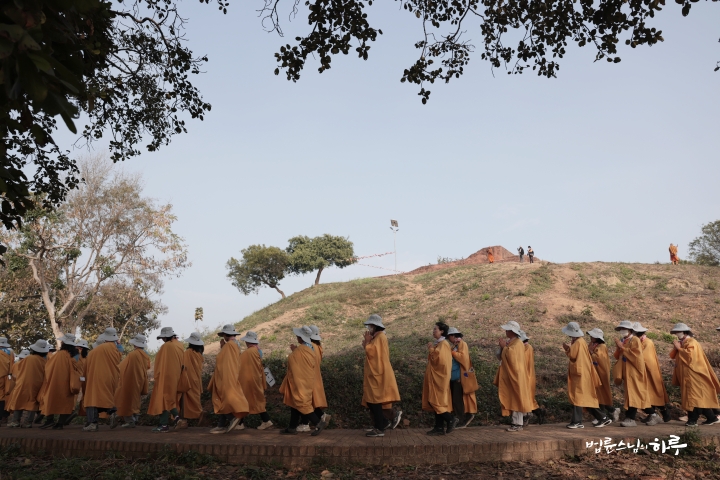
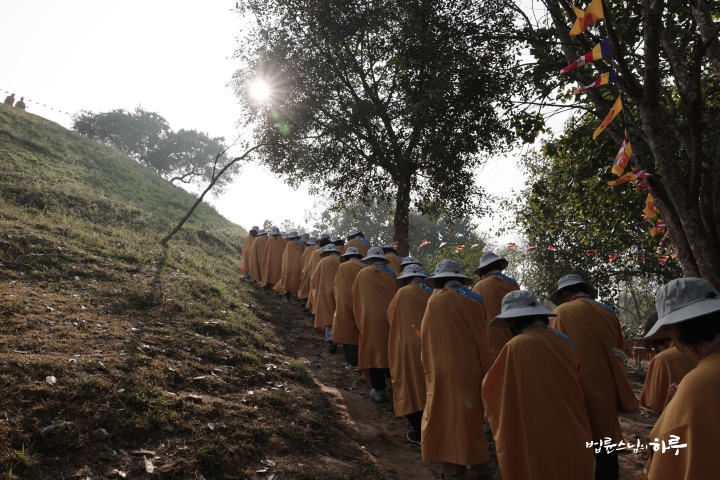
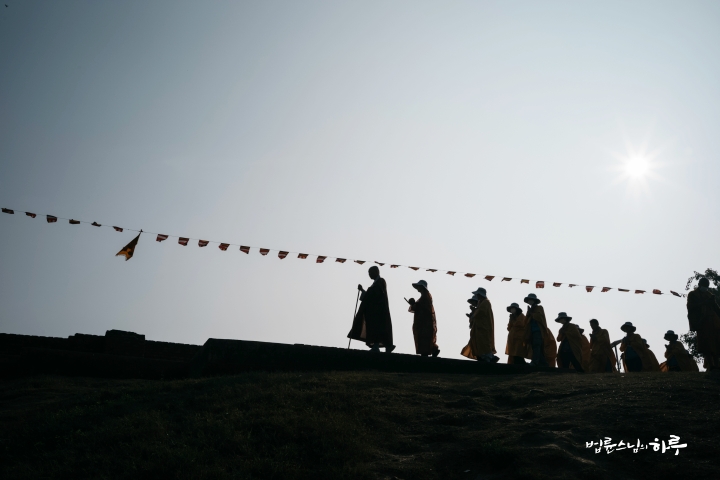
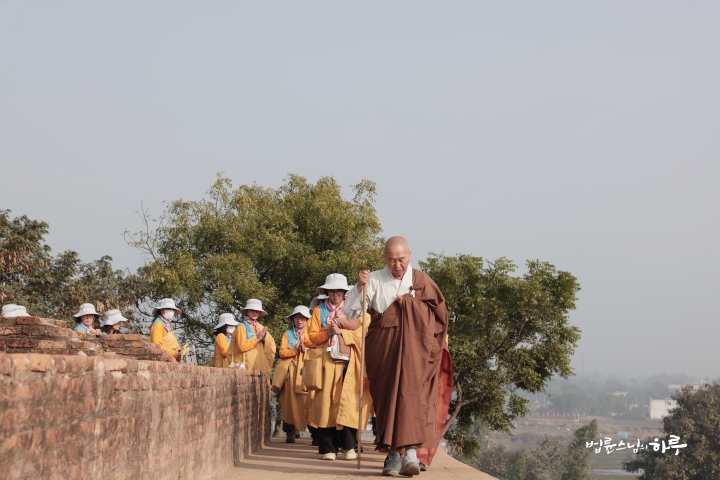
From below, it appeared to be a modest hill. However, upon reaching the summit, traces of the stupa site with its distinctive form became visible. After completing the circumambulation, they stood in place for prostrations and brief meditation.
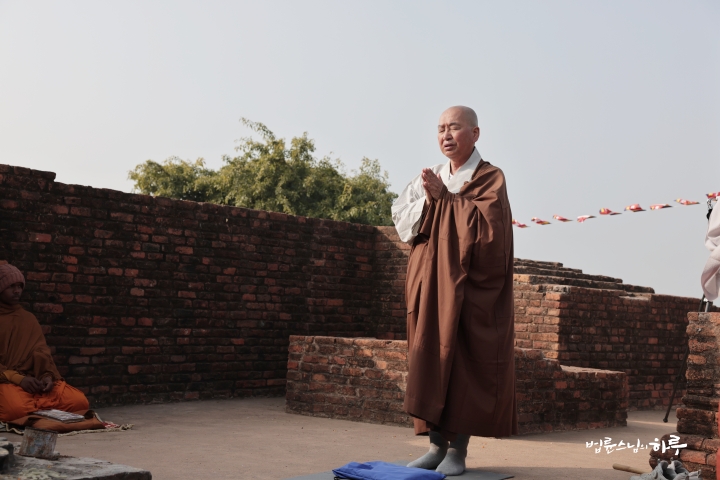
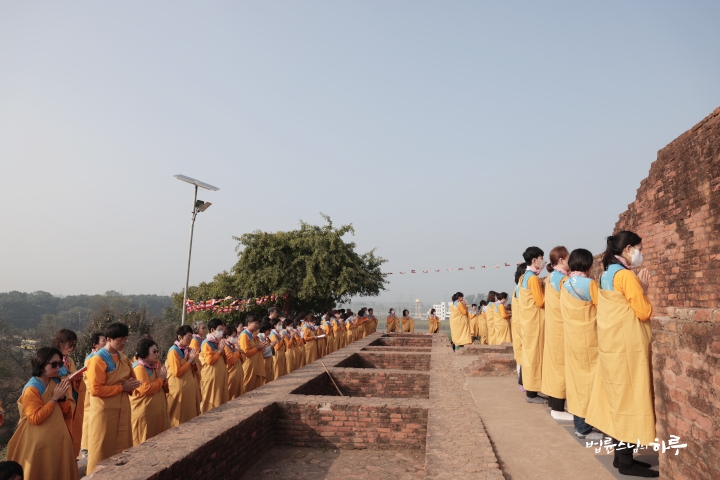
Sunim then explained the origin of the Thousand Buddha Manifestation Stupa.
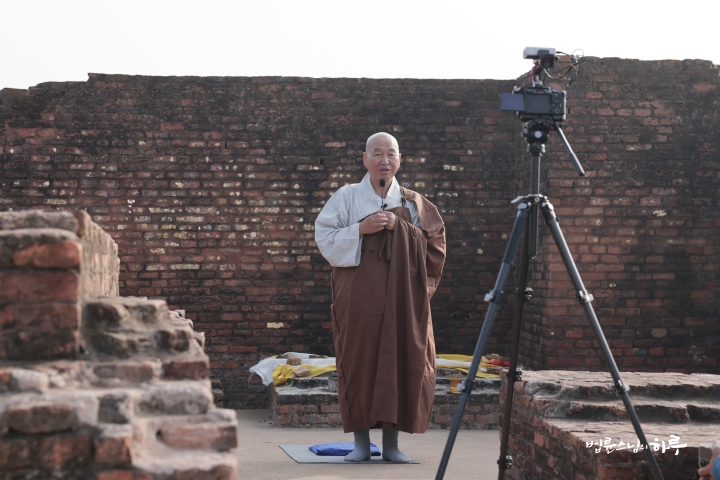
)
at the invitation of the merchant Sudatta (수닷타 장자)
. Sudatta was a wealthy merchant from this region. The Buddha stayed here with a community of 1,250 disciples, continuing his practice and teaching. However, he did not receive the same enthusiastic response as in Rajagriha. Shravasti was an emerging powerful state at that time, with strong military and economic power. Shravasti is called Savatthi in Pali, which means ‘abundant.’ It was a region rich in resources and prosperous in life. In this environment, numerous emerging thinkers appeared competitively, making claims about what was right and what was wrong. As a result, it is said that to the people of that time, the Buddha appeared to be just one among many thinkers. Well-meaning individuals like the merchant Sudatta were deeply saddened that the people here could not properly understand the Buddha’s Dharma. The people of Shravasti reportedly preferred visible phenomena like supernatural powers and miracles over the depth of practice or teachings. So they pleaded with the Buddha, saying, ‘Since the people’s understanding is still lacking, you should show them something special.’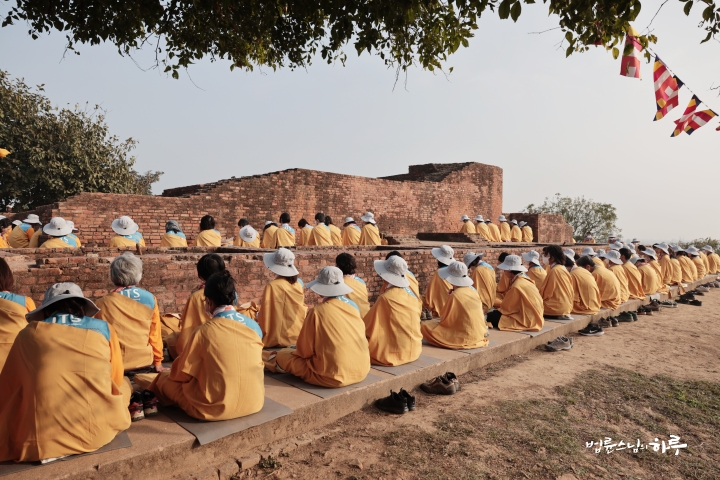
Why Did the Buddha Accept the Request to Perform a Miracle?
Generally speaking, it would seem that the Buddha would not have accepted such a request. However, the Buddha did accept it and gathered the public outside the city of Shravasti on a specific day and time. When many people gathered at this place on that day, the Buddha planted a mango seed in the ground. It soon sprouted and quickly grew into a large tree. The tree bore countless mangoes that ripened to yellow, and it is said that all those mangoes manifested as images of the Buddha. The assembly was deeply moved when they saw a thousand golden Buddhas appearing above the mango tree. After this, the number of people in Shravasti who were inspired by hearing the Buddha’s Dharma gradually increased. The king of Kosala was called Pasenadi in Pali and Prasenajit in Sanskrit. It is said that this king was initially arrogant and lacking in refinement, so his heart was not open to the Buddha’s teachings. However, at the urging of the merchant Sudatta, he listened to the Buddha’s Dharma and was deeply moved, leading him to take refuge. After taking refuge, King Prasenajit asked the Buddha various questions, many of which were rather worldly and simple in nature. These included questions like “What is the most precious thing in this world?” and “How can I become a good king?” These questions arose from practical concerns rather than inquiries about truth. However, regardless of the level of the questions, the Buddha expounded appropriate Dharma teachings in response, and these teachings remain precious guidance for us to this day. King Prasenajit was completely transformed after the miracle of the thousand Buddha manifestations, and it is said that he built this Thousand Buddha Manifestation Stupa in commemoration of that connection. This stupa is extremely large in scale, second only to the Kesaria Stupa, and was known as the largest stupa in the world until the Kesaria Stupa was discovered.”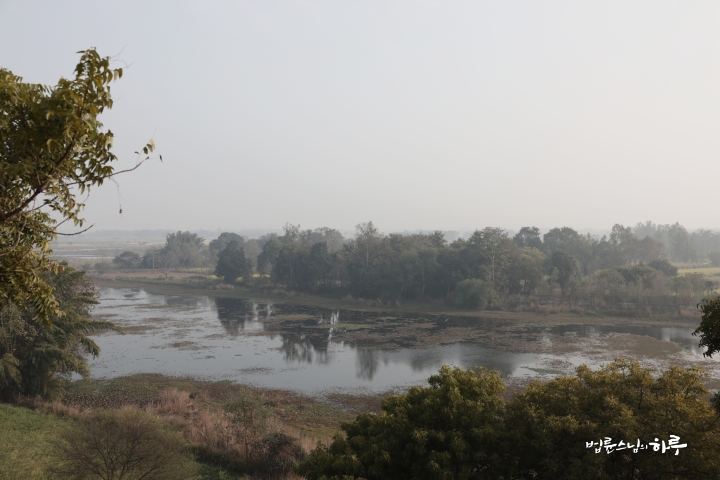
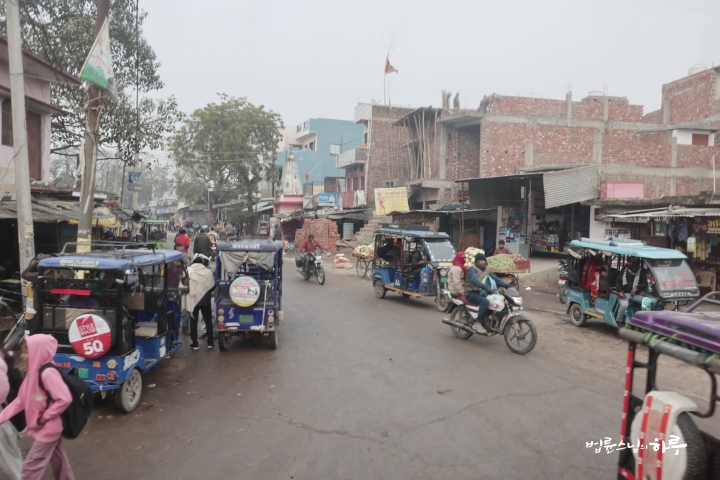
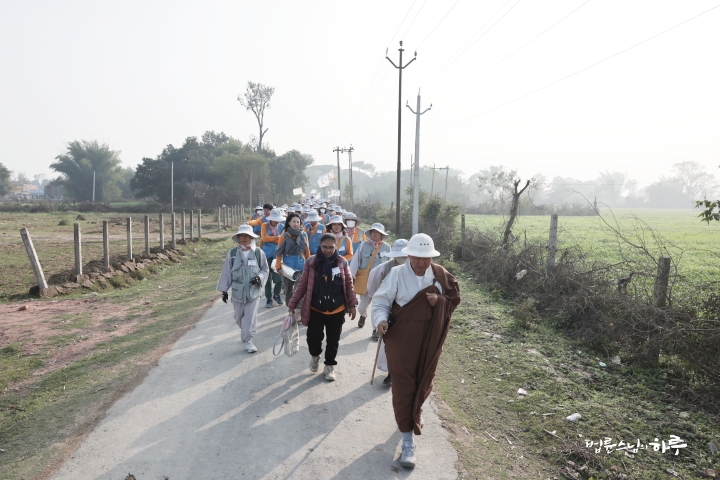
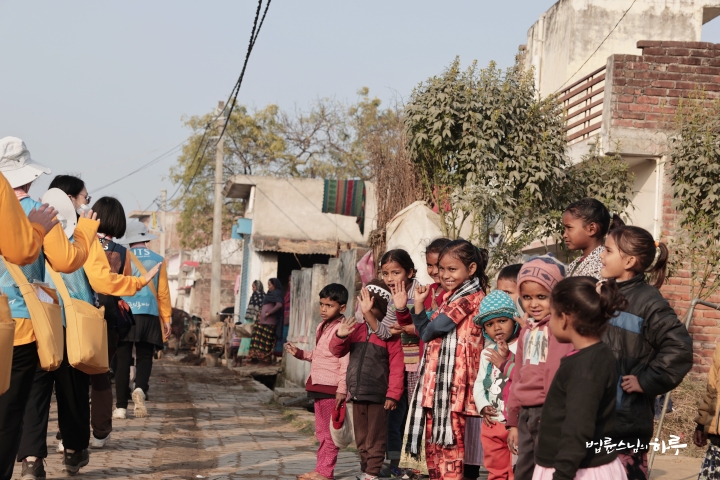
After finishing the explanation and chanting sutras, the pilgrimage group moved to Pubbarama Monastery (동원정사). The path to Pubbarama Monastery passed through a village. Villagers and children came out of their houses to watch the long procession of pilgrims.
The group arrived at Pubbarama Monastery at 4:30 PM. In the center of Pubbarama Monastery, a low circular pile of bricks remained as a trace. Although located within the village, the surroundings were relatively quiet with trees scattered sparsely. This suggested that Pubbarama Monastery once stood here.
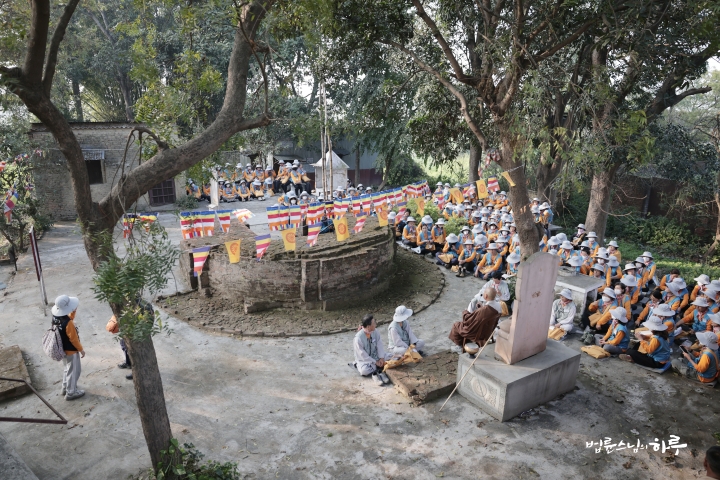
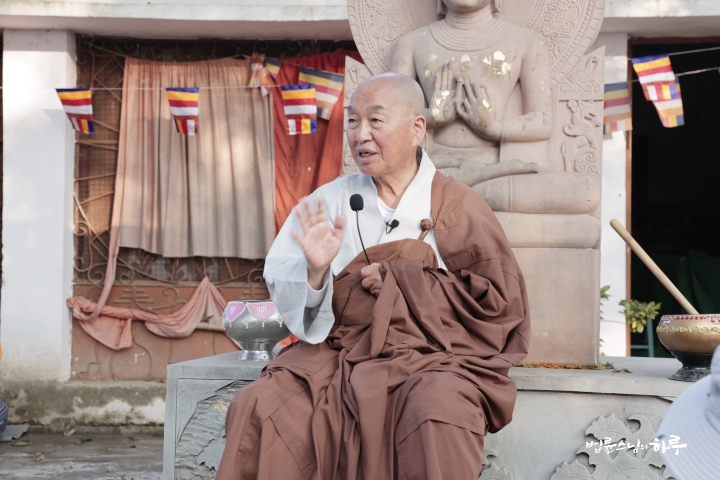
After a brief meditation, Sunim spoke about how the faith and choices of one woman transformed her family, society, and the Sangha through the life of Lady Visakha, who built Pubbarama Monastery.
)
. In comparison, this Pubbarama Monastery was built by Lady Visakha outside the eastern gate. Lady Visakha, who founded Pubbarama Monastery, was from a region called Bhaddiya. The kingdom of Anga, to which Bhaddiya belonged, was annexed by Magadha under King Bimbisara. Lady Visakha’s grandfather was a great wealthy man in the Bhaddiya region, and even after the annexation, he became one of the wealthiest people in all of Magadha. Due to her family’s influence, it is said that Lady Visakha attended to the Buddha when he came to their house for meals from the age of seven. She had seen the Buddha from a very young age and was a woman of deep faith. Lady Visakha married the son of a wealthy family in Savatthi at the age of sixteen. Although her husband’s family was wealthy, Lady Visakha’s family was incomparably richer. It is said that the dowry her grandfather sent with his granddaughter exceeded the entire wealth of her husband’s family. To ensure she would not face any disadvantages in her married life, he even sent along what would be equivalent to a legal advisory team today.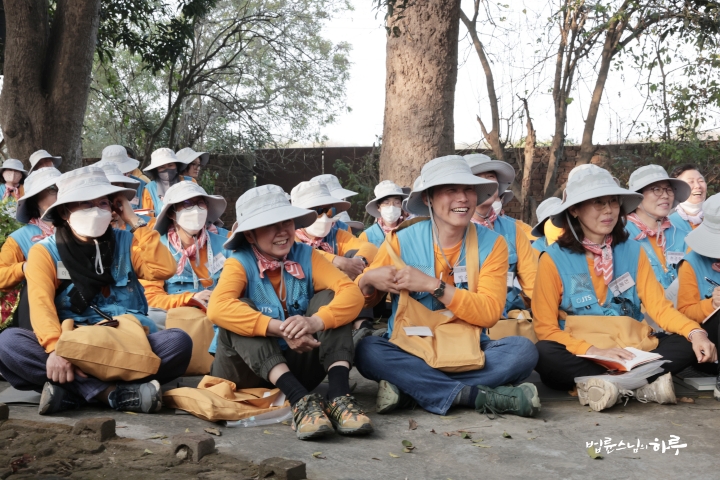
The Story of How a Father-in-Law Came to Call His Daughter-in-Law “Mother”
Lady Visakha’s in-laws were followers of the Nigantha sect. Since Lady Visakha was a Buddhist, religious conflicts were inevitable after she married into the family. One day, when monks came to their house for alms, her father-in-law refused to offer them food because they were not of his faith. In the culture of that time, it was customary to offer at least a spoonful of food to alms-seekers who arrived during mealtime, but the father-in-law turned his back and ignored them. This put Lady Visakha in a very difficult position. So she told the monks, “I apologize. My father-in-law is eating cold rice right now, so we cannot offer you alms,” and sent them away. When the father-in-law heard these words, he became furious. He considered it disrespectful that his daughter-in-law had said he was eating ‘cold rice’ (which sounded like leftovers) when he was actually eating milk porridge from a golden bowl. Eventually, he declared the marriage annulled.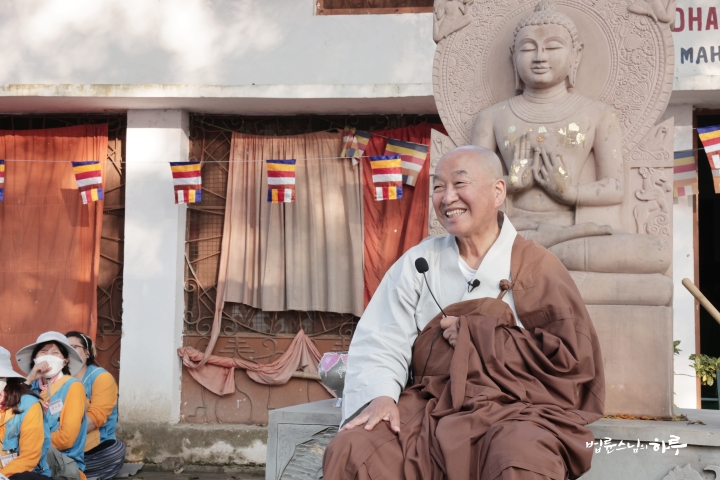
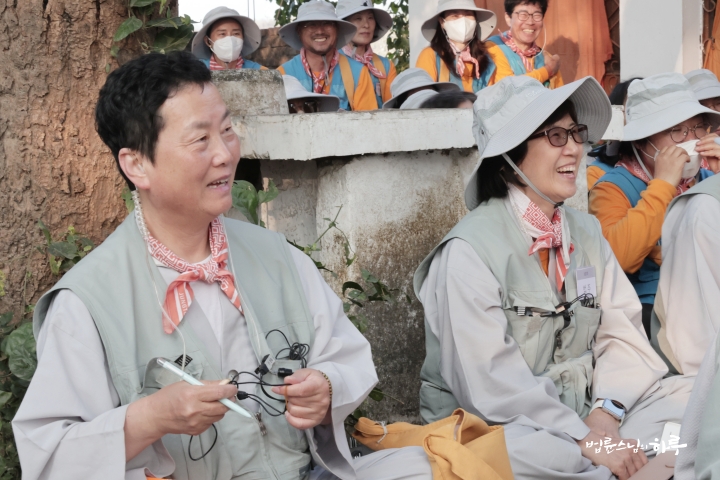
)
. Lady Visakha not only transformed her household but also generously offered alms and support to the Buddha and the Sangha. When the Buddha faced various slanders and disputes in this region, Lady Visakha, along with Sudatta, played a central role in resolving these issues. She contributed not only financial support but also played a significant role in resolving social conflicts.“How Can I Bear the Grief of Losing My Granddaughter?” The Buddha’s Answer
Another story about Lady Visakha has been passed down. One day in her old age, Lady Visakha lost her beloved granddaughter and was deeply grieved. Unable to bear her sorrow, she went to the Buddha and poured out her heart. The Buddha then asked her: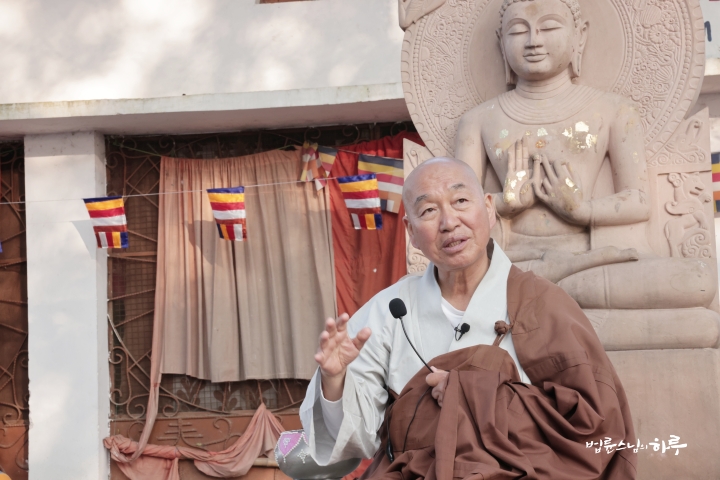
After completing the explanation of the sacred site, the pilgrimage group chanted sutras together.
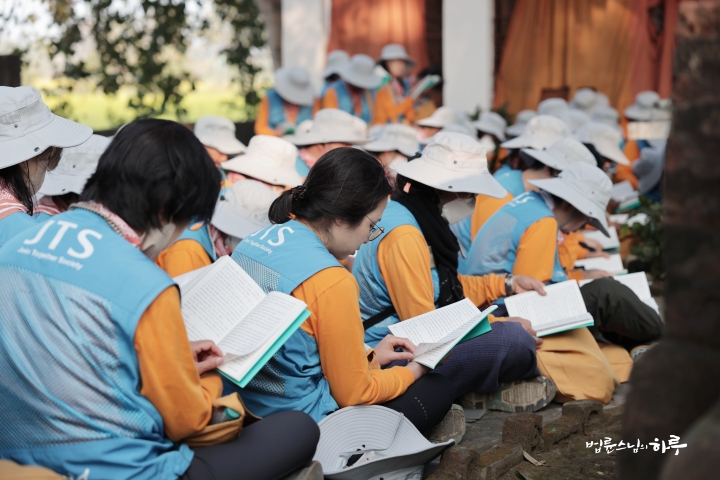
During the sutra chanting, four buses arrived. Sunim instructed the advance group to proceed to Cheonchuk Monastery (천축선원) first, then gave the sacred site explanation again to the later arrivals.
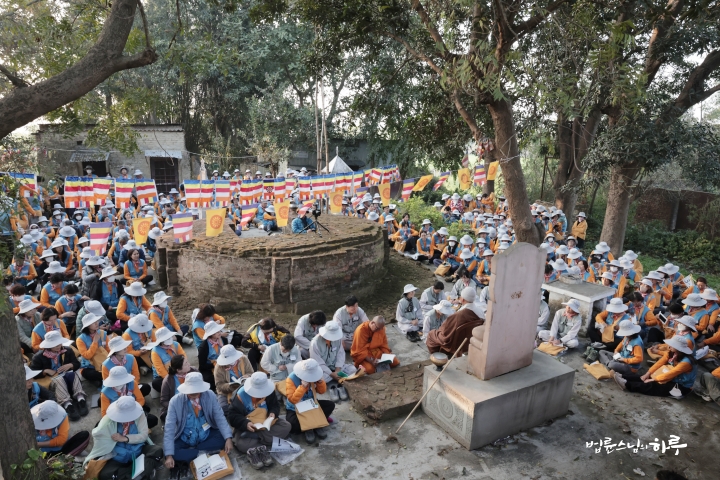
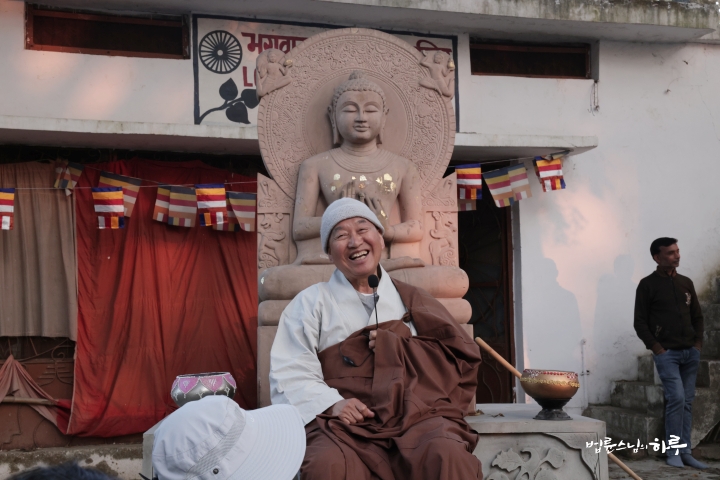
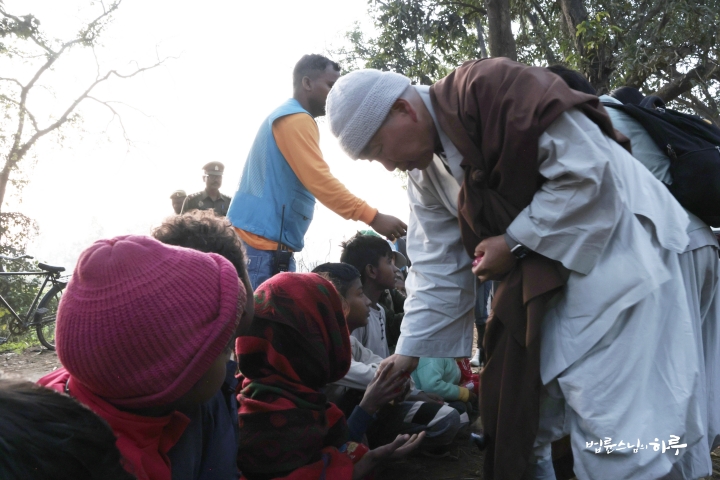
After completing the sacred site explanation, Sunim distributed snacks to about 150 children gathered in front of the village.
At 5:30 PM, Sunim walked with the pilgrimage group to their accommodation at Cheonchuk Monastery. The peaceful scenery of rural India unfolded along the road.
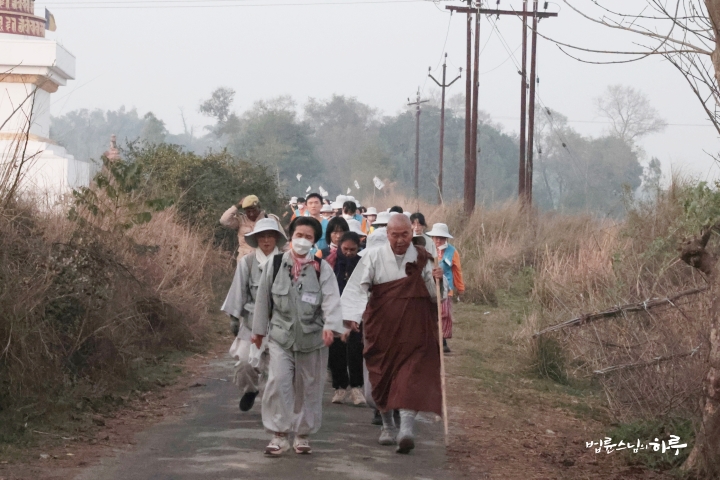
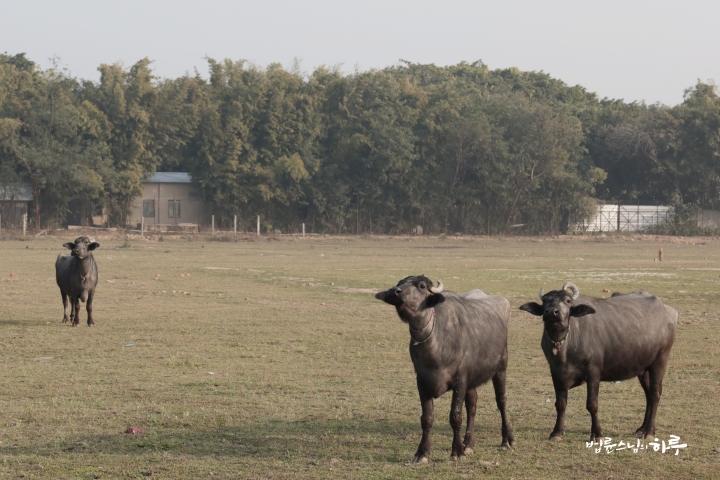
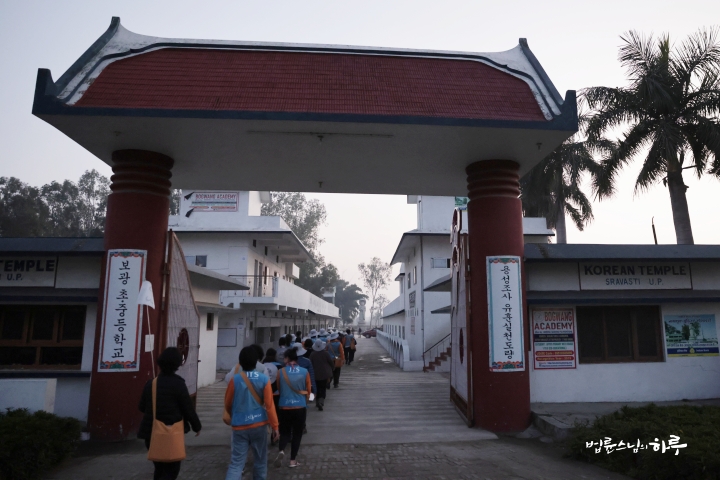
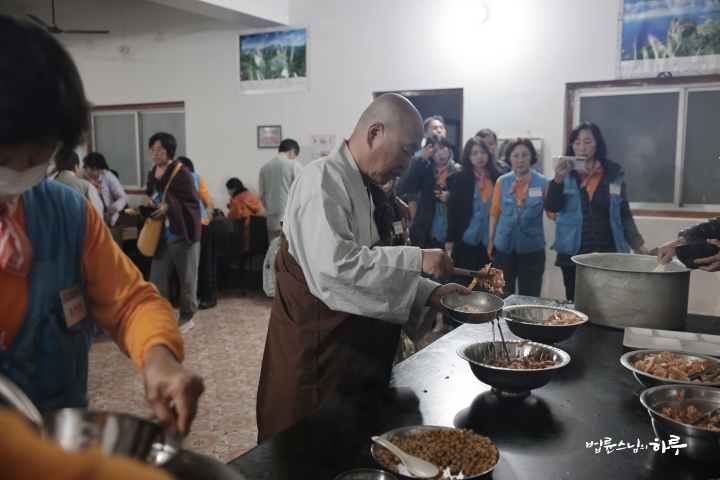
At 6 PM, upon arriving at Cheonchuk Monastery, the abbot Venerable Daein (대인스님) was preparing a meal. Sunim approached Venerable Daein and greeted him.
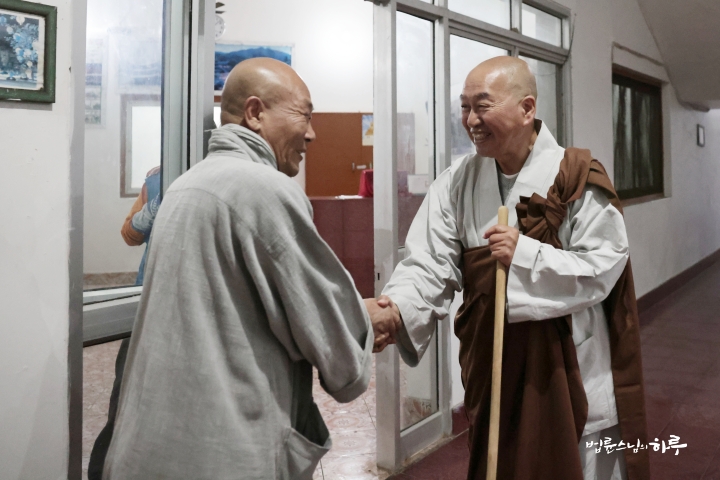
“Yes, Sunim. Welcome. I’ve been well. You must be hungry after your long journey. Please have your meal first.”
“Yes, thank you.”After exchanging greetings, Sunim had dinner. The pilgrimage group also enjoyed a warm meal of soup and rice prepared by Cheonchuk Monastery.
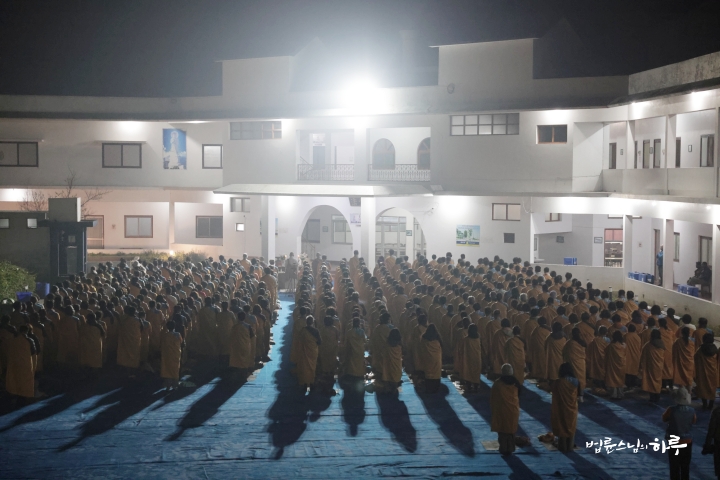
After dinner, evening prayers were held in the courtyard of Cheonchuk Monastery starting at 7 PM.
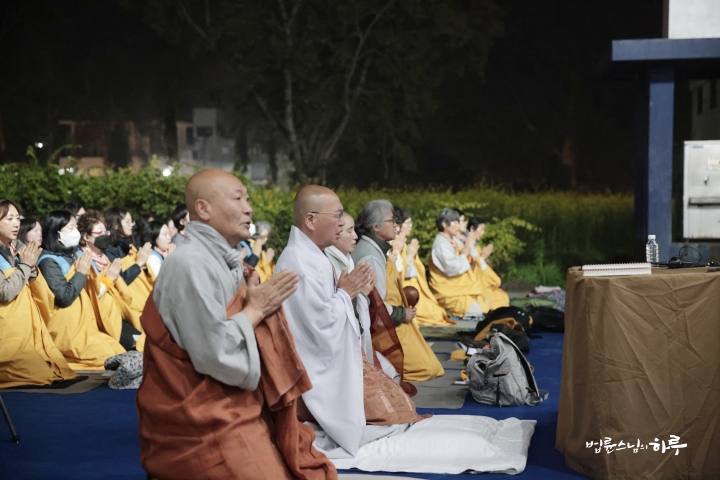
This was followed by an evening Dharma assembly. Before opening the assembly, Venerable Daein, the abbot of Cheonchuk Monastery, gave welcoming remarks to the pilgrimage group.
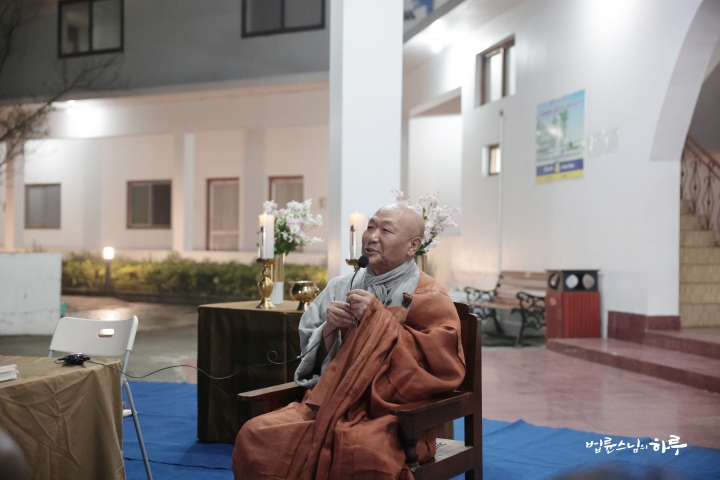
“This year marks my 26th year of connection with this place. Except for the three years of COVID, I have been meeting Venerable Pomnyun Sunim and Jungto practitioners every year like this. This is where the Buddha’s Prajna Assembly was held. Many teachings in the sutras, including the Diamond Sutra, were delivered here. So it is a sacred site with deep connections to Korean Buddhism. Within the grounds, there is a school where 160 students study, and this year, 20 students will be advancing to high school for the second time. I will continue to do my best to make this place a gathering spot for sincere practitioners to brighten their minds.”
Next, Lay Buddhist Jeokjohaeng (적조행), who manages Cheonchuk Monastery together with Venerable Daein, welcomed the pilgrimage group with cheerful words.
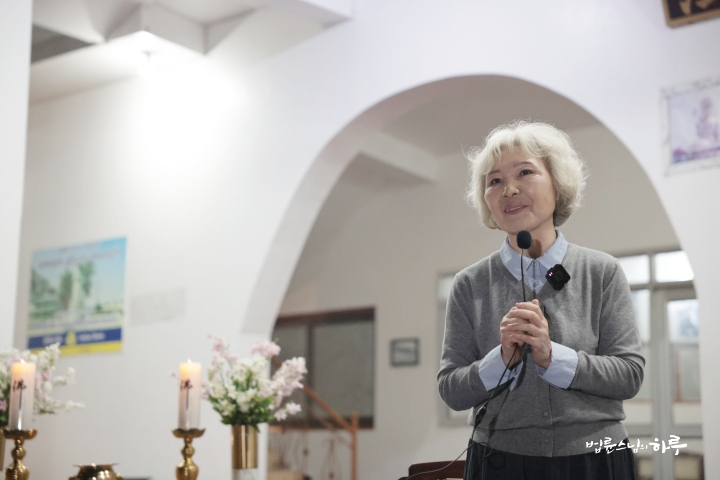
“Those who came last year will remember. We have a manager named Wardan who works at our temple. His name is Wardan Shakya, and he belongs to the Shakya clan. Last year during the Jungto India Pilgrimage, his wife was due to give birth, but her water broke on the very day the practitioners arrived, so he had to rush to the hospital for surgery. When I heard the news that they had a daughter, I asked Venerable Pomnyun Sunim, ‘Please give her a name,’ and he immediately named her ‘Visakha.’ You visited the Eastern Monastery today, right? Visakha was the greatest among the Buddha’s female disciples, wasn’t she? When he gave that name, he even gave a monetary gift for the baby. Wardan’s wife is from the Moriya clan. The Moriya clan is the lineage of King Ashoka. So it’s a marriage between the Shakya clan and the Moriya clan.”
Everyone burst into laughter at this amusing anecdote. Today was the baby’s first birthday, and Wardan had taken the baby to his in-laws’ house for the birthday celebration and would return afterward, prompting loud applause from all the pilgrims.
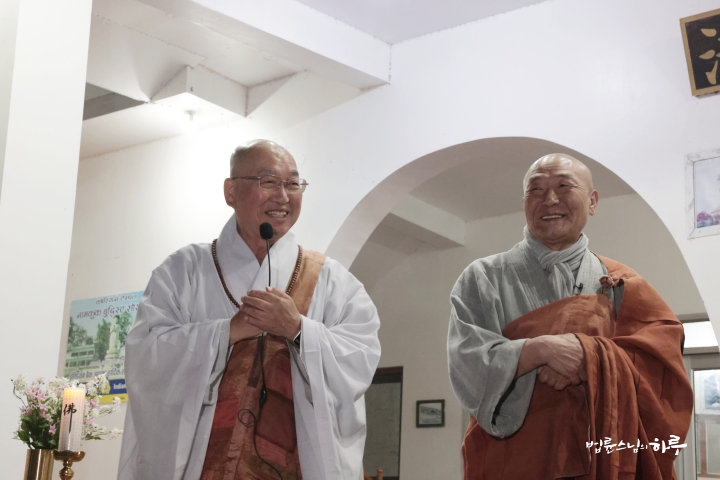
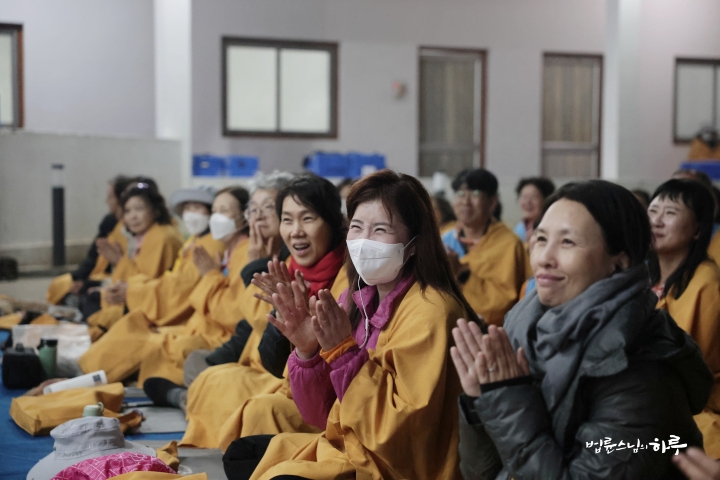
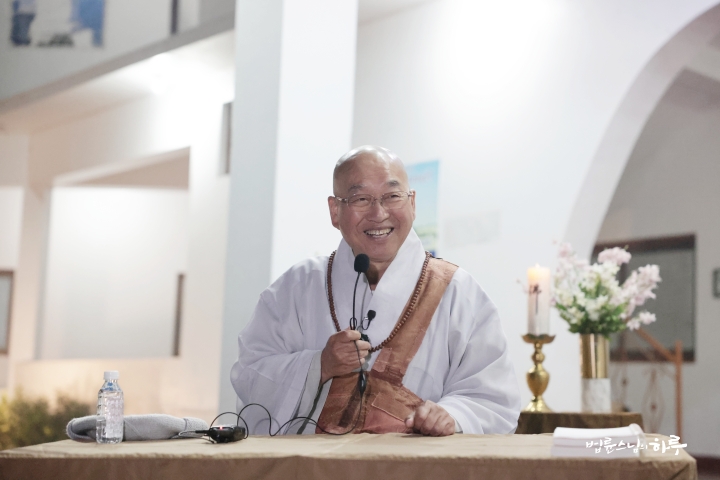
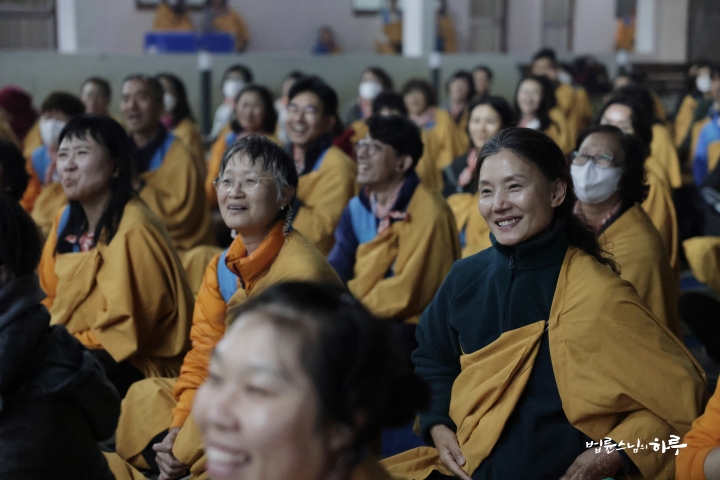
Next, Sunim’s Dharma Q&A session began. Sunim said that anyone could ask any questions they had during the pilgrimage to the sacred sites. For about an hour, six people raised their hands and asked Sunim questions. The first questioner was a young person who was curious about why the Buddha, who usually forbade the use of supernatural powers, directly showed the miracle of a thousand Buddhas manifesting from a mango tree at the Thousand Buddha Manifestation Stupa.
The Buddha Forbade the Use of Supernatural Powers, So How Should We Understand the Thousand Buddha Manifestation in Shravasti?
“I had a question after hearing the explanation at the Thousand Buddha Manifestation Stupa. The Buddha said not to use supernatural powers, but I’m curious how to interpret the sutra content about mango fruits becoming a thousand Buddhas. I think perhaps it was expressed as a mythical element that not only the Buddha but also the thousand bhikkhus who were with him each visited houses with mango trees to teach, given how difficult it was to educate people in this region. I’m curious what Sunim thinks about this.”
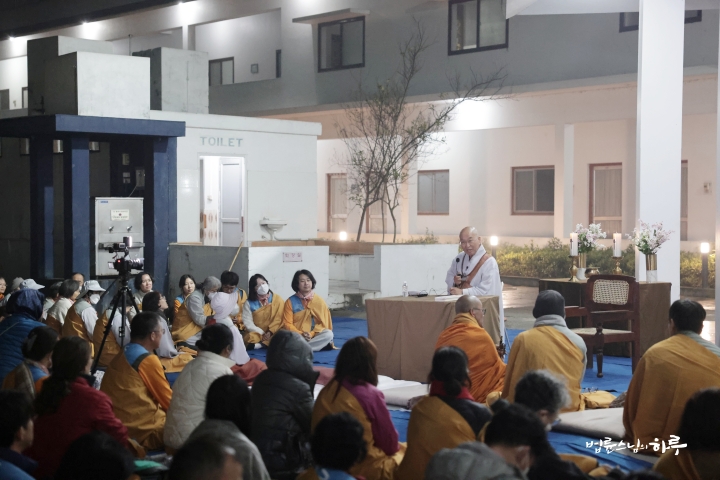
Questions continued to follow.
When I came on pilgrimage three years ago, I only saw bricks, but coming for the second time, I can see a bit more. What can I do, and what can we do, to ensure that authentic Buddhism continues well into future generations?
It is said that during the Buddha’s time, 1,250 disciples were together with him. In an era without microphones or receivers, how could the Buddha’s words reach even the person at the very back?
Seeing Sujata Academy, I felt respect for such a dedicated life, and I want to live that way too. As a lay practitioner who has a main job and needs to make a living, from what perspective should I participate in such activities?
All the words describing the Buddha are noble and beautiful, but why does his son’s name, Rahula, mean ‘an obstacle’?
India is the birthplace of Buddhism, yet currently the Buddhist population is only 0.7 percent. How did this wonderful Buddhism almost disappear from India?
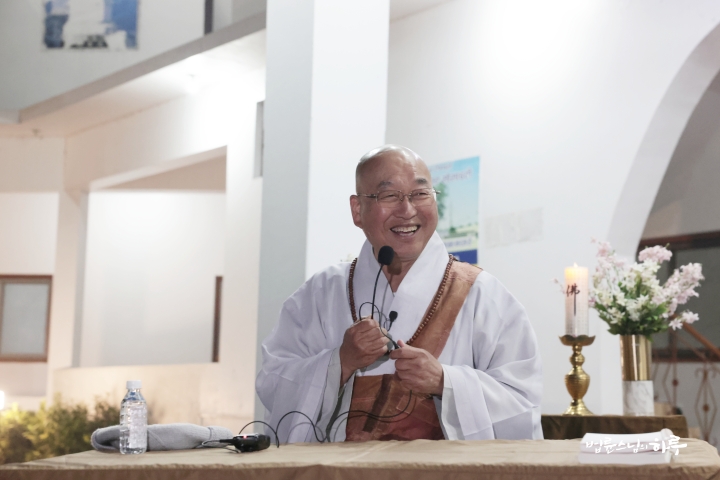
After answering all the questions, it was 8:40 PM. Sunim wrapped up the session, saying:
The pilgrims went to their respective lodgings to rest for the night.
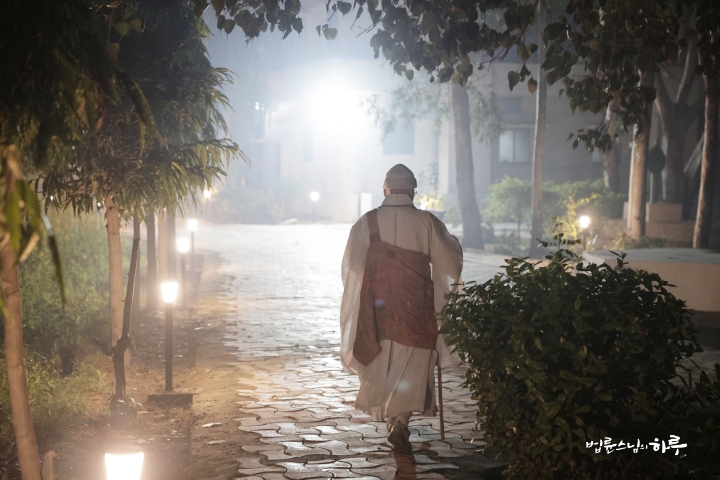
The 11th day of the pilgrimage in Shravasti came to an end. Tomorrow, the group will visit Jetavana, where the Buddha stayed for the longest period after his enlightenment and delivered countless Dharma talks.