Is the Birth Story of the Buddha Fact or Symbol?
February 1, 2025, Day 9 of the India Pilgrimage, Lumbini
Hello. This is the 9th day of the India pilgrimage. Today, we paid respects at the Buddha’s relics stupa (진신사리탑) built by the Koliya clan, crossed the Rohini River where a water dispute was peacefully resolved, and made a pilgrimage to the Maya Devi Temple in Lumbini, where the Buddha was born.
Days heading to Nepal always begin with an early morning departure. This is because crossing the border alone takes several hours. At 1:30 AM, the buses waiting in front of the accommodation started their engines all at once. After the pilgrims organized their sleeping areas and loaded their luggage, they departed from Kushinagar at 2:20 AM, heading toward the Nepal border.
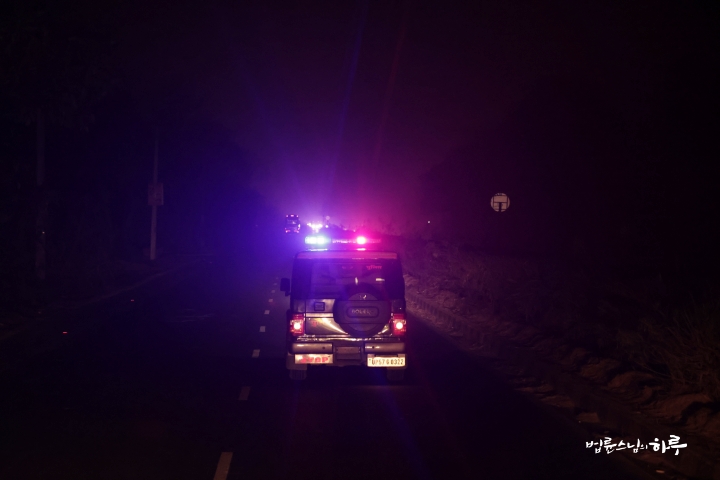
Despite the very early hour, police were running in front of the car carrying Sunim to escort the pilgrimage group. Soon the lights inside the buses were turned off, and most of the pilgrims fell back asleep. The buses raced through the darkness toward the border.
At 5 AM, the lights were turned on inside the vehicles and everyone offered morning prayers together. Not long after finishing the prayers, at 6:45 AM, the buses arrived at the India-Nepal border. The Kushinagar police who had been escorting them also gave their final greetings to Sunim.
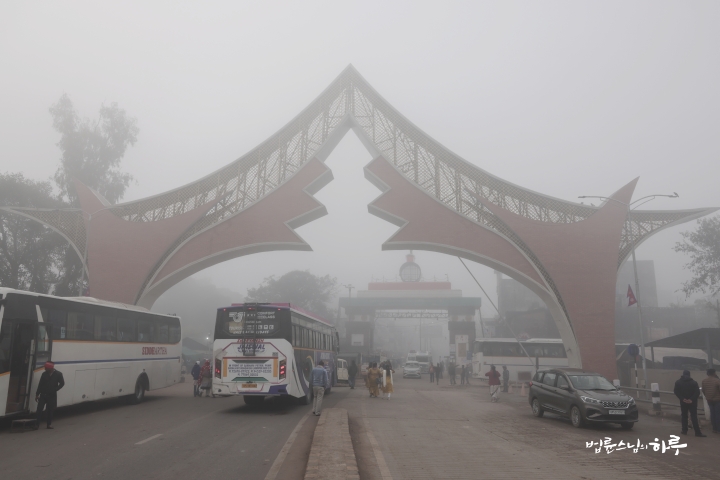
The 500-member pilgrimage group disembarked in order and lined up while maintaining order. After completing Indian exit procedures, Nepal entry procedures began at 7:35 AM. Today, the Indian border guards conducted much stricter procedures than usual, checking and examining individual luggage loaded on the buses one by one.
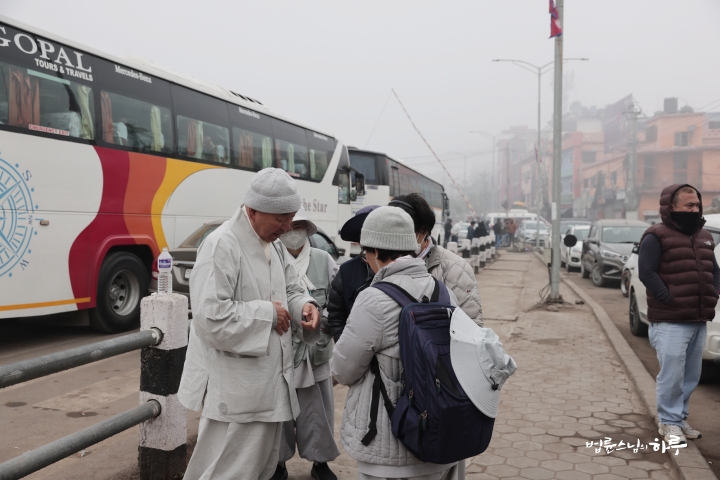
When the overall situation was checked at 8:40 AM, 9 out of the 13 buses had crossed the border and arrived in Nepal. The remaining 4 buses were still in India due to network problems at the Indian immigration office. Sunim called the Dharma Teachers and spoke to them.
“Since we don’t know when the network will be normalized, the vehicles that have already crossed the border will depart for Ramgram. the 4 buses still in India can follow once the situation is resolved.”Sunim led the vehicles that could depart first and moved to Ramgram. During the journey, Sunim shared through the radio that the pilgrimage group was moving after crossing the India-Nepal border, and also conveyed information about Nepal’s current chaotic domestic situation.
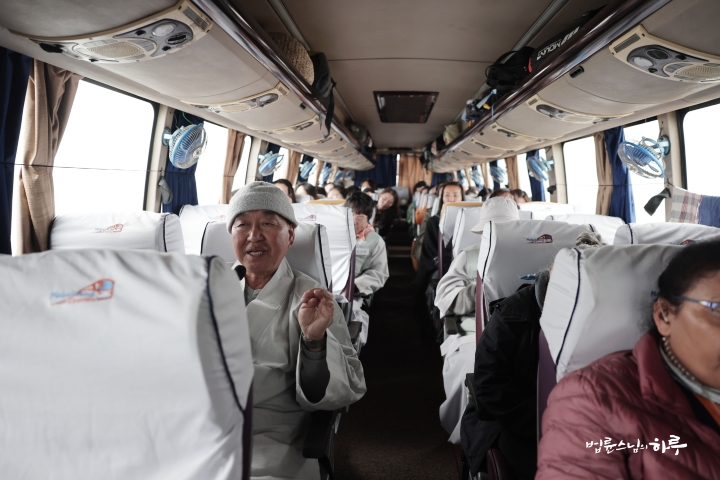
At 10:20 AM, they arrived at Ramgram. Thick fog and cold, damp air surrounded the pilgrimage group. The pilgrims spread out mats and sat in an open area on one side of the stupa.
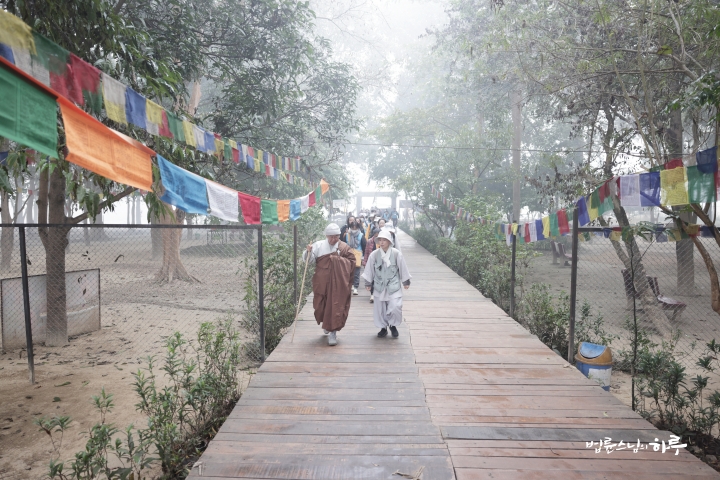
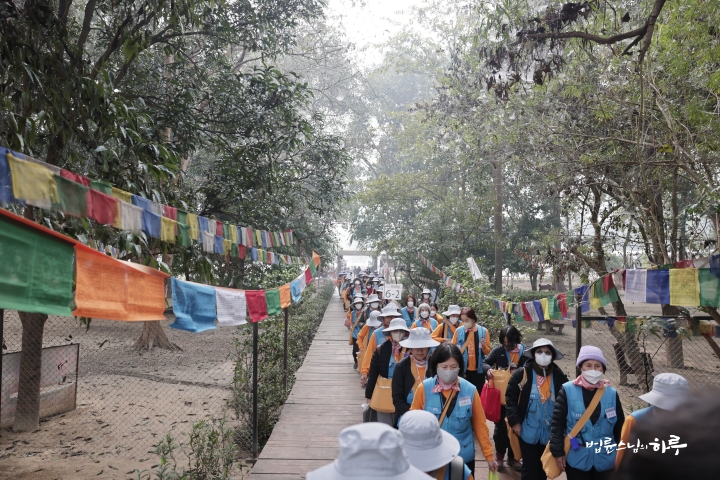
The pilgrimage group had their morning meal with the packed lunches they had prepared at the Kushinagar accommodation the night before.
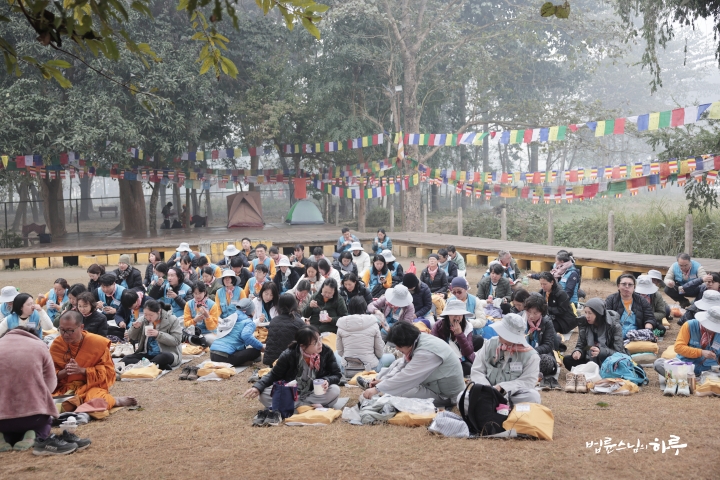
After eating lunch, they put on their kasayas and arranged their seating. Sunim began explaining about the sacred site.
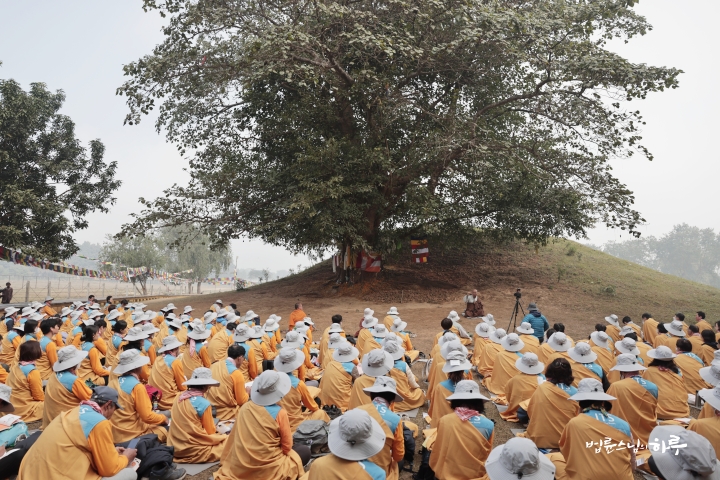
The Stupa That Even King Ashoka Could Not Demolish
King Ashoka demolished seven of the eight original relics stupas and took out some of the relics from inside, then built stupas at each place where the Buddha had left his footprints and enshrined the relics there. However, this Ramgram relics stupa was an exception. According to the scriptures, the dragon king who guarded this stupa said this to King Ashoka: ‘Can you enshrine the relics better than I can? I am taking good care of these relics, so don’t touch them.’ Upon hearing this, even King Ashoka, who had unified all of India, could not touch this relics stupa. It is presumed that there was strong resistance from the Koliya clan. The topography of this area also seems to have played a role in protecting the stupa. The terrain formed when a river meanders and changes direction is called an ‘oxbow lake,’ and this place is also land that remained like an island as the river meandered. Although it’s not actually an island, it became isolated as the water flow went around it. There are also stories that there were many snakes here, and due to these various conditions, the stupa could not be easily demolished.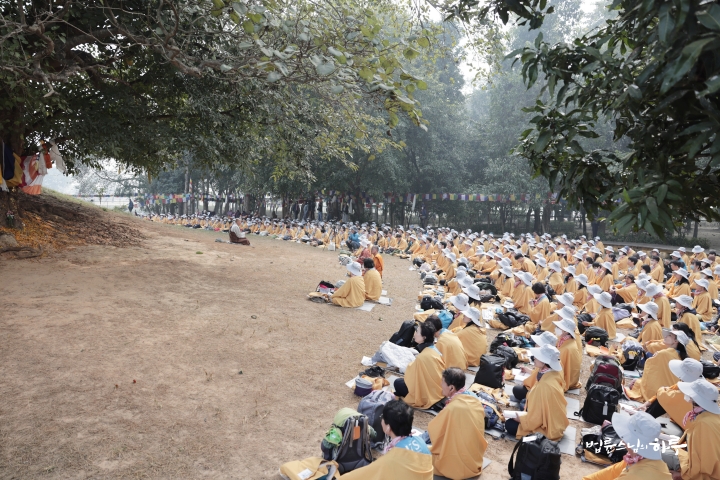
After the explanation, the pilgrimage group circumambulated the stupa and offered prayers toward the stupa containing Buddha’s relics.
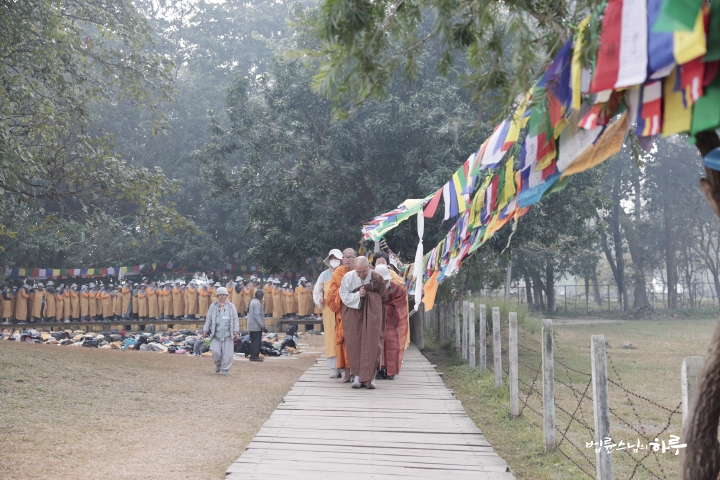
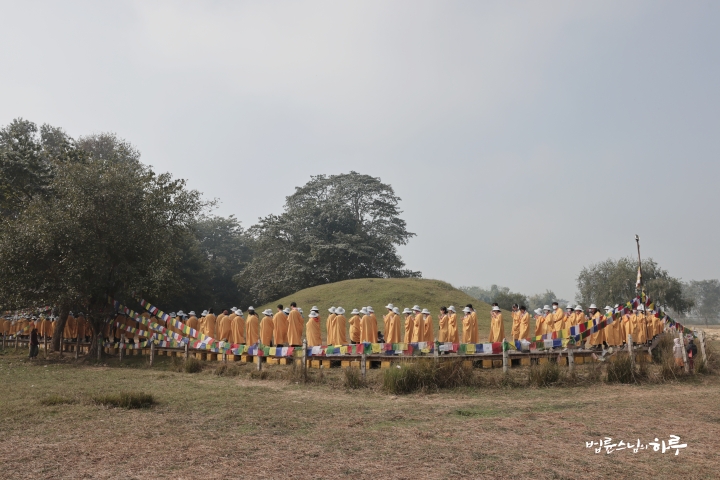
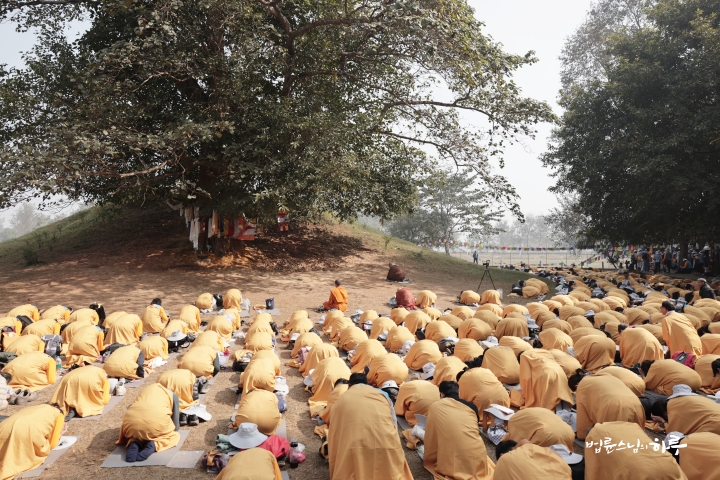
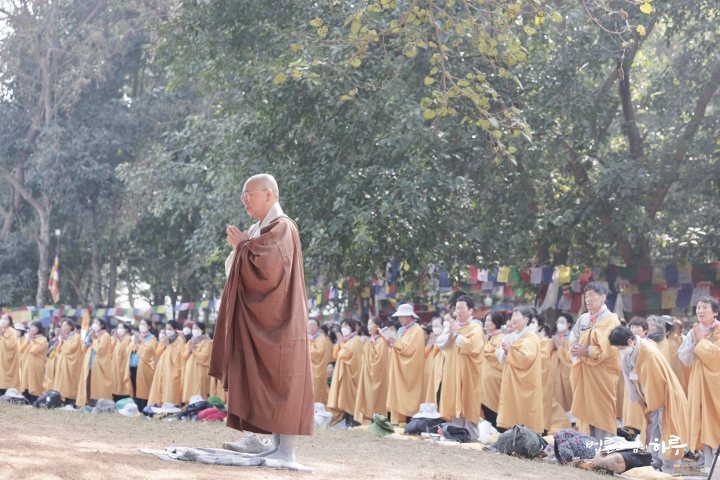
During the circumambulation, buses 1, 2, and 3 fortunately arrived at Ramagrama.
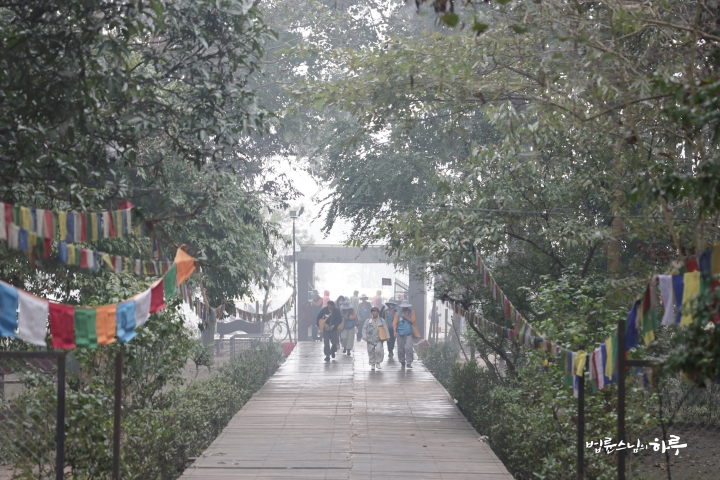
After completing the worship ceremony, Sunim spoke to those who had arrived later.
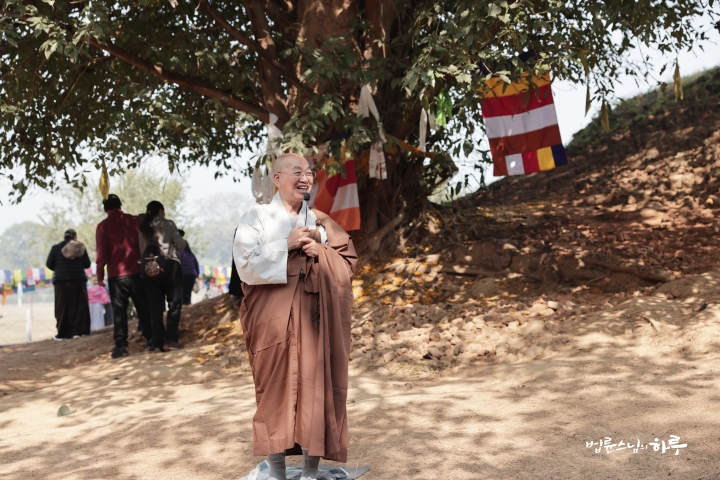
After completing the pilgrimage, the group folded their kasayas and prepared to move to the Rohini River.
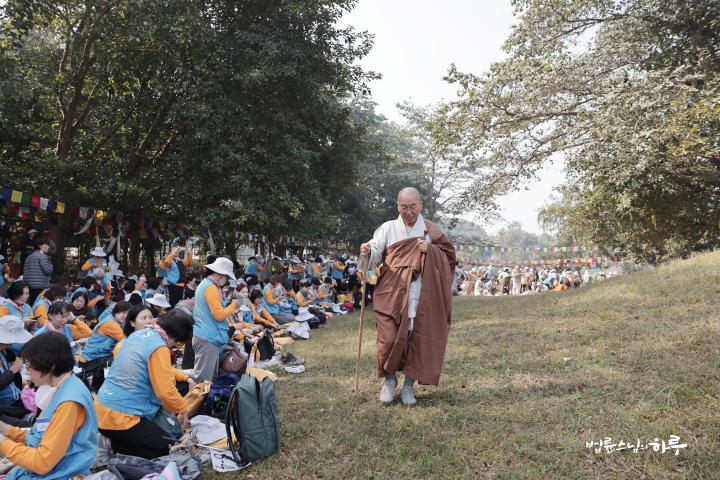
Village children were sitting in a line in front of the Ramagrama stupa. Sunim gave each child a handful of candy.
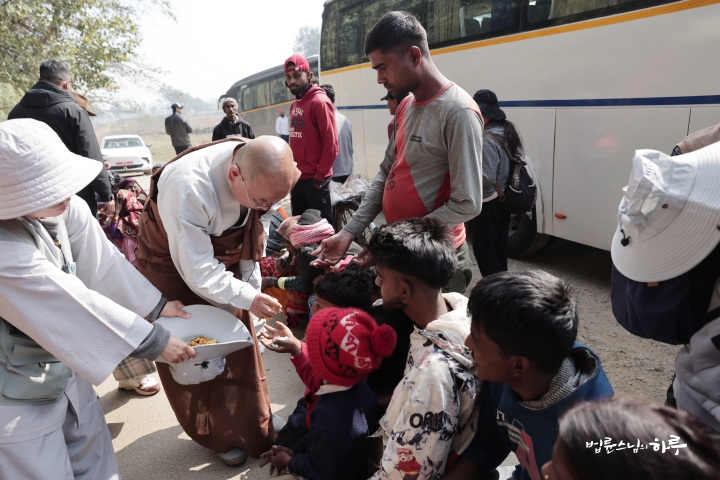
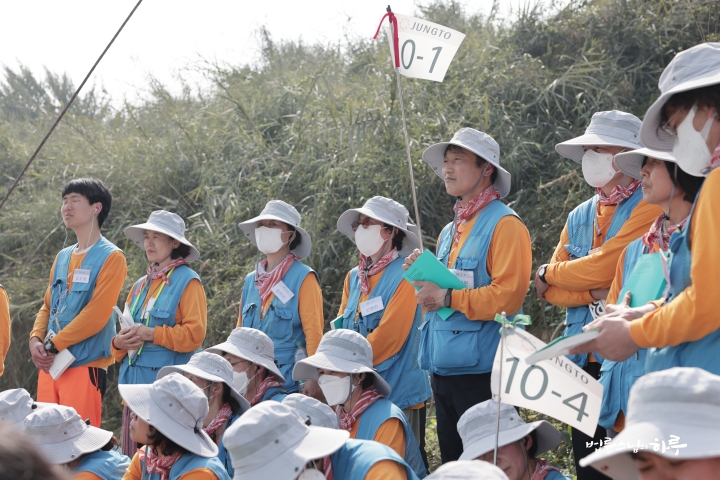
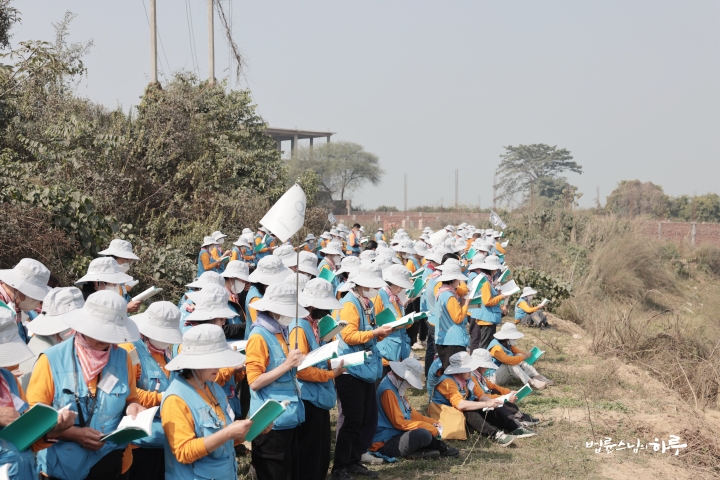
After driving for about 30 minutes, a wide sandy beach appeared. It was the Rohini River. The pilgrimage group got off the buses and walked toward the riverbank.
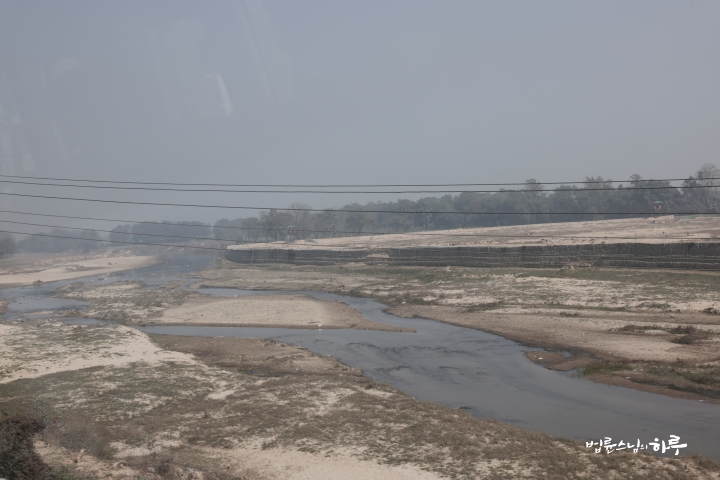
Across the river, some villagers had gathered and were watching the pilgrimage group. As described in the scriptures, it was striking to realize that two countries existed at a distance where they could see each other across the river.
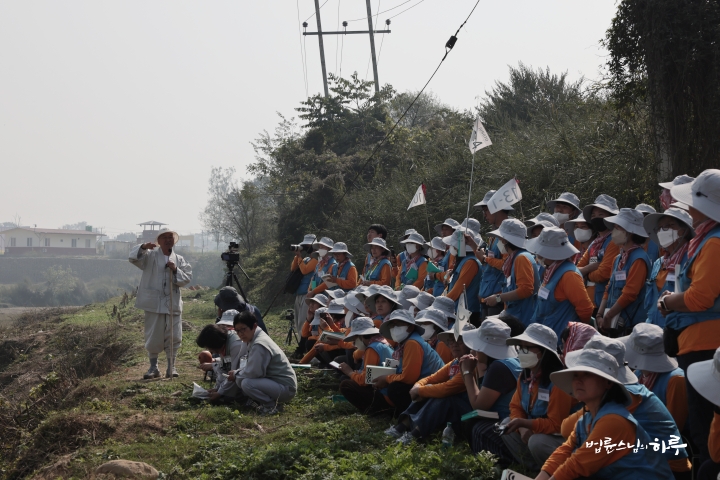
Sunim found a spot near the river and told the story related to the Rohini River.
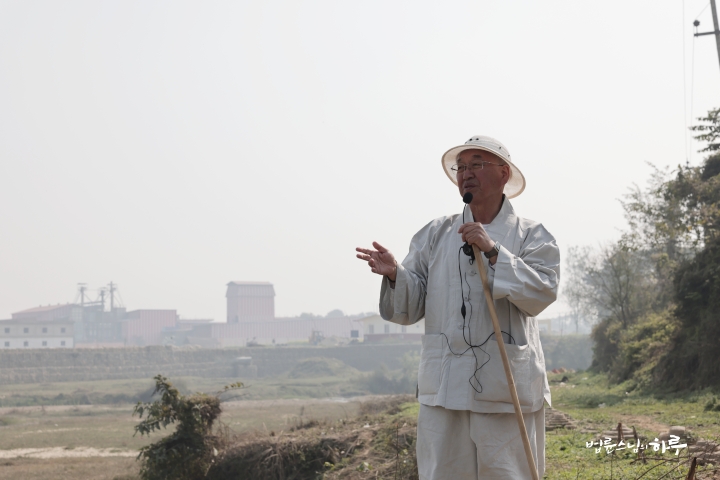
Which Is More Precious: Blood or Water?
Upon hearing this news, the Buddha thought, ‘If I leave these foolish people as they are, they will surely end up in war.’ At that time, both sides were in a volatile situation where war could break out at any moment. The scriptures say that the Buddha was floating in the air above the river at that time. This symbolically expresses that the Buddha was not taking either side but observing the situation from a neutral position. At this sight, the attention of both sides was drawn to the Buddha. The Buddha called the generals from both sides and asked them: ‘Everyone, which is more precious: blood or flowing water?’ The generals answered: ‘Buddha, how can you compare blood to water? Water is trivial, while blood is precious.’ Then the Buddha said: ‘Then why are you trying to spill that precious blood like that trivial water?’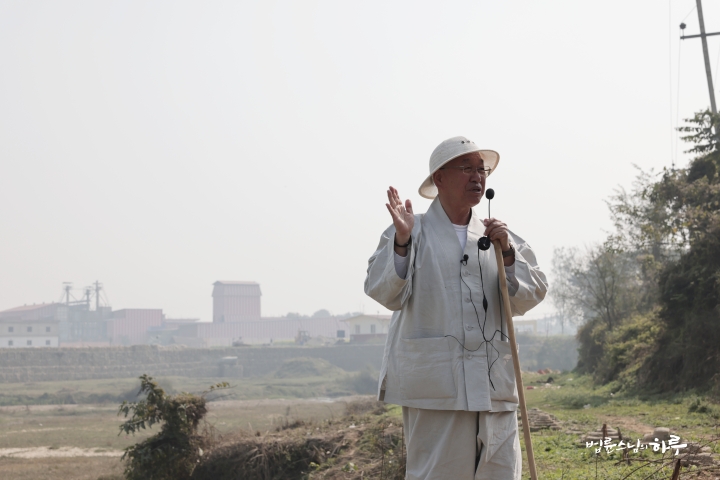
After the explanation ended, the pilgrimage group chanted sutras.
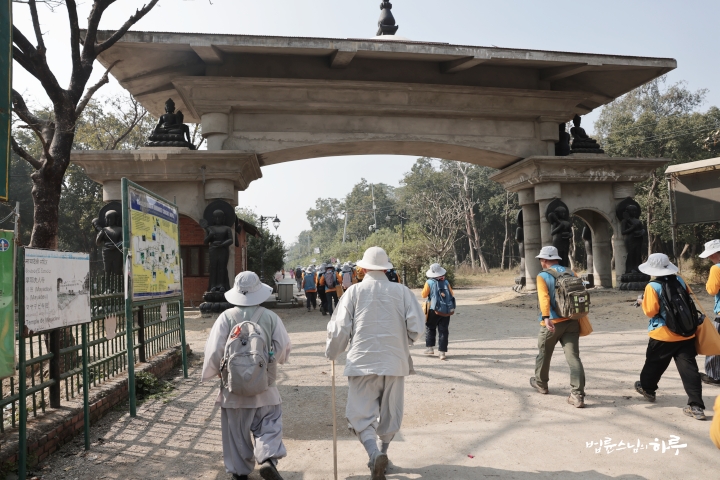
After leaving the Rohini River and traveling for about an hour, they arrived at Lumbini at 1:45 PM. It was the sacred site where the Buddha was born. Sunim first organized the area with the staff who had arrived earlier and checked the circumambulation route. The pilgrimage groups arriving in sequence settled in front of the Maya Devi Temple.
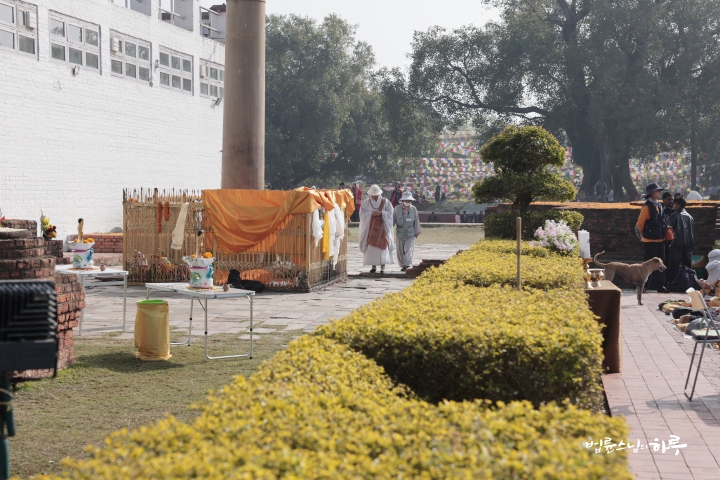
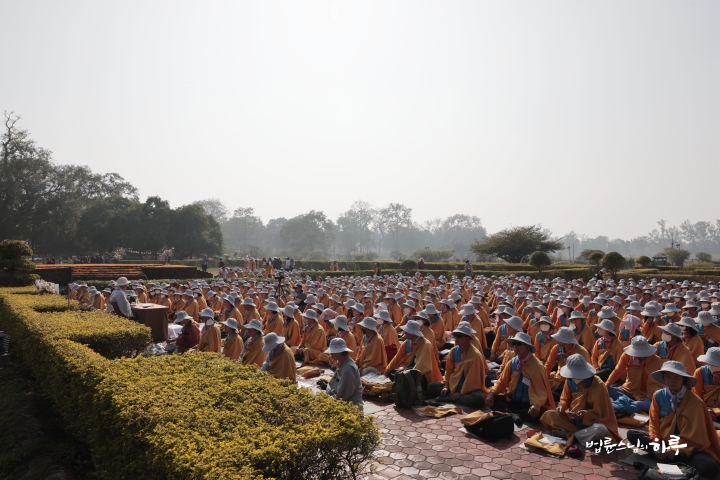
At 2 PM, Sunim’s explanation of the sacred site began.
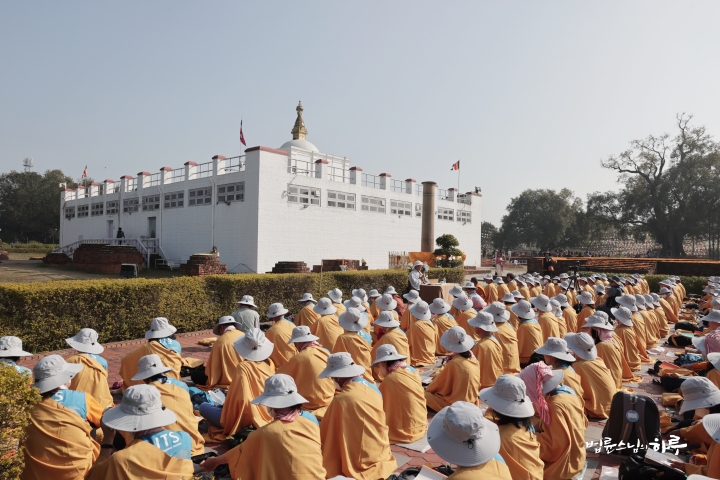
Why Was the Buddha Born on the Road Rather Than in a Palace?
During the Buddha’s time, there was a custom of giving birth at one’s parents’ home. So Queen Maya received permission from the king and left through the eastern gate of Kapilavastu in a palanquin, heading east toward her parents’ home. It is said that she arrived here at Lumbini around noon. The distance from Kapilavastu to here is about 28km, and if they traveled about 4km per hour, it would have been about 7 hours after departure. We can assume they left around 5-6 AM, arrived around noon, and planned to return by evening. When they arrived at this forest around noon, the Ashoka trees were in full bloom. It was a good place to rest and the flowers were beautiful, so they stopped the palanquin to stay for a while. The moment Queen Maya reached for a flower branch with her right hand, she felt labor pains, and they set up a tent where she gave birth to the child. The sutra’s more beautiful description of this scene goes as follows: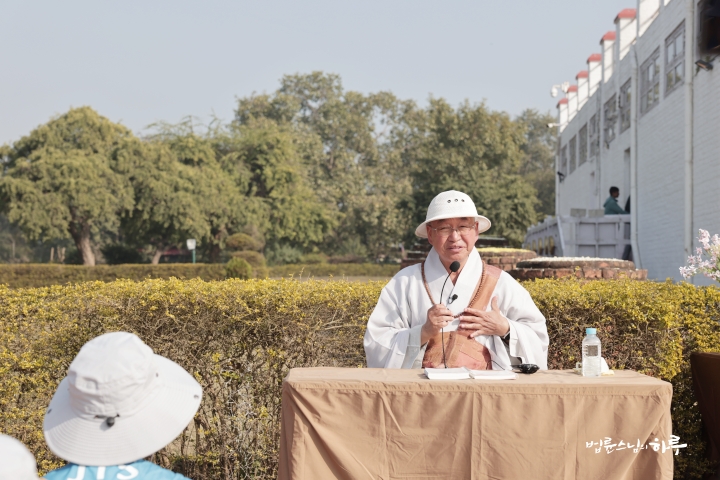
)
came with a golden net to receive the baby, and Indra, Brahma, and the Four Heavenly Kings (사천왕)
came with their retinues to protect the baby. Sakra Devanam Indra (석제 환인)
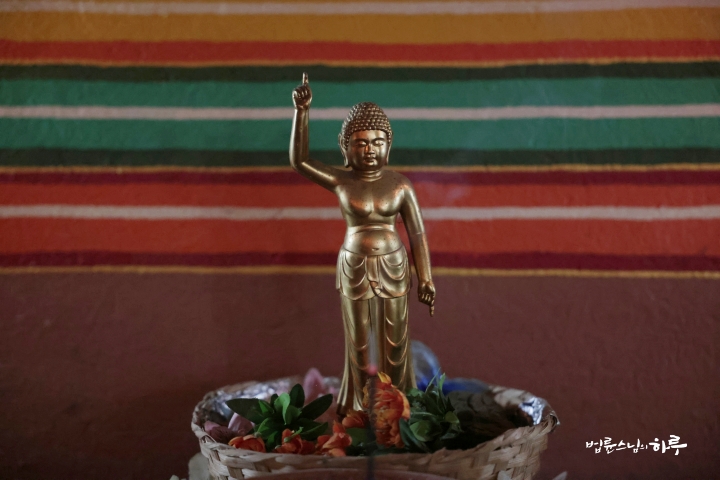
held a jeweled parasol to shade the baby, and Mahabrahma stood on both sides with a white fly whisk. In the sky, the dragon king brothers Nanda and Upananda spouted clear warm water from the left and cool pure water from the right to bathe the baby. The baby walked seven steps in each of the four directions, and lotus flowers bloomed with each footprint. Then, pointing to the sky with his right hand and to the earth with his left hand, he declared like a lion: In heaven above and on earth below, I alone am the World-Honored One. All beings in the three realms are suffering; I shall bring them peace.’ Here, ‘heaven above (천상)
‘ refers to the world of gods, and ‘earth below (천하)
‘ means the human world. This means the Buddha is a teacher who leads both gods and humans. The ‘three realms (삼계)’
refers to the desire realm, form realm, and formless realm (욕계·색계·무색계),
—the entire universe. The latter sentence is particularly important. When interpreted, it means: ‘Among all in heaven above and earth below, the awakened one is most noble. All beings throughout the universe are in suffering; I shall rescue them, eliminate their suffering, and bring them peace.’ These stories were symbolically described by later writers who compiled the Buddha’s life hundreds of years after his passing into nirvana. They can be seen as expressions praising the moment of birth based on the character and life the Buddha demonstrated throughout his lifetime. The fact that he attained enlightenment and became a Buddha is expressed as ‘In heaven above and on earth below, I alone am the World-Honored One,’ and his 45 years of teaching to alleviate the suffering of beings is expressed as ‘All beings in the three realms are suffering; I shall bring them peace (삼계개고 아당안지)
.’
Interpreting the Symbolic Meaning of Birth Descriptions in Buddhist Scriptures
Some people take the expression of being born from the right side literally. This is because they think, ‘How could such a great sage be born through a woman’s private parts?’ However, this is merely a religious interpretation. Historically, it is more appropriate to understand this as a symbolic expression representing royal birth. According to traditional Indian mythology, when the creator god Brahman created humans, the Brahmin class emerged from his mouth, the Kshatriya (warrior class) from his side, the Vaishya from his belly, and the Shudra from his feet. This is a mythological narrative designed to justify the caste system. In this context, the expression that the Buddha was born from the side can be seen as a symbolic representation of his royal lineage. Historically, the key fact is that his mother gave birth here while on her way to her parents’ home. In other words, the Buddha was born on the road from the very beginning. Because she gave birth on the road, there was no need to continue to her parents’ home, so the palanquin was turned around and they returned to Kapilavastu. This is the very place where the great Buddha was born. However, the Buddha was only born here; he actually grew up in Kapilavastu for 29 years. His character and the foundation of his life were all formed in Kapilavastu. This place is merely a symbolic location of his birth.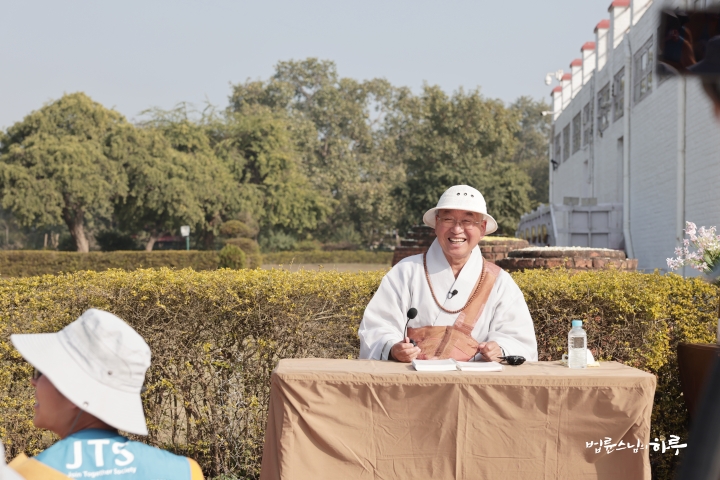
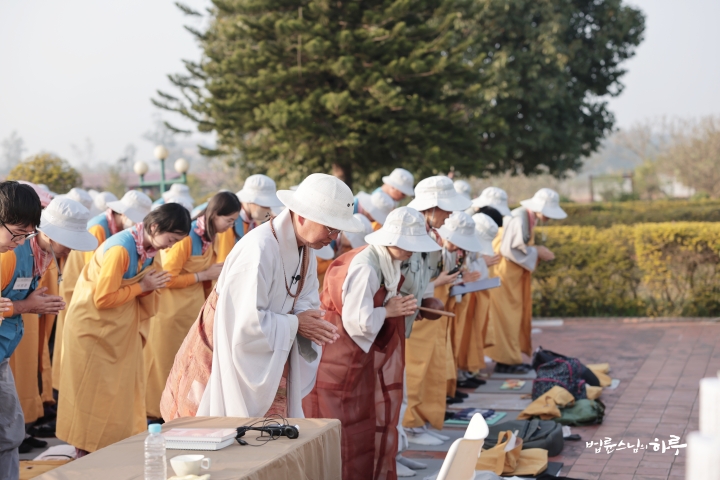
After the explanation ended, the members of the Sangha chanted scriptures and meditated briefly.
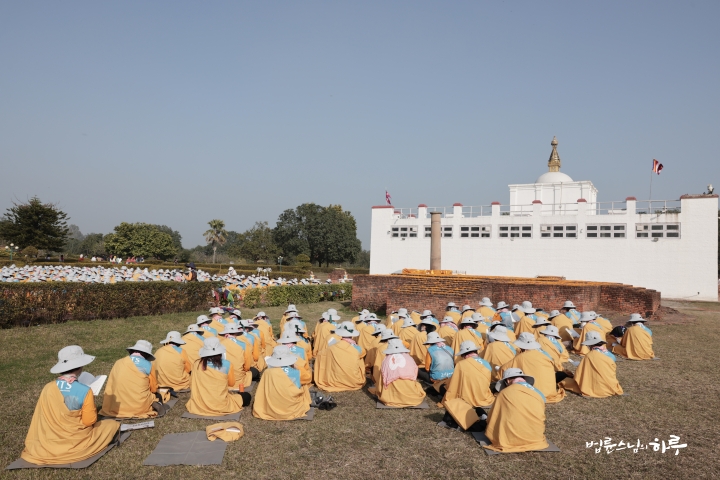
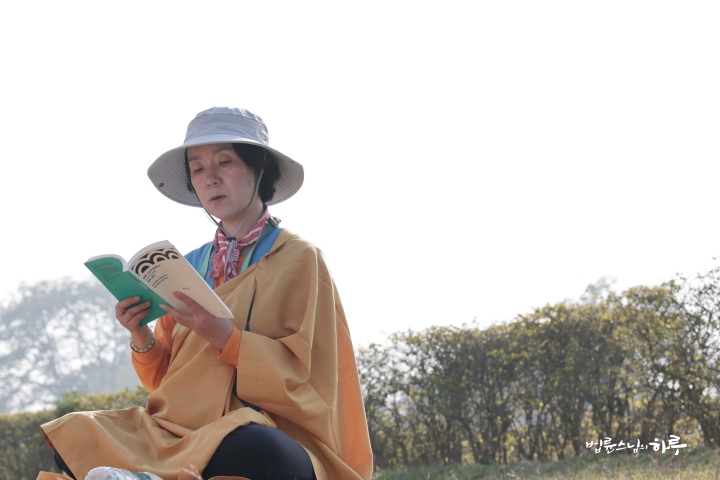
They then offered prayers while facing the Maya Devi Temple. After completing the prayers, Sunim gave blessings.
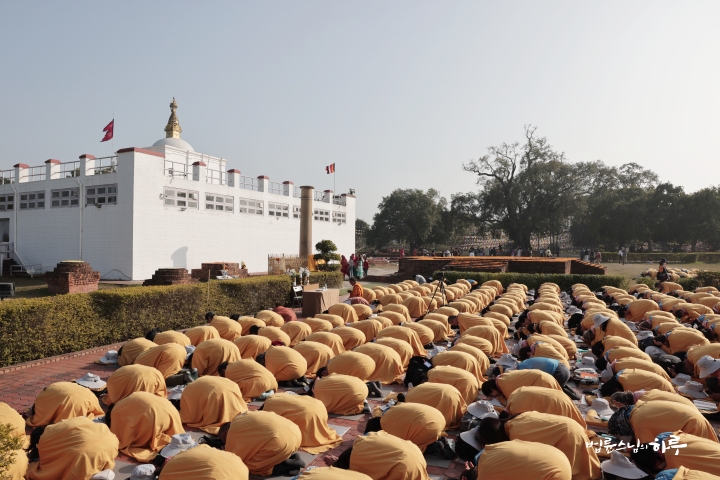
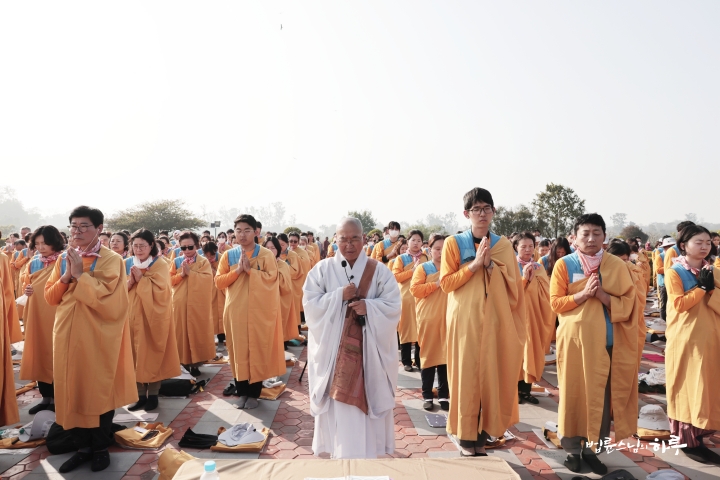
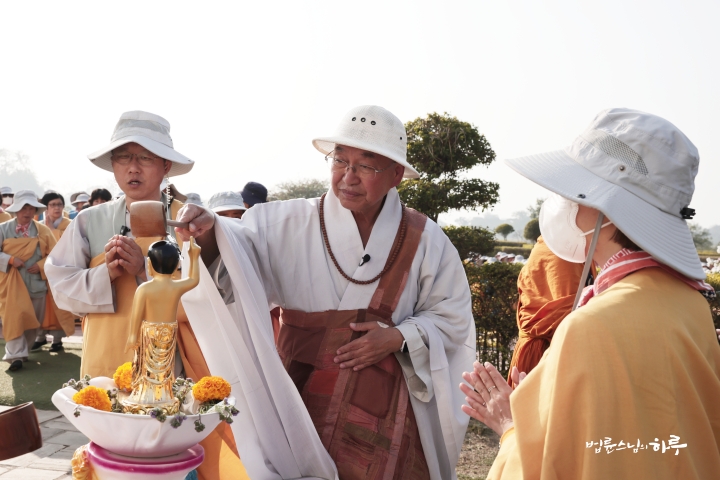
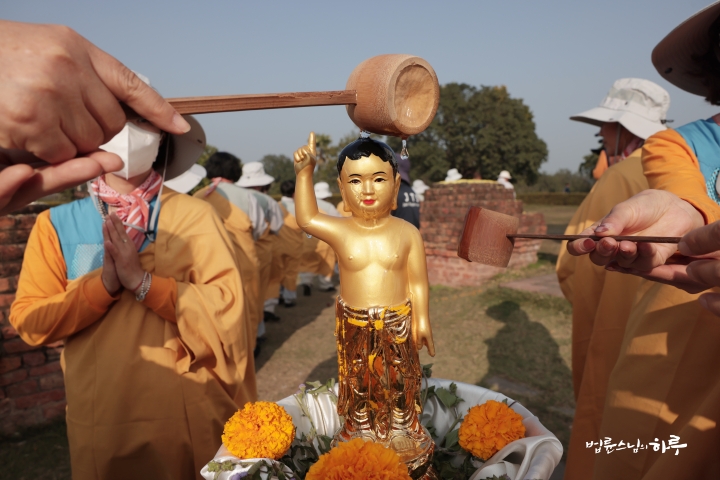
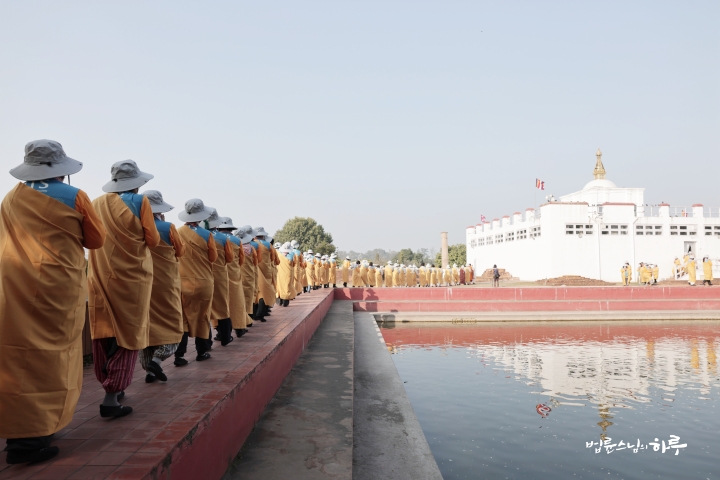
Next, they performed the bathing ceremony for the baby Buddha to commemorate the Buddha’s birth. They then slowly walked around Lumbini Garden while chanting Shakyamuni Buddha.
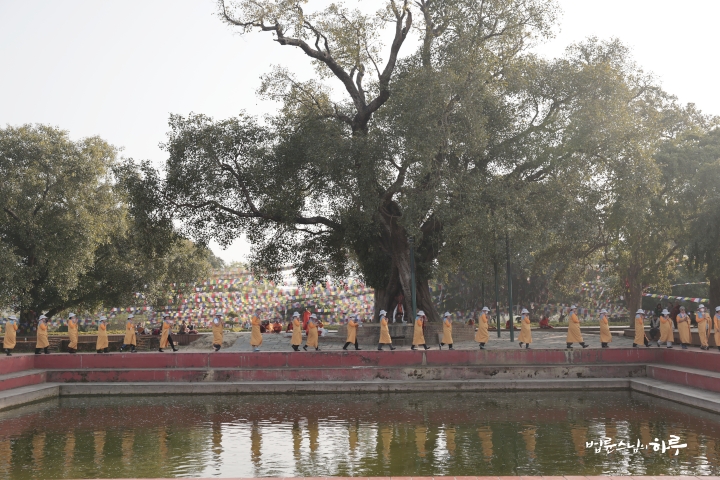
Returning to their seats, everyone sang songs celebrating the Buddha’s birth together.
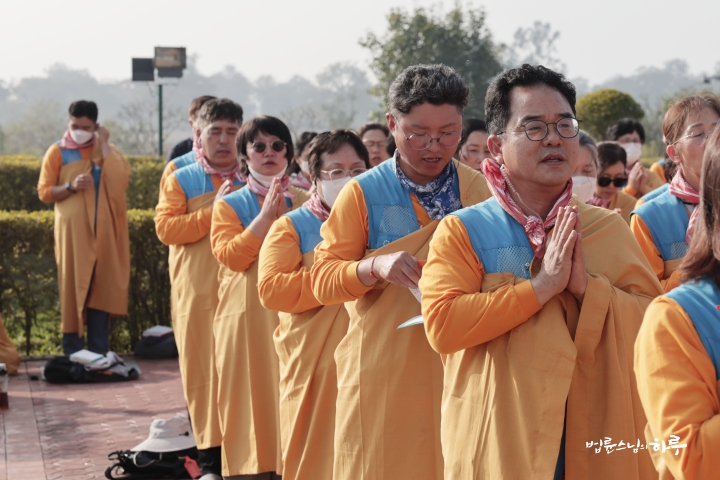
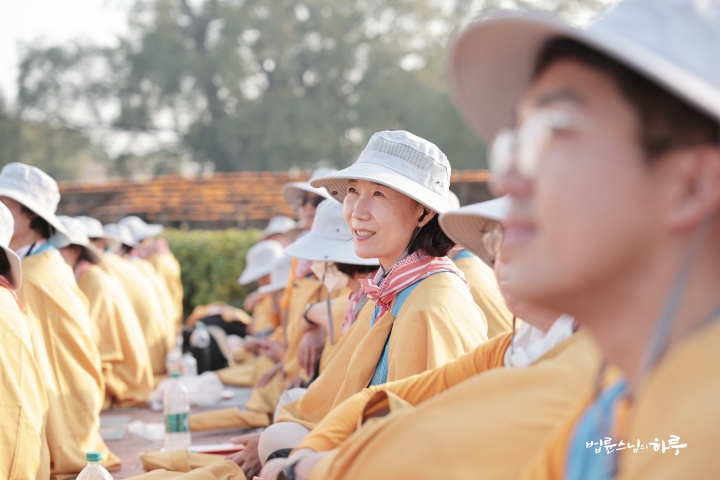
After the chorus ended, Sunim’s Dharma talk followed.
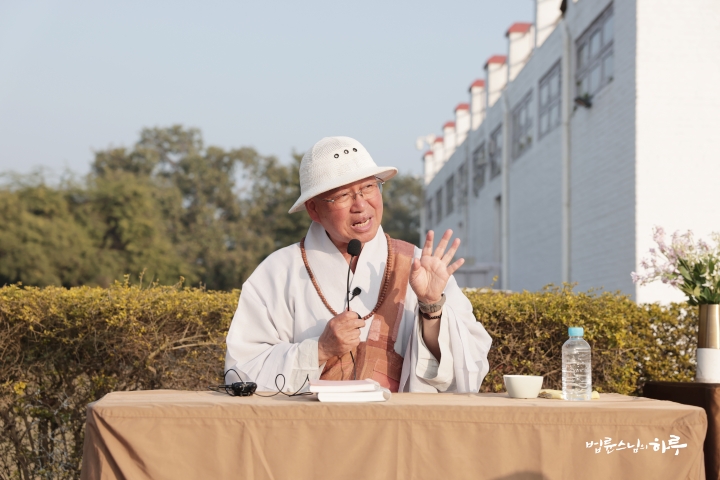
“Indian people wrote it.”
“Were they modern people or ancient people?”“Ancient people.”
Are the Buddha’s Stories Fact or Symbol?
The Buddha was born in India and grew up in India. However, his teachings can be said to have been universal rather than Indian. It would be more accurate to say they were ‘global teachings’ rather than ‘non-Indian.’ The Buddha taught universal truths that were not limited to any specific region or culture. However, the Buddhism we encounter today is Buddhism that has been combined with Indian culture again. This is unavoidable. For example, Korean Buddhism inevitably contains Korean elements. Things like the Mountain God Hall (산신각)
or the Seven Star Hall (칠성각)
are examples. These are the result of Korean traditional culture being naturally incorporated as Buddhism entered Korean society. The same is true for Chinese Buddhism. In this way, Buddhism creates new forms by combining with the culture of whatever region it settles in. Since Buddhism originated in India, it is natural that Indian culture has permeated into Buddhism.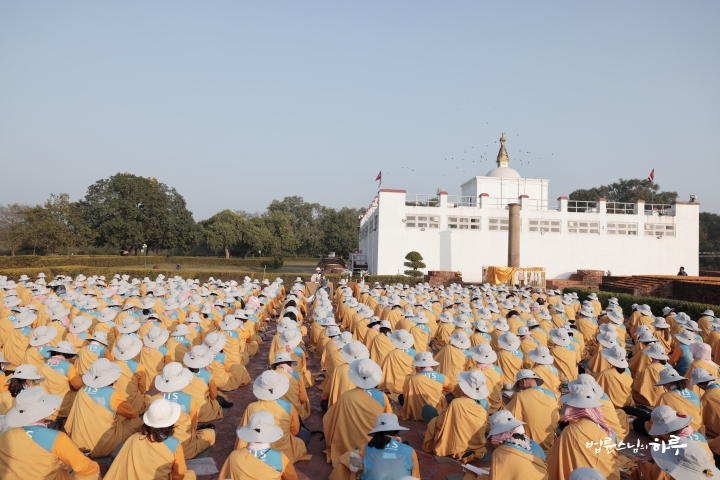
)
. The six realms refer to six worlds. Hell is a world where beings constantly suffer due to others’ actions; the realm of hungry ghosts is where beings are not killed by others but constantly suffer from hunger; the animal realm is where there are no problems with survival but beings create their own suffering through ignorance; the realm of asuras is where beings have abilities but are filled with anger, repeating battles and destruction; then there is the human realm; and finally, the heavenly realm of gods. Going round and round through these six worlds is the cycle of rebirth in the six realms. No matter how good the heavenly realm may seem, it too is a realm of rebirth and therefore finite.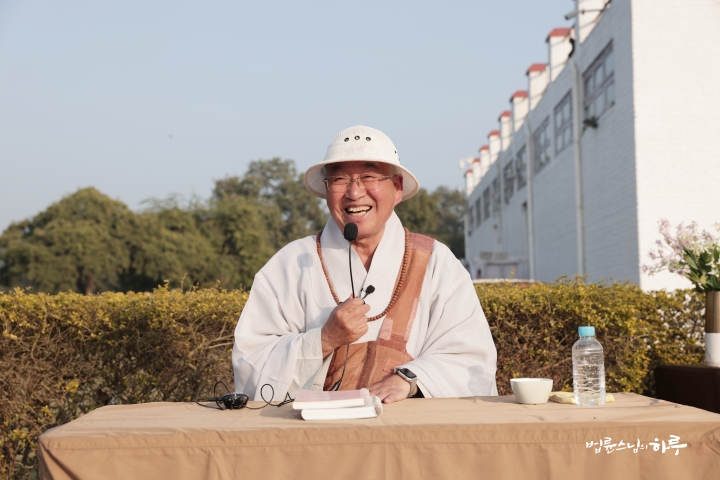
“It was described later.”
“That’s right. Because the Buddha achieved enlightenment, the birth scene was symbolically depicted this way based on that fact. Similarly, the expression that he was born from his mother’s right side can be understood as a symbolic representation of his royal status. So what does the phrase ‘I alone am honored in heaven and on earth (천상천하 유아독존)
‘ mean? Not only in Indian culture but in most cultures around the world, people think that the world of gods is above and the human world is below. That’s why when I have conversations with Christians, we sometimes discuss this topic. ‘Who is the Buddha?’ ‘He is the enlightened one.’ ‘So is the Buddha human or divine?’ ‘He is human.’ ‘So he’s just human after all.’ The phrase ‘just human after all’ carries the fixed notion that humans are inferior to gods. In such cases, we need to reframe the question from a Buddhist perspective. ‘Then is God a deity or a Buddha?’ They would probably answer ‘a deity.’ Then we can say this. ‘So just a sentient being after all.’
After completing the Dharma talk, everyone recited the Four Great Vows together, concluding the pilgrimage to Lumbini. About three hours had passed.
As they were leaving Maya Devi Temple, they met a familiar face. It was Craig, a reporter from a Hong Kong Buddhist newspaper. He said he had come to greet them during his Nepal trip, timing it with the pilgrimage schedule. Sunim invited Craig to have dinner together at Daesung Seokgasa Temple (대성석가사).
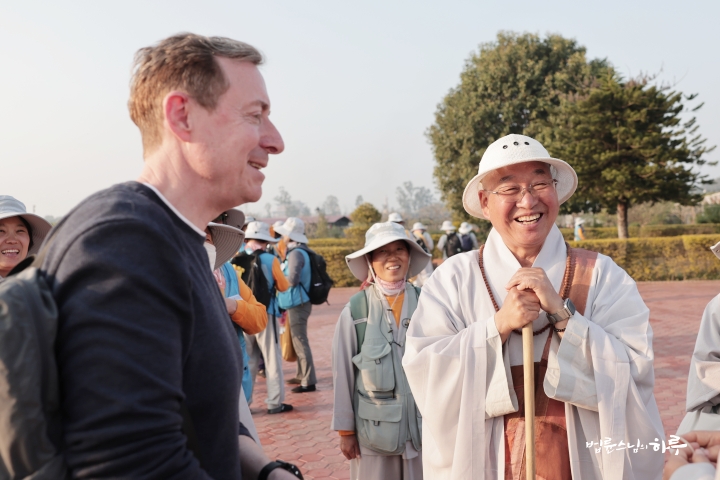
Sunim walked toward Daesung Seokgasa Temple while conversing with various Dharma teachers.
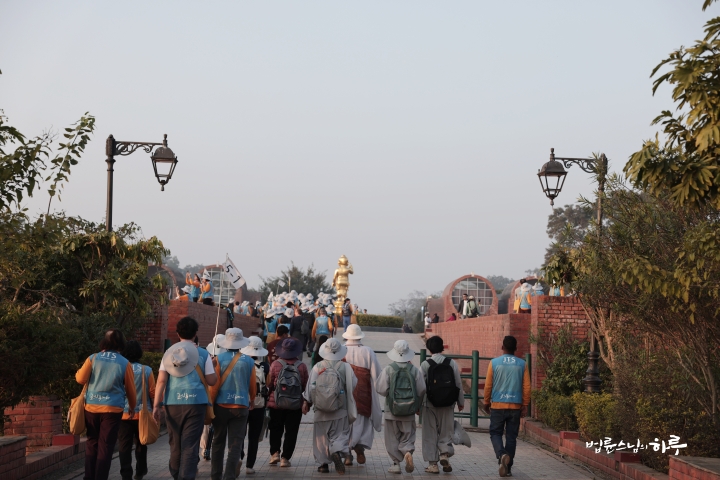
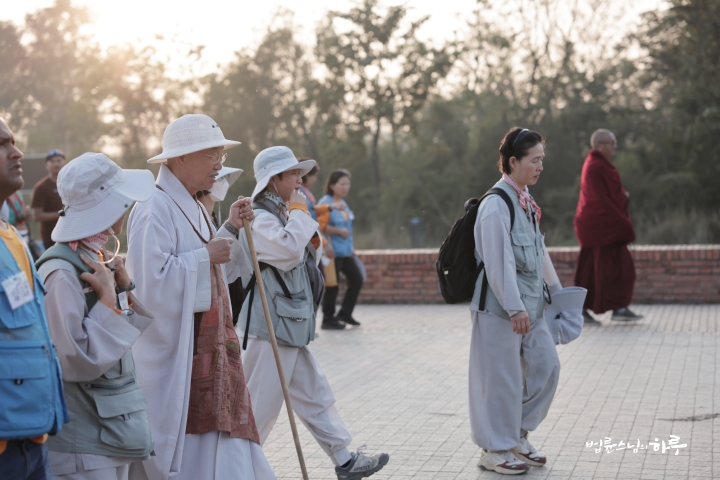
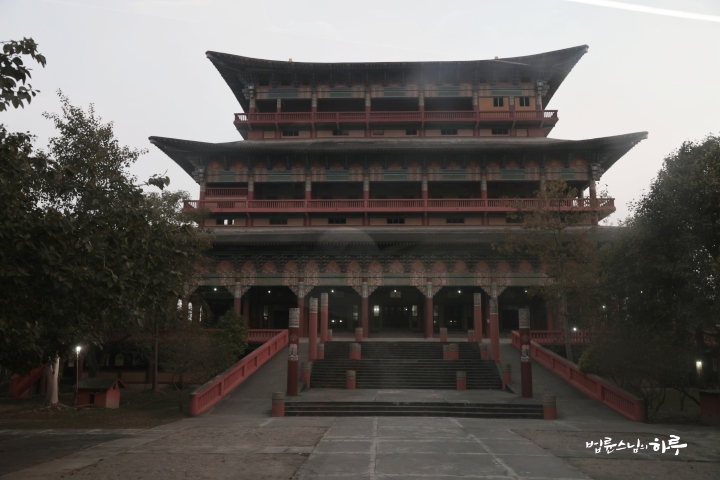
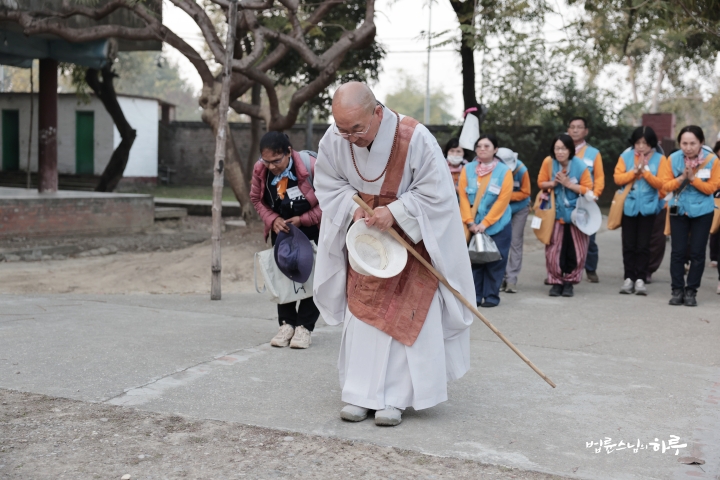
They arrived at Daesung Seokgasa Temple close to 6 PM. General Affairs Monk Bohyun (총무 보현스님) welcomed Sunim and the pilgrimage group. Sunim stood facing the main Dharma hall, offered three prostrations, and exchanged greetings with Ven. Bohyun.
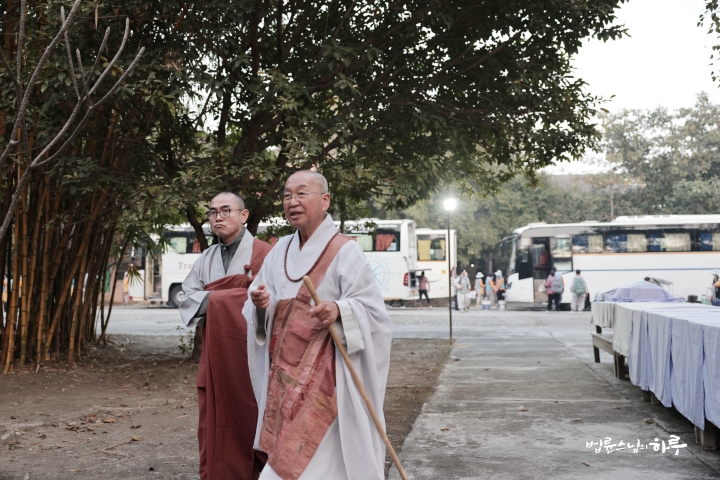
“it’s not major, but there has been some impact.”
“It must be difficult managing the temple alone.”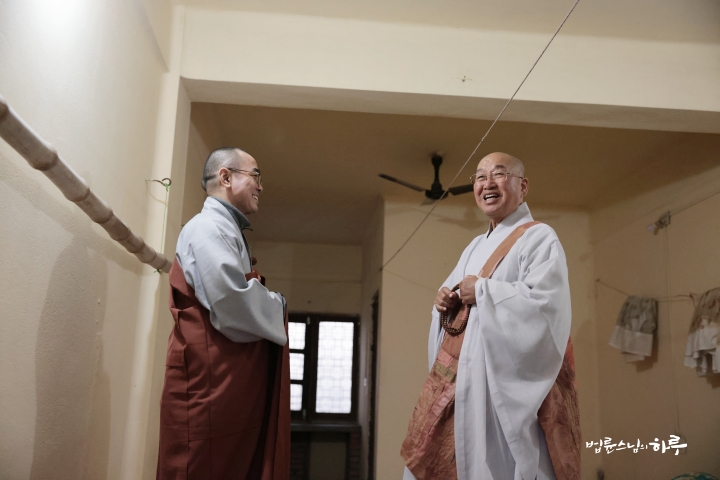
Upon arrival, the pilgrimage group had a warm meal prepared by Daesung Seokgasa Temple. After dinner, evening service was held in the Dharma hall at 7 PM. The Buddha and Master Yongseong (용성조사님)were enshrined in the hall.
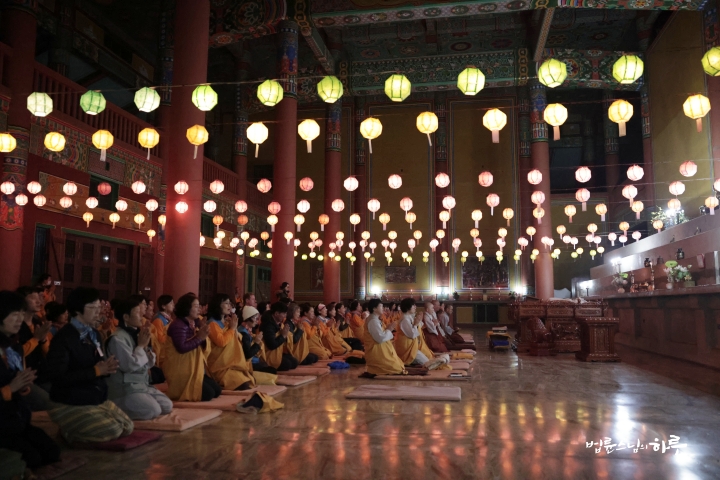
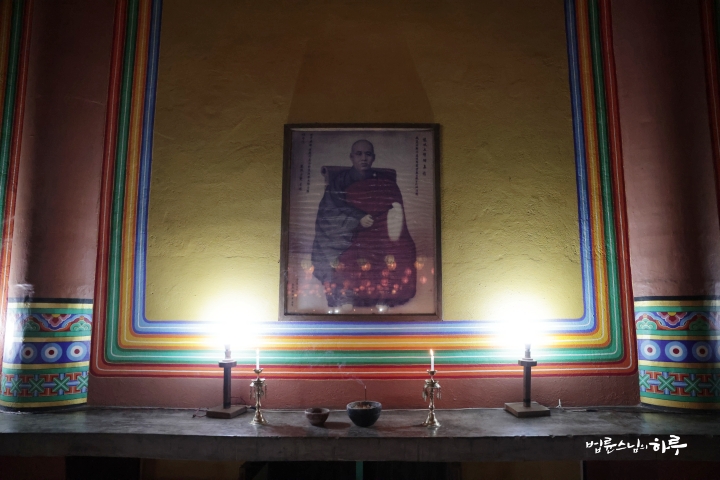
After the service, Ven. Bohyun introduced the history of Daesung Seokgasa Temple and the process of its construction to the pilgrimage group.
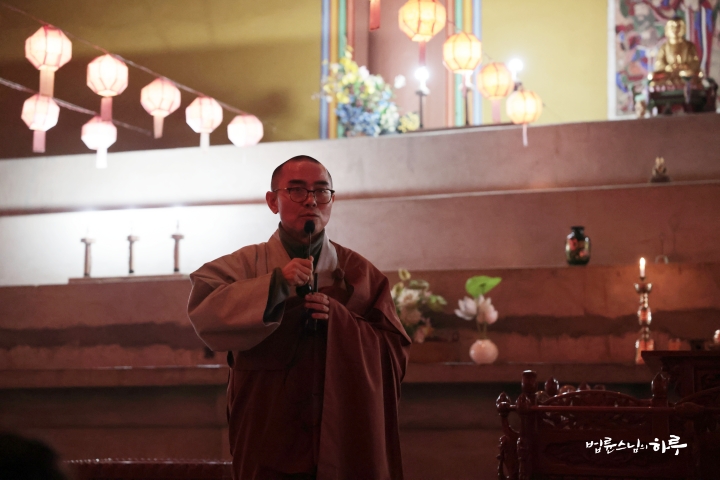
“The Jungto Society pilgrimage group has been visiting Daesung Seokgasa Temple around this time every year for nearly 25 years. Your visits give us strength. (Laughter) I sincerely thank the Jungto pilgrimage group.”
The assembly gave Ven. Bohyun heartfelt applause.
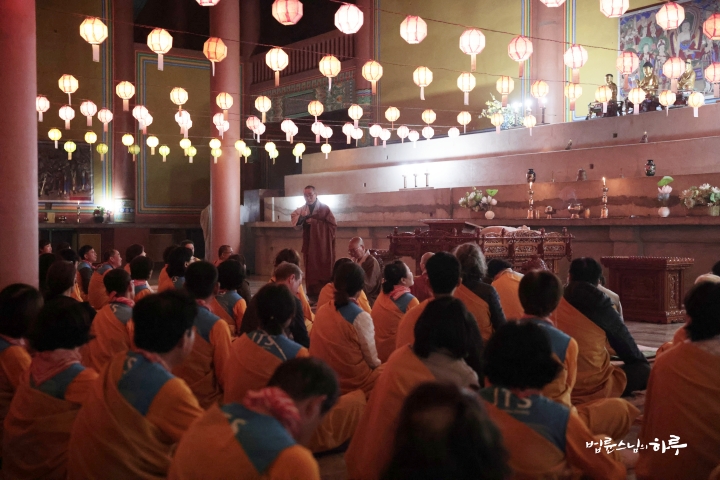
Sunim then emphasized that this temple is a precious site that realizes the legacy of Master Yongseong Jinjong. He expressed gratitude and respect for the efforts of Abbot Beopsin(주지 법신스님) and Ven. Bohyun, who have quietly continued the temple’s work over many years.
After 8 PM, the assembly concluded. Sunim edited manuscripts in his quarters before retiring for the night.
Tomorrow, they will depart at 2 AM to visit the Tilaurakot region and make a pilgrimage to Kapilavastu, where the Buddha spent his youth.