What Mindset Should I Have While Caring for My Husband Who Has Terminal Cancer?
Jan 30, 2026 - Day 7 of the India Pilgrimage, Vaishali
Hello. The morning of the seventh day of the India pilgrimage has dawned. Today, the pilgrimage group headed to Vaishali, famous as the place where the first female ordination took place and where a monkey offered honey to the Buddha.
Unlike the kingdom of Magadha where an absolute monarchy was established, Vaishali was a city where a democratic political system of nobles was formed. This place cherished the values of equality and openness. While the Buddha established the foundation of his Sangha in Rajgir, in Vaishali he spread the Dharma without discrimination to anyone regardless of gender, social status, or occupation. The most representative examples are his permission for women to be ordained and his acceptance of the courtesan Amrapali as a disciple.
At 5 AM, Sunim departed from Rajgir with the pilgrimage group heading to Vaishali. The day began with morning practice and meditation on the bus cutting through the darkness.
Every year when coming on the India pilgrimage, the road conditions seem to improve little by little, but the number of vehicles has also noticeably increased. From around 6:30 AM, the roads began to get increasingly congested.

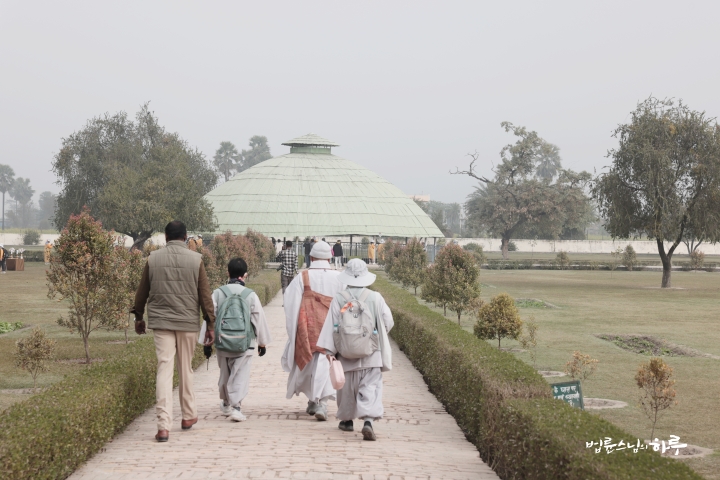
After about a 4-hour drive, the group arrived at the Vaishali accommodation at 9 AM. The pilgrimage group had breakfast with pre-prepared lunch boxes, and at 10 AM, they walked toward the site of the Buddha’s relic stupa.
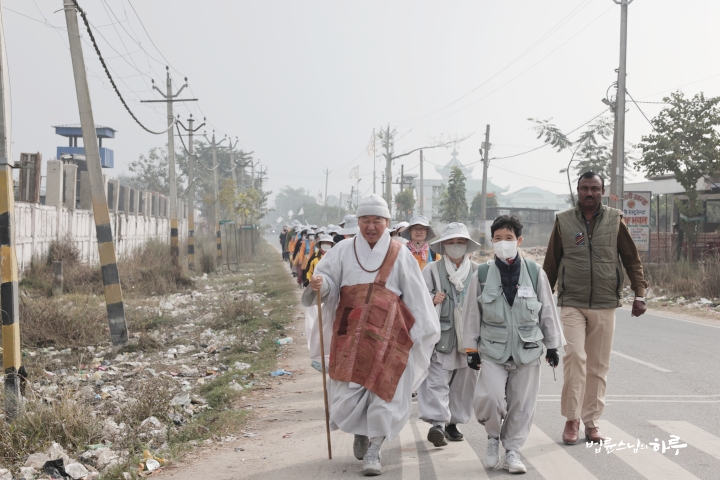
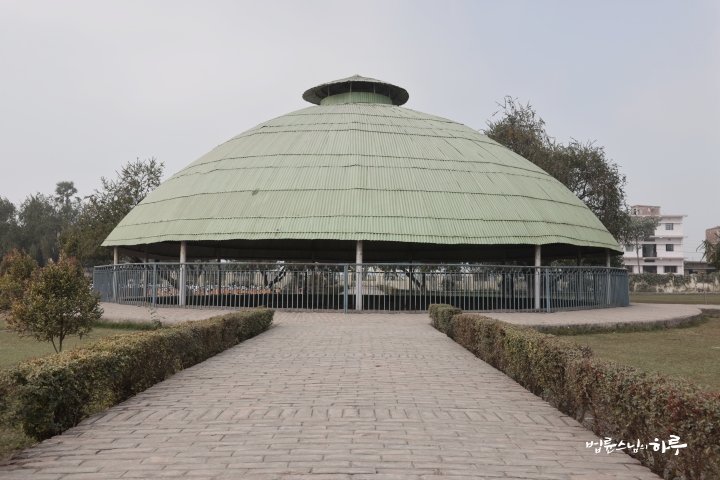
The relic stupa (진신사리탑) in Vaishali is where the Licchavi clan enshrined the relics they received when the Buddha’s relics were divided into eight parts after his parinirvana and stupas were first built. Sunim first circumambulated the stupa to pay respects and checked the preparations with the event team.
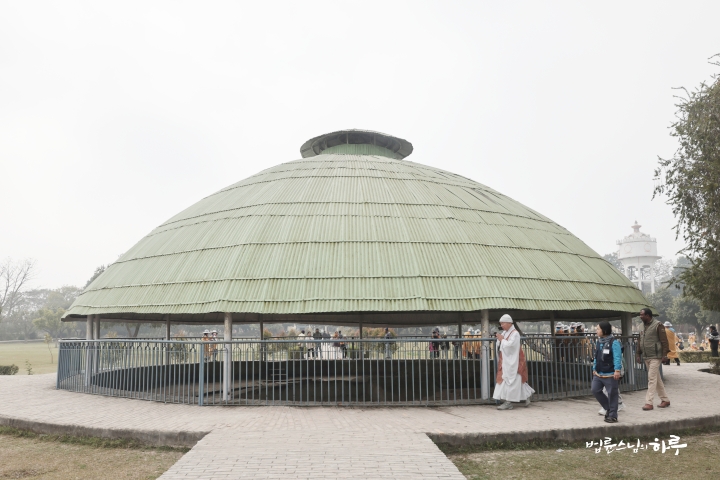
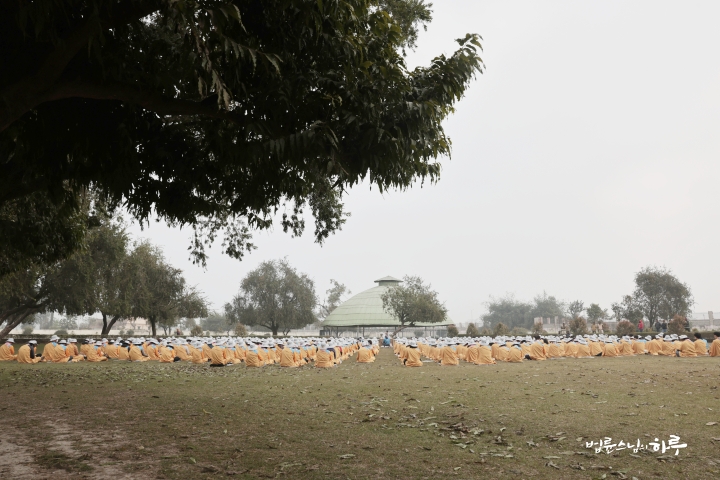
At 10:30 AM, when all the pilgrimage members had arrived and settled in front of the stupa, they meditated. After the meditation ended, Sunim shared the story of how Amrapali invited the Buddha in Vaishali and kept her promise, illustrating how enlightenment can transform a person’s life and attitude.
)
as the most famous courtesan in Korean history, the most famous courtesan in Indian history is Amrapali. ‘Amra’ means mango and ‘pali’ means beneath, and it is said she was named Amrapali because she was an abandoned child found beneath a mango tree. This woman was renowned as the most beautiful woman in the world. It is said that princes and sons of wealthy merchants from various countries dreamed of meeting Amrapali. She was that famous and also possessed great wealth.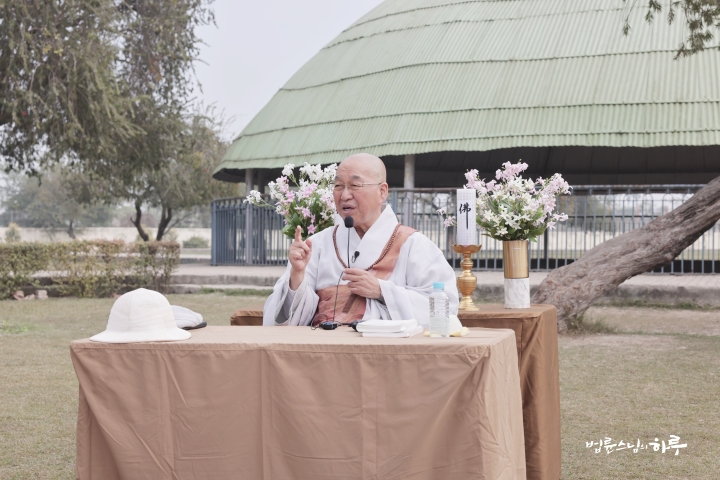
What She Wouldn’t Give Up Even for All of Vaishali
After hearing the Buddha’s Dharma talk, Amrapali was deeply moved and invited the Buddha and his followers to her home to offer them a meal. However, a dispute arose over this invitation with the Licchavi princes who were the ruling class of that region. The princes offered Amrapali one hundred thousand pieces of gold to transfer the invitation rights, but Amrapali firmly refused, saying, ‘Even if you gave me all of Vaishali, I would not give it up.’ Though she had been a courtesan who sold her talents and body for money, once her eyes were opened to enlightenment, she gained a dignity that would not yield to anything. Eventually, the princes went directly to the Buddha to pay their respects and invite him to a meal, but the Buddha did not accept. He had already made a promise to Amrapali. Looking at this passage, not only is Amrapali remarkable for not giving up the invitation rights, but the Buddha is also truly remarkable for rejecting the royal invitation to keep his promise to a courtesan. Later, Amrapali donated her mango grove and considerable wealth to the Buddha and the Sangha to establish a monastery, which is said to have become what was later known as the Kutagarasala (the Peaked Roof Hall-중각강당 : 重閣講堂), the largest monastery in the region.”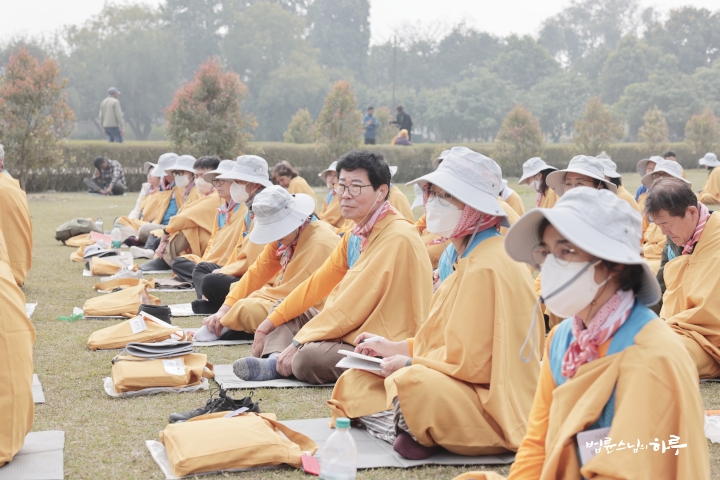
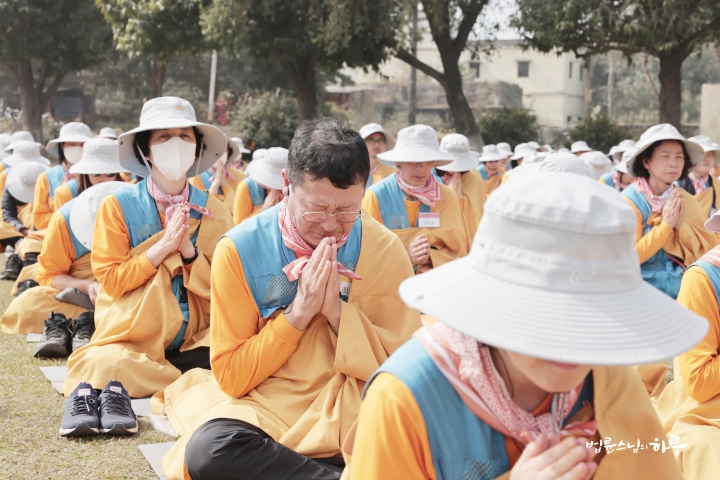
After reciting sutras and meditating, the group offered prayers facing the stupa containing the Buddha’s relics.
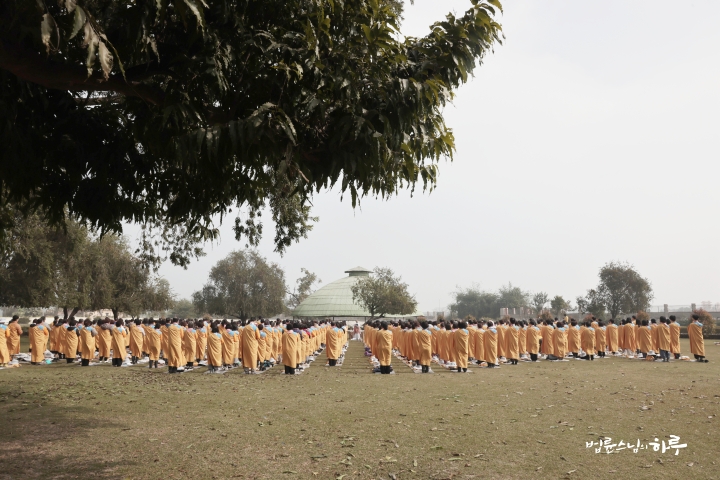
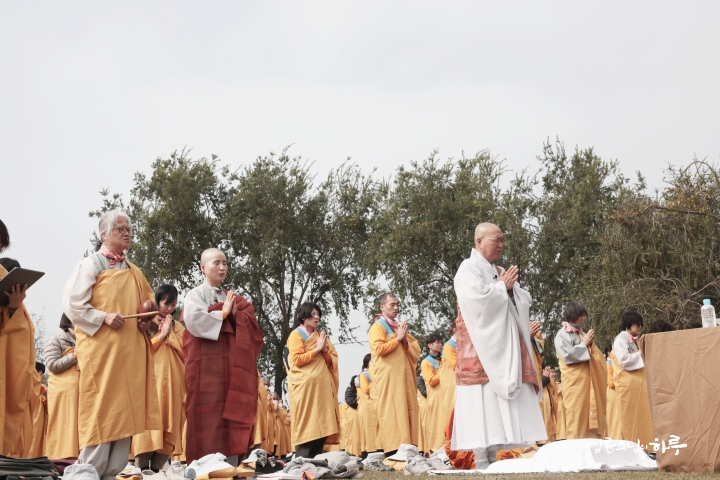
After completing the prayers, the pilgrimage group began circumambulating the stupa. Sunim suggested that since there were too many people to walk around the stupa simultaneously, they should form a single line to circle it while the others faced the stupa and performed 108 prostrations.
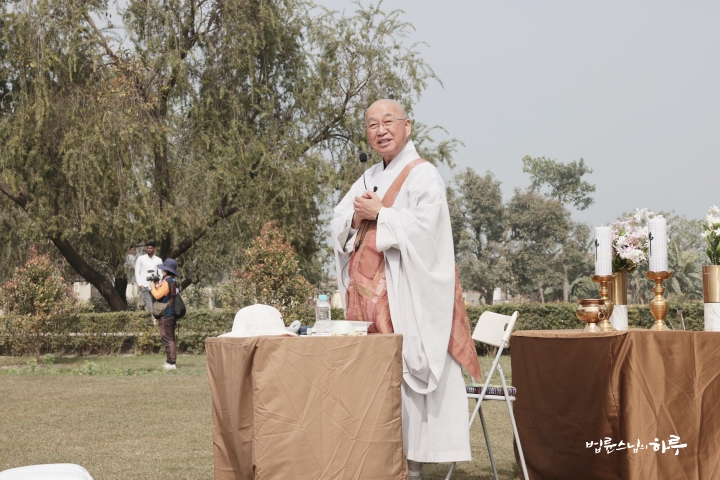
Following Sunim’s footsteps, about five hundred pilgrims began circling the stupa in turn.
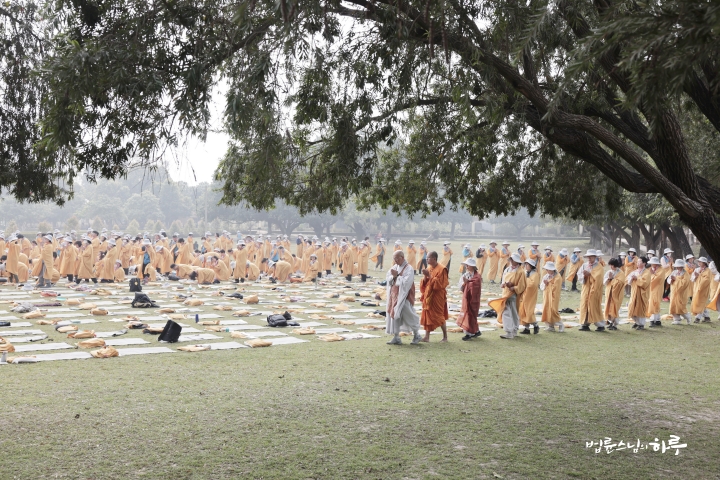
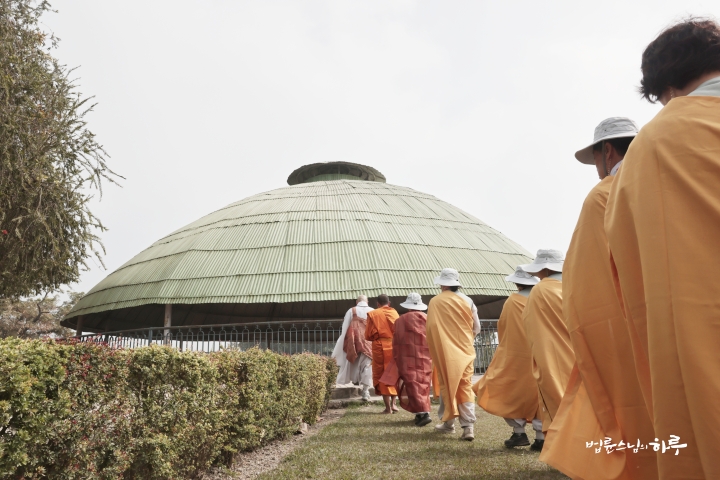
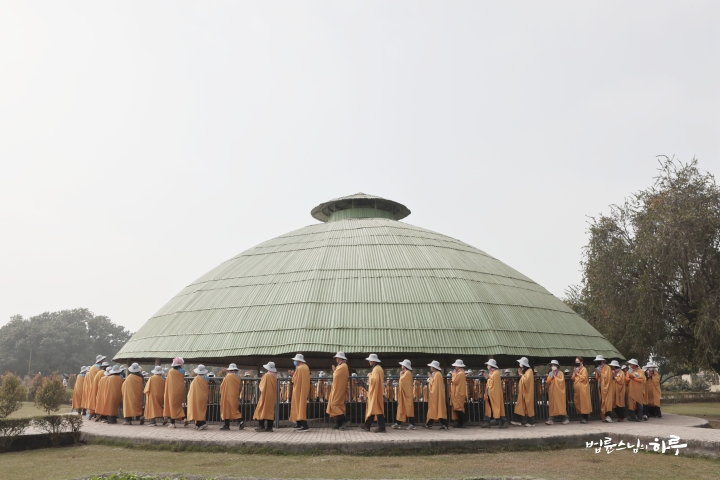
Those who completed the circumambulation and returned to their places performed 108 prostrations.
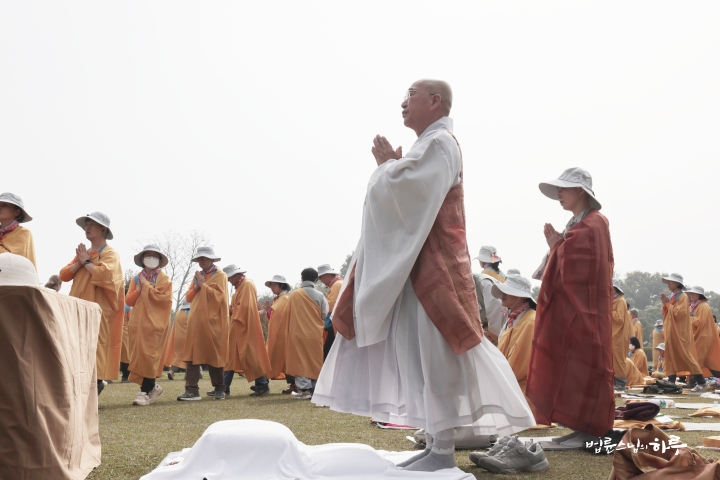
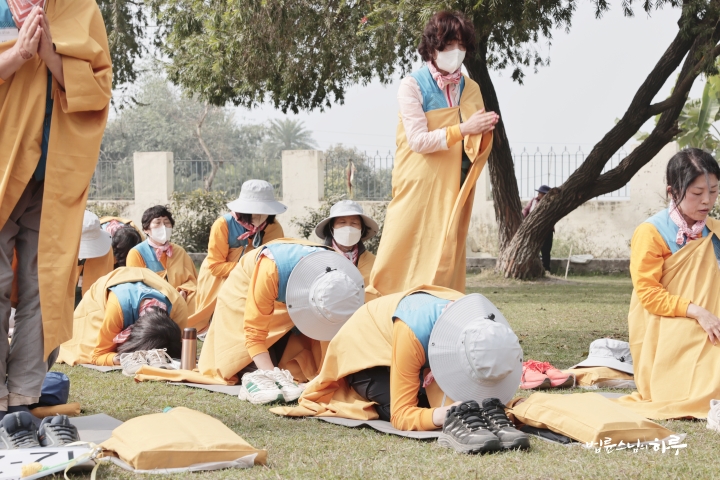
After everyone had completed the circumambulation, Sunim spoke about how to discern what constitutes the Buddha’s true Dharma among the numerous teachings.
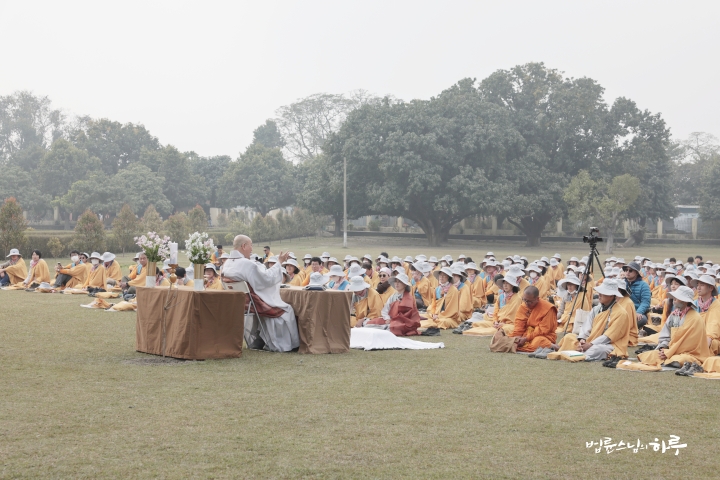
How Can We Discern the Buddha’s True Teaching?
We should neither accept their claims blindly nor reject them outright. We must listen carefully to what they say and compare it with the Buddha’s teachings that have already been transmitted. If the content aligns, we should accept it; if not, we should reject it. Among the Buddha’s teachings that have been transmitted, the core principles are the law of dependent origination and the Middle Way. We should also examine whether the teaching conforms to the Four Noble Truths and the Eightfold Path. The Buddha’s teachings never deviate from the framework of dependent origination and the Middle Way. From my personal perspective, I believe that today’s natural sciences align most closely with the perspective of dependent origination and the Middle Way. If you maintain these criteria, you won’t be easily confused by any monk’s Dharma talk or any scholar’s claims. I hope you will develop the perspective to examine whether their words and thoughts stand on the position of the Middle Way and conform to the law of dependent origination.”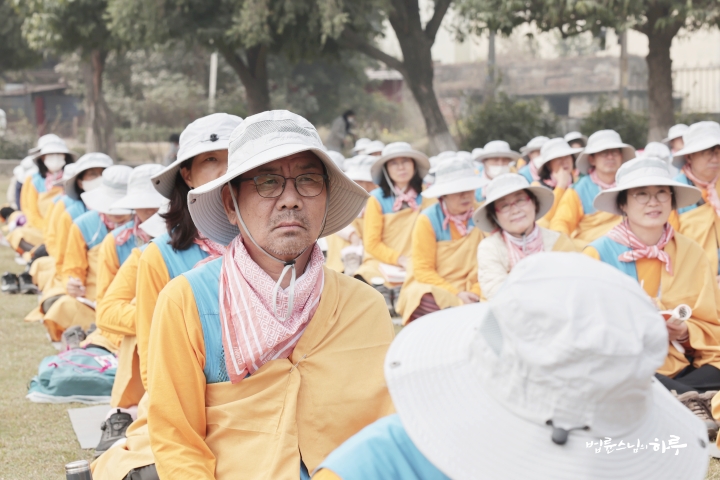
Sunim then made an announcement to the assembly.
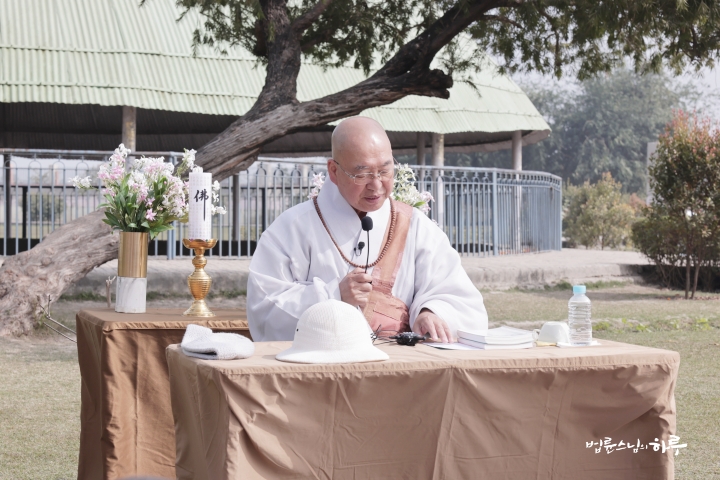
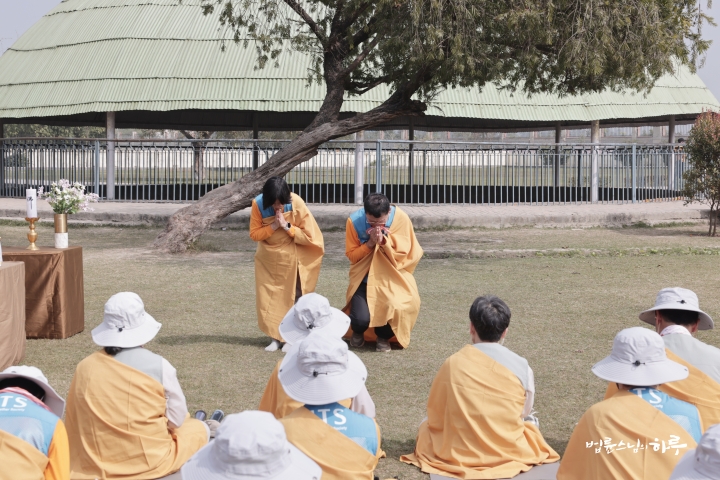
The assembly joined their palms and united their hearts to perform the memorial service (천도재) together.
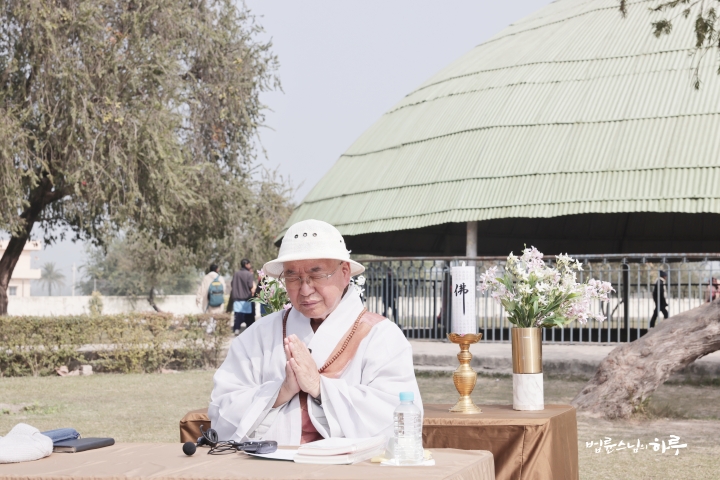
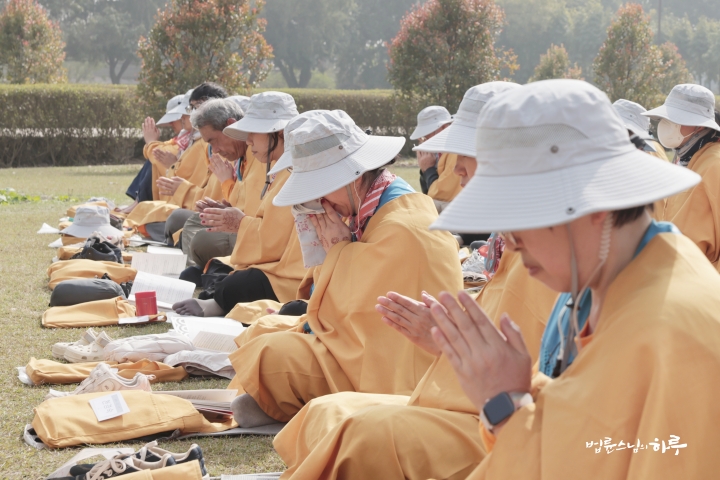
After completing the memorial service, the couple expressed their deep gratitude to the pilgrimage group with three prostrations.
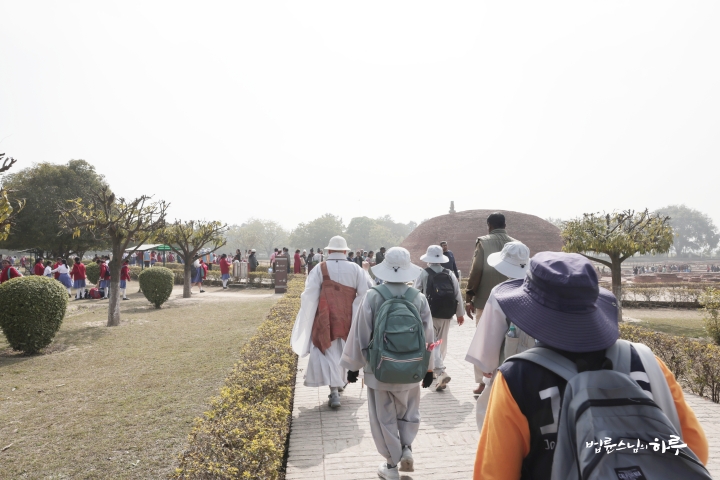
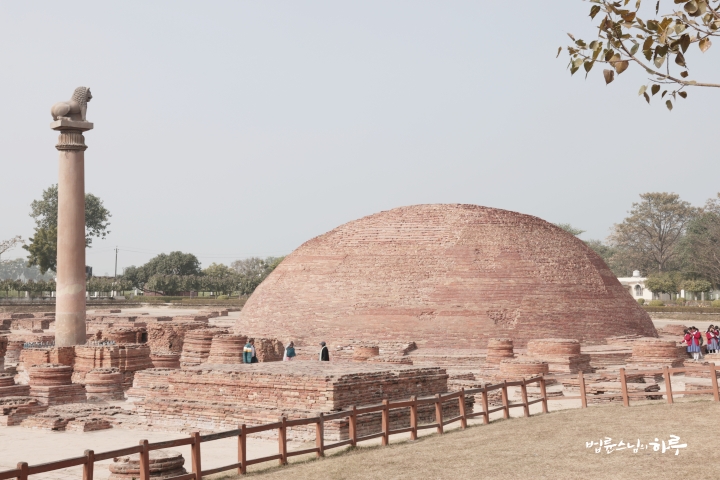
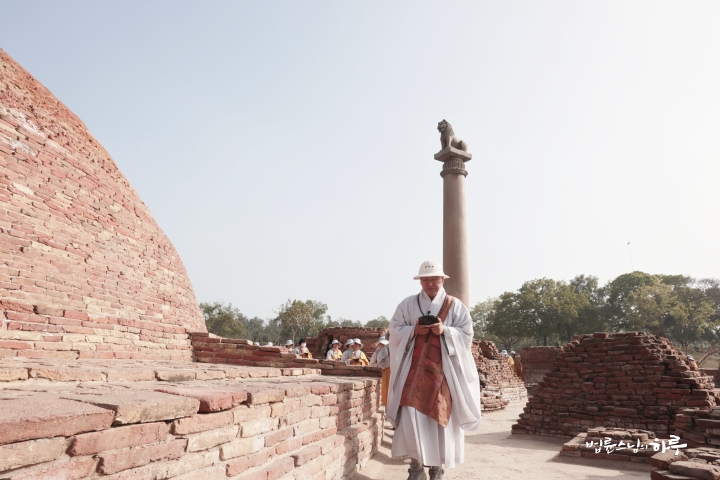
At 12:30 PM, the pilgrimage group departed from the Stupa of Buddha’s True Body Relics and headed to Wonhubeongmilter (the site where a monkey offered honey to the Buddha, 원후봉밀터 : 猿猴奉蜜處). At 1:00 PM, upon arriving at the sacred site, the landscape captivated everyone’s attention with its massive stupa built high with red bricks and a lion pillar soaring into the sky.
Sunim and the pilgrimage group sat in the prepared area in front of the stupa and meditated briefly.
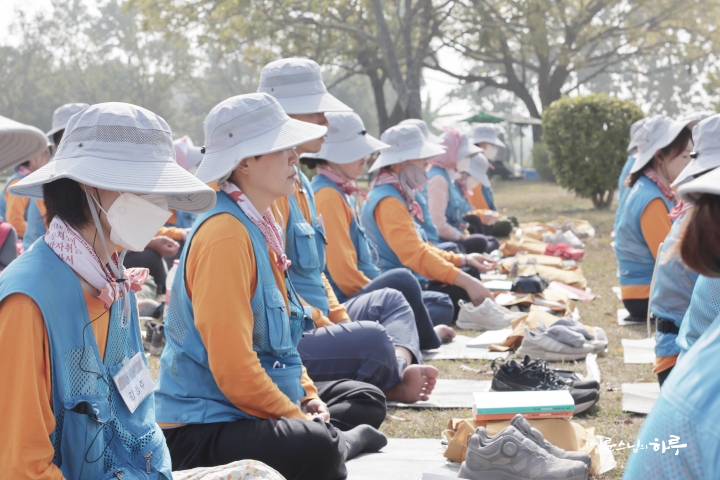
After the meditation, Sunim calmly explained how women became independent practitioners here in Vaishali and the historical and ideological significance of the birth of the bhikkhuni Sangha.
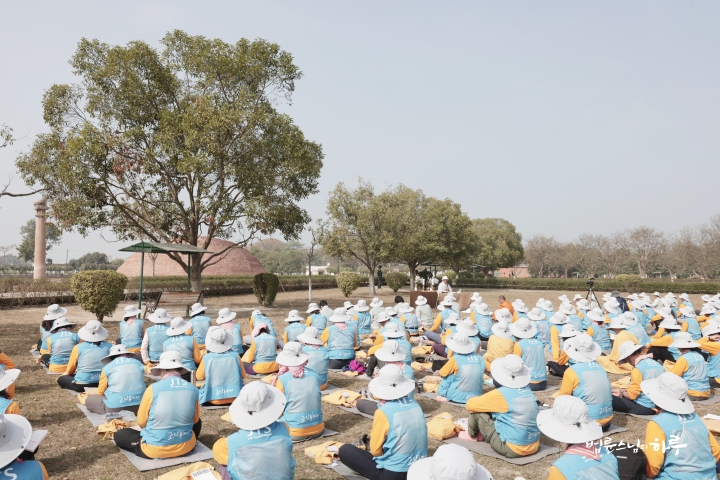
How Did the Bhikkhuni Sangha Become the Starting Point for Women’s Liberation?
Six years after the Buddha’s enlightenment, when he visited Kapilavastu and gave teachings, many young Shakya clan members became monks. At that time, Venerable Ananda, Venerable Devadatta, Venerable Aniruddha, and Venerable Upali also became monks. However, until this period, there were no female monastics. In Indian society at that time, women were not recognized as independent beings. Slaves had to receive their master’s permission to become monks. Therefore, initially, those of low caste who were servants or slaves could not become monks. They were not recognized as independent persons. However, as time passed, some among the low caste began to become monks, which sometimes led to disputes with their masters. Women’s circumstances were not much different. Women were not considered independent human beings but were called someone’s wife or daughter. In childhood, the father was the master; after marriage, the husband; and when the husband died, the son became the master. This is called the Three Obediences (삼종지도)
. Korea also had the family head system (호주제도)
until recently, and family registers listed “father’s section,” “husband’s section,” and “son’s section.” This system was abolished during President Kim Dae-jung(김 대중)
‘s administration.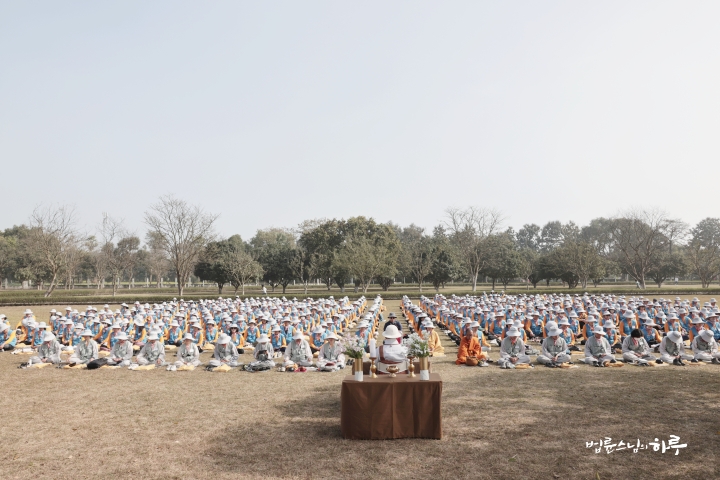
)
. These include requirements such as that even a bhikkhuni with many years of experience must pay respects to a newly ordained bhikkhu, and that bhikkhunis must not disparage bhikkhus. The women agreed to accept these conditions. By today’s standards, these eight conditions clearly appear to be discrimination against women. However, within the social conditions of that era, the fact that women’s ordination itself was permitted is far more important than the content of the conditions. While they appear discriminatory through today’s lens, they need to be understood within their historical context. Personally, it seems unlikely that the Buddha himself would have attached such conditions. Nowhere in the sutras does such a format of conditional permission appear. It is possible that this story was formed in later periods. Even so, the conditions are a secondary issue. The most important point here is that the Buddha permitted women’s ordination.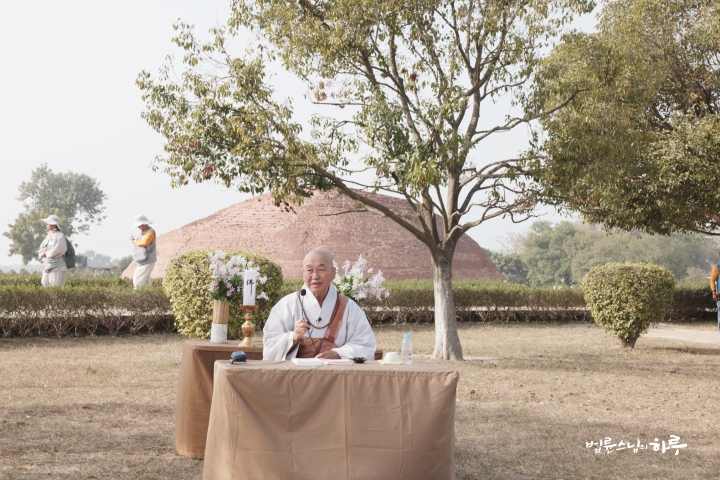
After the explanation ended, there was a brief meditation followed by sutra recitation.
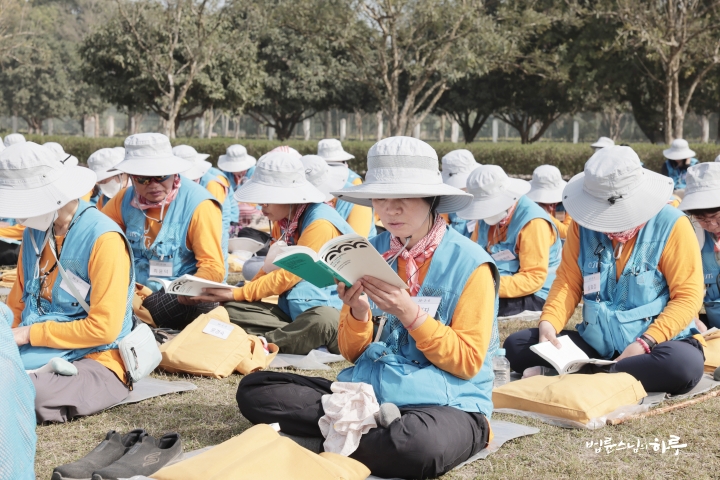
After the sutra recitation, everyone sang two songs together: “Person Who Gives Happiness” and “Land of Happiness.”
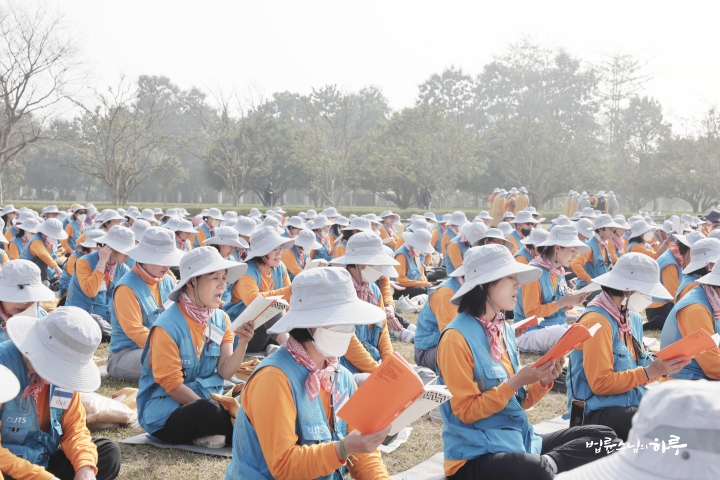
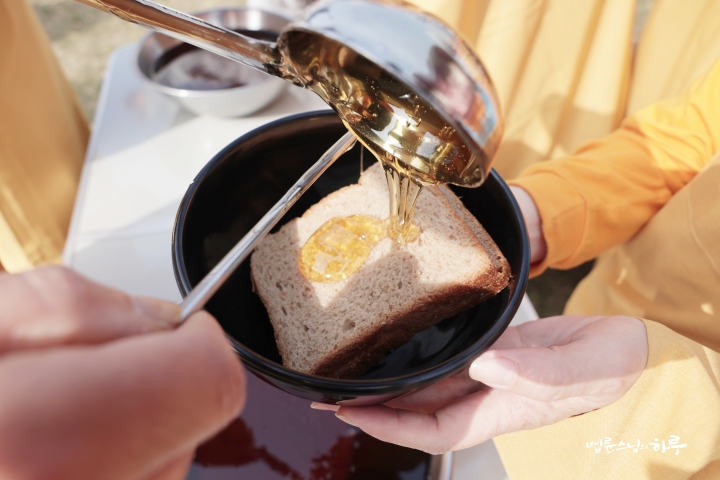
Next, a circumambulation combined with honey offering was conducted. The honey offering is a ritual that recreates the occasion when a monkey offered honey to the Buddha in ancient times. The pilgrimage group began the circumambulation following Sunim.
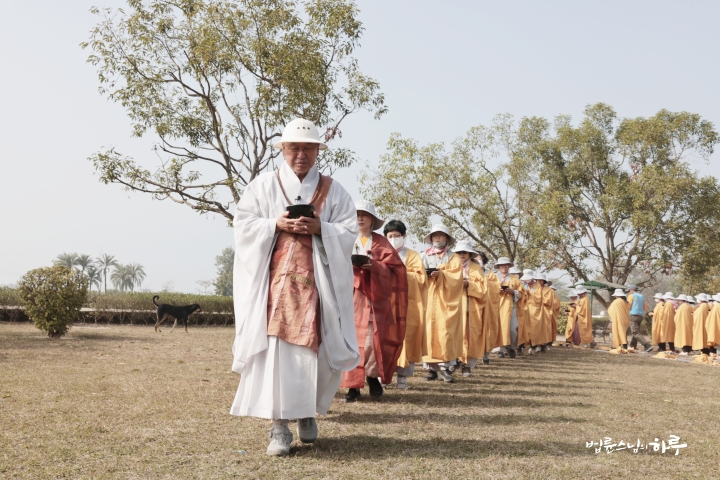
The pilgrimage group moved to an open area, received two slices of bread and honey in their bowls, and slowly walked toward the stupa. The yellow kasayas fluttering in the wind created a magnificent scene harmonizing with the red bricks of the site where the monkey offered honey.
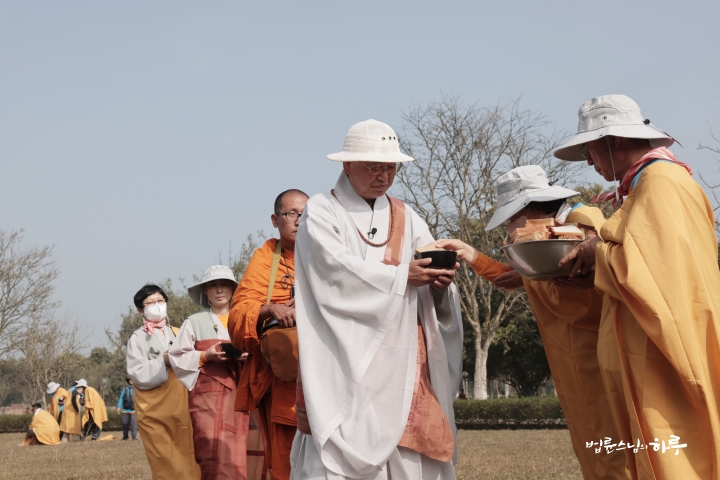
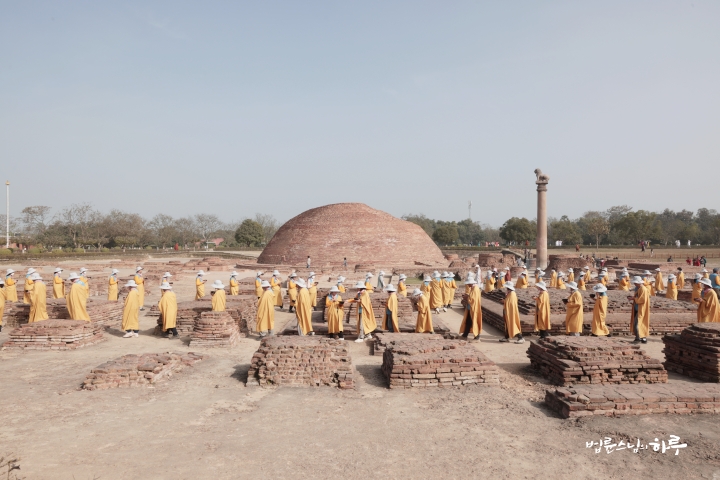
After completing the circumambulation, the pilgrimage group returned to their places and sat with their bowls in front of them. When everyone had finished the circumambulation, Sunim gave instructions.
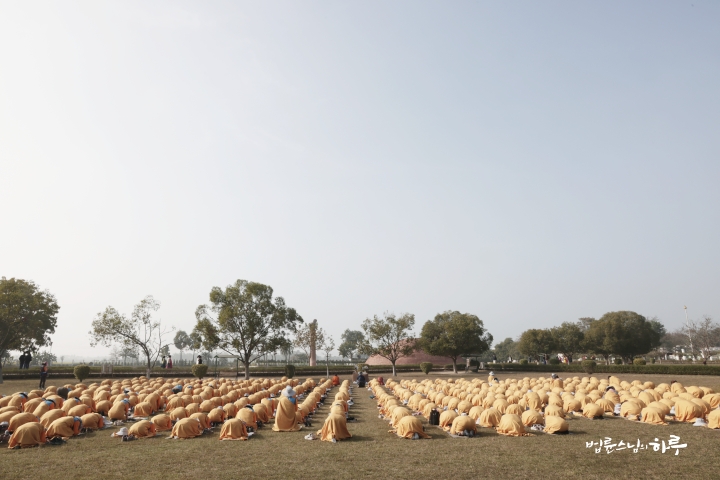
“Please place your bowls neatly in the center. We will offer prostrations facing the stupa and recite the Heart Sutra (반야심경)
.”Sunim and the pilgrimage group offered prostrations toward the stupa and recited the Heart Sutra together.
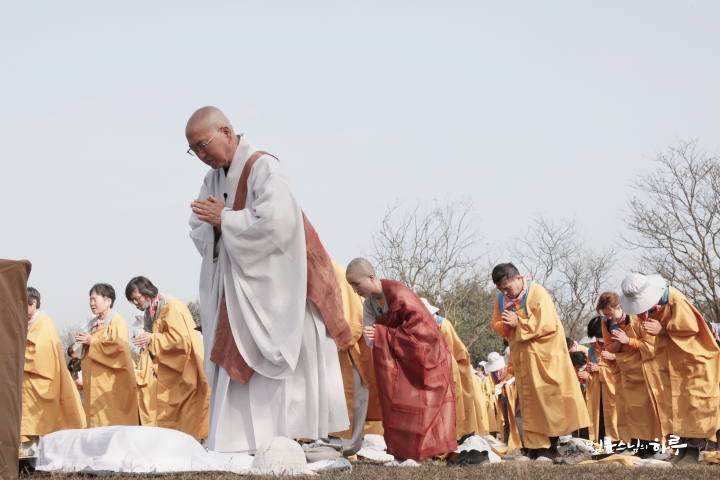
They then recited the meal offering verse together.
“In a single drop of water, the grace of heaven and earth permeates. In a single grain, the labor of countless people is contained. In a single thread, the sweat and toil of the weaver resides. Drinking this water, eating this food, and wearing these clothes, I will diligently practice to become a person free from suffering, a person of freedom, and a bodhisattva who repays the kindness of all sentient beings.”
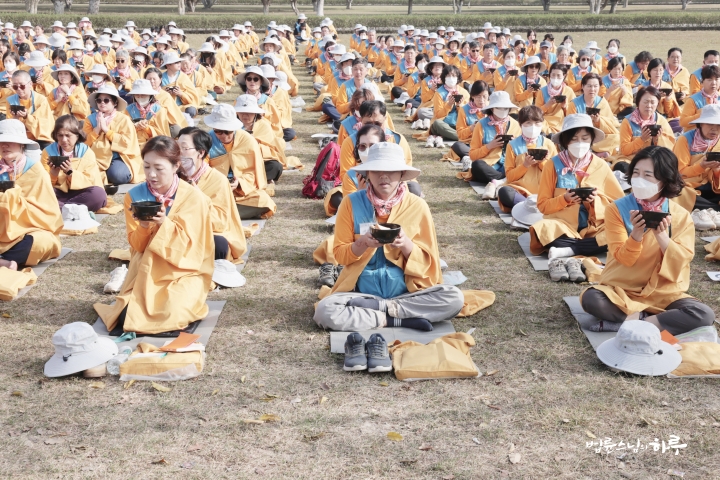
Though it was just two slices of bread with a spoonful of honey, eating while recalling the ancient story of offering honey to the Buddha made it feel even more meaningful.
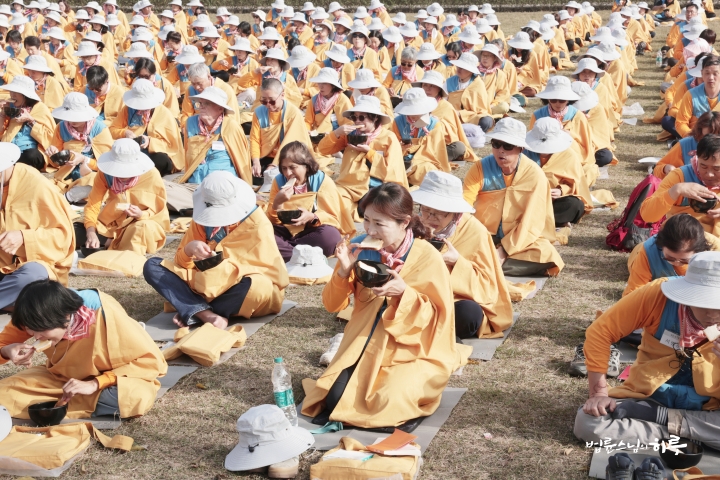
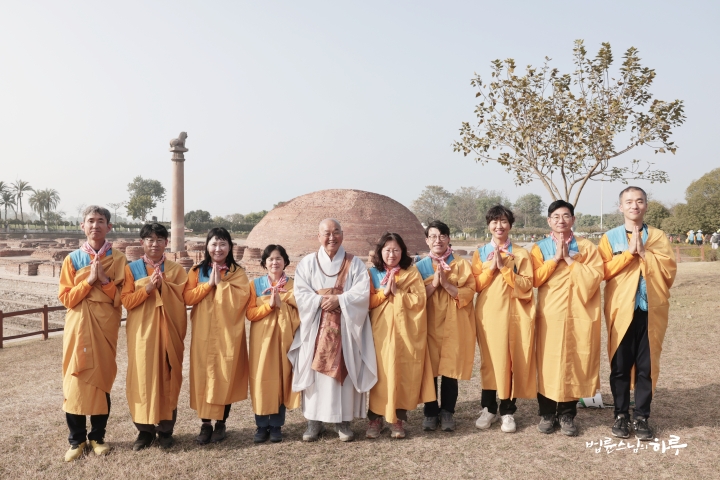
After the meal, Sunim’s Dharma talk continued. After the talk, Sunim took group photos by team with the site where the monkey offered honey as the background. Dividing 500 people resulted in about 80 groups.
A live Dharma Q&A broadcast was scheduled for 4 PM. All photo sessions had to be completed and everyone had to move 30 minutes before the broadcast. After hurrying through the photos, they barely arrived at a small hotel room in Vaishali 5 minutes before the broadcast began. To conduct the Friday Dharma Q&A live broadcast, they needed a space with good internet, so they rented a room at a small hotel called “Vaishali Residency.”
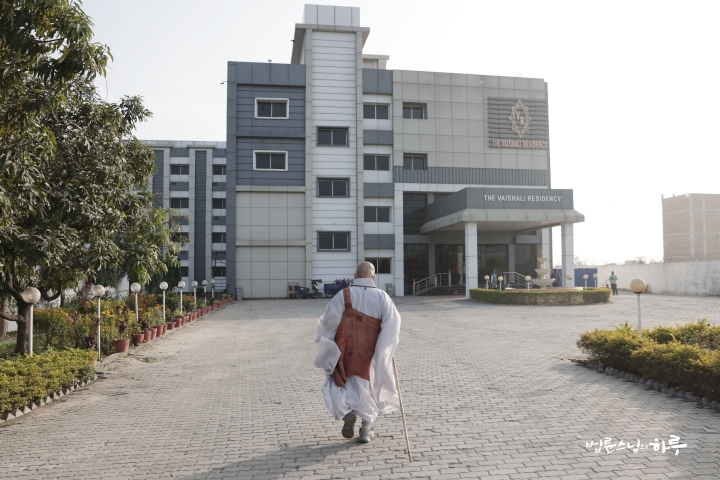
At 4 PM local time, 7:30 PM Korean time, about 3,200 people connected to the YouTube live broadcast. Sunim began the conversation with a bright smile, sharing with viewers about the ongoing pilgrimage to India’s sacred sites.
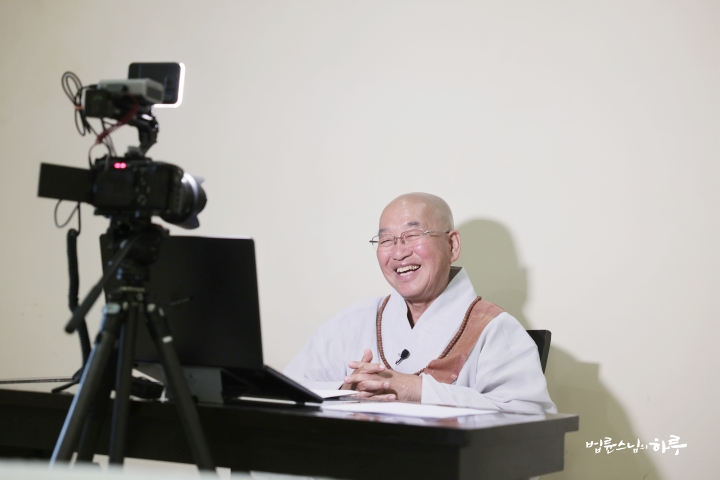
Those who had submitted questions in advance then took turns asking Sunim questions. During the 40-minute session, he was able to converse with three people. One of them was caring for her husband, a terminal cancer patient, and sought Sunim’s advice on how to live while dealing with unbearable anxiety and guilt.
What Mindset Should I Have While Caring for My Husband Who Has Terminal Cancer?
“My husband is a serious terminal cancer patient. I still cannot accept this situation. I’m afraid to open my eyes in the morning, and it’s so hard. I’m upset that we met the wrong doctor, and I feel guilty as if my husband is sick because I did everything wrong. Not being good at cooking and unable to make delicious food for my husband is also stressful. I have a lot of anxiety and impatience, I’m quick-tempered and easily startled, so I always feel sorry for my husband. My sick husband is so pitiful, and I wonder what sins my husband and I committed to experience this. Even when I pray with gratitude to Buddha as you suggest, at some moments I find myself begging, ‘Please save my husband. Please let him live just 10 more years.’ I feel hopeless about how to live with what mindset going forward. I need to pull myself together, but I feel so helpless and have no energy. With three children, I need to work for at least 10 more years, and I worry whether I can endure with this anxious state of mind.”
“Yes, you’re in a difficult situation. Are you currently working, or are you only caring for your husband?”“I have to make a living, so I’m working, though it’s not a great job.”
“Looking at your face, your own health doesn’t look very good either. With your husband sick and three children, you must have many worries. Since your husband is a terminal cancer patient, how much longer does the hospital say he can live?”“The hospital won’t say directly, but from what I see, it seems quite serious. He has four metal rods in his spine, and starting today he’s hospitalized for rehabilitation. His body is becoming paralyzed and there’s cancer in his pelvis area too, so he can’t walk well and can only sit or lie down due to severe pain. My daughter is nursing him, and I go to care for him on my days off. Depending on the situation, they’re considering radiation therapy or changing medications, but the outcome is uncertain.”
“Your sick husband will want to live even one more day, and it’s perfectly natural for family members to want to try every possible treatment. There’s no need to question that feeling itself. However, especially at times like this, it’s necessary to look at the situation a bit more calmly and objectively at least once. If the cancer has already spread throughout the body in a terminal state, doctors won’t give clear statements about survival possibilities either. This doesn’t mean the doctors are irresponsible, nor are they recommending treatment for money. Doctors believe it’s their duty to attempt treatment to the end if there’s even a slight possibility. Attaching ventilators or giving electric shocks to the heart is done because they consider it their role to help patients live even a moment longer. However, when recovery is almost impossible, such medical procedures often only extend life by a day or a month rather than fundamentally restoring it. This is called ‘life-sustaining treatment (연명치료)
.’ At this point, it’s difficult for doctors to directly tell guardians not to pursue life-sustaining treatment. That’s why nowadays there’s a system where people can register in advance while healthy that they don’t want life-sustaining treatment if they become unconscious or in an irrecoverable state. When I see cases where surgery with low recovery chances is forced on elderly parents, though it’s heartbreaking, I think it would be better not to receive such treatment. Similarly, if your husband’s recovery chances are low, helping him spend his remaining time more comfortably, even if just for a day, might be a better choice. Radiation therapy and chemotherapy cause considerable pain to patients and in some cases can worsen their condition. So after fully consulting with doctors, if there’s a possibility of recovery, you can try treatment despite the cost, but if it’s merely life-sustaining treatment without recovery possibility, it’s painful for the patient and exhausting for the family. Since you say your husband is a terminal cancer patient, I’m suggesting we consider these points together. Rather than deciding based only on emotions, I recommend listening fully to expert opinions, doing your best if there’s recovery possibility, and if not, calmly discussing among family members. There’s another important point. When an entire family devotes themselves to caring for one patient, the whole family can eventually collapse together. While the patient is certainly important, family members caring for the patient also have the right to be happy. From what I see, you also seem to be in considerable mental distress. Rather than focusing all your attention only on your husband’s problems, it seems necessary for you to receive psychiatric counseling or treatment for yourself. Right now, your mind may be very sensitive due to extreme stress. At such times, it’s necessary to have the perspective that ‘it’s also important to maintain my health so I don’t collapse first.’ This is ultimately also a way to help your husband.”“How should I pray?”
“Prayer is not a means to achieve something, but rather aims to stabilize the mind. So rather than praying ‘My husband must be saved no matter what,’ a prayer of gratitude is more needed: ‘I’m grateful that I could meet you, have children, and live together.’ It’s good to have a grateful heart whenever you look at your husband. If you think ‘Meeting you made me suffer terribly. On top of that, you’re sick and making things hard for me,’ not only is your husband suffering, but you become unhappy too. It’s better to have the mindset of ‘Thank you for living with me all this time.’ And you should pray not just for your husband, but for yourself too. Always pray like this: ‘I am living comfortably and well right now.’ Looking back, though there were various difficulties, you’re still alive, aren’t you? Being alive itself means things are okay. In this world, even people who seem to live much better than me could suddenly have an accident or fall ill and leave this world today. So it’s good to pray for yourself: ‘I have no problems right now. I’m living comfortably and well.’ And it would be good to pray toward your husband like this: ‘You’ve worked hard living with me all this time. Thank you, dear.'”“I understand. Thank you. I have an impatient personality and worry a lot, but as you say, I’ll pray ‘I am okay’ and also offer prayers of gratitude to my husband.”
“When people are alive, the human heart tends to recall only bad things, but after separation or death, only grateful memories remain. That’s why what’s important is having good thoughts while they’re alive. Only by thinking ‘Thank you, thank you’ while they’re alive will there be no regrets after they pass. If regrets remain, that’s not love but attachment. So even if you spend just one day together while your husband is alive, it’s good to always treat him warmly with a grateful heart. You don’t need to force yourself to do more when your own life is hard. Rather than trying to force something, just treating him with a comfortable and grateful heart will make a different impression on both of you. And try to have this mindset not just toward your husband but toward your own life too: ‘Living like this is enough. There’s no special life separate from this. Rabbits live well in the mountains, squirrels live well too, everyone lives well in their own way. Living and eating like this is sufficient.’ Thinking this way makes your mind less tense and much more comfortable. Only when your mind is comfortable can other matters work out. So give yourself positive affirmation: ‘I am living well. I am okay.’ And toward your husband, pray with gratitude: ‘Thank you for meeting me and living together.’ This way, your mind can become more stable.”“Thank you. I understand well.”
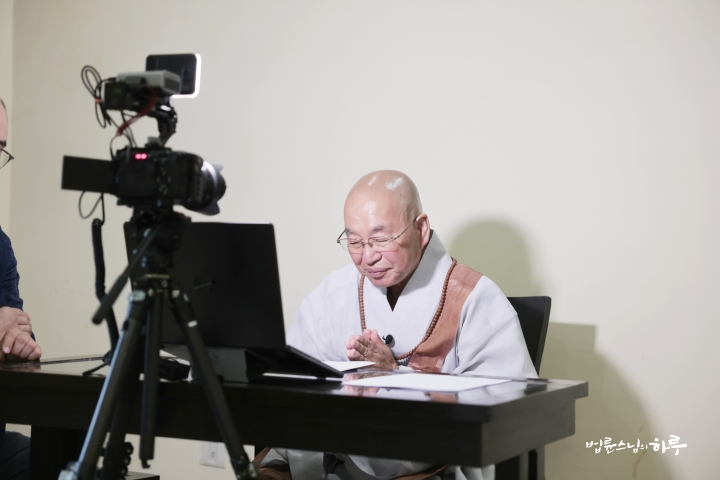
Questions continued to follow.
I feel strong guilt and anger about using my parents’ help for university tuition and living expenses, and have even taken a leave of absence due to anxiety. What path can help my mind become peaceful?
Exhausted from social life and human relationships, my desire to rest briefly in a quiet place and organize my life has grown. When exhausted like now, how should I realistically choose to rest?
The live broadcast ended at 5 PM. On the way back to the accommodation after the Dharma assembly, the police officers who had escorted Sunim in Vaishali for two days came to say goodbye.
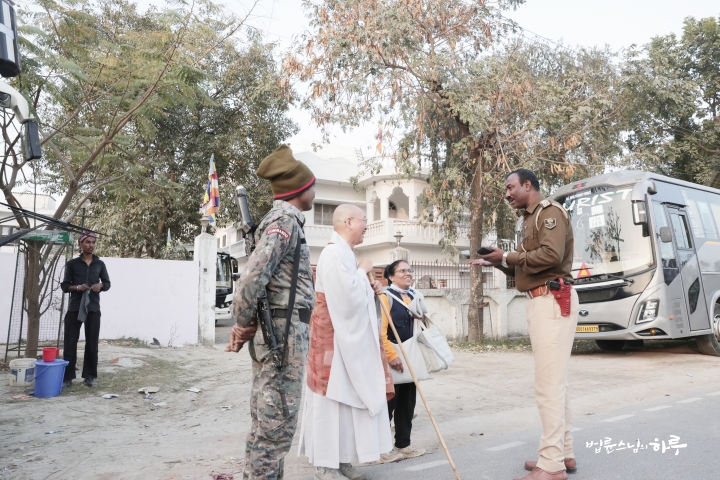
“Sunim, we heard you’re moving to Kushinagar tomorrow. We are Vaishali police under Bihar state, so we can only escort you until the state border tomorrow morning.”
“Oh, I see. Thank you for these two days.”“Not at all. It was a great honor to serve you, Sunim. We hope the rest of your pilgrimage goes smoothly.”
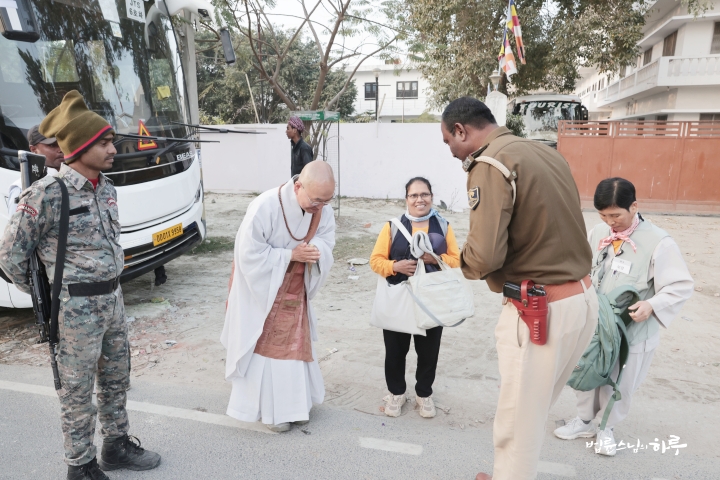
Sunim arrived at the accommodation, had dinner, and at 7 PM headed to the Vaishali palace ruins (왕궁터) with the pilgrimage group.
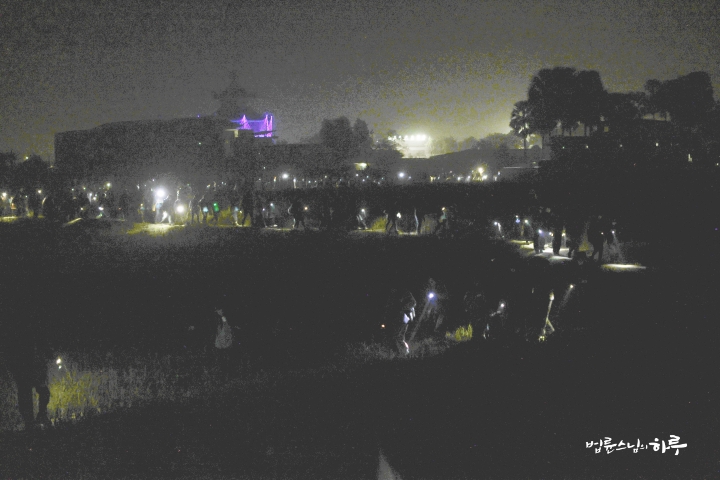
Upon arriving at the palace ruins, the pilgrimage group turned off all their individual lights. Relying on the soft moonlight, they formed a large circle and settled in. Once everyone was seated, each bus group performed their talent show.
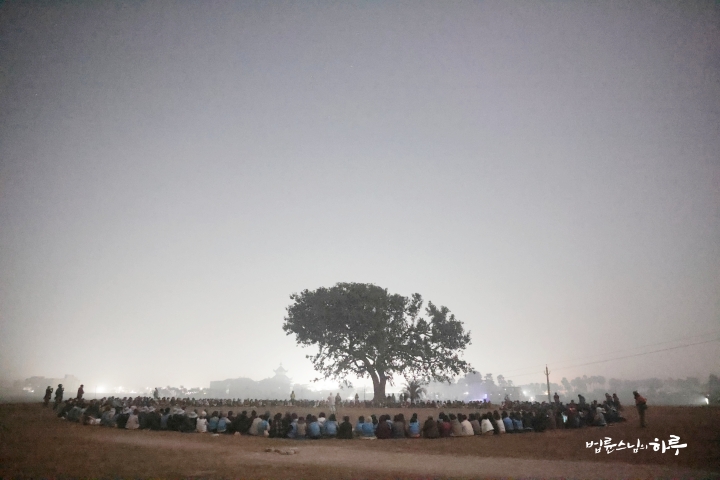
One participant sang a parody of the song “I’m Okay.” The lyrics conveyed messages like “It’s okay if I look old” and “It’s okay because I’ll be back in a few days,” dedicating the song to her husband at home. The palace ruins filled with laughter.
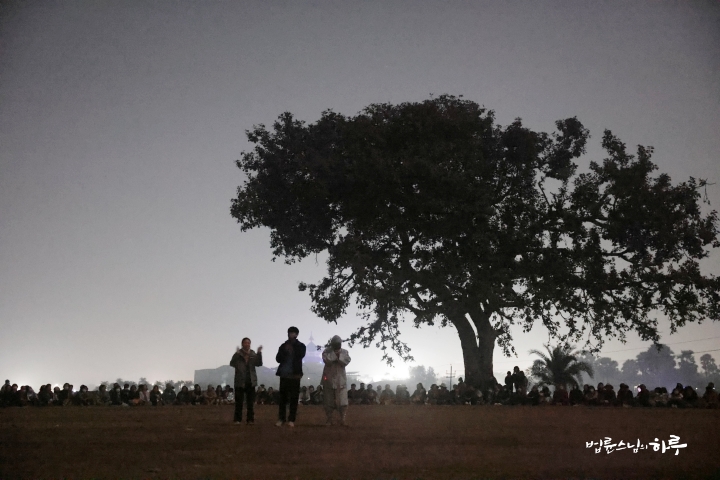
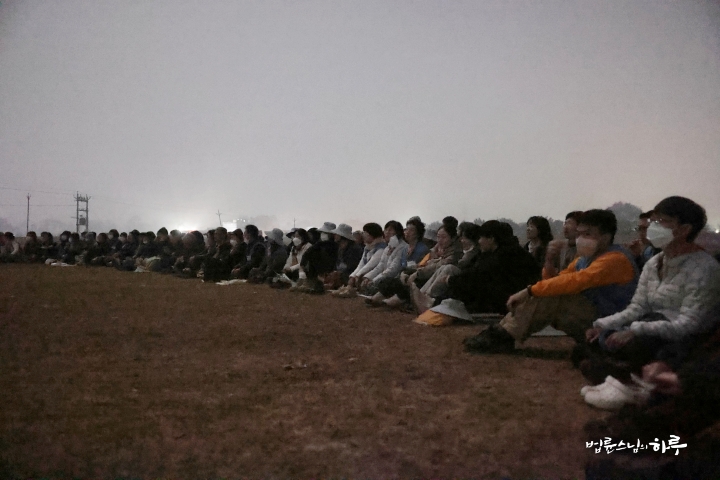
The young people danced together to upbeat music. International Division members sang songs in their respective languages. Someone brought laughter with their clumsy attempt at singing a traditional Jeolla Province folk song.
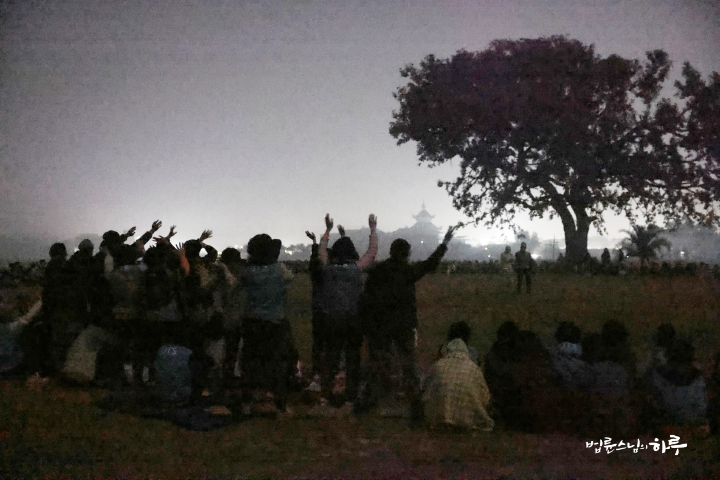
The palace ruins, which had been silent for so long, were filled with the songs and laughter of Jungto practitioners. At 9 PM, the joyful time came to an end and everyone returned to their accommodations. After packing lunch boxes for tomorrow, everyone went to bed. Tomorrow, the pilgrimage continues to Kushinagar, where the Buddha entered parinirvana.