I was scammed in Jeonse(Korea’s unique lump-sum deposit rental system) fraud. How can I endure this anger and despair?
Jan 21, 2026. Weekly Dharma Assembly, Peace Foundation meetings, 1000-Day Practice Preparation Committee briefing
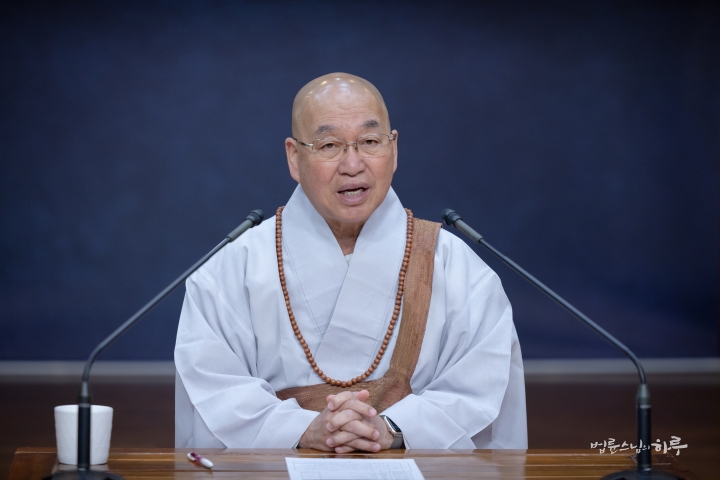
Good morning. Today marks the regular Weekly Dharma Assembly where Jungto Society members reflect on their practice.
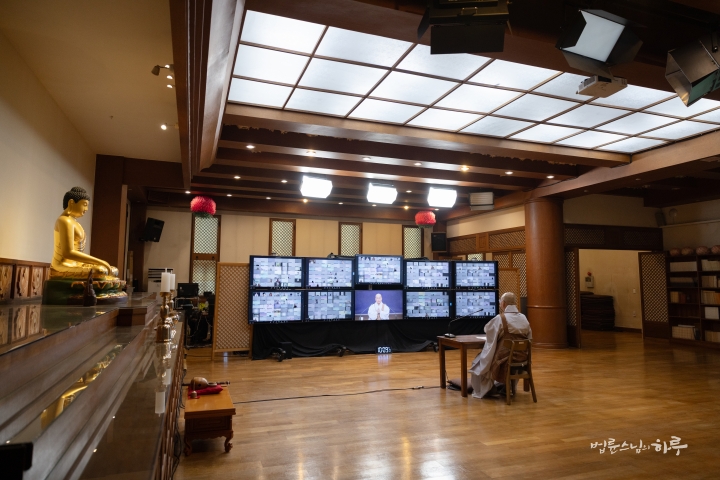
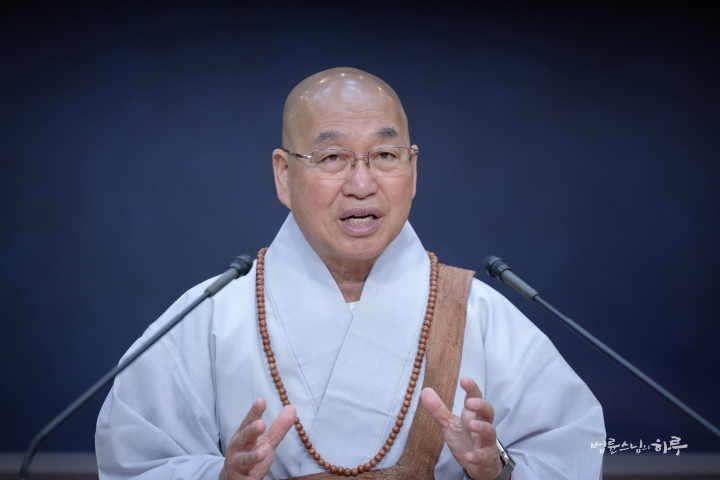
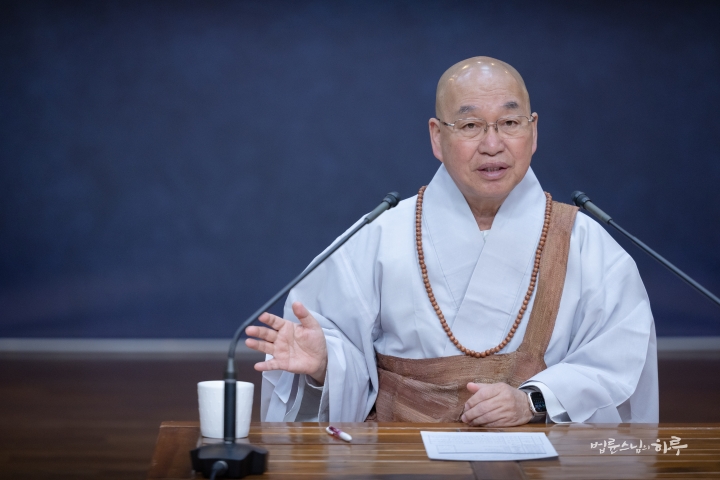
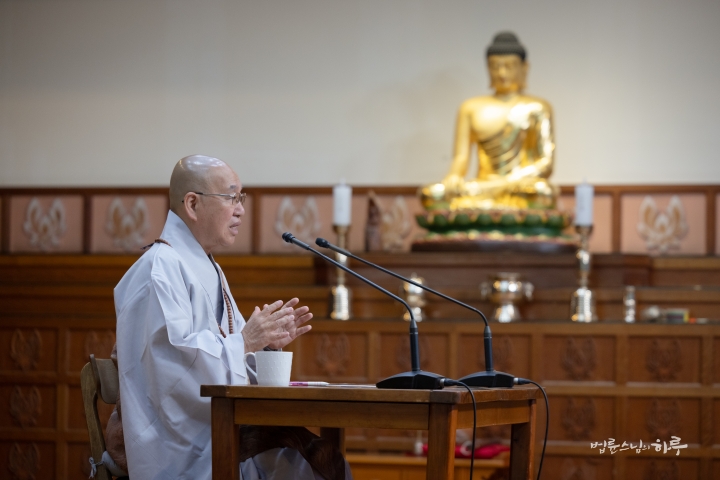
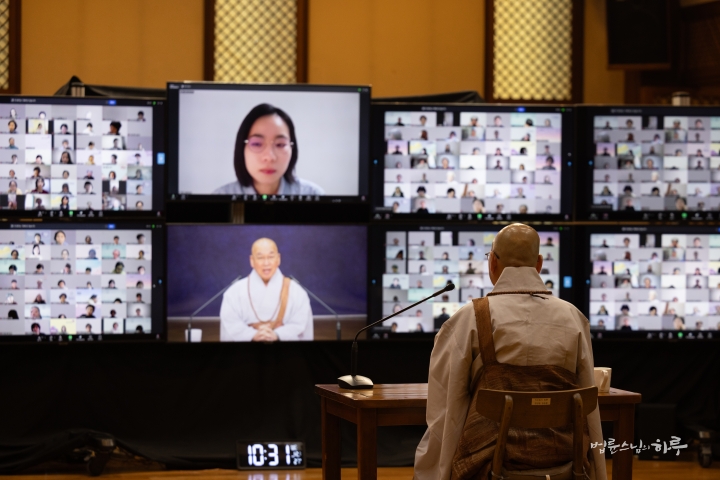
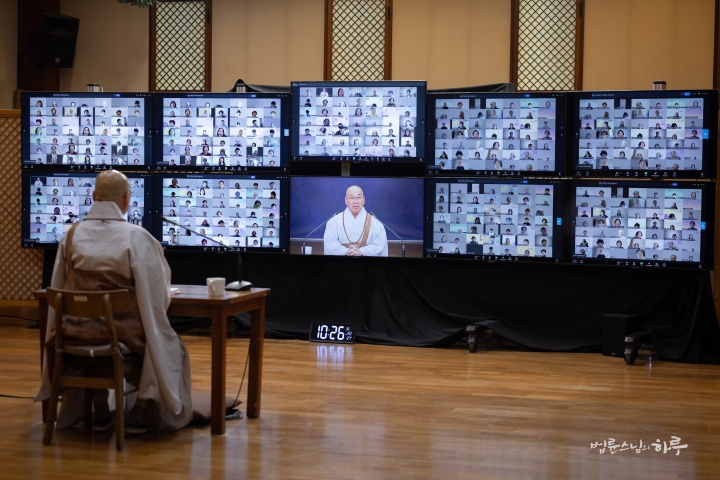
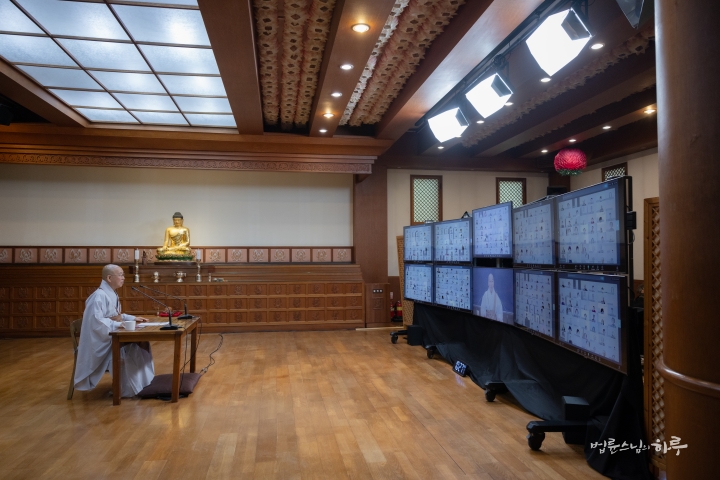
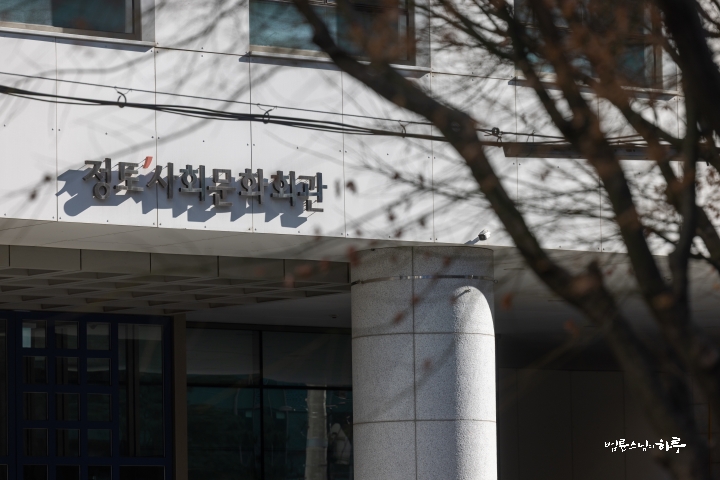
After completing morning practice and meditation, Sunim attended to work matters before taking his position in front of the camera in the broadcasting room at Seoul Jungto Center (서울 정토회관) at exactly 10 AM.
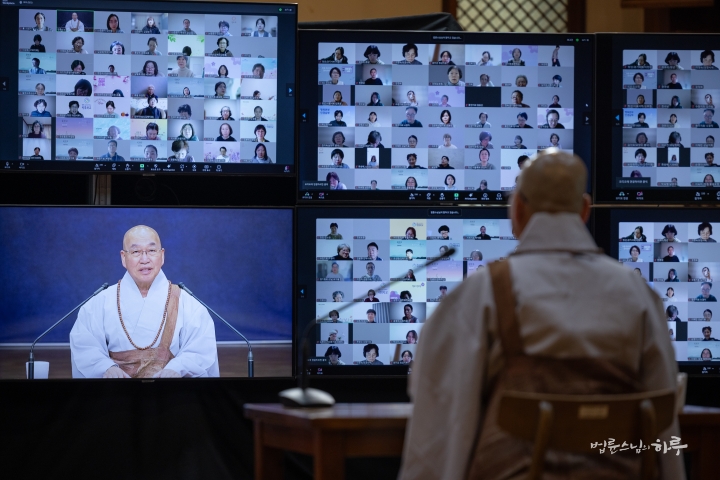
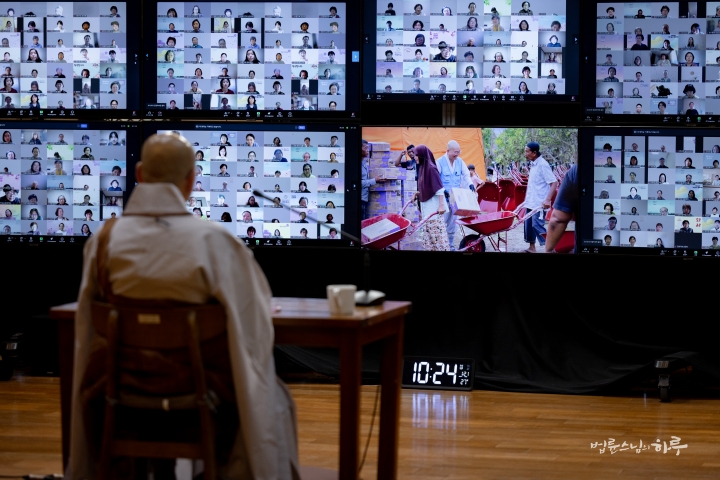
With approximately 4,000 Jungto Society members joining the video conference, everyone watched a video together about the weekly Jungto practitioners’ news from the past week.
The members then requested Sunim’s teaching through the ritual of three bows. Sunim first shared news about the relief supply distribution activities in Indonesia’s flood-affected areas that took place over two days on January 17th and 18th.
“We are currently in late January, which is said to be the coldest time of the year. Yesterday was precisely Daehan (대한), the period of Great Cold. The cold wave that hit during Daehan has turned the Korean Peninsula into something like a freezer. It is really very cold. I returned from Indonesia yesterday, where I was sweating profusely from the heat, and upon arriving in Korea, I immediately felt as if I had entered a freezer. Since temperatures are expected to remain this low throughout the week, please take special care against the cold wave.Three weeks have already passed since 2026 began. I spent about two weeks abroad starting from January 8th and returned yesterday. First, I visited the flood-damaged Aceh region in Indonesia, then moved to Mindanao in the Philippines to examine 20 potential sites for schools for indigenous children and schools for disabled children planned for this year. After that, I returned to Aceh to complete the distribution of locally purchased supplies to residents before returning to Korea. The flood damage in Indonesia’s Aceh region was so severe that I had to urgently change my schedule to visit the site.
Aceh: One and a half months after the flood, recovery has not yet begun
Indonesia experiences tropical storms called cyclones that originate from the Indian Ocean. These are similar to our country’s typhoons. This cyclone caused massive flood damage. In particular, landslides occurred when heavy rains poured down after all the trees in forest areas had been cut down and replaced with fruit trees in so-called ‘plantation development,’ and many villages were buried under soil as a result. There were quite a few places where entire houses were submerged in soil.
As you know, Indonesia is a country made up of numerous islands. Among them, ‘Sumatra’ is an island you may have heard of at least once, and Aceh is located at the westernmost tip of this island. This region has very strong Muslim faith and has long been engaged in struggles demanding independence, so it is known to foreigners as a relatively militant region. However, when I actually visited, the people were very cheerful and proactive. The Aceh region was also the site of a massive tsunami about 20 years ago. As the epicenter of the earthquake, a tsunami that caused great damage to several countries along the Indian Ocean coast originated from this region. Due to these successive natural disasters, the residents of the Aceh region have long suffered great difficulties.Usually, when such major damage occurs, government support as well as overseas aid follow. However, this place was in a situation where support from the Indonesian government was still insufficient. Also, perhaps because of the perception that it is a militant Muslim region, activities by international NGOs were hardly to be found.As a result, although a month and a half had already passed since the flood occurred, not only recovery but even basic emergency relief had not been properly implemented. Only now had some of the broken bridges and buried roads been restored, while houses remained buried in soil just as they were.
Initially, we planned to start with supporting daily necessities. This was because they had lost all household items like dishes due to the flood. Before arriving at the site, we planned to support items like rice cookers and frying pans, dishes and cups, and gas burners. However, once we actually arrived at the site, we found that more urgent than those were tools needed to shovel out soil, such as shovels, hoes, and carts.Since we were trying to purchase nearly a thousand of these tools in large quantities, obtaining the supplies itself was not easy. Since Aceh is a geographically isolated region, we had to go directly to Medan, the largest city on Sumatra Island, to purchase the supplies and then transport them back, which took nearly a week. Even so, we sometimes faced difficulties in support because the supplies did not arrive on time. Fortunately, the ‘A Day in the Life of Sunim’ team accompanied us this time, so we were able to capture some of this process on video. Let’s watch together.”
Then everyone watched the relief activity footage together.
After watching the video, Sunim continued speaking.
“Did you see that clearly? The donations you sent are being used carefully in exactly the places where they are most needed. However, support does not end here. Continuous support including daily necessities will be needed going forward. Above all, the biggest problem is that farmland has been lost. Even places that remain as fields are covered with nearly a meter of sand, making it virtually impossible to shovel it all out.
What Aceh needs after emergency relief
The residents here have only ever engaged in rice farming, but now with the land turned into sand fields, they are in a situation where they must plant crops like potatoes or cassava. Therefore, it is necessary to support seeds, seedlings, and saplings. Areas that are buried relatively shallow can have soil shoveled out with excavators or bulldozers, but the problem is that there is no suitable place to dump the shoveled soil. Even when roads are cleared, the entire ground level has already risen by more than a meter, so the surrounding areas have become higher than the roads.
As a result, even a little rain causes water to rush toward the roads and quickly flood them, and that water rushes back into houses, creating a vicious cycle. Ultimately, the most fundamental solution would be to build new houses on new land, but this is realistically very difficult for the residents here. However, removing all this soil also seems realistically impossible.Perhaps, just as people live in areas lower than sea level by building dikes near the ocean, this region will also change to a form where dikes are built and roads are constructed in areas lower than the surrounding terrain for people to live. This is a situation that cannot be resolved by individual effort alone. Now the key question is what measures the Indonesian government will prepare for the residents of this region. However, this problem will not be easily resolved within one or two years.
The cause of this disaster appears to be twofold. First is the record-breaking heavy rain, and second is the massive landslide that occurred when forests on the upstream hillsides were cleared and large-scale plantations were established. The enormous amount of soil that swept down from there directly struck the villages below. Cutting down trees and farming may provide immediate profit to individuals. However, from the perspective of the entire community, it causes much greater losses. If we call this an environmental disaster, this disaster can ultimately be said to be a result we brought upon ourselves.”
Next, conversations were held with those who had applied for questions in advance. Four people pressed the raise-hand button and asked Sunim about their practice challenges and questions. Among them, one person said they were living through painful days after recently falling victim to Jeonse (전세 :Korea’s unique lump-sum deposit rental system) fraud and asked Sunim for advice on how to escape from this suffering.
I was scammed inJeonsefraud. How can I endure this anger and despair?
“I recently fell victim to Jeonse fraud and cannot recover a deposit of over $68,000. The loan principal and interest that must be paid monthly continue to go out, but such a large sum of money that is difficult to manage immediately seems to have disappeared into thin air, leaving my heart empty and drained. To accept this as something that has already happened, the monthly loan payments are too much of a burden. Watching myself resent and get angry at the landlord, I feel that the center of my heart is shaking. How can I escape from this suffering?”
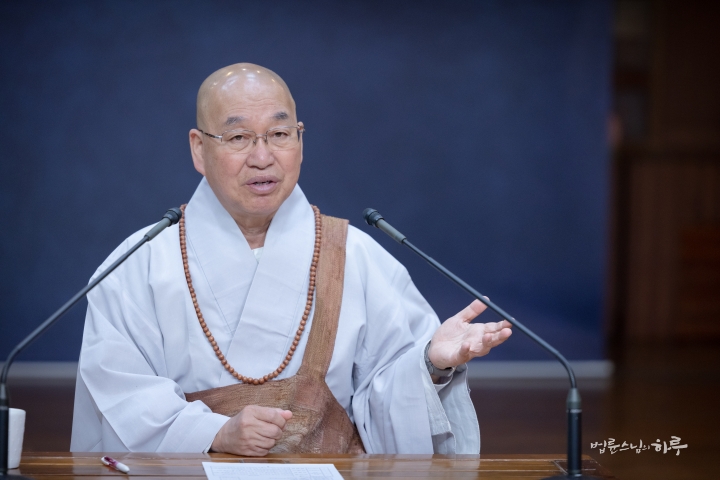
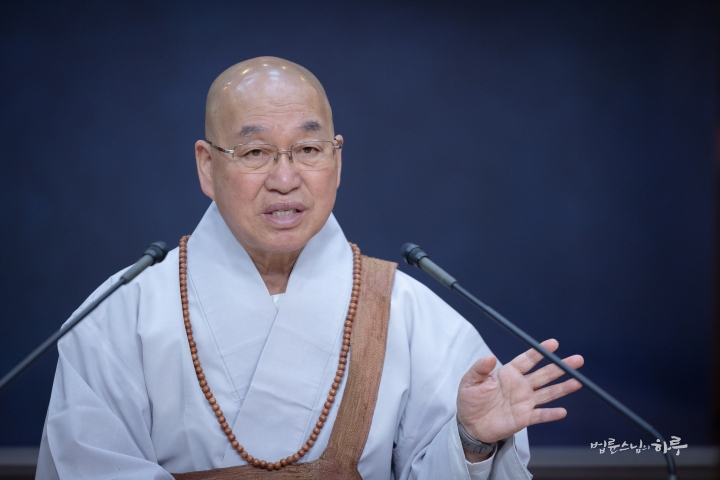
“It was money that you earned with real difficulty from your salary, and moreover, money you prepared by even taking out loans, so how angry and stressed you must be for not being able to get it back. I can fully understand that feeling. And this problem is not just one person’s issue. In our society now, there are quite a few people suffering greatly from Jeonse fraud. However, it is also not realistically easy for the government to solve all such personal problems. Nevertheless, I believe the government needs to take a more active stance regarding problems like Jeonse fraud. The recently launched government seems to stand from that perspective, but we still need to wait and see what the actual effects will be.
When we speak of Jeonse fraud, we tend to think of cases where landlords committed crimes with the intention of committing fraud from the beginning. However, it is not necessarily only such cases. When housing prices rise, there are people who, wanting to make money but having no money on hand, take out loans to buy houses and rent them out as Jeonse. They receive Jeonse deposits and use that money to buy other houses and rent them out as Jeonse again. By doing this to buy five or ten houses, it may seem like they are making big money while housing prices rise.But in this world, whether it’s stocks or housing prices, nothing keeps rising forever. Such speculative booms usually fade after one to two years. When the bubble bursts, this person no longer has money to repay. If housing prices fall and they cannot afford to return Jeonse deposits, they may end up becoming fraudsters as a result. In such cases, it’s not that they have money but won’t give it, but that they really don’t have money to give. In such situations, there is no way to get money other than sending the fraudster to prison.If it’s a case where a professional fraudster has assets but refuses to return money, you can recover at least some by reporting to police and having those assets seized. However, if it’s someone who simply doesn’t have money to return, realistically there is no method other than sending the fraudster to prison. Therefore, you need to first objectively examine whether there is a way to recover this money. If reporting the landlord could result in recovering at least some money because they have assets, you should do so.
Also, if it’s not damage to just one person but collective fraud affecting dozens or hundreds of victims, there are also systems where the government provides partial compensation. In cases where fraud was committed against hundreds of properties, policies for ‘collective relief’ that compensate part of Jeonse deposits are sometimes prepared. This system may feel unfair. However, from a broad perspective, the more victims there are, the more national measures become necessary, and the less damage there is, the more individuals must bear it – this is also reality.So please first find out if there are government-level Jeonse fraud relief measures, and if there is anything you can receive, apply for it. Also, if there are aspects you can recover by filing individual reports, proceed with that calmly as well. Parts that still cannot be recovered even after doing so must be given up like losses from stock investment, because there are no more methods. Emotionally, reporting the landlord and sending them to prison might provide some relief, and it could also have the effect of preventing additional damage to others. But that does not translate into cash returning to you. Therefore, rather than moving in excitement, objectively consider whether there are ways to recover the money, and if there are none, you must accept it.Just as we sometimes lose money through stock investments or lend money and don’t get it back, living life sometimes involves such losses. Thinking about the monthly loan payments may turn your stomach, but if you continue getting angry about this, you will ultimately be the only one who suffers.
The flood victims in Indonesia’s disaster area had all their homes buried and all their belongings washed away. While large-scale development bears some responsibility for the cause, it may take five or ten years to file reports and receive compensation. But they cannot just sit with their hands folded. They must immediately clean up their houses and obtain even one bowl to continue living. People live even in such ways. Of course, $68,000 is a large sum. It’s regrettable. But when there is no method, it is unavoidable. Getting angry about this ultimately only harms yourself.Therefore, the Buddha said, ‘You may be struck by the first arrow, but do not be struck by the second arrow.’ This means that while you may lose money, do not let your health deteriorate or your character worsen. It means that foolish people lose not only money but other things as well, becoming progressively worse. This time, lose only the money, and adopt a more careful attitude going forward.When housing prices are unusually cheap or when there is a speculative boom in the market, you need to look more carefully. At such times, it’s not only fraudsters who pounce, but also many people who purely try to make money and end up creating damage as a result. Look at the stock market now. Everyone takes out loans to buy stocks. When prices rise, they laugh with joy, but after a few months, people start crying. This is because prices cannot keep rising.
Housing prices are the same. When they are rapidly rising, investing with borrowed money may be profitable, but from the moment they stagnate or fall, fraudulent structures are bound to be created. So understand this structure to some degree, and rather than building up anger thinking about the monthly principal and interest payments, you must let go of part of it and start over while recovering what can be recovered. At least you haven’t died or become ill. Some people are suddenly injured in traffic accidents or end their lives. Compared to such events, you can think you suffered less damage and calm your mind to pioneer the path ahead.You may be angry now, but looking back 10 or 20 years from now, this may not be such a big deal. “Even if you receive a monthly salary of several thousand dollars and save $680 of it each month, it takes 10 years to accumulate $68,000.” Thinking about it makes you feel wronged and angry to the top of your head, but doing so only raises your blood pressure and harms your health. I’m not saying you should give up unconditionally. You should recover what can be recovered. Find out if there are government relief measures, calmly recover what can be recovered by filing individual reports, and give up what partially cannot be recovered. Even if you cannot recover any of it, that is unavoidable. I hope you respond calmly from that perspective.”
“Yes, thank you.”
Questions continued.
A choice made to avoid the burden of high salary has instead led to structural stress, and I am confused about what judgment to make between money and stress. What criteria should I use for selection?
I am contemplating my son’s marriage to his girlfriend who suffers from depression and panic disorder, and as a practitioner, I find it difficult to determine how far to intervene and how to help.
Sometimes things that are not problems for me become major wounds or conflicts for others. How should practitioners appropriately respond when perspectives differ?
After finishing the conversations, it was nearly 12 o’clock. After concluding the Weekly Dharma Assembly with the Four Universal Vows, Jungto Society members had mindful sharing time by groups.
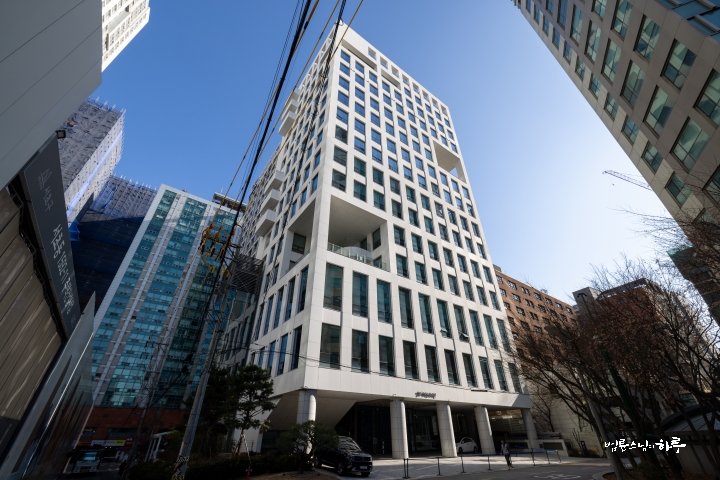
After lunch, Sunim headed to The Peace Foundation. In the afternoon, Sunim had consecutive meetings with visitors to The Peace Foundation.
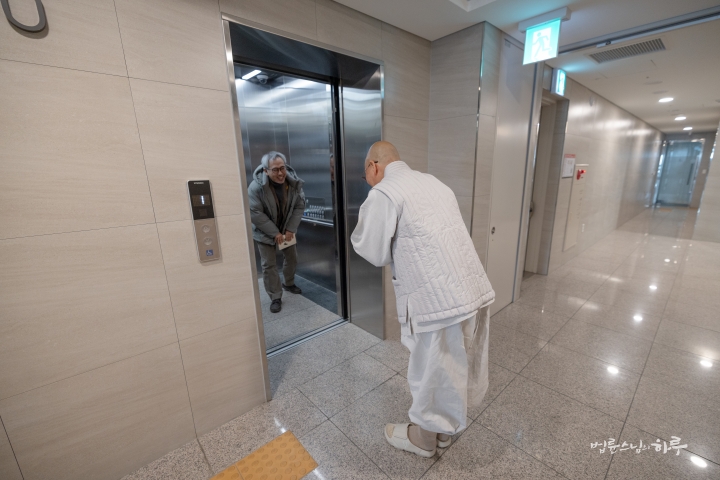
At 1 PM, Lee Tae-ho (이 태호), Chairman of the Steering Committee of People’s Solidarity for Participatory Democracy (참여연대 운영위원장), visited Sunim for a meeting. They shared many thoughts on how to overcome the escalating conflicts on the Korean Peninsula and national division that are becoming increasingly severe, then he left.
At 2 PM, Sunim received a report on this year’s Peace Foundation business plans from Kwon Young-sun (권 영선), Planning Committee Chairman of The Peace Foundation (평화재단 기획위원장), and exchanged opinions. They discussed what projects The Peace Foundation should pursue this year to improve North America relations, North Korea-Japan relations, and South-North relations, then concluded the meeting.
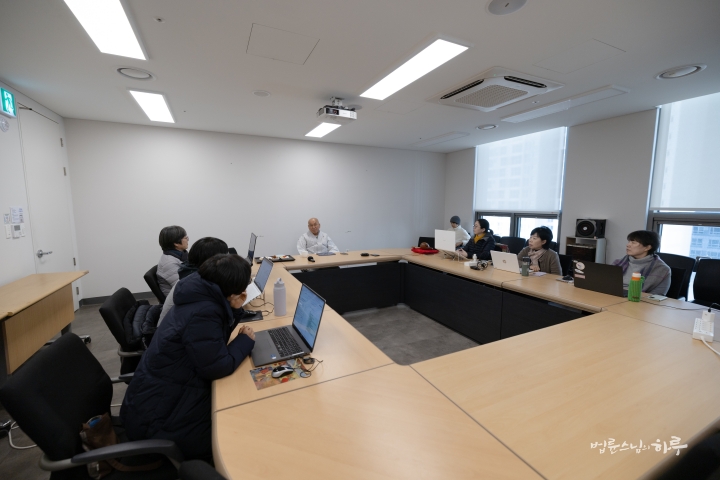
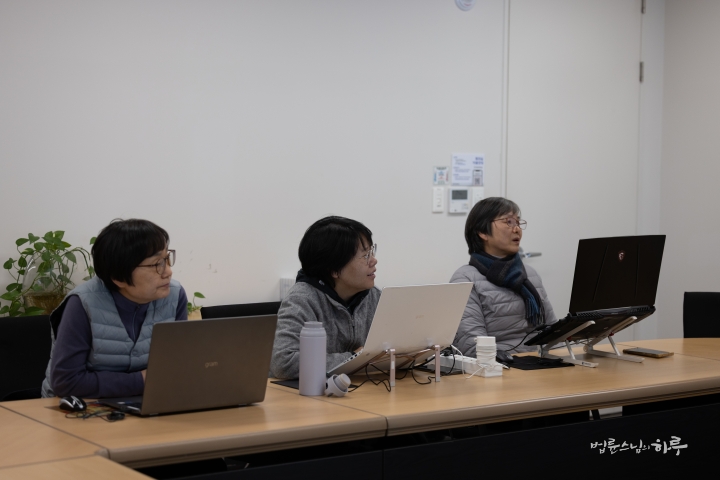
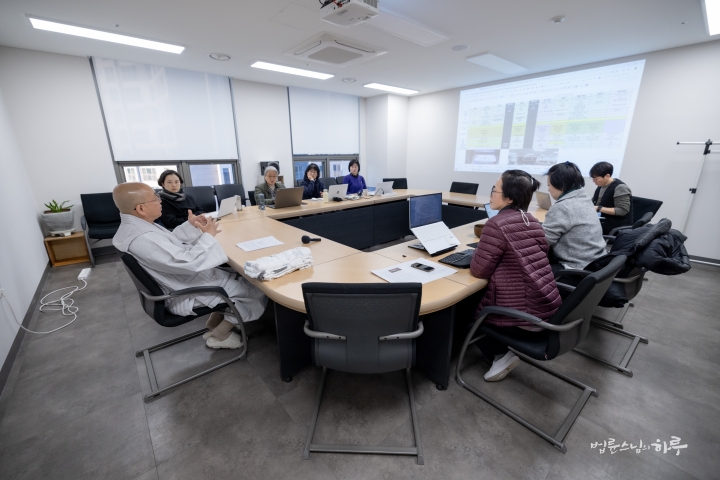
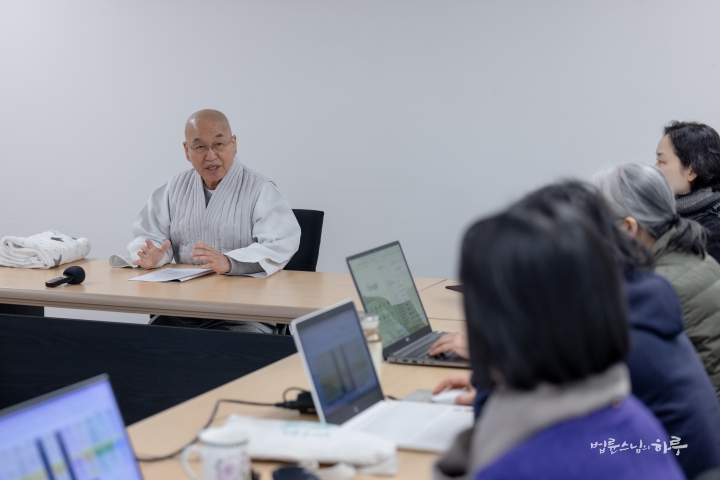
From 3 PM, Sunim held a briefing with the Jungto Society Standing 1000-Day Practice Preparation Committee (정토회 상임 천일준비위원회). The committee members sought Sunim’s advice on Jungto Society’s business direction during the 2-2nd 1000-Day Practice period.
Starting with whether to establish the Jungto Social Studies Course, they discussed various agenda items about how to organize structures like branches, local chapters, and groups for two hours. Concluding the conversation, Sunim spoke about the biggest challenge facing Jungto Society.
“Considering the overall flow of society and demographic changes, it seems it will be difficult for Jungto Society to spread as rapidly as we expected. Moreover, Jungto Society is also rapidly aging. If we cannot empower people in their 30s and 40s to become the backbone, the core workforce will inevitably age as well. Soon, Jungto Society’s core workforce may become people in their 60s.”
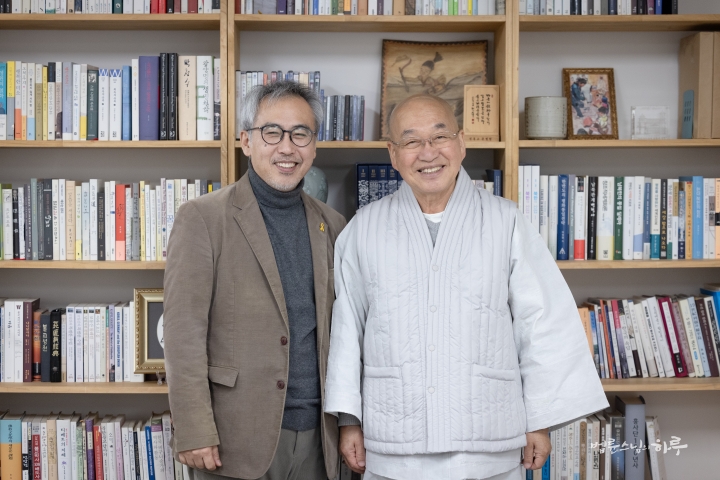
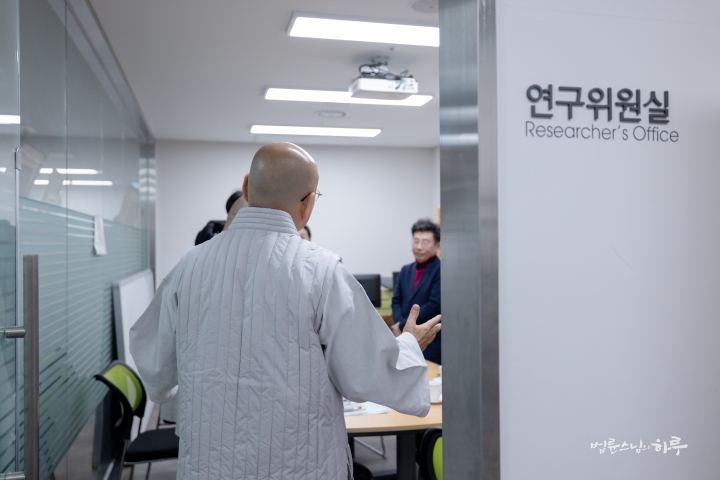
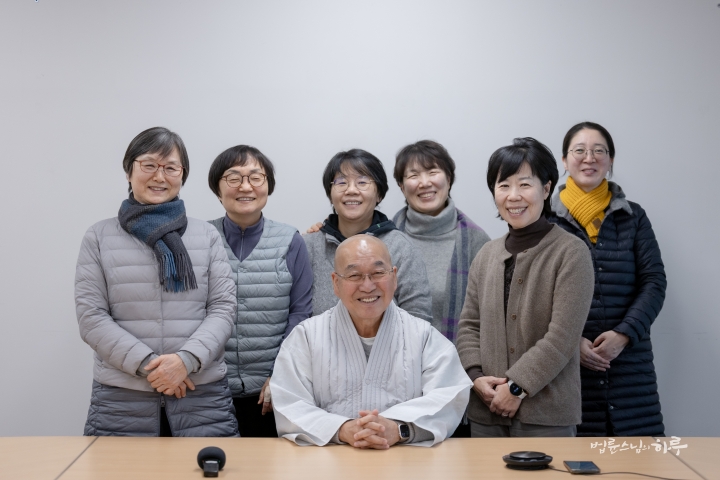
After finishing the briefing at 5 PM, Sunim took commemorative photos with the 1000-Day Practice Preparation Committee members.
Next, Sunim held a meeting with the preparation team for the World Meditation Forum scheduled for March. After discussing various agenda items including the scale of the event, programs, and accommodation issues, the meeting concluded.
At 6 PM, Venerable Yusu visited to discuss plans for Cheonryong Temple (천룡사) reconstruction projects and various other temple affairs. Following that, Inspector Kim Ki-jin (김 기진) from the Property Management Department visited to discuss several current issues before leaving.
As the sun set, all meeting schedules concluded at 7 PM. Sunim packed for tomorrow’s departure for the India Sacred Sites Pilgrimage (인도성지순례), then attended to manuscript proofreading work to finish the day’s activities.
Tomorrow, Sunim will depart from Jungto Center at 9 AM and head to Incheon International Airport, then leave Incheon International Airport on the noon 12 o’clock flight bound for Delhi Airport in India. It will be a full day of travel.