“The Sacrifice of Living Apart for Education: Is This Choice Really Right?”
Jan 20, 2026. ━ Departure from Indonesia, Return to Korea
Hello. Today, Sunim completed emergency relief activities in Indonesia and returned to Korea via Kuala Lumpur Airport.
After departing from Banda Aceh Airport in Indonesia yesterday, Sunim arrived at Kuala Lumpur Airport, the transit point, at 8:35 PM. However, as the flight to Incheon (인천) Airport was delayed by six hours, Sunim had to spend the night at the airport.

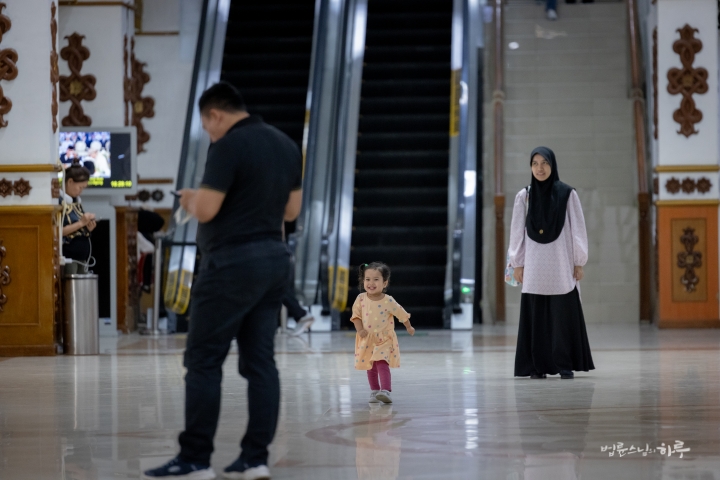
On the way to the boarding gate for the transfer at Kuala Lumpur Airport, there was a food court. After a simple meal of bread, Sunim said:
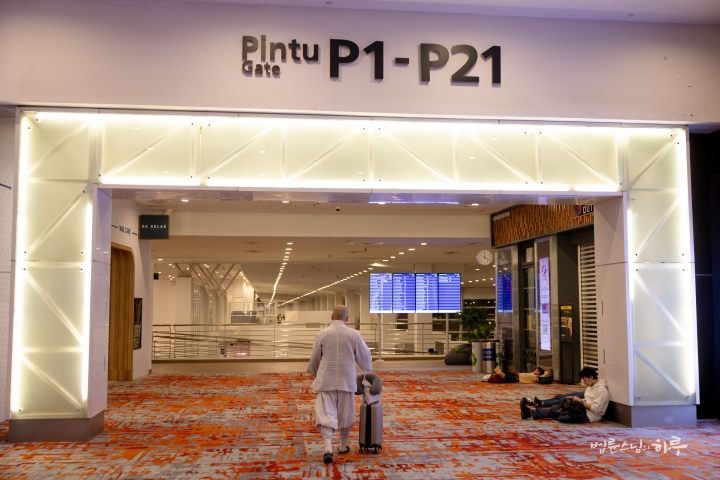
Park Gina, President of JTS, shook her head and replied:
“The carpet is very dirty. It would be better to lie down and sleep on the restaurant chairs here.”
Although the six-hour wait felt long, they decided to try sleeping on the restaurant chairs. As soon as Sunim lay down on the chair, he fell into a deep sleep.
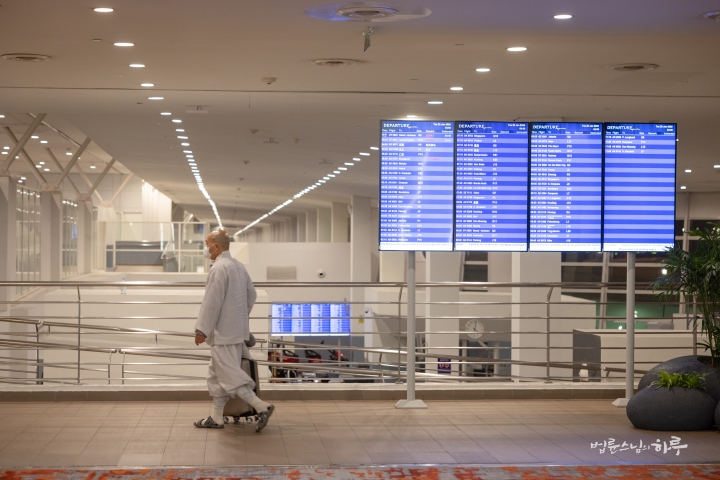
At 4 AM, everyone moved together to the boarding gate. Dragging their tired bodies and pulling their luggage, Sunim said with a smile:
“It’s a bit uncomfortable, but this flight is the cheapest, isn’t it?”At 4:45 AM, the plane departed from Kuala Lumpur Airport heading for Incheon Airport. As the plane took off, dawn gradually broke outside the window.


After taking a brief nap on the plane, Sunim worked on reviewing the annual schedule for this year.
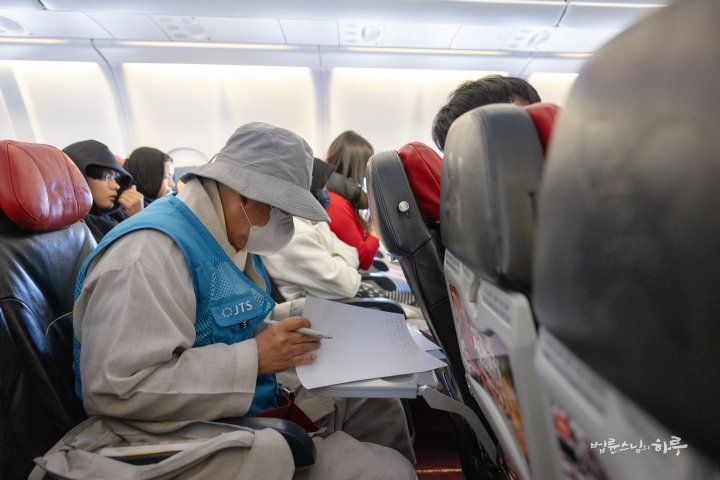
After flying for 6 hours and 20 minutes, the plane landed at Incheon Airport at 12:05 PM. When they stepped outside the airport, the temperature was minus 10 degrees Celsius. Shivering in the cold wind, they got in the car and headed to Jungto Center.
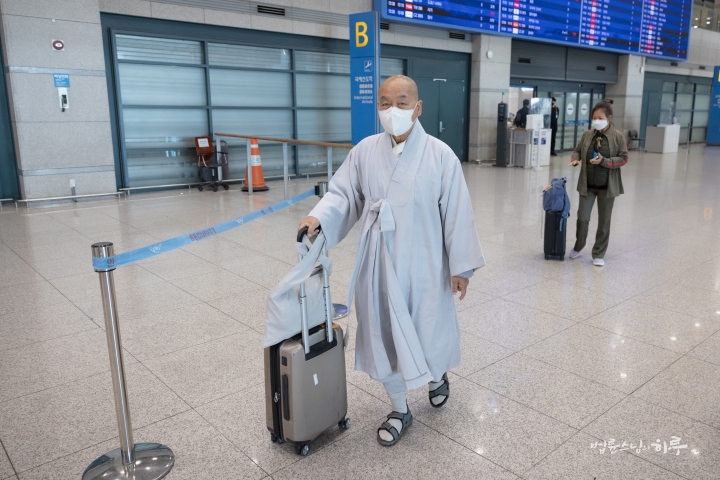

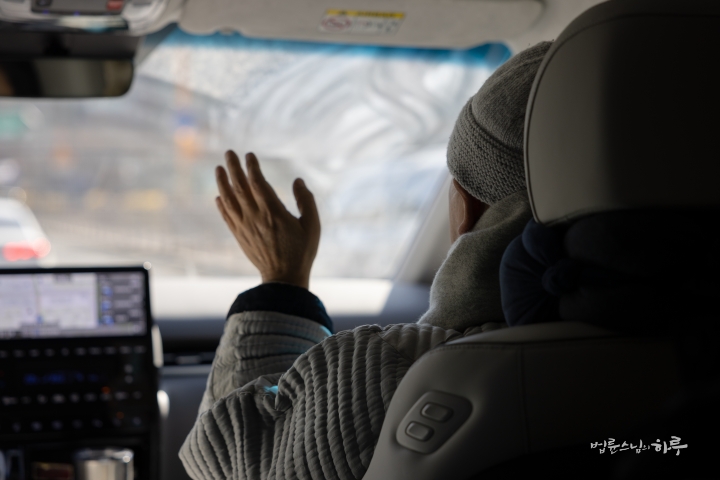
At 2 PM, they arrived at Jungto Center, unpacked, and rested to recover from travel fatigue. Sunim said that while the pain from the herniated disc in his neck had somewhat eased, shoulder pain still remained.
After taking a brief rest and continuing with work, at 6 PM, Sunim invited the volunteers who had accompanied him on the 10-day field survey in Indonesia and Mindanao, Philippines, to have dinner together and acknowledge their hard work.
In the evening, after proofreading manuscripts and preparing items needed for the India pilgrimage, he concluded the day’s activities.
Tomorrow morning, Sunim will conduct a live broadcast of the Weekly Dharma Assembly, followed by a series of meetings with guests visiting The Peace Foundation in the afternoon, and meetings with the Jungto Society Standing 1000-Day Preparation Committee and the World Meditation Forum Preparation Committee to discuss future plans.
Since there was no Dharma talk today, this post concludes with a dialogue between Sunim and a questioner from the Happiness Dialogue Dharma Q&A held in Atlanta last October.
The Sacrifice of a ‘Goose Mother’: Is This Choice Really Right?
“I studied abroad and married a Filipino. My husband received a U.S. green card through a professional visa, which brought us to America. Initially, we didn’t plan to live as a ‘goose family’ (a Korean term for a family where the mother and children live abroad for education while the father stays behind to work), but during COVID, trying to maintain our green card status, I unintentionally became a ‘goose mother’. Currently, my husband hasn’t found suitable work in the U.S. and continues working in Manila.
I think all these problems ultimately stem from my greed or high standards. In Manila, we belonged to the upper class in the Philippines, but in America, we can’t maintain that level, and I feel a significant difference in our living standards when raising children. Sending the children to international schools is financially burdensome, and while waiting for my husband to come to America, we ended up applying for citizenship. We have two daughters, and since they’re mixed-race children, I thought having U.S. citizenship would be better than Filipino or Korean nationality. Initially, we planned to return to the Philippines where my husband is once the children obtained citizenship. However, as the children enjoy living in America and our goose family life has extended, even with a good father, various deficiencies seem to arise. I’ve also lost peace of mind as I have to do work I never did before to make ends meet.
Returning to Manila might be physically comfortable, but I worry about the children’s education and feel mentally uncomfortable. How can I raise my children well in this goose family situation? Should we all go to Manila together even if the children don’t want to after receiving citizenship? I blame myself for being greedy amid these practical problems. About one year remains until the children receive citizenship – with what mindset should I live during this time? I’d like to hear your advice on what choices to make and how to manage my mind.”
“This matter is entirely about personal choice, so it’s not something I can dictate one way or another. However, someone like me who lives alone chose not to marry with the intention of living alone. But if you married, wasn’t it to live together? No one gets married intending to live apart. In that context, I believe that if you’re married, couples should live together. If you must live apart for an extended period after marriage, it would be better to divorce and live freely as individuals. While couples are separated, various desires and relationship concerns arise as adults, and if you form relationships with others while having a spouse, it easily becomes a seed of conflict. Of course, I can fully understand being apart for a certain period. But if long-term separation is unavoidable, one option could be to choose divorce while respecting each other’s lives, and then reunite when conditions allow for living together again. I think that’s actually a more sensible choice. If you’re married, you should live together, and if your husband can’t come to America, couldn’t you go to the Philippines where your husband is? From that perspective, I think it’s right for you to go where your husband is. You don’t need to worry so much about the children. According to your concerns, it would mean that all children living in countries other than America have dark futures, which doesn’t make sense. If you return to the Philippines, the children go with you. If you can afford it there, send them to international school; if not, they can attend Filipino schools. There’s no need to worry excessively about this issue. However, as a second option, since you’re already in America and have about one to one and a half years until the children obtain citizenship, it wouldn’t be bad to complete that period as a compromise and then return. What grades are your children in now?”“Second and fifth grade.”
“Then when the children receive citizenship in a year, tell them to stay here, and you should naturally return to the Philippines.”“The children are still quite young.”
“You don’t need to think of the children as only young. When they obtain citizenship, explain clearly to them. Green cards can be revoked if you stay abroad too long, but citizenship isn’t like that. Then you can go to the Philippines, graduate from high school there, and potentially attend an American university based on their citizenship. That’s one option, or depending on circumstances, you could leave just the children in America. I myself lived independently from the first year of middle school. The fact that the children are young is not a problem in itself. Living apart as a couple when you’re not financially well-off while continuing the children’s education abroad – these choices all stem from greed.
“Yes, thank you. It’s become clear.”