Is This the Right Path for Me? Should I Give Up My Dream?
Jan 15, 2026- Day 4 of the Mindanao Survey in the Philippines
Hello. Today marks the fourth day of surveying remote indigenous villages in the mountains of Mindanao, Philippines, to build schools. The schedule included visiting five indigenous schools in Bukidnon Province to survey potential school construction sites.
Sunim began his day at 4:30 AM with practice and meditation. Though it was still pitch dark outside, he quietly meditated while waiting for dawn to break. At 5:30 AM, he had a simple breakfast of coffee and bread at the accommodation.
“We have five schools to visit today. We need to leave early.”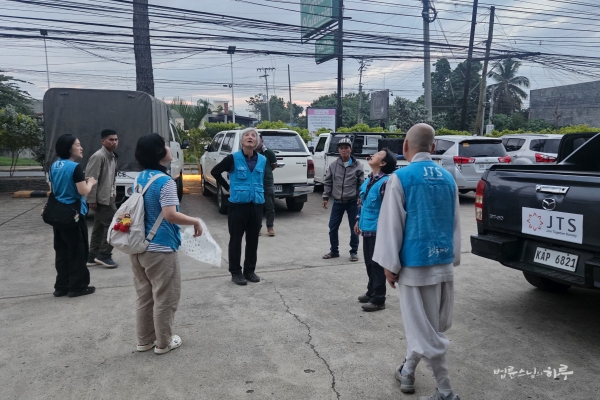
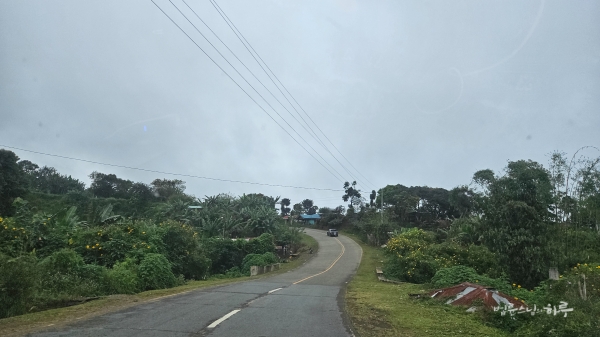
The JTS volunteers also hurried to get ready. At 6 AM, as dawn began to break, they departed from the accommodation and drove along winding mountain roads. Mountains shrouded in mist gradually revealed themselves through the car windows.
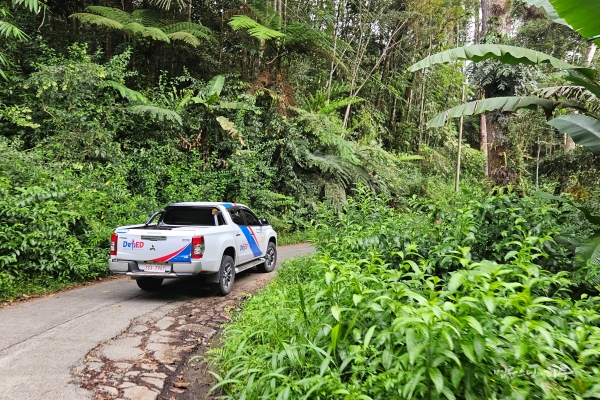
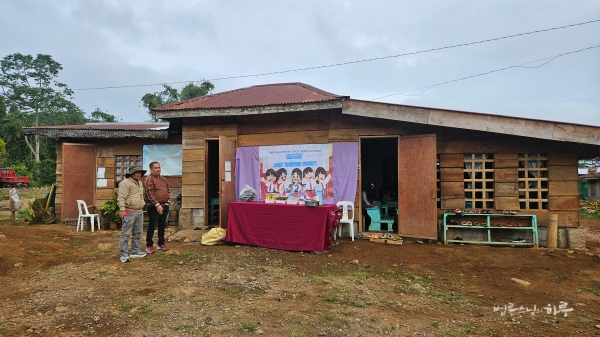
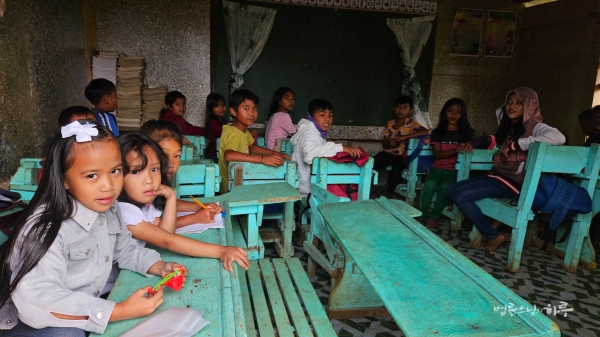
At 7:10 AM, they arrived at Kaatuan Indigenous School. Children were studying in a temporary school building made of wooden planks.
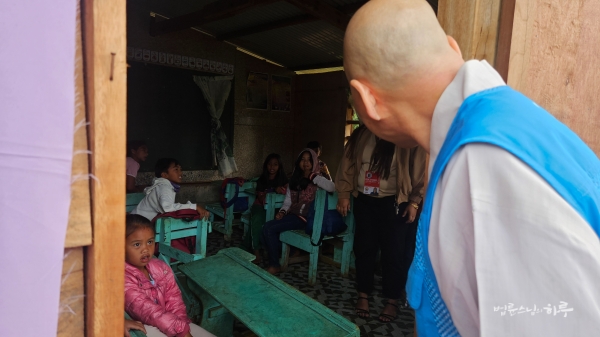
“Hello”
The children greeted shyly. Sunim smiled brightly and patted the children’s heads.
“How many students are there?”Sunim asked the principal.
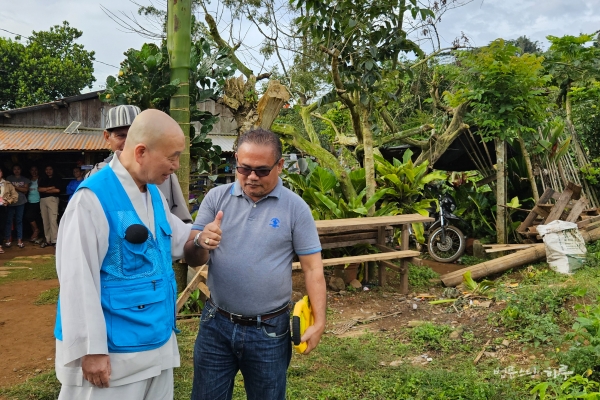
52 students. We expect more next year
It was explained that young people were moving in to find work as coffee plantations were being established nearby. Sunim admired the classroom floor covered with linoleum.
“There’s carpet laid down. Unlike other schools, the floor condition is good.”While discussing classroom arrangements, a lengthy debate arose over the toilet issue. The health officer from the education office insisted that toilets must be attached to each classroom and must be separated by gender, claiming this was indigenous tradition. Sunim quietly shook his head.
“If we build separate male and female toilets for each classroom, there will be too many.”“But in indigenous culture, men and women must use separate facilities.”
“What if we build them separately outside the classrooms, divided by gender?”“The current superintendent requires toilets to be built for each classroom.”
After much discussion, they concluded to attach toilets behind the classrooms but make them communal, with gender separation when necessary. Sunim personally measured the site with a tape measure. They finally decided to construct a building measuring 28 meters (7m × 4 sections).
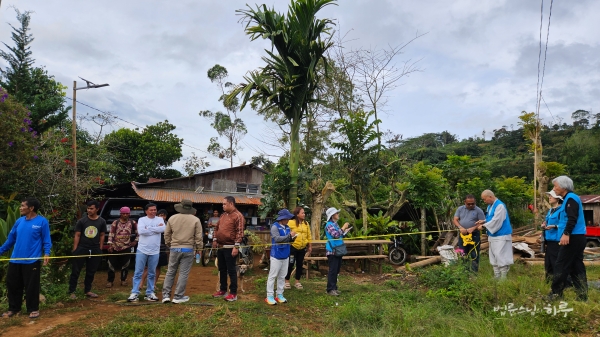
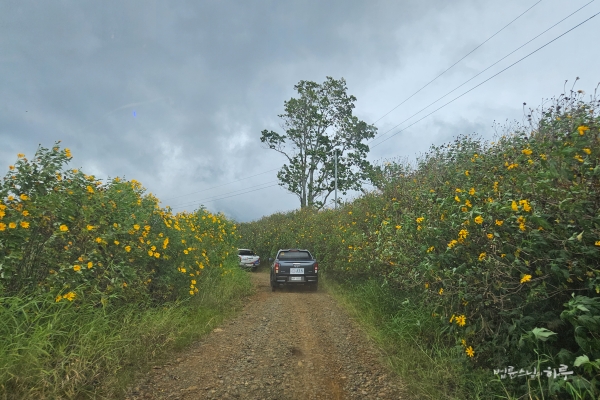
At 8:10 AM, they left Kaatuan for the next school. After driving mountain roads for about an hour, they arrived at Kinusuhan Indigenous School at 9:15 AM. Located at an altitude of 1,400 meters, clouds were slowly drifting around the school.
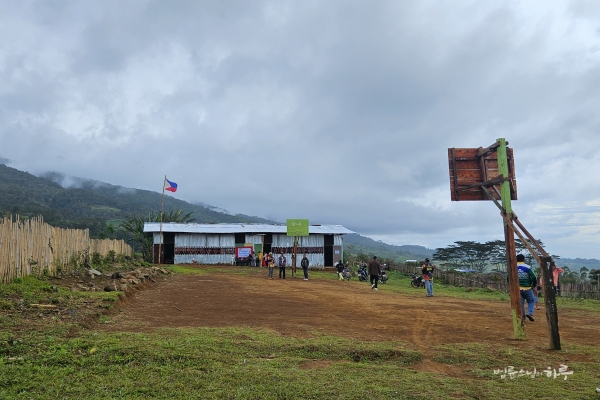
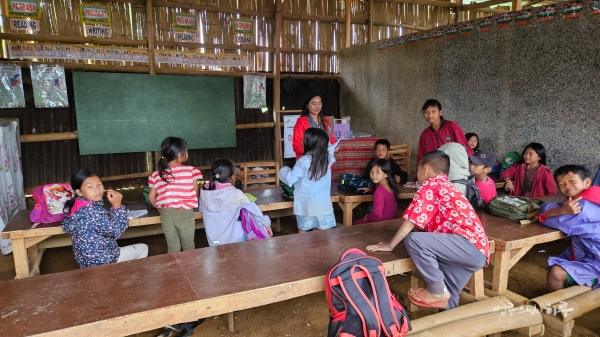
76 children were studying in a temporary school made of bamboo and corrugated iron sheets.
“We expect the number of students to increase to 100 next year.”
The principal explained.
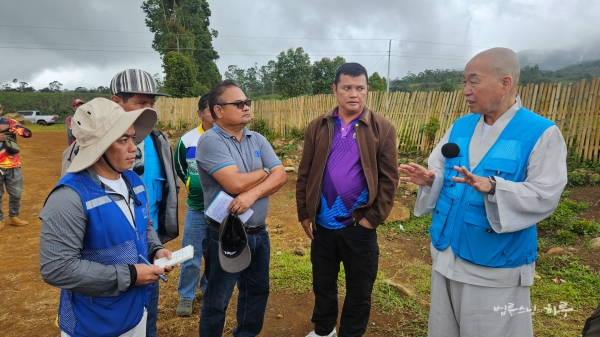
“We’re negotiating to purchase additional land. That’s why we haven’t finalized it.”
Entering the classroom, Sunim went to the front and picked up chalk.
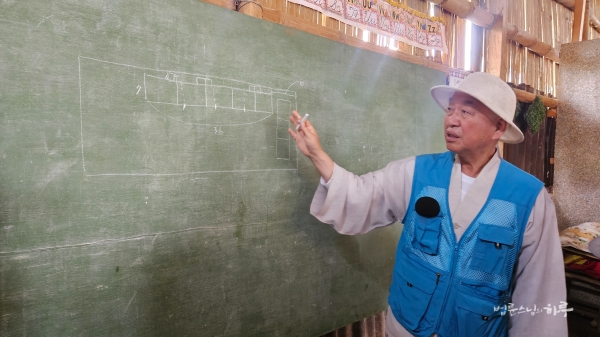
As he explained while drawing on the blackboard, an education office official responded enthusiastically.
That’s a great idea! We could remove the partitions for events like graduation ceremonies to create a large space.”
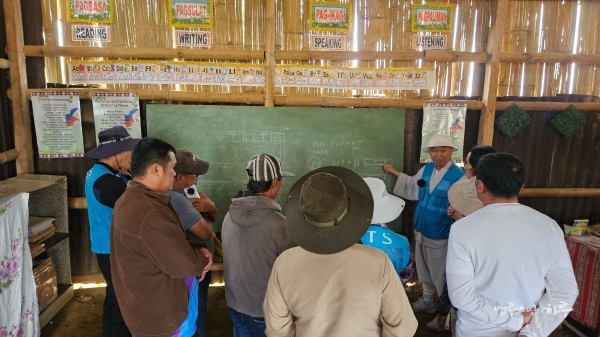
At 10:15 AM, after thorough discussion with the education office engineer, they left the school. Next, they headed to San Miguel National High School.
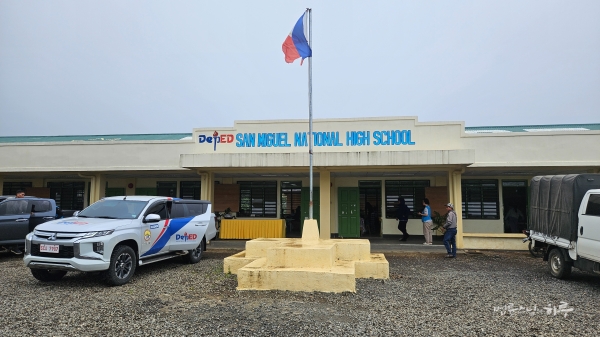
San Miguel National High School was built by JTS in 2023. JTS had specially supported the construction of this high school because female elementary school graduates who couldn’t attend high school often became unwed mothers. Arriving at 11 AM, they found that due to the rapid increase in students, some upper-grade students were having classes in temporary classrooms behind the school.
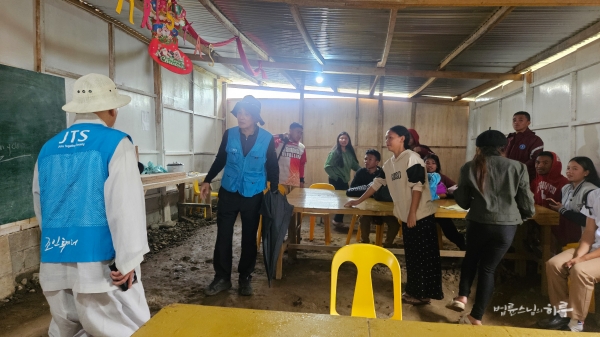
They surveyed the site for additional classrooms, but the slope was too steep.
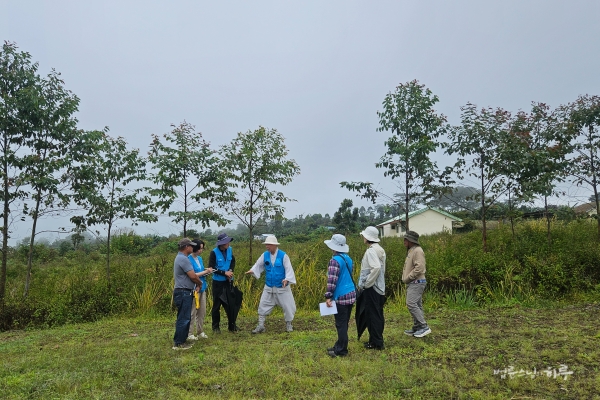
Sunim sighed looking at the measurement results. Noh Jae-guk, the representative of JTS Philippines, recalled past experiences.
“When we built this school three years ago, just the leveling work here took three months. Soldiers came and started in February but only finished in May.”
“What if we arrange the classrooms in a terraced style?”Sunim suggested an idea, but the engineer shook his head.
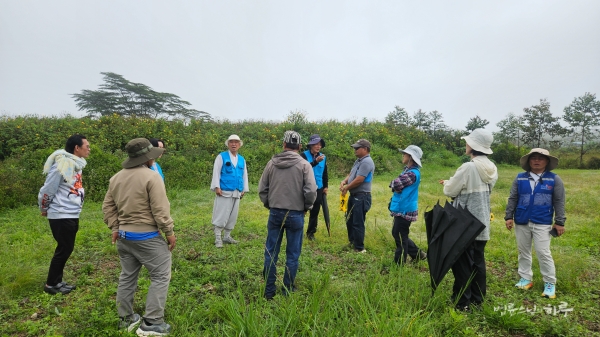
“The roof structure would become too complex. Also, we cannot build on filled land. Buildings must be constructed on natural ground for safety.”
When someone suggested placing the building far away on flat ground, the principal said with a smile.
“That’s fine. It will be good exercise for the teachers to walk.”
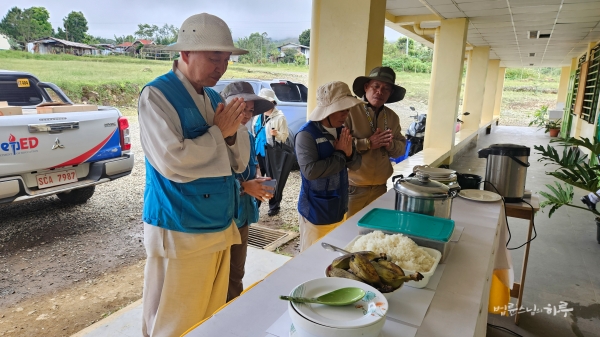
After completing the site survey at 11:50 AM, they had lunch prepared by the school.
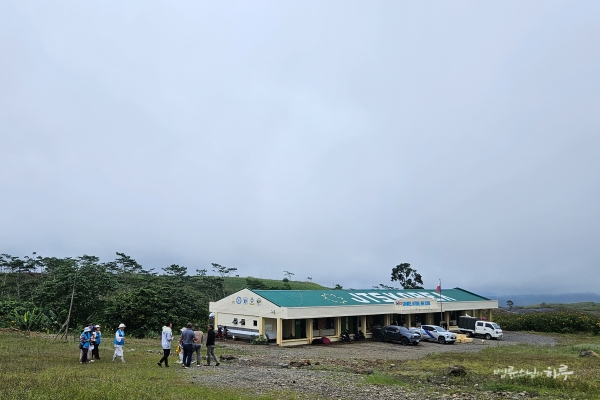
After lunch, they moved to Kalapat Indigenous School, just 5 minutes away. Upon arriving at the school, fog suddenly thickened and rain began to fall. Sunim looked puzzled while surveying the site with an umbrella.
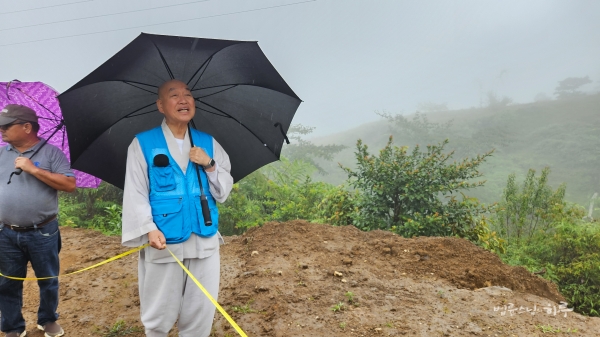
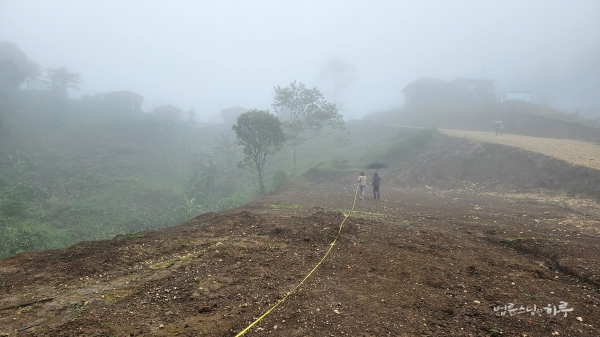
A JTS volunteer explained with an embarrassed expression.
“Soldiers started site preparation last year, and this is all they’ve done in one year.”
“Why is there so little progress?”“Because of the rain. We need three consecutive days without rain to level the ground with a grader, but it keeps raining…”
Sunim pointed out the vehicle access problem.
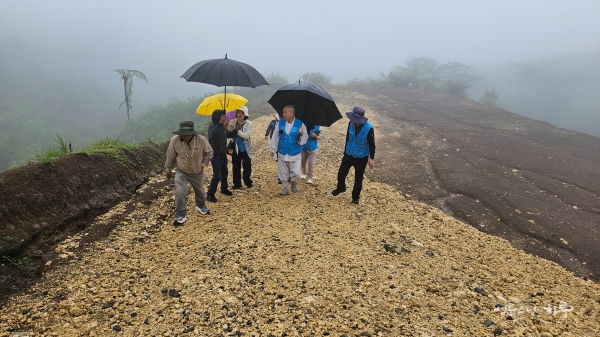
After putting their heads together, the volunteers agreed that the site was not suitable for a school and prioritized relocation. If relocation proved difficult, they agreed the scale would need to be reduced. At 12:30 PM, they finished the survey in the pouring rain and departed for the last school.
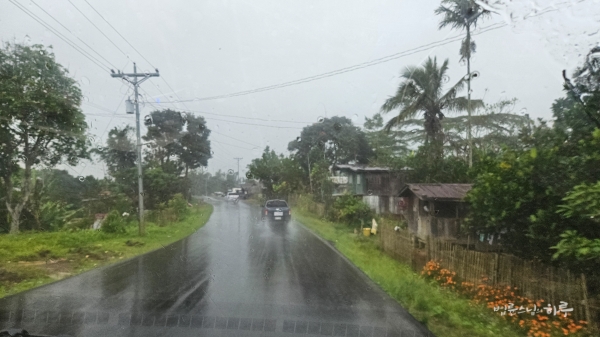
After driving for nearly two hours, they arrived at Bawngon Central Elementary School at 2:20 PM. They were borrowing three temporary classrooms to educate children with disabilities. Sunim asked the teachers.
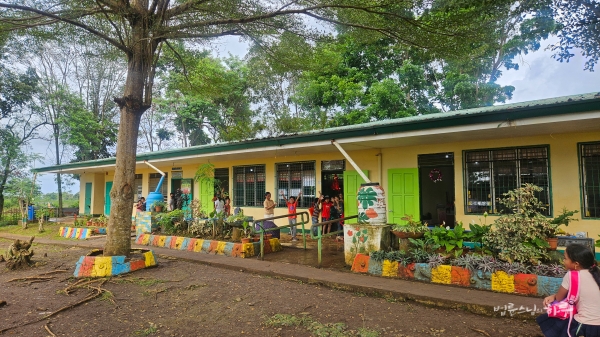
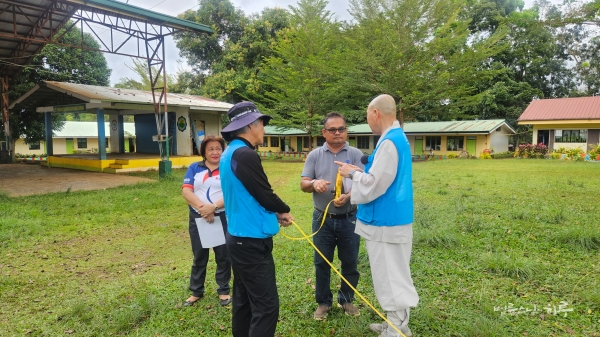
We have 3 teachers but want 4 classrooms.
“Why do you need more classrooms than teachers?”“We need one more space for social adaptation practice. The number of students needing special education is increasing.”
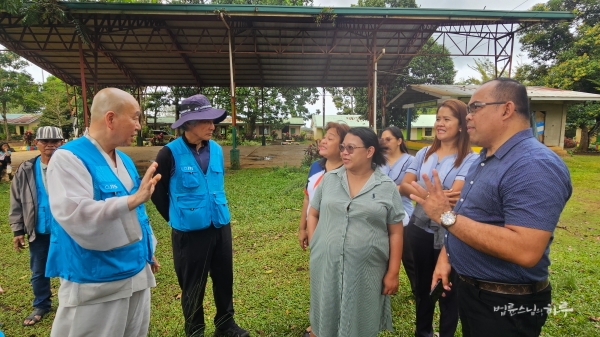
While surveying the site for the special school, Representative Park Gina suggested a new building location. When everyone agreed it was a good spot, Sunim said with a smile.
“Representative Park, you’ve earned your keep today.”Sunim drove stakes at that location, measured the size with a tape measure, and drew a layout on his iPad.
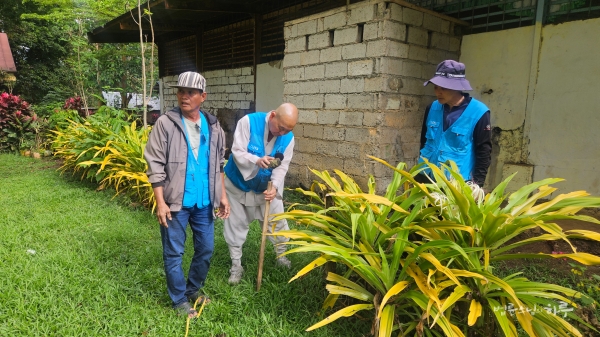
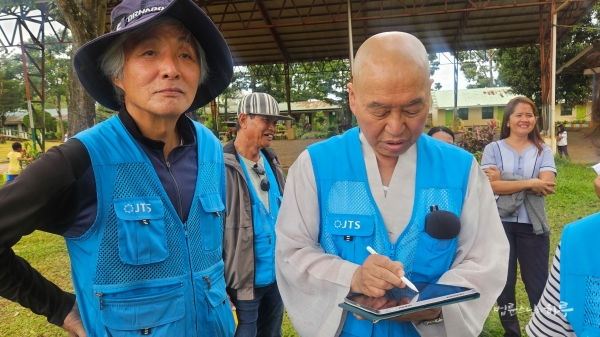
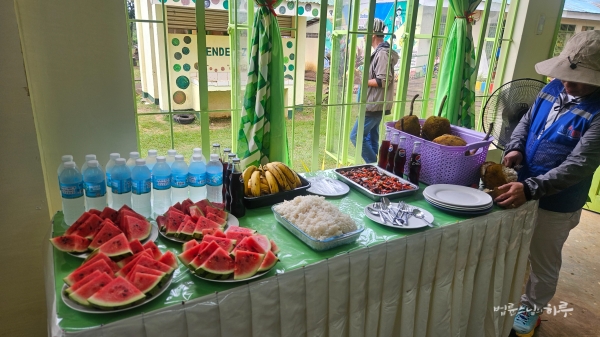
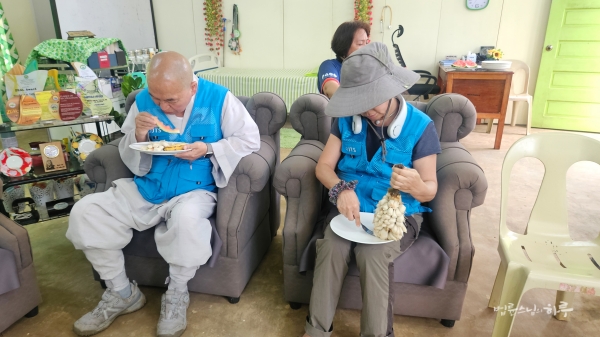
After refreshing themselves with fruit prepared by the school, they left at 3:10 PM.
Since today’s survey ended early, they decided to stay at the JTS Center. On the way to the center, they planned to pay their respects as Mio’s wife, a local JTS volunteer, had passed away two days ago.
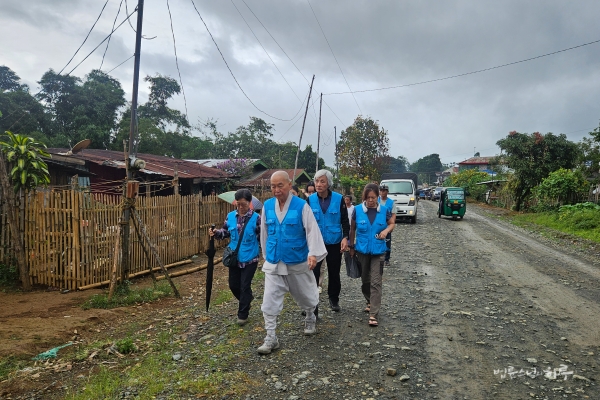
They arrived at Mio’s house at 4 PM. The house was arranged for a traditional Filipino funeral. Sunim and the JTS volunteers quietly chanted the liberation prayer.
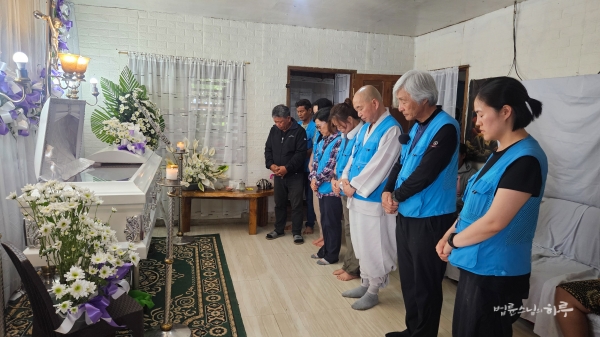
Mio approached with tears in his eyes. He has been a living witness of JTS Philippines, working with JTS for 20 years since building the school in Alawon village in 2005. His son Jerome also volunteers as a driver for JTS Philippines.
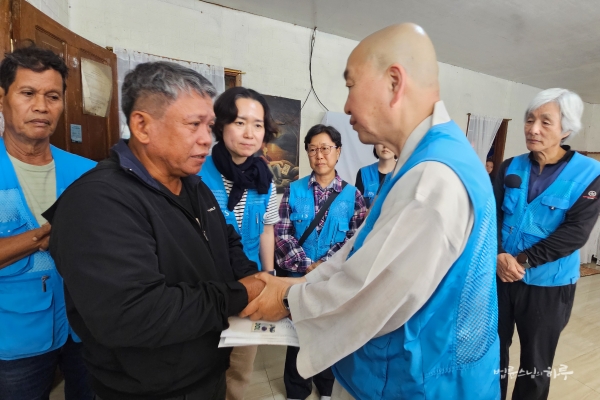
My wife suffered from lung disease for a month… She closed her eyes the day before yesterday. At the end, she asked me to take good care of the children.
Sunim held Mio’s hand.
“I hope the deceased has passed peacefully.”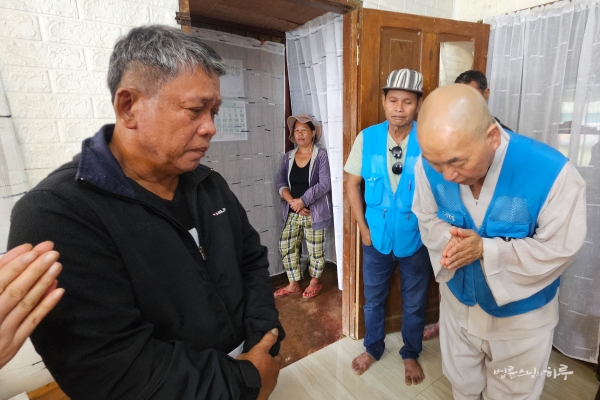
Sunim delivered funeral expenses collected together with former JTS Philippines representative Lee Won-ju and current representative Noh Jae-guk. After paying their respects, they arrived at the JTS Center at 4:20 PM.
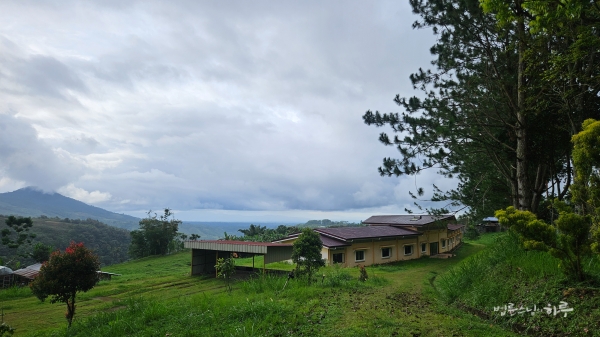
After personal time, they held evening prayers with JTS volunteers at 6 PM. After prayers, the JTS Philippines volunteers offered three bows to Sunim.


There was also a special guest at this gathering. Kim Seung-jin, the husband of Kim Young-ae, who handles accounting at JTS Philippines, visited the JTS Center and greeted Sunim.

“Sunim, it’s been a long time.”
Kim Seung-jin had known the Master since their university days. He had also served as a delegate of Jeongto Society and currently works as the head of the grass-cutting team at Mungyeong Jeongto Training Center.
“Thank you for coming all this way. Young-ae has been working very hard here.”After that, they had dinner carefully prepared by Choi Eun-sil, a JTS Philippines volunteer.

After dinner, as the sun set, Trel and Dodong and his wife visited the JTS Center. They had heard that the Master had visited Mio’s house and rushed over after hearing the news.

“Sunim! It’s been such a long time!”
Trel and Dodong are comrades who met twenty years ago through an introduction by Archbishop Tony and built schools together while traveling through remote areas of Mindanao. Dodong spoke carefully.
“My health hasn’t been good… The doctor has forbidden me from going to high altitudes for six months. The last time I stayed here for a night, my blood pressure rose to 190.”After exchanging greetings, we discussed JTS’s projects in the Philippines. Trel explained the current education situation in Mindanao, Philippines.
“There are over 3,000 school shortages throughout the Philippines. The bigger problem is that new teachers are sent to remote areas, and when they gain experience, they are withdrawn to cities.”
Sunim said:
“Still, these days Rolen and Edwin from the Bukidnon Provincial Department of Education are working really hard. They understand what we’re doing well and are proceeding with responsibility.”Dodong nodded.
“That’s right. I’m relieved that they’re carrying on JTS’s work well.”
Toward the end of the conversation, the Master informed them about the situation in Indonesia.

Trel sighed.
“The whole world is in turmoil. Due to Trump’s policies, international NGO support to the Philippines is being cut off significantly.”
Sunim urged the two of them:
“Please recover your health quickly. Just like how we used to have meetings until midnight twenty years ago, let’s meet again in six months and work together.”At 8:30 PM, after the guests left, Sunim quietly went to his room, spent the evening proofreading manuscripts and handling other tasks, and ended his day.

Tomorrow is the last day of the Mindanao survey in the Philippines. After surveying Kalasuyan Indigenous School and Salaganta Quisumbing Indigenous School, we will have an evaluation meeting and then depart for Aceh Province, Indonesia.
Under the hot sun of Mindanao, through the efforts of JTS volunteers and local education officials, children’s learning spaces were gradually taking shape. Although the pace is slow, taking steps forward one at a time is JTS’s way.
Since there was no dharma talk today, this post concludes with a dialogue between Sunim and a questioner from the lecture held in Jinju(진주) last October.

“I’m Not Sure If This Path Is Right for Me. Should I Give Up My Dream?”
“I’m a twenty-nine-year-old office worker who has been working for about a year and a half. These days, I wonder a lot if this path is right for me. I want to challenge the dream I had before, but it’s not realistic because I have to pay rent and installments. My old dream and reality seem to conflict. Which direction should I move forward?”
“You say there are many things holding you back, so for now, it would be best to just focus on your job. If someone were to ask me a question like this, what would I say? ‘I want to become a monk. However, as the eldest son, I need to support my parents, I’m married, and I have a job. My children are still young, and if I leave now, my wife will probably cry and my parents will worry. What should I do?’ If asked that, I would clearly say, ‘Just live well at home.’ If you’ve decided to become a monk, you shouldn’t think about what your home is like, what your country is like, what your wife is like, or what your children are like. The more such thoughts accumulate, the less you can make a decision. Only when you can one day leave without looking back can you truly make up your mind. From what I hear from you, I think I can guess what your dream is without even asking. If you have to pay electricity bills and have many things to calculate, it would be better to focus on your current job for now. If your dream is to be a singer, you can sing as a hobby while working at your job. If it’s to be a painter, you can paint in your spare time. If you dream of being an athlete, you can pursue it as an amateur. For example, let’s say you have another profession but sing as a hobby. As you sing for free, word spreads that you ‘sing well,’ and you might be invited to birthday parties and gatherings, earning enough for transportation costs. If the money you accumulate reaches about half of your monthly salary, you’ll think, ‘At this rate, I can make a living.’ Then it’s not too late to quit your job and become a singer. There’s one path where you jump in from the start saying, ‘I will become a singer!’ with the determination that you’re willing to starve. And there’s another path where you maintain your livelihood, start as a hobby, gradually gain support, and eventually make it your main job. Or you might keep it as a hobby forever. In fact, there are people who were singing as a hobby and became professional singers in their forties or fifties. In the end, you have two paths. One is to continue working as you are now, and the other is to continue your dream as a hobby and make a decision when that income exceeds half of your main job’s salary.”“Yes, thank you.”