Is It Okay to Work Without the Pressure of Having to Live Well?
January 9, 2026. Day 2 of Surveying Flood-Affected Areas in Indonesia
Hello. Today marks the second day of surveying flood damage in the Aceh(아체) region of Indonesia.
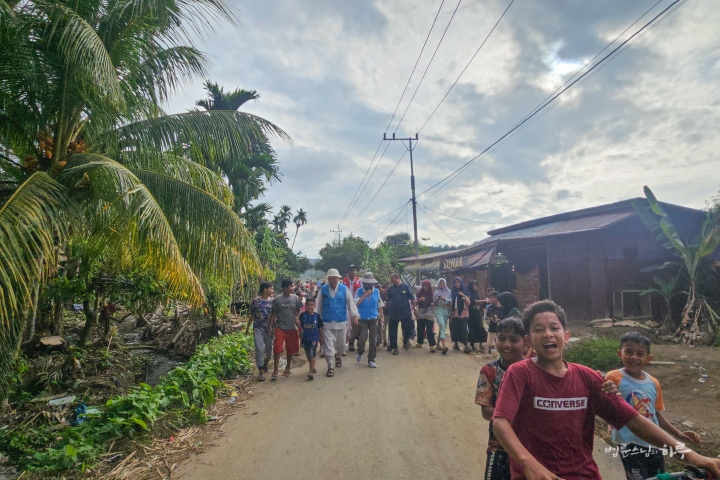
After completing his morning practice and meditation, Sunim departed from his accommodation at 6:30 AM, while darkness still lingered, to visit nine villages that suffered the most severe damage in northern Aceh.
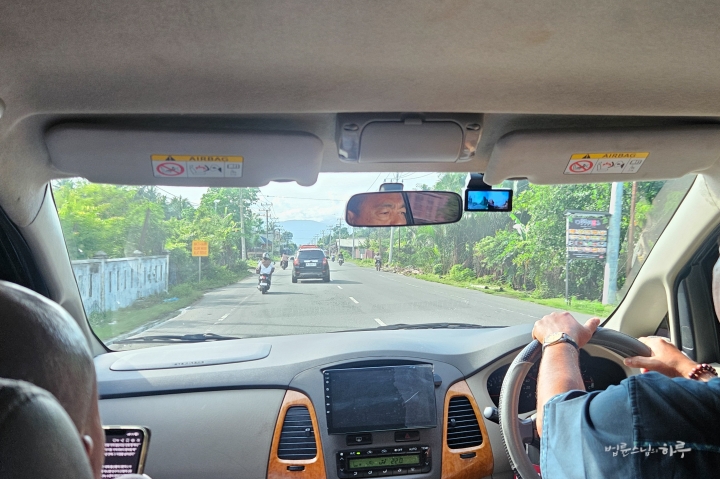
After a quick breakfast on the way, the first destination was Krueng Beukah village, located in the Peusangan(푸상안) district of Aceh Province.
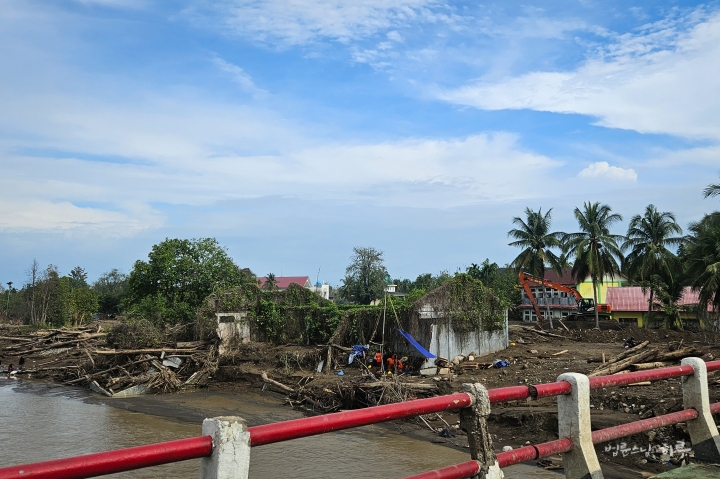
This village was home to about 95 households. With an average of 5 people per household, the total population was around 500. The entire village was flooded and covered in mud, requiring support for almost every household.
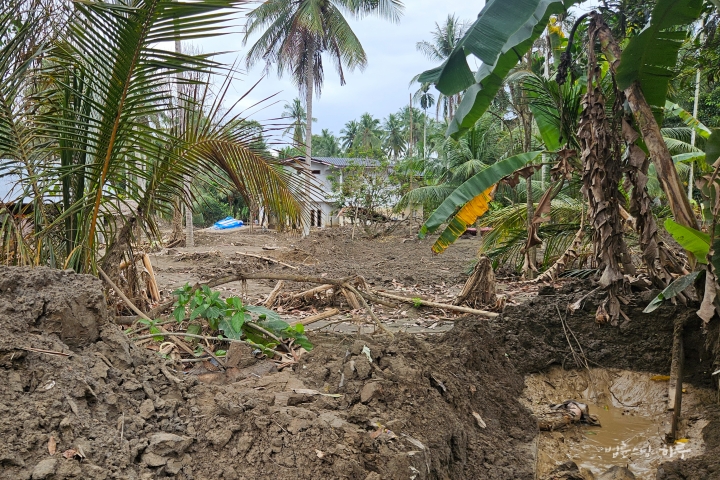
The mud had covered houses by more than 1 meter, making it impossible to even open doors. The entire surrounding land had risen by more than 1 meter. Residents explained the current situation.
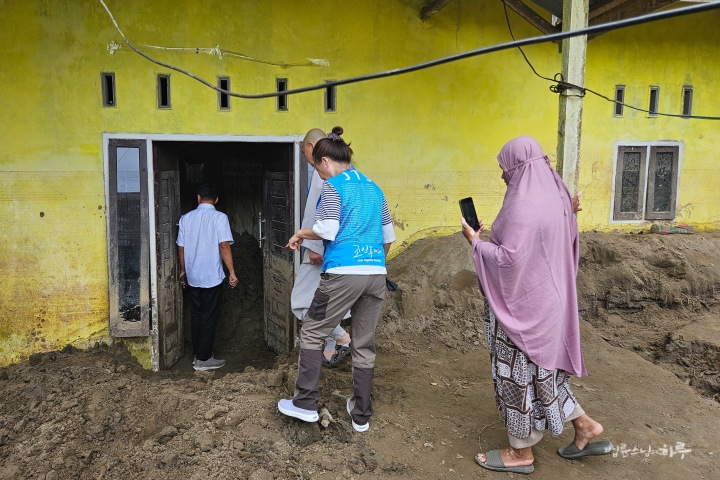
“The mud has completely covered our houses and village. Even when we work hard to dig out the mud from inside our homes, it returns to its original state whenever it rains.”
Sunim spoke with a heavy heart.
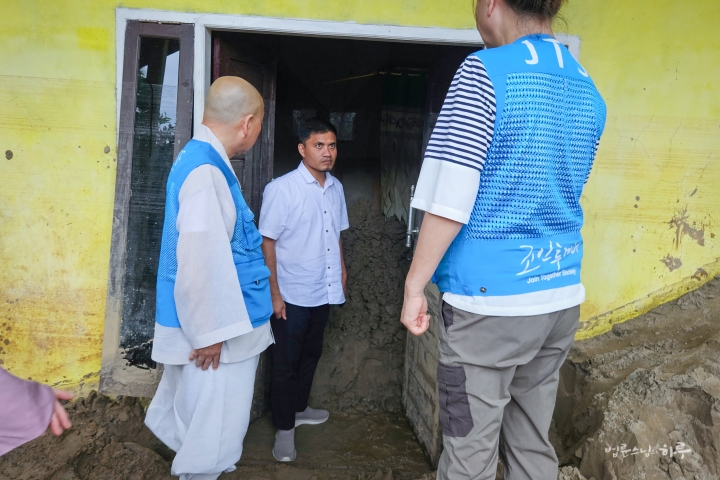
“They’ve gone to the mosque for prayers. After prayers, they return home to sleep. Even though the houses are full of mud, we lay carpets on top and sleep there. No matter how much mud we remove, it returns to its original state when it rains.”
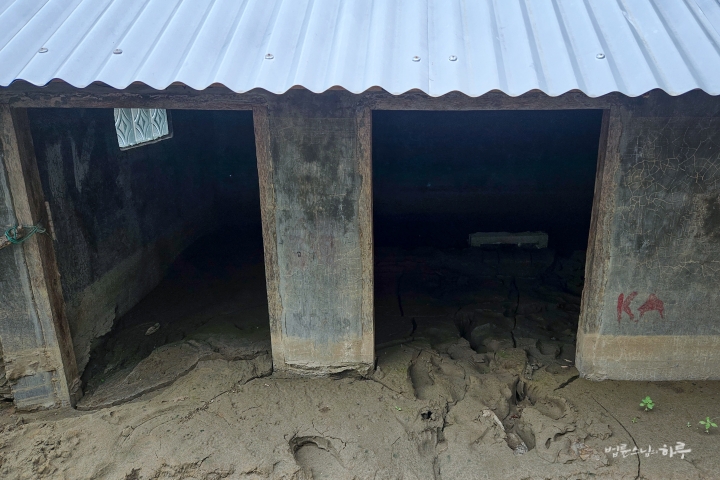
After passing through the flood-devastated village, a wide river appeared.
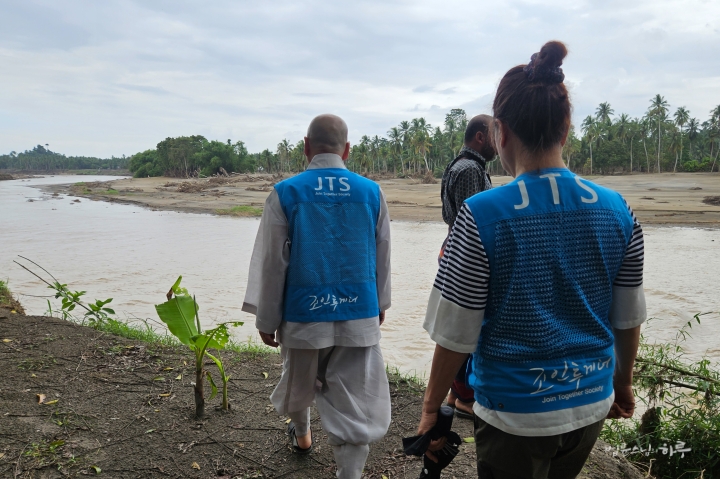
After crossing the river, the next village visited was Kubu. Also part of the Peusangan district, it was a large village with 235 households.
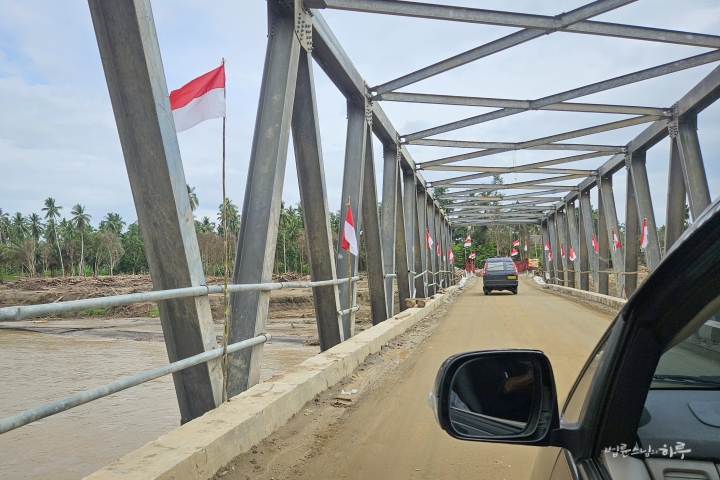
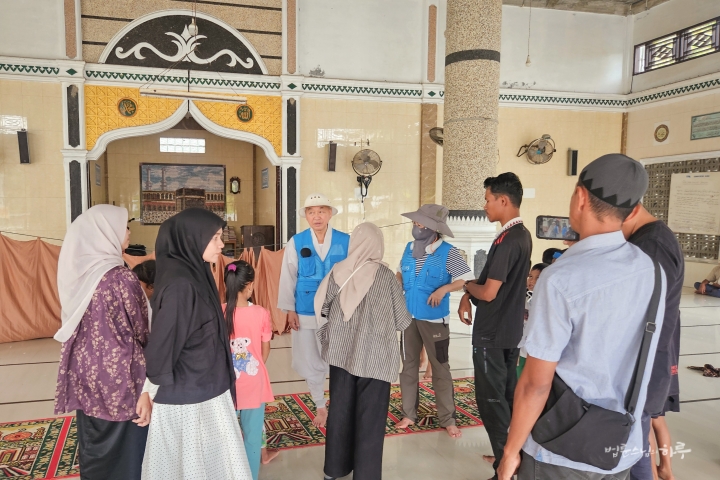
The first stop was the mosque. Residents who had lost their homes in an instant were living and eating at the mosque. Children were playing, and greetings were exchanged warmly.
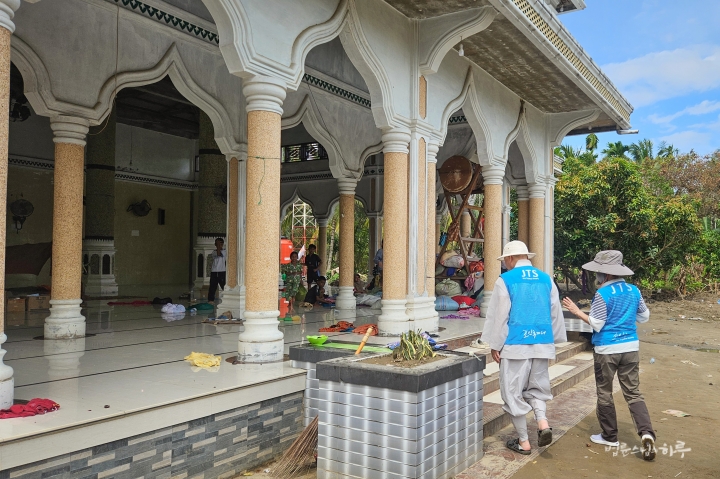
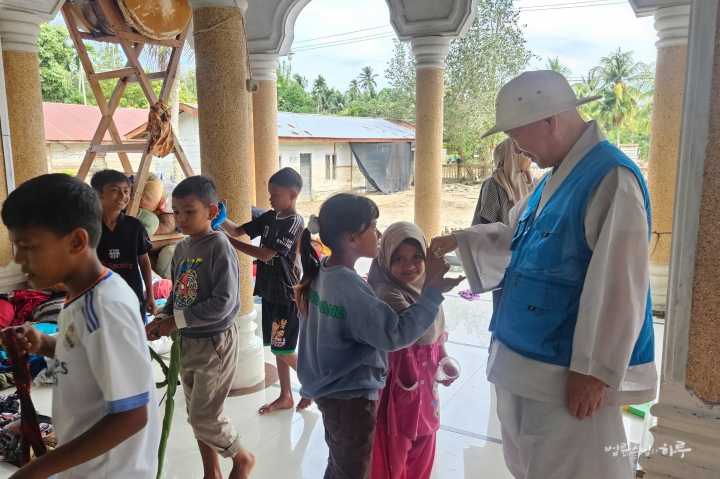
Residents explained the current situation.
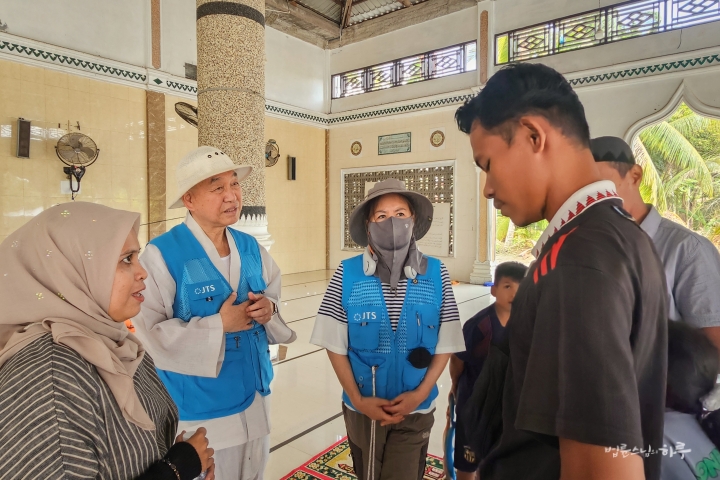
“Half of the villagers are living and eating at this mosque, while the other half still have some structure left of their homes, so they go there just to sleep. All villagers eat breakfast and dinner together at the mosque. Most residents farm rice, but all the rice fields have been destroyed.”
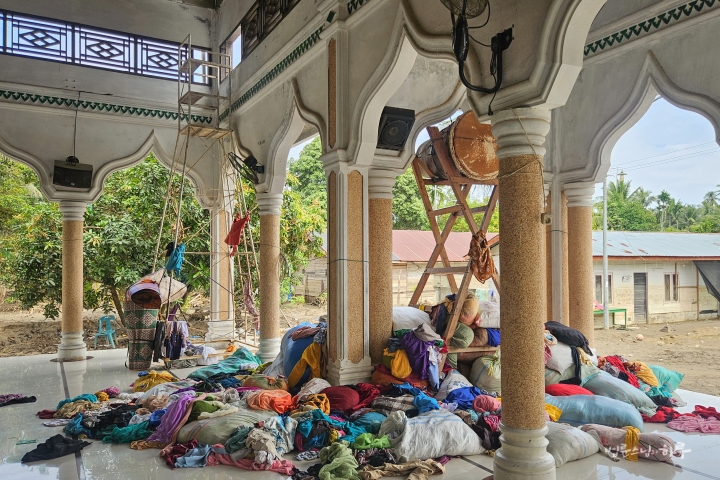
After listening to the explanation, Sunim asked several questions.
“So the land needs to be rehabilitated before you can farm again?”“We hope the government will rehabilitate the land so we can farm again.”
“Right now, we have no solution.”
“Can’t everyone move to higher ground?”“We can’t leave because we farm and live here.”
On one side of the mosque, a tent had been set up with various kitchen tools stacked for communal cooking.
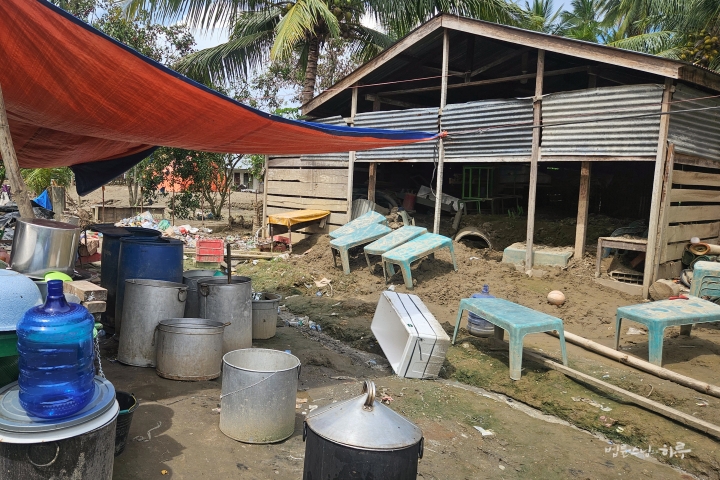
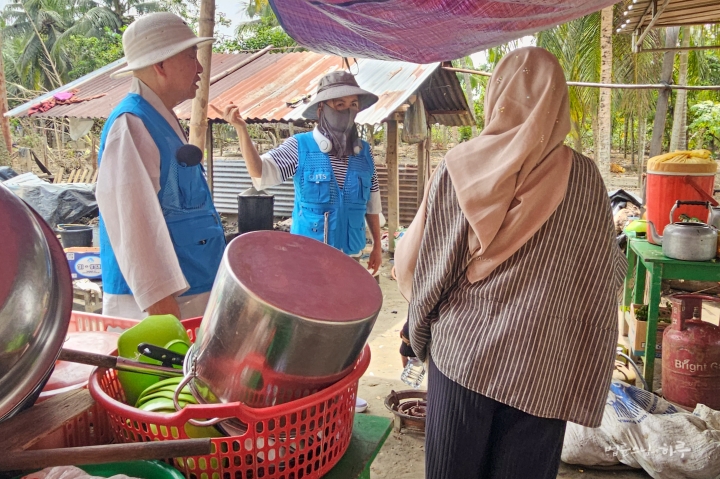
“The houses are so full of mud that we can’t cook inside.”
“How many people eat here?”“About 700 people eat here.”
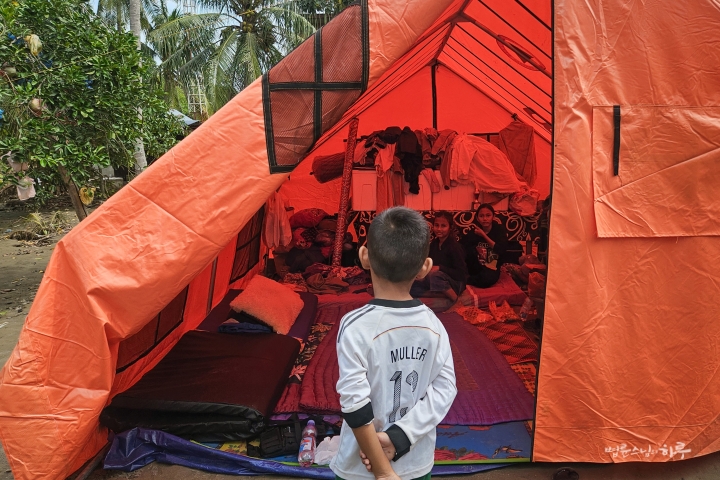
Residents whose homes had completely disappeared were living in temporary tents.
As Sunim entered the village, the village head’s house came into view right at the entrance. Sunim asked the chief a few more questions.
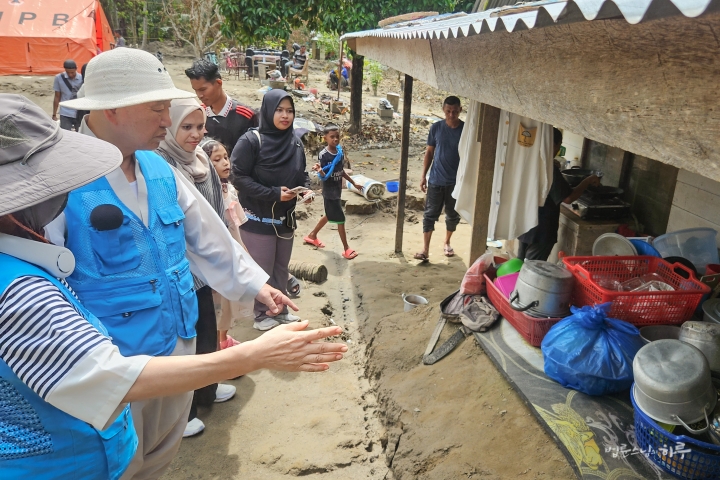
“We have to level the ground first, then somehow live in these houses. We need to push out the mud with tractors, but we don’t have the capability to do that.”
“Is there any possibility that the government will help clear the mud from each house?”“The government only clears major roads, there’s no possibility they’ll help individual houses.”
“It seems necessary to send excavators to each village to clear the mud and build embankments around houses so rainwater doesn’t enter even when it rains. We also need to create drainage channels for rainwater to flow out.”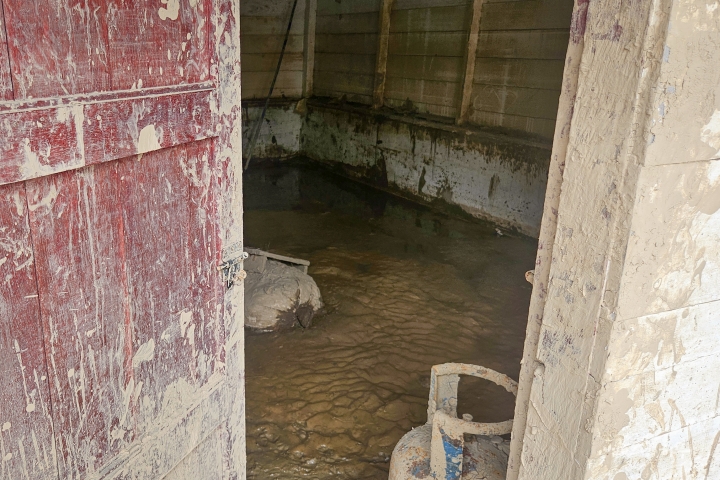
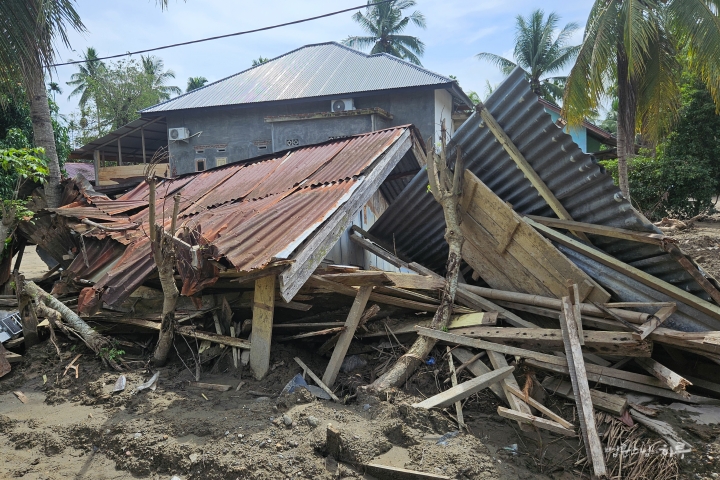
The damage situation was similar for every household. Hearing that the rice fields were also severely damaged, they went to see the condition of the fields.
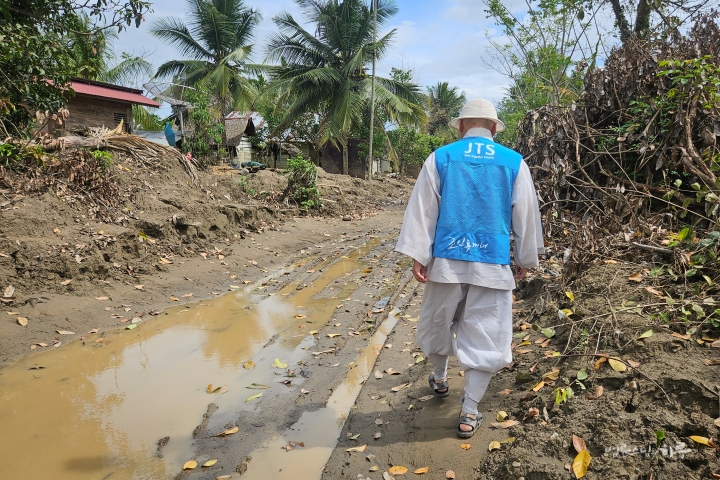
The rice fields, which were the residents’ livelihood, were also completely covered in mud. For those who depend on farming for their living, the damage to the fields was not just a natural disaster but a survival crisis.
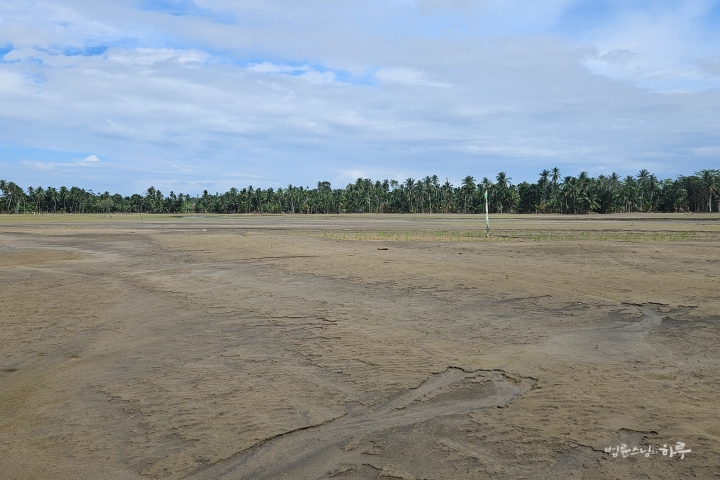
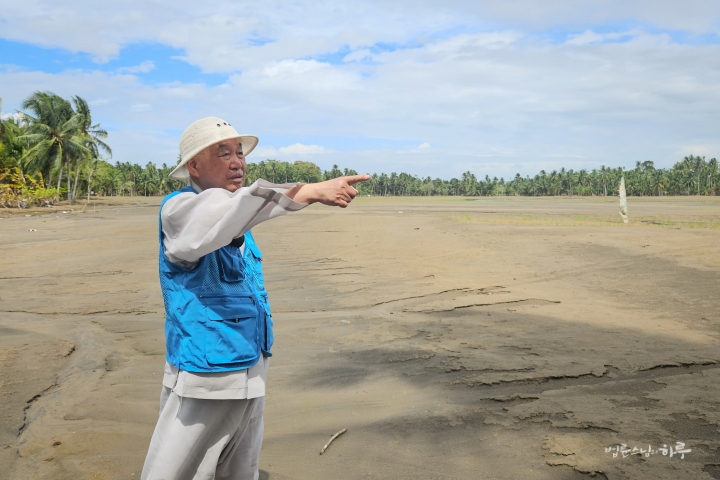
“It’s difficult to grow rice again because sand has mixed in. To grow rice, we need to remove all the sand that’s accumulated more than 1 meter deep. We need to find other land. All farmland has been destroyed.”
“If you can’t grow rice, what other crops can the villagers grow in the future?”The villagers sighed in despair and said:
“We’ve only grown rice, so we can’t make any plans right now.”
Sunim also expressed his concern.
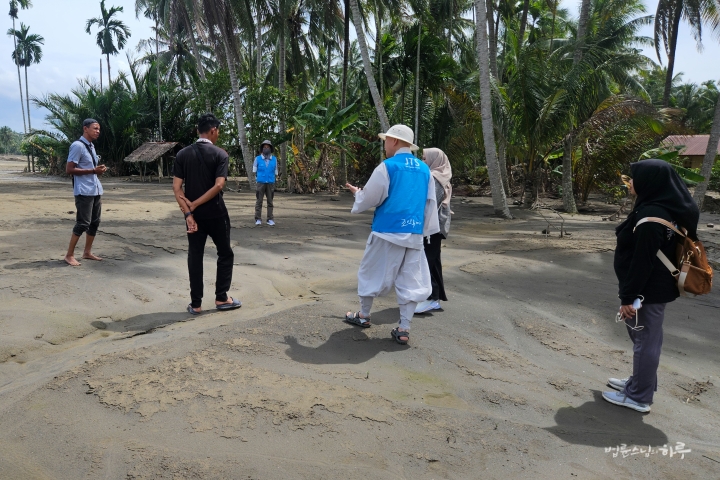
The next village visited was Pante Baro Kumbang. Also in the Peusangan district, it was a relatively large village with 316 households.
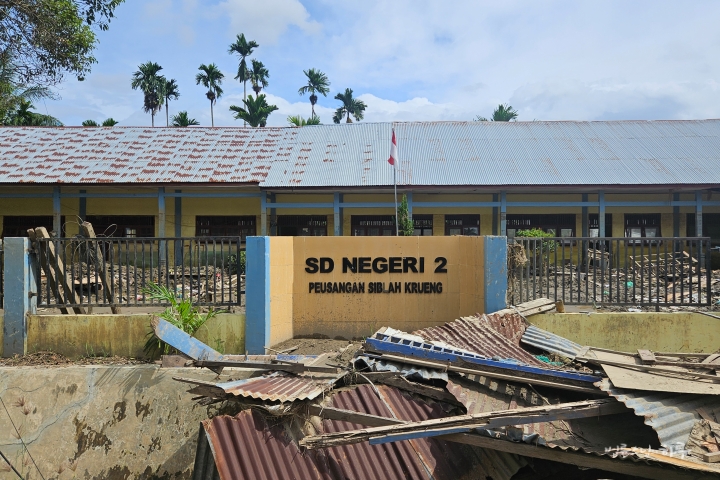
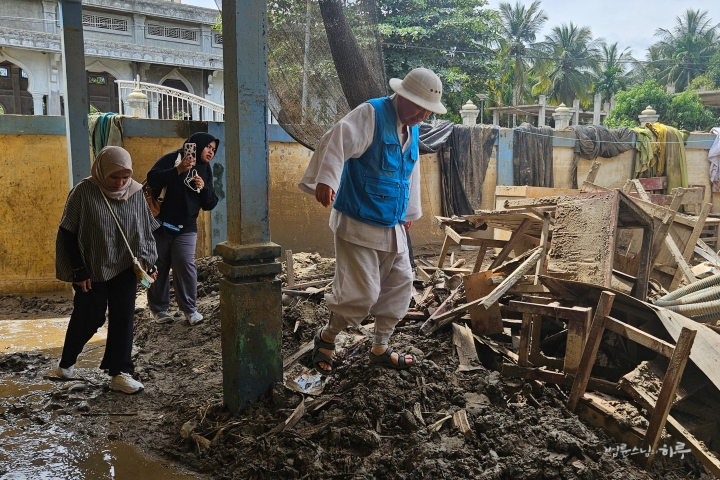
While it appeared organized from the outside, traces of the flood remained as they entered deeper into the village. Collapsed houses on mud piles and abandoned household items showed the destroyed foundation of life.
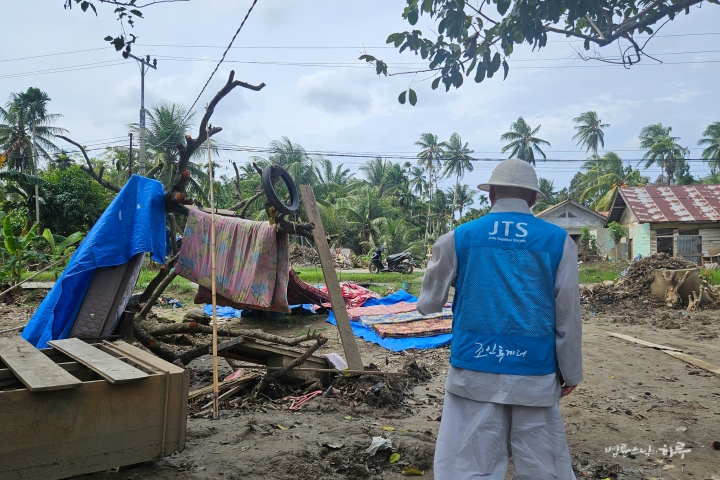
“We need houses most.”
“Do you want us to remove the mud from inside the houses, or build new ones?”“It would be good if we could build new houses. Even if we remove all the mud from inside, the house foundations are now lower than the surrounding ground, so mud flows in every time it rains.”
“It seems we need to bring small excavators to dig out mud from each house, and also provide cleaning tools like shovels and brooms.”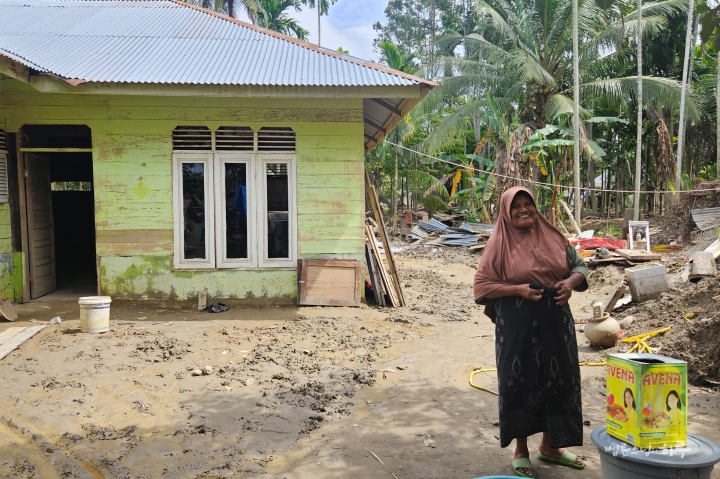
After lunch, they moved to the Sawang District(사왕 주) in Aceh and surveyed three villages. The first village visited was Riseh Baroh(리세바로). Of the total 88 households, 28 were completely swept away by floods and landslides, disappearing without a trace, and the area had become a riverbed. Residents were barely managing to get meals.
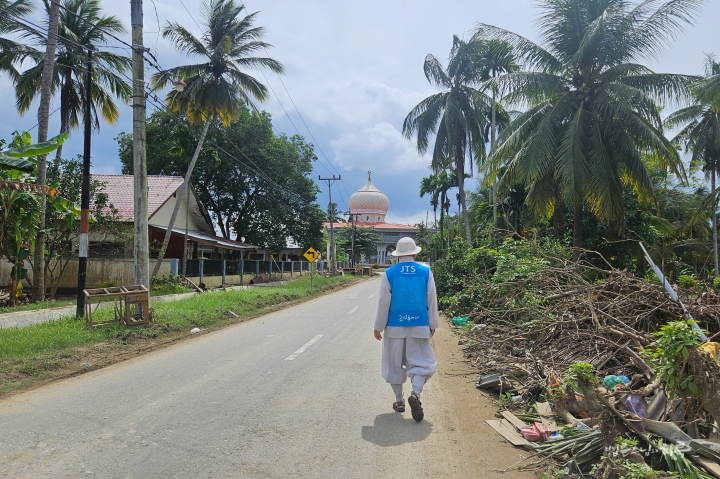
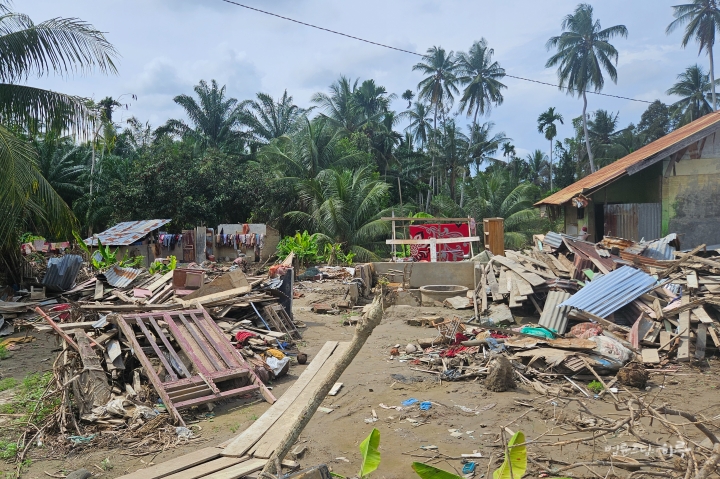
They then headed to Riseh Tunong village. A large village with 695 households, residents said 47 households were completely swept away and 170 were damaged. However, since they weren’t submerged in water, it was difficult to objectively confirm the damage. For now, it was decided to support only households that had lost their homes in this village.
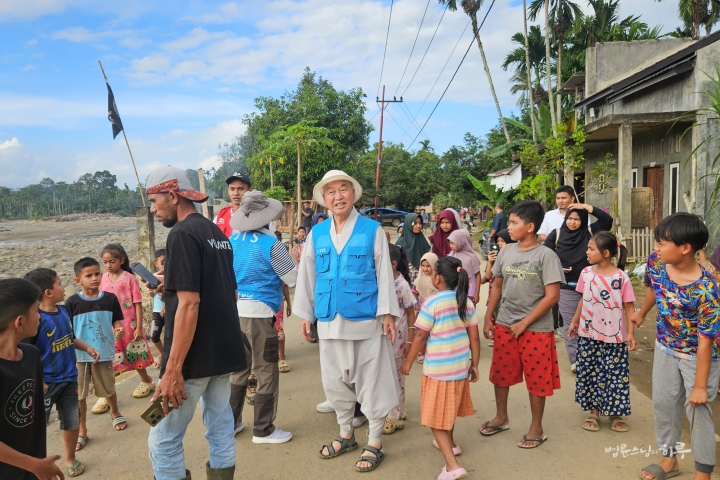
The next visit was to Riseh Teungoh, a relatively small village where 32 households were completely lost to floods and landslides. At the village entrance, piles of mud, garbage, and broken household items made it difficult for outsiders to even access.
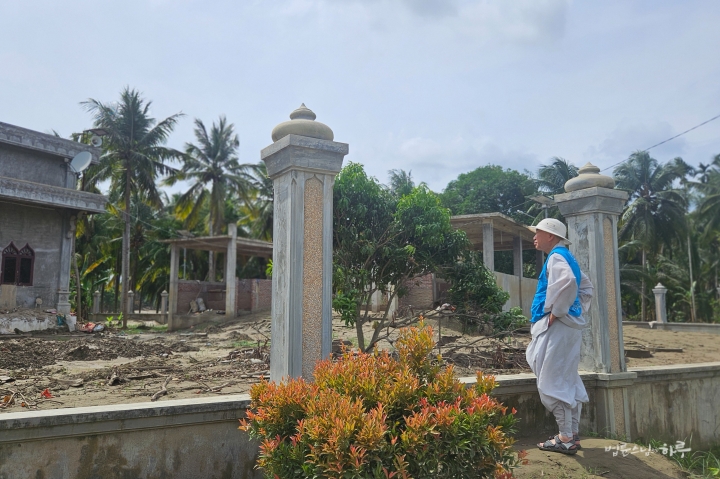
As the sun was setting, they decided to check three more remote villages. However, the three villages – Lhok Aja, Krueng Baro, and Lhok Bayu – were inaccessible as the bridges leading to them had been destroyed. They had to settle for looking down at the villages from the opposite side.
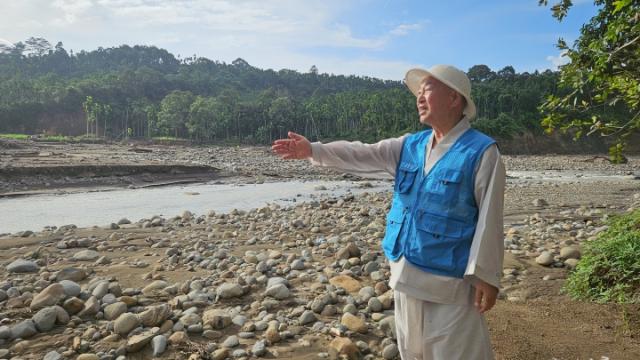
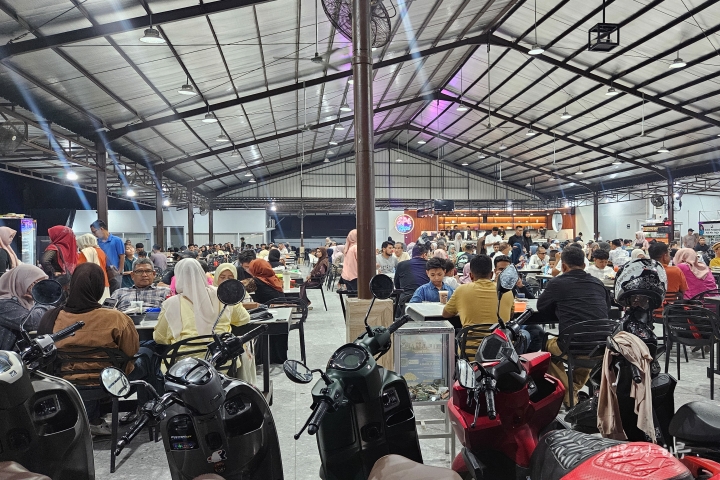
After completing the survey, on the way back to Kota Banda Aceh, they had dinner with the volunteers and arrived at the accommodation only around 2 AM. Immediately upon arrival, an emergency meeting was held for nearly 3 hours. They coordinated tomorrow’s schedule and specifically discussed what supplies to prioritize and how to distribute them to each village.
Due to a shortage of supplies in Banda Aceh, it was decided to go to Medan city tomorrow to order relief supplies. Then they would go to Mindanao, Philippines for a 5-day survey, and return to Banda Aceh when the ordered supplies arrive to deliver the relief goods. Looking for flights took a lot of time as there were no convenient connections, and searching for and booking tickets was time-consuming. Sunim ended up staying awake all night.
After finishing the meeting at 5 AM, Sunim proofread manuscripts, and at 6 AM, he held an online meeting with the community Dharma Teacher group about community personnel placement. Though his body was tired from walking all day among mud, garbage, and damaged houses while sweating, staying up all night was not difficult if it meant helping residents who had lost their homes.
Tomorrow morning, he will discuss with local relief organization representatives about who to support, what relief supplies to provide, and how to distribute them. In the afternoon, he will move to Medan city to purchase emergency relief supplies all day.
Since there was no Dharma talk today, this post concludes with a dialogue between a questioner and Sunim from the Happy Dialogue Dharma Q&A held in Busan on November 24 last year.
Is it okay to work without the pressure of having to live “perfectly”?
“I am a young person in my late 20s. Since high school, I’ve lived a fierce life, juggling work and studies, and I’ve fought tooth and nail to achieve every qualification or company role I set my mind to. After working for about two years after graduation, I started my own business, and for the first time, I had a chance to look back at myself. I started wondering, ‘Why did I live so frantically, as if I were being chased?’ Through this, I received psychological counseling for childhood wounds and managed my anxiety through mind-cultivation by watching your videos. Recently, I closed my business and I’m planning to return to company life. However, trying to start something without that ‘driven’ mindset feels strange, and deep down, I keep asking, ‘Is it really okay to be like this?’ I would like to ask for your wisdom on what mindset I should have as I return to work and life.”
“Do whatever you like. (Laughs) When you are young, it’s okay to jump into things headfirst and give it your all. If a young person acts too much like someone in their 60s or 70s, people call them an ‘old soul’ (mature beyond their years). In a positive sense, you could say they are ‘composed,’ but young people should overwork a bit, strive, take on challenges, and even fail. People don’t view those traits negatively. If a young person is a bit greedy for success, people say ‘that friend has ambition’; they don’t see it as ugly. However, when you get older and act greedy, it’s called ‘old-age greed’ (Noyok: 노욕(老慾). The word itself carries a negative image. If a young person moves quickly and efficiently, people say ‘they’re quite energetic,’ but if an elderly person rushes around, they are often judged as ‘lacking dignity.’ Similarly, if a young person talks a lot, people say ‘they speak well,’ but if an old person talks too much, it’s criticized as ‘nagging.’ Evaluation standards change depending on age and situation. Therefore, if you are still in your late 20s, it’s okay to overdo it a little. Of course, you shouldn’t push yourself until you’re sick, but is there a need to act excessively mature on purpose? When you’re young, it’s fine to strive, try this and that, and experience failure. Later, when you are 30, 40, or 50, you will look back and have a moment of reflection: ‘Did I really need to live that intensely?’ For example, in middle or high school, you might have cried over a slight drop in monthly exam scores. But looking back at age 50 or 60, was that fluctuation really such a big deal? In your 20s, you might have been bedridden with grief after a breakup, but at age 50, was that person truly that vital to your existence? If you failed a college entrance exam and had to retake it while your friends moved on, you felt immense frustration. But 30 years later, a one-year difference between someone who retook the exam and someone who didn’t is nothing. After time passes and you gain experience, you realize, ‘There was no need to struggle so frantically.’ That is why, ultimately, I tell people not to live so desperately. It’s great if you can live with leisure from a young age, but I don’t necessarily say you must. Even the ‘useless’ things you did in your youth become necessary experiences for navigating life later on. So, when I say ‘do as you like,’ I’m not joking. It’s okay to have ambition, challenge yourself, laugh, and cry. It’s also good to realize through talking to elders that ‘Ah, I don’t need to struggle this hard.’ There is actually no big problem with living life with a sense of ease. You feel that way when you look back. However, at the time, those words can sound unrealistic. That is why we can learn indirectly through the experiences of others—that, too, is a wise thing to do. In the long run, there is no need to live life in a rush. It is okay to live with a bit of leisure. You might look at a friend and think, ‘They are living so hard; will I fall behind if I take it easy?’ In those moments, instead of thinking ‘I’m falling behind,’ you can look at them with ease and think, ‘That friend is still a bit immature, so they’re doing that. Go ahead, work hard. It’s okay. In about 30 years, you’ll be doing it slowly like me.’ But if you feel anxious because you aren’t doing what your friend is doing, it is better to just run like a rabbit alongside them rather than just sitting there worrying. However, whether the rabbit runs or not, the turtle goes slowly according to its own ability. Even if the rabbit is resting in the middle, the turtle can just pass by. It is a matter of choice. You cannot say whether the rabbit or the turtle is better. That is simply the rabbit’s style and the turtle’s style. Therefore, you can live like a rabbit, or you can live like a turtle.”“Yes. Just as Sunim said, I will enjoy my life and live with a sense of ease. Thank you.”