When Life Feels Like Hell, Is There Still a Reason to Keep Living?
Jan 9, 2026 - Arrival in Banda Aceh, Indonesia
Hello. Today, Sunim headed to Kota Banda Aceh(반다아체 시) to provide relief activities in the Aceh region (Provinsi Aceh: 아체 주) of Indonesia, which suffered severe damage from floods and landslides.
At the end of last November, record-breaking heavy rains caused simultaneous floods and landslides in Aceh and parts of Sumatra, Indonesia. Soil and rocks poured down from deforested mountainous areas all at once, causing thousands of homes to collapse or be submerged, and hundreds of homes were swept away without a trace, leaving residents to lose their homes overnight. Most basic necessities such as rice, food, and cooking utensils were also lost. Since then, temporary shelters have lacked clean water and sanitation facilities, and food has been insufficient, leading to ongoing health problems, especially among children and the elderly. Rice fields and farmlands are covered with thick mud, eliminating even their means of livelihood, and residents are living in daily anxiety as the same damage continues to occur whenever it rains. Sunim went to Indonesia to directly assess this situation and deliver relief supplies.
Sunim departed from Jungto Center at 4 AM and traveled to Incheon (인천) Airport. After completing departure procedures, he boarded a flight to Malaysia at 6:50 AM. He arrived at Kuala Lumpur International Airport at 12:30 PM local time and waited for about 3 hours.
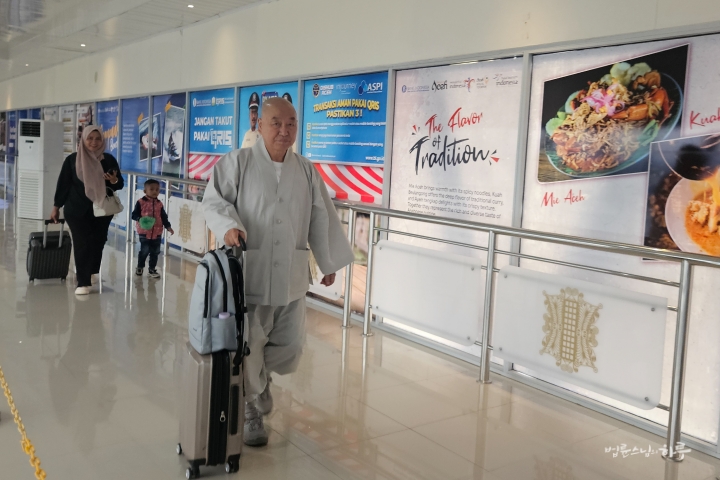
At 3:20 PM, he boarded a flight to Indonesia. The flight was delayed by 40 minutes, arriving at Banda Aceh Airport in Indonesia at 4:40 PM.
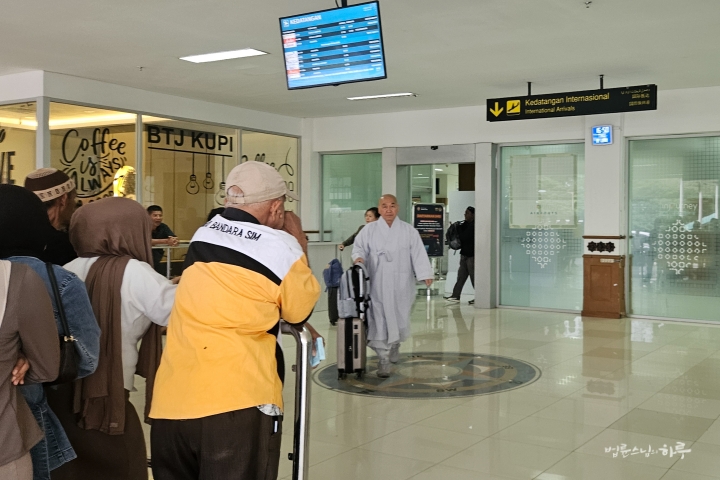
At the airport, Johan, one of the founders of the Indonesian NGO ‘GAKUM,’ and Amir, a local businessman, came to meet them.
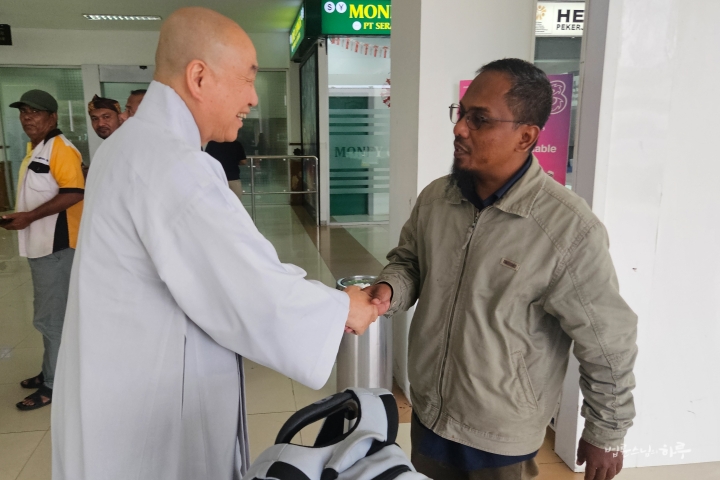
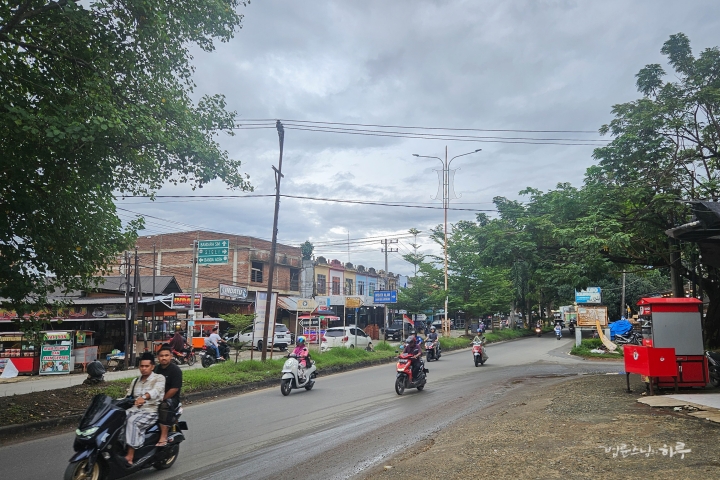
After exchanging greetings, they traveled together to the accommodation. Arriving at the accommodation at 6 PM and unpacking, Sunim reviewed manuscript corrections while Park Gina, JTS President,discussed the next day’s schedule with Amir and Johan. President Park explained in detail JTS’s distribution methods and precautions, and Johan mentioned that distributing supplies in this area takes a full day. The President emphasized that safety must be the top priority during the distribution process, even if it takes a long time.
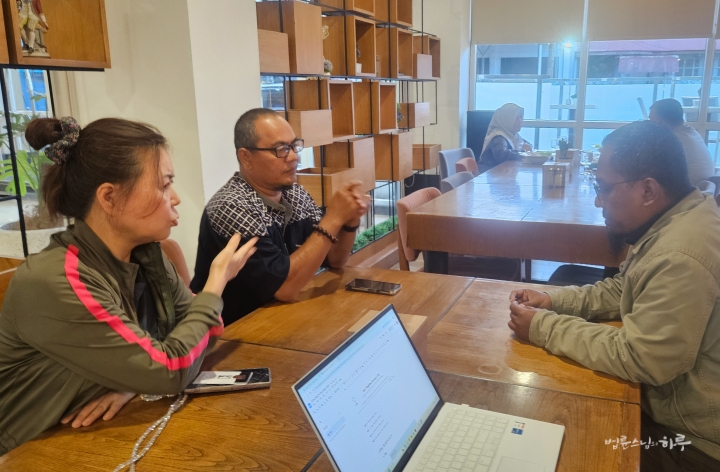
After a brief break for Muslim prayer time, the second meeting began at 7:30 PM. This meeting was attended by Firman from GAKUM and Ajar, Nurkalis, Mushra, and Nasir from another NGO organization, FDP (Forum Dakwah Perbatasan).
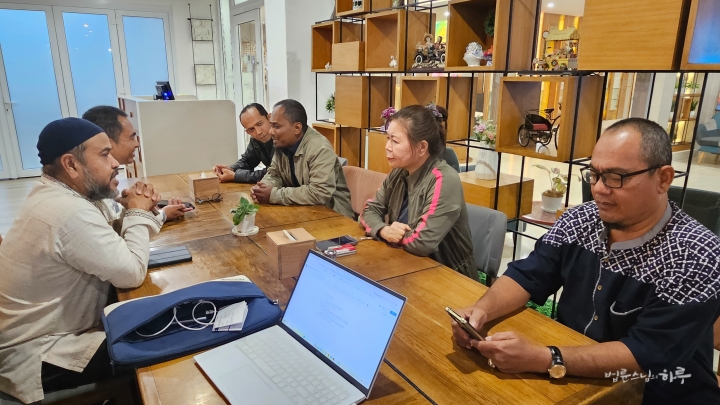
Johan introduced the FDP activists, explaining that they were an organization that had been conducting relief activities in the Aceh region for a long time. FDP stated that they had been providing support wherever help was needed, regardless of religion or political orientation. GAKUM had expressed concerns about working together because JTS is a Buddhist organization, so they connected with FDP.
FDP particularly prioritizes providing basic necessities for women and children, and after the massive floods and landslides at the end of last November, they urgently delivered 3 tons of food to some areas and treated over 800 patients through mobile medical services. FDP proposed that JTS distribute food to 8 villages, totaling 1,027 households. However, since it is now the rainy season, roads are frequently cut off, and rain causes water to rise in villages, making it difficult for residents to reach distribution points. Therefore, supplies must be delivered directly to each village, with an average of 130 households and about 500 people residing in each village.
Local activists said this disaster was the result of environmental destruction caused by the government’s reckless development of forests. In mountains where trees have disappeared, floods occur immediately with heavy rain, and soil and rocks overwhelm villages. However, they said the Aceh region receives almost no government support due to its long history of attempting independence, and even international NGO access is not easy.
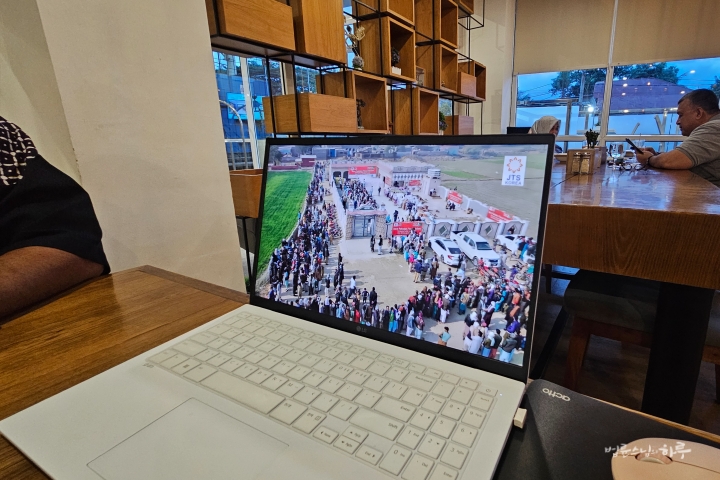
The meeting ended at 9:20 PM. Today, after arriving in Indonesia, Sunim met with local NGO activists to understand the situation. Tomorrow, he plans to visit the actual affected areas to directly observe the residents’ situation, receive requests, purchase emergency relief supplies, and establish a distribution plan.
Since there was no Dharma talk today, this post concludes with a dialogue between Sunim and a questioner from the live Friday Dharma Q&A on November 22 last year.
When Life Feels Like Hell, Is There Still a Reason to Keep Living?
“I have cervical scoliosis, which makes my neck uncomfortable and my voice difficult to produce, so I’ll ask my question slowly. The cervical scoliosis started during puberty, and a rare disease was discovered along with it. There’s no medicine and no cure, and I’ve spent 30 difficult and painful years. Three years ago, my subclavian artery ruptured and I nearly died twice, and since then my left vocal cord and left foot have been paralyzed. Recently, I strained my neck in a car accident and lost all strength in my right hand. Since I can’t use my right hand, I’ve developed severe depression, anxiety, and insomnia, and I’m taking prescribed psychiatric medication. Currently, I can’t do anything by myself. Why is my fate like this? It’s unfair enough to be sick all my life, but I really feel so sorry for myself. Even now, there’s not a single place that doesn’t hurt, and living is truly hell. Sunim, how should I live?”
“Yes, I understand well. I’ll always remember what you said today and live with satisfaction. Thank you.”
“I’m also grateful that you received my words positively. As we go through life, we experience countless things big and small. At the moment, they feel like major events that shake our entire life, but when we look back after 5 or 10 years have passed, most of them weren’t really that significant. The problem is that we only realize this after much time has passed. Then is there really a need to know this only after 5 or 10 years? If we can think in advance, ‘When I look back later, this too won’t be a big deal,’ we can live accepting the present much more lightly. If we use our minds this way, rather than holding onto past events and suffering, we can enjoy and live in this present moment. This is because the weight of life is often determined more by our mind looking at events than by the events themselves.”