Jan 7, 2026. Weekly Dharma Assembly, Discussion on Community Division Personnel Placement
Hello. Today is the day of the Weekly Dharma Assembly, where Jungto Society members examine their practice.
After completing morning practice and meditation, Sunim departed from Dubuk Jungto Retreat Center (두북수련원) at 5 AM and headed to Seoul. During the drive, the morning sun slowly rose outside the window.
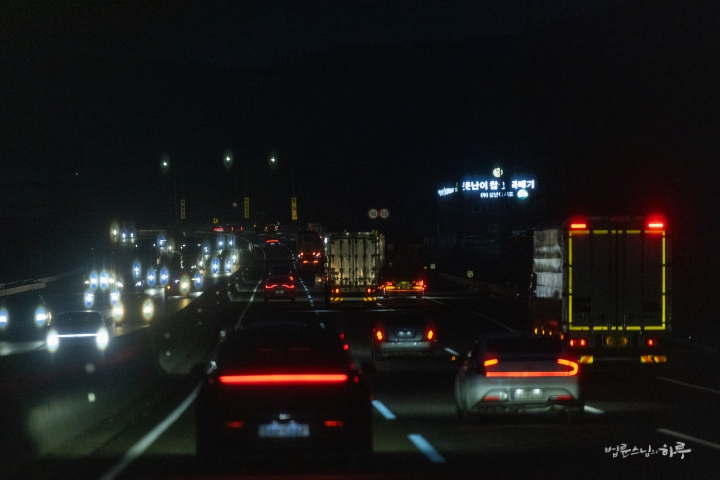
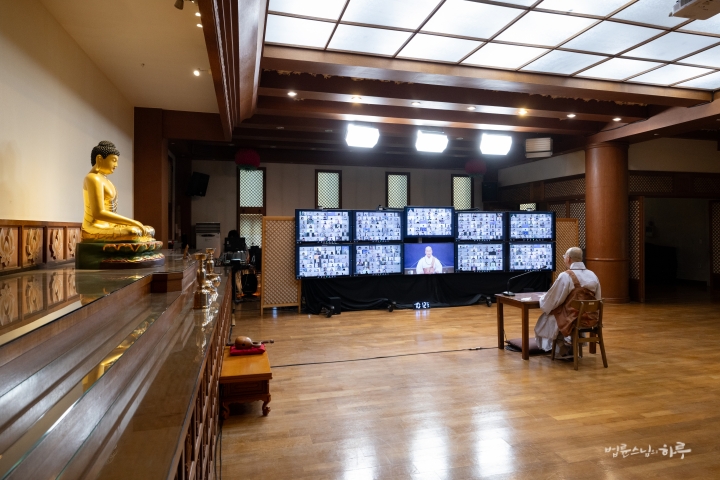
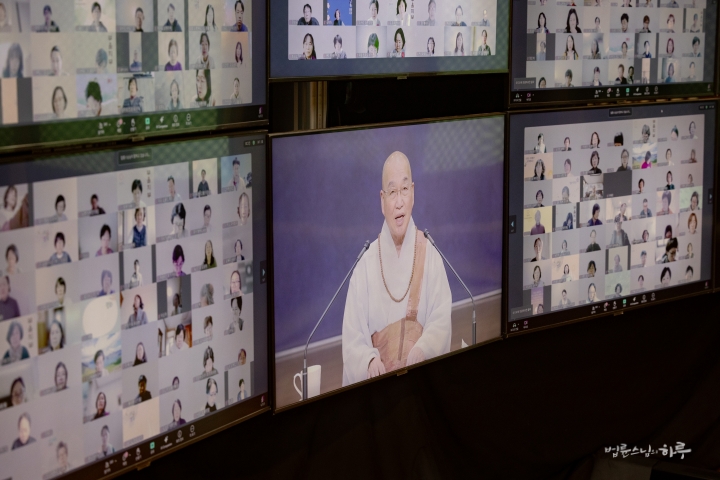
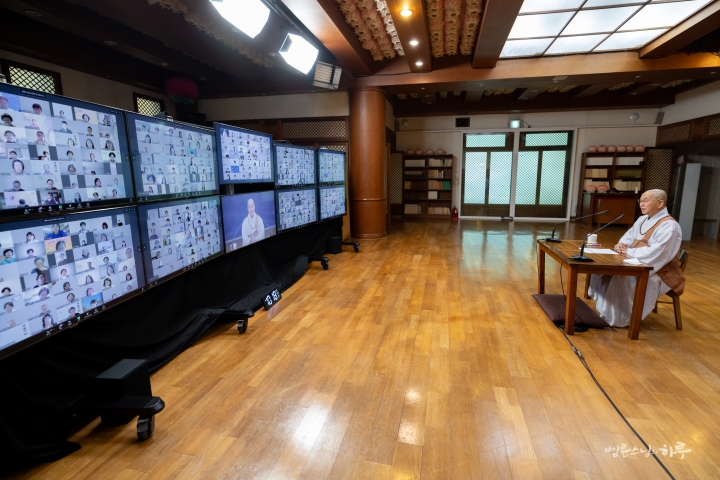
After driving for four hours along the highway, Sunim arrived at Seoul Jungto Center at 9 AM. After a simple breakfast, he headed to the broadcasting room for the live broadcast of the Weekly Dharma Assembly.
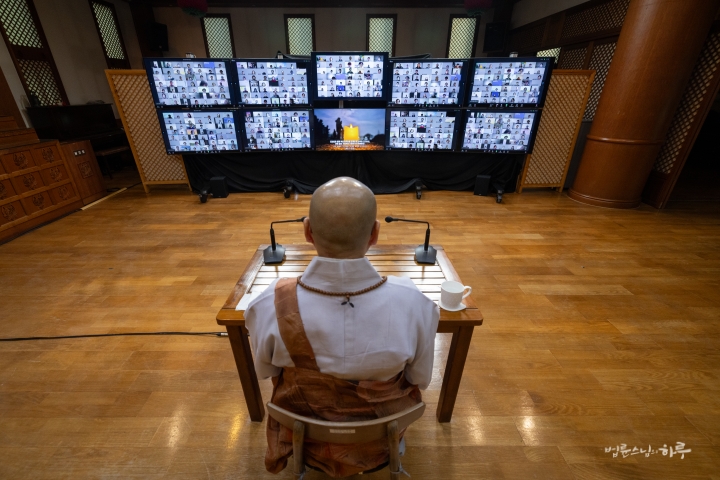
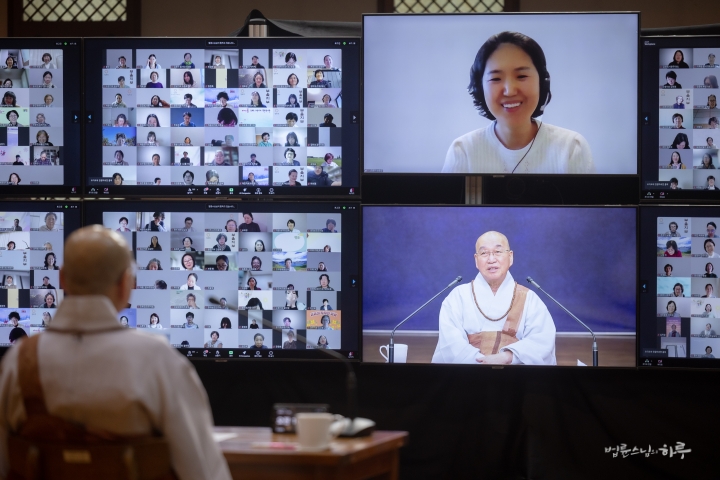
At exactly 10 AM, about 4,000 Jungto Society members connected to the video conference room. After reciting the Three Refuges (삼귀의) and the Heart Sutra (반야심경), they watched a video of weekly news from Jungto practitioners.
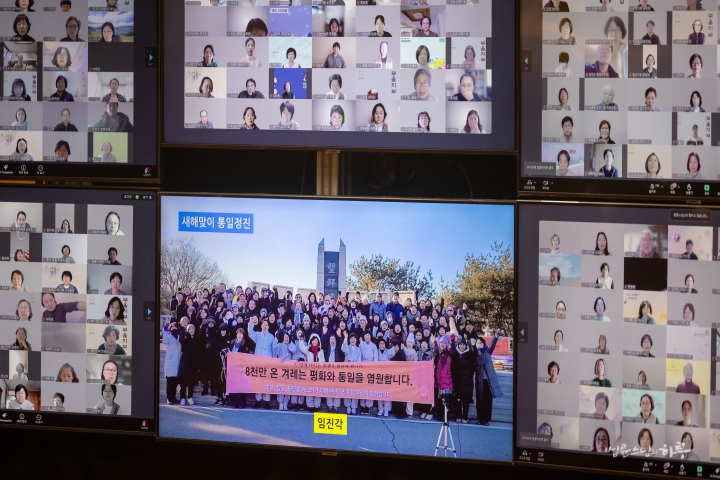
Through the video, they could see that many Jungto Society members had prayed for peace and unification on the Korean Peninsula at various locations across the country to welcome the new year, including Imjingak (임진각) in Paju, Sacheonwangsa Temple Site in Gyeongju (경주 사천왕사지), Bongnimsa Temple Site in Changwon (창원 봉림사지), and Adomoryewon in Gumi (구미 아도모례원).
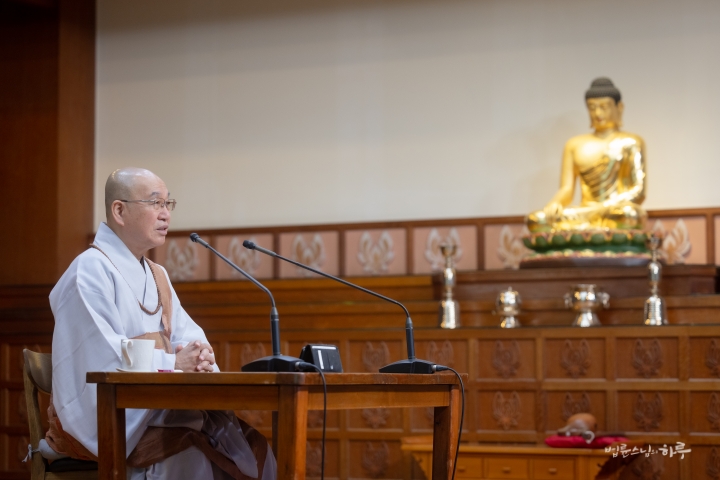
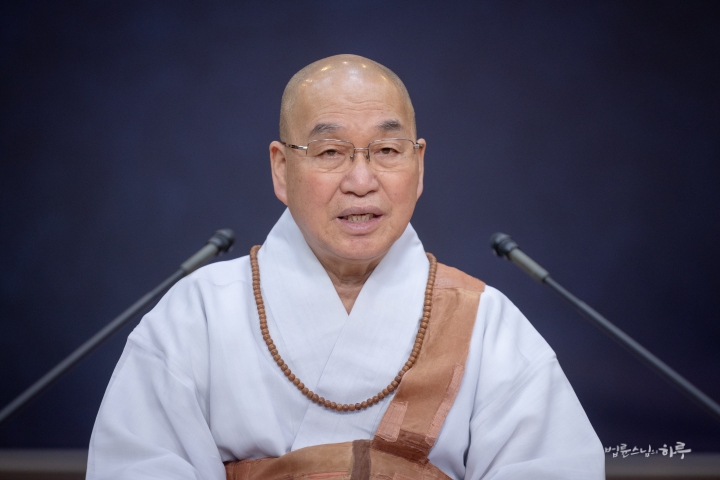
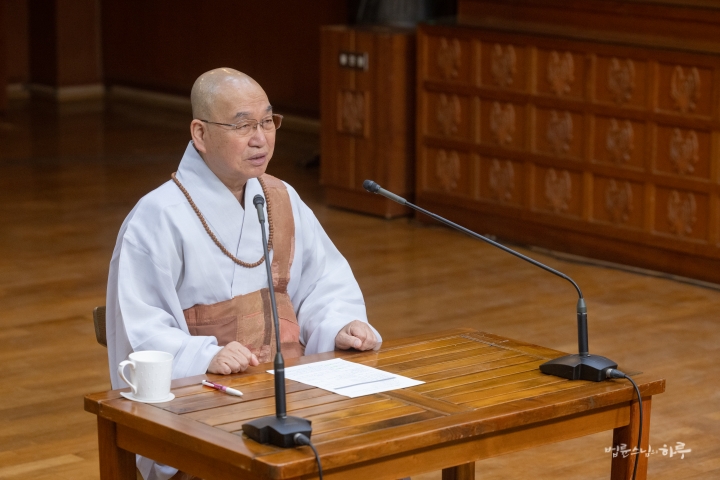
Following this, Jungto Society members requested a Dharma talk from Sunim with three prostrations. Sunim emphasized that in the approaching era of robots and artificial intelligence, practice and volunteer service are the core elements that preserve the meaning of life and the health of our community.
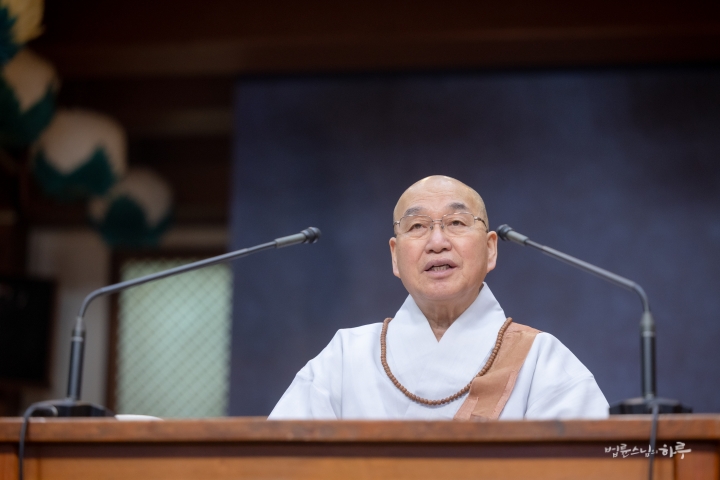
“The new year of 2026 has dawned. It seems like just yesterday we welcomed the year 2000, calling it the millennium era, yet 25 years have already passed. A quarter of a century has gone by. When another 25 years pass and we reach 2050, we will be at the midpoint of the 21st century.
What Standards for Living Should We Establish as the World Becomes More Uncertain?
Various global reports present different forecasts for Korea’s future. Some reports optimistically predict that Korea will become ‘the world’s second-largest economy,’ while others offer pessimistic predictions that it will ‘fall outside the world’s top 20.’ Thus, both optimism and pessimism coexist. However, we need not be swayed by these forecasts. There’s no reason to be overly excited by optimistic predictions or frightened by pessimistic outlooks. What matters is not the predictions themselves, but what choices we will make and what responsibilities we will take in the future.
If we remain complacent with today’s reality and give up on challenges, we will head toward a pessimistic future. However, if we maintain our spirit of challenge despite various difficulties, we can move toward an optimistic future. I believe this applies not only to our society but also to Jungto Society. Currently, population decline, aging, and economic recession are occurring simultaneously worldwide, and these changes are appearing more rapidly in developed countries where the economy has reached a certain level. Additionally, the decline in religious populations is also emerging as a clear trend.

Recent statistics show that among South Korea’s adult population, 51 percent identify as non-religious while 49 percent have a religious affiliation. However, when examined by age group, the pattern differs dramatically. Among those in their 70s and older, the percentage with religious affiliation far exceeds 70 percent, while among those in their 20s, the percentage without religious affiliation surpasses 70 percent. The distribution of religious population between young and elderly generations shows completely opposite patterns.
If this trend continues, without special changes or efforts, the proportion of the religious population among the total population will inevitably continue to decline. This is because the elderly population with high religious affiliation rates will naturally decrease, while the younger generation without religious affiliation will grow to become the center of society. As a result, the natural decline of the religious population is likely to become an unavoidable reality.
Furthermore, the aging of the religious population is not limited to any specific religion. This phenomenon appears commonly across Buddhism, Christianity, and Catholicism. The religion with the highest proportion of elderly population among its adherents was not Buddhism but Catholicism, followed by Buddhism, and then Christianity. However, overall, all religions show a structure with an absolutely high proportion of elderly population without significant differences between them.
Facing these challenges, we are confronted with the task of how to overcome this reality as citizens of the Republic of Korea, and how to navigate through the difficulties that religion faces as Korean Buddhists. However, looking more fundamentally, beyond the distinction of whether it’s about Korea or Buddhism, the most essential task is the question of ‘how should one live life,’ regardless of nationality or whether one has a religion or not.
In an Era When People Can Live Without Working, How Should Humans Live?
Until now, we have primarily viewed the economy as a ‘matter of production.’ Land and labor were important for production, and those who owned large estates accumulated wealth by controlling many slaves, serfs, or workers. However, in the future, most of this production will be replaced by robots and artificial intelligence. When this happens, humans will no longer be essential for production, and only a small number of people may actually participate in production. This raises a new question: what should the majority of people do with their lives? Furthermore, as the population continues to decline, we may reach a situation where the problem is not a shortage of people to produce, but rather the disappearance of the need to produce due to a lack of consumers. This presents a completely different dimension of social and economic challenges from what we have experienced so far.
In the past, human anguish stemmed from questions like ‘what work should I do to make a living’ and ‘one must work to survive.’ However, in the future, the possibility of creating conditions where people can live without working is increasingly growing. Perhaps to people of the past, such changes might appear as an ideal world akin to paradise.
But now we face an entirely new problem: ‘how will humans who don’t work actually live?’ Until now, humans who didn’t work often tended to fall into corruption. This was because they were easily exposed to various addictions such as pleasure, overconsumption, and drugs.
Many people question whether ‘a society where people can live without working’ is truly possible. In my opinion, such a society is entirely possible. However, the question of ‘how humans can live healthily, happily, and with a sense of meaning in their existence without working’ will become a new challenge that future society must necessarily solve.
The Native American society in the United States demonstrates this problem starkly. American society has provided certain subsidies to Native Americans, a minority group, so they could maintain their livelihood without working. However, as a significant portion of these subsidies was spent on alcohol and drugs, the policy intended to protect Native Americans instead resulted in the collapse of communities and the destruction of lives. This case clearly poses the question of ‘what kind of life will humans who don’t work lead’ in the future. Practice is not simply about studying the mind because life is difficult, but is connected to the fundamental question of how people can live their lives meaningfully and worthily even without working.
In this regard, the lives of Jungto Society members who volunteer and help others, though not for income, might become an important experiment for future society. Our life of practice and service today is not only a path to making our present moment happier, but also holds the possibility of becoming a desirable model for how humanity should live in future society. In this sense, Jungto Society members need to have pride in not only living their individual lives freely and happily, but also in exploring new solutions together for humanity’s crises and the problems faced by our society and Buddhism. However, rather than settling for the status quo or being consumed by materialism, we must pioneer a new way of life that is frugal yet vibrant, helpful to others yet joyful.
The Buddha already showed us the direction of future society 2,600 years ago by presenting a new life model – the life of a practitioner. Today, we too stand before an uncertain and rapidly changing world. Amid these changes, we must find our own path to calm the wandering hearts of people.”
Next, Sunim had conversations with those who had submitted questions in advance. For one hour, three people pressed the hand-raising button and asked Sunim questions. One of them sought Sunim’s advice, saying she felt frustrated because she seemed overly attached to her sick daughter and husband, and asked about the path to freedom from attachment.
Is It Okay to Live My Own Life While Having a Sick Daughter and Husband?
“My husband has been taking medication and working while dealing with aftereffects of a cerebral infarction since the year before last. We currently live separately. While I’m not completely worry-free, since he was someone who drank and engaged in violence and verbal abuse from the beginning of our marriage, I worry relatively less about him than about my daughter. I live with my daughter who turned twenty-eight this year. She was diagnosed with bipolar affective disorder during adolescence and is currently being treated for bipolar disorder. She developed symptoms during her first year of college and was hospitalized for about two months. Last January, right before I left for a pilgrimage to India’s sacred sites, my daughter called me just before I boarded the plane. After experiencing that incident, I find it difficult to go anywhere leaving my child behind, as it seems like these things happen when I’m not around. Currently, my daughter is going to the hospital and managing her life relatively well. In my heart, I try to treat my daughter as an adult, like someone else, but it doesn’t work well. Although I live praying and repenting every day, I don’t have confidence in actively participating in Jungto Society activities while having this child. My desire to live fulfilling my purpose and wanting to do anything – whether it’s the ‘Awakening Retreat,’ ‘Sharing Retreat,’ or ‘India Pilgrimage’ – feels like I’m abandoning my child and running away, which torments me. If possible, my small hope is to live just one more day than my child. In this situation where both my husband and daughter are sick, I pray thinking ‘There’s no problem, and I should be grateful for what I have,’ but it doesn’t work well. I would like to hear your wisdom.”
“Human greed has no end. Some people say they can’t go on the India pilgrimage because they’re raising a dog, saying ‘It can’t manage without me’ or ‘There’s nowhere to leave it.’ While a child might have somewhere to be cared for, there are cases where people can’t go because of a dog. Some people say they can’t close their shop at the traditional market because they barely make ends meet with daily earnings, so they can’t go anywhere. In other cases, people have no financial difficulties at all but can’t move because of poor health.
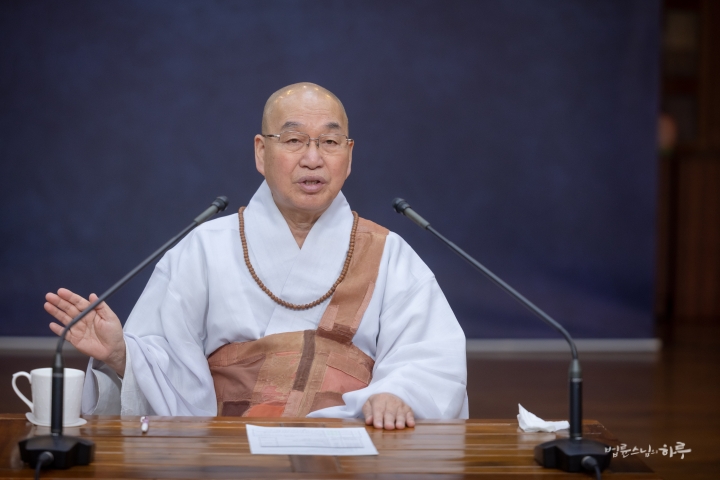
Like this, everyone has different reasons for not being able to go. Some people can’t go because of financial circumstances, because of a puppy, because they have a patient to care for, because of their parents, or because of their husband. It’s not that they don’t want to go, but they want to yet can’t due to circumstances. So when you say ‘you can’t go because of your daughter,’ from my perspective, this isn’t particularly exceptional circumstances. Rather, being in a position where you could go but can’t because you have someone to care for might be considered better than cases where people can’t do anything due to financial difficulties. When you’re financially struggling, daily life itself is difficult, but not being able to go because of your daughter means you simply don’t go on pilgrimages or trips – your daily life itself doesn’t collapse.
If your daughter has bipolar disorder, as much as she depends on her mother, her psychological anxiety increases when her mother is away, which can increase the possibility of symptom recurrence. In that case, it’s right to live caring for your daughter now. Then, when you judge that ‘now I can be away for a bit,’ you can go once in a while. If your daughter’s symptoms worsen and she’s taken to the hospital while you’re away, you can visit her when you return, and bring her home when her condition stabilizes. This is neither neglect nor giving up.
The attitude of leaving your daughter to live or die on her own while you live as you please is clearly selfish. However, just as your daughter with her illness has the right to live happily, you, as someone with such a daughter and husband, also have the right to live happily. These two things are not mutually exclusive.
The thought that ‘something will happen to my daughter if I’m not there’ is like not being able to ride in a car for fear of a car accident, or not being able to fly for fear of a plane crash. If you want to attend the Awakening Retreat, just go. If something happens while you’re away, you can deal with it when you return. If you come back in the middle of attending the Awakening Retreat because an accident occurred, then you weren’t ready to participate in the first place. At the Awakening Retreat, even if someone passes away, they don’t notify participants during the practice. This is because you can attend the funeral after it ends. Only when you have this perspective can you truly become the master of your own life.
People who are going to die will die, and those who will get sick will get sick anyway. I didn’t create these situations, nor can I go and save them, so there’s no reason I should be responsible for all these circumstances. If we become too attached to such things, we can never achieve true freedom. The Awakening Retreat (깨달음의 장
)
is a place to learn what perspective we need to have to become the master of our own life. Even if a parent passes away, they won’t come back to life just because I go there. Therefore, you need to have the perspective to be able to say, “I’ll go pay my respects after it’s over.” If you have the perspective of immediately rushing off when you hear your daughter had a traffic accident, or immediately quitting the retreat and heading home upon hearing news of a relative’s death, it will be difficult to reach true freedom.
Your daughter is already an adult at twenty-eight years old. You cannot take responsibility for her life forever. While you’re alive, you worry, ‘What will happen to my daughter when I die?’ and also think, ‘My daughter must not die while I’m still alive.’ This is how contradictory thoughts naturally are. If there’s no one to care for your daughter after you die, then logically, you should think, ‘It would be better if my daughter died while I’m still alive.’ If you think your daughter shouldn’t die before you, then it would be consistent to think, ‘My daughter will live well even after I die.’ If you hold onto thoughts that are problematic either way, you ultimately cannot become the master of your own life.
If your husband drinks and engages in verbal and physical abuse, it’s better to live separately as you do now. If his stroke aftereffects worsen to the point where he can no longer drink or be abusive, then you can care for him as a patient. It’s better to endure one type of suffering than two at the same time. It’s not because you lack affection, but because talking won’t change anything. You can think, ‘Alright, live as long as you can, and if you become ill with no one to care for you, I’ll take care of you since I’m your wife.’ If he comes home late, it’s fortunate that his stroke aftereffects haven’t worsened. If his stroke aftereffects worsen, it’s fortunate that he comes home early. While drinking is a problem, it’s fortunate if no stroke reoccurs. But if another stroke does occur and he becomes unable to drink or be abusive, that’s also fortunate.” From this perspective, it’s fine whether your husband comes now or later. It’s fine whether your daughter dies first or later, and it’s fine whether your husband gets sick or not. When you view things this way, you can be sufficiently free even while leaving the situation as it is.
The questioner is currently engaged in prayers seeking blessings. She prays that her husband won’t drink alcohol and that his stroke aftereffects won’t worsen, and that her daughter will come to her senses and live well. No matter how much one prays like this, it’s difficult to become free. Prayer and practice mean understanding the principle that whatever happens is okay. When it rains, we should be happy because we can plant seeds, and when the sun shines, we should be happy because we can spray pesticides. Rain and cloudy weather are matters of climate. We should leave them as they are and live according to those conditions. That is a life of freedom.
However, the questioner wants even the rain and clear weather to go according to her wishes. So when things don’t go as planned, she falls into thinking ‘even the weather is tormenting me.’ With this perspective, no matter how much one prays and reads scriptures, one cannot help but be far from freedom. One ends up living bound by surrounding conditions for life.”
“Yes, thank you. I will let go of my stubbornness and greed, and live lightly and comfortably.”
Questions continued one after another.
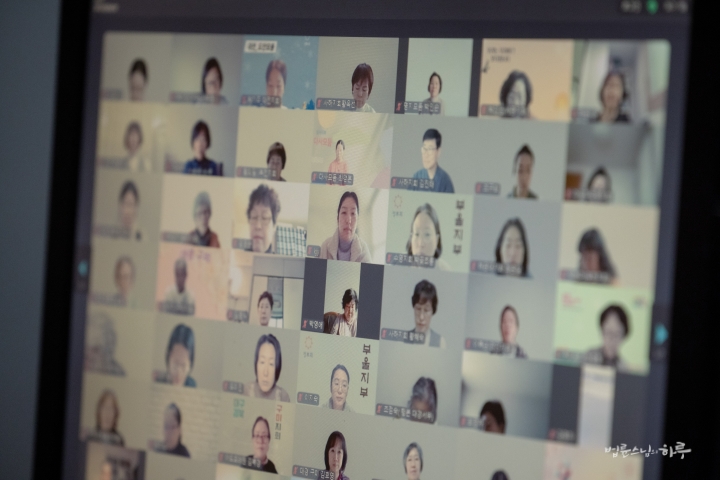
After returning to work from maternity leave, I was assigned to unwanted duties and feel I’m not being properly respected. I’ve lost motivation and feel distressed. How should I manage my mind?
When reciting the Heart Sutra and prayer texts, I find it difficult to practice while savoring their meaning, which frustrates me. Is there a way to make the scriptures more meaningful to me?
After answering all the questions, it was time to conclude the assembly. After asking for understanding that he might not be able to do live broadcasts starting next week due to overseas schedules, Sunim concluded the Weekly Dharma Assembly as it approached noon.
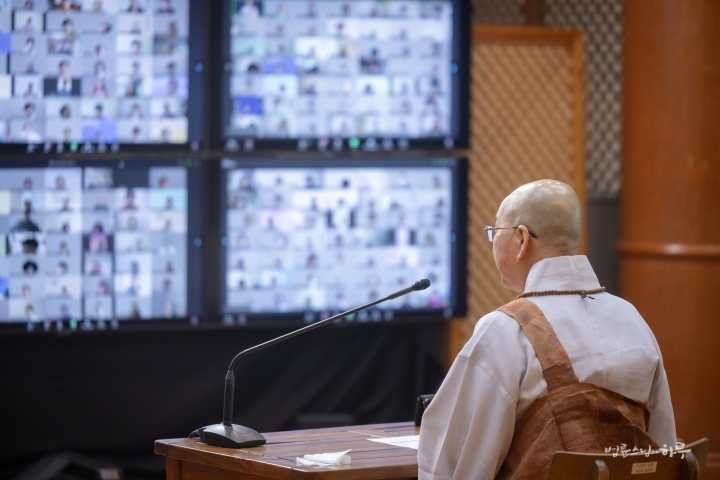
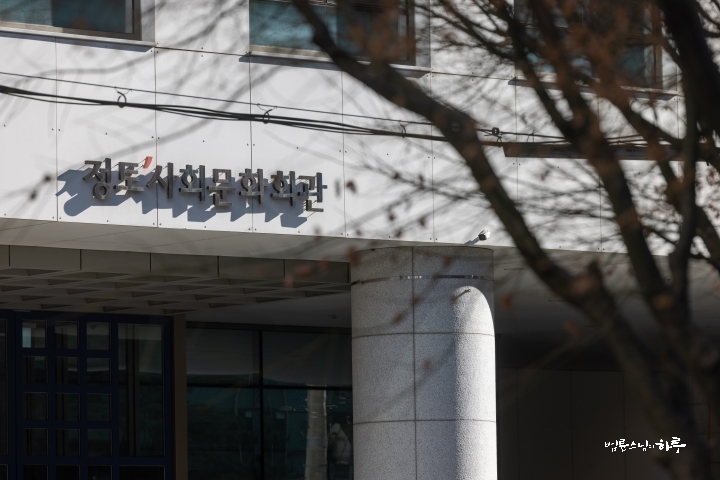
After leaving the broadcasting room, Sunim had lunch and then headed to the Jungto Social and Cultural Center to discuss personnel placement for community divisions.
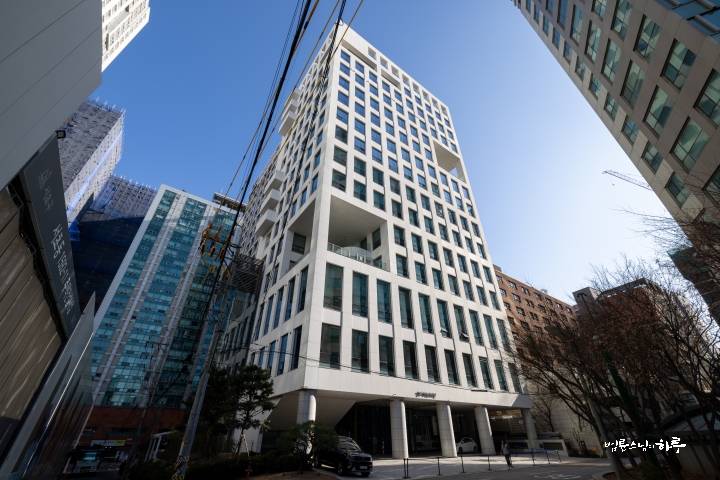
In the international conference room on the 6th floor, about 30 members of the community division (공동체 지부) residing at the Jungto Social and Cultural Center and the community Dharma Teacher group were seated. Before discussing personnel placement, everyone asked Sunim for his words after offering three prostrations. Sunim spoke about the principles of personnel placement in Jungto Society.
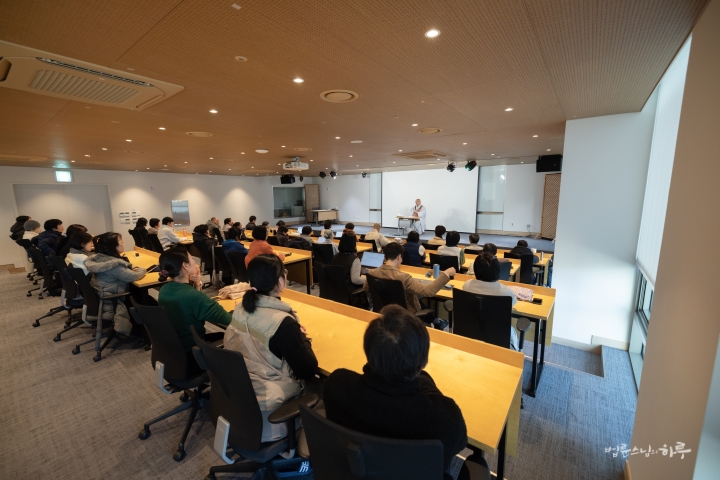
“The reason we make vows and live as a community like this is because we want to follow the spirit of the Buddha, who gave up his throne and everything to live by alms and open a new path of life. However, if this were the only reason, we would risk remaining in a retrograde movement to return to the past. We are clearly in an era of climate crisis. So we are looking at this path anew, not just because the Buddha lived that way, but with the awareness that we too must live this way today to make fundamentally sustainable life possible in the climate crisis era.
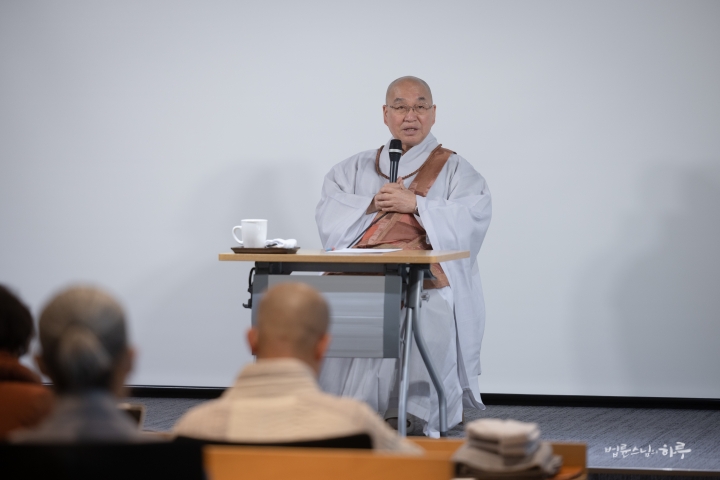
Take the issue of vegetarianism, for example. When examining historical records in India, there is actually no clear evidence anywhere that the Buddha was a vegetarian. While Jainism has a clear vegetarian tradition, Buddhism does not. Nevertheless, the fact that Jungto Society, which inherits the Mahayana Buddhist tradition, practices vegetarianism is not a matter of doctrine but of cultural tradition. Furthermore, as we have entered the era of climate crisis, it has become clear that the livestock industry is one of the biggest factors contributing to the climate crisis. In that case, there is no need to abandon this tradition; rather, shouldn’t we inherit and revive it in accordance with today’s reality? The spirit of renunciation is a matter of values, while the culture of vegetarianism in temples is a matter of tradition. We are not simply trying to preserve the old ways, but to revive Buddhist values and cultural traditions in today’s life in response to the climate crisis era. So we are talking about combining these two things – tradition and current challenges.
How Can a Community of Practitioners Be Maintained Between Principles and Inclusiveness?
In this process, what must be addressed is ‘principles.’ We must first clarify why we have gathered to live together like this. This is not a community gathered for individuals to live comfortably. If the atmosphere allows these principles to be shaken and compromised, the Sangha cannot be maintained for long. Therefore, principles must be clearly established and upheld. However, if we emphasize only principles too much, other problems arise. Disputes increase, and those who fail to follow the principles easily feel as if they have committed a sin when asked, ‘Why don’t you follow the principles?’ This makes it easy to lose compassion and inclusiveness, which are other core teachings of Buddhism. Therefore, we must have inclusiveness along with principles.
The issue is establishing principles while determining how far we can accept and journey together with those who find it difficult to follow these principles. In Buddhist values, this means that wisdom and compassion must be fulfilled together. If we emphasize only the principles of practice, the atmosphere becomes harsh; conversely, if we emphasize only inclusiveness, there is a risk of becoming a secular group of merely kind people without principles. Therefore, we must clearly establish and maintain principles as they are, while recognizing that each person’s conditions are different and some may find it difficult to follow through to the end. We must operate the Sangha while simultaneously holding both considerations – how much we will embrace such people and journey together with them.
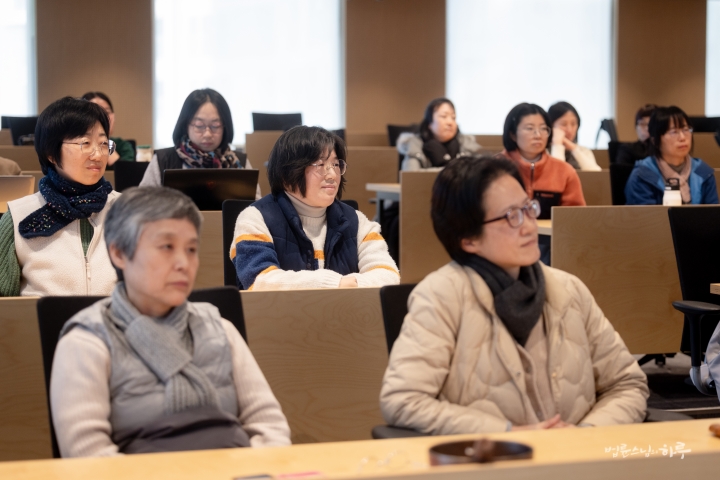
However, it becomes problematic when ‘inclusiveness’ focuses on satisfying individual desires. When inclusiveness repeatedly violates principles, those principles eventually collapse. Since excessive inclusiveness can undermine principles, how to balance these two in a middle way is both the core and the most challenging aspect of Sangha management. For example, while vegetarianism is a principle in temples, there’s the question of how far to accommodate those who absolutely need meat for constitutional or health reasons. This requires particularly careful consideration because it’s not simply a matter of taste preference but an issue directly related to health. There’s also the question of how to accommodate those who cannot follow the regular communal life due to health problems, even though such regularity is a principle.
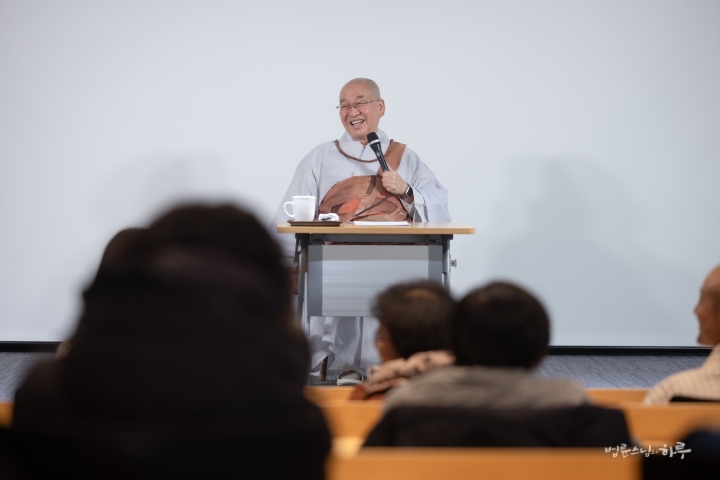
When principles are overemphasized, such people tend to feel guilty and become psychologically withdrawn. Conversely, when exceptions are too easily granted, the order of the entire community can become disrupted. Therefore, this balance needs to be carefully adjusted at all times. This is also an issue that repeatedly arises within our community even now. When holding meetings or establishing rules in the future, we should set policies that maintain principles as much as possible, while showing the spirit of inclusiveness toward individuals who find it difficult to follow those principles, maintaining an attitude of going together as fellow practitioners. This is the fundamental principle we must uphold. It’s not about breaking principles, but about understanding and accepting individual circumstances. So today, I’d like to discuss together the question of ‘How can we maintain principles while being inclusive?'”
Following this, they began discussing in earnest how to arrange personnel assignments for community divisions in the 2-2nd 1000-Day Practice. They freely shared opinions about who should be assigned to each department, including overseas dispatch, the Peace Foundation, and JTS, with Sunim providing advice on each suggestion.
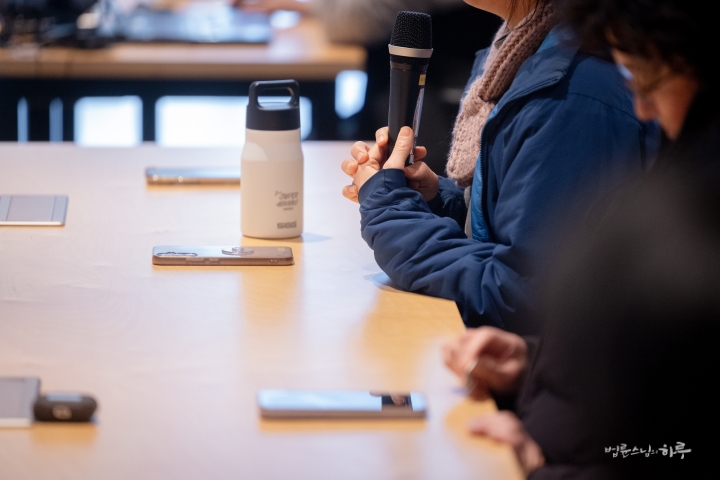
Passionate discussions and conversations continued for two hours. While they couldn’t reach final conclusions, Sunim offered closing remarks as they wrapped up the discussion. Sunim spoke about the vision of farming among the various projects Jungto Society is undertaking.
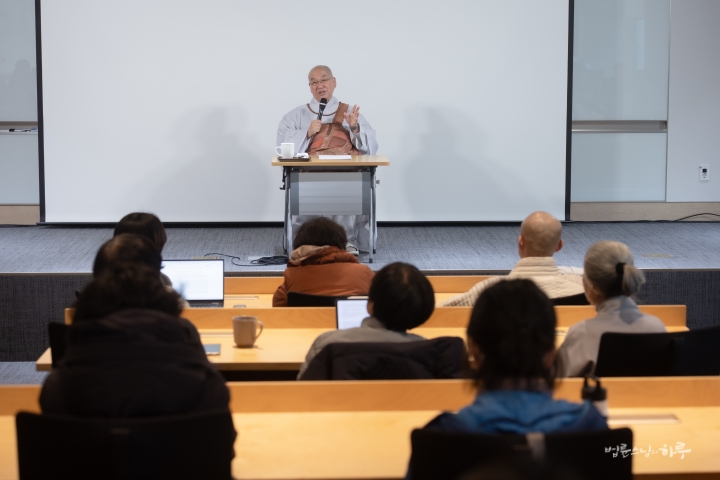
“The reason Jungto Society engages in agriculture is not simply to farm. It’s not about doing smart farming either. If that were the extent of it, it would be sufficient to just show people a smart farm once. The core of farming at Jungto Society lies in the question: ‘How can practice be connected with production?’ If we divide current practice from the perspectives of production and consumption, practice mainly belongs to the realm of consumption. How to connect this practice with the realm of production is the first key issue. Historically, practice has always remained in the realm of consumption, and the question of how to combine it with production now lies before us. While the question of whether we can maintain mindfulness and practice like meditation even during routine labor such as picking peppers and pulling weeds has been experimented with to some extent at the ‘Unity Retreat,’ it remains the most important challenge.
Is Practice Consumption or Production? Why Jungto Society Farms
The second challenge is how we can live self-sufficiently in the era of climate crisis. The goal is neither to farm entirely organically nor to do chemical farming. This issue is currently being discussed too extremely. We need to adopt science and technology to a certain extent. For example, if smart farming means keeping lights on all day and relying entirely on electricity to farm, that’s hardly environmentally friendly either. Conversely, insisting only on organic farming while ignoring practical conditions in the name of environmental protection is also not easy. Ultimately, what’s important is how technology and nature should harmonize so that many people can actually apply it to farming. This is the point we need to develop.
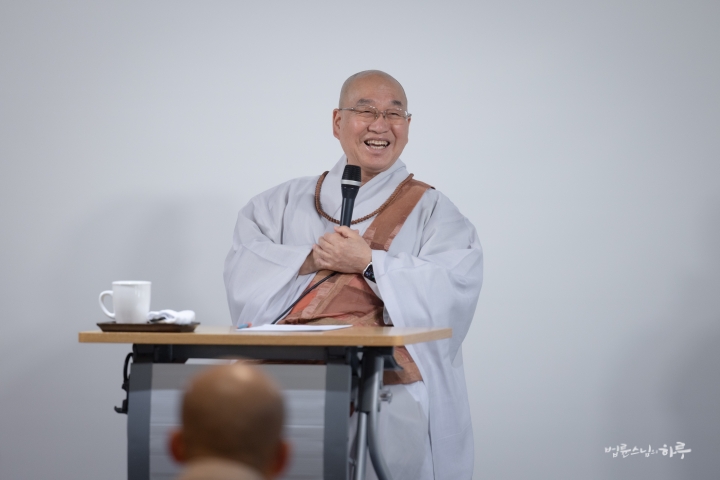
That’s why I believe it’s important for Jungto Society to establish a system that works in harmony with nature. This is also why I keep emphasizing farming. The key isn’t simply producing rice for us to eat. It’s about what kind of lifestyle we can create through farming – that’s where our future development goals should be focused. To achieve this, we must strengthen our environmental facilities. For example, at Mungyeong Jungto Retreat Center (문경수련원
)
, we should be able to demonstrate how our wastewater goes through a purification system, and that water is then used to grow vegetables, which are returned to nature in a continuous cycle. Rather than just talking about the environment, we need to establish such systems even if they cost more. Currently, Mungyeong Jungto Retreat Center has the most suitable conditions for installing such facilities, but we haven’t been able to implement them yet. While we talk about the environment, our actual lifestyle often isn’t much different from that of ordinary people. We’re essentially just thinking about the environment intellectually.
However, we can’t live like animals in the name of environmental activism. The key is how to solve this problem realistically. If conditions permit, we could consider installing such facilities at Dubuk Jungto Retreat Center (두북수련원
)
. To do this, we would need to establish our own eco-friendly purification system rather than simply draining wastewater into sewers. Alternatively, we could first try this at Cheollyongsa Temple, where new construction will begin this year. However, if we merely connect water and sewage lines, we won’t be much different from traditional temples. What we’re aiming for is a step beyond that. We need to create a circular system where wastewater is purified, that water grows crops in the fields, and we then eat those crops.
To achieve this, we’ll need rules such as restricting the use of chemical products or not using laundry detergents harmful to humans. We’ll also need to discuss whether to use soap or washing machines. When these conditions are in place and we host international events or meditation programs, visitors will be able to see and experience firsthand: ‘Oh, it’s possible to farm and run a temple this way.’ This is what’s important. Looking at our current buildings, they’re not much different from ordinary buildings. While we call them eco-friendly buildings, in reality, we’ve only added a few solar panels. This was partly due to budget constraints. However, when we construct new buildings in the future, we need to properly establish these systems and create models that can be toured, even if it costs a bit more. This is precisely why I’ve repeatedly proposed creating ‘environmental apartments.’
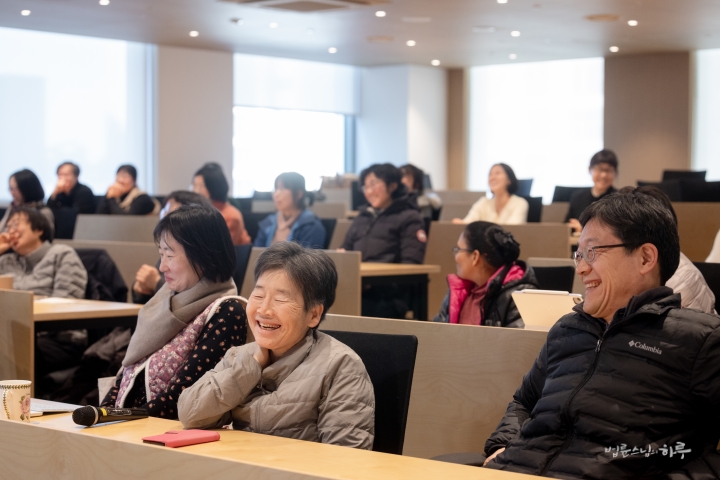
Some of you may raise the question, ‘Why are we investing manpower in farming when we’re so busy?’ However, this is not simply about farming or constructing buildings, but rather a proposal to create a model for living. From this perspective, I hope you will give deeper consideration to the direction of farming and community.”
After concluding the overall discussion at 4 p.m., experienced staff members continued the unfinished discussions for another hour, and the meeting ended at 5 p.m.
As the sun set, at 7 p.m., Sunim continued discussions about personnel placement online with the community’s Dharma Teacher group. After conducting more in-depth discussions on topics that couldn’t be concluded during the afternoon session, the meeting ended after 9 p.m.
Tomorrow at 4 a.m., Sunim will depart from the Jungto Social and Cultural Center for Incheon (인천) International Airport , then fly to Aceh Province in Indonesia. Aceh Province (아체주) has recently suffered severe damage from floods and landslides caused by heavy rains, and many residents are facing survival difficulties due to insufficient support from the international community. Over the next two days, Sunim will directly survey the affected areas and establish concrete plans for emergency relief activities.
“