Sunim’s Wedding Officiation: How Today’s Goodness Can Become a Lifetime of Goodness
December 20, 2025 - Korean Minutemen for Peace and Unification General Assembly, Senior Jungto Practitioner Ordination Ceremony, Wedding Officiation for ...
Hello. Today, Sunim held a Dharma Q&A session with the Korean Minutemen for Peace and Unification (KMPU) from the Peace Foundation, attended the Senior Jungto Practitioner ordination ceremony where he gave a Dharma talk, and officiated at the wedding of actors Kim Woo-bin and Shin Min-a.
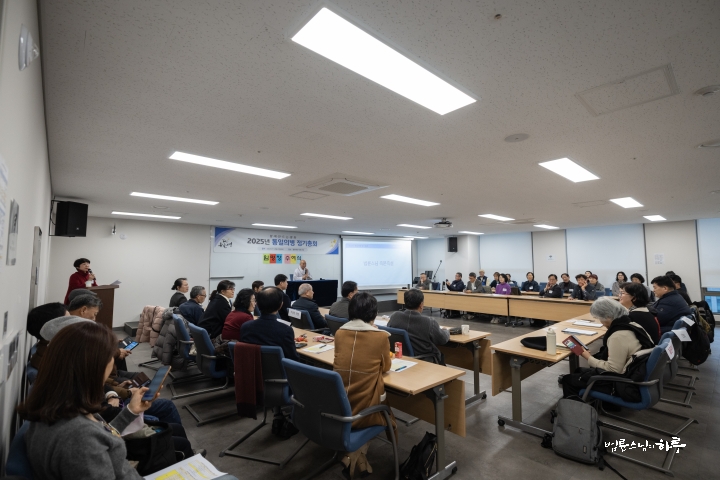
After completing morning practice and meditation, Sunim began the day with a meeting of the lay Sangha Dharma Teacher group at 8 AM. At 10:30 AM, he attended the general assembly of the Peace Foundation’s Korean Minutemen for Peace and Unification. About 50 KMPU members gathered in the auditorium on the 9th floor of the Jungto Social and Cultural Center.

The KMPU members sang “My Country, My People” and “From Seoul to Pyongyang” together as the opening performance, raising the enthusiasm for the general assembly.
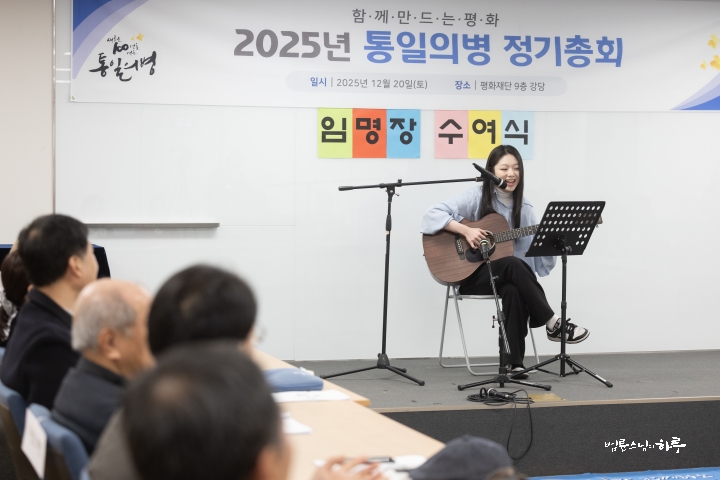
Next, there was time to hear reflections from two new KMPU members.
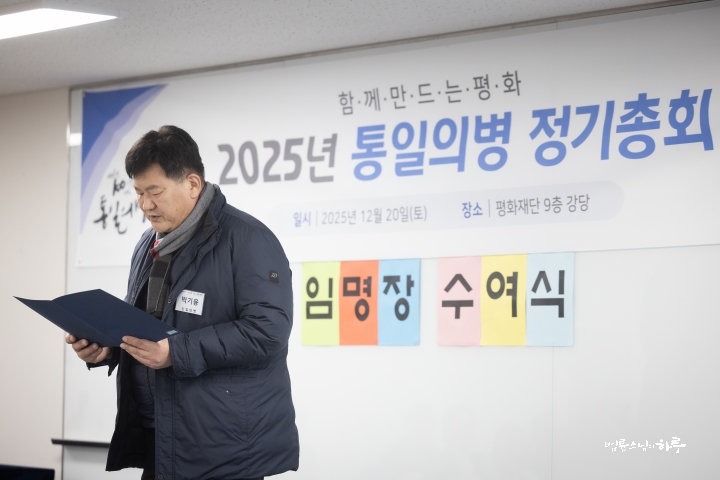
“Through an acquaintance’s introduction, I attended the Peace Citizen course at the KMPU School, and I felt the hope for peaceful unification rekindling like an ember in my heart. After completing all the KMPU training courses, I resolved to live the rest of my life according to the teachings of Commander Venerable Pomnyun Sunim, so that my descendants and I can live united as masters of this land. I am grateful to the senior KMPU members who have guided me this far.”
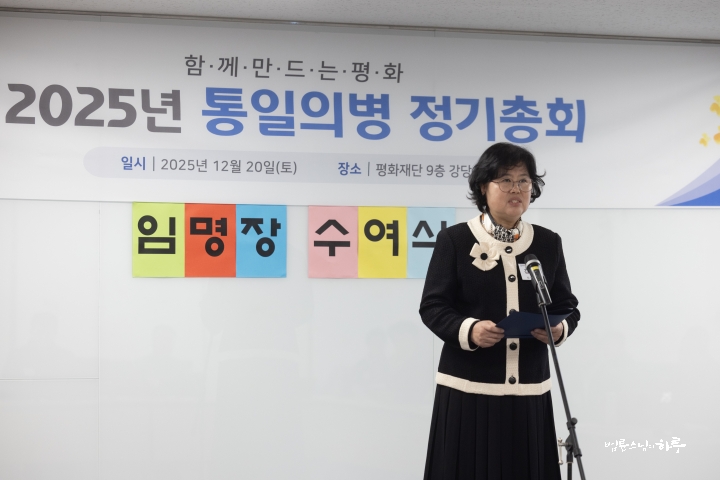
“While completing the KMPU School, I learned the path of mutual respect between myself and my neighbors, and between our country and neighboring countries, and my heart swelled with emotion despite my advanced age. The fact that I can live in our country today is thanks to the countless people who dedicated themselves and sacrificed to protect our nation. I am grateful to Venerable Pomnyun Sunim and the volunteers who guide us on this righteous path.”
Next, Sunim personally presented appointment certificates to five new KMPU members.
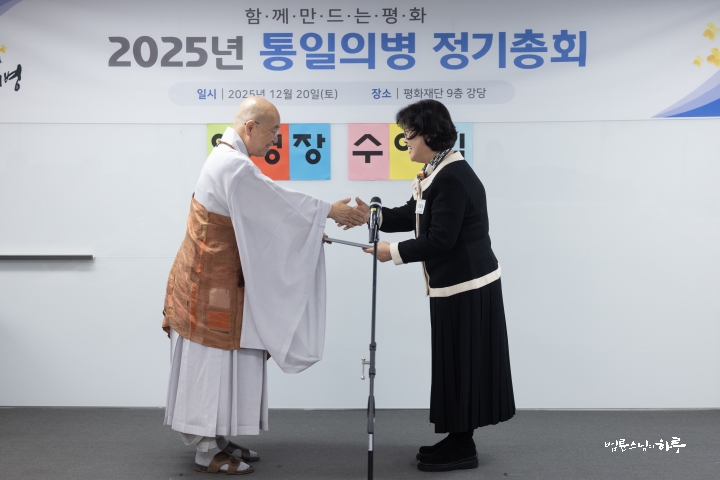
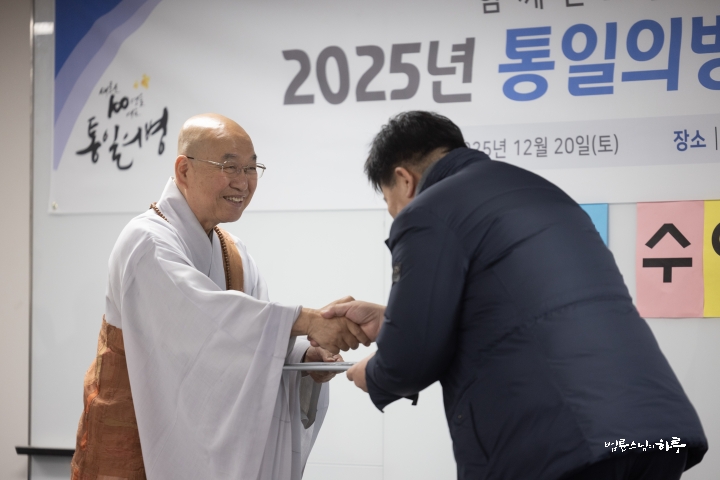
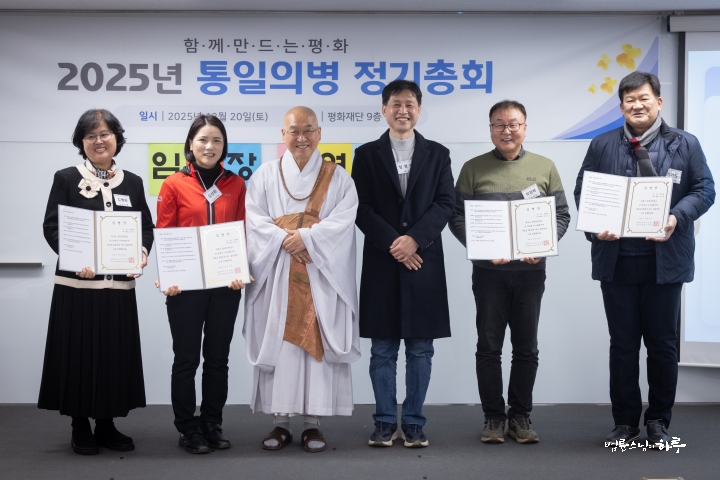
Sunim took a commemorative photo with the new KMPU members.
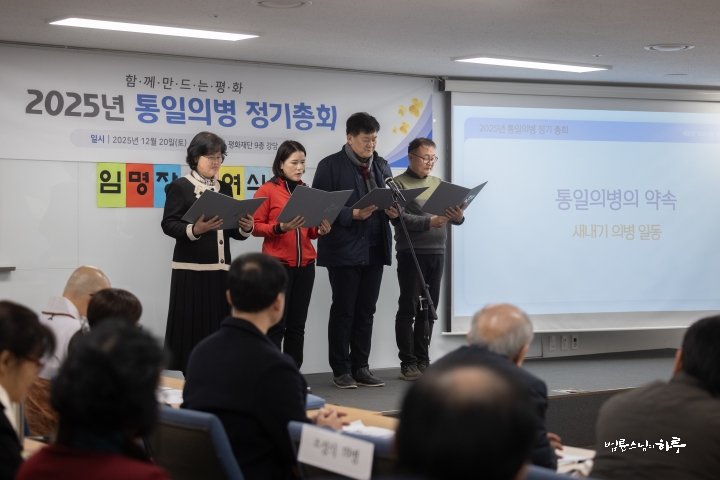
The newly appointed KMPU members then recited the “KMPU Pledge” together.
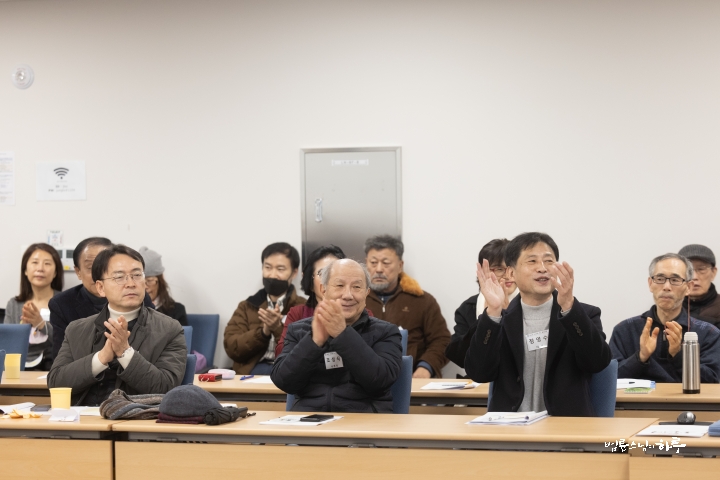
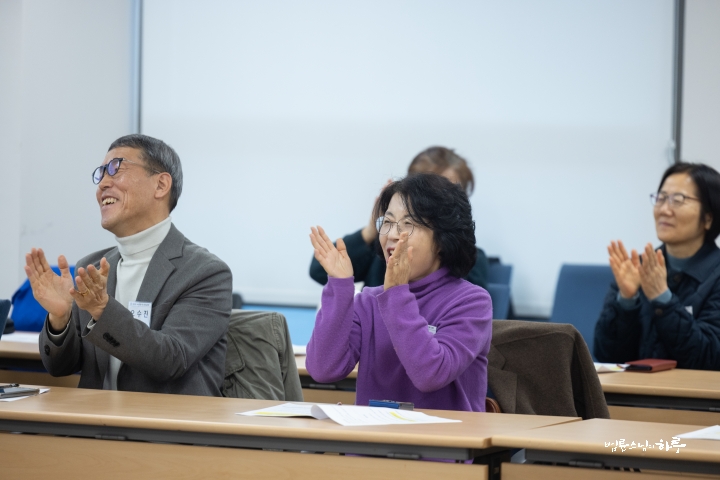
The senior KMPU members welcomed the new members with enthusiastic applause.
Next, there was a Dharma Q&A session with Commander Venerable Pomnyun Sunim. Before taking questions, Sunim first gave greetings and spoke about the current international situation surrounding the Korean Peninsula and the corresponding role of the KMPU.
The Path of KMPU Amid US-China Hegemonic Competition
When the United States and China engage in full-scale hegemonic competition, South Korea has no choice but to follow US policy, and North Korea is likely to follow China’s policy. The tragedy of the Korean War in 1950 occurred because, under the hegemonic competition between the United States and the Soviet Union, North Korea became a subordinate variable of the Soviet Union and South Korea became a subordinate variable of the United States. At that time, South and North Korea had no choice but to side with the United States and the Soviet Union respectively, regardless of their own wishes.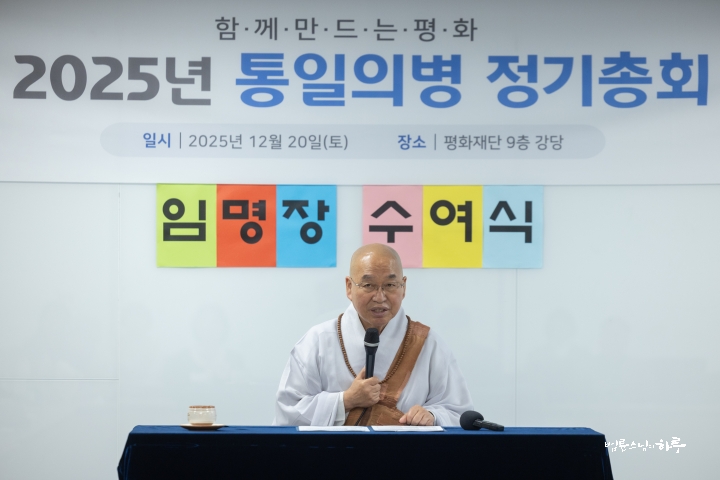
A Time of Preparation to Establish Peace First and Strengthen Our Foundation
That’s why the KMPU must also make it clear that they will not interfere in domestic politics to be free from the false accusations and misunderstandings that righteous armies faced in the past. When government forces lack power or leaders lack leadership, righteous armies think the existing regime is more problematic than foreign powers. Then they inevitably think it would be more efficient to reform the existing regime first before responding to foreign threats. Due to these historical experiences, the established ruling class doesn’t look favorably upon the existence of righteous armies. They also have no choice but to constantly monitor them, because they don’t know when that power might be used for social revolution. For these reasons, righteous armies always had a very narrow standing in society at the time. When the nation reaches the point of collapse due to foreign powers, the existing regime needs the help of righteous armies more than it needs to keep them in check. So government forces and righteous armies join forces to respond to foreign threats. When this situation is reached, the righteous armies can be said to have received some degree of official recognition from the state. The reason some records of righteous armies remain in our history is because most of them received government recognition, even if only in later generations. However, there are far more nameless righteous armies who were not recognized than those recorded in history. In the end, we can say that most righteous armies disappeared without a trace in history. Or rather, many were branded as traitors and executed in disgrace.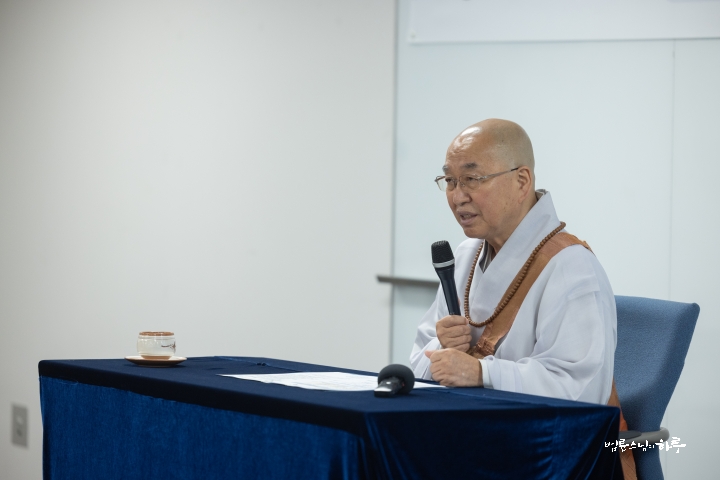
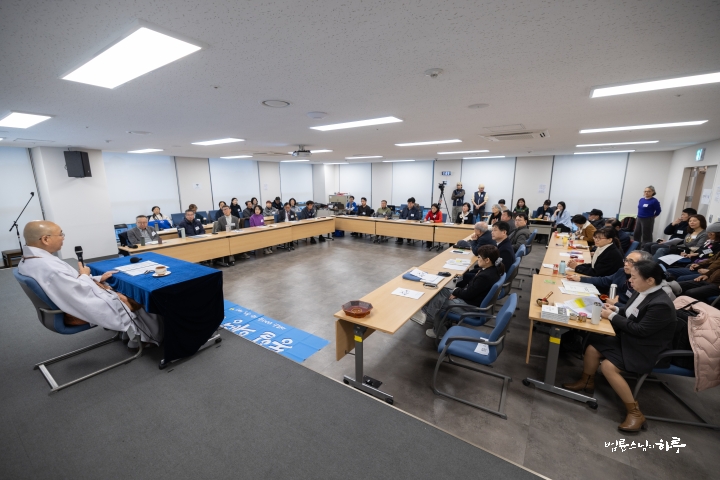
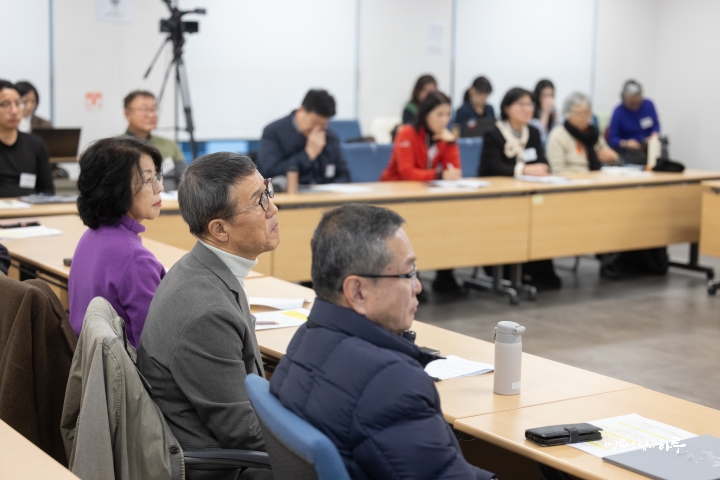
Following this, Sunim took questions about any points of curiosity. For one hour, four people raised their hands to ask Sunim questions and engage in dialogue with him.
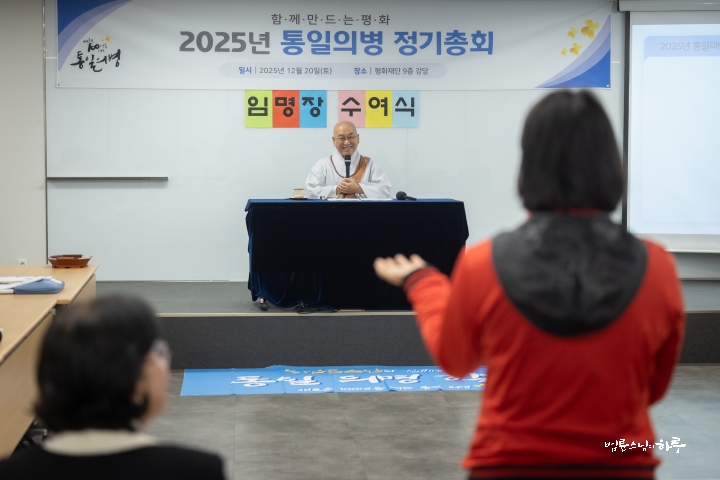
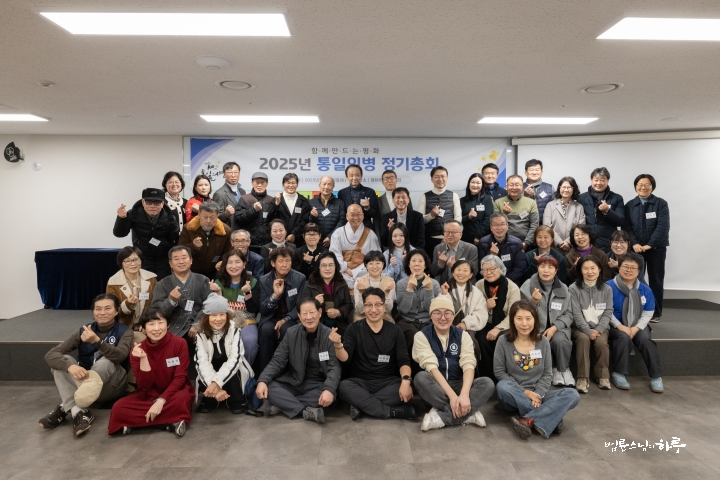
At noon, the dialogue concluded, and after taking a group photo together, the first part of the program came to an end.
“Unification, Minutemen! Minutemen! Minutemen!”
After lunch, the Korean Minutemen for Peace and Unification held their general assembly for the second part and a time of gratitude and commitment for the third part throughout the afternoon. Sunim moved to the Dharma Hall on the third floor to attend the Jungto Society Seowon Practitioner Ordination Ceremony starting at 2 PM.
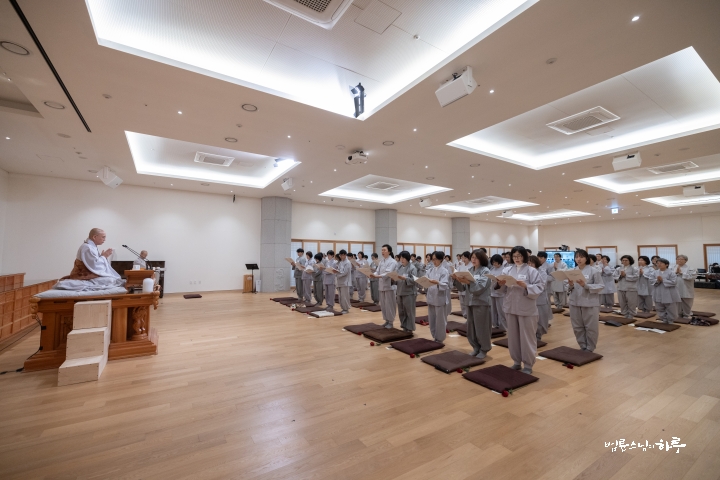
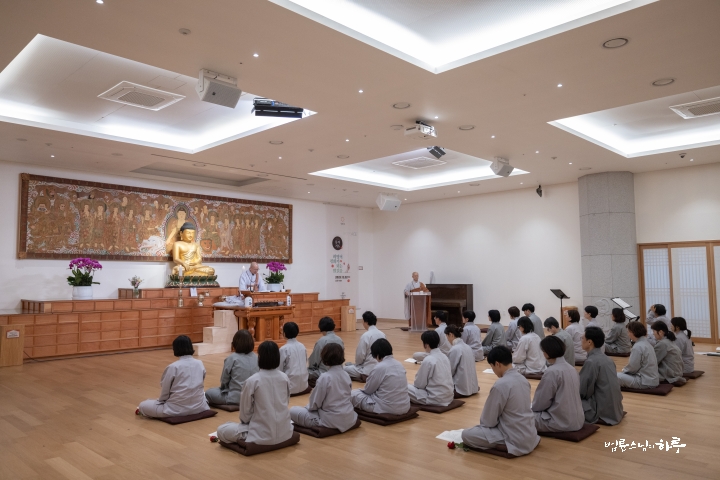
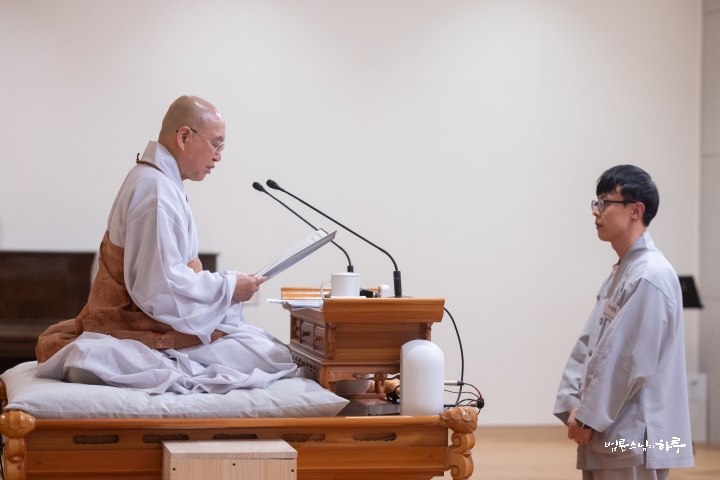
The assembly receiving ordination today consisted of 28 members who had completed all the Seowon Practitioner training and passed the qualification assessment. After performing prostrations together and chanting the Heart Sutra, they requested the Dharma from Venerable Pomnyun Sunim, the ordination master, through a formal request chant.
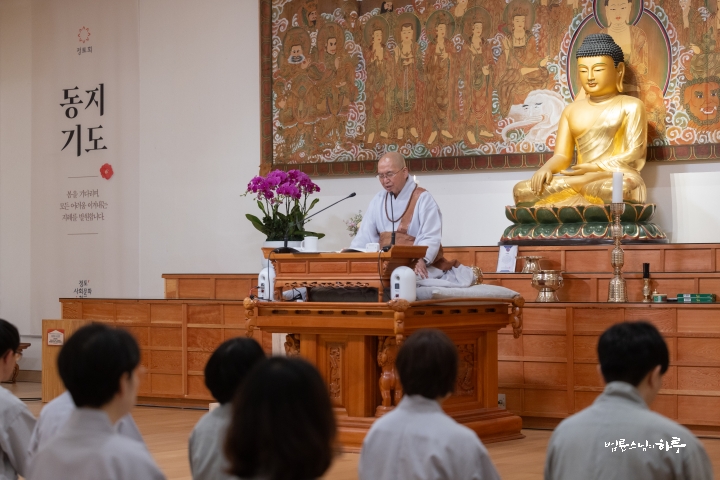
When the ordination candidates requested the Dharma with three prostrations, Sunim explained the origins of the ordination ceremony and the meaning of the Five Precepts and Eight Precepts. Due to severe pain in his shoulder and arm from a neck disc problem, Sunim gave the Dharma talk with his head bowed.
The Path of a Seowon Practitioner: A Leader of the Sangha Who Not Only Refrains from Harm but Also Nurtures and Helps Others
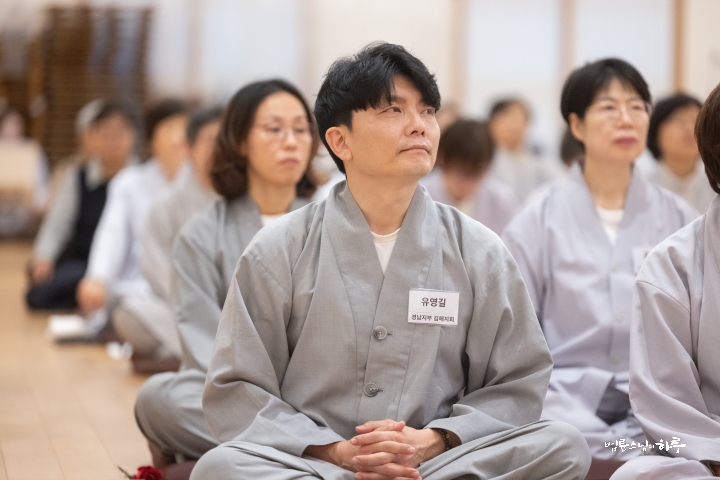
While a Balsim Practitioner is someone who observes the basic precepts of not harming others, not causing loss to others, not hurting others with words, and not troubling others while intoxicated, a Seowon Practitioner goes beyond this foundation. Even if they have abundant wealth, they live modestly and share their surplus with those in need. Even if they hold high status or position, they remain humble rather than arrogant, sharing their virtue with those who are struggling. When people acquire money, it’s easy to become extravagant – buying fine clothes, building luxurious homes, or purchasing jewelry to adorn themselves. However, a Seowon Practitioner must earn the respect of the Sangha and therefore must live simply without extravagance. This is why three additional precepts are included. In those times, people primarily adorned themselves by decorating with flowers or applying fragrances as perfume. Therefore, the instruction “do not wear flower garlands or apply fragrances” means “do not be extravagant.” It signifies living modestly. Additionally, “do not sit on high seats” means “do not be arrogant but live humbly.” Furthermore, practitioners must maintain mental equanimity in all situations. The mind should neither be troubled nor excited. Therefore, one should not pursue pleasures that excite the mind – singing, dancing, and shouting “This feels great!” – such sensual pleasures should be avoided. One must always maintain mental equanimity. To become a Dharma Teacher who serves as a model for the Sangha as a lay practitioner, these three precepts must be observed.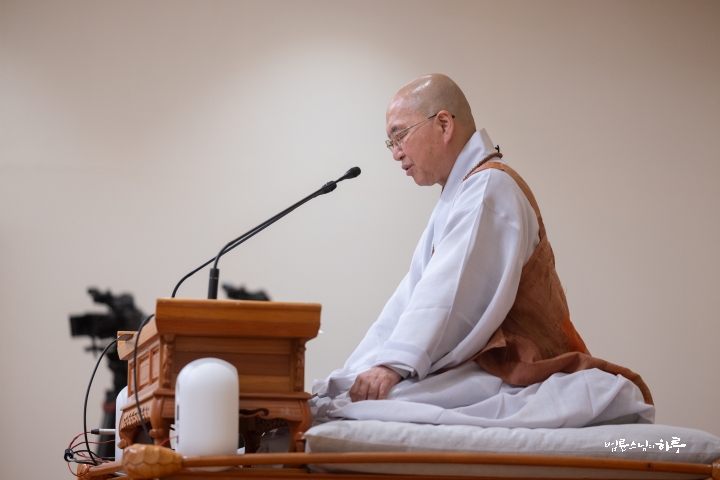
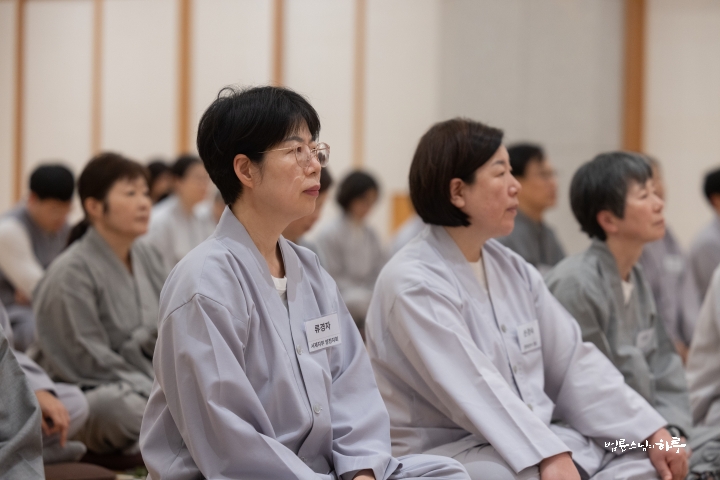
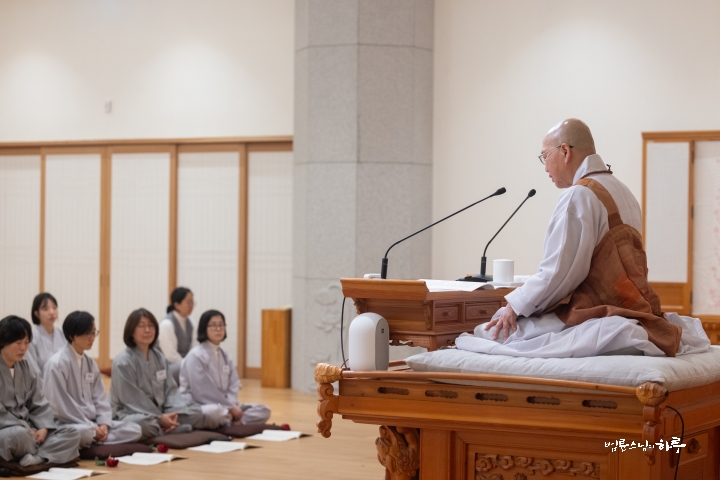
The ordination recipients pledged to purify themselves using the precepts as their guiding fence.
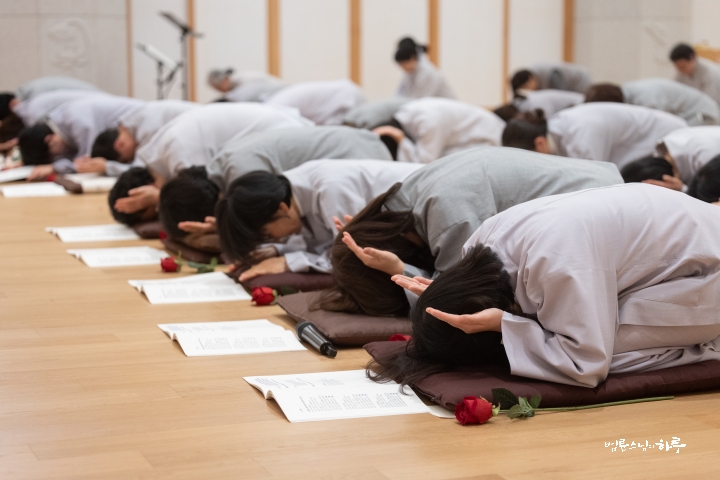
After Sunim’s Dharma talk ended, everyone knelt down in their seats, placed their hands together in a prostrating position, received the ritual stick from the Dharma Teachers, and repented. They prayed that all their karmic sins would disappear in that sharp moment.
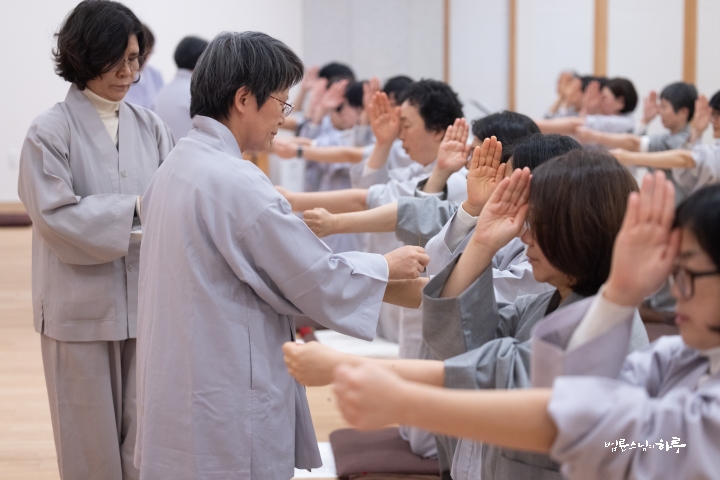
“We, the ordination disciples, repent with utmost sincerity. From countless ages past until today, before knowing the Buddha’s Dharma, we have committed countless bodily sins such as killing, stealing, and sexual misconduct. Now we vow to discipline our body, speech, and mind and repent with utmost sincerity.”
After completing the repentance and ritual stick ceremony, the assembly, now as Seowon Practitioners, promised to live a life of keeping the precepts purely. With joyful hearts, they approached the Buddha one by one to offer flowers, once again vowing to keep the precepts purely.
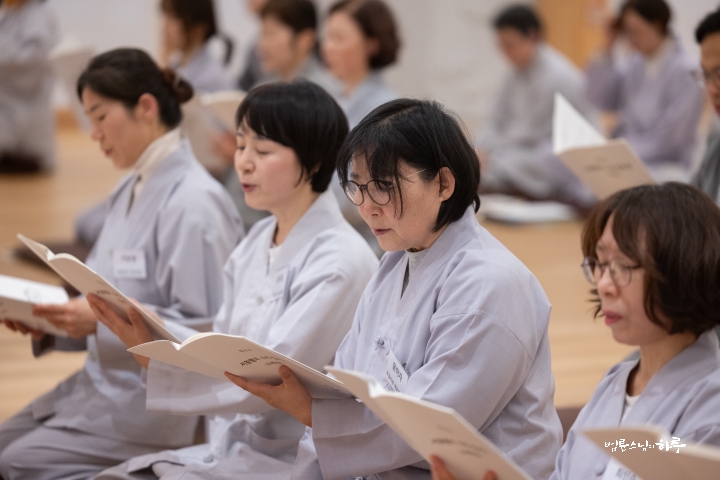
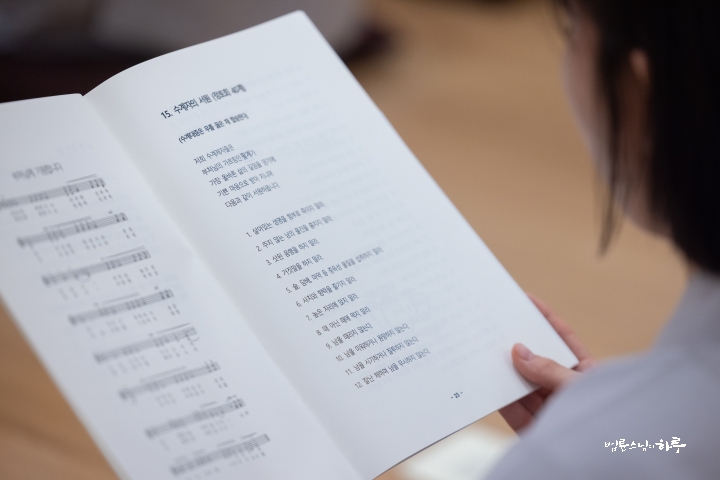
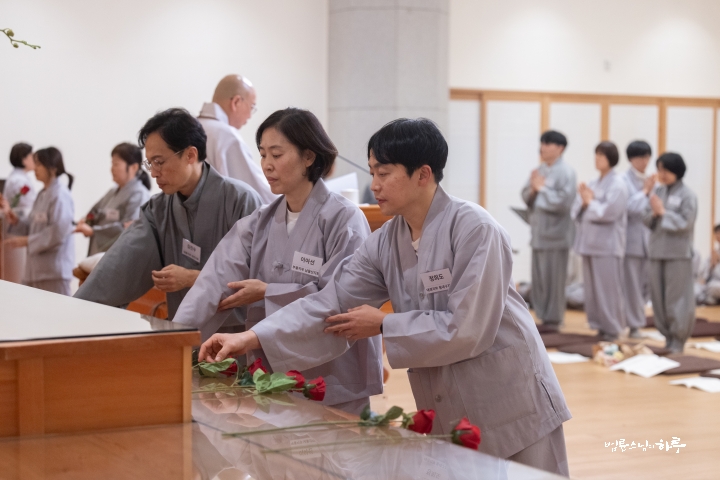
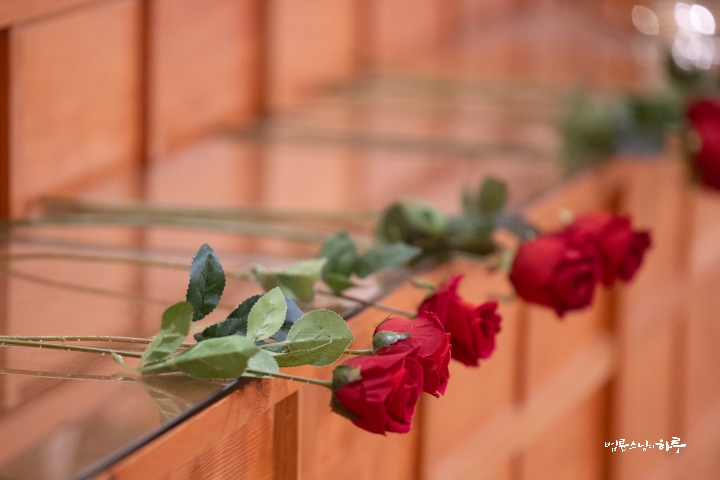
Sunim offered a blessing prayer for the assembly who had received ordination.
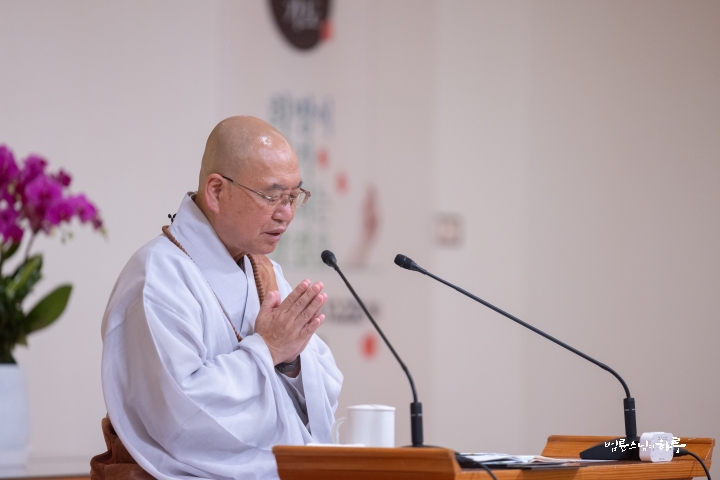
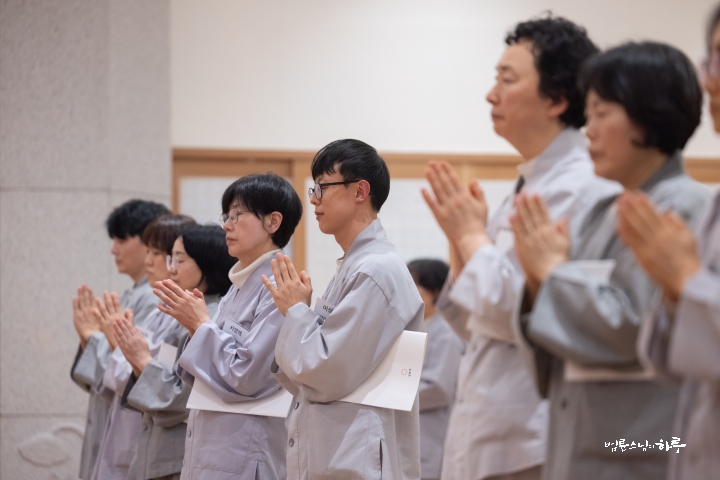
After the blessing prayer ended, ordination certificates were presented.
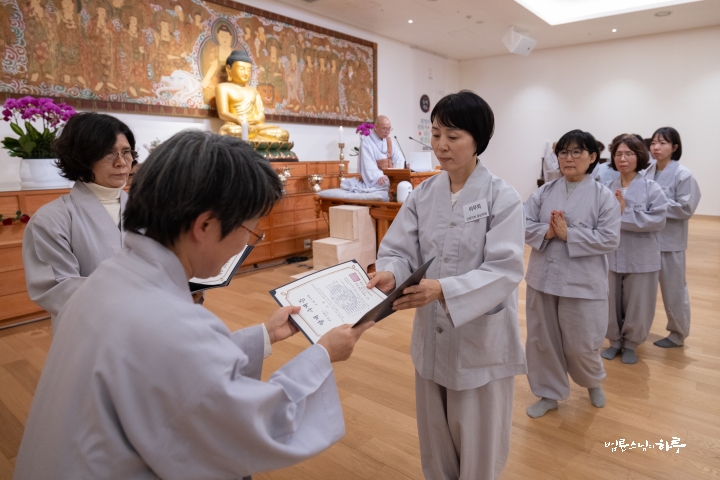
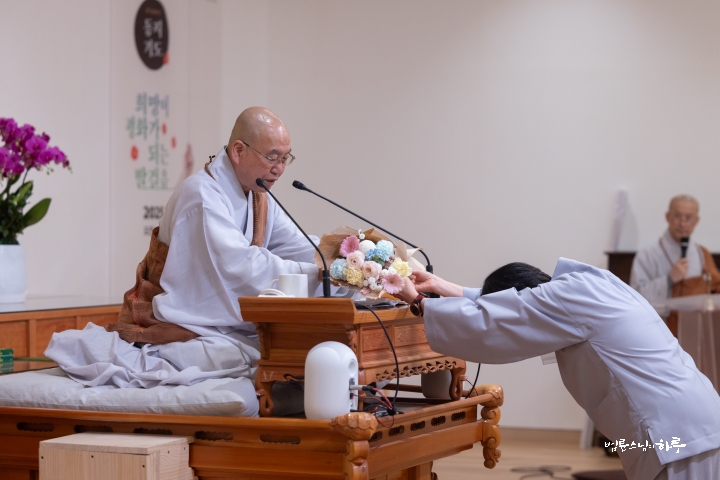
The ordination assembly presented flowers to Sunim and offered three prostrations with gratitude for guiding them to the right path.
Next, Dharma Teacher Seonju, head of the Dharma Teacher group, gave a welcoming address to the ordination assembly.
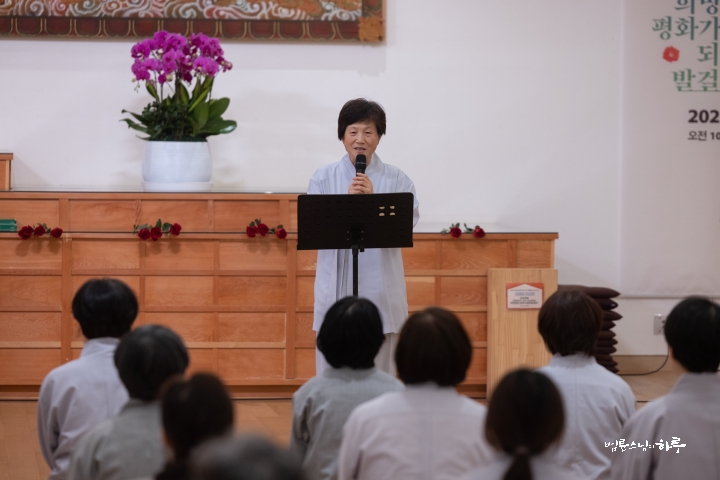
“I sincerely welcome the twenty-eight people who have become Seowon Practitioners. Becoming a Seowon Practitioner and receiving precepts in Jungto Society means becoming an owner and leader of the Jungto practice community. I look forward to your self-reflective practice and active participation in the future. I earnestly hope you will become fellow practitioners who harmonize with each other, practice together, and take action until we overcome humanity’s crisis and realize the Jungto world on this earth.”
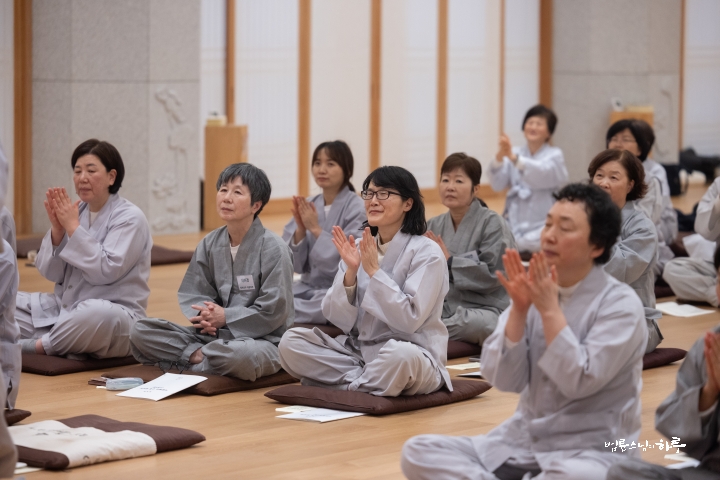
After concluding the ordination ceremony with the Four Great Vows, everyone took a commemorative photo together.
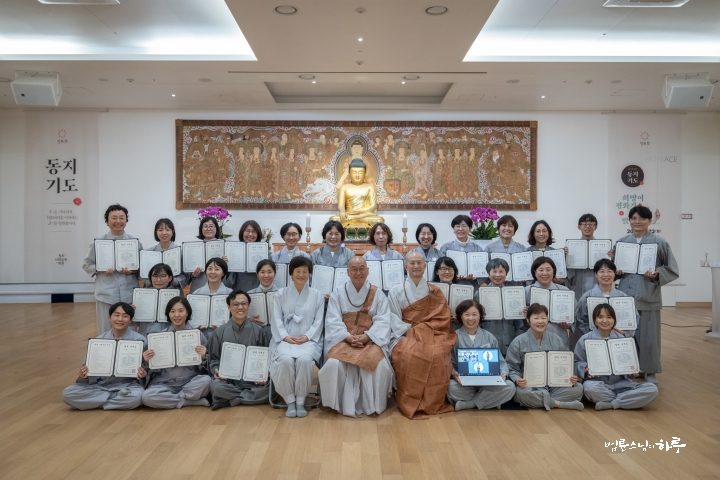
Twenty-eight new Seowon Practitioners were born, vowing to create a Jungto world where individuals are happy and society is peaceful.
Sunim rose from his seat, and the ordination assembly continued with the second part of the program. In Part 2, they had time to introduce each ordination recipient individually, listened to practice testimonies, and then had mindful sharing sessions by division.

As the sun set, Sunim headed to the Shilla Hotel in Jung-gu, Seoul, to officiate a wedding ceremony. Recently, actor Kim Woo-bin had visited Sunim to request that he officiate his wedding. Kim Woo-bin had received significant mental support through consultations with Sunim during his battle with nasopharyngeal cancer in 2017, and actress Shin Min-a also found great comfort in Sunim’s words while caring for him. Before their wedding, the couple practiced generosity by donating 300 million won to various organizations, including Good Friends, a peace and human rights refugee support center founded by Sunim. Because of this connection, Sunim gladly agreed to attend the wedding.

At 7 PM, upon arriving at the Shilla Hotel, the wedding venue resembled an awards ceremony just by the guest list alone. Major figures from the film, drama, and entertainment industries attended, including BTS’s V, Gong Hyo-jin, Ryu Jun-yeol, Kim Tae-ri, Uhm Jung-hwa, Bae Jung-nam, Yoo Hae-jin, Kim Eui-sung, Go Doo-shim, Nam Joo-hyuk, Park Kyung-lim, Ahn Bo-hyun, Lee Se-young, Lee Byung-hun, Yoon Kyung-ho, PD Na Young-seok, writer Kim Eun-sook, and writer Noh Hee-kyung. Actor Lee Kwang-soo, who has built a special friendship with Kim Woo-bin, served as the MC.
Sunim, who was officiating, took the stage first, and then the bride and groom entered as the wedding march played. After the couple exchanged their vows and the marriage was declared, they asked Sunim for his wedding address. Looking at the couple standing side by side, Sunim calmly advised them on the mindset needed for a happy married life.
“First, I congratulate you both on your marriage. I have known both of you for a long time. Ms. Min-a has a warm and kind heart and has been consistently supporting poor children for over ten years. She has particularly provided much support to ease the sorrows of North Korean defectors who have come to South Korea. Children who came with defectors often face bullying at school because they cannot adapt to Korean society, and she has always supported after-school programs that care for these children. Mr. Woo-bin once suffered from poor health, but Ms. Min-a carried rice offerings on her head and went to Avalokitesvara Bodhisattva on Namsan Mountain in Gyeongju to pray together, transcending religious boundaries. After that, Mr. Woo-bin regained his health, and today the two of you stand here hand in hand, promising to spend your lives together in marriage. This is truly the result of deep karmic connection. However, living together is not easy. How wonderful it would be if you could always maintain the feelings you have today. As you live together, differences in views arise, leading to conflicts. Most people think that when they marry, because they like each other, they should be the same. While marriage has its joys, it often constrains individual freedom. This makes people want to leave. To overcome this, married couples need not only to seek the warmth of mutual dependence but also to greatly respect individual freedom.Sunim’s Wedding Address: For Today’s Joy to Become a Lifetime of Joy
When two halves come together to make a whole, even though they become a full moon, there’s a crack in the middle. However, when two wholes meet to become a full moon, there’s no crack in the middle. This allows for complete union. Even if separation comes for any reason, I hope you both become individuals who can stand as complete wholes without the pain of losing a half. I hope your marriage becomes one that makes each other more free rather than a constraint. Most people think love is liking, but liking is often more desire than love. When liking cools, it can turn into dislike or hatred. As Mr. Woo-bin just mentioned in his vows, you must acknowledge your differences. Even as a married couple, you can have different thoughts, different feelings, different beliefs, and different views. Acknowledging these differences is called ‘respect.’ In other words, you must know how to respect each other. Next, based on acknowledging your differences, you need to understand each other, thinking ‘From my wife’s perspective, that could be so,’ or ‘From my husband’s perspective, that could be so.’ Love without understanding can sometimes turn into violence. Parents say they love their children, but that can often become tremendous suffering for the children. Therefore, you must always base your love on understanding the other person’s position. Please remember these two things: respect that acknowledges differences and understanding of each other. If I may add one more thing, you must remember that love comes with responsibility. Beyond your responsibilities as wife and husband, you are both widely known figures who receive the love of the people in our society. Therefore, any conflict between you doesn’t end as just a personal matter but affects our entire society. That’s why you must always keep in mind the social responsibility that comes with the honor you both possess. You need not only the responsibility as a husband to your beloved wife and as a wife to your respected husband, but also the social responsibility to live up to the love that many citizens have for you. To reiterate: First, for marriage to become a path to greater freedom rather than constraint, you must maintain your independence while depending on each other. Second, you need to respect and understand each other. Understanding is true love. Third, you must have responsibilities as wife and husband, and if you have children, as parents. Also, since you both receive national love in our society, please remember that you must also have social responsibility that doesn’t betray that love. If you always keep these points in mind, today’s joy will continue to lead to even greater joy in the future. Once again, I congratulate you both on your marriage.”The couple took Sunim’s wedding address to heart. All the guests present congratulated their marriage with great applause.
After leaving the wedding venue, Sunim headed to Severance Hospital in Sinchon to pay his condolences. He visited the funeral home late at night after hearing that Kim Chun-seop, emeritus professor at Chonnam National University and husband of writer Lee Geum-rim, had passed away. Writer Lee Geum-rim helped create the foundation for Gilbeot, a mind study group for broadcasting culture and arts professionals, and has been supporting Jungto Society for a long time. Sunim conveyed his deep condolences to the writer.
He returned to Jungto Center at 11 PM and concluded his day’s activities.

Tomorrow morning, Sunim will have an online Dharma Q&A session with Jungto Dharma School students from around the world, followed by an online Dharma Q&A session with Jungto Buddhism Course students. In the afternoon, he will attend the UN International Day of Meditation commemoration event and the launch ceremony of the Korean Committee at Bongeun Cultural Center in Seoul. In the evening, he will conduct a 15-minute meditation ceremony via online broadcast at the Dharma Hall on the 3rd floor of Jungto Social and Cultural Center to commemorate the International Day of Meditation.