Why Do I Feel Like I’m Falling Behind While My Peers Are Succeeding?
Dec 18, 2025 - North Korean Reality, Foreign Affairs and Security Expert Meeting, Peace Foundation Year-End Workshop
Hello. Today is the day scheduled for the Peace Foundation’s year-end workshop to wrap up the year.

After completing morning practice and meditation, Sunim headed to the Peace Foundation. He had a personal meeting at 6 AM and then held a breakfast meeting with North Korea experts starting at 7 AM.

After exploring North Korea’s prices and exchange rates, market trading conditions, and prospects for improving North Korea-US relations, the meeting concluded.

Subsequently, at 10 AM, he continued with a meeting with foreign affairs and security experts. They discussed what moves President Trump might make to resolve North Korea-US relations and talked about South Korea’s diplomatic and security strategy. After two hours of conversation, they scheduled the next meeting and concluded.
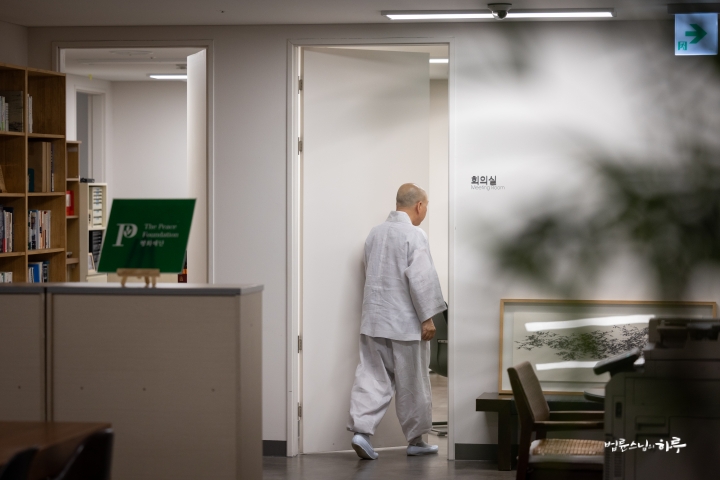
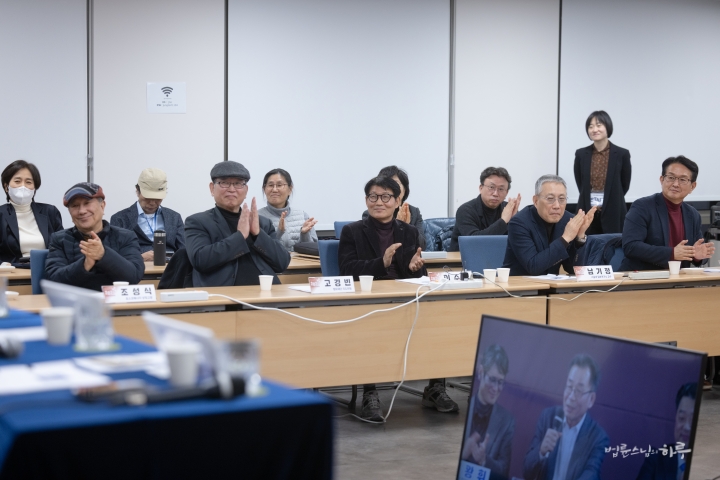
After lunch, from 1 PM, he attended the Peace Foundation’s year-end workshop. Every year, the Peace Foundation has conducted workshops with research fellows at year-end. Today’s workshop was divided into two parts with two themes: “South Korea’s Present: Diagnosing Youth Conservatism” and “South Korea’s Future: The Function of Economy and War.”
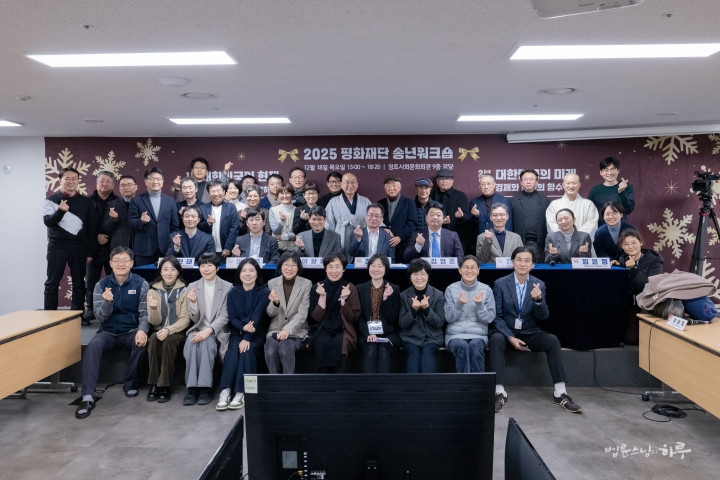
In the auditorium on the 9th floor of the Jungto Social and Cultural Center, Venerable Pomnyun Sunim as chairman of the Peace Foundation, executives, renowned professors and experts in South Korea’s foreign affairs and security fields, and executives from the Peace Foundation’s affiliated organizations, Tongil Euibyung and the Happiness Movement Headquarters, all gathered together.
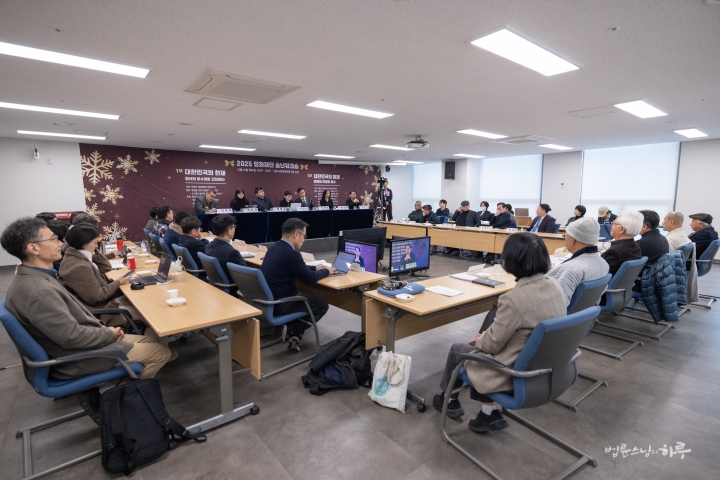
In Part 1, Jung Han-wool, Director of the Korea People Research Institute, presented on “Korea’s Shift to the Far Right and Youth Conservatism as Seen Through Public Opinion,” followed by Cho Gwi-dong, Professor at Myongji University, who presented on “The Rise of Radical Right-Wing Populism and Korean Society.”

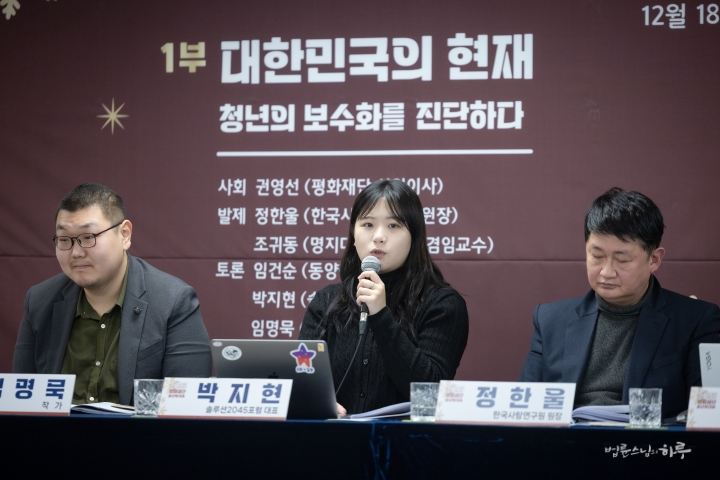
Following this, Park Ji-hyun, CEO of Solution2045, writer Lee Sun-ok, Eastern philosopher Lim Geon-soon, and writer Lim Myung-mook participated as panelists in a comprehensive discussion, concluding Part 1.
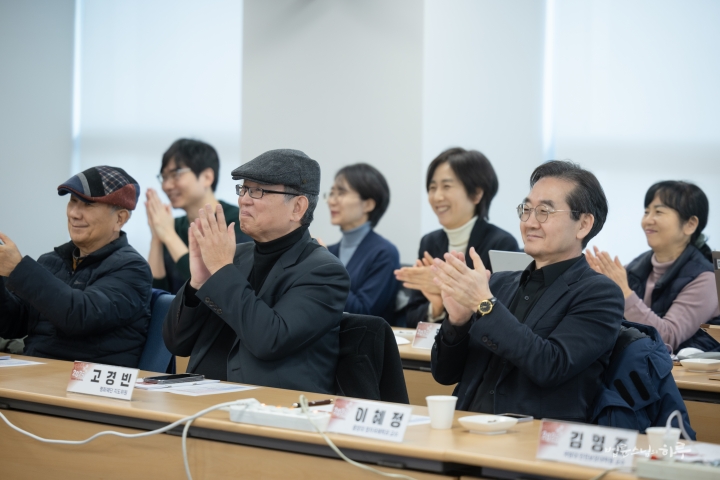
In Part 2, Professor Lee Wang-hwi from Ajou University presented on “Economic Security Strategy,” followed by Professor Kim Young-joon from the National Defense University who presented on “South Korea’s Future: The Function of the Korean Peninsula’s Economy and War.”
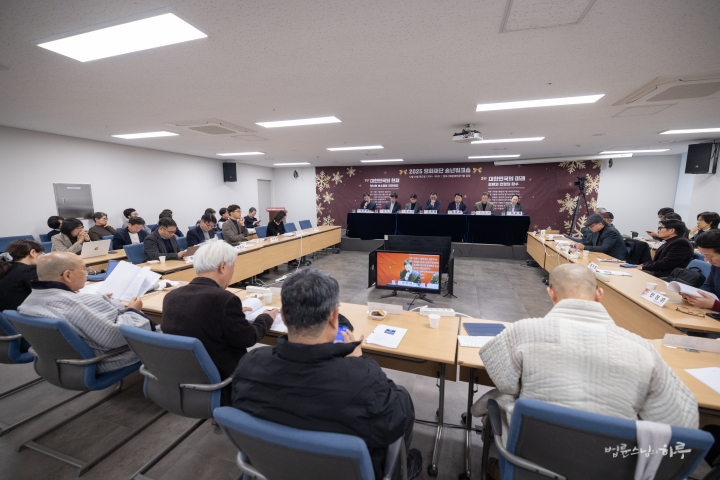

Subsequently, Professor Kim Ji-woon from Chungnam National University, Professor Lee Seung-joo from Chung-Ang University, Professor Lee Hyun-tae from Seoul National University’s Graduate School of International Studies, and Professor Lim Eun-jung from Kongju National University participated as panelists in a comprehensive discussion, concluding Part 2.

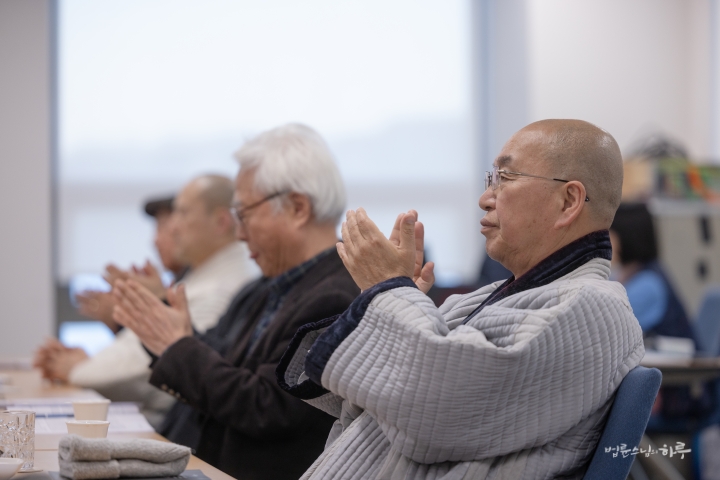
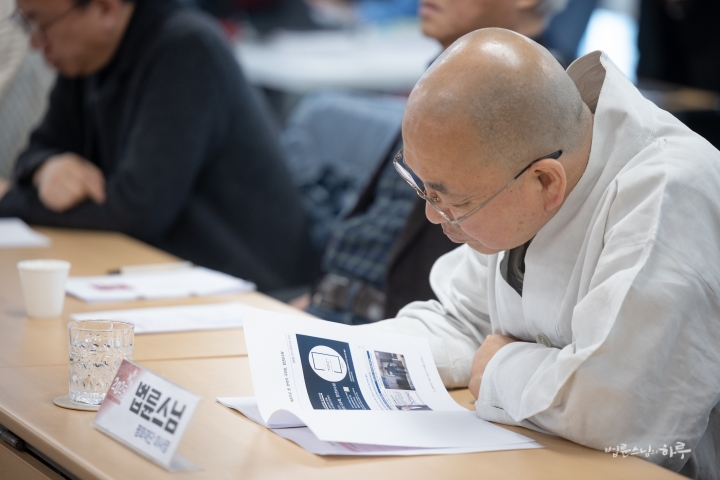
Sunim listened attentively to the experts’ presentations from beginning to end. The closing remarks were originally scheduled to be given by Sunim, but he suggested that Dr. Cho Min give them instead, and this was arranged.
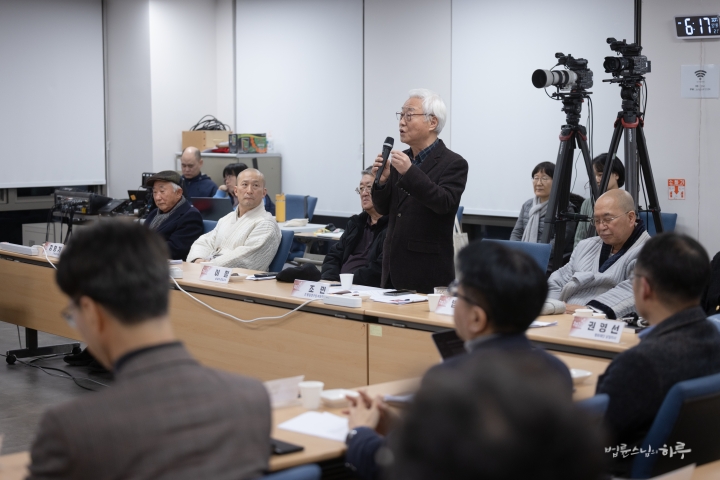
Dr. Cho Min pointed out that “South Korea is no longer a passive entity in international politics but has become an independent subject that the world is watching.” He emphasized that “now is the time to reconfirm South Korea’s coordinates and move toward the world centered on freedom and respect for individuality, the dreams of the younger generation, and universal values.” He concluded the workshop by expressing his expectation and confidence that “such activities of the Peace Foundation will lead to a Nobel Peace Prize in the future.”
After taking a commemorative photo together, the 2025 Peace Foundation year-end workshop concluded.
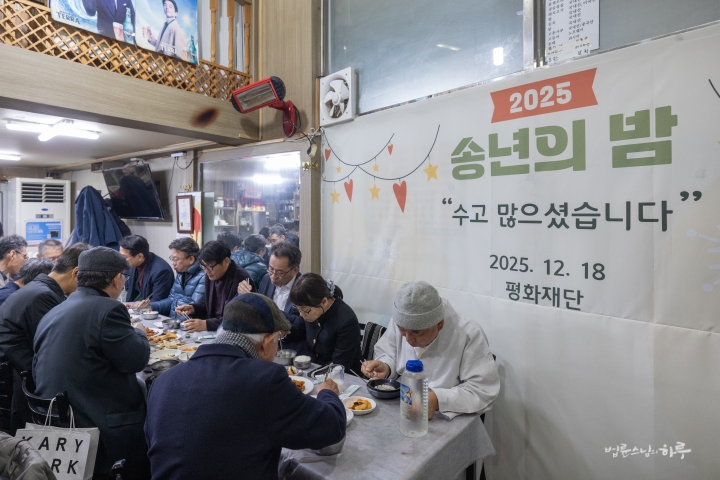
They then moved to a restaurant near Seocho-dong for the year-end party. Sunim expressed his gratitude to the research fellows for their hard work throughout the year and had dinner together.
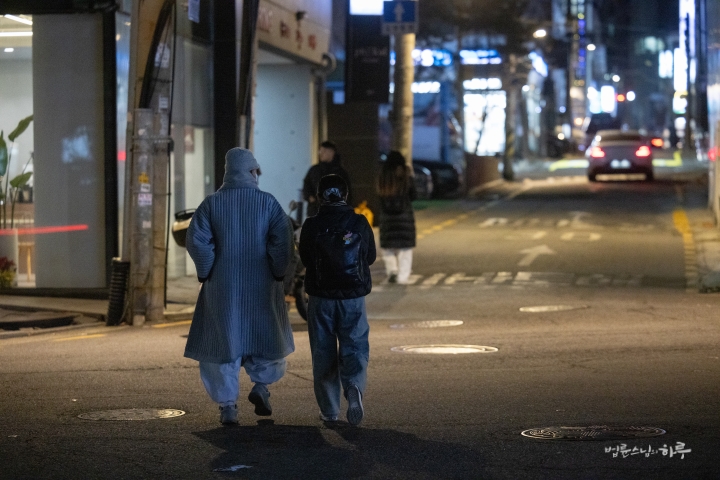
After the year-end party, he spent the evening proofreading manuscripts and handling various tasks before concluding the day’s activities.
Since there was no Dharma talk today, we’ll conclude by sharing a conversation between Sunim and a questioner from the Dharma Q&A held in Daegu on October 24th.

Why Do I Feel Like I’m Falling Behind While My Peers Are Succeeding?
“I’m a 25-year-old nurse. I spent six months preparing for job applications, and ultimately I wasn’t able to get hired at the hospital I wanted. I’ve now accepted my lack of ability and weak will, and I’ve given up on changing jobs. However, when I hear good news from my peers around me, I can’t genuinely congratulate them. Instead, I feel envious, jealous, and anxious. Sometimes I even have the mean thought, ‘If I’m going to fail, you should fail too!’ I wonder if this is why things aren’t working out better for me. I want to stop comparing myself to others and to accept and love myself as I am. How can I achieve the happy life that you speak of?”
“You already know the answer to your question. (Laughter) As the saying goes, ‘When your cousin buys land, your stomach hurts.’ Feeling such emotions is natural. Even politicians are divided into ruling and opposition parties, and they’re quite pleased when the other party makes mistakes. These are universal human emotions. There’s also a saying, ‘You can endure hunger, but you can’t endure stomach pain.’ Another similar saying is ‘You can endure physical hardship, but you can’t endure mental hardship.’ So while these emotions aren’t admirable or desirable, they’re not bad enough to deserve punishment either. But as a nurse, what constitutes a better workplace? Is the problem that your peer works at a university hospital while you work at a private clinic?”“Yes, that’s right.”
“Is working at a university hospital better because the salary is higher?”“The salary is higher, but there’s also more to see and learn, and the employee benefits are better, so I want to go there more.”
“So ultimately it’s about earning more money. If you want to earn more money, naturally the competition will be fierce. Since they select through competition, you have to accept it unless the selection criteria are very unfair. However, just because you weren’t selected doesn’t mean you’re inferior. For example, if a workplace selects employees based on English proficiency or physical fitness, would Venerable Pomnyun pass? He would fail. But does that make Venerable Pomnyun an inferior person? Of course not. Similarly, while you may fall short of certain criteria, you’re not inferior. You might be better by other standards. So you simply didn’t meet those criteria; you’re not inferior. Not everyone can achieve what they want. Even if someone in politics wants to become a member of the National Assembly, only a few become National Assembly members. Even if National Assembly members want to become president, only a few become presidential candidates, and among them, very few become president. So are those who lose the presidential election inferior? They succeeded as their party’s presidential candidate. Because we consider it a failure when our ultimate goal isn’t achieved, life becomes a series of failures. They didn’t become president, but becoming a presidential candidate is successful. They didn’t become a presidential candidate, but becoming a National Assembly member is successful. We should evaluate ourselves as successful in this way, but because we only evaluate ourselves as failures, our self-esteem drops. Isn’t becoming a nurse successful?”“That’s right.”
“Among nurses, there are those who couldn’t find jobs, so getting employed is also successful. Just because you couldn’t get hired at your desired hospital doesn’t mean you’re inferior or have failed. Everyone here is successful just by being alive and not dead. If we calculate all the near-death experiences from childhood – whether nearly drowning or dying in traffic accidents – we’ve overcome all those crises to get here. Some people only finished elementary school, but you went to middle school. Some only finished middle school, but you went to high school and university. Some people can’t get married, but you got married and are raising children. Isn’t that successful? I’m 72 years old and still haven’t gotten married. You’ve gotten married and had children, so why do you keep thinking you’ve failed? (Laughter) If you say ‘I’m satisfied with this,’ it could be called complacency. If you say ‘I’ve failed,’ you’re being greedy. But you’ve done well so far, and just because things don’t go well when you try to do better doesn’t mean you’ve failed. If 2,000 people were supposed to come to today’s lecture but only 1,500 came, is that a failure? Other people’s lectures don’t even get 500 attendees. This is successful. This is how evaluation should be done, but because you keep seeing yourself as having failed, your self-esteem is low and you’re not happy. In this way, you are currently a successful person. However, you can challenge yourself a bit more without being complacent. Challenges may succeed or fail. Just because it doesn’t work out doesn’t mean you’ve failed. This is a bonus. It’s fine to be satisfied with the present and stop thinking ‘this is good enough,’ but if you’re giving up because you think you’ve failed and feel frustrated, that’s wrong thinking. Since you’re still young, you can challenge yourself more. You shouldn’t think that every application must be accepted. If this hospital doesn’t work out, apply to that hospital; if that hospital doesn’t work out, apply to this hospital. How about taking this perspective?”“Thank you. After listening to you, I feel like I’ve been somewhat successful.”