How to Organize Your Mind at Year’s End
Dec 17, 2025- Religious Leaders' Meeting, Year-End Dharma Assembly
Hello. Today is the day for the year-end religious leaders’ meeting and the year-end Dharma assembly.
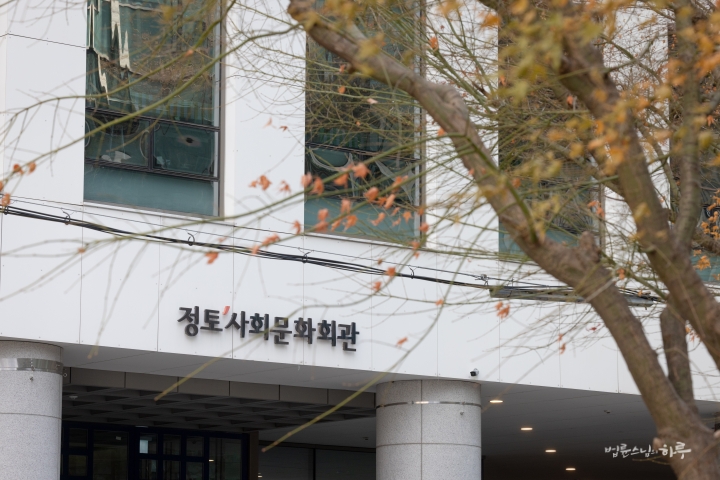
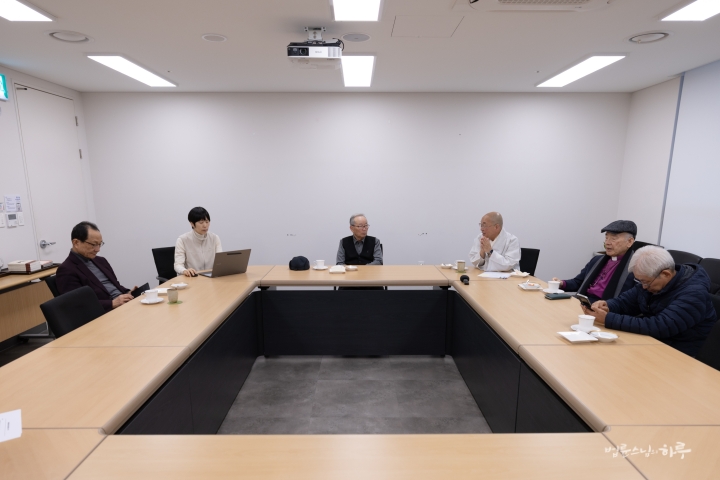
After completing his morning practice and meditation, Sunim headed to the Jungto Social and Cultural Center. Pastors, bishops, and other religious leaders had all arrived at the center, and they began their meeting for national reconciliation and peace while sharing a meal together. After finishing the meal, they moved to the Peace Foundation conference room to engage in earnest dialogue.
First, they watched a video together showing Sunim’s visit to Mindanao, Philippines from December 8th to 13th, where JTS built 15 schools this year – 10 indigenous schools and 5 special schools for children with disabilities – and held completion ceremonies for 8 of them.
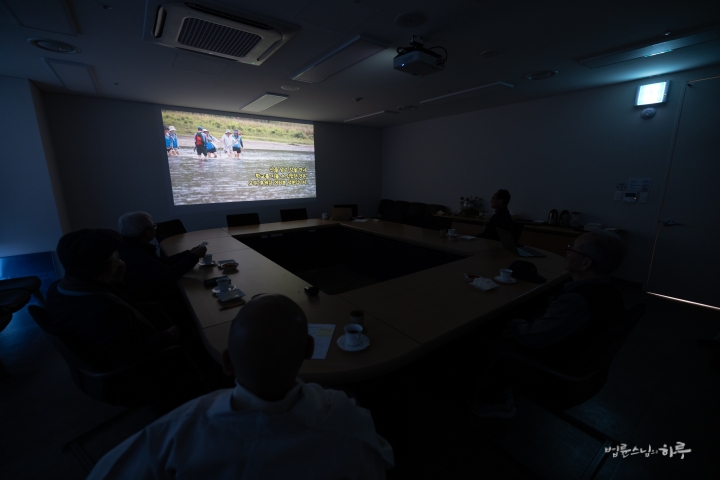
After watching the video, Sunim continued with an explanation.
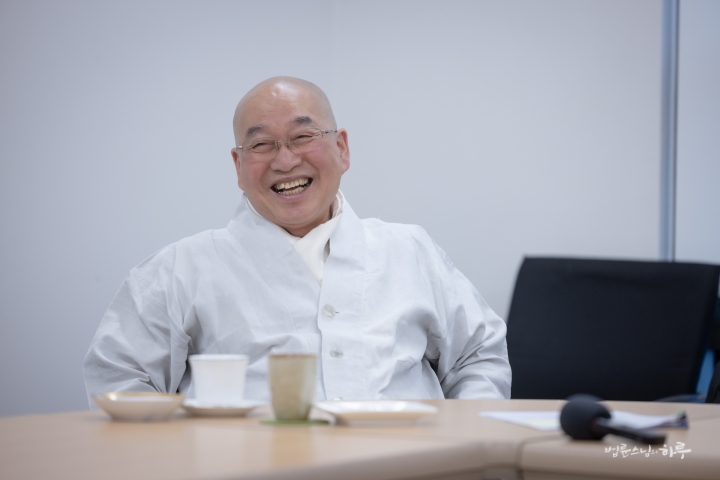
Today was the last religious leaders’ meeting of the year. They took time to share their reflections while wrapping up the year. First, Park Nam-soo, former head of Won Buddhism and chair of the religious leaders’ meeting, shared his thoughts.
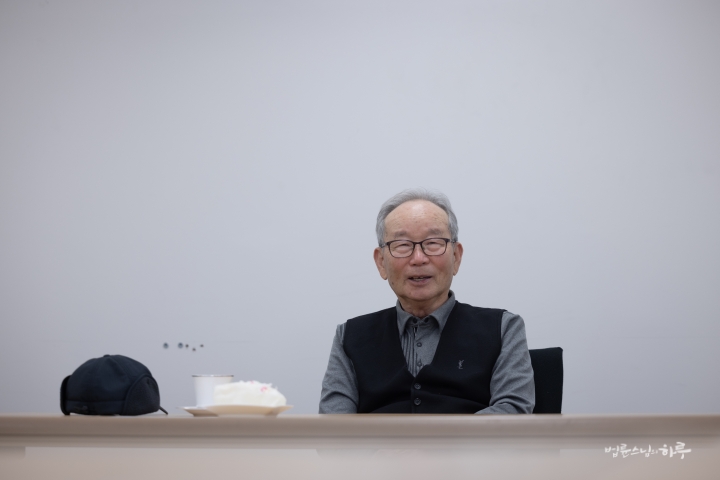
“Looking back on the year, two scenes remain most memorable. One was when Father Kim Hong-jin personally cooked and invited us for a meal. I was deeply moved by his sincerity. The other was celebrating together the establishment of a memorial hall for Master Yongseong, a national leader who had been unknown. The spirit of the March 1st Movement was ‘all together,’ and Master Yongseong was the one who led this. I would especially like to express my gratitude to Venerable Pomnyun Sunim for completing the establishment of the Baek Yongseong Memorial Hall, which properly establishes our national history.”
Following the elder’s words, Sunim explained why Master Yongseong’s achievements had not been known until now.
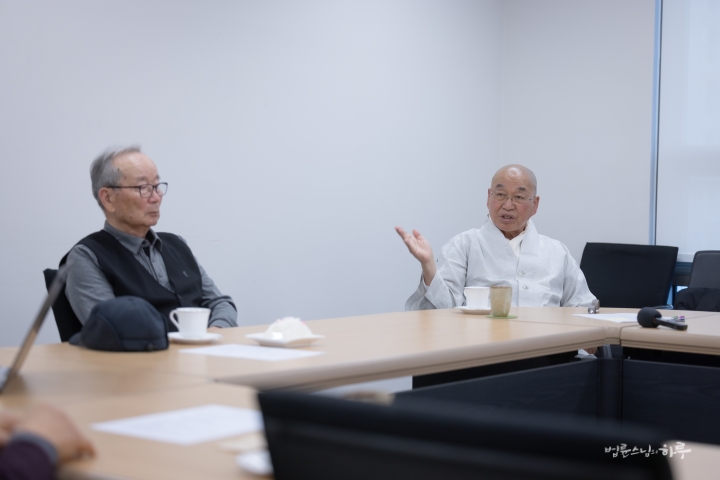
Bishop Park Kyung-jo shared his reflections.
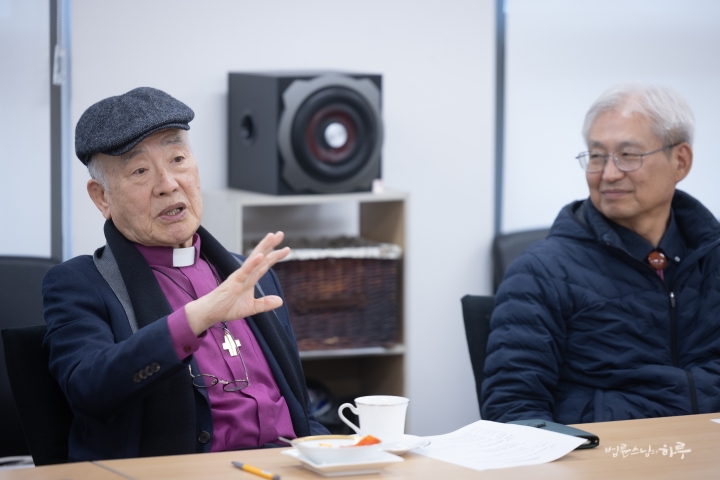
“Although we have different religions, the fact that we can gather together to work on projects and have conversations seems to be no ordinary connection. Even today, watching the video of Sunim’s visit to Mindanao, Philippines, I thought, ‘Though I’m not there, Venerable Pomnyun Sunim is doing the work I should be doing.’ What I can do is pray for Sunim and share the inspiration I’ve received with our congregation. I hope our goodwill spreads even wider next year.”
Next, Gyomu Kim Dae-sun shared his reflections.
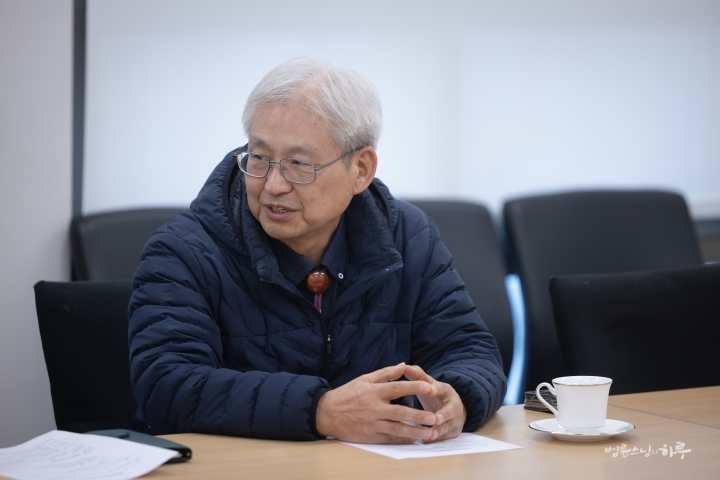
“It has been a truly grateful time to be with our senior members and hear their good wisdom every year.”
Finally, Venerable Pomnyun Sunim shared his reflections looking back on the year.
Looking Beyond the Korean Peninsula to Peace in Asia
“In previous years, we would have made declarations about inter-Korean relations and issued statements about national unity, but we couldn’t do such things this year. Still, I think the most meaningful thing we did this year was inviting Sri Lankan religious leaders to exchange views on reconciliation and peace in Asia. It seems to have been an opportunity for the religious leaders’ meeting to expand its interest beyond the Korean Peninsula to the Asian region for the first time. I hope this will serve as an opportunity to expand into a gathering that considers peace in Asia, including not only exchanges with Sri Lanka but also Cambodia, Thailand, Myanmar, and other countries. Although it’s not easy to continue meeting regularly on schedule, I would like to express my gratitude to the elders for always participating.”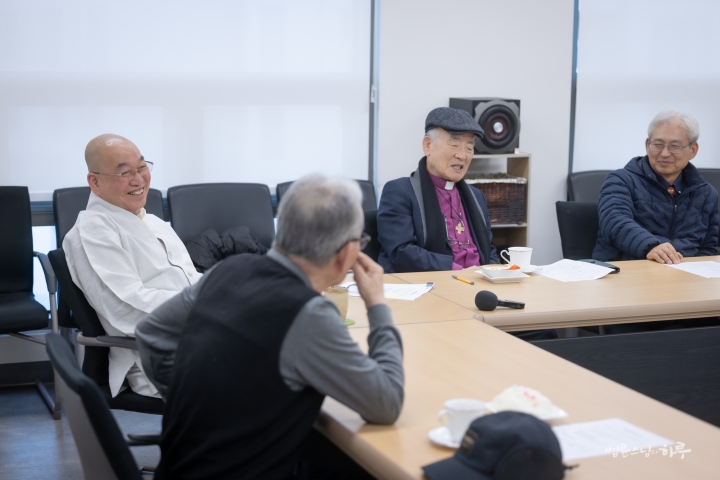
They then spent two hours discussing various current issues, including how to integrate the divided public opinion and how to view the recent investigation into the Unification Church, before concluding the religious leaders’ meeting.
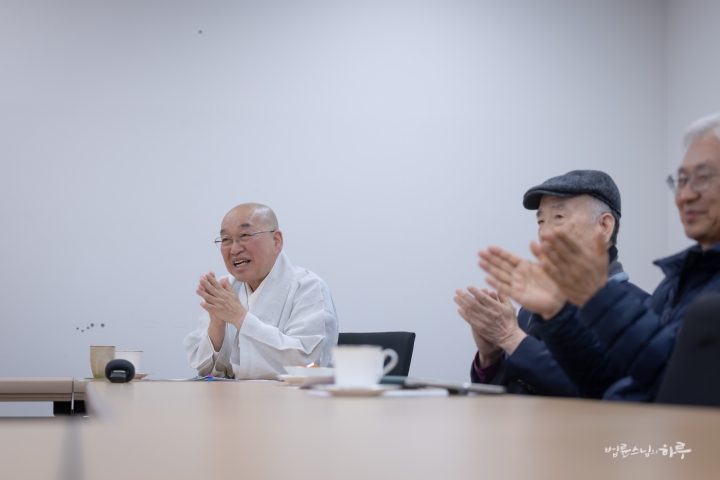
Sunim presented each religious leader with a copy of his new book “Tak, Dialogues on Enlightenment” and a new year calendar as gifts.
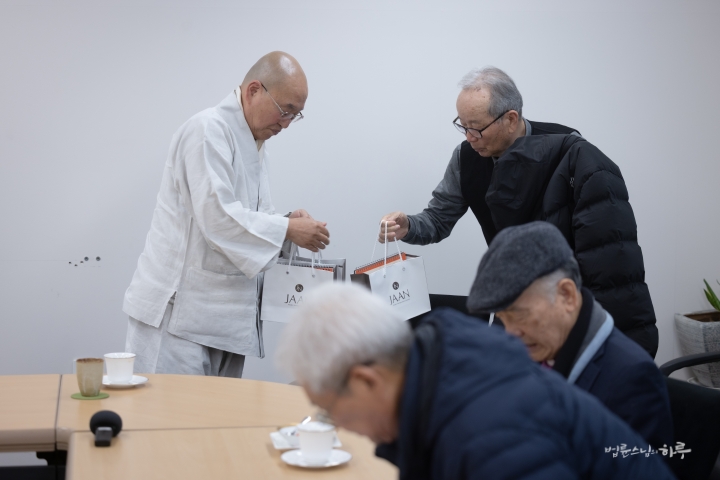
After seeing off the religious leaders, Sunim headed to the Dharma Hall on the third floor for the live broadcast of the Weekly Dharma Assembly.
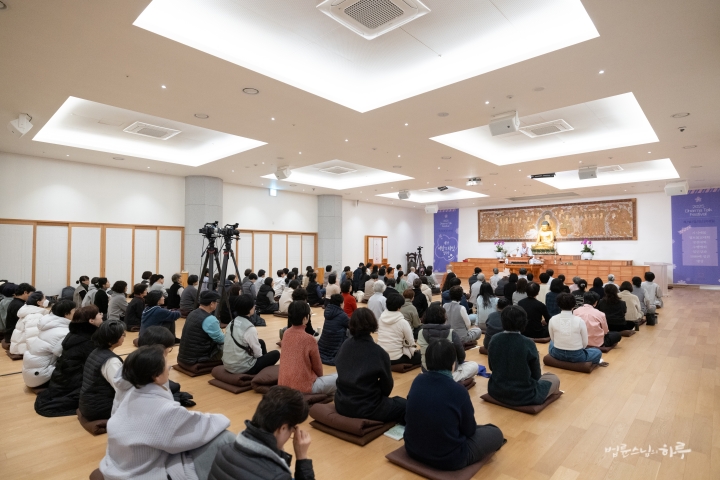
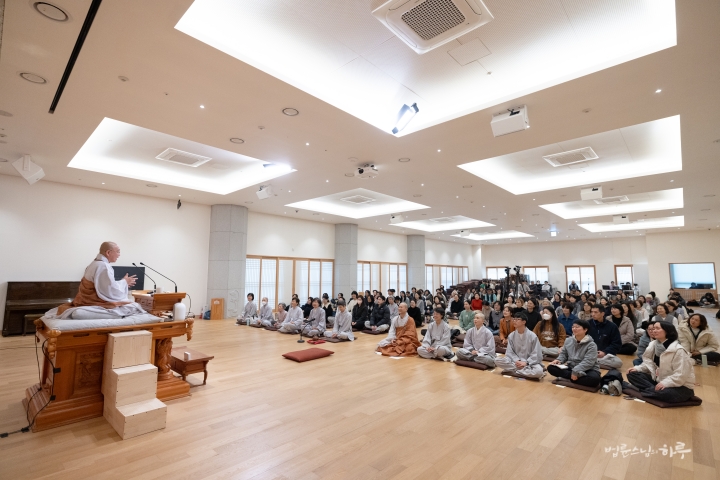
At 10 AM, the Weekly Dharma Assembly began with about 140 people present, chanting the Three Refuges and the Heart Sutra. About 4,000 Jungto Society members from home and abroad participated in the assembly online.
Today was the year-end Dharma assembly to wrap up the year. Since the 1000-Day Practice had just concluded two days ago, Dharma Teacher Seonju, who is serving as acting president of Jungto Society, gave opening remarks.
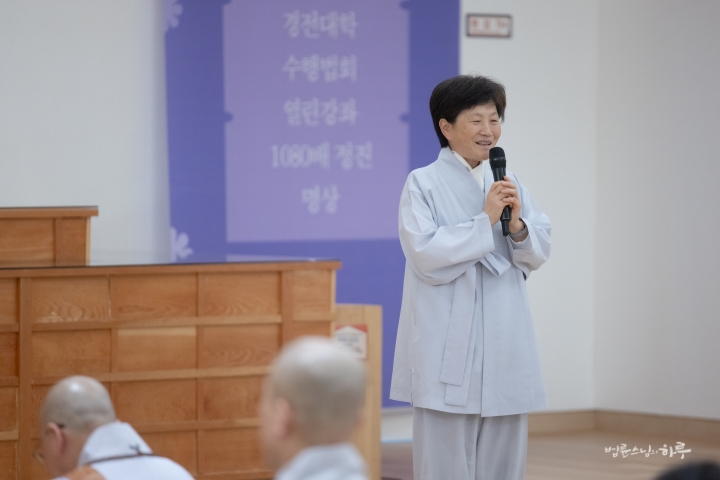
“Looking back, having the 100-Day Dharma Talk with our guiding Dharma teacher here last spring and doing the 300-day special practice held great meaning for us, and I think it was with the power of that practice that we were able to successfully complete the first 1000-Day Practice. I hope we can take this energy and vigorously prepare for the second 1000-Day Practice. I hope we can wrap up the year well by encouraging each other through today’s year-end Dharma assembly.”
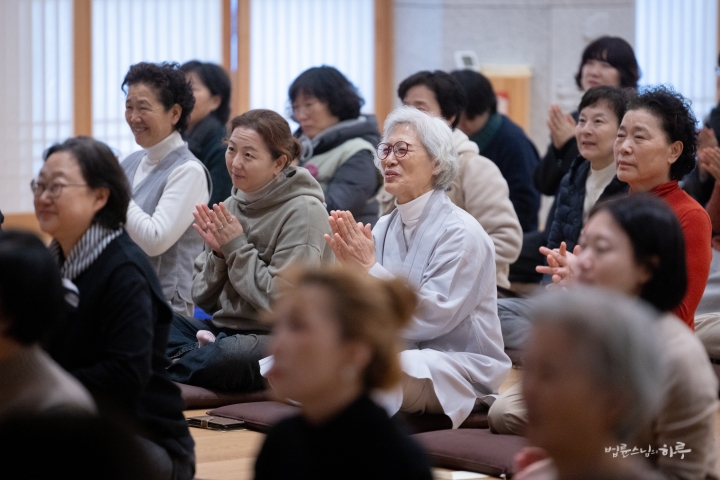
Next, they had time to hear reflections from Jungto Society members about how they felt sending off this year. First, people who had joined the online video conference room shared their reflections.
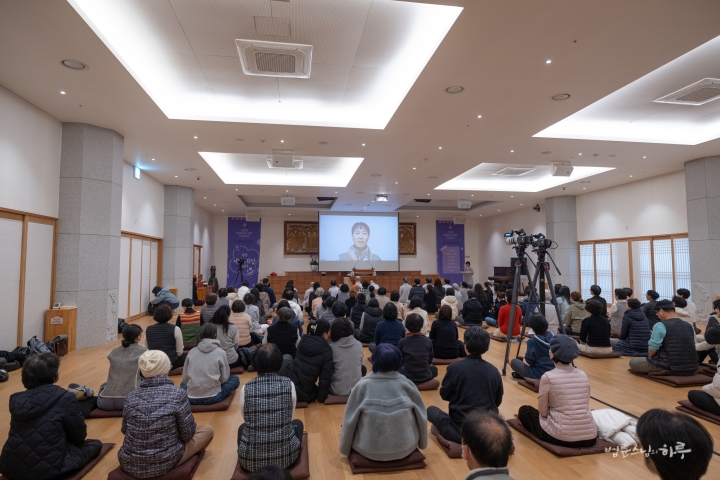
“Thanks to my fellow practitioners, I had a great time in 2025. Thank you.”
“Although it was difficult practicing for choir performances every week, my heart became solemn after encountering the countless people volunteering behind the scenes. Thanks to my fellow practitioners, I am practicing well. In the new year, I will cultivate a bigger heart and become a practitioner who is well utilized.”
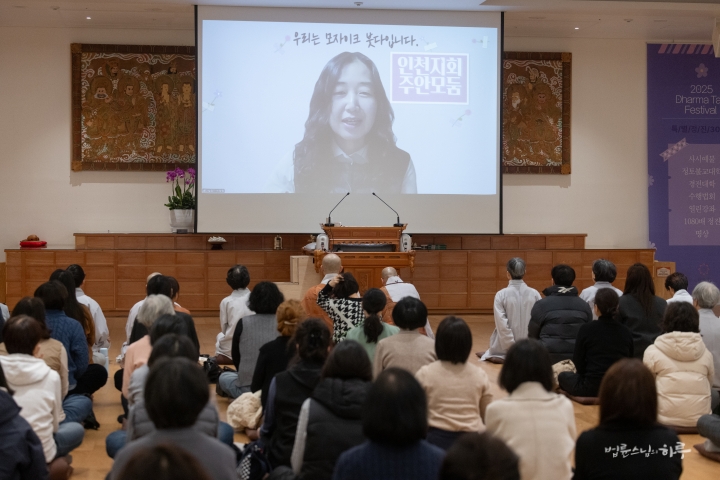
“For me, 2025 was a year of realizing that responsibilities are blessings. After taking on the Practice Activities Team, there were so many things I had to be responsible for. I’ve come to today while learning, getting frustrated, and writing resignation letters, and now I’m working while receiving encouragement from fellow practitioners saying ‘Well done’ and ‘Good job.’ At that time, I reflected that ‘I was always stingy with praise when raising my children.’ I raised my children unable to let go of the thought ‘You could do a little better.’ Thanks to my fellow practitioners, I am growing little by little. Thank you.”
“While serving as a group facilitator, I felt the joy of sharing hearts and growing together with fellow practitioners. Through various activities including the 100-Day Dharma Talk, Jungto Dharma School, Happiness School, Buddhist Expo promotion, JTS street campaigns, Unification Festival, and volunteering at Dubuk Jungto Retreat Center, I deeply felt how much power is generated when we work together.”
Next, they heard one more reflection from someone at the venue.
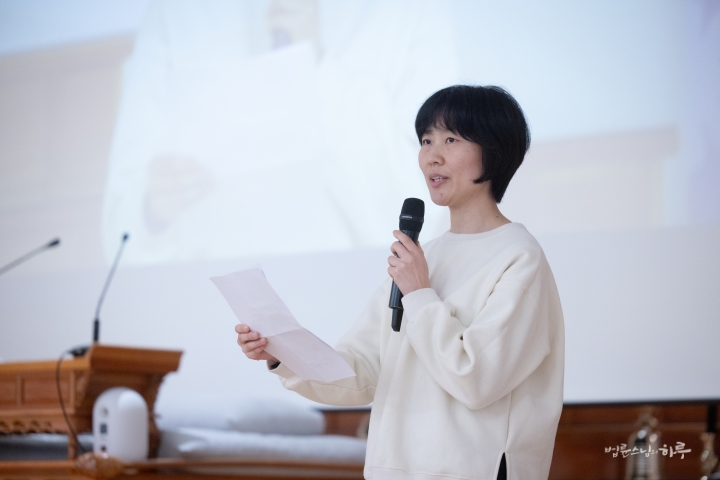
“I courageously took childcare leave, and just then the 300-day special practice began. After finishing my role as a facilitator in the dormitory, I entered the Maya Buddha program. I did many things together with fellow practitioners. Those times felt like being in the middle of a flower garden. This flower is beautiful, that flower is fragrant, some flowers are elegant, and some flowers are full of vitality. I am learning through experience that differences are beauty itself. Through those experiences, I was able to fully enjoy the joy of being well utilized. Without trying too hard or being lazy, I will steadily practice making Buddha’s vow my life’s vow.”
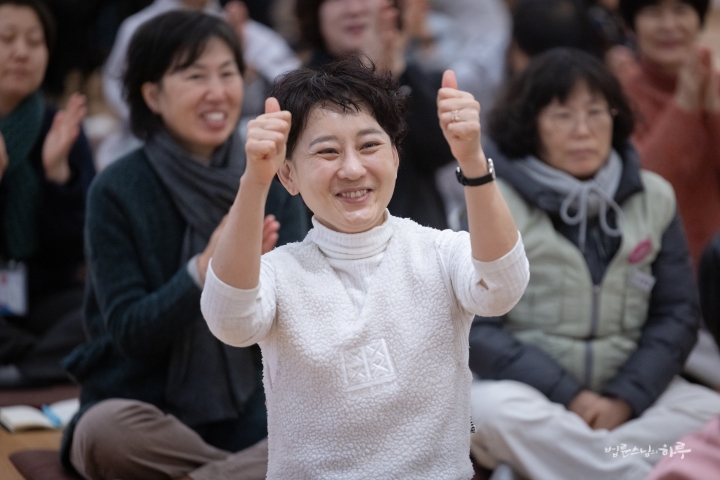
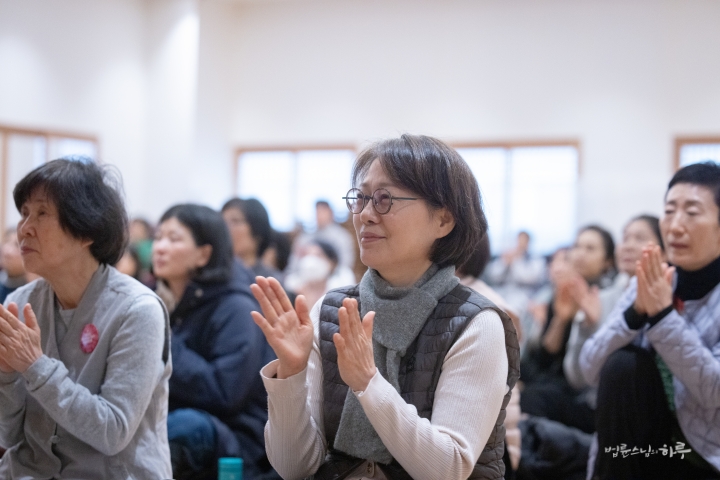
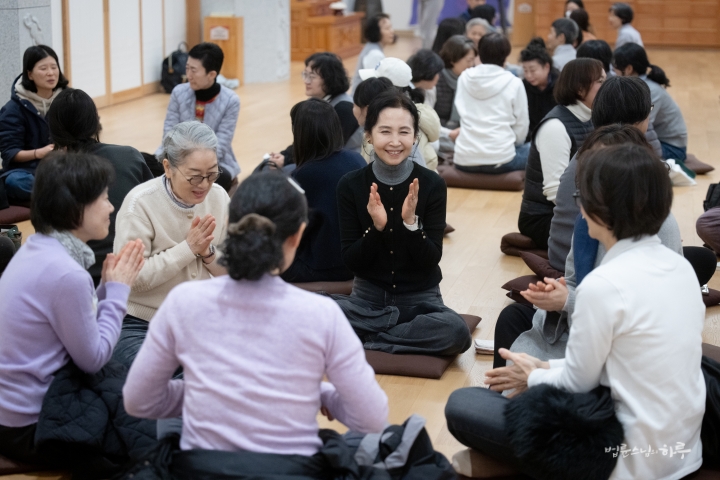
The assembly applauded loudly, encouraging each other for their hard work over the past year.
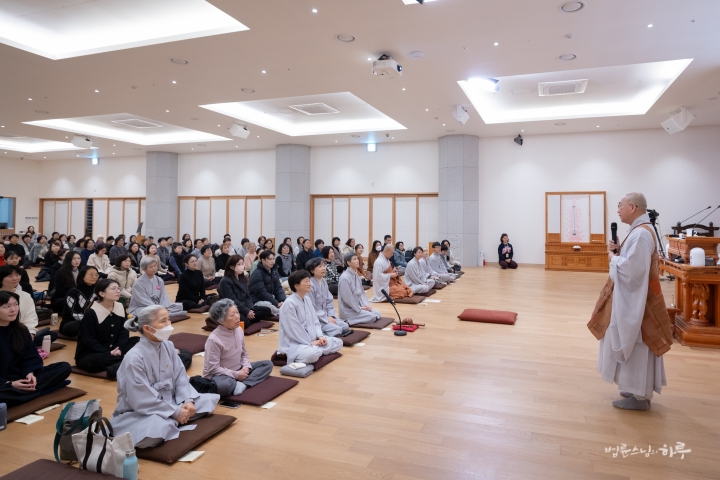
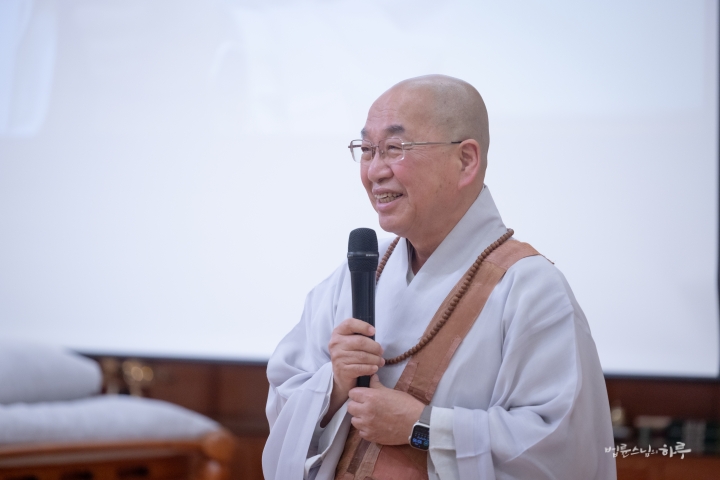
Next, Sunim shared news about his visit to Mindanao, Philippines from December 8th to 13th, where he held completion ceremonies for 8 schools.
Next, they watched a video together.
▲ Watch Video
In the video, when the villagers clapped with joy at seeing the school that had been built, the members of the Sangha also clapped along with happy hearts.
Sunim then gave a year-end Dharma talk to conclude the year.
Seeking Enlightenment Above, Saving Sentient Beings Below – The Past Three Years We’ve Walked Joyfully
All of Jungto Society’s activities, large and small, as well as its operations, management, and various Buddhist projects, are made possible through your volunteer work and donations. Jungto Society operates independently without relying on external support. All activities are carried out through the volunteer work of our members, and we receive no financial support from the government or corporations. We are accomplishing all of this work solely through membership fees and donations. However, I’m not sure if you are always doing this work joyfully. I generally do it with joy. (Laughter) In this way, we can say that as practitioners, we are walking the path of the Bodhisattva with joyful hearts, practicing ‘seeking enlightenment above and saving sentient beings below.’ These activities of Jungto Society are pioneering work in our society, while also serving as a good model and example. Although we are walking a path that is not easy, at this point as we conclude this year, I think we can allow ourselves to feel a little pride.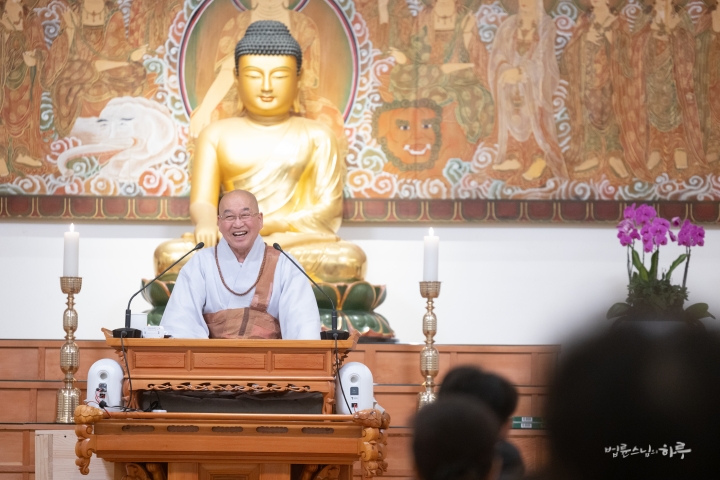
Practice Is Ultimately About Examining Oneself
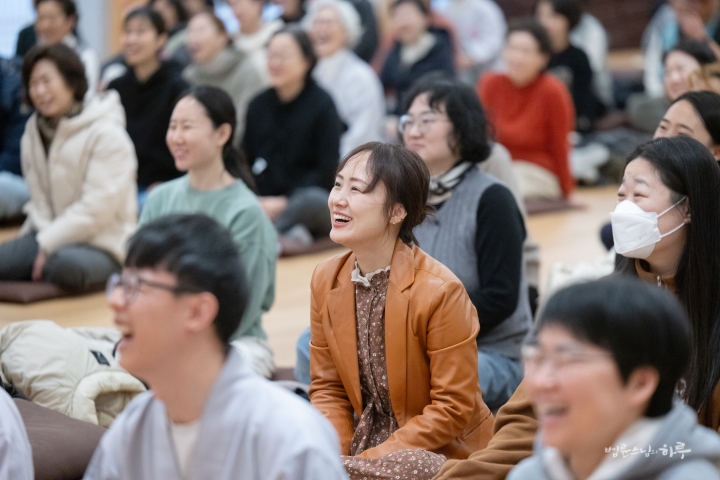
As we approach the end of the year, there are several things I need to repent for. First, I failed to properly take care of my body, causing unnecessary worry to all of you. I think this is the first thing I need to repent for. Second, looking back on this year, I realize I made everyone busy and stressed by taking on various projects. Third, I wonder if I made those around me excessively busy when I could have just been busy by myself. These are the points I reflect on as the year comes to an end. If anyone has been hurt by me, I ask for your forgiveness through this opportunity. I’m generally quite serious, but sometimes I make jokes. However, as the saying goes, ‘A stone thrown in jest can kill a frog.’ I’ve learned that words said in jest can sometimes hurt others. For example, when I asked someone who was eating late, ‘How many bowls is that?’ they replied, ‘This is my first bowl.’ After serving food to Sunim and helping the Sangha, they were finally getting to eat their own meal. When I, having already finished eating, passed by and said, ‘Why are you eating so much? How many bowls is that?’ it hurt their feelings. (Laughter)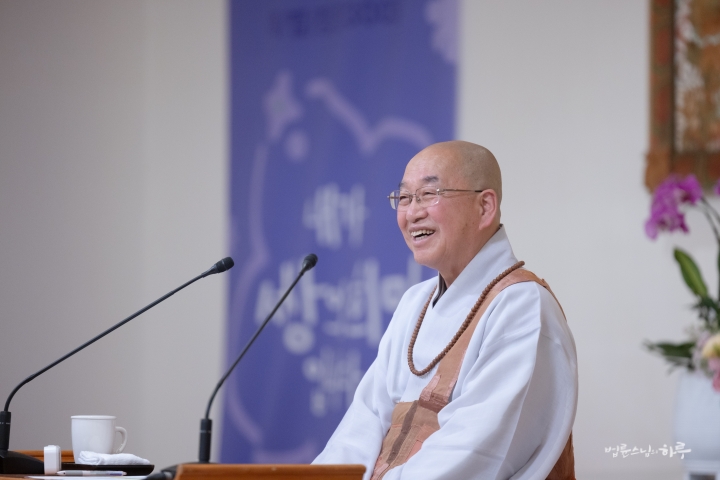
How to Organize Your Mind at Year’s End
As you reflect on the past year at year’s end, I hope you’ll take time to talk about and apologize for any hurts exchanged with those around you. However, human habits aren’t easily changed with just one apology. Rather than responding rigidly with thoughts like ‘They’re just saying that!’, I think we need to accept apologies while understanding that some aspects may not change, and continue living with that understanding. As we send off this year, I hope you can let go of some of the resentment and bitterness in your heart, and live the new year with a lighter spirit.”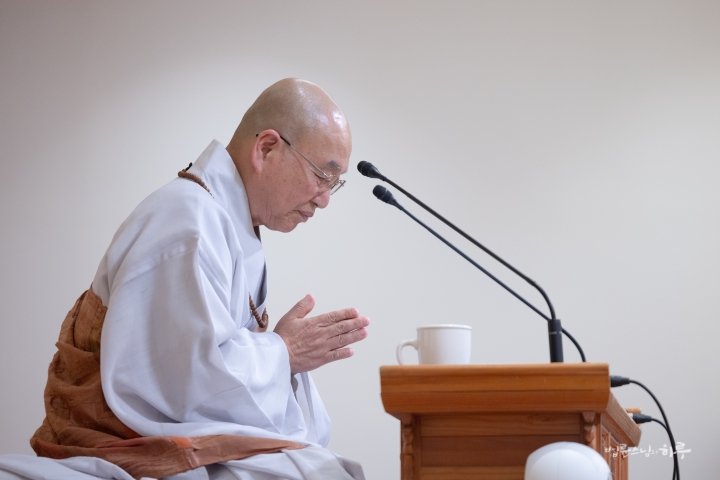
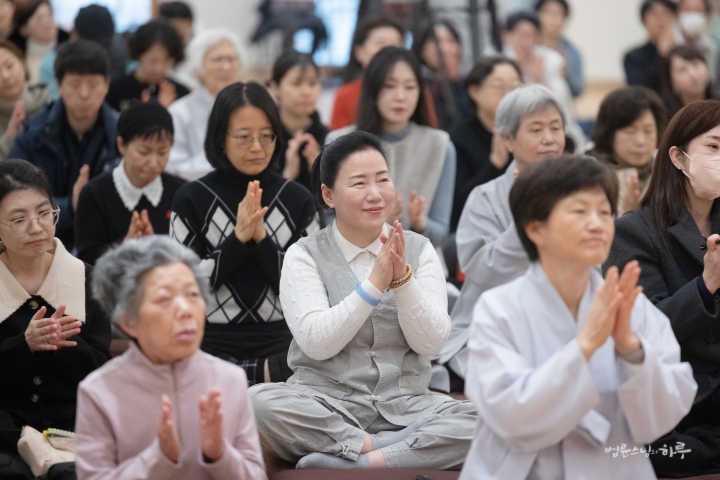
After the Dharma talk concluded and several announcements were made, the assembly ended with the Four Great Vows. Members gathered again in their respective chapter video conference rooms to share their reflections on concluding the year.
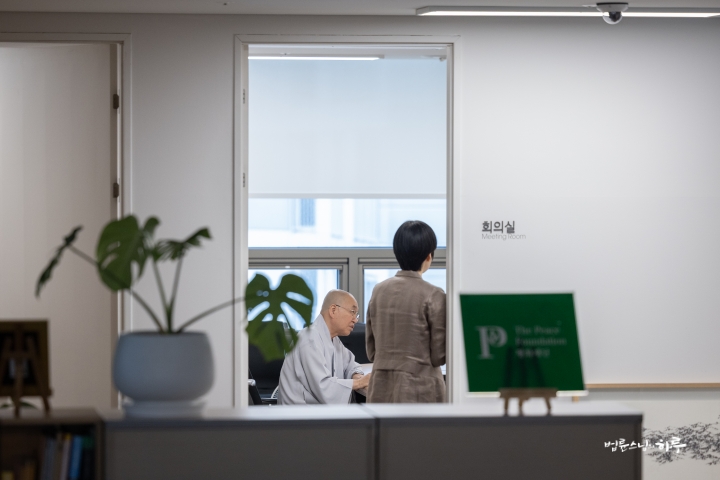
After lunch, at 4 PM, Sunim attended The Peace Foundation Planning Committee meeting to evaluate the foundation’s past year and discuss plans for next year’s projects.
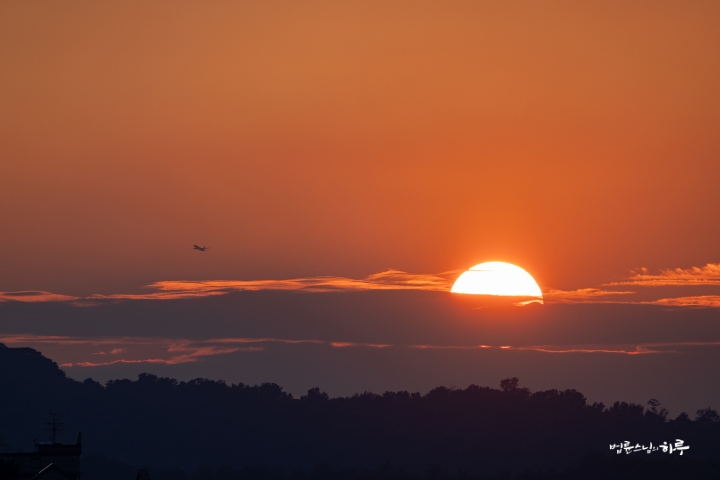
After sunset, Sunim spent the evening proofreading manuscripts and handling various administrative tasks before retiring early due to pain in his shoulder and arm.
Tomorrow morning, Sunim will have a breakfast meeting with North Korea experts followed by a meeting with foreign policy and security specialists. In the afternoon, he will attend The Peace Foundation’s Soyeon Workshop to listen to expert presentations on the topics “South Korea’s Present: Diagnosing the Conservative Shift Among Youth” and “South Korea’s Future: The Equation of Economy and War.”