Hello. Today is the day of the 1st 1000-Day Practice closing ceremony of the 2nd 10,000-Day Practice, with English interpretation for international 1000-Day Practice participants.
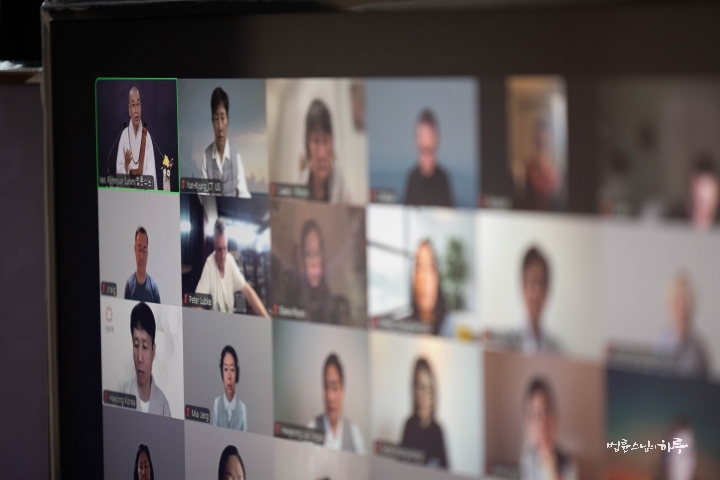
After completing morning practice and meditation, Sunim attended the 2nd-1st 1000-Day Practice closing ceremony for international 1000-Day Practice participants at 8 AM from the broadcasting room at Dubuk Jungto Retreat Center.
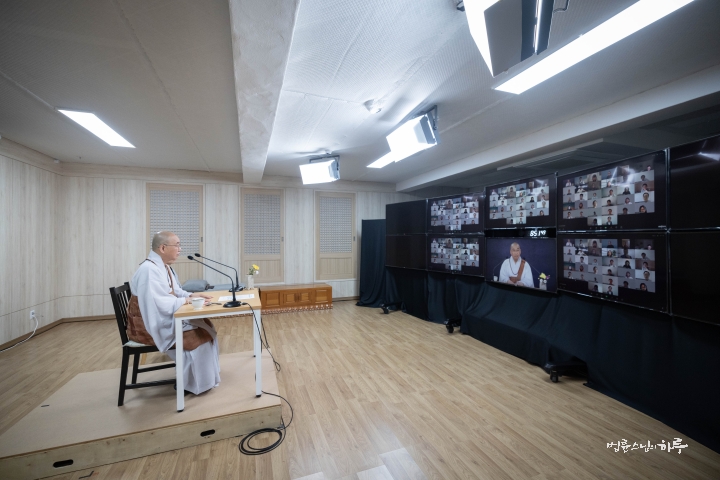
Yesterday, Jungto practitioners from around the world who use Korean completed their 10th 100-Day Prayer and the 1st 1000-Day Practice of the 2nd 10,000-Day Practice. Today, Jungto practitioners from around the world who use English gathered to conclude their 100-Day Prayer and 1000-Day Practice.
Today’s closing ceremony was attended by 15 international 1000-Day Practice participants from the United States, Canada, Italy, Indonesia, Hong Kong, Australia, and the United Kingdom. First, time was given to hear reflections from those who had practiced diligently over the past 100 days.
First, Rafael’s reflection was shared through video.
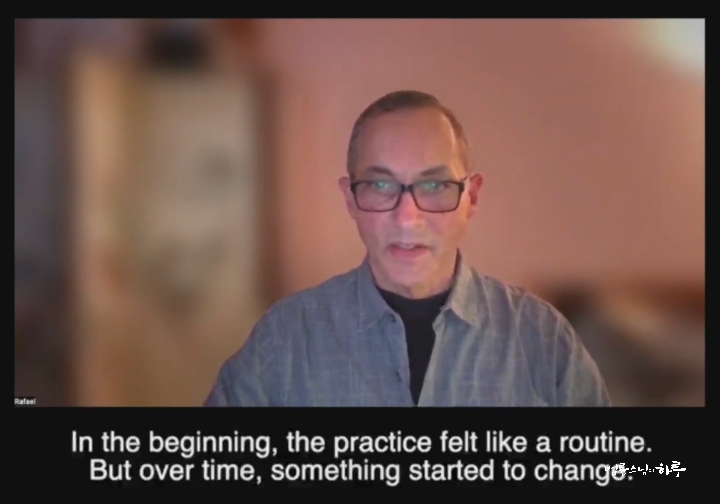
“I’ve been practicing with other Jungto practitioners since finishing Dharma School 2. In the beginning, the practice felt like a routine. But over time, something started to change. This combined practice—prostrations, meditation, and sutra study—has given me practical insight for daily life: how to handle frustration, communicate better, and understand my emotions and negative tendencies. It helps me reset and begin the day with a clearer mind.”
Next, more reflections were shared from those who raised their hands at the venue. First, Mathieu shared his experience from volunteering.
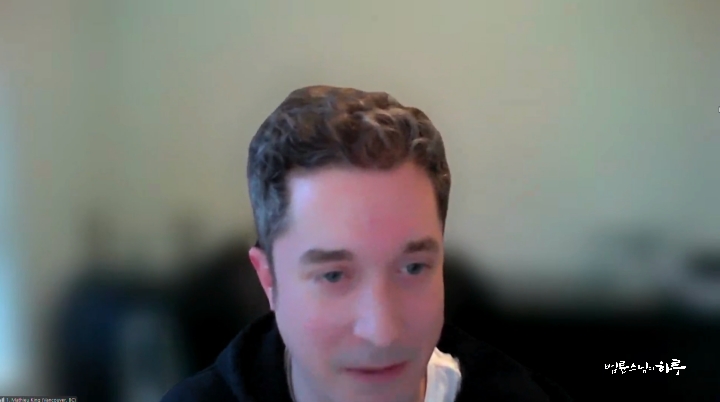
“From volunteering, I think I benefited more from it than Jungto did. I remember hearing other people say similar things at the beginning, but it wasn’t until I went through it myself that I really understood. I helped proofread the book “Why Am I Anxious?”, and it was inspiring to see when the book finally came out. I helped generate some reflection questions. I hope it was a helpful contribution to Jungto as well.”
Daniel shared how he has changed through practice.
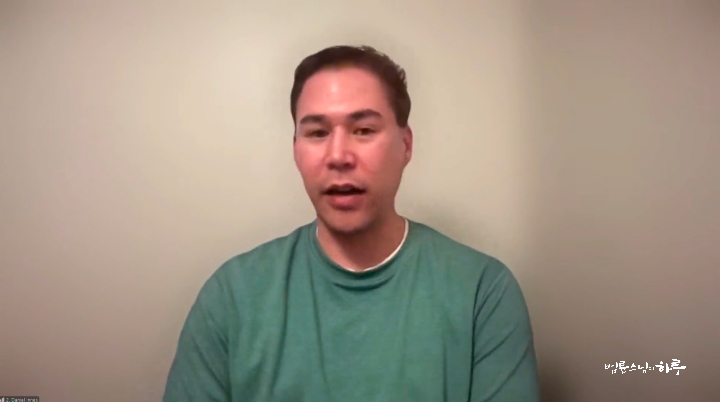
“I started this practice this year, but I joined Jungto last year as part of the ‘Introduction to Buddhism One’. Now, I’m taking the ‘Introduction to Buddhism II’ course. I’ve found a lot more peace and calm. I feel much more grounded when I start my day, and it’s a nice reminder to be mindful throughout the day. I don’t think I’ll ever stop practicing. I don’t see an endpoint for myself. I’m just going to carry it throughout my life because it’s that valuable.”
Next, everyone watched a video titled “Footsteps of a Thousand Days,” looking back on the journey of international 1000-Day Practice participants over the past three years.
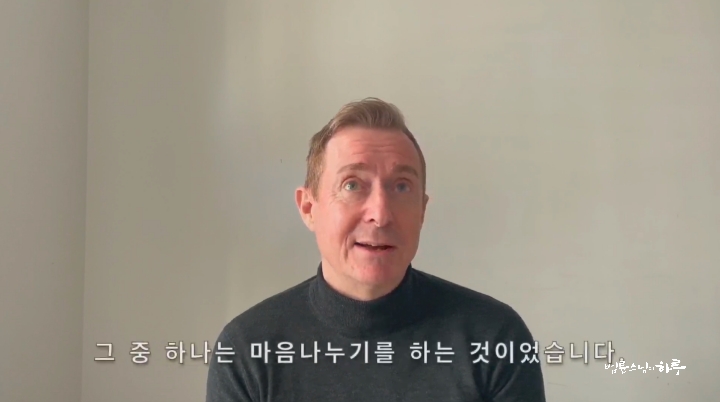
Following this, a video was shown featuring the practice story of Craig Lewis from the Asia-Pacific Chapter of the International Division, who has been practicing steadily since joining in 2023.
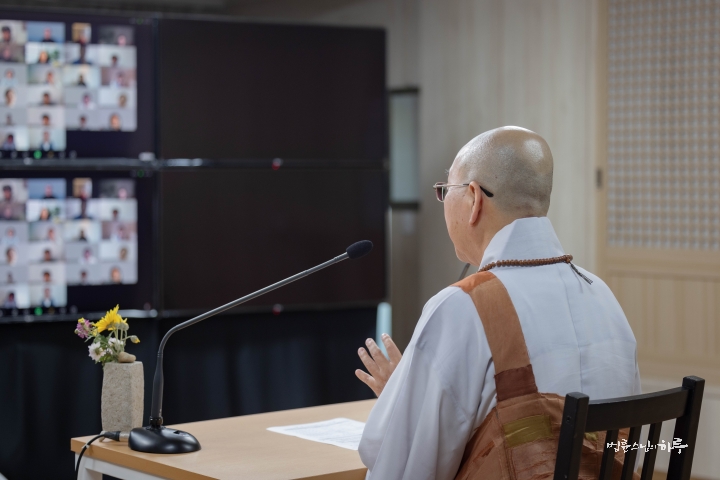
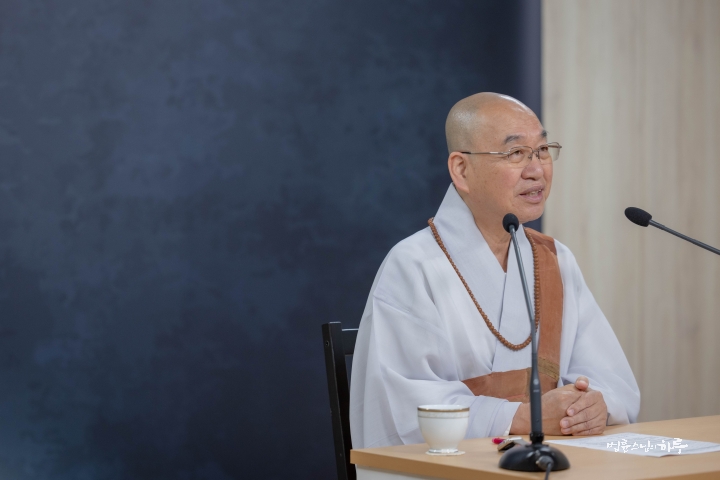
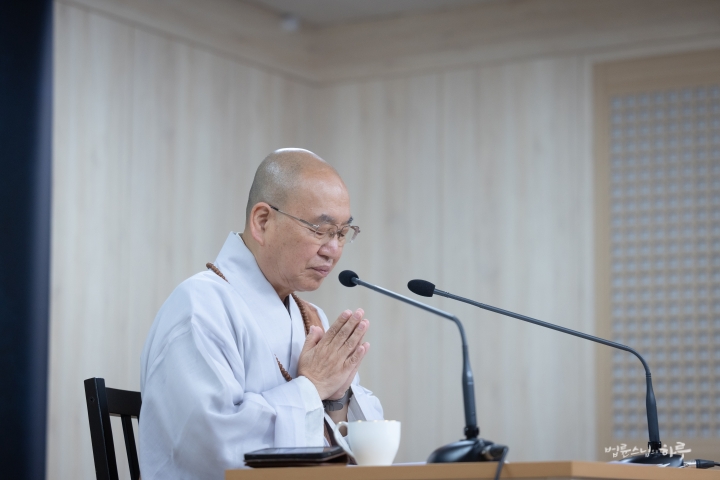
Everyone then requested a Dharma talk from Sunim with three prostrations. After apologizing for being unable to lift his head due to severe neck and shoulder pain, Sunim spoke to the international Jungto practitioners about how practitioners should reflect on themselves and have a perspective of healing the world without anger.
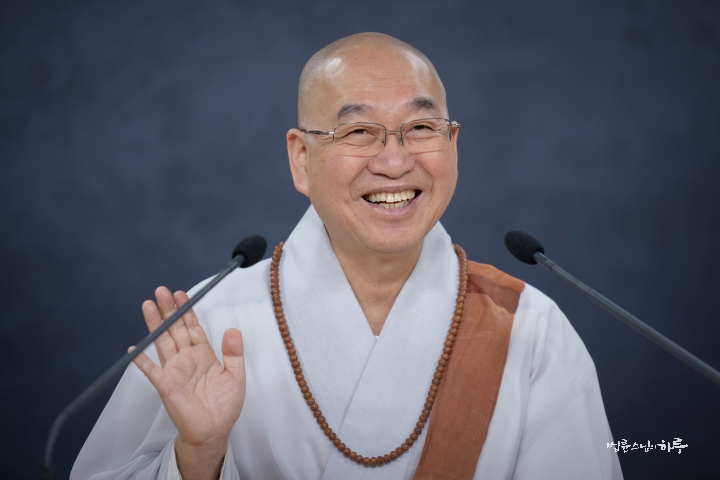
“Dear 1000-Day Practice participants, Jungto Society has continued its practice and dedication for the past three years, one thousand days, and today we are completing the 1st 1000-Day Practice. For the next three months, we will prepare for the next thousand days and begin the 2nd 1000-Day Practice dedication on March 15 next year. This doesn’t mean we won’t practice during these three months. During this period, individuals should continue their practice steadily. However, this is about concluding the 1st 1000-Day Practice, evaluating its results, and preparing for a new beginning.
The Buddha’s Way: The Path to Changing the World Without Anger
There are various images of Buddhism. First, there is Buddhism as a religion. This is the religious belief that ‘if you pray to Buddha for blessings, he will grant your wishes and you will go to a good place after death.’ Second, there is Buddhism as philosophy. Buddhism has a profound and deep philosophy that ‘all phenomena are empty,’ but it is very difficult to understand. So there is an image that it is difficult for ordinary people to study and is mainly explored by elite or intellectual classes. Third, there is Buddhism as practice, with the image of practitioners who go deep into mountains or forests, cut themselves off from the world, explore only themselves, and live frugally. While Buddhism as practice has its merits, it also has the problem of turning away from the various sufferings and problems of people in this world.
The Buddhism I first came to love was Buddhism as philosophy. Then I came to love Buddhism as practice. However, Korean society, where I spent my youth, had many social problems during democratization and economic development, including rural collapse, urban poverty, poor working conditions, and gender discrimination. At that time, Buddhism as a religion turned away from the world’s chaos to pray for personal blessings, and Buddhism as practice turned its back on the world’s problems, saying ‘this world has nothing to do with me.’
As a practitioner and a young person, I came to have deep doubts about whether it was right to turn away from the various conflicts and contradictions of the world. Christians were actively participating in democratizing society and solving people’s suffering, but in the traditional Buddhism I encountered, it was difficult to find historical grounds for social engagement. Many young Buddhists preferred social science over Buddhism and engaged in social participation from a social science perspective. So I too wondered whether I should continue with this Buddhist faith or focus more on social action to alleviate people’s suffering. I questioned, ‘Is what I know really Buddhism?’ ‘Was Buddhism originally like this? Or has it been transformed through historical progression?’
So I decided to research not Buddhist philosophy or thought, but the life of Buddha – ‘What kind of person was Buddha, and what kind of life did he live?’ I began gathering and reading all available materials about Buddha’s life for several years. Until then, the Buddha in the Buddhism I had learned was just an abstract being like a god, and I didn’t know much about Buddha’s life as a human being. Then I was able to find many records about Buddha’s life as a human in Buddhist scriptures.
The society in which the Buddha lived also had many conflicts, just like the society I live in. In his youth, he too agonized over the many conflicts he saw in the world. It seems he realized that the existing beliefs, ideologies, social systems, and educational systems could not solve people’s suffering. So he abandoned his throne, became a monk, and sought a new path. After much trial and error and exploration, the Buddha found a path to freedom and happiness for himself, and he spent his entire life spreading the Dharma to share this path with the people of the world.
Even during the Buddha’s lifetime, the world was filled with suffering from war, hunger, conflict, and discrimination. Many people who were suffering brought their problems to the Buddha and appealed to him. The Buddha engaged in dialogue with them one by one about these issues, helping people free themselves from suffering, anguish, and doubt. While most people become angry and get involved when they see social problems, conflicts, or injustice, the Buddha addressed these issues without anger, pointing out social contradictions one by one and moving toward solutions.
That is where I found a new path. Having no greed, no anger, and no ignorance – such an attitude makes my life peaceful and free. However, the Buddha’s way was not to remain content with this, but to realize justice and peace without anger regarding the many contradictions in the world. When I took charge of guiding university students, I guided them from this perspective.
‘It is admirable that you want to realize the social justice you aspire to. However, you must not do it with anger in your hearts. So practice letting go of that anger while engaging in social action.’
When we pursue justice with anger, we may achieve some degree of justice, but ultimately we create social conflict. When we pursue economic development to eradicate poverty out of greed, we may eliminate poverty and gain wealth, but ultimately we destroy the natural environment and widen the gap between rich and poor. This is also the reality of Korean society today. Despite economic development and democratization, nature has been destroyed, leading to a climate crisis and causing many social conflicts. To heal these social conflicts, what is needed is no longer growth or struggle, but an attitude of understanding, embracing, and working together with others.
The Path of the Buddha: Changing Myself and Healing the World
We must realize that nature is no longer something to be conquered, but the foundation of life on which we must continue to live. We treat those who don’t align with us as enemies, as objects of struggle. But in fact, they should become our good neighbors and friends with whom we can work together. We must realize that our talents should be used not to pursue our own interests alone, but to share with our neighbors.
In the past, enjoying great wealth and power was justified by status, such as being royalty or nobility. Today, such status has been abolished, but the notion has emerged that those with exceptional individual talents deserve to enjoy great power and wealth, creating a new form of status. As neoliberalism has expanded, the wave of conservatism occurring in the United States and around the world today treats the unlimited enjoyment of wealth through individual talent as if it were justice.
In such times, I believe the Buddha’s teachings, beyond being simply a religion, will become light and salt for the world, offering new hope to heal the many conflicts of this world. The Buddha’s teachings take a scientific approach to the principles of our mental processes. We always have an instinct to defend ourselves. That’s why it’s easy to see others’ faults but difficult to see our own. Therefore, we need a process of looking back at ourselves and getting to know ourselves. After starting practice, only after at least 100 days of dedication can we gradually begin to know ourselves, realizing things like ‘I’m stubborn’ or ‘I have a lot of anger.’ That’s why we recommend practicing consistently for 100 days when starting.
However, just knowing that I ‘have problems,’ am ‘stubborn,’ or ‘have a lot of anger’ doesn’t improve the situation. If you become aware of yourself and consistently make efforts to improve, after about 1,000 days, approximately three years, some change occurs. You gain awareness and confidence that this karma is ‘not destiny,’ ‘not predetermined,’ and ‘can be changed through effort.’ That’s why we practice for 1,000 days.
This change doesn’t end at the individual level. If we don’t regard the way our society operates as ‘God’s will’ or ‘fate,’ and if we consistently work for social justice, we can bring about social change. If we consistently pursue social change for about 30 years, or 10,000 days, we can change this society in a better direction. That’s why we do 100-day prayers, 1,000-day prayers, and 10,000-day prayers. The reason I’m sharing this with you today is to let you know that this is not simply religious faith and belief, but part of my life dedicated to changing myself and making the world I live in more beautiful.
When Jungto Society first began, there was much criticism. For instance, people said, ‘How can a religion be established if it doesn’t seek blessings? It will surely fail.’ Others argued, ‘To change society, you need the power that comes from anger and criticism. How can you change society without anger? That will also fail.’ These were the kinds of challenges raised. However, in Korean society, those who called themselves activists pursuing social change achieved social democratization, but they themselves were becoming increasingly exhausted from the stress caused by anger. From the perspective of healing stress, many people listened to our message and participated. Thus, most of Jungto Society’s early volunteers came from the student activist movement.
However, much time has passed since then. Today’s young people in their 20s and 30s in Korean society lack aspiration or vow for social justice. They have experienced frustration and are psychologically withdrawn. How to overcome their psychological withdrawal is our current challenge. We found that engaged Buddhism alone, which guarantees social practice, could not attract the participation of the younger generation, and a new approach was needed. As we entered the second 10,000-Day Practice, we decided to focus more on actively applying the Buddha’s teachings to the psychological healing of the younger generation. As a result, the enrollment rate of young people in Jungto Dharma School increased from 10% to 20%.
It is necessary to share our experience with the world. This is because developed countries that have already achieved economic growth and democratization face similar problems as Korea, and developing countries may encounter these issues in the future. In particular, the climate crisis is arriving simultaneously worldwide, and the development of artificial intelligence is approaching all countries, whether developed or developing. To overcome the climate crisis, we face the major challenge of finding ways to live happily while consuming less. In the automated era established by artificial intelligence, a new challenge will emerge: how can humans truly live happily without working? Production will mostly be automated, leaving humans primarily with the role of consumers. Since consumption has addictive qualities, we must solve the problem of how to be free from this addiction.
In solving these challenges, we can gain many new hints and ideas from the Buddha’s teachings and life. We must transform the Buddha’s teachings from the religious realm called Buddhism into teachings that give hope to all humanity and can be universally accepted by everyone. When we began the second 10,000-Day Practice, we decided to ‘provide people around the world with opportunities to learn the Buddha’s correct Dharma,’ which is how we came to meet all of you. We are not following a path that has already been discovered, but must find new paths going forward. Using the path that Buddha walked in the past as our compass, we must continuously open new paths.
What I want to say to you lastly is that we should work together for our own freedom and happiness, and for the hope of the world. For ourselves, we should practice diligently every day, and for all of us, we must work together to develop content and spread this good Dharma to our neighbors. Let us walk this path together. Thank you.”
After the Dharma talk, a Q&A session was scheduled, but it had to be canceled due to Sunim’s severe shoulder pain.
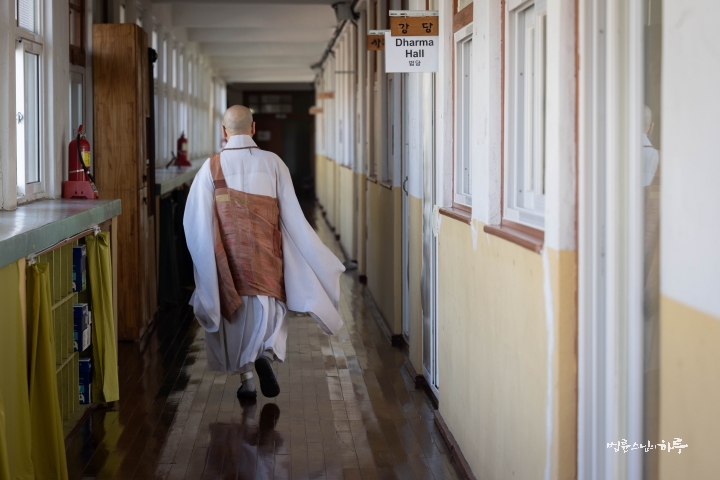
After concluding the closing ceremony with the Four Great Vows, Sunim immediately departed for an orthopedic clinic in Gyeongju.
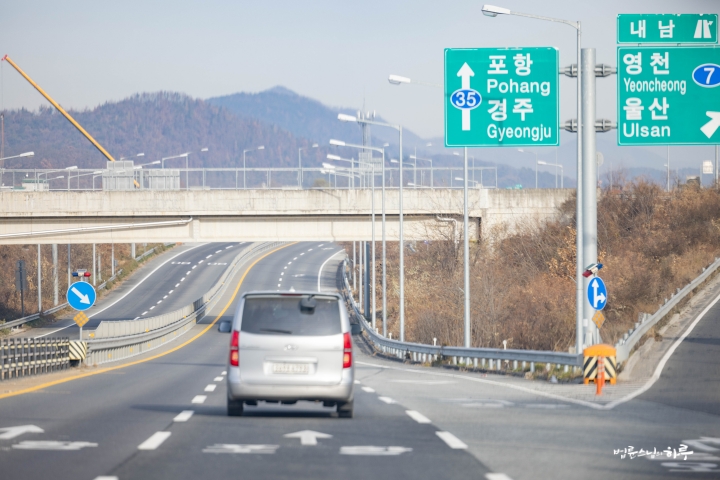
When he arrived at the hospital around 10:30 AM, the waiting room was already crowded with patients. After a long wait, he had an MRI scan and received a pain injection. As soon as the examination was finished, he headed to a dental clinic in Busan. Due to time constraints, lunch was simply kimbap eaten in the car.
At 3 PM, he arrived at the dental clinic to have a decayed molar extracted and arrived at Dubuk Jungto Retreat Center after 5 PM.
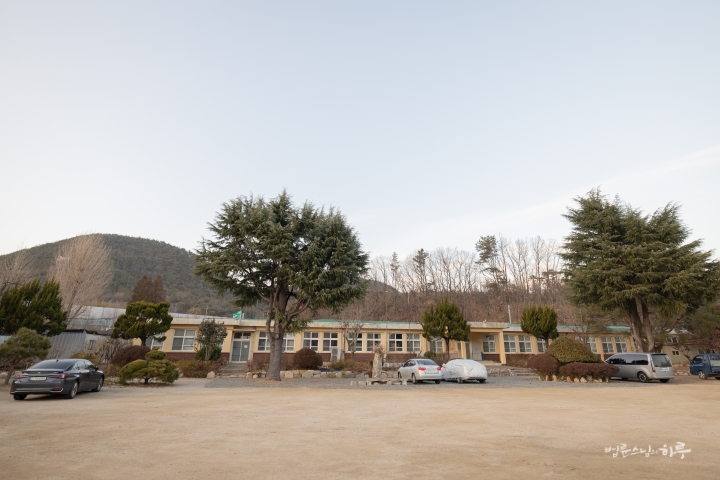
After taking a brief rest, from 6:30 PM, he participated in an online meeting of the Steering Committee for Sustainable Development in Bhutan from the broadcasting room at Dubuk Jungto Retreat Center.
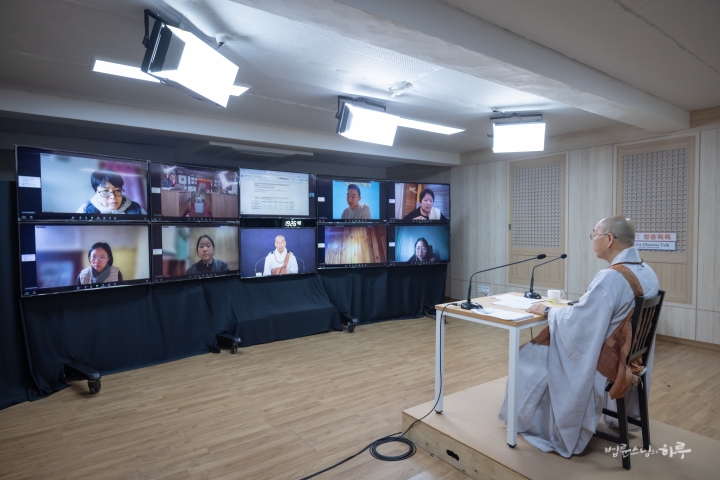
The meeting was attended by Jungto Society staff members dispatched to Bhutan, the Deputy Secretary to the Royal Family of Bhutan, the Cabinet Secretary, the Governor of Trongsa, the Governor of Zhemgang, and key officials including planning officers and accounting officers from each district. Sunim greeted them with a bright smile.
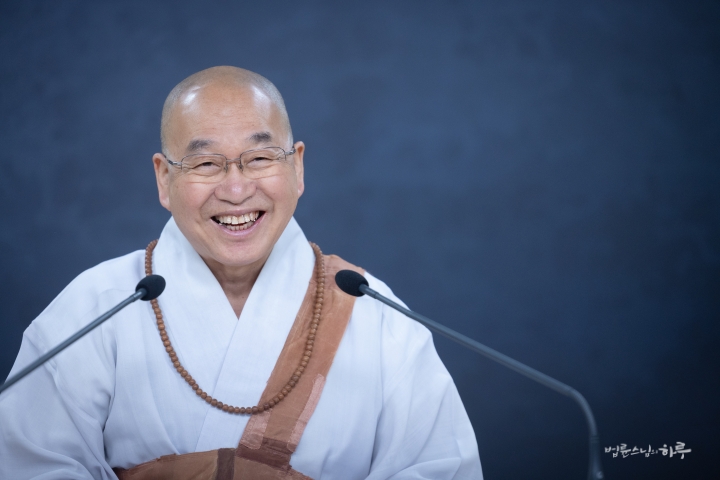
“It’s wonderful to see all of you. Deputy Secretary to the Royal Family, Cabinet Secretary, Governor of Trongsa, and Governor of Zhemgang, how have you all been?”
“We’ve been well, Sunim.”
“First, I’d like to ask for your understanding. I’m experiencing severe pain from a herniated disc in my neck. When I bow my head like this, it’s fine, but when I lift my head to look at your faces, the pain becomes severe. Please be understanding if I keep my head slightly bowed during the meeting.”
After a prayer in Bhutanese style, they asked Sunim for opening remarks. Sunim opened the meeting by expressing gratitude for the national peace prayer held in Bhutan last November.
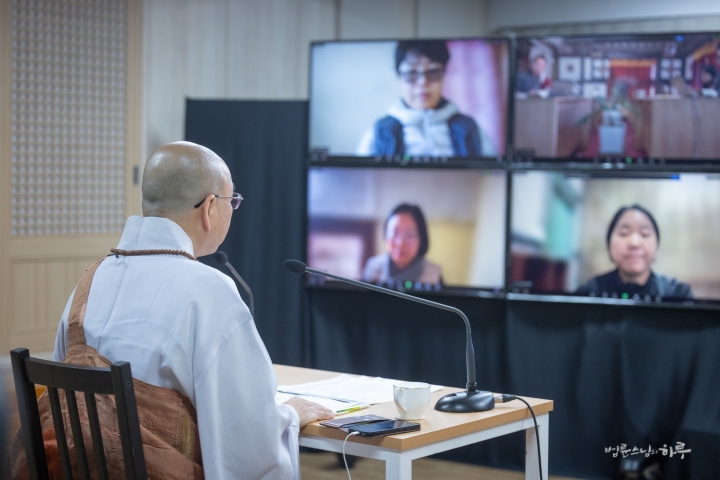
“Thank you all for your hard work in conducting the national peace prayer in Bhutan. I believe that through the prayers of His Majesty the King, the Royal Family, Rinpoche, many lamas, and all of you, not only Bhutan but the entire world will become more peaceful. I was glad to participate in this prayer, and it was especially meaningful to meet and have a conversation with the Fourth King.”
“However, our sustainable development project seems to be delayed in starting due to all stakeholders being busy, which has postponed our meetings. Also, preparations seem to be somewhat incomplete. Trongsa appears to be ready and is on today’s agenda, perhaps because it has fewer gewogs. Zhemgang is mostly prepared, but the Governor’s signature has not been finalized yet. So if we cannot address this agenda today, I hope we can convene the next meeting as soon as possible to address it.”
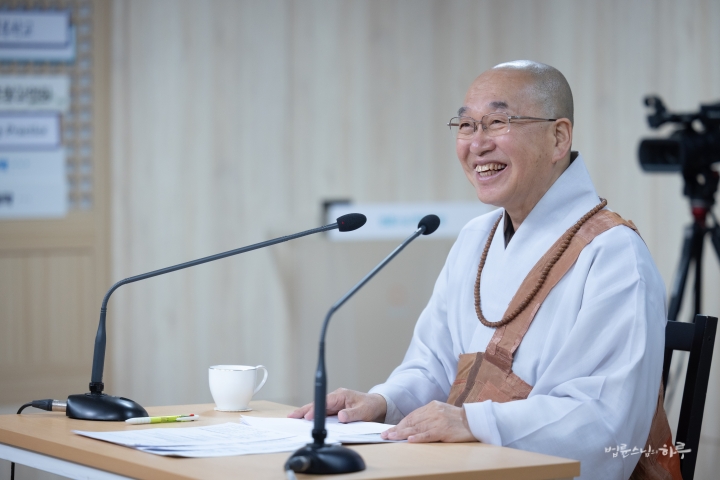
Since this is the agricultural off-season, the projects need to be approved quickly so farmers can start working. I know everyone is busy, but I hope we can hold another approval meeting soon after this one. This work is only possible with the continued cooperation of the Bhutanese government. I sincerely thank the Governor, Planning Officer, Secretary General, and all other officials involved.”
The subsequent meeting focused on progress reports and accounting for JTS’s ongoing pilot projects, as well as reviewing the Trongsa main project proposal.
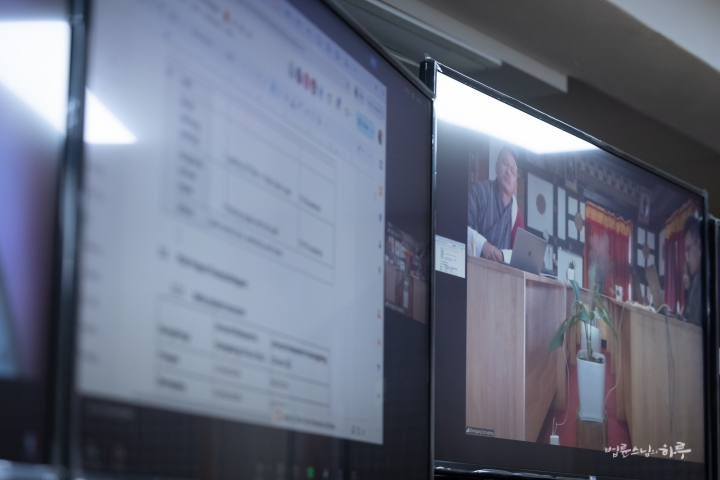
Major projects in various regions including Nubee Gewog, Tangsibji Gewog, Korphu Gewog, Dragteng Gewog, and Langthel Gewog were reviewed and either fully approved or conditionally approved.
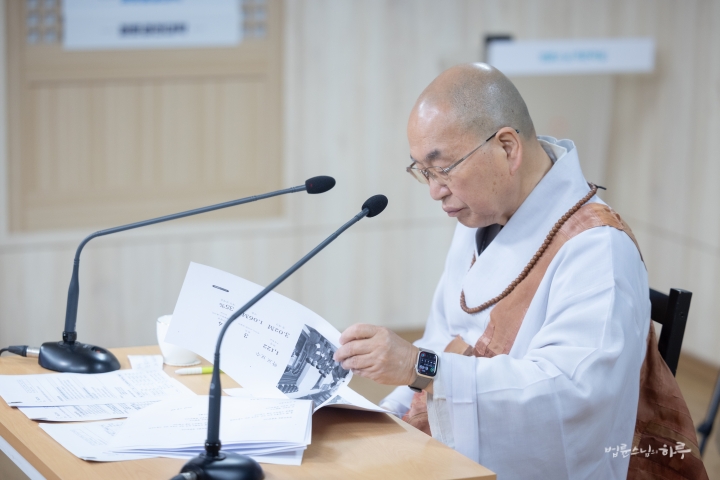
Next, volunteer Park Si-hyun reported on the status of volunteers dispatched to Bhutan so far.
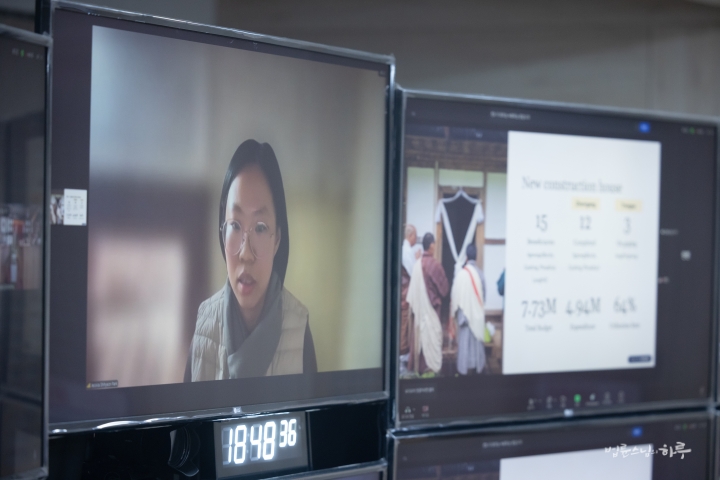
Regarding volunteer operations, Sunim personally explained the necessity of direct projects and requested visa issuance assistance from the Royal Secretariat.
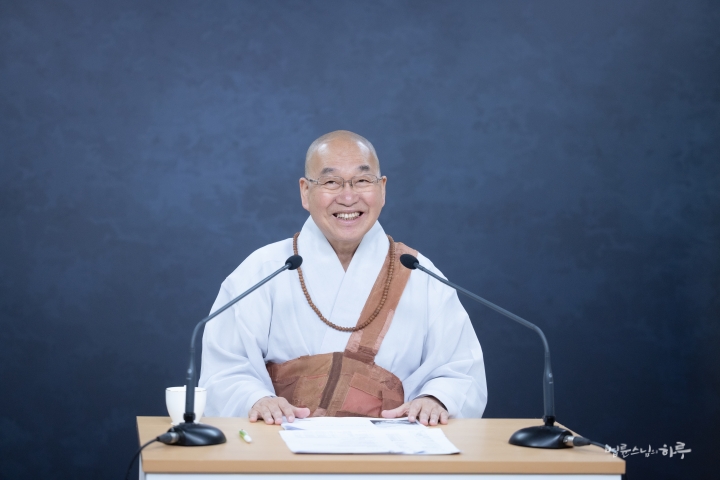
“We want to provide tools so local residents can repair their own homes, and send volunteers from Korea with some experience to help with basic tasks like kitchen structures or shelf installation. They don’t need to be professional carpenters, but it’s important to have experienced people come and create samples to show. In Bhutan, since individual homes don’t have tools, people need to call professionals for repairs, which costs money, so most people just live without fixing things. If they could repair their homes with simple tools using their own hands, their quality of life would improve significantly.”
Sunim once again requested visa issuance from the Royal Secretariat in a cheerful tone.
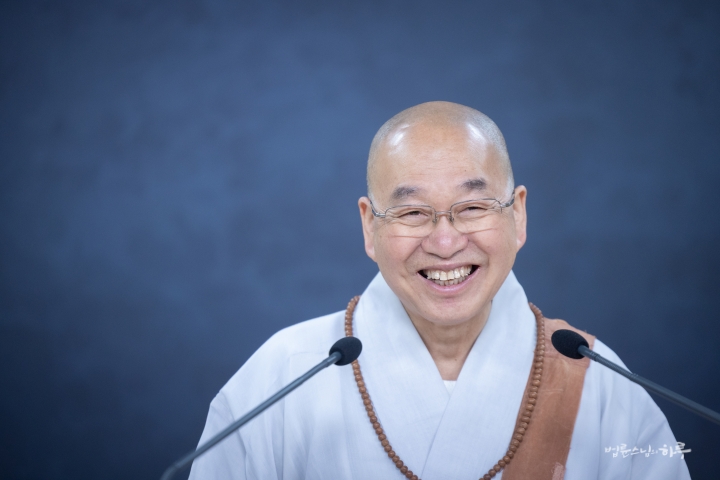
“I tell the volunteers this: Since the daily tourist fee for Bhutan is $100, you can’t just play around. I joke that if you’re going to play, you’ll have to pay $100 per day. (laughter) So please help with the visas so the volunteers can work.”
Finally, a draft schedule for Bhutanese officials’ visit to Korea was shared and participants’ opinions were gathered.
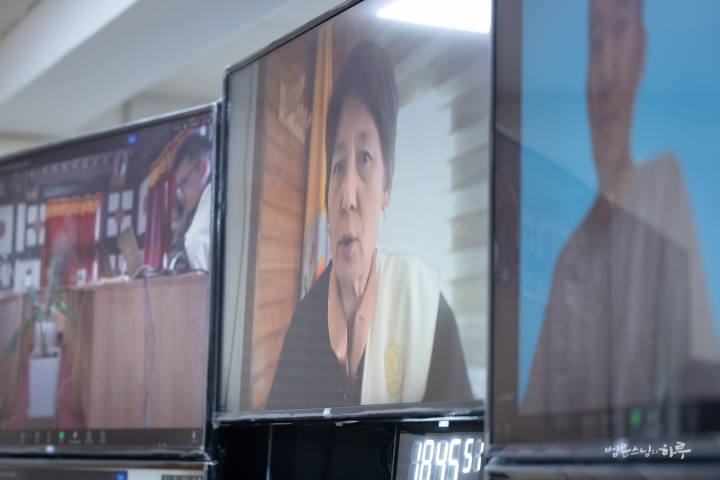
The meeting lasted a full two hours. After agreeing to hold the next meeting on December 29, the session concluded.
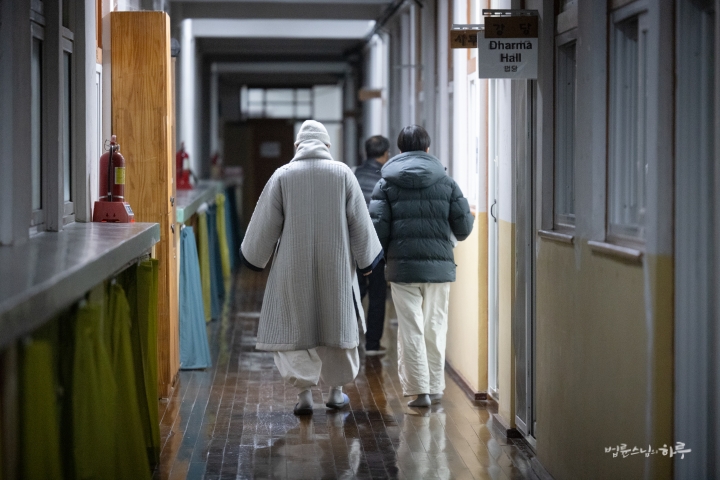
After finishing the steering committee meeting, Sunim immediately held a brief working meeting with the field staff dispatched to Bhutan. All activities finally ended at 9 PM. Despite severe shoulder pain and continued bleeding from the tooth extraction site, Sunim quietly completed all scheduled activities.
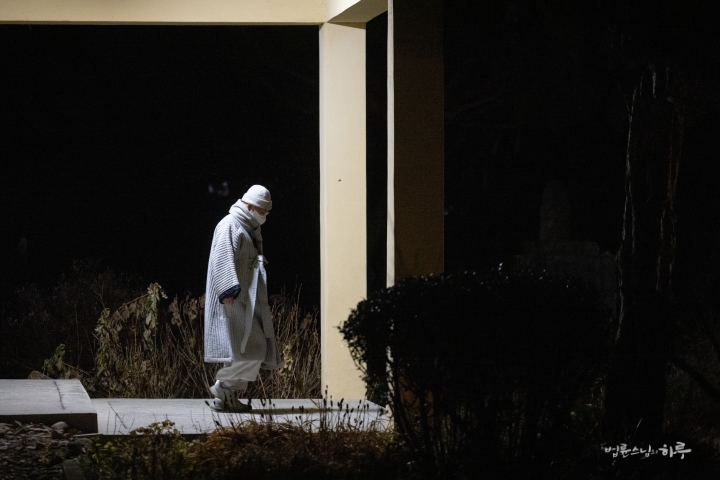
Tomorrow, Sunim will visit Dorisa Temple and Ado Morye Memorial in Gumi, then travel to Seoul for a 2026 schedule meeting with all heads of Jungto Society’s affiliated organizations gathering online.