Why Do I Feel So Uncomfortable Working with People with Different Working Styles?
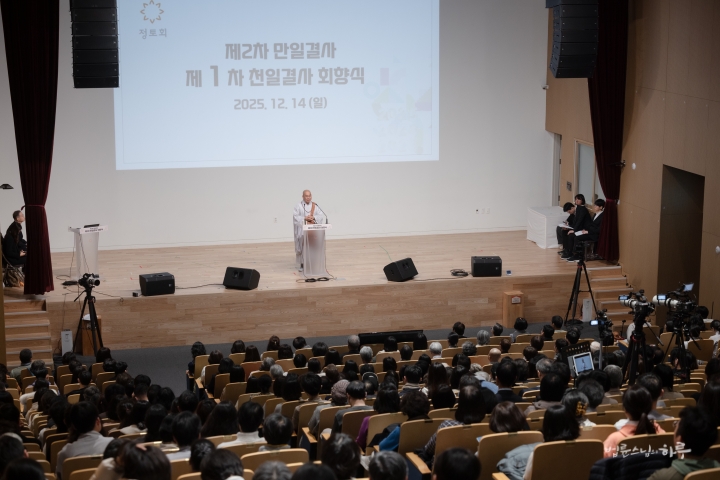
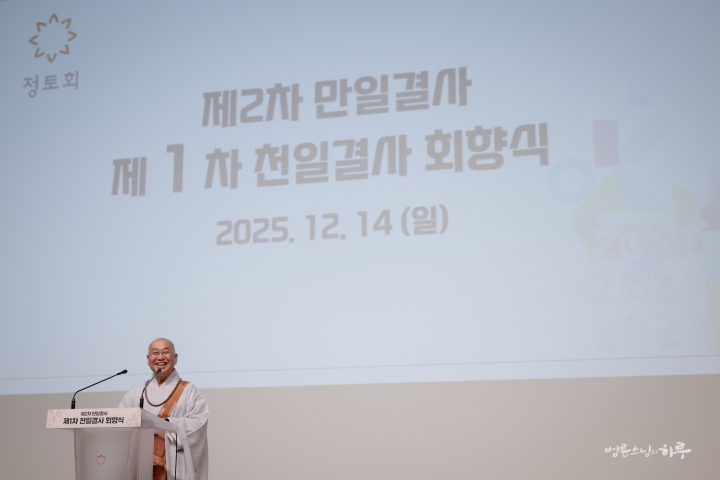
Dec 14, 2025. - The 2nd 10,000-Day Practice, 1st 1000-Day Practice Closing Ceremony, International Division Members' Day
Hello. Today marks the closing ceremony for the first 1000-day period as we begin the second 10,000-day practice. Over the past thousand days, Jungto Society members have been diligently practicing and integrating their practice into daily life. Today is a meaningful moment as we conclude our thousand days of practice.
Sunim boarded a flight departing from Manila, Philippines at 12:25 AM to head to Incheon Airport to attend the 1000-Day Practice closing ceremony.
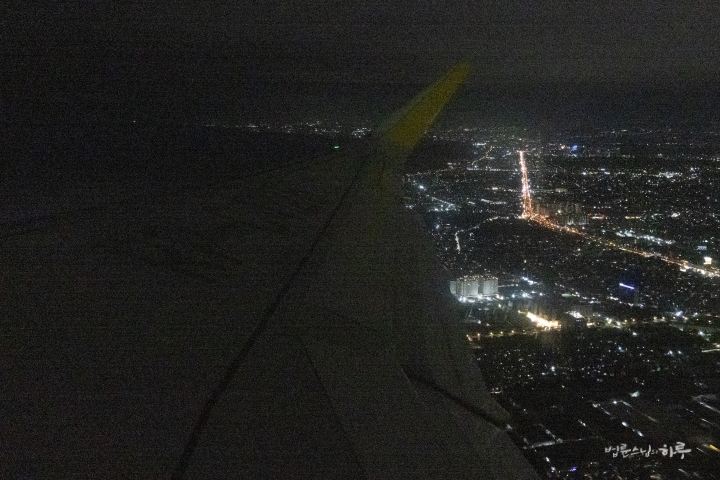
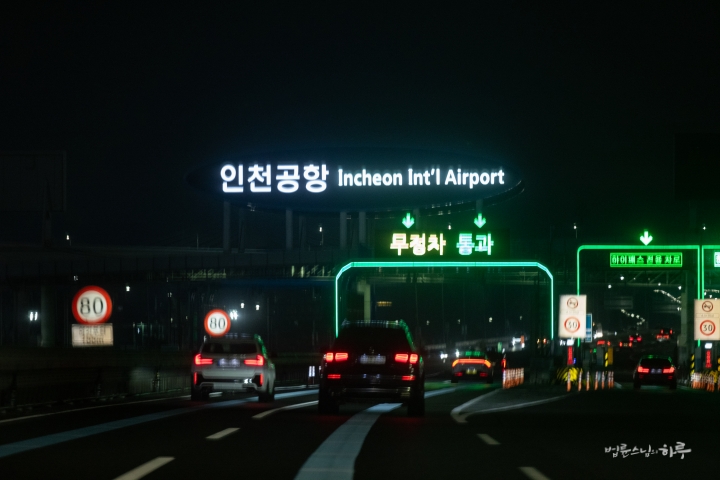
After catching some sleep in the airplane seat for 4 hours, he arrived at Incheon Airport at 5:30 AM.
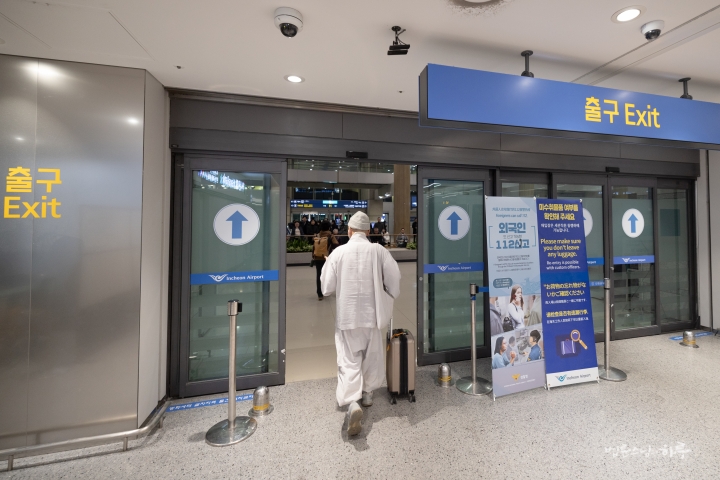
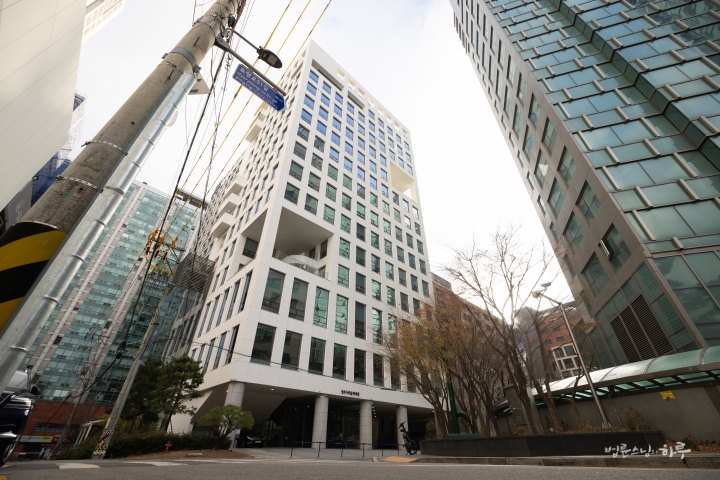
He immediately headed to the Jungto Social and Cultural Center to attend the closing ceremony for the 2nd 10,000-Day Practice, 1st 1000-Day Practice.
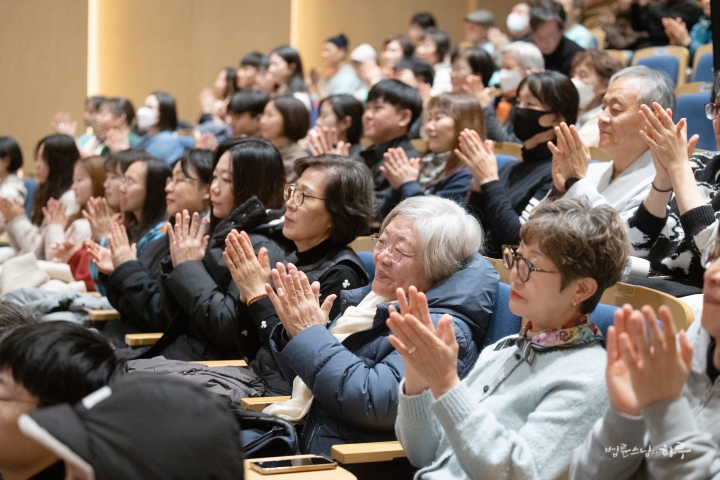
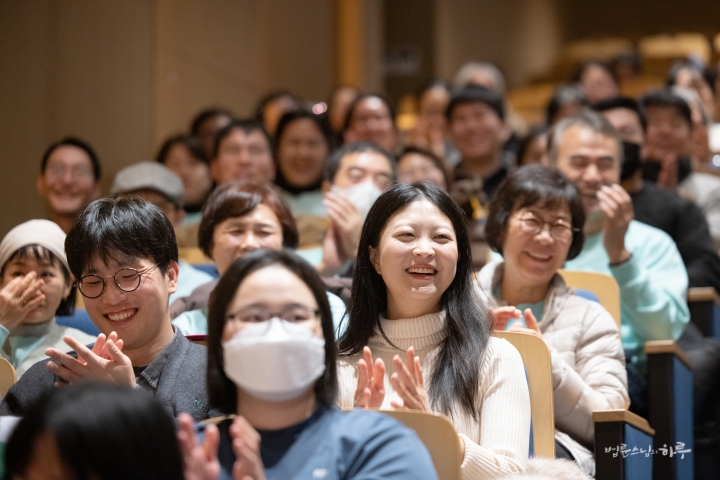
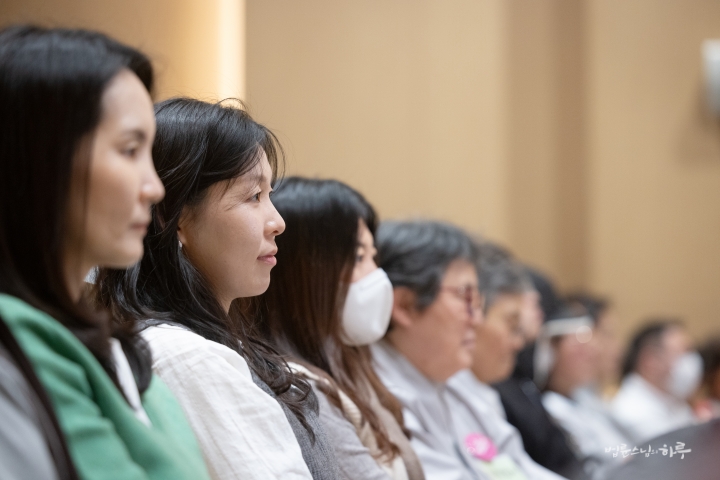
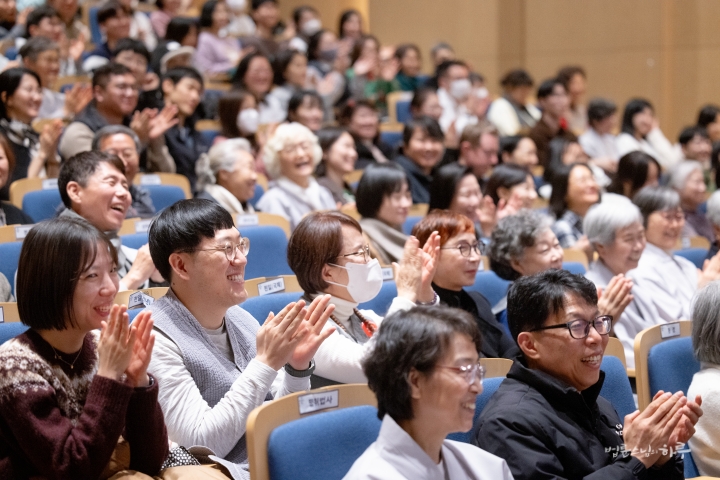
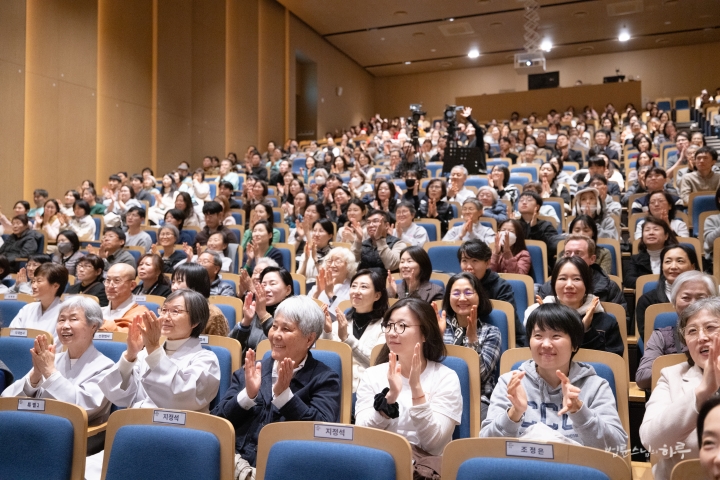
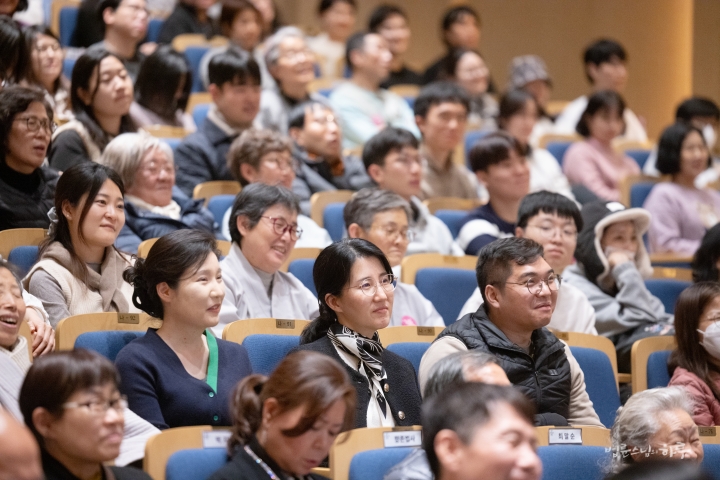
At 9:30 AM, about 400 members of the Sangha gathered in the underground auditorium. The closing ceremony for the 2nd 10,000-Day Practice, 1st 1000-Day Practice began energetically with the ringing of the bell, chanting, and the Heart Sutra. The first part was the closing ceremony for the 10th 100-Day Prayer that began in September, and the second part was the closing ceremony for the 1st 1000-Day Practice.
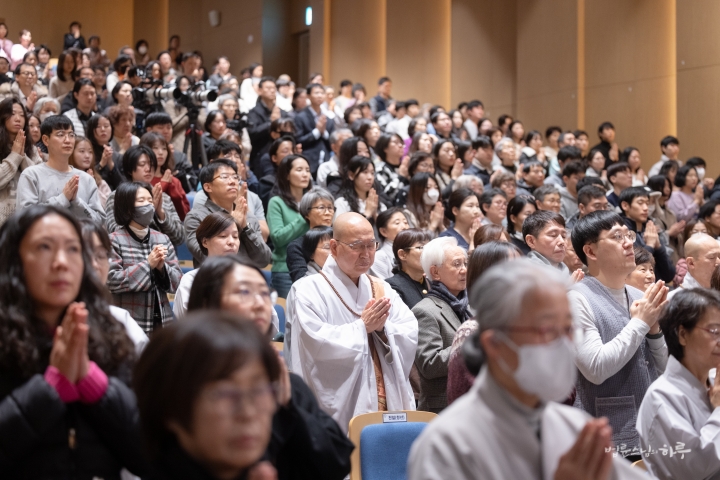
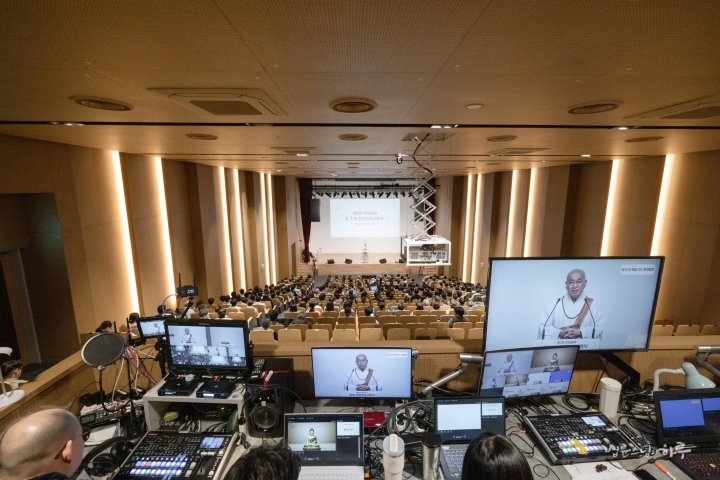
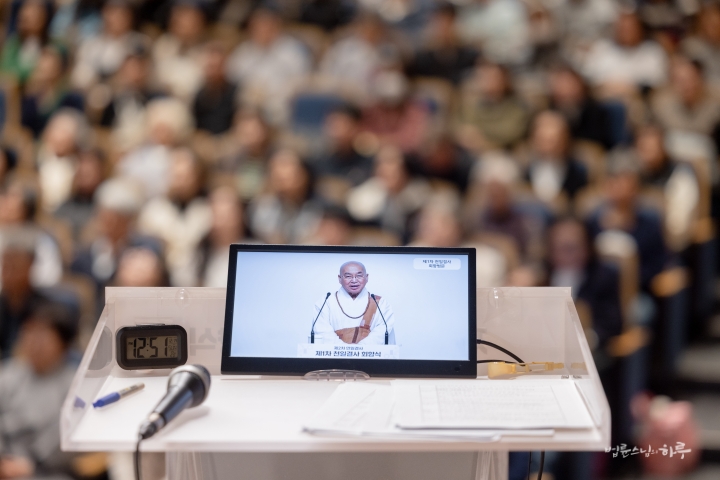
With 7,000 people connected to the live broadcast from home and abroad, the doors to the opening ceremony were thrown wide open with great applause, celebrating the gathering of Jungto practitioners in one place.
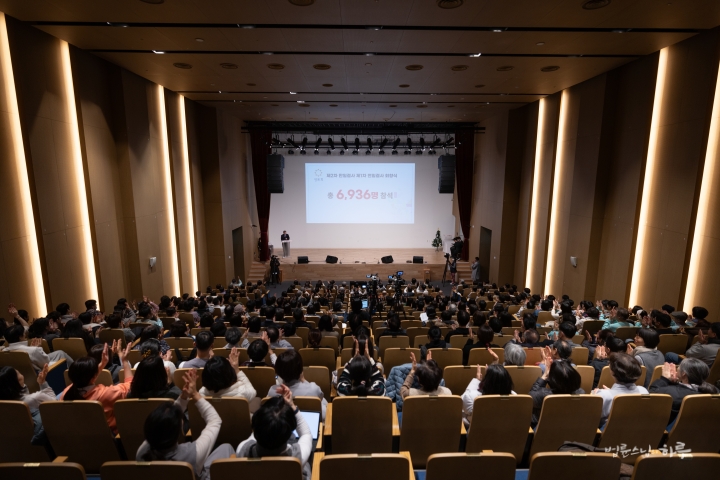
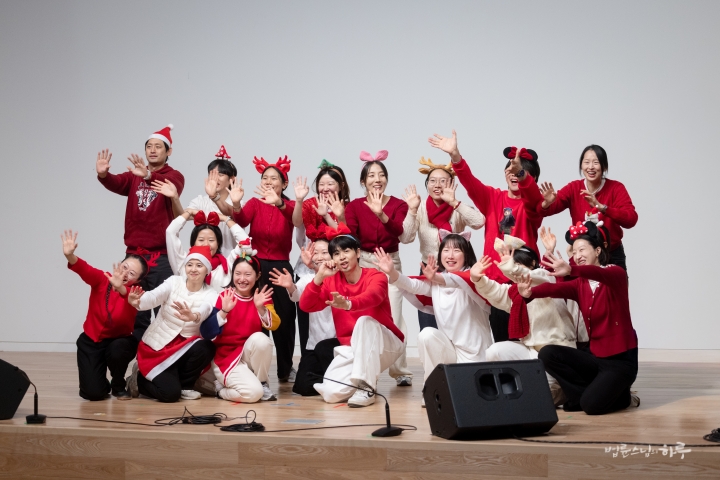
First, the 10th 100-Day Prayer closing ceremony was held. Following greetings from the President of Jungto Society, the Special Youth Division presented a performance to open today’s event.
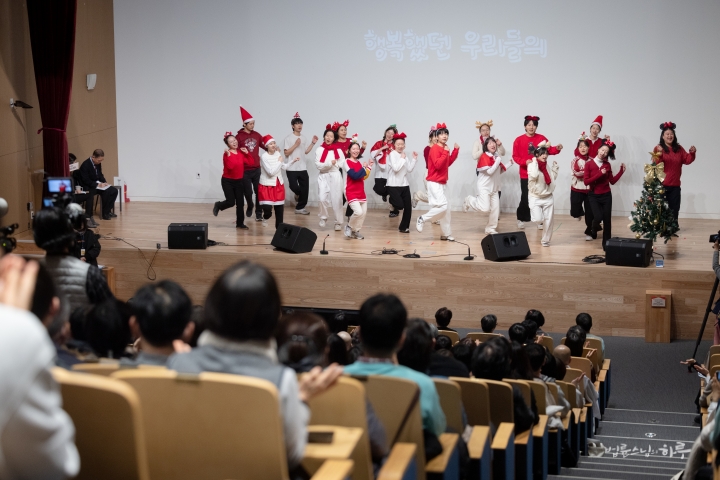
Dawn filled with familiar moktak sounds ♬
A thousand days of devotion, each day accumulating
Sunim’s voice coming through the screen
Feels like it was prepared just for me, so grateful
You know without words being spoken
All I need is the Dharma talk that keeps me awake ♬
The Dharma talk seems to know my heart
Peace comes to our hearts!
It was a moment to fully feel the energy of the youth.
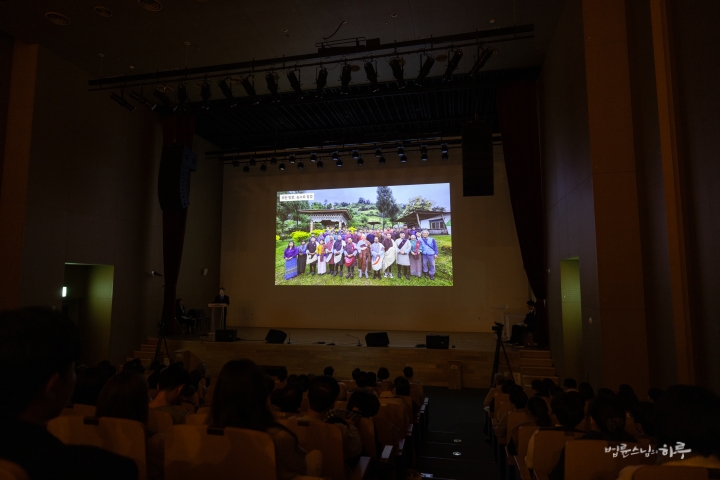
Next, a video showcased the footsteps of the past 100 days. Many activities from around the world were captured in a 15-minute video.
Next, we heard practice testimonials from two people who practiced more diligently than anyone over the past 100 days. First, we watched a video of the practice testimonial from Craig Lewis of the Asia-Pacific Chapter, International Division.
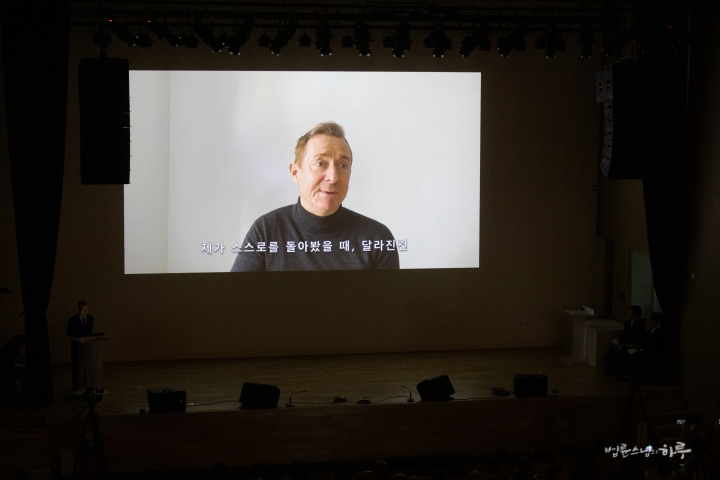
“My name is Craig Lewis. I am a Buddhist journalist and a Jungto practitioner. Initially, I came to know Jungto Society as a journalist, but later decided to walk the path as a practitioner. I took the Jungto Dharma School course and am also participating in the 1000-Day Practice. One of the most difficult aspects of practice was honestly sharing my mental state, emotions, and experiences during practice within my group or community. Another major challenge was recognizing and accepting the ignorance, delusions, and negative aspects in my life as they are, and working with them. I believe these two things continue to be ongoing practice challenges. These difficulties have been gradually overcome through practice and through the open attitude and warm acceptance shown by my Jungto Dharma friends. The community atmosphere of accepting whatever is shared as it is has been a great source of strength. I feel that Jungto Society is becoming stronger each year. I hope this momentum continues well, so that many people who form connections with Jungto Society can understand its values and spirit, and share them with others.”
Next, we watched a video of the practice testimonial from Park Si-hyun, a field worker dispatched to Bhutan from the Community Division.
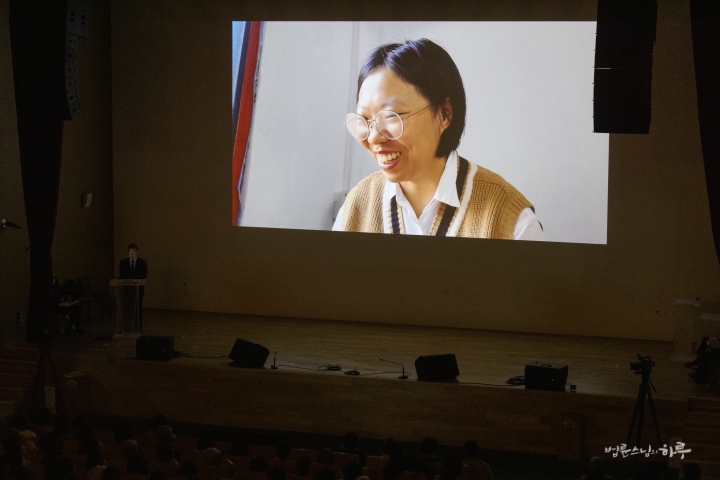
“In others’ eyes, I was someone with a lot of anger and difficult to harmonize with. Being overly attached to work, I kept picking fights with fellow practitioners who worked differently from me. Although I had been thinking ‘I’ll go home once every two years,’ at that time I really felt my connection with the Philippines had ended. I said goodbye to both the community and Philippines Jungto Society, packed my bags, and returned to Korea. After that, following Venerable Yusu’s words, I continued practicing for about 100 more days. Around the end of 100 days, I realized I had been living without the perspective of practice, and I told Sunim I would do as instructed. Then Sunim said, ‘The best place for you to study right now is the Philippines. Go back to the Philippines.’ After thinking about it for a day, I said I would go, but this time the answer came that the Philippines wouldn’t accept me. That fact was another big shock. ‘They won’t accept me? After everything I did there?’ came to mind, and I was again in a state of confusion. ‘How bad must it have been for them to say they won’t accept me…’ I thought. Only then could I gradually look back at my actions. That’s how I ended up going back to the Philippines. When I went back, I had a really determined mindset. But karma isn’t something that changes overnight, so my old patterns came up again. Nevertheless, my resolution at that time was clear: ‘I won’t say I’m going home for 3 years.’ I fulfilled the 3 years according to my practice commitment, and as a result, I ended up working in the Philippines for a total of 6 years. Looking back, I think there was anxiety within me that if I didn’t do things a certain way, something terrible would happen and everything would go wrong. I now realize I was projecting that anxiety onto others and getting angry. Currently, I’m working as a team leader for a sustainable development project in Bhutan. I used to think, ‘I’m someone who should work alone. I want to live doing only as much as I can do by myself.’ Now, 13 years after starting my practice, through my Jungto Society experience, I feel like I’m finally getting a proper start on what practice really is.”
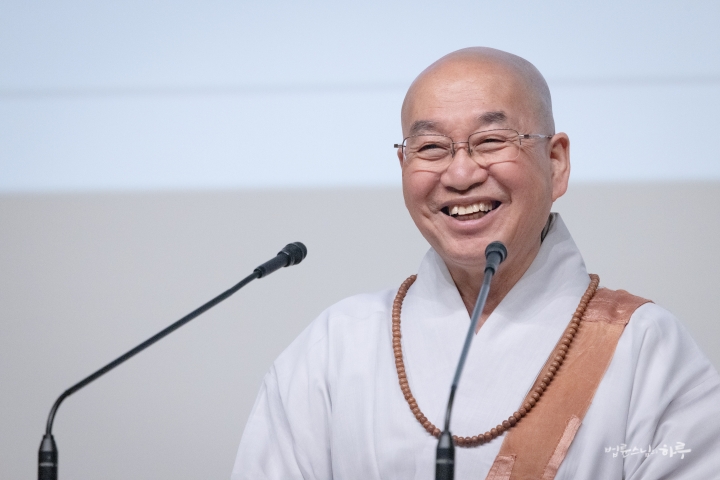
After the practice testimonials, we invited Venerable Pomnyun Sunim, the guiding Dharma teacher of Jungto Society, to give a closing Dharma talk for the 1st 1000-Day Practice, 10th 100-Day Prayer. As the assembly requested the Dharma with three bows, Sunim reflected on the past 100 days of practice and action, emphasizing that Jungto Society’s activities are pioneering experiments in how humans should live in future society.
Steps Toward the Future Created by Small Acts of Kindness
In this context, with the mindset of “let’s at least plant small seeds for the future,” we continue various activities around the world, though not on a large scale. Our relief activities are not limited to simply helping. We are creating a relief model that has low financial burden, high resident satisfaction, direct resident participation, and sustainability. People often think that doing good work requires a foundation like money or buildings. However, our activities are possible with just intention and people who share that intention. Since we are in the early stages of creating this model, it’s true that we face difficulties with increased workload. We view this as part of the trial-and-error process and will try to improve so that you can maintain your mental and physical health, care for your families harmoniously, and continue meaningful work in the world.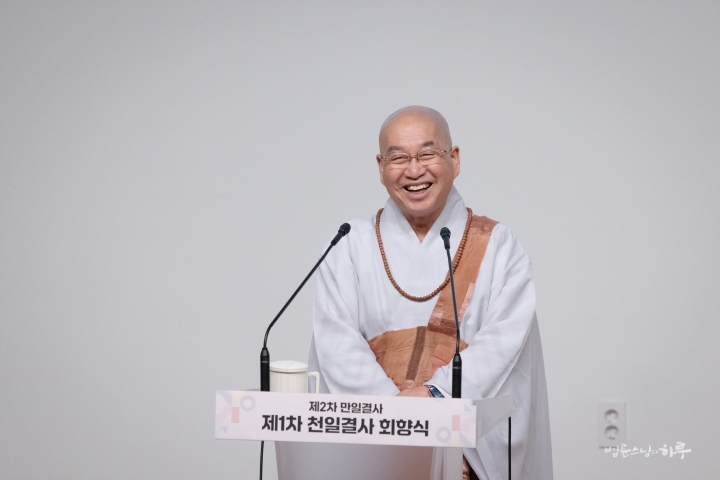
Learning the Meaning of Practice and Action on the Path of Pioneers
Jungto Society helps those who cannot even secure basic necessities like food, clothing, and shelter. Like giving food to the hungry, clothes to those without, and medicine to the sick, Jungto Society addresses fundamental human survival issues that our society has yet to resolve. At the same time, it also cares for the minds of those who, despite having their basic survival needs met, suffer from conflict and stress. Furthermore, Jungto Society does not stop at solving current problems but also prepares for the fundamental question: ‘What path should we take in the future?’ Today’s society is experiencing technological changes at a pace so rapid that it’s difficult for us to predict. Multiple issues confront us simultaneously: how to respond to these changes, how to adapt to environmental shifts and advances in automation technology, and what kind of life to choose. If humanity reaches the long-dreamed ideal of a world where people can live without working, without proper preparation, it could become a disaster rather than a blessing. Humanity is heading precisely in that direction. That’s why Jungto Society is conducting various experiments while looking ahead to such a future. The reason your family members complain now is because they only look at things from the perspective of past life standards. Their viewpoint is, ‘Why do something that doesn’t make money?’ From their perspective, they might see it that way. However, from a broader view, that’s just a minor concern. Even Buddha, from a worldly perspective, people might think, ‘He should have become a king and ruled the country, so why did he give that up?’ But looking at the broader historical flow, small nations were already disappearing in the process of reorganization into empires. To those who cling, it seems like a tremendous thing, but if you see the world properly, it disappears on its own. Only with eyes that see far ahead can one willingly let go of such things. Just as Buddha abandoned small things and showed the way while looking ahead, we too must follow that path, looking forward and moving ahead.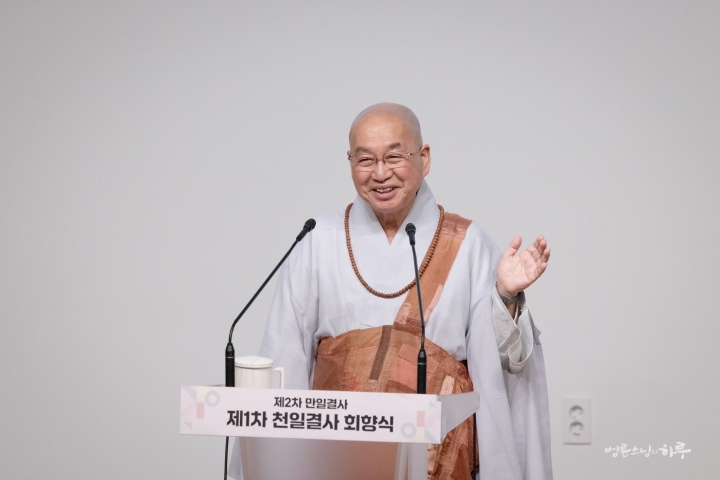
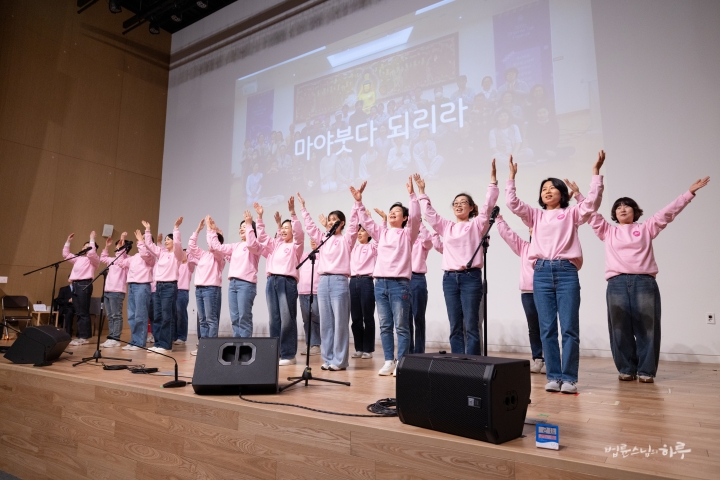
Following this, after hearing the closing remarks from Venerable Yusu, who served as the chairperson of the 300-Day Special Practice Committee, the Mayabuddha team, which has been continuing full-time volunteer work at the Jungto Social and Cultural Center for more than three days since the special practice period, celebrated the completion of the Special Practice Committee’s 300-day journey with a wonderful choral performance.
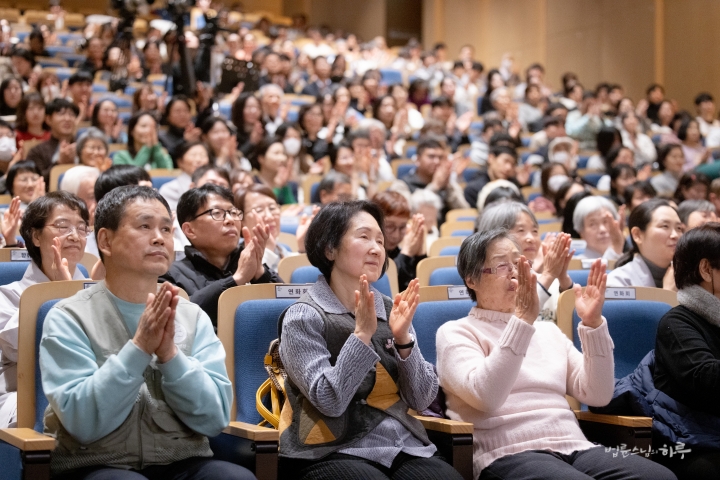
A 30-minute break followed. Members shared honey rice cakes and traditional cookies while enjoying conversations.
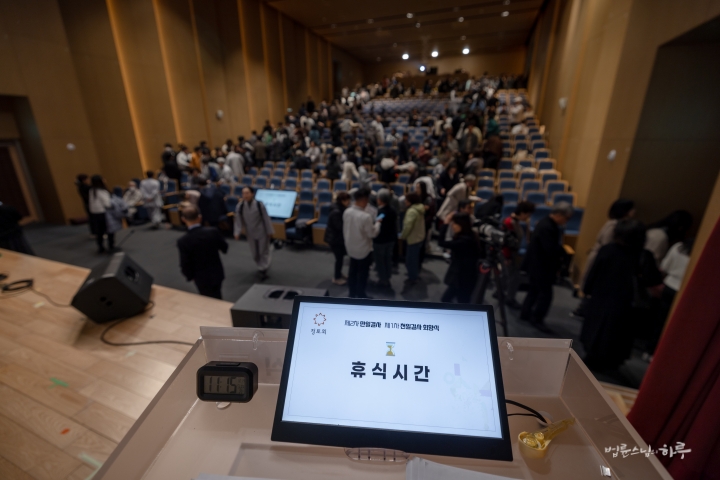
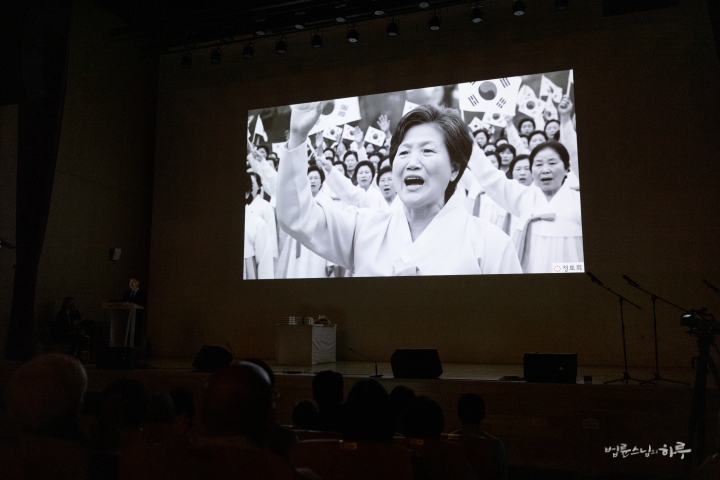
After catching their breath, everyone watched a video prepared by Jungto practitioners from overseas and international divisions. The activities and resolutions of overseas and international division Jungto practitioners were presented as a story called “Master Yongseong’s Dream,” created using AI.
Next, everyone watched a video titled “Footsteps of a Thousand Days” featuring the story of Jungto practitioners over the past thousand days.
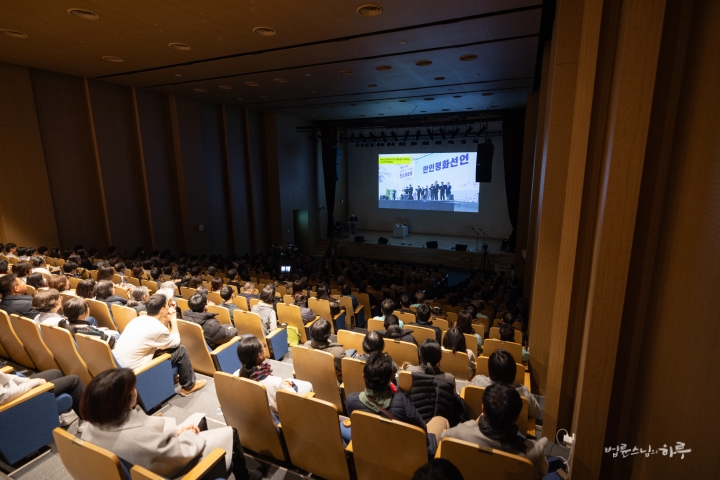
The 7-minute and 45-second video unfolded like a panorama, showcasing various activities of Jungto practitioners over the past thousand days, including the India pilgrimage with 1,250 participants, the June 13 Grand Dharma Assembly where tens of thousands gathered to pray for peace on the Korean Peninsula, and the recent Youth Festival.
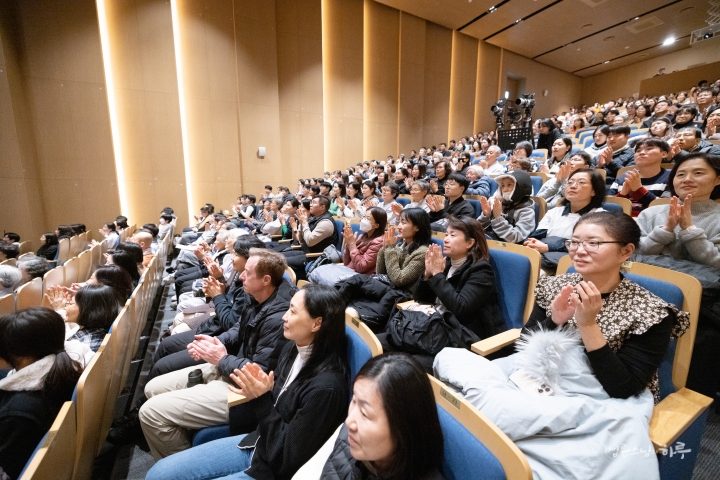
Next was the awards ceremony for those who prayed consistently throughout the thousand days. There were 98 people who woke up at 5 AM every day without missing a single day for a thousand days, and a total of 126 people who prayed every single day for a thousand days, though not always at the designated time. As each person’s face appeared on the screen, thunderous applause erupted.
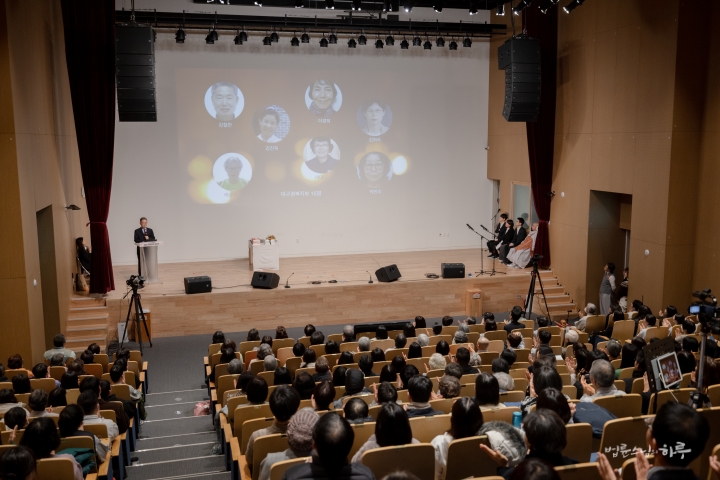
Sunim personally came on stage to present the awards. Four representatives from the international and youth divisions who attended the ceremony came up on stage to represent all the recipients.
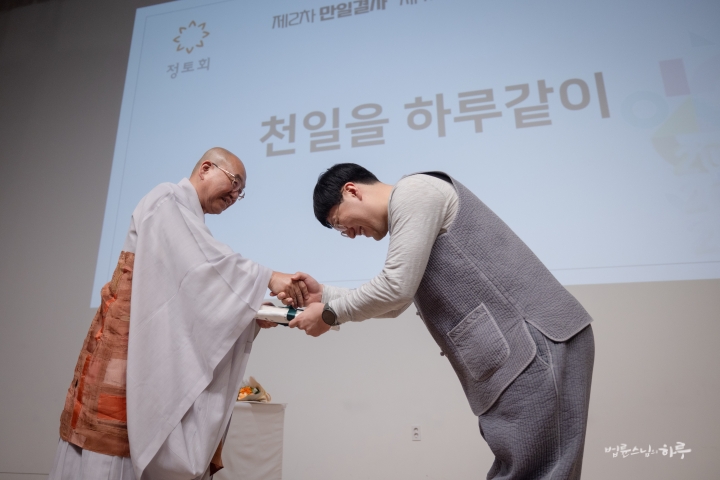
The recipients were presented with Sunim’s new book “Tak! Dialogues of Awakening” and meditation cloths as gifts.
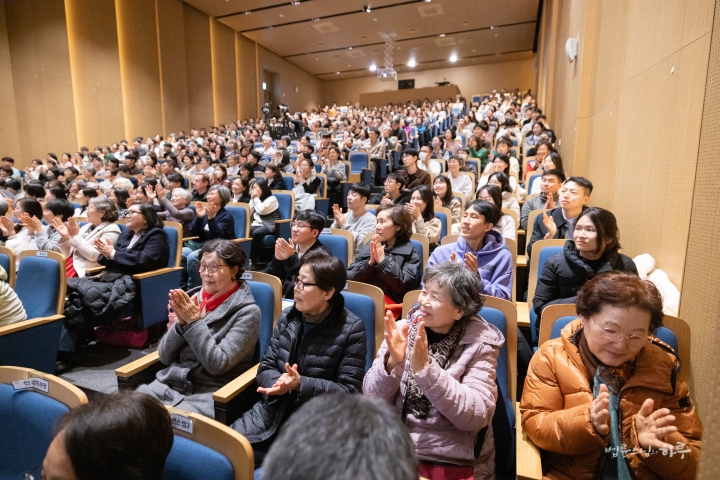
The event continued with the 2025 Proud Jungto Practitioner Awards ceremony. The Jungto Practitioner Awards are given to individuals or groups who have been exemplary in various areas throughout the year. Awards were presented in eight categories: Practice, Propagation, Generosity, Unification, Welfare, Environment, Special Award, and the Grand Prize for Jungto Practitioner.
The Practice Award is given to Jungto practitioners who have become role models through consistent and unwavering practice, or who have unified work and practice. The recipient is Park Tae-hwa from Changwon Branch, Gyeongnam Division. Park Tae-hwa has practiced without missing a single day for over 10 years since the beginning of the Bongrimsa Temple reconstruction and unification prayer, participated in Bodhi tree volunteer work with the construction of the Jungto Social and Cultural Center, served as the electrical supervisor at the center on weekdays, and led unification prayers at Bongrimsa Temple on weekends, traveling between Seoul and Changwon while maintaining consistent practice and becoming a model for Jungto practitioners. Due to personal circumstances, Dharma Teacher Hyangchwi accepted the award on his behalf.
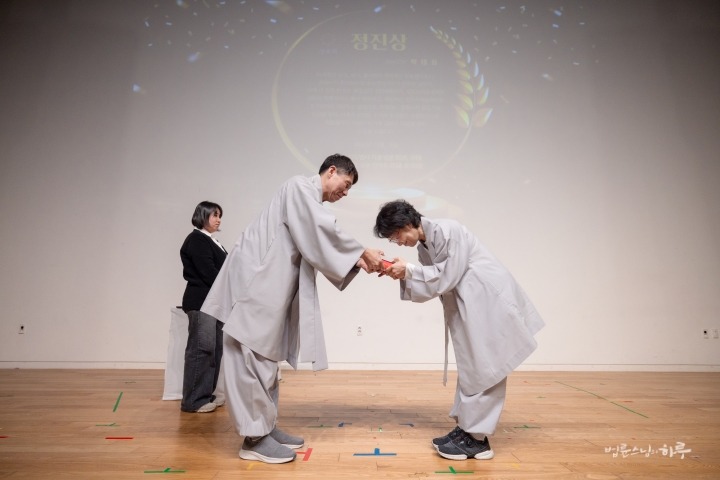
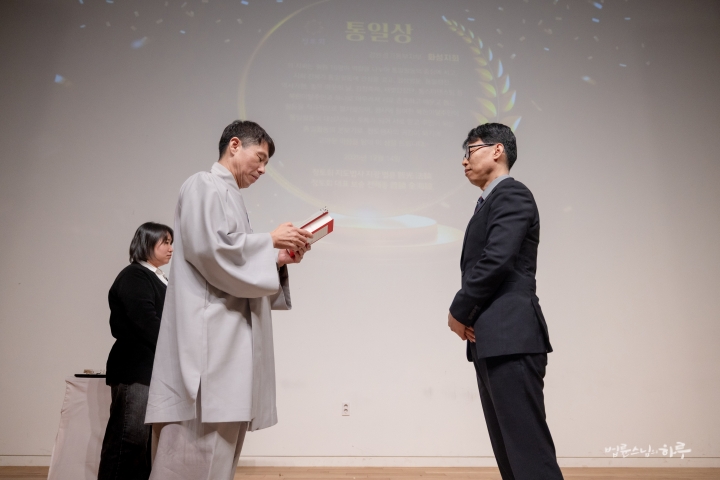
The Unification Award is given to Jungto practitioners who have dedicated themselves to peace and unification movements. The recipient is Hwaseong Branch, Gangwon-Gyeonggi Eastern Division. Hwaseong Branch has 16 members who share roles in leading unification activities. The entire branch works together with one heart, operating various programs including daily visits with North Korean defectors, unification practice, history tours, Good Neighbors Day, kimchi festivals, as well as the Saebeot Choir and Tongsta Dance Team activities. They have actively engaged in activities that respect, learn from, and help each other. Particularly in this process, North Korean defectors have participated not merely as recipients of support but as active participants, showing a true model of unification activities where people trust and rely on each other, becoming an exemplar for Jungto practitioners.
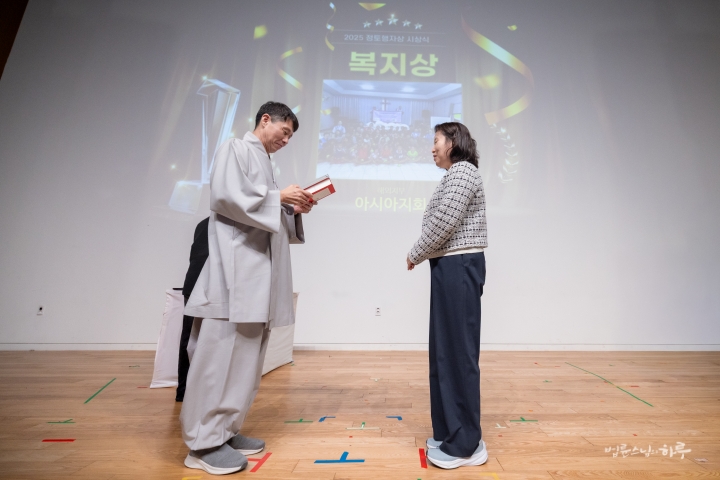
The Welfare Award is given to Jungto practitioners who have actively participated in domestic and international welfare activities through JTS. The recipient is the Asia Branch of the Overseas Division. Despite the difficult circumstances where members residing in various regions including Thailand, Shanghai, Manila, Ho Chi Minh City, and Hong Kong cross borders at their own expense to conduct activities, they have voluntarily and devotedly participated in various welfare activities including school support and medical volunteer work in Mindanao, Philippines, support for urban slums in Manila, refugee relief in Mae Sot, Thailand and support for orphanages in Kanchanaburi, emergency relief for typhoon damage in Hanoi, Vietnam and Cebu, Philippines, becoming exemplars for Jungto practitioners.
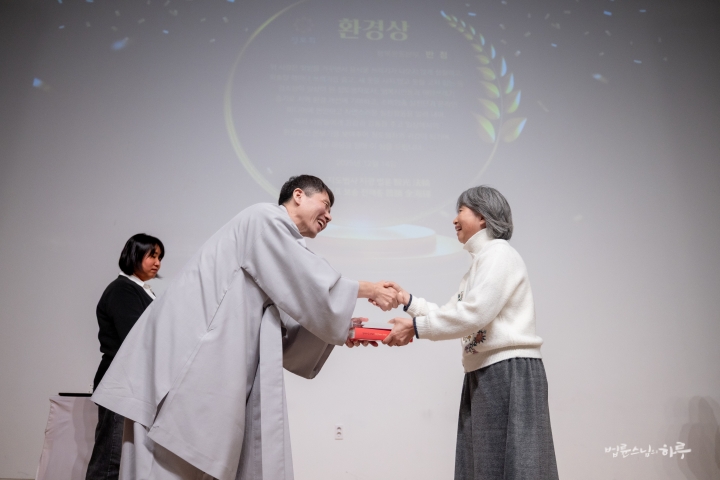
The Environment Award is given to Jungto practitioners who practice ecological living themselves and have made significant contributions to environmental activities such as the zero waste movement. The recipient is Ban Cheong from Gwangjeon Branch, Happiness Movement Headquarters. Ban Cheong has made frugality a daily practice by cultivating a garden to avoid food waste, picking up trash whenever going out, and mending clothes instead of buying new ones. As a Jungto practitioner, she has contributed to improving the local environment by collecting marine debris with Happy Citizens, shared comfortable and natural practices through the Consumption Stop Practice Group and online media, inspiring and moving many people while showing an example of environmental practice in daily life, becoming a model for Jungto practitioners.
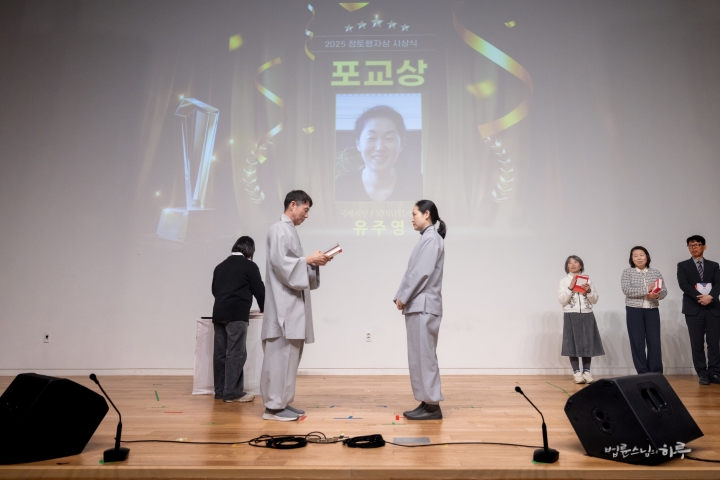
The Propagation Award is given to Jungto practitioners who have contributed to spreading the Dharma to create a happy world. The recipient is Yoo Joo-young from the North America-Europe Branch, International Division. Yoo Joo-young has dedicated herself to various roles including General Secretary of Washington Jungto Society, US JTS Team Leader, and Retreat Support Team Leader. Since 2010, she has been doing final reviews of English translations for world Dharma propagation content including Sunim’s English books, Jungto Dharma School teachings, and overseas JTS activity reports. She has continuously researched with translation volunteers to ensure accurate and profound delivery. For the past three years, as Content Director of the International Division, she has overseen all foreign language translations and content production, making significant contributions to spreading the Dharma worldwide and becoming a model for Jungto practitioners. As she was unable to attend from overseas, International Division Director Kim Ji-hyun accepted the award on her behalf.
The Special Award is given to individuals or groups, internal or external, who have made special contributions in 2025. The recipients are the Special Youth Division and Heo Young-ae from Gangwon-Gyeonggi Eastern Division.
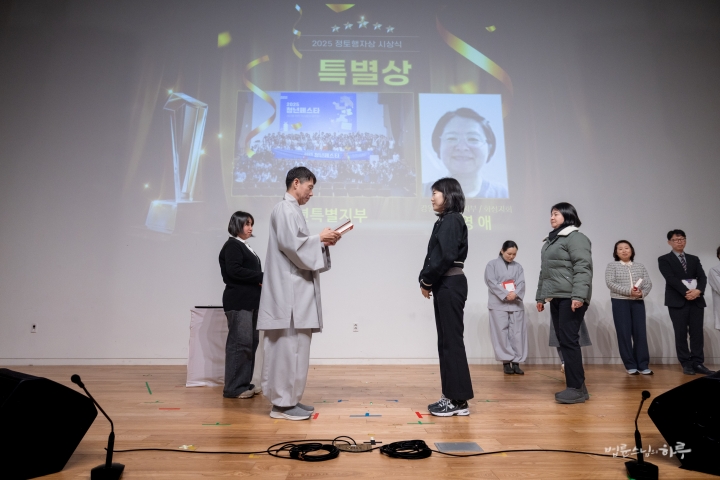
Despite various difficult circumstances, the Special Youth Division has created hope for Korea’s young generation by conducting offline activities including Youth Camp, All-Day Youth Talk Talk, and Youth Buddha, starting with the online Youth Buddhist University. With this momentum, members of the Special Youth Division nationwide directly planned, promoted, and managed the recent first Youth Festival held at the Jungto Social and Cultural Center for three days, opening new possibilities for youth Dharma propagation and becoming a hope for Jungto practitioners.
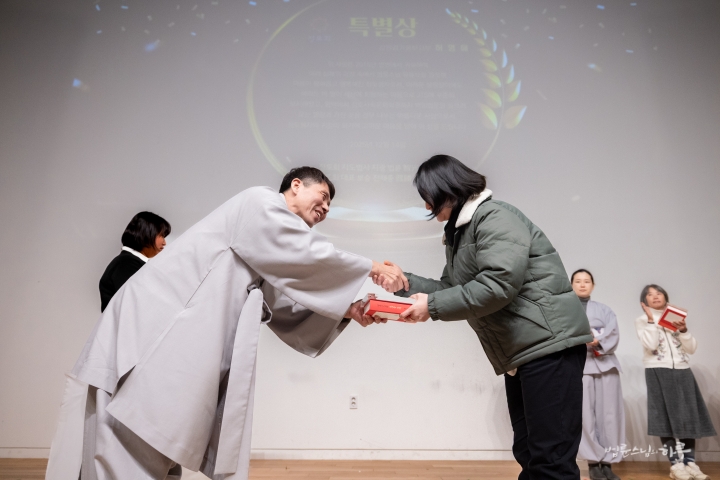
Heo Young-ae naturalized from Yanbian in 2015 and became a Jungto practitioner whose mind became peaceful and happy by listening to Sunim’s YouTube videos through various failures. Despite difficult living conditions, she has consistently donated to JTS with a heart of dedication to the world without expecting anything in return. With her passion for traveling from Pyeongtaek to the Jungto Social and Cultural Center to attend the 100-Day Dharma Talk and as a beautiful person who shares everything she has, she has become a model for Jungto practitioners.
The Generosity Award is given to Jungto practitioners who have contributed to the development of Jungto Society through consistent donations and created a culture of giving through their activities. The recipients are Shin Hyun-gil and Ham Eun-mi from Seoul-Jeju Division.
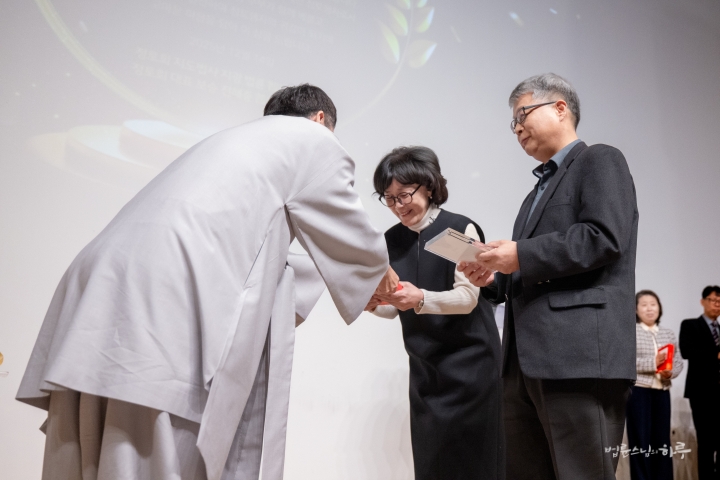
Shin Hyun-gil has consistently supported JTS for 20 years since 2005, donated the entire award money received for research achievements upon retirement to JTS for the world and neighbors in need, and completed the Buddhist Social Studies Course of Sunim’s 100-Day Dharma Talk in 2025. Ham Eun-mi, as a Jungto practitioner who became happy through practice, generosity, and volunteer work, donated large amounts, and together as a couple, they have practiced a life of giving and sharing, becoming models for Jungto practitioners.
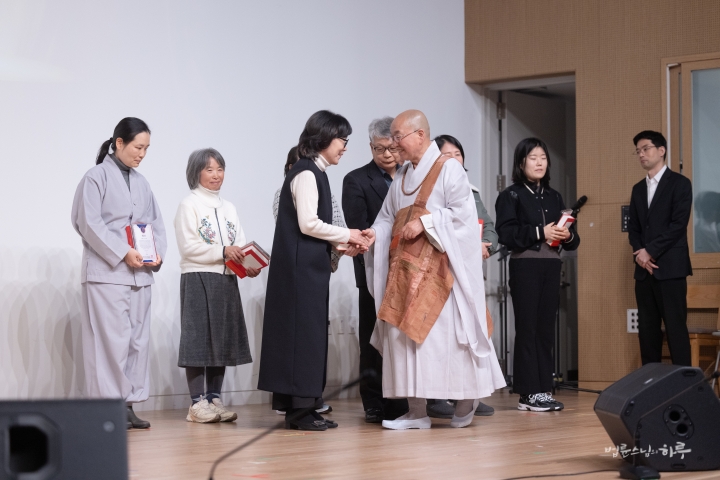
Finally, the Grand Prize for Jungto Practitioner is awarded to someone who has become a model for Jungto practitioners in all aspects of practice, generosity, and volunteer work. The host announced in a loud voice:
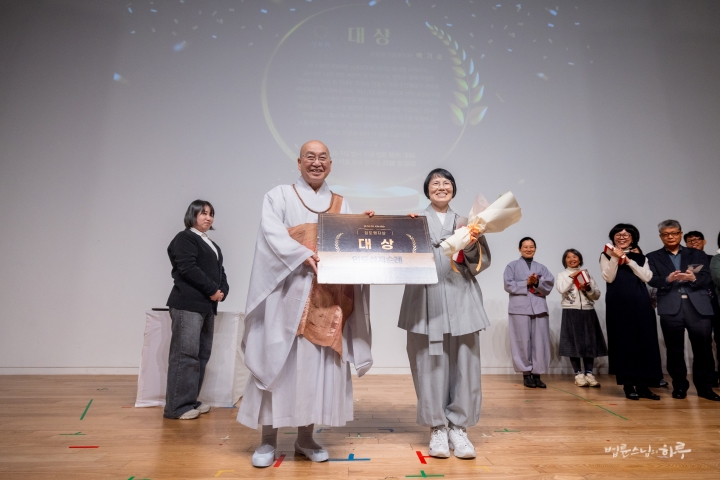
“The 2025 Jungto Practitioner Grand Prize! The recipient is Baek Gi-soon from Hwaseong Branch, Gangwon-Gyeonggi Eastern Division.”
Everyone congratulated with thunderous applause. The Grand Prize winner received a ticket to the India pilgrimage as a prize.
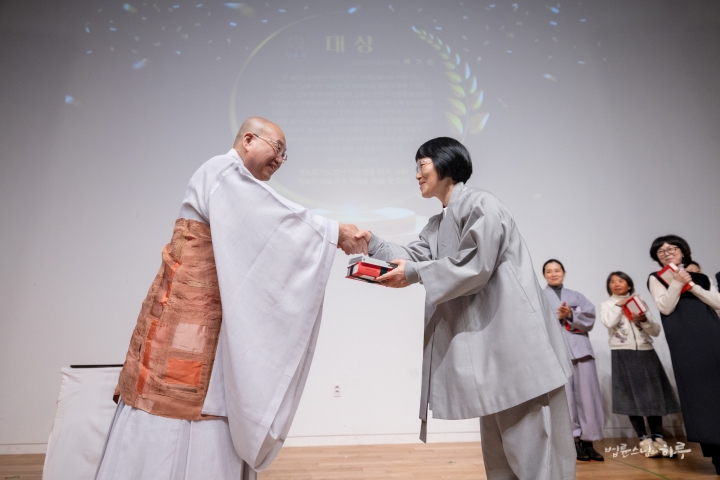
Baek Gi-soon began volunteering with the Seocho Jungto evening team in 2009. In 2014, with the vow to “use the rest of my life well for the world,” she quit her job and connected her daytime activity experience to evening activities to create the nation’s first evening division model. For the past three years, she has dedicated herself to the role of Secretary General responsible for all of Jungto Society’s operations. At the center of vast support work that crosses the boundaries of online and offline and connects Korea with the entire world, she has embraced and communicated with various units’ diverse needs while leading by example as a practitioner, becoming a model for Jungto practitioners.
Next, we heard Baek Gi-soon’s acceptance speech.
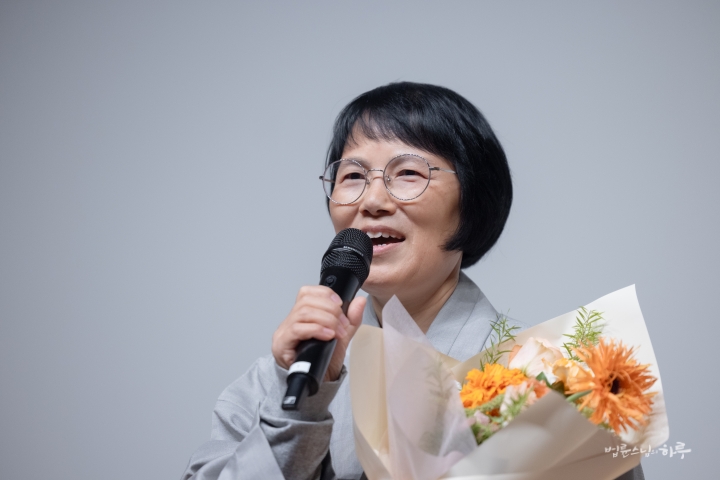
“I sincerely thank you for giving me such a great award. There are so many wonderful people, and at first, I felt burdened to receive this award. But as I thought about it carefully, I realized that this award is not being given to Baek Gi-soon as an individual. At that moment, my heart became much lighter.
This Award Is Not Mine but Belongs to Everyone Who Worked Together
I remembered the faces of countless people who worked tirelessly day and night. Recently, when an error occurred on the overseas academic site, I heard that someone who works at a company stayed up all night to fix the problem and then went straight to work. Thinking of that person, I thought, ‘Ah, this award is being received on behalf of such people. So I can think that I deserve to receive it.’ I also thought of those who handle unexpected complaint calls at the call center, the system team leader who flew from Jeju Island to be here today, those who travel back and forth to the center providing on-site support, those who travel from Namhae, Busan, Daejeon, Daegu, and all over the country for administrative office activities, those who support division directors to ensure stable division operations, and many others who help branch leaders ensure smooth branch operations.
Jungto Society wanted to express gratitude to all of you, but since we cannot give awards to each person individually, I think this award was given to me as a representative of support roles. That’s why I accept this award with even more gratitude. I want to convey this award and these flowers to all those who are quietly working for Jungto Society throughout the country and around the world.”
The award recipients and Sunim took a commemorative photo together.
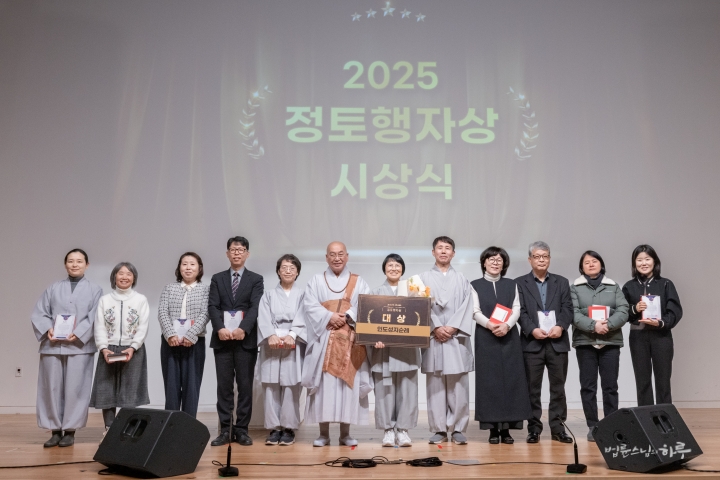
The audience once again gave warm applause to all those who received the honorable Jungto Practitioner Awards today.
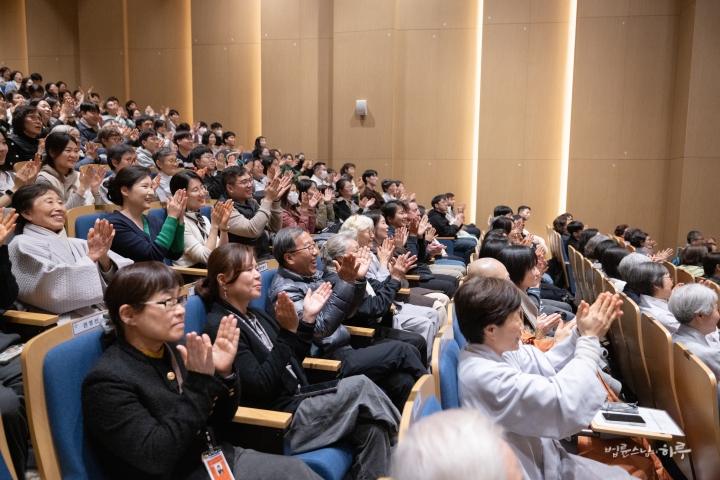
Next, everyone watched a memorial video for the volunteers who left us during the past 1000-Day Practice period.
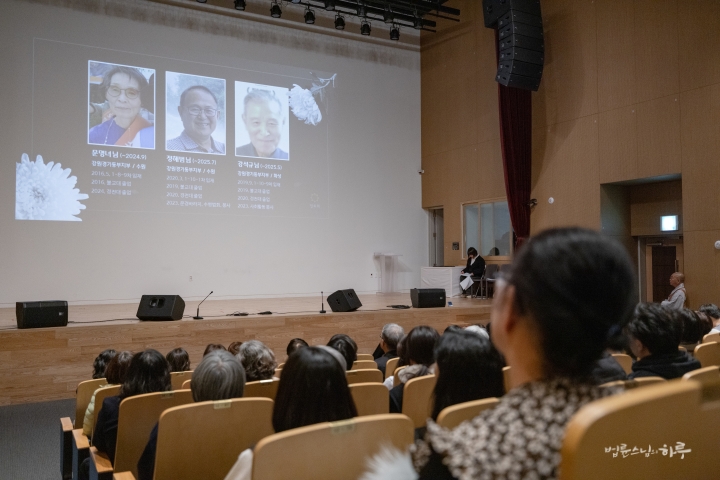
Although they could not be with us today, we took a moment to remember the volunteers who participated in the First 1000-Day Practice but have since passed away. It was a time to remember their hearts and dedication toward creating a Jungto world and to renew our commitment to carrying on their legacy.
Next, we had time to introduce and greet those who worked diligently during the three years of the First 1000-Day Practice of the Second 10,000-Day Practice. First, we viewed the proud names of the First 1000-Day Practice volunteers on the screen.
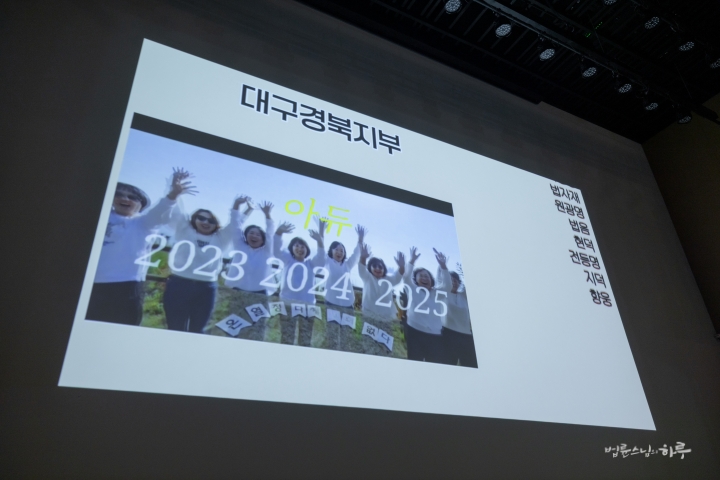
“You have worked so hard during this First 1000-Day Practice of the Second 10,000-Day Practice. I would also like to express my gratitude to all the countless Jungto Society volunteers.”
When the host expressed gratitude, all the members of the Sangha responded with loud applause.
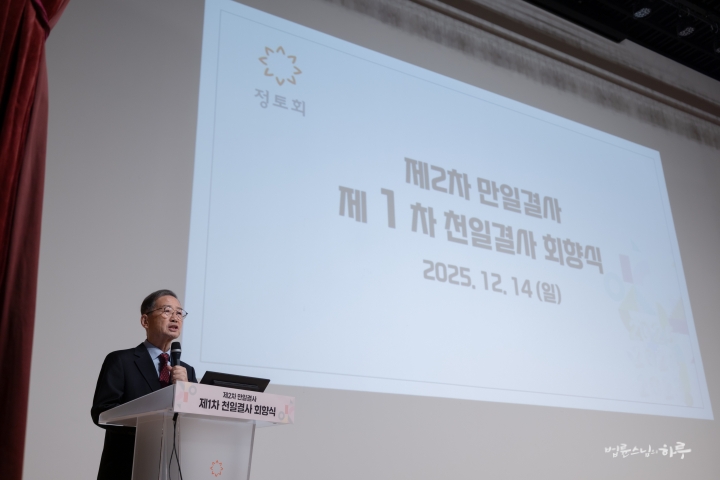
Next, after watching a video introducing those who would take over responsibilities after the completion of the First 1000-Day Practice, everyone sent encouraging applause to help them finish well.
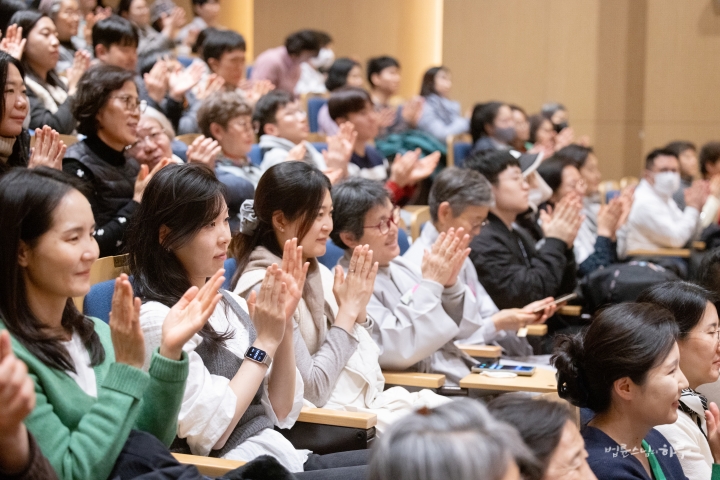
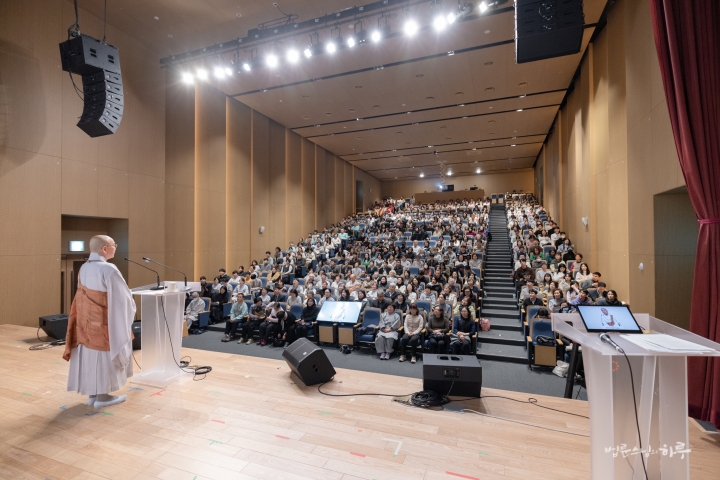
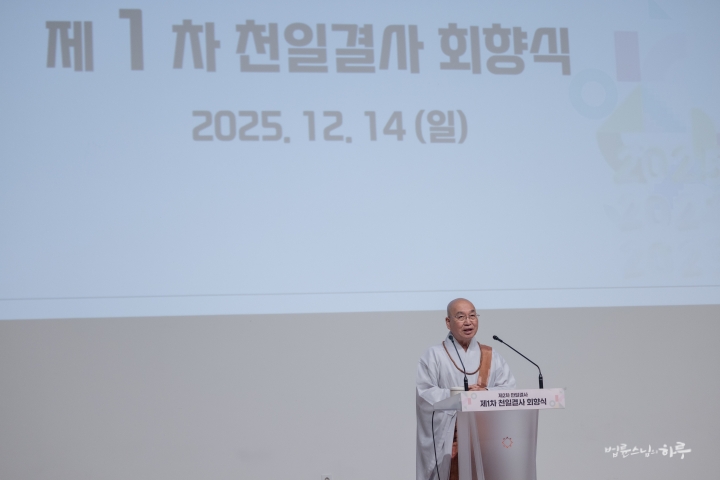
Then, we invited Sunim to give a Dharma talk on the completion of the First 1000-Day Practice of the Second 10,000-Day Practice. Sunim emphasized that the most important thing gained through the thousand days of practice is not external achievements but personal transformation through establishing one’s center, and that this transformation, unified through practice and spreading the Dharma, expands back into society.
Toward a Life of Leading the World, Not Being Led by It
The most important thing is your own transformation. It’s about shifting from being someone who is dragged around by external stimuli and dominated by the world, to someone who establishes their own center and responds actively to external stimuli. In other words, it’s about moving from a life of being led by the world to a life of leading the world. The essence of practice is to live with self-centeredness and self-initiative that keeps you free from suffering and bondage in any situation. Furthermore, we must share what we have experienced, realized, and gained with those who are still dominated by and dependent on the world, unable to escape from suffering. We help them live a little more freely and happily, just like us. We call achieving self-transformation “practice.” And we call sharing our experiences with others to guide them to live happily “spreading the dharma.” However, looking back at the history of Buddhism, there have been many cases where practice and spreading the dharma have been emphasized separately. Practice without spreading the dharma can easily become another form of selfishness, and spreading the dharma without practice can easily become merely an expansion of influence in worldly affairs. Our path is clear. The goal of practice—to live freely and happily as the master of one’s own life—and the goal of spreading the dharma—to help others live the same way—must become one, vertically and horizontally. Our predecessors expressed this as “seeking enlightenment above, saving sentient beings below,” and in Jungto Society, we call it “the unity of work and practice.” In this way, Jungto Society moves forward with the two wings of practice and spreading the dharma.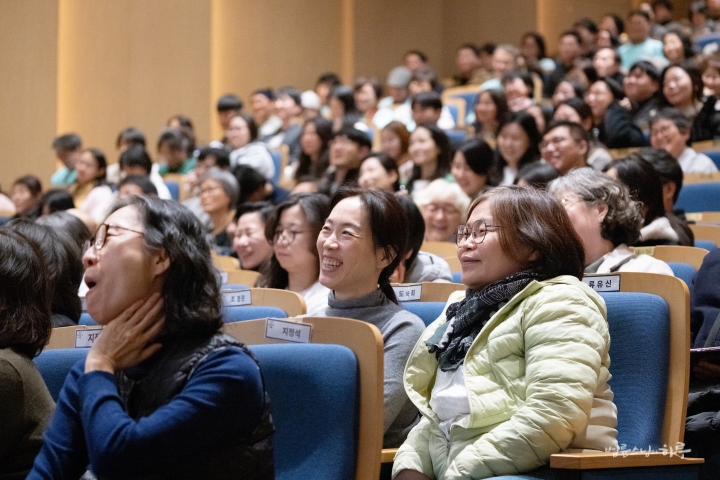
Self-Transformation Is Both Practice and Spreading the Dharma
We must know how to care not only for ourselves but also for others. However, we should neither sacrifice ourselves solely for others nor allow others to sacrifice themselves for us. This is because others are as precious as we are, and if others are precious, then we too are precious. In society, when someone sacrifices themselves for others, they are called a good person, a kind person, or someone who has done good deeds. However, for practitioners, there is no sacrifice. If I act because it is necessary for others, it is not only for them but the act itself is also for me. If I think I have sacrificed, I will expect compensation, and if that compensation doesn’t come, I will regret it and even feel betrayed. Regret and feelings of betrayal are suffering, afflictions, and anguish. We can only say we are free and happy when there is no regret, no sense of betrayal, and no hatred. Therefore, whatever choice we make, we must be clear that it is our choice and take responsibility for the results. This is the principle of cause, condition, and effect. Over the past three years, we have steadily walked this path. Looking at the first 1,000-day practice of the second 10,000-day practice only from an external perspective, one might say there have been no special achievements. Even when compared to the end of the first 10,000-day practice, there appears to be no significant difference in any aspect. In fact, when looking at the number of leading members, finances, total membership, or Dharma School students, there is almost no difference between the 9th and 10th 1,000-day practices of the first 10,000-day practice and the 1st 1,000-day practice of the second 10,000-day practice. Looking at these numbers alone, it might seem as if Jungto Society has stagnated. However, I see this as a preparatory period for new expansion. If we use this time as a stepping stone and address our shortcomings during this closing period, I believe there will be opportunities for even greater expansion in the second 1,000-day practice.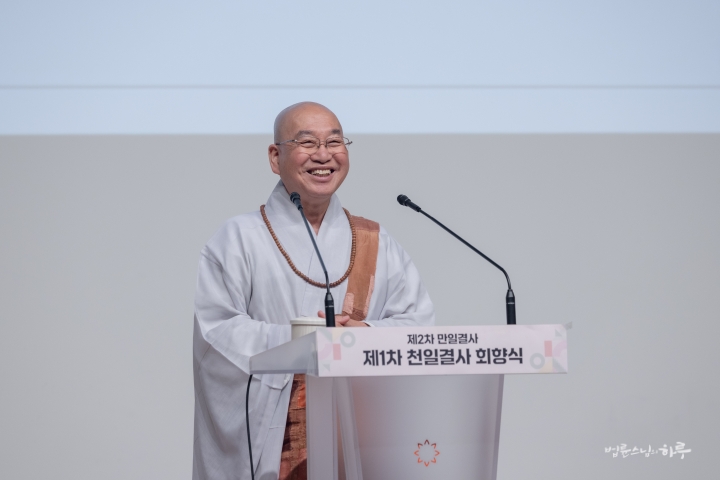
Reflecting on Sunim’s words, participants resolved to spend the remaining closing period well.
Next, author Kim Hong-shin, who has attended every 100-Day Prayer opening ceremony, offered congratulatory remarks.
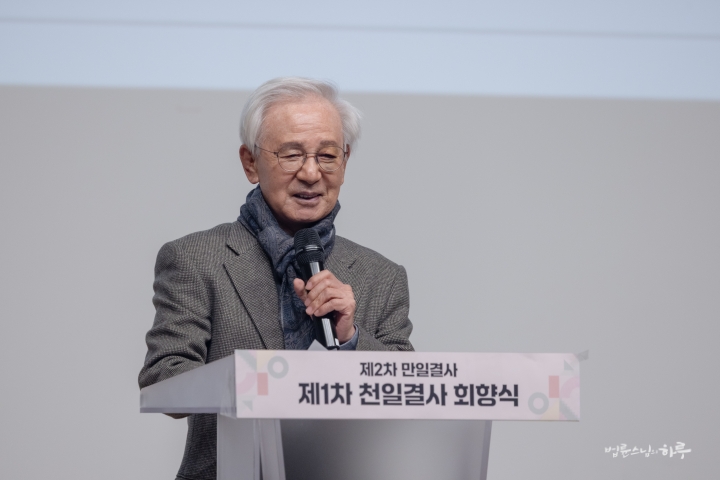
“In our era, there was a long period when the perception that ‘people who play are bad people’ dominated. So I posted this in my bookstore and bathroom: ‘It’s illegal if you don’t truly play at least once in your life.’ I saw that phrase again this morning. When you become a Jungto practitioner, you become a player of the soul, a player of the spirit. That’s why your appearance improves. If you compare yourself with your peers, you’ll know for yourself. You’re definitely healthier. I believe that following the teachings of our great teacher and the Buddha’s words is the secret to preserving both our souls and bodies together, and to truly playing life properly…”
Continuing the atmosphere, the Incheon-Gyeonggi West Division presented a closing celebration performance. They expressed the message of flying freely like butterflies and bringing hope to the world through ‘light, chorus, and movement.’
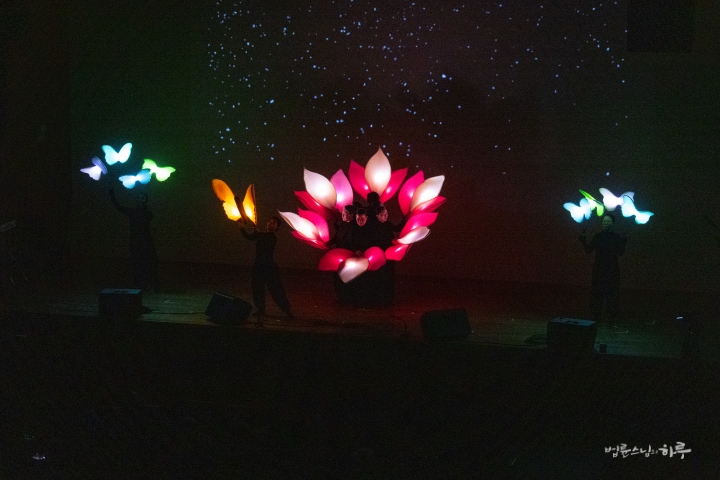
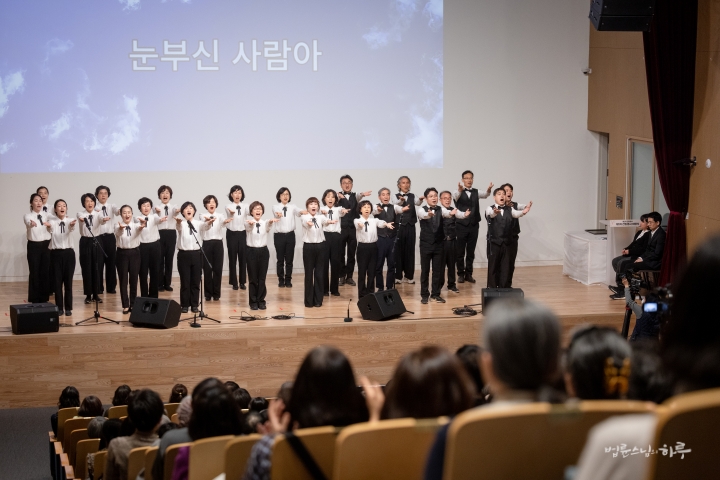
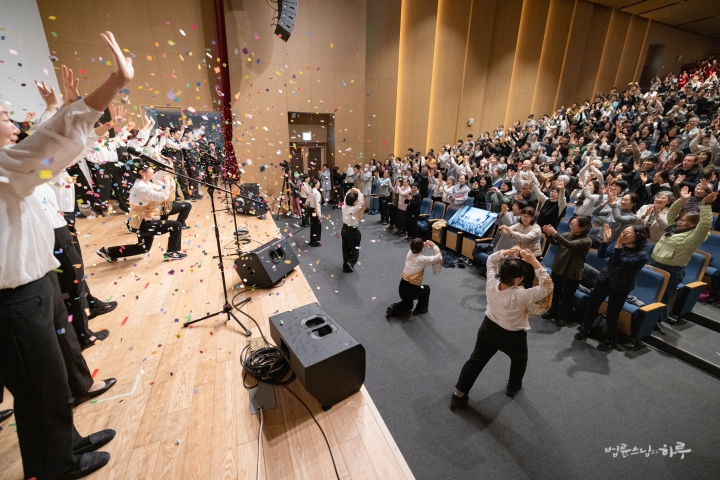
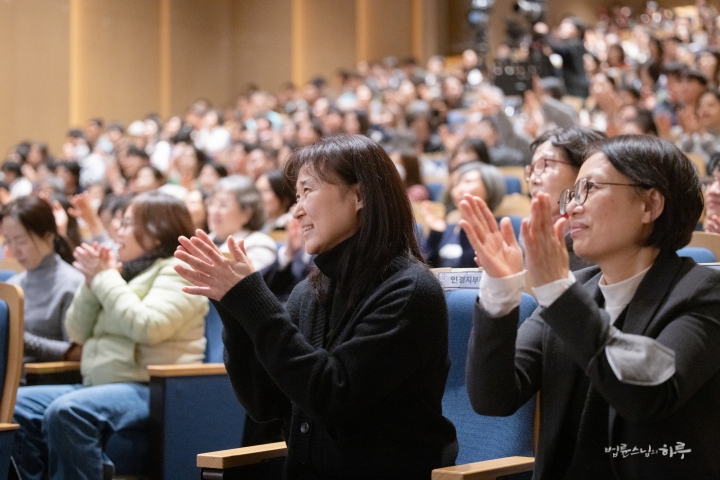
As everyone cheered and the performance ended, Dharma Teacher Seonju, the head of the Dharma Teacher group, came up on stage to give closing remarks.
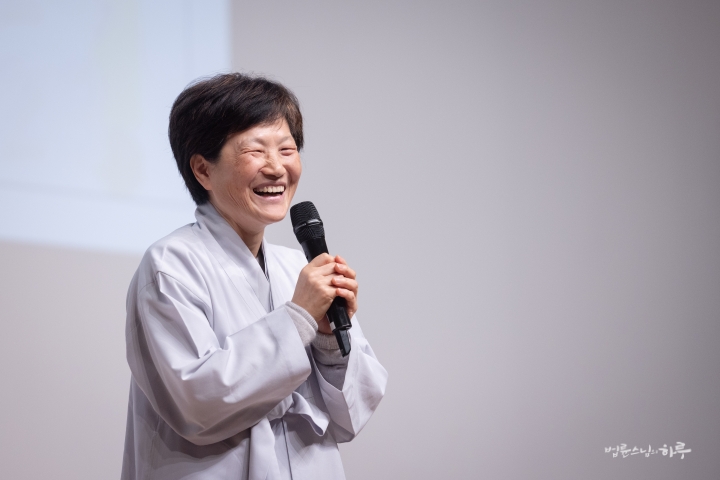
“Hello! Konnichiwa! Bonjour! Annyeonghaseyo! This time of looking back on the past 1000-Day Practice has been truly moving. Every moment of the closing ceremony was touching. I hope that each aspect of the practice, dharma spreading, and social activities we’ve done together has remained deeply in everyone’s hearts. Above all, it was a time when we felt even more grateful for the fellow practitioners who have walked this path together. All those connections and processes were truly precious and came to us as great inspiration.”
Finally, to conclude today’s closing ceremony, everyone joined hands and sang the dispersal song together. The 1st 1000-Day Practice closing ceremony ended with a promise to meet again in good health at the 2nd 1000-Day Practice opening ceremony next March.
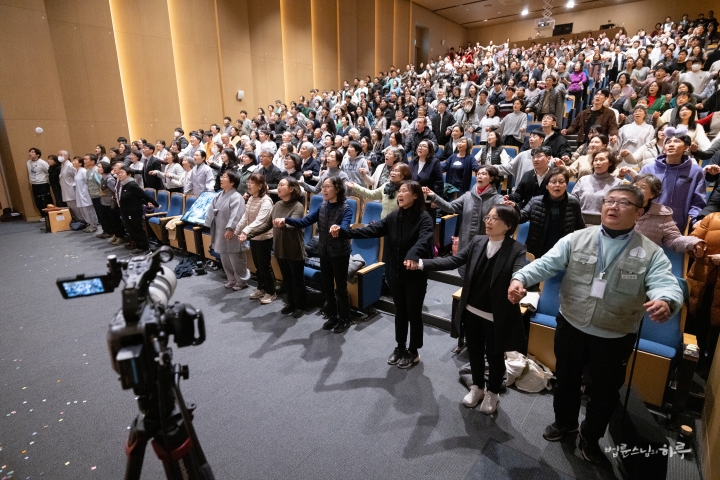
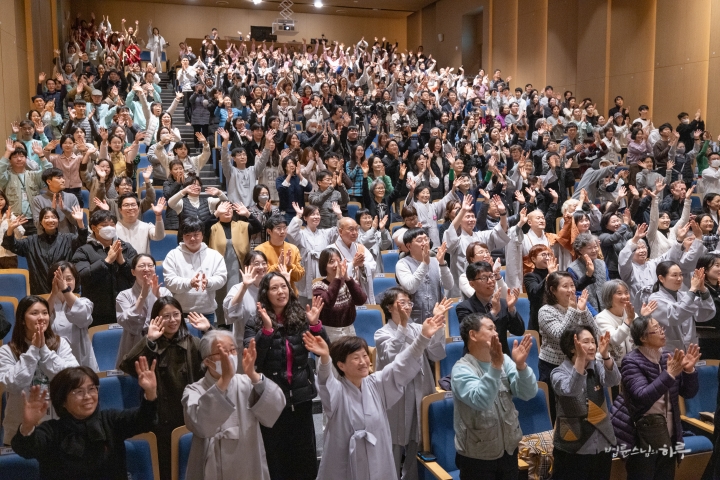
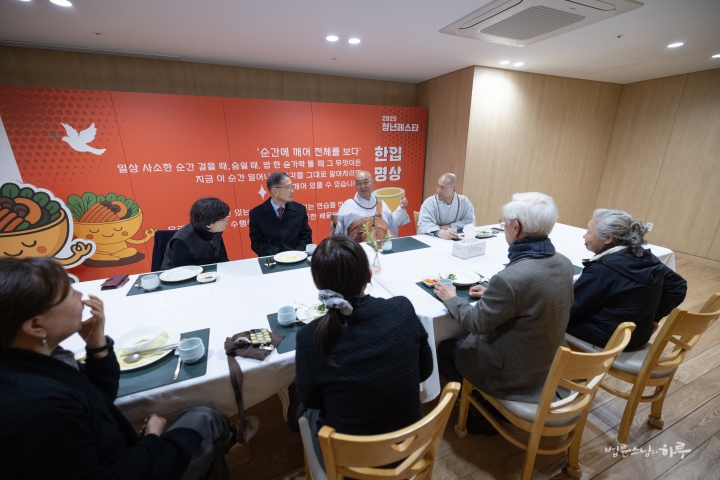
The attending members shared their reflections in small groups, then dispersed in small groups to eat lunch with the packed meals they had brought from home. Sunim also had a meal in the dining hall with the attending guests.
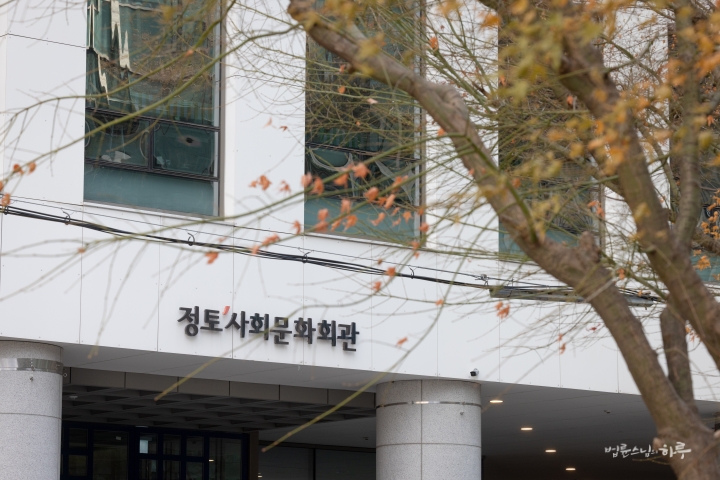
Immediately at 2:30 PM, the International Division Members’ Day event began. This was the first offline Members’ Day for the International Division.
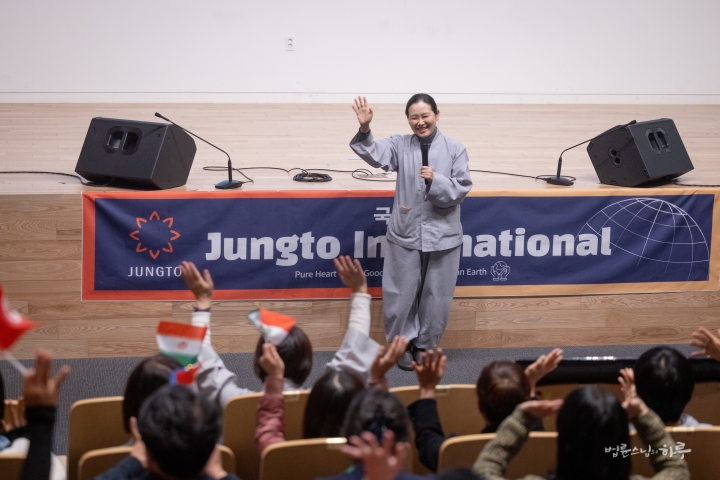
First, Kim Ji-hyun, who serves as the International Division Director, gave opening remarks, followed by participant introductions.
About 20 people from the Asia-Pacific domestic group, Tokyo group, Southeast Asia group, Sydney group, and North America and Europe groups had flown long distances to attend the 1000-Day Practice closing day. Additionally, about 50 people connected online to participate in the Members’ Day event.
Next, there was a Members’ Day celebration performance.
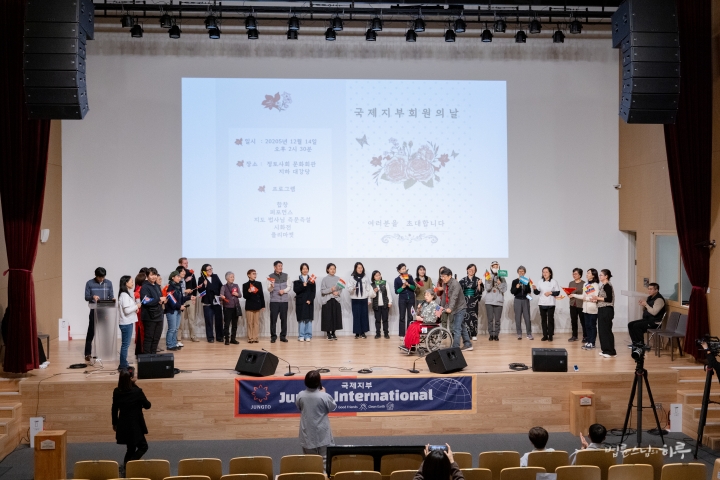
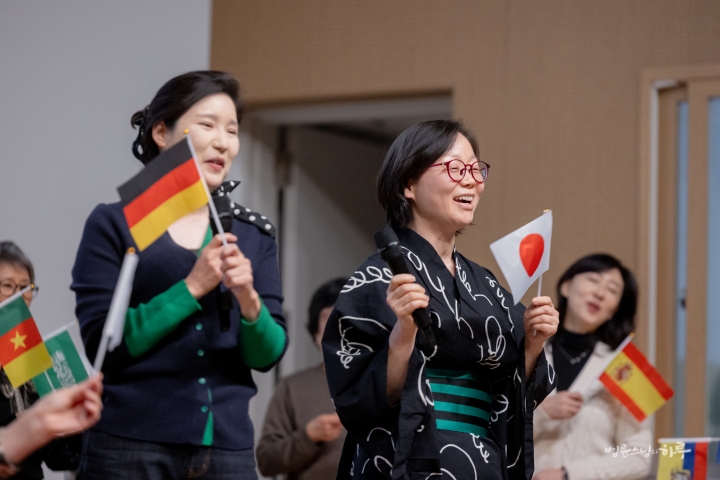
They sang the song “It’s a Small World” in English, Korean, Japanese, Chinese, and German, with everyone joining in the chorus in English.
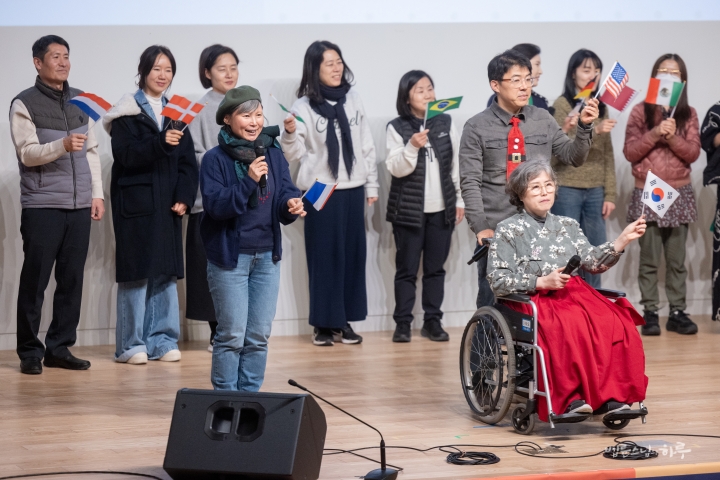
The same song felt really different when sung in five languages. Everyone gave big applause to those who prepared the wonderful performance.
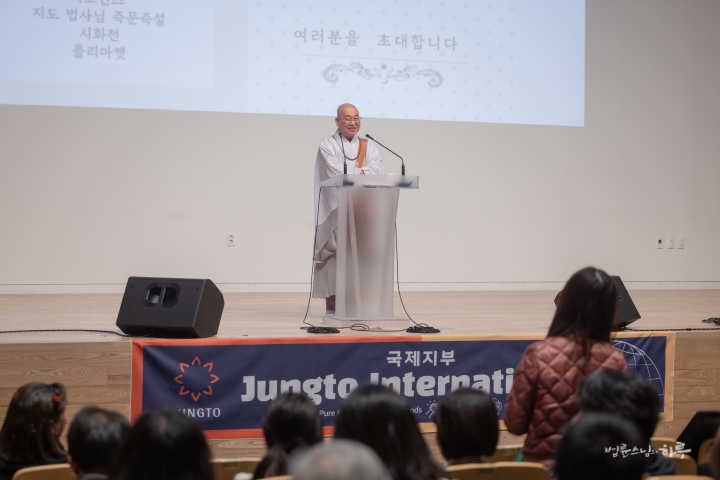
Next was the Dharma Q&A session. Questions from those who had signed up in advance were taken first, followed by additional questions from the floor.
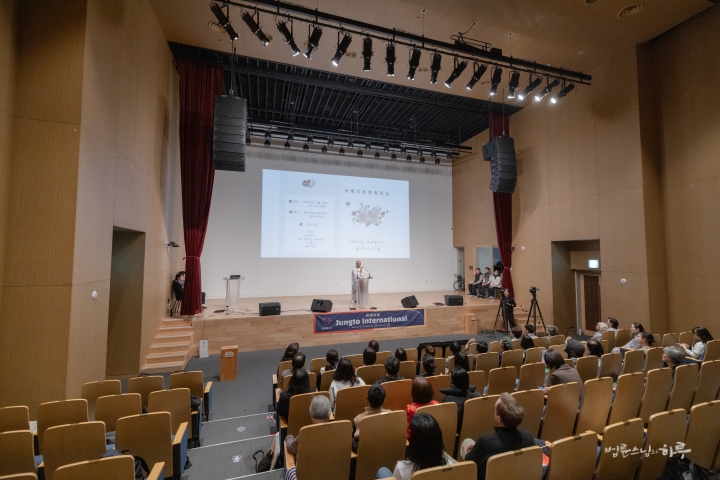
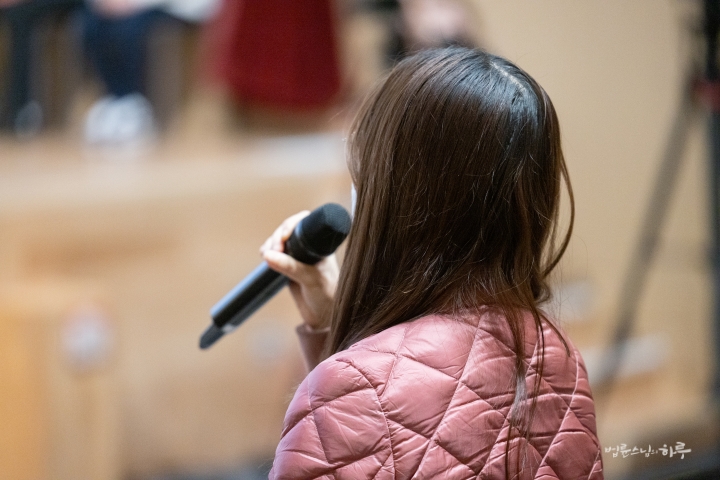
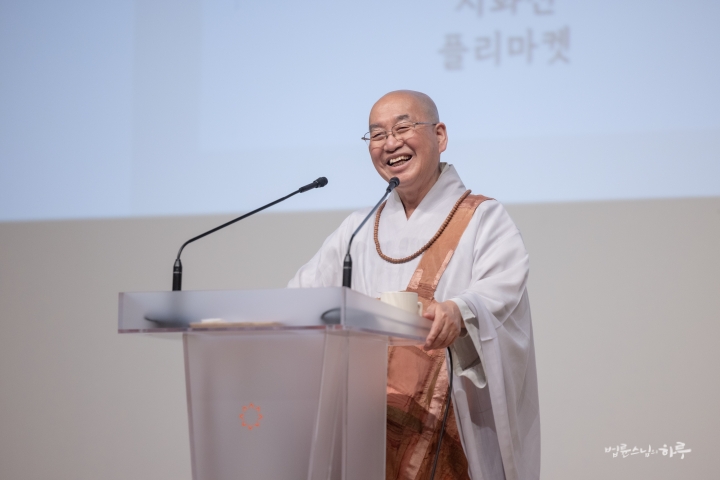
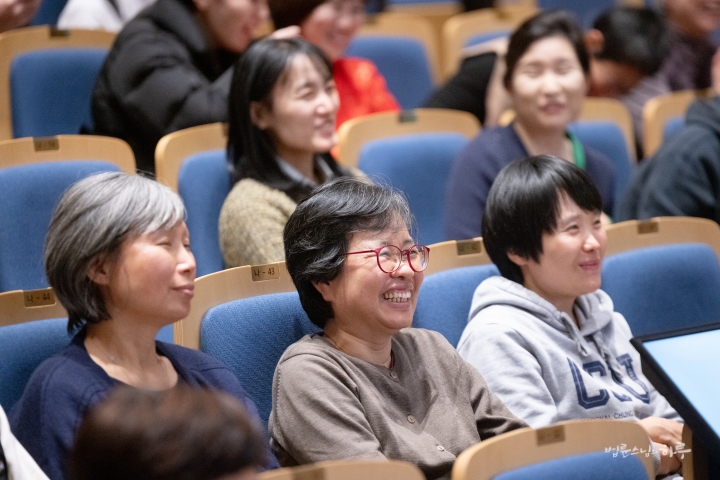
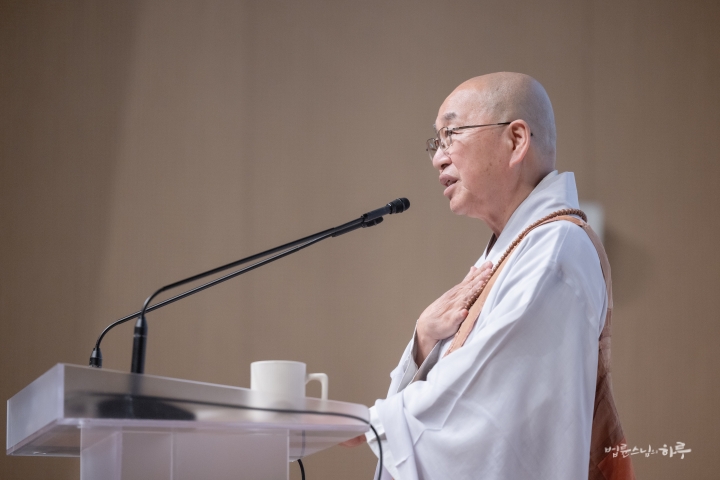
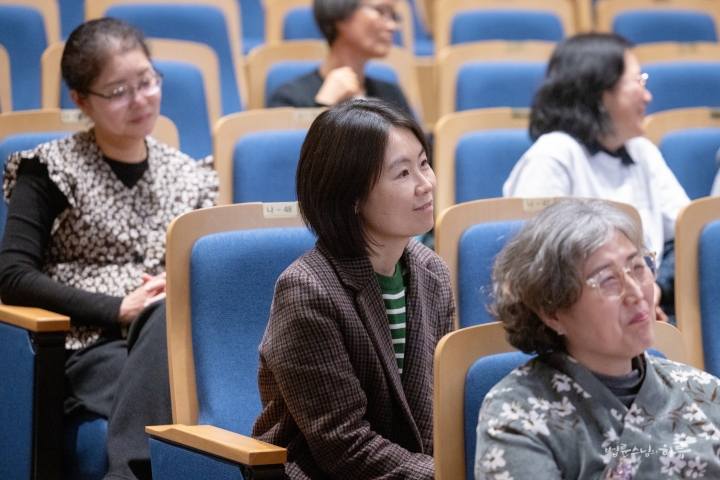
For an hour and a half, five people raised their hands and had conversations with Sunim. One of them sought Sunim’s advice on how to view from a practice perspective the problem of growing mental discomfort when working with people of different tendencies, despite their own approach producing results.
Why Do I Feel So Uncomfortable Working with People with Different Working Styles?
“When I work, I feel uncomfortable seeing people who focus only on details like numbers and regulations without consideration or communication with others, ignoring the overall context. I had such an experience in a previous project. The client preferred my big-picture approach, but the team leader I worked with constantly put on the brakes. I suggested we quickly find realistic solutions rather than just listing problems, but the team leader put solutions on the back burner and spent time only pointing out and analyzing each problem. I felt that process was a waste of time, so I pushed forward with my approach, and as a result, I gained the client’s trust and achieved results. However, in the process, my relationship with the team leader completely fell apart, and although the work was successful, my mind wasn’t at ease. In my head, I think, ‘The team leader was faithful to their role, and their meticulousness helped the project, so I should be grateful.’ But in my heart, discomfort with the team leader still remains. Although I lost a person, I gained the client’s trust, and as experiences of my approach working accumulated, my stubbornness seems to be getting stronger. These similar experiences weren’t only with Korean people. I had similar problems when working with Germans too. Rather than a nationality issue, I thought it was a conflict that repeatedly occurs when working with people of different tendencies. I’ll continue to meet people with such tendencies in the future, so what perspective should I take in my practice to let go of the thought that I’m right and maintain peace?”
“Thank you. I’ll come back to see you after I’ve been thoroughly broken once.”
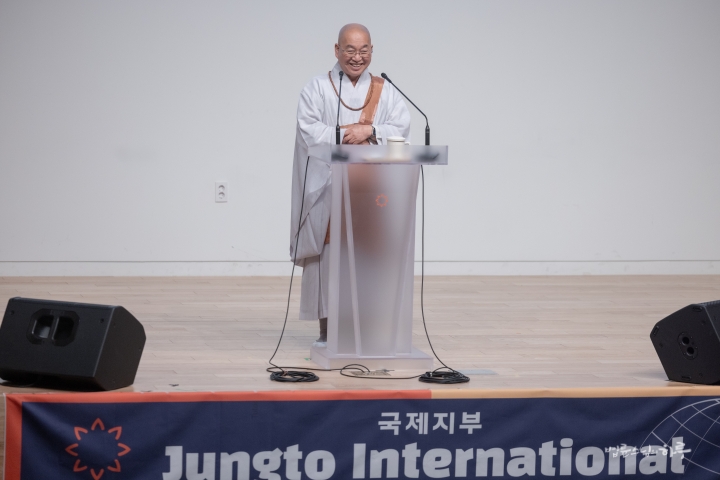
“Thank you. I understand well.”
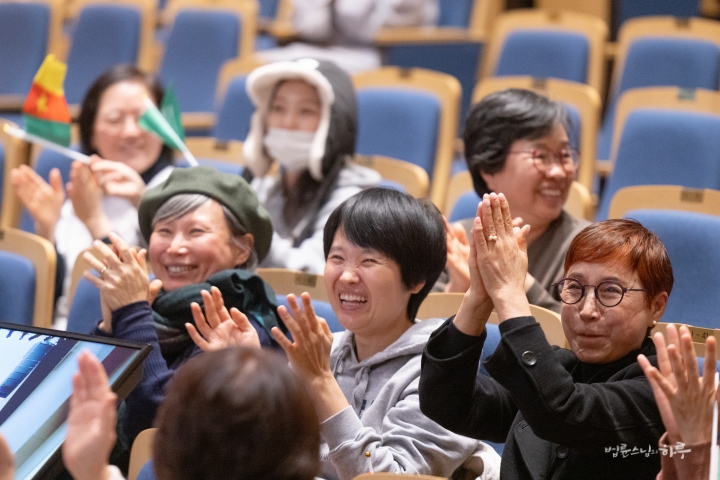
After finishing all the conversations, they took a commemorative photo with Sunim.
“International Division, fighting!”
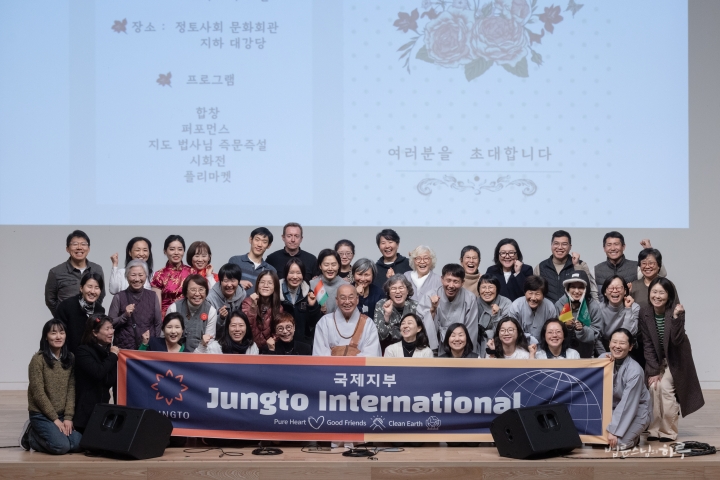
Afterwards, the International Division members continued with a launching ceremony to wish for the great success of the 2026 Jungto Dharma School. Sunim’s shoulder pain had been getting worse for several days, so he asked for understanding and left the Jungto Social and Cultural Center early.
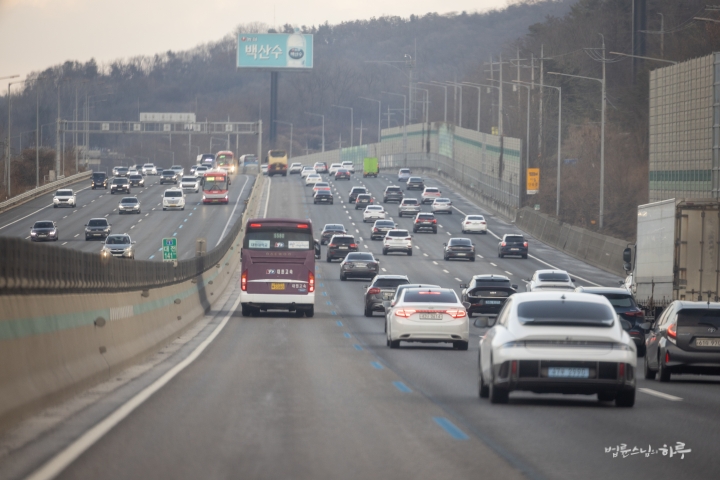
Sunim departed from Seoul at 4 PM and headed to Dubuk Jungto Retreat Center. After a 3.5-hour drive, he arrived at Dubuk Jungto Retreat Center at 7:30 PM.
Despite the severe shoulder pain, since yesterday was the Philippines visit schedule and today was a holiday, he decided to go to the hospital for an examination tomorrow. However, the pain was so severe that a Jungto Society member who practices folk remedies came to provide treatment. But the symptoms didn’t improve much.
Tomorrow morning, Sunim will broadcast live the closing ceremony of the 1st 1000-Day Practice of the 2nd 10,000-Day Practice with English interpretation for foreign 1000-Day Practice participants. After that, he will go to an orthopedic clinic for an MRI scan, and in the afternoon, he will receive dental treatment. In the evening, he is scheduled to hold an online steering committee meeting with Bhutanese government officials.