Hello. Today, Sunim departed from Mindanao, Philippines, and traveled to Manila to give a lecture for Korean expatriates.
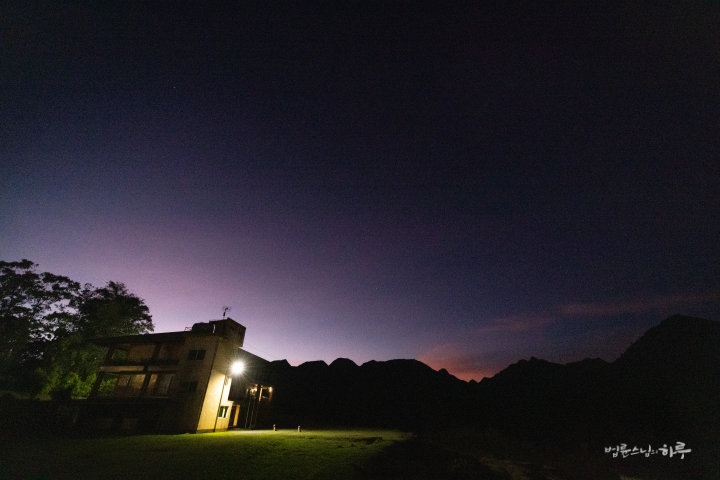
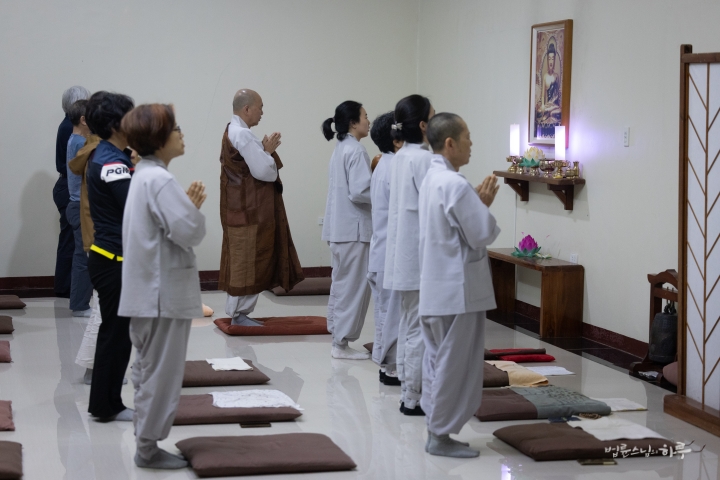
It was the last morning in Mindanao. The JTS delegation, who had spent the night at the Mindanao JTS Center, woke up at 4:15 AM for morning prayers and the 1000-Day Practice prayer.
As the prayer ended, dawn began to break. Despite being in a hot country, the highland area at over 1,000 meters above sea level had a cool breeze, making the morning air feel especially refreshing.

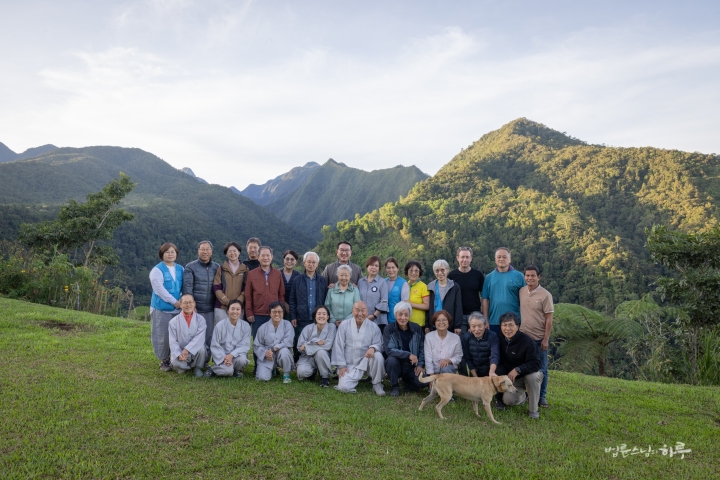
From the Mindanao JTS Center, Mount Kitanglad, which reaches approximately 2,899 meters above sea level, is visible right in front. It is the second highest mountain in Mindanao.
“That mountain you see over there is higher than Mount Baekdu. Beautiful scenery, isn’t it? Let’s take a photo.”

At Sunim’s suggestion, everyone took a commemorative photo together with Mount Kitanglad in the background.
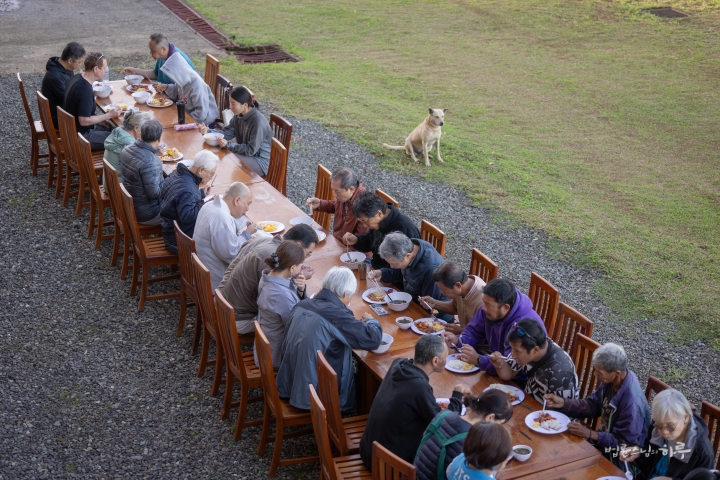
After taking photos, breakfast was served at 6 AM. With the nice weather, the tables were moved outdoors, and everyone shared breakfast together.
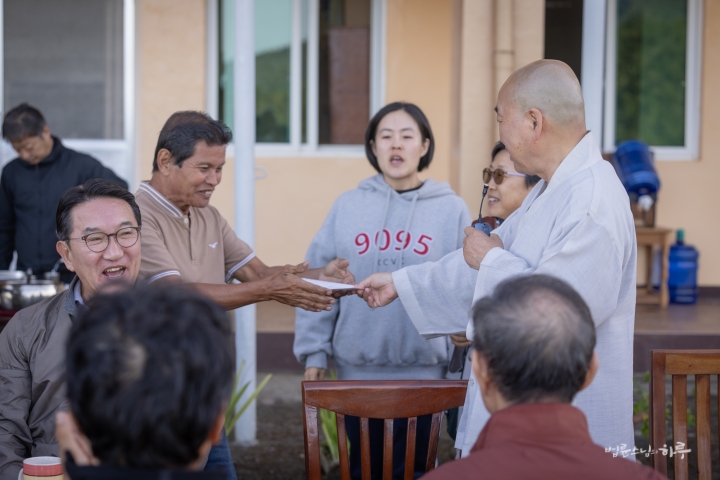
After the meal, Sunim gave Christmas gifts of pocket money to both the Filipino JTS local staff and Korean staff as year-end presents.
“Thank you all for your hard work.”
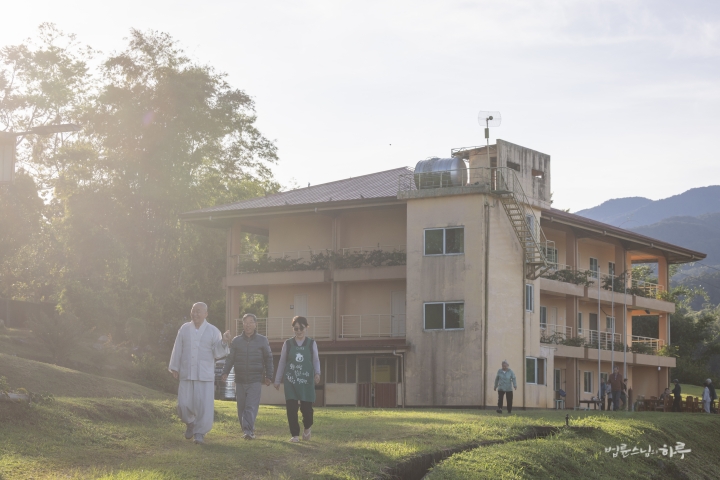
From 7:30 AM, a session was held in the JTS Center auditorium to present JTS Philippines’ annual business report and next year’s business plan, and to gather opinions.
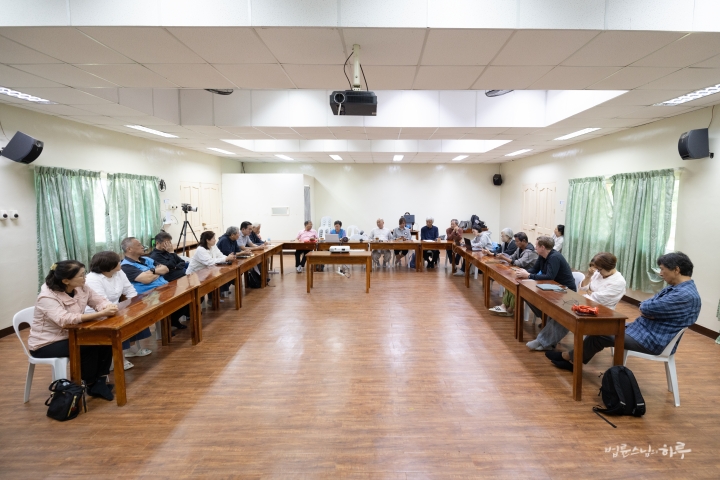
First, Mr. Noh Jae-guk, the representative of JTS Philippines, gave a greeting.
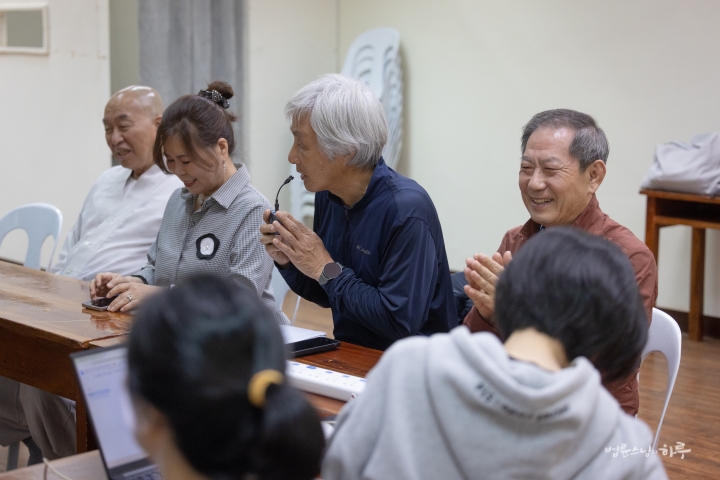
“Building so many schools seems to have been challenging for the JTS staff. After serving as representative for two years now, I’ve adapted, but I’ve also reflected on my shortcomings. If you ask me to continue next year, I will work hard.”
Next, Dharma Teacher Hyanghoon, who serves as the Secretary-General of JTS Philippines, presented this year’s business results and next year’s business plan.
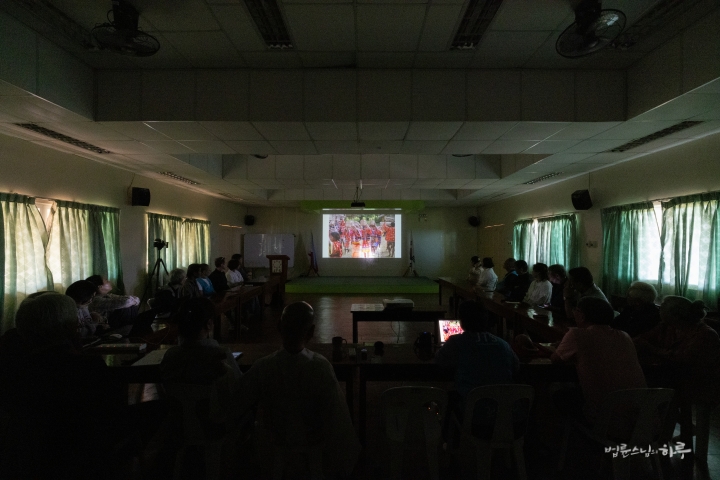
A Year of Non-Stop Progress for JTS Philippines: Education, Medical Care, and Emergency Relief
“This year, we built 10 schools in indigenous villages and 5 special education schools (SPED) for children with disabilities. While we’ve been busy building so many schools, we decided to provide school supplies to all schools built by JTS over a two-year period. In the process, we’re also conducting a comprehensive survey to see what changes are occurring through education. We provided school supplies to 16 schools in the first half and 17 schools in the second half. As a result, an atmosphere has now formed where parents take it for granted to send their children to school.
We also took children with disabilities on field trips, conducted medical camps in 4 counties with the help of Medical Jungto Society treating over 1,500 people, dispatched emergency rescue teams to help Cebu residents severely affected by typhoons, and had facility volunteer teams come to inspect various facilities at the JTS Center.
Next year, we plan to complete 4 schools that were started this year but not yet finished, and build 3 new indigenous schools and 4 special schools. We’re also preparing teacher training programs. Especially with many disasters occurring due to the climate crisis, I’d like to discuss rapid emergency relief measures together today.”
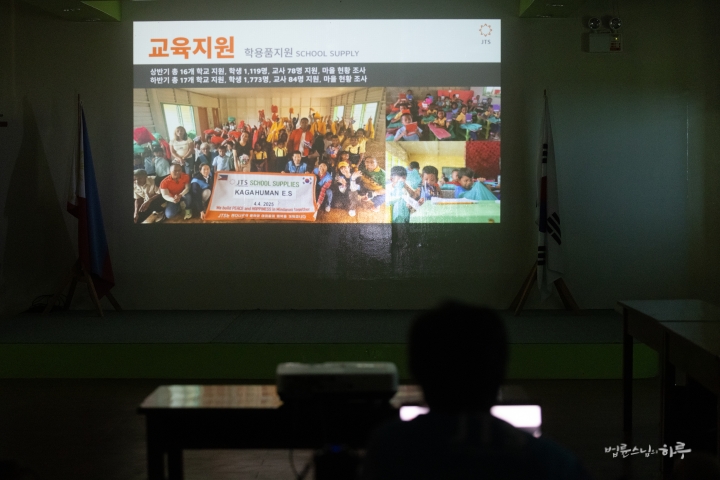
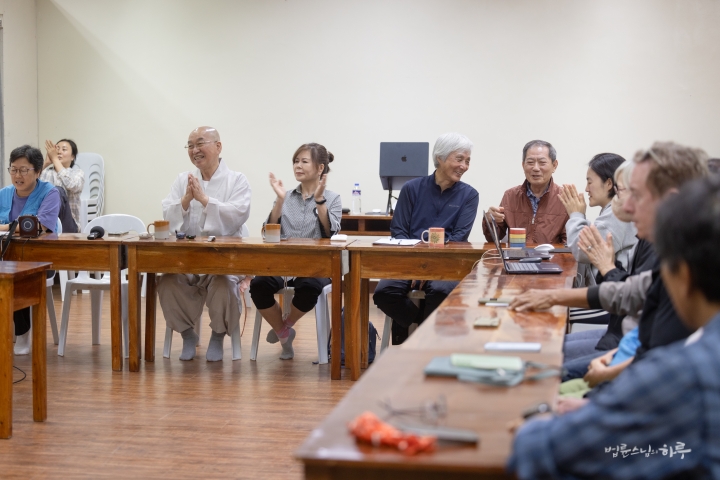
Following this, there was time for freely expressing opinions and asking questions about suggestions from attending the completion ceremony or items to be reflected in next year’s business. Anyone could raise their hand to make suggestions or ask Sunim questions.
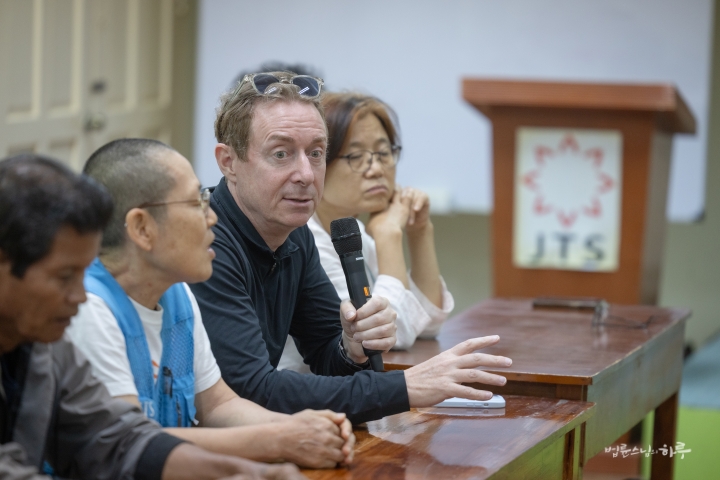
Is there a reason why JTS is interested in building special schools in urban areas? I feel that more support should go to the relatively worse-off indigenous schools.
While it’s good that special school classrooms have been built, the educational materials inside seem lacking. For instance, wouldn’t whiteboards be better than chalkboards that create dust? I think we should also pay attention to improving the educational environment.
To reduce the birth rate of children with disabilities, how about conducting midwife training for residents?
Some disabilities can be treated through surgery. How about providing surgical treatment support for children with disabilities?
One person mentioned that measures were needed to solve JTS’s staff shortage problem, shared several ideas, and sought Sunim’s advice on this matter.
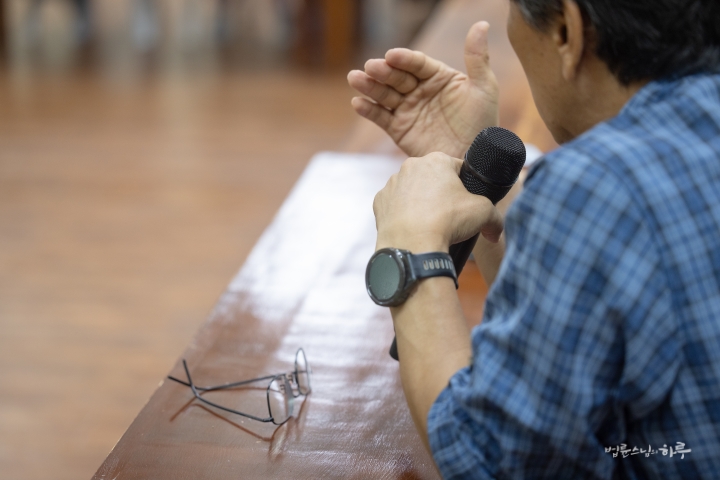
In an Era of Declining Young Volunteers, What Choices Can We Make?
“One of the difficulties that JTS Philippines has consistently faced while conducting projects seems to be the staff shortage problem. It must not be easy to solve. I’m curious about what plans you have regarding this, Sunim. While projects are expanding, it’s becoming increasingly difficult to dispatch young volunteers from Korea. I understand that you’re considering having retired people come and volunteer. Looking at my friends, many are still physically and mentally healthy but don’t know what to do after retirement and just pass time. I think it might be good to actively promote to such people. For example, gathering retirees interested in volunteering and specifically introducing JTS Philippines or India projects. I think it would be effective if you could take this role directly, Sunim. What are your thoughts on this?”
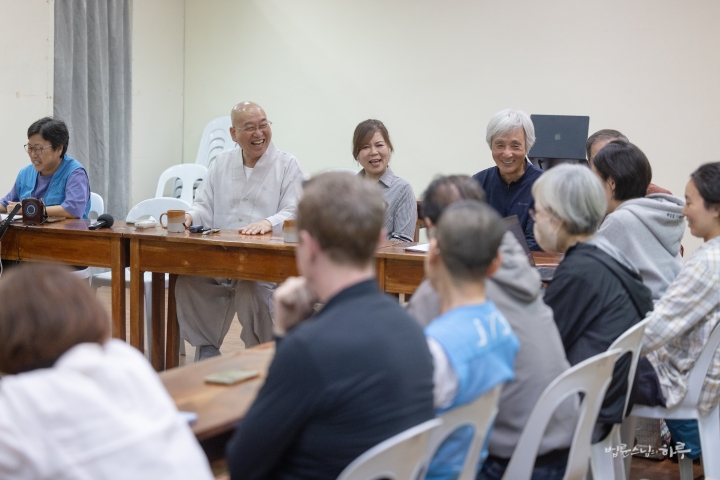
“In the current situation, I think the best approach is, first, to ‘reduce projects.’ Either not expand projects further or reduce existing projects somewhat. By doing so, we can maintain Jungto Society’s principles while smoothly proceeding with projects. This method is the best.”
“Second, if we want to expand projects further, as you mentioned, there’s the method of having retired people come and volunteer. Until now, we’ve dispatched young volunteers residing in communities from Korea and operated projects based on them, but in the future, I think we have no choice but to conduct projects centered on retired people. I’m also continuously researching this, but there are still problems to be solved. First, even if they’ve retired, if they have difficulty adapting to local life, it’s hard to continue volunteer activities. Currently, those who can retire in Korea and come to the Philippines are mainly teachers or civil servants who have retired. These people usually enjoyed middle-class life in Korea, so when they actually come here, they find the poor living conditions and community life difficult.”
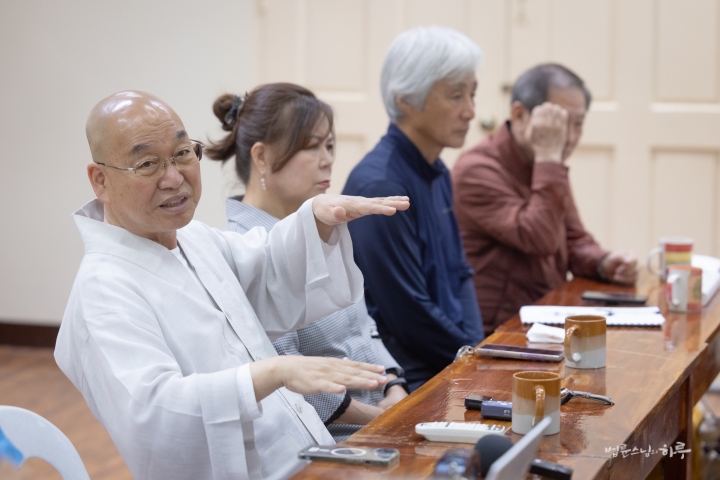
Currently, even the staff accommodations and support facilities at JTS Philippines deviate from JTS’s operational principles in some areas. At JTS India project sites, the principle of volunteers living and serving at nearly the same standard of living as local residents has been maintained to this day. When young volunteers are dispatched to overseas project sites, most adapt to the local environment once they overcome initial difficulties. However, middle-aged and senior volunteers who have retired find it most challenging to adapt to local conditions. The first difficulty retired volunteers face is ‘poor accommodations.’ The second is ‘adapting to the local climate.’ In places like India, they cannot endure living without air conditioning in the extreme summer heat. The third is ‘food.’ While young volunteers can survive on bread alone, middle-aged and senior volunteers have the issue of needing Korean food. The fourth is ‘difficulty with communal living.’ Since most volunteers who come are business owners or retired from high-level positions, they generally find communal living challenging. There are no private rooms, and they must coordinate sleeping times, waking times, and meal times together. Therefore, they prefer commuter-style volunteering where they can maintain their individual lives while working, just like going to work from home. The fifth is ‘communication difficulties.’ While middle-aged and senior volunteers have skills like carpentry or electrical work, they know little foreign language and can hardly communicate with locals. Therefore, when going to the field, an interpreter must accompany them. The current retiree generation has experienced everything from farming to construction and industrial sites during the industrialization period through hands-on observation. Even if they are not professional technicians, once they go to the field, they quickly understand what needs to be done. However, the problem is that they don’t speak foreign languages. Without someone to interpret, it’s difficult to go to the field. For Korean retirees to volunteer here, they must be able to endure these difficult conditions.
In this situation, one might raise the question, ‘Then why not improve living standards somewhat so that Korean retirees can adapt to local conditions?’ However, doing so would create a gap in living standards with local residents. Then the issue would arise again: ‘It’s not right for JTS volunteers who advocate equality to live more comfortably than local residents.’ This would require concurrent projects to raise the living standards of local residents as well, and ultimately, raising the living standards of local volunteers would lead to having to pay salaries. This would deviate from JTS’s principle of ‘not employing people for activities.’ Once JTS starts employing locals, JTS would soon gain a reputation as a ‘workplace’ with good salaries and working conditions. Then it would become no different from other NGO organizations. While general NGO organizations spend 30 percent of donations on operating expenses, JTS currently uses only about 3 percent of donations for operating expenses and uses the rest entirely to support those in need. However, if salaries were paid to volunteers and living conditions improved, operating expenses would likely increase significantly. These are the structural problems that exist.
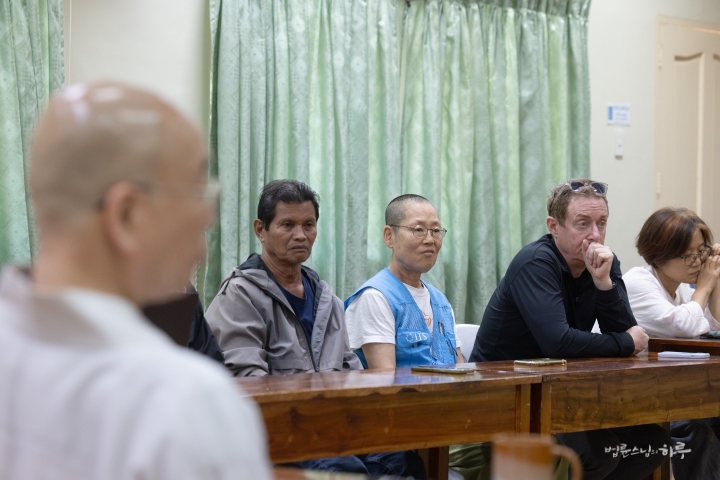
Some volunteers from Korea say that the living conditions of JTS volunteers are too poor and need improvement, while others raise concerns that the JTS volunteers’ standard of living is too high compared to local residents. Since people’s thoughts differ so much, these debates keep recurring. Of course, it would be best to live at the same level as the local people, as I did when I first started working in India. Then there would be no room for controversy. Since I lived more poorly than the locals, the villagers would often bring me food. In such relationships, we can carry out projects from an equal perspective without any sense of discrimination. However, this approach has the disadvantage of significantly reducing work efficiency. These issues keep being raised every time new volunteers arrive. It’s difficult for short-term volunteers who are new to fully understand what trials and errors JTS has gone through over the past decades to reach where it is today. That’s why similar issues continue to be raised repeatedly when new volunteers arrive.
Taking the India project as an example, there was a nurse who came to volunteer but left after just three days. She happened to witness a local staff member stealing medicine from the hospital. She said, “I can’t volunteer for people like this,” and returned to Korea after only three days. Middle-aged and senior volunteers like this come from different backgrounds and tend to be quite set in their ways. So when they actually arrive at the project site, most of them raise many issues. When working with various people, all sorts of things happen. That’s why I tell volunteers being dispatched to unfamiliar places to keep their mouths shut and stay quiet for the first three months. There are reasons why people have lived the way they have. However, when someone who has only lived in Korea first arrives on-site, it’s difficult to understand this context, and judgment arises first. Of course, if one lives on-site with the perspective of living like practitioners in Buddha’s time, simply begging for alms under trees, no problems would arise. But when trying to run projects efficiently, these conflicts emerge.
Despite these difficulties, the only way to solve this problem in the future is for people who have retired from their jobs in Korea to take the lead in continuing the work. Retired individuals can come here and volunteer for another 20 years. However, there are the adaptation issues of retirees that I mentioned earlier. One person found communal living so difficult that they proposed setting up separate accommodation in a nearby city at their own expense and commuting. While we don’t provide salaries, we do need to provide meals, but we couldn’t give them better food than what the local staff receive. In the end, they couldn’t endure it and returned to Korea.
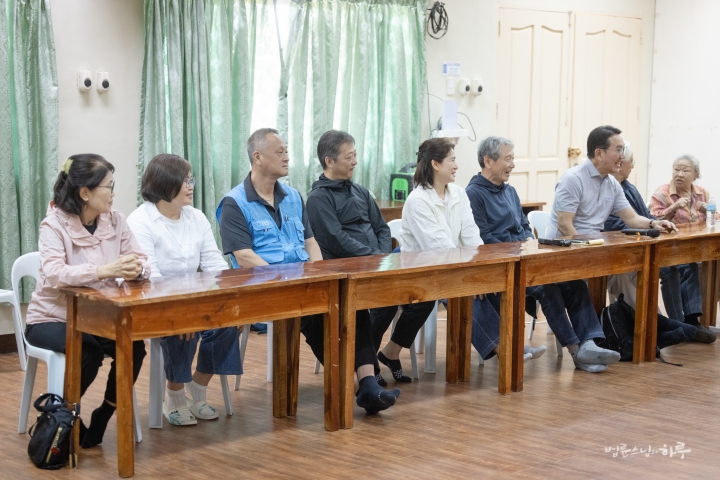
I’m not saying these examples to mean we won’t do it. I’m sharing problems that have repeatedly emerged over the years of running these projects. The resident full-time volunteers currently working in Bhutan are actually living at a lower standard than the local Bhutanese people. That’s why the local residents always bring them something. They say the volunteers live too poorly. Since the Korean volunteers dispatched to Bhutan live by these principles, the middle-aged and senior volunteers who go to Bhutan after retirement complain that life is the hardest part. It’s not that the volunteer work itself is difficult, but that they can’t adapt to the living standards. After about three months of overseas deployment, most people lose a lot of weight and find it difficult to adjust to local life.”
“Have you ever specifically promoted to the public about recruiting overseas volunteers?”
“We do it a lot within Jungto Society. We make announcements at the Weekly Dharma Assembly too. You’ve been caught not attending the Weekly Dharma Assembly.” (laughter)
Finally, Sunim made a new suggestion.
“The frequency of natural disasters is increasing worldwide. The Philippines in particular is a region where natural disasters occur frequently. So I think JTS should assign personnel specifically to the emergency relief department. And I wonder if we could more actively provide medical support to residents by opening medical camps. Someone has offered to donate medical equipment to JTS, so it would be good to conduct cataract surgeries, cleft lip surgeries, and such not just in Mindanao but throughout the Philippines. Since it would be difficult for the representative to handle everything alone, how about dividing the work into three areas – school construction, emergency relief, and medical volunteering – and assigning responsible persons for each?”
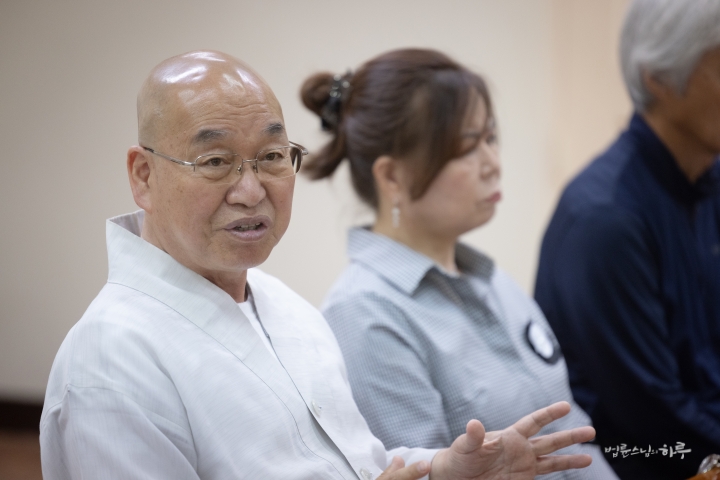
A brief discussion followed Sunim’s proposal. Various opinions were exchanged about how to effectively respond to emergency relief. Summarizing the discussion, Sunim asked once more.
“Would Vice Representative Lee Gyu-cho be able to take responsibility for emergency relief?”
“Yes, I’ll give it a try!”
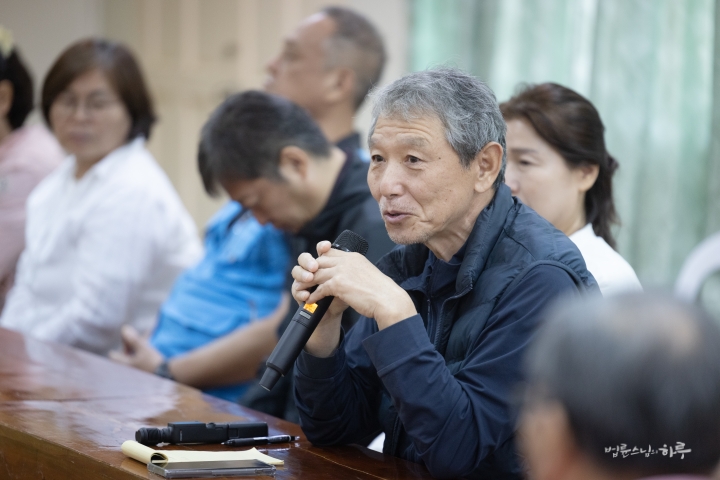
They decided to make the final decision at the board meeting, but in broad terms, they established the direction with Representative Noh Jae-guk handling school construction, Vice Representative Lee Gyu-cho handling emergency relief, and former Representative Lee Won-ju handling medical volunteering.
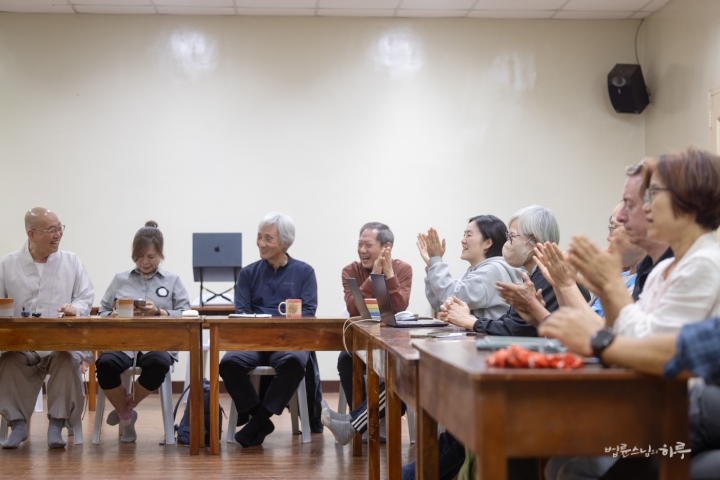
Finally, JTS Representative Park Gina suggested that since all the Philippines JTS volunteers had worked so hard this year, they should send them on a 3-day vacation to Manila. Everyone agreed, and Sunim, as the JTS chairman, gave final approval.
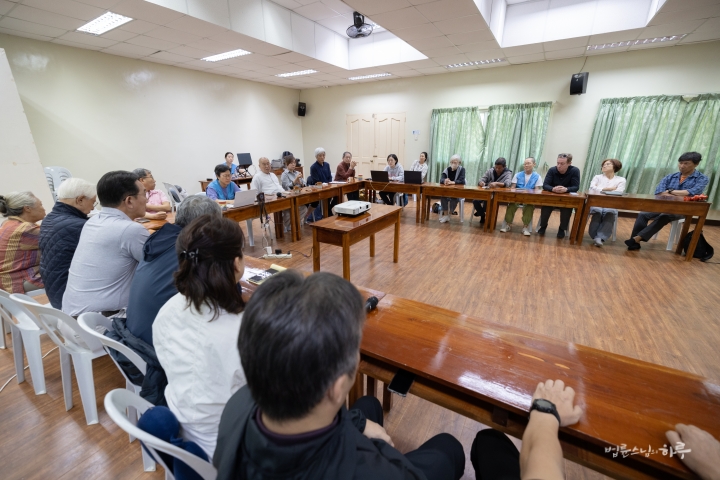
“Please make plans for the Korean volunteers to have a 3-day program in Manila, and the local Filipino volunteers can go on a one-day excursion. But please avoid the year-end when flight tickets are expensive.” (laughter)
“Thank you.”
“So can we build 20 schools next year? Jesse, you should build at least 10.”
“Yes, I’ll give it a try.”
Everyone ended the meeting with loud applause.
After loading all the luggage onto the truck, they departed from the JTS Center at 10 AM and headed to Cagayan de Oro Airport.
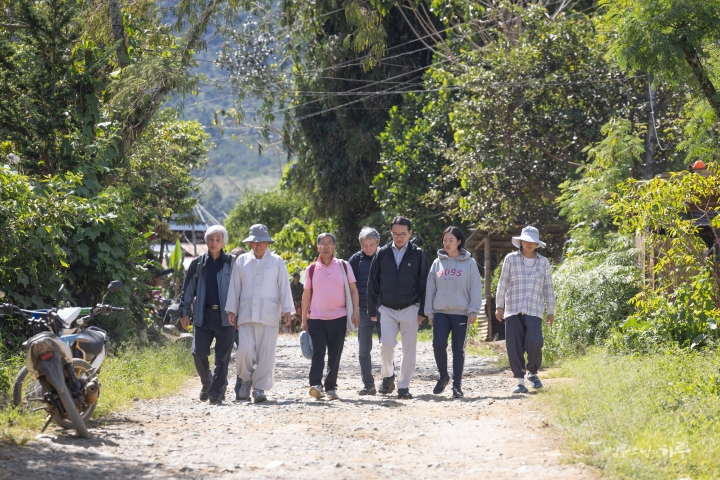
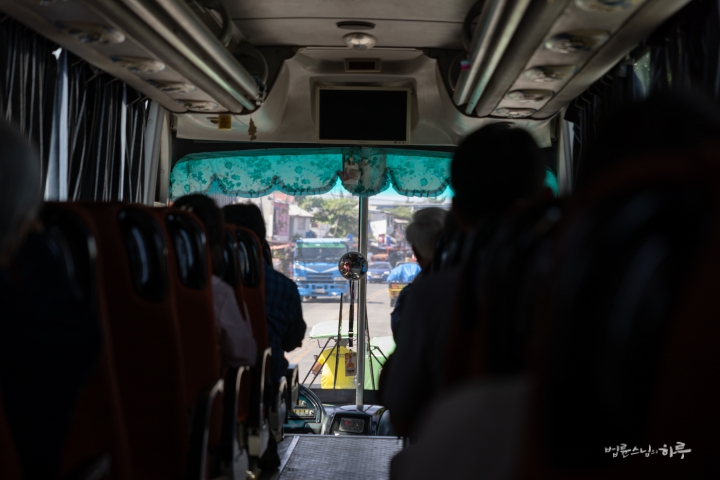
As they entered downtown Cagayan de Oro, traffic was extremely heavy. After barely getting through the traffic jam and traveling for 2 hours and 40 minutes, they arrived at Cagayan de Oro Laguindingan Airport at 12:40 PM.
Sunim said goodbye to Philippines JTS Secretary General Dharma Teacher Hyanghoon.
“Thank you for all your hard work.”
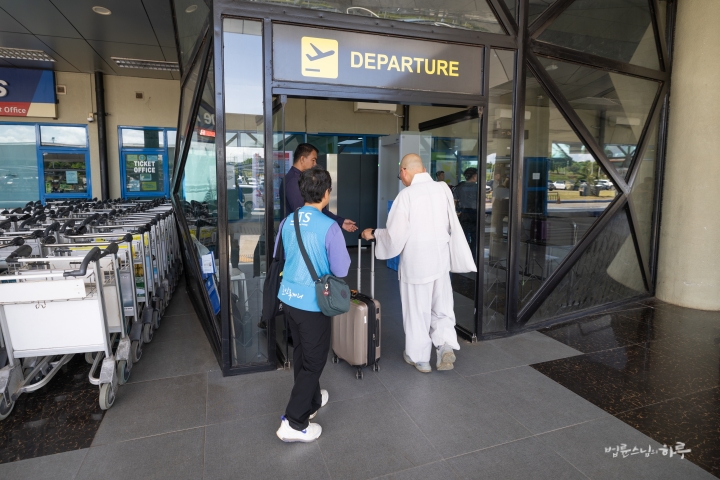
They hurriedly checked in their luggage and completed boarding procedures. They were worried about being late for the lecture if the plane departed late, but fortunately it was only delayed by 30 minutes and departed from Cagayan de Oro Airport at 2:30 PM.
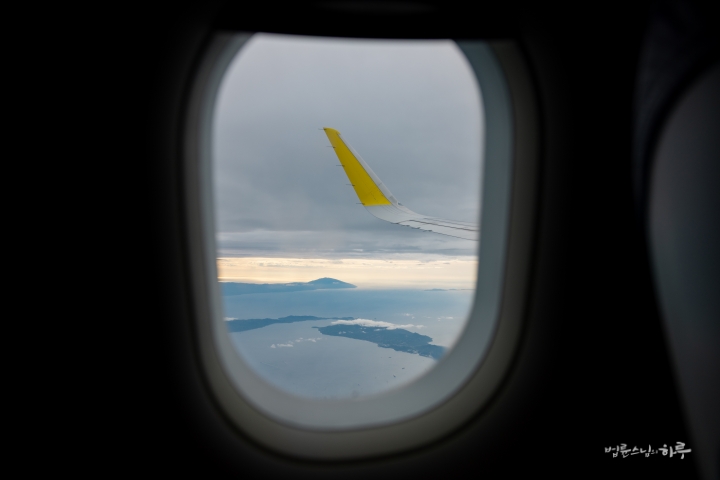
The plane left Mindanao Island and flew over the sea. After flying for 1 hour and 20 minutes, they safely arrived at Manila Airport at 3:50 PM.

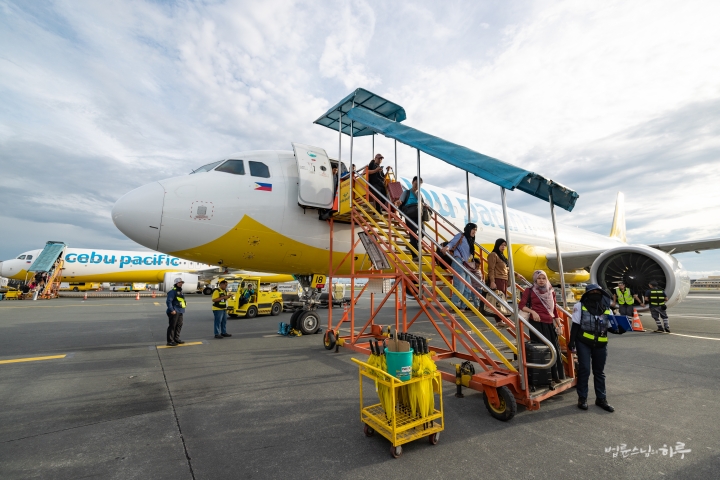
After completing procedures, they left the airport at 4:30 PM and headed to the lecture venue to meet the Korean residents in Manila.
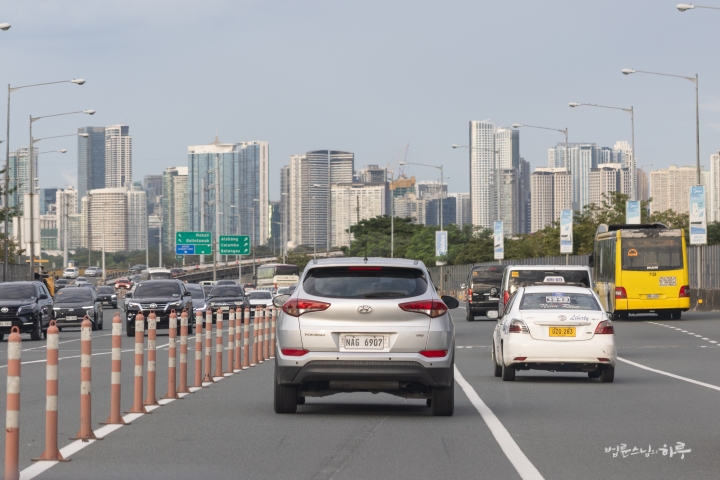
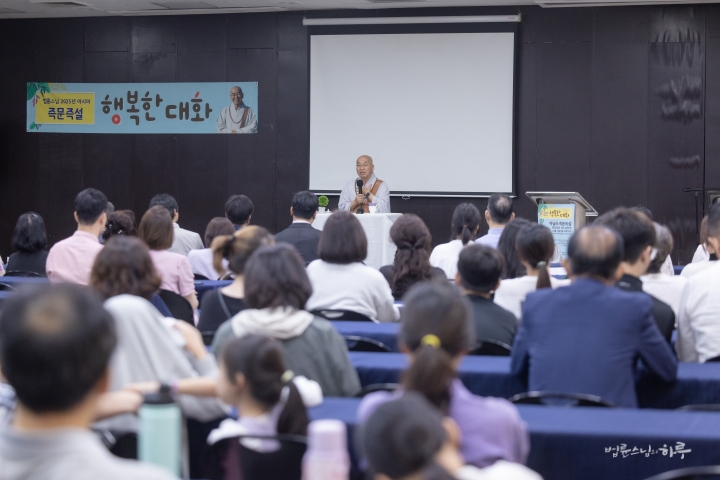
Today’s lecture was held at the Asian Institute of Management (AIM) located in Makati City, the center of Manila. This graduate school of management was established to train leaders and professional managers in the Asian region, and today Venerable Pomnyun Sunim’s Dharma Q&A was held here.
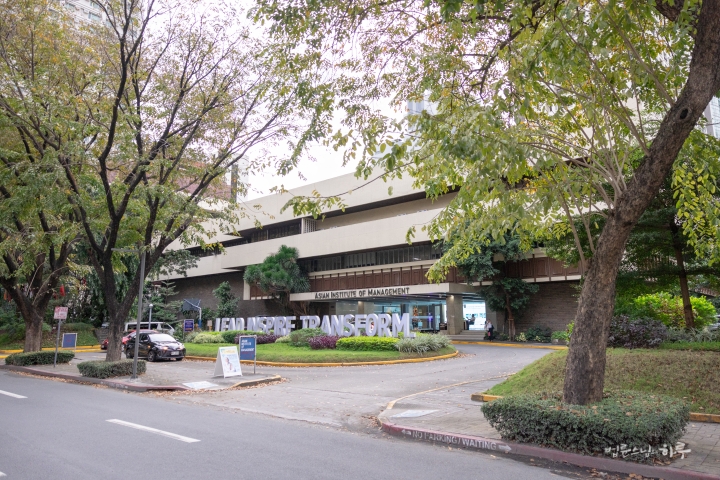
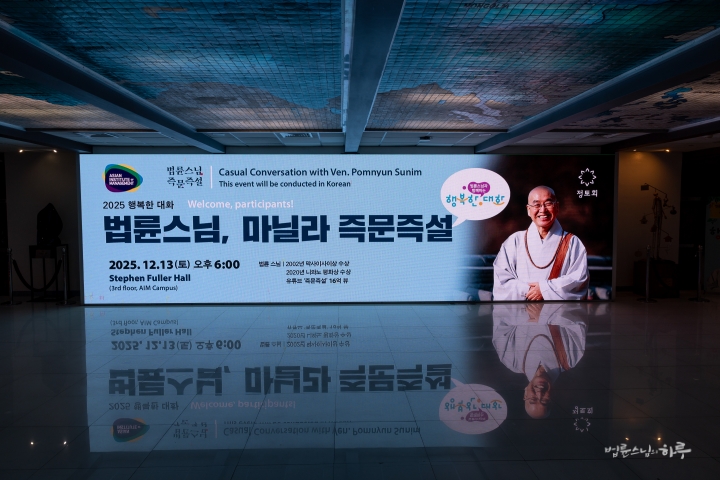
Volunteers were busily preparing for the lecture everywhere. After warmly greeting the volunteers, Sunim headed to the lecture hall.
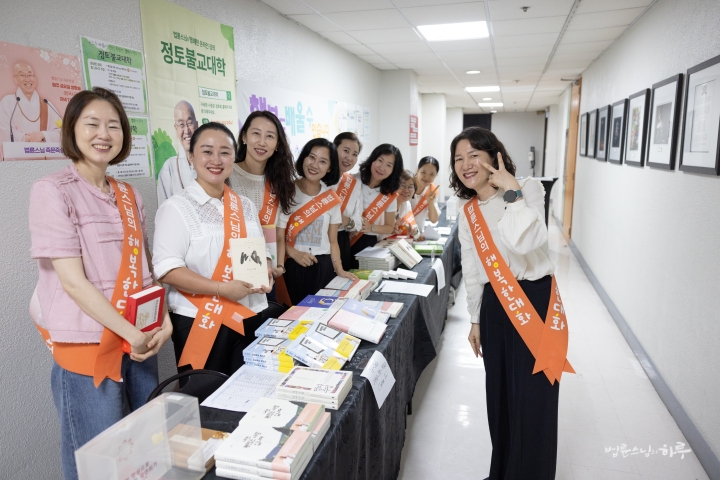
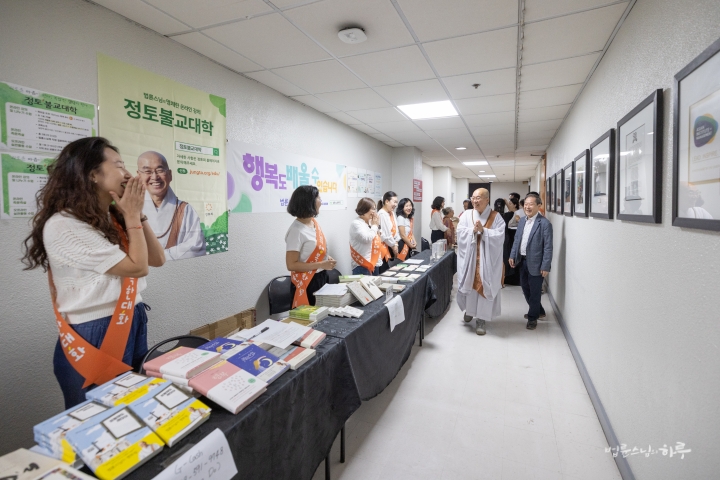
In front of the lecture hall, a photo exhibition documenting the 20-year history of Philippines JTS was held. After greeting the Korean residents, they viewed the photo exhibition together.
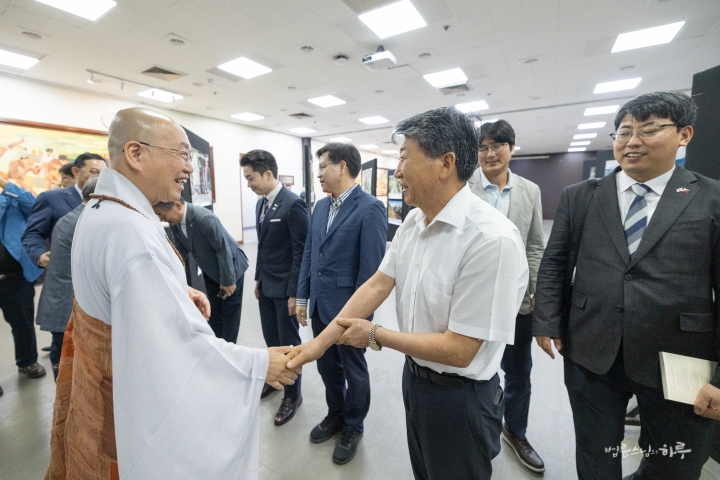
In 2002, Sunim received the Ramon Magsaysay Award, which led to a request from Archbishop Tony to survey the Mindanao region. JTS began supporting Mindanao in 2003. Over the past 23 years, they have built 86 schools and planted seeds of peace in Mindanao.
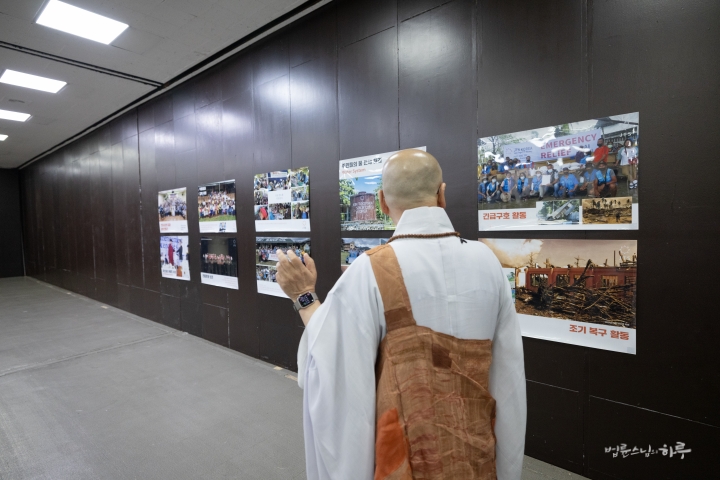
Korean residents who arrived early also viewed the photo exhibition and enjoyed refreshments prepared by volunteers, including kimbap, hamburgers, rice cakes, and tea, while chatting.
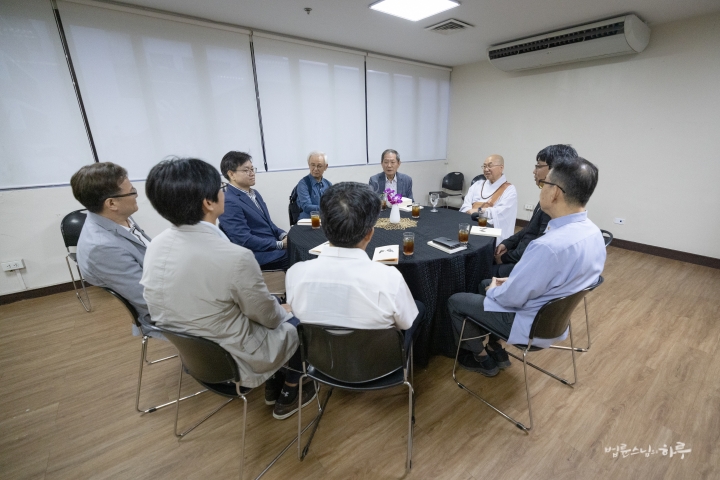
After viewing the photo exhibition, Sunim had tea with senior figures in the Manila Korean community, including past presidents of the Korean Association in the Philippines, the deputy consul, the international school principal, and the president of the senior citizens’ association.
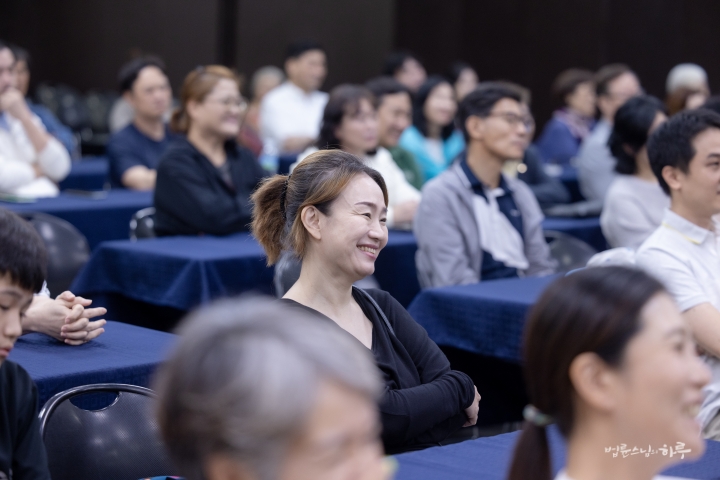
As they exchanged greetings after meeting for the first time in a year, it was time to start the lecture. With about 100 people filling the venue, loud applause and cheers erupted as Sunim walked onto the stage.
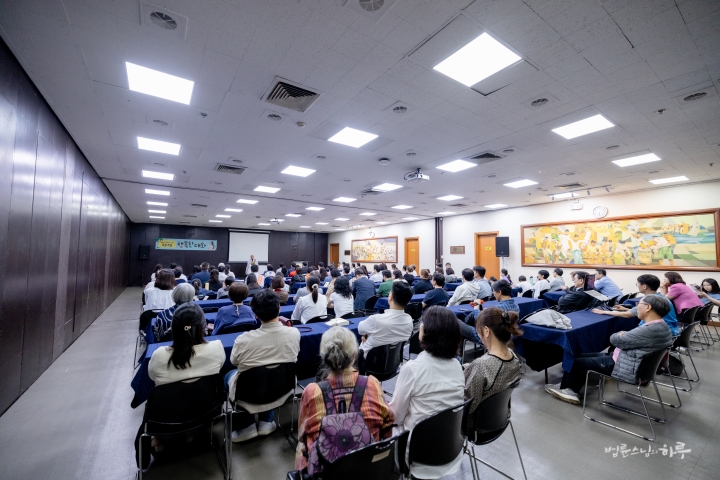
Sunim first introduced that Philippines JTS had built 15 schools in Mindanao this year, and showed photos from the completion ceremonies held over the past 5 days.
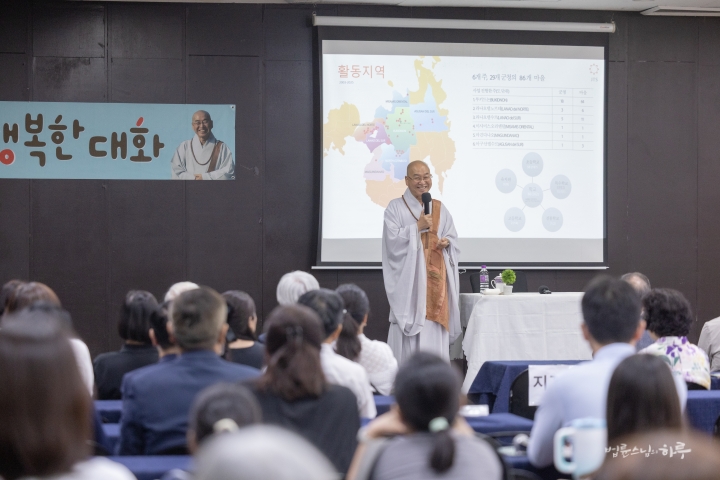
“Another year has passed and it’s the end of the year again. Like last year, I’ve come to the Philippines again this year. This year, JTS built a total of 15 schools in the Mindanao region of the Philippines, including 10 indigenous schools and 5 special schools for children with disabilities.
With Schools Built, Education Began to Move Forward
The work that JTS has focused on most until now has been building schools in indigenous areas. In the remote mountainous regions of the Philippines, transportation conditions are poor, so indigenous children have almost no educational opportunities. To commute to a barangay with a school requires walking for 2-3 hours, making it difficult for young children to attend school. Therefore, people who have relatives in towns near schools can send their children to school, but most others cannot. For this reason, JTS builds schools in mountain indigenous villages so that children can walk to school within about 4km.
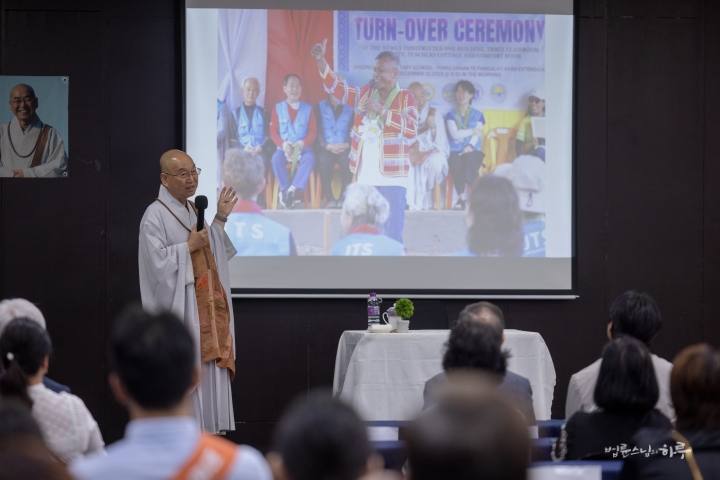
Most conflict areas with Muslim communities also lack schools. In the past, schools were absent in indigenous areas mainly due to NPA (communist rebel) activities, but nowadays, except for some regions, NPA activities have almost ceased. Areas that had conflicts with MILF (Moro Islamic Liberation Front) now have peace treaties in place, and educational issues are being resolved to some extent. In this situation, former representative Lee Won-ju built about 65 schools over the past 20 years, and currently, representative Noh Jae-guk continues this work. While it was difficult to build even 3 schools a year in the past, nowadays nearly 10 schools are built annually. This increase in school construction is not only due to JTS’s efforts but also because local governments and education offices have shown significantly more interest in education. Previously, even after schools were built, teachers weren’t sent, but now the situation has changed where authorities first send teachers to start education even in hut-like places in indigenous areas, then request JTS to build schools. With Philippine authorities actively engaging in school construction, our work has become much easier.
JTS’s work in the Philippines is not limited to educational support projects. Just as many schools damaged by Typhoon Haiyan were restored a few years ago, emergency relief activities were carried out this year when flood or earthquake damage occurred. The main area of activity is Mindanao, and recently, efforts have been particularly concentrated in Bukidnon Province. After building schools, continuous monitoring is conducted to ensure they are operating properly. Last year, in addition to school construction, indigenous children were taken on bus trips to beaches or zoos, and field trips were also supported for children with disabilities who have difficulty participating in activities. Additionally, medical support was provided by visiting villages directly through the Medical Practitioners’ Jungto Society, and emergency relief activities were conducted when flood damage occurred in the Cebu region.
What Should We Do Together to Make the Korean Wave Last?
When you come here, don’t just focus on making money. You should use at least a portion of your earnings for the benefit of this country and its people. These days, everyone is very excited about the Korean Wave, saying that Korean culture is spreading globally. From Korea’s perspective, it might be good that Korean food, clothes, and cosmetics are selling well. However, as I travel to various places in Southeast Asia through my activities, I find that many adults there don’t particularly like the Korean Wave. They’re troubled because their children want to spend money on Korean clothes and cosmetics, dancing and singing, saying the Korean Wave is trendy. What we call the Korean Wave is ultimately a consumer culture, isn’t it? Because you need to pay money to enjoy it.
In my opinion, for the Korean Wave to last long, corresponding responsibility and support are necessary. We must provide support for local community education, health, and regional development together. While Korea boasts about its high exports, the flow of the Korean Wave can only become sustainable when we have a structure that reinvests part of the profits back into local communities, whether at the national level or through non-profit organizations. However, I think we are currently focusing only on making profit and are somewhat negligent about reinvestment.
Rather than thinking only about our own national interests and promoting national prestige, we desperately need an attitude of sharing and cooperating at the level of the global community. Only then can the Korean Wave avoid being just a short-term trend and continue to benefit us as well. To achieve this, we need to have much more interest in local communities abroad.”
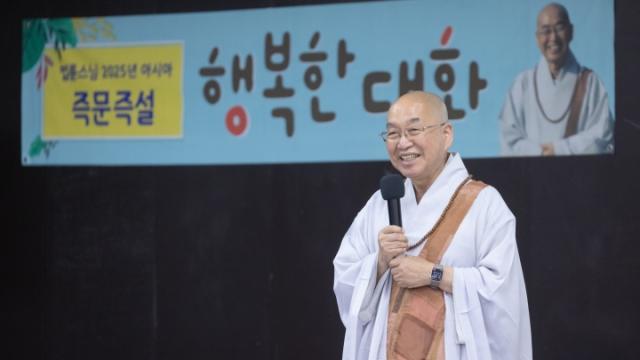
Next, there was a time for people to raise their hands and ask questions about life concerns. Anyone could raise their hand and ask Sunim questions. For an hour and a half, four people had conversations with Sunim. One of them said she was conflicted between her boyfriend and her sick mother, wondering how to communicate her choice.

Between My Boyfriend Who Got a Job Overseas and My Sick Mother, Where Should I Go?
“I came here to work for about a year. Originally, I was planning to return after a year, but my boyfriend seems likely to work overseas for about 4 years. My mother is just waiting for me to come back soon. I feel uncomfortable because my mother is not in good health. On one hand, I want to follow my boyfriend, but on the other hand, I’m worried that my mother’s health might get worse while I’m away. So I’m wondering what I should do. I have a stronger desire to follow my boyfriend, but I’m seeking your advice on how to tell this to my mother.” 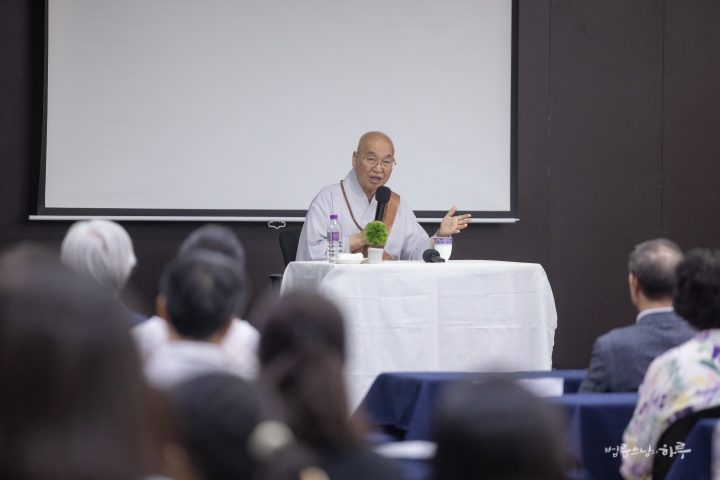
“From what you’re saying, if you follow your boyfriend, you’re a bit worried about your mother, and if you take care of your mother, the relationship with your boyfriend becomes a problem.
You think this is about your boyfriend or your mother, but the two have nothing to do with each other. If your relationship with your boyfriend is good, just make a decision and follow him. Don’t worry about your mother at all and think of it as an independent variable – just decide whether it’s good to continue the relationship with this man or not.
If you make a decision in connection with your mother, when the relationship goes bad later because of that choice, you’ll end up blaming your mother. There’s a risk of thinking that your life went wrong because of your mother. Whether you nurse her or stay by her side, if you think ‘I’m staying here for my mother,’ the relationship will eventually deteriorate. You’re making the decision because you’re afraid you might regret it if your mother’s health deteriorates, so it’s a choice for yourself, not for your mother. If you couldn’t go because of your mother, then your mother becomes an obstacle in your life. So make your choice regardless of your mother. If you’re over twenty, it’s not a sin even if you don’t care whether your mother gets sick or passes away. I can’t say it’s good, but it’s not a sin either. Even looking at natural ecosystems, while mothers caring for their young is an ecological principle for species preservation, there’s nothing about adult offspring playing a role in protecting their parents. Once they become adults, they must protect their own lives. While they may respond collectively when in crisis during group living, basically each individual is responsible for themselves.
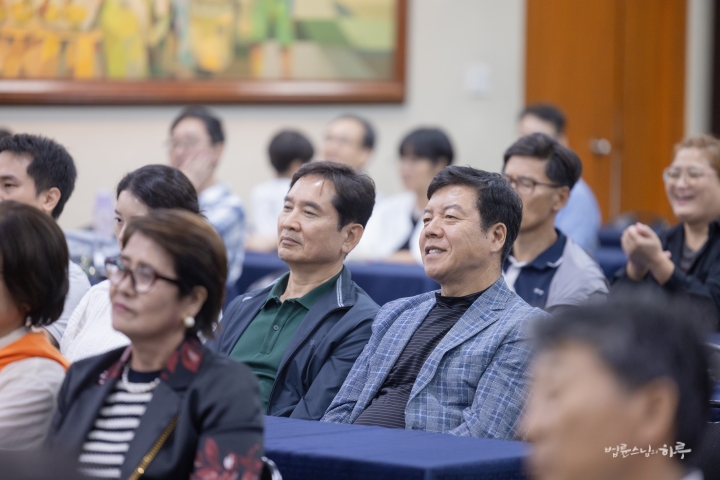
So if going abroad is what you judge to be good for your life, then your mother’s illness is her life, and you need to live your own life. If you can’t do what you need to do because of your mother, she becomes an obstacle in your life. Parents want to help their children, not become a burden to them. The very thought of ‘I can’t go because of my parents’ is wrong. So just tell your mother that you need to go for such and such reasons, and then go. You should help within the bounds of living independently, but there’s no need to help at the expense of damaging your own career path. If you do that, you’ll eventually resent your mother, and the parent-child relationship is likely to turn into one of enemies. Parents naturally say ‘Don’t go, stay here’ because they’re sick and miss their children. This contains both love for their children and self-interest. But you shouldn’t think that parents are using their children for their own benefit. All living beings instinctively see things from their own perspective. What you decide to do about such parents is your choice, but it’s wrong to think that parents are too selfish.
When we do business with someone, if we think they’re bad just because they pursue some profit, we can’t do business. Pursuing profit should be accepted as natural. People do business to make profit, after all. However, if it’s excessive, it becomes difficult to achieve mutual benefit, so instead of criticizing them, you can simply decide ‘It would be better not to do business with this person.’ If that person pursues profit but I don’t, there’s no reason for our relationship to deteriorate. I can just do it at my own loss. But since I don’t want to lose either, I think that person is pursuing too much profit. Pursuing profit is part of human life. You shouldn’t view it negatively. Conflicts arise because we view others’ pursuit of profit as despicable while considering our own pursuit of profit as justified. Whether it’s religion or commercial transactions, they’re the same in that they’re relationships pursuing mutual benefit, just with different items being exchanged. In Buddhism, practitioners offer the wisdom of life through dharma talks, and lay practitioners listen to those teachings and offer material goods necessary for the practitioners’ survival. This is precisely a give-and-take relationship.
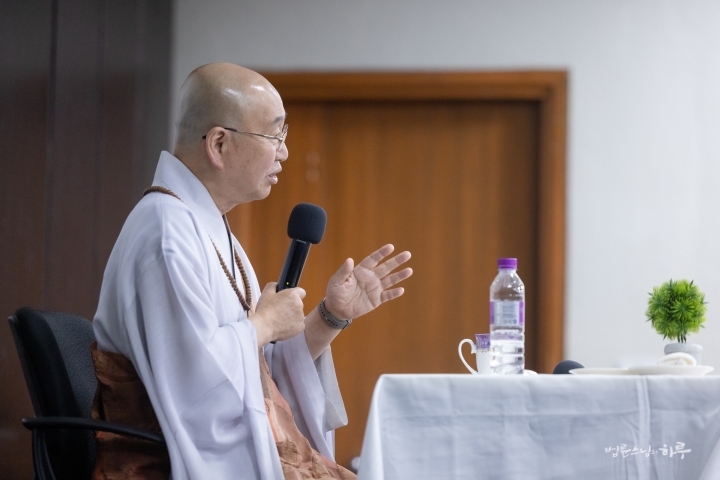
Ultimately, you have to make the decision yourself. Don’t associate your relationship with your boyfriend with your mother. Your mother is not someone who interferes with your relationship with your boyfriend. You keep making that connection and overthinking it. Just make your own decision and act on it. If your boyfriend is fine with it, just go with him. And using your mother as an excuse means your boyfriend isn’t 100% to your liking. The same goes for saying marriage is difficult because your parents oppose it. Do you really want to get married but can’t because your parents oppose it? The truth is, your own heart is wavering a bit, and since your parents are also opposing it, you’re using them as an excuse. Psychologically speaking, that’s usually the case. ‘I really want to do it, but it’s difficult because my parents oppose it’ – that’s not true. If I’m determined to do it, even if my parents oppose it, I can just say ‘Goodbye, Mother. Bye-bye’ and leave. The reason you don’t make that decision is because you’re calculating.
Was I too direct? You need to see your own heart clearly and transparently and make a decision to have fewer regrets. If you glorify yourself by saying you need to take care of your mother too, you’re deceiving yourself.”
“How should I talk to my mother about this?”
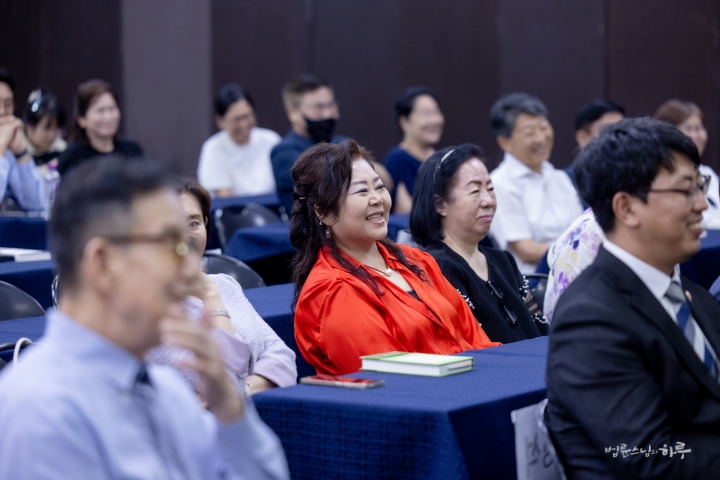
“It’s a parent-child relationship, so just speak honestly. ‘Mom, I really like this man. So I’m going to follow him.’ That’s all you need to say. If your mother says, ‘How can you leave me behind like that?’ you can reply, ‘I can’t just take care of you until I die. Would you like me to never marry and live only with you forever?’ If your mother says, ‘You should get married,’ then you need to speak up confidently.
‘If you tell me to marry my current boyfriend, I will. If you tell me not to, I won’t marry anyone for the rest of my life. You say you love me, but do you want me to live alone forever?’
If your mother still doesn’t agree after asking this, you should be able to say, ‘If you’re so opposed to it, I’ll cut ties with you for a while and live separately. I’ll try living that way first, and if it doesn’t work out, I’ll come back then.’ If you don’t say this and later claim, ‘I wanted to marry that boyfriend back then, but couldn’t because my parents opposed it,’ that’s really just an excuse.”
“Yes, thank you.”
“Is your father not around and your mother living alone?”
“Yes, my mother lives alone.”
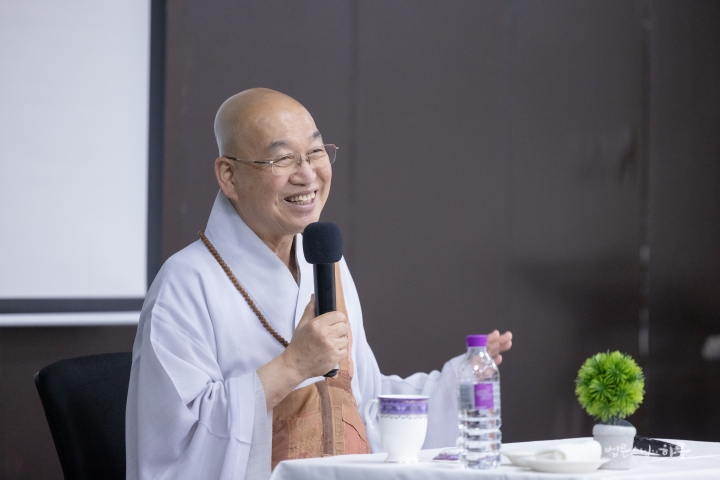
“Then tell your mother not to depend on you and to find a boyfriend her own age. You need to speak this harshly to clearly establish each other’s positions and cut off delusions and afflictions in your mind. If someone has divorced or lost their spouse, they have the freedom to meet someone else. Meeting someone else while married is ethically problematic, but if you don’t have one, there’s no need to be self-conscious at all. In the past, when a husband died, a wife following him in death was praised as a virtuous woman, but from a modern psychological perspective, that’s all mental illness. It’s an inability to let go of attachment to the husband. Losing sleep after breaking up with a lover is also a form of mental unwellness resulting from the aftermath of separation. Perhaps saying this makes life too dry. But you need to overcome the pain of separation to live healthily again. Even animals shed tears when they experience separation. Shedding tears can be seen as having attachment to a specific object. However, animals heal and recover on their own after a certain period. But humans judge someone who dates another person right after breaking up with a lover as ‘promiscuous’ or ‘immoral.’ That perspective isn’t natural. You should understand that viewing it that way is rather too artificial.”
“Thank you. I understand well.”
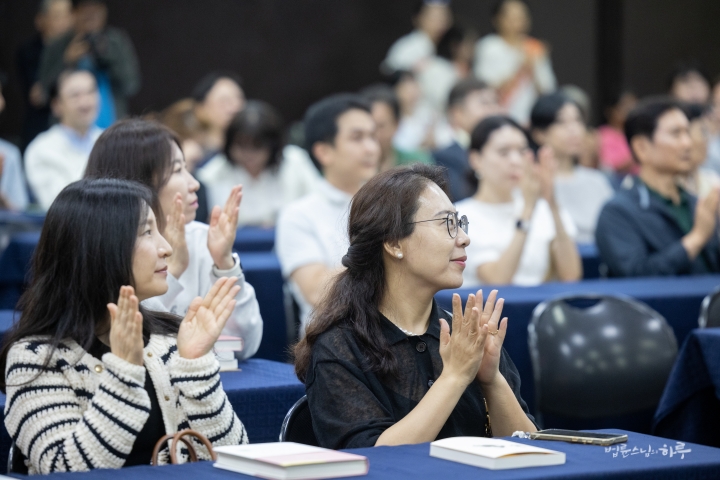
Questions continued one after another.
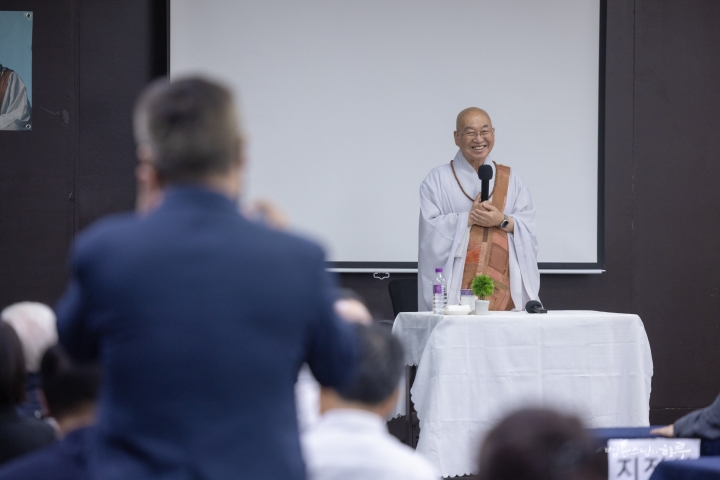
I’ve been living diligently in a foreign country for over 30 years and haven’t had time to take care of my family. How should I live the rest of my life to make it the best life possible?
Based on the trial and error I experienced raising my first child, I raised my second child well, but now my first child has many complaints and resentments. How should I resolve this issue?
I always find it difficult to consistently repeat something on my own. I often feel depressed with self-loathing about my weak will. How can I improve?
Concluding the dialogue, Sunim gave closing remarks.
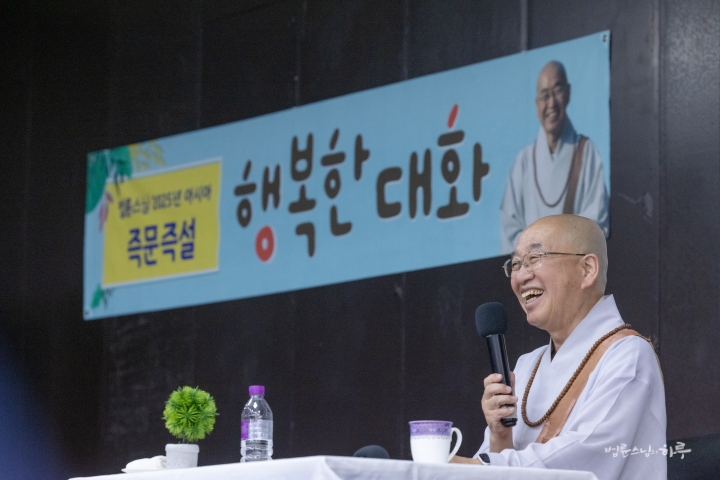
“Most modern people have weak lower bodies because they sit indoors, and even if it’s not a mental illness, they think too much. My volunteer work in Mindanao, Philippines is about helping others, but it’s also about keeping my body healthy. Also, seeing people in difficult living conditions up close helps me too. When you’re only in comfortable places, you have many complaints, but when you see people in difficulty, you can realize how good an environment you’re in right now. Your standards for comparison lower. Then stress decreases dramatically. And you learn to be grateful for the life you’ve been given.
The Heavier Life Feels, the More You Should Go to Remote Areas
So everyone, don’t just focus on your current living problems. Whenever you have time, go volunteer in Mindanao. You need to experience hardship there to realize how comfortably you’re living now. Because I travel to remote areas around the world and see many people in difficult environments, I’m grateful even for sleeping at airports. In midsummer, the air conditioning is cool, and when you go to the bathroom, both hot and cold water come out well. Where could you find a better place to sleep? We don’t know how to be grateful because we’re too accustomed to comfortable daily life. I hope you all live your lives a bit more lightly with that perspective.”
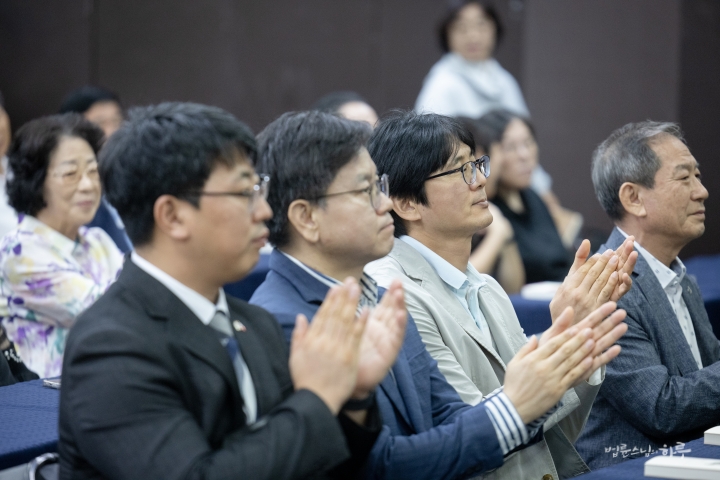
After the lecture ended, Sunim held a book signing on stage. Many people lined up in a long queue waiting for their turn to get Sunim’s autograph.
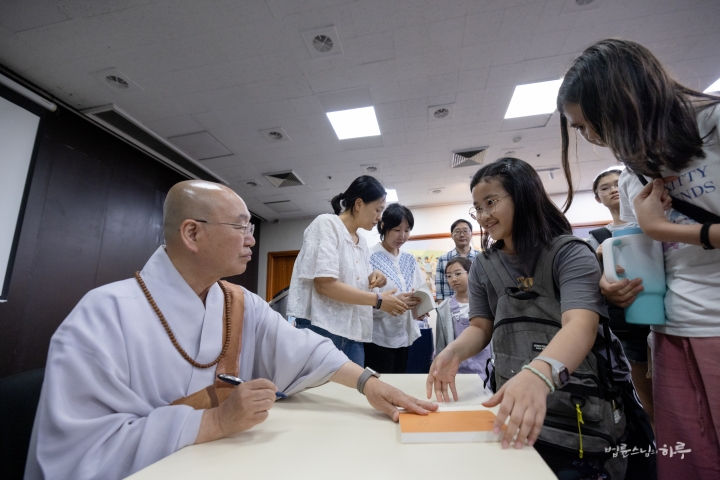
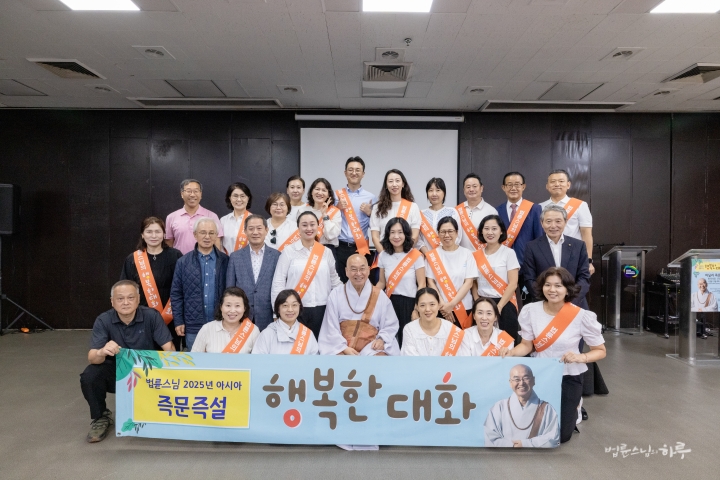
Sunim made eye contact and greeted each person individually. Finally, he took a group photo with the volunteers who prepared the lecture.
“Manila, fighting!”
After the lecture, Sunim went to the home of Lee Won-ju, former president of JTS Philippines, and had dinner with members of Manila Jungto, concluding this visit to the Philippines.

After 10 PM, they headed to Manila Airport in the Philippines. Sunim encouraged the Jungto members who came to see him off for their hard work preparing the lecture and urged them to participate not only in JTS’s school construction in Mindanao but also in emergency relief activities for natural disasters and medical support activities including cataract surgery.
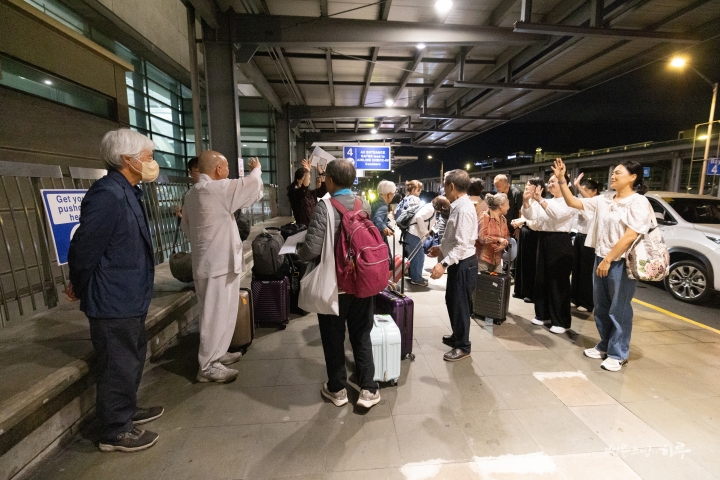
After completing departure procedures, Sunim lay down in front of the boarding gate to rest briefly. The shoulder pain that started a week ago hadn’t healed, so he tried to make his body as comfortable as possible.
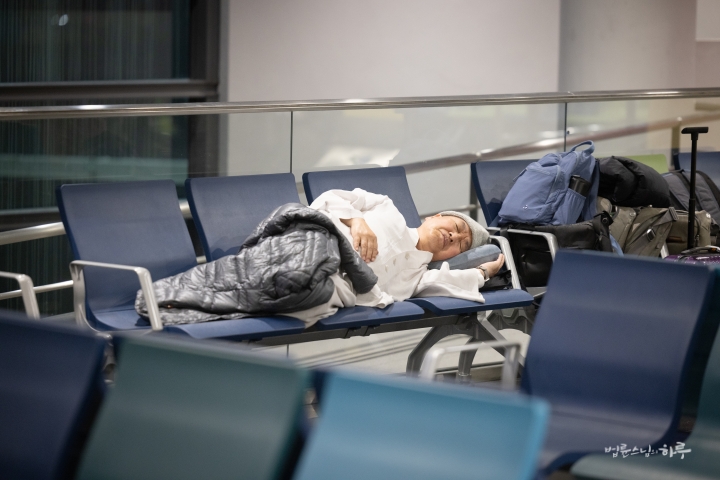
When boarding time came, he got on the plane and took a short nap while seated.

Tomorrow, he will depart from Manila Airport at 12:25 AM, fly for about 4 hours, and arrive at Incheon Airport at 5:30 AM Korean time. He will immediately go to the Jungto Social and Cultural Center to hold the closing ceremony for the 1st 1000-Day Practice of the 2nd 10,000-Day Practice and participate in the International Division Members’ Day.