These Children Are Gifts from God
Dec 11, 2025. - Day 4 in Mindanao, Philippines - Degebdeb and Kadingilan Special School Opening Ceremonies
Hello. Today marks the third day of our visit to Mindanao, Philippines. Today, Sunim attended the opening ceremonies for Degebdeb School in an indigenous village in Don Carlos municipality and the Special Education (SPED) school in Kadingilan.
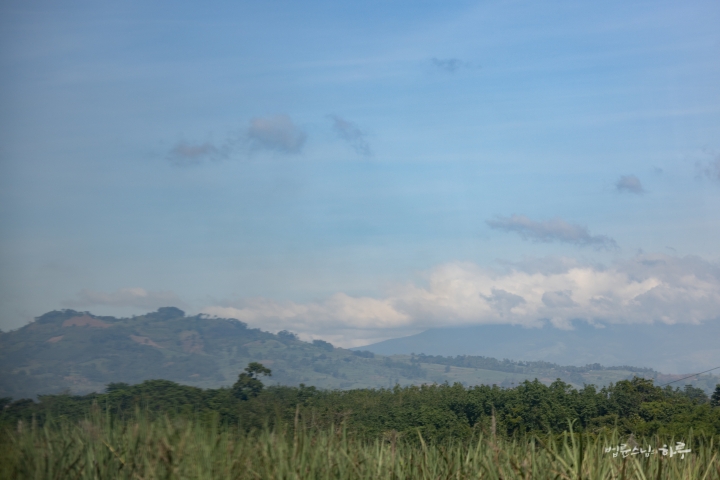
Sunim and the JTS delegation departed Valencia at 7:30 AM, heading to Degebdeb village in Don Carlos municipality where the opening ceremony would be held. Since the departure time was much later than usual today, everyone looked more relaxed.
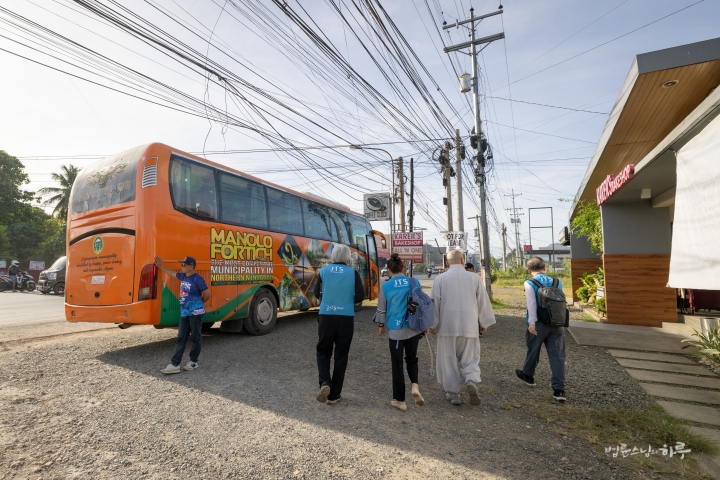
Once the bus departed, Dharma Teacher Hyanghoon introduced Degebdeb School, where today’s opening ceremony would take place.
“Don Carlos Degebdeb Elementary School is the largest school JTS has built this year. Although it has four regular classrooms, they can be divided to create seven classrooms. Since elections were held throughout Mindanao in May this year, the municipal office couldn’t execute the budget until then. Anticipating this, we signed the agreement in February, but it was eventually postponed until after the elections, and construction could only begin in July. As a result, they had to work overtime very busily until last week to complete the construction. The municipal office has even repaired the access road. However, since it’s difficult for buses to enter, we’ll transfer to trucks and four-wheel-drive vehicles to reach the school.”
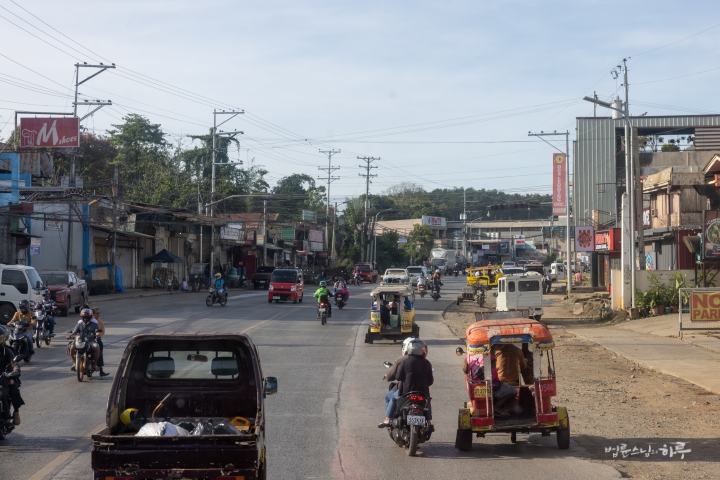
During the journey, they stopped at a roadside restaurant for breakfast.
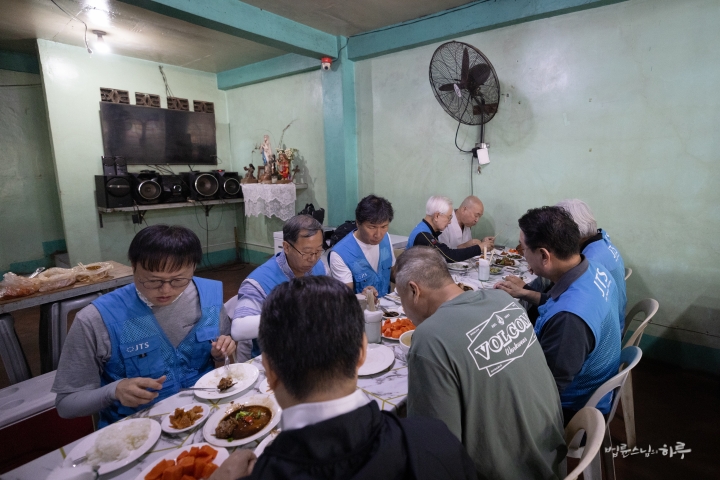
After a quick meal, they boarded the bus again at 8:20 AM. After traveling by bus for 40 minutes, an unpaved road appeared. From here, the bus couldn’t proceed, so they had to transfer to trucks and four-wheel-drive vehicles.
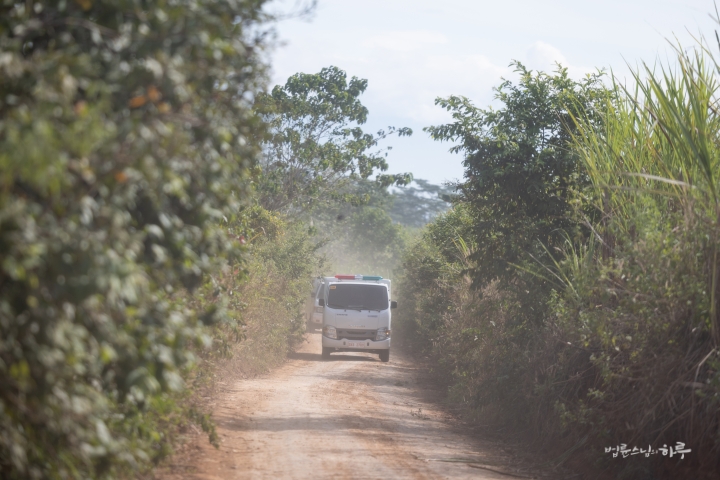
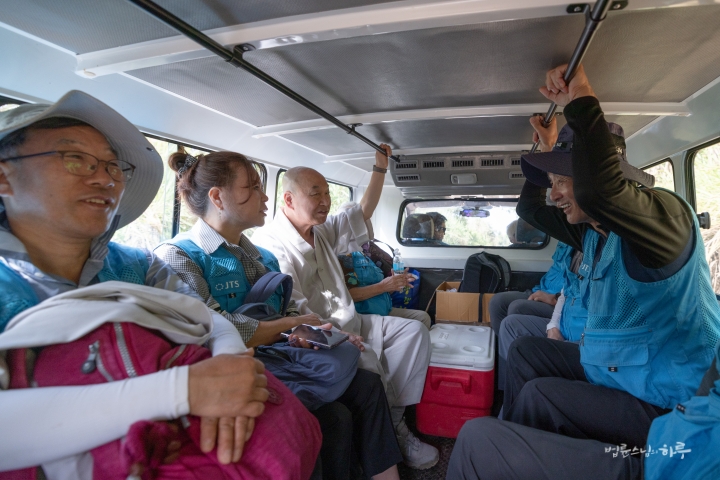
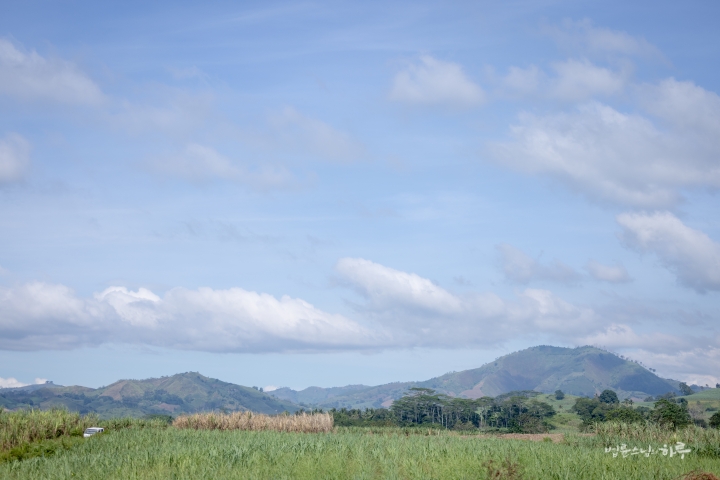
Sunim offered the passenger seat to writer Kim Hong-shin and boarded the back of the truck. Once all fifteen people were seated snugly and boarding was complete, the truck began traveling on the unpaved road. With potholes everywhere, everyone held tightly to the handrails whenever the truck jolted. Wide sugarcane fields stretched on both sides of the narrow road.
At 9:20 AM, they finally arrived at Degebdeb Elementary School. Education officials and teachers were diligently preparing for the event everywhere.
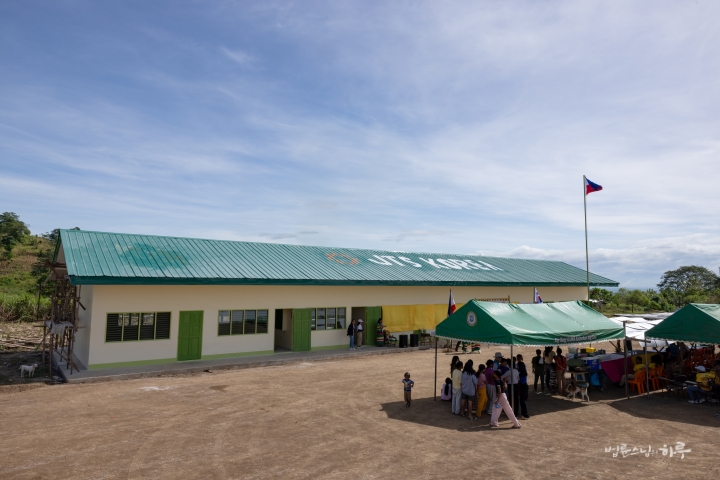
Sunim took a tour around the entire school. Among the four regular classrooms, three were divided into two, creating a total of seven classrooms. Everyone was delighted with the large, spacious new classrooms. They tried to enter the classrooms, but couldn’t approach as the paint hadn’t dried yet. Many people had worked hard until yesterday to prepare for the opening ceremony.
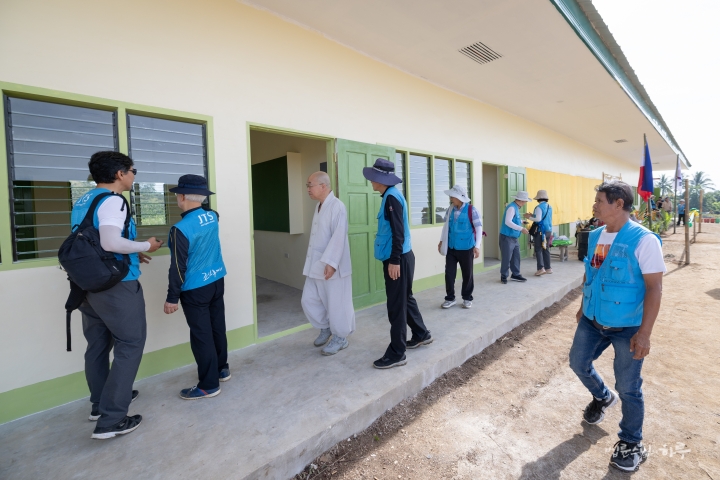
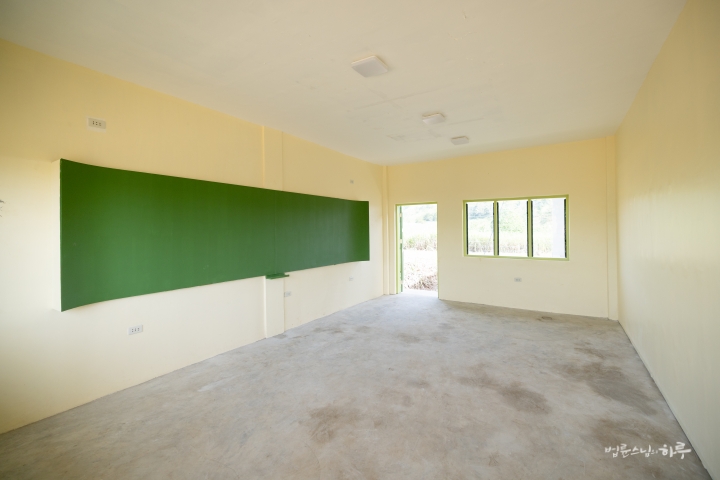
Shortly after the superintendent and mayor arrived, the opening ceremony began at 10:00 AM. First, the JTS delegation and officials from the municipal office and education office all stood in a line for the ribbon-cutting and unveiling ceremonies.
“One, two, three!”
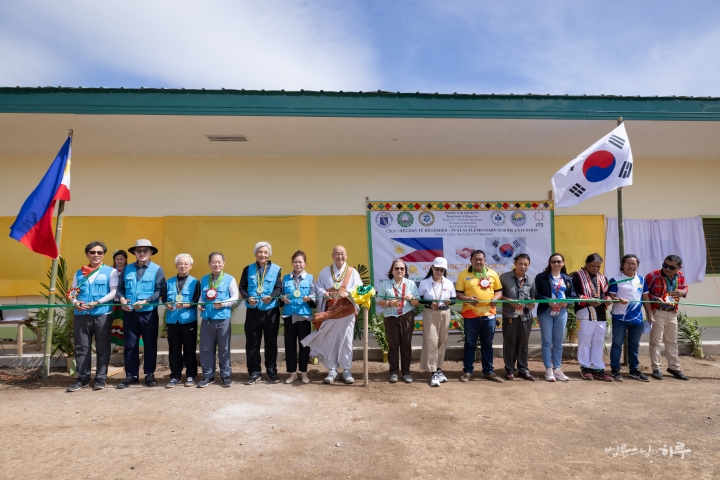
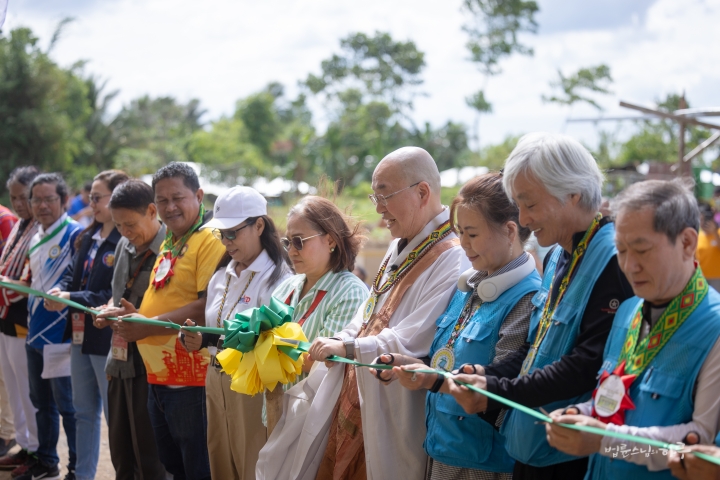
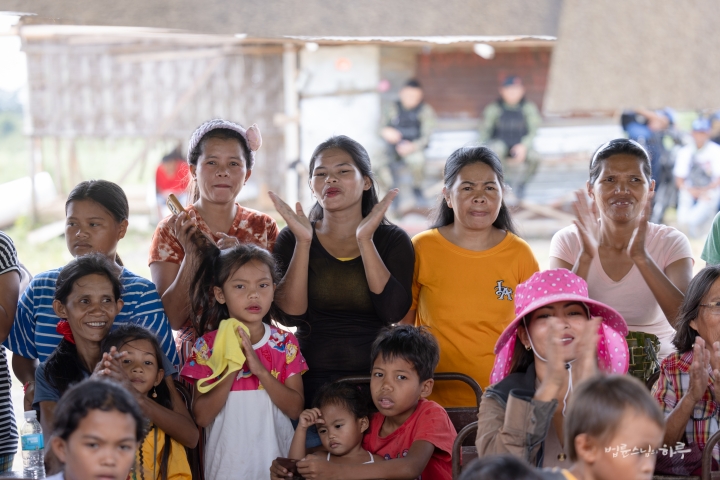
The villagers and children cheered loudly with joy.
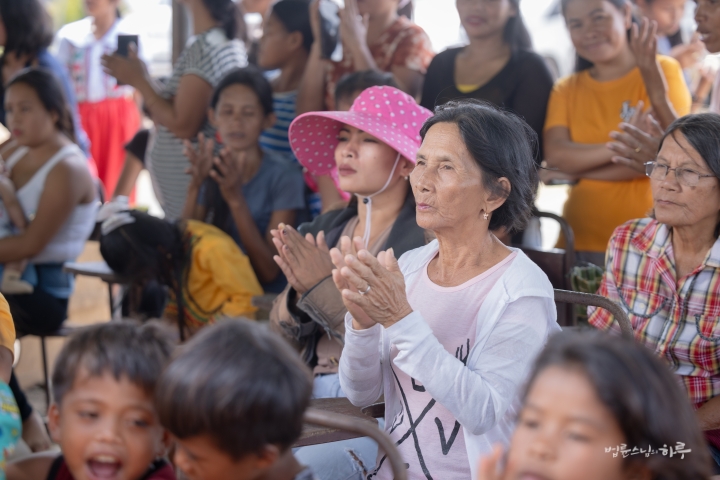
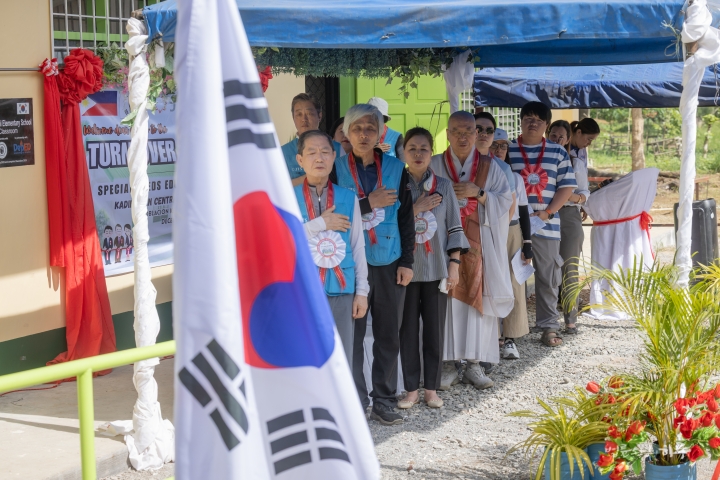
They then sang the Philippine national anthem and the Korean national anthem together.
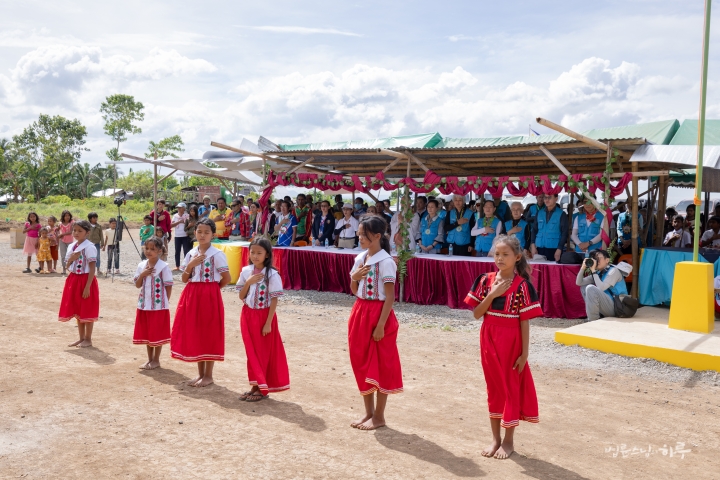
First, the village chief gave welcoming remarks to the JTS delegation, followed by JTS Philippines Representative Noh Jae-guk’s progress report.
For the construction of Degebdeb School, JTS provided building materials while the local government unit (LGU) actively cooperated by providing labor and on-site monitoring. Thanks to these joint efforts, the school building was completed within the scheduled timeframe. Representative Noh expressed special gratitude to the technicians, school principal, Datu, and indigenous education coordinator who participated in the construction.
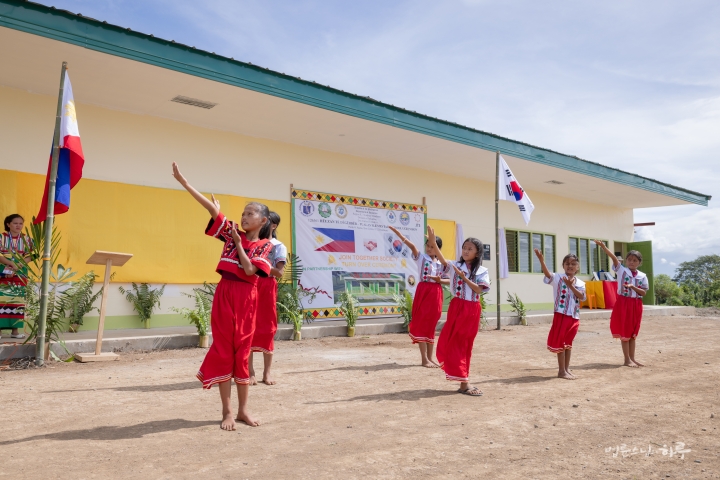
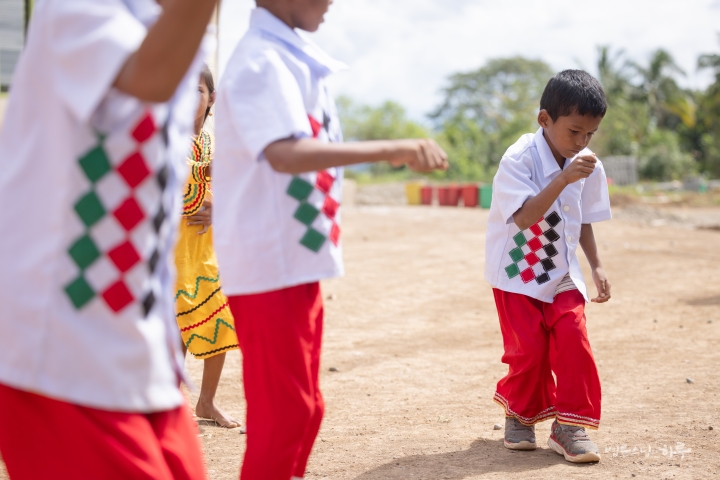
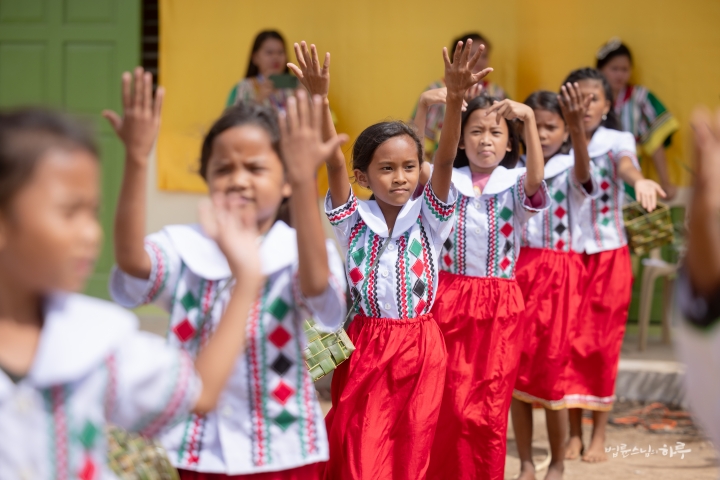
Next, students performed a celebratory presentation. Degebdeb village has well-preserved the traditional culture of the Manobo tribe. The village name “Degebdeb” means the sound of horse hooves. All students wore traditional Manobo clothing and performed traditional dances.
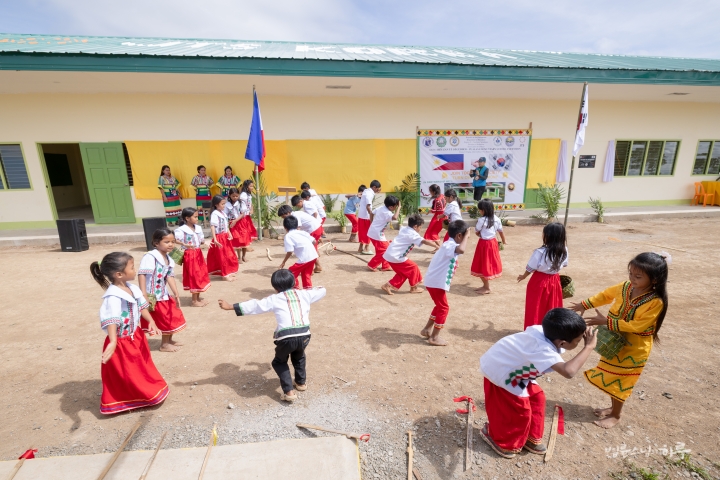
They expressed farming activities like sowing seeds, cultivating, and harvesting through entertaining dance movements. The residents and JTS delegation applauded enthusiastically.
Next was the presentation of the completion certificate, keys, and clock. Sunim presented the certificate to the mayor, JTS President Park Gina presented the keys to the Bukidnon Province superintendent, and JTS Philippines Representative Noh Jae-guk presented the clock to the principal.
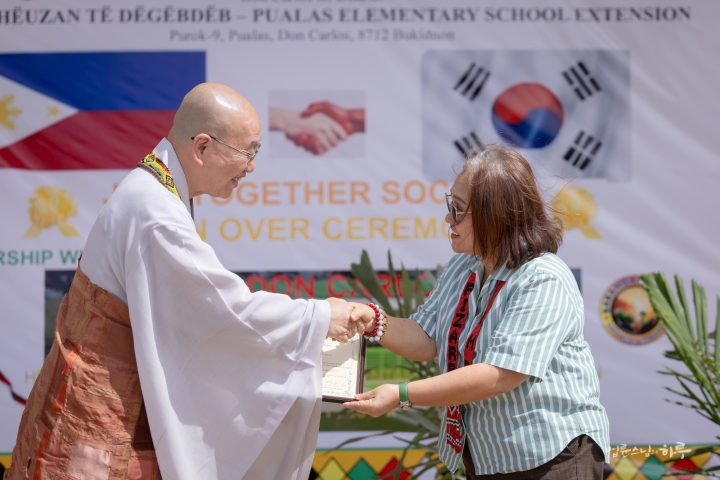
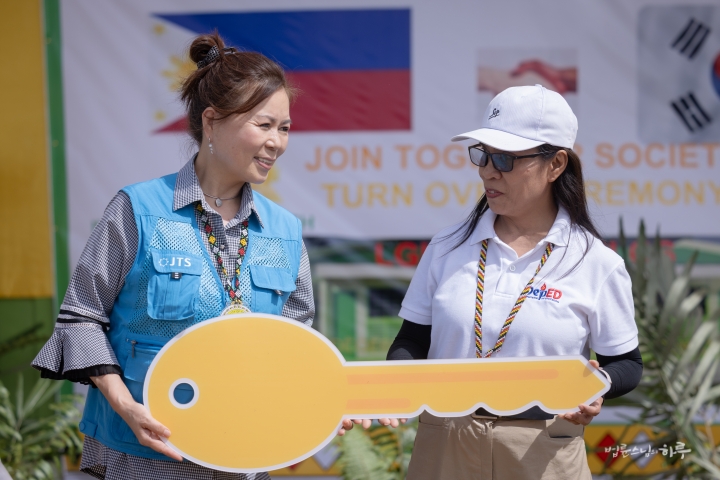
The faces of the applauding villagers were filled with joy.
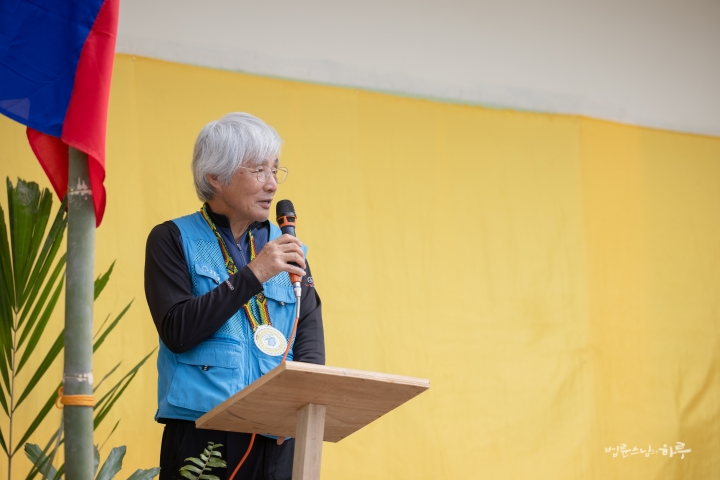
Next, Sunim gave congratulatory remarks.
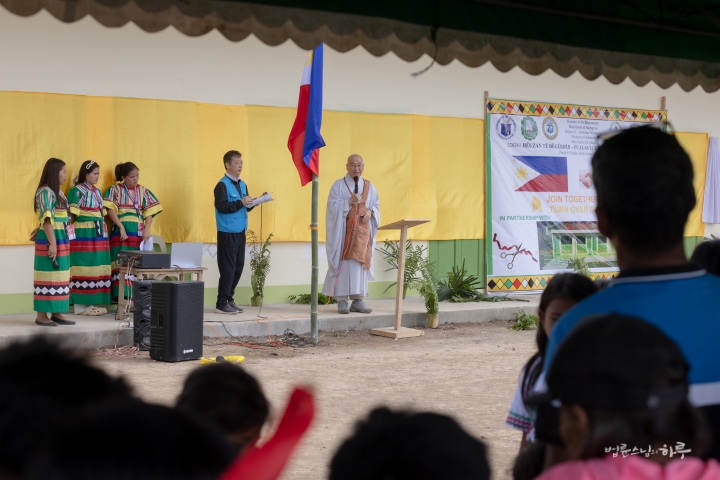
“YES!”
A School Built Together, Brightening Children’s Tomorrow
We joined forces to build this school so that you children can study in better environments and conditions. However, besides the three organizations mentioned earlier, there is one person who made a special contribution to building this school. Who could it be? That person is the one who donated the land on which this school was built. Please come forward for a moment. Everyone, please welcome them with a big round of applause.”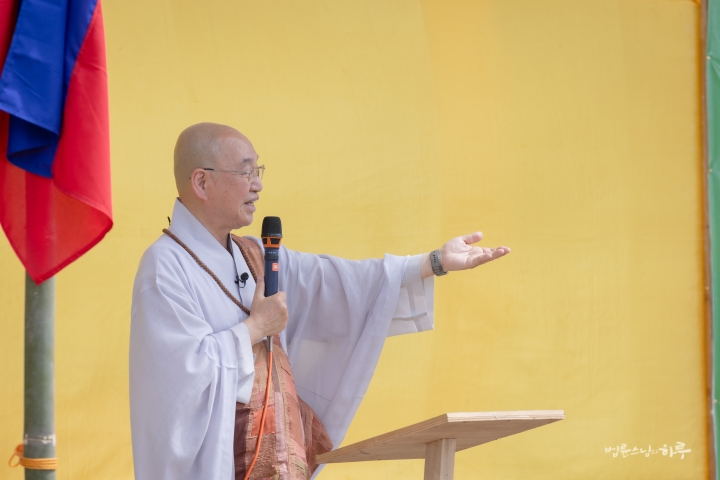
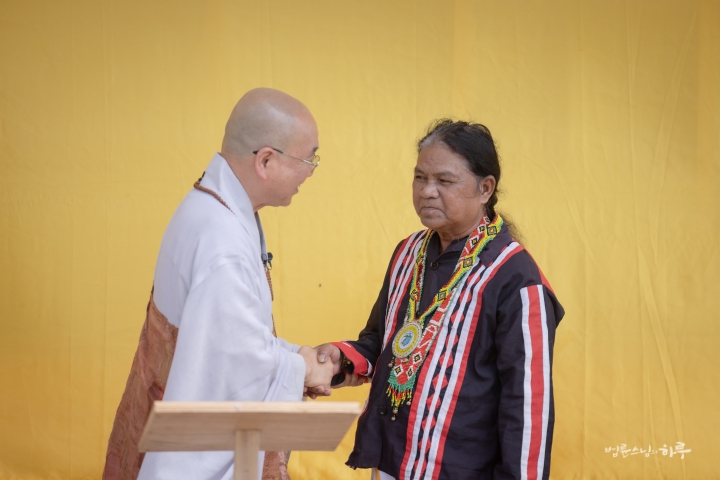
The tribal chief Datu, who leads the village, walked to the front of the stage.
“It is because of people like this that our children can study in better environments and regional development can be achieved. This person donated not only land for the elementary school but also a large area of land so that a high school can be built in the future.”Sunim placed a flower garland around Datu’s neck to express gratitude.
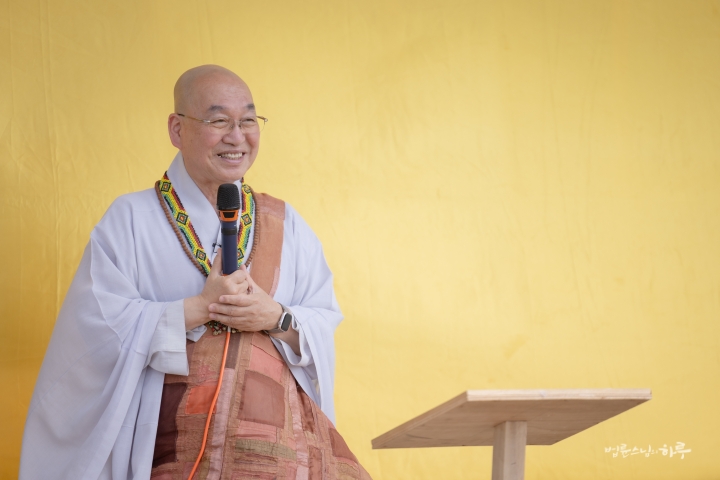
Sunim called Jesse to the front of the stage, placed a flower garland around his neck, and expressed his gratitude.
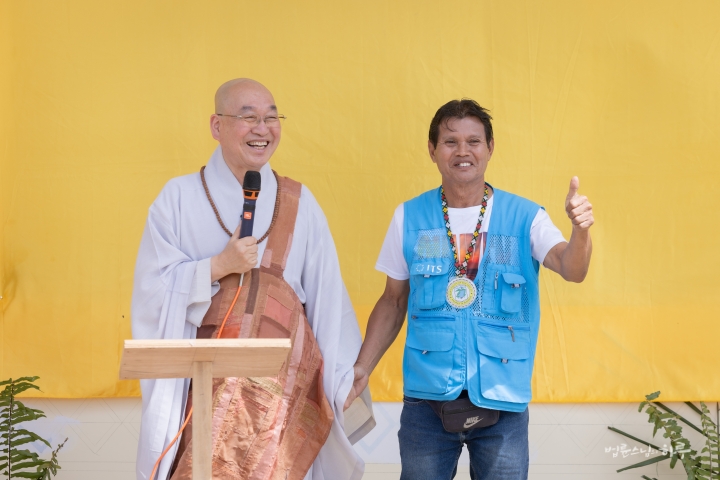
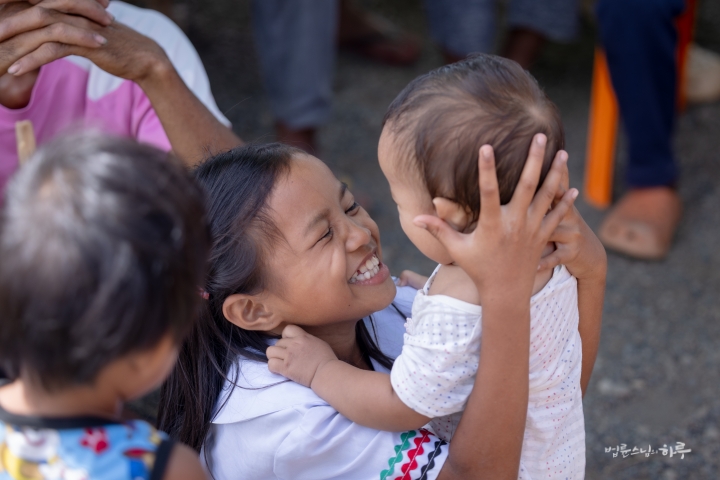
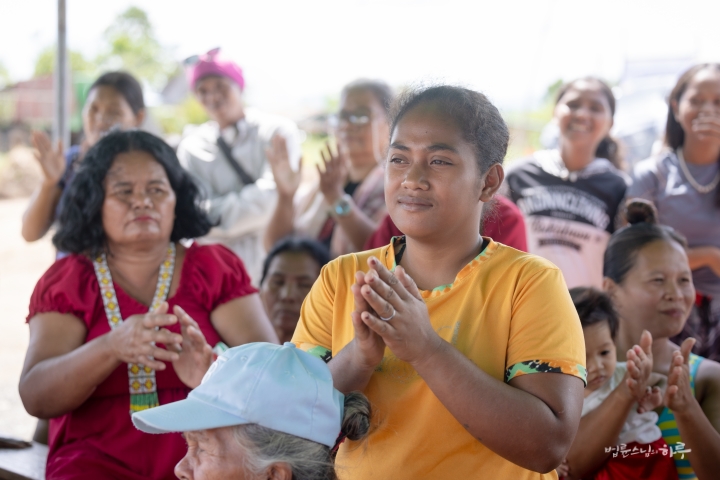
Parents, students, and teachers all applauded with joyful expressions, showing their appreciation.
Next, the mayor gave a response.
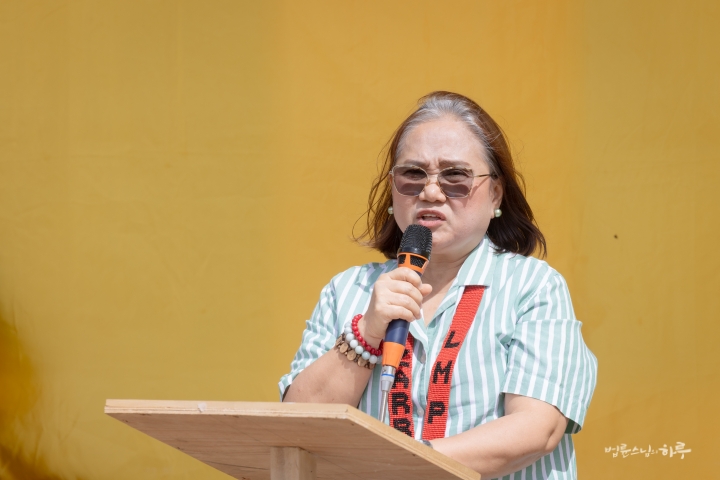
“I extend my deepest gratitude to everyone at JTS. Your kindness goes far beyond material support. Dear indigenous students, this classroom is a space just for you. You no longer have to walk long distances to school. You are the heart and future of this community. I hope you will discover your potential here, cherish your identity, and pursue your dreams without limits.”
Next, the Bukidnon Provincial Schools Division Superintendent gave a congratulatory speech. The superintendent has been participating in all the completion ceremony schedules with the JTS delegation.
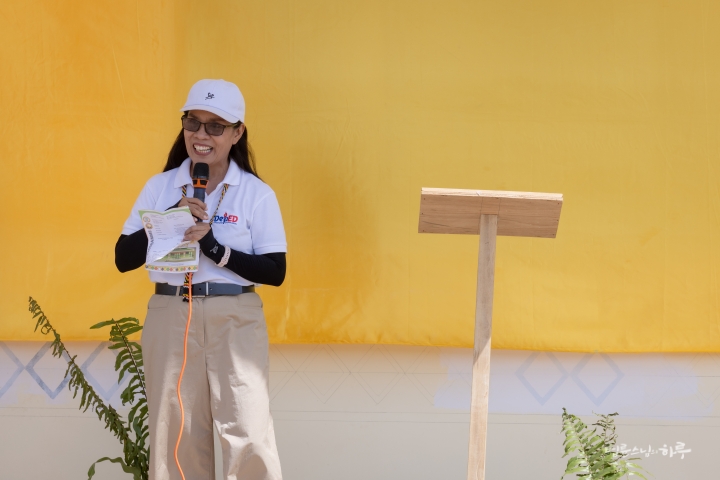
“Today is truly a joyful day. I can feel from their faces how happy the children are to have these beautiful classrooms. I deeply thank JTS for coming here and making the saying ‘education is everyone’s responsibility’ a reality.”
Next, the Datuiza Barangay Captain (Sitio Leader) gave a congratulatory speech.
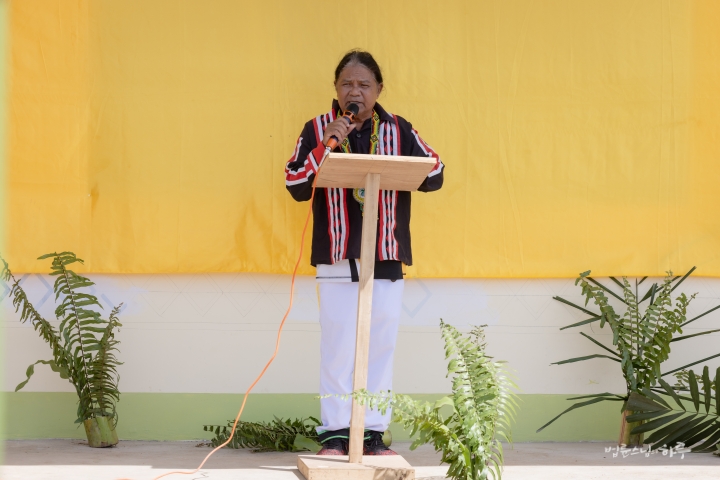
“This school is a great blessing for our children and families. We will carefully maintain these classrooms and actively support the teachers and school so that more children can continue their education. Thank you sincerely.”
Finally, the principal gave closing remarks.
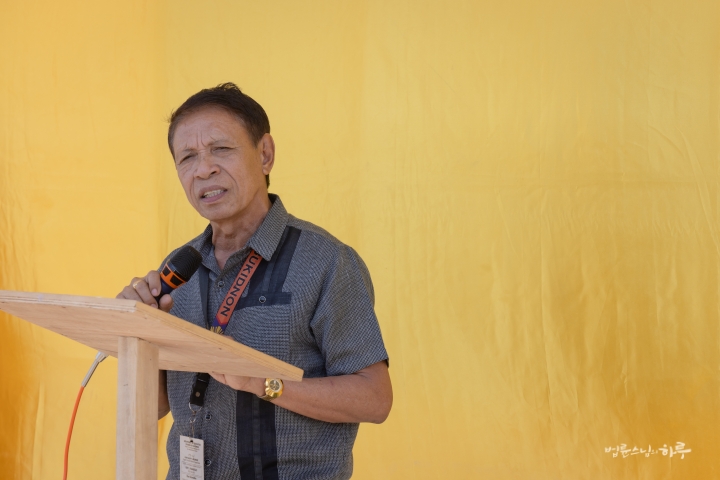
“Today is not simply a day to receive a building, but a meaningful day to share hope, opportunity, and a brighter future for our children. Dear students, this school is now in your hands. Please cherish and take good care of this space, and preserve it as a place of learning that will benefit the next generation.”
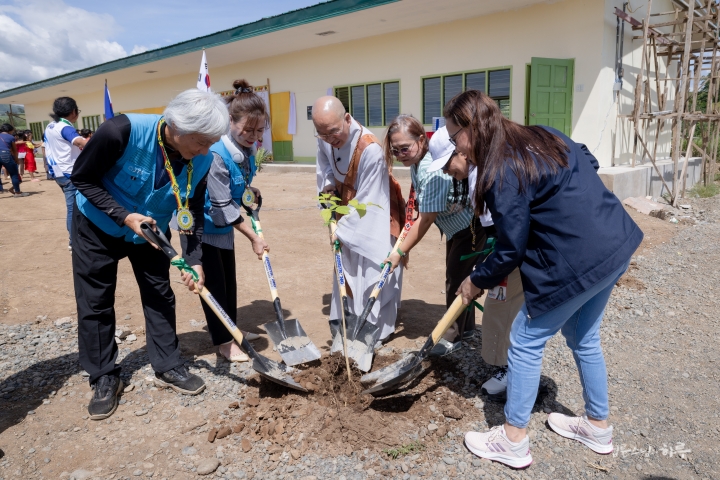
After the completion ceremony, everyone moved to the school’s front yard for a commemorative tree planting. As they planted the tree with shovels, everyone prayed together for the children to grow strong and healthy.
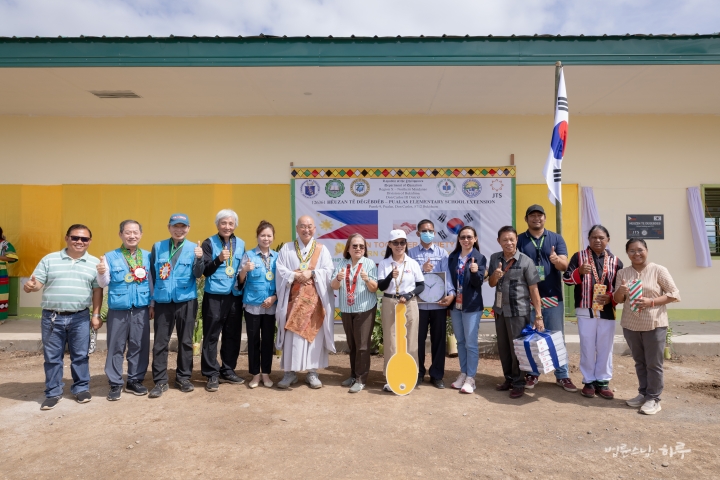
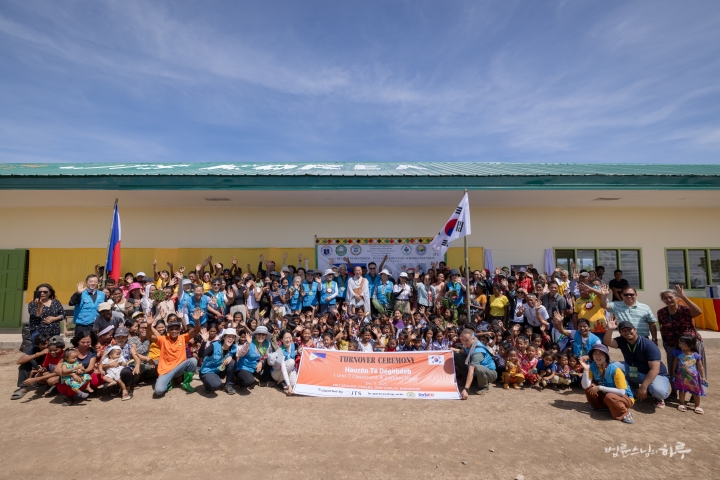
In the celebratory atmosphere, everyone gathered in front of the newly built school for a group photo.
“Thank you, JTS! Degebdeb!”
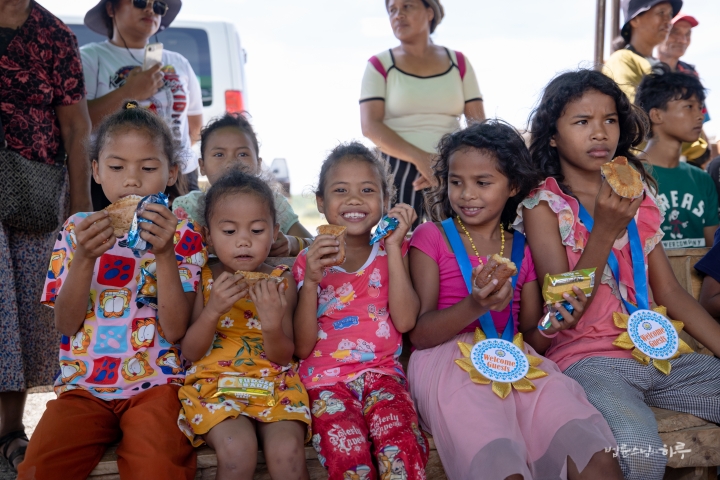
Next, snacks were distributed to the children. To ensure fair distribution, they were lined up in a row. The children were extremely happy to receive the snacks.
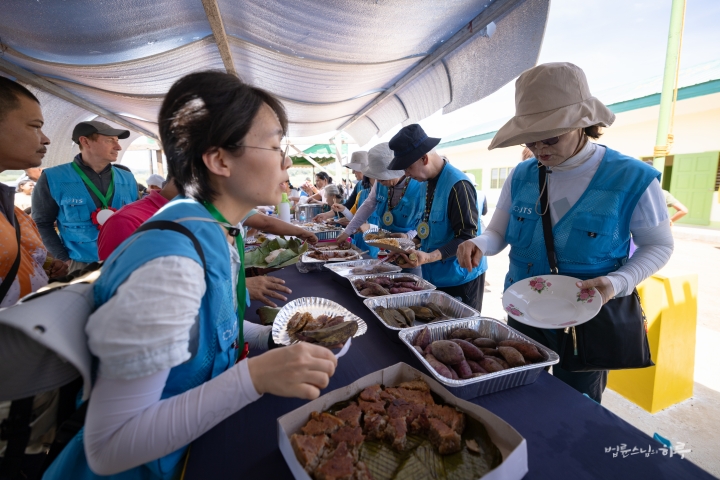
Finally, there was a refreshment time. The villagers had carefully prepared food. Simple dishes made from their own farm produce were served.
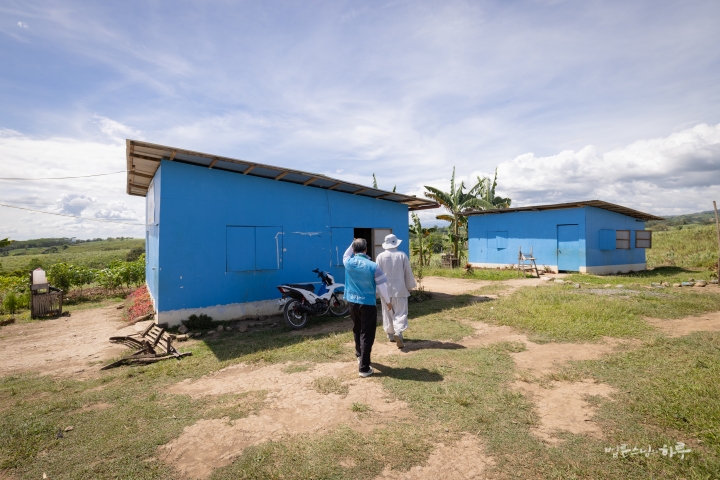
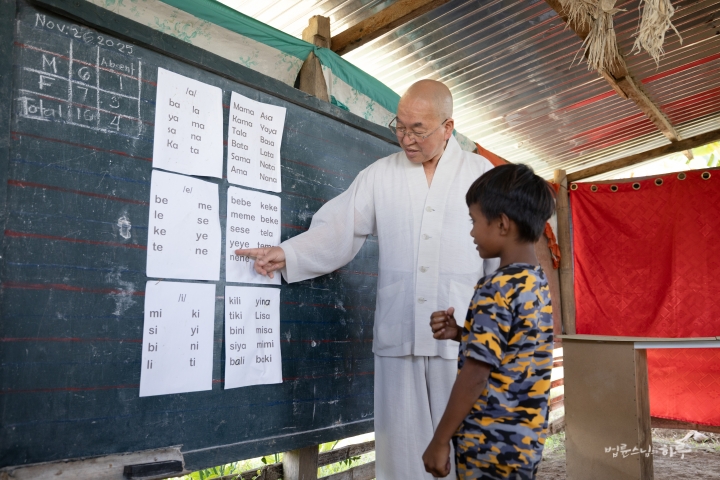
While everyone was having refreshments, Sunim went to see the temporary building that had been used as a school. It was a temporary structure that the residents had built by hand with bamboo. There were only a blackboard and a few old desks. The teachers had been teaching the children while enduring inconveniences due to poor electricity conditions.
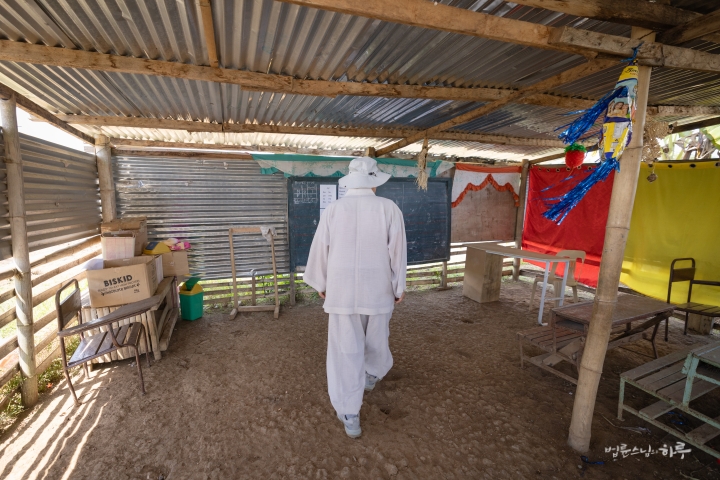
Some children were eating lunch with their lunch boxes spread out on the desks. Sunim called a child to the front of the blackboard and asked him to read the letters posted on it.
“Please try reading this.”The child answered Sunim’s question well. After patting the child’s head and praising him, Sunim headed back to the front of the newly built school.
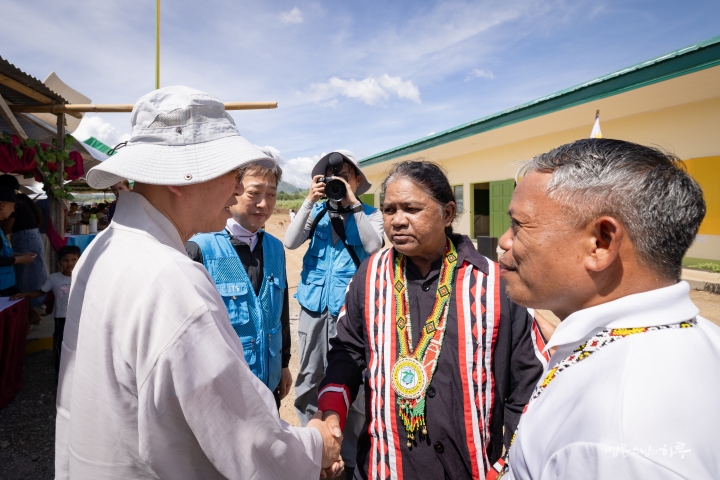
Sunim expressed his gratitude to Datu, who donated the land for the school, and Edwin, the Indigenous People’s Education Program Supervisor at the Department of Education who made great efforts to facilitate the construction, and then had a brief conversation with them.
Datu talked about the concerns that the villagers currently have.
What Should We Do to Protect Indigenous Land and Identity?
“Large corporations including Del Monte are trying to expand pineapple plantations in this area. Some tribes are already willing to sell their land, but our tribe has absolutely no intention of selling our land.”
Sunim praised him for doing very well and explained the reason.
“You did well. If you sell the land, the tribe will eventually be driven from this land and become laborers. While there are many good things about having a new school, there is also the risk of losing traditional culture and faith because of it. Also, many people will approach you for missionary work from abroad.”Edwin emphasized that Sunim’s concerns were becoming reality.
“What Sunim is concerned about is actually happening in reality. As large corporations infiltrate and we are influenced by what they teach and show, conflicts are growing. Our tribe wants to protect the land, air, and sky, but we are very concerned that we keep losing them to outsiders. If we cannot protect nature, our identity will also disappear.”
Sunim fully agreed with Edwin’s thoughts and explained that preserving traditional culture is also one of JTS’s important projects.
“I completely agree. First, we must protect the land and nature; second, we must protect our faith; and third, we must protect our culture. Only then will self-esteem arise in our hearts. In fact, having self-esteem in our hearts is more important than building buildings. Since you are the Indigenous People’s Education Program Supervisor, you must work to prevent acts that harm the identity of each tribe. The reason for the global climate crisis is that humans have destroyed nature. We have now entered an era where becoming one with nature is more important than religious distinctions like Christianity or Buddhism. So, not only building schools, but we also need to conduct programs such as traditional dance competitions by school where all indigenous tribes gather, or speech contests where children talk about the importance of traditional culture, with awards given. JTS will also support the budget for this.”Edwin, the Indigenous People’s Education Program Supervisor, actively agreed with Sunim’s words and responded.
“I will do that. Currently, there are 267 schools designated to provide identity education for indigenous peoples. I think we can definitely proceed with the programs you suggested. However, as Sunim can see if you look around, trees are gradually disappearing. This is because large corporations are doing tremendous logging. We believe that even a single tree has a soul dwelling in it. I would also like to conduct educational programs that can preserve this spirit.”
“If you want to do a tree planting campaign, JTS will provide the trees. If you need a building for the purpose of preserving traditional culture, we will support that too.”Edwin was very pleased to hear Sunim’s response.
“Thank you so much. I will submit a proposal.”
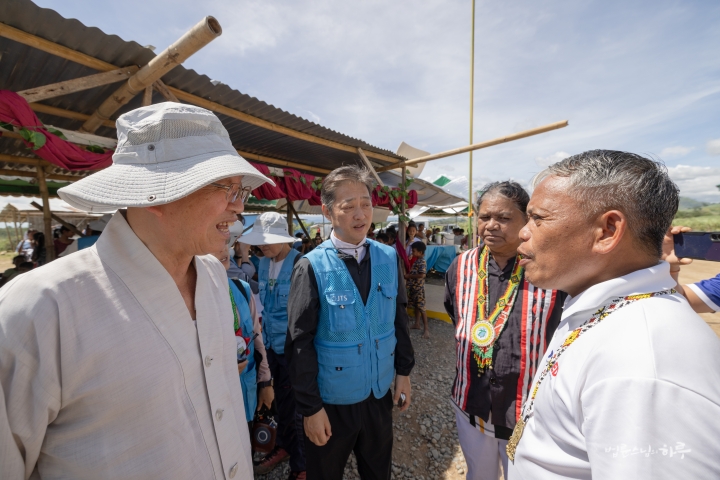
After taking a commemorative photo together, they left the school.
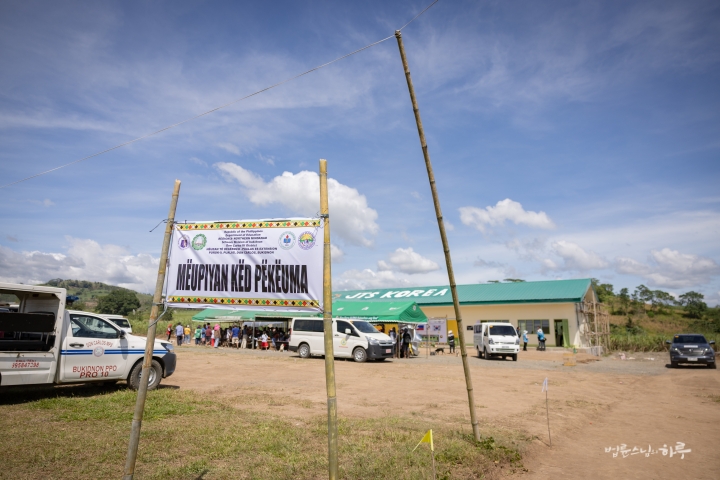
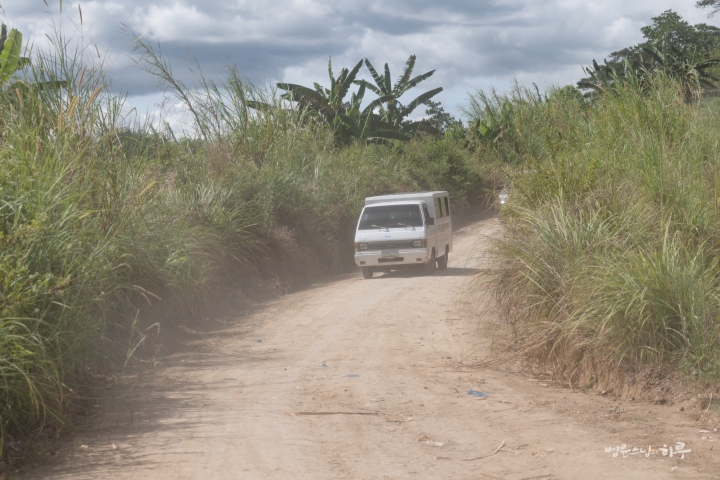
They rode the truck again along the unpaved road. During the journey, Sunim also told the JTS volunteers about the fact that contradictions can arise between the necessity of school education and its side effects.
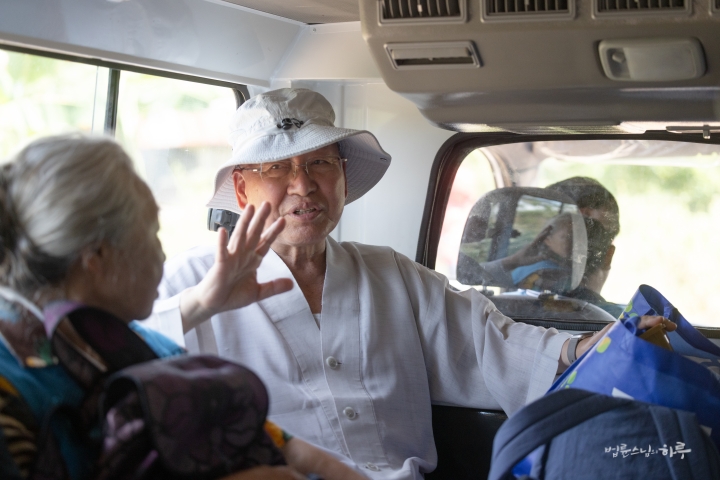
As they conversed, the unpaved road ended and a paved road appeared. Everyone got off the truck and transferred to a bus.

After another 30-minute bus ride, they arrived at Kadingilan Central Elementary School at 12:50 PM.
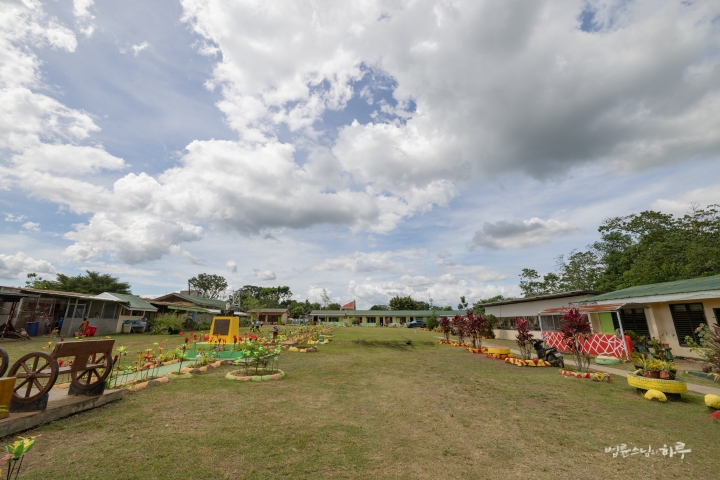
As they got off the bus, students and teachers warmly welcomed the JTS delegation.
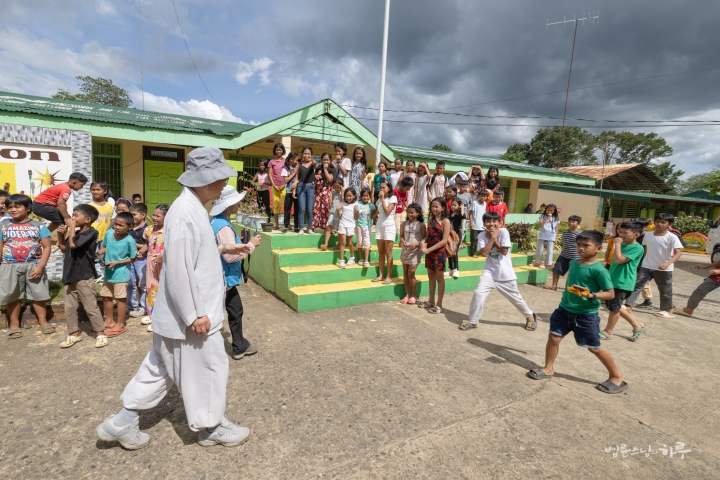
Walking along a path decorated with various Christmas decorations, they passed the main building and saw the newly built Special Education (SPED) school right next to it. The special school was built right next to the main building so that children with disabilities could easily mingle with regular students.
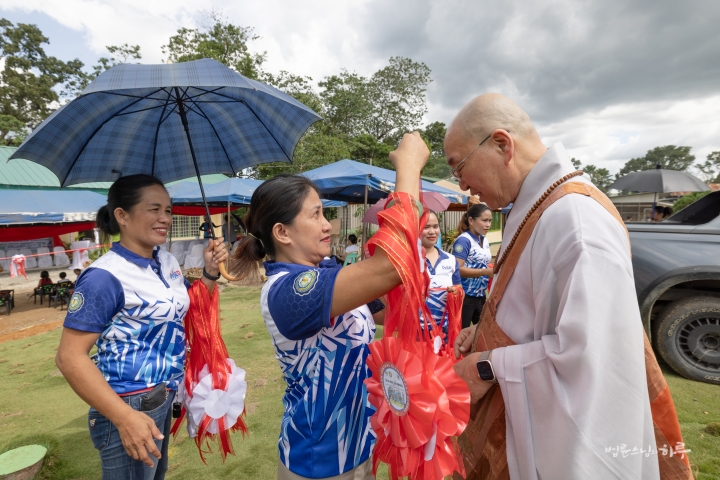
After touring the newly built classrooms, Sunim took a brief rest inside to cool off from the heat. With the daytime temperature rising to 33 degrees Celsius, sweat was pouring from everyone’s bodies even while standing still.
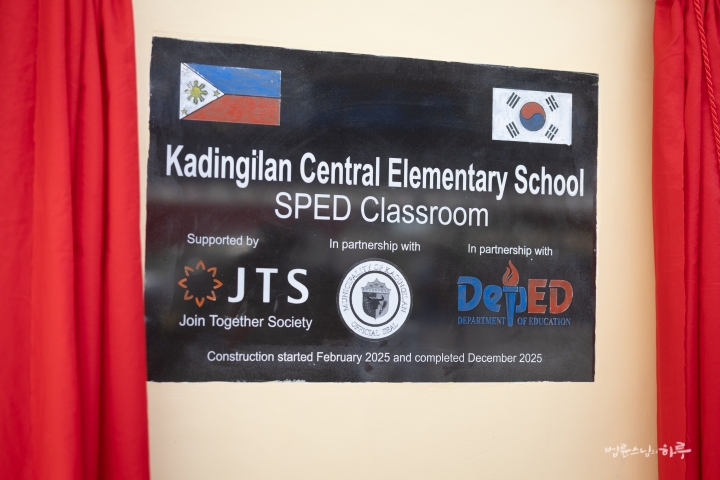
Shortly after the superintendent and mayor arrived, the completion ceremony for the Kadingilan Special Education (SPED) school began at 1:30 PM. The attending dignitaries came forward to cut the ribbon and unveil the plaque.
“One, two, three.”
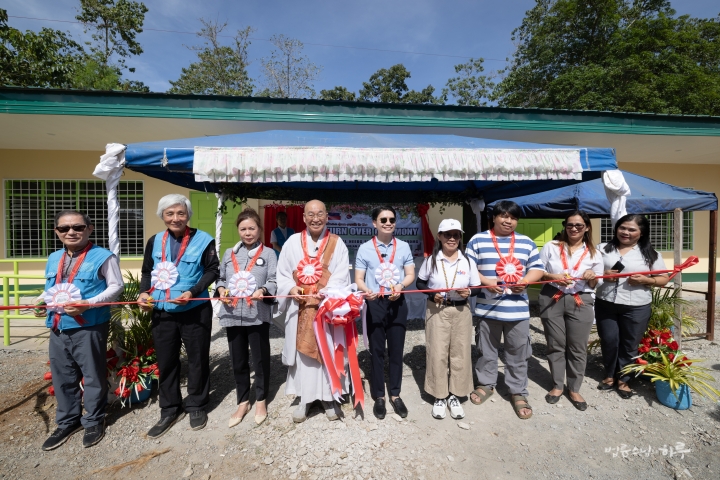
Kadingilan City finally has a special school for children with disabilities.
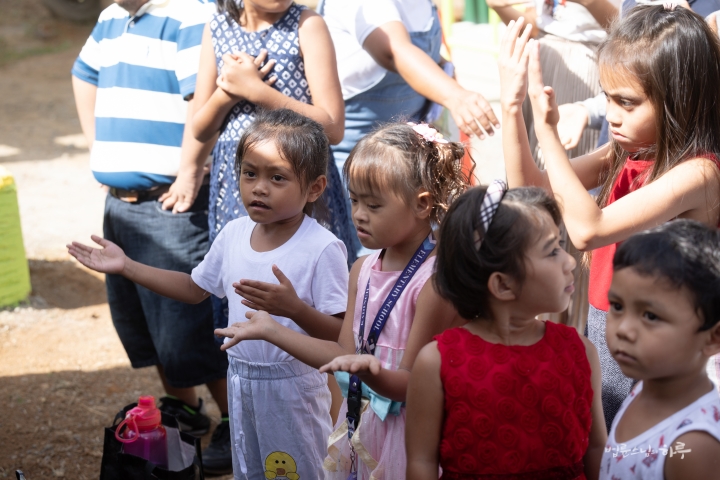
Next, students came forward and sang hymns while using sign language, then everyone sang the Philippine national anthem and patriotic songs together.
Next, the mayor gave welcoming remarks to the JTS delegation. The mayor energetically greeted them in Korean saying “Annyeonghaseyo!” and then continued his speech.
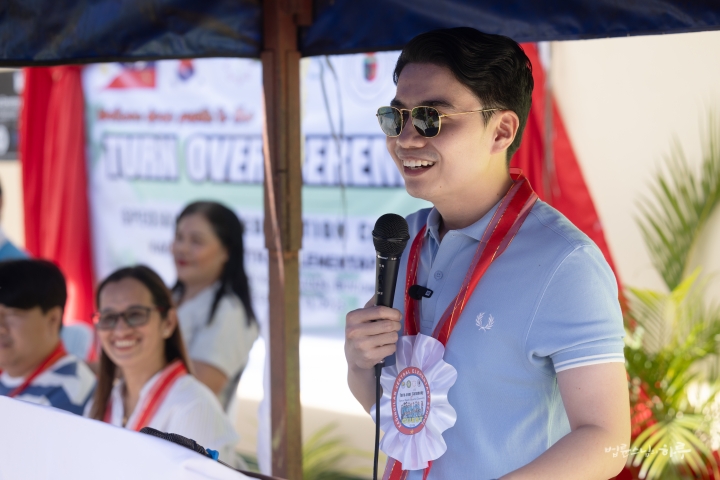
“I extend my heartfelt thanks to our Korean friends from JTS. This classroom is not just a building, but a place of learning where children with special needs can feel safe and be respected. Investment in special education is an important promise that all children, regardless of their abilities, can access quality educational environments.
Dear children, I hope this place becomes a space where you are accepted as you are, respected, and can freely develop your potential. As mayor, I once again promise to further strengthen inclusive education.”
Next, JTS Philippines Representative Noh Jae-guk gave a progress report on the school construction.
For the construction of this Kadingilan SPED special school, JTS provided construction materials while the Local Government Unit (LGU) provided manpower and continuously supervised the construction site, actively supporting the project. Construction of this school began with a groundbreaking ceremony in February 2025, and thanks to everyone’s cooperation, the building was completed on schedule. Representative Noh expressed gratitude to the mayor and civil servants who worked hard to complete the building, as well as to the technicians who contributed to the project.
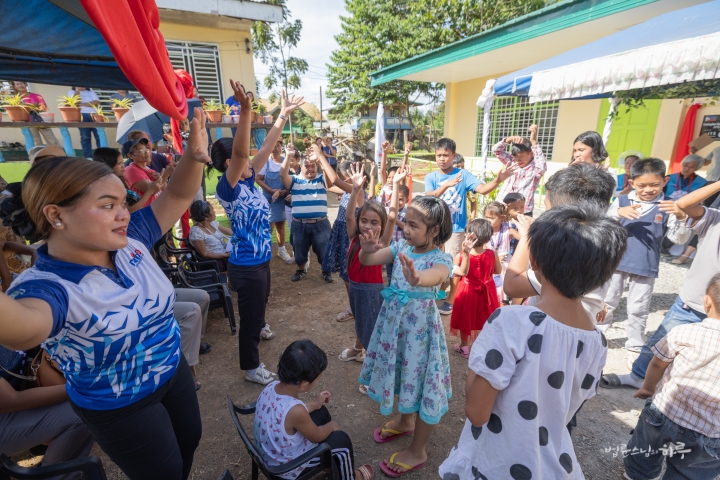
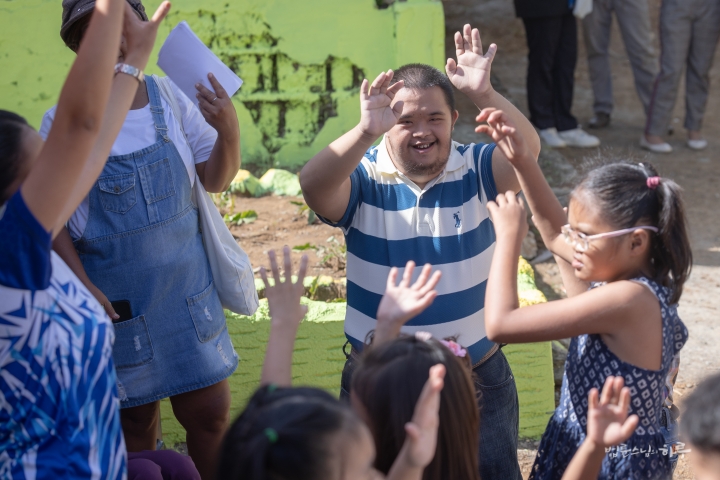
Next, students came forward to perform a celebratory show.
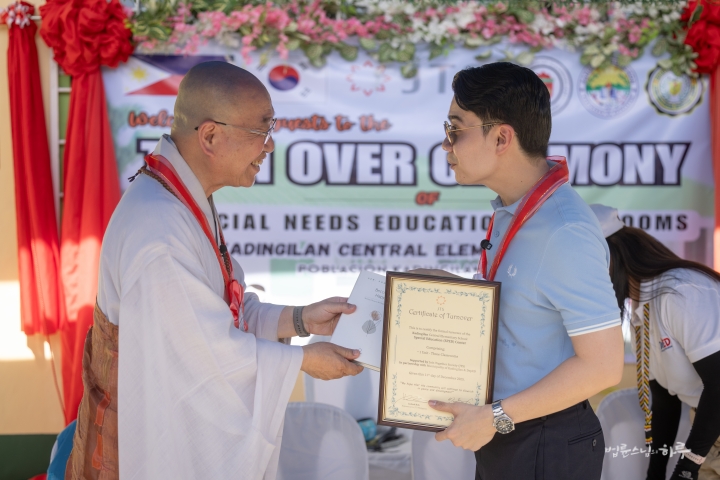
Next, Sunim presented the completion certificate to the mayor.
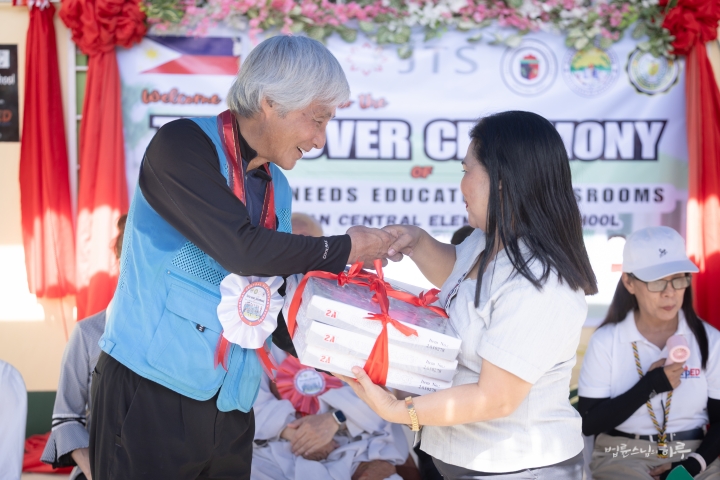
Next, JTS President Park Gina presented the keys to the superintendent, and Philippines JTS President Noh Jae-guk presented clocks to the principal so that clocks could be hung in each classroom.
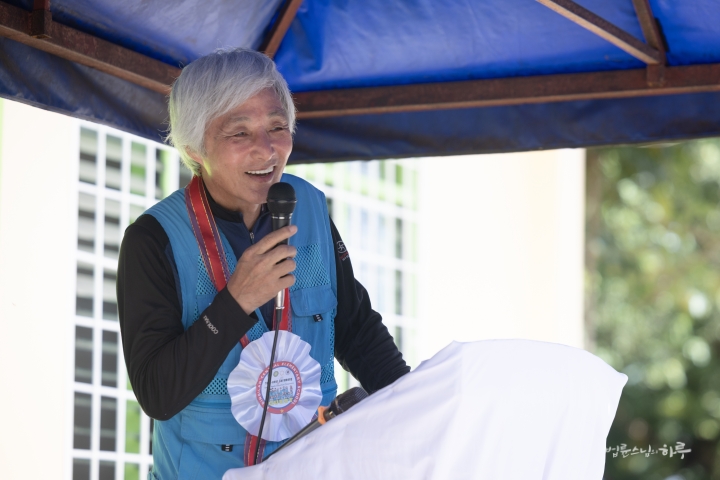
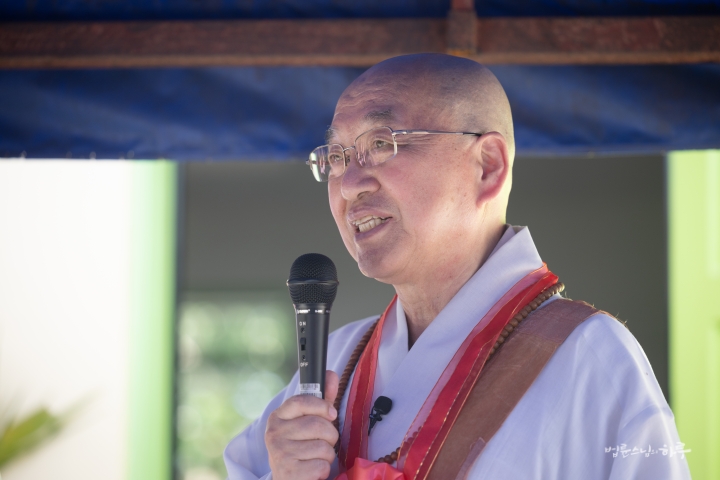
Then Sunim came forward to deliver congratulatory remarks, receiving loud applause.
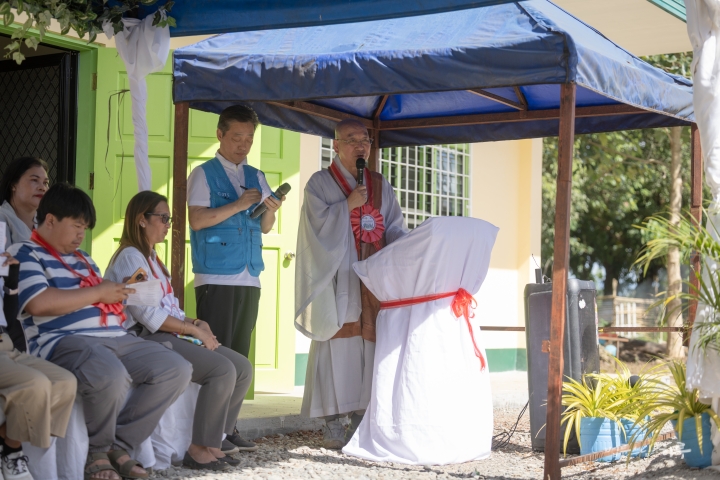
“YES!”
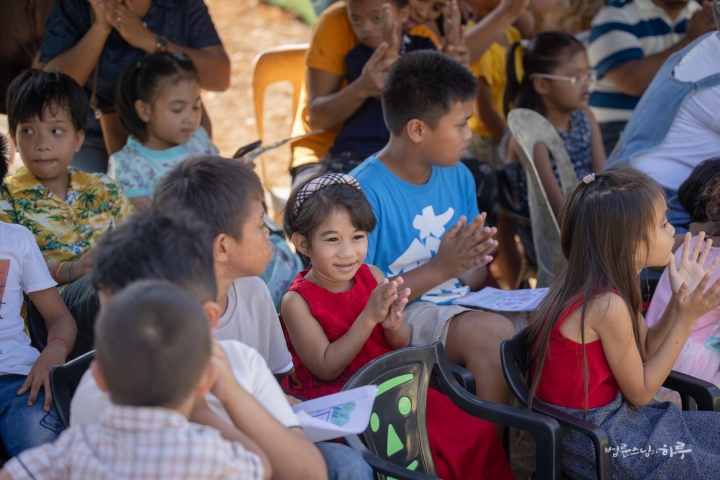
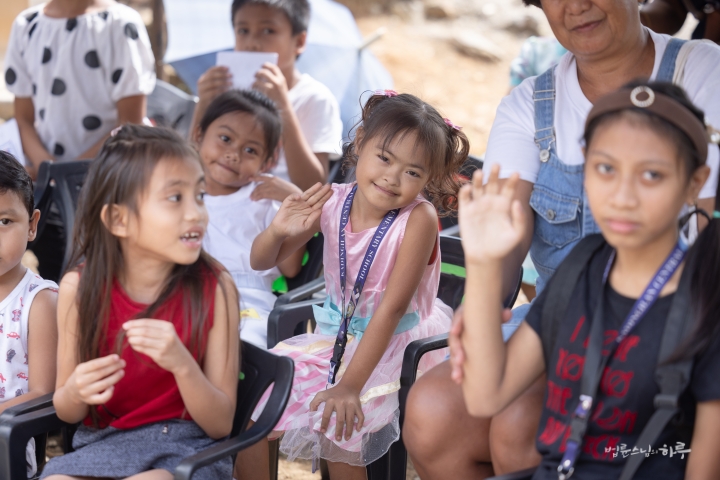
Even the children who couldn’t speak expressed their joy through gestures.
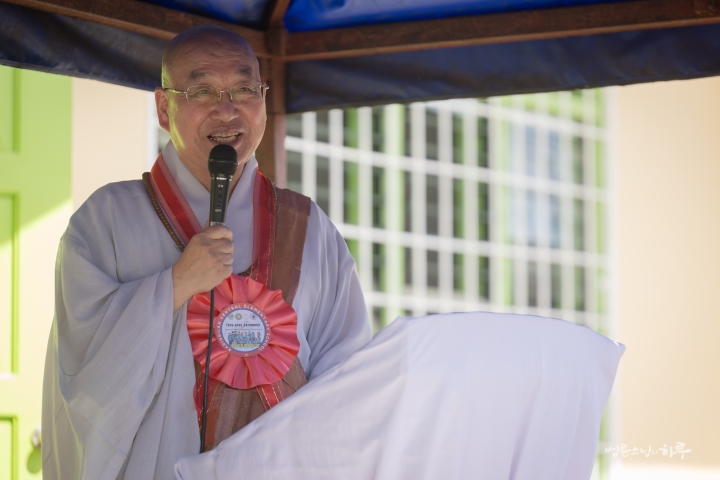
**These Children Are Gifts from God
**
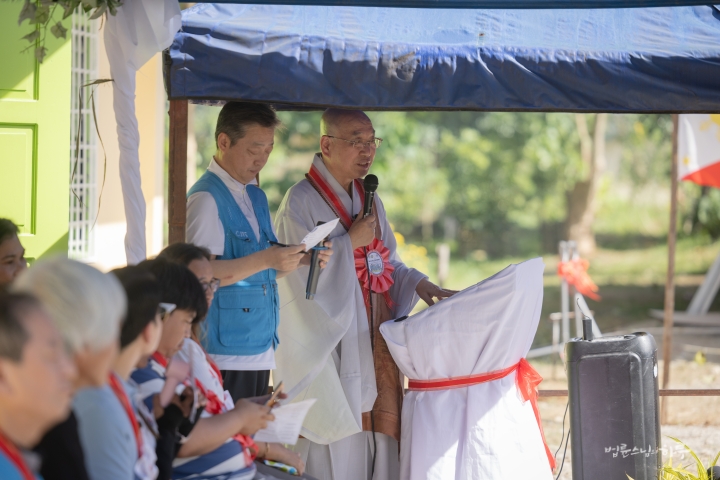
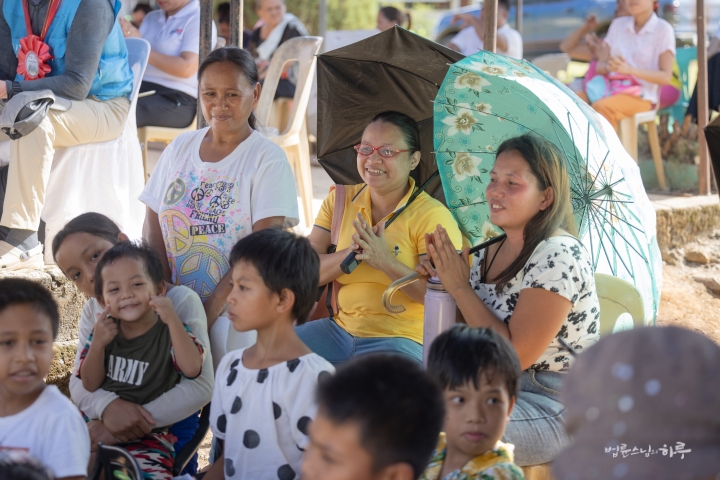
Everyone gave a big round of applause to the Superintendent.
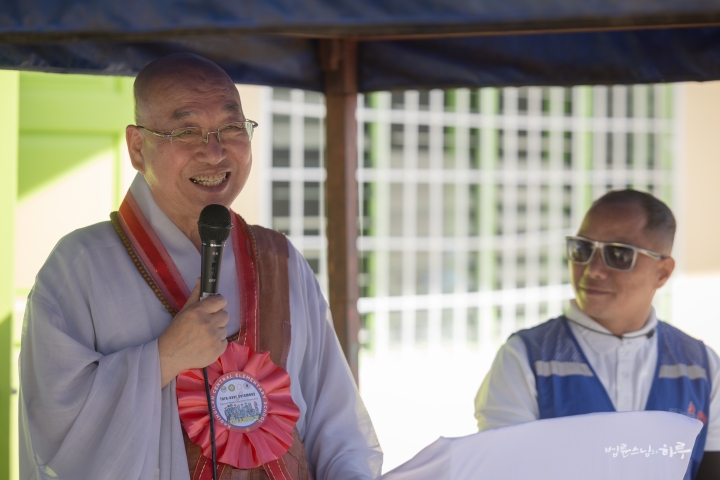
Sunim called Mr. Rolen to the front of the stage, presented him with an English book, and took a photo together.
“I would also like to thank Mr. Edwin for his efforts in indigenous education.”Sunim also called Mr. Edwin to the front of the stage and presented him with an English book.
“I think you should be proud that the Bukidnon Department of Education has such dedicated education officials working for the children.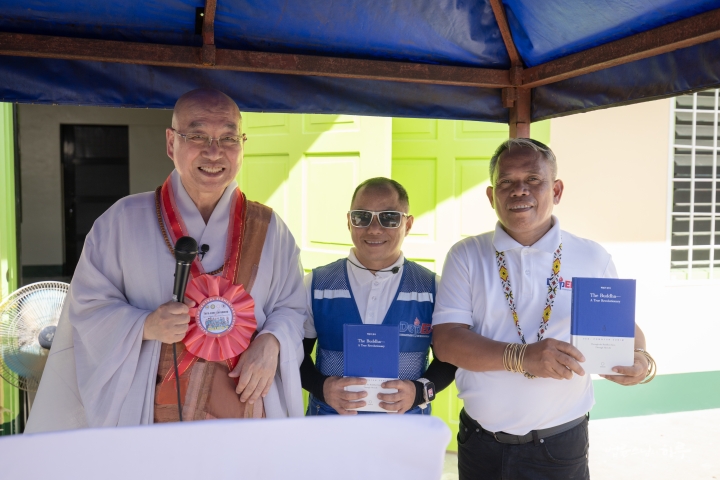
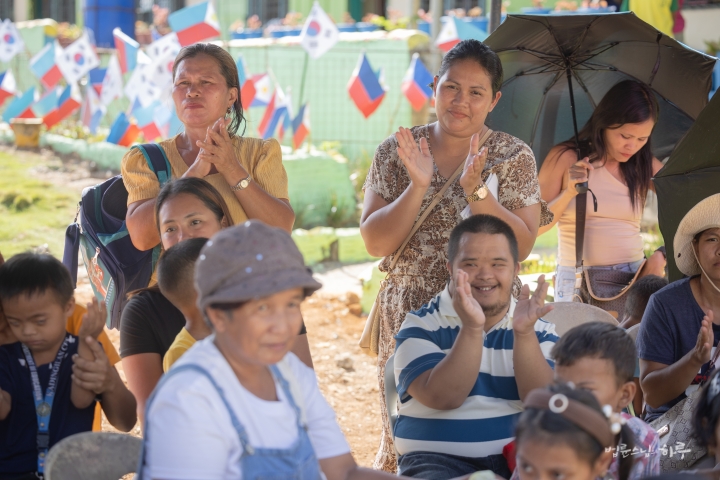
Everyone gave a big round of applause to the teachers.
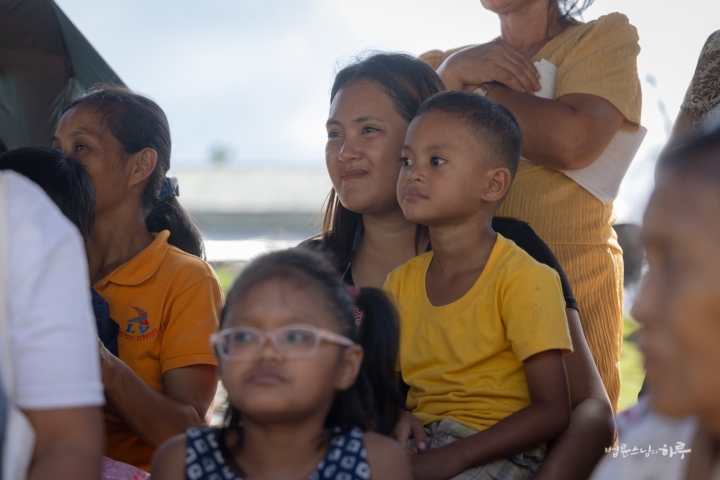
All the parents and teachers cheered loudly and clapped their hands with joy.
After listening to Sunim’s congratulatory speech, many local officials gave their responses. First, the Mayor expressed his gratitude.
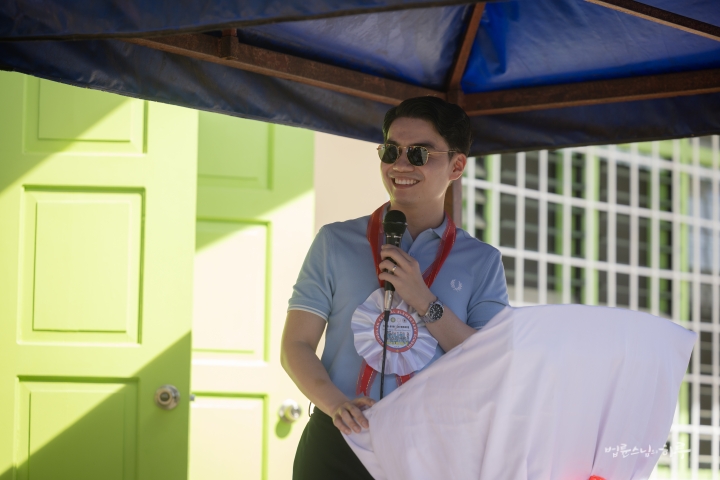
“On behalf of the Kadingilan local government, I would like to once again express our deep gratitude to JTS. We have sometimes felt envious watching other local governments cooperate with JTS. However, now that JTS has finally come to Kadingilan, we have begun this meaningful project together for children with special educational needs here. We are very grateful for this and consider it a great blessing. The Kadingilan local government sincerely wishes to continue our long-term cooperative relationship with JTS. Once again, thank you very much.”
Next, the Bukidnon Provincial Superintendent expressed her gratitude.
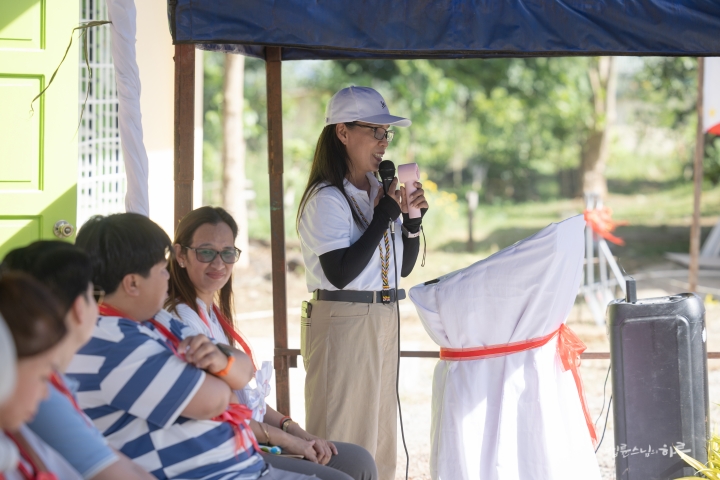
“Until now, teachers had to teach children in very poor conditions. When children become happier and teachers feel more fulfilled, parents will also feel the greatest relief and joy. Now parents don’t have to worry, ‘Will our children be safe?’
Now that we have an excellent educational environment, I hope our teachers no longer need to seek jobs overseas. I hope you will fully demonstrate your capabilities here for the children. Once again, I thank JTS and the local government a hundred times.”
Next, the Barangay Captain expressed his joy.
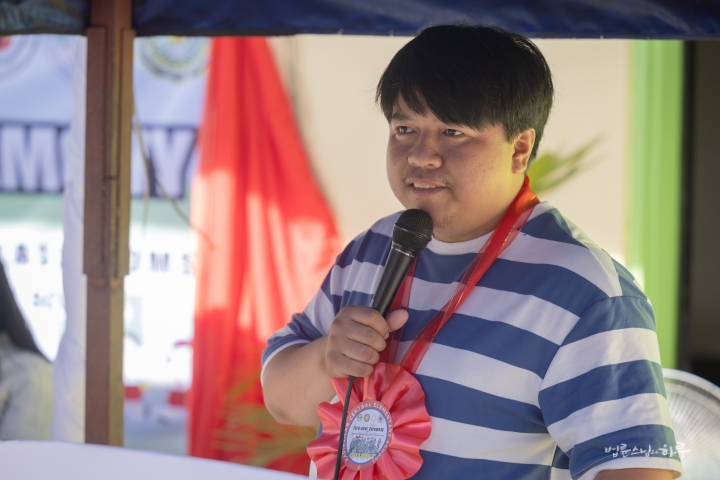
“Thank you sincerely for gifting us this precious project. I am also a parent raising two children, and one of them attends Kadingilan Special School. Thanks to the help of the JTS family, my child and many other students can now have their school life in a better environment. When I see the parents being happy, I also feel great joy. Thank you sincerely.”
Finally, the parent association representative expressed gratitude, and the completion ceremony concluded.
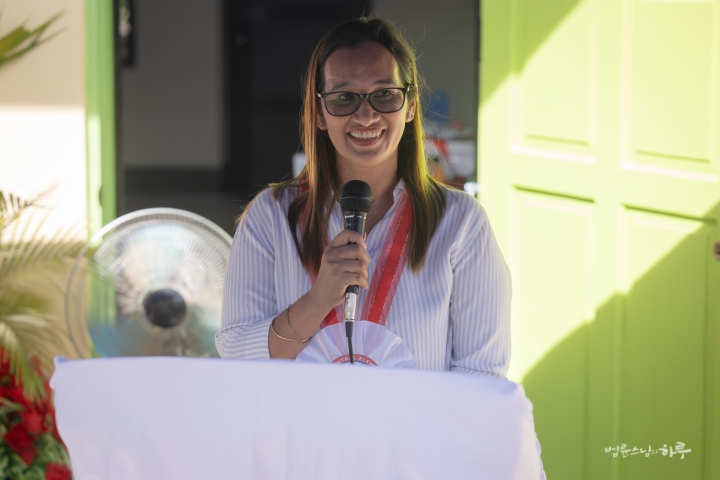
“To the sponsors from Korea, thank you sincerely for believing in every child’s potential and for your generosity. This space will become a home where special education children are encouraged and grow. Your kindness will remain deeply in the children’s lives beyond this classroom. Its echo will continue in every class and every moment of the children’s growth. Let’s continue to join hands and create a brighter and more inclusive future.”
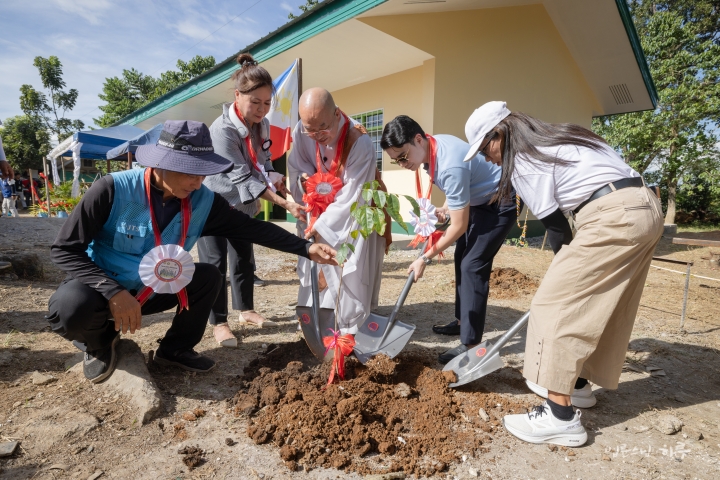
Everyone went to the school’s front yard together for a commemorative tree planting.
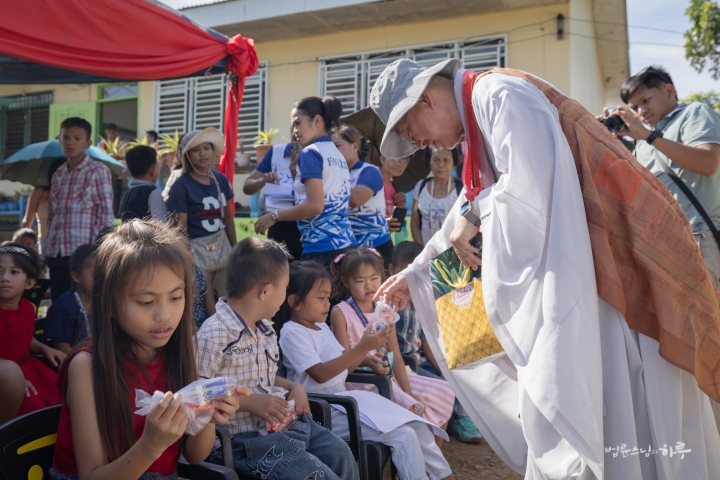
And they distributed snacks to the children.
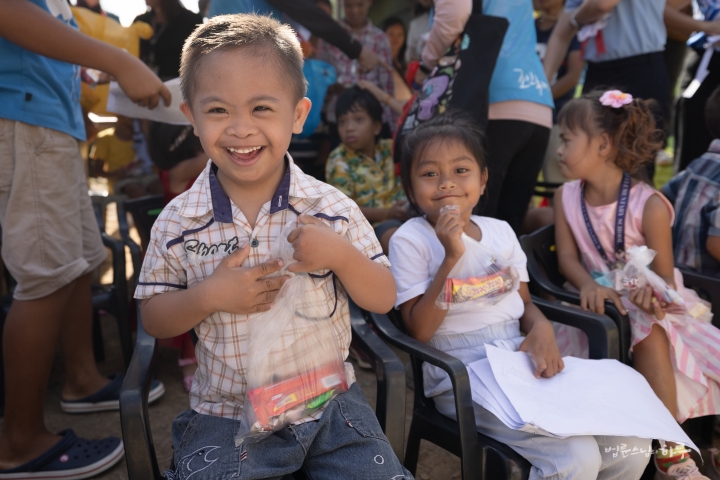
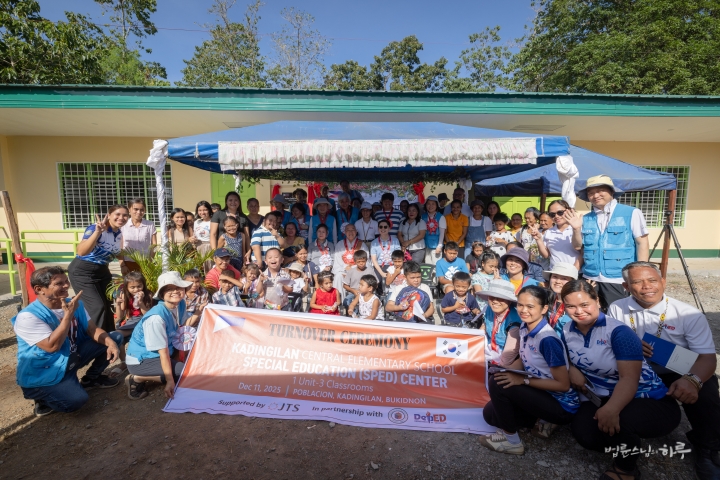
Then they took a commemorative photo in front of the school. The children energetically called out their school name.
“Thank you, JTS! Kadingilan!”
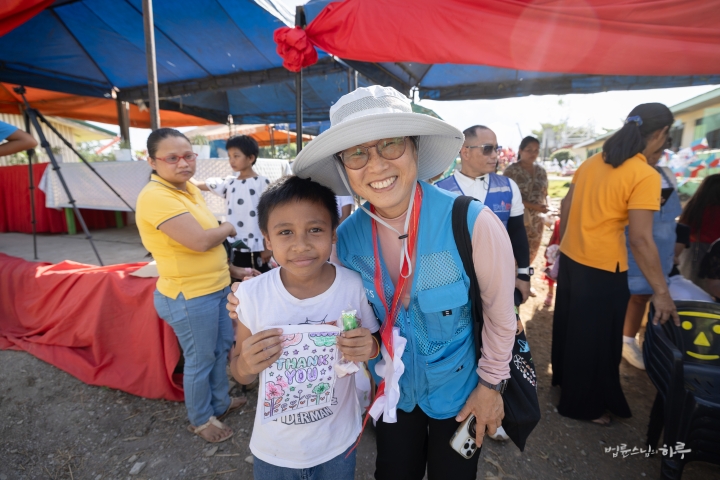
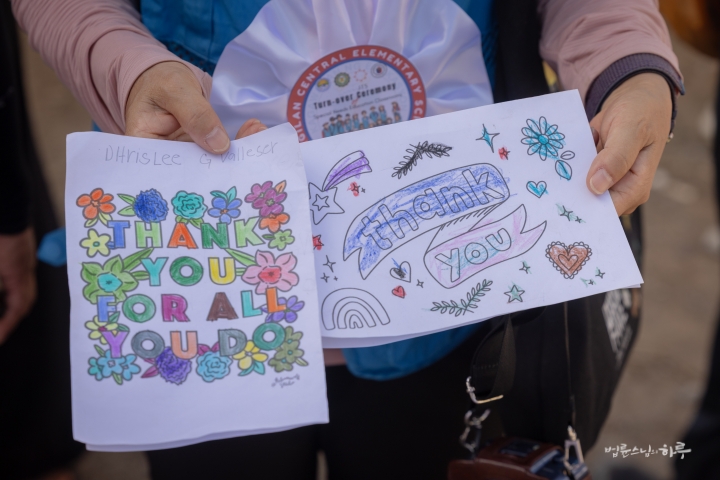
After the photo session, the children approached the JTS volunteers and shyly handed them handwritten thank-you letters.
And they shared the food that the teachers and parents had carefully prepared.
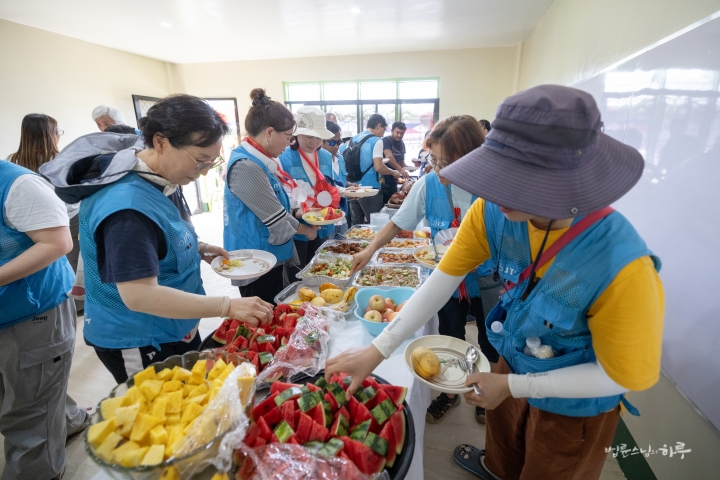
After eating, they said goodbye to the teachers and students and boarded the bus. When the JTS delegation waved through the bus windows, the students shouted “Bye bye!”
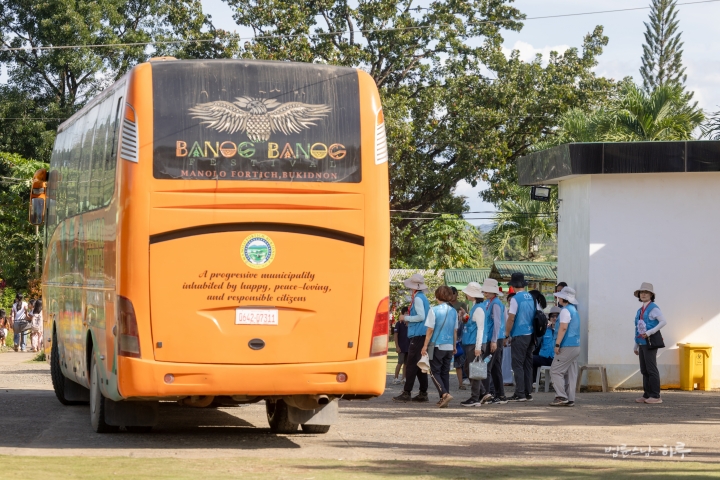
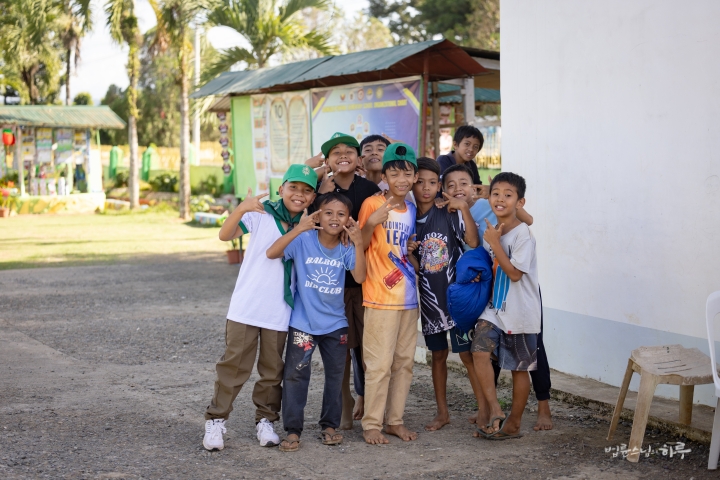
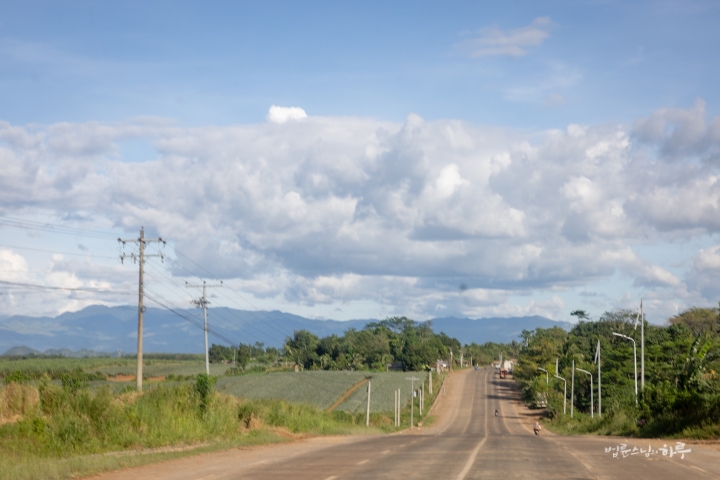
The bus departed from Kadingilan at 2:50 PM and arrived at the Valencia accommodation at 4:00 PM after traveling for 1 hour and 10 minutes.
After resting in their respective rooms, they gathered at the restaurant on the first floor of the accommodation at 6:00 PM after sunset for dinner together. During the meal, they shared their impressions from participating in today’s completion ceremony.
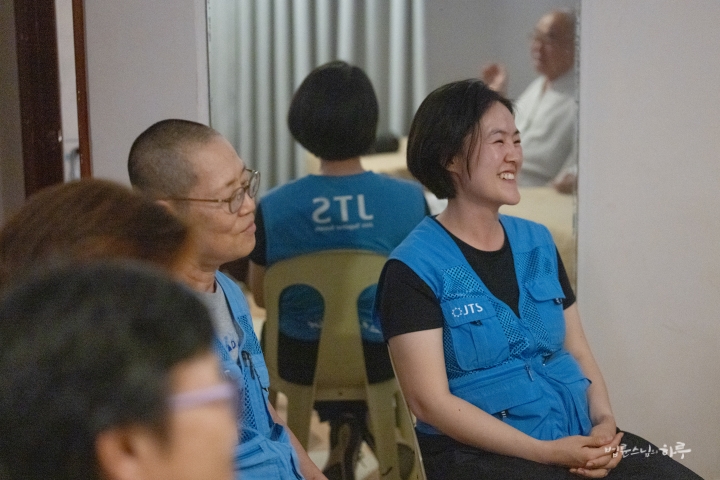
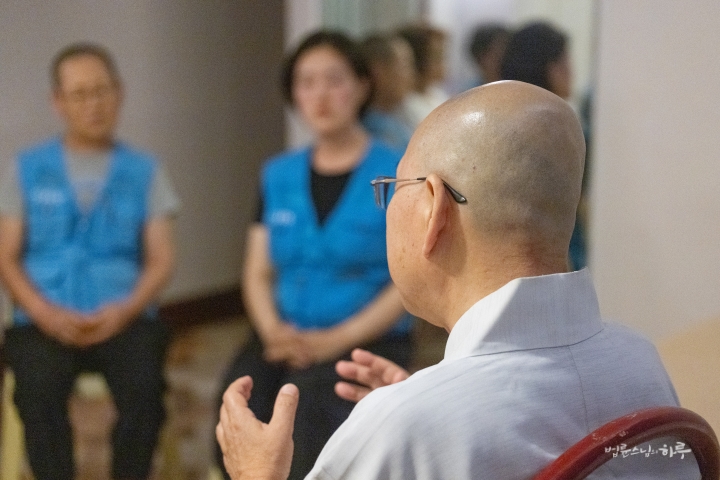
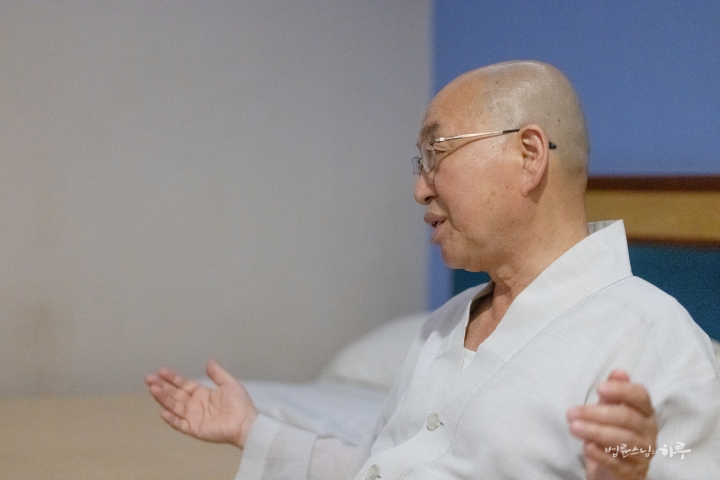
From 8:00 PM, Sunim had a meeting with the JTS Philippines volunteers. When the volunteers requested a Dharma talk from Sunim with three prostrations, Sunim encouraged the hardworking volunteers.
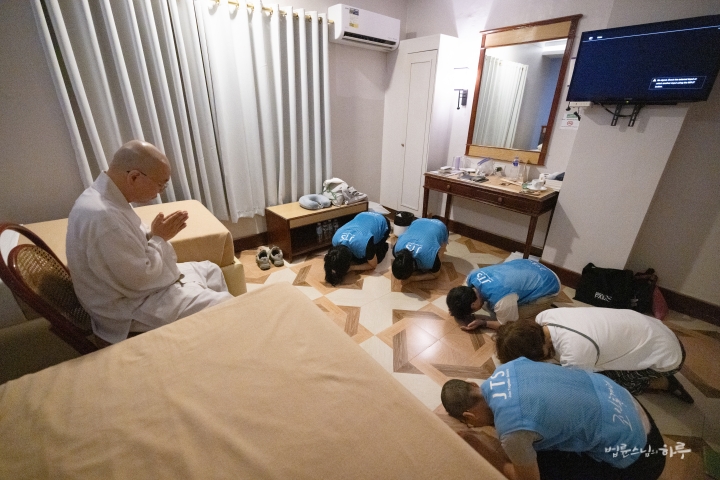
They then spent two hours discussing difficulties and questions encountered while working. They freely asked Sunim what they wanted to ask and also shared their suggestions. One of them asked for advice on how to let go of victim mentality and handle any task lightly, saying they often feel reluctant to suffer losses and feel wronged.
How Can I Stop My Victim Mentality?
“I have a victim mentality. Looking back on my days living in the community in Mungyeong, when I saw someone receiving consideration during kitchen duty and doing less work than me, feelings of jealousy arose. Also, when there was work we agreed to do together like cleaning or communal labor, I felt uncomfortable when some people skipped it. As the youngest, I should take initiative in various things, but I struggle with how to handle my dislike of feeling like I’m losing out. Even when I think I’m suffering just a little loss, my mind shrinks and my body seems to stop. I want to be proactive, but my karmic patterns are easily triggered. So I feel it’s hard and unfair, and sometimes it’s painful. How can I stop this victim mentality? When I see people taking initiative, I feel envious and sometimes blame myself thinking, ‘Why can’t I do that!’ How can I stop the victim mentality and live with a comfortable mind while handling any task lightly?”
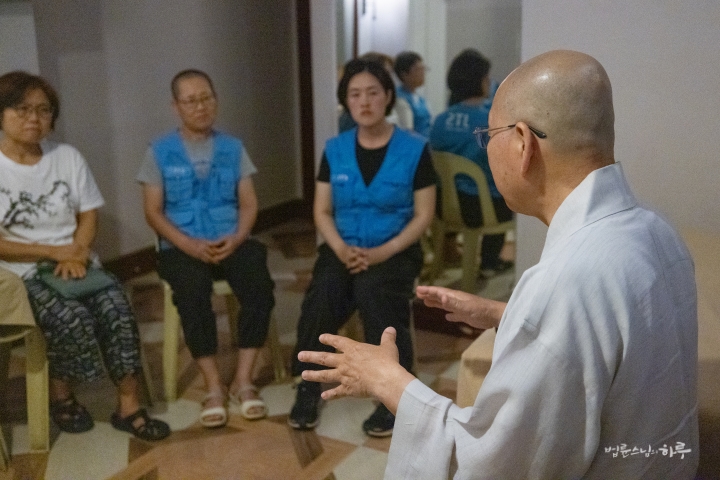
“Thank you. I understand well.”
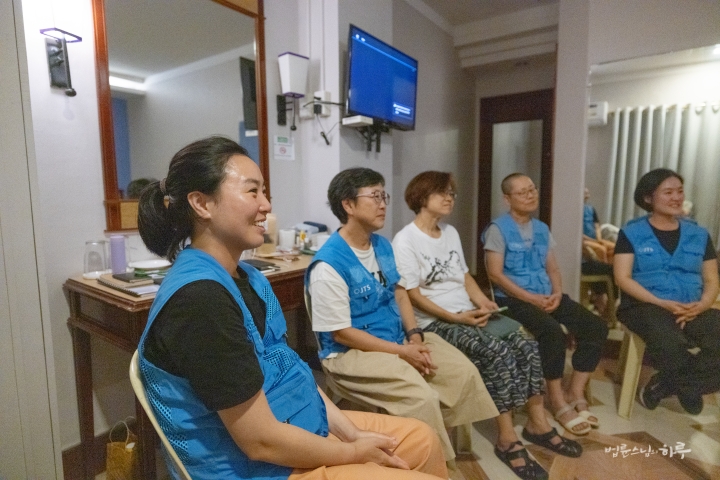
Questions about educational training programs also followed.
What Should Be the Focus of Education?
“I was pleased when Sunim mentioned plans to further activate educational programs. So I thought it would be good to pursue conducting SPED (Special Education) teacher training in connection with psychiatrists from the United States. I would like to ask what Sunim thinks about educational training programs.”
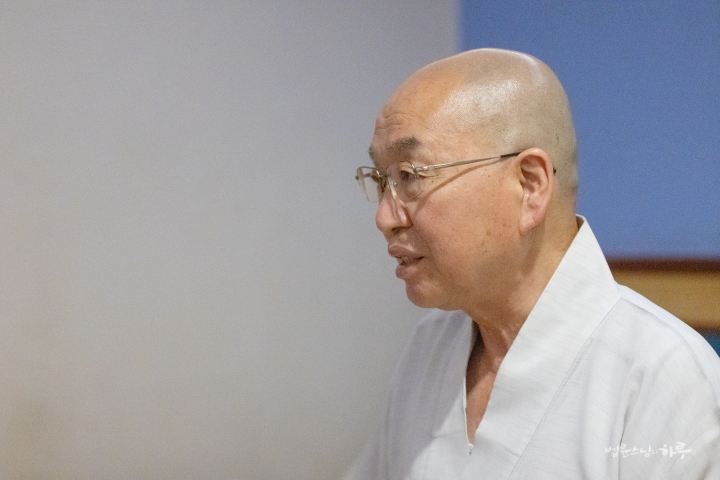
“Thank you. I understand well.”
After discussing various topics, it was already well past 10 p.m. The JTS volunteers were able to fully resolve the questions they had in their minds through their conversation with Sunim.
Tomorrow marks the fifth day of the visit to Mindanao, Philippines, and the final day of opening ceremonies. In the morning, there will be a opening ceremony for the special school at the plantation in Manolo Fortich, and in the afternoon, a opening ceremony for the Korosing special school in Libona. After moving to the Mindanao JTS Center, there will be a live Friday Dharma Q&A broadcast in the evening.