What JTS Built Is Not a Building, but the Future of Children
Dec 10, 2025 – Day 3 in Mindanao, Philippines: Inauguration Ceremonies for Pangalaayan and Luhayalan Schools
Hello. This is the third day of visiting Mindanao, Philippines. Today, inauguration ceremonies were held for Pangalaayan School and Luhayalan School in remote indigenous villages deep in the mountains of Kitaotao Municipality and San Fernando Municipality, respectively.
Sunim and the JTS delegation departed from Valencia at 5 a.m. and headed to Pangalaayan Village for the first event of the day.
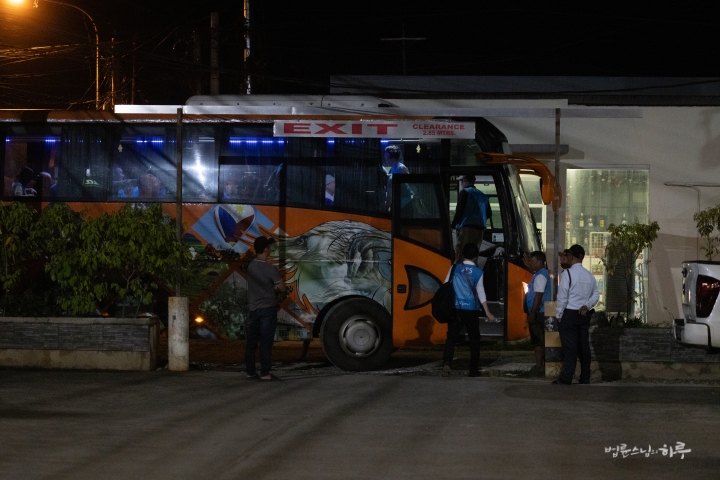
As the bus set off, Hyanghun Beopsa, the Secretary-General of JTS Philippines, introduced Pangalaayan School, where today’s inauguration would take place.
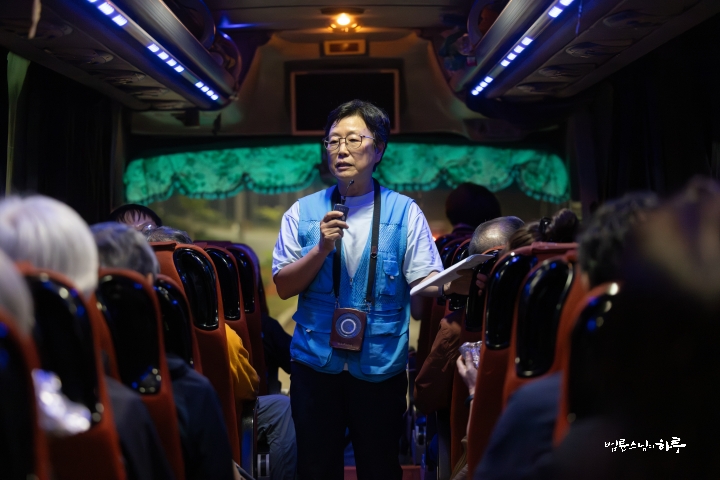
“Pangalaayan Village is the place Sunim personally visited for a site survey in March last year. At that time, we requested the municipal government to provide budget support for technicians, but the mayor said it would be difficult. However, seeing the earnest wishes of the villagers, Sunim promised to ‘build the school together.’ This year, securing the budget was still not easy, but Edwin, the Indigenous Peoples Education coordinator at the Department of Education, persuaded the provincial government and secured the technician budget, which allowed construction to begin.
To transport materials, the river had to be crossed multiple times. It took four months just to figure out how to transport the materials. But the entire village stepped forward, saying, ‘We will carry them ourselves.’ The children collected gravel and sand from the river and transported them, and bricks were made by hand to build the school. Even the staff member in charge said, ‘The passion of this village actually gave me strength.’ We’ll be crossing the river soon, so please wear your sandals.”
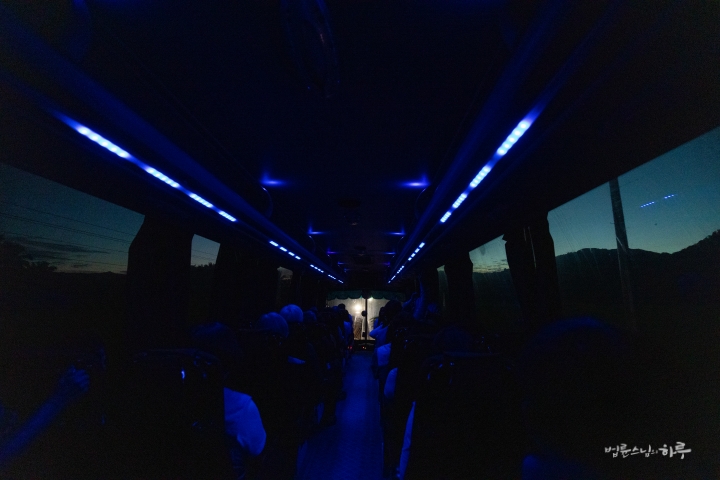
As the sun slowly rose and fog drifted outside the bus windows, after an hour and a half, a wide river appeared. Everyone got off the bus and headed toward the riverbank.
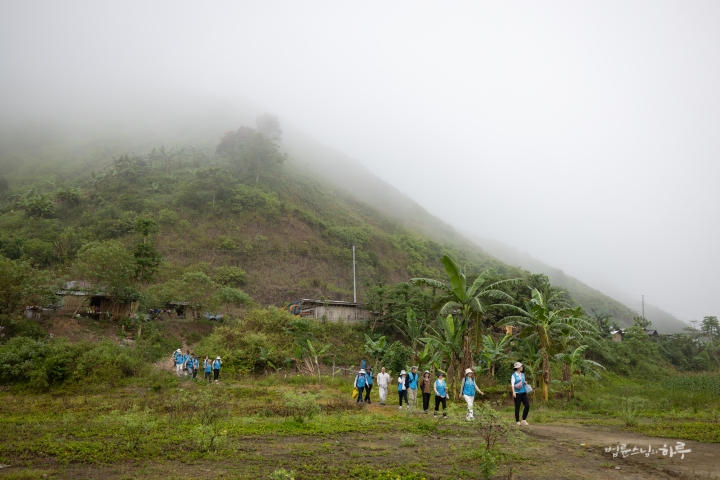
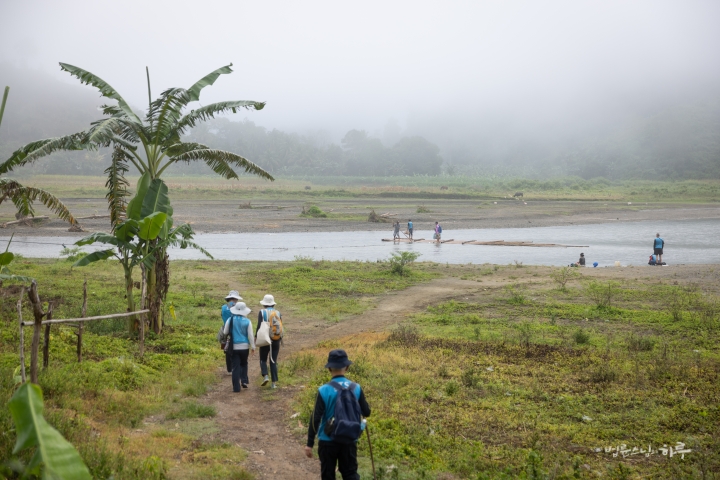
At the river, villagers were operating a raft they had built themselves. The current seemed quite strong, so some decided to take the raft across.
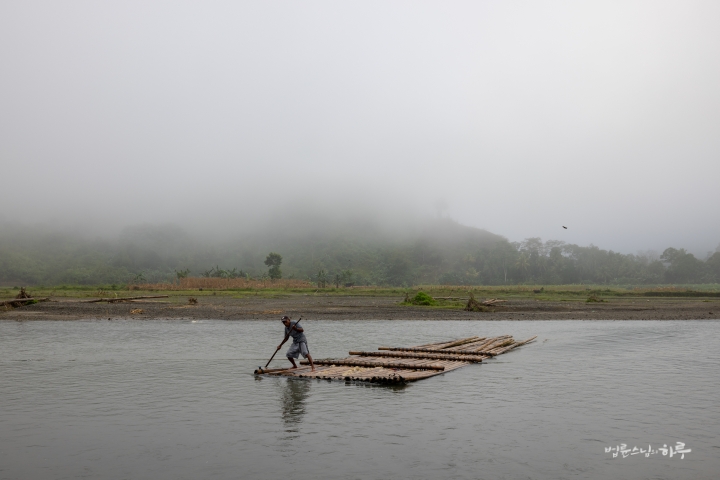
People also suggested that Sunim take the raft.
“Sunim, you should take the raft too.”
Sunim said with a smile:
“I’m not old enough to need a raft yet. I haven’t even reached eighty—I should walk across.”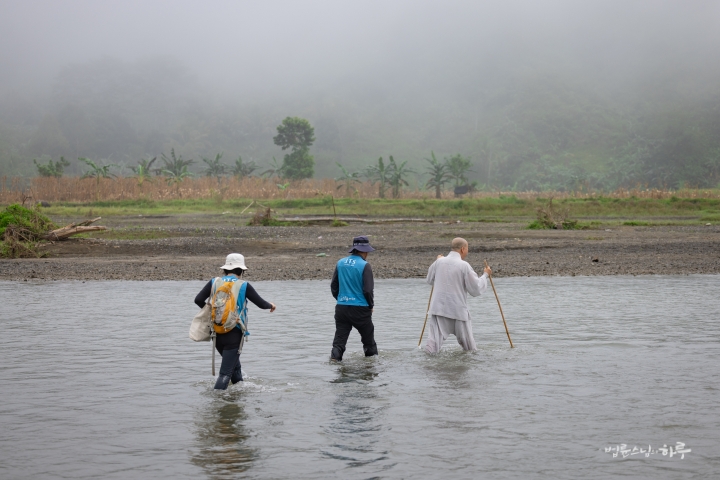
Sunim took the lead and walked briskly across the river, checking the depth.
“It’s not as deep as I thought.”Some walked across the river, while others took the raft.
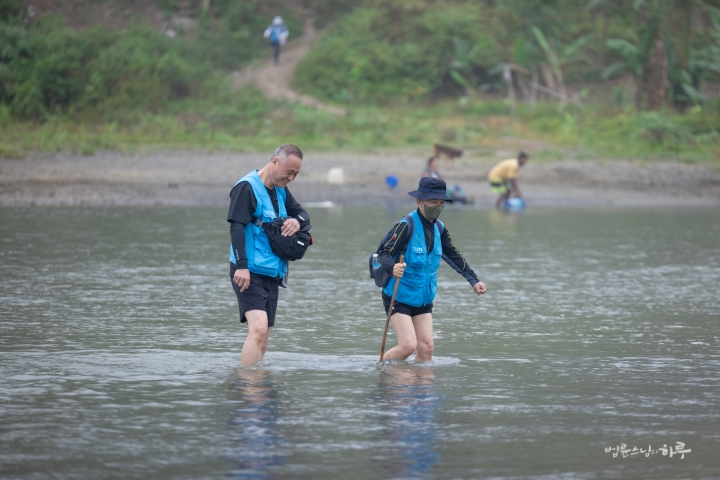
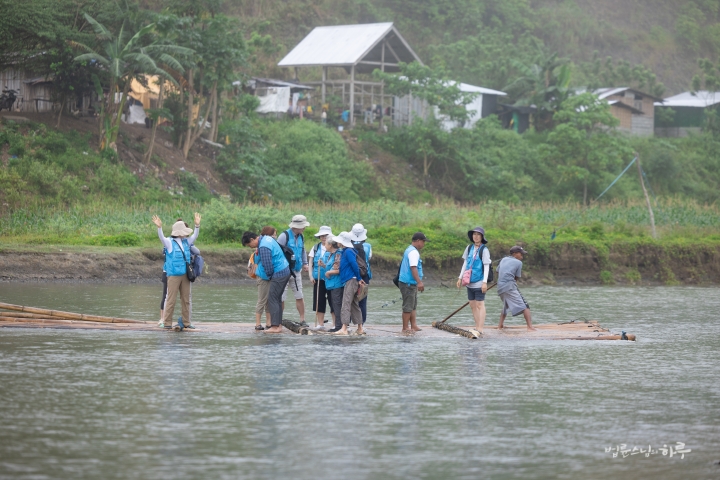
After safely crossing the large river, the group continued walking along mountain trails and streams, still wearing their wet pants and shoes. There was no need to dry their feet—nine more streams had to be crossed ahead.
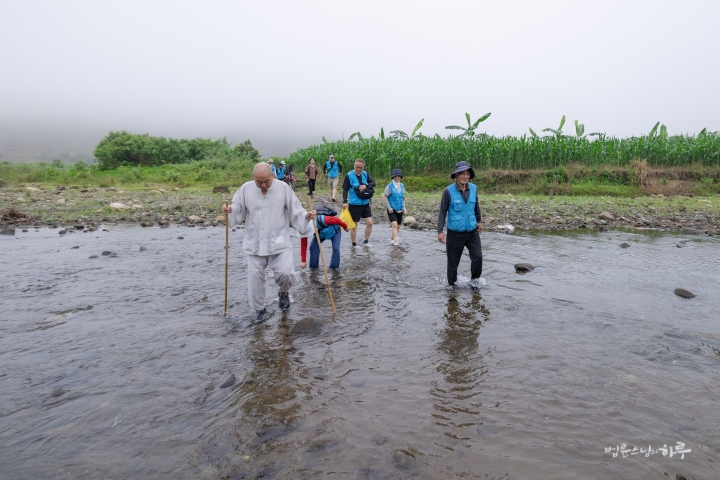
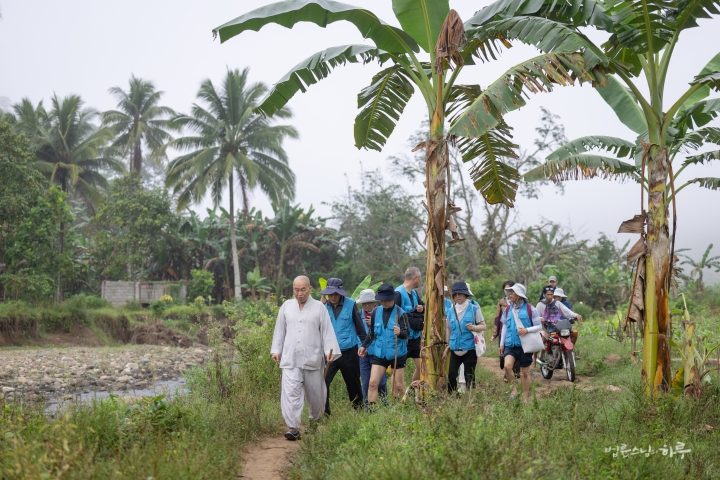
Since no one worried about getting their feet wet, the water itself became part of the path. The group walked forward steadily without stopping.
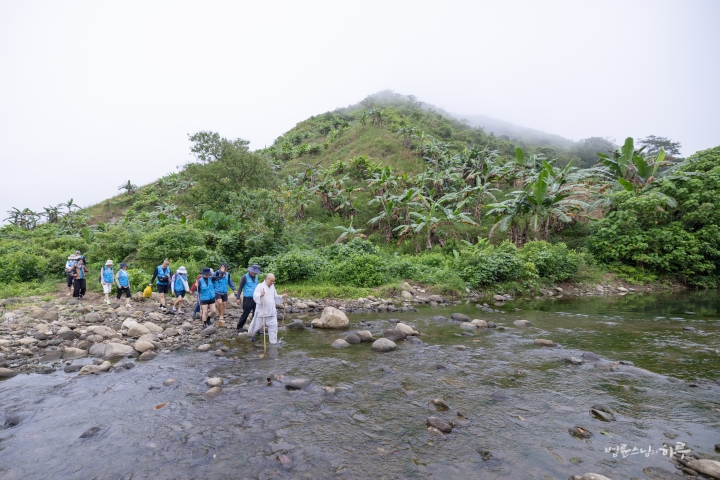
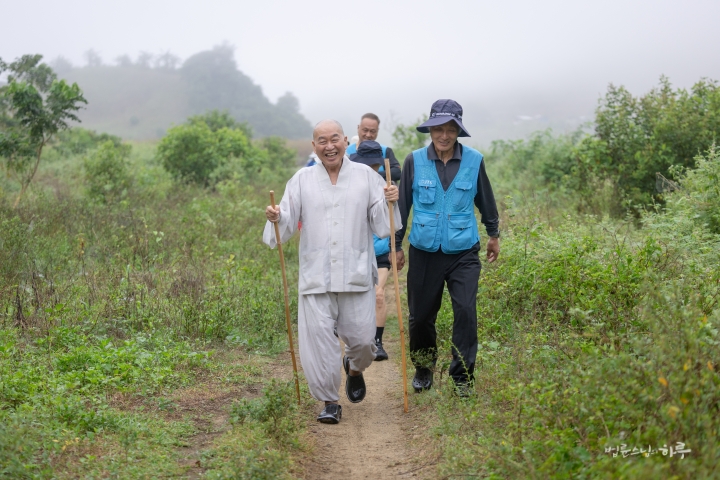
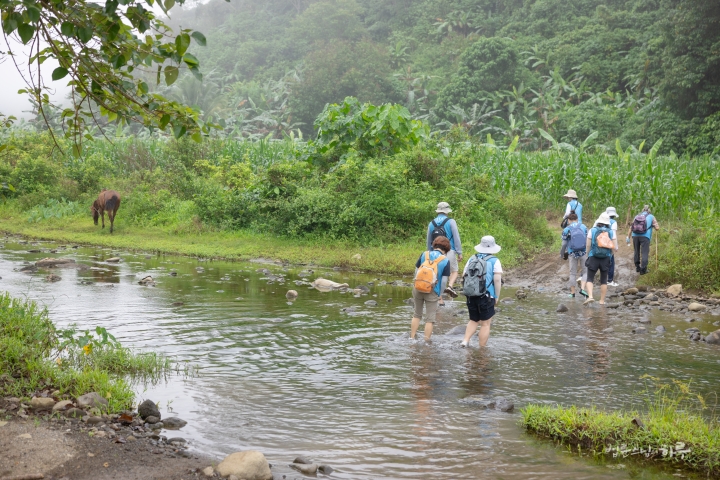
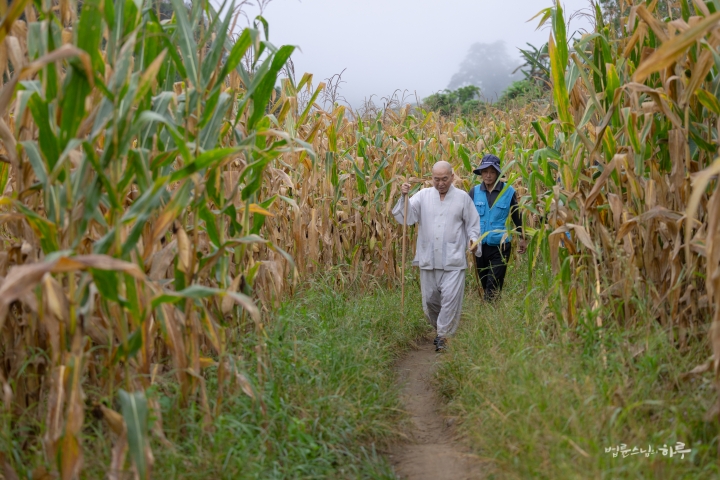
As the last stream was being crossed, the sound of drums echoed from the distance. Finally, Pangalaayan Village came into view.
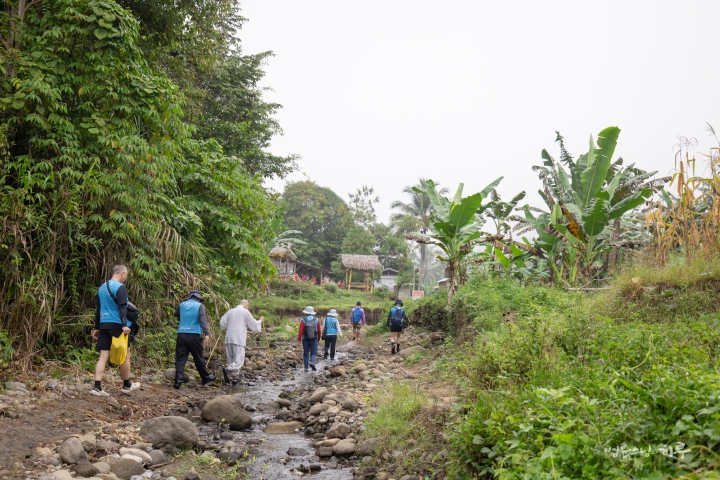
At 7:30 a.m., after an hour of walking over mountains and across rivers, Sunim arrived at the newly built Pangalaayan Elementary School. Students dressed in traditional clothing lined up on both sides, dancing joyfully to welcome the delegation.
“Maayong buntag!” (Good morning!)
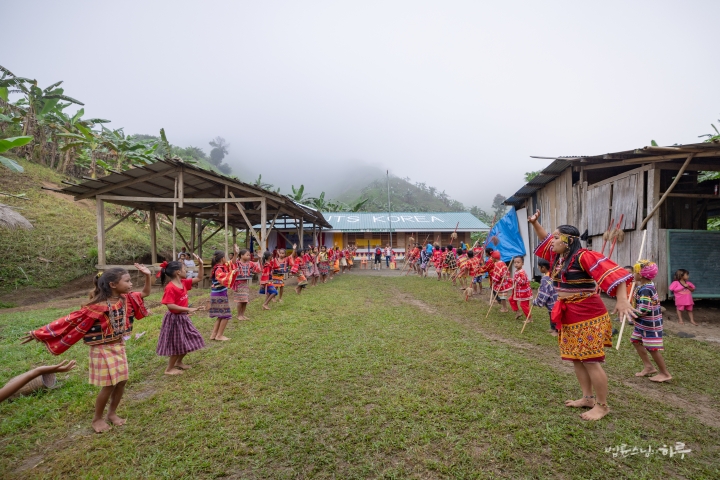
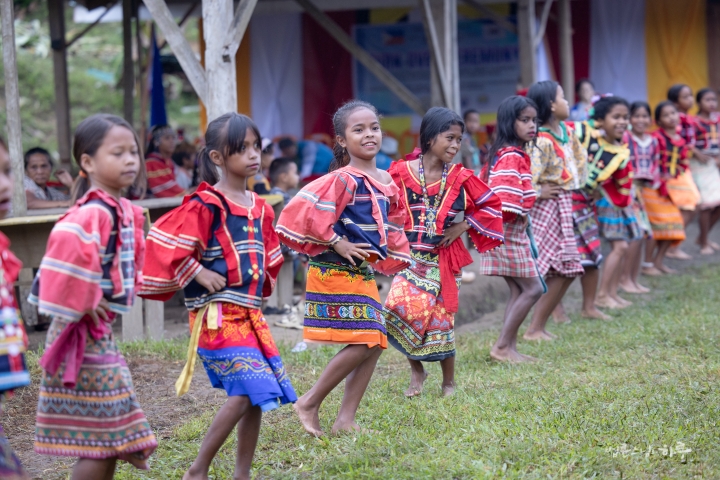
In the festive atmosphere that had the entire village buzzing, the JTS delegation also moved to the rhythm, swaying their shoulders as they walked.
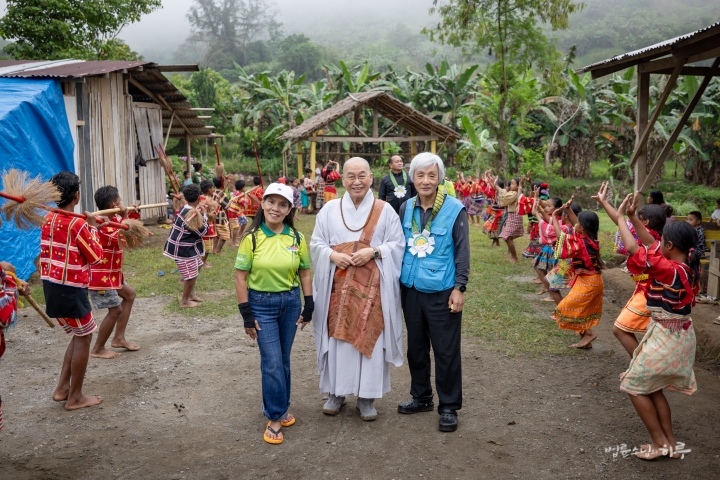
During Sunim’s last visit to this village for the site survey, the Datu had tried to perform a blessing ritual by slaughtering a live chicken. Sunim approached the Datu with a smile and asked:
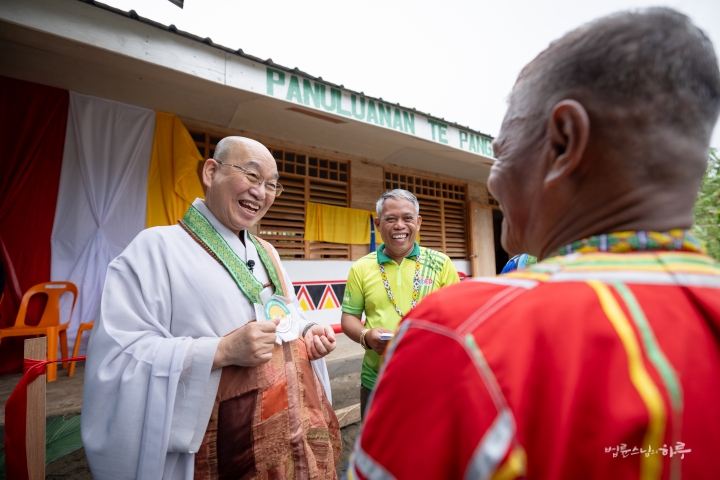
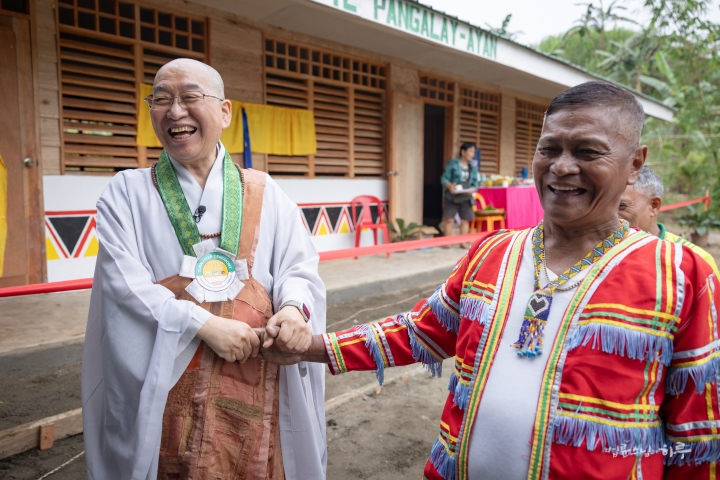
The Datu answered with a smile:
“I’ve already finished all the rituals.”
Sunim firmly held the hand of the beaming Datu.
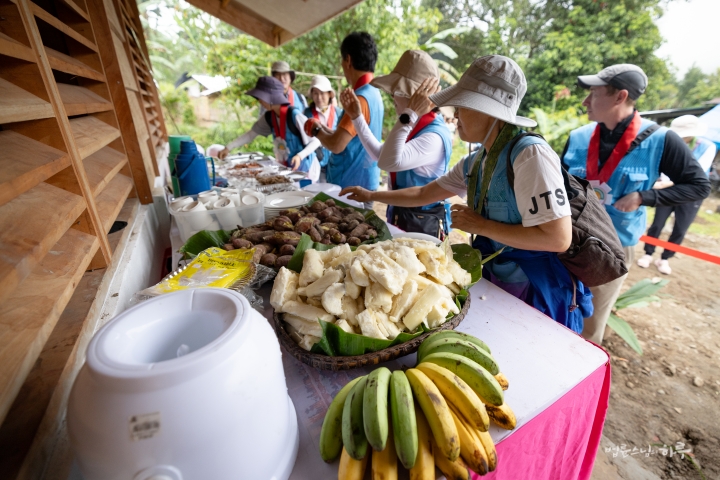
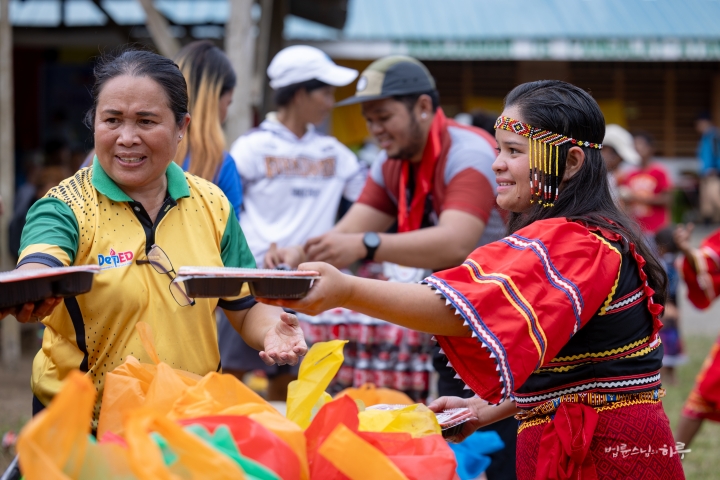
In front of the classroom, food that the villagers had lovingly prepared was laid out. The plates were filled with bananas, cassava, sweet potatoes, papaya, guava, and corn—each dish reflecting the warmth of the villagers’ hearts.
After a light breakfast, municipal officials arrived, and the inauguration ceremony began at 8 a.m.
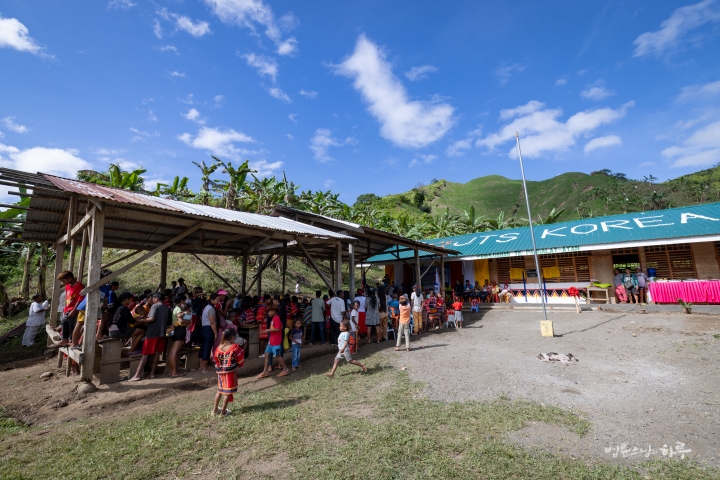
First, the JTS delegation and officials lined up in front of the school for the ribbon-cutting and unveiling ceremony.
“One, two, three!”
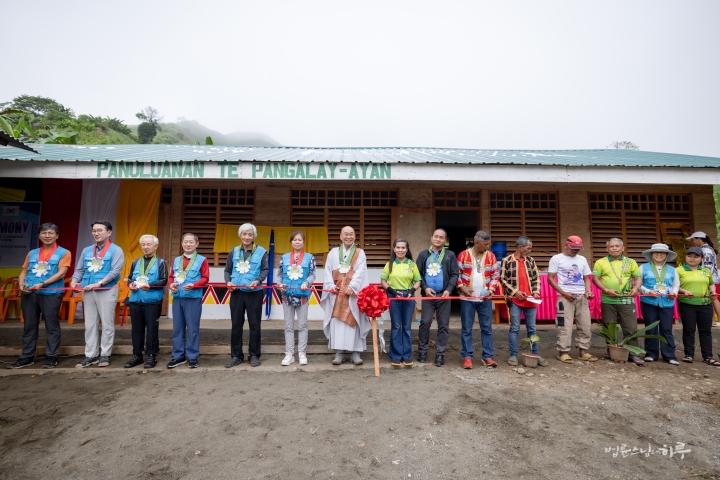
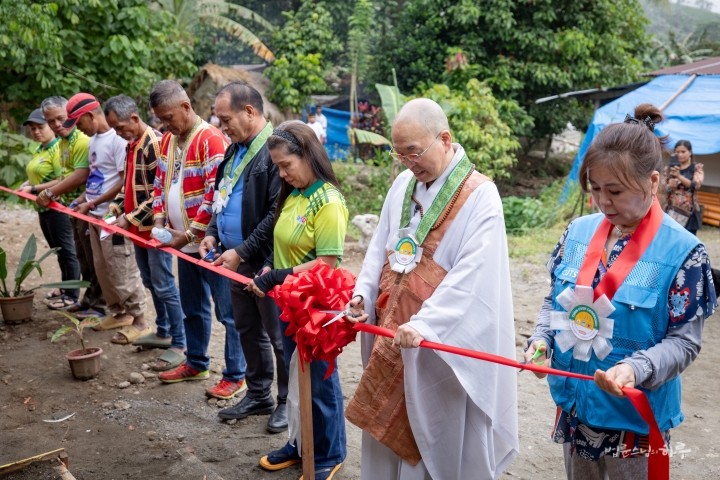
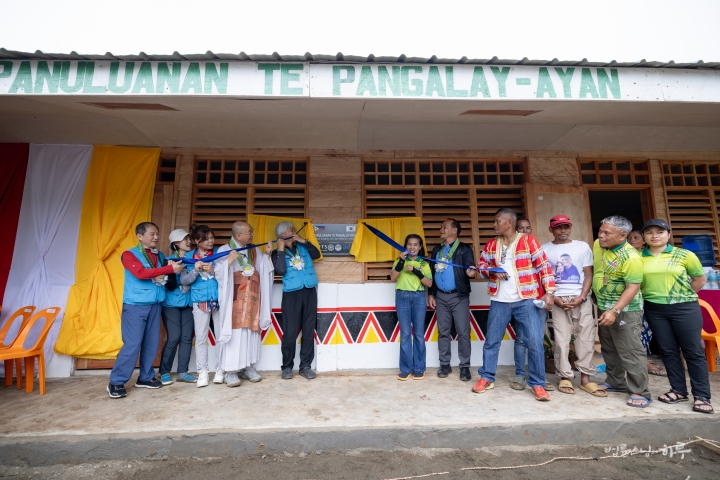
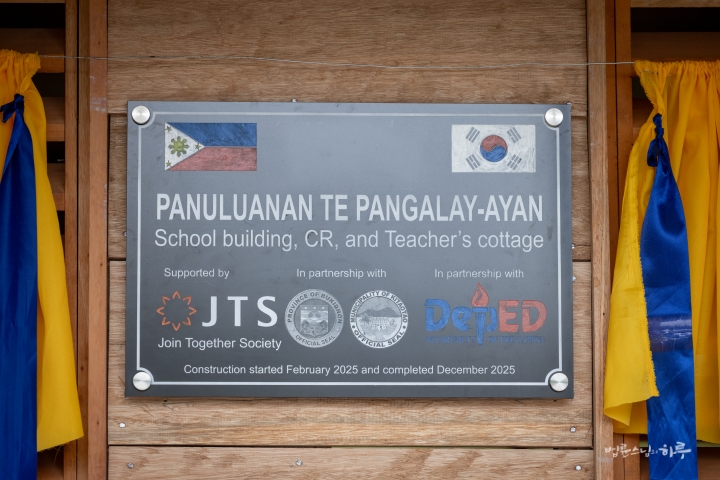
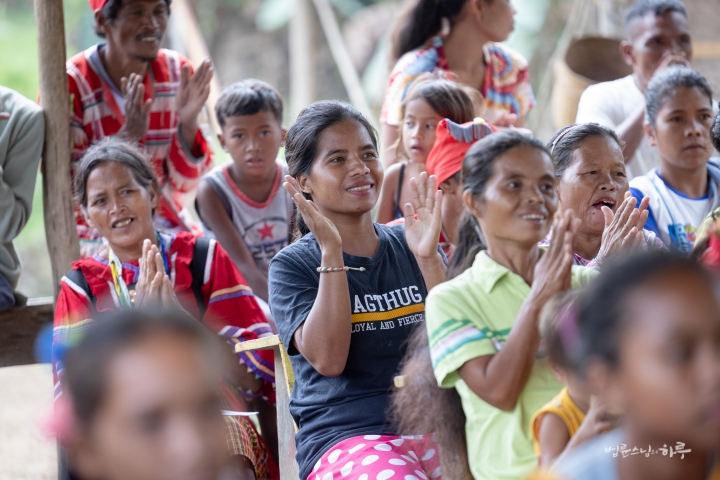
Cheers and applause erupted. The faces of villagers and parents were filled with joy and emotion.
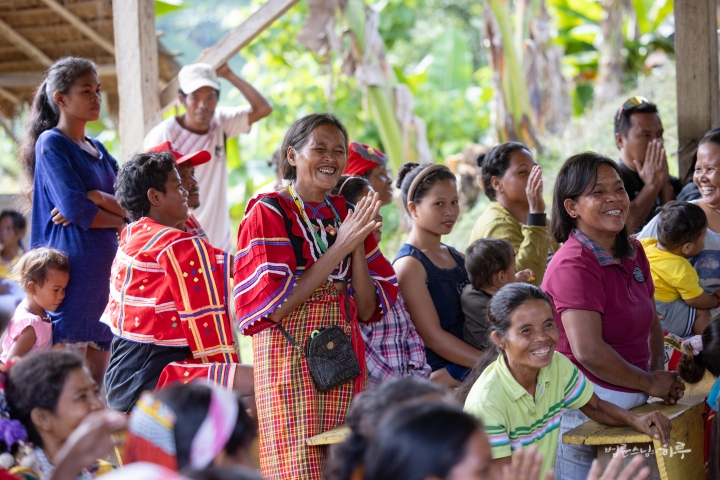
This was followed by the singing of the Philippine National Anthem and the Korean National Anthem together. As the Korean flag fluttered and the national anthem echoed through this remote mountain village, there was a lump in everyone’s throat.
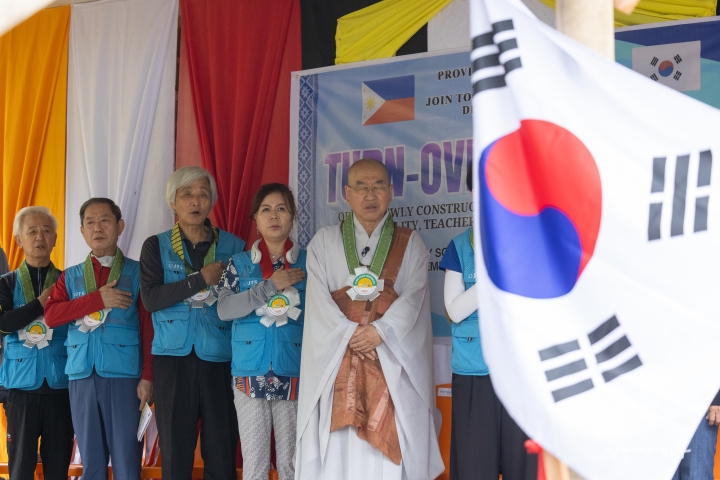
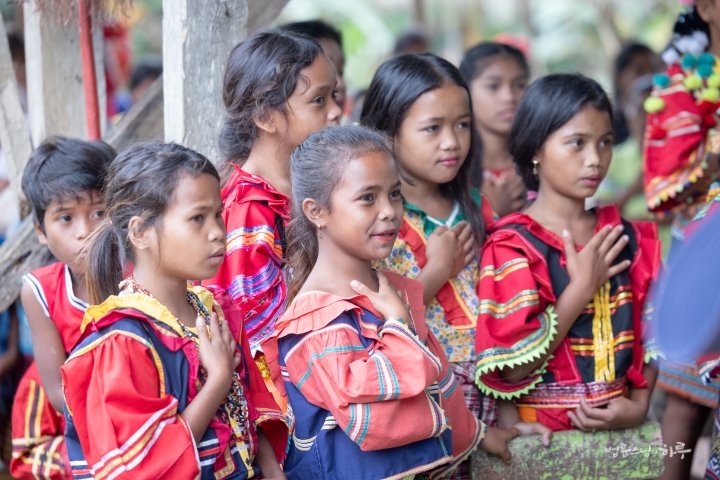
First, the principal welcomed the JTS delegation, followed by a progress report from Representative Noh Jae-guk of JTS Philippines.
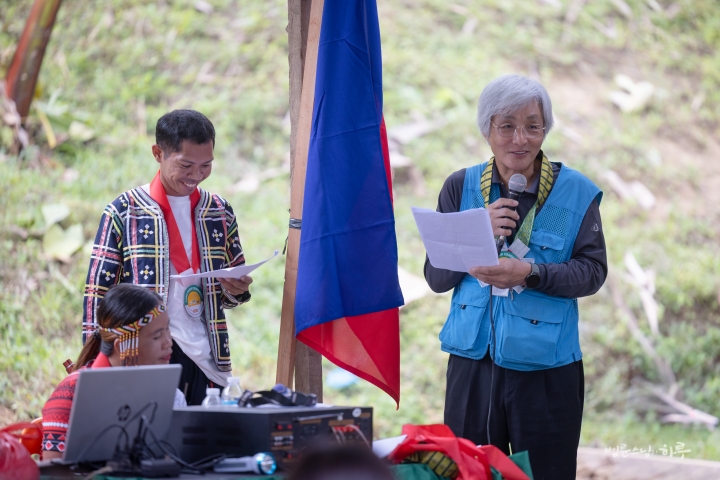
“In March 2024, when Venerable Pomnyun Sunim first visited Pangalaayan, it was clear how desperately this area needed a school. With the active cooperation of the Philippine Department of Education (DepEd), the Bukidnon Provincial Government allocated a special budget to support the construction of this school. Construction began in earnest after the groundbreaking in February. However, building the school required crossing two rivers eleven times and overcoming difficult terrain. Various transportation methods were attempted, but challenges continued. Ultimately, what made this project possible was the unity of the community. Teachers, parents, the Datu, and sitio leaders organized the residents well, and teachers checked on material deliveries even late at night, with women also participating in transporting materials. Elders, young people, motorcycle drivers, and horse riders all helped carry sand, gravel, cement, and rebar. Site managers and technicians also dedicated themselves, working weekends and overtime. Thanks to the efforts of many people, one building containing three classrooms, restrooms, and teacher housing was completed today. Bukidnon Province provided technical advisory services and manpower, and JTS provided construction materials, transportation costs, and meal expenses. The local government provided additional transportation support, and the Department of Education planned to assign additional teachers through close cooperation.”
The detailed progress report showed that this school was built with the hands and hearts of the villagers together. When Representative Noh Jae-guk finished speaking, everyone responded with thunderous cheers and applause.
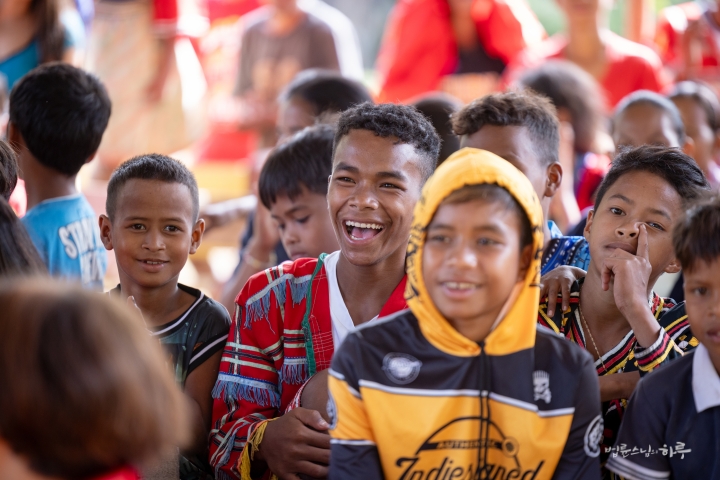
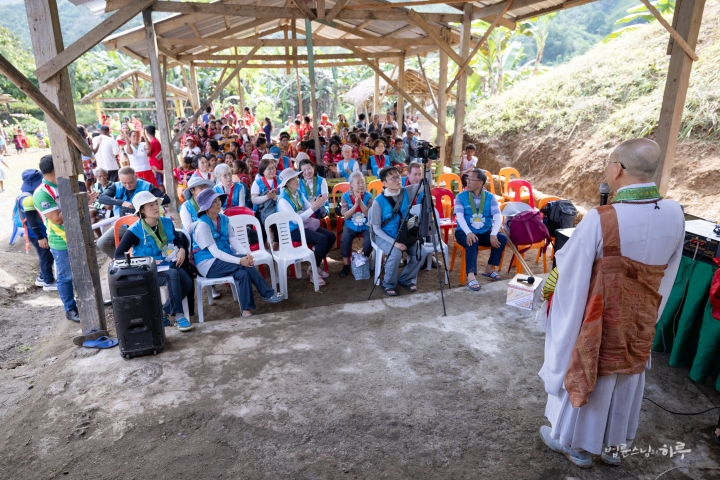
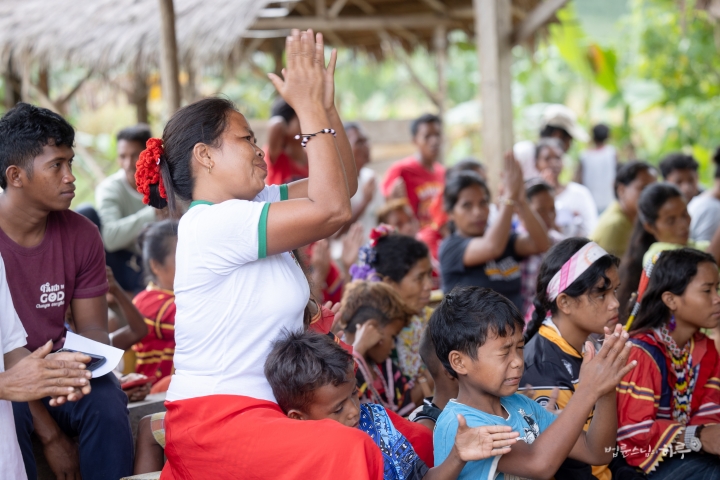
This was followed by celebratory performances by the students. The village has well-preserved traditional culture, and students dressed in traditional clothing performed wonderful dances. The guests didn’t sit down but all came out to the courtyard to stand together and watch the performance while cheering for the children.
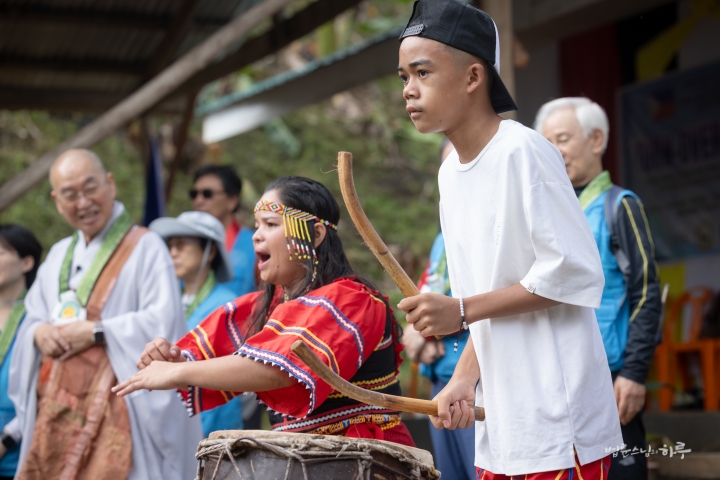
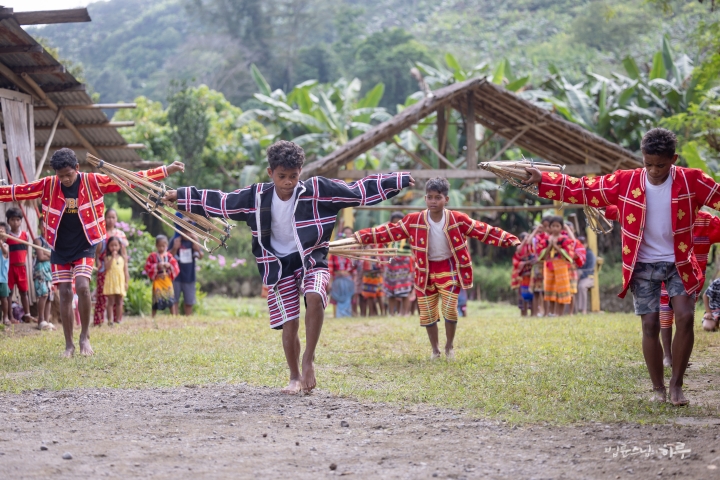
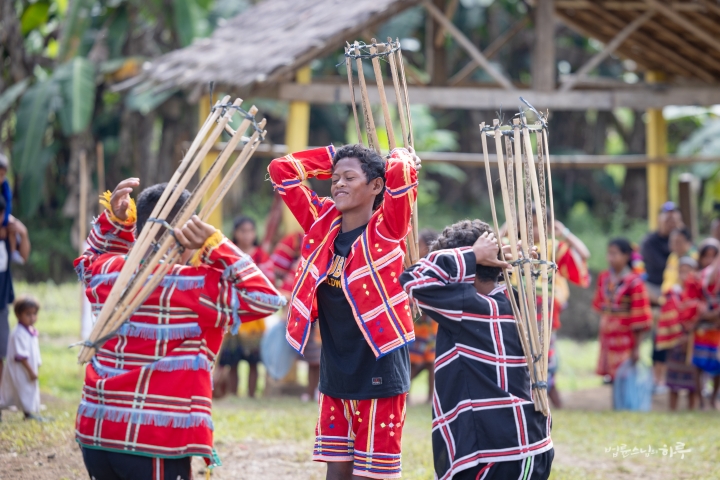
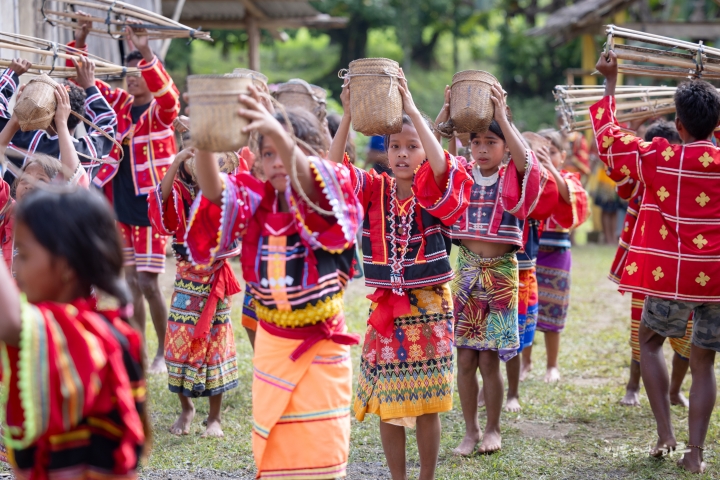
Perhaps because it’s a village by the river, the children expressed fishing with traps through their dance movements. The JTS delegation responded to the children’s high-level performance with admiration and applause.
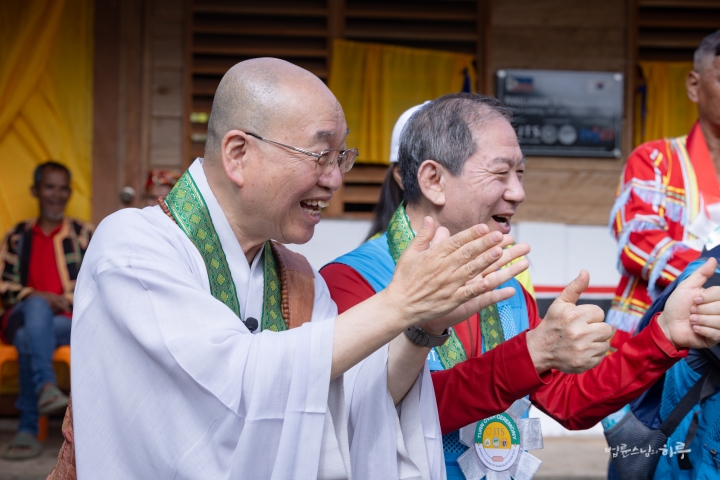
Next was the presentation of certificates, keys, and a clock. First, Sunim presented the certificate to the Bukidnon Provincial Schools Superintendent, along with his English-language book as a gift.
“Thank you.”
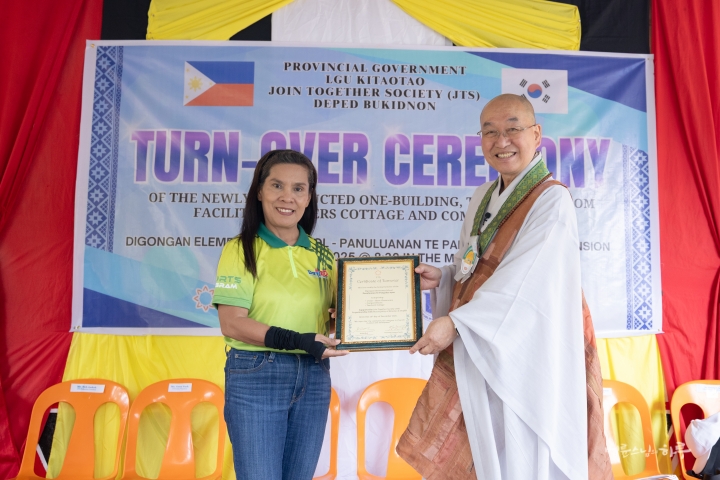
Then JTS Representative Park Gina presented the school key to the Bukidnon Provincial Public Schools Division Superintendent, and Representative Noh Jae-guk presented a clock to the principal.
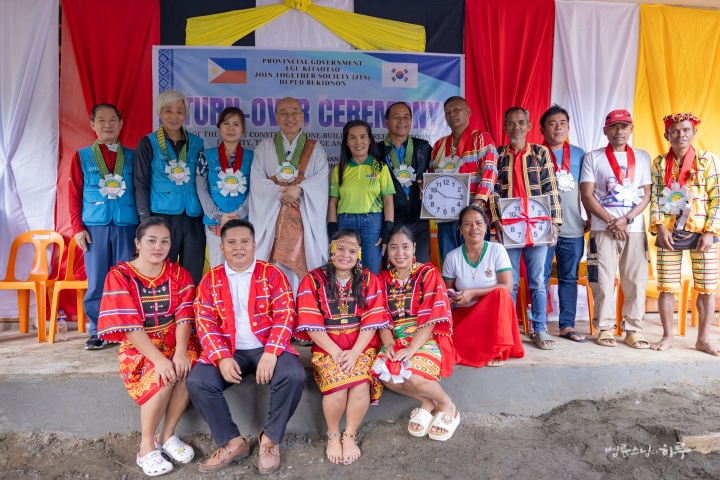
The bright faces and applause of the villagers clearly showed the joy of a long-awaited dream finally coming true.
Sunim then gave the congratulatory address. He began by recalling his visit to this village for the site survey two years ago.
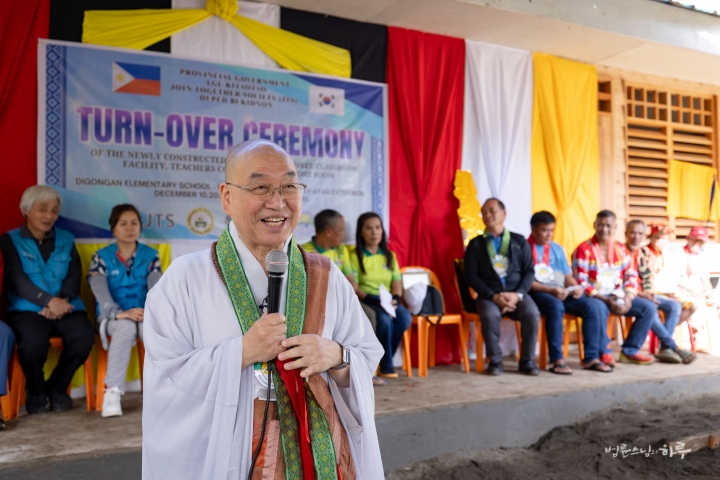
A School Brought by a Chicken, a Place of Learning Completed by Collective Strength
“At that time, I said, ‘To build a school here, transporting materials won’t be easy. I wonder if you, the villagers, can do this. I think it might be a bit difficult.’ But you all shouted in unison, ‘We can do it!’ Coming here today, I see you really did it. You all worked so hard.” “I thank everyone who participated in building this school, and I hope that in your lives ahead, you will continue to create hope for yourselves, just as you did today.” “There were many difficulties in completing this school. There was JTS’s support and your dedication, and in addition, this construction was made possible because the provincial government supported part of the technician expenses. In particular, Edwin, the Indigenous Peoples Education coordinator at the Department of Education, personally went to the provincial government to actively explain and secure the budget for technician labor costs. Please give Edwin a big round of applause.”Sunim called Edwin onto the stage and placed a flower lei around his neck to express special gratitude.
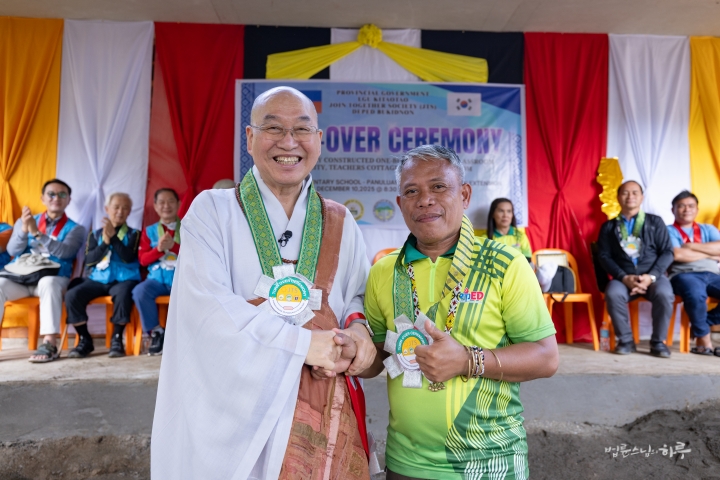
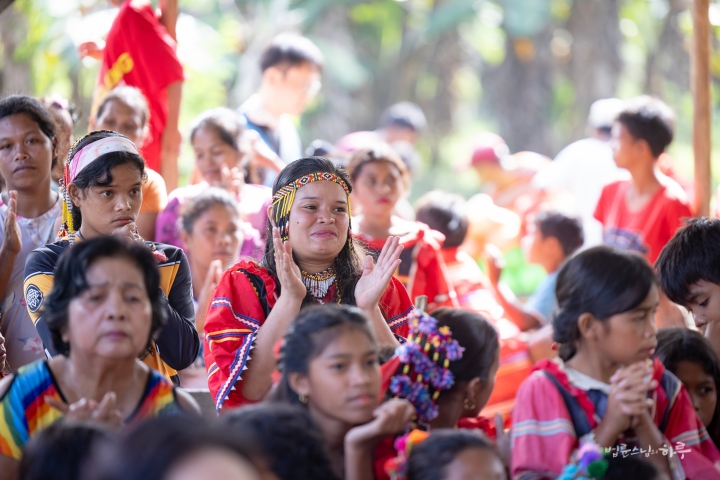
The villagers and students also expressed their gratitude with warm applause. Sunim continued:
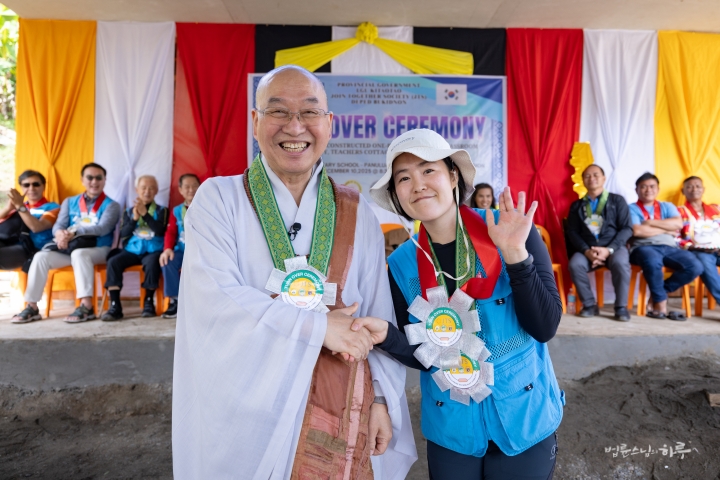
Sunim called Gayoung Kim onto the stage and placed a flower lei around her neck. The villagers and students also expressed their gratitude with warm applause.
Sunim continued:
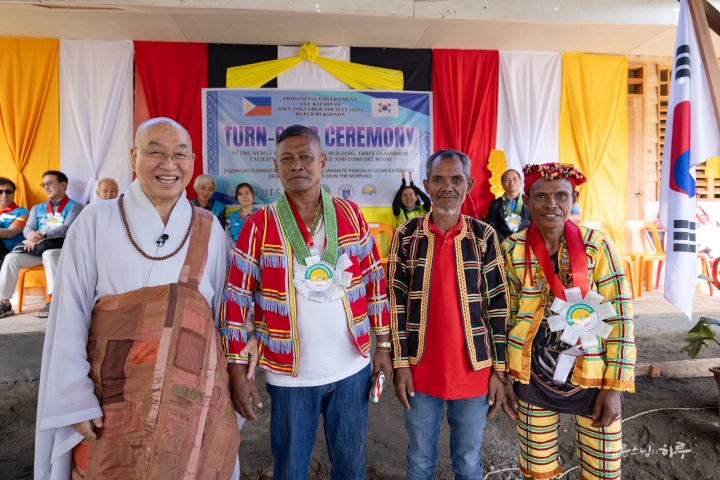
“Above all, from when we first discussed building the school, the Datu of this area participated very actively. Many people contributed to completing this building today, but among them, the Datu’s role was especially significant. I sincerely thank you.”Sunim called the Datu onto the stage and placed a flower lei around his neck. The villagers and students also expressed their gratitude with warm applause.
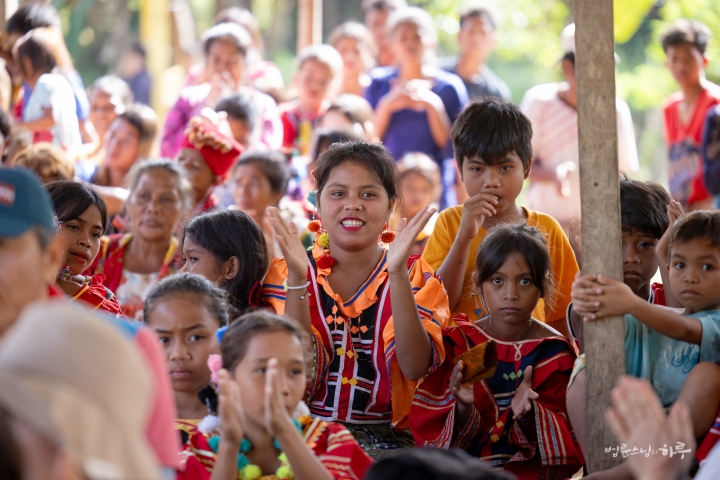
Everyone gave the teachers a big round of applause.
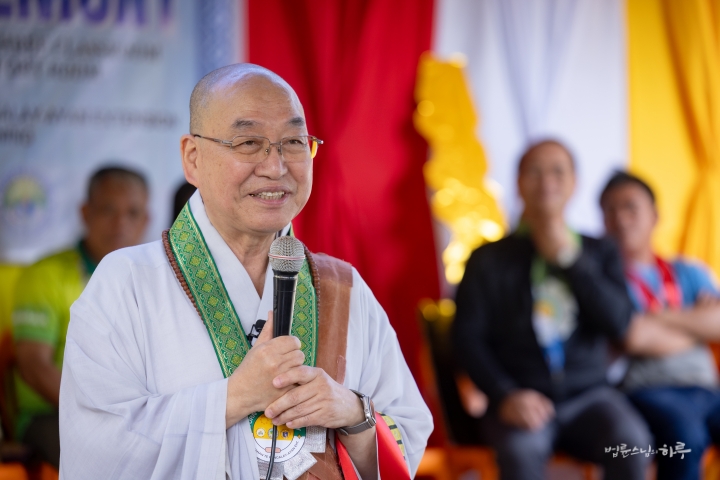
“YES!”
“But my father used to scold me, saying, ‘Does studying make money? Does it make food? Go work!’ So I had to study in secret while going to work. Of course, thanks to that, I came to love studying. But you must firmly support your children so they can study without worry.” (Laughter) “And there are two temporary buildings here. The representative of JTS Philippines just promised me that they would renovate these buildings into classrooms so students can study safely.” “Lastly, there is something I want to ask of you. Please preserve your tribe’s unique culture, traditional beliefs, and traditional clothing.”All the villagers responded to Sunim’s promise and message with loud applause and cheers.
The Bukidnon Provincial Schools Superintendent then gave a speech of thanks. The superintendent expressed deep gratitude to JTS and Venerable Pomnyun Sunim for opening educational opportunities for indigenous children.
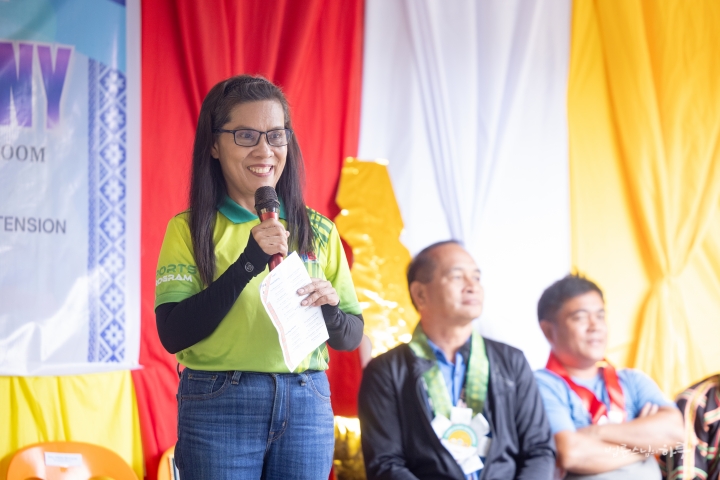
“This morning when I arrived at the school, I discussed with the four teachers which grade should use the new classrooms. At first, I thought it would be nice if the sixth graders, who will graduate soon, could spend even just three months making good memories in this beautiful classroom. On the other hand, there was the opinion that the younger kindergarteners and first and second graders should also use the new classrooms. It wasn’t easy to coordinate because each grade had different situations. But when Venerable Pomnyun Sunim promised to renovate all the other classrooms, all our concerns were resolved. I would like to express my deep gratitude on this occasion.
Breaking Down Barriers of Distance, Opening the Future for Children
I sincerely thank JTS and Venerable Pomnyun Sunim for personally visiting various parts of Bukidnon Province and building 57 classrooms just this year alone, providing great help to indigenous children who had been marginalized from education. Distance often caused children to fall behind in education, but thanks to all of you who crossed the sea from Korea to come to this faraway place, even that distance no longer means anything. Once again, I sincerely thank you.”
The Public Schools Division Superintendent, the Governor’s secretary, the municipal councilor, and the barangay captain each came forward to congratulate the new school in Pangalaayan Village.
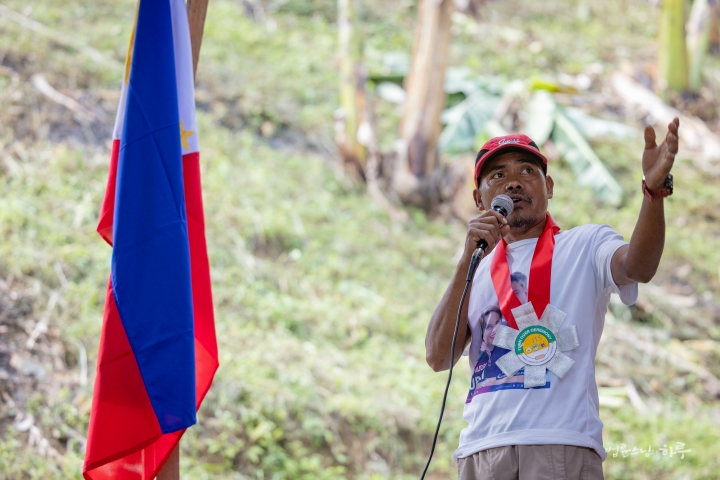
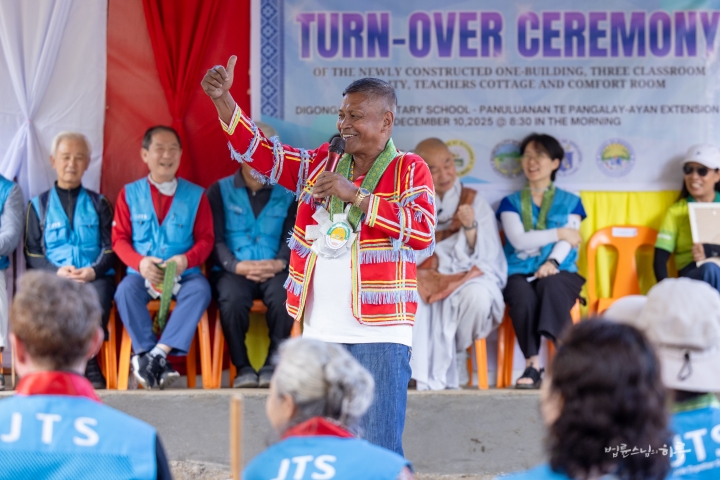
Finally, the Datu, the tribal chieftain of this village, came forward to give the closing remarks. With a joyful expression, the Datu walked back and forth across the school courtyard, passionately expressing his gratitude.
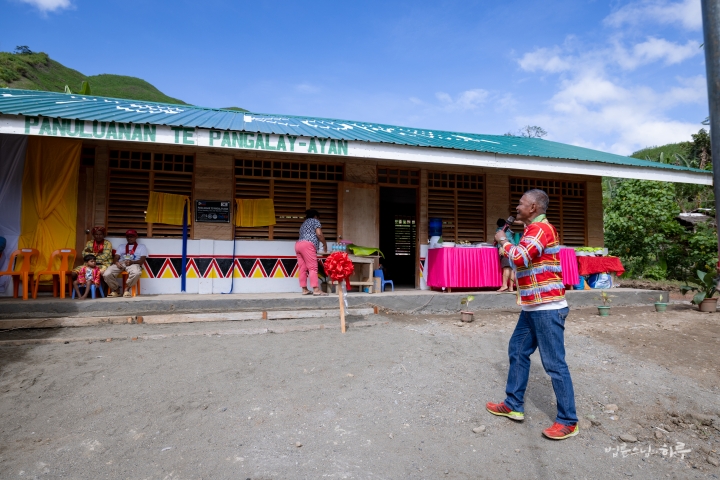
The entire JTS delegation burst into laughter and rejoiced together at the Datu’s passionate expression of thanks.
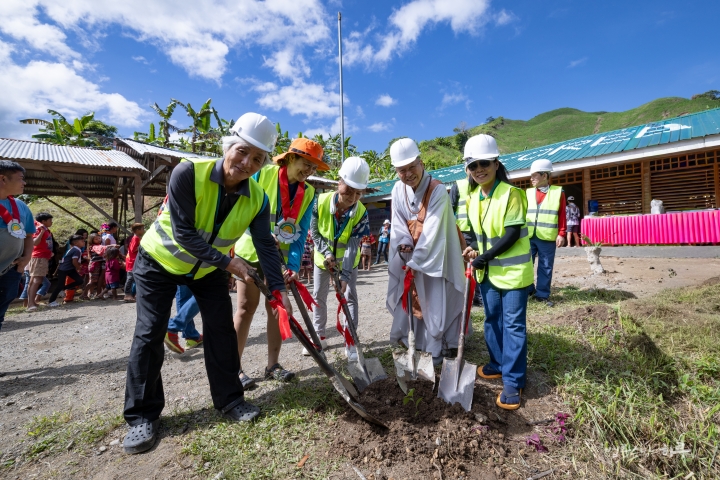
After the Datu’s remarks concluded the ceremony, everyone moved to the school courtyard for a commemorative tree planting. As the tree was planted with shovels, everyone together wished for the children to grow up healthy and strong.
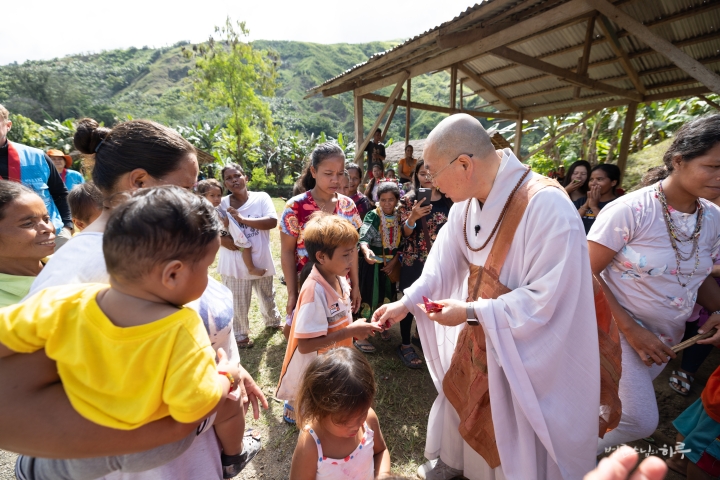
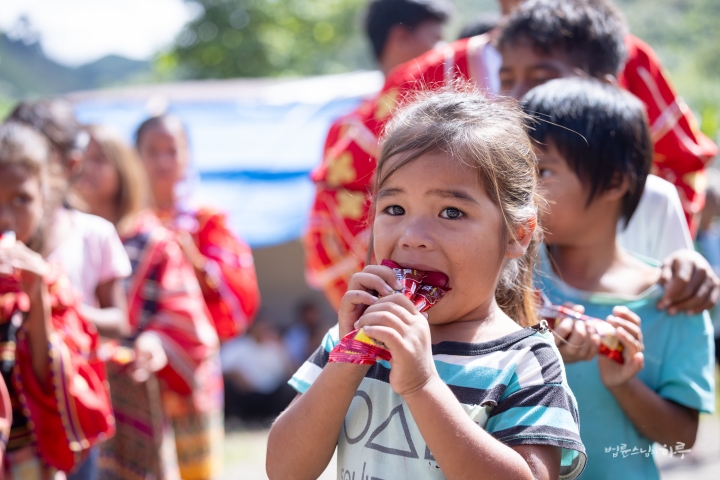
After planting the tree, snacks were distributed to the children. The children beamed with joy as they received the small treats.
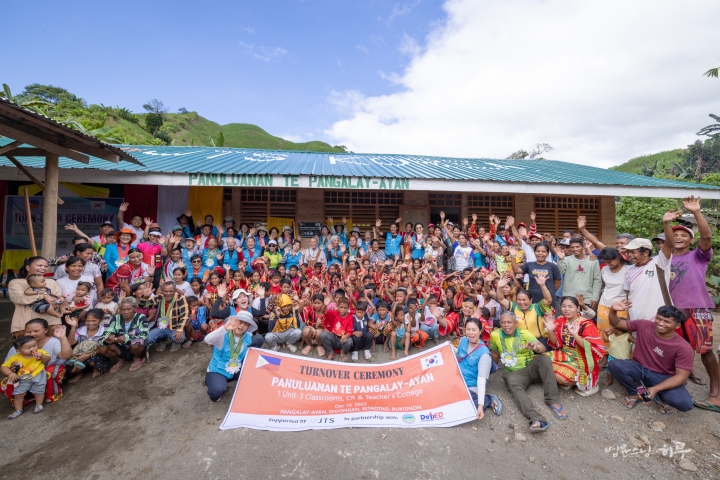
With snacks in hand, everyone took a group photo in front of the school.
“Thank you, JTS! Thank you, Pangalaayan!”
This was followed by refreshment time.
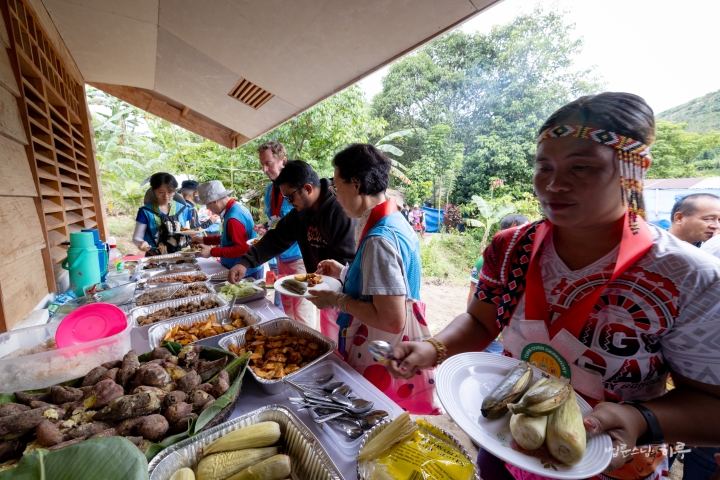
The JTS delegation gratefully ate the food that the villagers had lovingly prepared. After the meal, the Bukidnon Provincial Schools Superintendent approached Sunim with a request.
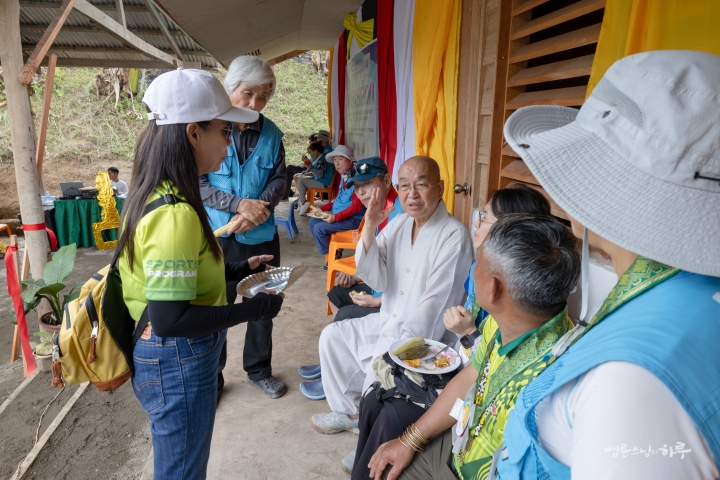
“I heard that the staff member in charge of JTS projects might quit next year. We need to keep building schools—can you continue to assign JTS staff? They’ve even learned some of the local language and communicate well with us.”
Sunim replied:
“That’s not within my authority. JTS operates on a volunteer basis. Ask the JTS staff member directly that you need their continued help. Their heart might still be wavering, so try to persuade them.” (Laughter)“Yes, I understand.”
Meanwhile, Bukidnon Province also celebrated today’s inauguration by distributing backpacks, school supplies, umbrellas, and lunch boxes to the students.
Sunim told the Datu that all the villagers had worked really hard, then left the school.
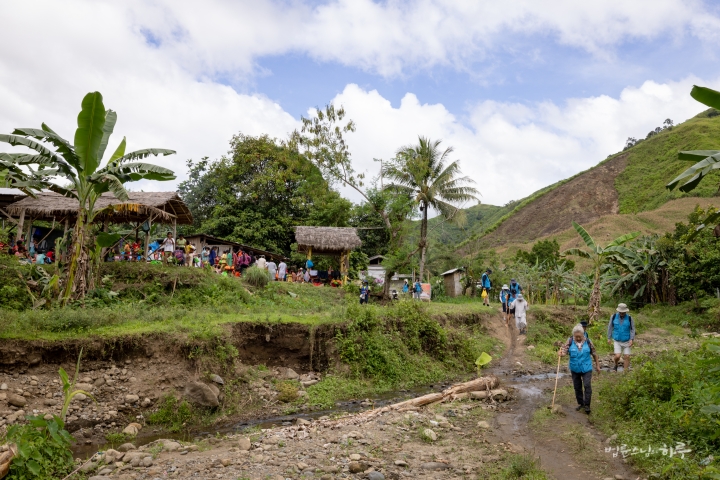
Departing from Pangalaayan Village at 10:10 a.m., Sunim walked for an hour again, crossing mountains and rivers. Having walked the path once at dawn, his steps felt lighter.
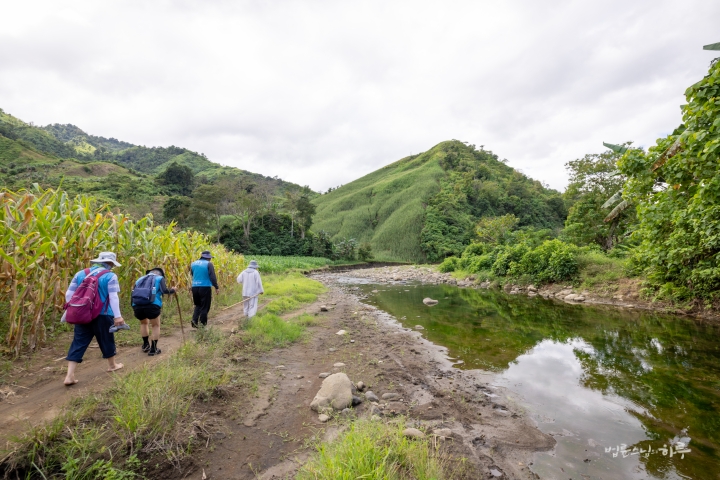
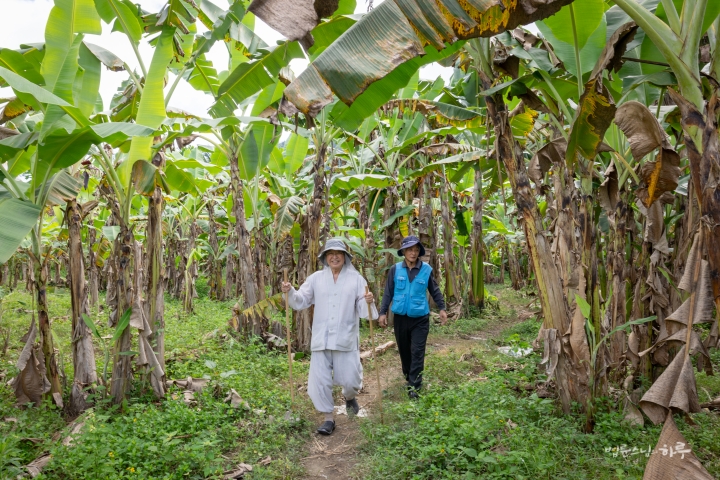
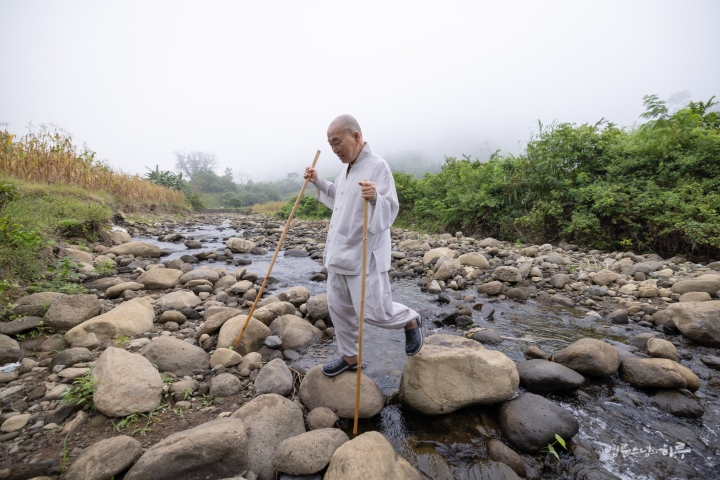
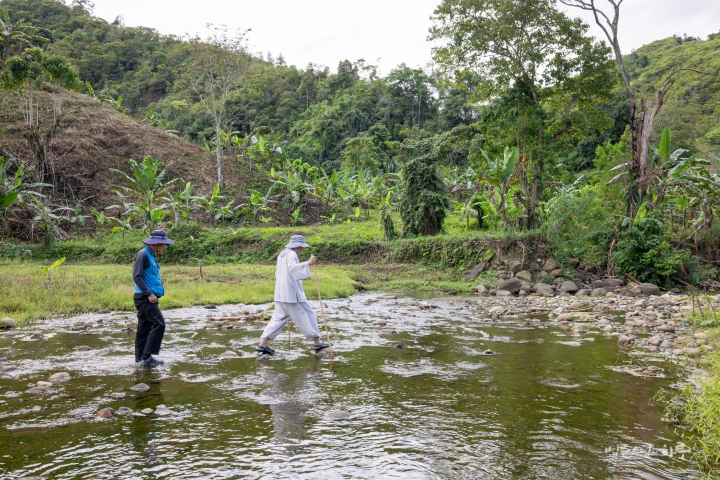
Sunim skillfully crossed the streams by holding a walking stick in both hands and stepping on selected stones to keep his shoes from getting wet.
“This is all thanks to being born in a poor rural village in a past life, which gave me good early education.” (Laughter)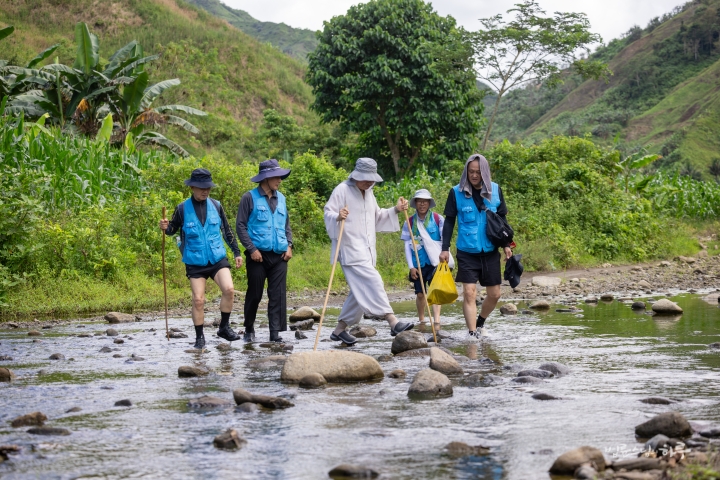
Sunim crossed eight streams without falling into the water once before reaching the large river.
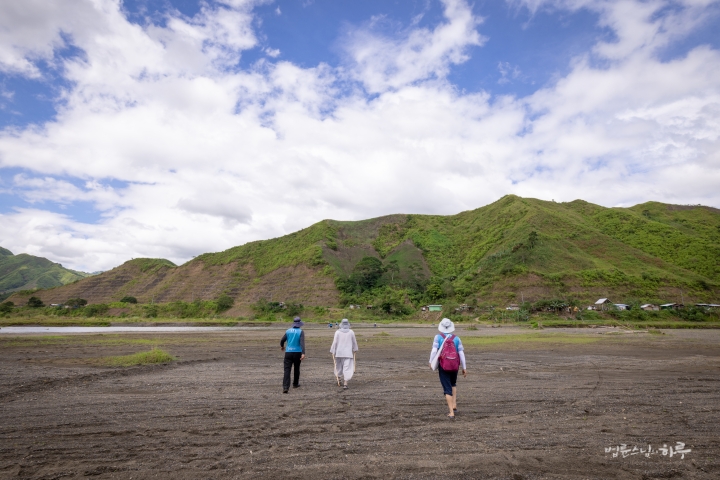
But the villager operating the raft had disappeared, perhaps having gone to eat.
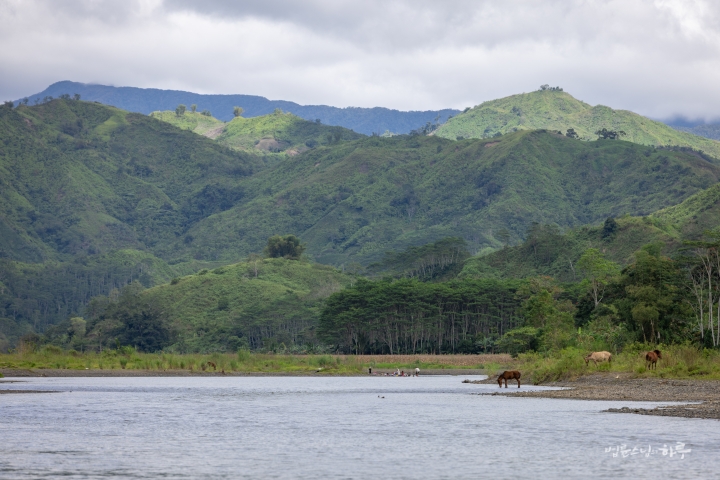
In the end, Sunim rolled his pants up to his waist and crossed the river without hesitation, cutting through the current.
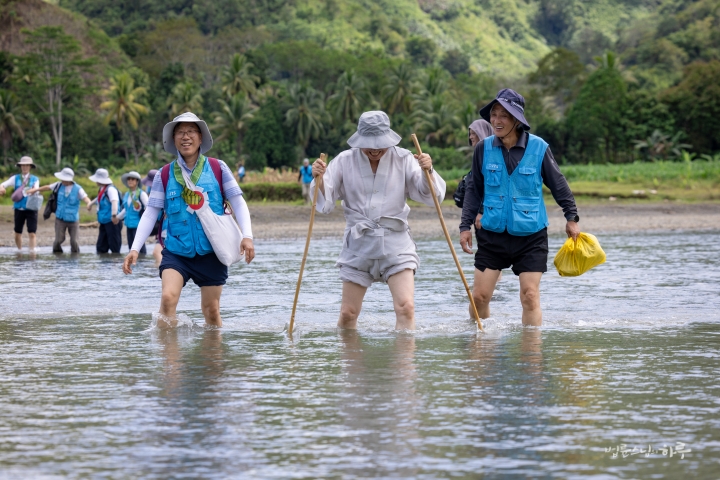
Following Sunim, the JTS delegation also crossed the river leisurely without taking the raft. When the current got strong, they held hands with the person next to them to keep their balance.
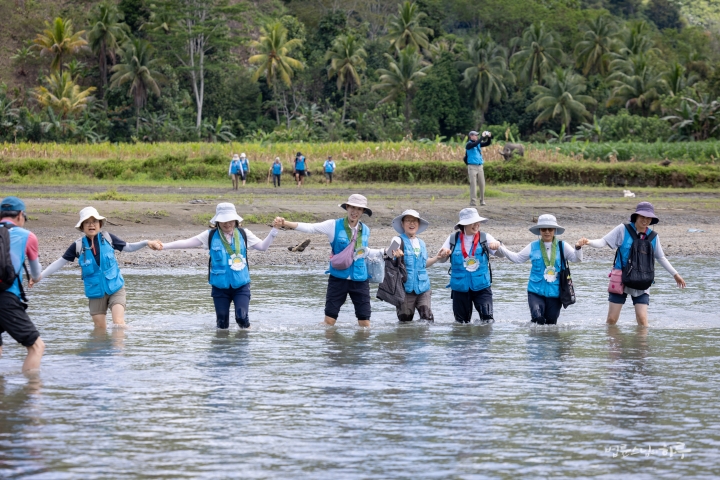
“We made it!”
Choi Mal-soon Bosal, 82 years old, who had safely crossed the river, shouted loudly.
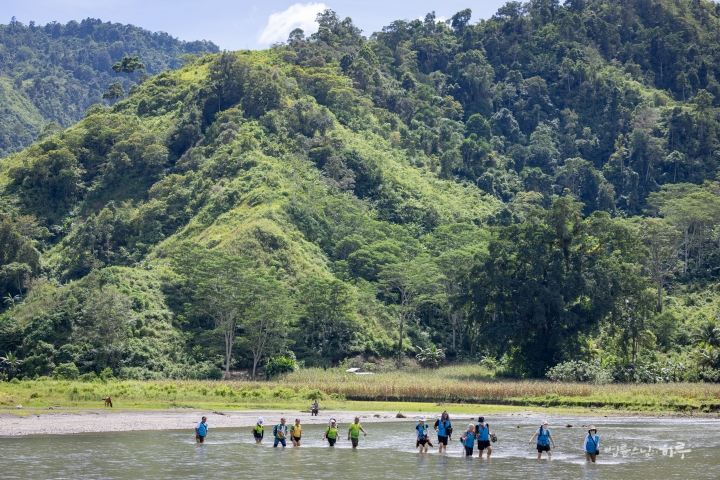
Once everyone had crossed the river, it was 11 a.m. Everyone got back on the bus and headed to the next inauguration site. After about an hour and a half on paved roads, an unpaved road appeared. From here, the bus could go no further.
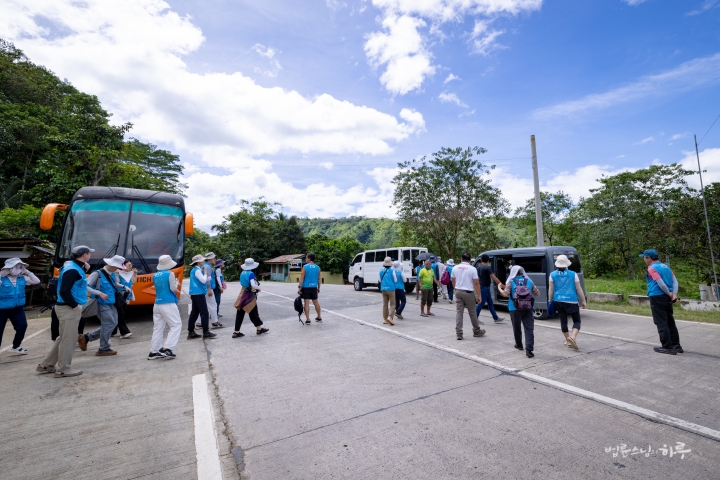
Everyone got off the bus and transferred to trucks and four-wheel-drive vehicles. As the bumpy road continued endlessly, former Representative Lee Won-ju said with a smile:
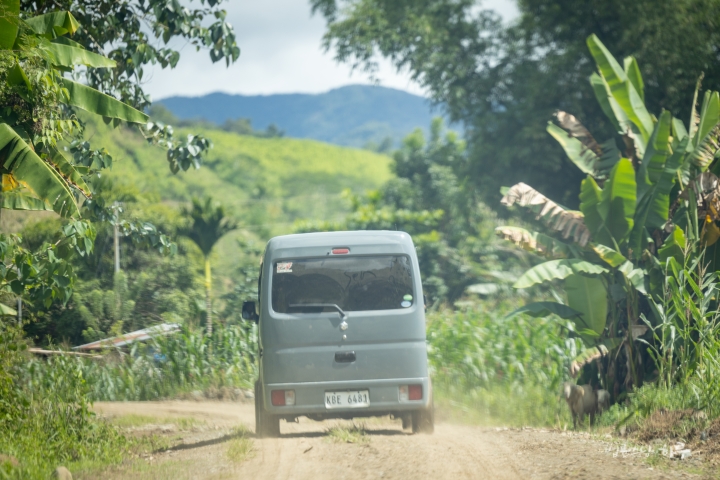
“I’m just sitting here, but my food is digesting on its own.”
In the distance, a newly built school appeared on a low hill. At noon, with the sun beating down, the entire JTS delegation arrived at Luhayalan Elementary School.
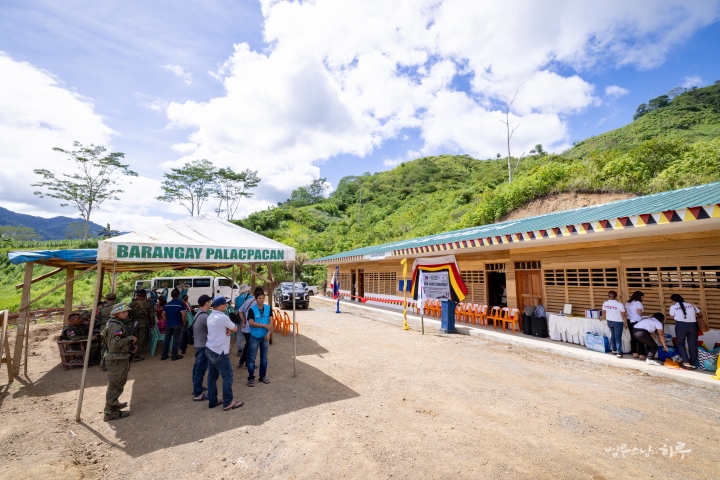
Teachers and Department of Education officials were busily preparing for the event, hanging banners and setting up speakers. Sunim walked around and surveyed the entire school.
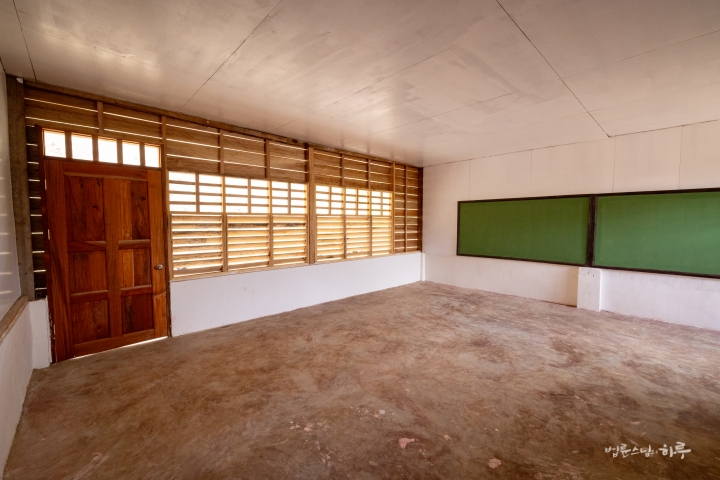
A flat concrete floor had been made, and then neat wooden classrooms were built on top of it. Restrooms were also neatly built next to the classrooms. Since teachers cannot commute in remote mountain villages, teacher housing was built on one side as well.
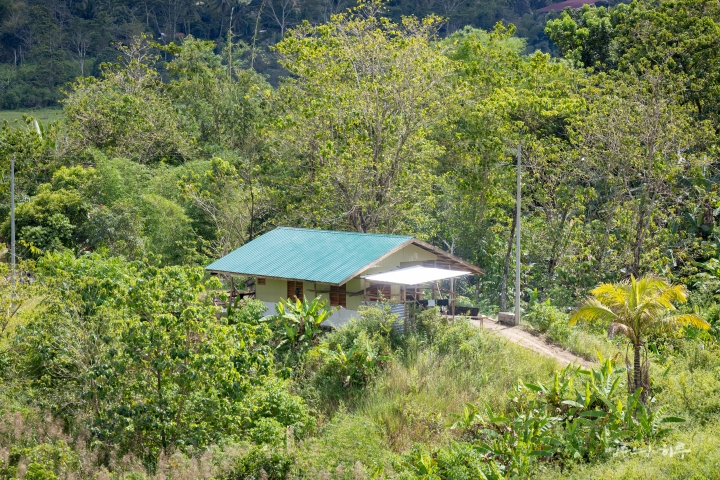
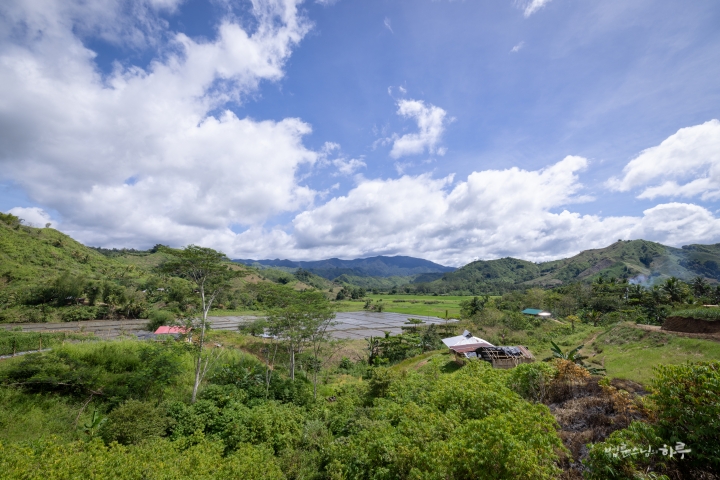
A wide field spread out in front of the school. Looking around, Sunim asked Jesse, who was in charge of building this school:
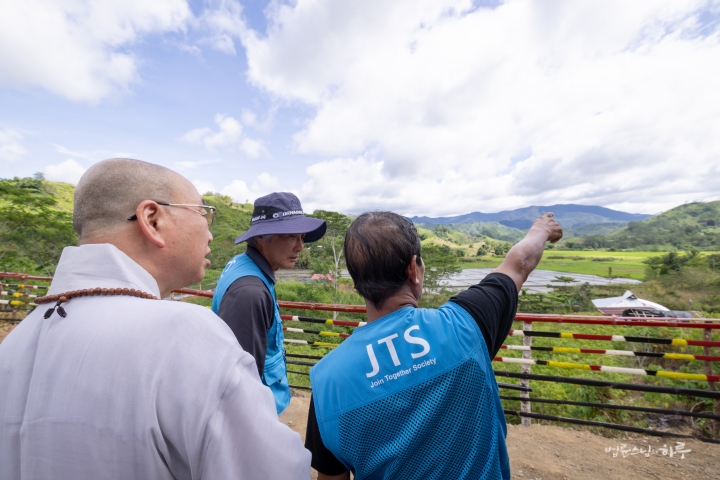
Jesse replied:
“This is an area where the NPA (New People’s Army) operates, so being a conflict zone is one reason. Additionally, as a few wealthy landowners gradually took over the wide fields, the kind-hearted residents didn’t resist and were pushed into the mountains.”
Because traces of conflict still remain, soldiers were standing guard around the school.
After waiting for all the Department of Education and municipal officials to arrive, the Luhayalan Elementary School inauguration ceremony began at 1 p.m.
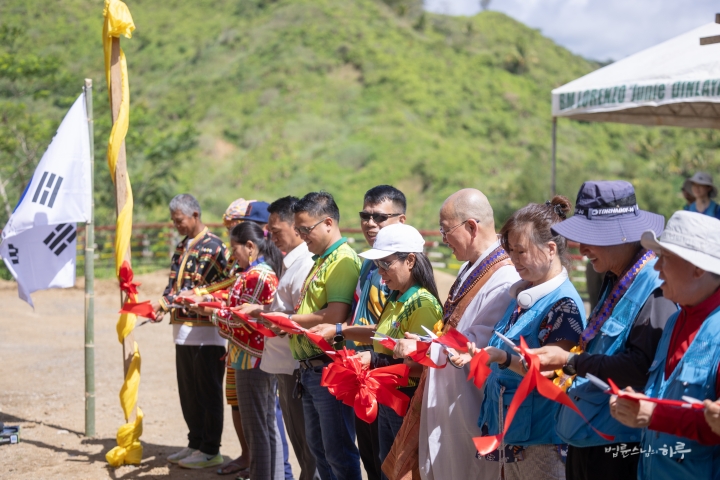
First, a ribbon-cutting ceremony was held to commemorate the completion. With Sunim at the center, the Korean delegation stood on one side and Department of Education and municipal officials on the other.
“One, two, three!”
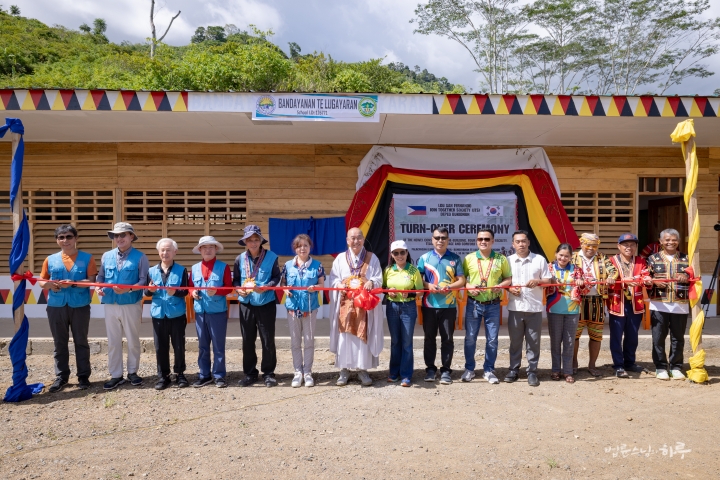
Then everyone moved to the front of the plaque for the unveiling ceremony.
“One, two, three!”
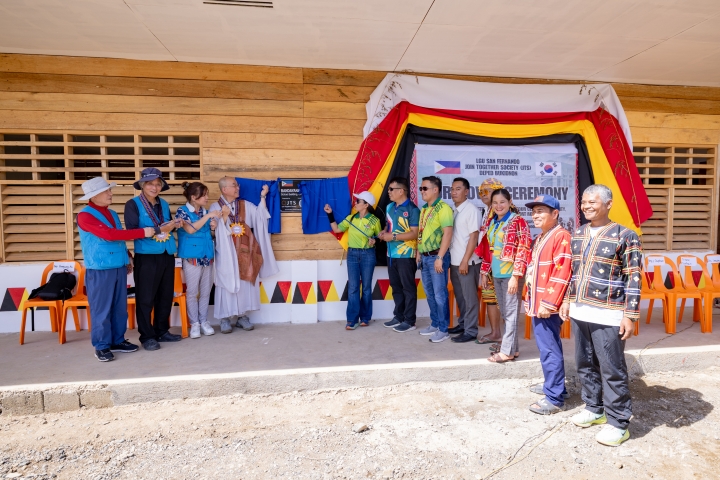
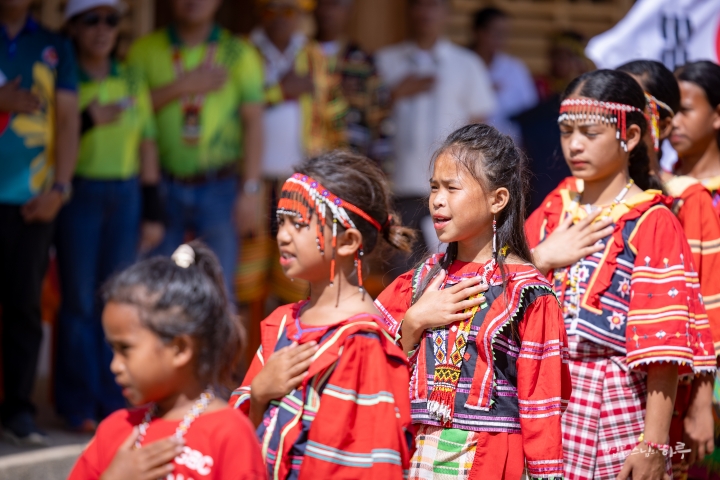
Next, the Philippine National Anthem and Korean National Anthem were sung together.
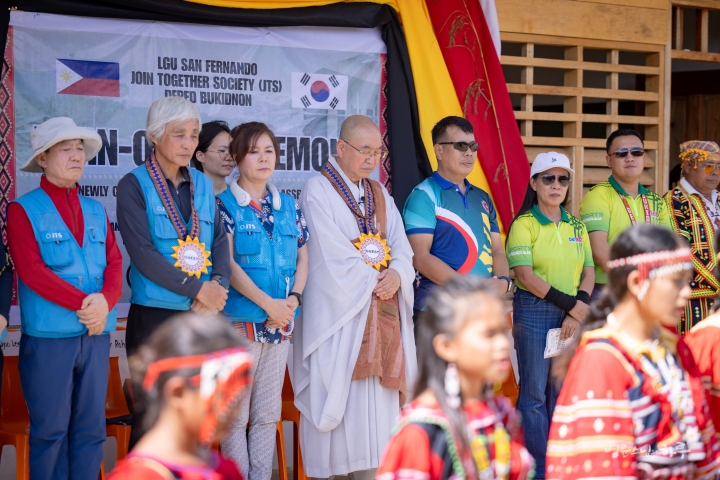
The barangay captain gave welcoming remarks to the JTS delegation, followed by a progress report from Representative Noh Jae-guk of JTS Philippines.
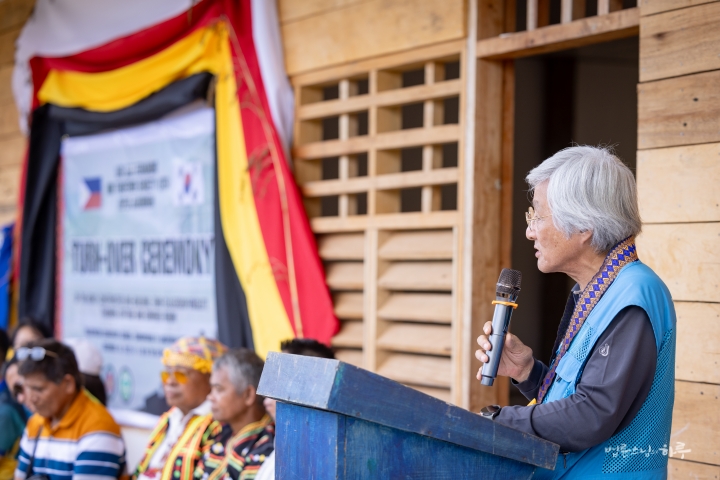
“In September 2024, when JTS first visited Luhayalan, the children, teachers, local councilors, sitio leaders, and parent representatives were already waiting. At that time, the children were taking classes in temporary spaces—the sitio hall, a warehouse, front yards of houses, and in front of the church. The villagers showed strong unity and immediately promised to help with the school construction. It was clearly evident how desperately this village needed a school.
Thanks to the approval from the Department of Education (DepEd) and manpower support from San Fernando Municipality, construction could begin after the groundbreaking ceremony in February 2025. The municipality also deployed heavy equipment to open a new road leading to the school site. However, this year had unusually heavy rains and frequent typhoons, and there were incidents where trucks carrying materials got stuck while crossing rivers. Nevertheless, what made this project possible was the unity of the community. Teachers, kagawad, datu, and sitio leaders effectively organized the residents, and teachers checked on material deliveries even late at night. Elders, young people, and motorcycle drivers all participated in carrying sand, gravel, cement, and rebar to the school site. Thanks to everyone’s dedication, one building containing four classrooms, restrooms, and teacher housing was completed. San Fernando Municipality provided technical advisory services, manpower, and heavy equipment, and JTS provided construction materials, transportation costs, and meal expenses. The Department of Education (DepEd) plans to assign additional teachers through close cooperation.”
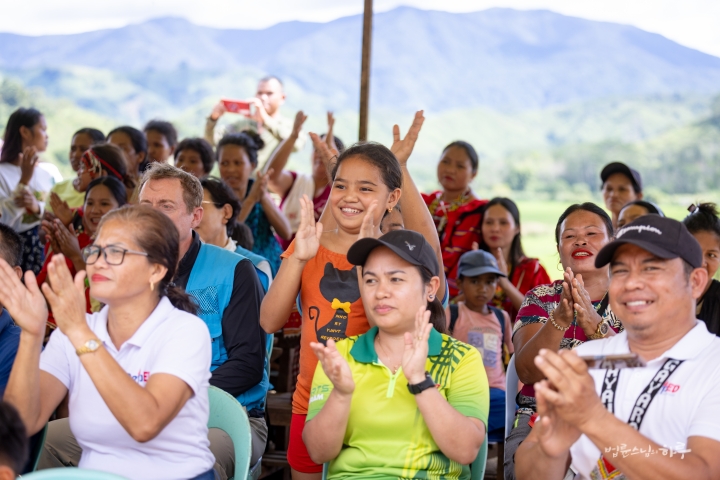
When Representative Noh Jae-guk expressed gratitude to all the teachers and local residents of Luhayalan Village, the children also clapped loudly with joy.
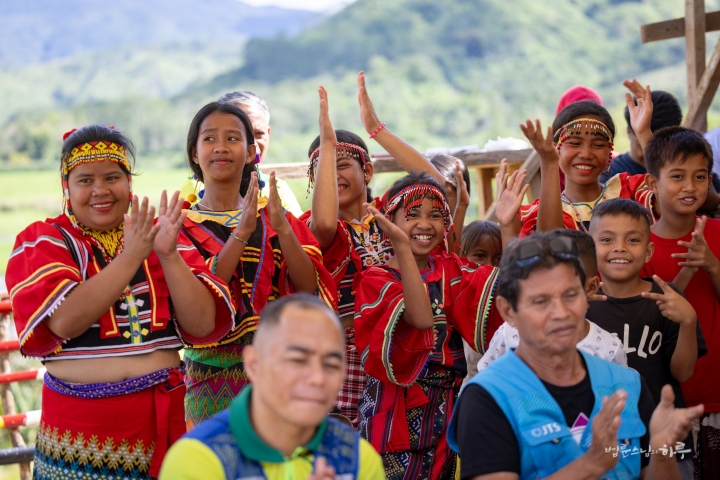
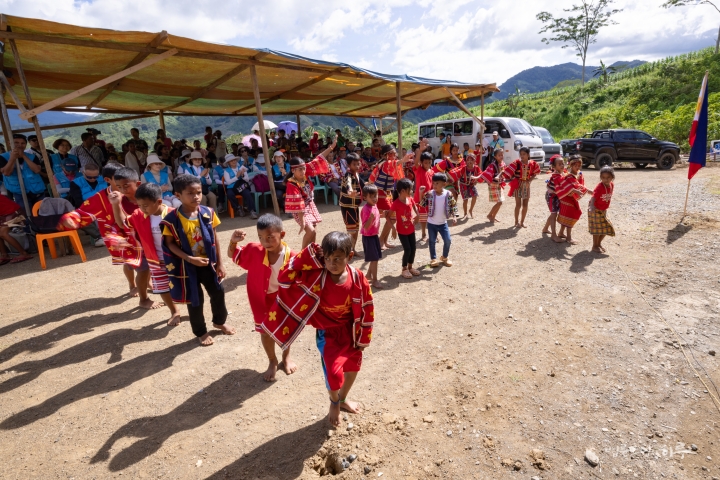
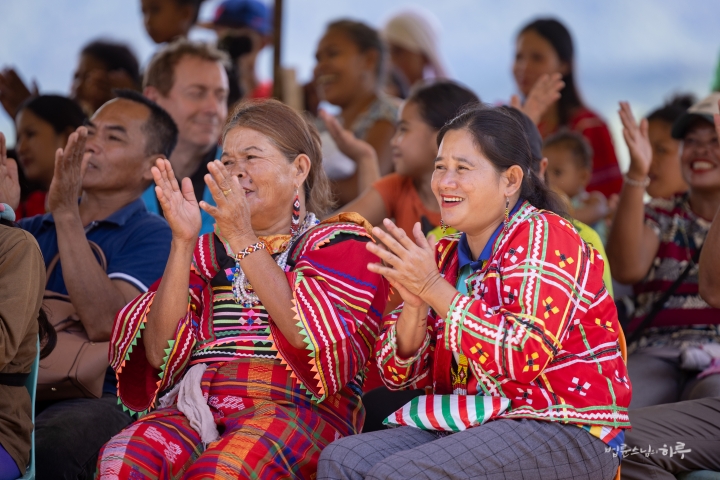
This was followed by celebratory performances by the students. Luhayalan Village also has well-preserved traditional culture. All the students wore traditional clothing and performed traditional dances.
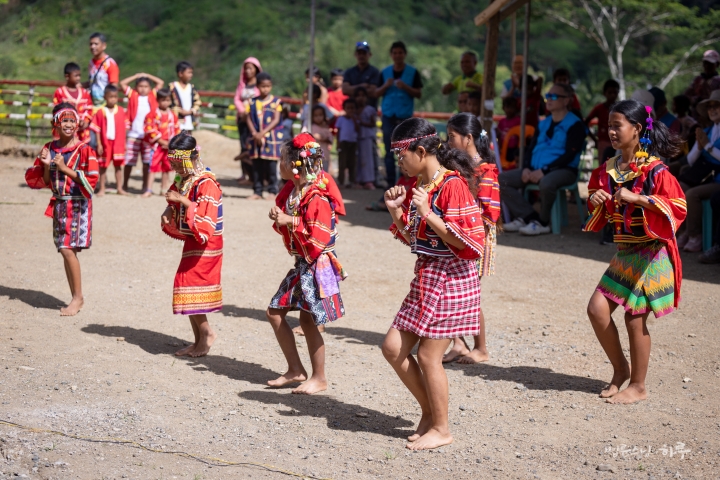
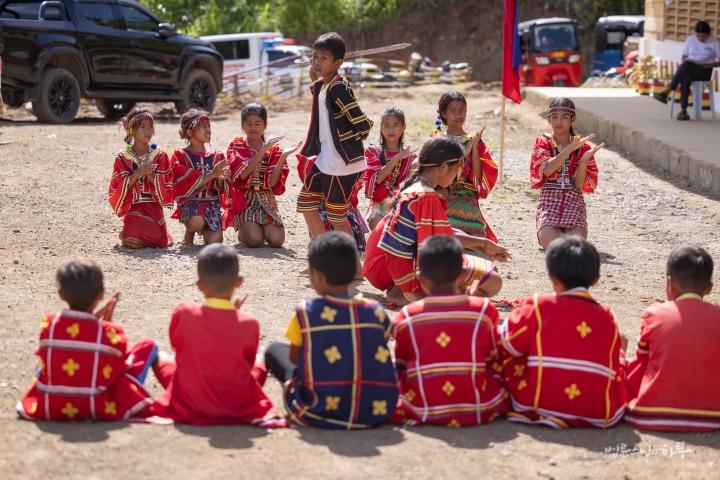
The entire JTS delegation clapped loudly and cheered at the students’ dancing.
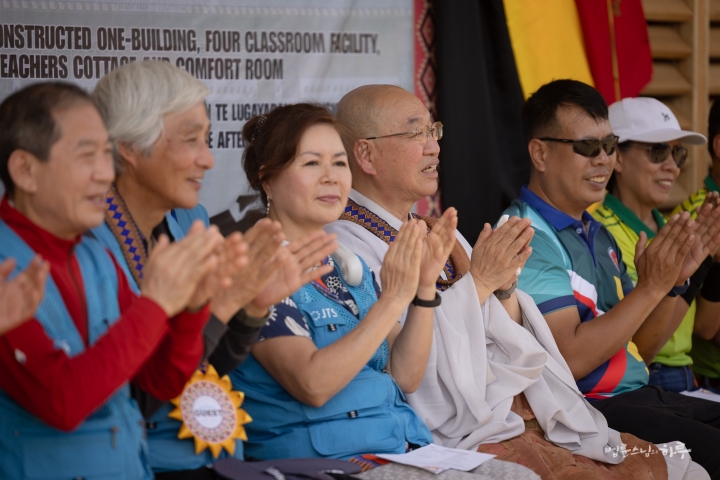
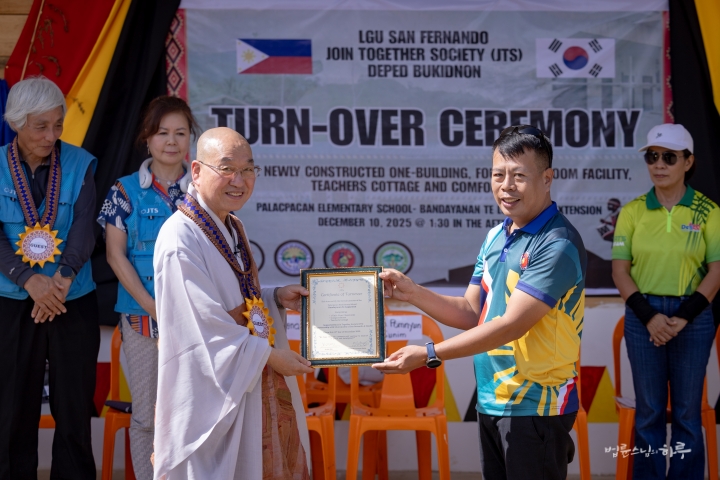
Next was the presentation of certificates, keys, and a clock. Sunim presented the certificate to the mayor, JTS Representative Park Gina presented the key to the Bukidnon Provincial Vice Schools Superintendent, and Representative Noh Jae-guk presented a clock to the principal.
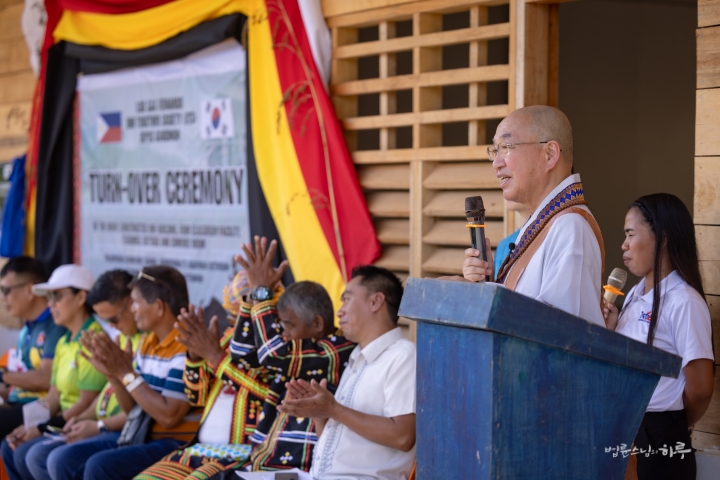
Sunim then came forward to give the congratulatory address. He first expressed gratitude to those who worked hard to complete the school, then shared some messages with the villagers and students.
“YES!”
So That Not a Single Child Is Left Behind
“JTS considers helping children receive the education they need at the right time as its most important mission. Through education, we can learn the experiences and knowledge that humanity has accumulated over 10,000 years. When we inherit the legacy of human history through learning, we live not just as biological humans but as human beings of humanity. However, the reality is that children living in remote areas with poor transportation find it difficult to even get educational opportunities. That’s why JTS’s main goal is to ensure that not a single child is left behind in education.”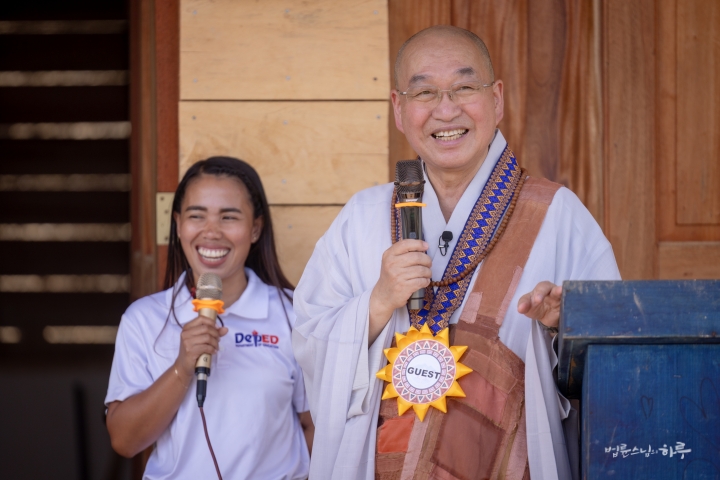
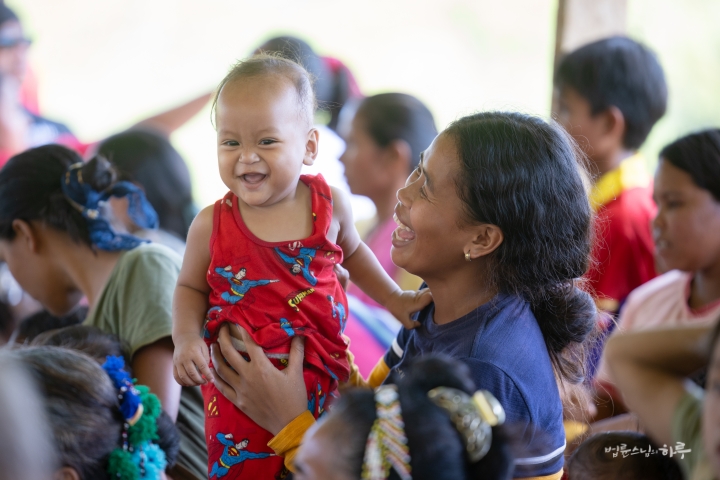
A Place Where Tradition and Learning Grow Together
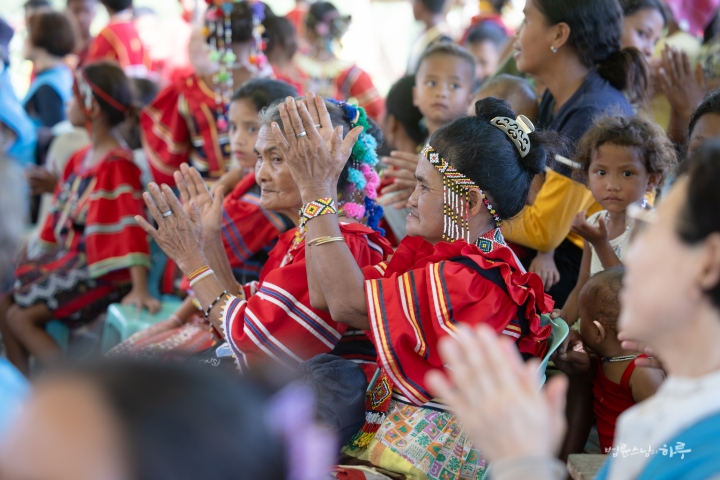
“What the parents must do now is to consistently send the children to school. No matter how busy you are with household work, please make sure to send the children to school. Also, I hope the teachers and villagers will work together to help the children preserve their tribe’s traditional culture—the dances, songs, and clothing—so they don’t forget their unique heritage. The advantage of formal school education is that students can receive systematic education. However, in that process, tribal identity, traditional culture, and beliefs can be neglected. I hope you will also pay attention to preventing such side effects.” “I thank everyone who contributed to building Luhayalan Elementary School. And I sincerely congratulate the villagers, students, and teachers on the completion of the school.”After hearing Sunim’s words, all the students and parents cheered loudly and applauded.
After Sunim took his seat, the mayor’s chief of staff came forward to give a speech of thanks.
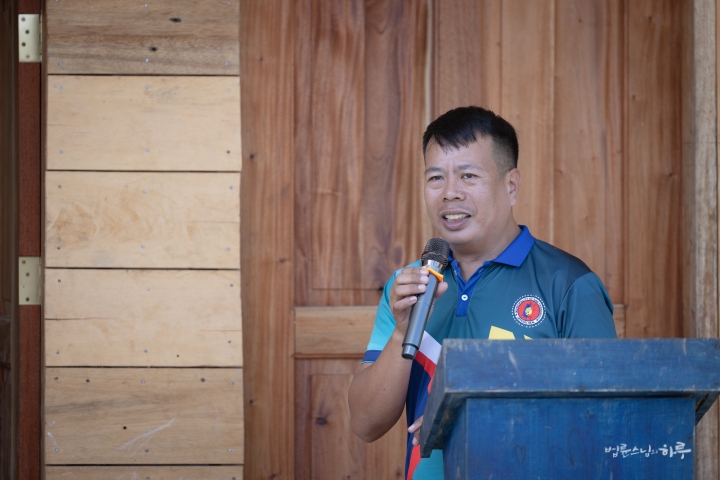
“Thanks to your noble dedication, the suffering of children who had to walk long distances to school has been reduced. Now the children can dream of a brighter future.”
Next, the Bukidnon Provincial Schools Superintendent gave a response speech. The superintendent has been accompanying the JTS delegation throughout all the inauguration ceremonies this time.
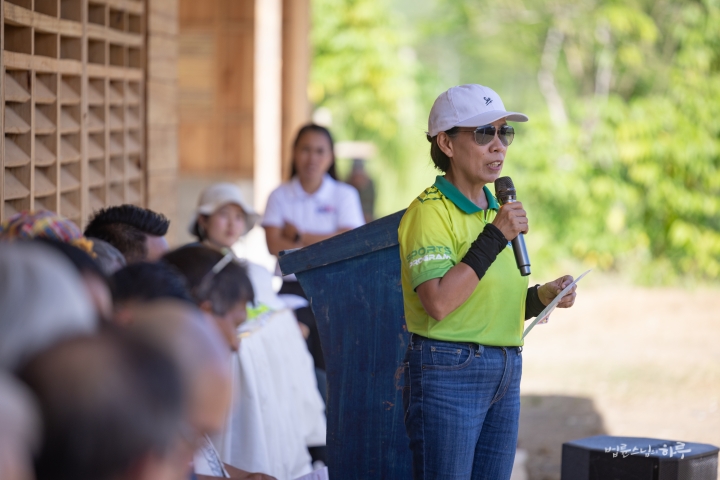
“The road coming here was truly beautiful. This area is beautiful not only in nature but also in people’s hearts. The children, teachers, parents, and the entire local community deeply understand that ‘raising a child is everyone’s responsibility.’ This ‘everyone’ includes all of you from JTS who came all the way to the Philippines, crossing mountains and clouds from far away. I sincerely thank you.
What JTS Built Is Not a Building, but the Future of Children
Venerable Pomnyun Sunim said that because he received education as a child, he can now engage in international activities. I hope the children of Luhayalan will also receive an excellent education at this school and someday freely travel throughout Korea and around the world.
The Department of Education is also working to build more schools in mountainous areas. However, considering the effort of all of you from JTS who came all this way from Korea, our difficulties cannot even compare. Generosity knows no borders. Kindness knows no limits. If we teach children this spirit of generosity and solidarity, they will become greater leaders than us in the future. This school is not just a building—it is the ‘future’ of the children of this region. I deeply thank JTS and everyone who built this beautiful school.”
Next, the Public Schools Division Superintendent gave congratulatory remarks, and the Datu, the tribal chieftain of Luhayalan Village, expressed his joy and gave thanks.
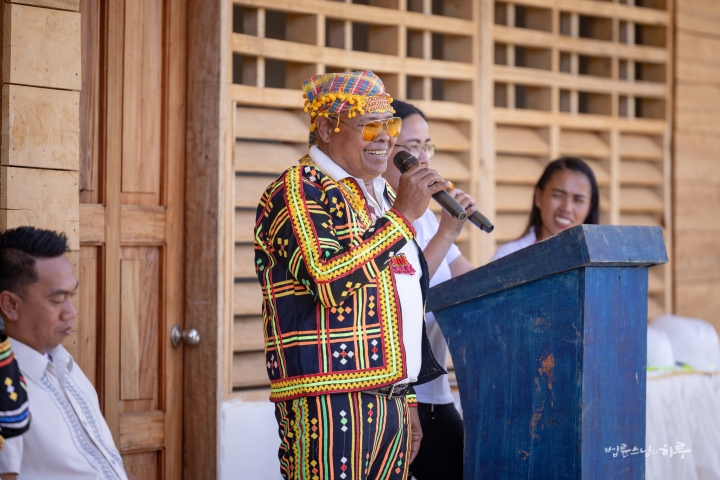
“I sincerely thank JTS for building this school. I have dreamed of having classrooms like this since I was young. Now I have become an elder, but I am so moved that this dream has become reality.”
Finally, the principal gave closing remarks and the inauguration ceremony concluded.
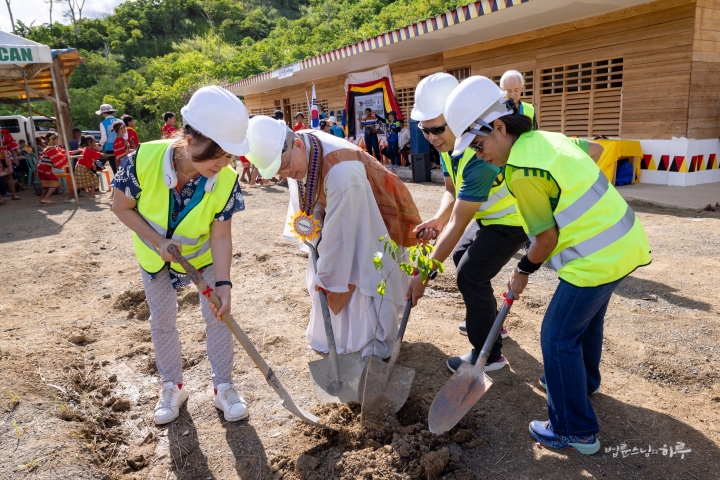
Everyone moved to the school courtyard for a commemorative tree planting. As the tree was planted with shovels, everyone together wished for the children to grow up healthy and strong.
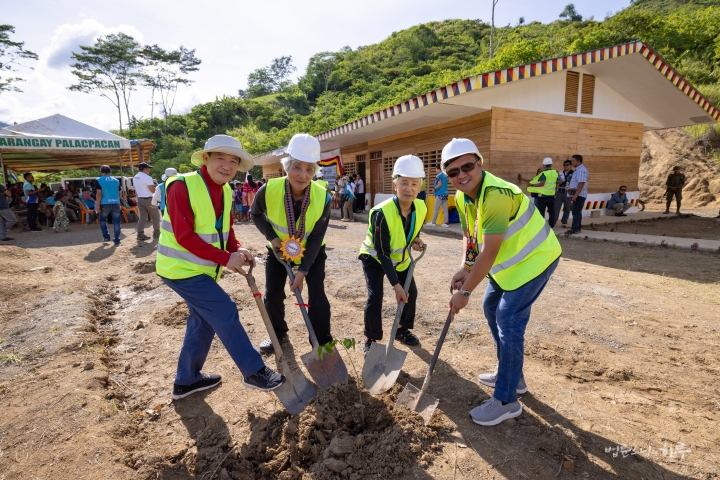
After planting the tree, snacks were distributed to the children.
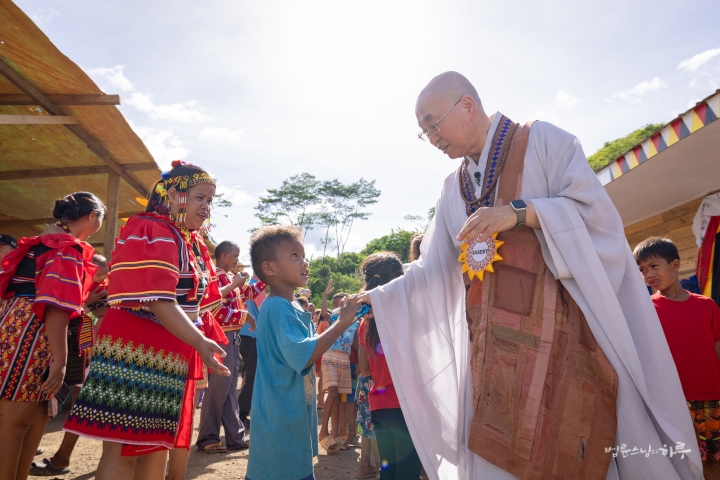
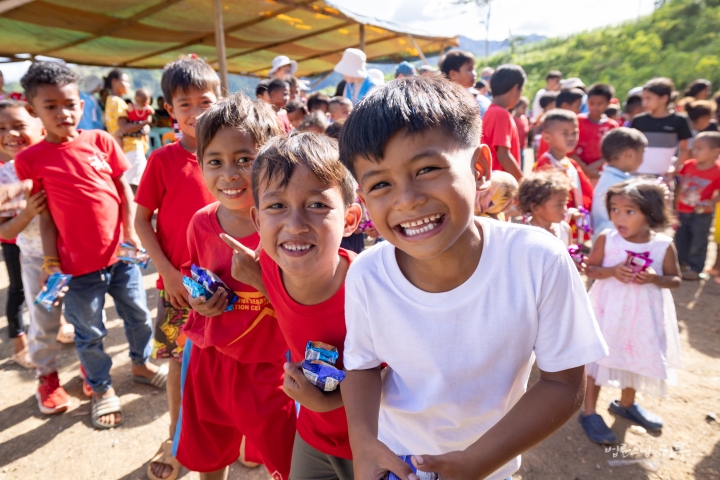
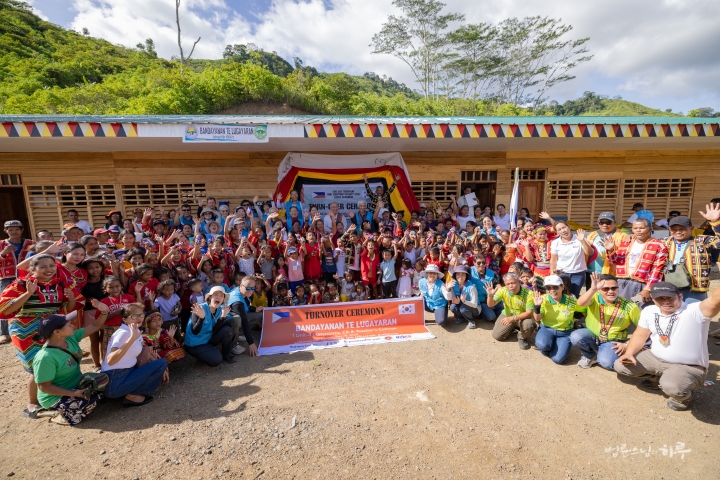
Finally, everyone took a group photo together.
“Thank you so much, JTS! Luhayalan!”
Everyone then moved inside the classroom for refreshments. The villagers had lovingly prepared food. Corn, bananas, sweet potatoes, and cassava that they had grown themselves were served generously.
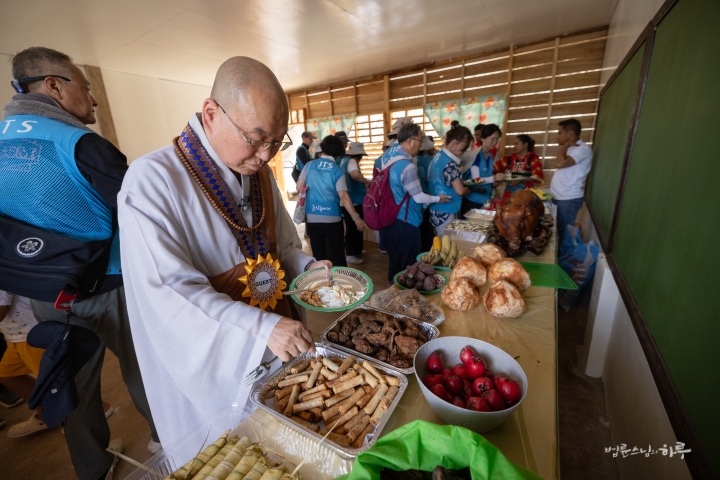
After the meal, Sunim bid farewell to the Bukidnon Provincial Schools Superintendent.
“Thank you for your hard work accompanying us all day today. See you again tomorrow morning.”Departing from Luhayalan School at 3 p.m., the group drove diligently along the unpaved road. In the bumpy vehicle, they shared amusing anecdotes from the early days of school construction.
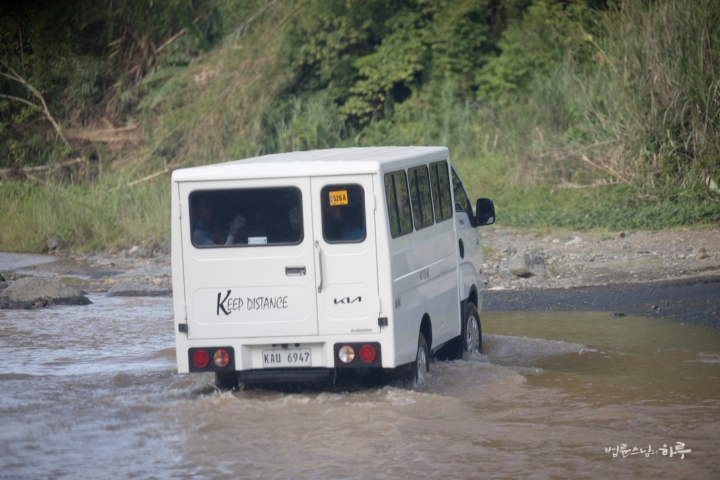
As they reminisced about old memories, a paved road finally appeared. When everyone transferred to the bus, Hyanghun Beopsa announced the next schedule.
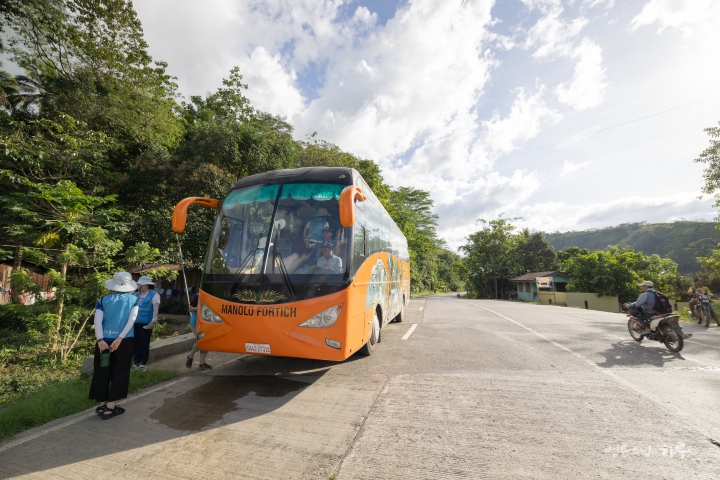
“From now, after an hour and a half of travel, we will arrive at our accommodation. Please rest comfortably until then.”
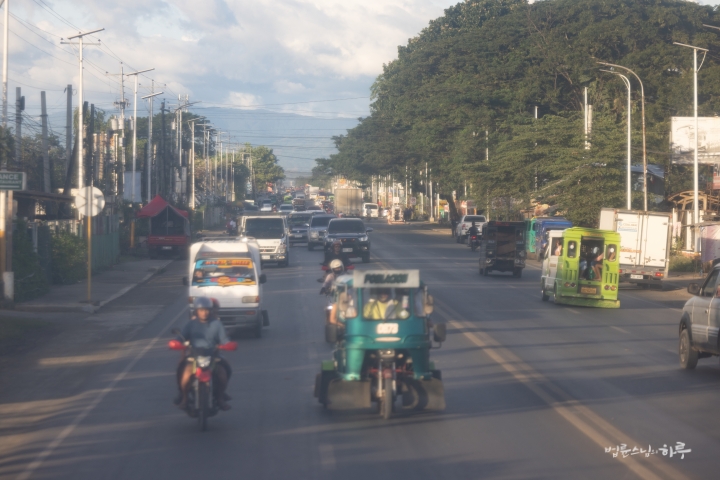
Sunim arrived at the Valencia accommodation at 5 p.m. and had personal time. After changing out of his sweat-soaked clothes, Sunim moved to a restaurant in town for dinner at 6 p.m. During the meal, participants shared their impressions of today’s inauguration ceremonies.
After dinner, Sunim returned to the accommodation at 7:30 p.m., concluding the day’s schedule. Since there was an evening Dharma service today, everyone participated online from their rooms. Sunim communicated with Korea to handle various matters, proofread manuscripts, and then went to bed.
Tomorrow is the fourth day in Mindanao. In the morning, there will be an inauguration ceremony for Degepdep School, built in Don Carlos Municipality which suffered severe damage from last year’s typhoon, and in the afternoon, there will be an inauguration ceremony for the Special Education (SPED) school for children with disabilities built at Kadinginan Central Elementary School.