Compassion That Crossed Mountains and Rivers, A Classroom of Hope Opens for Children
Dec 9, 2025. Day 2 in Mindanao, Philippines, Dumasilag Completion Ceremony in Quezon, Dangcagan SPED Completion Ceremony
Hello. Today marks the second day of visiting Mindanao, Philippines. For the next five days, Sunim will stay in Mindanao, Philippines, touring the schools built by JTS over the past year and holding completion ceremonies. This year, JTS has built 5 Special Education Centers (SPED Centers) and 10 Indigenous People’s Schools (IP Schools). Today, completion ceremonies were held for Dumasilag School in an indigenous village in Quezon Municipality and the Special Education School (SPED) in Dangcagan.
Sunim and the JTS delegation departed Valencia at 5:40 AM and headed to Dumasilag village where the completion ceremony would be held.
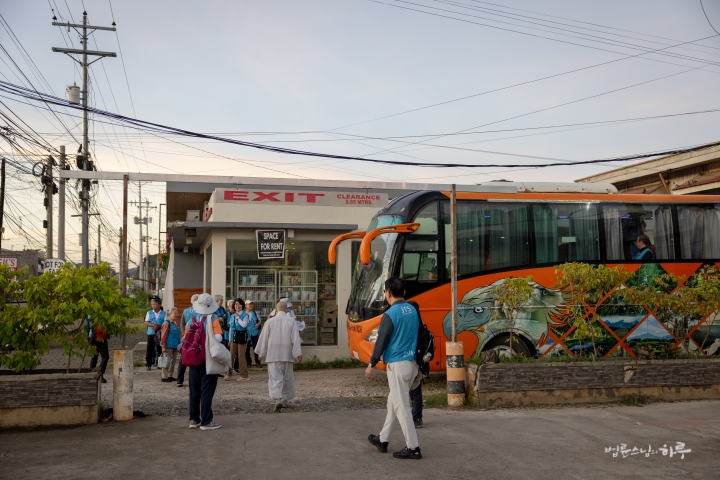
As the bus departed, Dharma Teacher Hyanghoon, the director of JTS Philippines, introduced Dumasilag School where today’s completion ceremony would take place.
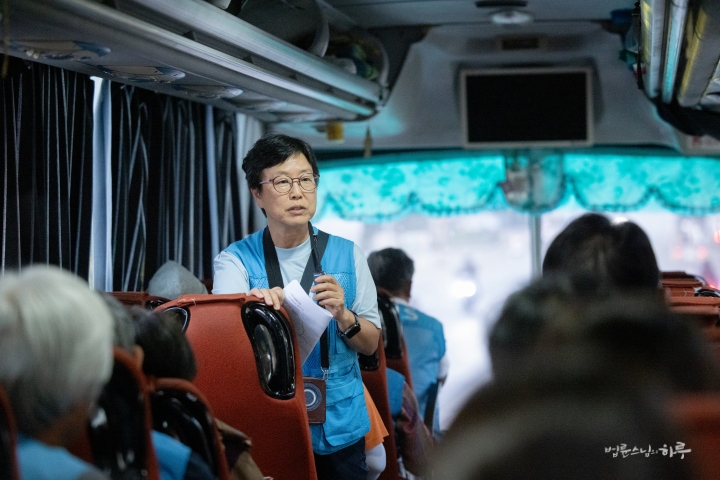
“The place where we’re holding the completion ceremony this morning is Dumasilag, an indigenous village in Quezon. Building schools in indigenous villages is very difficult because the roads are treacherous. We made five survey trips to Dumasilag to build the school, and the roads were so bad that it was actually easier to walk than ride a motorcycle. However, a new road was built during the school construction. When rain caused the road to be cut off and materials couldn’t be transported, Quezon Municipality reconstructed the road for us. Thanks to multiple road construction efforts, vehicles can now reach the school. However, there were days when trucks carrying materials got stuck in the muddy road for five days, causing significant losses for the material suppliers. But with great effort from Quezon Municipality, we are finally holding the completion ceremony today.”
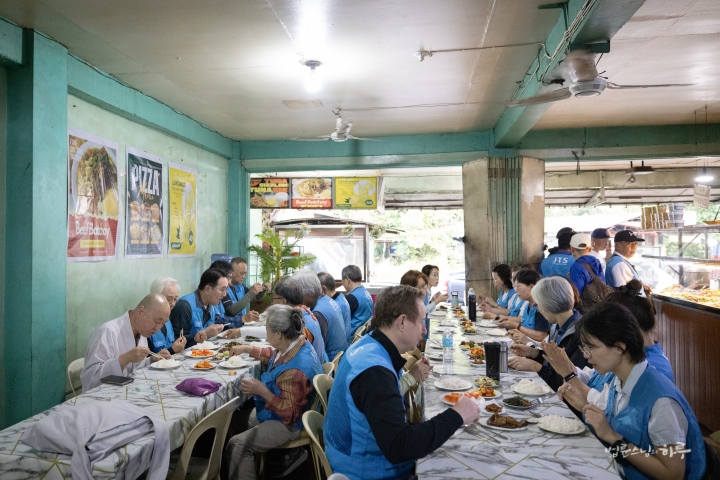
After about 30 minutes on the bus, breakfast was had at a small restaurant. After a quick meal, everyone boarded the bus again and continued the journey.
During the journey, Dharma Teacher Hyanghoon provided additional explanation about this school.
“Dumasilag village has not received educational benefits until now because it was a stronghold of the NPA (New People’s Army). Recently, a school was built through cooperation between JTS and Quezon Municipality.”
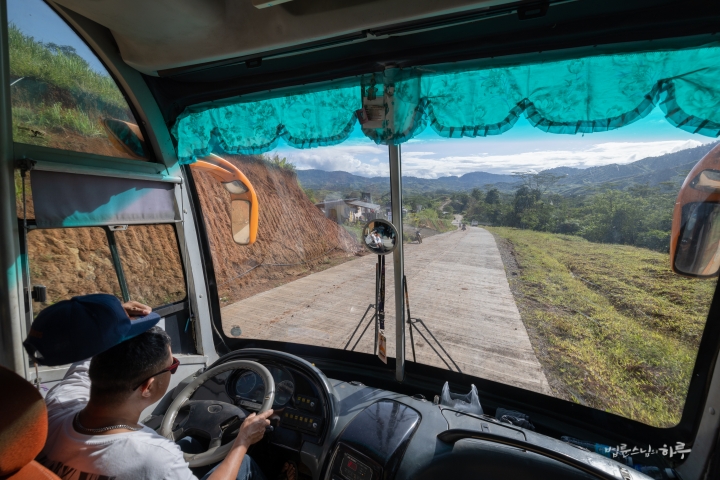
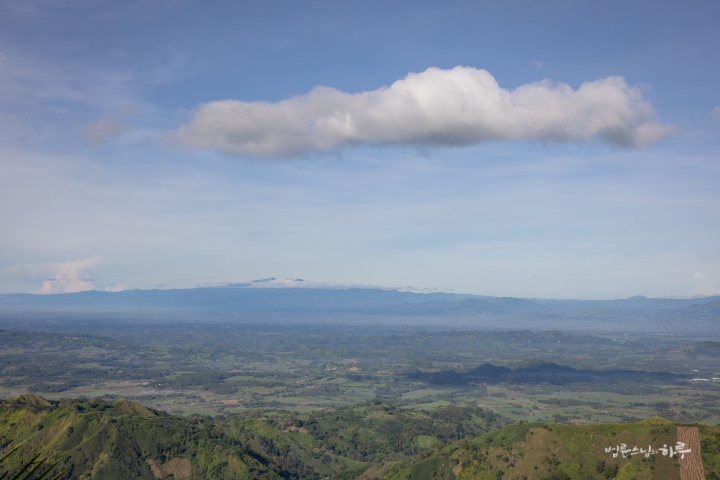
The bus continued climbing the winding mountain road. When nearly reaching the summit, the bus stopped and everyone took a moment to look around. The entire view of Quezon Municipality could be seen below the mountain.
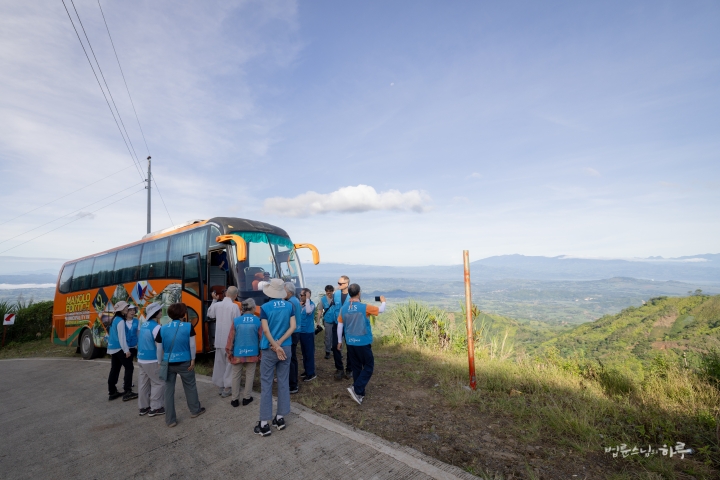
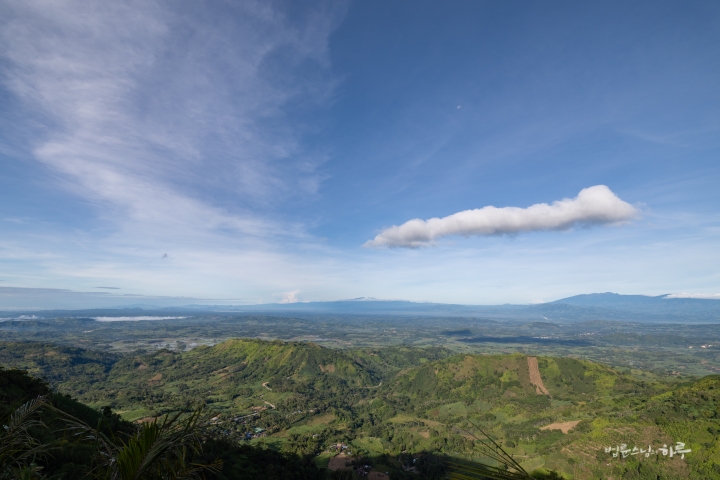
Sunim took photos of the landscape while complimenting the beautiful scenery.
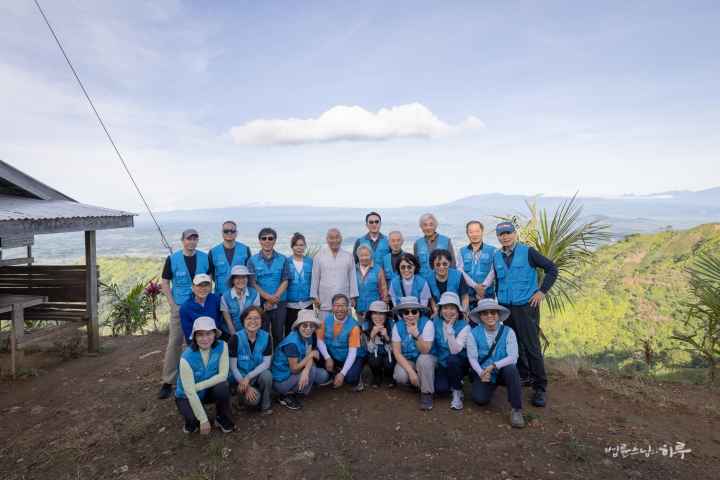
“Come, gather around. Let’s take a photo before we go.”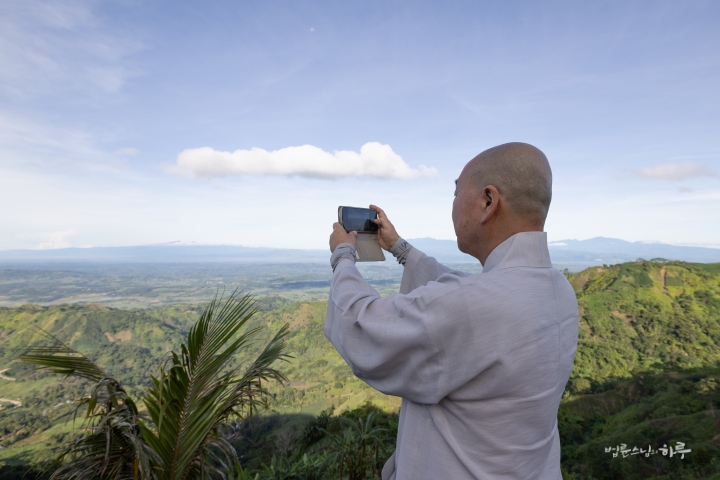
After taking a photo with the beautiful view as backdrop, everyone boarded the bus again.
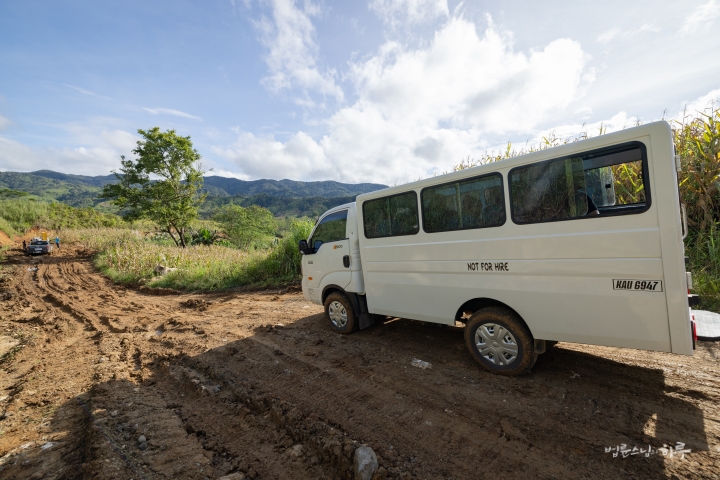
About 1 hour and 20 minutes after starting the bus journey, an unpaved road was finally encountered. Since buses cannot travel on this road from here, everyone got off the bus and transferred to trucks and vans.
Sunim, who had been experiencing severe shoulder and arm pain for several days, took the passenger seat, while the others squeezed into the back of the truck.
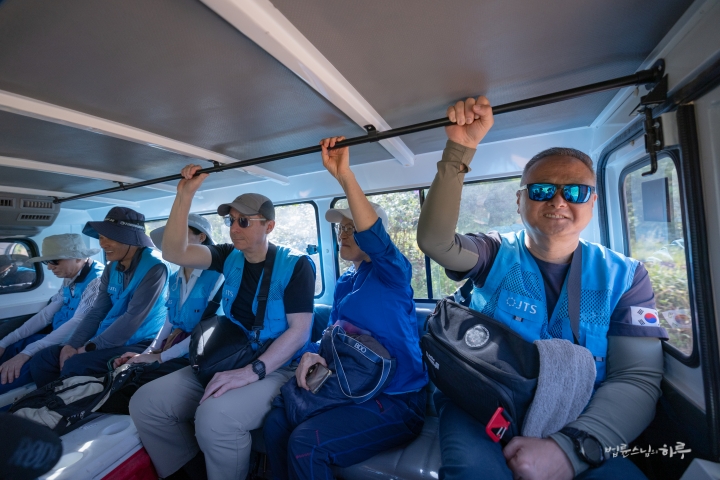
Writer Kim Hong-shin, who had climbed onto the truck, said with a smile.
“Sunim must be quite ill. Normally, he would have told me to take the passenger seat and he would have ridden in the back.”
Everyone boarded the bumpy truck while worrying about Sunim’s health.
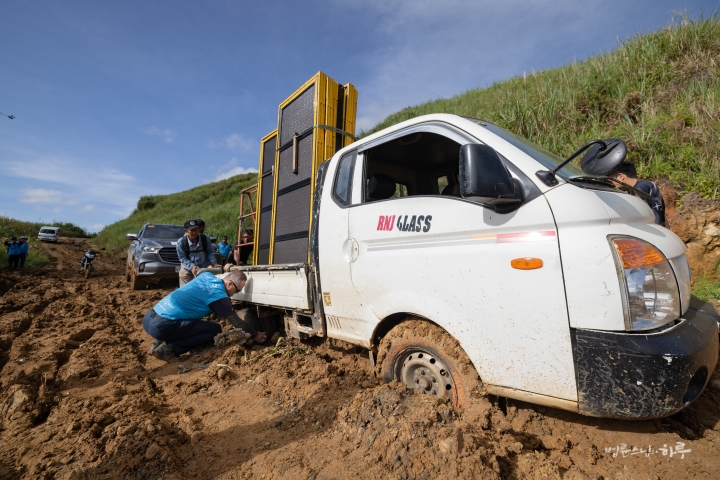
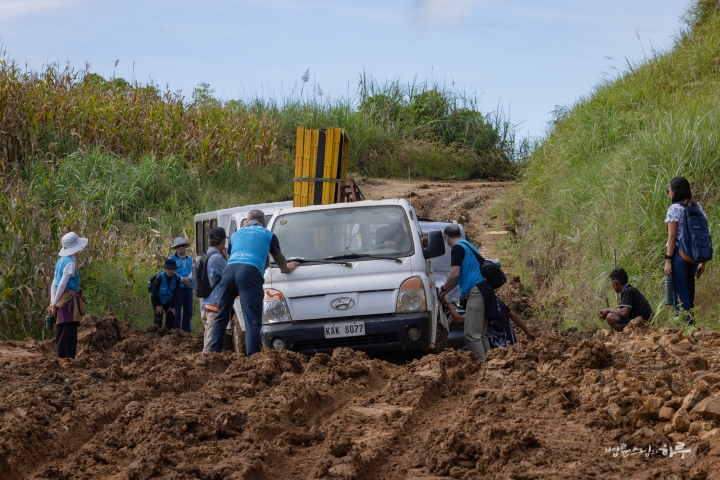
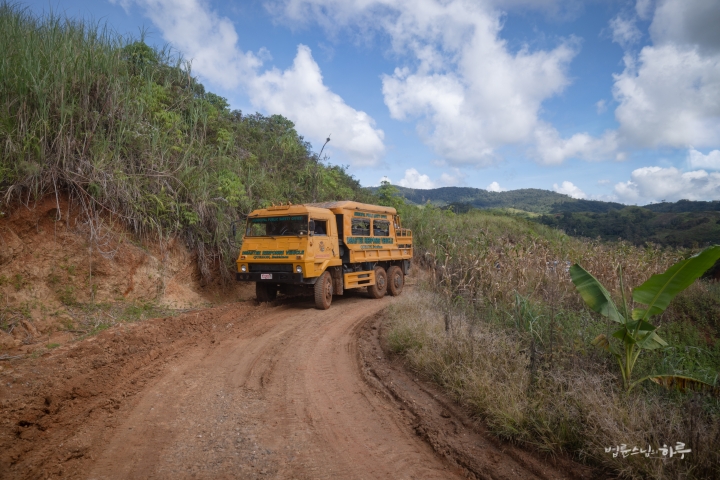
As expected, the road was extremely poor. Although a road had been made for vehicles to pass, muddy sections frequently appeared along the way.
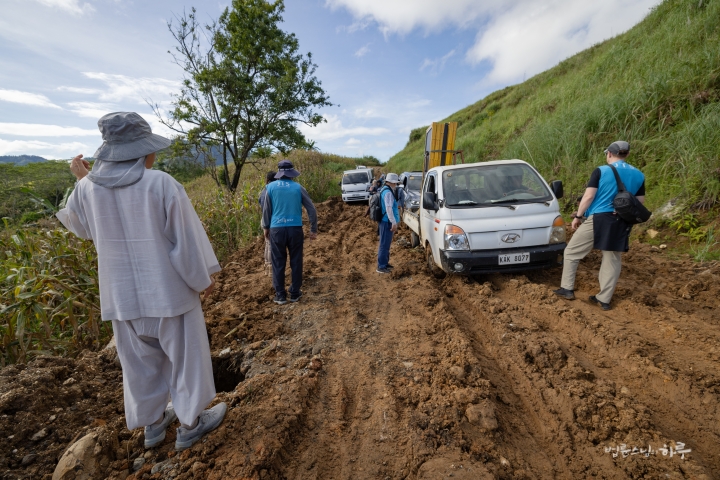
After safely passing through several muddy sections, the vehicle carrying materials ahead finally got completely stuck in the mud. Everyone got out and tried their best to push the vehicle, placed stones under the wheels, and tried pulling it with ropes tied to another vehicle, but to no avail.
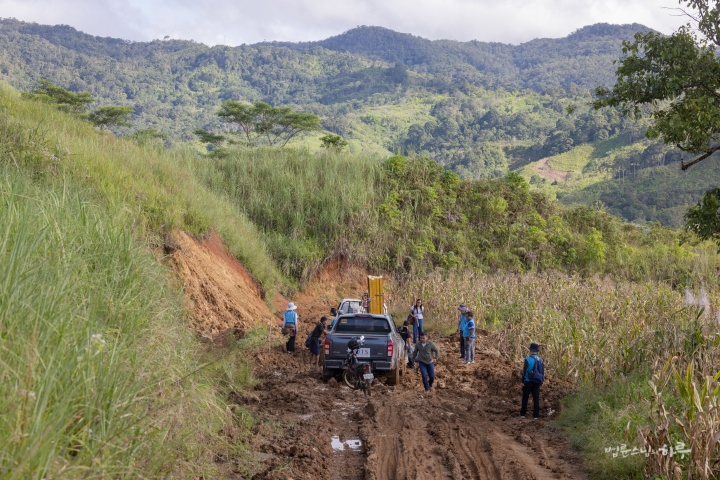
Sunim carefully observed the situation and asked the JTS volunteers.
“It takes about 30 minutes on foot.”
“Then let’s all walk.”As Sunim took the lead and started walking, everyone followed behind. After walking along the mountain path for quite a while, a neatly built school could be seen in the distance.
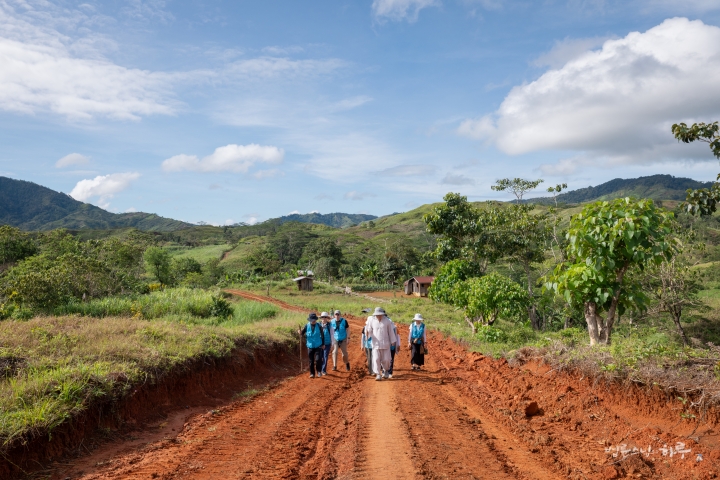
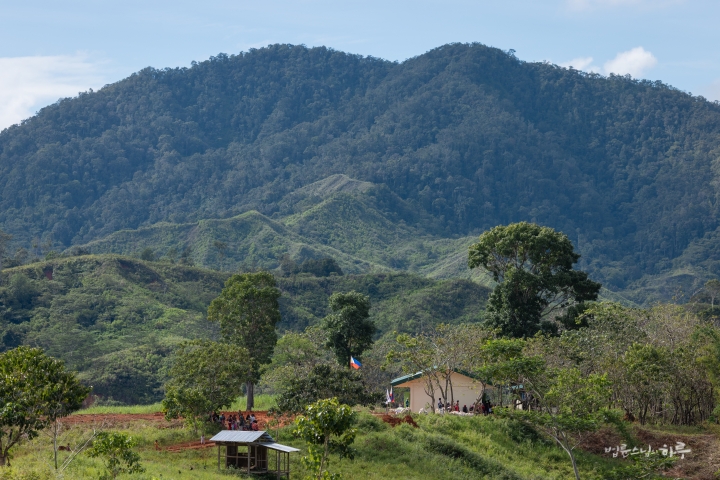
After walking the mountain path for about 30 minutes, the group arrived at Dumasilag School at 9 AM. When Sunim arrived at the school, village residents and students greeted him warmly.
“Maayong buntag!”
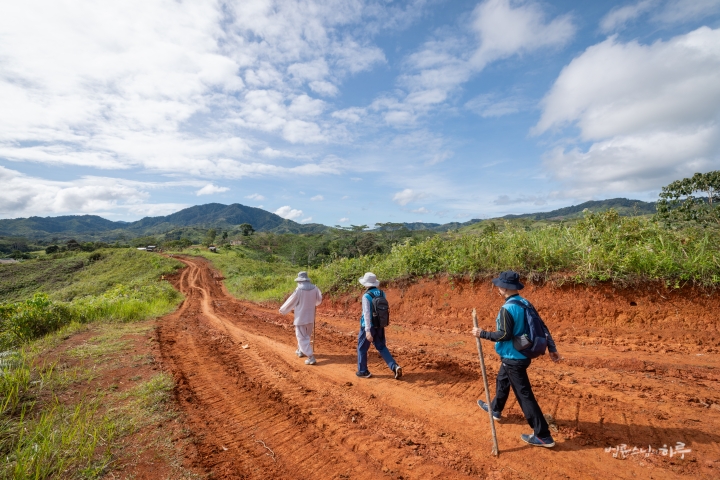
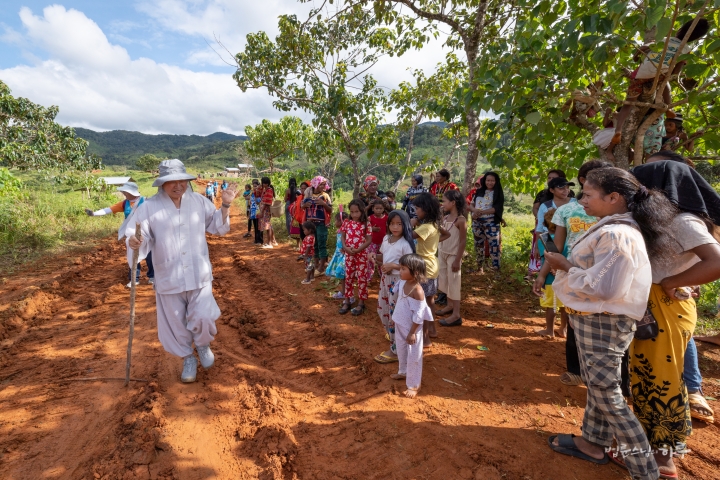
Sunim wiped the sweat from his forehead and then took a tour around the newly built school.
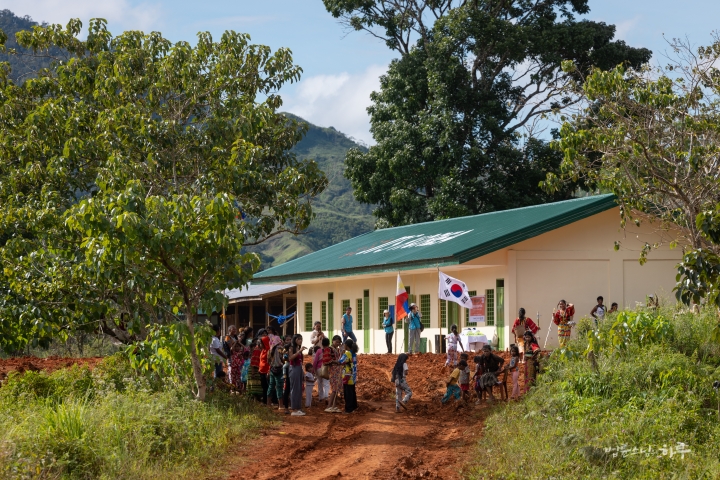
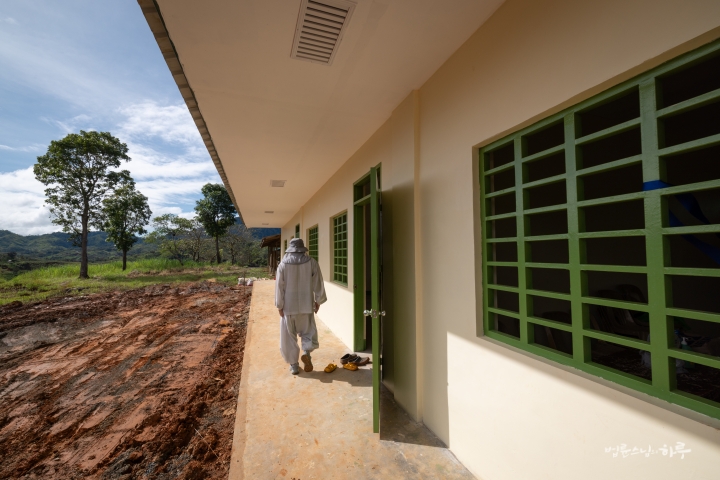
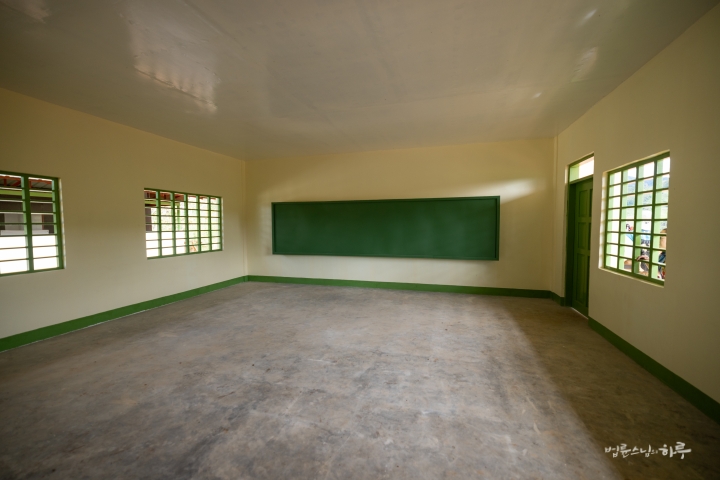
Four classrooms, toilets, and teacher quarters were all neatly and well constructed. Children were playing excitedly around the newly built school.
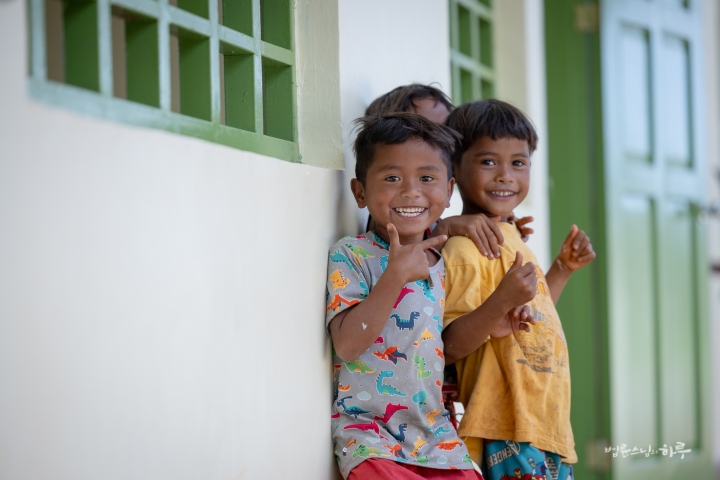
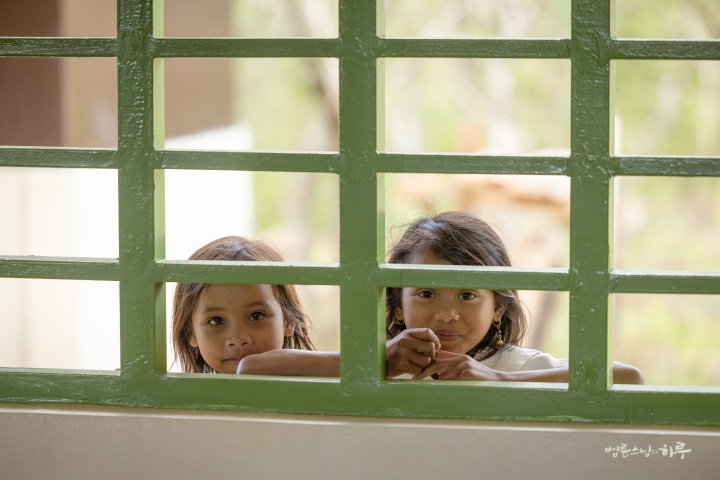
The Bukidnon Provincial Superintendent, education officials, and Quezon municipal officials all arrived, and the completion ceremony began at 9:20 AM.
The JTS delegation, municipal officials, and education officials all stood in a line in front of the school for the ribbon cutting and unveiling ceremony.
“One, two, three!”
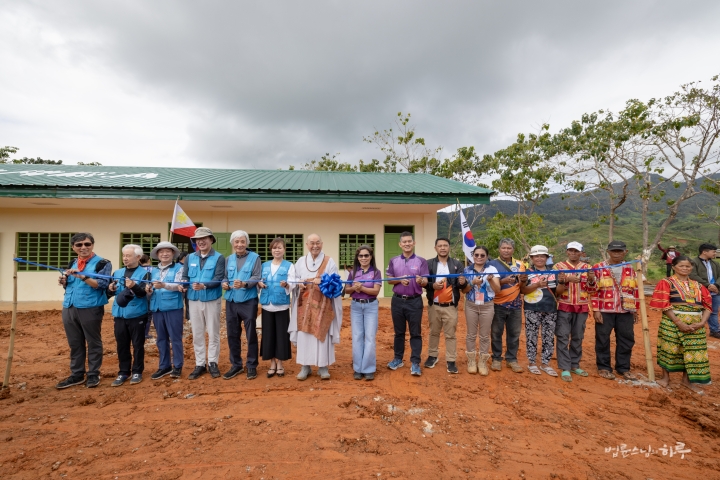
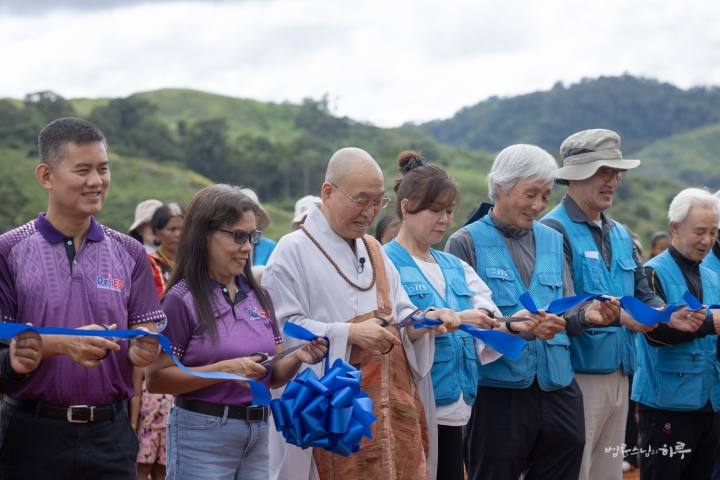
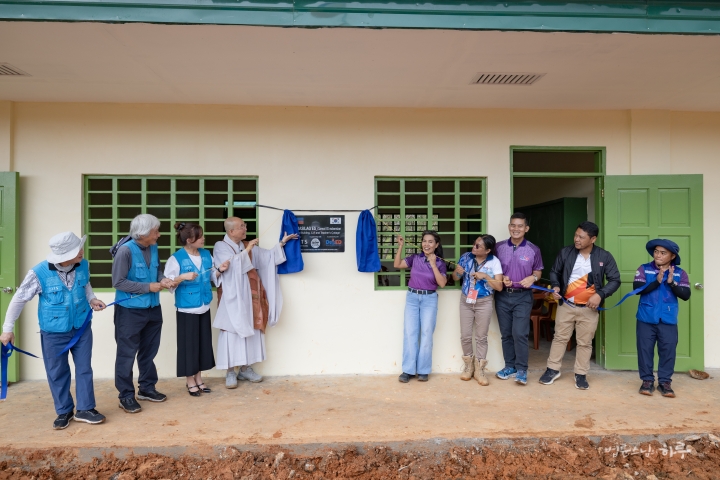
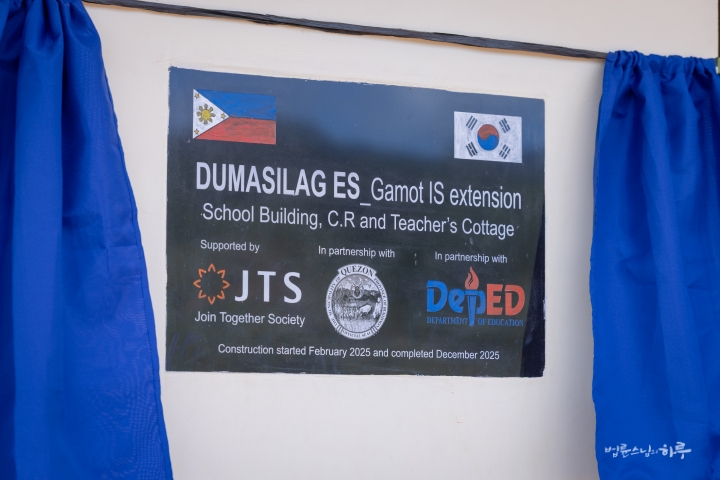
The village residents and parents cheered loudly with joy.
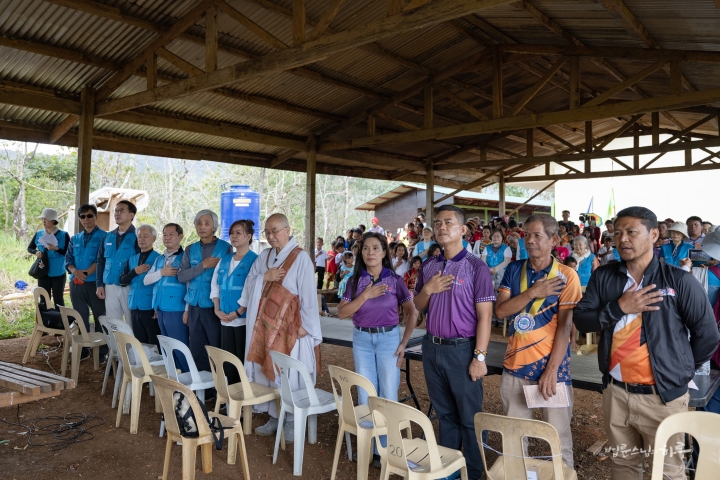
After the ribbon cutting and unveiling ceremony, everyone moved to the event venue prepared beside the school. First, the Philippine national anthem and the Korean national anthem were sung together.
First, the Vice Mayor, on behalf of the Mayor, gave welcoming remarks to the JTS delegation, followed by a progress report from Mr. Noh Jae-guk, representative of JTS Philippines.
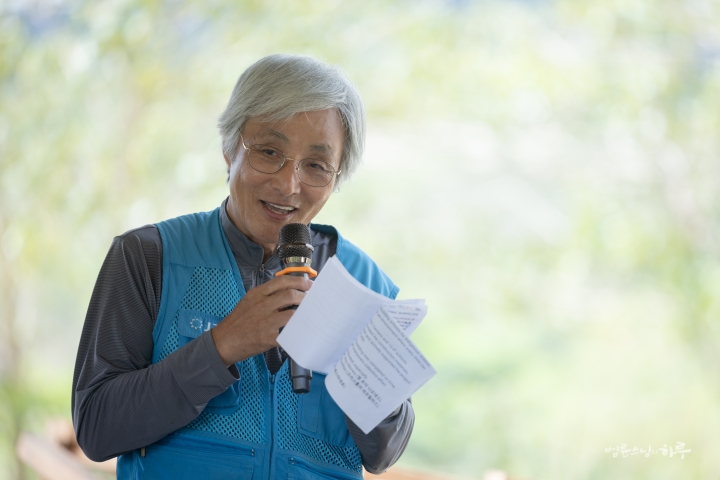
“For the construction of Dumasilag Elementary School, JTS provided construction materials while the Quezon Local Government Unit (LGU) provided manpower, consistently managed the construction site, and actively cooperated. In particular, they continuously repaired and improved access roads to ensure smooth transportation of materials during construction. Thanks to everyone’s cooperation, the school was completed on time.”
Mr. Noh Jae-guk called out each person’s name and expressed deep gratitude.
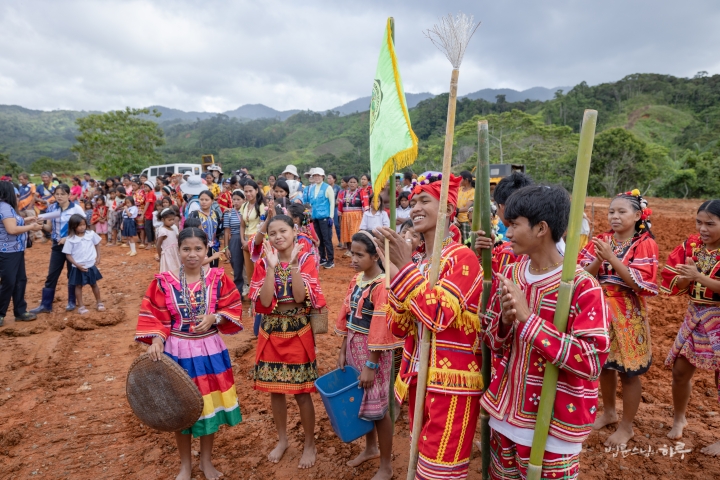
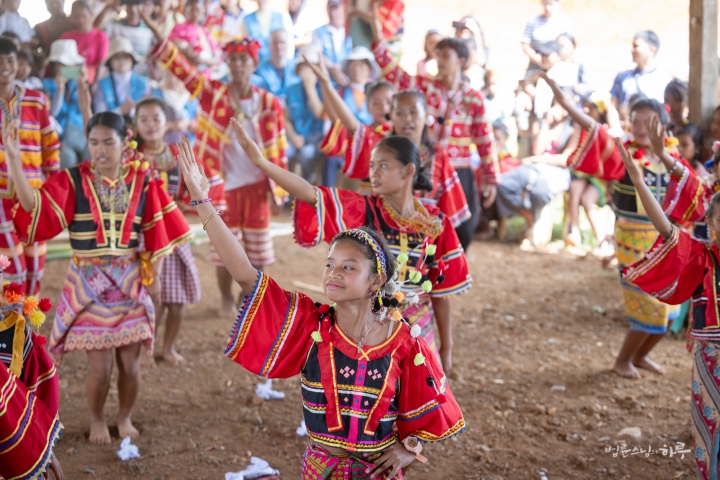
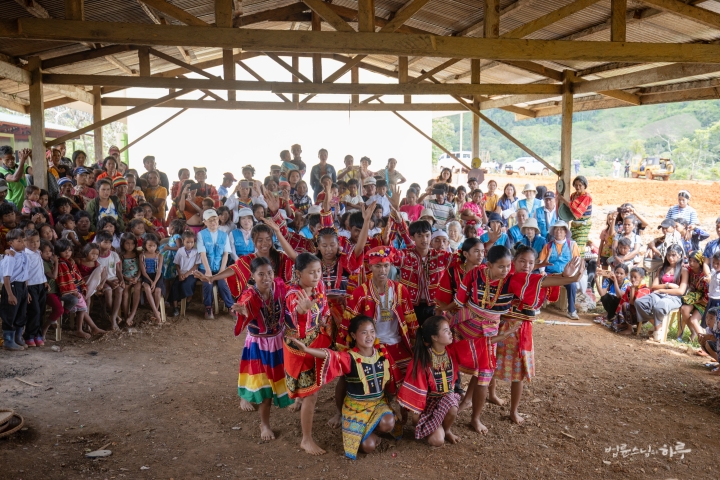
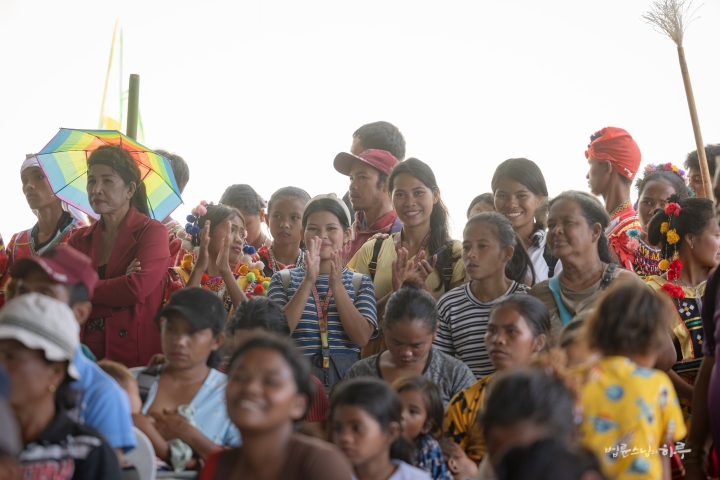
Next, students performed a celebratory performance. Dumasilag village is home to about 470 Tigwahanon indigenous people who have preserved their traditional culture well. All students wore traditional clothing and performed traditional dances.
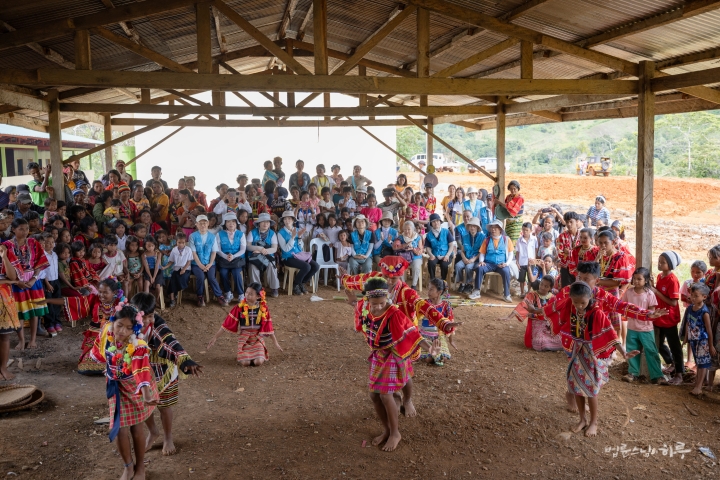
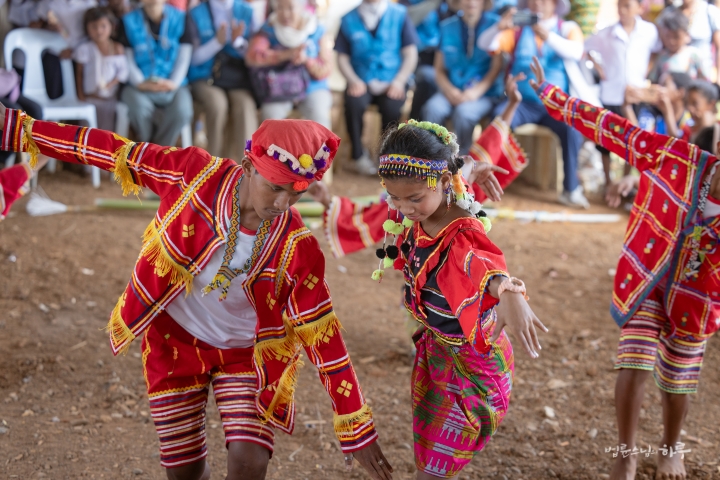
The children’s dancing skills were also excellent. They expressed farming activities and the movements of animals in nature through lively dance movements in rhythm. The entire JTS delegation applauded loudly and admired the high-quality performance shown by the children.
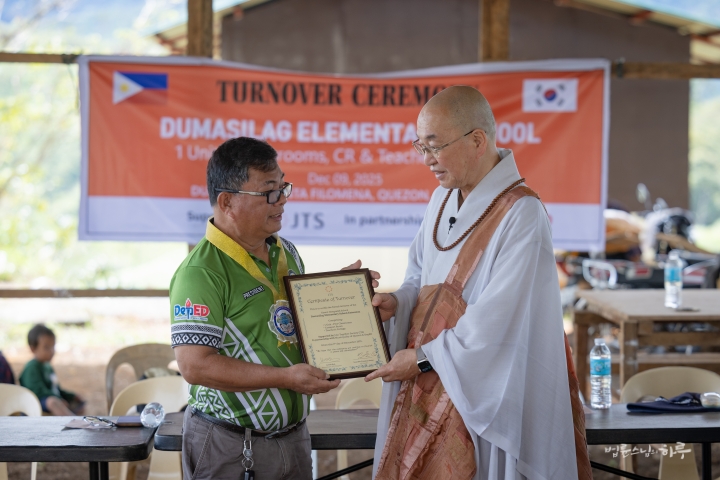
Next was the certificate, key, and clock presentation ceremony. First, Sunim presented the certificate to the municipal technical officer. He also presented his English-language book as a gift.
“Thank you.”
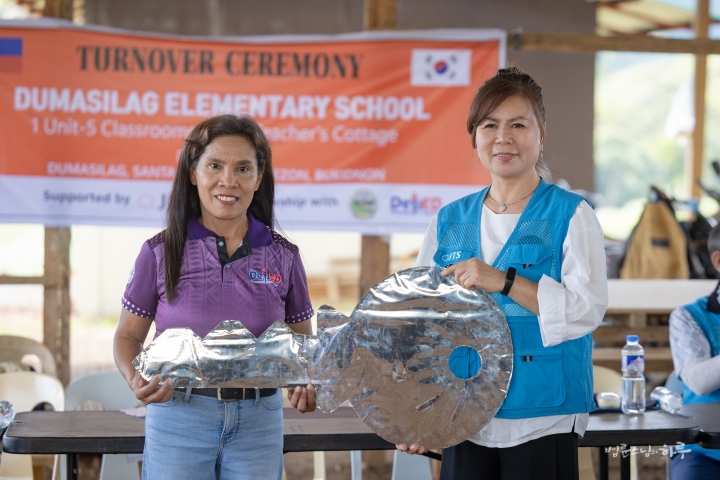
Next, JTS Representative Park Gina presented the key to the Bukidnon Provincial Superintendent, and Mr. Noh Jae-guk presented a clock to the principal.
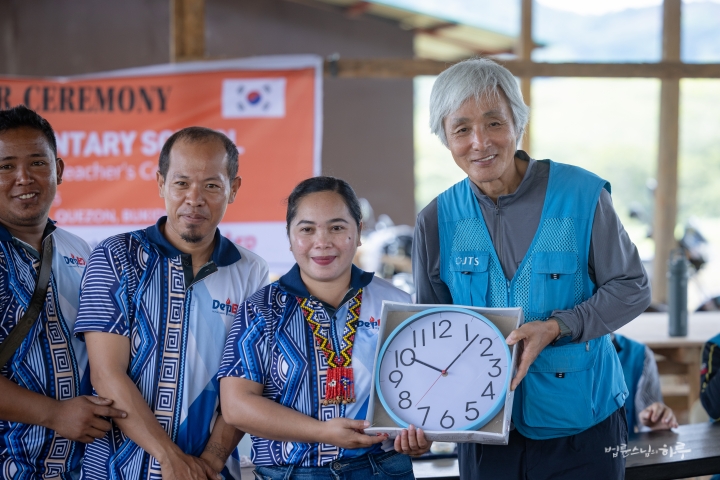
After the presentation ceremony, Sunim presented his English books to education officials Edwin and Rolen, and the municipal technician who worked especially hard on building the indigenous school.
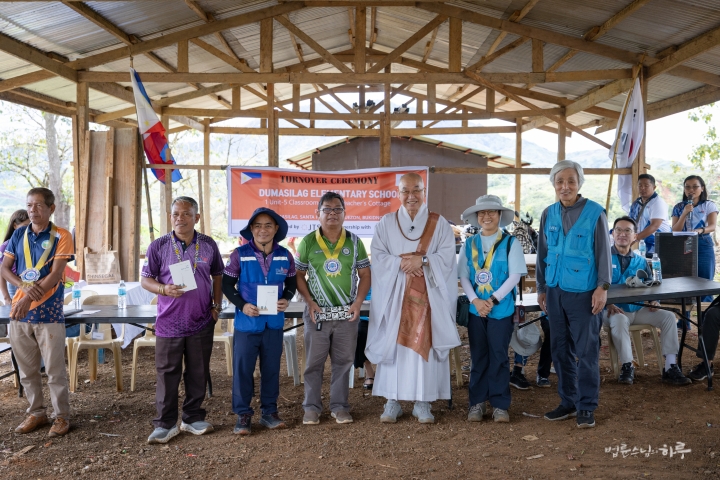
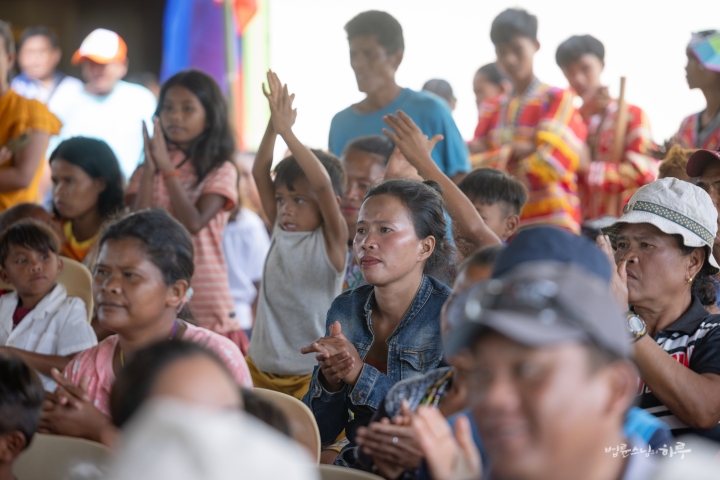
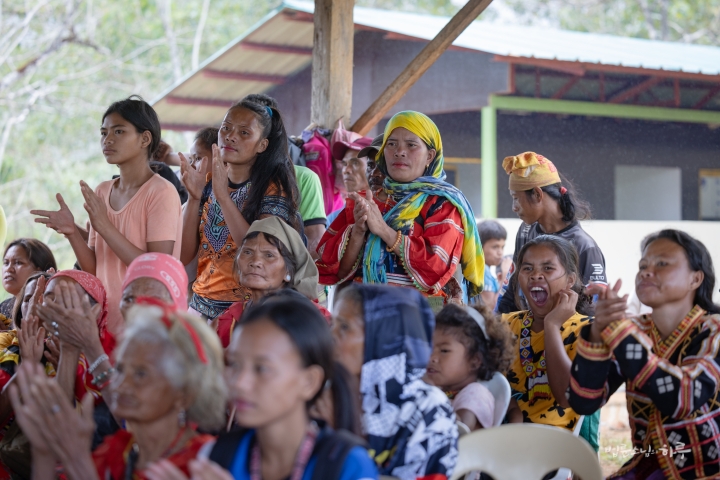
The faces of the applauding village residents were filled with joy.
Next, Sunim gave congratulatory remarks. He first expressed gratitude to those who worked hard to complete the school, then encouraged the village residents and students.
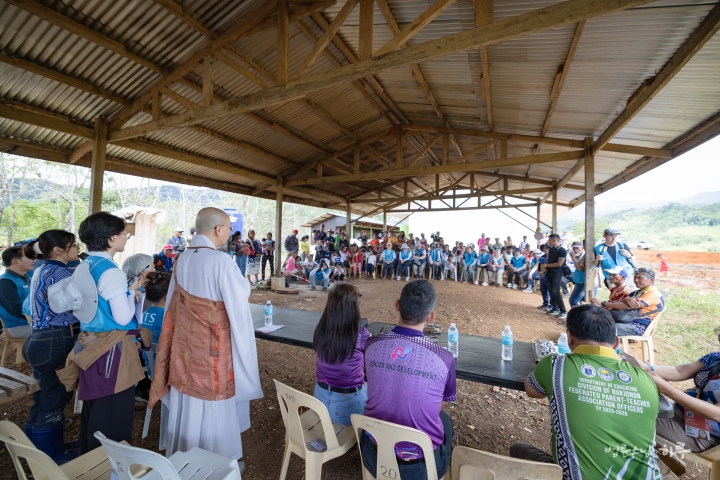
All Children Must Learn at the Right time
So many people have joined forces to complete this school today. This is truly a school that we all built together. The reason we cooperated like this is because every child in this world has the right to receive education at the appropriate time, regardless of race, skin color, religion, or gender.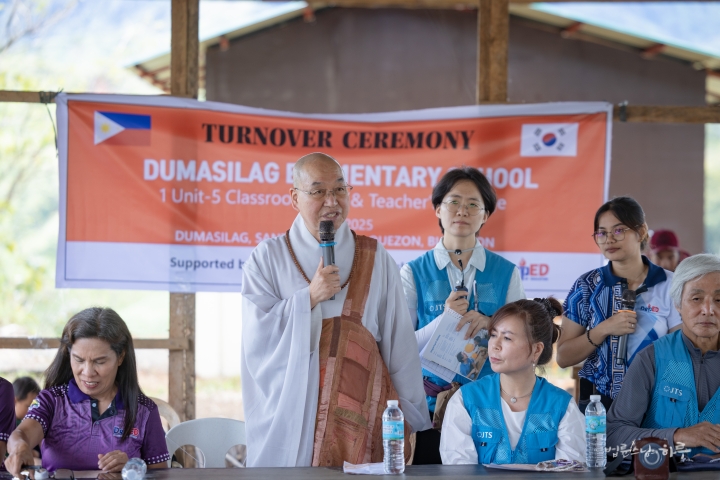
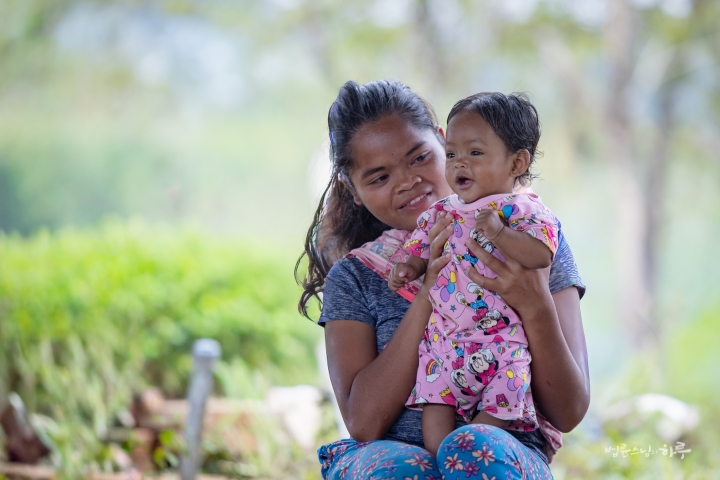
A Promise of Hope for the Children of Dumasilak
Today, I witnessed children dancing on the uneven dirt floor. If possible, JTS would like to help by paving this space with cement so the children can engage in activities more safely and comfortably. However, what matters more than any building is the children’s learning. For this to happen, first, good teachers must be consistently assigned to the school and teach diligently. Second, the children must attend school regularly and strive to learn. Third, the Department of Education must provide sufficient textbooks. If basic school supplies like notebooks and pencils are lacking, JTS will provide support.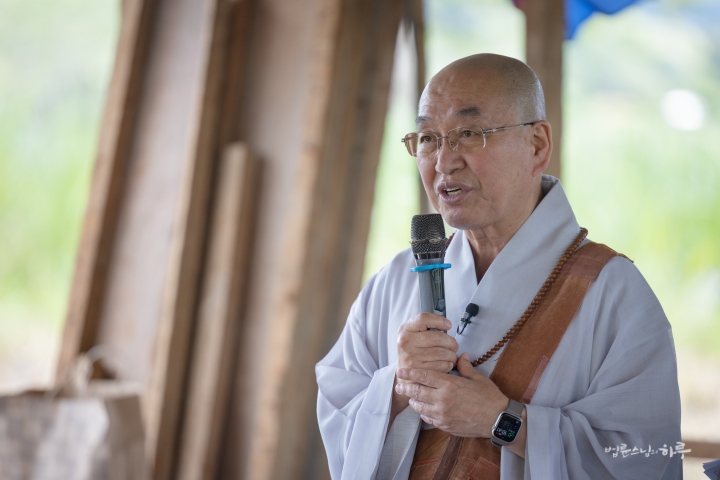
The students and parents cheered loudly and applauded at the promise of continued support.
After Sunim took his seat, the municipal technical officer gave words of thanks.
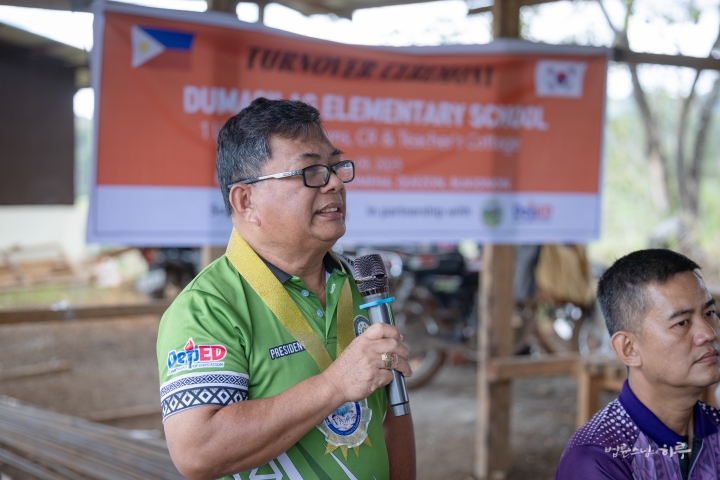
“The mayor also wanted to attend today, but due to a prior commitment, he couldn’t join us. However, he asked me to convey his deep gratitude.
Our local government has a very limited budget, making it difficult to provide adequate school facilities in all areas. That’s why this building holds even greater significance for the children of Dumasilak today. They no longer need to walk long distances to attend other schools. Education is the most important force that can change our lives. Without the ability to read and write, it’s difficult to gain opportunities for a better future. That’s why this project marks an excellent starting point for cooperation between JTS and the local government. Once again, I deeply thank JTS for building such a wonderful school building.”
Next, the Bukidnon Provincial Superintendent gave a response. The Superintendent emphasized the significance of the inauguration ceremony, the vision for the future, and the importance of education.
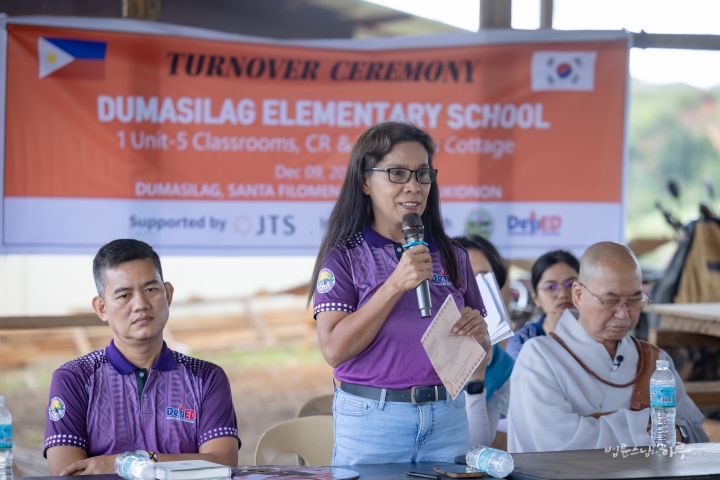
“Today is a meaningful day when the parents and students of Dumasilak finally have the beautiful and dignified classrooms they have long dreamed of. Until now, children had to walk mountain paths ranging from 5km to as much as 10km to reach Gamot School, the nearest school. It was too far for young children, and many couldn’t start their education on time because of this. Today’s inauguration of these new classrooms is the first step in solving these difficulties.
Compassion That Crossed Mountains and Rivers, Classrooms of Hope Opened for Children
The Department of Education deeply values what Venerable Pomnyun Sunim has emphasized. We will take responsibility for the education of Dumasilak’s children. We will ensure that teachers come to school every day and conduct classes faithfully for 8 hours, and we will strive to ensure that children truly experience the joy of learning.
I earnestly ask the parents of Dumasilak. Please make sure to send your children to school. Please don’t allow them to marry at too young an age. Giving children the opportunity to learn is most important.
JTS has shown us the highest level of sharing and compassion. Wearing blue vests, you climbed mountains, crossed rivers, and traveled long distances without hesitation to reach this most difficult-to-access place. I deeply thank you for your dedication to the poorest communities in Bukidnon. Even though we don’t have much, JTS has always helped us. Sincerely, sincerely, thank you.”
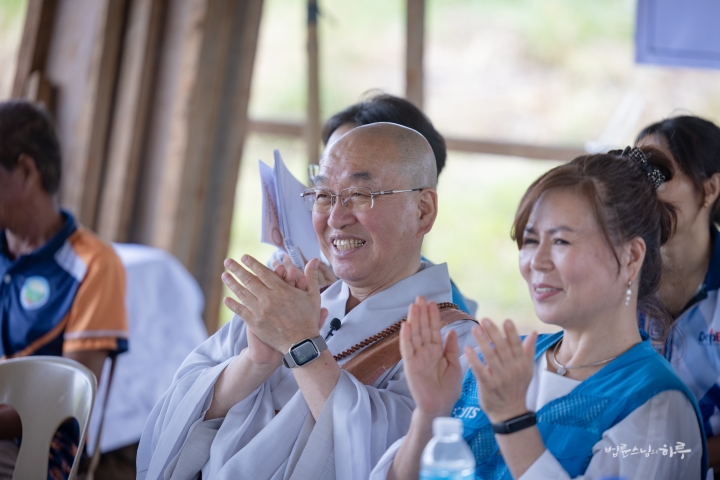
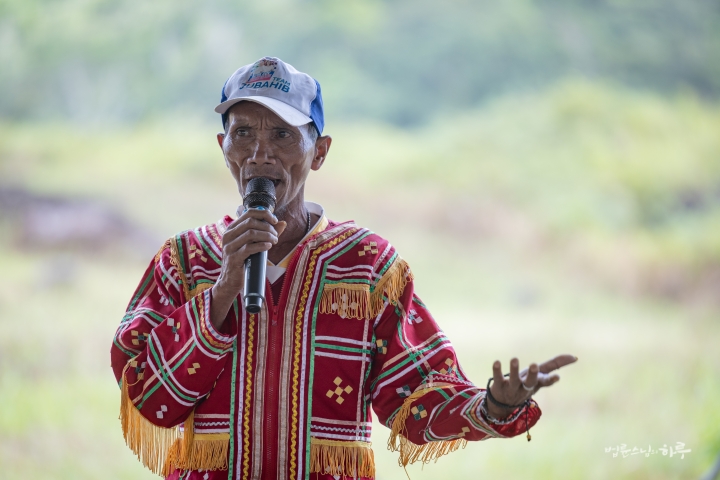
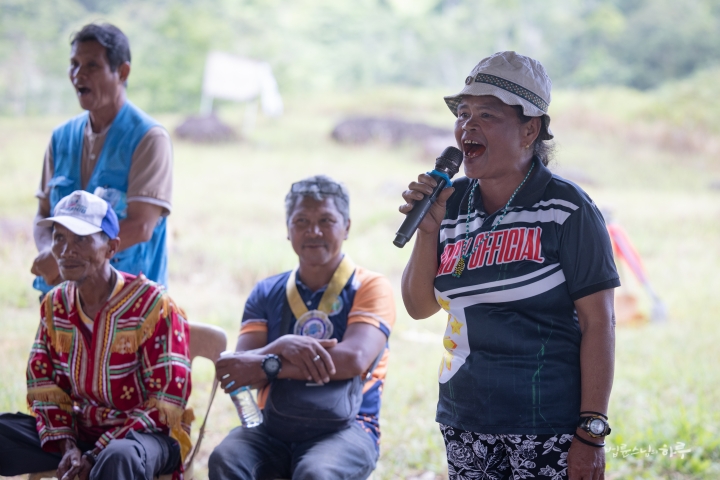
Finally, the Datu (tribal chief) and Sitio Leader expressed their gratitude to the JTS delegation and presented a plaque of appreciation, concluding the inauguration ceremony.
Everyone moved to the school’s front yard for a commemorative tree planting. Using shovels to plant the tree, everyone prayed together for the children to grow strong and healthy.
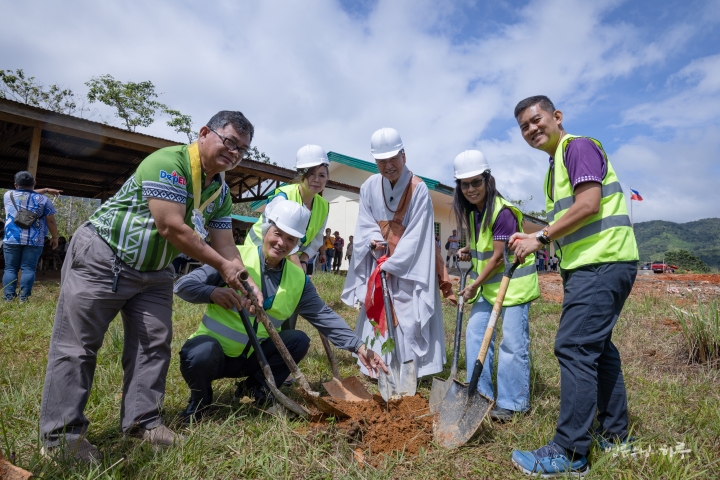
In the celebratory atmosphere, everyone took commemorative photos together.
“Thank you, JTS! Thank you, Dumasilak!”
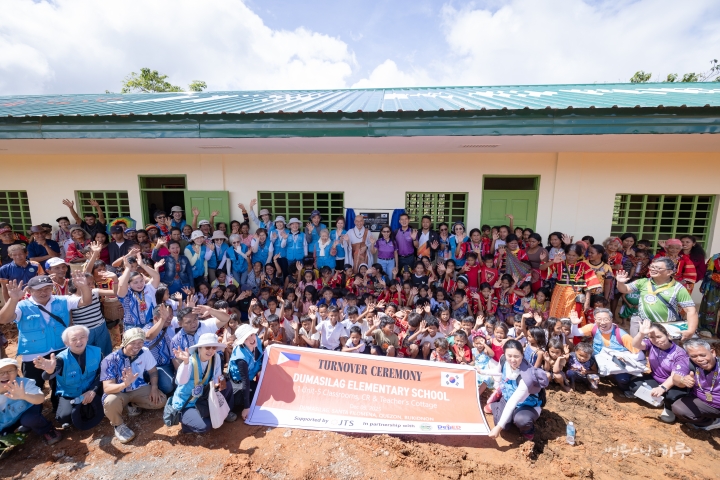
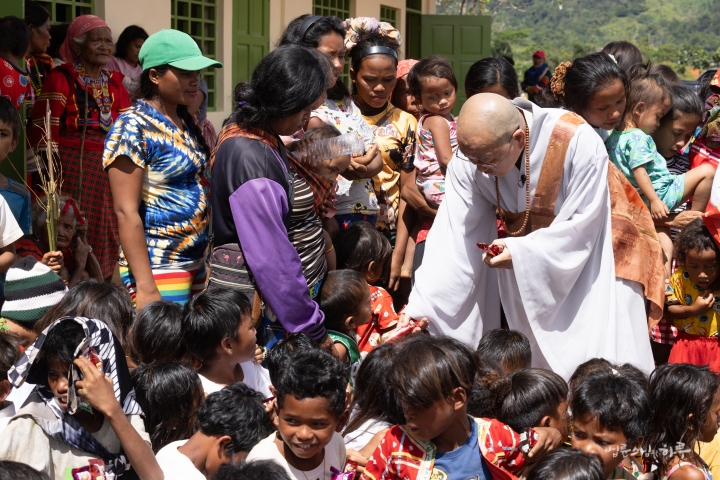
As soon as the photo session ended, snacks were distributed to the children. The children beamed with joy as they received their small treats.

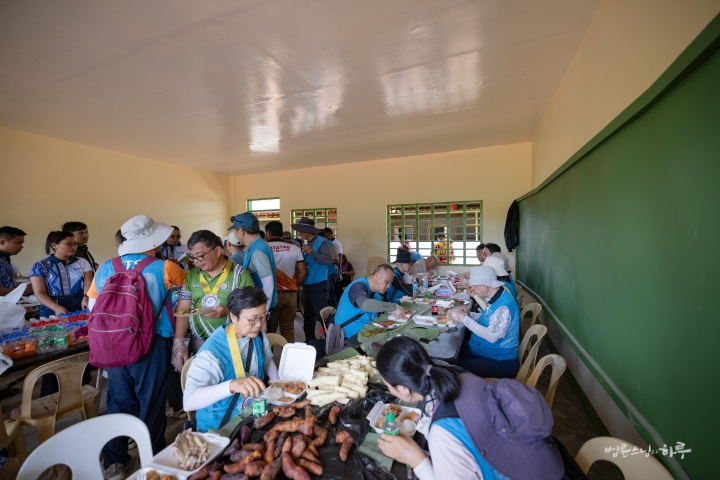
They then went inside the classroom for refreshments. The villagers had carefully prepared food. There was an abundance of cassava, sweet potatoes, and bananas that they had grown themselves.
Sunim expressed his gratitude to Edwin, the Indigenous Education Officer of the Department of Education, and Rolen, the External Organization Liaison Officer, who had worked especially hard for this inauguration ceremony.
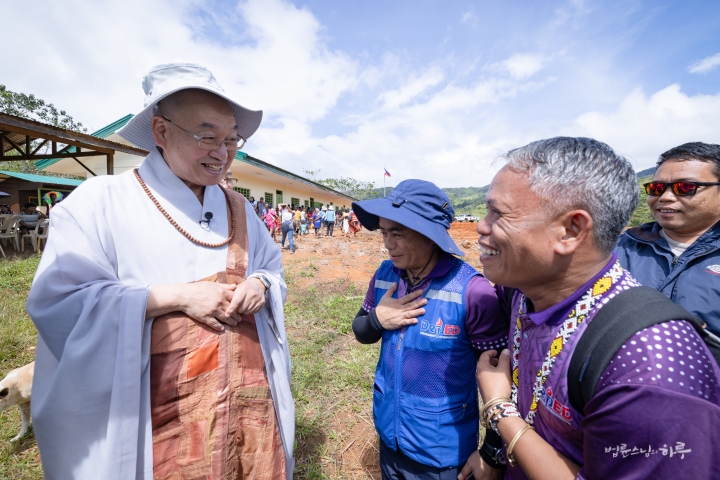
“Thank you.”
Edwin visits the field at least two days a week, and often most weekdays, with JTS volunteers for monitoring indigenous school construction and meetings. Rolen always accompanies JTS during education support projects, helping with coordination and communication on-site.
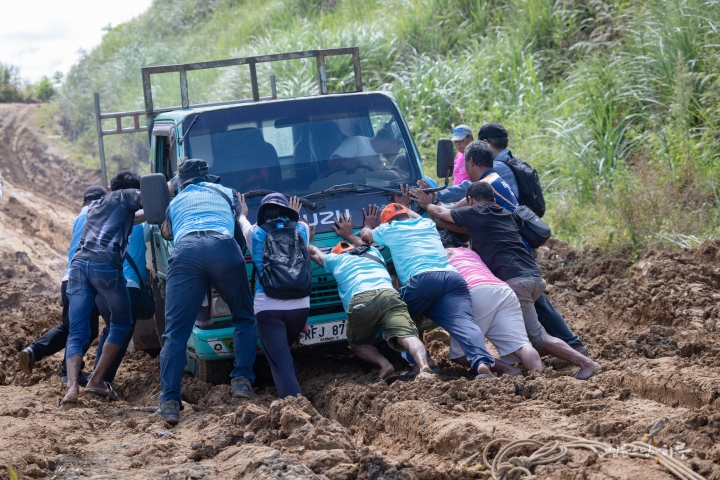
After the inauguration ceremony, Sunim and the JTS delegation boarded the trucks and vans again at 12:10 PM. After driving for a while on the bumpy unpaved road, the muddy path appeared again. Another vehicle was stuck and had stopped.
Once again, everyone got out of the vehicles and pushed with all their might.
“One, two, three!”
After several attempts, the wheels finally escaped the mud. Everyone cheered with joy.
Having safely passed through the muddy road, they drove continuously along the winding mountain paths. When the unpaved road ended, they transferred to a bus again. As they walked out to the paved road, their shoes were covered in mud.
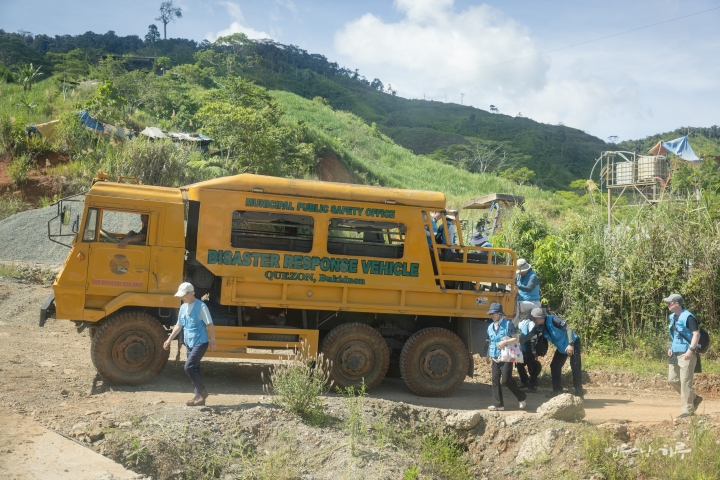
The bus carrying the JTS delegation now headed to Dangcagan, the next inauguration site.
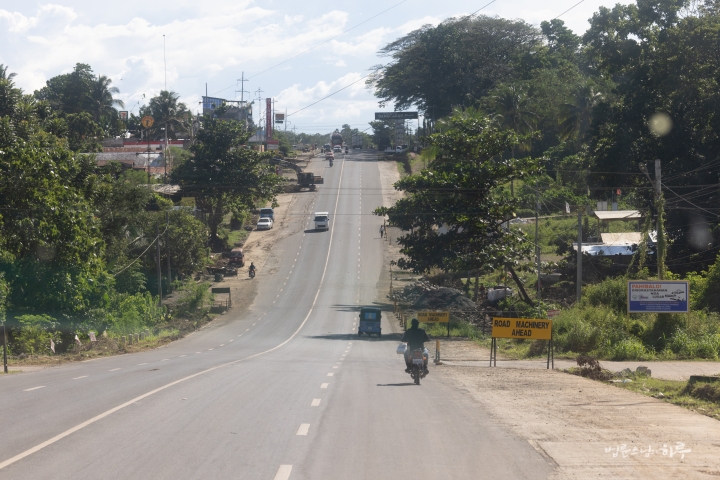
After a 1 hour and 30 minute bus ride, they arrived at Dangcagan Special Education (SPED) School at 2:20 PM.
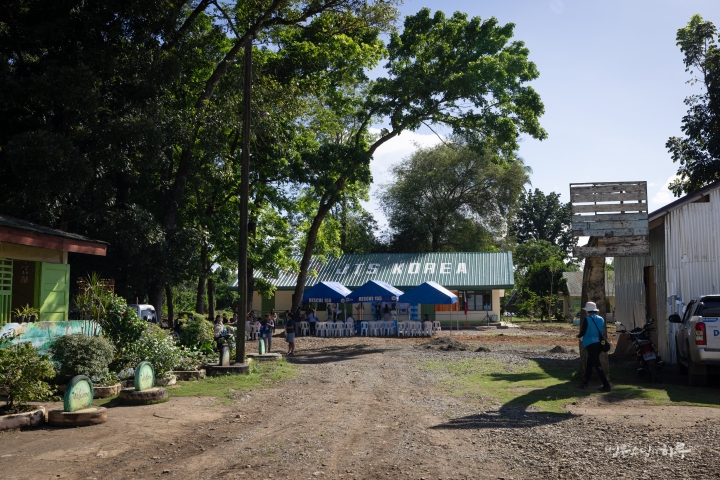
When Sunim and the JTS delegation got off the bus, teachers, parents, and students all cheered and welcomed them warmly.
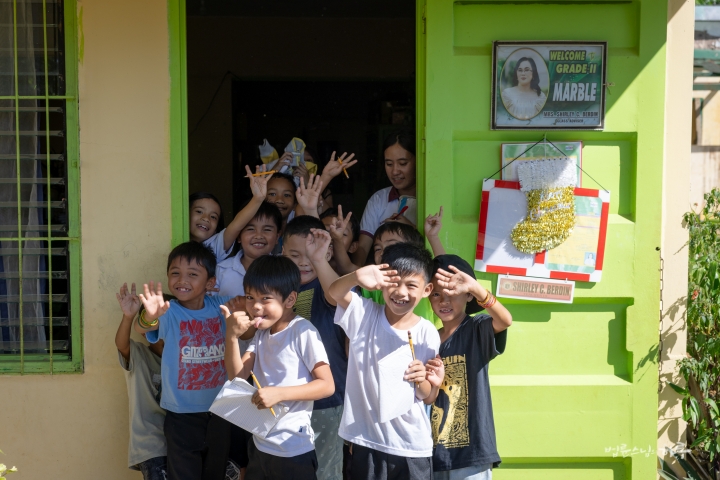
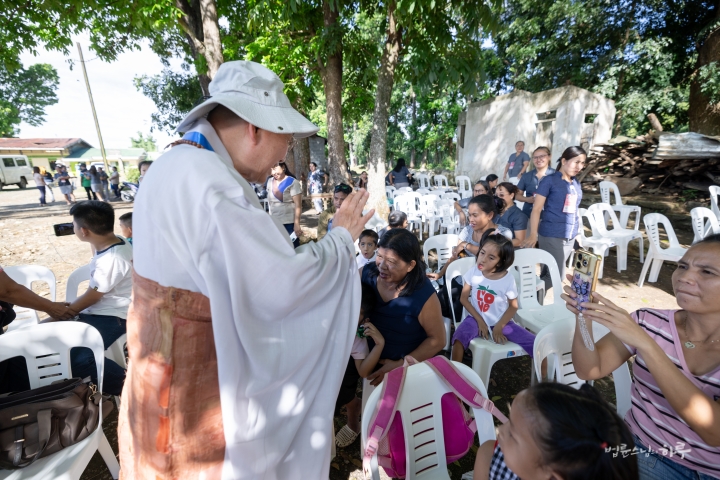
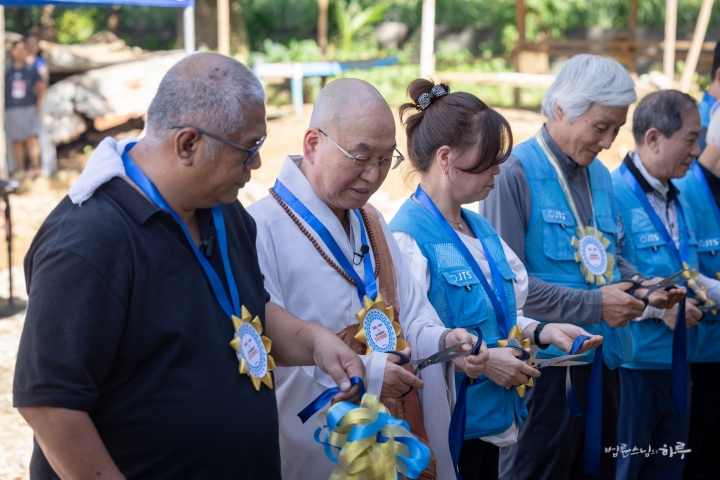
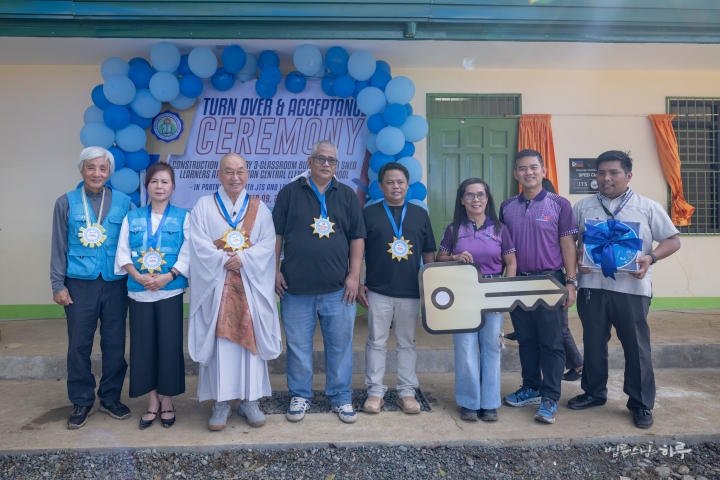
Moving to the front of the newly built school, they first held a ribbon-cutting ceremony to commemorate the completion. With Sunim at the center, the Korean delegation stood on one side, and officials from the Department of Education and municipal office stood on the other.
“One, two, three!”
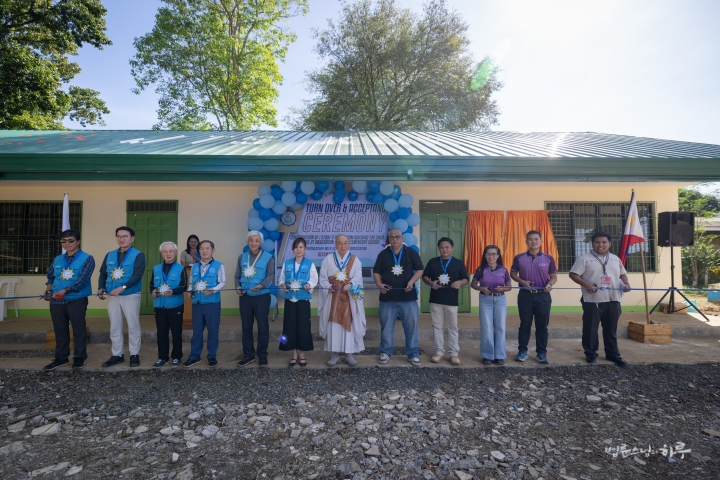
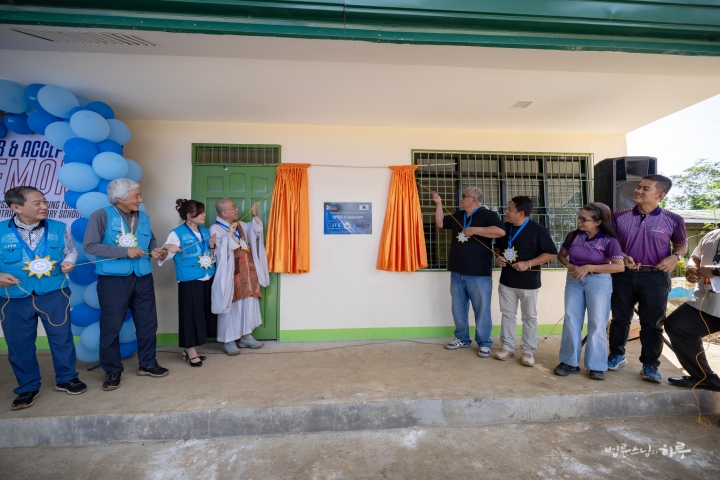
They then moved to the front of the plaque for the unveiling ceremony.
“One, two, three!”
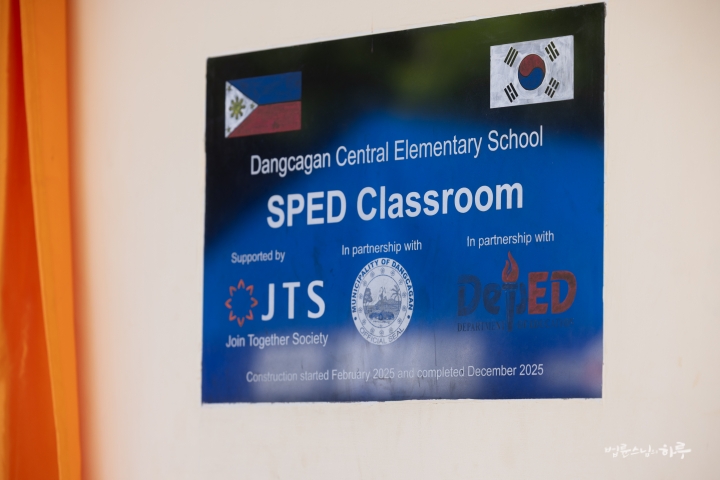
Next, they sang the Philippine national anthem and the Korean national anthem together. The Korean anthem resonated in this distant foreign land.
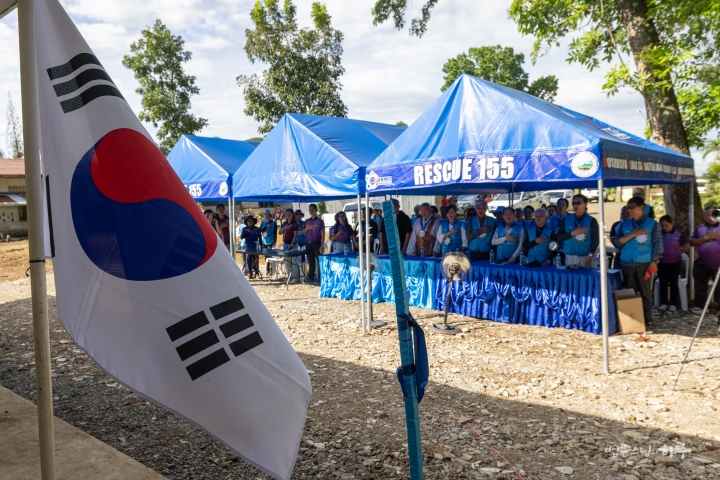
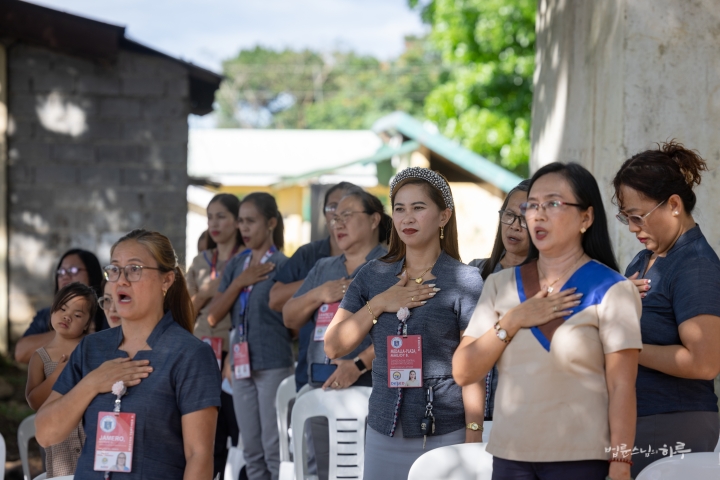
First, the principal gave welcoming remarks to the JTS delegation, followed by JTS Philippines Representative Noh Jae-guk’s progress report.
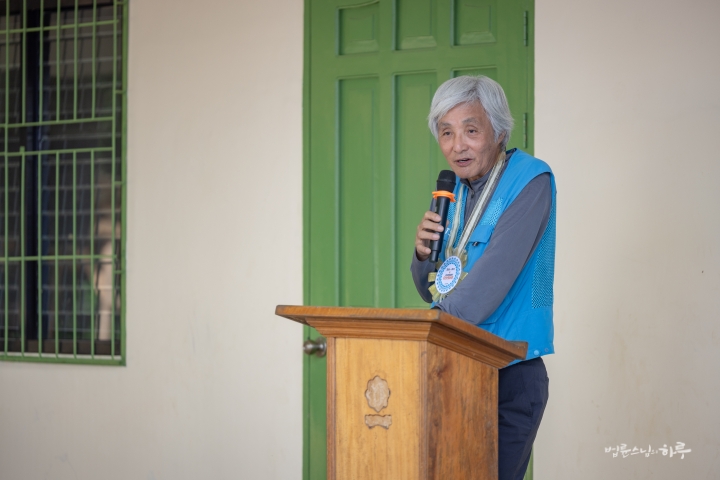
“For the construction of Dangcagan SPED Center, JTS provided construction materials, while the local government unit (LGU) provided manpower and continuously managed the construction site with active cooperation. Construction began in February 2025, and we are very pleased that the school has been completed on time today. All of this is thanks to everyone’s cooperation. JTS will continue to work to ensure that special education students are not excluded from basic education.”
Representative Noh then mentioned the chief municipal engineer, field engineer, and site supervisor by name, expressing special thanks to each.
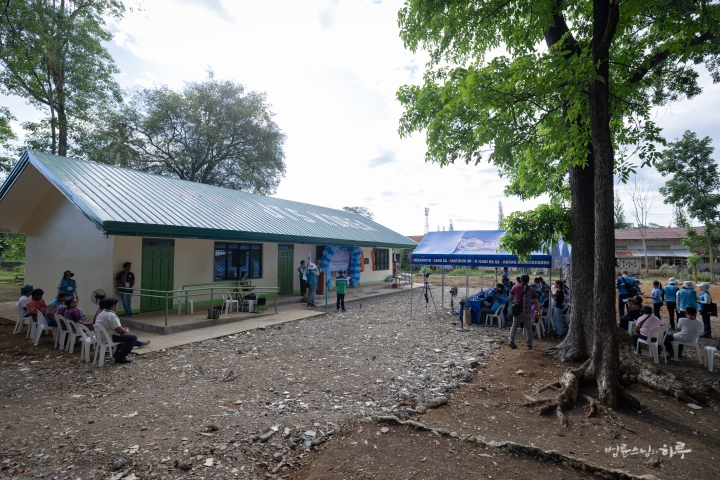
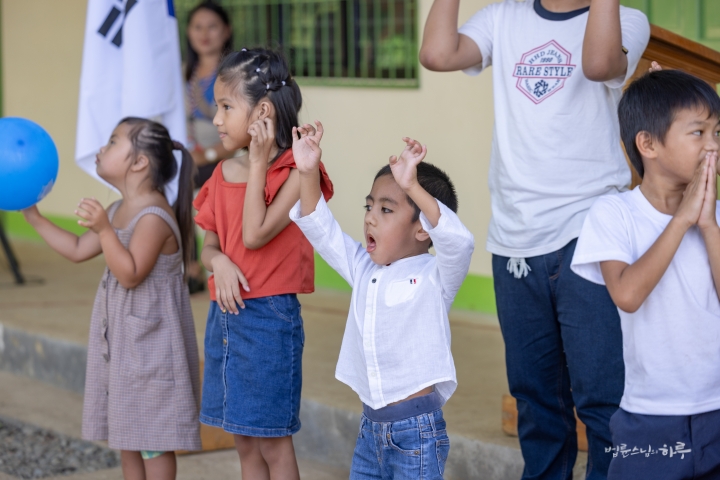
Next, students from Dangcagan SPED School performed what they had practiced hard. They freely expressed their excitement and joy through dance and song.
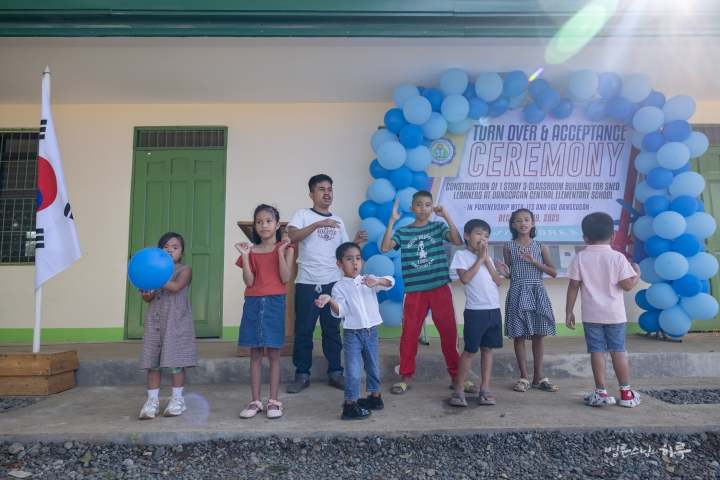
Although their movements were somewhat restricted due to their disabilities, it was deeply moving to see the students freely expressing their emotions through dance and song, each according to their abilities.
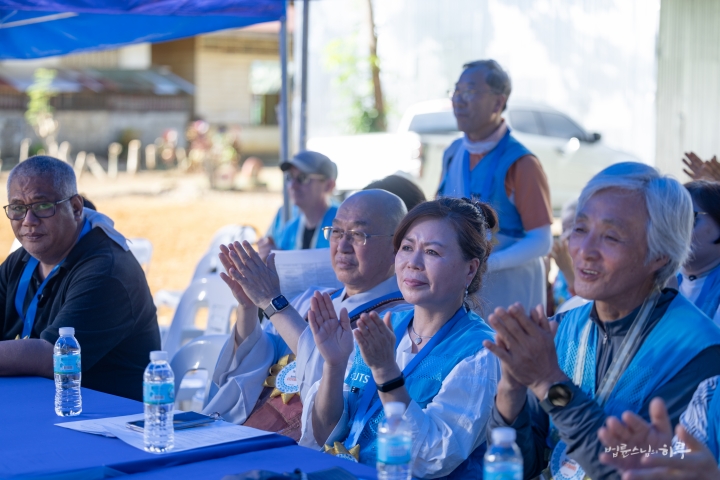
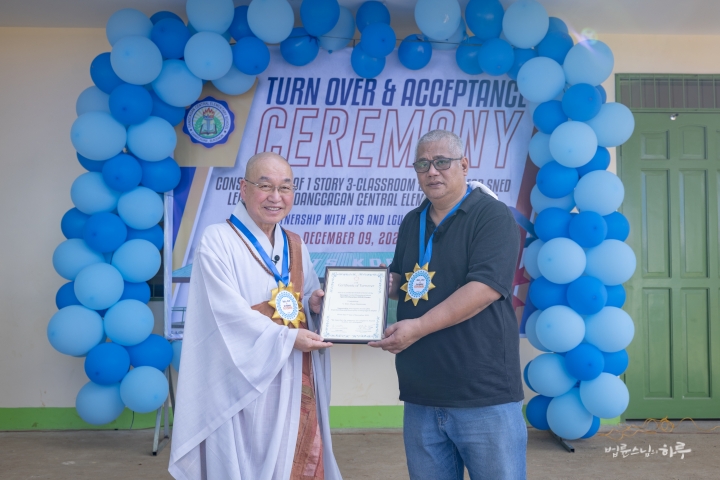
Next, Sunim presented the completion certificate to the mayor. He also gifted his English-language book.
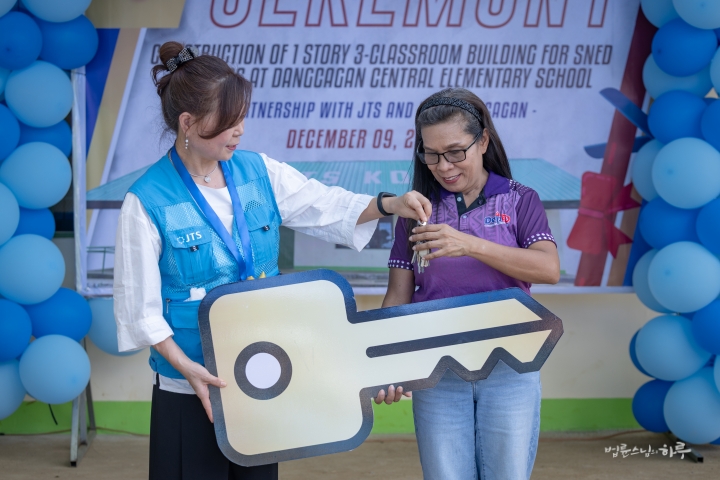
Then Representative Park Gina handed over the keys to the Superintendent.
Next, Representative Noh handed clocks to the principal so that clocks could be hung in each classroom.
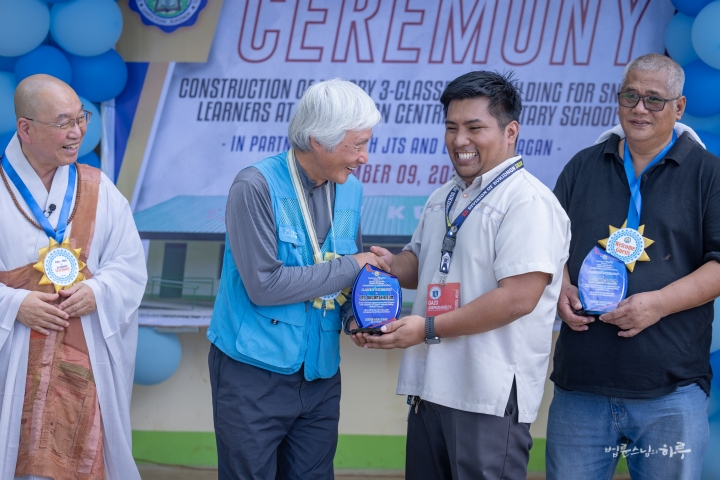
The school presented plaques of appreciation to JTS and the municipal office.
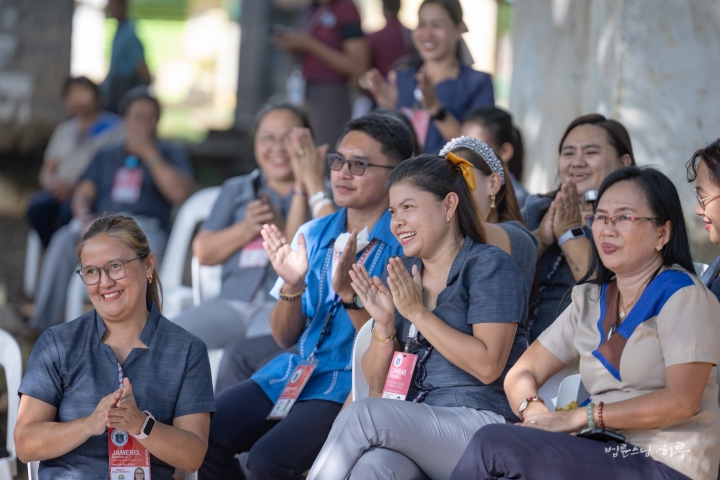
Parents and teachers cheered loudly with joy.
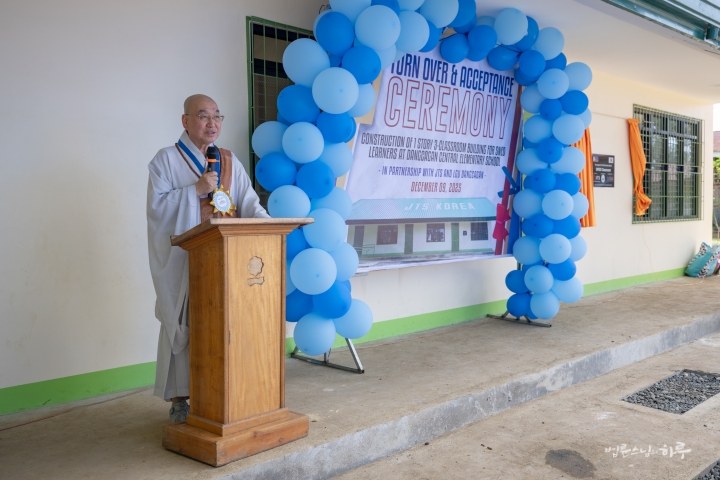
Next, Sunim came forward to give congratulatory remarks, receiving loud applause.
“Yes!”
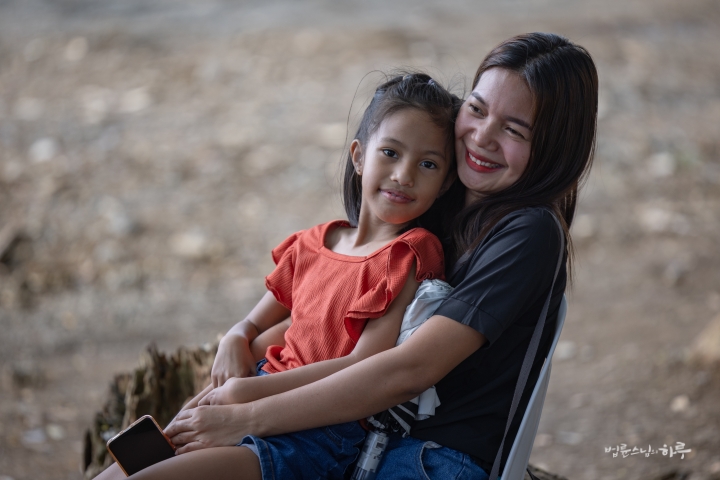
May This Space Become a School That Embraces Differences and Grows Together
Having a disability doesn’t mean being inferior. It means experiencing inconvenience in daily life and learning processes. That’s why more effort and support are needed. Children who cannot see must study with braille, requiring various learning tools and extensive practice. Children who cannot hear need additional time and effort to learn sign language. Children with limited mobility require various assistive devices and help from those around them. For these reasons, children with disabilities need special materials and equipment in their educational resources and classroom environments, unlike typical students. The reason we built this school today is to create an environment where children with disabilities can learn just like non-disabled children.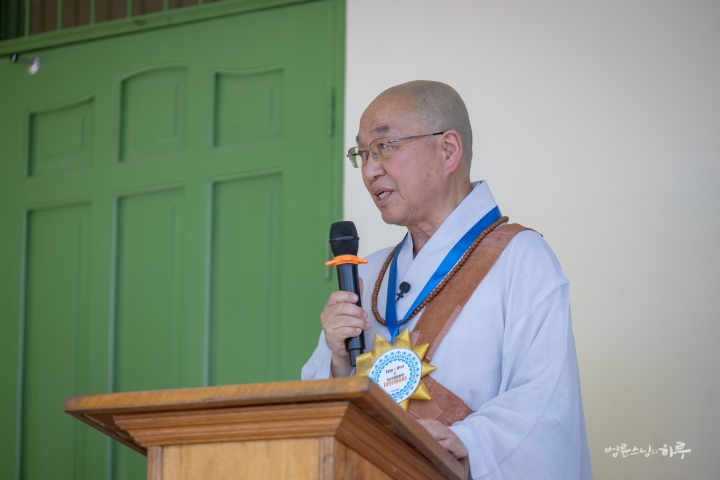
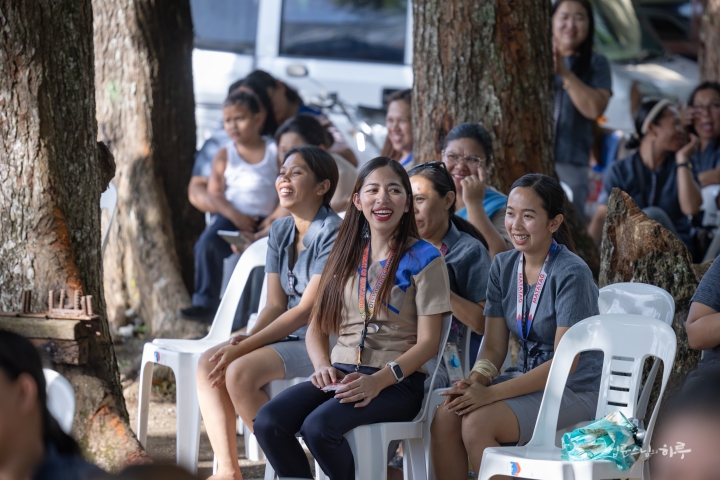
After listening to Sunim’s congratulatory remarks, local officials gave their responses. First, the mayor expressed his gratitude.
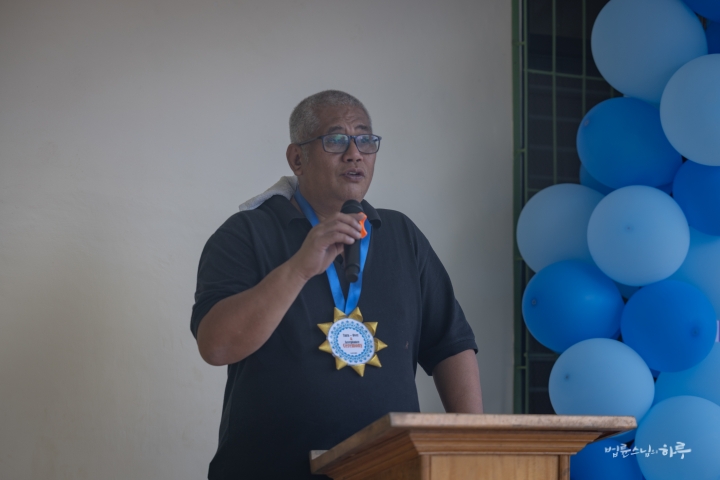
“It is a great blessing and honor for our region to have such an excellent partner as JTS. I ask that you continue to lend your support for the education of our children. The Dangkagan area still has many areas that need improvement. There are still many buildings and facilities that need repair and maintenance. This facility provided by JTS is a great source of pride for our region and will become a precious foundation for our children’s education. I hope this building will be well preserved for our children and future generations, and will continue to be utilized for a long time to come.”
Next, the superintendent of education expressed his gratitude.
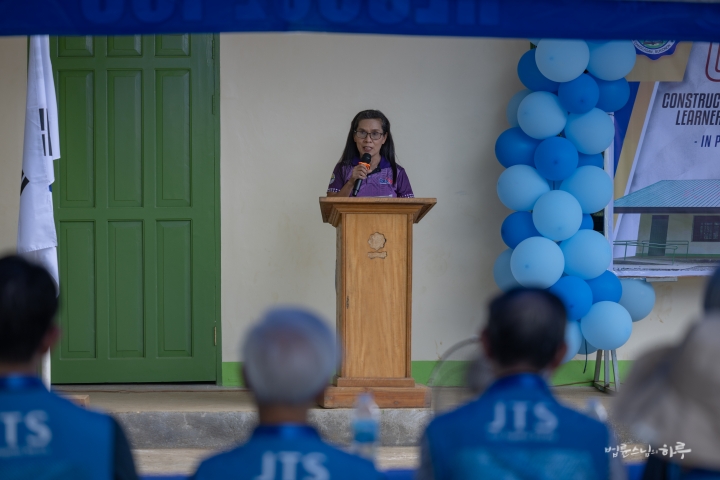
“Last year, I visited the existing learning space these children were using. It was a very small space set up in one corner of the library, so cramped that it was difficult for the children to study comfortably. But today, looking at the newly built classrooms and restrooms, I was amazed to see that they are not only spacious and beautiful but also equipped with all the facilities the children need.
All these changes are thanks to JTS and the Dangkagan local government working together. I deeply thank everyone who has helped our children learn, dream, dance, sing, and spend happy times here. Our education office will take responsibility for managing these classrooms well and ensuring that the children’s learning is fully realized.”
Finally, the teacher who serves as the chairperson of the Dangkagan Central Elementary School faculty gave closing remarks.
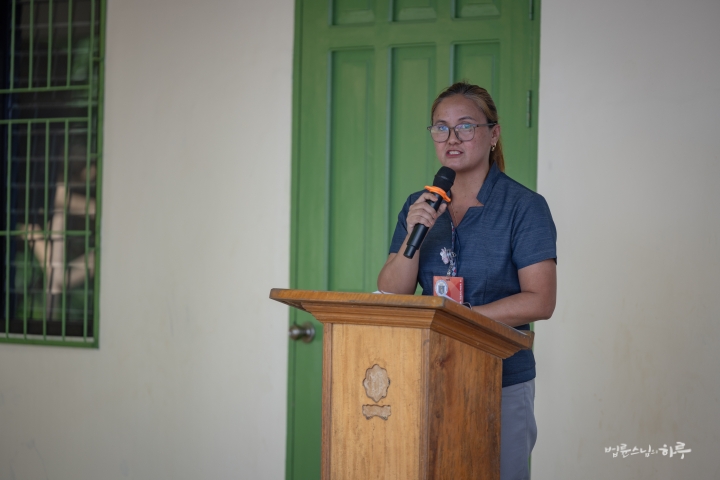
“The school we are inaugurating today is not just a classroom, but a symbol of hope that opens doors to new possibilities for our special education students. I deeply thank JTS and the Dangkagan local government for providing this beautiful school. Thanks to your dedication, we are creating a brighter and broader future for our children beyond just a building. I sincerely hope this space becomes a warm learning place where our children can grow safely, learn, and discover their talents.”
After the completion ceremony, everyone went to the yard next to the school for a commemorative tree planting. They wished for the children to grow strong and healthy at this school.
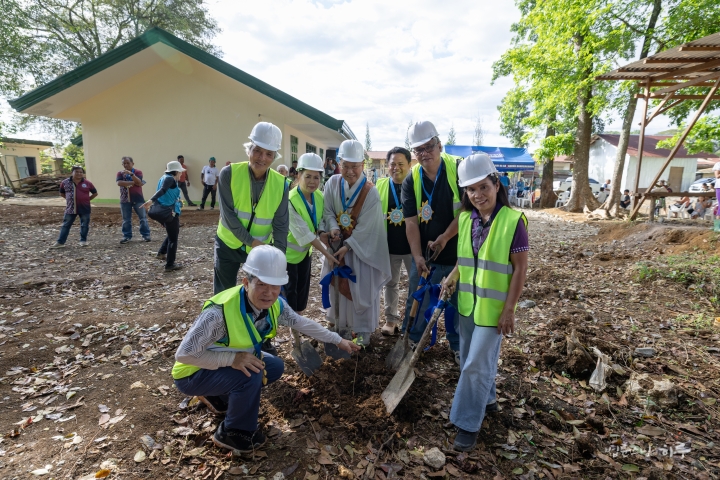
Finally, everyone took a commemorative photo together in front of the newly built classroom. The children energetically called out their village name.
“Thank you JTS! Dangkagan!”
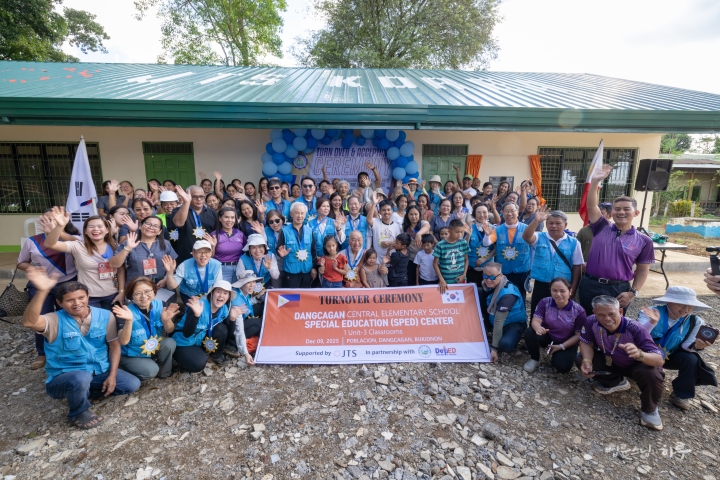
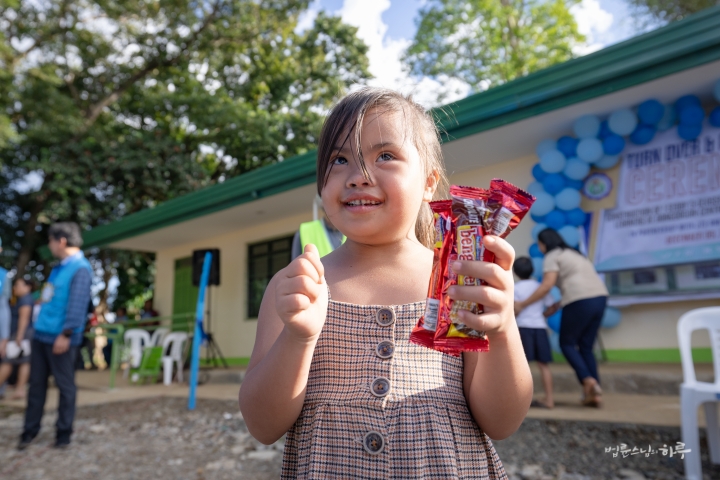
Sunim took another photo separately with the students and then distributed snacks to the children.
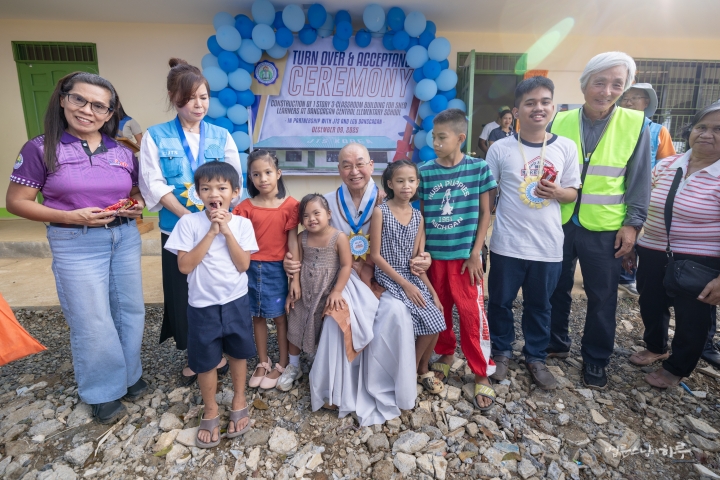
The children were very happy to receive the snacks.
They immediately took a tour around the entire school. The classrooms used by regular students also looked very old, so they went closer to examine them in detail. Although the exterior was shabby, the interior was being maintained neatly and well.
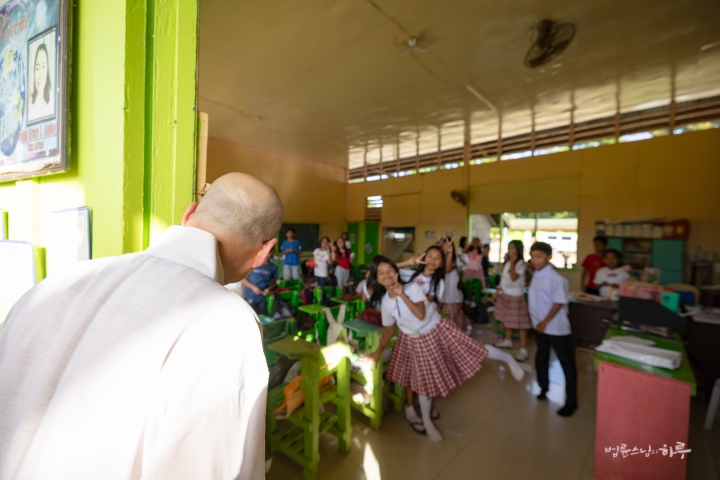
They then went inside the classroom and had a break, eating sandwiches and drinks prepared by parents and teachers.
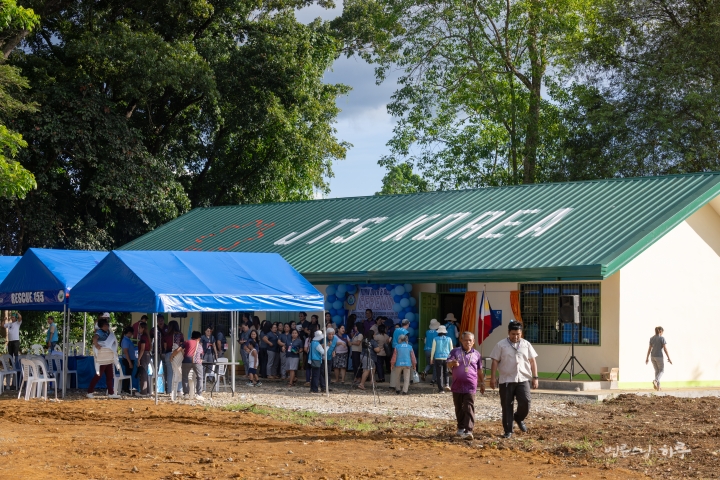
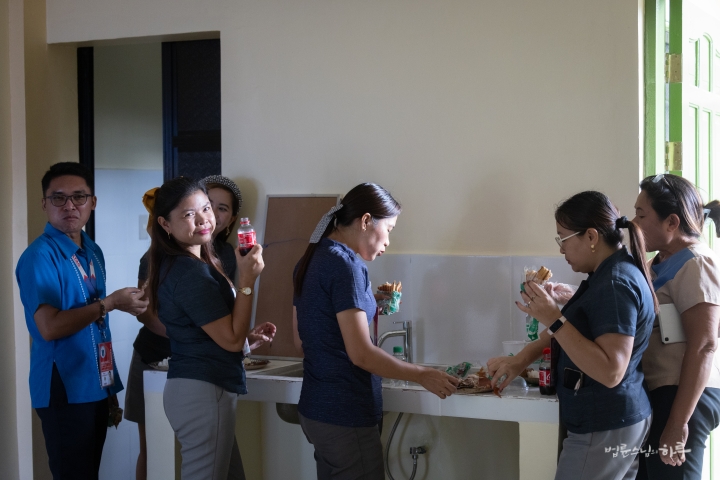
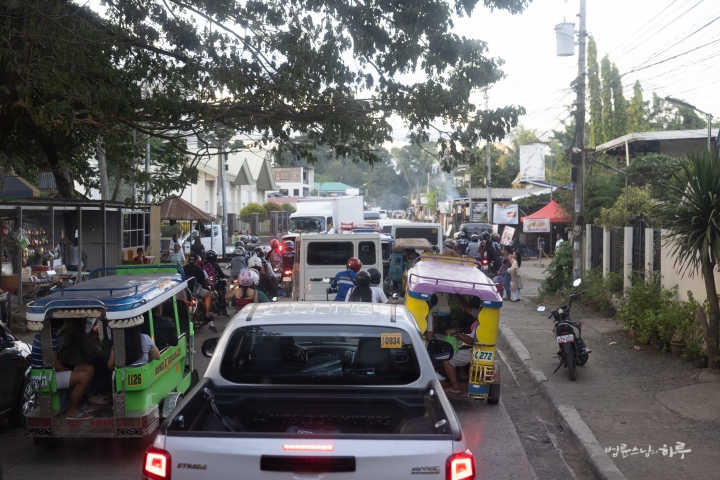
After a quick snack, they departed from Dangkagan at 4 PM. After an hour’s bus ride, they entered Valencia. Avoiding the heavily congested roads, they wound through alleys and arrived at their accommodation at 5 PM.
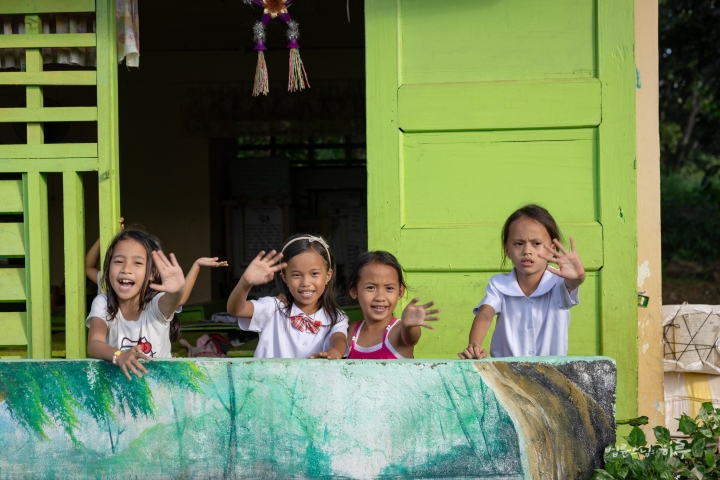
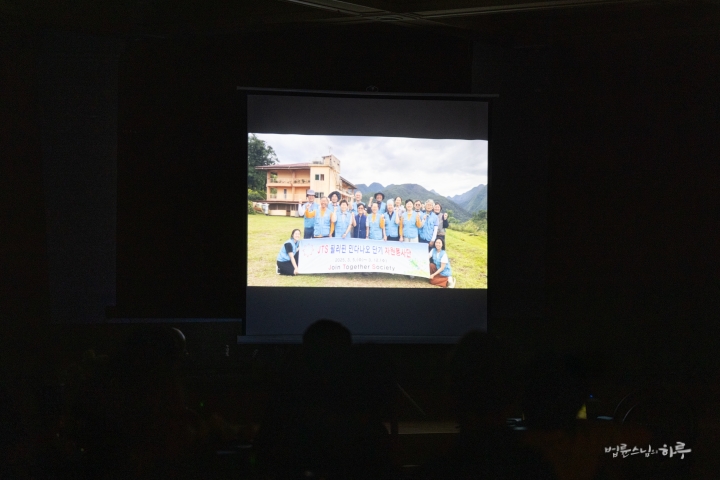
Walking on mountain paths in heat exceeding 30 degrees Celsius left everyone drenched in sweat. After showering, everyone gathered in the hall at 6:30 PM. They had a simple dinner and watched a video together about the work JTS Philippines had done over the past year.
Yesterday they arrived at the accommodation late at night and didn’t have time to introduce themselves. So this evening, they took time for each person to stand up, introduce themselves, and share their impressions of participating in the completion ceremony. Craig, a reporter from Buddhist Door Global (BDG) in Hong Kong, participated in this JTS delegation. When the moderator handed him the microphone, he briefly shared his impressions of participation.
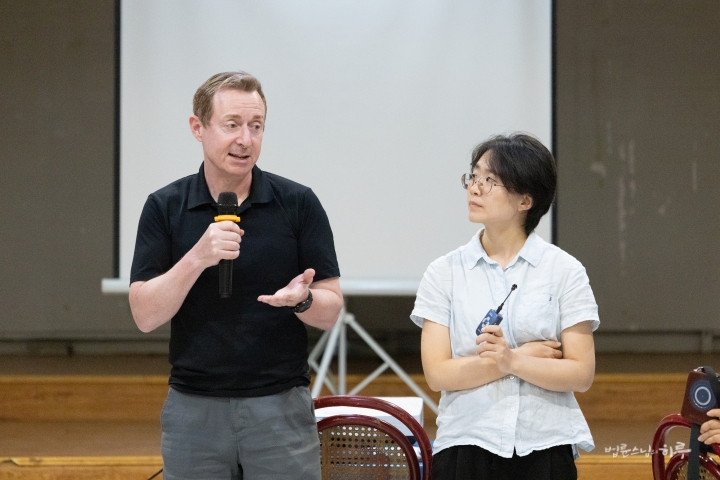
“While covering Jungto Society activities in recent years, I have been seeing and learning a lot thanks to Venerable Pomnyun Sunim. Being able to witness JTS’s activities firsthand in the Philippines, following Korea and India, has been deeply inspiring for me. Through conversations with JTS volunteers, I’ve also newly discovered that much more is being accomplished than I previously knew. However, it always leaves me with regret that someone has to take time to interpret for me whenever I attend events. Nevertheless, I sincerely thank you for inviting me here, and I hope you will kindly understand any inconvenience my participation may have caused.”
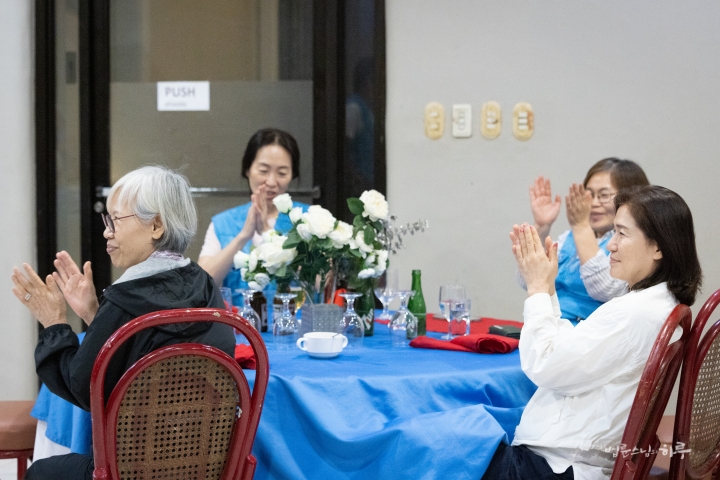
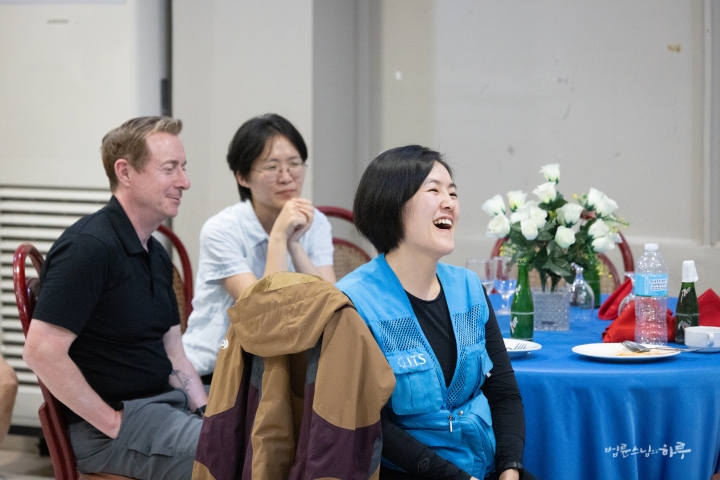
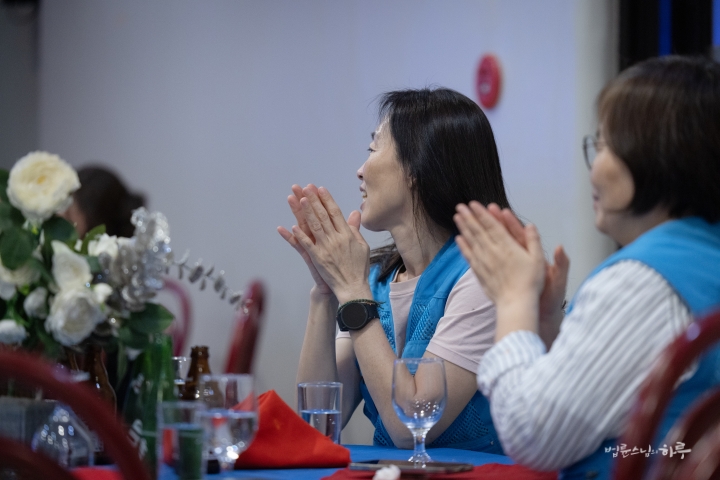
Everyone took turns standing up to introduce themselves and share their impressions of today’s completion ceremony. Finally, wrapping up today’s schedule, Sunim talked about the challenges JTS currently faces.
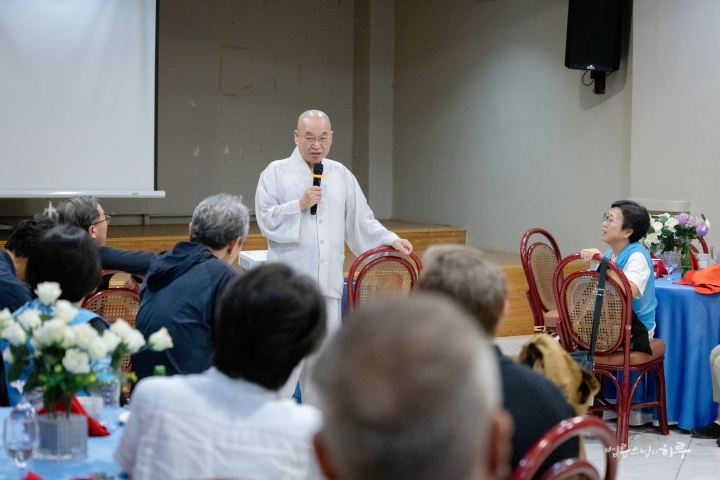
Should We Stick to Principles or Expand Operations?
With the budget secured and active cooperation from the education office and county office, the project was progressing smoothly when an unexpected problem arose. As JTS volunteers’ workload increased and became overwhelming, resistance began to emerge with questions like ‘Do we really need to build 10 schools?’ Some were even expressing their difficulties to the point of saying, ‘Building 10 schools is so exhausting that I want to return to Korea.’ While discussing this issue with the JTS representative, the suggestion came up to ‘consider transferring overall school construction management to the education office since they’ve been so proactive lately.’ This is something we should discuss together tomorrow. In fact, it would be more realistic to reduce the number of school constructions to match JTS’s capacity. To maintain the current level or expand further, we would need to hire people and approach it differently, but this would conflict with JTS’s principles and has limitations. All JTS volunteers are practitioners. Activities must be conducted within the scope of voluntary service by practitioners, and as a matter of principle, we don’t hire staff and pay salaries to expand operations. For example, in Bhutan, when building 200 houses in one state, many hands are needed from site selection to surveys and vehicle operations. However, since Jungto Society cannot hire drivers, we’ve arranged for the government to hire drivers and dispatch them to JTS. JTS goes to such lengths to maintain its principles. If JTS were to hire people, it would violate JTS’s principles. To resolve this issue, JTS doesn’t directly hire local Filipinos but has arranged for the local government unit (LGU) to cover labor costs equivalent to 30% of the total budget. This isn’t because of lack of money, but because JTS believes it’s inappropriate to establish employer-employee relationships with locals. If I hired a driver, wouldn’t that person see me as a boss rather than as a monk? JTS’s policy is not to create such relationships. When trying to increase operational efficiency, conflicts with JTS’s principles gradually arise. To expand operations, we need to hire staff, but hiring staff doesn’t align with JTS’s principles. Conversely, following principles reduces operational efficiency. Therefore, until now, general labor has been handled by local residents, and when hiring skilled workers became unavoidable, after years of discussion, an arrangement was made for local governments to hire technicians. While residents naturally cooperate when building schools in their communities, special education schools (SPED) for children with disabilities require contractors, so we’ve maintained our principles by having local governments take responsibility. However, as the scale of operations grows, the employment issue is surfacing again. Now is the time to organize the confusion arising from this transitional period and realign with our principles. We could completely delegate the technical staff hiring issue to local governments or education offices, reduce operations to match our volunteer capacity, or have about 20 new volunteers come from Korea to directly handle everything from driving to overall project management. While it’s encouraging that more places are requesting JTS’s help, the key issue is the recurring conflicts with our principles in the process. If this problem were limited to the Philippines, we might temporarily resolve it by hiring staff, but if we allow staff hiring in the Philippines, we would have to allow it in Bhutan and India as well.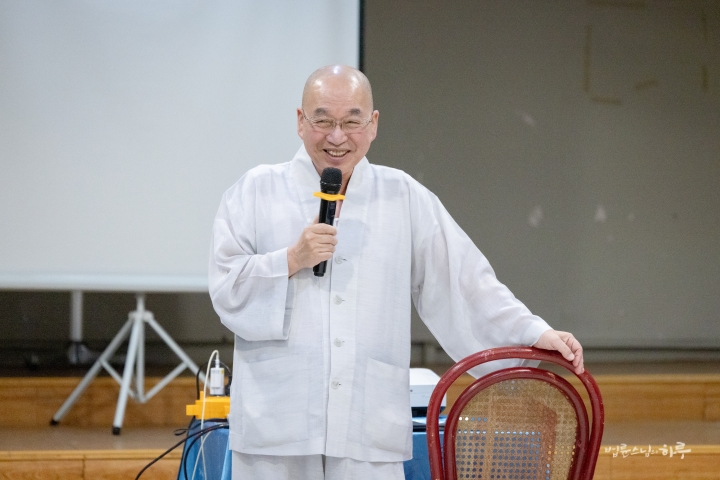
Asking Again About the Path JTS Should Take at This Crossroads of Change
JTS is not an organization aimed at charity work, but rather a gathering where practitioners wholeheartedly help their neighbors. Therefore, I believe it is more desirable to work within our manageable capacity rather than expanding the scale of our projects. There are already models in history from which we can learn. If the Buddha had traveled in carriages with numerous servants to spread the Dharma more widely, would the Buddhist teachings have been transmitted to this day as they have? I believe that because the Buddha upheld principles while spreading the Dharma, he left a greater resonance for future generations. The issues JTS faces now are similar to this. While JTS needs to publicize its activities, we do not use our finances for advertising. A clear decision is needed: whether to prioritize efficiency even if it means deviating from JTS principles, or to prioritize principles over efficiency. There are mountains of recorded Dharma Q&A videos waiting to be edited, but we cannot upload them due to lack of volunteer staff. There are also many manuscripts of Sunim’s books awaiting publication, but progress is slow due to the absence of volunteers. Of course, if we allowed hiring staff, we could easily cover labor costs through YouTube revenue or book royalties. However, we haven’t been able to make this decision easily due to our principles. The general consensus among the leadership tends to be that ‘we should stick to our principles at least while we are alive.’ To resolve this contradiction, more members of the Sangha need to participate in JTS activities. As the number of volunteers increases, work can be naturally distributed. It would be even better if more members of the lay Sangha who can work full-time gradually increase, but this is realistically difficult in an era of low birth rates. In the past, when people had three or four children, at least one of them could join the community, but now in an era where people have only one child, it’s difficult. So I think it would be good if you could take early retirement and come volunteer. Finally, let me add one more thing: while building schools is already challenging, natural disasters are becoming more frequent and larger in scale each year. Therefore, it seems necessary to operate school construction projects and disaster relief activities separately. Since disasters now occur multiple times a year with increasing intensity, I think it would be better to establish a separate department within JTS to enhance our response capability. I hope you will share your experiences and opinions on these issues tomorrow evening and the evening after.”They agreed to continue discussing JTS’s business direction throughout this visit and concluded the meeting at 8:30 PM.
Sunim finished today’s schedule after proofreading manuscripts and attending to various tasks at his accommodation.
Tomorrow morning, Sunim will travel to Kitaotao municipality for the school completion ceremony at Pangaraian, an indigenous village. In the afternoon, he will move to San Fernando municipality for another school completion ceremony at Luhayaran, another indigenous village.