My husband never acknowledges our wedding anniversary. Am I really expected to just put up with this?
Dec 2, 2025 - Sasanggye Magazine Interview, 60th Anniversary Dialogue Meeting of the Dialogue Culture Academy, Happy Dialogue (11) Chuncheon
Hello. Today, Sunim participated in a New Year’s interview hosted by Sasanggye magazine, attended the 60th anniversary dialogue meeting of the Korea Dialogue Academy, and then traveled to Chuncheon to deliver the final Happy Dialogue Dharma Q&A lecture of the year.
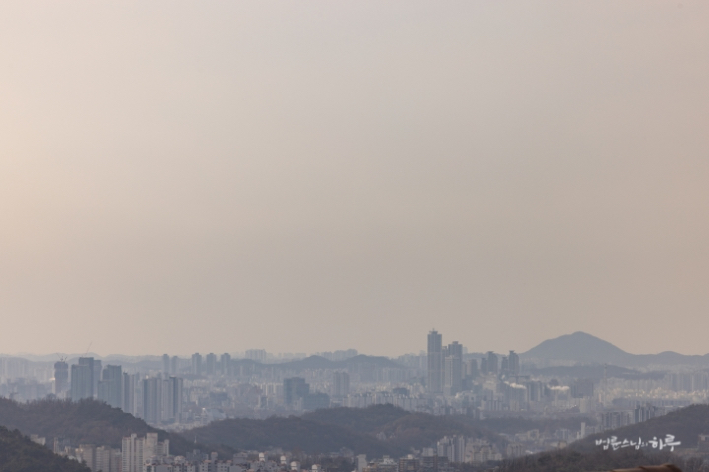
After completing morning practice and meditation, Sunim headed to Pyeongchang-dong at 7 AM to attend a dialogue meeting held as part of the 60th anniversary celebration of the Korea Dialogue Academy.

Departing from Seoul Jungto Center and crossing the Han River, Sunim arrived at the Korea Dialogue Academy in Pyeongchang-dong after about an hour.
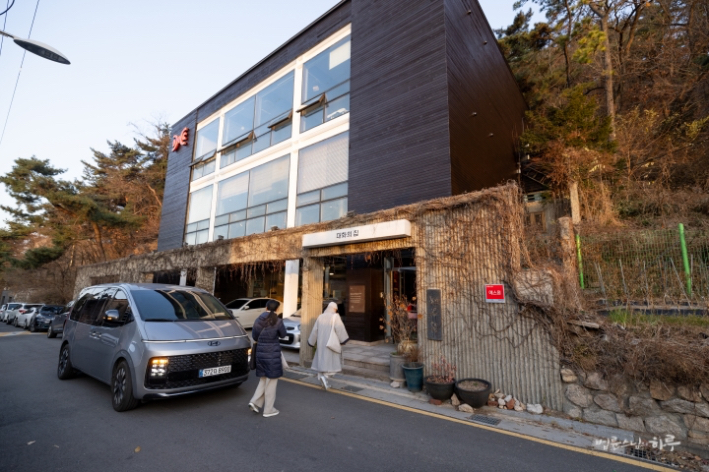
Upon Sunim’s arrival, Mr. Kang, Dae-in, Honorary Director of the Korea Dialogue Academy, and Mr. Jung, Sung-hun, Chairman of the Korea DMZ Peace and Life Park, warmly welcomed him. After exchanging greetings, the New Year’s interview began promptly at 8 AM.
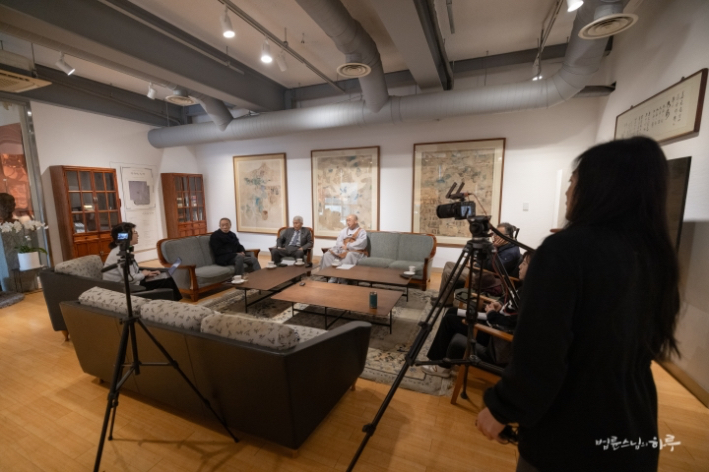
The New Year’s interview was conducted with Ms. Han, Yoon-jung, editor of Sasanggye magazine, asking questions and three senior members of society providing answers.
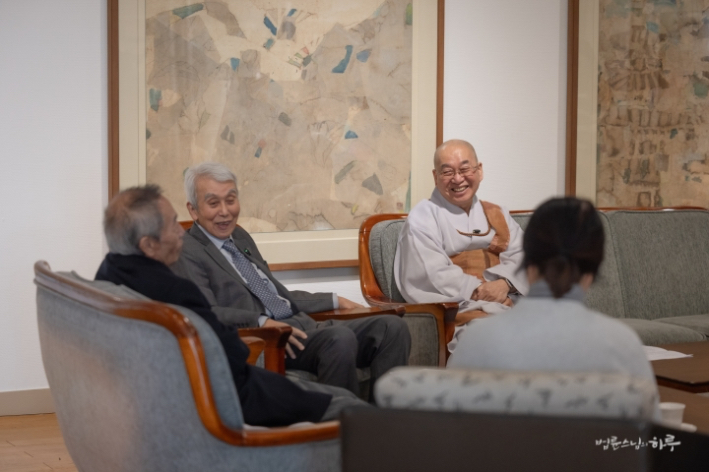
Various questions and answers were exchanged about the changes Korean society has experienced over the past 25 years and the direction of political, economic, ecological, religious, civil society, and civilizational transformation that should be pursued until 2050. Sunim also shared many insights about the path Korean society should take in the future.
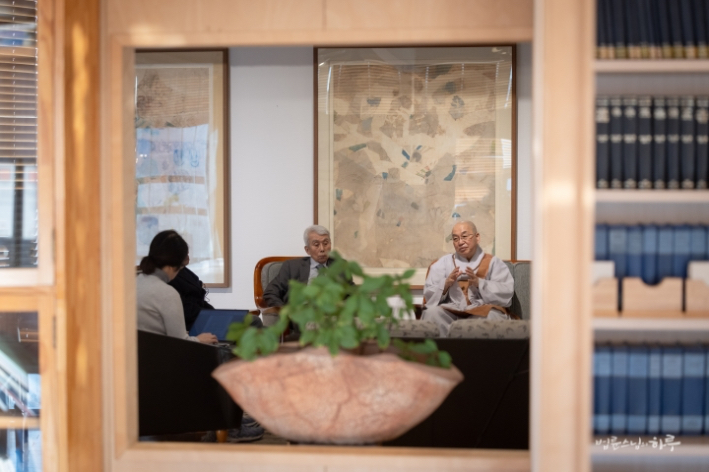
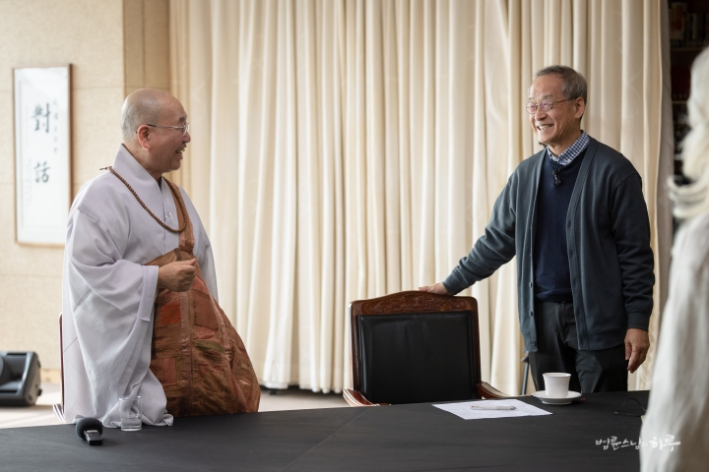
After completing the two-hour interview, the venue was changed at 10 AM to begin the “Three Chairs” dialogue meeting commemorating the 60th anniversary of the Korea Dialogue Academy. Before starting the dialogue, participants exchanged greetings.
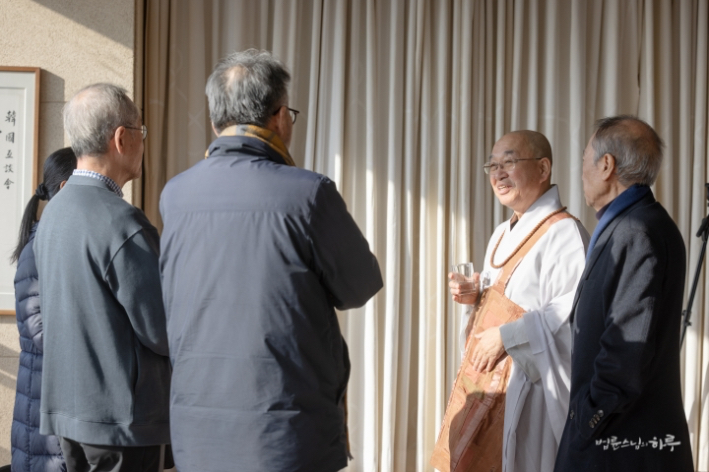
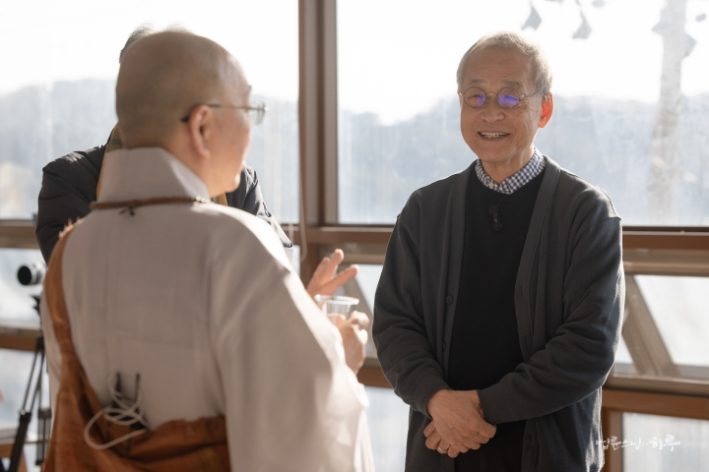
The Korea Dialogue Academy (Kang Won Yong Foundation) has been a learning ground for Korean intellectuals since its establishment in 1965, striving to gather the will and hearts of those who seek to correct relationships between humans and between humans and nature while pursuing life-centered humanization.
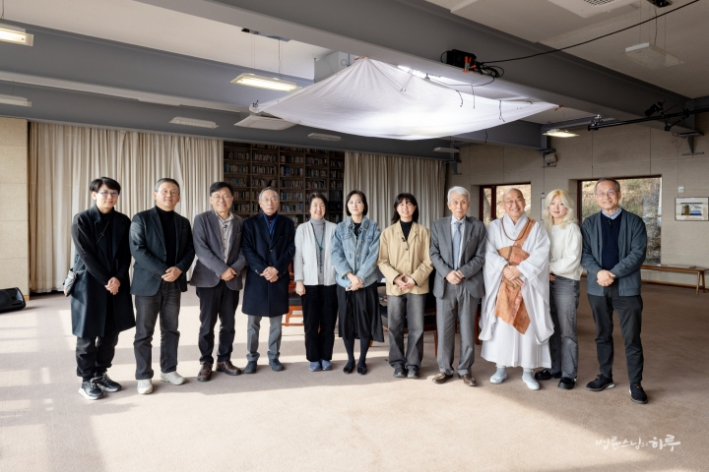
Today’s gathering was arranged at the request of Mr. Kang, Dae-in, Honorary Director of the Dialogue Culture Academy, to bring together three generations who have lived through different eras to find a common language. From the first generation, Venerable Pomnyun Sunim, Professor Choi, Jae-chun, and Chairman Jung, Sung-hun were present; from the second generation, Dr. Cho, Chun-ho, Attorney Ha, Seung-soo, and activist Jang, Ha-na participated; and from the third generation, singer and multidisciplinary artist Rosaline Song, writer Yoon, Eun-sung, and activist Cho, Hae-min were seated. The dialogue meeting tables were arranged in a triangular shape to reflect this.
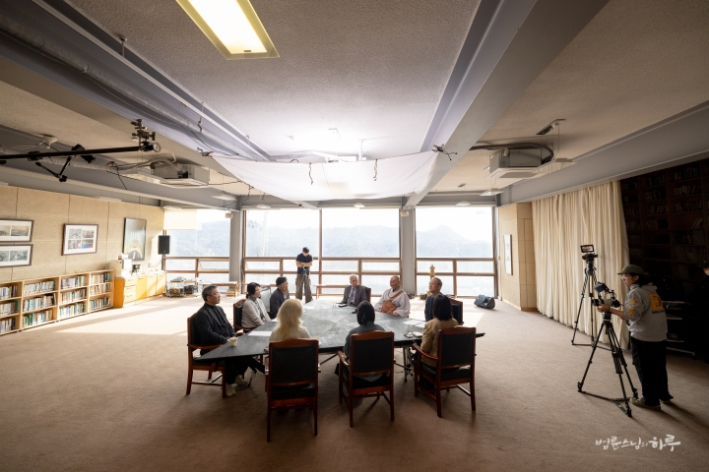
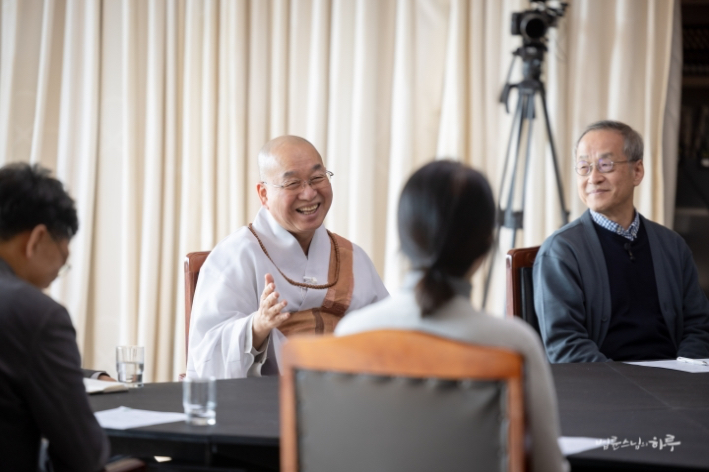
The dialogue continued for three hours under the theme “Climate Crisis and the Path of Love for Life.” In-depth discussions were held on various questions including the reality we will face in the next 25 years, what kind of life each generation has lived, and what to stop and what to start for the future.
After taking a commemorative photo with all three generations who participated in the discussion, the dialogue meeting concluded after 1 PM.
Although lunch was prepared, Sunim had another appointment and asked for understanding before leaving the Korea Dialogue Academy and heading to Seoul Jungto Social and Cultural Center.

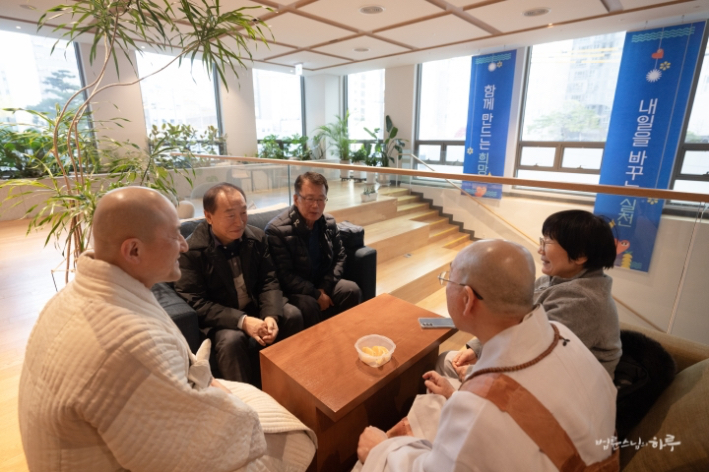
After an hour’s drive, Sunim arrived at Jungto Social and Cultural Center at 2 PM. Sunim had a conversation with Lee, Kyung-taek and Lee, Seung-hoon, members of LA Jungto Society, in the lounge on the second floor. The two had just returned to Seoul after a 3-night, 4-day pilgrimage to Jungto Society’s main temples across the country. After sharing their impressions from the main temple pilgrimage, they also discussed many topics regarding the LA Jungto Center construction project.
Next, Dr. Kim, Yoon-hee, a North Korean defector who researches North Korea, visited to present Sunim with noodles and rice cakes and had a brief conversation.
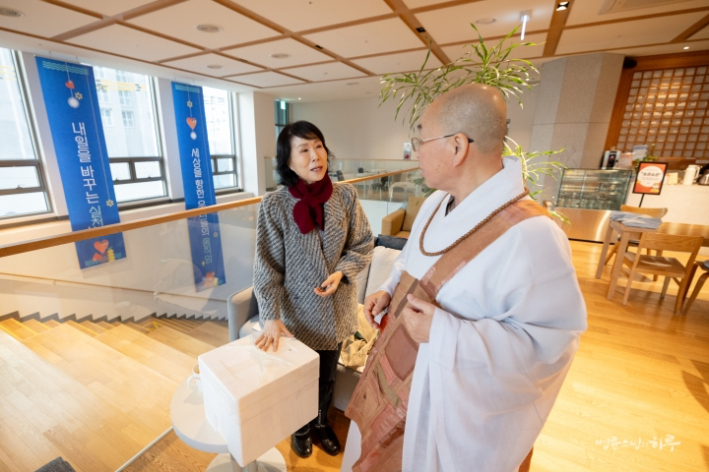
Having personally experienced the horrors of famine during North Korea’s food crisis in the 1990s and recording the daily reality of societal collapse in a journal, she came to greet Sunim after recently completing her doctoral dissertation and receiving her degree from Seoul National University’s Department of Sociology. She expressed gratitude to Sunim, saying she was able to complete her dissertation thanks to the materials recorded by Good Friends at that time. Dr. Kim’s dissertation was selected as the best dissertation this time. Sunim shared detailed impressions from visiting the North Korean border last summer before concluding the conversation.
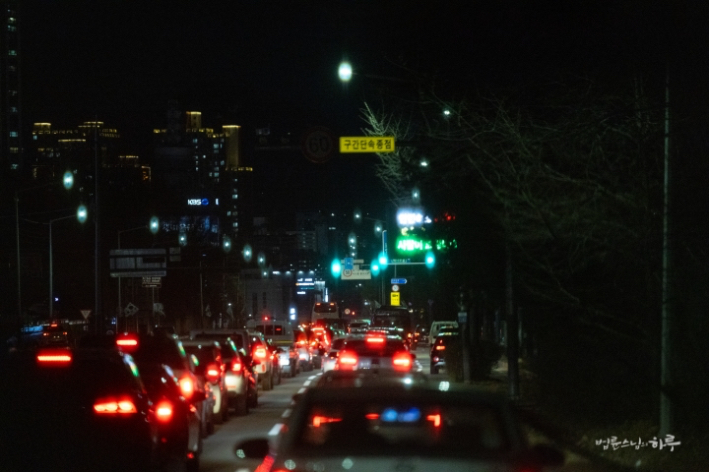
After completing back-to-back meetings, Sunim departed from Seoul at 4 PM and headed to Chuncheon. After a two-hour drive, they entered downtown Chuncheon.
Sunim had not been able to have lunch due to the packed schedule. Before arriving at the venue, he stopped at a restaurant for a simple lunch and dinner of Chuncheon makguksu (buckwheat noodles) before heading to the lecture hall.
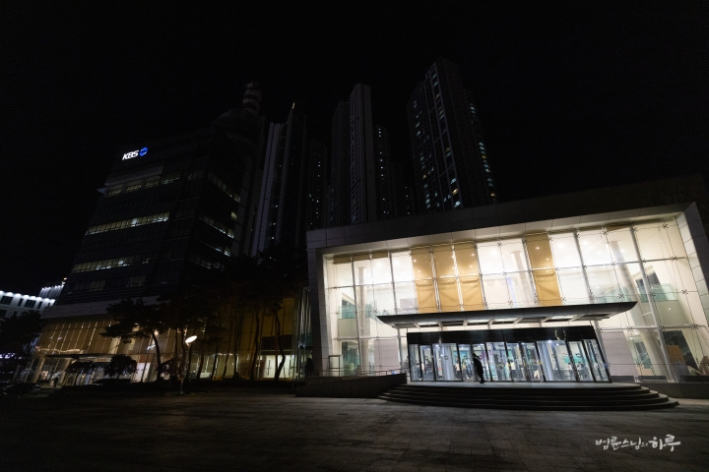
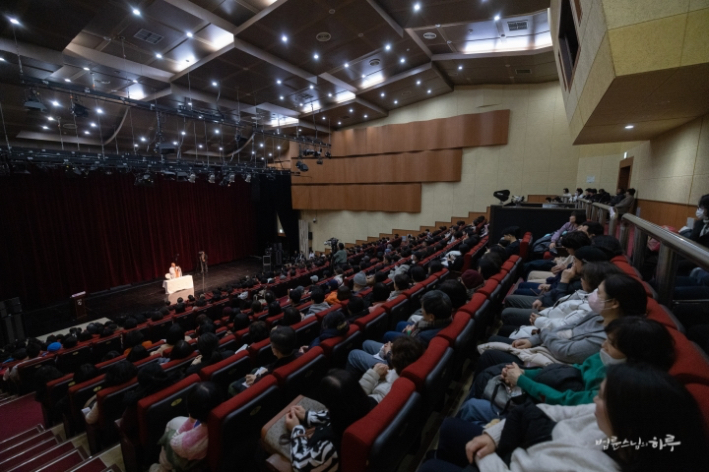
Today’s lecture was held at the KBS Chuncheon Broadcasting Station Public Hall. Upon arriving at the venue, many volunteers were welcoming citizens at various locations.
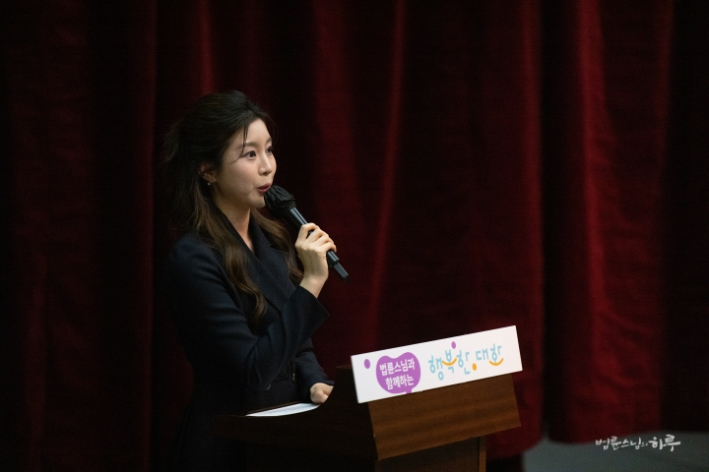
When admission was complete and it reached 7:20 PM, the Happy Dialogue Dharma Q&A lecture began with Lee, Won-young, a weather forecaster at KBS Chuncheon Broadcasting Station, as the host.
First, as a pre-performance, singer Jung, Byung-hoon, who is active in the Gangwon region, sang two songs, “I Am a Firefly” and “The First Moment I Saw You,” with his beautiful voice.
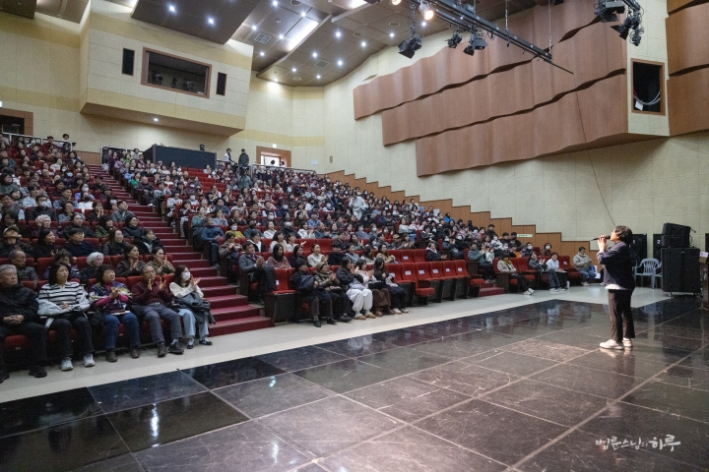
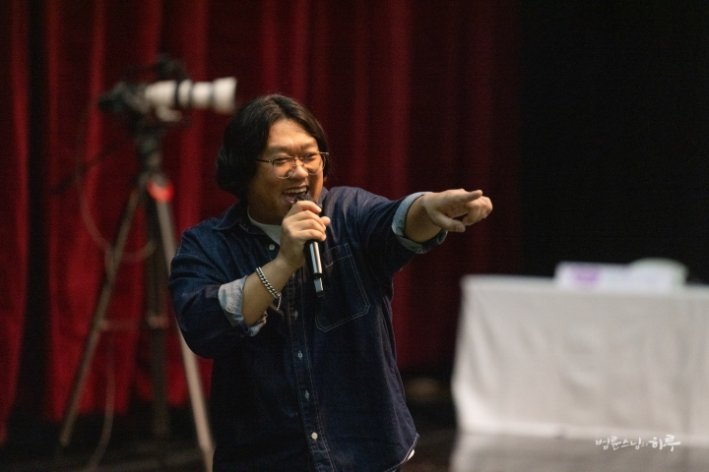
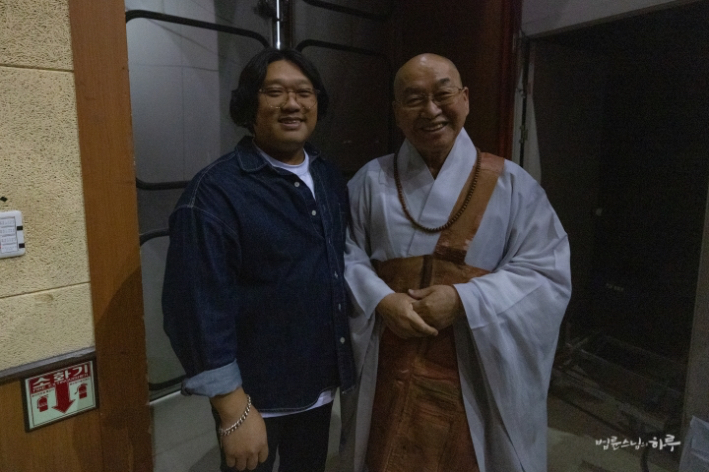
From the start, the lecture hall was filled with enthusiastic applause and energy. Sunim expressed gratitude to Jung, Byung-hoon for his passionate singing and took a commemorative photo together backstage.
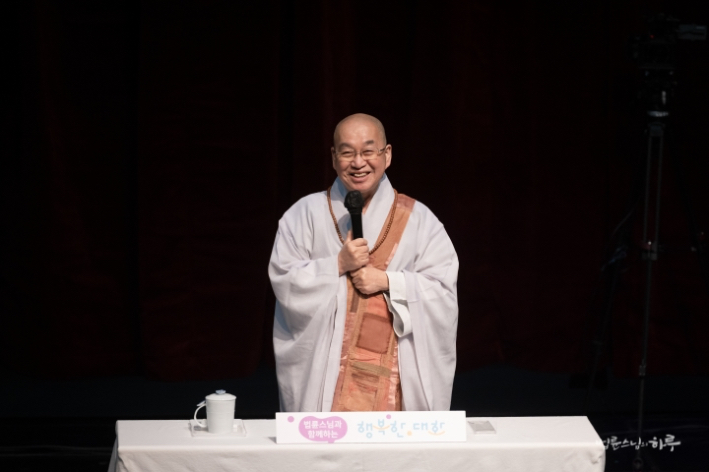
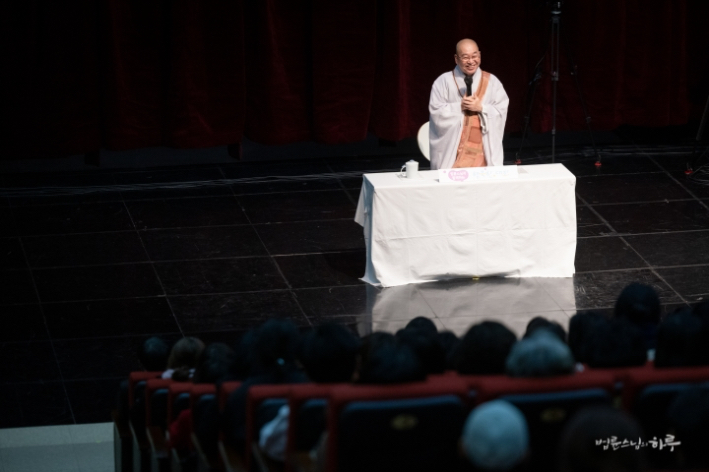
When the host introduced Sunim with a clear voice, Sunim walked onto the stage to great applause. With a bright smile, Sunim greeted the citizens of Chuncheon.
Buddha Is Not a College Admission Broker
The same goes for college entrance exams. Test results should reflect one’s abilities. But praying to Buddha to pass means essentially saying, ‘My abilities are lacking, but please somehow let me pass.’ If someone passes without the necessary abilities, that’s fraudulent admission. Buddha isn’t a college admission broker. Ultimately, for my wish to come true, the Buddha I believe in would have to become a broker arranging fraudulent admissions. In the past, there actually were admission brokers who took money and got people admitted through illegal means. Now it’s all illegal and punishable if caught, so even if it happens, people keep quiet about it. But in religion, such behavior happens openly. Saying ‘If you come here and pray, you’ll pass’ is an example. This is essentially conducting fraudulent activities openly. Here a serious contradiction emerges. For your desires to be fulfilled, the being you believe in must be corrupt. But why would you believe in and follow such a being? In traditional Indian culture, there are gods of destruction and creation. So which god do people believe in more? They believe more in the god of destruction because of its power. They feel good about a god who might show them special favor if they please it. That’s how wishes come true. Seeing this, I think that even religion is nothing more than the embodiment of human desires. Rabbits and squirrels live by their own strength, so why do humans alone fail to live by their own power and constantly try to depend on someone else? It’s because their greed is excessive. So the core message of today’s lecture is: ‘You must live your own life by yourself.’
Don’t Blame Others, Be Self-Reliant.
The reason your married life is difficult is ultimately because of your ‘desire to benefit from others.’ You got married thinking, ‘Maybe I’ll benefit from my husband?’ or ‘Maybe I’ll benefit from my wife?’ But when you actually live together and find that your spouse isn’t as helpful as expected, you start wondering, ‘Should I continue this marriage?’ If you even feel like you’re at a loss, you might think about ending it. However, a self-reliant person doesn’t depend on others. At the very least, shouldn’t you be able to hear from your spouse, ‘I’m lucky to have such a wonderful wife’ or ‘I’m fortunate to have such a great husband’? Since I became a monk, shouldn’t I receive evaluations like ‘Sunim is truly a wonderful monk’ rather than hearing ‘What kind of monk is this?’ If that were the case, I shouldn’t have become a monk in the first place. If I see you living happily in your marriages, I might watch from the side and think, ‘Married life seems pretty good. Maybe I should try it too?’ But when you constantly complain about how hard it is, why would I want to get married? Sometimes I do become curious about worldly affairs, but through Dharma Q&A sessions, I naturally return to the path of a proper practitioner. In this sense, Dharma Q&A doesn’t just help you—it helps me tremendously as well. When I conduct Dharma Q&A sessions, most stories are similar. People get married on their own and then hate their spouses. They have children by choice and then say they can’t live with them. They start businesses themselves and then complain when things don’t work out. Nobody forced them, yet they make these choices and then cry out about how hard it is. That’s why a smile naturally comes to my face during Dharma Q&A sessions. Why? Because I can’t help but think, ‘I’m glad I didn’t get married,’ ‘I’m glad I didn’t have children,’ ‘I’m glad I don’t have to work in an office.’ So please don’t thank me too much—these sessions help me greatly too. (Laughter) You all seem to take life too seriously. Just live like the squirrels and rabbits hopping around in the mountains. But suffering arises because you keep trying to depend on others, wanting everything to go your way, being greedy, and acting on your emotions.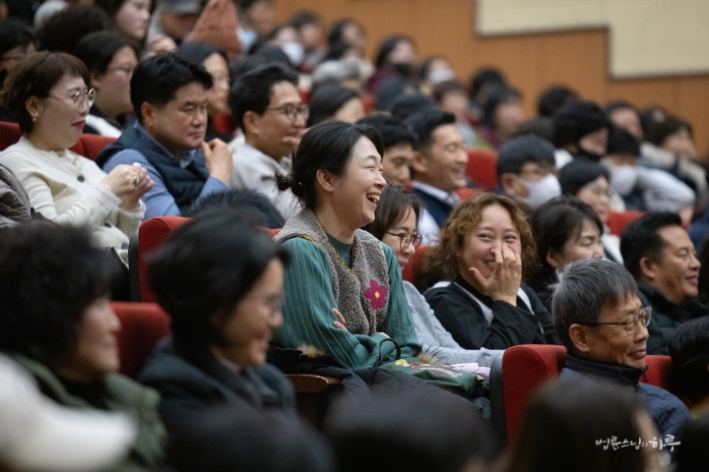
Next, three people who had pre-registered their questions asked Sunim first. Then, four more people from the audience asked additional questions. One of them sought Sunim’s advice on how to have a happy married life with her husband, saying she often has conflicts with him because he lacks empathy and doesn’t remember anniversaries.
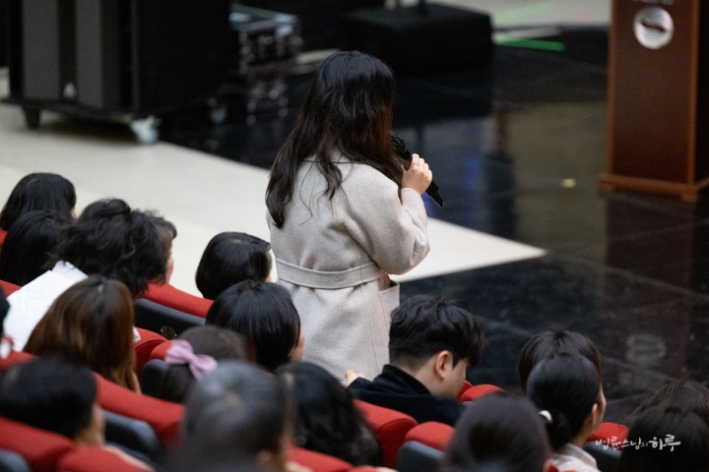
My husband never acknowledges our wedding anniversary. Am I really expected to just put up with this?
“I’ve been married for one year. My husband lacks empathy and tends to speak bluntly, so we’ve fought frequently since we were dating. I’ve tried to understand him by studying psychology and MBTI (personality type tests). Whenever I felt hurt, I would console myself thinking, ‘It’s because he’s a T-type (thinking type).’ But even when I expressed my disappointment, my husband didn’t change at all. When I tried alone and anger built up, I eventually couldn’t hold back and we had many big fights where I said hurtful things. A few days ago was our first wedding anniversary, and I told him several times that I really wanted to celebrate it. But my husband said, ‘Do we really have to do something for our anniversary? None of my friends celebrate theirs,’ and we had another serious fight. My husband doesn’t place much importance on these anniversaries, but I think they’re important, so we keep having conflicts. Should I just put up with it? For reference, my sister has been reading Sunim’s books diligently after marriage and is living well without getting divorced. I also want to live well while listening to Sunim’s teachings. How can I have a happy married life?”
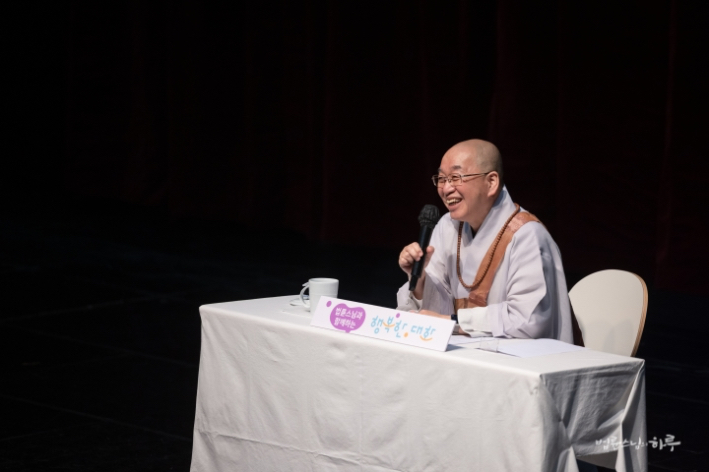
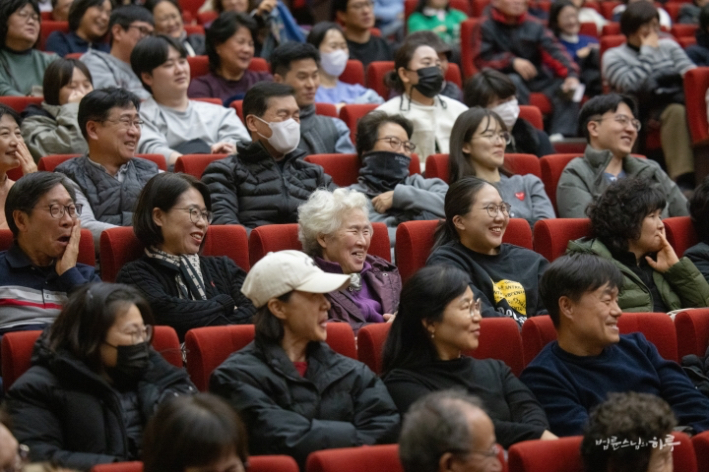
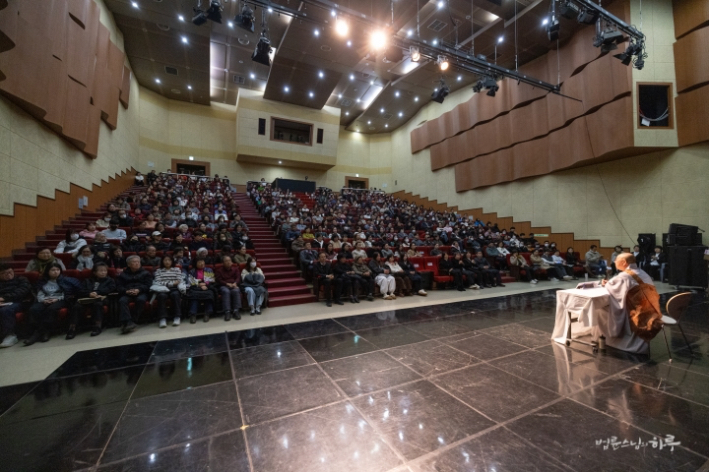
“What you just said sounds exactly like what my husband tells me. For a moment, I thought you were my husband.” (laughter)
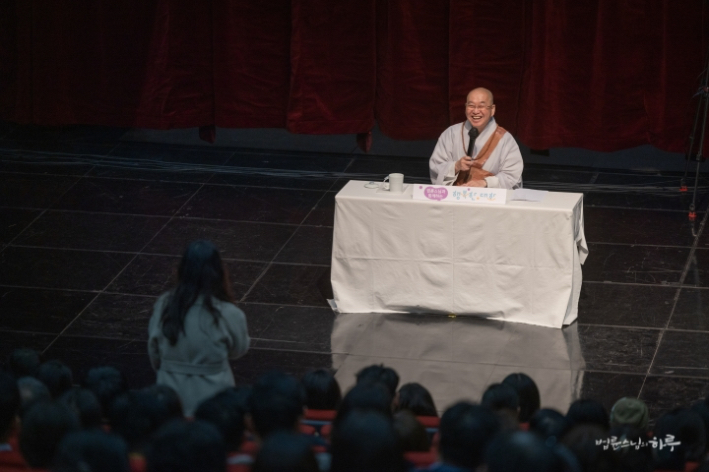

“Thank you.”
“Just because our parents aren’t the parents we wanted doesn’t mean we can call them bad people. While parents may not have taken care of us as much as we expected, if we look at it objectively, parents have done far more for their children. That’s why parents are fundamentally people we should be grateful to. They may have fallen short of our expectations. So we might feel dissatisfied, but that doesn’t make them bad people. However, because we can’t distinguish this, we think someone is bad when they don’t meet our expectations.”“I think this is the first time I’ve ever felt good while being scolded.”
“When did I scold you? I just said your husband’s personality is similar to mine.”“I’ll try to like my husband as much as I like Venerable Pomnyun Sunim.”
“That’s going too far. You don’t need to like him. Just don’t dislike him.”“I’ll live peacefully.”
“Yes. Let’s just live peacefully.”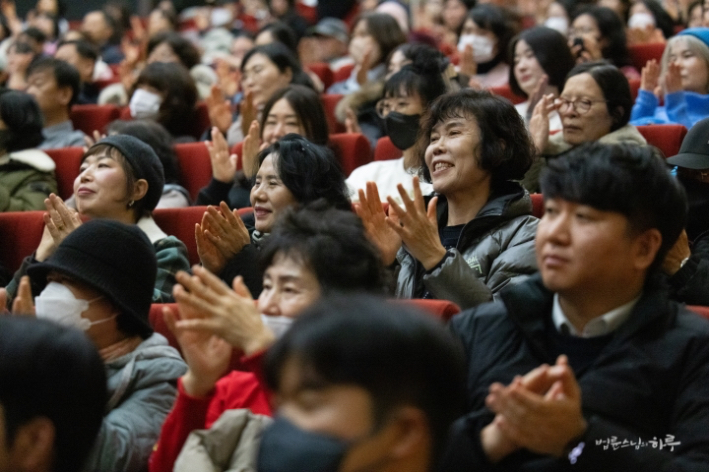
Questions continued to follow.
My son has become addicted to gambling through stocks and sports betting and has accumulated debt. What can I do as a mother to help my son?
As a freelancer, I’m anxious about the future and worried about falling behind in competition. How should I live in these uncertain times?
In group activities or clubs, being told to apologize first and endure because I’m younger—isn’t that gaslighting? Where is the boundary between understanding and consideration?
My self-employed husband has lost work due to the poor economy, wanders outside, and treats the family coldly. Recently, even our son has stopped going to school. How should I accept this changed situation?
There’s someone at work I really can’t stand to the point it makes me physically ill. They cunningly use me and then make it look like they did everything at the end, which is so annoying. How should I deal with such people when I meet them again?
As the dialogue continued, the promised two hours quickly passed. When it was time to wrap up, Sunim gave his closing remarks.
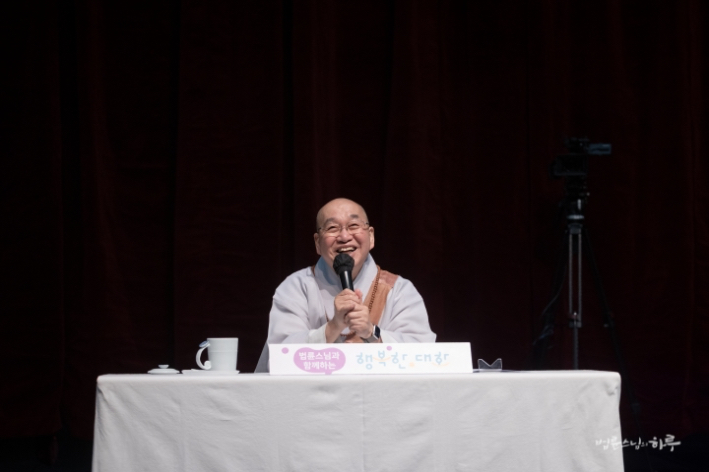
Just Lowering Your Standards Can Lighten Your Life
“When you lower your standards, you always feel grateful. ‘How fortunate it is just to be able to eat and live.’ When you lower your mental standards like this, there really aren’t many problems in the world. Many people worry because I travel abroad for lecture tours at over seventy years old. When they do, I say this: ‘In the old days, people walked everywhere, but now I travel by plane and car—what’s the problem?’ Even if I sleep at the airport for a day or two, the air conditioning and heating work well, there are restrooms, and water is available, so it’s fine. Others might think it looks shabby, but that’s their standard, not my problem. Yet we keep evaluating our lives only by economic standards. Even after graduating from college and earning money, if we’re caught up in thinking ‘I need to earn more,’ we can’t appreciate what we have and always feel lacking and dissatisfied. So we need to let go of such standards a bit to be happy. Ultimately, suffering arises because of our obsession with ‘Money! Money! Money!’ If you slow down a beat and lower your standards a bit, a smile will appear on your face and peace will come to your mind.”The lecture ended with loud applause.
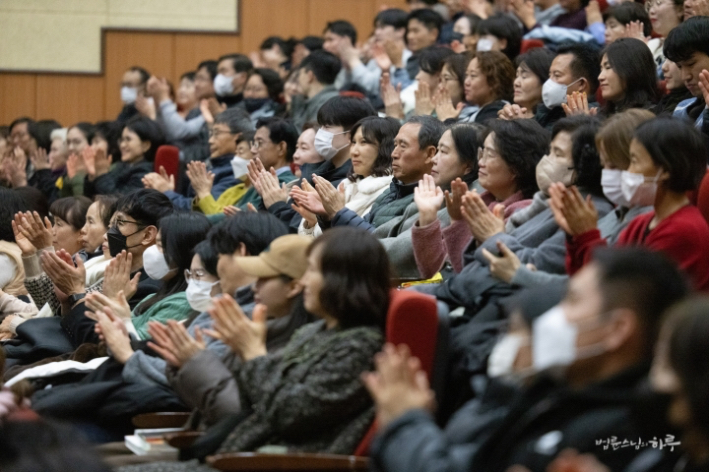
Following this, a book signing session began on stage. Many audience members lined up to receive Sunim’s autograph and express their gratitude.
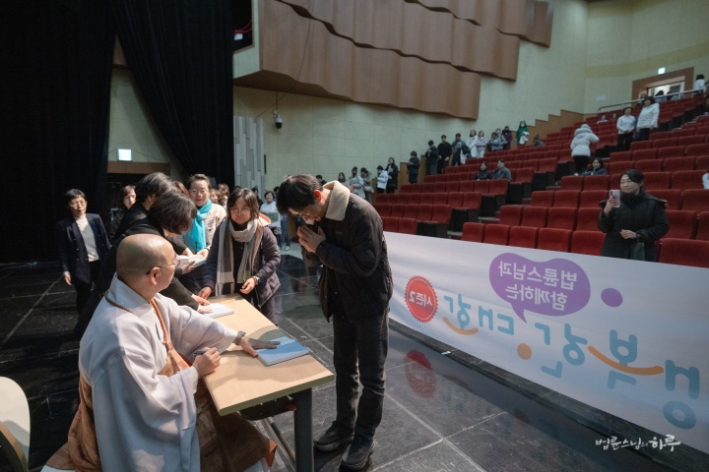
“Sunim, I really enjoyed today’s lecture. Thank you.”
After the book signing, Sunim took a commemorative photo with the Chuncheon Happy Citizens who had prepared the lecture.
“Exciting and fun! Great job on the Chuncheon lecture!”
The volunteers concluded the lecture with bright smiles and loud cheers.
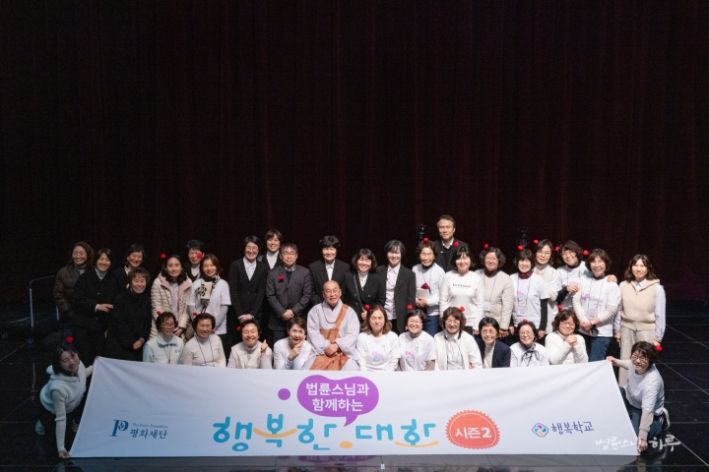
Today’s Chuncheon lecture was the final Happy Dialogue Dharma Q&A lecture of 2025. The Chuncheon Happy Citizens presented a celebration cake to Sunim with gratitude for sharing words of wisdom throughout the year.

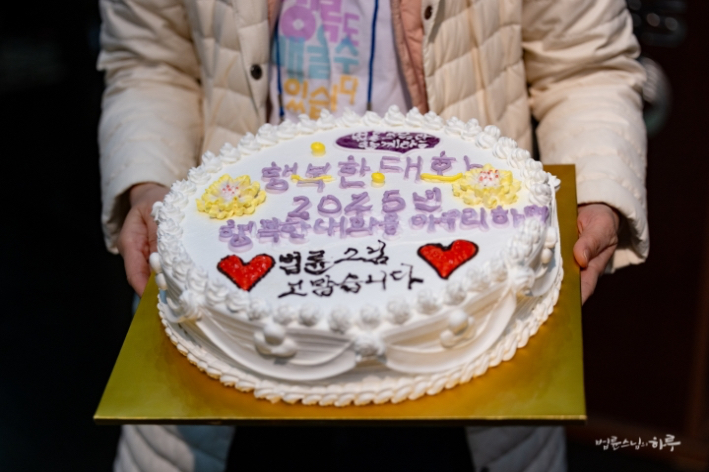
“Thank you, Venerable Pomnyun Sunim.”
The Happy Citizens expressed their gratitude to Sunim as he received the cake.
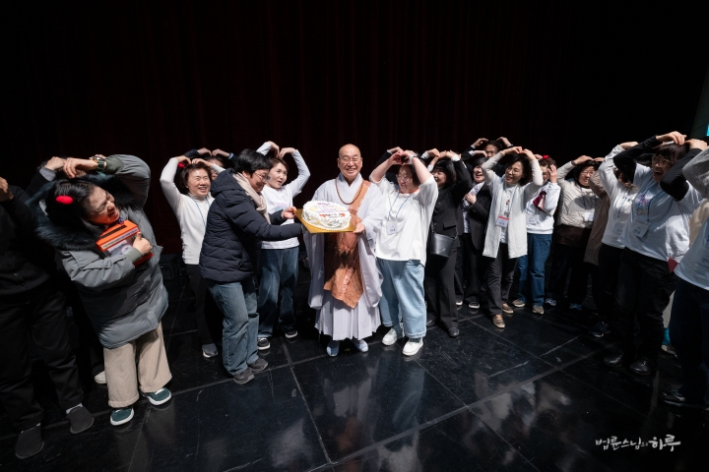

Sunim handed the cake back to the volunteers.
“You all worked very hard. Please share this cake among yourselves. I need to head to Seoul, so I’ll leave first.”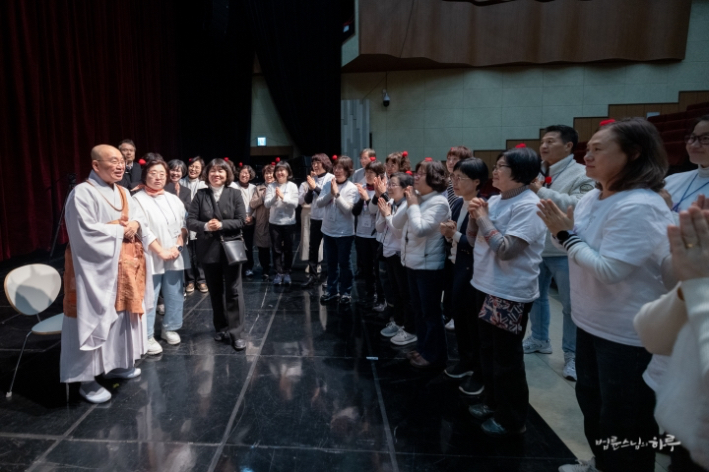
After expressing gratitude, Sunim left the venue and departed Chuncheon at 10 PM, heading back to Seoul. After a 1.5-hour drive, he arrived at Seoul Jungto Center at 11:30 PM and concluded the day’s activities.
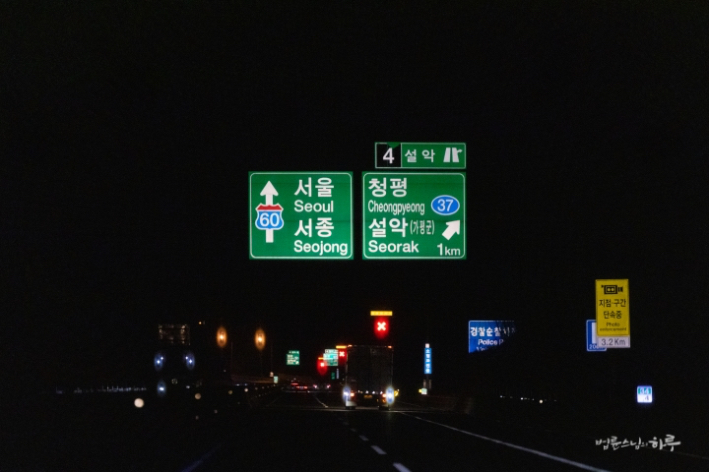
Tomorrow morning, Sunim will conduct a live broadcast of the Weekly Dharma Assembly. In the afternoon, he will give a lecture on “The Path to Gross National Happiness” at Sarangjae in the National Assembly Building, and in the evening, he will meet with guests visiting The Peace Foundation.