Donate
Contact Us
Jungto Society
Jungto Society Newsletter Sign up
  • Get Started
  • About
    • Jungto Society
    • Ven. Pomnyun Sunim (법륜스님)
    • Our NGOs
    • Find Us Online
    • Visit Us
    • Contact Us
  • Articles
    • A Day in the Life of Sunim
    • Jungto News
    • Press & Media
  • Library
    • Dharma Q&A
    • Meditation Q&A
    • Wisdom Note
    • Practice Resources
  • Online Programs
    • Live Dharma Talk
    • Happiness Workshop
    • Jungto Dharma School – Introduction to Buddhism I
    • 정토담마스쿨 – 근본불교
    • Jungto Dharma School – Introduction to Buddhism II
    • 정토담마스쿨 – 인간붓다
    • 1000-Day Practice
    • Sunday Meditation
  • Offline Programs
    • Half-Day Temple Stay
    • In-Person Casual Conversation with Ven. Pomnyun Sunim in 2025
    • Dubuk Jungto Retreat Center Volunteering
Resources by Language
  • Get Started
  • About
    • Jungto Society
    • Ven. Pomnyun Sunim (법륜스님)
    • Our NGOs
    • Find Us Online
    • Visit Us
    • Contact Us
  • Articles
    • A Day in the Life of Sunim
    • Jungto News
    • Press & Media
  • Library
    • Dharma Q&A
    • Meditation Q&A
    • Wisdom Note
    • Practice Resources
  • Online Programs
    • Live Dharma Talk
    • Happiness Workshop
    • Jungto Dharma School – Introduction to Buddhism I
    • 정토담마스쿨 – 근본불교
    • Jungto Dharma School – Introduction to Buddhism II
    • 정토담마스쿨 – 인간붓다
    • 1000-Day Practice
    • Sunday Meditation
  • Offline Programs
    • Half-Day Temple Stay
    • In-Person Casual Conversation with Ven. Pomnyun Sunim in 2025
    • Dubuk Jungto Retreat Center Volunteering
No Result
View All Result
Jungto Society
  • Resources by Language
  • Dharma School
  • Live Dharma Talk
Home A Day in the Life of Sunim

Banner
“I Hope the Dialogue Between Japan and North Korea Will Progress for Peace on the Korean Peninsula”

December 28, 2025
0
0
VIEWS
Share on FacebookShare on Email


JUN 27, 2024, Tokyo, Japan – Niwano Peace Prize Medal Presentation Ceremony, Dharma Q&A for Korean Residents

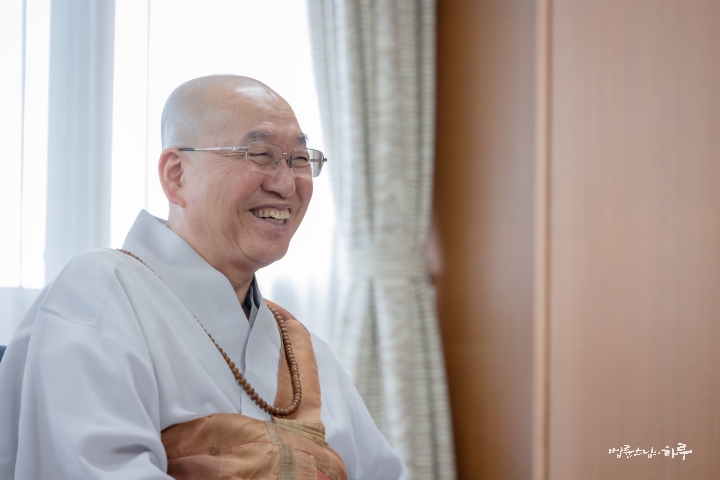
Hello. Today is the day for a Dharma Q&A session for Korean residents in Tokyo, Japan. The new day began with the vigorous sound of trains that seemed to be right next door. Sunim said with a smile.

“I couldn’t sleep a wink last night. The train noise was constant, and when I counted the cars, there were nine.” (Laughter)
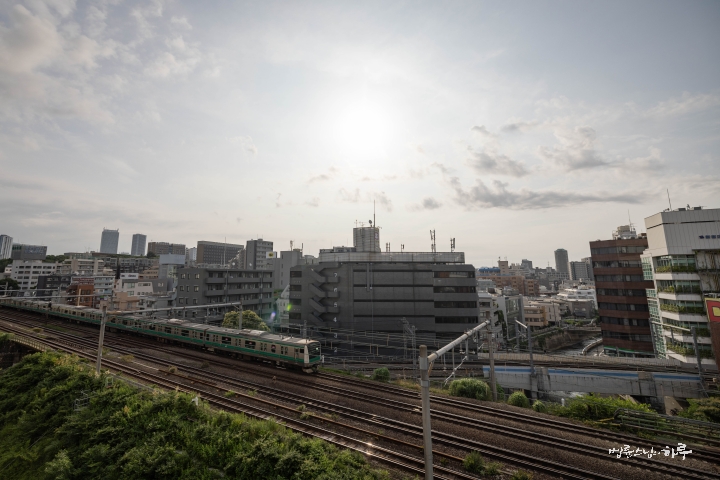


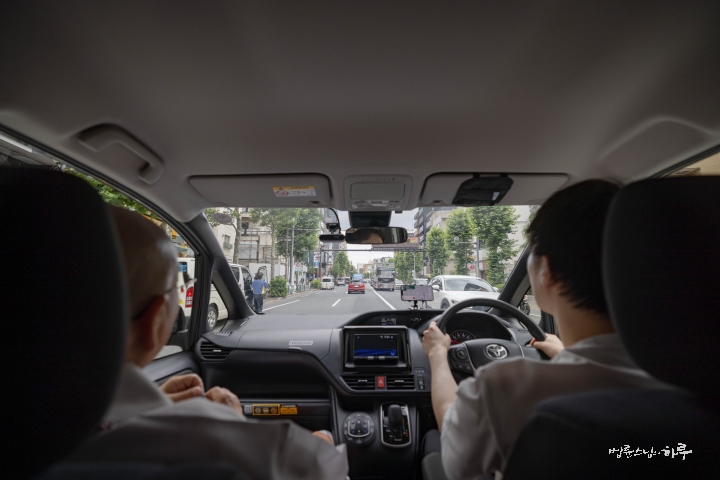
After morning practice and meditation, breakfast was served at the accommodation at 6:30 AM. After getting ready, Sunim headed to the Rissho Kosei-kai (입정교성회)Great Sacred Hall at 8:50 AM.
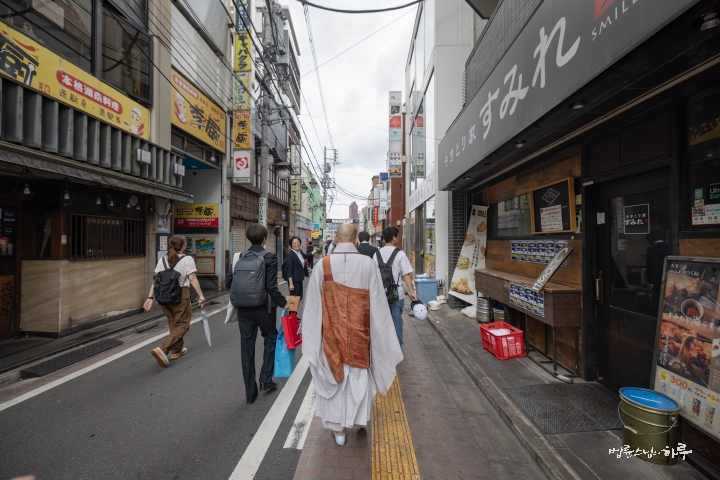


Sunim received the 37th Niwano Peace Prize four years ago in 2020, but due to the COVID-19 pandemic, he couldn’t attend the ceremony in Tokyo and participated online instead. At that time, he only received the certificate, not the medal that comes with it. Today, four years later, the medal presentation ceremony was held at Rissho Kosei-kai.


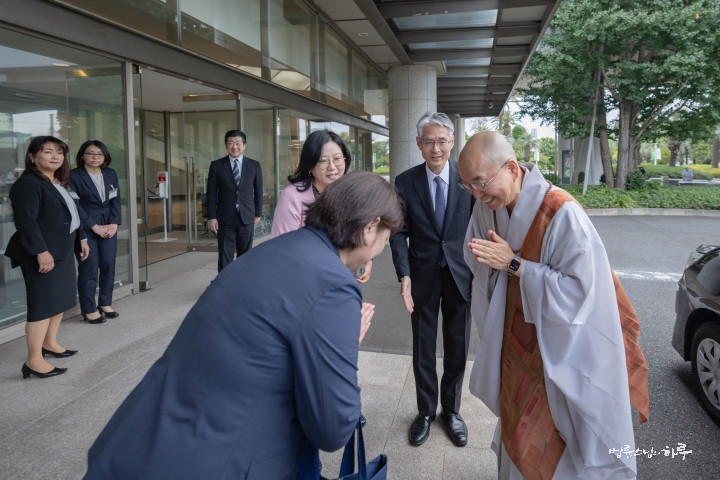
When Sunim arrived at Rissho Kosei-kai, representatives from the Niwano Peace Foundation warmly welcomed him in the first-floor lobby of the Great Sacred Hall.


Moving to the reception room on the 6th floor, Sunim received a welcome greeting and watched a video titled “Walking the Path of a Bodhisattva” together. The video showed the life and teachings of Niwano Nikkyo, the founder of Rissho Kosei-kai, and the current members’ practice methods.
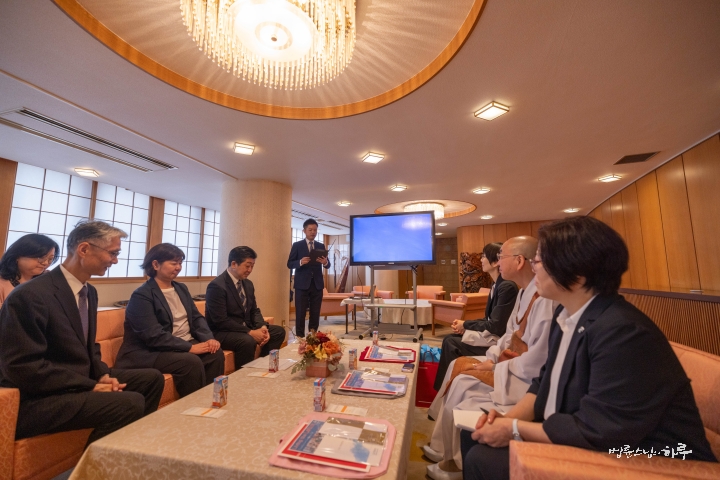
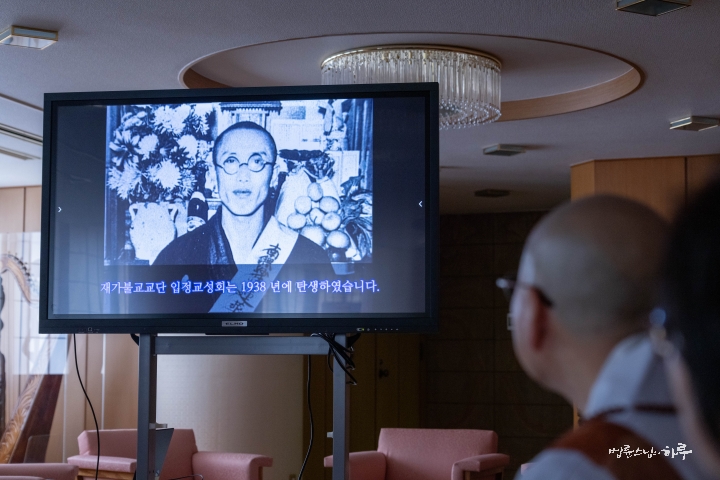


After the video, they toured the One Vehicle Pagoda, the Great Sacred Hall, and the Memorial Hall in order.
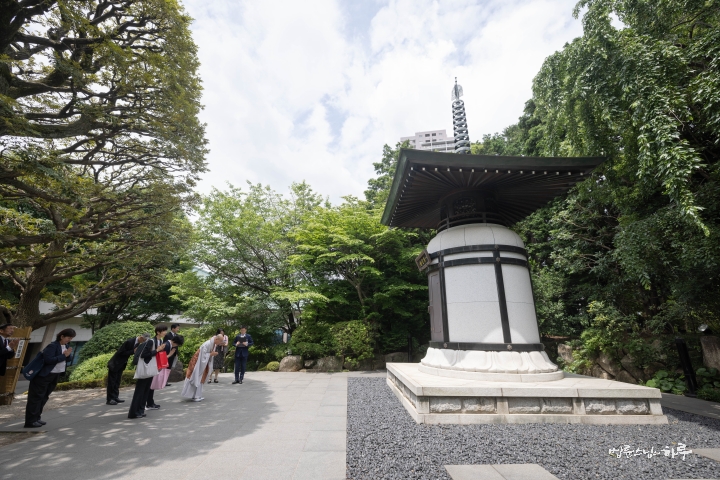


After a short break, at 11:00 AM, Sunim had a conversation with Niwano Nichiko, President of Rissho Kosei-kai and Honorary Chairman of the Niwano Peace Foundation. Since receiving the Niwano Peace Prize, Sunim has been doing many things to promote world peace and interfaith cooperation. They shared what had been done so far and listened to the Chairman’s stories.
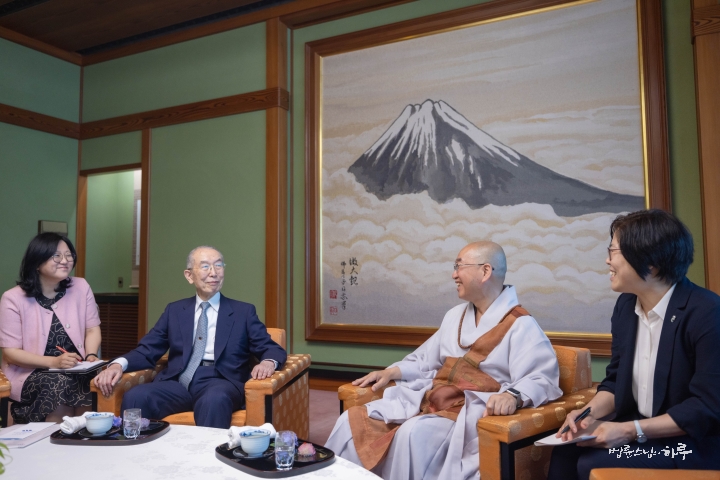


Chairman Niwano Nichiko opened the conversation by recalling the late Reverend Kang Won-yong(강원룡), who had received the Niwano Peace Prize.
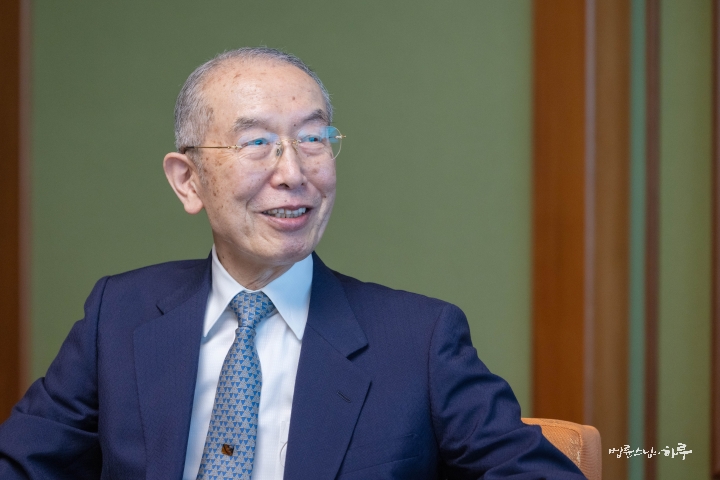


“The 17th recipient was Reverend Kang Won-yong, and I remember meeting him frequently to promote interfaith cooperation.”

Sunim also shared his connection with Reverend Kang Won-yong and his current work.
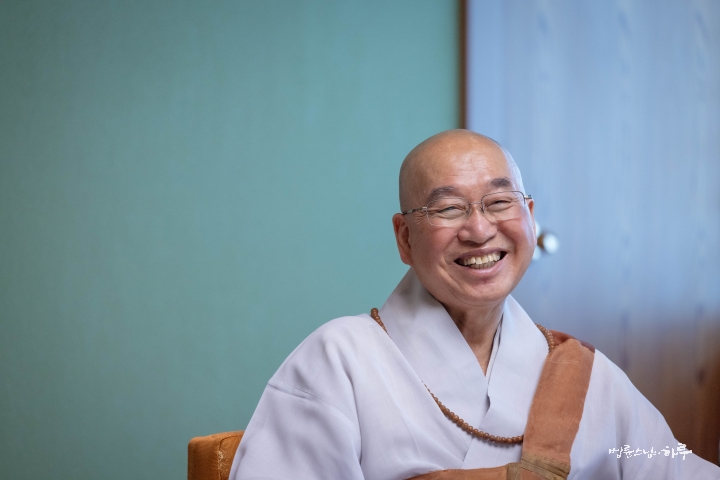


“I also participated in the interfaith dialogue meetings that the late Reverend Kang Won-yong led, and we worked together on social action activities until he passed away. The person leading Kyungdong Church after Reverend Kang Won-yong is Reverend Park Jong-hwa, and he and leaders from six religions meet once a month. This year marks the 26th year. We mainly discuss humanitarian aid to North Korea and peace on the Korean Peninsula.

I Hope the Dialogue Between Japan and North Korea Will Progress for Peace on the Korean Peninsula

Currently, dialogue between South and North Korea has been suspended, and dialogue between the United States and North Korea has also been suspended, but only Japan and North Korea continue to have some dialogue. So during this visit to Japan, I plan to meet with senior Japanese politicians to discuss ways to advance dialogue between Japan and North Korea. As North Korea and Russia engage in military cooperation, military tensions on the Korean Peninsula are increasing. I am doing what I can to reduce the risk of war. On June 13th, 10,000 people gathered to make a declaration for peace on the Korean Peninsula.
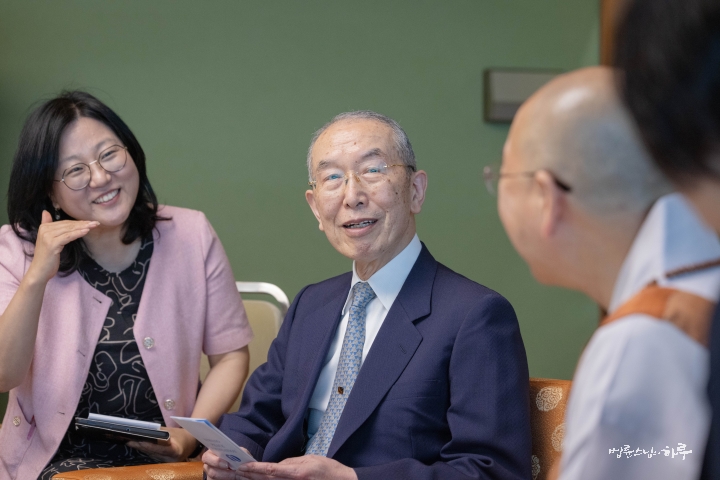


Looking at the history of Rissho Kosei-kai today, I learned that Rissho Kosei-kai has comforted people’s hearts during difficult times and helped many people in need socially. It seems to have provided great comfort and help to the Japanese people, especially during the difficult period after the war.”

They concluded the conversation by agreeing to continue working together for world peace and interfaith cooperation.
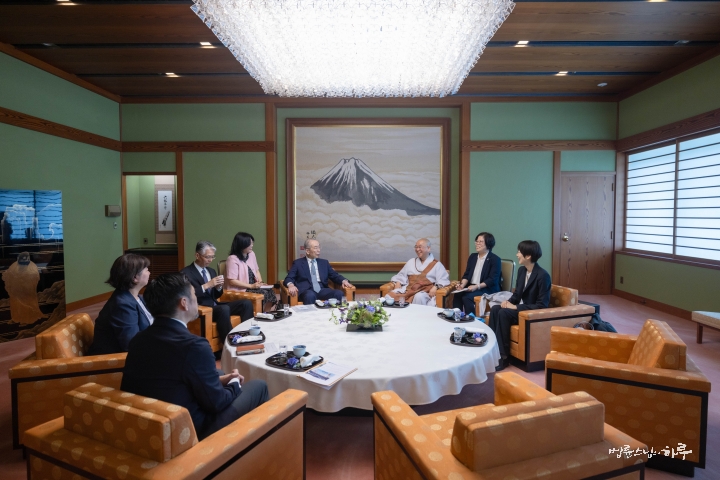


The Niwano Peace Prize medal presentation ceremony followed. Chairman Niwano Nichiko of the Niwano Peace Foundation personally presented the medal to Sunim.
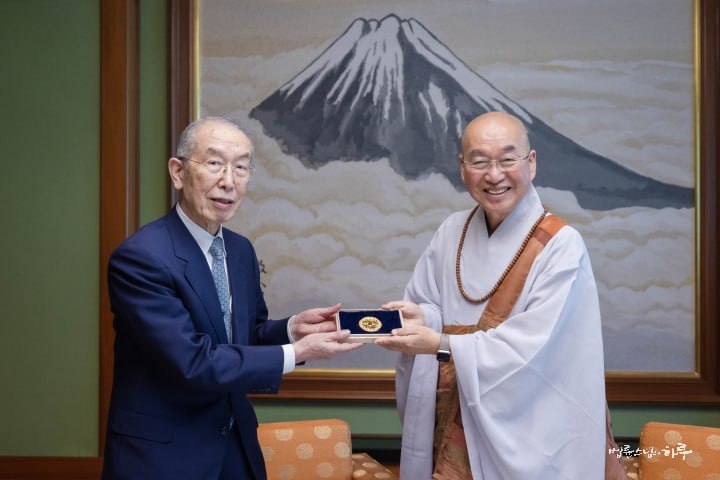


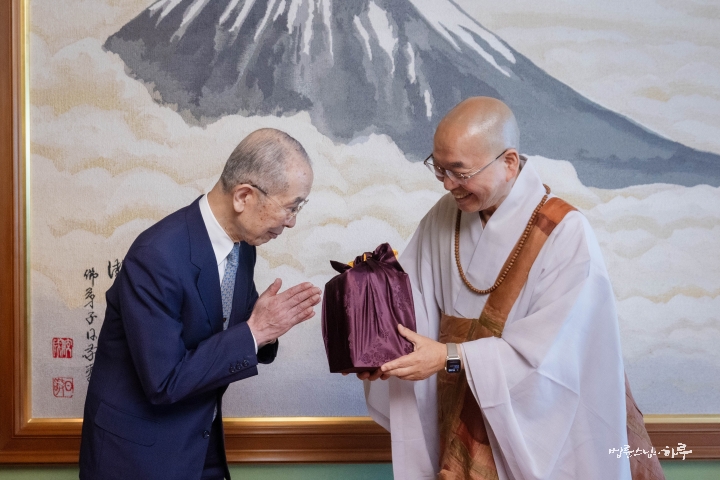
Sunim also presented a gift from Korea to the Chairman.


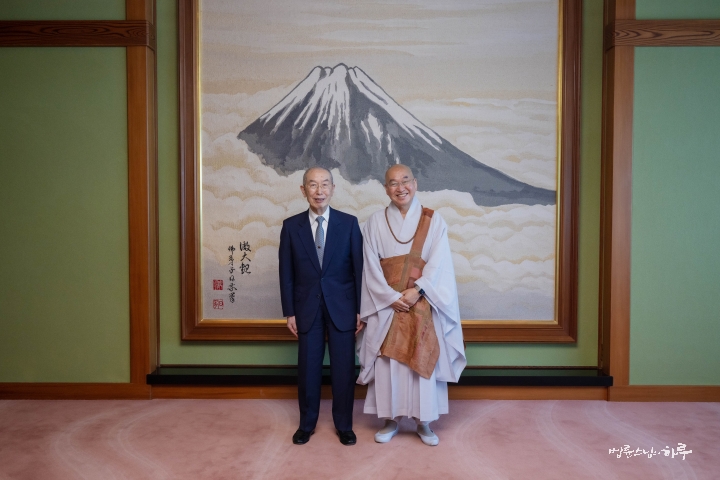
After exchanging gifts, Sunim and the Chairman took a commemorative photo together.


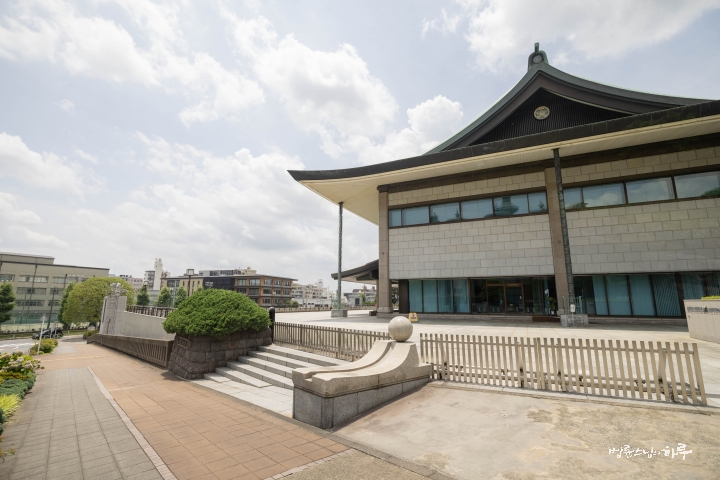
Leaving the Rissho Kosei-kai Great Sacred Hall, they moved to Shinjuku for lunch with the Director of the Niwano Peace Foundation.


They had lunch and conversation with Niwano Hiroshi, Director of the Niwano Peace Foundation, the Secretary-General, and staff members.
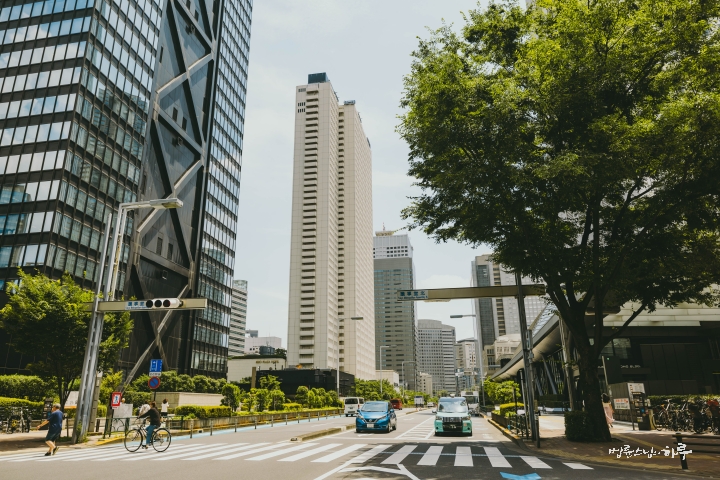
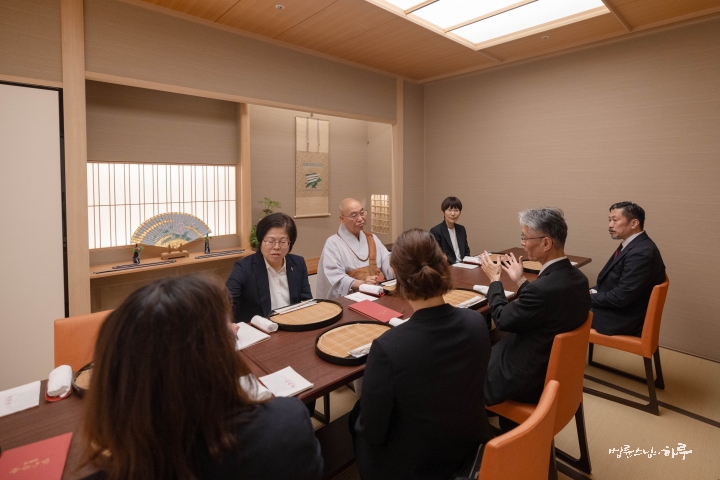


After finishing the conversation and exchanging greetings, Sunim returned to Rissho Kosei-kai. From 2:00 PM, he met with Haku Shinkun, who had served in the Japanese House of Councillors, at the Rissho Kosei-kai office.
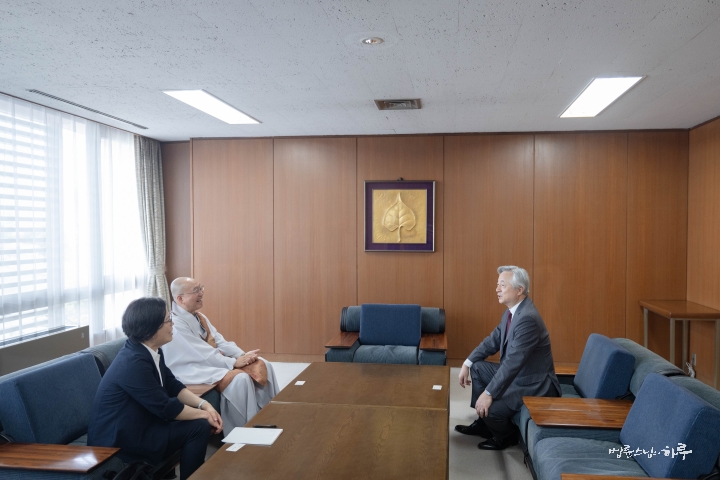


As someone deeply interested in Japan’s foreign and defense policies, they had an extensive discussion about Japan’s role in peace on the Korean Peninsula. First, Councillor Haku asked Sunim a question.
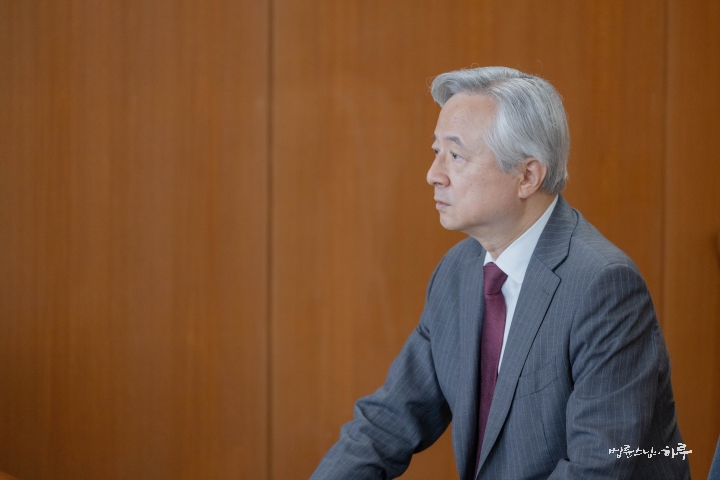


“Do you come to Japan often?”

“I mainly come to give lectures for Korean residents, but in the past year, I’ve visited three times hoping to encourage Japanese politicians to engage in dialogue between Japan and North Korea.”

“In Japan, since 2002, the issue of Japanese abductees by North Korea has been flooding the media, and the negative image of North Korea has continued.”

To Eliminate the Risk of War on the Korean Peninsula

Sunim introduced his efforts to eliminate the war crisis on the Korean Peninsula and made several requests to Councillor Haku.
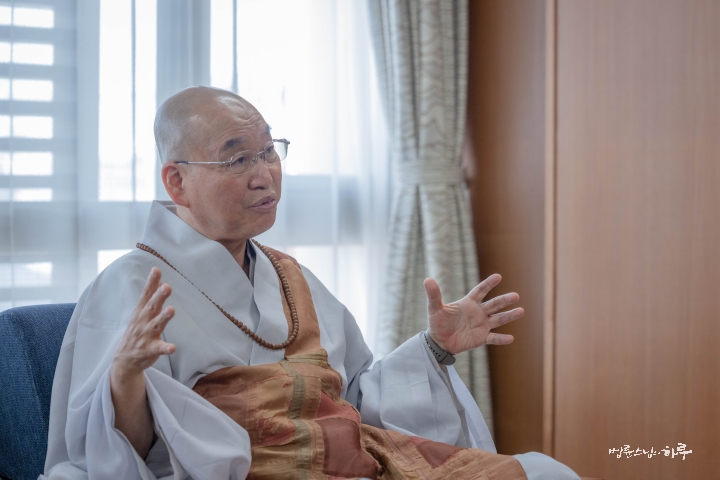


“To eliminate the risk of war on the Korean Peninsula, improving relations between North Korea and the United States is key. However, with the U.S. facing elections, it will take at least a year before they can begin improving relations. The problem is that there’s a high risk of conflict occurring within that year. The only country that can manage disputes within the next year is Japan. This is because Japan is currently the only country with which North Korea has opened a dialogue channel.”

“In Japan, there has been strong public opinion demanding that the issue of Japanese citizens abductees by North Korea be resolved first. As a result, dialogue between North Korea and Japan has not been properly conducted. However, as this issue has prolonged for more than 20 years, public interest has weakened.”

“Japan’s continued demand that North Korea resolve the abductee issue first essentially means refusing to engage in dialogue with North Korea. So what I want to tell Japanese politicians is that it would be better to simply say, ‘Let’s start dialogue between North Korea and Japan based on the 2002 Koizumi-Kim Jong-il (김정일) Pyongyang Declaration.’ This is because that declaration already includes the abductee issue. If the abductee issue is made a precondition, dialogue itself cannot take place. I came here hoping that you and other Japanese politicians would act with this perspective.”

“Yes, I completely agree with your thoughts.”
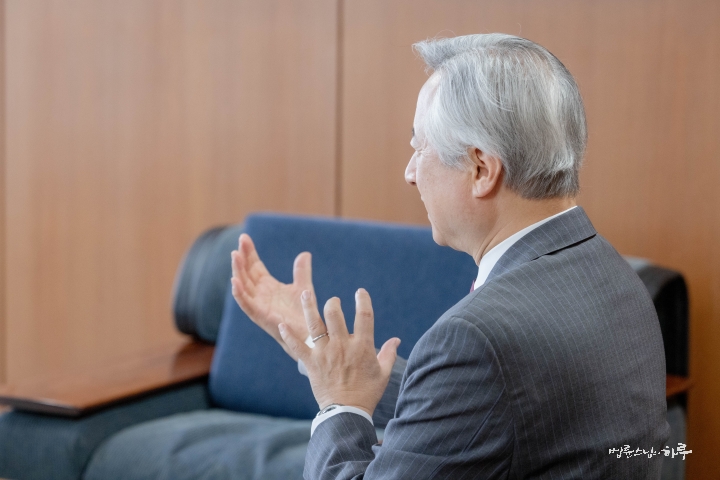


If Japan Takes the Lead in Dialogue with North Korea

“During the Six-Party Talks, wasn’t Japan always marginalized in dialogue because of the abductee issue? U.S.-North Korea dialogue and inter-Korean dialogue were always central, while Japan was always excluded from dialogue. But now the situation has changed. Since U.S.-North Korea dialogue has been suspended and inter-Korean dialogue has also been suspended, Japan is now in a position to lead dialogue. Rather than following the U.S.-led approach as in the past, I think it would be good for Japan to take the lead this time in order to enhance Japan’s diplomatic position. Japan, an economic powerhouse, has been punching below its weight diplomatically.Considering Japan’s future status in East Asia, I think doing as I’ve proposed would be advantageous for Japan. So I hope you’ll focus on improving North Korea-Japan relations rather than putting the Japanese abductee issue at the forefront. I think it would be better to handle the abductee issue informally.”

“I will try to have conversations with Japanese politicians as you’ve suggested. What is your next schedule?”

“Tomorrow I’ll give a lecture with interpretation for Japanese people, then take a 2 AM flight to Vietnam to visit various temples and discuss education issues with monks.”

“2 AM? That’s amazing.”


“I hope you will actively work to resolve relations between North Korea, Russia, the United States, China, and Japan. As the hegemonic competition between China and the United States intensifies, we need to form a third zone and gain some power to bring peace to East Asia.”

“Thank you for your valuable insights.”
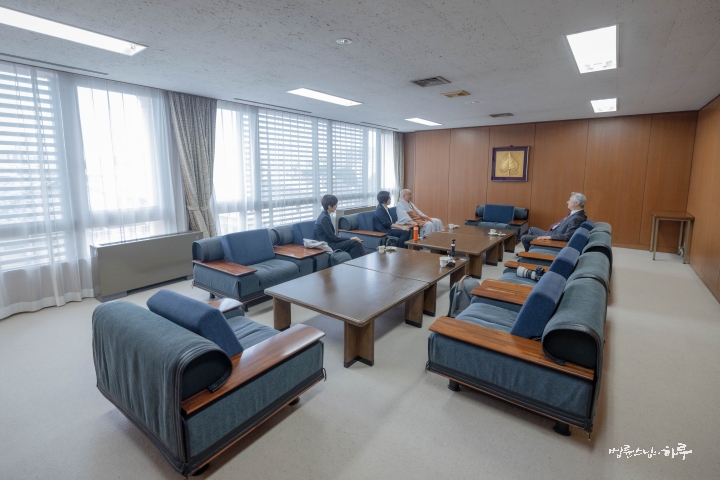


After the conversation, Sunim presented a gift to Councillor Haku as a token of gratitude and took a commemorative photo.
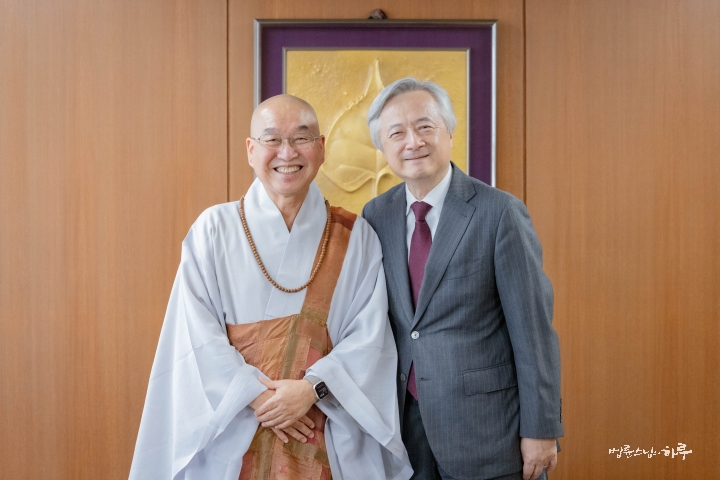


After finishing the meeting with Councillor Haku, Sunim moved to the lecture venue.
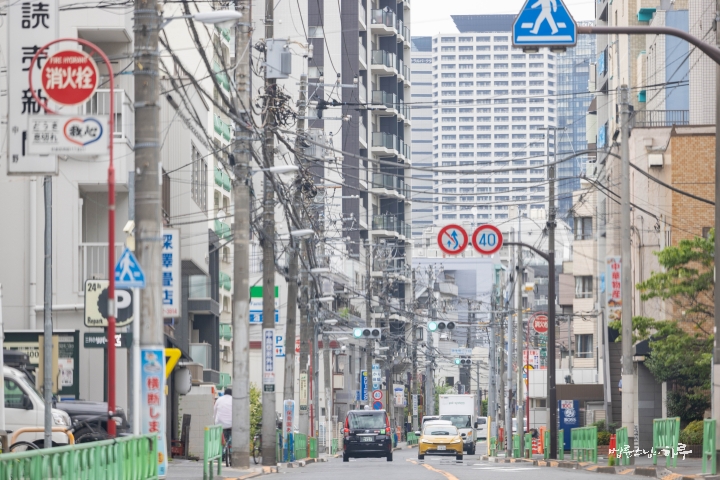


The accommodation from last night was next to the railway tracks, so he couldn’t sleep properly all night due to the train noise. After a brief rest, as the lecture time approached, he headed to the auditorium.
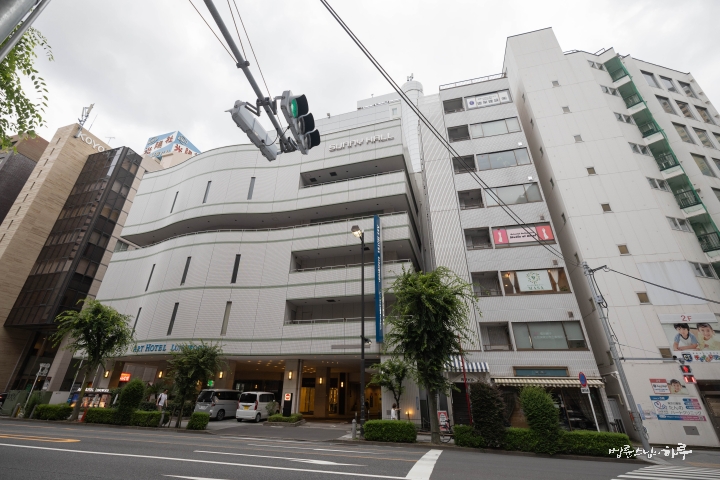


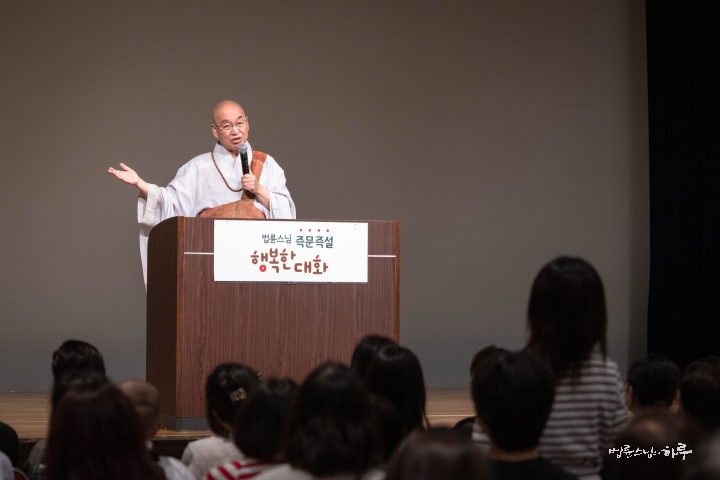
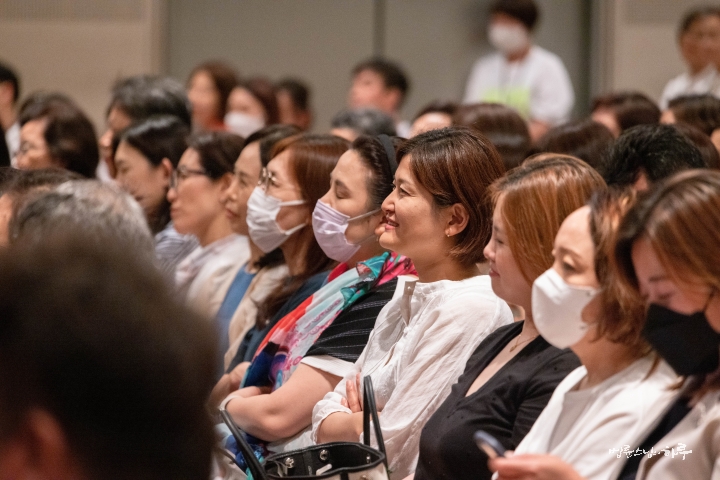
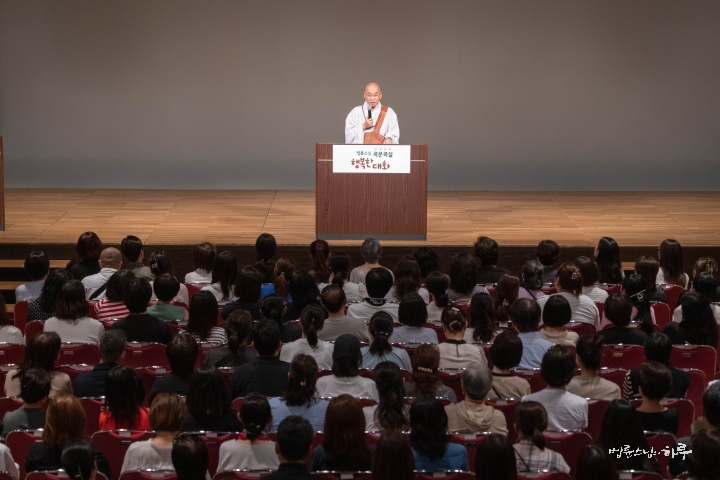
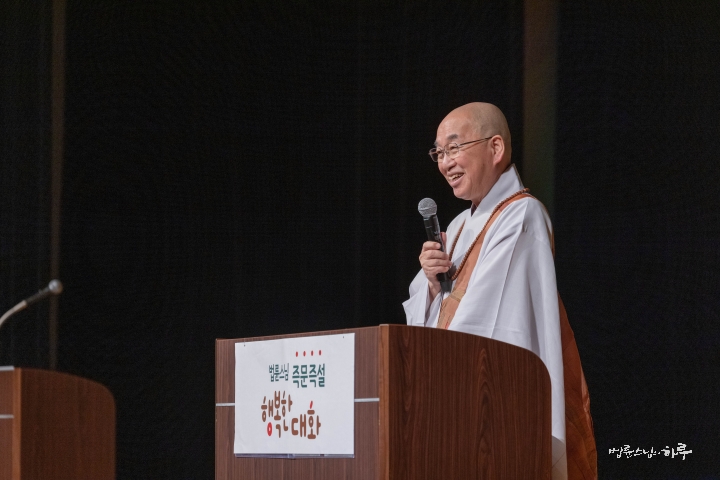
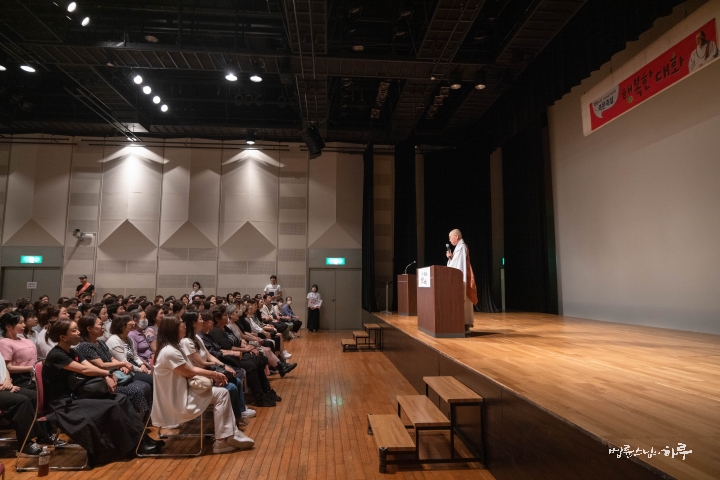
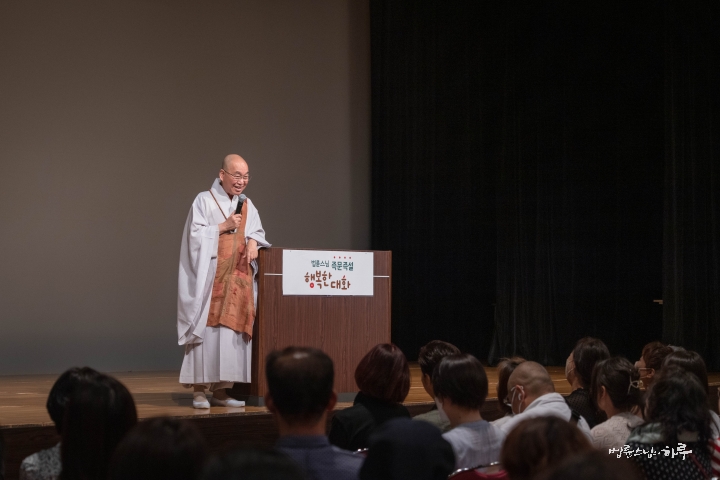
Today’s lecture was held at Nippori Sunny Hall, a multipurpose cultural space located about a 2-minute walk from Tokyo’s Nippori Station. Many volunteers were busy preparing for the lecture at the venue. The audience began arriving two hours before the lecture was scheduled to start.
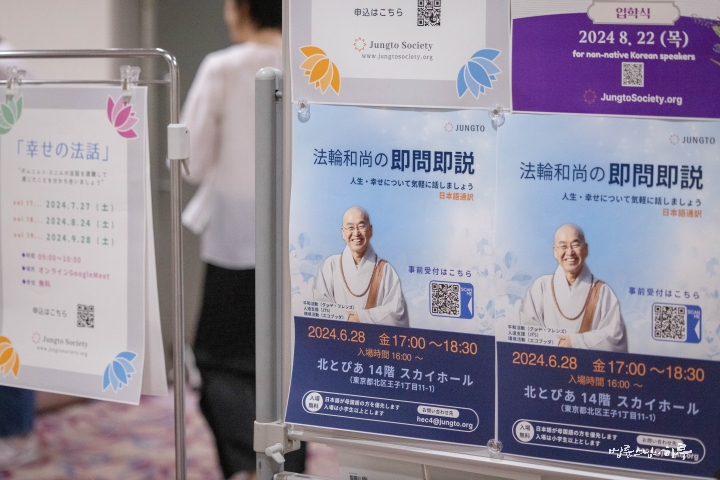
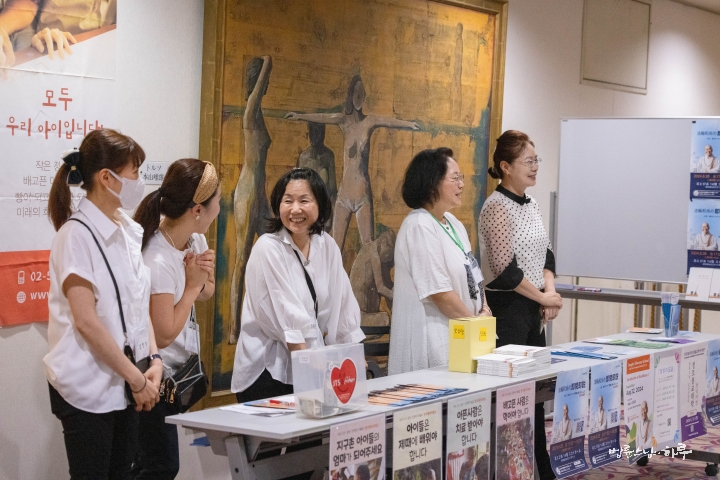
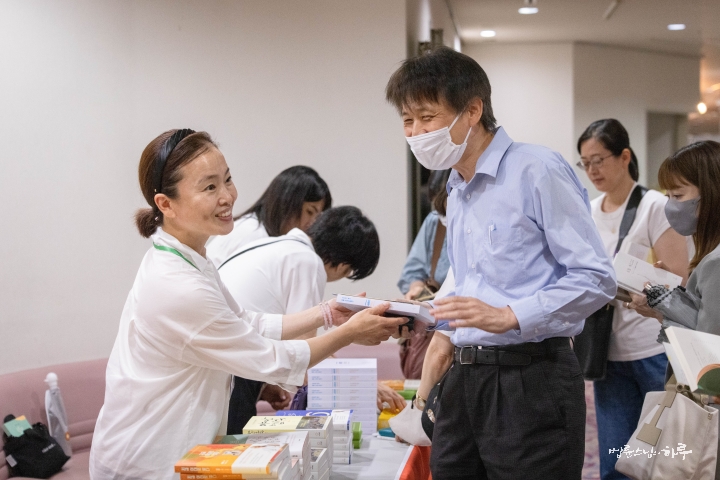
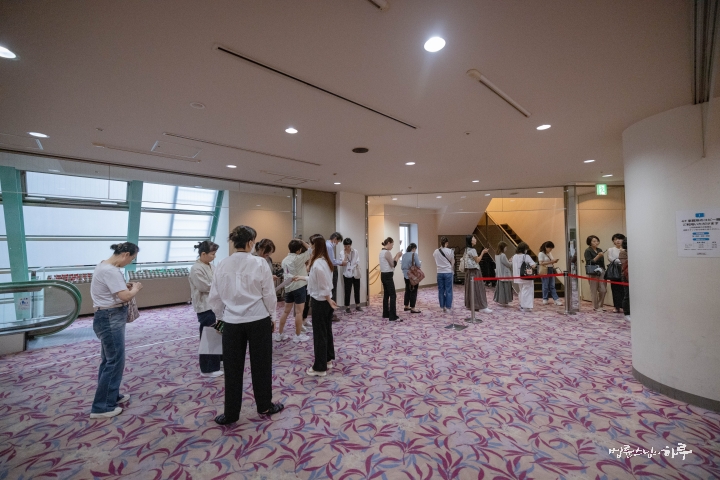


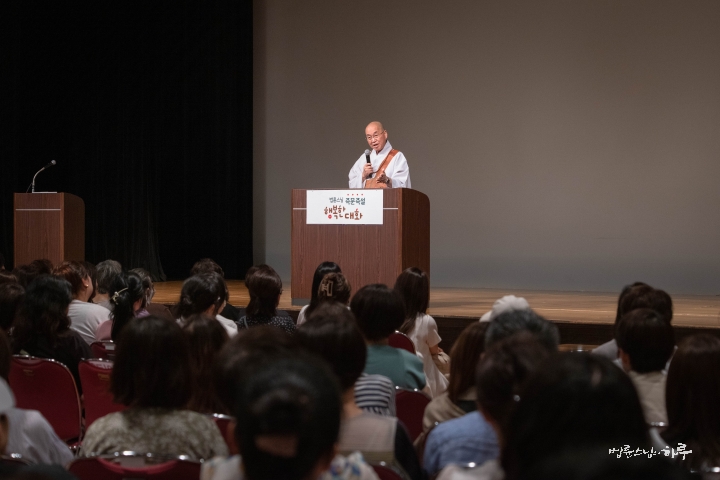
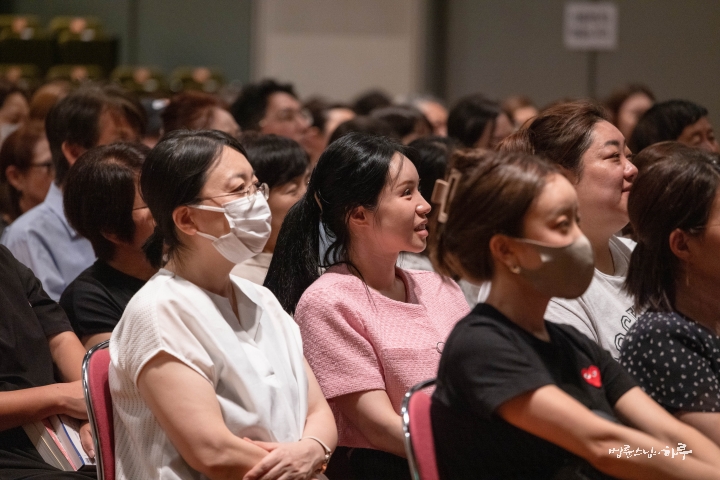
About 200 Korean residents filled the venue. At 7 PM, a video introducing Sunim was shown. As the video ended and Sunim walked onto the stage, the room erupted in loud applause and cheers.
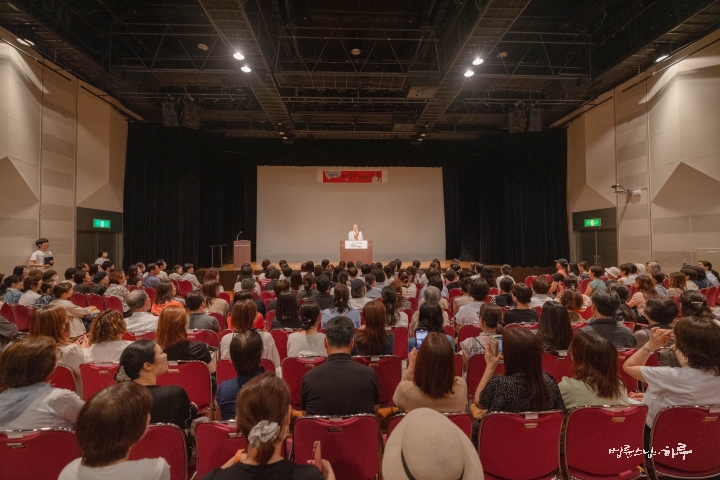


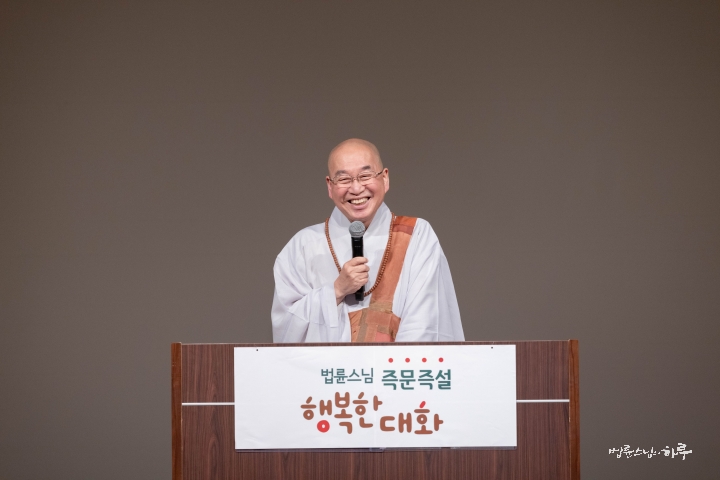
Sunim greeted everyone with a bright smile.


“How have you been? I gave a lecture here in Tokyo last fall. Could those who attended last year’s lecture please raise your hands? Not many. Now, could those who are here for the first time please raise your hands?”

There were far more first-time attendees. Since many were experiencing Dharma Q&A for the first time, Sunim began the conversation by explaining in detail the principles and purpose of Dharma Q&A.
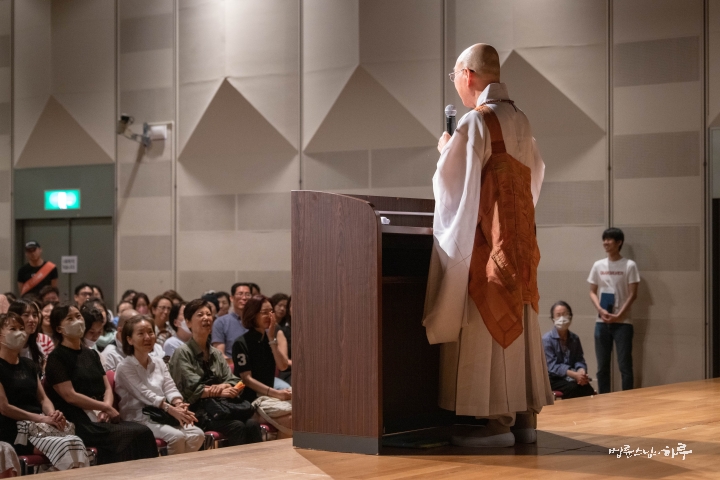

“Even today, Indian people believe that ‘no matter how many sins a person commits, if they bathe in the Ganges River, their sins will be washed away.’ That’s why when you visit India, you’ll see countless people coming to bathe in the Ganges. It’s not bathing to wash off dirt, but a sacred bath to cleanse sins, so it’s called ‘holy bathing.’ However, during the Buddha’s time, a young man had this question:
‘They say that even if someone does terrible things, all their sins disappear once they enter and emerge from the Ganges. So why does the Buddha tell us to practice so arduously?’
So he asked the Buddha:
‘Buddha, the Brahmins say that no matter how many sins a person commits, if they bathe in the Ganges, all their sins are erased and they are reborn in heaven. Is this true?’
It seemed contradictory to say it was true, yet so many people believed it that the young man couldn’t understand whether it was false either.


How the Buddha Conversed with People

If the Buddha had answered, ‘That’s not true,’ it would have been criticizing other religions. The Buddha wouldn’t have criticized other religions, would he? On the other hand, he couldn’t answer, ‘That makes sense,’ just to avoid criticism, because the Buddha speaks the truth. The Buddha said this:
‘If what they say is true, then the fish living in the Ganges River would be the first to be born in heaven.’
First, he affirmed the story of other religions by saying, ‘If what they say is true.’ Then, he pointed out that if a person could be born in heaven just by entering and leaving the water once, then fish born in that water would be the first to go to heaven. The Buddha didn’t answer the young man’s question with ‘yes’ or ‘no,’ but did the questioner understand or not?”

“He understood.”

“This is what we call enlightenment. If anyone among you is thinking, ‘So what happened?’ then that person is a bit lacking. (laughter)
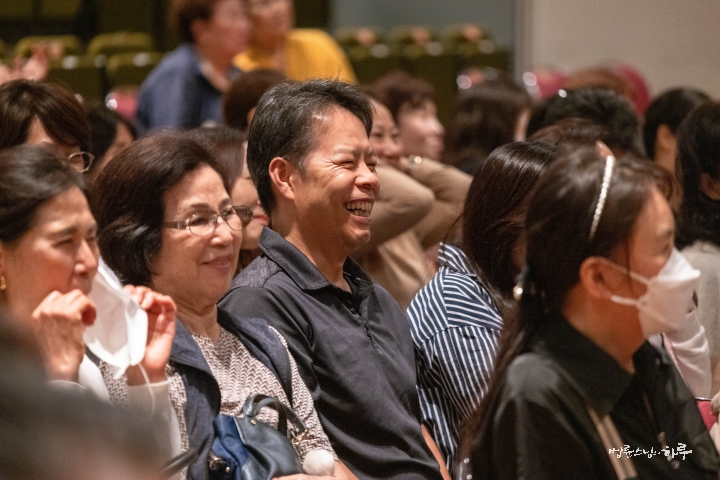


After hearing the Buddha’s answer, the young man said, ‘I understand, Buddha. I understand well.’ As you can see, enlightenment is not something mystical. We call it enlightenment when our doubts and suffering disappear.

The reason I’m telling you this is to explain that Dharma Q&A is not something special that Venerable Pomnyun created. This is how the Buddha originally conversed with people at that time. There’s no talk about Buddhist doctrine here. When we collect and analyze these stories where people suddenly understand the principle, we derive doctrines like ‘This represents non-self,’ ‘This signifies impermanence,’ ‘This speaks of dependent origination.’ The doctrines didn’t come first. However, because we first learn doctrines as knowledge, we know the doctrines but our suffering doesn’t disappear.

If someone who majored in Buddhism at Dongguk University and became a professor gets angry when children don’t listen, would they get angry or not? If their spouse had an affair, would they get angry or not? If they get angry, then the Buddhist doctrine they know is meaningless. Whether it’s knowledge about Buddhism, machines, or science, it’s just knowledge. Suffering and happiness are not functions of thought but functions of the mind. Acquiring knowledge is purely a mental activity, so it doesn’t help with practice at all. Practice has nothing to do with whether you’re a monk or not, or whether you follow Christianity or Buddhism. What I believe, what I think, what clothes I wear – these are matters of personal freedom. Anyone who brightens their mind will be free from suffering. This transcends religion, ideology, and philosophy. That’s why anyone can have a conversation about practice right here and now. Dharma Q&A is not a place to discuss Buddhism as a religion, Buddhism as philosophy, or Buddhism as knowledge.

Now do you understand what Dharma Q&A is? You can talk about anything. You can talk about your doubts or what causes you suffering. However, there’s no need to ask about intellectual matters. For example, if you ask ‘What is non-self?’ you can find the answer by searching on the internet. There’s no need for me to answer things that can be found through internet searches or that artificial intelligence can answer. Dharma Q&A is about having conversations about things that even artificial intelligence cannot answer.

Problems That Arise When AI Conducts Dharma Q&A

The afflictions that humans experience in life are countless – thousands, tens of thousands, hundreds of thousands, even millions. If we train AI to learn just ten thousand of these cases to enable it to conduct Dharma Q&A, there will be content that doesn’t align with Buddha’s teachings in very detailed aspects. This could turn Buddha’s teachings into mere knowledge. Creating formulas like ‘in this case, do this’ is not the Dharma. Fields where formulas can be created will all be replaceable by AI in the future. AI will perform much better than humans in fields like law. This is because correct answers can be derived by learning numerous laws and creating formulas. AI will also be fastest at calculations. However, the Dharma is called ‘No Everlasting Abiding Dharma.’ There are no fixed answers. Everything is determined according to causes and conditions at each moment. Human life has more than ten thousand cases – millions, tens of millions or more. That’s why the Diamond Sutra expresses this as ‘No Everlasting Abiding Dharma.’

What is determined according to causes and conditions is the Dharma. When asking ‘Who am I?’, there is no fixed answer about who you are. When you take a taxi, you’re a passenger; when you meet a child, you’re a parent; when you go to school, you’re a school parent; when you go to a store, you’re a customer – it’s determined moment by moment according to causes and conditions. When conditions change, it changes again. That’s why we say ‘all phenomena are impermanent.’ There is no fixed entity. Although it seems like there is an ‘I’, it constantly changes according to causes and conditions. It only feels that way – there is no fixed, unchanging entity.”

Sunim then had conversations with those who had submitted questions in advance, and also took questions from the audience. Over two hours, eight people asked Sunim questions. One person was anxious about her husband starting a business partnership and said this brought up resentment toward her father who had failed in business when she was young. She asked for Sunim’s advice on how to overcome this situation.
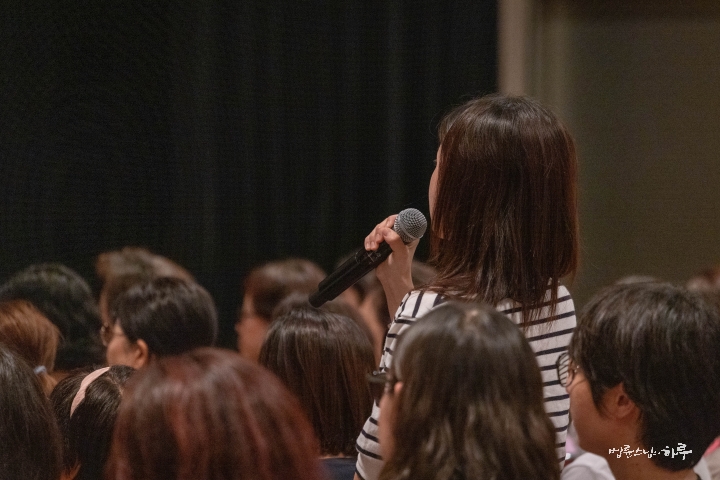
My Father Failed in Business, My Husband Is in a Partnership, I’m Just Anxious

“I lived very comfortably until third grade, but then my father started a business partnership with a friend and failed badly. He became frustrated and turned to alcoholism, domestic violence, and gambling, so we went through difficult times. Then when I was a freshman in college, my father suddenly died in a car accident. After that, I lived very diligently and thought I had overcome the difficulties. I met a good person, got married, had a daughter, and was living a happy life. But my husband, who worked in IT, quit his job saying he didn’t know how long he could live on a salary and started a business before retiring. I opposed it thinking businesses could easily fail, but he had a strong will to do it, so I couldn’t oppose anymore and agreed. So my husband started the partnership that I hate so much, and as if my anxiety was prophetic, he’s now in a bad relationship with his business partner. I thought I had forgiven my father, but as things get difficult, resentment toward him resurfaces. I’m just suffering inside about my husband’s partnership and am always anxious. Is there a way to forgive my deceased father and overcome this situation without blaming my husband?”

“You don’t need to find a way to overcome this because there’s no problem at all. Would you prefer to have been poor from childhood all along? Or is it better to have lived comfortably once and then become poor? Which is better? If you could choose between the two, would you choose to be poor from birth, or to live as wealthy until elementary school and then become poor?”

“The second one.”

“Then what’s the problem? Even though you live in poverty now, it’s good that you once lived wealthy as a child. Someone got married, divorced, remarried, divorced again, and married again, then asked me, ‘Sunim, what sin did I commit in my past life to get married three times?’ So I answered:

‘Sunim has never been married even once, but what merit did you accumulate to get married three times?’

It depends on how you think about it. Some people haven’t even lived with one person, but living with three different people is a good thing. It becomes bad only when you set the rule that ‘you must live with one person for life.’ If you don’t set that rule, in today’s good world, living with this person and that person is a good thing. When your lover leaves you for someone else during dating, it’s a good thing. If that person keeps sticking by your side, you can only date that person, and if you date someone else while having a lover, you’ll be criticized for cheating. But since they leave on their own, how wonderful is that? Though it’s a bit disappointing, you get the opportunity to date someone else.

Similarly, your concern is not a problem at all. You lived well once as a child. You should be grateful to your father. Because you had a good father, you enjoyed a comfortable life growing up. Thanks to your successful father, you experienced what it’s like to live well.  And since your father drank, became an alcoholic, gambled, and died early, that worked out well too. There’s no problem, but you’re making everything into a problem – ‘I lived well as a child but became poor,’ ‘Father drank,’ ‘Father died.’ You asked for a way to overcome this, but from Sunim’s perspective, there’s nothing to overcome. Since there’s no problem, there’s nothing to overcome.


I hope you can view your life positively. Try accepting it this way: ‘I lived well until elementary school,’ ‘I have experience living in poverty,’ ‘I’ve lived under a father who drank and gambled.’ You’ve had various experiences. These are all valuable experiences. The reason Sunim can conduct Dharma Q&A sessions like this with you is because you have had all kinds of experiences.

You’ve gone through various experiences and arrived where you are now. However, these experiences have become trauma, which is why you need psychiatric treatment. Because your father’s business failure when you were young left emotional scars, you keep thinking ‘he might fail,’ ‘conflicts might arise’ even though your husband hasn’t failed yet. That’s why you’re suffering now. But what’s the big deal if your husband fails in business? Your father failed in business when you were young, yet you’ve lived well until now. You’re not a child anymore but an adult, so what problem would it be if your husband fails? You could divorce and live with someone else – there’s no problem at all.

‘Since you want to try running a business, go ahead and try. But if it goes wrong, we’re done. If it goes well, we’ll stay together.’

Don’t be anxious – just go forward boldly like this. There’s no problem right now. This is merely a problem caused by the recurrence of childhood trauma, so you just need to go to the hospital and get treatment. There’s no problem in reality.


When entering into a business partnership, there are both advantages and disadvantages. While it offers the advantage of being able to start a business when funds are insufficient, it also carries the inherent risk of relationship breakdown and conflict. If the business fails, partners blame each other and part ways; if the business succeeds, they fight over who gets what. Given these risks, one might wonder why people still choose to form partnerships. The answer is simple: without a partnership, they wouldn’t be able to start the business at all. People decide to partner up because they believe it’s better to take on the risk than not to start at all. Your dislike of partnerships is also a trauma you carry. There’s nothing wrong with it. Instead of thinking ‘I need to overcome this,’ try doing prostrations while saying ‘There’s no problem at all.’ You have no problem. You’ve simply had more experiences than others. Having many experiences is a good thing.

For example, let’s say you went hiking on Mt. Seorak (설악산) and came to a stream you needed to cross. You don’t want to take off your shoes. Some people reluctantly take off their shoes to cross, while others might have someone offer, ‘I’ll carry you across,’ allowing them to cross without removing their shoes. The person who didn’t have to take off their shoes would feel good, right? But once you reach the summit of Mt. Seorak and look back, what difference does it make whether you took off your shoes to cross the stream or were carried across with your shoes on? There’s no difference at all. The good feeling is only momentary. Even if you took off your shoes to cross, you had to put them back on afterward. Looking back, there’s no difference.

Whether you climbed the mountain by a steep path, scaled a cliff, or took a gentle slope, once you’ve reached the top, the past is just a memory and experience. What does it matter if you went this way or that way? What’s important now is that you’ve reached the summit. Thoughts like ‘I took off my shoes’ or ‘I came up the steep path’ are all just past memories and experiences.


What matters is that I’m living here right now. I’ve experienced living well when I was young, and I’ve also experienced poverty when my father’s business failed. It was actually a relief when my abusive father died. I thought I’d live alone, but then I met a man and even got married. If my husband’s business fails, just as I lived with a father who failed in business, I can live with a man who has failed too. In today’s world, I can even get divorced. In the past, people thought you couldn’t separate once married, but nowadays it’s a good era where you can live together or separate. So why are you crying so much? There’s no problem at all. Please pray like this: ‘I have no problems. I’ve just lived through various experiences.’

“I want to blame my husband for starting a business partnership, but since I agreed to the partnership, I can’t bring myself to blame him and I’m just enduring it. How can I eliminate this suffering?”

“If your husband had entered the partnership without your consent, would you blame him? There’s no need to debate whether you agreed or not. What’s important now is that if it fails, you live with the failure, and if it succeeds, you live with the success. ‘I agreed,’ ‘I didn’t agree’ – these are things of the past. You’re holding onto something completely useless. Whether you agreed or not isn’t important now. If things go well, live with that, and if they don’t, just start anew.


You should be grateful just to be alive. It’s wonderful that you were born in Korea and came to live in Japan. So many people are born in Korea and can only live within Korea, but you’ve come all the way to Japan to experience life here. If living in Japan becomes difficult, you can always return to Korea. When you’re old and go back to Korea, the social security system is well-established, so you won’t starve. People like me will help, and someone will always be there to help.

However, it becomes difficult if you expect to live lavishly. To live well, you need to make an effort. If you can be satisfied with just being able to make a living, there’s nothing to worry about because society will support you. People born in Korea or Japan don’t need to worry about basic survival. So if you think, ‘As long as I can survive, that’s enough,’ you have nothing to worry about. The social security systems are all in place.

If you think like me, ‘As long as I can survive, that’s enough,’ you don’t need to do anything. I live in a community without a private room. I wear recycled clothes that others have thrown away. These days, people throw away perfectly good clothes, so I can easily find them. I can also easily find shoes that others have discarded. Unlike in the past, there’s no need to go hungry or be poorly clothed, and you don’t have to sleep on the streets. These days, if you have nowhere to sleep, there are facilities that will take you in. The Buddha slept under trees, so what’s the problem? You worry because you want to live too well. If you don’t aspire to live lavishly like me, you have no worries. So don’t worry. Worrying won’t make things particularly better anyway. So instead of worrying, just live happily with your child.


If a mother keeps crying and worrying, her child will develop depression. While you developed depression later in life, If a mother lives in sadness, her child may develop depression from an early age. Depression symptoms already appear during adolescence. These days, many children suffer from severe depression symptoms from a young age. It’s all inherited from their parents. That’s why in Japan, there are many young people living as reclusive loners called ‘hikikomori.’ They don’t go outside and stay in their rooms, and this is all due to parental influence. If parents are healthy and go out to work hard, children won’t develop depression.”


“Thank you.”


Questions continued to follow.

My husband doesn’t talk or have physical contact with me. He also dislikes having people come to our home. How should I raise my child in this environment?

I can’t distinguish between mind and thoughts. Despite various efforts, thoughts about past events keep arising. How should I practice?

I’m troubled by low self-esteem. I’ve developed an interest in someone, but since their qualifications are impressive, I wonder if I’m worthy of them.

I’m on leave from university and contemplating my career path. I have doubts about my choices and feel lazy. How can I make wise decisions?

If an AI more capable and wiser than Sunim appears, how would you respond?

I’m curious about the meaning behind the name “Pomnyun.”

I fear death. How does Buddhism view death?

Sunim concluded the lecture while answering the last questioner’s question.
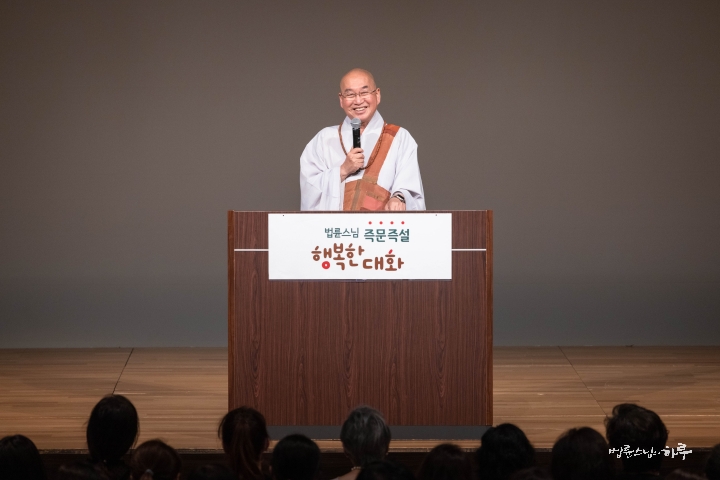


“There are two techniques for controlling this world. First, there is ‘temptation.’ You throw bait that the other person likes to tempt them. Second, you use ‘threats’ to instill fear. These two methods are used to control others. In diplomacy, this is expressed as ‘carrot and stick.’ In fact, you all live using these methods too. You especially use them frequently with children. You tempt them by saying ‘I’ll buy you something,’ or threaten them by saying ‘If you don’t listen, I’ll spank you!’ These are methods we all use.

Similarly, in religion, they tempt by saying ‘If you want to go to heaven, you need to donate a lot of money.’ If that doesn’t work, they threaten by saying ‘I’ll send you to hell!’ I’m not trying to say religion is bad. I’m talking about how life is. We all live using temptation and threats like this. This is the reality of life.


However, if you neither particularly like nor dislike anything, you won’t be threatened or tempted. You can live comfortably with a smile. When giving to others, I hope you don’t do it with the thought of ‘going to a good place after death.’ We must feed those who are hungry. We must provide treatment for those who are sick. These are the basic conditions of happiness that humans should enjoy. I feel better giving food to a hungry person than eating something delicious myself. How can I feel good eating something delicious alone while someone hungry is beside me? Giving food to a hungry person feels much better. When I think about North Koreans starving to death in the neighboring land, eating a feast doesn’t feel good. Considering this, living a simple and modest life isn’t that difficult. When I share what I have, I feel a sense of fulfillment, develop self-esteem, and even feel proud. This isn’t behavior motivated by someone promising blessings. Nor is it behavior done under threat. I hope you too will realize that this kind of life is a better life and try to practice it.”


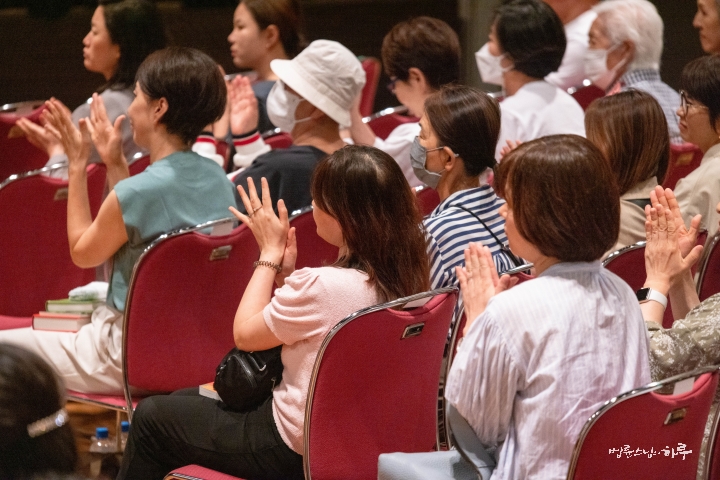
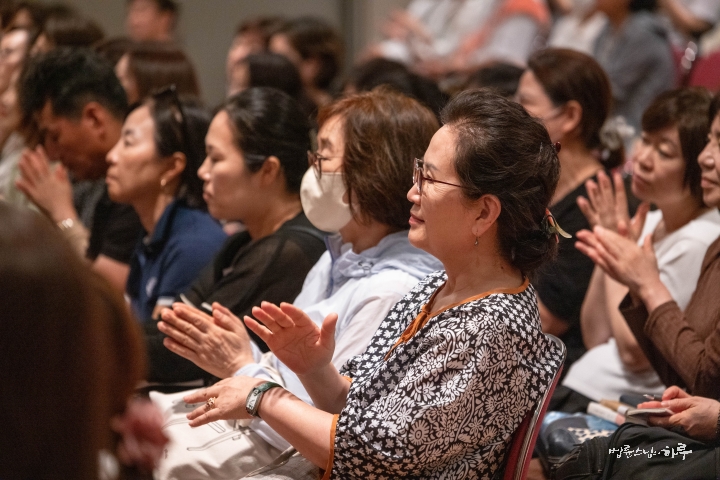
The lecture concluded with thunderous applause. It was past 9 PM. Sunim immediately began a book signing session on stage.
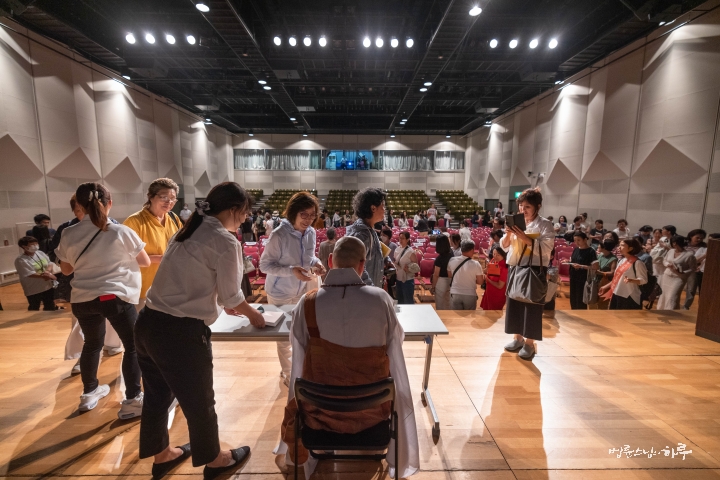
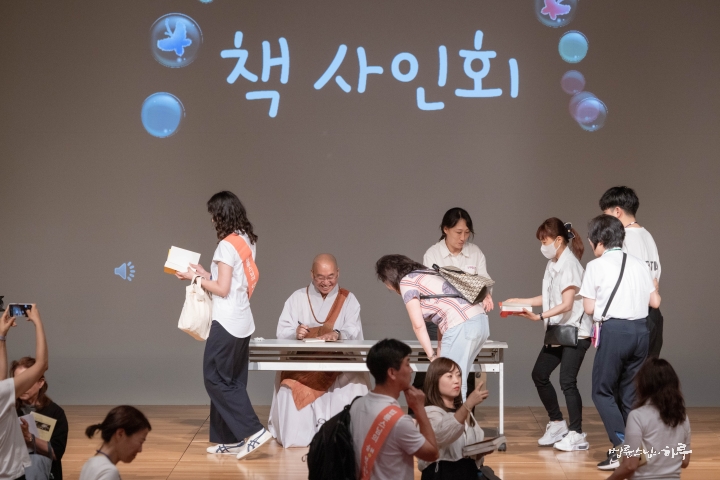


Many people stood in a long line, making eye contact with Sunim and expressing their gratitude.
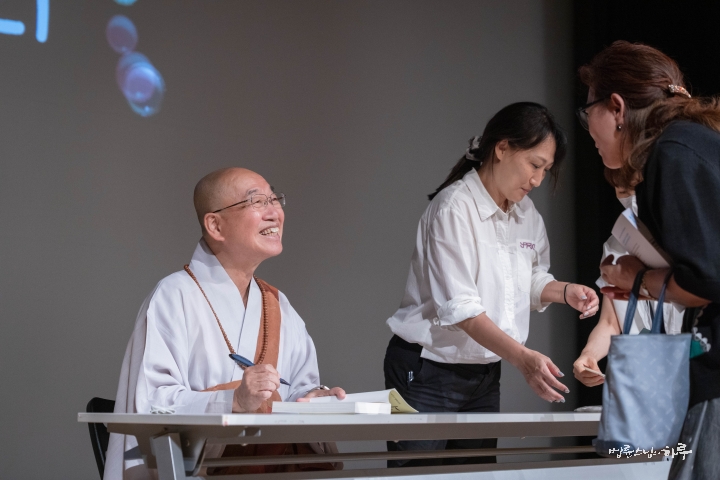


“Thanks to you, Sunim, my life has become happy. Please stay healthy.”
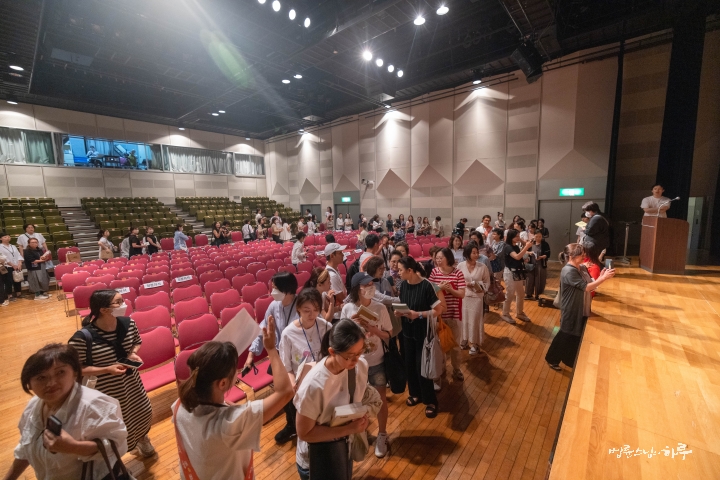


Finally, Sunim took a commemorative photo with the volunteers.

“Tokyo, fighting!”
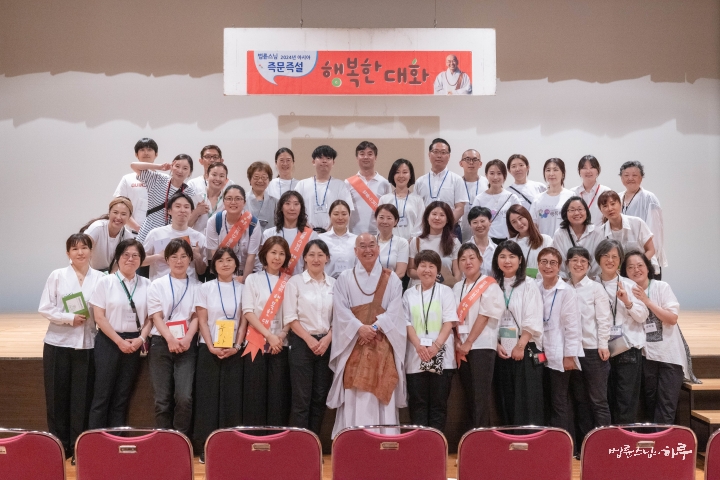


After the signing session, the volunteers gathered for a sharing session. After introducing themselves and sharing which regions they came from, each person briefly shared their thoughts.

“I came to volunteer with my mother. I had only seen her meditating, listening to Dharma Q&A, and volunteering, but now that I’ve come here myself, I understand why she’s so active in these activities.”
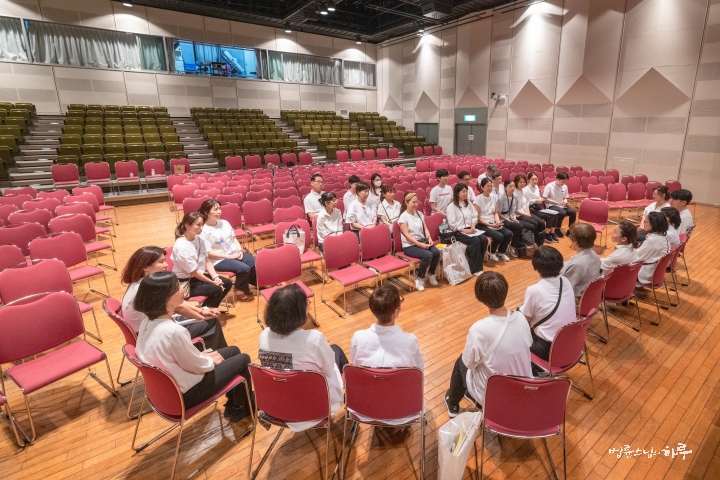


“I was nervous and made mistakes, but now that the lecture is over, I feel relieved.” (laughter)

“Last time I only attended the lecture, but today I volunteered. I thought I’d be disappointed about missing the lecture, but I’m leaving with an even greater sense of inspiration from volunteering.”
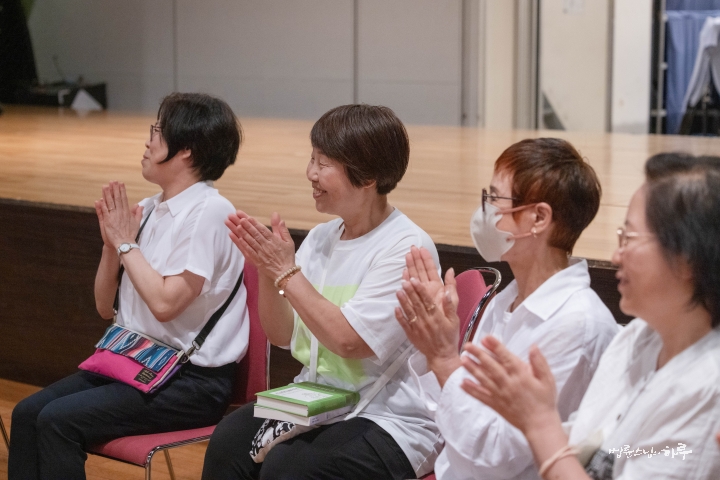


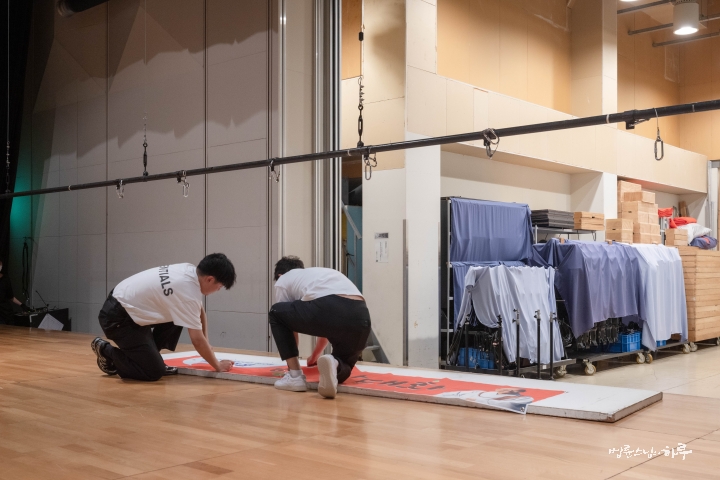
The stories of people experiencing different joys and rewards through volunteering warmed everyone’s hearts. Since the venue had to be vacated by 10 PM, the volunteers quickly wrapped up their sharing session and hurried to clean up.


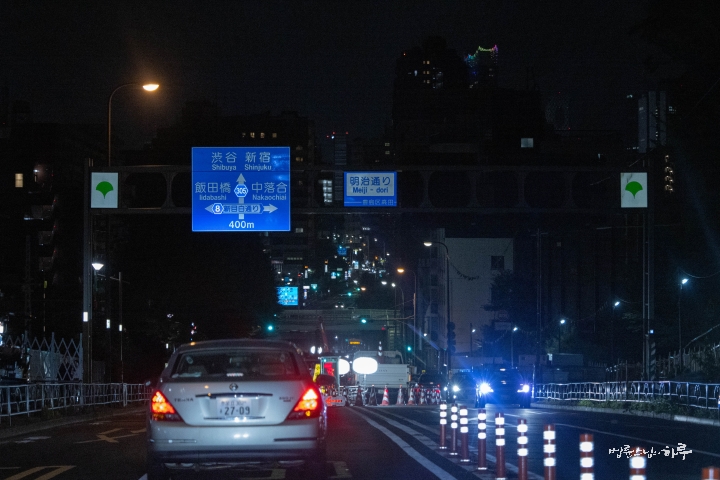
It was past 10 PM when they arrived at the accommodation in Shinjuku by car. It had been another long day.


Tomorrow, Sunim will meet with senior Japanese politicians to discuss peace on the Korean Peninsula and improving North Korea-Japan relations. In the evening, he will hold a Dharma Q&A lecture with Japanese interpretation for Japanese audiences at Hokutopia in Kita-ku, Tokyo.

Post Views: 1

Leave a Reply Cancel reply

Your email address will not be published. Required fields are marked *

Related Posts

Banner
Why Is the Winter Solstice Not the Darkest Day but a Day of New Beginning?">
Why Is the Winter Solstice Not the Darkest Day but a Day of New Beginning?

Banner
Why Is the Winter Solstice Not the Darkest Day but a Day of New Beginning?

December 24, 2025
1
109

Dec 22, 2025. ─ Winter Solstice Dharma Assembly

Banner
How Can I Repent for Feeling Like I Failed in Raising My Child?">
How Can I Repent for Feeling Like I Failed in Raising My Child?

Banner
How Can I Repent for Feeling Like I Failed in Raising My Child?

December 23, 2025
0
113

December 21, 2025 - Dharma Q&A with Jungto Dharma School and Jungto Buddhism Course Students, UN World Meditation Day Commemoration...

Load More

Jungto Society is a community of Buddhist practitioners who seek to free themselves of suffering in their daily lives and to make the world a better place.

Donate
Subscribe to Newsletter

Subscribe to our Jungto Newsletter!
EVENTS & PROGRAMS
  • Live Dharma Talk
  • Sunday Meditation
  • 1000-Day Practice
  • Jungto Dharma School 2025
POSTS
  • A Day in the Life of Sunim New
  • Dharma Q&A
  • Meditation Q&A
  • Wisdom Note
  • Jungto News
ABOUT
  • Jungto Society
  • Ven. Pomnyun Sunim (법륜스님)
  • Our NGOs
  • Find Us Online
  • Visit Us
  • Contact Us
RELATED LINKS
Menu
  • Jungto Forum
  • JTS America
  • Pomnyun.com
  • Jungto Korea

Cookie Policy

Copyright © 2025 Jungto Society

Welcome Back!

Login to your account below

Forgotten Password?

Retrieve your password

Please enter your username or email address to reset your password.

Log In
No Result
View All Result
  • Home
  • Get Started
  • About
    • Jungto Society
    • Ven. Pomnyun Sunim (법륜스님)
    • Our NGOs
    • Find Us Online
    • Contact Us
    • Visit Us
  • Articles
    • A Day in the Life of Sunim
    • Jungto News
    • Press & Media
  • Library
    • Dharma Q&A
    • Meditation Q&A
    • Wisdom Note
    • Practice Resources
  • Online Programs
    • Live Dharma Talk
    • Happiness Workshop
    • Jungto Dharma School – Introduction to Buddhism I
    • 정토담마스쿨 – 근본불교
    • Jungto Dharma School – Introduction to Buddhism II
    • 정토담마스쿨 – 인간붓다
    • Sunday Meditation
    • 1000-Day Practice
  • Offline Programs
    • Half-Day Temple Stay
    • In-Person Casual Conversation with Ven. Pomnyun Sunim in 2025
    • Dubuk Jungto Retreat Center Volunteering
Subscribe to Newsletter
Donate
Contact us