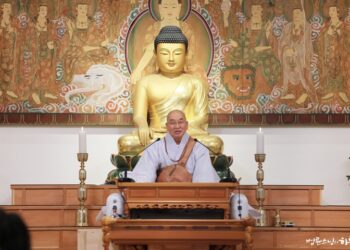

April 9, 2026 – Filming Day 1 in Kolkata, India.
Hello. Today, Sunim entered India and had a full day of filming with the broadcasting team.
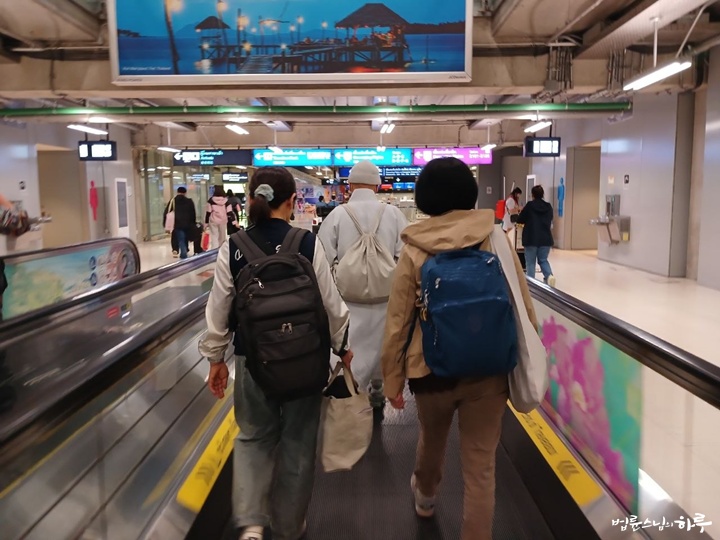
After boarding the plane at Incheon Airport yesterday, Sunim and the broadcasting staff flew for 5 hours and 50 minutes before arriving at Bangkok Airport. They were scheduled to wait about 3 hours at Bangkok Airport before transferring to another flight to Kolkata. The boarding gate number was not printed on the ticket. As soon as Sunim disembarked from the plane, he checked the electronic board for the next flight and boarding gate.
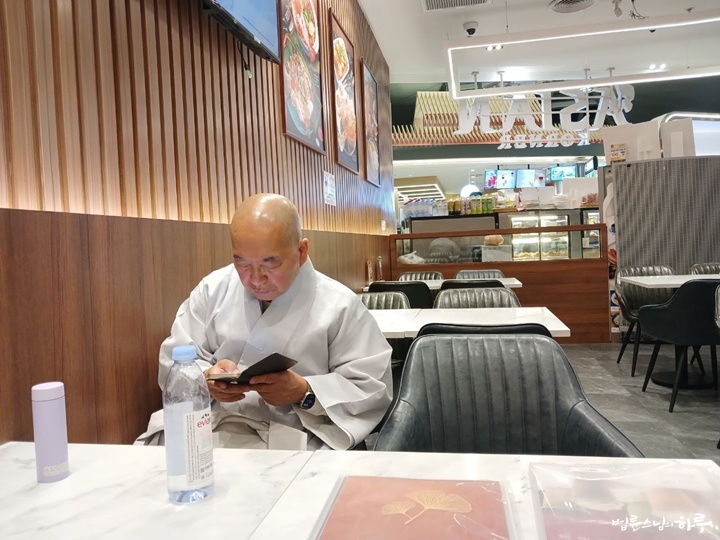
Sunim sat in a café waiting for the next transfer time while reviewing work matters. The cast members decided to rest in the lounge and agreed to meet on the transfer flight. As the transfer time approached, they went to Gate S. The boarding gate area was surprisingly quiet.
Sunim charged his mobile devices at the boarding gate and exchanged greetings with the cast members. When the gate for the Kolkata flight opened, Sunim boarded the plane with his bag and took his seat. He was assigned a seat toward the back. The space between seats was narrower than the previous flight. The departure was scheduled for 11:45 PM Bangkok local time, but takeoff was delayed. During the 2 hour and 30 minute flight from Bangkok to Kolkata, Sunim rested. An in-flight meal was served once during the flight.
“What we’re eating now is breakfast in Korean time.”
After eating the in-flight meal and resting, they arrived at Kolkata Airport. After traveling by plane throughout the early morning hours, the air in Kolkata, India was slightly humid and hot.
With the Indian immigration form in hand, they reached the immigration counter. Since it was early morning, only about three counters for foreigners were open, and the waiting line was long.
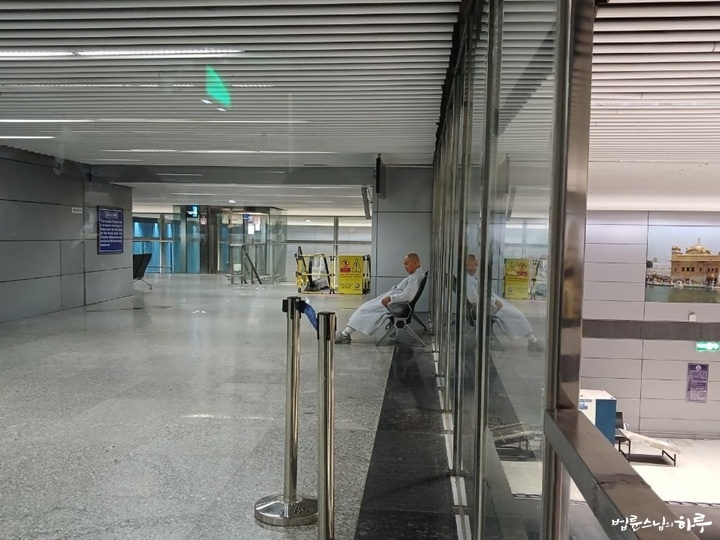
Various questions were asked during immigration. Eventually, Sunim was asked to follow to a separate office where he waited briefly. They asked why he was visiting India so frequently. After the staff explained the situation, he was cleared. After immigration, they immediately went to claim their luggage. Fortunately, there wasn’t much luggage, so everything fit on one cart.
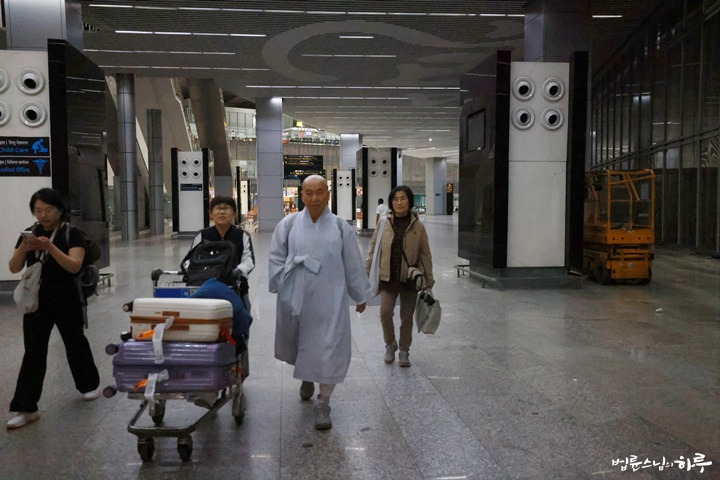
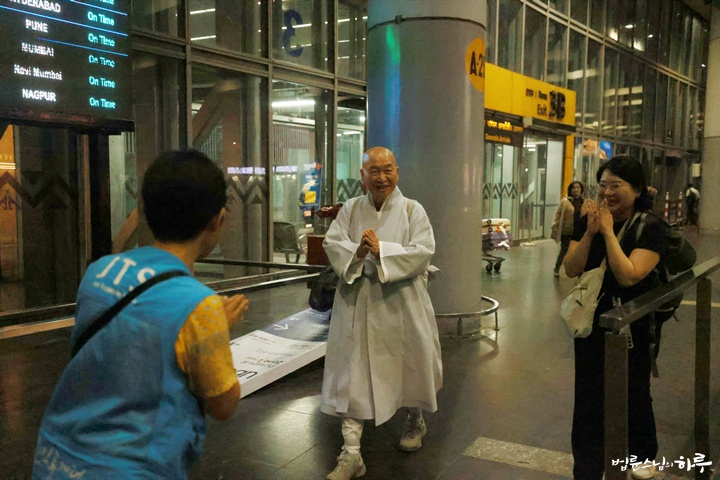
When they came out through the airport exit with their luggage, Dharma Teacher Bogwang and the advance team warmly welcomed Sunim.
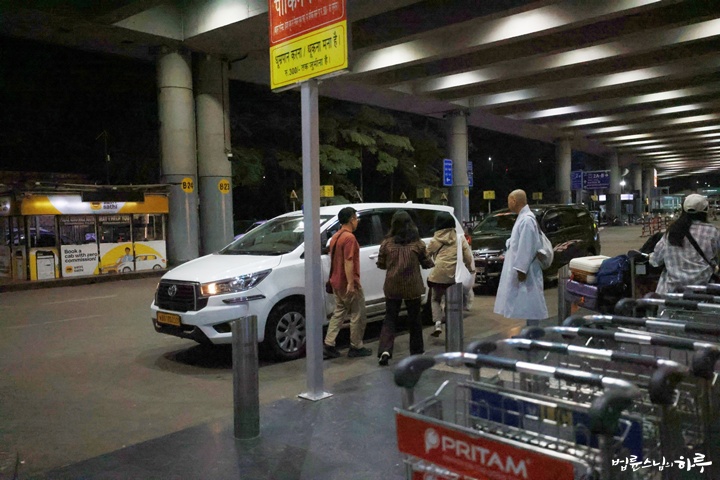
They loaded the luggage and people into two vehicles and headed to the accommodation.
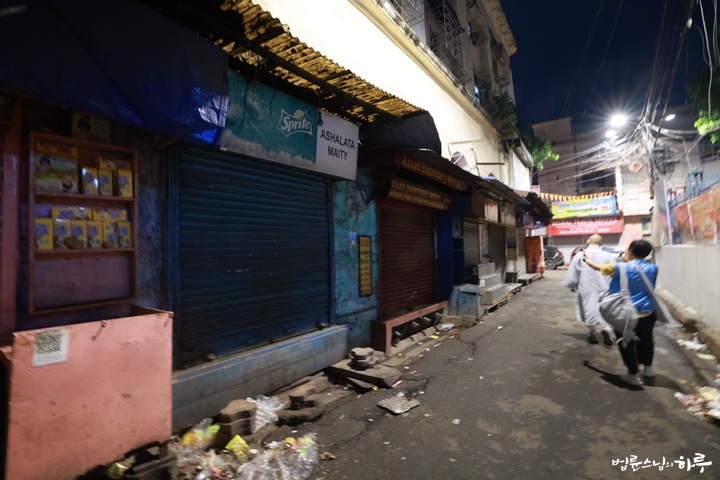
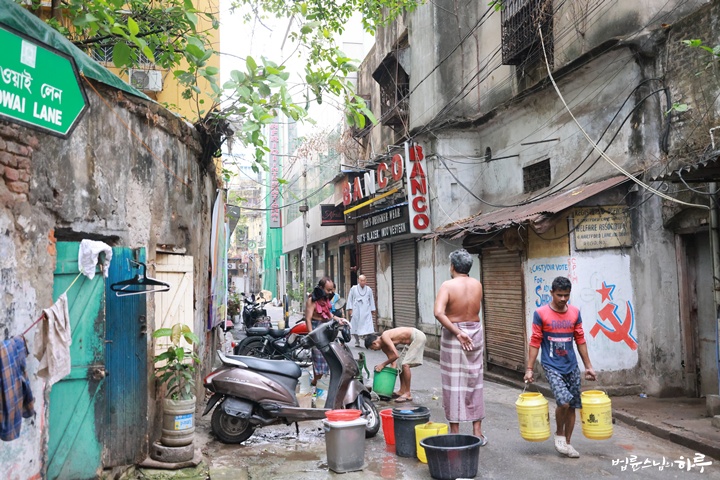
After about a 40-minute drive from the airport, they arrived at the street where Sunim first encountered a woman begging for milk powder money in Kolkata. Upon arriving at the accommodation, Sunim searched his memories to find the place where he had met the woman begging for milk powder money.
“At that time, there was only one shop, but now several have opened nearby. This building on the right is newly constructed.”
Sunim briefly looked around the street and entered the accommodation. The cast and staff all went to the hotel. When Sunim checked in and saw his assigned room, the floor was flooded. That particular room had a leak, and rainwater had pooled on the floor. After changing rooms, Sunim unpacked his luggage, and it was past 3:30 AM. The filming crew’s vehicle was scheduled to arrive at the accommodation at 7:30 AM, and he would take that vehicle to the filming location for a full day of shooting.
Sunim caught a brief nap and woke up early to start the day with practice and meditation. For breakfast, he simply had instant rice noodles with hot water. He organized his luggage and worked while waiting for the filming crew’s vehicle.
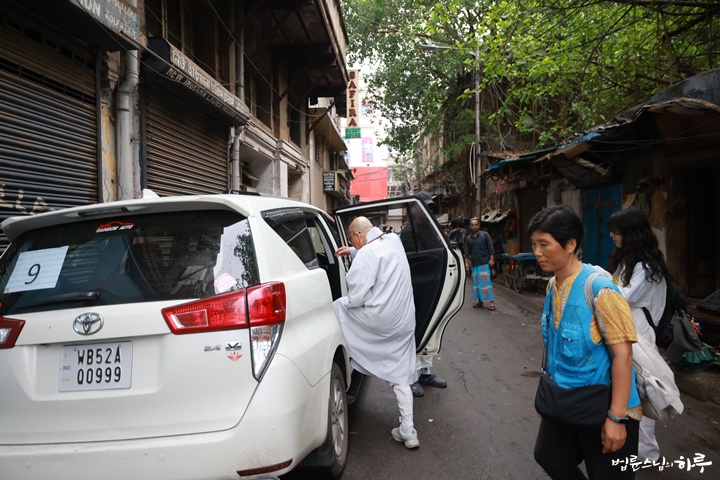
Around 7:40 AM, the filming crew’s vehicle arrived. They loaded the luggage and headed to the hotel, which was the filming location. Filming began immediately upon arrival at the hotel.
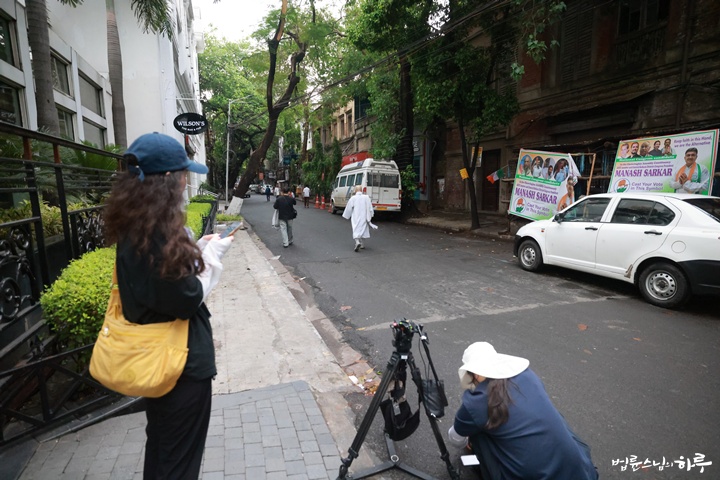
Once filming begins, movement is extremely restricted for everyone except the cast and staff, and no one was allowed to enter the frame. Since filming was taking place on Indian streets, care was taken to ensure minimal staff were involved. They had to avoid inconveniencing locals using the streets due to filming, and for safety reasons, they had to stay far from the filming site during shooting.
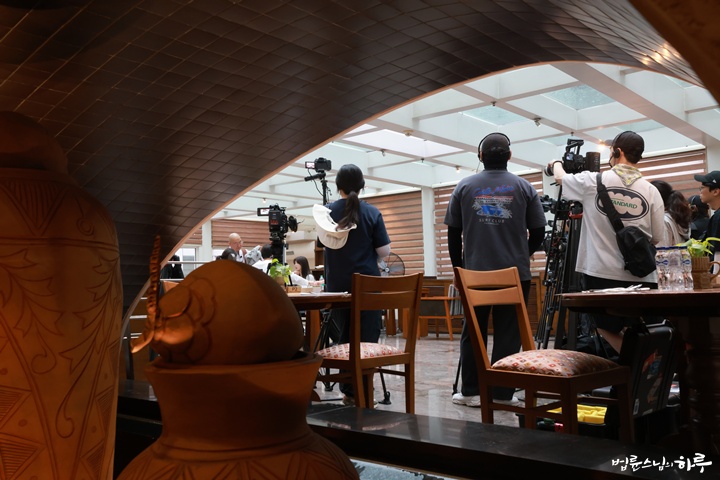
The street filming ended quickly, followed by indoor filming at the hotel.
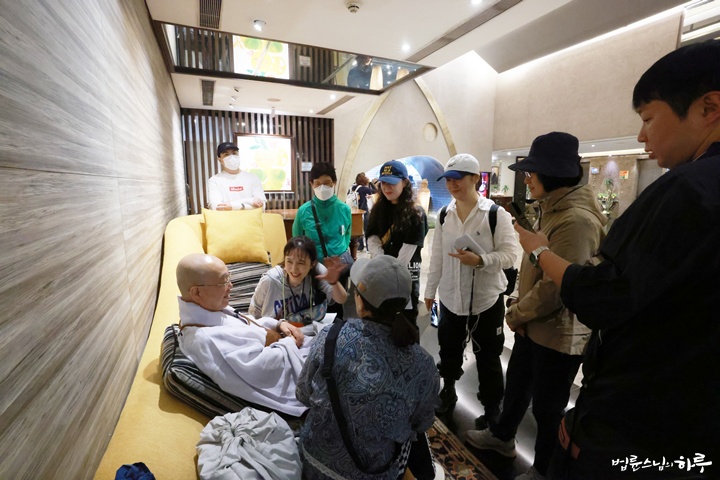
Between filming scenes, Sunim used the restroom and consulted with the writers about the next shoot.
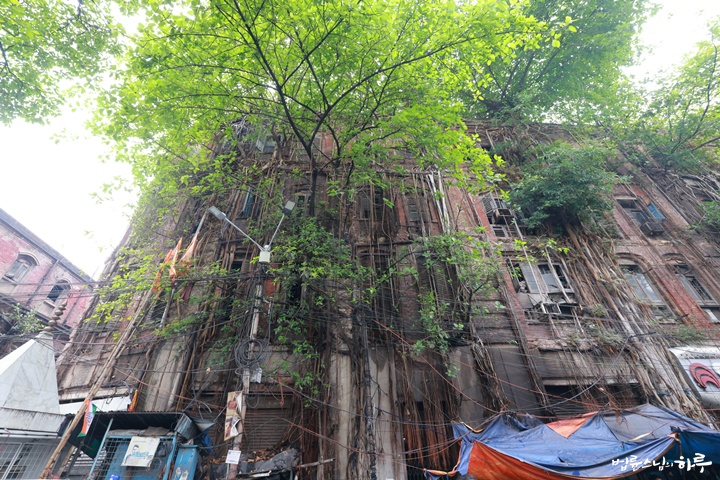
When the restaurant filming scene ended at 9:10 AM, the next scene was on the street, but it continued to rain outside. Since filming couldn’t proceed in the rain, the staff waited for it to stop. Sunim also took a brief rest at the accommodation.
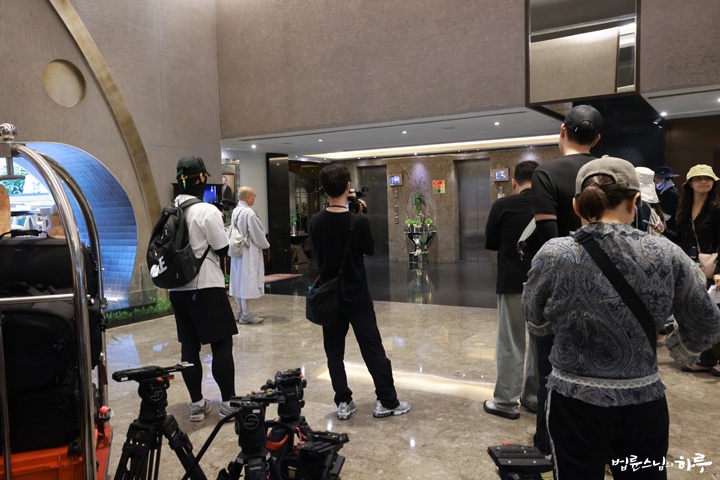
At 11:10 AM, everyone gathered in the lobby again and filming resumed. They went out to the street to continue shooting. Sunim, the cast, and staff filmed outside all afternoon. After completing filming at various locations, Sunim returned to the accommodation around 8 PM.
They were scheduled to take a train departing at 10:55 PM from Kolkata’s Sealdah Station, traveling overnight to arrive at Gaya Station early in the morning. Filming at the train station and scenes of boarding the train were planned.
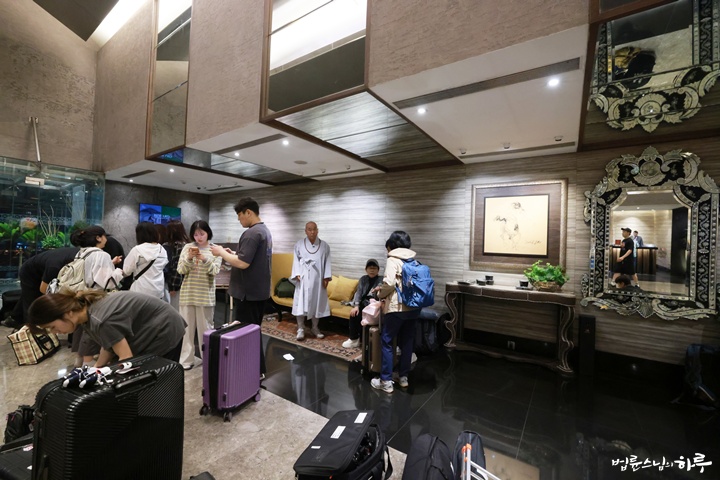
Sunim packed his luggage at the accommodation and waited for departure time to the train station while proofreading manuscripts and handling simple tasks. At 9:10 PM, the vehicle to the train station arrived in front of the accommodation.
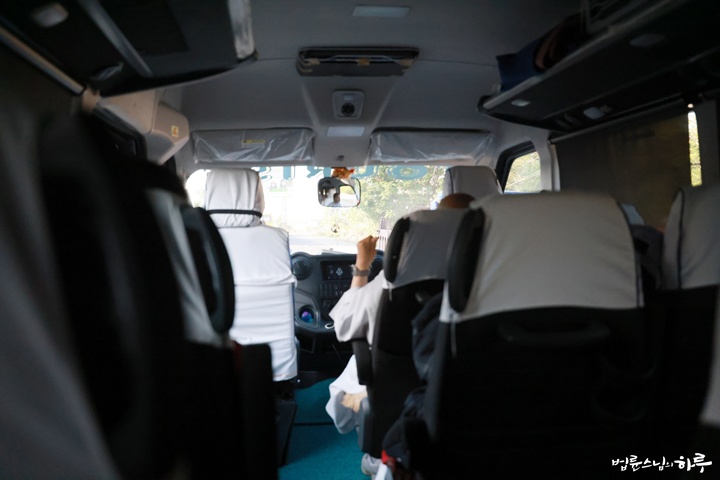
The group was divided into train and bus teams, with Sunim departing first with the train team.
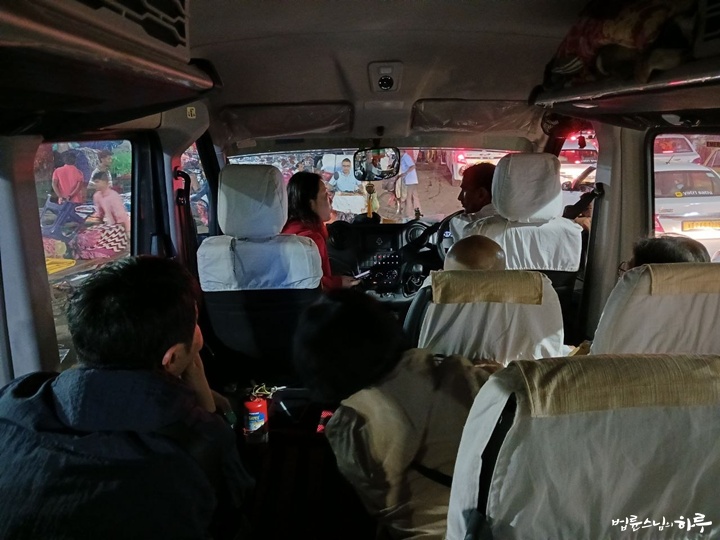
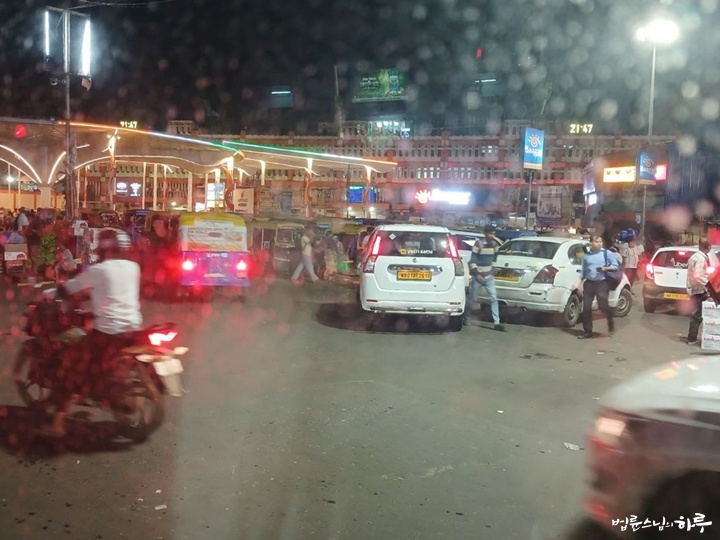
They arrived at Sealdah Station. Since the vehicle was too large to enter the station area, Sunim and the train team got out and walked to the station.
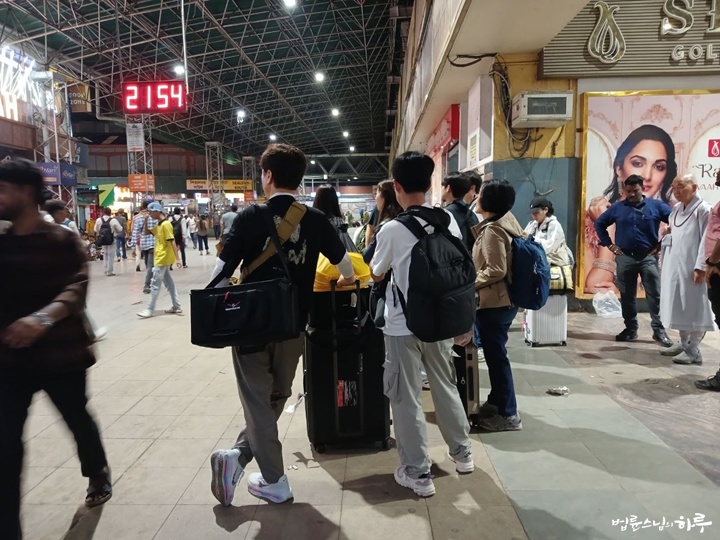
They had left early to avoid traffic, but had to wait a long time before boarding the train.
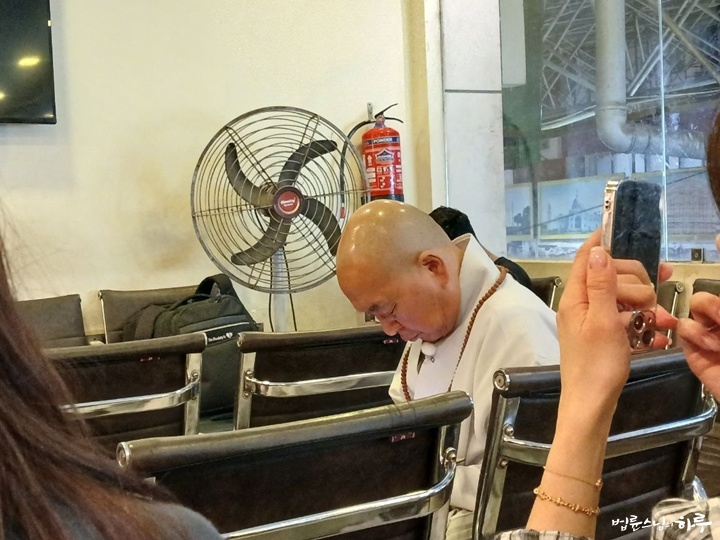
Sunim waited in the waiting room and moved to the train platform when boarding time arrived. Brief filming continued even while moving.
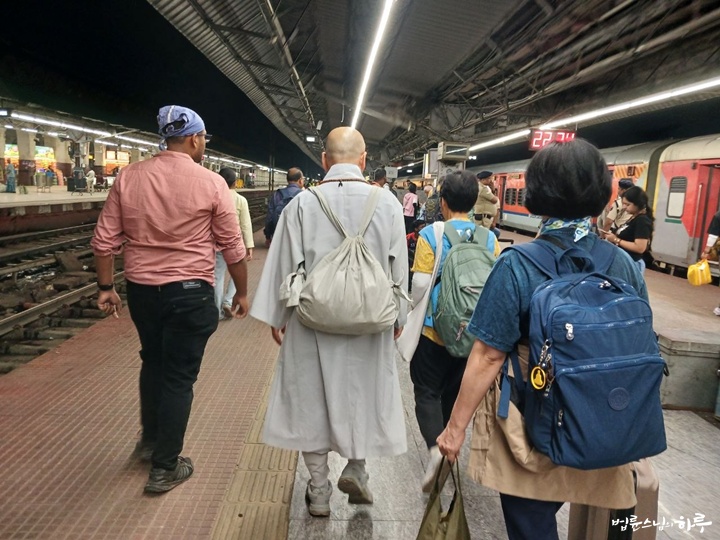
Sunim boarded the train, found his seat, organized his luggage, and conducted interview on the moving train past midnight. When filming ended, Sunim’s daily schedule was also complete.
The train is scheduled to arrive at Gaya Station in Bihar, India around 6:10 AM tomorrow morning. Filming will continue all day tomorrow as well.
Since there was no Dharma talk today, this post concludes with content from a previous Dharma Q&A session.
Should I Follow Principles or Accept Reality?
“This can be seen as the contradictions and conflicts that arise in our lives between reality and principles.
I’m building and operating schools in India, and when I request electricity installation, they demand bribes. I said, ‘I’ll gladly pay any official amount and process receipts. But I can’t give undocumented bribes.’ The reason is because it’s a school. If we teach children to live honestly while the operators give bribes to run the school, wouldn’t the children perceive what they learn at school differently from reality? That’s why I said I couldn’t do it because it’s a school.
After this happened several times, they said, ‘All foreign organizations in this area give bribes, why don’t you?’ I said, ‘This is a school, and I’m doing what your government should be doing. I’m running a completely free school and hospital – I can’t operate a school while giving bribes too.’
If I were building a temple, I might give bribes for Buddhist expansion, or if I were in business, I might give bribes to make money, but I don’t want to give bribes while running a school and providing free support. So I said, ‘We’ll live without electricity if we have to,’ and we lived without electricity for 20 years after starting the school. Of course, when absolutely necessary, we ran generators for electricity.
In the end, the fuel costs for generators over 20 years were dozens of times more than electricity bills would have been. Now India’s electricity policy has changed, and the power company has shifted from state-owned to private. Being privatized means that whoever wants electricity must bear all infrastructure costs like power lines and poles. So it cost dozens of times more than the bribes they used to demand. But this was done through legitimate payment with receipts for electricity installation.
So everyone around me criticizes. They say Sunim is supposed to be wise but acts like a complete fool in these matters. They ask why I’m so unnecessarily stubborn when that’s the reality. I say it’s about ‘principles,’ while they criticize it as ‘stubbornness.’ They call me rigid.
This is a matter of choice. In this world, for economic efficiency, you need to follow worldly customs and practices, but if you want to change the world for the better, it’s good to maintain principles while accepting losses.
But why does the questioner have this concern? It’s because you’re thinking, ‘Isn’t there a way to both follow regulations and increase efficiency?’ If you think, ‘Ah, it would be good to change the bad practices in our industry,’ you need to be prepared to take losses in the process. But if not, you have no choice but to run your business while tolerating certain practices to some degree.
If you ask me, I’d say follow principles, but since this is a Dharma Q&A session, I’m saying you need to make a choice within that context. Don’t stand on the perspective of absolute evil or absolute good, but first decide what principles you’ll follow in your business. Second, you need to consult with people in your company. Discuss: ‘These practices exist – should we try doing things principally even if we suffer some losses, or should we follow the customs a bit?’ If there’s no agreement and you suffer losses from not following customs, your actors might leave for other companies, right? Then your business might fail. I’m also a principled person, but I’ve compromised depending on the situation. When we had meetings about certain issues and people said, ‘Sunim, let’s leave this to the experts. That’s better,’ I would assess the situation, listen to others’ opinions, and if I judged that compromising with reality would be better, I would compromise. But whenever possible, living by our principles comes first. So I’d like to say that your question is less about worry and more about choice.”
“Yes, I understand. Thank you.”