
March 31, 2026. Day 2 of Bhutanese Visitors’ Itinerary (Mundang Environmental Agriculture Village, Hongseong County)
Hello. Today is the second day of the itinerary with visitors from Bhutan. After completing his early morning practice and meditation, Sunim had a simple breakfast with the Bhutanese visitors at 6:30 AM in the basement cafeteria of the Jungto Social and Cultural Center.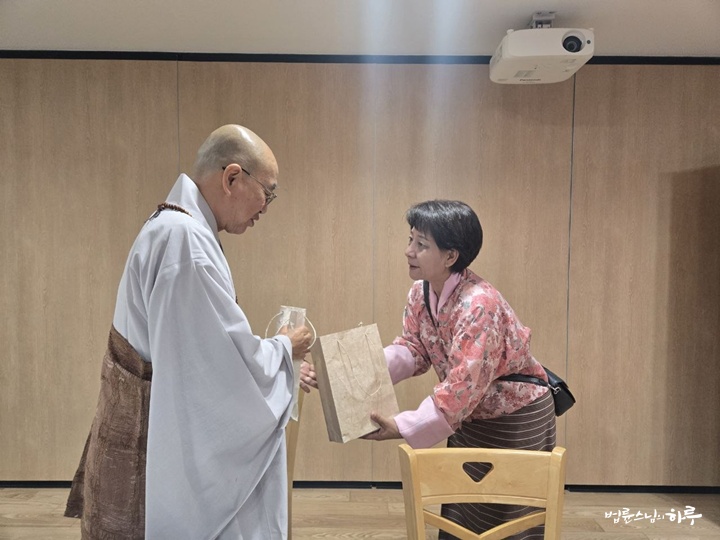
After the meal, Kesang Deki, Secretary to the Cabinet of Bhutan, presented a gift of gratitude to Sunim. As the barugongyang was concluding, there was a brief time for greetings between the Bhutanese visitors and members of the lay Sangha. Sunim introduced each of the Bhutanese visitors. Out of the eight visitors, five who had breakfast (excluding three who don’t eat breakfast) exchanged greetings with the lay Sangha members. Rinchen Dawa assisted with interpretation.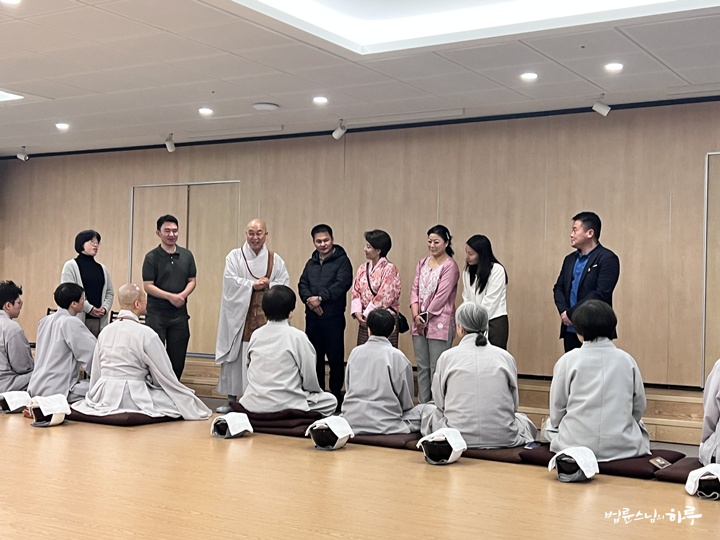
“We’ll have a good trip.”
They left the cafeteria with applause from the lay Sangha members. After gathering their belongings and loading them into two vehicles, they departed for Mundang-ri, Hongdong-myeon, Hongseong County.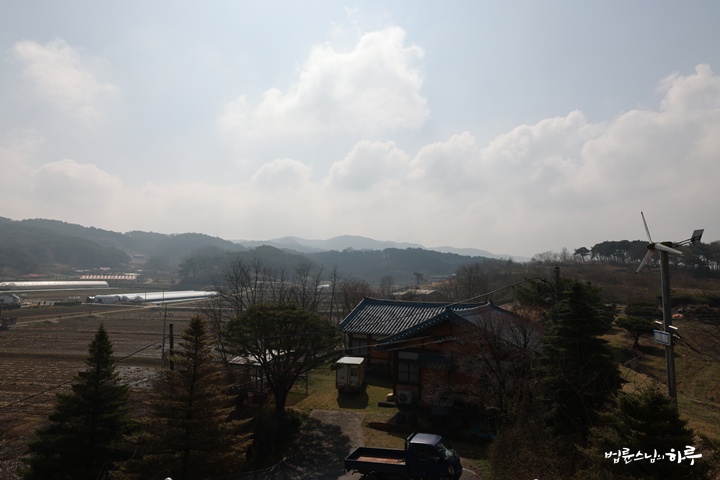
Today’s destination was Hongseong Mundang Environmental Agriculture Village, a place where visitors can learn about eco-friendly farming and village cooperatives. They departed with the goal of arriving at the Hongseong Environmental Agriculture Education Center before 10 AM.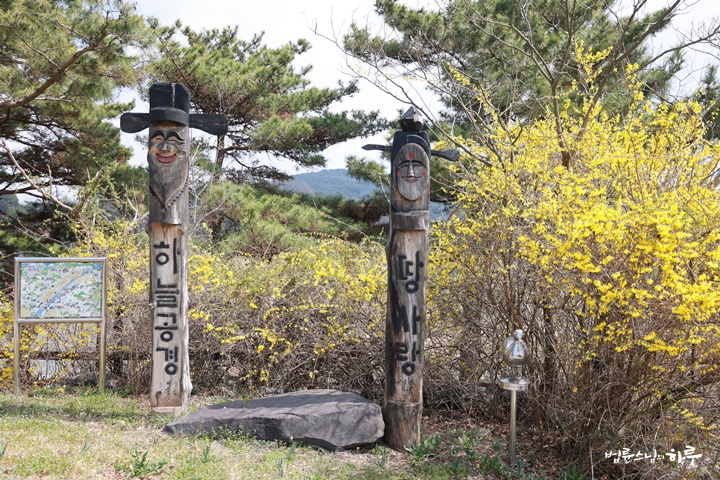
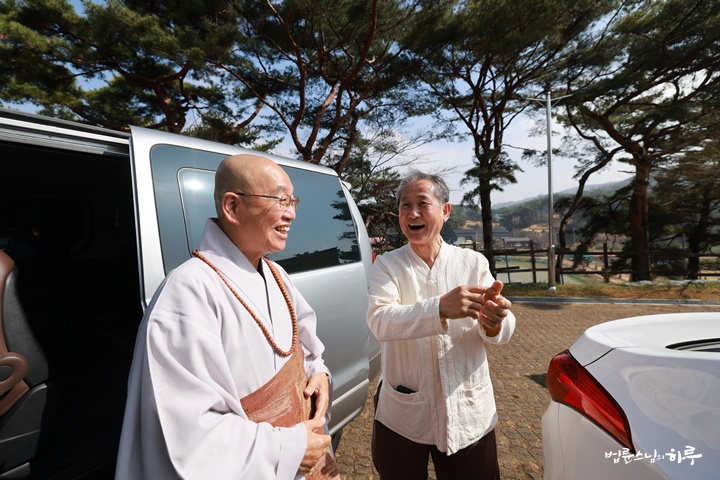
Mr. Joo Hyung-ro, representative of Mundang Environmental Agriculture Village and an expert in eco-friendly organic farming who first introduced and spread the duck farming method in Korea, warmly welcomed Sunim and the Bhutanese visitors. After arriving at the education center, he personally introduced the village.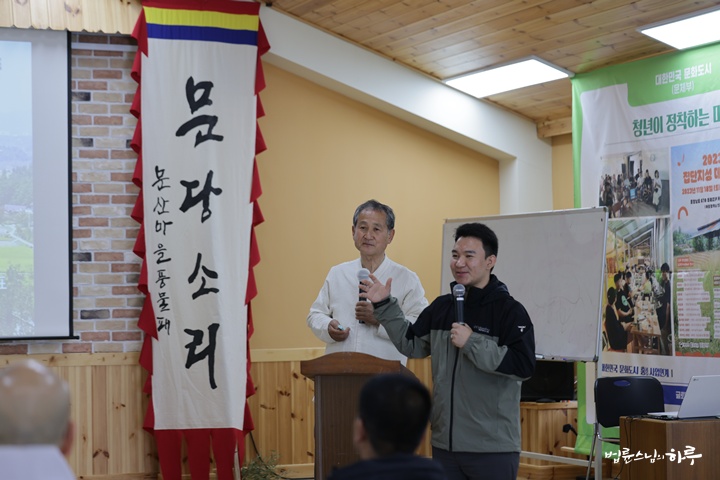
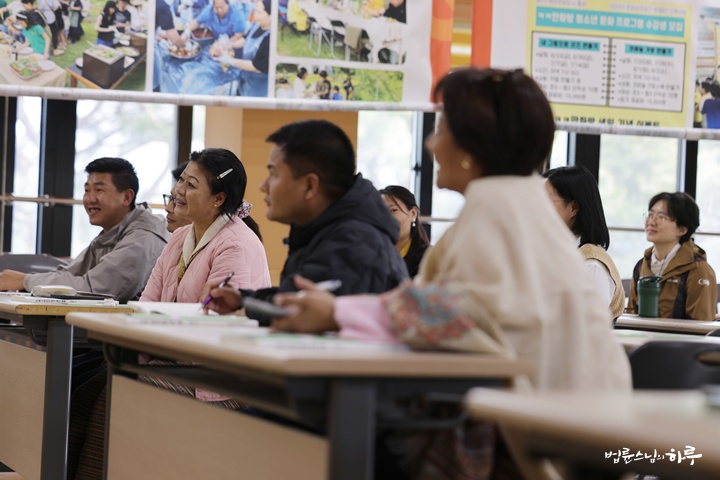
He explained what led to organic rice cultivation, the process of transforming into an organic village, and the unique values that enabled various success stories in this village. He also described the village-operated cafe, school, library, and community clinic.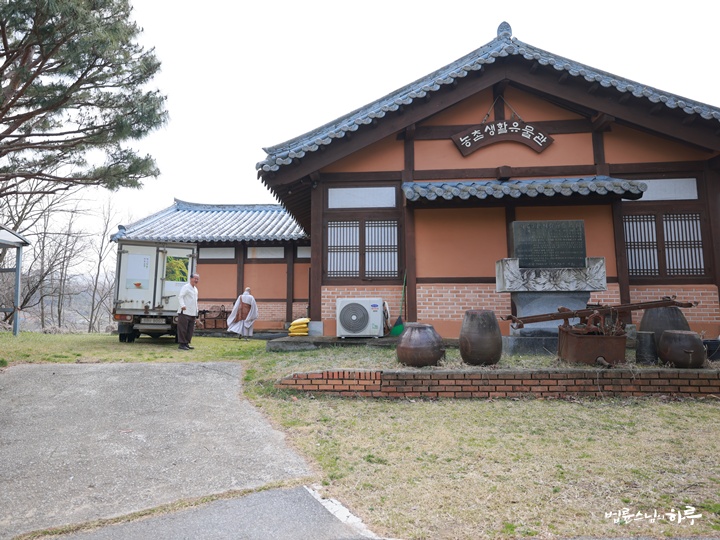
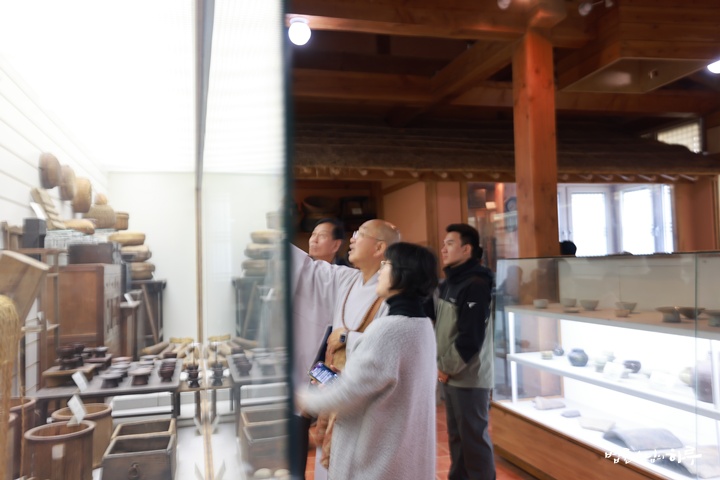
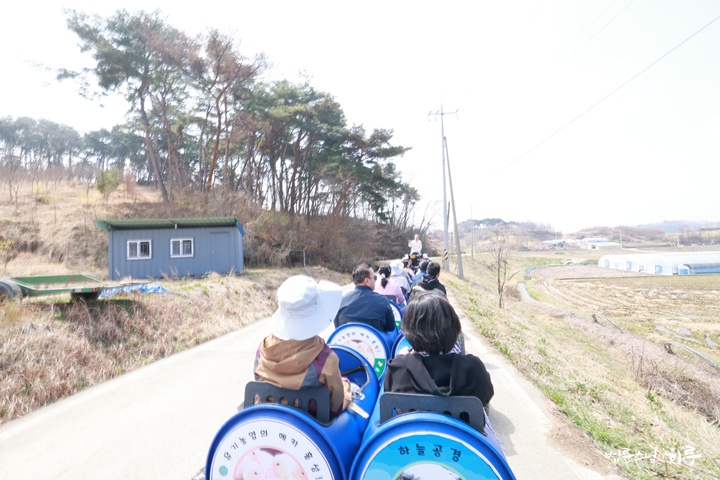
After leaving the education center, they visited the rural life museum displaying agricultural and household items used by ancestors, then experienced riding the duck train around the village.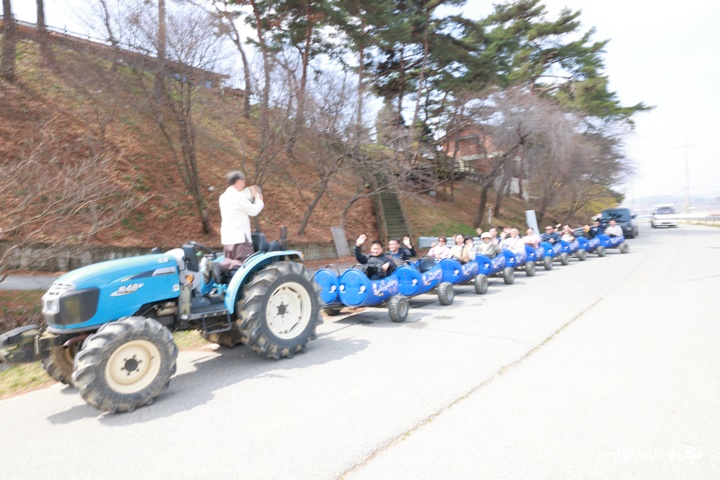
Sunim and the Bhutanese visitors moved to a restaurant where they had bibimbap. The bibimbap made with locally produced ingredients and spring herbs was popular with the Bhutanese visitors as well.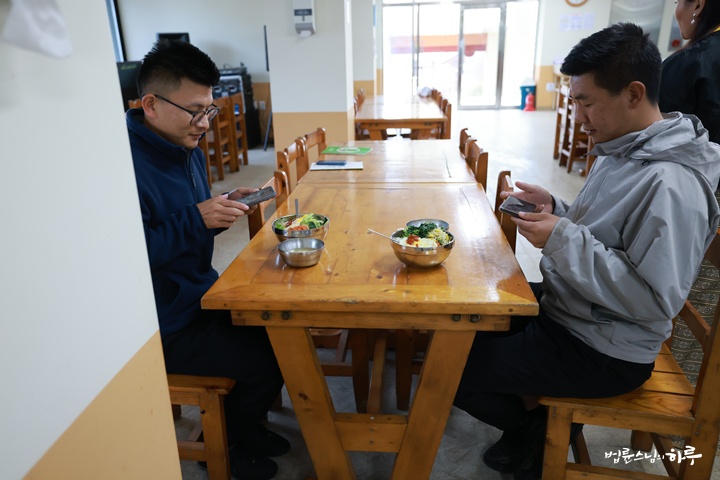
After lunch, they began a full tour of the village.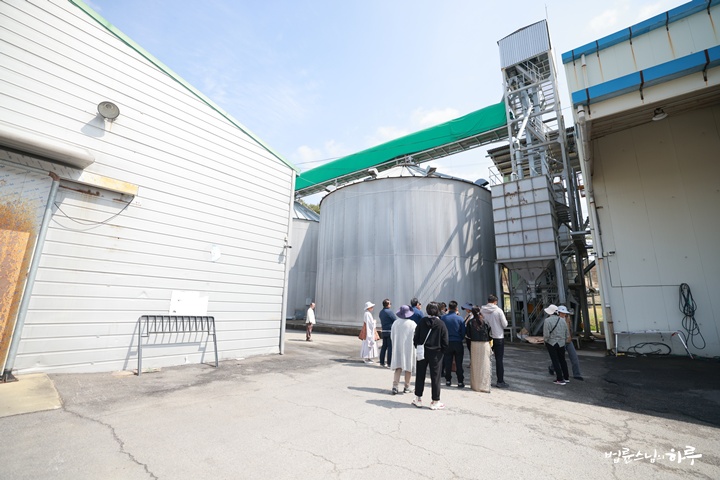
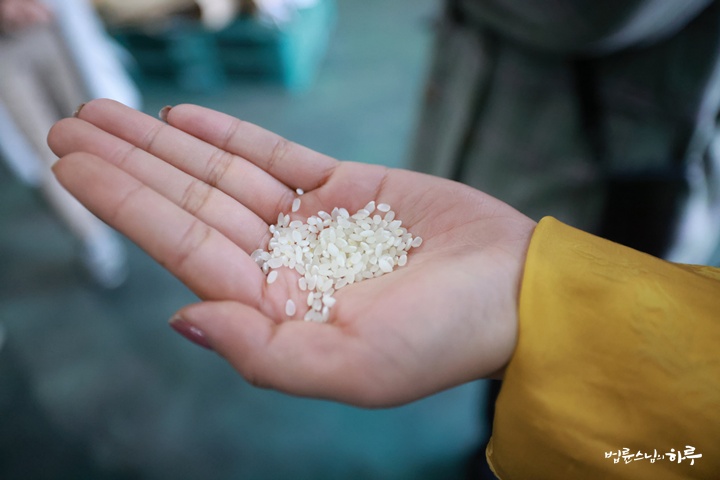
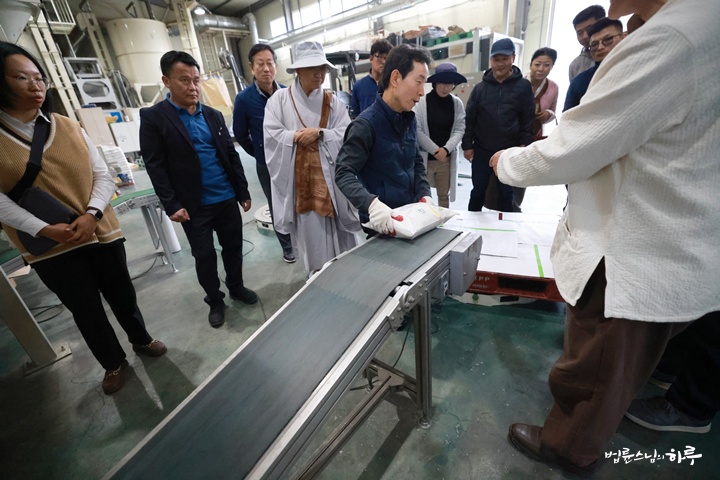
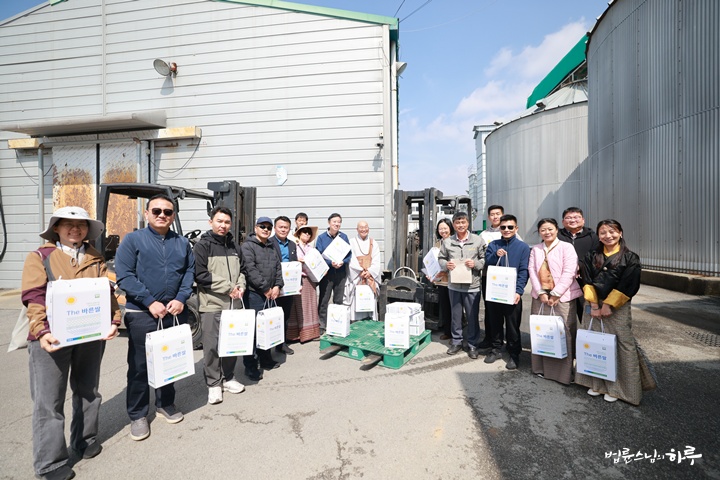
The visitors stopped by the rice processing facility and witnessed firsthand the process from milled rice to packaging. They received 4kg of rice as a gift.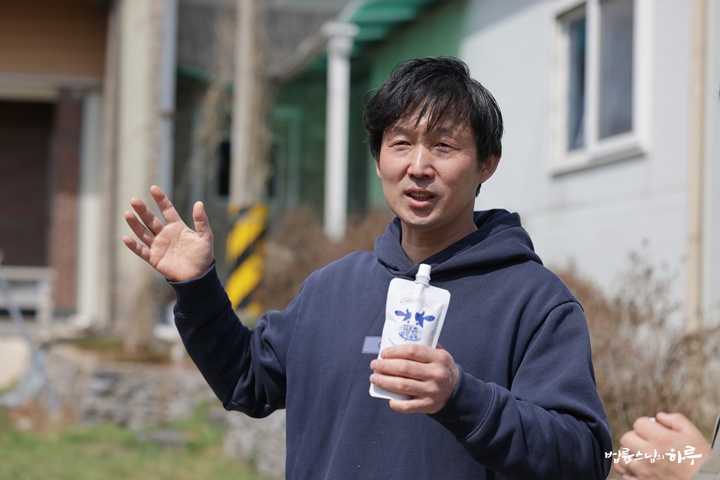
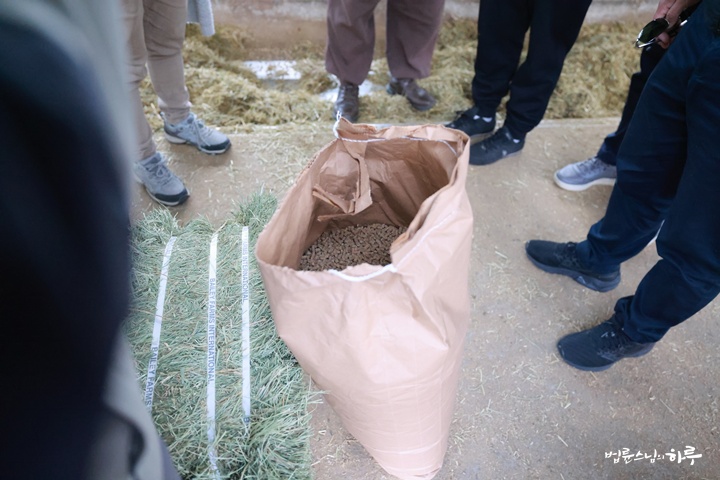
They also visited a farm showcasing a family ranch that produces yogurt with an organic farming philosophy. They tasted the yogurt produced there and toured the barn where dairy cows are raised.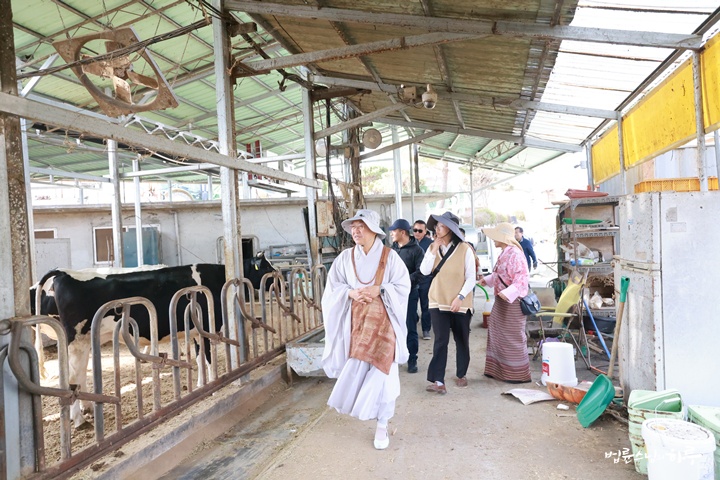
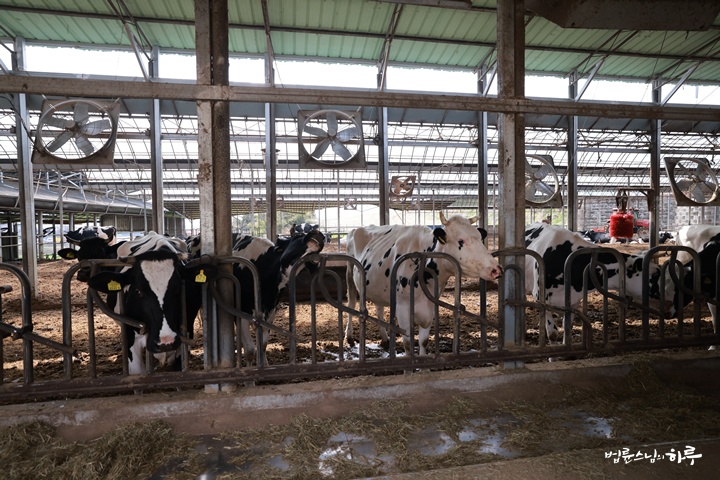
They heard stories about raising dairy cows, milk production, and yogurt production.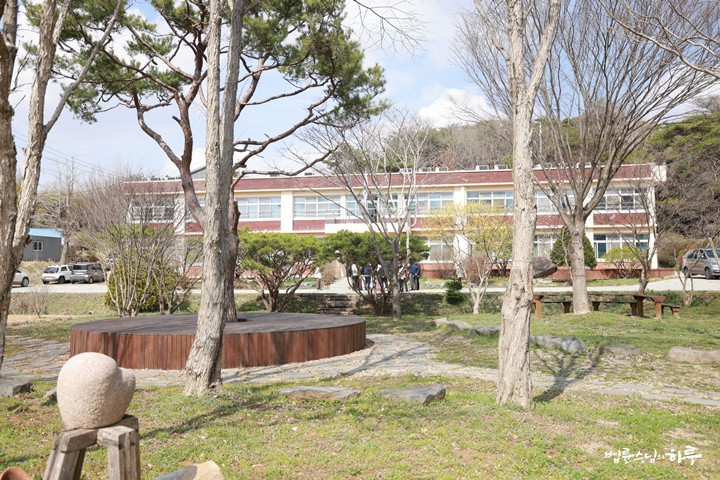
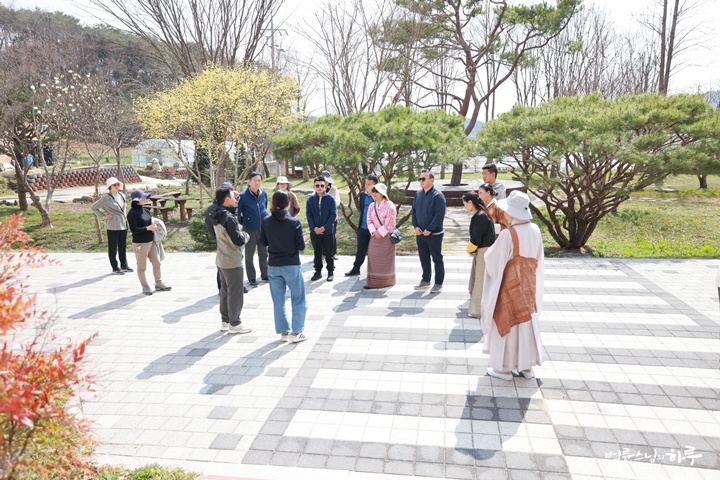
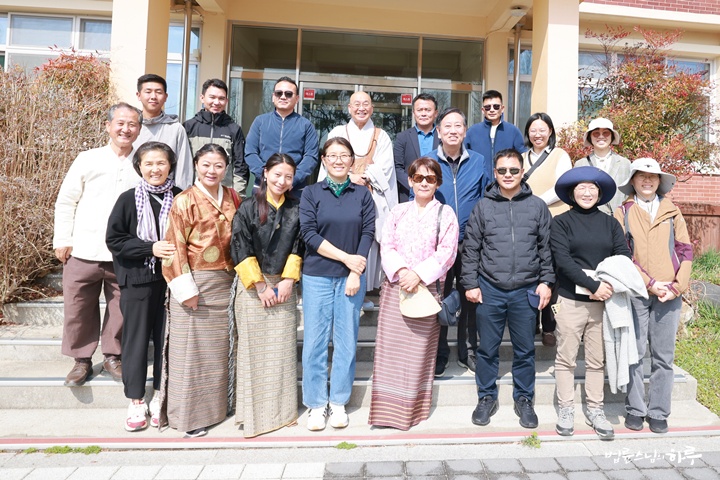
Next, they visited Poolmoo School, founded in 1958 and the root of the organic village, where they exchanged greetings with the principal.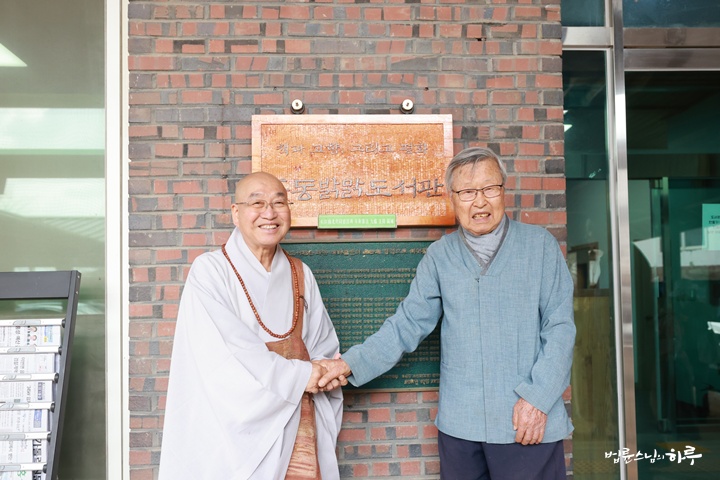
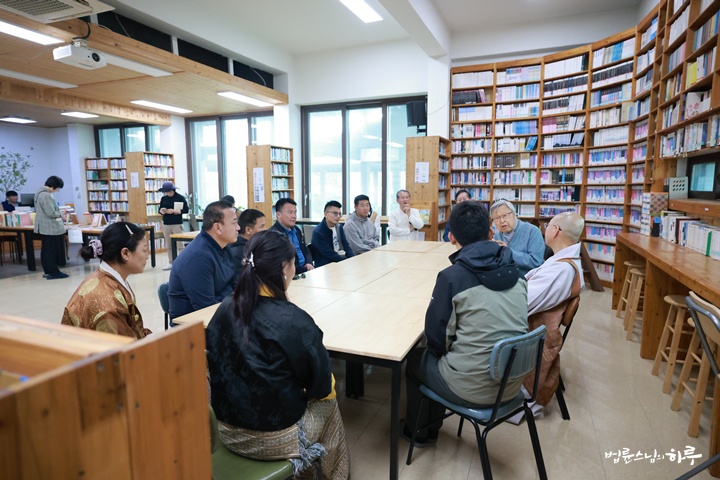
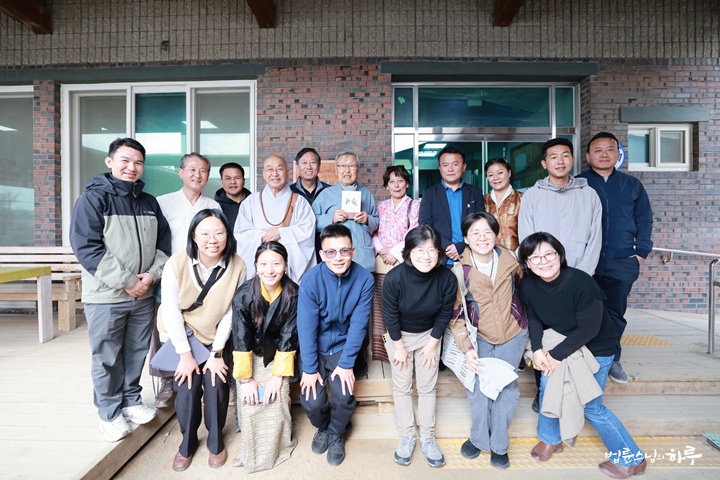
Finally, they stopped by Hongdong Bright and Clear Library to hear about how the library operates and had a conversation with Mr. Hong Soon-myung.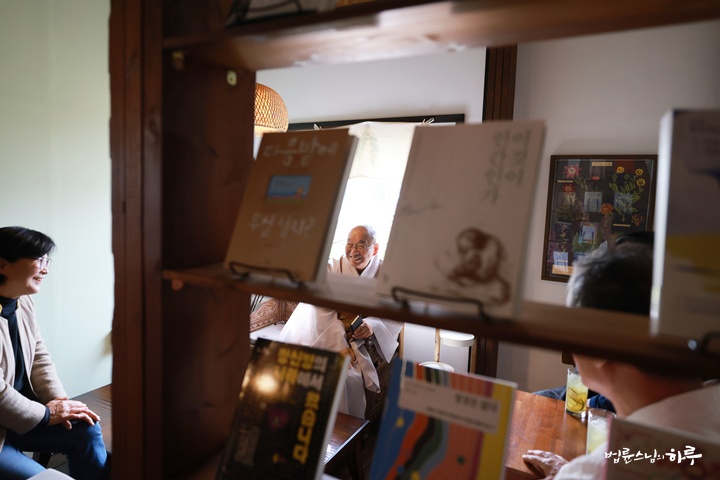
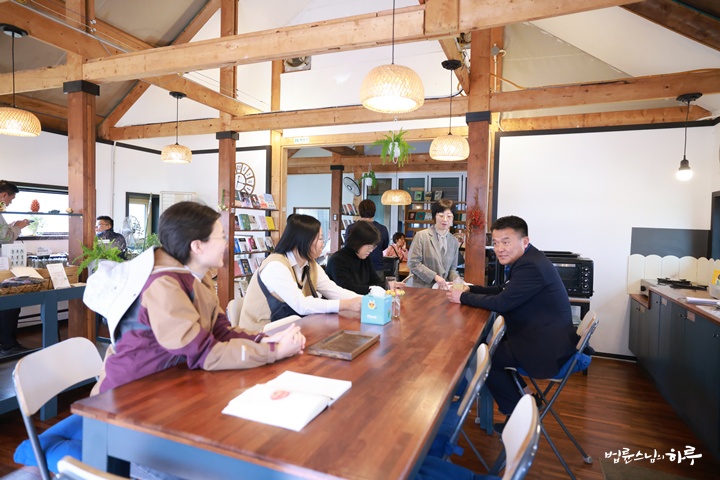
After having a cup of tea at the cafe, Sunim and the Bhutanese visitors immediately toured the cultivation status of the Young People’s Collaborative Farm’s greenhouses operated by the local youth.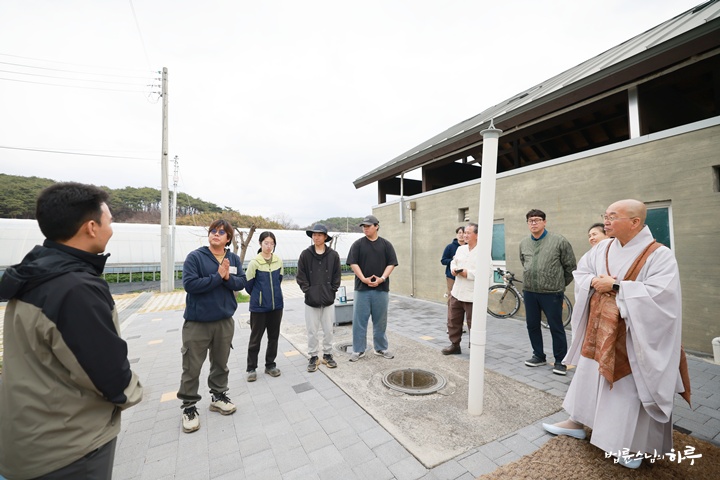
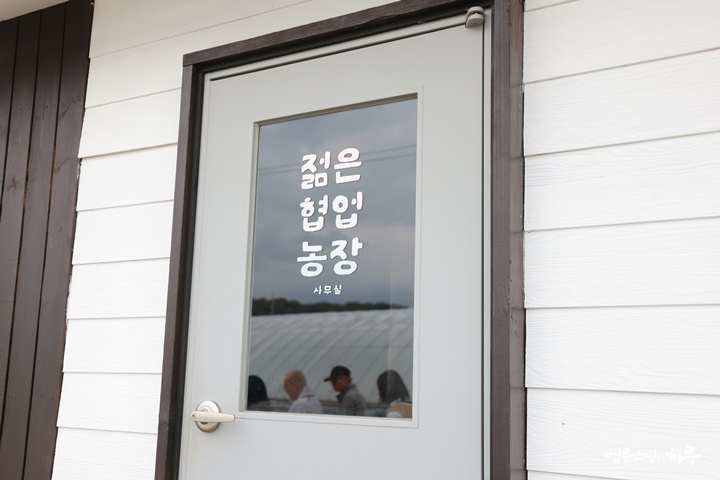
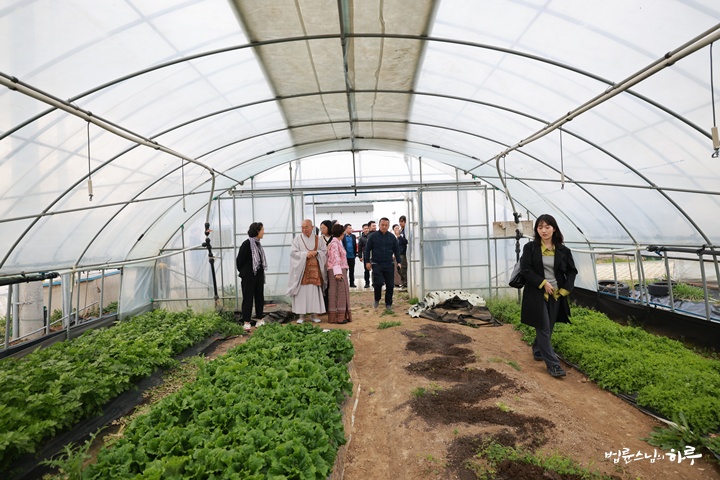
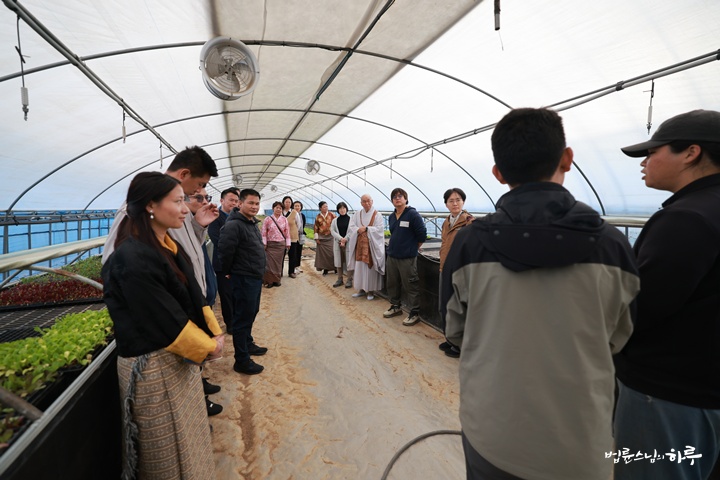
They could vividly hear stories from young farmers in their early twenties who graduated from Poolmoo School and are making a living through farming.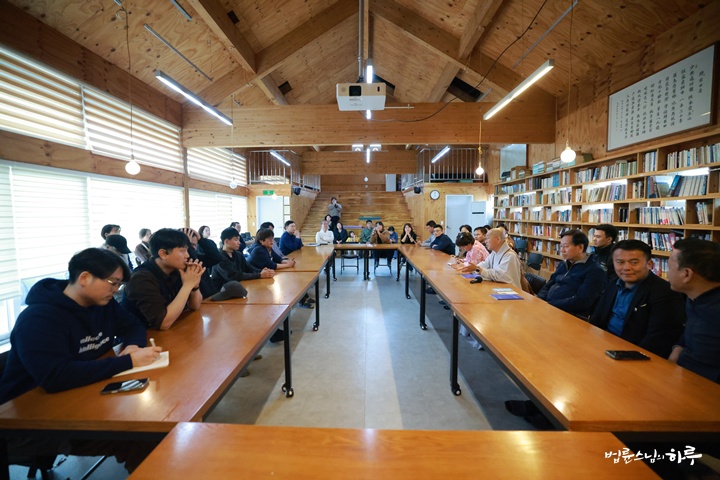
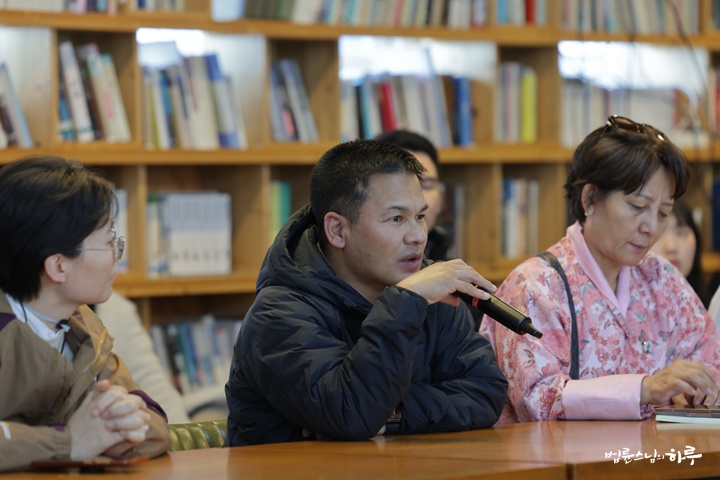
Moving to another location, the Bhutanese visitors had time with young farmers living in Hongdong-myeon. They exchanged greetings and asked questions about their curiosities.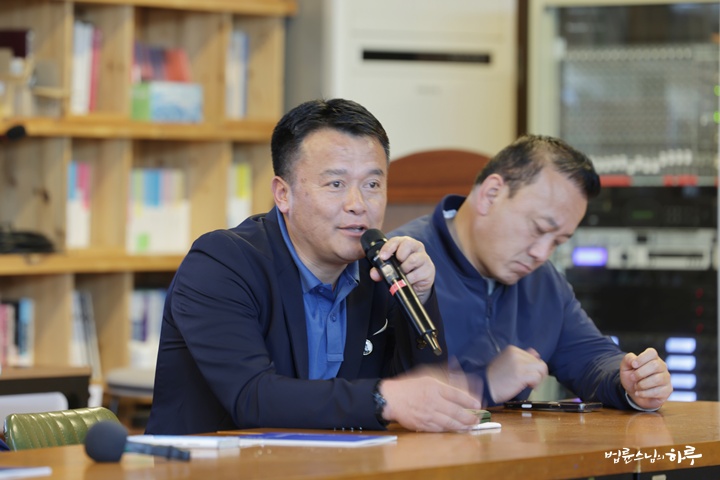
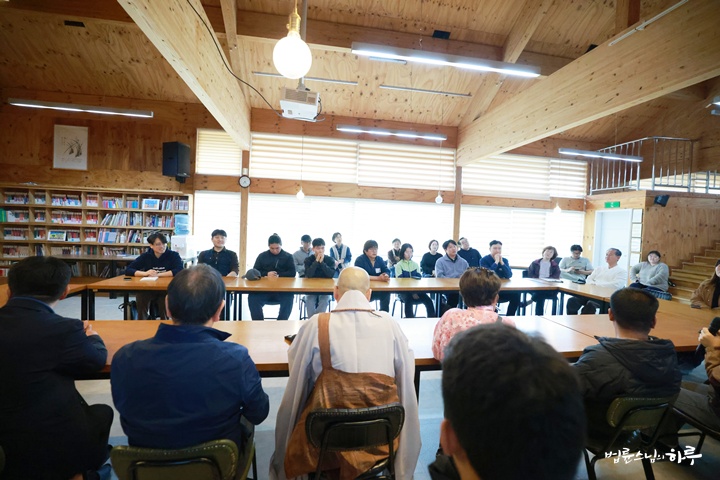
There were many questions about the phenomenon of young people returning to farming in Hongdong-myeon, while in Bhutan, more and more young people are going abroad to earn money. Specific questions were exchanged about what is needed for sustainable agriculture. The Hongdong youth sincerely answered the Bhutanese visitors’ questions based on their own experiences. Sunim listened to the meeting so that the youth and Bhutanese visitors could fully ask and answer questions.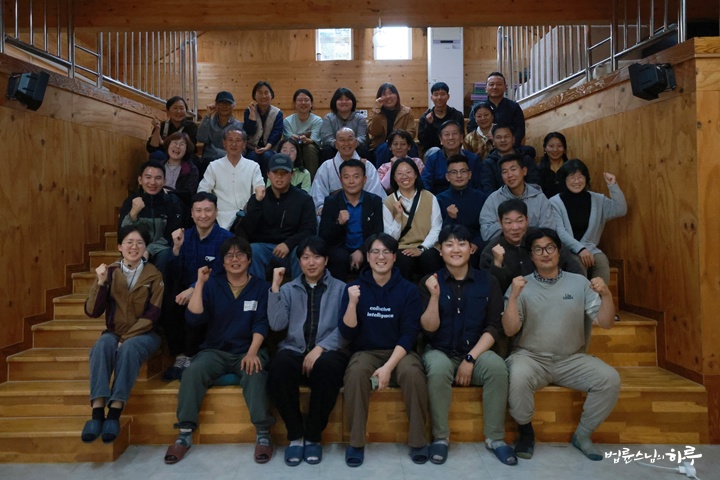
“Youth, fighting!!”
The meeting concluded with a commemorative photo. They moved to a restaurant for dinner. The restaurant operated by local residents had prepared a hearty meal using only vegetables produced in the area. After dinner, they returned to the education center.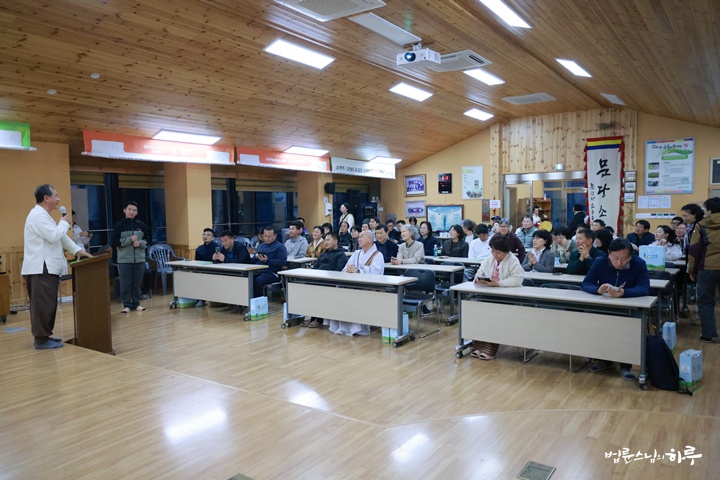
By 7 PM, the education center was packed with village residents and people living in nearby areas who had heard that Sunim was coming. The villagers gave yogurt produced locally and bread and snacks made from rice as gifts to the Bhutanese visitors and everyone attending the welcome ceremony.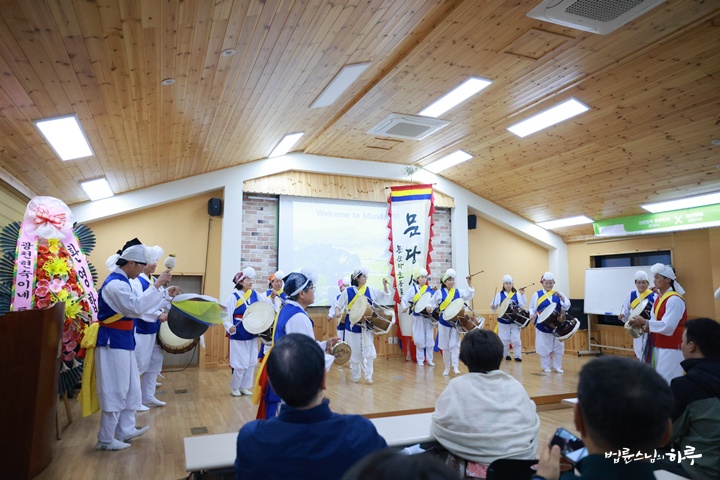
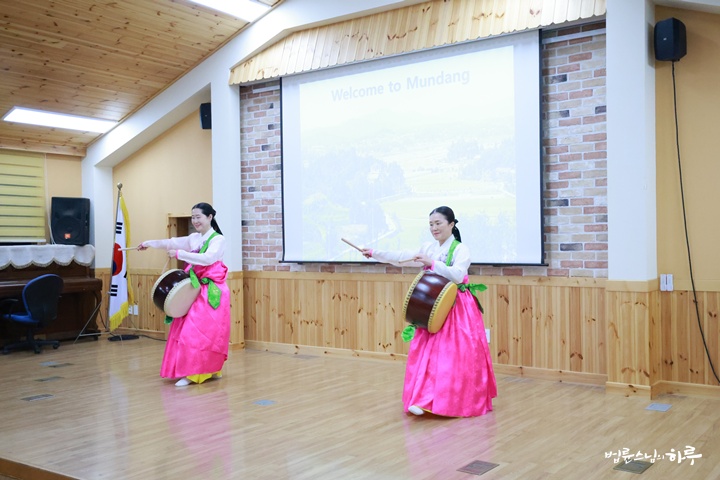
The ‘Mundang Sound’ performance team, composed of villagers, presented traditional music and drum performances.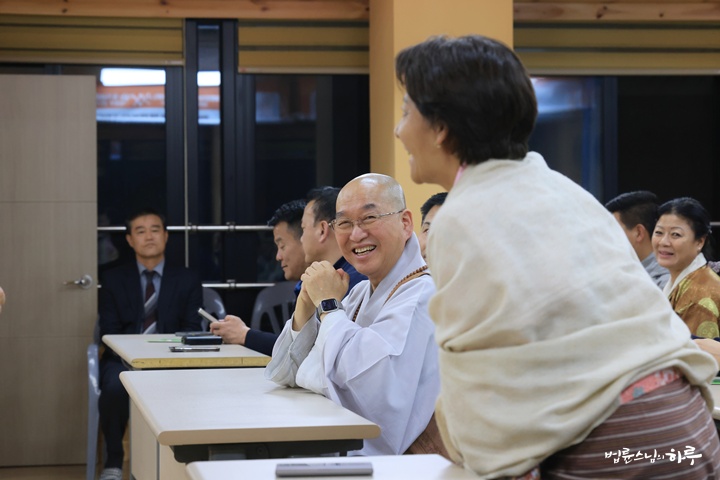
After introducing the Bhutanese visitors and welcoming them, there was time for dialogue between Sunim and Hongdong residents.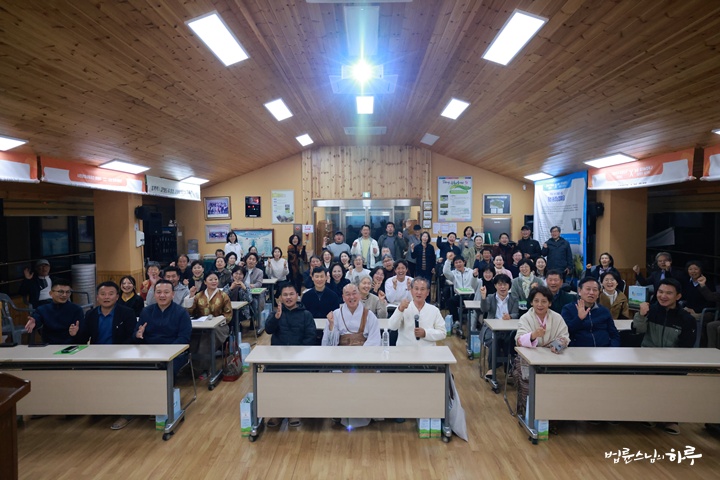
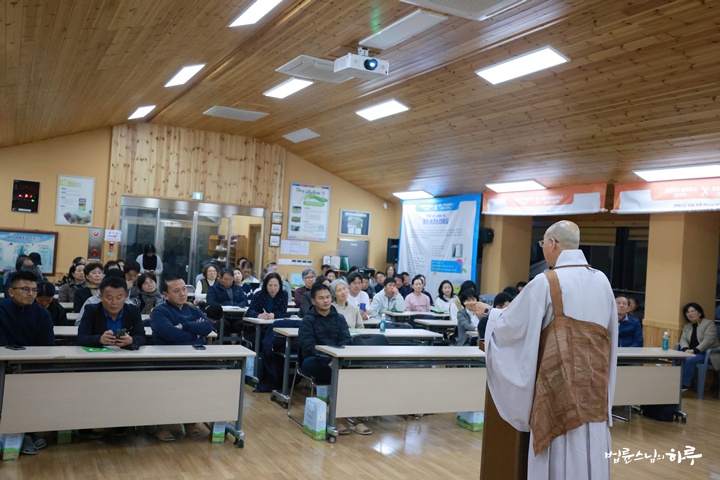
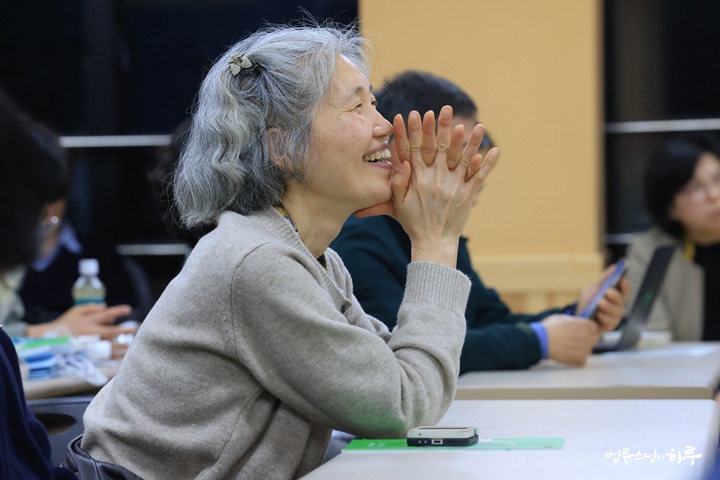
For about an hour, five Hongdong residents openly shared their concerns with Sunim.
After Sunim’s Dharma Q&A session concluded, they took a commemorative photo and left the education center.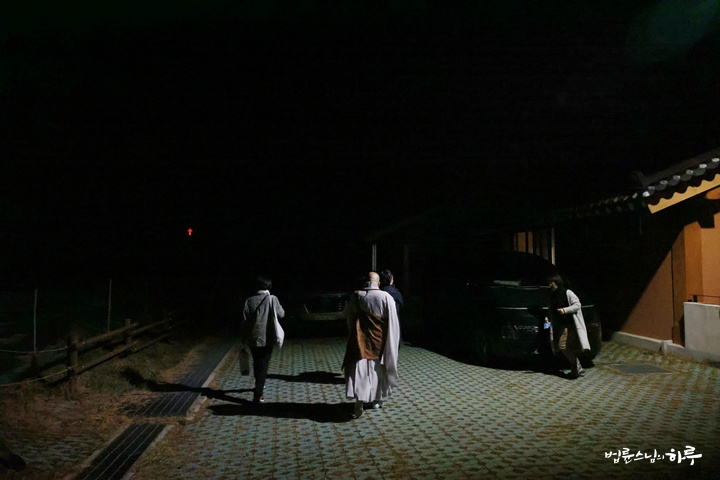
Sunim and the Bhutanese visitors moved their belongings to their respective accommodations and concluded the day’s activities.
Tomorrow, they will visit Cheongyang County and Imsil Cheese Village to encounter various case studies.
This post concludes with a question related to Bhutan from today’s Dharma Q&A with Hongdong residents and Sunim’s response.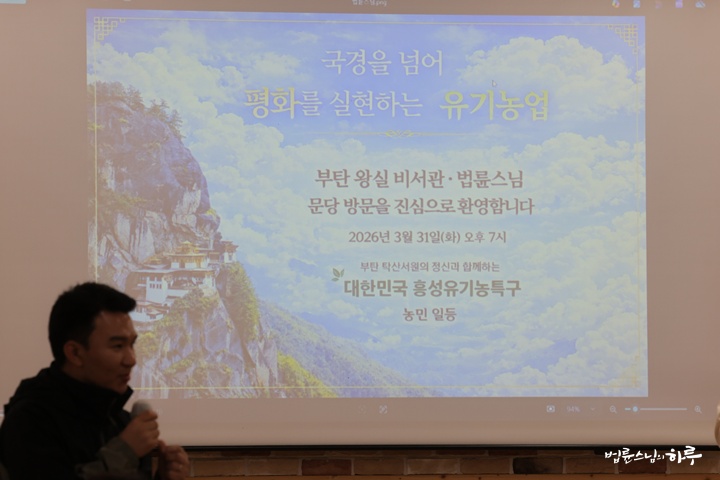
People Only Realize the Value of Something After They’ve Lost It.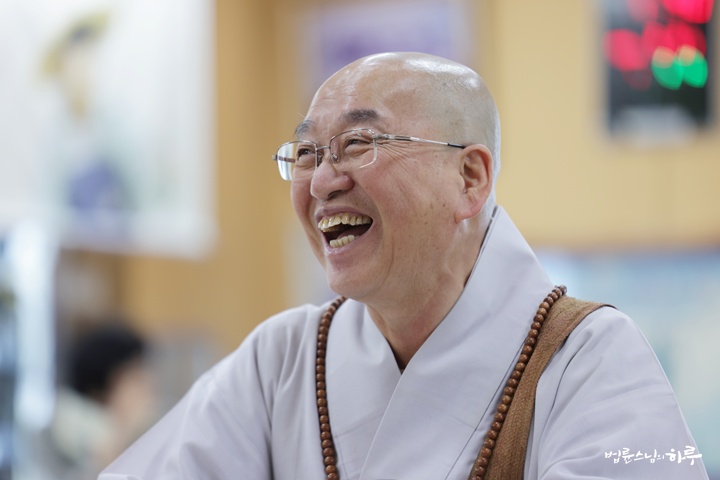
“Bhutan seems relatively happy because it has had less exchange with the outside world, has an optimistic culture, a good natural environment, and no particular external stimuli. By economic standards, Bhutan is still among the less developed countries in the world. We were just living our lives, but when placed within standards set by others, they became a backward country.
Looking at this, Bhutan’s 4th King is said to have thought: Why should we follow standards set by others? Why should we rank well-being by gross material index? Wouldn’t it be more appropriate to rank well-being based on how happy people are? This led to proposing the concept of GNH, Gross National Happiness, 50 years ago. At that time, Bhutan had the highest GNH index in the world. But now it’s somewhat different.
The reason is that Bhutan, wanting to provide good education, taught all classes in English from elementary school. So by the time students graduated from middle and high school, they spoke English well. Additionally, they started internet education early, allowing people to see the whole world online. During COVID-19, Australia issued many visas. When they went to work there, they could earn in one day what they would earn in a month in Bhutan. Naturally, they would call their friends and tell them about it. This way, recently about 10% of Bhutan’s young population has gone abroad. Because of these changes, can we still say their happiness index is the highest in the world? It has become difficult to say so.
Furthermore, the happiness index provided by the UN is not a measure of psychological happiness. Instead, it is based on welfare standards such as education, environment, healthcare, unemployment, housing, and transportation. Simply put, it is a ‘Welfare Index’ rather than a ‘Happiness Index.’ Therefore, it was inevitable for Bhutan’s ranking to drop.
Then, what about Korea? Our national GDP ranks 12th and GDP per capita ranks 28th, yet our UN happiness ranking is behind 50th place. This might suggest that our welfare policies are insufficient compared to our material wealth. But if you ask, ‘How happy do Koreans actually feel?’—the psychological happiness index falls outside the top 100. There is a saying for this: ‘Once we escaped being hungry, we became an angry society.’ (Laughter)
This low happiness index is not only due to policy issues but also psychological and cultural factors. First, we are impatient. ‘Hurry, hurry!’ (laughter) Second, we tend to be quite greedy. We have excessive desires for our children, money, and other things. Third, we tend to be strongly opinionated. What happens when people are strongly opinionated? They find more reasons to get angry. That’s why the happiness index is inevitably low. Of course, society is harsh and competition is fierce. However, it’s also true that this culture has played a significant role in Korea’s material and technological development. But it has had a negative impact on people’s happiness.
When we were hungry, ‘hurry, hurry’ was an advantage, but now that we’re well-fed and have some leisure, shouldn’t we slow down a bit? Is making money all that matters, or is safety important? Safety is important, right? And having achieved this level of success, shouldn’t we lower our greed a bit?
Also, people all have different opinions, don’t they? Then shouldn’t we acknowledge other people’s opinions too? Just look at politicians. Do they acknowledge differences? They oppose what their opponents say even when it’s something they themselves once advocated. 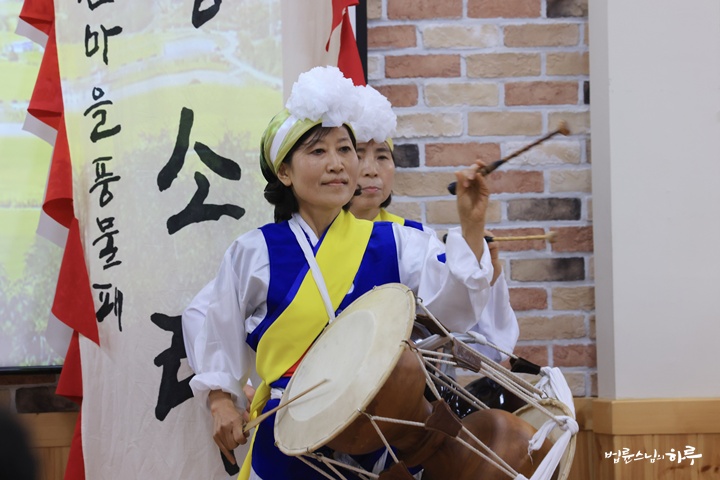
A monk from Southeast Asia visited Korea. Upon arriving at the airport, he said, “Wow, Korea is truly an amazing country.” However, when he looked at the faces of the people working at the airport, they all had frowns on their faces. So he asked me, “Why do Koreans frown like that when they live in such a nice place?” I told him, ‘Although it may look good to outsiders, young Koreans living here sometimes say Korea is hell. So don’t get too excited about going to heaven. From here, going to heaven might be your wish, but once you actually get to heaven, you might complain, saying “This is missing, that is missing.”‘
That’s why it’s difficult to evaluate human life based solely on objective circumstances or material indicators. That’s why I think it’s necessary to have a little more leisure, share with each other, and create a life where we live together. 
In Bhutan, local communities are still alive. So it’s possible for villagers to work together to pave roads and improve irrigation channels. We could do this too during the Saemaul Movement in the old days. All the villagers would come out together to plant flowers and pave roads, and if materials were provided, they would fix everything. Nowadays, nobody does this. People just complain that the government doesn’t do it for them.
But in Bhutan, this is still possible. So before the natural environment and communities are further destroyed, they need to preserve their sense of community and cherish the value of clean air and pure water. I value these things, which is why I go to Bhutan to do this work, but the people there might not consider them as important as I do.
People only realize how precious something is after they lose it. Before losing it, no matter how much you explain, they don’t really understand. But shouldn’t we do what we can before it’s lost? That’s why I’m there now, talking with them about how precious what they have is. In conclusion, Bhutan is not currently ranked first in happiness according to UN standards. It can be considered to be in the middle range. This is partly because the indicators themselves are based on UN standards rather than Bhutanese standards, and partly because Bhutanese society has changed significantly. Bhutan needs development going forward. The challenge is how to develop while preserving the GNH concept. This is not just Bhutan’s problem but a challenge for all of humanity. That’s why I think we need to think about it together and work on it together.